



Abstract
A significant gap exists in the current body of knowledge regarding the acceptance and utilization of AI tools, especially ChatGPT among students to adopt this technology for higher education. This study examines student involvement in higher education using ChatGPT in a developed and developing countries. The study examines how system quality, information quality, and facilitating conditions affect students’ ChatGPT engagement and intention to use. Quantitative data from US and Bangladeshi university students was used. Structural equation modelling (SEM) was used to evaluate the associations between student interest, behavioral intention, and privacy concerns in 452 online questionnaire responses. All construct elements have VIF values between 1.6333 and 3.085, indicating no multicollinearity with explanatory variables. The KMO and Bartlett score of .965 with the significance of .000 suggests good statistical dependability for data analysis. The results show that information, system, and supporting conditions greatly affect student ChatGPT involvement. The developed and developing environments differed in technology infrastructure and privacy issues, with Bangladeshi students expressing greater data security concerns. The report helps educators and policymakers in developed and emerging nations improve student engagement with AI technologies in higher education. To maximize benefits, institutions must handle privacy and security concerns and provide strong technological support. This research provides comparative insights into how emerging AI technologies are shaping student engagement in higher education across diverse economic settings through SmartPLS, SPSS, and Python software to offer the contextual factors of ChatGPT adoption in education.
Plain Language Summary
This study looks at how students in two countries—one developed (USA) and one developing (Bangladesh)—use ChatGPT in their university studies. We wanted to understand what makes students more likely to engage with ChatGPT, such as how well the system works, how good the information is, and whether they have the right tools and support. We also explored how concerns about privacy and data security affect their willingness to use the technology. We gathered survey responses from 452 students and analyzed them using statistical software. We found that high-quality information, reliable system performance, and good support all help students use ChatGPT more effectively. However, we also saw differences between the two countries—students in Bangladesh worried more about privacy and had less access to technology. These findings can help teachers and policymakers create better support systems, improve technology access, and address privacy issues so students everywhere can benefit from AI tools like ChatGPT in their learning.
Introduction
A system of post-secondary education that is continuously monitored, evaluated, and improved to ensure it consistently delivers positive and meaningful outcomes for students, meets the reasonable expectations of employers and society, and aligns with recognized academic standards.
Students are major stakeholders in the higher education ecosystem and Strzelecki (2023) suggests that students may demand approaches like ChatGPT on ethical grounds. The state of ChatGPT has attracted criticism from some educators and education institutions, with a concern raised that the use of tools like this might lead to an upsurge in plagiarism/cheating among students (Strzelecki & ElArabawy, 2024). The deployment of tools such as ChatGPT is not straightforward in higher education and many challenges need to be rigorously examined (Strzelecki & ElArabawy, 2024). Furthermore, understanding how ChatGPT is more widely taken up by various higher education contexts with its challenges and considerations in exploring this phenomenon. Due to its innate ability to automate many of the tasks and responsibilities as well as process extremely large volumes of data, predictively provide critical insights that are likely able to disrupt countless aspects of everyday living (Yang, 2022).
Lim et al. (2023) stated that the universities were already afraid of what might come with ChatGPT, a step towards future learning. Those game-changing powers and ChatGPT’s vast capabilities prompted some universities to take a closer look at what the technology entailed. So, researchers and academics have begun looking at how ChatGPT fits into various domains, what it can do well, and where it falls short. Examples are looking at the trend of fake citations and materials (Cooper, 2023) streamlining writing processes as well as enhancing academic assignments/essays quality or standard (Sullivan et al., 2023). ChatGPT is drawing attention from researchers and educators for its possible effect on colleges and universities (Cooper, 2023).
When justifying the rationale for comparing the USA and Bangladesh, the distinction between developed and developing countries is foundational in technology adoption research due to stark contrasts in infrastructure, resources, and socio-economic contexts that distinctly affect AI engagement (United Nations, 2023; World Bank, 2022). Although the dataset does not allow country-specific separation due to survey design, framing the research within this comparative context remains academically valid, as Bangladesh represents the developing country scenario where issues like infrastructure deficits, data privacy concerns, and digital literacy challenges are prevalent (Enakrire & Onyenania, 2007; Macharia & Gituru, 2006). Meanwhile, the USA exemplifies a developed context with more advanced technological readiness and institutional support. The collaboration involving co-authors from both countries enriches the study’s perspective, with the majority of data coming from Bangladesh but insights informed by cross-national academic exchange. This framing helps illuminate how differing development levels influence ChatGPT adoption dynamics, offering theoretically and practically meaningful contrasts relevant to global education technology discourse.
Furthermore, ChatGPT can help researchers with disabilities by offering guidance in more advanced training rounds (Sullivan et al., 2023). Additionally, ChatGPT can also provide support with teaching lessons more fully assist in lesson planning; adaptive learning and evaluation/assessment. ChatGPT is also able to provide personalized help that assists them in their learning and can lead to increased levels of engagement, academic performance (Alshahrani, 2023). Therefore, many schools and universities have started to use ChatGPT in their academic programs, so as to take advantage of its benefits for enhancing their courses and the learning experience that students receive from them.
Although substantial amounts of work were done by many researchers about possible applications, and challenges from ChatGPT Julian et al. (2023), the university students as important stakeholders in educational technology should understand readiness utilization intention and acceptance of this new technology. Foroughi et al. (2023) also conducted an in-depth investigation into the UTAUT2 model and found that performance expectancy influences their findings substantially.
The fast adoption of AI-based applications such as ChatGPT in higher education has its opportunities and challenges in terms of improving student engagement (AlAli & Wardat, 2024). The proposed research will focus on exploring the role of ChatGPT in student interaction, learning, and general engagement in academic institutions. These dynamics are important in that understanding them will help educators and institutions to utilize AI technologies in a manner that will benefit learners. This study is crucial in the context of the growing dependence on digital technologies to eliminate the risk of AI undermining the quality and availability of education as well as academic integrity.
In addition, other studies were published exploring the potential contribution of ChatGPT to education (Lund & Wang, 2023), a significant gap exists in the current body of knowledge regarding the acceptance and utilization of ChatGPT among students to adopt this technology. In addition, there is a dearth of available research around the adoption and usage of ChatGPT among students, along with factors that determine their intention to use this application (Perkins, 2023; Tiwari et al., 2023). Wang et al. (2025) studied engagement, self-efficacy, and anxiety of Chinese EFL university students involving LLMs. As technology is becoming more used in learning languages, AI could inject personalized and engaging experiences (Wang et al., 2025). The various elements that may affect the intention to use ChatGPT among pupils need to be investigated in depth (Sullivan et al., 2023). This continued work aspires to fill research gap and proposes a conceptual model in terms of the factors that might affect how students use ChatGPT for utilizing the ChatGPT in university students from USA and Bangladesh. The following research objectives address the research gaps.
Research Questions
How do system quality, information quality, and facilitating conditions impact student engagement with ChatGPT across developed and developing countries?
What is the role of privacy and security concerns in student engagement with ChatGPT, especially in developing countries?
How do technological and infrastructural differences between developed and developing countries affect ChatGPT adoption in higher education?
Literature Review and Hypothesis Development
ChatGPT in Education
ChatGPT is highly beneficial for supporting students in their academic pursuits as well as effectively managing their time and demanding study schedules (Hartley et al., 2024). ChatGPT might be used as a substitute for the effort and input they are expected to contribute to their studies (Piccolo et al., 2023). ChatGPT is a natural language processing (NLP) model created by the corporate entity OpenAI (Figure 1). ChatGPT is an AI check bot developed using a sophisticated language model. Originally, it was created to meet the specific needs of language-generation tasks (Kondurkar et al., 2023).

ChatGPT impact on higher education.
The system facilitates user’s comprehension and analysis of topics for discussion consistently providing information and presenting outcomes (Weng & Chiu, 2023). Participating in such conversation improves understanding and use of NLP, while also enhancing human intellect (Dempere et al., 2023).
University education is vital in determining intellectual, social, and professional growth of individuals, equipping them with an opportunity to take part in the society (Yang, 2022). Nevertheless, the sphere possesses great challenges, such as sustaining the engagement in the changing technological progress, providing equal opportunities, and responding to the various needs of the students. Introducing AI applications such as ChatGPT has potential benefits of a personalized learning experience, though the issue of excessive dependence, data privacy, and the risk of the digital divide is inevitable (Wang et al., 2025). To solve these issues, there should be a balanced solution to maximize innovation and promote inclusivity and academic integrity.
Information Quality on Behavioral Intention to Use ChatGPT
Information quality is a crucial factor in assessing the effectiveness and efficiency of an information system (Gill & Kaur, 2023). The information system success model included information quality and system quality as independent factors that had an individual or collective impact on system utilization and user satisfaction (Mahmud et al., 2023). Prior academic studies have demonstrated that the overall quality of technologies or information systems in an educational setting has been used to describe students’ accepting behavior (Alyoussef, 2023). The information system possesses inherent technological attributes, but the other two attributes are subject to individual differences (Roth et al., 2023). The correlation between overall quality, technological qualities, and task—Technology fit can be inferred (Benitez et al., 2023). Moreover, research has shown that the overall quality of online learning significantly affects its compatibility in higher education (Pangarso & Setyorini, 2023).
The negative moderating effect that exists between Behavioral Intention (BI) and utilization of ChatGPT implies that the intention to use ChatGPT may prevent higher education engagement among students. A low BI may be observed in case students are skeptical or unfamiliar with the tool, it will hinder their engagement with the tool hence its potential effects on learning. This emphasizes the role of promoting positive intentions of behavior toward AI tools in an attempt to integrate them.
System Quality on Technology Characteristics with ChatGPT
The technological features of ChatGPT which mainly affects student engagement is the system quality of ChatGPT. A platform that has high system quality facilitates the performance of tasks without disruptions (Bahroun et al., 2023). As a result, students feel more inclined to engage with the technology because it is easy to use. This learning experience is enhanced when the tool is responsive and working free from technical issues. When system responsive students trust the tool (Maki, 2023; Roosan et al., 2024). If the system works perfectly, the Student and ChatGPT can interact better. So, feedback can happen in real-time as well. To make students more engaged, the technological features must be fast, easy to use, and responsive (Sandhu et al., 2024). As the system develops, the quality of education increases. This means that more students will participate and engage with the materials that ChatGPT provides. So, system quality is an essential force of student engagement (Bjørnland & Gedde, 2023).
Facilitating Condition on Student Engagement with ChatGPT
Facilitating circumstances (FC) refers to the degree of convenience in obtaining resources and assistance necessary for the successful completion of an activity (Z. Wang & Chu, 2023). Various factors can significantly impact student motivation to use the educational system (Gumasing & Castro, 2023). Facilitating conditions, which pertain to the perceived ease of access to necessary resources and assistance for the effective utilization of Technology (Alam & Mohanty, 2023), have an influence on learners’ use and their actual use of Technology (Hunde et al., 2023). Facilitating conditions are included; assistance with respects to technical and institutional supports are readily available whenever there is a surge of utilization (Saif et al., 2024; Hossain et al., 2024). The supporting conditions which are necessary for education Technology could be categorized as key components as clear guidelines will enable effective interaction (Mhlongo et al., 2023).
ChatGPT in Student Concern’s
ChatGPT provides immediate academic assistant and coaching, making it a vital tool for students (Caratiquit et al., 2023). It facilitates comprehension of intricate subjects, resolution of difficulties, and provision of explanations across divers disciplines such as mathematics, physics, and literature. ChatGPT can be utilized by students for the purposes of generating ideas, receiving aid with writing tasks, and practicing language skills (Zebua & Katemba, 2024). It is accessible around the clock, making it a dependable study partner beyond normal school hours. Nevertheless, students must employ technology judiciously to supplement their learning instead of depending on it exclusively. Technology promotes autonomous learning and analytical thinking, but it is crucial to validate information for its precision and to cultivate self-reliant problem-solving abilities (AlAli & Wardat, 2024).
Privacy and Security on Student Engagement with ChatGPT
The utmost importance is placed on security and privacy in educational technology, with a focus on preserving data, securing user information, and ensuring the overall safety of technology-enabled learning environments (Habbal et al., 2024). Recognizing the significant costs involved with cyber hazards, research has increasingly focused on studying the measures and actions taken by internet users to protect their equipment (Hurdle et al., 2024). Facilitating conditions in education technology include well-defined laws, collaborative teamwork, effective budgeting, straightforward accessibility, and thoughtful inclusion concerns. The establishment of an atmosphere that maximizes the learning experience and supports educational goals is dependent on certain conditions (Ayeni et al., 2024).
Behavioral Intention on the Student Engagement with ChatGPT
The utilization of technology is significantly influenced in a positive and direct manner by behavioral purposes (Li et al., 2024). A study examining the correlation between instructors’ inclination to incorporate information technology (IT) in their lectures and their actual usage behavior found that the perceived effectiveness and ease of use directly influenced teachers’ intention to use IT, which in turn affected their level of engagement. This study indicates that performance expectancy, effort expectancy, and social influence directly and positively impact behavioral intention, which then leads to a favorable effect on use behavior. Technology is anticipated to surpass users’ cynicism in order to be recognized as a dependable and trustworthy platform (Farinella, 2024). An individual’s inclination to utilize technology is significantly impacted by their degree of trust (Schuetz et al., 2024). The perception of trust in itself, affects the frequency with which an individual is willing to use chatbots and this holds true for ChatGPT (Choudhury & Shamszare, 2024).
The research provides meaningful lessons to teachers, as well as policymakers in developed and developing nations, to improve the use of ChatGPT by students in post-secondary education. It emphasizes the need to consider the areas of privacy and security and provide the solid technology support. The results imply that the quality of systems and information could help increase student adoption of AI tools substantially. Another aspect that is highlighted in this research is the necessity of specific approaches to the management of the gaps in the technological infrastructure and ethical issues, particularly in developing nations such as Bangladesh.
Conceptual Framework
This paper utilized the Unified Theory of Acceptance and Use of Technology (UTAUT; Figure 2) to study the factors which affect an individual’s intention for using language models like ChatGPT (Sabeh, 2024).

Combined research model (TAM, GAI, and UTAUT).
Initiatives related to understanding of technology adoption also include models like TAM (Technology Acceptance Model) and Diffusion of Innovations. GAI educational technologies provide a new range of possibilities for ChatGPT in education offering research-based connections to practice, products like GAI may improve the effectiveness and sustainability of learning systems. Easily integrate all the scientific and technological toolkits from this approach. The Technology Acceptance Model (TAM2) is a conceptual structural model of user adoption or acceptance known primarily for its inclusion of perceived ease-of-use and usefulness into the original technology that includes rational behavior theory. The Technology Acceptance Model (TAM) proposes that an individual’s actual system use is determined by their Behavioral Intention to use a technology, ID (Nogueira et al, 2023). The study revealed that learners who have positive attitudes towards the usefulness of ChatGPT are more likely to demonstrate an increased behavioral intention (Budhathoki et al., 2024).
GAI, UTAUT, and TAM present a fully developed set of theories to explain the usage of AI tools in higher education by students. TAM underlines the perceptions of ease of use and usefulness, UTAUT introduces behavioral intention and facilitating conditions, and GAI addresses the information quality, system quality, and student concerns. The combination of these models creates a comprehensive picture of attitude, perception, and external factors of students on their intention to use AI tools, which, in the end, can affect their engagement and learning outcomes. This incorporation adds conceptual soundness in technology adoption research studies.
ChatGPT can improve territory level education by giving students personalized learning experiences, helping with research, and creating interactive learning spaces. This improves personalization of learning. It can help students with writing assignments, solving problems, and explaining tough topics in school. Moreover, ChatGPT uses territory level education can provide personalized tutoring, answer questions, and recommend additional resources for further study. Teachers can use it to simplify the busy work of course planning, manage distributions, and brainstorm assignments. Territory level education helps with real-time assistance which complements regular teaching methods and will help to make the learning experience more engaging and flexible at the tertiary level (RO3).
Methodology
Method Selection
Specifically, this research adopted a descriptive cross-sectional design and followed a quantitative approach. Data were collected using an online questionnaire survey administered to students from universities, colleges and schools in Bangladesh who had prior experience using ChatGPT. A non-probability purposive sampling technique was applied to ensure that only respondents familiar with ChatGPT were included. The study was conducted in some stages such as beginning with the development and pilot testing of the questionnaire, followed by its distribution through institutional mailing lists and academic social media platforms. The questionnaire effectively captures replies pertinent to the study’s aims (Schuetz et al., 2024). The study aimed to investigate the primary antecedent of ChatGPT practices in higher education for students in a developing country.
The present research followed a descriptive cross-sectional design primarily based on a quantitative data collection approach. Although qualitative insights were considered for contextual understanding, the main analysis relied on quantitative data gathered through an online questionnaire survey.
Research Design and Questionnaire Design
Measurement scales were predominantly derived from prior research and adjusted to accommodate ChatGPT use, as evidenced by findings from both a developed and a developing country (Budhathoki et al., 2024; Chen et al., 2023). The final structured questionnaire was produced based on the results of the pilot testing and the expert advice relevant to the study topic (Strzelecki, 2024). The questionnaire was divided into three independent sections: Section A collected demographic data from respondents, whereas Section B included measurement items related to the variables being studied. The questionnaire items included in the study were adapted from scales validated in prior research and utilized a 5-point Likert format (with 1 as strongly disagree and 5 as strongly agree).
Data Collection and Sampling Techniques
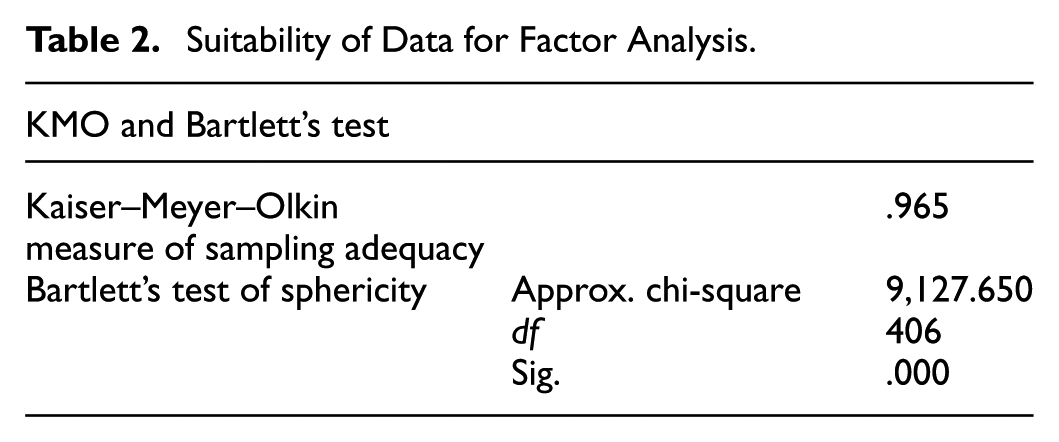
The study was performed with a sample of Bangladeshi persons who demonstrated in higher education form student engagement with ChatGPT. A non-probability purposive sampling technique was applied to select respondents who had prior experience using ChatGPT in higher education settings. The study was conducted in several stages. Specifically, the research instrument was first developed based on validated scales from prior studies and refined through expert review and pilot testing among teachers and students to ensure clarity and content validity. Reliability and construct validity were subsequently confirmed using statistical tests. The Kaiser Meyer Olkin (KMO) value of .965 and Bartlett’s Test of Sphericity (p < .001) confirmed sampling adequacy. Where Cronbach’s alpha values ranging from .836 to .898 demonstrated strong internal consistency. The final version of the questionnaire was then distributed online to students in universities, colleges and schools in Bangladesh who had prior experience using ChatGPT. This study circulated 600 surveys throughout schools, colleges, and universities, receiving 470 responses via an internet platform, resulting in 452 valid questionnaires and an effective recovery rate of 75.33%. The dataset, comprising 452 respondents, underpins the analysis in this study, providing a significant sample size about the experience of utilizing ChatGPT in higher education.
Analysis and Discussion
In this study we used multiple techniques for analyzing students’ information from different age, race and departments of students. Depending on the student’s extended understanding of how information quality, system quality, facilitating conditions, privacy and security, behavioral intentions collectively influence student engagement with ChatGPT in higher education. Combining frameworks of TAM, UTAUT, and GAI this discussion integrate statistical results with theoretical insights and contextual considerations between developed and developing countries, for example, USA and Bangladesh.
The important core findings demonstrate that information quality (IQ) and system quality have significant positive effects on student engagement (SE) conforming hypotheses H1 and H2. These results are aligned with prior research suggesting that the perceived accuracy, relevancy and clarity of information directly enhance student learning trust and willingness to use educational technologies (Gill & Kaur, 2023).
There is a positive relationship between SQ and Engagement Emphasizes the importance of technical stability, usability and responsiveness of AI platforms in the Education domain. According to Bahroun et al. (2023) and Sandhu et al. (2024) use of generative AI in higher education for smooth system interaction fosters user satisfaction and continuous usage. In this present analysis a correlation approximately .75 between SQ and SE confirms that technical reliability is an essential particle of engagement outcome.
The relationship between student concerns and engagement was mediated by privacy and security. This relationship suggests that transparent data governance and trust mechanisms improve student satisfaction and bring trust on technological improvements. According to Habbal et al. (2024) ethical data practice is a critically required pillar in AI based education systems. Information authenticity and practice of ethical education and research are getting impacted by behavioral intention where high motivation enhances engagement and overconfidence may reduce the sensitivity of information quality (Foroughi et al., 2023).
In terms of cross country comparison where U.S students demonstrated greater confidence and behavioral intention to use AI to enhance their quality of research and brainstorming new ideas whereas in Bangladeshi students expressed more concern about data privacy. Despite infrastructural gaps Bangladeshi students showed more enthusiasm on using AI platform on their Educational domain which indicates resources support and privacy intervention cloud bridge the engagement divide.
In a nutshell this study combined framework to confirm that engagement arises not only from technology design but also from ethical assurance and contextual readiness. Particularly, educational institutions must strengthen AI literacy and ensure data protection and embed responsible AI use in teaching and learning to enhance trust and long term engagement.
Among the responders, there are 315 males, constituting 69.7%, marginally fewer than females in Table 1. There are 137 female respondents, representing 30.3% of the total respondents. The respondents’ ages predominantly fall between the 18 and 28 year range, comprising 376 individuals, which represents 83.2, consistent with the age distribution typical of college and university students. The majority of responders are sophomores or above, with greater expertise in learning and comparatively clearer expectations regarding the utilization of ChatGPT (Schuetz et al., 2024).
Demographic Information of the Respondents.

Data Analysis Method
The results obtained from the distributed questionnaire survey were evaluated using Smart PLS v. 4.0, SPSS v.27 and Python software. Structural equation modeling (SEM) was performed utilizing the partial least squares (PLS) approach, in which descriptive statistics were analyzed using SPSS v.27 (Selman et al., 2024). The suitability of PLS-SEM for exploratory research is particularly relevant when the research framework includes mediating of moderating variables as the framework becomes increasingly complicated (Manley et al., 2024).
Table 2 represents that there is a strong statistical correlation among the dataset that depicts a fair research value of superiority in this study. The genuinely and superiority of the data is well tested and consistent with the dataset (Napitupulu et al., 2017). The value .965 of KMO and Bartlett with the significance of .000 indicates the data suitable for analysis with strong statistical reliability.
Suitability of Data for Factor Analysis.
Kim (2019) stated that the problem of multicollinearity exists when the VIF value is greater than 5. Table 3 pictures the VIF value as suitable for research results and superiority of the dataset collected from primary surveys conducted in this study. The VIF value of all items of the constructs is between 1.6333 and 3.085 that represents there is no multicollinearity with explanatory variables.
Multicollinearity Statistics (Variance Inflation Factor).

In order to find out the inconsistencies between and among the constructs of the model, convergent validity is justified. Strong correlation is considered when the dataset and result of the construct value fanfares .50 and appears superiority of the constructs when it is over .75. All the items of the constructs, that is, IQ, SQ, SC, BI, FC, PS, and SEC represents the values are above .50. The model fit well in the sense of CV and internal consistency is also justified with the resulted value of the constructs analyzed in the SEM model. Considering the factors loadings of the constructs of the model analysis, it is crystal clear that the loading values lies from .711 to .864 which indicating the strong loading value. The CFA also desired to be the value over .70 of the loadings. The AVE value is always acceptable when it is over .50. It is reported here that all the values are above .50 of the constructed measured in the measurement model through SEM analysis. In Table 3, The AVE value ranges from .687 to .709 which is absolutely presenting high internal consistency. CR value ranges from .60 to .70 is acceptable in exploratory research only and over .70 deals with the superiority of the primary dataset collected from in person survey or data collected from digital platform. Table 4 manifests that the values analyzed and resulted in SEM of CR are superior here as it ranges from .891 to .924. The good ranges values are identified by the SEM analyzed in Cronbach’s alpha from .836 to .898 (Figures 3 and 4).
Convergent Validity (CV) and Internal Consistency Reliability Analysis.


Structural model.
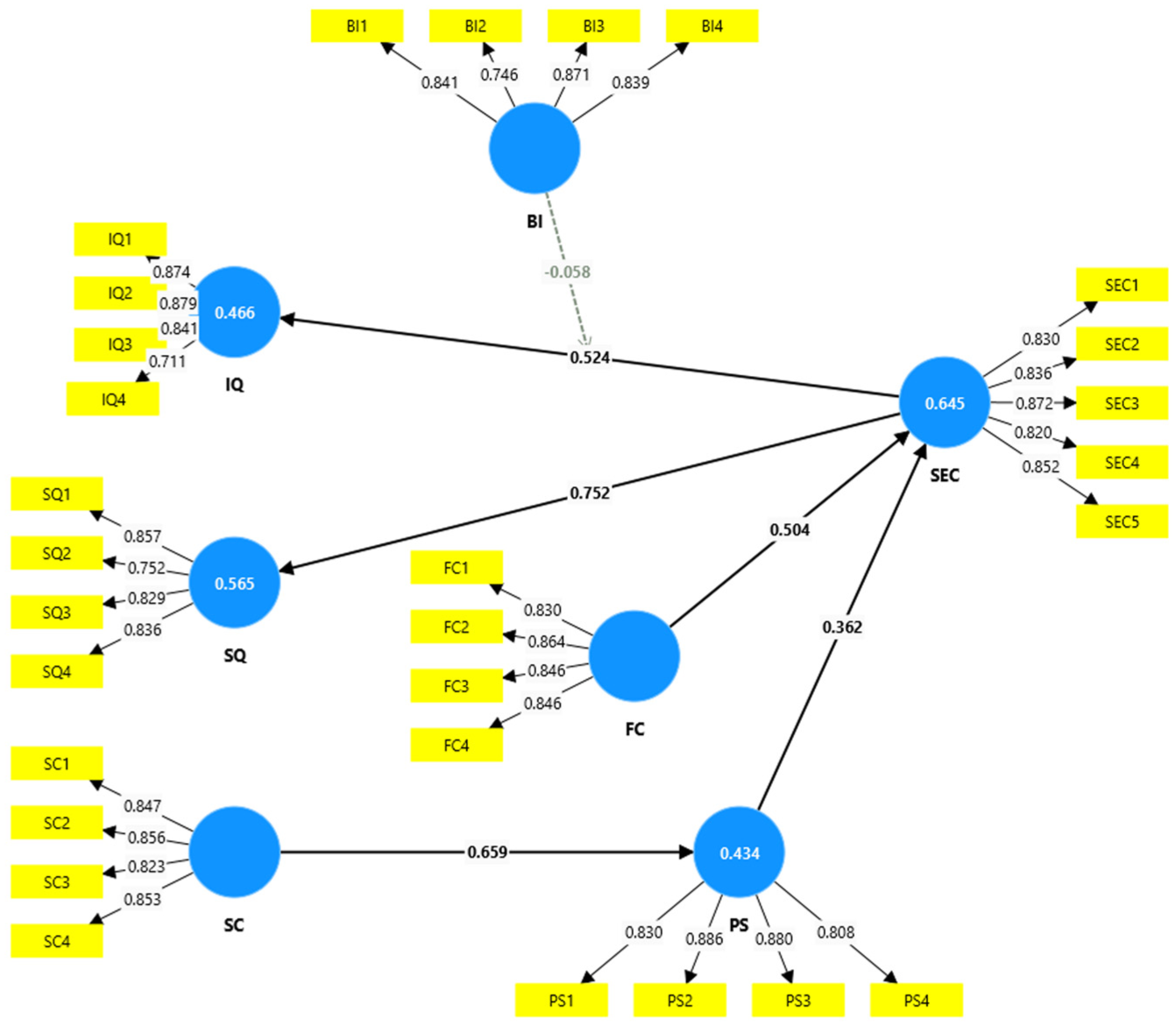
Measurement model.
Objective Wise Analysis by Python Programming
Table 5 presents the estimated coefficients for three sequential OLS regression models predicting Student Engagement (SE). Model 1 examines the effect of Information Quality (IQ) only, showing a large positive significant impact. Model 2 adds Behavioral Intention (BI), which also significantly predicts engagement, increasing the explanatory power. Model 3 includes the interaction between IQ and BI, revealing a significant negative moderation effect, indicating that the positive relationship between IQ and engagement weakens slightly as intention increases. The constant term is included for each model, and coefficients marked with three asterisks indicate statistical significance at p < .001 level.
Summary of Three OLS Models (Coefficients with SE and Significance).
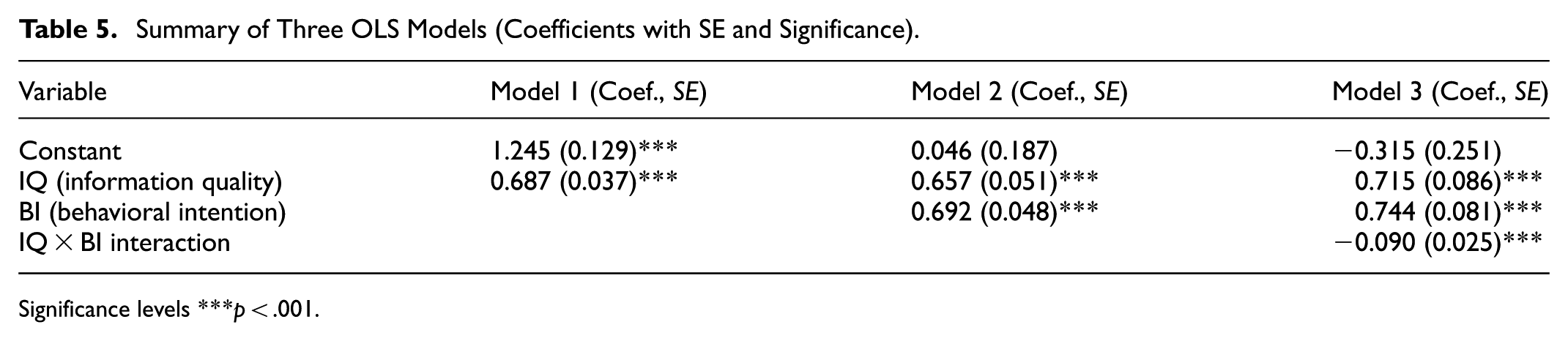
Significance levels ***p < .001.
Regression Coefficients Across Three Models
This grouped bar chart visually compares the coefficients of key variables—IQ, BI, IQ × BI interaction, and the constant—for each of the three models. The chart highlights how coefficient magnitudes change with successive model additions. The positive coefficients for IQ and BI underscore their direct contributions to engagement. The negative bar for the interaction term in Model 3 graphically conveys the moderating effect of BI on IQ’s influence. Coefficient values are labeled above each bar, facilitating clear interpretation of effect sizes (Figure 5).

Regression across three models.
Model Fit Statistics
Table 6 summarizes goodness-of-fit measures across the three models. R-squared and adjusted R-squared values reveal that Model 1 explains 43.5% of variance in engagement, while Model 2 improves model fit substantially to 59.4%, reflecting the added explanatory power of Behavioral Intention. Model 3 further increases fit slightly to 59.8% with the inclusion of the interaction term. The incremental improvements demonstrate that including more predictors progressively enhances the model’s capability to explain student engagement variance.
Model Fit Statistics.

Model Fit Statistics Across OLS Models
This line chart illustrates R2 and adjusted R2 values for Models 1, 2, and 3, emphasizing how model fit improves across iterations (Figures 6 and 7). The steep increase from Models 1 to 2 visually confirms the substantial role of Behavioral Intention in explaining engagement, while the minor gain to Model 3 reflects the incremental effect of the interaction term. Data labels on each point provide precise fit metric values for direct comparison.

Model fitness of three OLS models.

Moderation effect.
Here is the graph illustrating the moderation effect of BI on the relationship between IQ and SE:
Blue line: Represents the SE values at low BI (25th percentile). Red line: Represents the SE values at high BI (75th percentile). The graph shows how the relationship between IQ and SE varies at different levels of BI. As seen, the slope of the relationship between IQ and SE is steeper when BI is low, indicating a stronger positive relationship. Conversely, when BI is high, the relationship is less pronounced, demonstrating the moderating effect of BI The document explains how the relationship between IQ and Social Engagement (SE) varies with Behavioral Inhibition (BI). At low BI, the link between IQ and SE is stronger, while at high BI, the link is weaker.
Student Concern (SC) significantly increases Privacy Security (PS) and Student Engagement (SEC). When both SC and PS are considered, SC’s effect on SEC decreases, indicating PS partly mediates SC’s impact on SEC. The total effect of SC on SEC combines direct and indirect effects, demonstrating SC’s influence on SEC is partly due to its enhancement of PS.
The correlation between Student Concern (SC) and Privacy and Security (PS) is approximately .66 (Figure 8). This indicates a moderately strong positive relationship, meaning that higher concerns from students tend to be associated with greater attention or awareness regarding privacy and security in this dataset (Table 7).

Student concern (SC) average score.
PS Mediates Between SC (Student Concern) and SEC (Student Engagement).

Here is the scatter plot visualizing the correlation between Student Concern (SC) and Privacy and Security (PS). The strength of the Student Concern (SC) and Privacy and Security (PS) trend is indicated by the correlation coefficient, which is .66. This value suggests a moderately strong positive relationship between the two variables. A correlation of .66 means that as Student Concern increases, Privacy and Security also tends to increase. The relationship is not perfect (a perfect positive correlation would be 1), but it is strong enough to suggest that these two factors are positively related in a meaningful way.
The dataset contains columns that appear to represent various constructs through multiple items, labeled as IQ1 to IQ4, SQ1 to SQ4, FC1 to FC4, and SEC1 to SEC5. FC1 to FC4 likely represent the Facilitating Condition (FC) construct. SEC1 to SEC5 likely represent the Student Engagement (SE) construct. The correlation between Facilitating Condition (FC) and Student Engagement (SE) is approximately .76. This indicates a strong positive relationship between these two variables, suggesting that higher facilitating conditions are associated with greater student engagement in this dataset.
Visualization
The correlation between System Quality (SQ) and Student Engagement (SE) is approximately .75. This indicates a strong positive relationship between these two variables, similar to the relationship found between Facilitating Condition and Student Engagement (Figures 9 and 10).

Facilitating condition (FC)—average score.

System quality (SQ)—average score.
Visualization
Here is the scatter plot visualizing the correlation between System Quality (SQ) and Student Engagement (SE). H2.1: Can we predict SE using FC/SQ? Yes, we can use Facilitating Condition (FC) and System Quality (SQ) as predictors to build a model that predicts Student Engagement (SE). Mean Squared Error (MSE): 0.23 (lower is better; this indicates the average squared difference between predicted and actual SE values). R-squared (R2): .64, meaning that 64% of the variance in Student Engagement is explained by the model using FC and SQ.
The correlation between Information Quality (IQ) and Student Engagement (SE) is approximately .66. This indicates a moderately strong positive relationship, meaning that higher information quality tends to be associated with greater student engagement in this dataset.
Multiple Regression Analysis
See Table 8.
OLS Regression Results.

Regression Results (Coefficients)
Regression Results (Coefficients).

Residual Statistics.

Note. Standard Errors assume that the covariance matrix of the errors is correctly specified.
Network Analysis
The network graph of survey questions shows correlations with nodes representing questions and edges indicating the strength of correlations (Figure 11). Examining the particular cluster have most influence on using ChatGPT on education from this analysis.

Survey analysis.
Survey analysis on using ChatGPT in education reveals that questions about ChatGPT’s effectiveness and integration (nodes Q20BI4-developing ideas or research many viewpoints, Q21 Faciliting conditions—Produce student’s feedback to help them become better writer, Q22 Facilitating conditions—provides prescriptive thoughts on current events, Q9, Q10) are central and highly connected, indicating strong correlations and consistent opinions. Key nodes like Q10 System quality impact critical skills and Q9 System Quality—user friendly are pivotal for understanding ChatGPT’s impact. Strong correlations, especially with Q21, suggest positive views on ChatGPT’s language improving e-learning. These insights can help educators focus on critical areas to enhance ChatGPT’s academic integration and effectiveness.
The more dark color in pathway the more effect it has on the nodes (Figure 12).

Confusion matrix for behavioral intention (BI).
Analysis of the Confusion Matrix for Behavioral intention (BI4) the confusion matrix for the Behavioral Intention (BI4) column provides insights into the accuracy of predictions for different classes.
Statistical Test—Kruskal–Wallis H-Test
Test statistic: 2.55 p-value: .47 The Kruskal–Wallis H-test, a non-parametric method, was used to determine if there are statistically significant differences in the privacy security scores across different education levels. With a p-value of .47, which is greater than the common significance level of .05, we fail to reject the null hypothesis (Figure 13). The PS scores appear to be similar across different educational backgrounds, suggesting that education level alone does not influence privacy security caution significantly.

Correlation matrix for behavioral intention (BI).
The correlation matrix provides insights into the relationships between the different Behavioral Intention (BI) columns (BI1, BI2, BI3, and BI4). The highest correlation is between BI3 and BI4 (.648991), suggesting these two measures are closely related. BI1 also shows strong correlations with BI3 (.618556) and BI4 (.625757).
Discussion
The section now explicitly addresses each of the six research questions, integrating theoretical insights, empirical results, and cross-country contextual comparisons. The narrative links the questions logically, beginning with foundational technology quality factors, progressing through mediators/moderators like behavioral intention and privacy concerns, and concluding with implications for educational policy and pedagogy.
The study’s findings align with the core assumptions of the Technology Acceptance Model (TAM) and Unified Theory of Acceptance and Use of Technology (UTAUT), indicating that system quality and information quality significantly influence students’ behavioral intention and engagement with ChatGPT (Davis, 1989; Venkatesh et al., 2003). Facilitating conditions and effort expectancy further impact usage, consistent with UTAUT’s framework. Additionally, privacy concerns, particularly in developing country contexts, extend these models by highlighting ethical considerations critical for AI adoption (Williams et al., 2024). Engagement theory complements these insights by emphasizing meaningful learner-technology interaction as foundational for educational outcomes (Fredricks et al., 2004).
Research Question 1: Impact of System Quality, Information Quality, and Facilitating Conditions
Our findings show strong positive effects of system and information quality on student engagement with ChatGPT across both developed (USA) and developing (Bangladesh) countries. This aligns with previous research emphasizing the role of usability, accuracy, and stability of AI tools to foster trust and interaction (Mahmud et al., 2023). Facilitating conditions—such as institutional support and technological access—appear critical to sustaining engagement, particularly in settings with infrastructural limitations.
Research Question 2: Role of Privacy and Security Concerns, Especially in Developing Countries
Privacy and security concerns distinctly impact engagement in Bangladesh, where students express stronger apprehensions related to data misuse and authenticity. This illustrates the ethical challenges of AI integration in education within developing contexts, affirming calls for robust data governance and ethical frameworks (Habbal et al., 2024). The mediating role of privacy concerns between student worries and engagement highlights the need for transparent AI policies.
Research Question 3: Technological and Infrastructural Differences Affecting Adoption
Cross-country comparison reveals US students have greater behavioral intention and flexibility in AI use, supported by superior infrastructure and institutional facilitation. Conversely, Bangladeshi students demonstrate enthusiasm despite infrastructural gaps and privacy concerns, suggesting that targeted policy interventions can narrow engagement divides and support equitable AI adoption.
Research Question 4: Influence of Behavioral Intention on Engagement
Behavioral intention positively affects student engagement; however, the moderation analysis shows that higher behavioral intention may slightly dampen the influence of information quality on engagement. This nuanced relationship suggests that students with high intention might rely more on AI, potentially overlooking information quality, an insight for educators to manage over-reliance.
Research Question 5: Moderating Effects of Privacy and Ethical Factors
Ethical awareness and perceived data security significantly strengthen the connection between student concerns and their engagement. This underscores the importance of fostering trust through ethical AI use, transparency, and explicit communication of data protection measures in educational institutions.
Research Question 6: Enhancing Engagement Through Policy and Pedagogical Interventions
The study emphasizes the role of AI literacy programs, clear guidelines on AI use, ethical data policies, and digital infrastructure development—especially in developing nations—as vital strategies to sustain and enhance student engagement with ChatGPT. Faculty training and human oversight should complement technological rollouts for balanced adoption.
Implications
ChatGPT has an impact on higher education as students are studying different fields where social science, science, economics, psychology and other areas are covered with the technology of artificial intelligence using nonhuman intelligence to solve their problems.
Institutional Implication
Student engagement has been becoming a vital point in higher education through the use of ChatGPT where responses are prompt. Competencies of students are developing today’s scenario of technology adaptation. Students can draft their desired articles within a minute using ChatGPT. AI makes coherence and accuracy perfect. Expert professional knowledge is not needed to generate an AI result with the tech of ChatGPT now. AI language tools and techniques are rebuilding the higher education new horizons of education. The general educational goals are going to be achieved using the capabilities of AI and ChatGPT in higher education. It will finally boost student engagement. Scientists and technicians are using the ultimate technology to determine the scientific results to generate the complex value using this (Rahman et al., 2024). AI improved education designs will improve the quality of higher education system and pursue generalized designs of education, knowledge accumulating, solving coding problems, saving coding time, less human intelligence to write long codes and finally engage students largely. In the USA, students experience a smoother adoption of ChatGPT, aided by better infrastructure, whereas in Bangladesh, concerns about data privacy and security are more pronounced (Choudhury & Shamszare, 2024). The study emphasizes the need for robust technological support and clear data protection policies, especially in developing regions.
Ethical Implication
There are some ethical impacts of ChatGPT following biased data management using AI technology. The data related to social, economic factors regarding gender, race, and others will be biased due to the stock of same information and generating results over and over (Bhuiyan et al., 2024). When student’s data are retrieved and collected, it can raise a data privacy issue. Sometimes it generates the risks of data transparency whether the source of the data is original, whether the data are fake or not. Here structural ethical guidelines are needed to develop to control the use of AI technology to keep the data originality (Faraji et al., 2024). Behavioral intention and trust in technology play critical roles in shaping student engagement, suggesting that students are more likely to use AI tools if they perceive them as reliable and beneficial. Moreover, the findings highlight the potential of ChatGPT to enhance academic performance by offering personalized learning support, improving writing skills, and streamlining academic tasks. However, challenges such as plagiarism and over-reliance on AI for academic work remain concerns for educators.
Social Implications
The implications of the findings of this study are also of great social concern especially in the case of the digital divide in the world. This difference in the facilitating conditions and the technology infrastructure in USA and Bangladesh is an indication that AI technologies, such as ChatGPT, can increase educational inequalities (Kondurkar et al., 2023). Students in the developed worlds can experience an academic advantage, and their counterparts in the developing world could experience access and usability drawbacks. This poses a threat of intensifying socio-economic differences. Additionally, the increased level of privacy anxieties in the emerging situation can be attributed to the fact that a serious social problem of creating digital trust and establishing effective data protection systems requires a solution, so that the implementation of AI does not increase the risk of vulnerable groups (Sabeh, 2024).
Technological implication
The use of AI and ChatGPT are now in classroom to present the contents of the teachers, making notes of the students, organizing some complex pattern of data turning into meaningful information and so forth. Proper technological know-how will really enlighten the knowledge of aged teachers and flourish the modern teachers to educate their students that would boost up the intensity of student’s engagement. Interactive learning experience are led to foster student engagement. It has become a ubiquitous mechanism of learning off and on classroom and higher education platform. Psychological factors like stress and anxiety about their study materials are relaxed having the smart use of this technology benefitting saving valuable time. Future oriented teaching institutions are adopting the ChatGPT for their students, educators, professionals, researchers, technicians, specialists and other group of stakeholders. Many models are developed for underprivileged community to engage in higher education learning modules. While AI tools offer substantial benefits for improving learning experiences, addressing infrastructure gaps and privacy concerns, particularly in developing countries, is essential. This research contributes to a growing body of knowledge on AI in education, demonstrating that ChatGPT can foster student engagement, provided that technological and ethical concerns are effectively managed (Hunde et al., 2023). Future work should aim to expand this research to other countries, explore the long-term effects of AI on education, and delve deeper into ethical implications such as data transparency and academic integrity.
Conclusion
This study explores the integration of ChatGPT in higher education, focusing on student engagement in both developed (USA) and developing (Bangladesh) contexts (Ghose et al., 2025). The research shows that information quality, system quality, and facilitating conditions significantly influence student engagement with AI tools like ChatGPT. However, differences between the two countries, particularly in technology infrastructure and privacy concerns, highlight the contextual challenges that must be addressed to maximize AI’s benefits in education.
The present research sums up its results to put forward a more sensitive, context-sensitive theoreticalization of AI adoption in teaching. Theoretically, this study has two important implications: First, it empirically synthesizes the pedagogical theory and the technology adoption models by establishing the role of student engagement as a determining factor, which shows how the technical inputs are converted to intention. Second, it openly criticizes the so-called developed-world bias in the current literature. Our model, comparing the USA and Bangladesh, indicates that core factors (such as the quality of information) are universal, but consequences of contextual factors, namely the factors of facilitating conditions and privacy concerns are extremely different, thereby developing a less monolithic view of technology acceptance.
“Authors have believed colleges and universities should work proactively to enhance the learning conditions at school by providing clear definitions, incentives, and training in AI,” they conclude. Teachers ought to focus on material that optimizes the strengths of ChatGPT while sensitizing learners to quality issues. To ensure fair deployment, developing contexts need to tackle infrastructure deficits along with heightening privacy issues. Future research should explore learning outcomes over a period of time and examine for differences in curriculum if any with engagement with AI.
Limitations
This study has several limitations. Firstly, it focuses only on students from two countries, the USA and Bangladesh, which may not represent the global perspective on ChatGPT adoption in higher education. Additionally, the data is based on self-reported questionnaires, which can be influenced by bias, and factors like cultural differences were not deeply explored. Another limitation is the rapid evolution of AI technologies like ChatGPT, meaning the findings may quickly become outdated.
Future Directions
Future research should consider expanding the geographical scope to include more diverse educational contexts. Longitudinal studies could offer insights into how engagement with AI tools evolves over time. There is also a need for qualitative research to explore the deeper implications of AI integration in education, including ethical concerns and its impact on student creativity. Investigating the role of AI in different academic disciplines and its effects on both students and educators could provide further insights.
Footnotes
Acknowledgements
Authors are also deeply grateful to the participants of the survey, whose willingness to share their experiences and insights made this research possible.

Author Contributions
Conceptualization—M.M.I.; Methodology—M.R.I.B.; Software—T.S. and S.U.; Validation—M.M.I. and M.R.I.B.; Formal Analysis—T.S. and S.U.; Investigation—M.M.I., A.A., and M.R.I.B.; Resources—M.M.I. and M.R.I.B.; Data Curation—A.A. and S.U.; Writing—Original Draft—M.M.I., M.R.I.B. and A.A.; Writing—Review and Editing —M.R.I.B., and A.A.; Visualization—M.M.I. and S.U.; Supervision—M.R.I.B.; Project Administration—M.M.I. and M.R.I.B.
Funding
The authors received no financial support for the research, authorship, and/or publication of this article.
Declaration of Conflicting Interests
The authors declared no potential conflicts of interest with respect to the research, authorship, and/or publication of this article.
Data Availability Statement
Data will be available upon reasonable request.*