




Abstract
The cultivation of entrepreneurial capabilities among return migrants plays a pivotal role in advancing rural revitalization strategies. This study employs a configurational perspective to explore the antecedent conditions that are associated with entrepreneurial capabilities of return migrants. Leveraging data from China’s Fourth National Outstanding Rural Entrepreneurship Leaders Case Collection, this study reveals four distinct configuration pathways that enhance entrepreneurial capabilities. These include the Educational Capital-Driven Pathway, the Network Embeddedness Pathway, the Education-Network Synergy Pathway, and the Resource-Network Integration Pathway. The findings demonstrate that entrepreneurial capability development manifests through multiple equifinal combinations of human, social, and organizational capital. These results are associated with the resource-based view and dynamic capabilities theory by elucidating the complex interdependencies between individual attributes and organizational resources. Practically, the findings offer evidence-based recommendations to optimize pre-entrepreneurship training programs and policy interventions that strengthen human capital development, cultivate social networks, and enhance resource integration. These insights inform policymakers and development practitioners seeking to improve the quality and sustainability of returning migrant entrepreneurship initiatives.
Plain Language Summary
When migrant workers return to their hometowns and start businesses, they can help create jobs and boost local economies—a key goal of China’s rural development plans. But what helps these returning entrepreneurs succeed? This study looks at real-life success stories from China’s rural areas to answer this question. We analyzed 113 cases of successful rural entrepreneurs recognized by China’s Ministry of Agriculture. Four main factors stood out: 1) Education and skills gained through schooling, 2) Work experience from cities or past jobs, 3) Support from local organizations, and 4) Strong professional networks. The research shows there’s no single “right way” to succeed—different combinations of these factors can work. For example: Some entrepreneurs succeed by combining their education with strong local connections. Others leverage both their professional networks and organizational support.Those without advanced education might compensate through rich work experience and community ties. These findings matter because they help governments and training programs better support returning migrants. Rather than offering one-size-fits-all training. programs could: Help entrepreneurs identify which combination of strengths they already have Provide targeted skill-building (like financial planning for those with technical expertise) Connect them with mentors and local business networks The study also shows why rural development policies need to address both personal growth (like education) and community resources (like startup funding programs). For instance, a farmer returning from city work might need help turning their construction skills into a contracting business while accessing local farming cooperatives’ resources. By understanding these success patterns, communities can create better support systems—helping more returning migrants start sustainable businesses, reduce urban-rural inequality, and keep rural areas thriving. This research
Introduction
Amid China’s dual national initiatives of Rural Revitalization and the Mass Entrepreneurship and Innovation campaign, return migrant entrepreneurs have become critical agents in rural economic transformation. Official statistics from Ministry of Agriculture and Rural Affairs of the People's Republic of China (2021) reveal sustained growth in return migration entrepreneurship. The population engaging in rural entrepreneurial activities surged by 19% year-on-year to 10.1 million in 2020, generating 19 million local employment opportunities. This upward trajectory continued, reaching 15 million entrepreneurs by 2025. While these developments underscore the strategic importance of returning entrepreneurs, systemic barriers persist (Chen, 2002; Naminse & Zhuang, 2018). Structural constraints interact with individual-level challenges, particularly entrepreneurial capability deficits, hinder the sustainability and scalability of rural ventures. These intertwined barriers highlight the need for multidimensional interventions addressing both institutional environments and human capital development (Gu & Hondroyiannis, 2024; Qiu et al., 2022). Ma et al., (2018) emphasize that a significant barrier to the success of rural entrepreneurship is the constrained entrepreneurial capabilities of return migrants. Consequently, enhancing the entrepreneurial capabilities of return migrants is of paramount importance (Qiu et al., 2022).
Nevertheless, current academic discourse has not sufficiently emphasized the capabilities needed for rural entrepreneurship. This omission has impacted the effectiveness of government support policies designed to foster such activities (Tabares et al., 2022). Research highlights that academic discussions predominantly focus on urban entrepreneurship, emphasizing opportunity exploitation while insufficiently addressing the specific capabilities required for rural entrepreneurship. They typically stress individual alertness, strategic orientation, and firm growth, while measurement approaches often rely on growth-based or financial indicators (e.g., Bacigalupo et al., 2016). Although such perspectives offer valuable insights, they tend to overlook context-dependent outcomes such as institutional adaptation, which limits their explanatory power when applied to rural settings. As Low (1988) observed, entrepreneurship research requires clearer reflection on its theoretical boundaries, and Korsgaard et al. (2015) further argued that entrepreneurial action must be understood as contextually embedded. Building on these critiques, this study highlights the theoretical divide between urban- and rural-focused literatures. It situates return migrants’ entrepreneurial capabilities within the rural context, where institutional and community factors are decisive. Unravelling the determinants that influence rural entrepreneurial capabilities is essential to addressing this issue effectively (Luo et al., 2024).
Bird (1988) pioneered the entrepreneurial capability framework, emphasizing that entrepreneurial success depends largely on a set of underlying competencies rather than solely on traits or skills. These competencies enable entrepreneurs to navigate uncertainty and dynamically construct viable ventures. Building on this, Man et al. (2002) elaborated entrepreneurial capabilities as a multidimensional construct comprising personal attributes, cognitive skills, functional skills, and social competencies. This holistic view stresses that entrepreneurial competence integrates knowledge, skills, and attitudes across different domains to support venture creation and development.
This study builds on established models to conceptualize return migrants’ entrepreneurial capabilities as a composite of human, social, and organizational capital (Coleman, 1988; Nahapiet & Ghoshal, 1998; Lin, 2002). Human capital comprising education and prior work experience captures the knowledge, skills, and problem-solving abilities entrepreneurs mobilize to identify and exploit opportunities; education also provides explicit and tacit knowledge for better decisions. Social capital reflects the entrepreneur’s networks, enabling access to information, resources, legitimacy, and support; for return migrants, well-established networks can bridge rural resource gaps to foster knowledge transfer and collaboration (Su et al., 2025). Organizational capital encompasses firm-level assets, structures, and routines that enable resource integration, economies of scale, technological advantage, and coordinated action in competitive settings.
Operationalization uses four core indicators: educational attainment and prior work experience; organizational networks and organizational resources. Educational attainment and prior work experience reflect human capital, as they provide both codified knowledge and tacit learning that shape entrepreneurial cognition and skills. Organizational resources correspond to organizational capital, encompassing the structural, cultural, and technological assets that sustain entrepreneurial activity. organizational networks capture social capital, enabling access to information, the building of trust, and the mobilization of opportunities across relational ties. Framing these dimensions as human, organizational, and social capital clarifies the rationale for operationalization these indicators. This classification aligns with the Resource-Based View (RBV) and Dynamic Capabilities Theory (Teece et al., 1997), which together explain how entrepreneurs develop, configure, and deploy resources to pursue growth and competitive advantage.
Current research predominantly employs a singular perspective to examine the net impact of individual factors, typically utilizing quantitative methods such as multiple regression analysis. While valuable, this approach often overlooks the synergistic effects arising from the interaction of multiple factors. In contrast to quantitative approaches, the fuzzy-set Qualitative Comparative Analysis (fsQCA) offers a distinct advantage by emphasizing the inherent connections among conditional variables. By employing fsQCA, this study explores the underlying mechanisms and pathways for enhancing this capability and offers strategic management recommendations aimed to foster improvement.
This study employs 121 total cases (113 valid cases) from the Compilation of Classic Cases of the 4th Batch of Excellent Leaders of Rural Innovation and Entrepreneurship, published by the Ministry of Agriculture and Rural Affairs of China. Appling fsQCA, it identifies conditional configurations linked to varying levels of entrepreneurial capability among return migrants and clarifies the underlying mechanisms connecting these configurations to capability differences. By mapping out the configurational pathways for capability enhancement, the study aims to deepen the scientific comprehension of the mechanisms that drive and enhance return migrants’ entrepreneurial capability. Furthermore, this study seeks to provide actionable insights and valuable references for the development of national policies in China that are designed to support return migrants’ entrepreneurship. It also offers guidance for individuals looking to augment their own entrepreneurial capabilities, thereby contributing to the broader goal of fostering a more innovative and dynamic entrepreneurial ecosystem.
Theoretical Analysis
Theory Framework of Entrepreneurial Capability
The RBV emphasizes that sustained competitive advantage arises from unique, valuable, and inimitable firm resources (Barney, 1991). For returnee entrepreneurs, these resources include human capital (education and experience), organizational assets, and relational networks. However, the RBV’s focus on relatively stable resources limits its explanatory power in dynamic and uncertain contexts faced by return migrants. To address this, the Dynamic Capabilities framework highlights the entrepreneur’s ability to integrate, adapt, and reconfigure resources over time to meet changing external conditions (Teece et al., 1997).
Drawing from the resource-based view (RBV) and dynamic capabilities (DC), this study views return migrants’ entrepreneurial capability as a product of synergistic resource endowments. It also emphasizes adaptive reconfiguration within rural institutional contexts. Human capital, such as education and prior experience, enhances opportunity recognition and problem-solving. Social capital, including organizational networks, facilitates access to information, legitimacy, and resources. Organizational capital supports coordination and enables economies of scale. Yet possessing resources is insufficient in dynamic environments. DC emphasizes entrepreneurs’ abilities to sense, seize, and reconfigure resources as external conditions shift. Institutional theory complements this view by providing insights into how certain configurations emerge in specific contexts (Shen et al., 2025).
Together, these theories justify four configurations as distinct, but equally viable, paths to higher entrepreneurial capability. Mechanisms vary across different paths.
For example, high human capital combined with dense networks may offset weaker organizational assets in favorable policy contexts. In contrast, strong organizational resources and robust networks may succeed where institutional legitimacy is high. This integrated framework clarifies how the four pathways arise and operate, guiding fsQCA analysis toward theoretically interpretable configurations. Recent studies further validate this approach. For example, institutional environments critically shape entrepreneurial success among returnees through complex configurational effects (Shen et al., 2025), while continuous entrepreneurial learning fosters adaptation in migrant entrepreneurs (Liu, 2025). Emerging technologies, such as generative AI, also influence entrepreneurial creativity and adaptability (Chung, 2025), reinforcing the need to consider both resource endowments and dynamic processes.
This study adopts a multidimensional framework, grounded in four key perspectives: entrepreneur traits, opportunities, management, and relationships. It delineates four pivotal factors that influence the enhancement of entrepreneurial capability, spanning both internal and external dimensions. These factors include educational attainment, work experience and prior experience, organizational resources, and the organizational relation network.
Educational attainment is primarily an individual-level factor, exerting its influence by augmenting the knowledge base and skill set of return migrants, thereby elevating their entrepreneurial capability. Work experience and prior experience permeate both individual and organizational realms, with their impact resonating at dual levels. The integration and application of organizational resources represent an organizational-level factor, where the enhancement of entrepreneurial capability and the growth of organizational resources are interdependent and mutually reinforcing. The organizational relation network, a factor that straddles both individual and organizational levels, plays a crucial role in leveraging social capital and fostering collaborative opportunities. It is through these interlinked networks that return migrants can access diverse resources, information, and support, which are essential for navigating the entrepreneurial landscape effectively.
Determinants Shaping Return Migrants’ Entrepreneurial Capability
The framework to enhance return migrants’ capabilities incorporates four interrelated perspectives: entrepreneur traits, opportunity recognition, managerial acumen, and relational dynamics. These dimensions are distinct yet tightly connected in shaping entrepreneurial capability. They function both as independent influences and as interconnected elements, each bringing a unique emphasis to the multifaceted journey of enhancing entrepreneurial capability.
Entrepreneurial capability is not enhanced in a linear fashion. Instead, it results from a complex interplay of multiple influencing factors. Each variable, while impactful in its own right, also interacts with others to give rise to a synergistic effect that propels the development of a robust entrepreneurial skill set. (1) Educational Attainment (EA): This variable denotes the degree of formal academic instruction that return migrants have acquired, either prior to embarking on their entrepreneurial pursuits or concurrently with their business initiatives. It is a critical component of their educational background, reflecting the structured body of knowledge and skills gained through recognized educational institutions. The EA of return migrants is posited to significantly influence their capacity to conceptualize, strategize, and innovate within their entrepreneurial ventures, underscoring the importance of academic preparation in shaping entrepreneurial capability. (2) Work Experience and Prior Experience (WEPE): This multifaceted factor encapsulates the breadth of professional exposure return migrants have garnered prior to their entrepreneurial ventures. This factor includes industry experience, offering deep insights into sector-specific dynamics. It also includes start-up experience, such as past ventures or startup involvement. Functional and general business experience together are related to a broad skill set and deeper operational understanding. (3) Resources of the Organization (RO): This pivotal factor pertains to the array of knowledge, technological assets, and additional resources that are under the purview of the return migrants' organizations. It encompasses the intellectual capital, including proprietary knowledge and expertise, as well as the technological infrastructure that forms the backbone of the organization's operational capabilities. Furthermore, the RO factor also involves the tangible and intangible assets that the organization can harness to innovate, compete, and grow within its market domain. (4) Relation Network of the Organization (RNO): This critical factor delineates the capacity of the return migrants' organization to derive information and knowledge from its network affiliates by actively cultivating and maintaining robust network relationships. It underscores the organization's ability to tap into a rich vein of resources, insights, and collaborative opportunities that reside within its professional and social networks.
In summary, Educational Attainment (EA), Work Experience and Prior Experience (WEPE), Resources of the Organization (RO), and the Relation Network of the Organization (RNO) constitute the critical antecedent conditions shaping the entrepreneurial capabilities of return migrants. These conditions can operate independently or interact in complementary ways to yield diverse pathways for capability enhancement. Building upon this theoretical analysis, this study advances the following propositions:
Proposition 1: The combination of educational attainment and organizational relational networks significantly enhances the entrepreneurial capabilities of return migrants.
Proposition 2: The complementary interaction between organizational networks and organizational resources mitigates educational disadvantages and fosters capability development.
Proposition 3: The inclusion of educational and resource elements is crucial for organizational networks to effectively enhance entrepreneurial capabilities.
Proposition 4: Return migrants can develop alternative pathways to enhance entrepreneurial capabilities through reflection and integration of prior experiences.
These propositions establish the theoretical expectations for the subsequent configurational analysis and provide a foundation for explaining the heterogeneity of capability enhancement pathways.
Research Design
Methodology
Qualitative Comparative Analysis (QCA) uses configurational logic to unravel causal complexity, especially in small- to medium-sized samples (Rihoux, 2006). It focuses on how different combinations of conditions jointly produce an outcome, highlighting the empirical–theoretical interplay underlying the phenomenon rather than isolating single variables. Fuzzy-set Qualitative Comparative Analysis (fsQCA) extends crisp-set QCA by allowing conditions to have degrees of membership between 0 and 1. This calibration accommodates qualitative and subjective data more precisely, reduces dichotomous measurement error, and captures the reality that factors influence outcomes to varying degrees, thus enhancing methodological rigor and validity. In QCA, with k conditions there are 2 k possible configurations, making it particularly powerful for medium-to-small samples. Entrepreneurial capability, arising from complex, nonlinear interactions internal and external to the entrepreneur, benefits from this configurational approach by revealing multiple pathways to capability enhancement.
This study utilizes a medium-sized sample of 113 returnee entrepreneur cases to harness the strengths of fsQCA in uncovering configurational patterns associated with enhanced entrepreneurial capabilities. Through theoretical grounding and detailed case analysis, four key conditional variables were identified as pivotal in explaining variations in entrepreneurial capability. The multi-configurational analysis performed enables a nuanced examination of how different combinations of these conditions are linked with improved entrepreneurial outcomes.
Data and Sample
The empirical data utilized in this study were drawn from the Compilation of Classic Cases of Returning Entrepreneurs officially published by the Ministry of Agriculture and Rural Affairs of China. This compilation features government-recognized exemplary returnee entrepreneurs with verified achievements in enterprise performance, social contribution, and rural revitalization. The cases were standardized in format, covering educational and professional backgrounds, organizational resources, and entrepreneurial outcomes.
A purposive sampling approach was adopted to illuminate the configurations of high-level entrepreneurial capabilities. The initial search identified 113 cases with usable records. Eight cases were excluded given the lack of complete measurements for key variables. The final sample consists of 113 cases for fuzzy-set qualitative comparative analysis (fsQCA).
Calibration was conducted following the methodological principle that fuzzy-set membership scores should be both theoretically grounded and empirically sensitive (Ragin, 2008; Schneider & Wagemann, 2012). Each variable was operationalized based on established theoretical frameworks and systematically coded from the official case records.
Outcome Variable (Entrepreneurial Capability Enhancement, ECE)
The outcome variable captures the enhancement of returnee entrepreneurial capability, operationalized through two core dimensions emphasized in rural revitalization policies: (a) participation in or organization of farmer cooperatives, and (b) expansion of enterprise scale through horizontal or vertical integration. All cases were assigned a baseline membership score of 0.6, with each dimension satisfied increasing the score by 0.2. This operationalization reflects the composite and multidimensional nature of entrepreneurial capability outcomes.
Education Attainment
Following human capital theory, which highlights formal education as a source of cognitive capacity and learning ability (Becker, 1964), educational attainment was calibrated into four ordered levels: no education (0), primary/middle school (0.33), secondary vocational or high school (0.67), and associate’s degree or above (1). This reflects a progressive enhancement in the cognitive resources available to entrepreneurs, consistent with empirical observations in the case records.
Work Experience and Prior Experience
Entrepreneurial learning research emphasizes that prior experience, especially industry-specific experience, significantly shapes entrepreneurial knowledge and opportunity recognition (Politis, 2005; Shane, 2000). Accordingly, work experience was calibrated into three levels: no relevant work experience (0), general or cross-industry experience (0.5), and directly relevant industry experience or specialized experience (1). The case evidence allowed consistent classification across these categories.
Organizational Resources
Grounded in the resource-based view (Barney, 1991) and resource orchestration theory (Sirmon & Hitt, 2003), organizational resources were distinguished by their potential to confer competitive advantage. Four levels were calibrated: none (0), low (0.33, strict implementation of existing processes), medium (0.67, utilizing resources to improve processes or create new knowledge), and high (1, industry-leading innovation or filling knowledge gaps). This operationalization aligns theoretical expectations with qualitative distinctions observed in the cases.
Organizational Network Relationships
Social capital theory emphasizes the importance of access to resources and information through network ties (Bourdieu, 2018; Burt, 1992; Granovetter, 1973). In our dataset, the case material only distinguished the presence or absence of such relationships. Following the recommendation by Schneider and Wagemann (2012) that dichotomous calibration is appropriate when qualitative variation is limited, we coded this condition as a binary set: 0 for no access and 1 for access to network-based resources. This supports both conceptual clarity and methodological rigor.
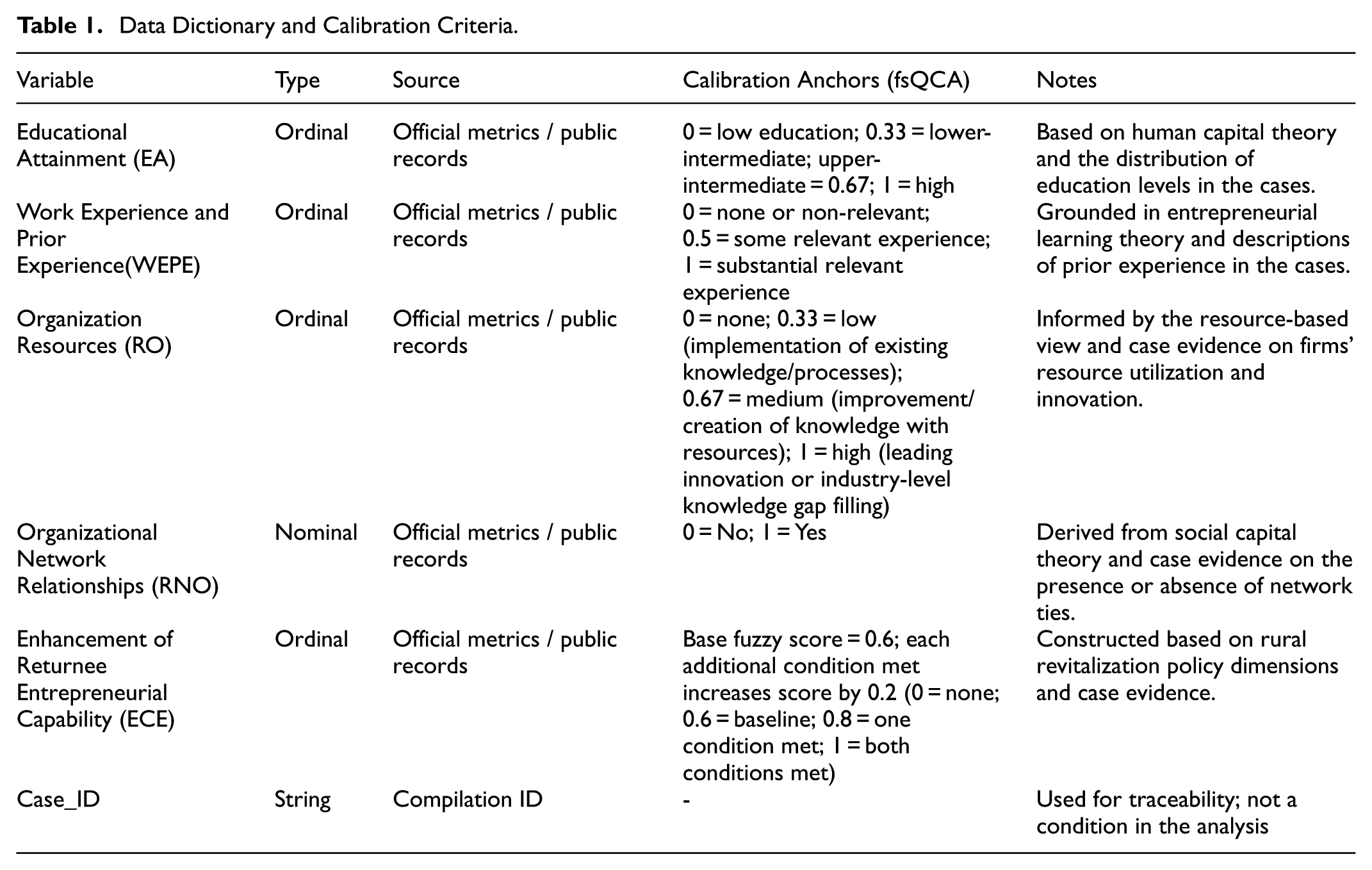
Data extraction and coding followed a two-stage process. First, two independent researchers coded the variables related to background, organization, regional/industrial context, and outcomes. Second, discrepancies were resolved through discussion with a senior coder. Inter-coder reliability was assessed (α = .85). All variables were calibrated into fuzzy-set membership scores in [0, 1] using predefined anchors (full membership, full non-membership, and a crossover point). The calibration rules are detailed in Table 1.
Data Dictionary and Calibration Criteria.
While these cases represent only officially recognized successful returnee entrepreneurs rather than the wider return migrant entrepreneur population, this focus aligns with our research objective to uncover causal mechanisms underpinning high-level entrepreneurial capabilities. Guided by the principle of theoretical sampling and extreme-case design (Eisenhardt & Graebner, 2007; Patton, 2002; Ragin, 2010), selecting successful cases facilitates clearer identification of distinct configurational pathways leading to entrepreneurial success.
To assess sample representativeness within this subgroup, we compared demographic and sectoral characteristics of our sample against available national statistics on returnee entrepreneurs. The distributions of age, education level, and industry sector show substantial consistency, supporting the sample’s suitability for investigating success mechanisms.
Figure 1 illustrates the sampling procedure from source identification to final sample inclusion. Table 2 reports basic distributions of entrepreneur types, regional coverage, and industries before and after exclusions.
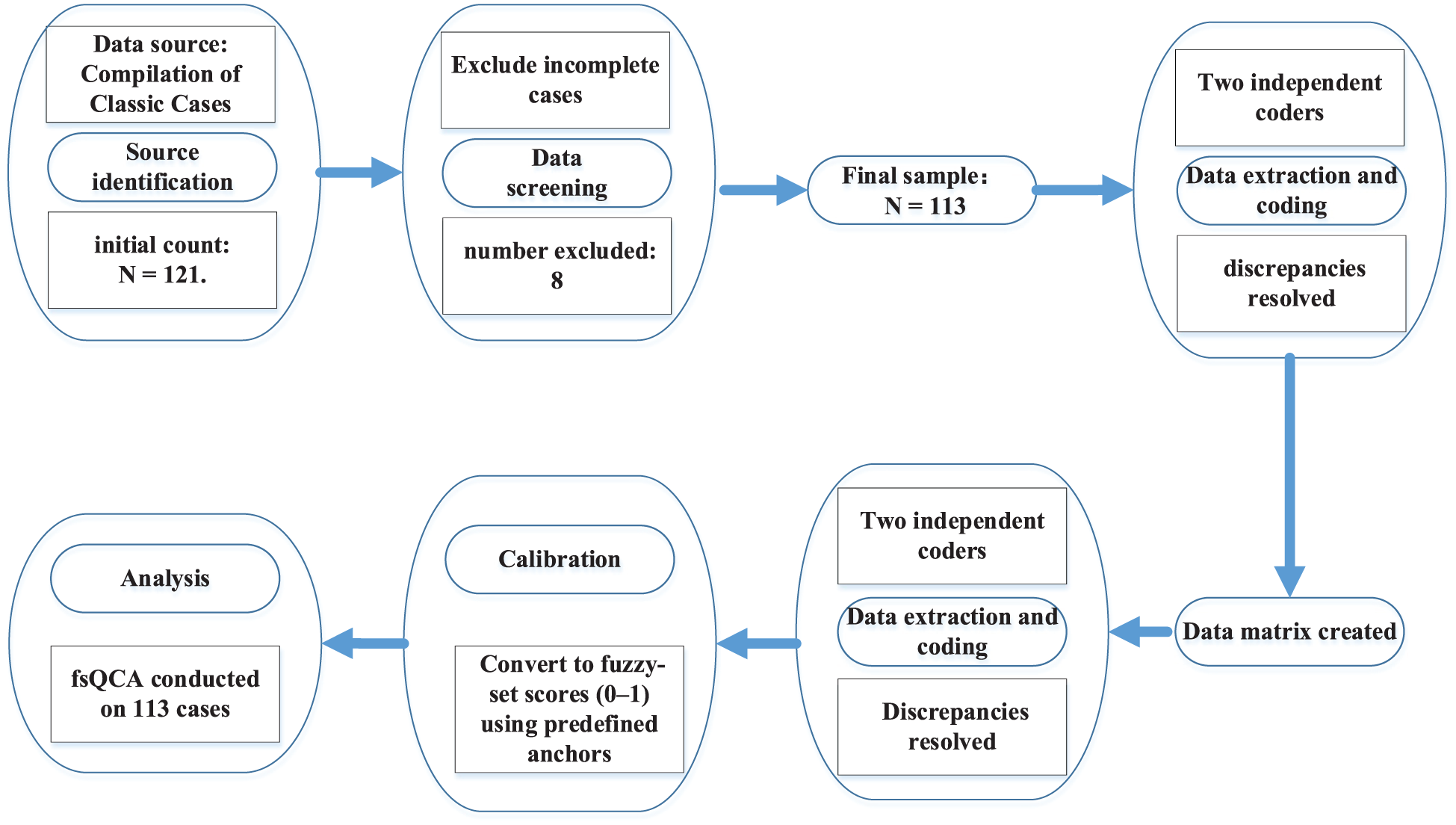
Sampling procedure of the study.
Basic characteristics of the research sample before and after exclusions.
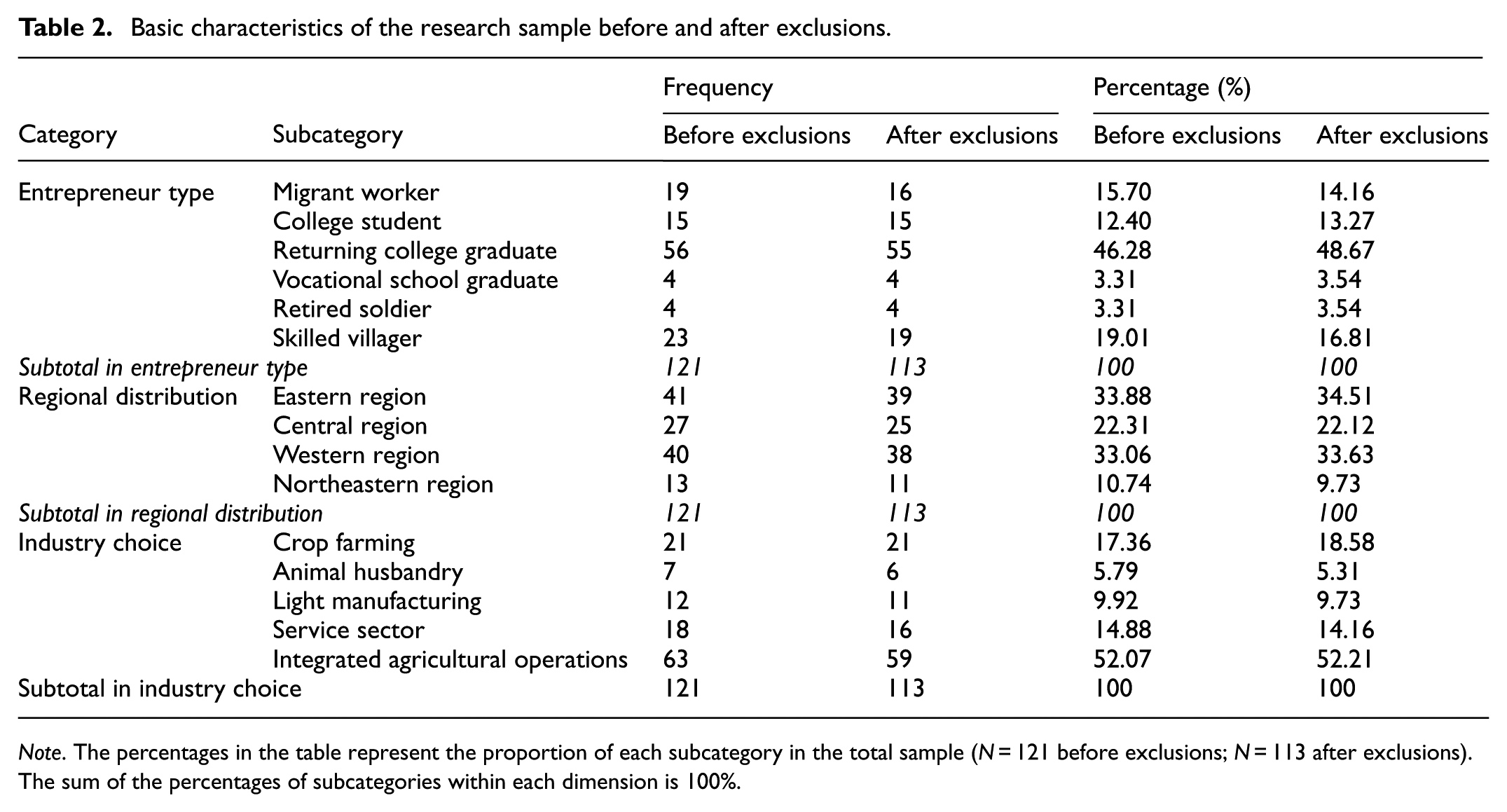
Note. The percentages in the table represent the proportion of each subcategory in the total sample (N = 121 before exclusions; N = 113 after exclusions). The sum of the percentages of subcategories within each dimension is 100%.
It should be noted, however, that reliance on officially recognized success cases inevitably introduces certain constraints for external validity. Although the Ministry of Agriculture and Rural Affairs maintains records and provides policy support for the majority of returnee entrepreneurs, the cases formally published as “classic” or exemplary still represent those recognized as particularly successful, which may accentuate favorable attributes. Accordingly, the findings of this study should be interpreted as mechanism-oriented insights into the formation of entrepreneurial capabilities, while acknowledging that broader generalizations would require additional datasets encompassing a wider range of returnee entrepreneurs.
It should also be acknowledged that the present study employs a cross-sectional design, which does not capture potential temporal dynamics in the development of entrepreneurial capabilities. As a result, the analysis treats all cases as equivalent in time, without distinguishing between different stages of entrepreneurial processes.
Variable Selection and Descriptive Analysis
Dependent Variable and Operational Definition
The dependent variable in this study is the enhancement of entrepreneurial capability among return migrants, operationalized through observable outcomes reflecting enterprise success and competitiveness in rural markets. Specifically, entrepreneurial capability enhancement is measured by a composite index derived from (1) Enterprise performance: Market success as evidenced by growth, profitability, and sustainability (2) Competitive advantage: Ability to establish and maintain a favorable position relative to local competitors.
The data source comprises 113 entrepreneurial cases from the official “Compilation of Classic Cases” published by the Ministry of Agriculture and Rural Affairs of China, each reflecting a defined entrepreneurial outcome.
To systematically capture variation in entrepreneurial capability, we employ fuzzy-set qualitative comparative analysis (fsQCA). Cases start with a baseline fuzzy score of 0.6. Two key criteria incrementally increase this score by 0.2 for each met condition:
Leadership or active participation in farmers’ cooperative economic organizations, indicating social embeddedness and collaborative resource mobilization.
Expansion of enterprise production scale through strategies such as horizontal or vertical integration, indicating growth orientation and resource leveraging.
This calibrated scoring system enables nuanced differentiation across cases, reflecting heterogeneity in how return migrants develop and manifest their entrepreneurial capabilities. In so doing, it facilitates a configurational analysis of the antecedent conditions that jointly foster entrepreneurial capability enhancement.
Independent Variables
Educational Attainment
The educational background of entrepreneurs, encompassing prior learning content, current pedagogical approaches, and overall educational level, significantly influences their entrepreneurial capabilities. For instance, Federici et al. (2007) investigated effects of the content of entrepreneurial learning—specifically knowledge—on the development of entrepreneurial capabilities. Their findings underscored that knowledge, particularly tacit knowledge, plays a pivotal role in enhancing entrepreneurial capabilities. This suggests that the depth and type of education received can be critical in shaping effective entrepreneurial skills and competencies.
Work Experience and Prior Experience
Burke et al. (2002) discovered that an entrepreneur’s work experience significantly influences their capacity to acquire and analyze information, which subsequently impacts their ability to identify opportunities. Lee Lim et al. (2014) argued that prior experience comprises general business experience, industry experience, functional experience, and previous start-up experience. These diverse forms of experience collectively shape entrepreneurs' unique cognitive frameworks, enabling them to identify, assess, and capitalize on opportunities. By synthesizing knowledge from varied professional and life experiences, such prior exposure enhances the ability to navigate the complexities of entrepreneurial decision-making.
Organization Resources
Research has consistently demonstrated that the intrinsic attributes of an organization, such as its structure, culture, and resource endowment, are pivotal in shaping entrepreneurial capacity. Hsu and Fang (2009) have elucidated that the resource base of a firm significantly influences the genesis and maturation of entrepreneurial capabilities. For instance, the proprietary knowledge and technological acumen possessed by an enterprise exert a profound influence on the enhancement of entrepreneurial capabilities.
Organization Relation Network
Extant literature underscores the significance of organizational network relationships in both the genesis and enhancement of entrepreneurial capabilities. Scholars such as Steinle and Schiele (2002), along with Udimal et al. (2021), have identified that entrepreneurial ventures can harness vital information and knowledge from their network affiliates through the establishment of robust network ties.
This process is instrumental in nurturing the development of entrepreneurial capabilities. The variable definitions and specific assignment criteria are shown in Table 3.
Variable Definitions.

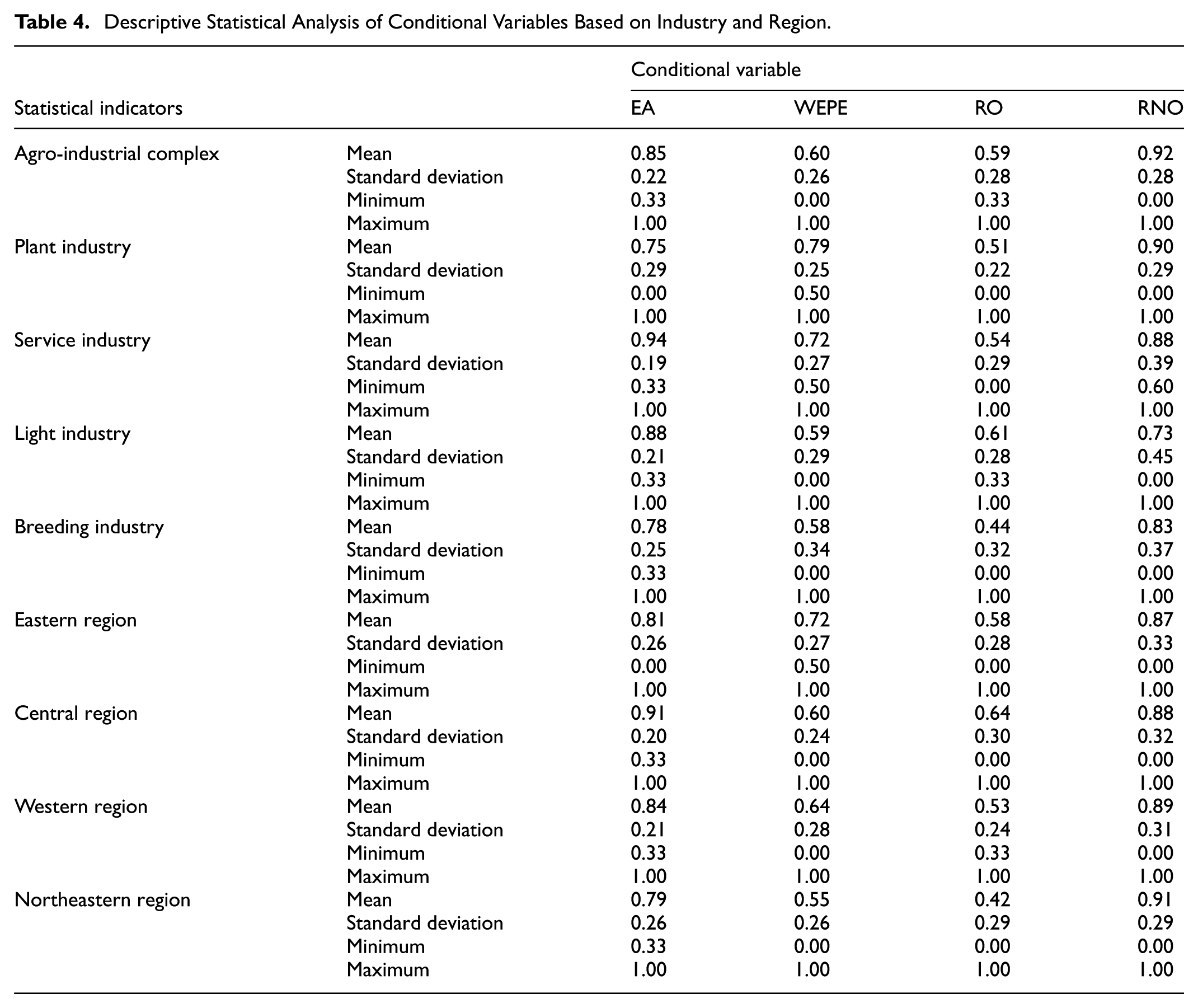
By categorizing the industry and region of entrepreneurial enterprises, the descriptive statistical results of the conditional variables are shown in Table 4.
Descriptive Statistical Analysis of Conditional Variables Based on Industry and Region.
Based on the above discussion, this study proposes a conceptual framework that integrates four antecedent conditions—educational background, work experience, organizational resources, and organizational network relations. These conditions jointly shape the development of entrepreneurial capabilities, including opportunity recognition, resource integration, strategic decision-making, and learning and adaptation, which in turn influence entrepreneurial outcomes such as enterprise development, innovation, and network participation. The overall framework is illustrated in Figure 2.

Framework of the factors associated with entrepreneurial capability.
Variables Calibration
Building upon the findings of prior research (Filatotchev et al., 2009), the present study adopts a comprehensive approach that encompasses both internal and external dimensions. By leveraging the compilation and online resources, this study delineates four pivotal variables—two internal variables and two external variables—that are hypothesized to influence the entrepreneurial capabilities of return migrants. The detailed calibration criteria for these variables are articulated in Table 5.
Calibration Anchors for Conditional Variables.

Results
Single Factor Necessity Analysis
Before conducting the configurational analysis, necessity tests were carried out on the four factors. These tests aimed to assess whether any single factor was a necessary condition for enhancing entrepreneurial capabilities. Necessity analysis is predicated on the exploration of the degree to which the outcome set is contained within the condition set. In fsQCA, a condition is considered necessary if it is always present whenever the outcome occurs (Ragin, 2010). Consistency, in this context, denotes the significance of the factor in relation to the outcome variable, while coverage mirrors the empirical significance of the consistency superset.
If a conditional variable has a consistency score above 0.9, it is considered a necessary condition for the outcome. Therefore, it must be included in all configurational models. The fsQCA analysis elucidates the necessary conditions for augmenting the capabilities of return migrants, as delineated in Table 6. The data outcomes reveal that none of the conditional variables exhibit a consistency level surpassing 0.9 for the outcome variable. This finding suggests that no single conditional variable qualifies as an indispensable condition. The enhancement of entrepreneurial capabilities, within the scope of this study, cannot be attributed to one factor alone.
Statistical Analysis of Variable Indicators (Nationwide, All Industries).

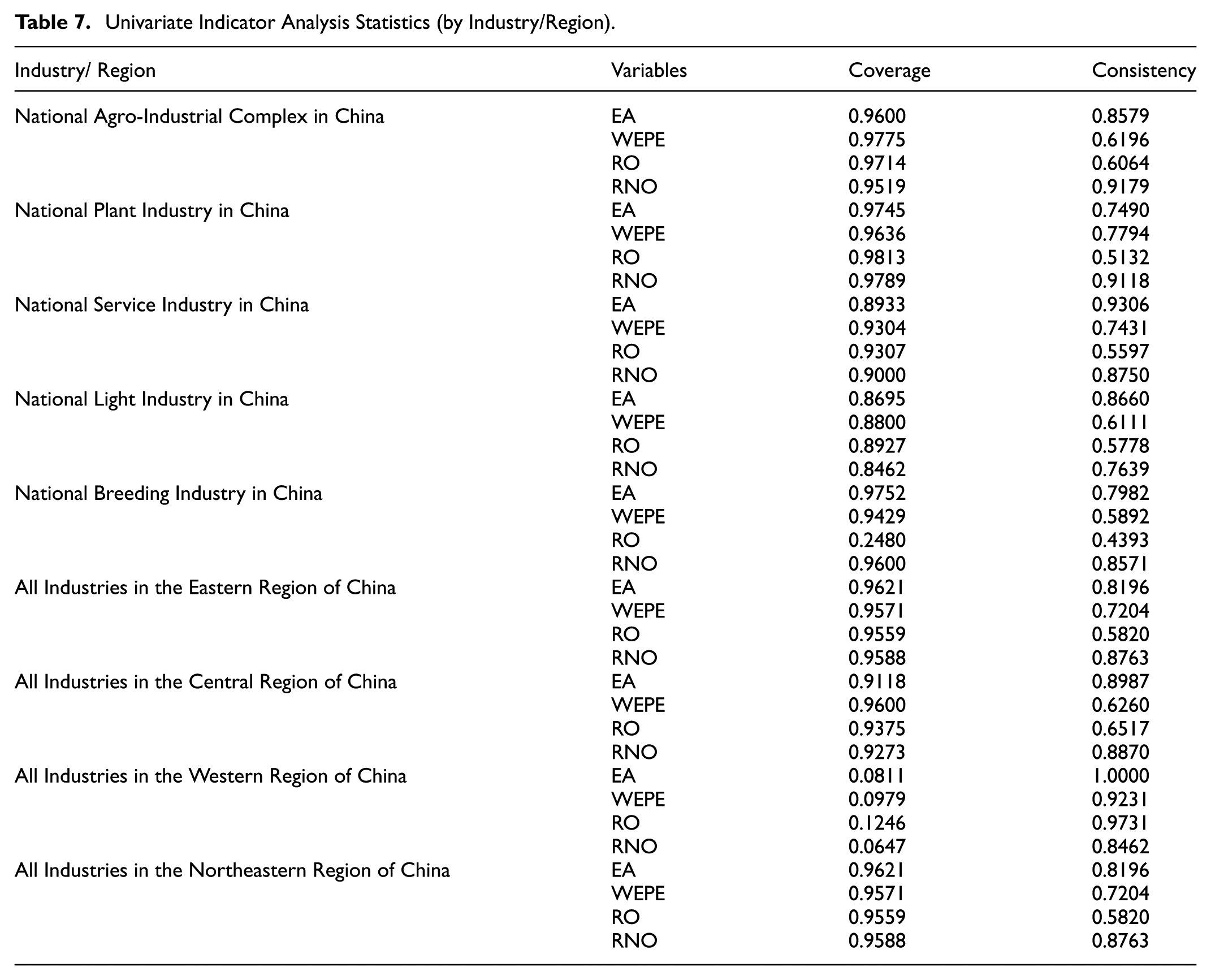
To better capture the impact of regional and industry differences, an interactive statistical analysis was conducted. This analysis examined single variable indicators according to these differences. The results are shown in Table 7.
Univariate Indicator Analysis Statistics (by Industry/Region).
Conditional Configurational Analysis
Drawing upon the work of Schneider and Wagemann (2012), the study calibrated the consistency threshold for the Proportional Reduction in Inconsistency (PRI). The threshold was set at 75%. This calibration aims to mitigate potential conflicting configurations and to circumvent the subset relationships indicative of “equifinality”. In accordance with the empirical data from the observed samples in this investigation, the case frequency has been judiciously determined to be 2. There is no consensus in the literature regarding the link between the four antecedent conditions and entrepreneurial capability enhancement. Therefore, this study forgoes a specific counterfactual analysis. This study applies fsQCA to analyze the enhancement of return migrants’ entrepreneurial capabilities. It evaluates the presence or absence of the four antecedent conditions and reports the results. This approach facilitates the derivation of the parsimonious, intermediate, and complex solutions. In line with Schneider and Wagemann (2012), this study predominantly presents the intermediate solution. It also provides the parsimonious solution, as shown in Table 8.
Configurational Analysis of Conditions.

Note.• indicates the presence of a condition.
⊗ indicates the absence of a condition.
A blank space indicates that the condition may either be present or absent.
To highlight configurations linked to the non-enhancement of entrepreneurial capabilities, this study conducts a supplementary “non-high” analysis. The analysis recalibrates the outcome condition. This adjustment leads to only marginal changes in consistency and coverage. The resulting paths remain structurally unchanged and do not alter the robustness or explanatory power of the findings.
Configuration 1 presents an education-driven (EA) type. With no single necessary condition dominating, this configuration achieves a consistency score of 0.9895, indicating that 98.95% of cases adhering to this combination demonstrate enhanced entrepreneurial capabilities. Its raw coverage of 0.3594 covers 35.94% of successful cases. Notably, work experience and prior entrepreneurial experience are not identified as core conditions within this model. The cases encapsulated by this model encompass: I11—Yu Jing of Tianjin Monde Group Co., Ltd., I19—Bu Ren of Inner Mongolia Gao Yalec Biotechnology Co., Ltd., and I82—Wang Wei of Sichuan Province Guoyou Bang Agricultural Development Co., Ltd. This configuration underscores the pivotal role of education. It often highlights return migrants who possess advanced academic credentials. It also includes those who place a premium on the education and training of their employees and organizational network members. Configuration 2 represents a relational network-oriented (RNO-A1) type. Here, organizational network capital functions as a core present condition, while work experience and prior knowledge are core absent conditions. This configuration demonstrates a consistency score of 0.9944, indicating enhanced entrepreneurial capabilities in 99.44% of conforming cases. With a raw coverage of 0.3362, it accounts for 33.62% of successful return migrant ventures. The cases encompassed by this configuration include I25—Wang Qinghuan of Jilin Dexiang Food Co., Ltd., and I68—Deng Difang of Guangzhou Qidi Agricultural Technology Co., Ltd. Entrepreneurs characterized by this configuration typically cultivated their network relationships during their prior professional engagements. These relationships serve as a foundation that enables them to access a diverse array of resources from network members at the onset of their entrepreneurial ventures. The strategic establishment of such networks is indicative of the significant role that organizational connections play in facilitating entrepreneurial success in the context of return migrants’ entrepreneurship.
Configuration 3 exemplifies a relational network-dominant (RNO-A2) type. In this configuration, organizational network capital functions as a core present condition, complemented by entrepreneurs’ educational attainment as a peripheral contributing factor. Demonstrating a consistency score of 0.9397, this pathway illustrates enhanced entrepreneurial capabilities in 93.97% of conforming cases. Its high raw coverage of 0.7508 accounts for 75.08% of successful return migrant ventures. The configuration encompasses cases such as I3—Yue Qiaoyun of Beijing Green Agriculture Cloud Fruit Production and Sales Professional Cooperative and I101—Yang Han of Gansu Sanwu Agriculture Co., Ltd. configurations 3 integrates the constructs of Educational Attainment (EA) and Relational Network of the Organization (RNO) A2, highlighting a complementary dynamic that propels the growth of entrepreneurial ventures. This configuration suggests that academic credentials and emphasis on education both matter. When entrepreneurs either possess certain qualifications or prioritize training for employees or network affiliates, network relationships become a catalyst for organizational development.
Configuration 4 epitomizes a relational network-centered (RNO-A3) type. Here, organizational network capital functions as a core present condition, with organizational resources acting as a supporting element. Demonstrating a consistency score of 0.9666, this pathway effectively is linked to enhanced entrepreneurial capabilities in 96.66% of conforming cases. Its substantial raw coverage of 0.4957 accounts for nearly half (49.57%) of successful return migrant ventures. The cases encompassed by this configuration include I36—Xu Xiangru of Jiangsu Xiangru Biotechnology Co., Ltd., I77—Xie Shengning of Qionghai Golden Chicken Poultry Production and Sales Farmers Cooperative, and I103—Baika of Yushu City Mu Women Industrial and Trade Co., Ltd. Entrepreneurs in this configuration often facilitate that their organizations accumulate a critical mass of resources. This accumulation secures a competitive edge over other enterprises in the same rural regions or in comparable urban industries. Moreover, these entrepreneurs recognize the necessity of cultivating network relationships to garner multifaceted support from network members, which is instrumental in their entrepreneurial endeavors.
Configuration 5 delineates an experience-driven yet relationally constrained (EWPW–RNO) type. This configuration demonstrates a consistency score of 0.4501, indicating that only 45.01% of cases conforming to this pathway exhibit relatively low entrepreneurial capabilities (∼ECE). Its raw coverage of 0.1275 accounts for 12.75% of low-capability cases in the sample. Although these values are considerably lower than those in high-capability configurations, prior research emphasizes their significance. In contexts with skewed outcome distributions—as in this study, with four cases calibrated at 0.05 and 31 at 0.51—such rare yet theoretically significant pathways warrant close attention. They are particularly important for understanding failure mechanisms. This configuration is characterized by the core presence of Work Experience and Prior Entrepreneurial Work (EWPW), the peripheral presence of Educational Attainment (EA) and Organizational Resources (RO), and the core absence of Relational Network of the Organization (RNO). Entrepreneurs situated within this pathway tend to accumulate substantial professional experience and maintain adequate educational and organizational conditions, yet remain poorly embedded within local relational ecosystems.
The absence of rural network embeddedness undermines their ability to mobilize trust, access timely information, and orchestrate resources effectively. Jack and Anderson (2002) argue that entrepreneurial success depends not only on “what entrepreneurs know” but also on “whom they know.” Similarly, Korsgaard et al. (2015) highlight that rural embeddedness provides unique opportunities inaccessible through strategic resources alone. As a result, entrepreneurs in this pathway may fall back on habitual patterns of action derived from prior experience, rather than adjusting to the contingencies of the rural context. Sydow et al. (2009) note that such path dependence reinforces ineffective practices and restricts adaptability over time.
In sum, Configuration 5 underscores that entrepreneurial capability is not solely contingent on experience or resources. It also hinges on the entrepreneur’s ability to integrate these assets into the local relational fabric. For return migrant entrepreneurs, the lack of organizational network support constitutes a critical barrier to advancing entrepreneurial capabilities and achieving sustainable venture success.
When examining the individual conditions, the frequency of occurrence of each conditional variable across the four configurations models, in descending order, is as follows. Relation Network of the Organization (occurring in three configurations), Educational Attainment (occurring in two configurations), Organizational Resources (occurring in one configuration), and Work Experience and Prior Experience (absent in all configuration models). This distribution underscores the significance of organizational network relationships as a recurrent and influential factor in the configuration models, followed by educational attainment as a secondary yet consistent variable. Organizational resources, while impactful, appear less frequently as a condition, whereas work experience and prior experience do not emerge as core factors within these configurations.
Robustness Analysis
Building upon the methodology established by Schneider and Wagemann (2012), we conducted robustness analyses by fine-tuning the consistency threshold and altering the calibration threshold. These adjustments were made to affirm the reliability of the model configurations aimed at bolstering the entrepreneurial potential of returning entrepreneurs. Initially, the consistency threshold was elevated from 0.75 to 0.80, with the case frequency maintained at 2, revealing that the outcomes were invariant to the prior settings. Conversely, increasing the case frequency from 2 to 3 reduced the number of solution terms and decreased overall coverage. It also provided a more streamlined solution, as shown in Table 9. This approach underscores our commitment to methodological rigor and the pursuit of parsimonious yet comprehensive solutions in our analysis.
Robustness Results (Increased Case Frequency).

Note.• or ● indicates the presence of a condition.
⊗ indicates the absence of a condition.
A blank space indicates that the condition may either be present or absent.
When comparing the configurations in Tables 8 and 9, it becomes clear that four models consistently emerge as effective. These models are designed to augment the entrepreneurial competencies of return migrants. These configuration models exhibit substantial congruence in their configurations and fundamental conditions, characterized by analogous levels of consistency and overall coverage. A meticulous examination of the variances in fit parameters and set relationships across the configuration models underscores the robustness of the research findings. This robustness is indicative of the models’ resilience to variations in parameter settings, thereby reinforcing the validity and reliability of the study’s conclusions.
As an additional robustness check, this study also examined the non-high outcome (∼fsECE). Across different thresholds (e.g., frequency cutoffs of 2 and 3; consistency cutoffs up to 1.0), the resulting solutions showed only minor variations in consistency and coverage, while the specific pathways remained unchanged. This outcome reflects the sample distribution bias toward successful entrepreneurial cases, further confirming that the main findings are robust.
Configurational Analysis Models for Enhancing Entrepreneurial Capabilities
The fsQCA analysis has discerned four distinct configurational models that are instrumental in enhancement the capabilities of return migrants. These models reveal a multiplicity of synergistic factors that collectively correspond to the enhancement of entrepreneurial capabilities within this demographic. The identified configurations can be succinctly encapsulated into the following four entrepreneurial capability enhancement paradigms.
The articulation of these models provides a structured framework for understanding the interplay of factors influencing entrepreneurial capabilities. It also offers a nuanced perspective on the multifaceted nature of return migrants’ entrepreneurship. This categorization is pivotal for academic discourse and practical application in fostering entrepreneurial ecosystems that are associated with the success of return migrants.
The configurational findings from the Educational Attainment Model (Model 1) reveal that within this enhancement framework, education functions as a supportive condition associated with the entrepreneurial capabilities of return migrants. A notable feature of this model is that work experience and prior entrepreneurial ventures are not identified as core conditions. The fsQCA analysis intriguingly suggests that a less extensive work history and fewer prior experiences may paradoxically be associated with capability enhancement. This observation appears to conflict with prevailing scholarship emphasizing the significance of entrepreneurial experience. For instance, Lee Lim et al. (2014) argued that accumulated experience provides entrepreneurs with cognitive capabilities necessary to identify, evaluate, and exploit opportunities. They also emphasized that experiential learning through start-up activities constitutes a critical mechanism for reinforcing entrepreneurial capacity. In contrast, the evidence in this study indicates that an extensive experiential background is not indispensable for capability development among return migrants, and in some instances, fewer experiences may even be advantageous. This counterintuitive outcome can be better understood by situating it within the dual context of path dependence and institutional transformation. Prior research has noted that accumulated routines, while often beneficial, can also engender cognitive rigidities that constrain adaptability. Levitt and March (1988) described this phenomenon as a “myopia of learning.” They argued that repeated reliance on established routines narrows the scope of search and opportunity recognition. As a result, organizations exploit familiar patterns rather than explore novel alternatives. In the rural entrepreneurial context, such learning myopia may limit return migrants with extensive prior experience. It may limit them from recognizing and adapting to the distinctive institutional logics and market dynamics of rural environments. By contrast, those with fewer entrenched work histories may retain greater openness and flexibility, which is associated with the pursuit of innovative strategies without being bound by conventional industry norms. At the same time, the institutional environment in rural China has undergone significant changes. The government actively promotes return migration entrepreneurship and provides safeguards through policy support, cooperatives, and training initiatives. As a result, the absence of extensive prior experience is not merely offset. Under certain circumstances, it can even become an advantage. Institutional and organizational supports serve as alternatives to experiential learning, while simultaneously providing conditions in which less experienced entrepreneurs to avoid the cognitive lock-ins associated with prior routines. Taken together, these mechanisms indicate how return migrants in this study can be associated with entrepreneurial capability enhancement despite—or in some cases in connection with—the absence of extensive prior work experience.
Under robust policy incentives or high institutional legitimacy, resource configurations with dense networks or strong assets may be associated with rapid opportunity exploitation. This occurs even without extensive prior experience. Conversely, in settings with weak legitimacy, the same level of experience may be insufficient without complementary resources. This mechanism aligns with RBV and dynamic capabilities, and is moderated by institutional pillars (regulative, normative, cognitive). Future work should explicitly test these moderating effects across stages of venture development.
The results of the Organization Relational Network (RNO) model (Model 2) show that return migrants are associated with enhanced entrepreneurial capabilities. This is observed through their access to information, knowledge, and essential resources available via organizational network affiliations. For instance, entrepreneurs who establish cooperative frameworks akin to “company+collaborator +farmer” are linked to stronger entrepreneurial performance through mechanisms such as land transfer and capital aggregation. Within these cooperative paradigms, entrepreneurial ventures are observed to strengthen their capacity for opportunity recognition by securing pivotal technologies. They also allocate resources more efficiently through the cultivation of robust network relationships. Notably, this model echoes the previous configuration model (Model 1) in that work experience and prior entrepreneurial ventures are not identified as core conditions. This finding suggests that return migrants can still be associated with higher entrepreneurial capabilities through diverse network relationships, irrespective of whether their professional background closely mirrors the sector of their entrepreneurial endeavor. The findings are corroborated by existing scholarly work, such as the study by Hsu and Fang (2009), which substantiates that the establishment of organizational network relationships is associated with the enhancement of entrepreneurial capabilities. Furthermore, the research by Kassaye et al. (2024) revealed that return entrepreneurs leverage their social networks as a crucial factor in achieving entrepreneurial success. These networks bridge their past experiences with local market demands by providing essential resources, support, and information, which helps them address the challenges posed by resource scarcity in their hometowns. Moreover, the is associated with broader access to institutional support and policies, and is linked to stronger entrepreneurial performance (Wang et al., 2011). These studies collectively underscore the pivotal role of networking in the entrepreneurial journey, particularly for return migrants seeking to leverage their diverse experiences and connections to foster innovation and growth.
The configurational findings from the organizational relation network-educational attainment model (RNO-EA) model (Model 3) reveal that this model encompasses the largest proportion of cases among the quartet, accounting for 75.08% of the cases. This makes it the most widely applicable framework associated with enhanced entrepreneurial capabilities and linked to successful entrepreneurial ventures among the majority of return migrants. Within this model, the organizational relational network is a pivotal factor. An appropriate level of educational learning also is associated with a substantial supportive role in entrepreneurial capabilities. The significance of this association is well-documented in the existing literature on the ramifications of entrepreneurial learning on entrepreneurial capabilities. Federici et al. (2007) and Zahra and Wright (2011) argue that entrepreneurial learning aggregates knowledge and experience, serving as a critical source for developing entrepreneurial capabilities. Consequently, entrepreneurs who possess a certain educational foundation can be associated with stronger entrepreneurial capabilities and the robust development of their entrepreneurial organizations. This is observed through the establishment and nurturing of an organizational relational network and by procuring information, knowledge, and other essential resources from network affiliates. Model 3 integrates educational learning and strategic networking, which is associated with entrepreneurial success among return migrants.
The configurational analysis of the organizational relation network-organizational resources model (RNO-RO) model (Model 4) indicates that this framework accounts for nearly half (49.57%) of the cases, providing a substantial coverage and interpretive scope. This model serves as a complementary counterpart to the RNO-EA model (Model 3), addressing distinct cohorts within the return entrepreneur population. A notable divergence from its predecessor is the inclusion of organizational resources as a supportive condition within this model. It indicates that return entrepreneurial ventures are associated with stronger capabilities when forging effective network ties. These ties are linked to access to pivotal resources and technologies, even without substantial advantages in entrepreneurial education. The model elucidates a pathway for return migrants, who may not have received extensive entrepreneurial education, to be associated with enhanced their entrepreneurial capabilities and achieve successful entrepreneurial ventures upon their return. The findings of this enhancement model are congruent with extant study. For example, Ma et al. (2022) found that social capital dimensions—social trust, networks, and support—significantly improve return migrants' entrepreneurial performance. This evidence validates that optimal configurations are associated with enhanced entrepreneurial capabilities, even among return migrants with limited education, are associated with enhanced successful rural ventures.
Discussion and Conclusions
This study draws on a dataset of 113 valid cases out of 121 total cases of leaders in rural innovation and entrepreneurial ventures, documented by the Ministry of Agriculture and Rural Affairs of China. It employs fuzzy-set Qualitative Comparative Analysis (fsQCA). The analysis explores the diverse configurational patterns that facilitate enhancement of the capacity of return migrants. The analytical process has unveiled four distinct models for capability enhancement, which are as follows.
The Educational Attainment Model (Model 1): This model underscores the pivotal role of formal education in the development of entrepreneurial competencies.
The Organizational Relation Network Model (Model 2): It highlights the strategic importance of networking within organizational spheres for entrepreneurial capability enhancement.
The Organizational Relation Network - Educational Attainment Model (Model 3): This model integrates both educational background and organizational networking, indicating a synergistic effect on entrepreneurial capabilities.
The Organizational Relation Network - Resources of the Organization Model (Model 4): It emphasizes the role of organizational resources, in conjunction with networking, as a supportive condition for enhancing entrepreneurial capabilities, especially for those with less educational advantage.
The findings of this study offer a nuanced understanding of the multifaceted pathways through which return migrants can augment their entrepreneurial capabilities. The models identified provide a comprehensive framework for further academic inquiry and practical guidance in nurturing an entrepreneurial ecosystem that is associated with the success of return migrants. The implications of these models extend beyond the theoretical, offering actionable insights for policymakers and practitioners alike in the realm of rural innovation and entrepreneurship.
In this study, the establishment of robust organizational relational networks, exemplified by the “X+Y+Z+ Cooperative” (such as Return Migrant Ventures +Farmers+ Rural Cooperative) model and analogous constructs, is identified as a critical mechanism for procuring ample resources and technical support from network affiliates. Such networks are instrumental in significantly bolstering the entrepreneurial capabilities of return migrants.
Upon examination of raw coverage and associated metrics, the Relational Network of the Organization-Educational Attainment model (Model 3) emerges with the most formidable explanatory power. It evinces a pronounced “strong relationship-strong personal capability” dynamic, which is pivotal in the enhancement of return migrants’ entrepreneurial capabilities. This model illustrates that the confluence of robust educational foundations with a dense network of relationships can substantially amplify an entrepreneur's capacity for innovation and business acumen.
Conversely, while the Organizational Network Relationship model also incorporates “strong relationships”. It exhibits the weakest explanatory power among the models for enhancing entrepreneurial capabilities. This suggests that the mere presence of an organizational network is not a sufficient condition to underpin a more efficacious model of entrepreneurial capability enhancement. Additional factors are imperative to augment the network's impact on bolstering entrepreneurial prowess.
Akin to the findings of Seelos and Mair (2005), which underscored the profound influence of robust organizational networks on fostering entrepreneurial capacity within social enterprises, this study reinforces the pivotal role these networks play. However, Seelos and Mair (2005), also emphasized that more than reliance on organizational networks is needed to cultivate entrepreneurial growth fully. Their case studies reveal that such networks provide crucial foundational support. Yet supplementary mechanisms, such as targeted assistance systems for specific groups, are indispensable for effectively augmenting entrepreneurial capacity.
The educational background of return migrants and the endowment of specific resources, such as technological assets, within their entrepreneurial ventures, function as complementary elements. When considered together, these factors provide tailored avenues for development that fit the diverse backgrounds of return migrants. In doing so, they help enhance entrepreneurial competencies. Maintaining a robust “relation network of the organization” the varying levels of knowledge and experiential backgrounds of return migrants present distinct models for capability improvement. Prior educational experience is especially pertinent for return migrants who are college graduates. The acquisition of entrepreneurial resources, such as technology, can be achieved through practical engagement and consultation with experts. Conjointly, these two factors, operating within the structured context of an organizational relation network, synergize to amplify the entrepreneurial capabilities of return migrants. This integrated approach underscores the importance of leveraging both individual educational attainment and organizational resources. It helps foster a dynamic entrepreneurial environment that responds to the unique needs and potentials of return migrants.
The insights of this study call for a nuanced understanding of the entrepreneurial development process. They also suggest strategies that are sensitive to the educational and experiential diversity among return migrants. By doing so, it offers a comprehensive framework for policy and program design. This framework aims to nurture entrepreneurial talent and drive innovation in rural and return migrant communities.
Tabares et al. (2022) reinforce this perspective by emphasizing the critical role of integrating various forms of capital, including educational and organizational resources, in enhancing entrepreneurial capabilities. Their research highlights that financial and physical resources are essential for establishing a foundation. However, the development of knowledge and skills, which are key aspects of human and social capital, is equally important in fostering entrepreneurship. Institutions must create spaces where different types of capital are articulated and integrated. These collaborative networks connect rural entrepreneurs vertically with government systems and horizontally with societal actors. This concept aligns with the “relation network of the organization” described in this study, which emphasizes that educational backgrounds and entrepreneurial resources complement each other. Within this organizational framework, the integration of education and enterprise-specific resources plays a critical role in enhancing entrepreneurial capabilities. It enables return migrants to adapt and succeed in diverse entrepreneurial environments. An analysis of Models 1 and 2 shows that work experience and prior experience are not core conditions in these frameworks. Their absence does not mean that return migrants are restricted to enterprises aligned with their original industries. Instead, other factors can still improve their entrepreneurial capabilities. In these models, the interplay between the entrepreneur's education and the organizational network relationships accounts for more than 30% of the cases studied. This finding indicates that the entrepreneurial capabilities of return migrants are not shaped solely by the direct relevance of their educational background. They are also strengthened by the collective influence of work experience and prior ventures, regardless of the extent of educational experience.
The absence of work experience and prior experience as core conditions in these models challenges the traditional assumption that these factors are indispensable for entrepreneurial success. Instead, it highlights the potential for return migrants to leverage alternative pathways, such as educational attainment and networking, to bolster their capabilities. This perspective broadens the understanding of entrepreneurial capability enhancement, suggesting that a diverse range of experiences and resources can support the entrepreneurial journey, even when the entrepreneur's background does not directly mirror the industry of their new venture.
The findings of this study call for a more inclusive and holistic approach to entrepreneurial development. They recognize the multifaceted nature of entrepreneurial capabilities and the many ways return migrants can use their experiences to innovate and succeed in their ventures. This model also aligns with the findings of Wing Yan Man (2006), who underscored the pivotal role of prior experience in shaping entrepreneurial capacity. The study revealed that entrepreneurs can markedly enhance their current practices by reflecting on and integrating past experiences. Therefore, entrepreneurial learning is not solely reliant on acquiring new knowledge and skills; accumulating and thoughtful reflection on prior experiences are equally critical in fostering entrepreneurial capacity. This holds especially true across diverse backgrounds and industries, where prior experience continues to substantially strengthen entrepreneurs’ adaptability and capacity for innovation.
Theoretical Implications
This study makes several significant contributions to the theoretical development of entrepreneurial capacity improvement for return migrants. First, this study identifies four determinants of entrepreneurial capacity for return migrants—work experience and prior education, organizational network relations, education level, and organizational resources—and delineates four feasible configurations to enhance capacity. Organizational network relations emerge as a core factor in three configurations, reinforcing the applicability of social capital theory (Bourdieu, 2018) to return-migrant rural entrepreneurship. Networks enable access to resources, information, and support, thereby strengthening capacity and venture performance.
Secondly, the findings reveal complementary dynamics among the four factors, highlighting multi-factor synergy rather than a single determinant. Consistent with Davidsson and Honig (2003), strategic combinations tailored to individual backgrounds and resource contexts can maximize entrepreneurial potential, with capacity improvements possible even in resource-scarce environments by leveraging available assets.
Third, the fsQCA identifies four distinct pathways to enhance entrepreneurial capacity, with organizational network relations pivotal in three. This supports Seelos and Mair (2005) on the positive role of networks and extends Social Capital Theory beyond urban contexts to return-migrant rural entrepreneurship, where access to resources, information, and social support drives nascent enterprise success.
Fourth, this study applies fuzzy-set Qualitative Comparative Analysis (fsQCA) to uncover four configurational models, offering a methodological framework for examining how factor combinations shape capacity development. A key theoretical contribution is the contextual dependency of configurational effectiveness: the salience of conditions varies with regional institutional capacity, industrial characteristics, and venture life-cycle stage.
Methodological Implications
This study also contributes methodologically through the use of fuzzy-set Qualitative Comparative Analysis (fsQCA). Unlike traditional approaches that rely on a single causal effect, fsQCA reveals multiple pathways to the same outcome. It also highlights complementarities and interactions among conditions. This feature fits the complexity of enhancing return migrants’ entrepreneurial capabilities. And it enables diverse and meaningful configurations. The method also has limitations that causal ordering is not unambiguously identified. Results are sensitive to calibration thresholds and to sample composition and interpretation may depend on researchers’ judgments. Future research should combine fsQCA with complementary methodological approaches to enhance robustness. Notwithstanding these limitations, fsQCA demonstrates broad potential for application. Its use can be extended beyond return-migrant entrepreneurship to cross-country comparative studies, the governance of rural cooperatives, regional entrepreneurial ecosystems, and capability development in innovative enterprises. By explicitly delineating the strengths and limitations of fsQCA, this study contributes methodological insights for researchers and practitioners and provides a basis for further exploration of complex causal mechanisms.
Managerial Implications
First, policy and practice should differentiate between educated returnees and rural migrant entrepreneurs. Evidence identifies two dominant returnee profiles—college graduates and migrant workers—and suggests that targeted, stage-appropriate resource support can amplify rural revitalization. Governments and institutions should incentivize rural innovation and provide precision-tailored training to enhance entrepreneurial capabilities across both groups, helping to bridge educational disparities and foster inclusive growth.
Second, policymakers should incentivize multi-stakeholder collaboration among return migrant entrepreneurs to address rural development constraints. The central role of organizational network capital across configurations aligns with China’s emphasis on farmer cooperatives as vehicles for revitalization and shared prosperity. Adopting cooperative models can mitigate smallholder constraints and spark market-adaptive rural ventures. Policies should position cooperatives as champions of the collective economy while encouraging new ventures to engage with this organizational innovation, thereby strengthening entrepreneurial capabilities and advancing socioeconomic equity.
Third, policymakers should formalize synergistic integration of organizational resources and entrepreneurial education through tripartite university–industry platforms to bridge urban–rural knowledge gaps. Leveraging technology as a complementary input to education strengthens the resource base of rural ventures, particularly for return migrants with limited schooling. Actions include targeted industry–academia–research platforms, accelerated technology transfer, and continuous upskilling in advanced technologies. These coordinated efforts bolster entrepreneurial capabilities and help reduce spatial inequalities in knowledge access.
In summary, this study’s management implications go beyond policy recommendations and offer concrete actions for stakeholders. Governments should promote organizational networks and institutional support, since relational networks appear as a core condition across multiple pathways. Training institutions should design curricula that integrate education with practice, enabling return migrants with limited schooling to overcome disadvantages through learning and case-based experience. Enterprises and research institutions should provide technological and resource support through university–industry partnerships, leveraging the synergistic effects of resources and education. Because entrepreneurial capability development relies on multi-factor synergy, these measures together foster a more inclusive and sustainable entrepreneurial ecosystem.
Limitation and Future Research
This study has several limitations that should be considered when interpreting the findings, and these limitations also suggest directions for future research.
First, the sample consists of cases from the Compilation of Classic Cases-a collection of government-recognized exemplary returnee entrepreneurs. While these cases provide rich and authoritative examples of successful entrepreneurship, they may not be representative of the broader population of return migrant entrepreneurs. Future research could include a more diverse range of cases, including less successful entrepreneurs, to test the robustness and generalizability of the identified configurations.
Second, the analysis uses cross-sectional data covering companies founded over a wide period. This approach does not account for temporal dynamics, such as changes in regional economic development, shifts in policy support, or the evolution of entrepreneurial capabilities over time. Treating cases as temporally equivalent may mask important stage-specific effects. Future studies could use longitudinal data, or staged fsQCA to capture how configurations evolve and differ across entrepreneurial stages.
Third, while four successful configurations were identified, the effectiveness of these configurations may vary across regions, industries, and contexts depending on differences in institutional environments or stages of development. Applying multi-group QCA, staged/panel fsQCA, or hybrid methods (e.g., combining longitudinal designs with fsQCA) could help explore strengthen causal interpretation.
Additionally, complementarity of methods not yet realized. Although the current study highlights configurational pathways, it does not quantify the predictive strength of individual characteristics or their causal effects. A complementary quantitative analysis could strengthen inference and generalizability.
In recognition of these limitations, we emphasize that our contributions lie in identifying configuration-level associations and plausible mechanisms, not in delivering population-wide causal estimates. We also outline concrete avenues for integrating quantitative methods to address these gaps in future work.
Footnotes
Acknowledgements
The authors would like to thank editors and five anonymous reviewers for their insightful comments that have been of great help.
Author Contributions
Yanhong Tu: Conceptualization, Formal analysis, Investigation, Review & Editing, Project administration, Funding acquisition. Quanhong Wu: Methodology, Software, Data Curation, Original Draft, Writing
Funding
The authors disclosed receipt of the following financial support for the research, authorship, and/or publication of this article: This research is funded by the National Social Science Foundation of China (Grant No. 22BGL049: Research on mechanism and realization of entrepreneurial ability enhancing in hometowns by digital empowering).
Declaration of Conflicting Interests
The authors declared no potential conflicts of interest with respect to the research, authorship, and/or publication of this article.
Data Availability Statement
The study uses data from the Fourth National Outstanding Rural Entrepreneurship Case Collection (Ministry of Agriculture and Rural Affairs of China, 2022). The full dataset is not publicly accessible due to privacy and governance constraints. Aggregated and anonymized findings supporting this article are available from the corresponding author on reasonable request. Partial data access may be granted via formal channels by contacting the Department of Industrial Development, MOA of China ( ).
).