



Abstract
Product reviews are widely regarded as balanced evaluations of the strengths and weaknesses of goods, intended to inform potential consumers. However, this form of user-generated content is not foolproof, as unethical businesses may endorse certain reviews as highly recommended reviews (HRRs). This issue of covert review manipulation is particularly noticeable in the marketing of higher-priced products, such as automobiles, where the user-contributed reviews, valued for their perceived informativeness and trustworthiness, are frequently appropriated by sellers to advance business interests. Despite the growing prevalence of these curated reviews and their role in subtle persuasion, covert promotional practices remain underexplored from a linguistic perspective. To address this gap, the present study adopts a genre analysis lens to examine the move structures and discursive strategies of HRRs of major Chinese M-commerce automobile apps. The analysis identified a consistent nine-move structure characterized by predominantly positive sentiment, comprising five obligatory and four optional moves, which are distinct from review structures and sentiment patterns documented in prior literature. These moves strategically exploit discursive strategies to fulfill both explicit informative functions and implicit promotional intentions. This study contributes to a critical understanding of covert manipulation in digital review genres. It also offers practical implications for raising consumer awareness of hidden persuasive tactics across e-commerce and m-commerce platforms.
Plain Language Summary
Product reviews are widely regarded as balanced evaluations of the strengths and weaknesses of goods for potential consumers. However, this form of user-generated content is not foolproof, as unethical businesses may endorse certain reviews as highly recommended reviews (HRRs). This issue of covert review manipulation is particularly noticeable in the marketing of higher-priced products, such as automobiles, where reviews, valued for their perceived informativeness and helpfulness, are frequently appropriated by sellers to advance business interests. Despite their widespread prevalence and appropriation of these curated reviews, their rhetorical structures and strategies remain underexplored from a genre-based study perspective. To address the gap, this research adopts a move analysis approach to examine the move structures and discursive strategies commonly employed in a corpus of HRRs. Sampled from leading M-commerce automobile apps in China, the analysis identifies five obligatory moves distinct from prior research on generic user reviews. These moves strategically exploit discursive strategies to fulfil both explicit informative purposes and implicit promotional intentions. The findings contribute to a critical understanding of the linguistic features of manipulated reviews within the e-commerce and m-commerce platforms. This research offers practical insights for enhancing consumer awareness of manipulated reviews by uncovering the frequently used move structures and discursive strategies. Additionally, it equips consumers with knowledge to identify these strategies within digital marketing contexts, thereby promoting more informed decision-making.
Keywords
Introduction
The nascent extension of e-commerce (based on desktops and laptops) to mobile commerce (m-commerce) applications has transformed consumer engagement. These apps not only offer users more interactive in-app experiences for making transactions (Lucas et al., 2023; Yadav et al., 2016; Zheng et al., 2019) but also accumulate vast repositories of product reviews. Such reviews have become vital sources of information, helping users gain preliminary awareness and reduce uncertainty about purchases (Chua & Banerjee, 2016; W. Zhuang et al., 2023).
As a prevalent form of online user-generated content (UGC), product reviews have been widely studied for their perceived usefulness in furnishing potential consumers with post-purchase experiences to aid buyers in understanding and assessing products (Chua & Banerjee, 2016; Gan & Wang, 2017; Lee & Choeh, 2016; Liu et al., 2021; Majumder et al., 2022; Sreejesh et al., 2020). This type of UGC is often regarded as more credible and helpful than business-generated information (Y. Zhang & Vásquez, 2014). However, the integrity of these reviews has increasingly been debated as commercial practitioners have adopted various practices to manipulate consumer feedback. These include incentivizing positive reviews (McGlaun, 2009), removing or downplaying negative reviews (M. Zhuang et al., 2018), and commissioning fabricated favorable reviews from hired contributors (Wu & Qiu, 2023). Such practices blur the line between genuine consumer voice and covert marketing discourse, raising critical concerns about the integrity of online review systems.
While overt forms of review manipulation have been well-pronounced (Dellarocas, 2006; McGlaun, 2009; Wu & Qiu, 2023; Zhong et al., 2023; M. Zhuang et al., 2018), a more subtle and covert tactic has recently emerged within the reviews of Chinese automobile marketing apps. In contrast to earlier manipulative strategies, it represents a novel yet forceful dissemination of peer-to-peer information subtly infused with business-to-consumer promotional intent. Specifically, platforms engage in the selective curation and algorithmic amplification of a small subset of product reviews, labeled Highly Recommended Reviews (HRRs), to promote particular vehicles.
These curated HRRs resemble soft-sell advertising strategies (D. Li et al., 2022), relying on subtle emotional appeals over overt persuasion. Increasingly, they are crafted to elicit the psychological pull of fear of missing out (FoMO), such as anxiety about being excluded from widely endorsed product benefits, peer validation, or shared conveniences (Good & Hyman, 2020). This emotional tension, in turn, heightens the likelihood of impulsive, affect-driven purchases (Phan & Hoai, 2025). As such, HRRs illustrate a covert yet potent form of marketing manipulation that exploits consumers’ susceptibility to social comparison.
Unlike bogus reviews, HRRs are not necessarily fabricated but typically authored by genuine consumers and subsequently elevated by platforms for promotional purposes. In particular, HRRs strategically leverage the strengths of two distinct review types identified by Kraemer et al. (2025): one comprises user reviews authored by ordinary consumers, while the other consists of critic reviews penned by professional experts. By synthesizing features of both, HRRs constitute a hybrid category of product reviews—consumer-authored yet expert-endorsed—that merges grassroots credibility with institutional authority. These hybridized endorsements challenge the perceived authenticity traditionally attributed to peer-generated feedback as a trustworthy source. This hybridity, while seemingly innocuous, intensified concerns over the perceived integrity of online review content (Zhong et al., 2023).
Such concerns are particularly pronounced for high-involvement products such as automobiles, where credibility and attractiveness of information sources significantly influence consumer decisions (Natarajan & Periaiya, 2024). The visibility of HRRs is rarely the result of organic user endorsement but from selective platform curation, typically without clear disclosure of the criteria for such elevation. This creates a tension between perceived authenticity and platform-driven manipulation. Positioned between peer trust and institutional endorsement, HRRs occupy persuasive dynamics similar to those of Key Opinion Leaders (KOLs; Phan et al., 2024). By combining the authenticity, attractiveness, and expertise of KOLs, HRRs represent an increasingly normalized form of soft manipulation that demands closer scholarly and regulatory attention.
To date, a substantial body of research has approached product reviews from a business perspective, primarily to enhance purchase likelihood (Jang et al., 2022; Kraemer et al., 2025; Lee & Lin, 2022; J. Li et al., 2024; Onan, 2021; Wang & Anderson, 2023; Watson & Wu, 2022; Xu & Jin, 2022), however, there is a notable paucity of studies that have examined product reviews from a linguistic perspective to benefit consumers. Linguistic investigations such as Skalicky’s (2013) analysis of Amazon review move structures and Van Herck et al.’s (2022) study of corporate responses to negative reviews have offered insights into genre-specific conventions. This line of research typically treats reviews as authentic, sentiment-balanced instances of online word-of-mouth, overlooking mounting evidence of manipulation (Wu & Qiu, 2023; Zhong et al., 2023). Increasingly, genuine customer reviews are being co-opted as covert marketing tools, embedded with subtle persuasive strategies that blur the line between user expression and promotional messaging.
This study addresses the identified gap by examining the preferred move structures and discursive strategies of HRRs from a genre-based study within Chinese automobile m-commerce platforms. Theoretically, it advances genre analysis by showing how ostensibly objective the UGC is, repurposed as HRRs to fulfill covert commercial objectives. Empirically, it offers practical insights for consumer critical digital literacy by uncovering the often imperceptible persuasive tactics embedded in seemingly authentic reviews. Furthermore, it informs broader debates on covert marketing, manipulation, and ethical transparency in digital discourse.
Contextual Background and Theoretical Framework
Highly Recommended Reviews on M-Commerce Automobile Apps
Advancements in communication technologies have significantly reshaped consumer–business interactions, particularly through the proliferation of novel transactional channels, including e-commerce and, more recently, mobile commerce (m-commerce) platforms (Lucas et al., 2023). Within this expanding digital landscape, mobile commerce automobile applications (hereafter MAAs) have emerged as one of the fastest-growing sectors in contemporary marketing practices (Japutra et al., 2022; Rialti et al., 2022). Designed to reduce information asymmetries and support informed decision-making, MAAs aggregate vast repositories of user-generated reviews on leading automobile brands such as BMW, Mercedes-Benz, Audi, Toyota, and Nissan (Wang et al., 2023).
However, not all reviews posted on these platforms can be considered reliable. In an increasingly competitive digital marketplace, vendors and retailers frequently attempt to manipulate reviews to influence consumer behavior (Dellarocas, 2006; McGlaun, 2009; Wu & Qiu, 2023; M. Zhuang et al., 2018). Such manipulation takes multiple forms, including posting fabricated positive reviews to enhance product reputation, defamatory reviews to undermine competitors, or incentivized feedback that distorts authentic consumer opinions (Zhong et al., 2023). These practices undermine the integrity of online review systems and blur the line between genuine consumer expression and covert promotional discourse.
Within the broader literature on review manipulation in UGC, Highly Recommended Reviews (HRRs) represent a more covert promotional subgenre. Unlike fabricated reviews, HRRs are typically written by real users but selectively boosted by platforms to support commercially favorable narratives. By fusing the perceived authenticity of peer feedback with platform-driven visibility, HRRs obscure the line between genuine opinion and subtle persuasion (Wu & Qiu, 2023; M. Zhuang et al., 2018). As Kraemer et al. (2025) observe, such reviews address two consumer anxieties: skepticism toward vendor-generated reviews, often seen as self-serving, and concerns over the limited expertise of ordinary user reviews. Positioned between these poles, HRRs have become increasingly common in Chinese digital marketplaces, raising pressing concerns about source credibility, platform transparency, and the ethics of algorithmic curation in the Chinese m-commerce promotional genre.
Review Manipulation and Covert Marketing in Digital Communication
Recent studies have consistently examined the role of online reviews from a business-oriented perspective, with a particular focus on enhancing seller outcomes. This includes research on the effect of review sentiment on product sales (Jang et al., 2022; J. Li et al., 2024; Onan, 2021; W. Zhang et al., 2019), the influence of review quality on customer satisfaction in e-commerce environments (Lee & Lin, 2022; Watson & Wu, 2022), and the strategic management of reviews to identify and address perceived product weaknesses (Wang & Anderson, 2023). Despite this extensive focus from a commercial standpoint, far fewer studies have investigated online reviews from a linguistic perspective, particularly one aimed at safeguarding consumer interests.
Scholarship has increasingly focused on review manipulation, highlighting consumer and corporate origins. While deviant consumer behavior may contribute to the problem (Hlee et al., 2021), manipulative practices are more commonly driven by unethical business strategies, such as incentivizing positive reviews (McGlaun, 2009), suppressing negative feedback (M. Zhuang et al., 2018), or commissioning fabricated endorsements (Wu & Qiu, 2023). These manipulations, often illegal, can lead to significant financial and psychological harm for both firms and consumers. While potentially yielding short-term gains, such manipulative practices incur long-term costs. As Wu and Qiu (2023) note, fabricated word-of-mouth undermines vertical differentiation among sellers and accelerates destructive price competition, eroding brand value and profit margins. Moreover, the perceived benefits of manipulation are often outweighed over time by escalating risks and operational costs, which vary based on factors such as product quality, consumer valuation, the cost of fake reviews, the proportion of active review contributors, and platform commission rates. These dynamics emphasize how review manipulation can destabilize marketplace trust, inflict reputational damage, and compromise firm sustainability and consumer welfare.
Another strand of research focuses on detecting review manipulation across various linguistic and cultural contexts, highlighting its potential to distort consumer perception and undermine marketplace integrity (Alharthi et al., 2022; Birim et al., 2022; Lei et al., 2025). For instance, Gryka and Janicki (2023) examine fraudulent reviews on Google Maps in Polish, revealing the pervasive presence of deceptive content in peer-review ecosystems and its corrosive effects on user trust. Similarly, Alharthi et al. (2022) utilize machine and deep learning techniques to identify deceptive Arabic-language reviews, demonstrating the applicability of automated detection in non-English markets, yet raising concerns about algorithmic transparency and linguistic nuance. Lei et al. (2025) explore the impact of fake reviews on credence goods, showing how such content can mislead consumers and paradoxically benefit both authentic and counterfeit sellers. While these studies underscore the urgency of technological and regulatory responses, they leave the linguistic mechanisms through which manipulation operates largely unexamined, thereby limiting their capacity to illuminate how such content is constructed and perceived.
HRRs constitute a particularly covert and insidious marketing practice within the broader landscape of review manipulation. Positioned at the linguistic nexus of peer-to-peer information exchange and commercial persuasion, they transform seemingly authentic user feedback into carefully curated public narratives that advance promotional objectives. Unlike fabricated reviews that rely on explicit falsehoods (Wu & Qiu, 2023), HRRs operate through algorithmic or manual amplification and relational framing, strategies that exploit cognitive biases while evading detection.
As Luan and Phan (2024) note, personalization and value co-creation are key affordances in digital platforms that can subtly shape consumer perception and behavior, making promotional content feel organic and emotionally resonant. These tactics enhance the credibility of HRRs while concealing their strategic intent, thereby blurring the line between genuine engagement and marketing manipulation. Consequently, they raise critical ethical concerns about the HRRs’ transparency, credibility, and legitimacy in platform-mediated environments.
Genre Analysis of HRRs
Swales (1990, p. 58) defines a genre as “a class of communicative events, the members of which share a certain set of communicative purposes.” Within this framework, product reviews can be conceptualized as a form of user-generated content belonging to the broader feedback genre. Their primary communicative purpose is informative, typically realized through specific rhetorical moves. These include describing the purchase context (e.g., where, when, and how the product was bought), offering an overall evaluation, and explaining the user’s experience (Skalicky, 2013). Such moves engage prospective consumers in evaluating a product’s relevance and performance by drawing on post-purchase insights from fellow users. Given this informative function, product reviews offer valuable insights into a product’s quality, functionality, and usability, thus influencing consumers’ perceptions and purchase intentions (Jang et al., 2022; Lee & Lin, 2022).
Notably, existing research has highlighted the informative and perceived value of product reviews, which are meant to guide potential consumers through the shared experiences of others (De Jong & Burgers, 2013; Majumder et al., 2022; Skalicky, 2013; Sreejesh et al., 2020). For example, Skalicky (2013) examined the move structures of Amazon’s“most helpful positive” and “most helpful critical” reviews, revealing the platform’s preference for experience-based moves that enhance informational value. Similarly, De Jong and Burgers (2013) compared 72 online film reviews from professional and consumer critics, finding that professionals more often used the “provide practical information” move to present themselves as neutral and knowledgeable. While these studies offer important insights into review structure, they tend to conceptualize reviews as neutral, user-driven information. How commercial platforms recontextualize or selectively promote these reviews to serve marketing goals remains underexplored.
HRRs serve a dual purpose: they inform and subtly promote. On the surface, HRRs appear to fulfill the conventional informative function of product reviews by offering credible, experience-based evaluations, often through detailed narratives, specific assessments, and quantified ratings within peer-to-peer discourse communities (Liu et al., 2021; Majumder et al., 2022). However, beneath this informative façade, they are selectively curated and promoted by platform algorithms and administrators to support commercial interests. In doing so, they are intentionally manipulated to serve platforms’ promotional intentions. As such, HRRs influence consumer perceptions and behaviors while maintaining an appearance of neutrality (Kraemer et al., 2025; Wu & Qiu, 2023; M. Zhuang et al., 2018).
To summarize, HRRs exemplify a hybridized communicative event that combines informational and promotional functions. These dual purposes are realized through identifiable rhetorical moves and flexible communicative strategies. Advancing studies of product reviews from a genre-analytical perspective requires close attention to how HRRs navigate the boundary between authentic information-sharing and strategic persuasion. Such analysis is essential for revealing how commercial interests are embedded within UGC under the guise of consumer empowerment. Examining HRRs through this lens not only uncovers covert discursive practices in digital marketplaces but also sheds light on the broader implications of genre hybridization in online commerce (Kraemer et al., 2025; Majumder et al., 2022; Wu & Qiu, 2023; M. Zhuang et al., 2018). By foregrounding HRRs as a site of genre manipulation, this research contributes to consumer literacy and critical awareness, equipping users to recognize subtle forms of platform-driven influence.
Methodology
This study builds on Skalicky’s (2013) genre-based analysis of Amazon product reviews to examine the rhetorical structure and persuasive strategies of 70 Highly Recommended Reviews (HRRs) in Chinese m-commerce automobile apps (MAAs).
HRR Samples
The study draws on HRRs from five leading Chinese MAAs: Autohome, Bitauto, Dcar, Car Quotation, and Xcar. These platforms were selected based on industry rankings by Internet Weekly, Deben Consulting, and the e-Net Research Institute, which provide authoritative assessments of digital and e-commerce trends in China. Sampling across five major platforms enhances the generalizability of findings across the diverse digital commerce landscape in China. To further ensure representativeness, 70 HRRs were randomly selected across the five platforms over a 4-year period (June 2020 to June 2024), allowing for a robust qualitative analysis (see Figure 1).
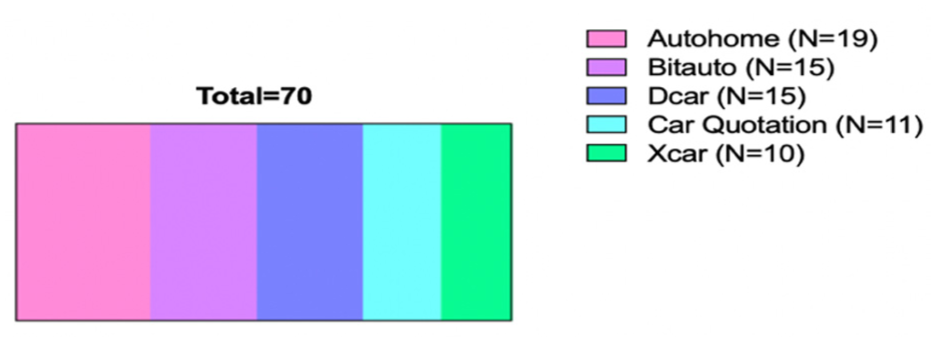
Number of HRRs extracted from the top 5 MAAs.
Although many automobile brands and models are available across the five MAAs, this study focuses specifically on HRRs for the Nissan Sylphy (also known as the Sentra), due to its sustained commercial success. As one of China’s top three best-selling compact sedans for four consecutive years, the Sylphy is a benchmark vehicle with broad consumer appeal. This selection ensures empirical relevance and supports qualitative depth (Ruiz-Madrid, 2021; Valeiras-Jurado & Ruiz-Madrid, 2019), particularly required for the underexplored context of platform-mediated marketing discourse.
From a genre-based perspective, narrowing the focus to a single, market-leading model enables a controlled analysis of HRRs. The Sylphy’s broad visibility ensures sufficient user engagement, facilitating the identification of recurring discursive and persuasive strategies across platforms while minimizing product-specific variation.
Although the Sylphy has generated extensive consumer feedback, the number of available HRRs is comparatively limited, as HRRs represent a curated subset of reviews, elevated either algorithmically or manually. The study addresses this limitation through a critical reflection on the methodological and analytical implications and recommends potential areas of investigation.
To uphold research ethics, all HRRs, analyses, and reports were anonymized consistently with guidelines for researching publicly available data. The study includes no identifiable personal information, and all screenshots used for analysis are redacted to protect reviewer privacy. The research was conducted independently and without commercial affiliation, and its analyses remain confined to publicly observable textual features.
Coding Procedure and Analysis
This research adopted a genre-based move analysis to segment HRRs into schematic units or “moves,” following Swales’ (1990) definition of moves as functional and flexible units serving communicative purposes. Each move, typically at least one sentence long, was identified based on its function, regardless of length (Geng et al., 2023; B. Zhang & Wannaruk, 2016). Skalicky’s (2013) coding of the move structure for reviews in Amazon and Moreno and Swales’ (2018) analysis of genre approach were adopted for the research. Skalicky’s model, initially developed for e-commerce discourse, aligns well with analyzing the structure–persuasion interface in HRRs.
A binary presence/absence coding scheme was employed to minimize interpretive ambiguity and ensure consistency in identifying obligatory moves within the corpus. The two-phase coding process, collaborative annotation followed by independent expert verification, ensured both methodological rigor and validation of emerging patterns through deductive and inductive reasoning. These procedures were directly aligned with the study’s focus on uncovering the rhetorical structures that enable covert persuasion in HRRs.
In the formative phase, two HRR authors and three genre analysts collaboratively annotated the communicative functions of each HRR using Skalicky’s (2013) move structure. Similar functions were grouped to ensure coding reliability, resulting in the inductive refinement of a preliminary set of deductive moves. This combined deductive–inductive approach allowed the identification of both established and emerging moves. Each move or sub-move, whether appearing once or multiple times in a single HRR, was counted as one occurrence to ensure consistent quantification. Moves were marked as “1” (present) or “0” (absent) for each HRR (see Figure 2).

The existence of moves is based on Skalicky’s (2013) move structure analysis of Amazon’s e-commerce product reviews and current research.
To avoid confusion and accommodate the HRR authors’ non-linguistic background, “category” was used instead of “move” during coding. This adjustment facilitated inter-rater agreement on communicative function, assessed via chance-adjusted percentage agreement (Rau & Shih, 2021). The first phase achieved 90.12% agreement, indicating clear and reliable coding criteria.
In the summative phase, three genre analysts independently coded the HRRs using the categories developed earlier. This phase finalized the moves, with inter-rater agreement reaching 94.15%, rated as excellent (Hartmann, 1977). This two-phase procedure ensured a robust and replicable framework for identifying rhetorical moves in HRRs.
This study focused exclusively on obligatory moves to enable a deeper analysis of discursive strategies in HRRs. Based on Halleck and Connor (2006), an 80% occurrence threshold was used to classify moves and sub-moves as obligatory; those with an occurrence below this threshold were considered optional. Although optional moves were recorded, they were not examined in detail, which constitutes a limitation of the study. Still, the threshold ensured consistency in identifying core rhetorical structures central to HRRs.
Data Analysis and Results
Overview of Rhetorical Moves
This study identified 479 units in the HRRs, which were categorized into nine moves. Five were obligatory, each occurring in more than 80% of the HRRs, with various sub-moves possible. Table 1 presents a detailed statistical summary of the moves and sub-moves in the HRRs.
List of Moves and Submoves of the HRRs on MAAs.

Among these nine moves, Move 1 (M1) background information, Move 3 (M3) rating, Move 4 (M4) personal experience, Move 6 (M6) user information, and Move 9 (M9) user-uploaded photos are labeled as obligatory moves.
Discursive Strategies in HRRs’ Obligatory Rhetorical Moves
Although HRRs are typically a subset of generic reviews in which authors exercise considerable freedom in content creation, our findings reveal that HRRs strategically exploit various discursive resources to promote Nissan Sylphy.
Background Information
The background information move (100%) consistently offers contextual details about the HRR author or the reviewed product, serving a scene-setting function typical of the narrative genre (Skalicky, 2013).
Figure 3 illustrates how the background information is structured to enhance the informativeness and credibility (Majumder et al., 2022; Sreejesh et al., 2020) of the HHRs. This move contains obligatory and conventional sub-moves, including the author’s name, purchased model, purchase date, price, location, fuel consumption, and publication date. Functionally aligned with the “orientation” stage in narrative discourse (Martin & Rose, 2008), these sub-moves provide temporal, spatial, and personal context, positioning the review as a credible first-hand account (Ansari & Gupta, 2021; Björk & Iyer, 2023).

Obligatory and optional sub-moves in the background information move of HRRs.
They also include optional sub-moves seldom addressed in review literature, such as community-conferred titles (e.g., badges) signaling HRRs’ expertise and “like” counts indicating social validation. These features correspond to expertise and attractiveness, two core dimensions of source credibility that shape audience acceptance of HRR content (Phan et al., 2024).
Rating
Following the narrative-oriented background information, the rating move introduces evaluative content through two sub-moves: an optional single-dimensional rating (12.86%) and an obligatory multidimensional rating (87.14%). These provide granular metrics across specific attributes, supporting qualitative and quantitative comparisons and aiding cognitive processing (De Langhe et al., 2016; Sadiq et al., 2021).
Figure 4 depicts the single-dimensional rating sub-move, using star symbols (4.5 and 5 stars, respectively) to convey a simplified, positive summary of the Nissan Sylphy’s quality. While optional, its visual clarity facilitates quick judgments. However, this simplification may obscure the complexity of vehicle performance, making it less suitable for high-involvement decisions. Consequently, such ratings are rarely used in isolation and are typically supplemented with multidimensional evaluations for greater comprehensiveness.
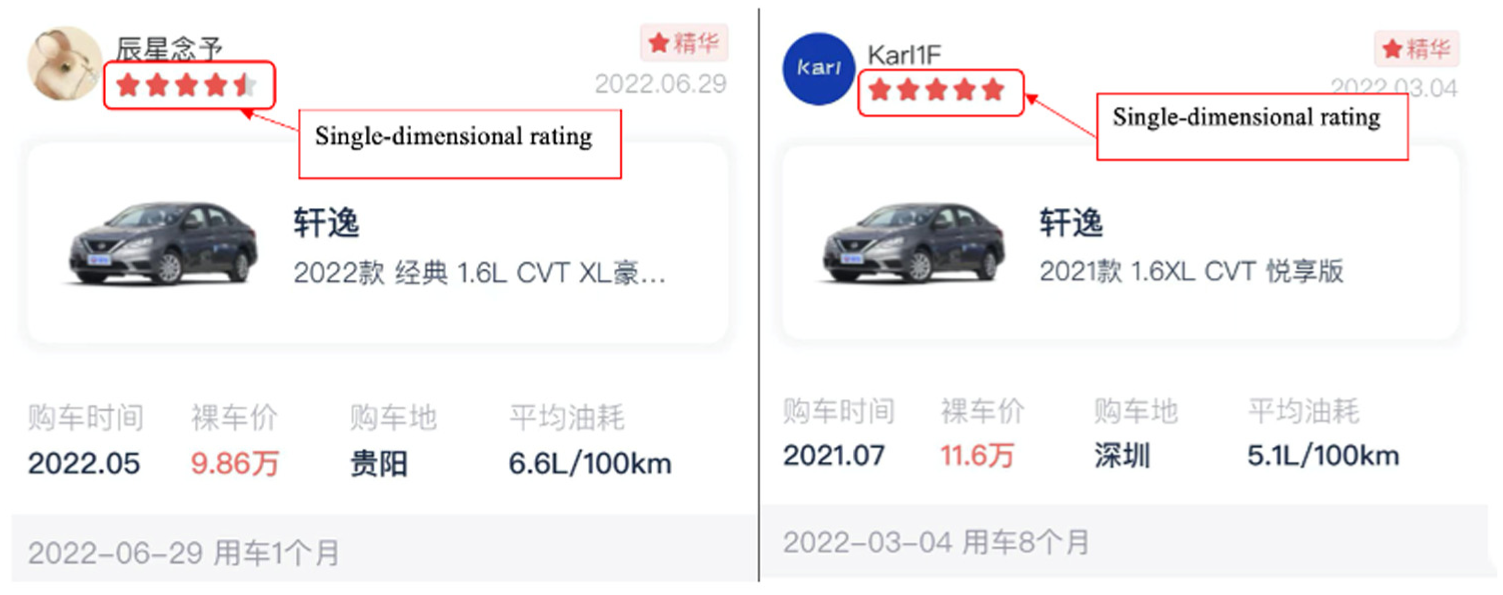
Single-dimensional rating using symbolic scores (e.g., five-star icons).
In contrast to the reductive nature of single-dimensional ratings, the multidimensional rating sub-move (Figure 5) enables more differentiated evaluations by disaggregating performance into specific categories, such as exterior styling, interior comfort, technology, space, and driving dynamics. This itemized structure meets consumers’ demand for diagnostic cues, where attribute-level insights are vital for informed decision-making (Chen et al., 2018). Beyond enhancing informativeness, the structured sub-move lends HRRs a semi-institutionalized character, reinforcing credibility through transparent, criteria-specific appraisal.

Multidimensional rating featuring discrete evaluation categories (e.g., exterior styling, interior comfort, technological integration, spatial design, and driving dynamics).
Personal Experience
Like the background information move, the personal experience move (95.71%) is typically longer and adds substantial detail to the review (Filieri et al., 2018; Yang et al., 2021). While both draw on narrative features, the personal experience move is distinctively framed through anecdotes and disclaimers, serving a highly informative and referential function (Zhao et al., 2019; W. Zhuang et al., 2023).
 , given that the weather in the Xinjiang Uygur Autonomous Region feels like a sauna
  under the sun…
 .
.
In Examples 1 and 2, reviewers recount positive experiences from a first-person perspective, offering personalized accounts of the car’s performance, often stylized with emoticons, typically found in social media discourse. These symbols convey subtle affective cues, such as humor, fondness, or mild dissatisfaction (Gibson et al., 2018; Lazar & Wan, 2022; Parkwell, 2019). Their use enhances affective resonance and relatability, traits valued in UGC communities, and aligns with findings on how perceived closeness boosts persuasive impact in digital contexts (Benetti et al., 2024).
Beyond emoticons, the personal experience move often incorporates disclaimers that pre-emptively address readers’ concerns. In Example 3, the reviewer acknowledges her limited technical knowledge, employing a self-reflective disclaimer that conveys honesty and humility, thereby enhancing credibility (Wald et al., 2024). This gesture invites empathy while subtly challenging gender bias that depicts women as less technically competent in the Chinese context. It broadens the vehicle’s appeal by suggesting it suits even inexperienced drivers. Such discursive maneuvers foster value co-creation through shared vulnerability and interpersonal resonance (Zhao et al., 2024), enhancing persuasive impact and connectedness in participatory digital settings (Benetti et al., 2024; Luan & Phan, 2024).
User Information
Likewise, the user information move (81.43%) adopts genres modeled on digital diaries and Q&A exchanges, simulating transparency and autonomy. It fosters a dialogic reviewing environment, facilitating peer interaction and repositioning the HRR as a co-constructed knowledge resource rather than a static testimonial.
I’ve had the car for over a month and have already logged more than 800 miles. I primarily use it to commute to work, but return to my rural hometown on weekends. One of the factors I care about most is fuel consumption; who wouldn’t want to use less fuel?
1. I replaced the high beam with an LED, and I think it’s okay. I’ll talk about that later since I haven’t driven on a road with no lights.
2. As for wheel hubs, the original aluminum alloy wheels were not good enough, so I replaced them. I will show you some photos of the new wheels tomorrow, but I think there’s no need to get new wheels…
Example 4 adopts a retrospective e-log format, offering a monologic account of over 800 miles of post-purchase use. By foregrounding fuel consumption, a universally relevant concern, the HRR delivers practical insights that reduce potential buyer uncertainty. This experiential disclosure, anchored in actual usage, enhances credibility and taps into the herd mentality (Vedadi et al., 2021), mitigating concerns about long-term reliability.
In contrast, Example 5 features a participatory Q&A format, shifting from narration to dialogue. It addresses collective reader concerns, such as light replacement and wheel upgrades, through a numbered response structure that simulates asynchronous yet relational interaction. This move reflects a broader genre shift toward consumer empowerment and personalized guidance (Füller et al., 2009; Van Herck et al., 2022), in which HRR credibility is co-constructed through digital responsiveness. Such value co-creation practices, while allowing moderated expressive freedom, help manage dissatisfaction (Reimer & Benkenstein, 2016). As consumers become more informed and actively involved, their satisfaction and loyalty increase, ultimately enhancing business performance (Orts-Cardador et al., 2025).
User-Uploaded Photos
The User-uploaded photos move (81.43%) integrates consumer-generated (45.71%), vendor-curated (11.43%), and hybrid imagery (24.29%), functioning as porous semiotic resources that enhance product desirability and reinforce perceived authenticity in mobile commerce environments (Li et al., 2022).
Figure 6 shows user-uploaded photos (45.71%) depicting celebratory car delivery rituals, often featuring red ribbons and festive decorations. These non-verbal cues foreground situated experience, serve as personal mementos, and enhance emotional appeal by making attitudinal stances more salient (Lazar & Sun, 2020). The integration of visual semiotics reinforces positive sentiment and promotes textual congruence with photos in HRRs. As Konijn et al. (2016) note, individuals are likelier to share images after emotionally positive events. This coherence between verbal and visual modes bolsters the promotional function of HRRs under the guise of spontaneous expression (Li et al., 2022). By externalizing satisfaction and pride, reviewers convert private affect into public endorsement, mirroring affective cues—such as closeness, familiarity, and resonance—that enhance the persuasive impact (Phan et al., 2025).

Consumer-uploaded photos of car handovers at dealerships, featuring celebratory décor such as red ribbons.
In China’s collectivist context, public visual endorsements act as embedded trust signals, legitimized through alignment with shared norms (Westjohn et al., 2022). Through service-dominant logic, these affective displays enable consumers to co-create value and contribute to brand meaning via culturally resonant, socially recognizable forms of engagement, appealing to self-expressive motivations (Luan & Phan, 2024; Phan & Hoai, 2025).
Figure 7 illustrates how HRRs blend consumer-uploaded and seller-provided images (24.29%) to fulfill distinct rhetorical functions. A common tripartite sequence includes: a user-contributed delivery photo that evokes cultural values of joy and prosperity; an interior shot from the driver’s perspective, reinforcing usability; and a branded promotional image that introduces institutional authority and aesthetic appeal.

Blended photos jointly sourced from dealers and consumers within a single HRR.
Brand-sourced visuals often incorporate hypertextual prompts—for example, “What is White Valentine’s Day? Click here to avoid pitfalls,”—which disguises promotional intent as practical advice. The adoption of tutorial-like discourse facilitates a subtle shift from information sharing to high-involvement persuasion (Wang et al., 2023). Event-based cues (e.g., holiday promotions) further activate scarcity-driven tactics, thereby heightening urgency and stimulating user engagement (Phan & Hoai, 2025).
By juxtaposing peer-authenticated and brand-curated visuals, HRRs construct a hybrid discourse that fuses experiential trust with strategic branding. User-generated images, featuring everyday scenes and interior familiarity, leverage emotional heuristics such as closeness and familiarity to enhance message receptivity (Phan et al., 2025). This multimodal orchestration of verbal, visual, and hypertextual elements transcends mere testimonial, positioning HRRs as persuasive, affectively charged communicative acts.
Discussion and Conclusion
This genre-based study investigates how Chinese car-buying apps construct marketing discourse through genre-specific moves and discursive strategies, drawing on a dataset of 70 ostensibly non-commercial Highly Recommended Reviews (HRRs) from major Mobile Commerce automobile apps (MAAs). The analysis identifies a consistent nine-move structure across the dataset. Five moves, background information (M1), ratings (M3), personal experience (M4), user information (M6), and user-uploaded photos (M9) are obligatory. In contrast, four others, including overall statements (M2), offering incentives (M5), comparisons (M7), and references to other reviews (M8), occur optionally. All moves are uniformly framed by positive sentiment, suggesting a systematic alignment with covert promotional intent.
The move structure identified in HRRs departs from Skalicky’s (2013) analysis of Amazon’s“most helpful” reviews, which typically exhibit neutral sentiment and a consistent structural pattern. Unexpectedly, HRRs in Chinese MAAs display an overtly positive sentiment and a less regularized move structure. While retaining conventional elements, such as M1, M4, and M6, they introduce two novel obligatory moves: M3 and M9. These additions reflect a shift toward visually driven, multimodal persuasion, signaling the genre’s evolution into a more strategically curated form of covert marketing discourse.
In addition, the discursive strategies employed across different moves are not uniformly applied. M1 largely conforms to established narrative templates in review genres, aligning with Björk and Iyer’s (2023) notion of “orientation” in corporate image repair videos, where background details are strategically presented to build credibility and contextualize the speaker. However, this move also exemplifies genre innovation. In addition to conventional credibility framing, it introduces a novel element absent from earlier review literature: the frequent invocation of platform-awarded badges. These badges, framed as indicators of reviewer quality, seniority, or helpfulness, serve as platform-sanctioned signals of expertise. Coupled with prominently displayed “like” counts, they function as credibility-enhancing metrics (Phan et al., 2024), transforming personal evaluations into institutionally endorsed discourse and complicating the perceived transparency of peer-generated content.
While retaining the formal structure of conventional review genres, the M4 and M6 in HRRs exhibit nuanced rhetorical recalibrations. The M4, typically a straightforward evaluation of product usage, is recontextualized through the strategic use of emoticons, a salient feature of computer-mediated communication (CMC). Rather than mere decorative elements, these emoticons act as paralinguistic cues that amplify positive sentiment, diffuse criticism, and obscure emotional polarity (Gibson et al., 2018; Lazar & Wan, 2022; Parkwell, 2019) for automobile marketing.
Additionally, disclaimers, traditionally used as liability hedges in commercial advertising and often viewed as detrimental to persuasive effect (Bhatia, 2004), paradoxically enhance the credibility of manipulated HRRs. When review authors preface their assessments with personalized qualifiers such as “As a woman with limited expertise in automobiles” or “just my experience,” they shift the discourse from evaluative certainty to reflective subjectivity. This self-disclosure strategy frames the review as honest, humble, and emotionally grounded, increasing its perceived authenticity and persuasive power. The adoption of disclaimers transitions personal experience from genuine self-disclosure to commercial personalization, increasing the covertness of promotional discourse (Luan & Phan, 2024). This rhetorical shift raises significant ethical concerns, especially when disclaimers, typically associated with non-authoritative and self-reflective functions, are exploited to mask covert marketing intentions under the guise of familiar and trustworthy genre conventions.
The M6 further exemplifies discursive innovation through sub-moves such as digital diary entries and Q&A formats, which foster an appearance of transparency and user autonomy. These features promote a peer-oriented interaction and facilitate value co-creation (Luan & Phan, 2024; Orts-Cardador et al., 2025) through shared experience, reciprocal responsiveness, and alignment with community norms. This move deepens user engagement and helps avert crises of consumer trust (Reimer & Benkenstein, 2016) within the seemingly organic participatory discourse.
Beyond textual strategies, the M3 exemplifies a quantified persuasion, as itemized scores streamline product assessment and reduce cognitive load, resonating with Bakhtin’s concept of heteroglossia in marketing discourse (Chen et al., 2018; De Langhe et al., 2016; Liu et al., 2023). Complementing these numerical cues, M9 often integrates with brand-curated visuals to present a consistently positive impression and reinforce peer-based credibility. This tactic is particularly effective in collectivist cultures where social proof holds significant sway. This visual positivity aligns with the textual sentiment, forming a cohesive semiotic strategy that enhances persuasive efficacy (Li et al., 2022). However, as multimodal resources that support both authentic expression and covert marketing, such visuals also raise ethical concerns about emerging forms of manipulation in digital marketing.
While integrating conventional review structures with innovative moves, HRRs exhibit a pronounced positivity bias that deviates from the more balanced sentiment distribution typically observed in prior review research. Rather than presenting a full spectrum of favorable, unfavorable, and neutral opinions (Chua & Banerjee, 2016; Ren & Hong, 2019; Skalicky, 2013), HRRs consistently skew toward positive sentiment, diverging from the theoretically inclusive sentiment profile expected of e-commerce reviews (Chua & Banerjee, 2016; Ren & Hong, 2019). This bias may stem from consumers’ tendency to seek confirmatory over disconfirming information before purchase (Hammond et al., 1998), which incentivizes platforms to elevate positive or mildly critical reviews. When such sentiment curation remains undetected, these reviews can significantly enhance purchase intentions (Zhong et al., 2023). They are likelier to be rated as ‘helpful’, thereby increasing their visibility and persuasive power (Chua & Banerjee, 2016).
Despite having a proclivity for favorable evaluations, consumers tend to grow wary of excessively glowing endorsements that paint an overly rosy picture of the evaluated product (Chua & Banerjee, 2016). This positivity bias partially explains the prevalence of affirmative HRRs (Pan & Zhang, 2011). However, an over-saturation of such content may trigger an inverted U-shaped relationship between positivity and perceived trustworthiness, whereby excessive positivity undermines credibility, elicits skepticism, and ultimately weakens purchase intentions (Hu et al., 2009; Kraemer et al., 2025). In response, platforms often permit mild or subjective criticisms, which function as credibility enhancers rather than deterrents (Pan & Chiou, 2011). Such minor critiques, typically addressing trivial or personal preferences, increase perceived authenticity while sustaining the promotional effectiveness of HRRs.
Crucially, the deliberate emphasis on “satisfying” product features while downplaying or omitting critical evaluations obscures the persuasive intent of HRRs, particularly among users with limited digital literacy. Their infrequent habitual online engagement, combined with a lack of critical interpretive strategies (e.g., observational learning or source triangulation), significantly weakens users’ ability to detect covert marketing (Phan et al., 2024). As a result, they become more susceptible to seemingly credible cues, such as endorsements from platform-endorsed Key Opinion Leaders (KOLs), a category many HRR authors may unknowingly fall into.
Implications and Limitations
Theoretical Contributions
The theoretical contributions of this study are threefold. First, identifying the structural and rhetorical features of HRRs advances genre theory by revealing how conventional and innovative moves reframe ostensibly truthful reviews for persuasive purposes. While context-rich narratives in product reviews are commonly perceived as credibility-enhancing (Ansari & Gupta, 2021), their strategic deployment in manipulated reviews complicates this assumption. Such rhetorical shifts divert the communicative intent of manipulated reviews from information-sharing to subtle persuasion, amplifying anchoring effects and biasing consumer judgment. These findings expose the limitations of genre-based heuristics in algorithmically mediated environments and underscore the need for a more context-sensitive approach to genre analysis, particularly as commercial actors appropriate user-generated content in algorithm-driven marketing platforms.
Second, the study takes a modest step toward addressing the persistent dichotomy between fake and authentic reviews. Fake reviews are typically fabricated without genuine product experience (Wu & Qiu, 2023), whereas authentic reviews are grounded in genuine consumer feedback (De Jong & Burgers, 2013). HRRs, however, occupy a conceptual middle ground. They blend authentic user experiences with platform-driven curation and business-aligned objectives, contributing to emerging scholarship on this underexplored hybrid and covert category.
Third, this study highlights how covert promotional strategies can inform future research on machine learning literature to identify underexplored genres of covert digital marketing (Birim et al., 2022). Specifically, credibility-enhancing cues, such as platform-awarded badges (e.g., “Gold Reviewer,”“Most Helpful”) and high numbers of “likes,” are frequently used to signal reviewer expertise and attractiveness, both of which have been shown to increase the persuasive impact of HRRs and consumers’ purchase intentions (Phan et al., 2024). However, such indicators may artificially amplify positive narratives while marginalizing dissenting or neutral voices. Machine learning models trained to detect these covert discursive signals can help uncover manipulation patterns and caution users against interpreting these cues as neutral, credible indicators. This points to the importance of critical digital literacy and algorithmic transparency in combating subtle forms of persuasive design in M-commerce environments.
Practical Implications
The findings have several practical implications for consumer protection, platform governance, and regulatory policymaking. By uncovering the structural features of manipulated Highly Recommended Reviews (HRRs), the study contributes to genre-based consumer literacy. It draws attention to the absence of critical cues as a potential indicator of covert promotional intent. This is particularly salient in high-involvement contexts such as automobile purchases, where distorted review practices may compromise informed decision-making.
In a digital environment increasingly shaped by misinformation and opaque content curation (Ansari & Gupta, 2021; Birim et al., 2022; Zhong et al., 2023), policymakers, regulators, and consumer advocacy groups must become more proactive in identifying and mitigating the risks of manipulated content. Such content impairs users’ ability to retrieve accurate information and make informed evaluations, ultimately undermining marketplace fairness. To counter this, there is an urgent need for stricter regulatory oversight of platform algorithms and review display mechanisms, especially where certain reviews are elevated without transparent criteria.
Regulatory frameworks should require platforms to disclose why and how certain reviews are prioritized, such as through reviewer verification, purchase history, or helpfulness metrics, so that consumers can assess credibility more effectively. Without clear disclosure, algorithmic promotion of curated positivity may unintentionally mislead users and create a false sense of consensus.
Moreover, platforms should be accountable for implementing trust-building mechanisms, including transparency dashboards, periodic reporting on review moderation practices, and safeguards against review inflation. This is especially relevant in markets with high consumer vulnerability, where positive sentiment is often mistaken for authenticity.
Consumer watchdogs, digital rights organizations, and third-party developers should be encouraged to create detection tools and educational campaigns that equip consumers to recognize suspicious patterns in review language and sentiment. These tools should move beyond surface-level keyword detection and incorporate deeper structural and rhetorical manipulation indicators. Prioritizing the detection and removal of fake reviews is essential for maintaining trust in digital marketplaces (Birim et al., 2022).
Consumers increasingly approach UGC, particularly reviews that are overwhelmingly positive or only mildly critical, with a degree of healthy skepticism. Rather than lowering their guard, consumers need to cultivate critical digital literacy (Phan et al., 2024), including cross-referencing reviews across platforms and detecting inconsistencies or homogenized sentiment.
Limitations and Future Directions
This study has several limitations that may affect the generalizability of its findings. First, the analysis focuses solely on a single high-involvement product category, automobiles. While this enables in-depth genre analysis, it limits applicability to other consumer sectors. Future research should include a broader range of car brands, price tiers, and vehicle types, as well as explore other product categories, especially low-involvement or hedonic goods, such as movie tickets, beauty products, or digital services, to assess whether the rhetorical structures and manipulation strategies identified are consistent across varying levels of consumer involvement.
Second, the study adopts a qualitative approach and does not examine the measurable impact of HRR manipulation on consumer trust, brand perception, or market dynamics. Future research could employ mixed methods to assess the short- and long-term effects of covert promotion, offering a more comprehensive understanding of its influence on digital consumer behavior.
Third, the dataset for this study comprises product reviews written in Mandarin Chinese, which may cause potential language-related comprehension issues among non-Mandarin-speaking readers and researchers. To address this, the researchers used three strategies to maximize accuracy and reliability. Specifically, Vehicle-related Objective Information (e.g., purchased vehicle models, fuel consumption, prices, and purchase locations) was directly translated and mapped to English equivalents, thereby ensuring equivalence of meaning and minimizing the risk of misinterpretation. As for Multimodal Visual Content (e.g., images, numerical ratings, star ratings, and point-based evaluations), it was retained in its original form because all of the content is universal in nature. This approach preserved the authenticity and contextual integrity of content, ensuring that both visual and quantitative information remained reliable and accurately represented the original data. For Contextually or Culturally Specific Expressions (e.g., euphemistic or evaluative phrases), the researchers and a professional translator cross-checked the expressions to preserve both literal meaning and pragmatic nuance. Specific culturally embedded nuances may remain partially resistant to full equivalence. Future studies could adopt these three strategies to examine product reviews in other languages, thereby contributing to further research. Such efforts would encourage multilingual investigations of product reviews in diverse real-world marketing contexts.
Footnotes
Acknowledgements
We thank the anonymous reviewers and editors for their constructive feedback.

Ethical Considerations
This article does not contain any studies with human or animal participants.
Author Contributions
Zhang Jin: Conceptualization, Methodology, Formal Analysis, Investigation, Original Draft Preparation, Review & Editing, Data Curation, Project Administration, Validation, Visualization. Chow Ung T’chiang: Conceptualization, Methodology, Review & Editing, Supervision, Validation. Cheong Cecilia Yin Mei: Methodology, Review & Editing, Validation.
Funding
The authors disclosed receipt of the following financial support for the research, authorship, and/or publication of this article: This research is funded by the Universiti Malaya Faculty of Languages and Linguistics Research Grant (UMFLLRG). Grant Number: UMG024N-2024.
Declaration of Conflicting Interests
The authors declared no potential conflicts of interest with respect to the research, authorship, and/or publication of this article.
Data Availability Statement
Data sharing is not applicable to this article as no datasets were generated or analyzed during the current study.