



Abstract
This study investigates how disciplinary training in music and sports influences creative writing skills among English as a Foreign Language (EFL) students. The study draws on three frameworks, the Theory of Creative Cognition, Gardner’s Multiple Intelligences Theory, and Amabile’s Componential Model of Creativity. Together, these highlight the roles of divergent thinking, goal-oriented problem solving, and domain-specific intelligences in shaping creativity. Music training fosters divergent thinking, encouraging innovative metaphors and ideas. In contrast, sports training emphasizes structured cognitive processes, promoting strategic problem solving and goal-setting. These differences were examined using a mixed-methods design that combined quantitative tests (t-tests and ANOVA) with qualitative analysis through Directed Qualitative Content Analysis (DQCA). A total of 60 EFL students (30 music majors and 30 sports majors) from a university in Pakistan participated. They completed a creative writing task by composing short stories based on music or sports themes. Writing samples were evaluated on four dimensions: creativity (originality and thematic depth), structure (logical flow and coherence), linguistic skills (grammar and vocabulary), and emotional expression (engagement with readers). The results revealed significant group differences. Music majors outperformed sports majors in creativity and emotional expression, consistent with the idea that musical training enhances divergent thinking and emotional depth. Sports majors demonstrated stronger structural and goal-oriented approaches, reflecting the influence of strategic and disciplined training. The findings suggest that integrating the strengths of both disciplines could enrich creative writing pedagogy. This study offers valuable insights for interdisciplinary education, highlighting how disciplinary backgrounds shape creativity in EFL learners.
Plain Language Summary
This study explored how university students majoring in music and sports write creatively in English as a foreign language, examining whether their different disciplinary training influences how they express ideas in writing. Sixty students from a university in Pakistan (30 music majors and 30 sports majors) were asked to write short stories in English, either on music or sports themes. Their stories were evaluated for creativity, structure, language use, and emotional expression. The results showed that music students demonstrated greater creativity and emotional depth, likely due to their training in imaginative thinking and emotional expression. In contrast, sports students produced more structured and goal-oriented writing, reflecting their focus on discipline and strategy. These findings suggest that students’ academic backgrounds shape their creative writing styles, and integrating both musical and athletic approaches may help enhance writing instruction by combining emotional richness with structural clarity.
Introduction
Creativity and self-expression are essential components of both academic and personal development. Creative writing, in particular, provides a primary avenue for articulating thoughts, emotions, and ideas (Macnamara et al., 2014). Despite its importance, the influence of disciplinary training on creative writing skills has received limited attention in the existing literature.
Disciplines such as music and sports cultivate distinct cognitive, emotional, and physical skills. However, it remains unclear how these forms of training shape creative writing abilities. Creative Cognition Theory (Finke et al., 1996) suggests that creativity arises from the interaction between mental representations and cognitive processes such as conceptual combination and problem-solving. From this perspective, music training may enhance divergent thinking, enabling students to generate innovative ideas and metaphors in their writing. By contrast, sports training emphasizes goal-setting, strategic planning, and structured problem-solving, which may lead to a more organized approach to writing.
In this study, structure in creative writing is defined as the logical flow, organization of ideas, and goal-oriented nature of the text. For sports majors, structure is examined through their approach to planning and organizing their writing, reflecting the strategic thinking embedded in sports training (Eccles & Tran, 2012). Music majors, by contrast, often adopt an intuitive and emotionally driven approach, emphasizing abstract thinking and creative expression.
This study compares the creative writing skills of music and sports majors to explore how disciplinary backgrounds influence creativity, writing structure, linguistic skills, and emotional expression. It extends recent research (Rigon et al., 2024; Theel & Sydow, 2024) by investigating the intersection of disciplinary training and creative writing, contributing to a deeper understanding of how domain-specific expertise shapes self-expression. By examining this relationship, the study also provides insights into how interdisciplinary education can enrich students’ creative expression and support the development of diverse writing skills.
Theoretical Framework
This study is primarily grounded in Creative Cognition Theory, which posits that creativity emerges from structured cognitive processes such as conceptual combination, mental synthesis, and analogical transfer (Finke et al., 1996). This framework is particularly suitable for analyzing creative writing in EFL contexts, where students’ cognitive strategies influence how they generate, organize, and refine ideas.
At the same time, creativity in writing cannot be fully understood without acknowledging broader perspectives. Gardner’s (2011) Multiple Intelligences Theory provides a complementary lens, suggesting that individuals may demonstrate creativity through different modalities for instance, musical intelligence or bodily–kinesthetic intelligence. In the context of this study, music majors may draw on rhythmic and auditory skills, while sports majors may rely more on kinesthetic and spatial awareness, both influencing the way they approach creative writing.
Other frameworks, such as Amabile’s (1983) Componential Model of Creativity, also highlight the interaction of domain-relevant skills, creativity-relevant processes, and task motivation. While not directly tested here, this model supports the rationale that disciplinary training (in music or sports) provides domain-specific skills that shape EFL learners’ writing output.
By situating Creative Cognition Theory alongside these perspectives, the study establishes a richer conceptual basis: cognitive strategies (Creative Cognition), domain-specific intelligences (Multiple Intelligences), and contextual motivational factors (Componential Model) all contribute to understanding how music and sports majors differ in creative writing performance.
Problem Statement
The influence of disciplinary training on creativity, writing ability, and emotional expression in students has been well-documented, yet there remains a gap in understanding how specific fields of study, such as music and sports, shape creative writing skills. While music is often associated with emotional expression, abstract thinking, and creativity, sports emphasize structure, discipline, and goal-oriented approaches. Despite these differences in cognitive and emotional training, there is limited research comparing how students from these fields approach creative writing tasks. This lack of comparative studies raises important questions about the impact of disciplinary expertise on creative expression, particularly in the context of English as a Foreign Language (EFL) learners. The problem is further compounded by the absence of clear insights into how such training influences key writing components such as creativity, structure, linguistic skills, and emotional expression. To address this gap, the current study examines the creative writing abilities of music and sports majors, seeking to understand how their disciplinary training affects their approach to creative writing tasks. The findings of this study could contribute to a better understanding of the role of domain-specific expertise in shaping creativity and self-expression, as well as provide practical insights for educators aiming to enhance creative writing across various disciplines.
Research Objectives
The study aims to achieve answers of following objectives,
To explore significant differences in creative writing skills between students majoring in music and those majoring in sports.
To examine how the specific training, experiences, and perspectives gained in music and sports disciplines shape the writing styles and approaches of the participants.
To investigate whether there are differences in the creativity, structure, emotional expression and linguistic skills of the writing produced by the two groups, and how their disciplinary backgrounds may influence these aspects.
Research Questions
The present study responds to the following research questions.
What differences exist between EFL music majors and sports majors in creative writing performance across creativity, structure, linguistic skills, and emotional expression?
How does disciplinary training in music or sports shape the writing processes and styles of EFL students?
In what ways do music and sports majors differ in their approaches to emotional expression and thematic depth in creative writing?
To address these questions, the study investigates key variables such as creativity (originality, fluency, and flexibility), technical writing skills (grammar, vocabulary, coherence), and emotional or thematic depth.
Literature Review
Creativity and Writing Skills
Creative writing is a multifaceted process shaped by cognitive, emotional, and experiential factors, with disciplinary training playing a key role in shaping individual skills and expression. Creativity in writing involves originality, fluency, and flexibility, which enable individuals to produce unique and compelling works (Torrance, 1966). Early research emphasized that creativity is not an innate trait but a skill that can be nurtured through practice and exposure to diverse experiences (Amabile, 1983). Writing, as a creative process, requires ideation, organization, and revision (Flower & Hayes, 1981), and these skills are often developed differently across domains. More recent studies affirm that creativity in writing benefits from both cognitive training and emotional engagement, as writers draw on personal experiences and disciplinary practices to enrich thematic depth and expression (Kaufman & Beghetto, 2009; Khalil & Demarin, 2023).
Influence of Music Training on Creativity
Music education has long been associated with enhanced creativity because it fosters improvisation, abstraction, and emotional exploration (Hallam, 2010). Musicians often demonstrate heightened sensitivity to emotional nuance, which translates into expressive writing (Hanna-Pladdy & MacKay, 2011). Divergent thinking is a hallmark of musical training, enabling individuals to generate original ideas and flexible perspectives in writing tasks (Mullen, 2017). Recent findings show that music engagement enhances memory, attention, and problem-solving (Cheung et al., 2020), all of which support complex writing processes. Moreover, research in educational psychology highlights that musical intelligence contributes to metaphorical thinking and symbolic expression in creative writing (Myszkowski et al., 2023). These results suggest that music majors may demonstrate deeper emotional resonance and innovative approaches in their writing compared to peers from non-arts disciplines.
Influence of Sports Training on Creativity
In contrast, sports training emphasizes discipline, resilience, and strategic thinking, but its links to creativity have been increasingly recognized in recent years. Early studies emphasized sports as fostering goal-setting and structured approaches (Baker et al., 2003; Memmert, 2015). However, contemporary research has expanded this view: creativity in sports is now conceptualized as “motor creativity” or the ability to generate original and adaptive solutions under performance constraints (Runco & Jaeger, 2012; Santos et al., 2023). Athletes frequently demonstrate creativity in tactical decision-making, improvisation during gameplay, and adapting strategies to opponents (Memmert & Roca, 2019). These problem-solving abilities can transfer to academic tasks, including writing, where athletes may display organized, purposeful narratives that reflect their training in planning and execution. Furthermore, sports participation enhances psychological flexibility and teamwork skills (Cotterill, 2022), which can influence narrative writing by foregrounding collaboration, perseverance, and motivational themes. Together, these findings suggest that while sports majors may favor structured and pragmatic writing, they also bring creative strengths grounded in adaptability and strategic expression.
Comparing Music and Sports in Educational Contexts
Although few studies have directly compared creative abilities between music and sports students, available research indicates that disciplinary training shapes creativity in distinct ways. Arts-based training fosters divergent thinking and emotional expression (Hetland & Winner, 2018), whereas sports training emphasizes focus, discipline, and tactical creativity (Hodges & McMahon, 2021; Santos et al., 2023). More recent studies reveal that musicians demonstrate greater flexibility in problem-solving, while athletes excel in strategic organization and resilience (Davids & Araujo, 2022). These disciplinary differences highlight the likelihood that music majors prioritize thematic richness and metaphorical expression in creative writing, while sports majors produce structured, motivational, and goal-driven narratives.
Implications for Interdisciplinary Research
The interaction between disciplinary training and creativity underscores the importance of interdisciplinary approaches in education. Integrating artistic and athletic practices can foster holistic creative development, combining divergent thinking with structured goal orientation (Mateos-Moreno, 2024; Sawyer, 2012). Interdisciplinary research in education emphasizes that exposure to multiple domains helps students draw on diverse intelligences and adopt flexible approaches to problem-solving (Myszkowski et al., 2023; Root-Bernstein & Root-Bernstein, 1999). Bringing together the strengths of music and sports can therefore enrich writing pedagogy, enabling students to develop well-rounded creative skills that are both expressive and structured.
Contribution of the Current Study
Building on this body of literature, the present study investigates how disciplinary experiences shape creativity, technical writing skills, and emotional expression among music and sports majors in an EFL context. By examining differences across these groups, the study contributes to a deeper understanding of how academic training influences creative writing performance. It highlights the potential of interdisciplinary approaches to combine the expressive strengths of music with the structured discipline of sports, offering insights for EFL pedagogy aimed at fostering creativity across diverse fields of study.
Research Design
The study has recruited a balanced sample of music majors and sports majors, with 30 participants from each group. Participants will complete a creative writing task, such as a composition inspired by either music or a sports event, or crafting a fictional narrative about overcoming a challenge.
Data Collection
The participants were engaged in two primary activities. Creative Writing Task: Each participant completed a writing task that involved composing a short story based on either music or sports themes. The task was designed to encourage creativity, emotional expression, and linguistic skills. The writing samples were evaluated using a rubric that assessed four criteria: creativity (originality and thematic depth), structure (logical flow and coherence), linguistic skills (grammar and vocabulary), and emotional expression (ability to engage readers). Each criterion was scored on a 5-point scale, with a maximum score of 20 points for each sample. Semi-structured Interviews: After completing the writing task, participants participated in semi-structured interviews to reflect on their writing process. The interviews focused on their approach to generating ideas, organizing their writing, and incorporating emotional expression, among other aspects. These interviews provided qualitative insights that complemented the quantitative analysis of the writing samples.
Data Analysis
To evaluate the writing samples, a rubric will assess creativity (originality and thematic depth), structure (logical flow and coherence), linguistic skills (grammar and vocabulary), and emotional expression (ability to engage readers). Both quantitative scoring and qualitative narrative analysis will be used for assessment. Each sample has achieved a maximum score of 20 points (five points per criterion), 17 to 20: Excellent, 13 to 16: Good, 9 to 12: Average, 5 to 8: Poor (Appendix 1). Data collection included demographic details such as age, academic year, and prior writing experience. For quantitative data, statistical methods, such as t-tests or ANOVA, was applied to compare rubric scores between groups, while Directed Qualitative Content Analysis (DQCA) was employed to analyze the interview data, following a systematic and structured approach to identify patterns, themes, and categories. The process was guided by established methodologies in qualitative research (Assarroudi et al., 2018) and adapted to the specific context of creative writing among music and sports majors. The analysis followed certain steps to fulfill the integrity of the findings. Since, the unit of analysis for this study was the individual interview transcript, as it provided a comprehensive record of participants’ responses to the semi-structured interview questions. Each transcript was treated as a standalone unit, allowing for an in-depth exploration of how music and sports majors described their creative writing processes, inspirations, and self-evaluations. This approach aligns with previous research that uses textual data (e.g., interview transcripts) as the primary unit of analysis (Assarroudi et al., 2018).
The first step in the analysis process involved familiarization with the data. All 60 interview transcripts (30 music majors and 30 sports majors) were reviewed multiple times to gain a holistic understanding of the participants’ perspectives. This step ensured that the researchers were immersed in the data, which is critical for identifying meaningful patterns and themes (Elo & Kyngäs, 2008). The analysis was guided by the rubric criteria used to evaluate the writing samples: creativity (originality and thematic depth), structure (logical flow and coherence), linguistic skills (grammar and vocabulary), and emotional expression (ability to engage readers). These criteria served as the predefined categories for the DQCA process (Rasool et al., 2022). The coding process involved systematically extracting and labeling data segments that corresponded to the predefined categories and related subcategories. This was done using a coding sheet to ensure consistency and transparency. Once the data were coded, the researchers analyzed the patterns and relationships within and across categories. To ensure the trustworthiness of the analysis, the study adhered to established qualitative research standards. Multiple researchers were involved in the coding process to reduce bias and ensure consistency. The final step involved organizing and presenting the findings in a structured format, as outlined in the Findings section of this paper. Direct quotes from participants were included to illustrate key points and provide evidence for the interpretations.
Participants
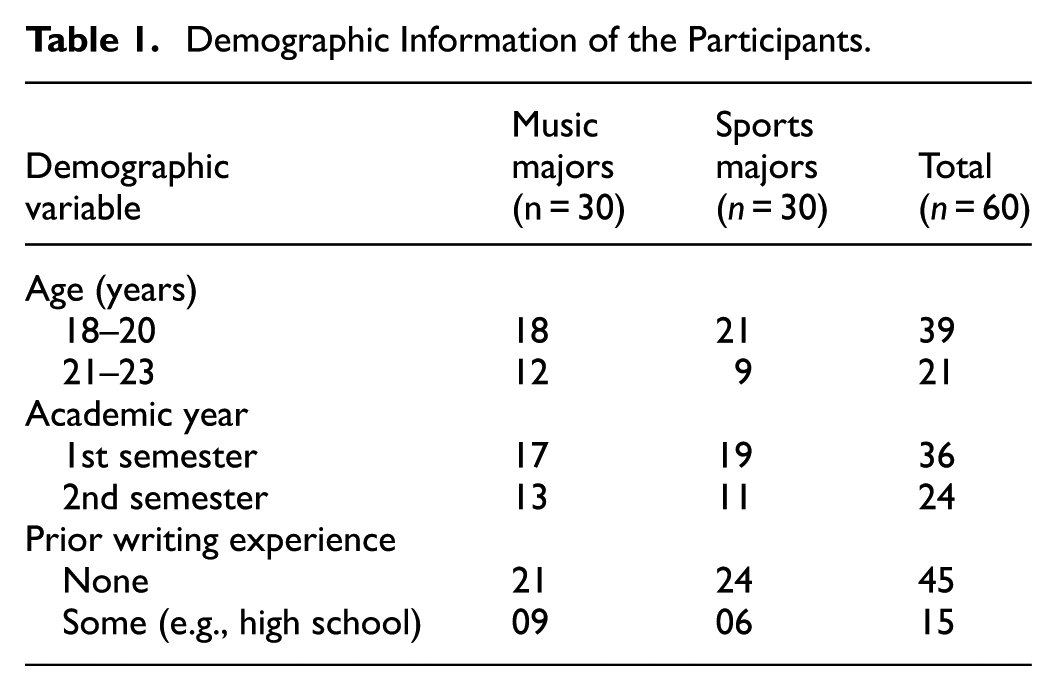
Participants were recruited from undergraduate programs, enrolled as a music or sports major at Public University in Pakistan, with no prior formal training in creative writing outside their academic curriculum. A stratified random sampling approach was used to recruit participants for this study. The sample consisted of 60 EFL students (30 music majors and 30 sports majors) from an undergraduate program at a public university in Pakistan. The stratification ensured equal representation of music majors and sports majors while controlling for potential demographic variables such as age and academic year. Participants were EFL learners who had no formal training in creative writing outside their academic curriculum. All participants were non-native English speakers, ensuring a homogeneous sample in terms of language proficiency. To ensure comparability across the groups, a pre-test of basic writing and language skills was administered, which allowed for a reliable comparison of writing abilities at the outset of the study. The pre-test’s inter-rater reliability was assessed using Cohen’s Kappa coefficient (0.85), indicating strong consistency among raters. Additionally, the internal consistency of the pre-test was high, with a Cronbach’s alpha coefficient of .92. (Lemm, 2010). To ensure the homogeneity of the participants, a pre-test of basic writing and language skills was administered, ensuring comparable baseline knowledge across the groups. The inter-rater reliability was assessed using Cohen’s Kappa coefficient, which yielded a value of 0.85, indicating a high level of agreement between the raters and suggesting strong reliability in the scoring process. To assess the internal consistency of the pre-test, a Cronbach’s alpha coefficient was calculated for the total score. The result of 0.92 indicated excellent internal consistency, ensuring that the test items reliably measured the intended writing and language skills across both groups. The participants were informed about the process of the study and their consent was taken before study. Ethical approval was attained from designated committee. Table 1 presents the demographic information of the participants.
Demographic Information of the Participants.
The results of the ANCOVA analysis (See Table 2) reveal that prior writing experience did not have a significant effect on any of the writing outcomes, including creativity, structure, linguistic skills, and emotional expression (p > .05). In contrast, disciplinary training (Music vs. Sports) had a highly significant impact on all writing dimensions (p < .001). Specifically, music majors outperformed sports majors in creativity, structure, linguistic skills, and emotional expression. These findings suggest that disciplinary background plays a crucial role in shaping creative writing abilities, with music training contributing to higher levels of creativity, emotional depth, and linguistic precision, while sports training fostered a more structured and pragmatic approach to writing.
ANCOVA Results for Writing Outcomes.

Research Instrument
The study employed two primary research instruments: a creative writing task and semi-structured interviews. For the writing task, participants were asked to compose a short story on a set of pictures (Rasool et al., 2024). This task was designed to elicit creativity, emotional expression, and linguistic skills, with the resulting writing samples evaluated using a rubric assessing creativity, structure, linguistic proficiency, and emotional engagement. Additionally, semi-structured interviews (Appendix 2) were conducted to gather participants’ reflections on their writing experience, including their ease, inspiration, and thought process during the task. The interviews provided qualitative insights into the participants’ perspectives and complemented the quantitative analysis of the writing samples (Gibson et al., 2024). Together, these instruments allowed for a comprehensive evaluation of the participants’ creative and expressive abilities, as well as their subjective experiences during the task. Prior to the main study, the research instruments were piloted with a small sample of 10 participants (five music majors and five sports majors) to ensure their validity and reliability. The creative writing task was evaluated using the same rubric, and inter-rater reliability was assessed by having two independent raters score the writing samples. A high level of agreement was achieved, with an inter-rater reliability score of 0.87, indicating strong consistency in scoring. The semi-structured interview guide was also refined during the pilot phase to improve clarity and relevance. The interview responses were coded by two independent raters who were trained in the study’s coding framework. The raters analyzed the interviews with a focus on four key dimensions: creativity, structure, linguistic skills, and emotional expression. To ensure reliability in the coding process, inter-coder reliability was assessed using Cohen’s Kappa. The value of Cohen’s Kappa for the coding of the interview data was 0.85, indicating a strong level of agreement between the two coders. This high inter-coder reliability supports the consistency of the qualitative analysis and ensures that the identified themes accurately reflect the participants’ responses.
Findings of the Study
The results reveal notable differences between music majors and sports majors in their creative writing performance across all evaluated criteria: creativity, structure, linguistic skills, and emotional expression.
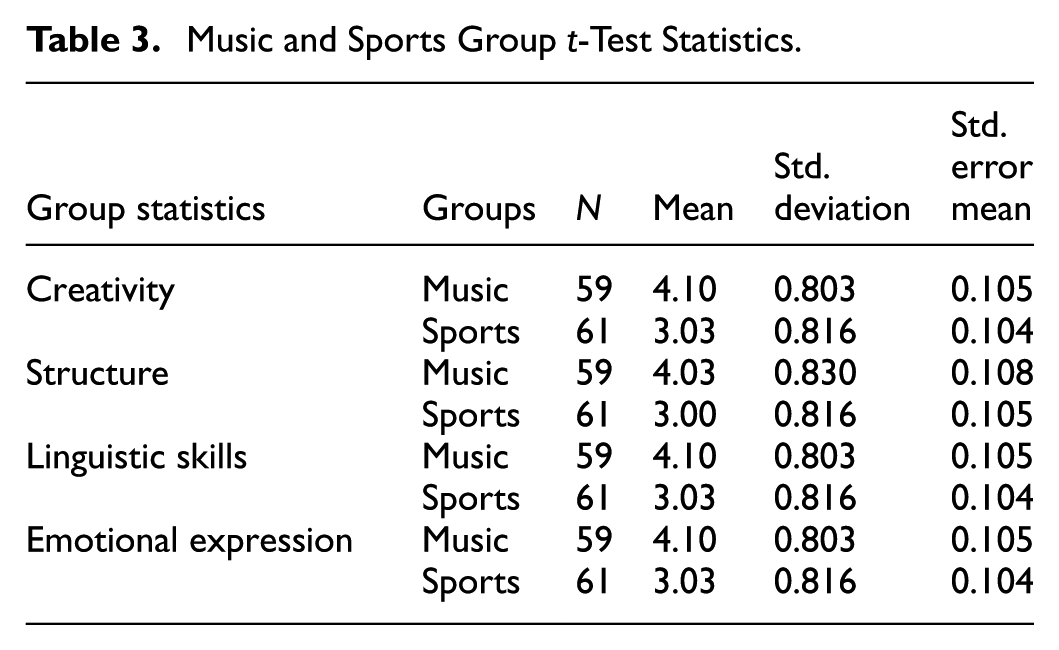
Table 3 provides group statistics comparing two groups, Music and Sports across four variables: Creativity, Structure, Linguistic Skills, and Emotional Expression. The Music group consistently demonstrates higher mean scores in all four areas compared to the Sports group. For Creativity, the Music group has a mean of 4.10, while the Sports group has a mean of 3.03. Similarly, for Structure, the Music group scores 4.03, and the Sports group scores 3.00. The same pattern holds for Linguistic Skills and Emotional Expression, with the Music group scoring 4.10 in both, compared to the Sports group’s 3.03. The standard deviations for both groups are relatively small and consistent across all variables, ranging from 0.803 to 0.830, indicating that the data points are closely clustered around the mean. Additionally, the standard error means are similar for both groups, ranging from 0.104 to 0.108, suggesting comparable precision in the estimation of the means. The sample sizes are nearly equal, with 59 participants in the Music group and 61 in the Sports group. Overall, the data suggests that individuals in the Music group may exhibit higher levels of creativity, structure, linguistic skills, and emotional expression compared to those in the Sports group. This could be attributed to the nature of musical training, which often involves creative expression, structured practice, linguistic engagement (e.g., lyrics), and emotional communication through performance. Further statistical analysis, such as t-tests, could be conducted to determine whether these differences are statistically significant.
Music and Sports Group t-Test Statistics.
The paired samples test results indicate a statistically significant difference between Music Creativity and Sports Creativity scores (See Table 4). On average, the Music Creativity scores are 1.085 points higher than the Sports Creativity scores, with a 95% confidence interval ranging from 0.793 to 1.376, confirming that the difference is not due to random chance. The t-value of 7.449 and a p-value of less than .001 further support the significance of this finding. This suggests that individuals in the Music group exhibit significantly higher levels of creativity compared to those in the Sports group, potentially due to the creative and expressive nature of musical activities. These results highlight the potential benefits of music for fostering creativity.
Paired Samples Test of Music and Sports Creativity.

Table 5 reveals a statistically significant difference between Music Structure and Sports Structure scores. On average, the Music Structure scores are 1.034 points higher than the Sports Structure scores, with a 95% confidence interval ranging from 0.732 to 1.336, indicating that the difference is not due to random chance. The t-value of 6.851 and a p-value of less than .001 further confirm the significance of this finding. This suggests that individuals in the Music group exhibit significantly higher levels of structure compared to those in the Sports group, potentially due to the structured nature of musical training, which often involves disciplined practice and adherence to formal rules. These results highlight the potential benefits of music for developing structured thinking and organization.
Paired Samples Test of Music and Sports Structure.

Table 6 shows a statistically significant difference between Music Linguistic Skills and Sports Linguistic Skills scores. On average, the Music Linguistic Skills scores are 1.085 points higher than the Sports Linguistic Skills scores, with a 95% confidence interval ranging from 0.793 to 1.376, confirming that the difference is not due to random chance. The t-value of 7.449 and a p-value of less than .001 further support the significance of this finding. This suggests that individuals in the Music group exhibit significantly stronger linguistic skills compared to those in the Sports group, potentially due to the language-based nature of musical activities, such as interpreting lyrics or understanding musical notation. These results highlight the potential benefits of music for enhancing linguistic abilities.
Paired Samples Test of Music and Sports Linguistic Skills.
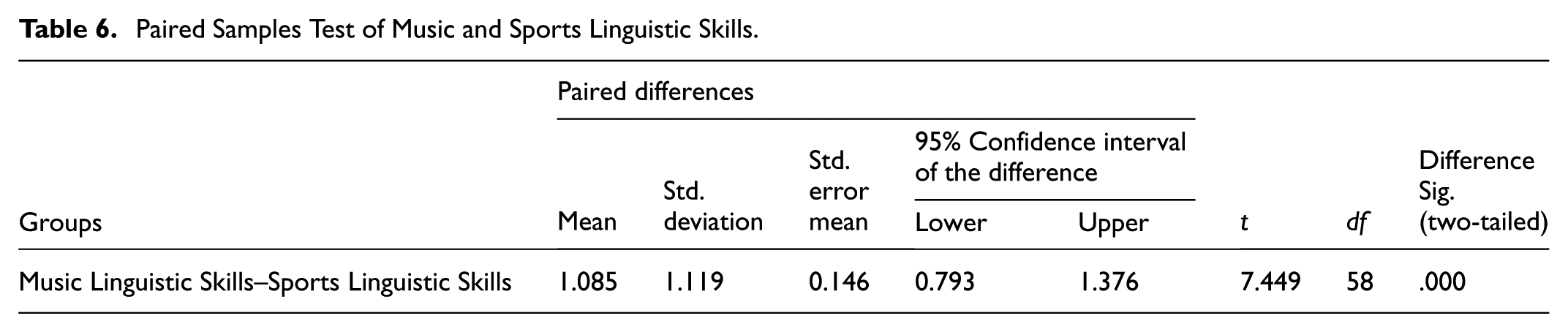
Table 7 indicates a statistically significant difference between Music Emotional Expression and Sports Emotional Expression scores. On average, the Music Emotional Expression scores are 1.085 points higher than the Sports Emotional Expression scores, with a 95% confidence interval ranging from 0.793 to 1.376, confirming that the difference is not due to random chance. The t-value of 7.449 and a p-value of less than .001 further support the significance of this finding. This suggests that individuals in the Music group exhibit significantly greater emotional expression compared to those in the Sports group, likely due to the expressive and emotive nature of musical activities, which often involve conveying feelings through performance. These results highlight the potential benefits of music for fostering emotional expression and communication.
Paired Samples Test of Music and Sports Emotional Expression.

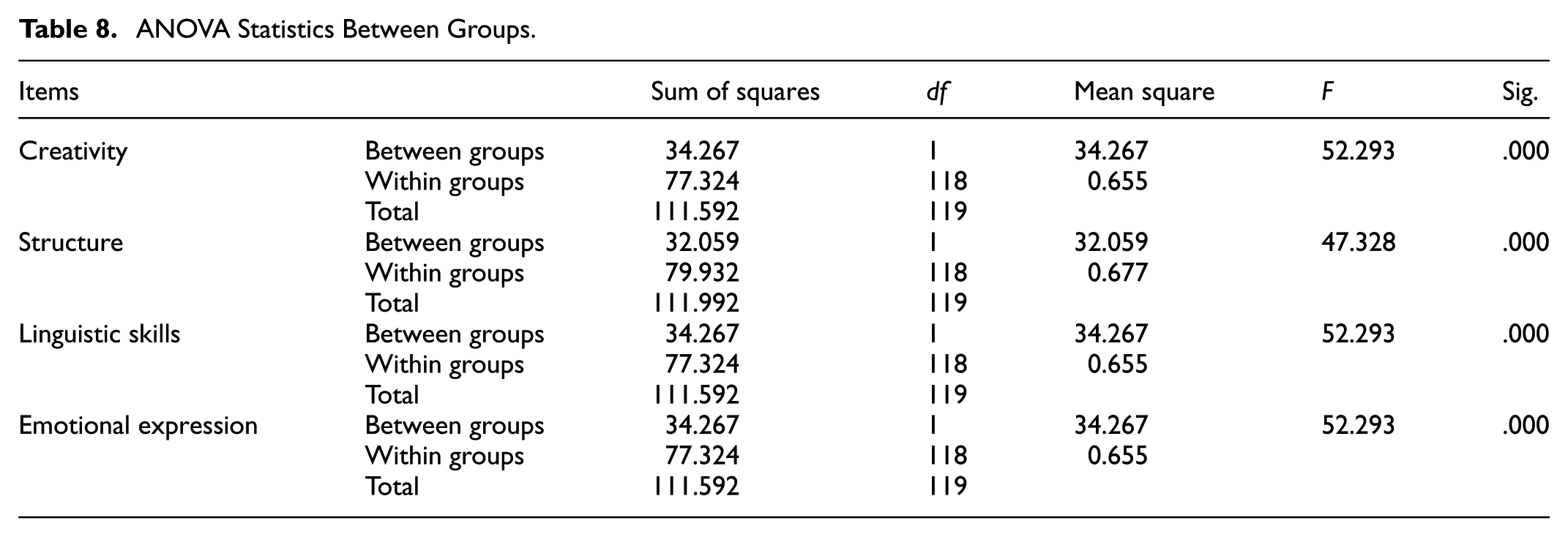
The ANOVA results reveal statistically significant differences between groups for all four variables (See Table 8). For each variable, the Between Groups sum of squares is significantly higher than the Within Groups sum of squares, as indicated by the large F-values (ranging from 47.328 to 52.293) and p-values of less than .001. This suggests that the differences in means between the groups (likely Music and Sports) are not due to random variation but are statistically significant. Specifically, the Music group appears to outperform the Sports group across all four areas, with consistent and strong evidence supporting these differences. These findings highlight the potential impact of group type (e.g., Music vs. Sports) on enhancing creativity, structure, linguistic skills, and emotional expression.
ANOVA Statistics Between Groups.
The overall findings from the data indicate that the Music group consistently outperforms the Sports group across all measured variables: Creativity, Structure, Linguistic Skills, and Emotional Expression. The consistency across both analyses suggests that the Music group exhibits significantly higher levels of creativity, structured thinking, linguistic abilities, and emotional expression compared to the Sports group. These results highlight the potential benefits of musical activities in fostering these skills, possibly due to the creative, structured, language-based, and expressive nature of music (See Figure 1).

Groups comparison among four variables.
Interview Data Findings
The analysis of interview responses from 30 music majors and 30 sports majors revealed distinct differences in their approaches to creative writing, shaped by their academic disciplines. The findings are organized around the four rubric criteria: creativity (originality and thematic depth), structure (logical flow and coherence), linguistic skills (grammar and vocabulary), and emotional expression (ability to engage readers). Participant responses are included as examples to illustrate the contrasting approaches of the two groups.
Creativity: Originality and Thematic Depth
The Theory of Creative Cognition (Finke et al., 1996) emphasizes the interaction between mental representations and cognitive processes that drive creativity. Music majors demonstrated a strong preference for abstract and emotionally driven writing, often drawing inspiration from melodies, personal experiences, and nature. They used musical metaphors and sensory imagery to create unique themes, reflecting the divergent thinking fostered by musical training, which enhances the generation of novel ideas. MM 3 said,
I write poetry inspired by the mood of a piece I’m composing. A sad melody might lead me to write about heartbreak using metaphors like ‘a dissonant chord that never resolves.’ I want my writing to feel like music—something that resonates emotionally without needing to explain everything.
In contrast, sports majors focused on concrete themes and action-oriented narratives, often inspired by sports events, teamwork, and personal challenges. Their originality was expressed through vivid descriptions and motivational storytelling, reflecting the structured problem-solving emphasized in sports training, where creativity is often tied to goal-setting and overcoming challenges (Eccles & Tran, 2012). SM 1 expressed,
I wrote a story about a basketball game where the underdog team wins. I focused on the tension, the crowd’s energy, and the players’ determination to make it feel real. I wanted readers to feel the excitement and adrenaline of the moment.
While music majors leaned toward abstract expression and emotional metaphors, sports majors emphasized concrete details and action-packed narratives. Both groups valued originality but expressed it in ways reflective of their disciplinary training.
Structure: Logical Flow and Coherence
When it comes to structure and coherence, music majors described their writing process as intuitive and free-flowing, often prioritizing creativity over structure in the initial draft. This aligns with the Theory of Creative Cognition, which suggests that creativity often involves conceptual combination and iterative processes (Finke et al., 1996). Music majors would later refine their work to ensure logical flow, drawing parallels between their writing process and musical composition, where creativity and structure are intertwined. MM 8 shared,
I start with a feeling or idea and let the words flow. Then, I go back and revise to make sure the structure makes sense, like arranging a piece of music. I want the writing to have a rhythm, just like a song.
In contrast, sports majors approached writing with a structured, goal-oriented mindset, creating outlines or game plans before starting. This reflects the strategic problem-solving inherent in sports training, where logical progression and goal completion are key elements (Eccles & Tran, 2012). SM 4 stated,
I structure my essays like a game start with an introduction (warm-up), build up to the main point (the game itself), and end with a conclusion (reflection). I want my writing to have a clear beginning, middle, and end, just like a match.
Music majors prioritized creativity in the initial draft and refined structure later, while sports majors emphasized planning and organization from the outset. Both approaches reflect their disciplinary focus—music majors on flow and rhythm, and sports majors on strategy and clarity.
Linguistic Skills: Grammar and Vocabulary
In terms of linguistic skills, music majors focused on the rhythm and sound of their writing, paying attention to cadence and word choice. They described their linguistic skills as evolving through practice, where editing played a key role in improving grammar and vocabulary. This aligns with the musicality fostered by musical training, which emphasizes auditory precision and esthetic quality in both music and language (Patel, 2008). MM 16 stated,
I focus on how words sound together, almost like a melody. I also revise my work to make sure the grammar and vocabulary are strong. I want my writing to feel smooth and musical when read aloud.
Sports majors, on the other hand, paid more attention to clarity and precision in their writing, often using action-oriented language and descriptive vocabulary. Their linguistic approach was practical and direct, reflecting the clear communication demanded in sports contexts, where precision is critical for success. SM 18 described,
I try to use words that are easy to understand but still impactful. I want my writing to be clear and engaging, like a coach’s pep talk. I don’t want readers to get lost in fancy language—I want them to feel the energy.
While music majors emphasized the esthetic quality of language, focusing on rhythm and sound, sports majors prioritized clarity and impact, using language to motivate and engage.
Emotional Expression: Ability to Engage Readers
Emotional expression was central to music majors’ writing, with many describing it as a way to communicate feelings that words alone cannot capture. Using musical metaphors and sensory imagery, they sought to evoke emotions in their readers, consistent with the expressive nature of music (Juslin & Västfjäll, 2008). MM 13 stated,
I aim to make the reader feel something, just like music resonates with listeners. I use imagery and rhythm to create an emotional connection. For example, I might describe loneliness as ‘a single note echoing in an empty room.’
In contrast, sports majors also valued emotional expression, but focused on conveying emotions through action and personal experiences. They often wrote about teamwork, competition, and overcoming challenges, using these themes to connect emotionally with readers in ways that reflect the experiential nature of sports (Hanin, 2007). SM 26 expressed,
I try to convey the excitement, frustration, or joy I felt in the moment, especially during a game. I want readers to feel like they’re part of the action—like they’re on the field with me, experiencing every pass and every goal.
The participants from music majors used abstract imagery and metaphors to evoke emotions, while sports majors relied on concrete actions and personal experiences to engage readers emotionally. Both approaches effectively connected with readers, but in ways reflective of their disciplinary backgrounds.
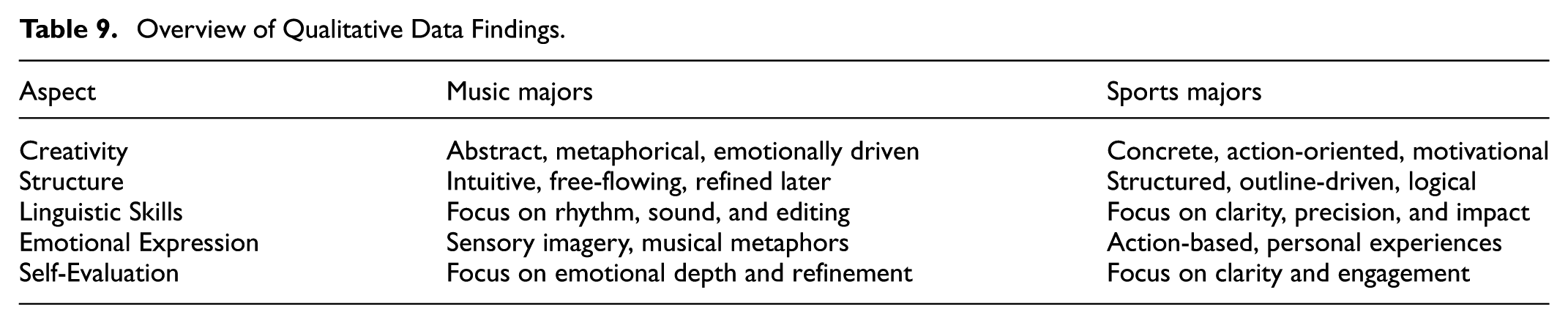
Table 9 summarizes the comparative ideas and opinions of both major students in terms of four-dimensional rubric. It clearly shows the difference between music and sports major students’ creative writing ability and perspective.
Overview of Qualitative Data Findings.
Discussion
The findings of this study reveal significant differences in the creative writing performance between music majors and sports majors across four key dimensions: creativity, structure, linguistic skills, and emotional expression. These differences, supported by both quantitative and qualitative data, underscore the role of disciplinary training in shaping creative writing approaches and outcomes. To interpret these results more comprehensively, the study draws on Creative Cognition Theory (Finke et al., 1996), Gardner’s Multiple Intelligences Theory (1983), and Amabile’s Componential Model of Creativity (1996). Together, these frameworks highlight how domain-specific expertise, diverse intelligences, and contextual motivation interact to shape creativity in EFL learners.
Creativity: Originality and Thematic Depth
Music majors consistently outperformed sports majors in creativity, scoring higher on measures of originality and thematic depth. Qualitative data revealed that music majors often relied on abstract metaphors, sensory imagery, and emotional resonance, drawing from melodies, personal experiences, and natural elements. This aligns with Creative Cognition Theory, which emphasizes divergent thinking and conceptual combination in producing novel ideas (Finke et al., 1996).
Viewed through Multiple Intelligences Theory, these results suggest that music majors’ musical intelligence enhances their ability to think metaphorically and symbolically, which transfers into writing. In contrast, sports majors drew on bodily–kinesthetic intelligence, favoring action-driven narratives, motivational storytelling, and vivid descriptions of performance and teamwork (Gardner, 2011). Their creativity was concrete and experiential, demonstrating how distinct intelligences shape disciplinary expression.
Structure: Logical Flow and Coherence
Music majors approached structure intuitively, treating writing as analogous to musical composition, where rhythm and flow emerged during the drafting process. This resonates with Sloboda’s (1985) view that music fosters iterative refinement of creative products. Sports majors, by contrast, employed pre-planned outlines and “game plans,” reflecting the strategic, goal-oriented thinking fostered in sports (Eccles & Tran, 2012).
The Componential Model of Creativity provides an additional lens; disciplinary training equips learners with domain-relevant skills that influence their creative strategies. For music majors, these skills include sensitivity to rhythm and flow, while for sports majors, they involve structured planning and tactical sequencing (Amabile, 2018). Thus, differences in structural approaches reflect how domain-specific expertise supports the creative process.
Linguistic Skills: Grammar and Vocabulary
Music majors demonstrated stronger linguistic skills, particularly in the esthetic use of language (sound, cadence, rhythm), suggesting a transfer of auditory precision from musical training to writing (Patel, 2008). Sports majors prioritized clarity and precision, using pragmatic, action-oriented vocabulary aligned with sports communication norms.
Here, Creative Cognition Theory explains how different knowledge domains influence linguistic expression, while Multiple Intelligences Theory accounts for the distinct strengths: musical intelligence fostering rhythmical and esthetic language use, and bodily kinesthetic intelligence fostering direct, impactful descriptions. The findings also resonate with Amabile’s emphasis on task motivation, as sports majors’ linguistic focus was shaped by the practical goal of communicating clearly under time and performance pressures.
Emotional Expression: Engaging Readers
Music majors excelled in emotional expression, often using musical metaphors and abstract imagery to convey deep affect (Juslin & Västfjäll, 2008). Their ability to translate auditory and emotional experiences into text reflects both divergent thinking (Creative Cognition) and the expressive nature of musical intelligence. Sports majors expressed emotion through narratives of teamwork, competition, and resilience, drawing on kinesthetic and experiential intelligences (Hanin, 2007). Although their writing was less metaphorical, it connected with readers through authentic, real-world challenges.
Amabile’s model is useful here: emotional expressiveness reflects both creativity-relevant processes (e.g., divergent thinking, narrative construction) and domain-relevant motivation (e.g., drawing on experiences that matter to them as athletes). Both groups’ strengths highlight how emotional engagement in writing is shaped by the cognitive and motivational contexts of disciplinary training.
Implications for Interdisciplinary Creative Education
The distinct strengths of music and sports majors illustrate that creativity is multidimensional, drawing on different forms of intelligence, domain expertise, and motivational contexts. Interdisciplinary approaches to creative education could harness these strengths, integrating musical practices into sports education to foster richer emotional expression, and incorporating sports strategies into music education to enhance clarity and structure. This aligns with Root-Bernstein and Root-Bernstein’s (1999) call for interdisciplinary learning as a means to cultivate flexible, adaptive creativity.
By integrating the findings within Creative Cognition, Multiple Intelligences, and the Componential Model, the study contributes to a more nuanced understanding of how disciplinary training shapes EFL learners’ creative writing. It highlights that fostering creativity in education requires not only cognitive scaffolding but also recognition of learners’ diverse intelligences and the motivational affordances of their disciplines.
Limitations of the Study
While this study provides valuable insights into the influence of disciplinary training on creative writing, several limitations must be acknowledged. First, the sample size of 60 participants, though balanced, may not fully represent the broader population of music and sports majors from different universities, regions, or cultural contexts, limiting the generalizability of the findings. The single-university sample further restricts the external validity of the results, as institutional context and academic environment could influence students’ creative expression. In particular, the absence of cultural diversity within the sample means that the findings may not fully capture how cultural backgrounds shape creativity and writing practices, which is especially relevant in EFL contexts.
Additionally, the study focused solely on creative writing as the measure of creativity, which may not capture the diverse ways in which creativity manifests across disciplines, such as visual arts, design, or scientific innovation. Moreover, while prior writing experience was controlled for, it was measured using self-reported data, which could introduce bias. Future studies could strengthen reliability by using standardized assessments or collecting multiple writing samples to objectively measure writing ability.
Finally, the cross-sectional design limits the ability to track changes in creative writing performance over time. A longitudinal design would provide deeper insights into how disciplinary training influences creativity and writing skills as students’ progress through their academic programs. Addressing these limitations in future research by expanding the sample size, including culturally diverse participants, exploring multiple forms of creativity, and adopting longitudinal approaches would enhance both the generalizability and the validity of the findings.
Practical Implications of the Study
The findings of this study carry important implications for EFL pedagogy, particularly in designing creative writing instruction that draws on students’ disciplinary strengths. Music majors’ tendency to use rhythm, metaphor, and emotional imagery suggests that writing teachers can incorporate musical elements into classroom practice to enhance creativity and expression. For example, instructors might use background music to stimulate imagery, ask students to model their narratives on the rhythm of a musical piece, or adapt song lyrics into prose exercises that highlight cadence and flow. Such activities not only promote divergent thinking but also make students more aware of the esthetic qualities of language. In contrast, the structured, goal-oriented approaches adopted by sports majors point to the value of applying sports-based strategies in writing pedagogy. Teachers can design writing tasks that mirror the structure of a game plan, encouraging students to create outlines, set goals for each draft, and approach revision as a form of strategic adjustment. Collaborative metaphors drawn from team sports can also be used to strengthen peer review and group writing projects, helping students view writing as a cooperative process. Beyond discipline-specific strategies, the study highlights the potential of interdisciplinary integration. Combining the creative freedom of music with the structured discipline of sports can enrich writing pedagogy, enabling students to draw on multiple intelligences and develop both expressive and organizational skills. For instance, assignments that blend motivational storytelling with musical imagery could encourage learners to merge emotional resonance with coherent structure. In this way, EFL instructors can design writing activities that not only build linguistic proficiency but also nurture creativity, adaptability, and confidence in expression, ultimately preparing students to communicate effectively across diverse academic and professional contexts.
Conclusion
This study reveals that music majors and sports majors exhibit distinct creative writing styles, deeply shaped by their respective disciplinary training. Music majors tend to excel in creativity, linguistic skills, and emotional expression, often using musical metaphors and abstract imagery to convey deeper thematic meanings. In contrast, sports majors adopt a more structured, pragmatic approach to writing, with a focus on clarity, precision, and motivational storytelling, reflecting the goal-oriented and strategic nature of their training. These findings underscore the significant role of disciplinary background in shaping creative processes, offering valuable insights into how students from different fields approach the act of writing.
While Creative Cognition Theory (Finke et al., 1996) helps explain how domain-specific expertise influences the mental processes that generate creative output, the findings also resonate with Gardner’s Multiple Intelligences Theory (1983), which suggests that creativity may be shaped by the dominance of different intelligences. Music majors appeared to draw primarily on musical intelligence, while sports majors relied more on bodily kinesthetic intelligence, and these modes influenced how creativity was expressed in writing. Furthermore, Amabile’s Componential Model of Creativity (1996) underscores how domain-relevant skills, creativity-relevant processes, and motivational factors interact in shaping outcomes, explaining why music majors emphasized esthetic expression and rhythm while sports majors prioritized structure and goal-oriented clarity.
Taken together, these frameworks highlight that creativity is not a uniform construct but an interplay of cognitive strategies, intelligences, and motivational contexts. This suggests that creativity in EFL writing is best understood through an integrative theoretical lens rather than a single framework.
Moreover, this study highlights the potential benefits of interdisciplinary education in cultivating well-rounded creative abilities. By integrating the unique strengths of music and sports, educators can foster more holistic and diverse forms of creative expression. Such an approach would not only enhance students’ ability to engage in creative writing but also equip them with versatile skills transferable across academic and professional contexts. For example, incorporating musical practices into sports education may encourage emotional richness, while introducing structured planning strategies from sports into music education could enhance coherence and clarity.
The findings of this research point to the need for educational frameworks that encourage the cross-pollination of ideas between disciplines. Music and sports, despite being traditionally viewed as separate domains, contribute complementary strengths to creative development. Educators could benefit from integrating elements of both fields into writing curricula, allowing students to draw on diverse creative techniques to strengthen expression, structure, and emotional depth. Moving forward, this study invites further exploration into the intersection of disciplines, particularly how combining seemingly disparate fields can open new avenues for creative expression. Future research could also examine the impact of other academic backgrounds on creative writing, or investigate the long-term effects of interdisciplinary training on creativity and EFL writing across diverse domains.
Footnotes
Appendix 1
Appendix 2
Acknowledgements
We would especially like to thank all the teachers and students who participated in the study.

Ethical Considerations
The ethical approval was taken from the institutional ethical approval committee of the participants and has been attached with the manuscript.
Consent to Participate
The written consent letter was taken from all the participants before the study.
Funding
The authors received no financial support for the research, authorship, and/or publication of this article.
Declaration of Conflicting Interests
The authors declared no potential conflicts of interest with respect to the research, authorship, and/or publication of this article.
Data Availability Statement
Data will be available on request.