




Abstract
Artificial Intelligence Generated Content (AIGC) is reshaping the fintech sector by enabling automation, enhancing efficiency, and transforming data-driven decision-making. However, there is still a lack of systematic understanding of how AIGC-related topics have evolved over time across different languages and types of literature. To address this gap, this study applies the BERTopic model to analyze a multi-source corpus comprising 1,168 documents, including journal articles and patents in both Chinese and English. The analysis reveals distinct thematic patterns: English-language literature shows mature and diverse topic development, while Chinese-language sources highlight emerging areas of innovation. In contrast, patent data reflects decreasing relevance over time, indicating faster technological turnover and the need for practical alignment. This cross-linguistic, multi-type analysis provides a comprehensive view of AIGC’s knowledge evolution in fintech and offers insights into future research directions and innovation opportunities.
Introduction
Artificial Intelligence Generated Content (AIGC) refers to content—such as text, images, videos, and more—that is autonomously created by AI systems (J. Zhang et al., 2024). AI utilizes algorithms and models to analyze large datasets, learning patterns and structures within the data. Once trained, these models generate new content that reflects these learned patterns. For text generation, models like GPT-4 can produce human-like writing, while in programming, tools such as GitHub Copilot generate code, functions, and entire programs from natural language prompts, enabling developers to work more efficiently and boost productivity. Since its launch, the quality of AIGC has improved rapidly. Moreover, the scope of AIGC content has expanded, now encompassing text, images, videos, code, and beyond. AIGC has emerged as a powerful engine for digital content innovation and development in this new era. It has been widely applied across various sectors, including e-commerce, healthcare, transportation, and entertainment, yielding impressive results. In the e-commerce sector (C. Ren et al., 2023), AIGC assists enterprises with market forecasting, product recommendations, and marketing strategy optimization, thereby enhancing their competitiveness and operational efficiency. In healthcare (Calonge et al., 2023; Shao et al., 2024), AIGC supports doctors in diagnosing diseases and formulating treatment plans, improving medical standards and the overall patient experience. In the field of intelligent transportation (Kuhn, 2018; Lv, 2023), AIGC provides accurate traffic flow monitoring and traffic condition forecasting, optimizing urban traffic management and enhancing traffic efficiency and safety. Table 1 showcases several prominent AIGC models and flagship products developed by leading tech companies, along with their applications across different industries.
Selected AIGC Products and Applications.

As the frontier domains in technological innovation within the financial industry, FinTech has inevitably been shaped by AIGC, the latest advancement in artificial intelligence technology. The application of AIGC in intelligent customer service has significantly improved the service efficiency and customer satisfaction of financial institutions (Karangara, 2023; Oliver Wyman & UK Finance, 2023). Through natural language processing and generative pre-training models, intelligent chatbots and virtual assistants can provide 24/7 customer support, answering frequently asked questions, providing financial advice, and helping customers with simple trading operations (Guo & Polak, 2021). AIGC also excelled in personalized financial product recommendations. Using machine learning and big data analytics, AIGC is able to generate personalized investment recommendations and product recommendations based on customers’ financial situation, risk appetite and historical behavior. AIGC has demonstrated its strong capabilities in market analysis and forecasting, and automated document processing (Chen et al., 2023; J. Chen et al., 2024). Financial market data are numerous and complex, and AIGC can process and analyze these massive data to generate detailed market analysis reports, financial reports and forecasting models, etc. By identifying market trends, predicting price fluctuations and detecting abnormal trading behaviors, AIGC helps financial institutions develop more accurate investment strategies and risk management programs (Li et al., 2023). It has improved the scientificity and effectiveness of decision-making. The application of AIGC has promoted the innovation of fintech, and by continuously optimizing and developing new application scenarios, AIGC has brought new growth points and development opportunities to fintech. In the future, with the continuous progress of technology, AIGC will be more widely and deeply applied in the financial field, and its importance will become increasingly prominent (Xu, 2023).
AIGC is highlighted as a technology with transformative potential, which has huge application prospects in the field of financial technology, but also faces many risks and challenges (Khan & Umer, 2024, Shabsigh & Bachir Boukherouaa, 2023). Data privacy and security concerns are paramount, as the processing of sensitive financial information by AI systems necessitates robust protection measures to prevent unauthorized access and breaches. Additionally, the potential for algorithmic biases and the lack of transparency in AI decision-making processes can undermine trust and fairness in financial services. Moreover, the rapid adoption of AI technologies introduces new cybersecurity risks, including the possibility of AI-driven fraud and sophisticated cyberattacks targeting financial institutions. Yang et al. (2024) proposed a blockchain-based regulatory framework incorporating owner authentication, access control, and encryption mechanisms to enhance security and governance of AI-generated content (AIGC) in digital ecosystems. These risks and challenges not only provide rich research topics for academia and industry experts, but also point the way for future technological innovation (Mariani & Dwivedi, 2024).
To systematically understand the rapid and complex evolution of AIGC in the fintech sector, this study proposes a cross-lingual, multi-source analytical framework that addresses current gaps in the literature. While AIGC applications are accelerating across financial services, little is known about how its core themes have evolved across time, regions, languages, and publication types. To fill this gap, this study employs BERTopic—a transformer-based topic modeling technique known for its capacity to capture nuanced semantic shifts—to analyze a multilingual corpus of 1,168 documents from five major academic and patent databases in both Chinese and English. The study is guided by three key objectives: (a) to track the conceptual evolution of AIGC within fintech discourse; (b) to examine the lifecycle of AIGC-related technologies from innovation to diffusion; and (c) to identify emerging opportunities and structural barriers in the development of intelligent finance. Through bibliometric analysis, corpus construction, and dynamic topic modeling, this research offers not only an empirical mapping of knowledge transitions, but also strategic insights for navigating the future of AIGC-driven transformation in the fintech industry.
Related Work
AIGC Technology in the Fintech Industry
AIGC technology has emerged as a transformative force in the fintech industry, fundamentally reshaping business models and development trajectories across various sectors (White & Cheung, 2015). Its integration into the financial domain has not only accelerated the digital transformation of financial services but also introduced new complexities, particularly within regulatory frameworks (Balapour et al., 2020; Payne et al., 2021). While these challenges highlight the necessity for adaptive governance, AIGC simultaneously presents significant opportunities for commercial banks and other financial institutions. By enabling the automation of complex processes and enhancing data-driven decision-making, AIGC is redefining the operational and strategic paradigms of the fintech ecosystem. This dual impact positions AIGC as both a disruptor and an enabler, driving innovation while necessitating prudent risk management.
The deep integration of AIGC with financial scenarios has demonstrated its potential to enhance operational efficiency, foster business model innovation, and redefine service delivery. Through automated content generation, optimized decision-making, and personalized customer experiences, AIGC is transforming key areas such as risk assessment, customer service, fraud detection, and investment analysis (Deng et al., 2024; Krause, 2024; X. Ren et al., 2023). For instance, AIGC-powered tools facilitate real-time risk evaluation and predictive analytics, while chatbots and virtual assistants revolutionize customer interactions. These advancements not only improve productivity but also create new revenue streams and enhance customer satisfaction. As adoption accelerates, AIGC increasingly alters the competitive landscape of the fintech industry, providing early adopters with a strategic advantage over their peers (Liu et al., 2023). This shift underscores the importance of AIGC as a critical differentiator in an increasingly digital and data-driven market.
While AIGC technology possesses transformative potential for the fintech industry, its widespread adoption and sustainable integration are accompanied by risks that necessitate meticulous management. A primary concern is algorithmic bias; AIGC systems trained on biased datasets may generate unfair or inaccurate outputs, thereby compromising the fairness and reliability of financial decision-making processes (Fang et al., 2024). Moreover, data privacy issues present a critical challenge, as AIGC’s reliance on extensive data for training and optimization raises concerns about safeguarding user information while preserving operational efficiency. Regulatory compliance further complicates implementation, as the rapid evolution of AIGC technology frequently outpaces existing regulatory frameworks, potentially creating legal and operational vulnerabilities (T. Wang et al., 2024). To address these risks, fintech stakeholders—encompassing financial institutions, technology providers, and regulators—must collaborate to develop robust, scientifically validated frameworks and interoperable systems specifically designed for the financial sector (Yang et al., 2024). By tackling critical issues such as algorithmic bias, data privacy, and regulatory compliance, and by fostering a collaborative ecosystem centered on continuous research and innovation, the industry can ensure the responsible integration of AIGC.
Text Mining and Topic Modeling in Scientific Literature
Text mining and analysis of scientific literature to obtain field knowledge is an important text analysis method. In the early stages of academic research, scholars primarily analyzed external features of literature, such as classification numbers, keywords, and citations, to explore domain knowledge. For instance, researchers utilized publicly available NSF grant information, employing co-occurrence networks and the TF-IDF method to detect shifts in research hotspots and identify potential emerging fields (Y. Zhang et al., 2016). Additionally, by integrating disciplinary information from literature for network analysis, they investigated interdisciplinary interactions and the flow of domain knowledge (Dwivedi et al., 2021). These methods aimed to better understand and predict the development trends of knowledge fields represented by scientific literature.
With the maturation of natural language processing technologies, the academic focus has shifted from external features to the semantic content of documents. This transition is evident in the application of topic models (Blei, 2012; Vayansky & Kumar, 2020). For example, researchers have used the LDA topic model to explore the evolution and persistence of domain knowledge structures (Miyata et al., 2020) and employed the BERTopic model for topic extraction, analyzing different trajectories of knowledge evolution (Kim & Kim, 2023; Z. Wang et al., 2023; D. Zhang et al., 2023). These advancements highlight the effectiveness and importance of topic models in understanding and analyzing the deeper knowledge within academic literature. Furthermore, the continuous development of text analysis methods has introduced more efficient models and techniques, such as Large Language Model (Miah et al., 2024), enhancing the accuracy of knowledge mining and providing researchers with deeper and more comprehensive insights into domain knowledge. As AIGC technology is rapidly evolving, scholars are beginning to explore its applications through thematic analysis across various fields. X. Chen et al. (2024) conducted a systematic literature review on AIGC in education, analyzing 134 publications from multiple databases. They identified five key themes: performance assessment, instructional applications, learning outcomes, advantages and disadvantages, and future prospects. They also explored the core advantages and potential risks of AIGC in education. Zhou et al. (2024) used sentiment analysis and knowledge mapping to study public response to ChatGPT in China, analyzing 28,122 web comments. They found that negative sentiments outweighed positive ones, with concerns centered around technological, social, and educational aspects. Their study also highlighted the increasing attention on AIGC and the ethical issues surrounding its use.
Summary of the Related Work
AIGC technology has emerged as a transformative force in the fintech industry, reshaping business models and development trajectories across various financial sectors. Its integration into the financial domain has accelerated the digital transformation of financial services, enabling the automation of complex processes, enhancing data-driven decision-making, and redefining operational and strategic paradigms. In parallel, advancements in text mining and topic modeling have improved the analysis of scientific literature, enabling researchers to explore domain knowledge more effectively. Although the disruptive potential of AI-generated content (AIGC) and its concomitant challenges have been extensively examined in broader technological discourse, there remains a research gap: the lack of systematic, longitudinal studies that comprehensively map the application trajectories and knowledge structures of AIGC specifically within the fintech domain. This gap is particularly acute in a globalized industry like fintech, where technological advancements and commercial applications often develop at different paces and with different focuses in key markets like China and the West. A single-language or single-source analysis would therefore risk presenting an incomplete or skewed picture. The motivation for this study, therefore, is to fill this gap by systematically charting the intellectual landscape of this emerging field. To achieve this, the BERTopic model is employed in a multi-source (academic and patent) and cross-lingual (Chinese and English) analysis, a methodological choice designed to capture a holistic view of both theoretical research and practical commercialization globally. This approach aims to provide specific insights into key thematic evolution paths, technological application lifecycles, and emerging opportunities, thus offering a more robust understanding of its developmental trends and future prospects.
Theoretical Framework and Model Description
Theoretical Framework
In this study, we apply the Thematic Evolution in Knowledge Networks framework (Li & Chang, 2008; Romo-Fernández et al., 2013) to analyze the progression of AIGC within the fintech industry. This framework allows us to trace the development and transformation of key themes over time, providing a deeper understanding of how AIGC has influenced and been integrated into fintech. By identifying core themes such as “financial risk management,”“personalized financial services,” and “automated trading systems,” we establish a foundation for the analysis. The hypotheses in this study are grounded in the assumption that the literature reviewed can serve as a representative sample of AIGC’s current impact on fintech development. Utilizing bibliometric analysis and topic modeling techniques, we map the relationships and connections between these themes across various data sources, including academic journals, patents, and industry reports. This enables us to evaluate the emergence, growth, and potential decline of these themes, facilitating a more rigorous, quantitative analysis of thematic shifts. This approach helps to identify periods of rapid innovation or shifts in research focus within the fintech sector. Ultimately, this framework provides a comprehensive understanding of the current state and future directions of AIGC in fintech, offering valuable insights into its transformative role and potential challenges.
Model Description
BERTopic is a hierarchical topic modeling framework that systematically implements BERT-based contextual embeddings for semantic representation, followed by dimensionality reduction and density-based clustering algorithms to discover latent thematic structures in textual corpora. (Grootendorst, 2022; Y. Wang et al., 2023). BERTopic efficiently mines and characterizes field knowledge through text vectorization, clustering analysis, and theme extraction. It uses advanced BERT word vectors and the c-TF-IDF technology to create dense thematic clusters, making the interpretation of themes clearer while preserving important thematic words in the descriptions. Compared to other thematic modeling methods, BERTopic excels in multilingual support, depth and professionalism of themes, and retention of context semantic information, providing a powerful tool for academic research. While the model offers robust multilingual capabilities, this study will focus on English-language corpora to ensure methodological consistency and analytical clarity. To handle the multilingual nature of the corpus, this study adopts a unified approach by translating all non-English texts into English prior to analysis. This ensures methodological consistency and allows the BERTopic model to effectively identify semantic topics across the entire dataset. Figure 1 below illustrates the experimental workflow using the BERTopic model.
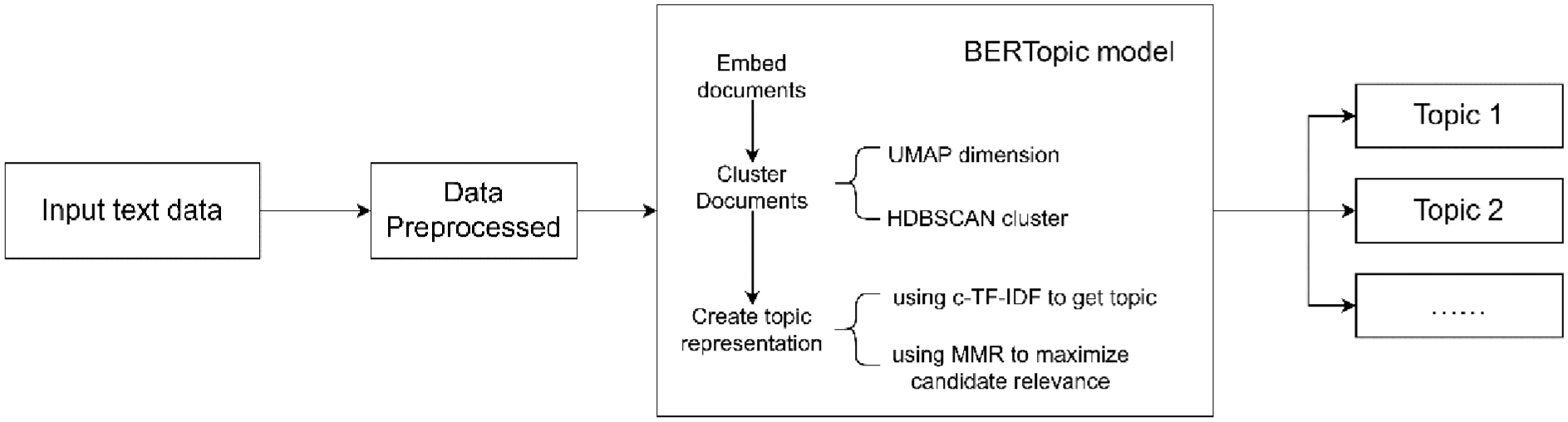
BERTopic model and experimental workflow.
The BERTopic model includes three stages: the first stage is document embedding (Embed documents), using BERT or any other embedding technology to extract document embedding vectors; the second stage is document clustering (Cluster Documents), using UMAP to reduce the dimensionality of vectors while preserving location information, then clustering with the HDBSCAN algorithm; the third stage is creating topic representations (Create topic representation), initially using c-TF-IDF to extract thematic words and reduce the quantity of themes, then enhancing the coherence and diversity of words through maximum marginal relevance. To validate the topic modeling process, the quality of the generated topics was assessed through both quantitative metrics, such as topic coherence scores, and qualitative evaluation by domain experts. The analysis confirmed that the topics were interpretable and relevant to the fintech domain, lending confidence to the findings.
The BERTopic model performs text vectorization by transforming text into the hidden layer representations of the BERT model. Transforming text into the hidden layer representations of the BERT model captures the semantic information and contextual relationships of the text, better representing the characteristics of the text. The model then categorizes texts through clustering analysis. Grouping similar text samples together forms distinct categories by calculating the similarity between text samples, thus forming different themes.
Compared to various existing modeling methods in academia, the BERTopic model captures text’s semantic information and contextual relationships more effectively, offers strong interpretability, and can handle large-scale text data. Therefore, this model can visually demonstrate clustering results in the fintech sector with high efficiency and accuracy, effectively aiding users in understanding and analyzing text data. In specific research, the BERTopic model effectively identifies field themes from a single data source and can extract more comprehensive research themes through the integration of multiple data sources. This method emphasizes the importance of multi-data source integration in improving the quality and completeness of theme identification, showcasing BERTopic’s powerful capabilities and flexibility in handling complex data sets.
Experiment Implementation
Data Collection
This paper selects relevant literature from both Chinese and English sources to parse the effect of field knowledge evolution analysis under various dimensions. These sources include the Web of Science (WOS) Core Collection, China National Knowledge Infrastructure (CNKI), Arxiv, IncoPat patents, Google Patents database and RESSET database, all of which are authoritative and widely recognized in both Chinese and English scientific research. The WOS Core Collection provides comprehensive access to high-impact, peer-reviewed academic articles globally, making it a critical resource for understanding global research trends. Arxiv, a renowned open-access repository, is particularly valuable in the AIGC field, as it offers immediate access to cutting-edge research, especially in artificial intelligence and fintech, often before formal peer review. The CNKI database is essential for capturing Chinese research on AIGC in fintech, while IncoPat and Google Patents offer insights into technological innovations and patent filings related to AIGC. The RESSET database is a key resource for financial research, providing metadata crucial for analyzing fintech innovations. These databases are commonly used in scientometric studies (Mongeon & Paul-Hus, 2016; Schmitt, 2025; D. Zhang et al., 2020), ensuring that the data collected for this study is robust, comprehensive, and globally representative of both theoretical and practical developments in AIGC and fintech. The statistical information of the literature is as shown in Table 2.
Statistical Information of Literature.

This study, focusing on developments in the AIGC enabling fintech industry, constructs an integrated dataset comprising Chinese and English journal articles, technical patents, and multidimensional metadata from cutting-edge research fields, with thematic modeling performed on the abstract texts of relevant scientific literature. The foundational dataset, established by collecting information on AIGC technology from various retrieval sources—including both Chinese and English journal articles and technical patents spanning from January 1, 2012, to March 31, 2024—has been thoroughly verified to ensure no overlap between Chinese and English literature, as the English category exclusively contains originally published English-language materials while Chinese literature is maintained as a separate category, thereby preserving the integrity and accuracy of the data classification. Specific retrieval examples are provided below:
Chinese journal paper: Utilizing the CNKI database, the search strategy is “TKA=(‘AIGC’+‘generative artificial intelligence’+‘text generation’+‘intelligent generation’+‘ChatGPT’) AND TKA= (‘fintech’+‘finance’).” The literature type is restricted to “journal, Theses,” resulting in 124 valid documents.
English journal paper: Utilizing the WOS Core Collection database and the ArXiv database. The WOS Core Collection search formula is “(TS= (‘Artificial Intelligence Generated Content’ OR ‘AIGC’ OR ‘Intelligent Generation’ OR ‘Generative AI’ OR ‘ChatGPT’ OR ‘language generation’ OR ‘image generation’ OR ‘speech generation’ OR ‘code generation’) AND TS= (‘Financial Technology’ OR ‘Fintech’ OR ‘Finance’)),” and the ArXiv database search formula is “abs:AIGC+OR+abs:Artificial Intelligence Generated Content+AND+abs: Financial Technology.” The results are 146 valid documents in all.
Technical patents: Utilizing the IncoPat global patents database. The search formula is “(TI= (‘AIGC’ OR ‘generative artificial intelligence’ OR ‘intelligent generation’ OR ‘ChatGPT’ OR ‘automatic generation’ OR ‘text generation’) OR AB= (‘AIGC’ OR ‘generative artificial intelligence’)) AND TIAB=(‘fintech’ OR ‘finance’),” resulting in 75 valid documents. In the Google Patents database, the search formula is “TI= (Artificial Intelligence Generated Content) OR AB= (Artificial Intelligence Generated Content) OR TI=(AIGC) OR AB=(AIGC),” resulting in 823 valid documents after cleaning and filtering.
Data Cleaning and Descriptive Statistics
After collecting the raw data as described above, we check the format and content of the raw data to ensure that all data contains the title, summary, and published time fields. Among them, for Chinese patents and paper texts, if the literature itself contains bilingual titles and abstracts, English titles and abstracts are directly selected; If the English title and abstract are not available, the translation tool is used to translate the corresponding English title and abstract against the Chinese title and abstract. Due to the relatively few missing entries, the missing English texts were supplemented in advance during data preparation using the Youdao translation tool. This approach not only ensures the quality of the translations but also preserves semantic accuracy during Chinese-English conversion. The raw data for this paper were obtained through retrieval and download from various databases, ensuring that there were no missing titles. If missing abstracts are found in the raw data and cannot be translated, the corresponding records can be traced back to the database based on the titles to verify the availability of abstracts. If abstracts are found, they are manually supplemented; otherwise, the records are excluded.
In addition, since this paper requires time series analysis, the completeness and consistency of the publication date field are particularly critical. If the publication date field is missing, the title is traced back to the database to confirm whether the publication date is available. If available, the date is manually supplemented; if not, alternative evidence is sought to determine the time information, such as the publication date of papers in the same issue or other dates related to patent data, such as the filing date. The data audit revealed that the publication dates for all paper literature were fully recorded in the collected text data, whereas a minor portion of the patent documents lacked publication dates. The missing information in the patent documents has been addressed using the backtracking method to retrieve data from the database. To resolve formatting inconsistencies in the publication date field, all dates have been standardized to the yyyy-mm-dd format. Upon completion of data cleaning and supplementation of missing values, the data were saved as new CSV files for subsequent import into Python programs for analysis.
Figure 2 illustrates the temporal evolution of literature related to AIGC technology in the financial technology industry, derived from multiple data sources, including Incopat, Google Patents, Arxiv, WOS, and CNKI. It is evident that the description of AIGC technology within fintech field commenced around 2015 to 2016, as shown by the curves from Incopat and Google Patents. The initial research and patent filings indicate the early industrial interest and technological advancements in applying AIGC to financial contexts. Academic interest, reflected in the data from Arxiv and WOS, emerged slightly later, around 2017, suggesting that scholarly exploration of AIGC’s potential applications in financial technology followed its industrial development. The simultaneous trends in Incopat, Google Patents, and Arxiv reveal a synergistic relationship between technological advancements and academic research during this period. After 2022, a significant inflection point is observed, characterized by a rapid and explosive growth in literature across all sources. This phenomenon suggests that AIGC technology has transitioned into a mainstream topic within the financial technology industry. CNKI data, in particular, highlights the substantial increase in research output from China, aligning with the global surge of interest in AIGC technologies. The consistent upward trends across all data sources underscore that AIGC has become a key research focus and innovation driver in the financial technology sector. This trend reflects the widespread recognition of AIGC’s potential to transform financial services, enhance decision-making processes, and create new business opportunities.

Publication time series of collected multi-source texts.
Model Parameters
BERTopic is a highly flexible model that includes modules such as embedding, dimensionality reduction, clustering, and c-TF-IDF. Users can choose suitable embedding models and parameters according to the characteristics of their data to train the model. The parameters for the training model in this paper are adjusted as follows:
In the embedding phase, this study utilizes the all-MiniLM-L6-v2 model from SentenceTransformer. For dimensionality reduction, UMAP is employed, where the parameter “n_neighbors” controls the local structure of the points after reduction; higher values result in a more globalized distribution. The parameter “min_dist” determines the compactness of the reduced points, with smaller values producing more tightly clustered embeddings.
In the clustering phase, HDBSCAN is used, with the parameter “min_cluster_size” defining the minimum cluster size for each topic; larger values result in fewer topics being generated. During topic generation, the parameter “n_gram_range” controls the range of topic words, such as (1, 1) for single words and (1, 2) for phrases containing up to two words.
Based on the characteristics of the data in this study, except for the texts from Google Patents, the texts from other data sources are relatively small-scale datasets. Since the size of the dataset has a significant impact on the adjustment of model parameters, this paper conducted multiple rounds of testing and analyzed the topic generation results under different parameter combinations. Ultimately, the parameter settings for different data inputs were determined, as shown in Table 3. All other parameters set to their defaults.
Parameter Settings for Different Data Inputs.

Result Analysis
Theme Identification
This study visualizes the top five characteristic words of the themes contained in each dataset. In theme modeling, some key words such as “artificial intelligence,”“technology,”“financial,” and “data” often overlap across multiple themes. This is due to the inherent characteristics of theme modeling, where many classical theme models will have some thematic words distributed across multiple themes. Although this may lead to some redundancy in understanding the themes, these words carry unique characteristics within the contexts of different themes, providing a perspective for understanding the deeper meanings of the text and the complex relationships between themes. Through a detailed analysis of the themes in each dataset, the following conclusions are drawn:
Chinese Journal Theses
The research content of surveyed Chinese journal theses mainly focuses on the following themes, as shown in Figures 3 and 4.
Innovation design of generative algorithm models, with thematic words including data, generative, algorithm, model, design. Initial literature appeared in 2020, with the quantity of literature becoming substantial by 2023. This topic mainly involves the innovation and design of AIGC technical model in financial technology, which is an important field of future financial technology scientific breakthrough. The high requirements for understanding and application of technical details in this field may be the reason for the slow growth of relevant literature data.
AIGC technical risk supervision, subject words include artificial intelligence, technology, governance, risk. In 2023, there are more than 25 research articles on this topic, which makes it the most literature data among all topics. With the wide application of AIGC technology in the field of financial technology, its potential risks have gradually become the focus of attention, and robust regulatory policies and network security protection will become an important research direction.
AIGC technology in the economic development of fintech, topics include technology, development, model, application. After 2022, the number of literatures on this topic has steadily increased, second only to regulatory topics. This shows that in the field of scientific research, many scholars are studying how to integrate AIGC technology and financial technology to promote economic development, and this kind of literature will become an important force to promote the implementation of AIGC industry in the field of financial technology.
GPT application of AIGC technology in financial technology, subject words include artificial intelligence, ChatGPT, personalization. In 2023, the amount of literature on the subject increased significantly. This indicates that the increasingly powerful GPT training mode has been applied in the field of financial technology, expanding the application scenario of financial technology, and is one of the manifestations of the maturity of AIGC technology.
AIGC conducts research on technology and education in the field of fintech, with themes including education, artificial intelligence, higher education, and research. This theme indicates that at this stage, some scholars are committed to studying the integration of AIGC technology into the relevant education content of financial technology, and continue to produce the latest research results to improve the knowledge base of this interdisciplinary talent.
AIGC technology drives the high-quality development of fintech in China, and the theme words are economy, development, integration, high quality, artificial intelligence. This theme has emerged since the beginning of 2023, indicating that many scholars have begun to consider the integration of AIGC technology and financial technology in the Chinese scenario, exploring the path suitable for China’s AIGC technology to integrate into the development of financial technology, and promoting the high-quality development of financial technology.

Visualization of themes in Chinese journal theses.

Time sequence of themes in Chinese journal theses.
The above six categories of results show that the integration of AIGC technology and financial technology is generally considered by scholars to have great development prospects. From the underlying technical solutions to specific industry applications are widely discussed. The discussion of the growing China scenario, in particular, shows the profound influence of this field in China.
English Journal Theses
The research content extracted from English journal papers primarily centers on the following topics, as illustrated in Figures 5 and 6:
Financial Risk: Key terms include “content,”“financial,” and “risk.” The number of documents has steadily increased since 2019, with a significant surge observed after 2023. The development of AIGC technology has gradually exposed risks associated with financial technology, such as investment, operation, and liquidity, prompting many scholars to allocate substantial resources toward studying this issue.
Application of Financial Models in AIGC: Key terms are “finance,”“model,” and “text.” There has been a marked increase in publications since 2022. This topic mainly focuses on constructing complex financial models, which is a critical area that AIGC technology needs to address in the fintech field.
Application of AIGC in Financial Transactions: Key terms include “financial,”“online,” and “trading.” Since 2018, there has been a considerable amount of literature on this topic. It primarily involves the application of AIGC technology in financial transactions. Scholars have also applied this technology to the global market, providing a new channel through the technological iteration of cross-border financial transactions.
Application of AIGC in the Stock Market: Key terms are “stock,”“finance,” and “information.” This represents a relatively new direction for the application of AIGC technology. Currently, there is limited literature on the innovation of AIGC technology in the stock market.
AIGC Technology and Deep Learning Detection: Key terms include “learning,”“based,” and “detection.” Research literature on this topic peaked in 2020, and the number of scholars working in this direction has decreased in recent years.
Application of Image Technology in Intelligent Generation: Key terms are “data,”“image,”“artificial intelligence,” and “generation.” Since 2021, this topic has received considerable investment in the research field. AIGC technology has promising application scenarios in image generation, and the development of image analysis technology provides possibilities for financial image analysis.
ChatGPT and the Fintech Field: Key terms include “ChatGPT,”“finance,” and “research.” This topic primarily focuses on the application of existing ChatGPT in the fintech field and expands the application scenarios of financial technology.
AIGC Technology and Smart Contracts: Key terms are “smart,”“transaction,” and “contract.” The volume of literature has significantly increased since 2021, indicating that many scholars are involved in smart contract studies. The application of AIGC technology in smart contracts can significantly enhance contract creation in the financial sector, improve transaction efficiency, and support the development of the financial economy.
AIGC Technology and Financial Data Simulation: Key terms include “finance,”“data,” and “simulation.” The development of this topic has been relatively steady, with research focusing on using AIGC technology for financial data simulation. Content generation techniques are beneficial for data enhancement and can greatly assist in forecasting financial data.

Visualization of themes in English journal theses.
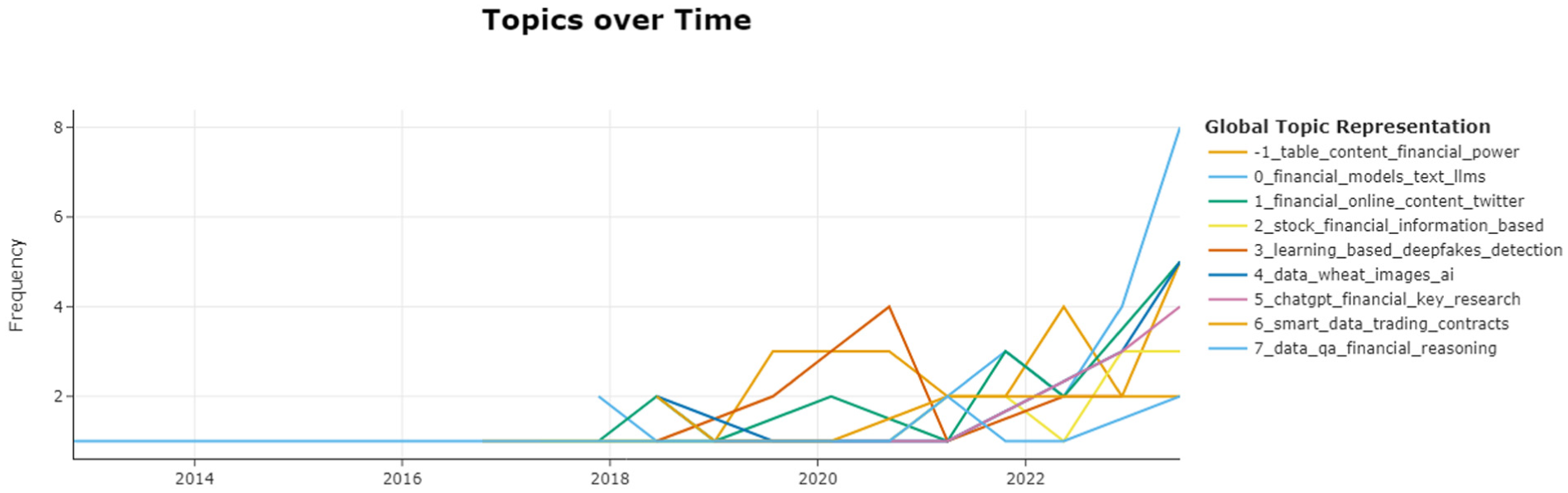
Time sequence of themes in English journal theses.
In summary, the research content of English journal papers focuses on specific areas of AIGC technology within the fintech domain. Researchers concentrate on topics such as financial risk studies, the application of financial models, financial trading, and stock market applications. These research directions reflect the diverse applications and potential impact of AIGC technology in the financial sector. With the continuous development of AIGC technology, these research directions will further promote the innovation and development of fintech, bringing significant changes to the financial field.
Chinese Technical Patents
The findings of Chinese technology patents are mainly focused on the following topics, as shown in Figures 7 and 8.
Automated contract system: Subject words include “contract,”“finance,”“variable.” This is the area with the most projects in technology patents and is currently the focus of AIGC technology enabling fintech applications. Research on such topics can greatly help automate the fintech industry.
Application of artificial intelligence model: the theme words are “method,”“artificial intelligence,”“data.” From 2022 onwards, the number of publications on this topic has increased, becoming the focus of AIGC’s enabling fintech applications. The timelines for the development of models related to the academic literature coincide, indicating that several patents have made the transition from theoretical research to practical applications, indicating that academic papers provide important support for patents.
Generative report: the subject words include “report,”“document,”“generated,”“automatic.” The number of technical patents in this area is limited. The application of AIGC technology can speed up the process of assisting users in the preparation of financial reports and is an area in urgent need of development.
Financial investment strategy: keywords include “investment,”“finance,”“data,”“results.” Since 2021, the number of these patents has risen slowly. The application of AIGC technology to the investment field, using the characteristics of generative technology, provides significant advantages for the creation of diversified investment portfolios, with considerable room for development in the future.
Automatic analysis of insurance information: the subject words are “insurance,”“consumer,”“model customer.” These types of patents are usually in the early stages of development. The application of AIGC in the automatic analysis of insurance information can quickly provide insurance schemes for users, improve the operational efficiency of the insurance industry, and have broad development prospects.
Automated data interface: the subject term includes “transaction,”“interface,”“text.” In 2022, there are many patent projects in this area, but the overall number of patents remains low. Connecting AIGC with various data interfaces of financial scenarios can provide rich data text for generating models, which is a promising development direction.
Automated financial adviser: the subject words are “context type,”“web page,”“external.” The number of these patents is generally low and the development is slow, indicating that there is still a lot of room to explore the application of AIGC technology in specific module fields.

Visualization of themes in Chinese technical patents.
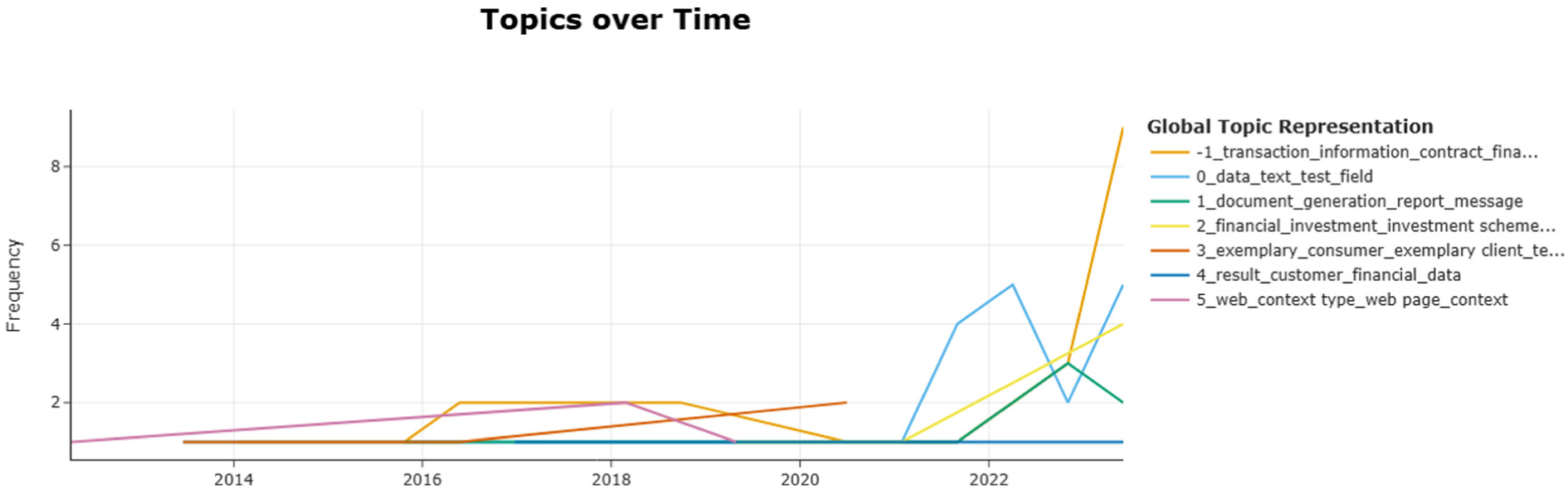
Time sequence of themes in Chinese technical patents.
English Technical Patents
The English technical patents extracted a total of 17 topics, with the first 12 topics visualized in Figure 9 and the dynamic topics shown in Figure 10. The main content in the first 12 topics is as follow:
Data-Driven Decision-Making in Financial Information: Key terms such as “content,”“information,” and “data” highlight the processing of multimodal data—including images, text, and audiovisual content—within AIGC. This assists in financial business decision-making by facilitating the extraction and analysis of relevant data.
Financial Domain Education and Training: With key terms such as “learning,”“content,”“data,” and “machine,” AIGC supports the organization and analysis of learning materials within the financial sector. It helps users develop personalized learning plans and guides the learning process to enhance financial knowledge comprehension.
Financial Text Extraction and Summarization: Keywords like “text,”“document,”“information,”“model,” and “method” represent AIGC’s capability to extract key information from vast amounts of financial data. This results in the generation of concise market summaries that can be delivered daily to subscribed users, allowing them to stay informed about market trends without sifting through extensive news articles.
Customizing Marketing Content for Financial Products: Focused on “content,”“music,”“user,” and “audio,” AIGC can leverage speech synthesis to create professional financial news broadcasts and market analysis videos. This approach offers users a more intuitive and vivid presentation of financial information, enriching their experience with dynamic content.
Financial Market Analysis with Multidimensional Data: With key terms such as “image,”“model,”“dimensional,” and “video,” AIGC facilitates the analysis of multidimensional data—such as stock trends and financial videos—to create robust financial models. These models introduce innovative ways of simulating financial scenarios, enhancing market analysis through AIGC technology.
Investment and Education Video Generation: Keywords such as “video,”“content,”“device,” and “machine learning” describe AIGC’s role in generating high-quality investment education and market analysis videos. Through smart devices, financial institutions can provide financial consultations, interactive services, and market simulations, supporting users in making informed decisions and improving their financial knowledge.
Financial Image Analysis and Target Recognition: AIGC technology allows the generation of real-time market heat maps and price trend charts. With keywords like “image,”“target,”“text,”“information,” and “generation,” AIGC can detect abnormal trading behaviors, such as sudden stock price fluctuations, and alert investors through visual tools like charts and graphs.
Financial Knowledge Integration and Automated Meeting Summaries: Integrating AI with information processing and meeting management technologies, AIGC enhances the efficiency and quality of financial decision-making. It provides streamlined meeting summaries and integrates financial knowledge into a cohesive framework for decision support.
Automated Investment Advisory Services: Keywords like “communication,”“machine learning,” and “user” highlight AIGC’s ability to provide automated investment advice. By analyzing market data and user portfolios, machine learning algorithms generate personalized investment strategies based on individual risk profiles and financial goals, facilitating smarter investment choices.
Social Media and Content in Financial Marketing: Focused on terms like “web,”“user,”“social content,” and “groups,” AIGC is utilized for marketing financial products via social media and content platforms. It enables precise user targeting and quality content generation, fostering financial product promotion and intelligent matching of potential customers, enhancing the reach and impact of financial marketing campaigns.
Text Generation and Document Automation: By utilizing keywords like “content,”“generation,”“model,” and “word,” AIGC automates the generation of detailed financial reports, such as quarterly analyses of corporate financials and market trends. This reduces the reliance on human resources, improving efficiency in generating professional reports with insights into revenue, expenses, and profits.
Speech Recognition Technology in the Financial Sector: With terms such as “speech,”“content,”“voice,” and “speaker,” intelligent speech recognition is integral to user interactions in financial services. AIGC is used in applications like intelligent teller services, dual recording audits, and customer identity verification, offering significant potential for enhancing financial services with voice-driven technology.
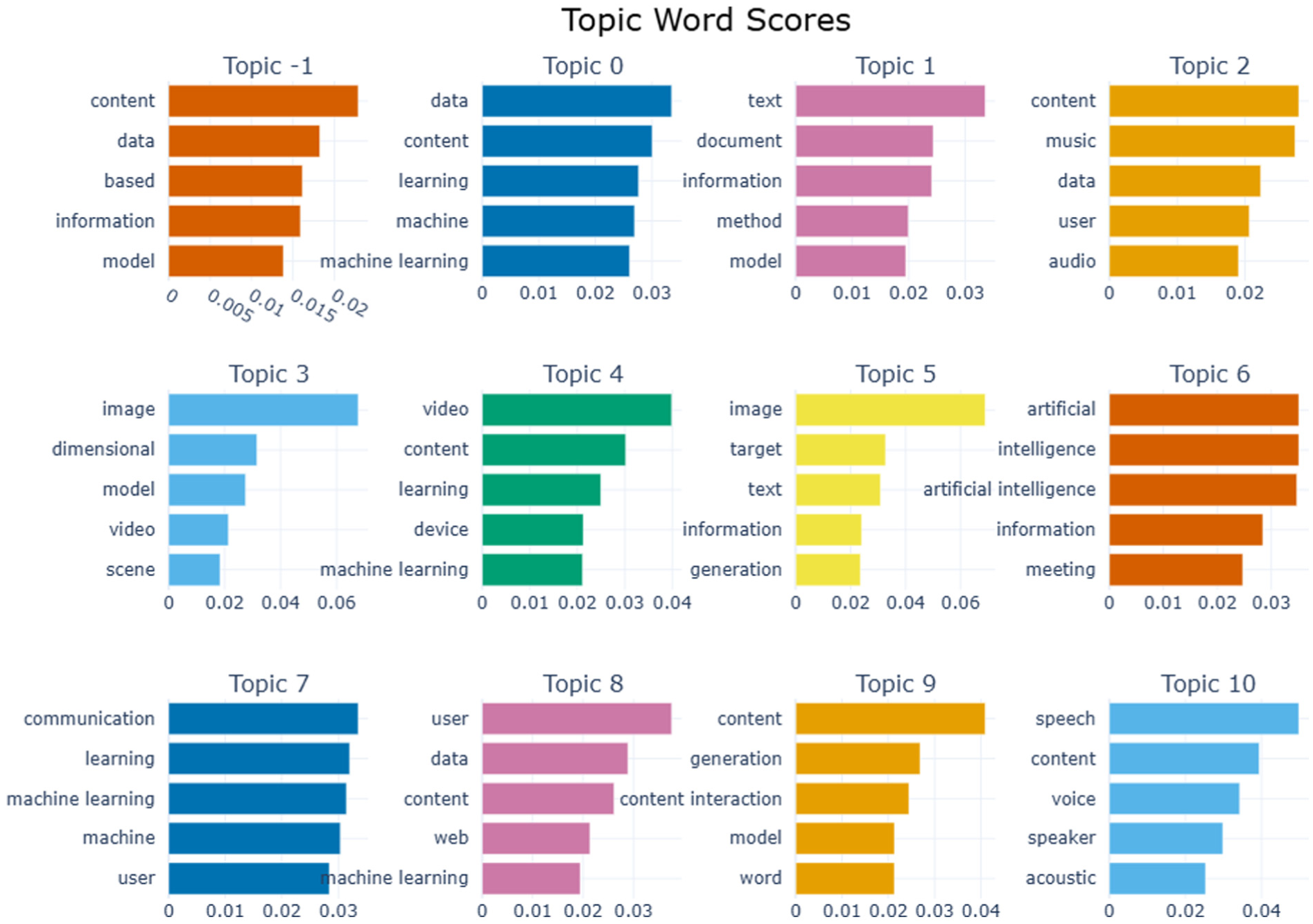
Visualization of themes in English technical patents.

Time sequence of themes in English technical patents.
Summary
In summary, the content of technical patents mainly focuses on several themes such as intelligent information analysis, decision recommendation, and the application of artificial intelligence models. AIGC technology is capable of generating content at a speed several times faster than humans, undertaking tasks such as information value discovery and secondary organization and utilization of information, which involve high-intensity repetitive labor. It meets the demand for generating massive content and template-based content creation, demonstrating significant application value and bringing powerful development momentum to the financial technology industry.
Single-Dimension Perspective on Field Knowledge Evolution
To research the development situation of field theme evolution under different dimensions, investigative work was conducted based on themes obtained from various data sources including Chinese and English journal theses and technical patents. Thematic evolution was tracked by calculating the cosine similarity between the vector representations of topics from adjacent time periods. As time evolves, this approach aims to explore the inheritance and continuity of different theme words.
Chinese Journal Theses
Figure 11 shows the development situation of theme evolution in Chinese journal theses from 2012 to 2024.

Sankey diagram of Chinese journal theses theme evolution.
In the Sankey diagram, theme words for each year are listed, with the thickness of the lines indicating the degree of similarity between themes. The thicker the connection between two themes, the higher their similarity. Additionally, if a theme shares similarities with multiple themes, the length of its label block will also be longer. This method of visualization helps quickly identify and understand the evolution of theme words over time and their interconnections. As seen from Figure 11, Chinese journals had fewer themes between 2012 and 2022, with large time spans between labels and slow theme evolution. Through relevance analysis, it is found that during this period, Chinese research on AIGC technology mostly focused on technological research, mode modeling, and innovation design. However, in 2023, there was an explosive increase in journal themes, showing multidirectional development in the research of AIGC technology.
Therefore, it can be inferred that the AIGC technology in the fintech field is currently at an emerging development stage. From 2012 to 2022, Chinese exploration of this technology was in its preliminary stages, with theme words primarily focused on technology development and model innovation. Starting from 2023, AIGC technology has gradually become a popular field, with a significant number of scholars beginning to explore its specific applications in various directions within the fintech industry. The evolution of these theme words reflects the continuous development and deepening application of AIGC technology in the fintech field. From the initial exploration to the later discussion of further theory and application, this evolution process is of significant importance for AIGC in driving innovation and progress within the fintech industry.
English Journal Theses
Figure 12 displays the development situation of theme evolution in English journal theses within the time window from 2012 to 2024.

English journal theses Sankey diagram.
As shown in Figure 12, English journals had fewer themes between 2012 and 2017. Starting from 2018, the quantity of relevant themes began to show a growing trend. Through the analysis of relevance, it can be observed that theme words prominent in a particular year often have a high relevance coefficient with a theme from adjacent years. The evolution shows a considerable duration of continuity, such as Topic_0 in 2020, which included theme words like model, financial, data, and had strong relevance with Topic_−1 from 2019 and Topic_0 from 2021. This relevance is visible in the subsequent evolution, with several derivative themes containing the core words from this theme. Simultaneously, some emerging themes quickly rise and become focal points of research. These themes, representing significant fields of knowledge, continue to exist on the timeline and influence subsequent research. Conversely, some themes appear and quickly disappear, garnering attention only for a brief period before no longer being discussed within the research community. For example, Topic_2 in 2018 had a high relevance coefficient with the next time period and similar theme words frequently appeared in the subsequent evolution process. In contrast, the relevance of the theme Topic_−1 from the same period weakened over time, displaying a trend of gradual disappearance.
Analyzing the development status of English journal theses, it can be deduced that AIGC technology was in its initial exploration process from 2012 to 2017. From 2018 onwards, it began to rise, with numerous scholars engaging in research services for the fintech industry using AIGC technology, and the scope of exploration gradually accumulating and developing based on earlier developments. Simultaneously, compared to the quantity of themes during the Chinese period, the development of English journals began earlier and on a larger scale.
Chinese Technical Patents
Figure 13 displays the development situation of theme evolution in Chinese technical patents within the time window from 2012 to 2024. As can be seen, there are generally fewer themes in the area of technical patents, and the labels have large time spans between them, showing a low degree of similarity in theme evolution over the general time period. The analysis of relevance reveals that some theme words have low relevance coefficients with the themes of previous and subsequent time periods, leading to the disappearance of these themes, such as Topic_1 within the 2012 to 2017. Hence, it is speculated that certain technologies have relatively short life cycles and fast iteration speeds at the patent level. There are also some themes that exhibit high similarity, such as Topic_1 in 2022, which shows good similarity in inheriting the theme of Topic_−1 from 2020 to 2021 and evolving into Topic_0 in 2023, suggesting rich knowledge connections between similar technologies that mutually support each other.
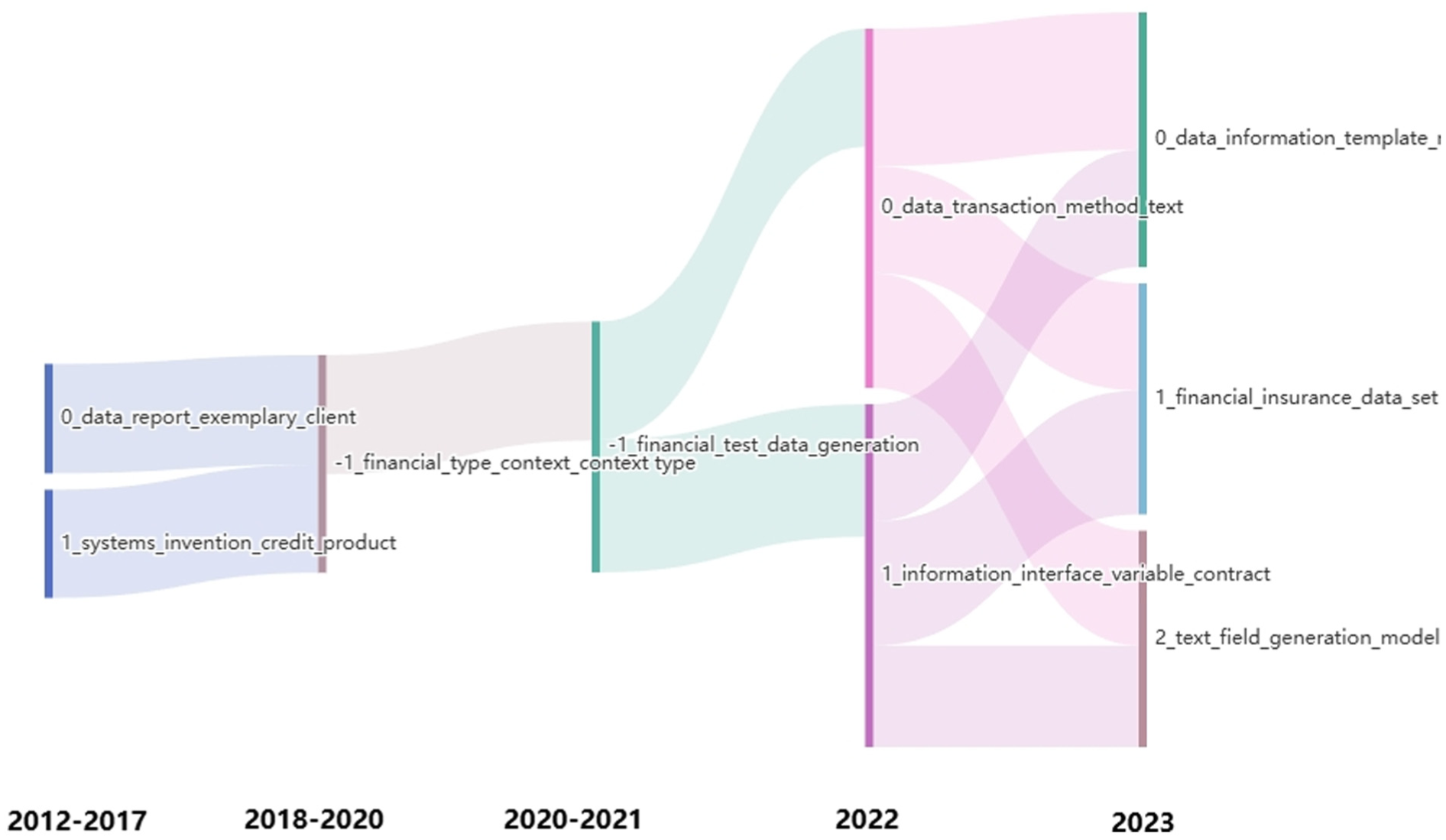
Chinese technical patents Sankey diagram.
A comprehensive analysis of the evolution of these theme words reflects the fintech industry’s continuous pursuit of advanced technology and innovative solutions. From emerging financial services to a global blockchain ecosystem, this process not only enhances efficiency but also provides clients with more personalized and customized services.
English Technical Patents
The number of English technical patents related to AIGC in the financial domain is vast, with diverse content and rich themes. In the first phase from 2012 to 2014, there were fewer topics, mainly focusing on various modal data processing techniques. In the second phase after 2014, there was a proliferation of topics, and new topics were strongly associated with those from the previous phase. For example, the similarity between Topic_−1 in the time window of 2012 to 2014 and Topic_−1 in 2014 to 2018 reached 0.9, and the evolution from Topic_0 to Topic_4 reached a similarity of 0.8. Based on the number of derived topics and the similarity relationships, it can be inferred that the technological exploration in the financial technology industry is entering into specialized fields and continuously deepening. Subsequently, in the third and fourth phases, the number of topics tended to stabilize, with high levels of cross-fusion between various topics. By the stage of 2022 to 2024, new topics emerged again. It can be observed that AIGC technology in the English financial technology domain is experiencing long-term development with steady growth. The themes of technical patents have remained active over the long term, with numerous derived topics continuously evolving. This reflects the vitality of AIGC technology in the financial technology industry, its continuous innovation, and its role in driving the flourishing development of financial technology. The current evolution of topics demonstrates that AIGC technology is exerting its value in the financial technology domain, and in the future, it will continue to offer greater development prospects for the financial technology industry (Figure 14).

English technical patents Sankey diagram.
Multi-Data Source Integration Perspective on Field Knowledge Evolution
Although theme analysis based on a single data source can reveal knowledge associations and trends in the evolution of field knowledge, it cannot avoid being one-sided and therefore does not provide a comprehensive view of field knowledge. To more accurately understand the evolution of field knowledge, research will adopt an integration method for theme modeling using multiple data sources. This comprehensive method of multiple-source data helps reduce the limitations of a single perspective, making the presentation of field knowledge more complete and more in-depth. In this case, this paper set the threshold of the similarity coefficient to 0.65, filtering out weakly correlated topic links, and set the minimum cluster size to 12, eliminating smaller clusters of topics. This approach allows us to focus on more prominent research topics, providing a more comprehensive and accurate analysis of domain knowledge evolution. The final overview of the merged data topics is shown in Figure 15.

Multi-source data integration Sankey diagram.
Analyzing Figure 15 reveals a noticeable upward trend in research topics related to AIGC technology in the financial technology industry, with strong continuity and correlation among topics. As the number of literature increases, the degree of topic differentiation is high, indicating a deepening integration of this technology with the financial technology industry and a more refined level of research. For instance, in both 2019 and 2020, there were three topics, but the cluster size was larger in 2020, leading to the emergence of more topics in 2021. Additionally, it is worth noting that the Topic_0 theme in 2012 shows a direct correlation with the Topic_0 theme in 2023, with a correlation coefficient of 0.77. This suggests that the Topic_0 theme in 2012 may have been dormant during the period from 2018 to 2022 due to limitations in the number of clusters, but it did not disappear. It reestablished relevance in 2023 as the number of literatures increased. Overall, the increasing amplitude of newly emerged topics related to AIGC technology literature over time indicates that the technology is in an emerging stage of development.
Comparison analysis of topic evolution with a single data source reveals that some topic terms exhibit similarities. This suggests that the domain knowledge analysis from data source fusion can capture not only the topics present in a single data source but also reveal new topics by integrating information features from multiple data sources. These new topics, which may not be apparent in a single data source, gradually emerge after data fusion and may become research hotspots within a certain period. On the other hand, further analysis of the evolution of fused domain knowledge reveals that from 2012 to 2018, AIGC technology was primarily associated with customer management. Subsequent research has delved deeper into this foundation, progressing from generating intelligent financial contracts to establishing financial contract models using deep learning. This significant evolution of domain knowledge, not previously identified in any single data source analysis, underscores the value of multi-data source fusion in exploring and discovering domain knowledge evolution patterns and potential trends more deeply, thereby providing a more comprehensive and precise analytical tool for scientific research.
Different Categories of Theme Difference Analysis
Literature Language Difference Analysis
Comparative analysis of Figures 11 to 14 shows that up to 2022, Chinese literature development was significantly lagging behind English literature. Chinese literature themes mostly focused on technology innovation and model design. During this period, scholars published in Chinese journals were in the initial stages of exploring AIGC in the fintech field. The international exchange and collaboration were not deep enough, and the application of AIGC technology in China was neither widespread nor mature. Conversely, English literature benefited from the use of English as an international lingua franca, with English journal databases having greater influence and resources. Additionally, the development and application of AIGC technology in Western countries were more advanced and widespread, resulting in English literature having superior theme quantity and quality.
Post-2023, the quantity of Chinese literature significantly increased, with an explosive growth in themes within Chinese journal databases, and both the themes and quality of Chinese literature saw notable improvements, covering various fields. It can be inferred that Chinese journal scholars have made breakthrough progress in their research on AIGC applications in the fintech field. AIGC technology in China has entered a phase of rapid popularization and innovation. Contributions from English journals are not excluded, as Chinese databases begin to establish collaborative relationships with international journal databases, introducing more foreign literature, thereby enhancing their own academic standards and influence, making AIGC technology enter a hot field with rapid development.
In terms of theme similarities, both Chinese and English literature focus on the basic principles and methods of AIGC technology in the fintech field, such as R&D finance models and technology innovation. These themes represent the basics and core of AIGC technology and are commonalities and points of interaction between Chinese and English literature. As each literature progresses rapidly in its development stage, Chinese and English literature display their unique features and advantages. For example, Chinese literature focuses more on the adaptability and localization of AIGC technology in the Chinese financial market, as well as its functions and value in inclusive finance and social responsibility. Meanwhile, English literature focuses more on the competitive power and influence of AIGC technology in the international financial markets, and the challenges and opportunities it presents in financial innovation and transformation. These themes reflect the differences and complementarities between Chinese and English literature, providing more perspectives and ideas for the development of AIGC technology in the fintech field.
Literature Type Differences Analysis
Comparative analysis of the technical patent Sankey diagrams in Figures 13 and 14 with the paper Sankey diagrams in Figures 11 and 12 reveals differences in the developmental patterns displayed by different types of literature Sankey diagrams. In-depth analysis of the technical patent Sankey diagram indicates that themes of this type play key roles at different stages of technological development. For instance, in the early stages, certain themes may not receive sufficient development due to technological limitations. However, as technology progresses and market demands change, these themes may regain attention and find new expressions in patents, reflecting the natural process of technological iteration. Further comparison with the paper Sankey diagrams reveals numerous themes in the papers, demonstrating clear continuity and evolution. This difference may stem from the fact that journal papers tend to focus more on theoretical exploration and research on cutting-edge technologies, while patents prioritize practical applications and the commercialization of technology. Therefore, the evolution of themes in papers often indicates trends in technological development, while patents reflect how these trends are translated into concrete technological solutions.
Further exploration of similar themes between patents and papers reveals that themes that develop steadily in papers are also reflected to some extent in patents. Journals, as a theoretical foundation, can provide effective theoretical basis for patent development and assist in their advancement. In turn, patents can design AIGC application technologies that better meet practical needs based on the current development of journal literature, which are then deployed in the financial technology field. This dialogue not only promotes rapid technological development but also brings new opportunities to the financial technology domain.
Through a comprehensive analysis of the interactive relationship between patents and journal literature, theoretical research in journal literature provides a solid foundation for technological innovation, while the development of patents in turn promotes further theoretical deepening. This bidirectional interaction not only accelerates technological iteration but also provides rich theoretical and practical resources for the development of the financial technology domain. In the future, with the continuous improvement of AIGC application technologies and the growing market demand, we have reason to believe that this interaction will become even closer, thereby driving sustained innovation and development in the financial technology domain.
Management Implications
The findings of this study offer several critical management implications for stakeholders in the fintech ecosystem. Rather than general advice, the identified thematic evolution provides a strategic roadmap for technology development, risk management, policy-making, and talent cultivation.
Strategic Guidance for Technology and Product Development. The analysis of technical patents reveals a clear trajectory from foundational concepts to specific, commercially viable applications. Themes such as “automated contract system,”“automated investment advisory services,” and “financial text extraction and summarization” are no longer theoretical but represent immediate development opportunities. Technology and product leaders should prioritize R&D investment in these areas. The rapid iteration cycle observed in patents underscores the need for agile development methodologies to maintain a competitive edge. Furthermore, the identified synergy between academic research and patent applications suggests that firms should establish formal channels to monitor academic literature to anticipate and capitalize on emerging technologies before they are widely commercialized.
Guidance for Risk Management and Regulatory Compliance. While patents focus on application, the academic literature highlights significant concerns around “AIGC technical risk supervision” and “financial risk.” This divergence signals a potential gap between technological advancement and governance. Risk and compliance officers must act proactively, developing robust frameworks to address algorithmic bias, data privacy, and model transparency—issues frequently raised in academic discourse. Financial institutions should not wait for regulation to mature but should instead build internal “AI ethics” and governance teams to conduct rigorous audits and stress tests on AIGC systems, ensuring fairness and security by design.
Implications for Market Strategy and Policymaking: The cross-lingual analysis provides a nuanced view of the global landscape. The explosive growth in Chinese literature and patents post-2023 indicates China’s rapid catch-up and a focus on adapting AIGC to its domestic market needs. In contrast, English-language literature and patents show a more mature, globally oriented market. This implies that a one-size-fits-all strategy is ineffective. Multinational fintech firms must develop localized technology solutions for markets like China, while policymakers should foster international collaboration to harmonize regulatory standards while supporting domestic innovation.
Implications for Talent Development and Education: The complexity and rapid evolution of AIGC themes highlight a growing demand for a new type of professional who is fluent in finance, data science, and AI ethics. The emergence of themes related to AIGC in higher education curricula is a nascent response. Educational institutions must accelerate curriculum updates to integrate these interdisciplinary skills. For corporations, this signals an urgent need for upskilling and reskilling existing employees. Human resources and training departments should develop targeted programs focused on the specific knowledge areas identified in this study to build a workforce capable of navigating the AIGC-driven transformation of finance.
Conclusion
Research Conclusions
This study investigates the thematic evolution of Artificial Intelligence Generated Content (AIGC) within the fintech sector by employing a cross-lingual and multi-source analytical framework based on the BERTopic model. Through a comprehensive analysis of 1,168 documents—including English and Chinese academic journal papers and technical patents—this study offers new insights into the conceptual development, technological maturity, and knowledge diffusion of AIGC across time, regions, and publication types. Three major conclusions are drawn:
Cross-linguistic differences reveal divergent yet complementary knowledge dynamics.
The analysis shows that English-language academic literature leads in thematic diversity, semantic richness, and interdisciplinary connectivity. It demonstrates an earlier and more consistent exploration of AIGC in areas such as financial risk, investment strategy, and algorithmic ethics since 2018. In contrast, Chinese-language literature, while more recent and narrower in scope, shows a higher proportion of emerging themes, particularly after 2023, with growing emphasis on localized applications of AIGC in financial supervision, automation, and GPT-based innovations. This contrast suggests that English literature tends to reflect global theoretical exploration and early adoption, while Chinese literature captures an accelerated phase of application-driven transformation. The findings thus confirm the research objective of tracing not just what themes exist, but how they evolve differently across linguistic and institutional contexts.
Multi-source integration amplifies interpretability and reveals hidden trajectories of knowledge evolution. By combining academic and patent data, the study not only identifies complementary topics across knowledge domains but also uncovers new thematic intersections, such as the synergy between automated contract systems (patents) and ethical compliance frameworks (papers). This integrative approach addresses a core research objective: to map the convergence between theoretical discourse and practical application. The result is a more complete depiction of AIGC’s technological lifecycle in fintech—from conceptual ideation to market-ready solutions. Compared to single-source analysis, this method improves the granularity and contextual relevance of topic modeling, helping stakeholders detect early signals of disruptive innovation and align strategic priorities accordingly.
Thematic evolution in fintech mirrors broader sectoral shifts, reinforcing AIGC’s cross-industry transformative potential. The findings reveal that fintech is not an isolated case. When compared with thematic patterns in other sectors such as healthcare and education, the fintech domain exhibits parallel trends—notably, a short innovation cycle, an increase in emergent interdisciplinary topics, and a growing concern over ethical and governance frameworks. These parallels reinforce one of the study’s theoretical implications: AIGC acts as a general-purpose technology, with sector-specific manifestations but common evolutionary pathways. For fintech, this means that its transformation is not only about internal optimization (e.g., automation or personalization), but also about its integration with other industries, including retail, insurance, and public services—creating broader economic and societal impact.
Taken together, these conclusions not only confirm the study’s initial goals—namely, to track AIGC’s thematic development, understand its lifecycle, and identify barriers and opportunities—but also offer interpretive insights into how AIGC is reconfiguring the fintech knowledge ecosystem. The results suggest that future research and policymaking should prioritize cross-sectoral dialogue, localized innovation strategies, and ethically aligned development paths to harness AIGC’s full transformative potential.
Research Limitations
While this study provides valuable insights into the evolution of AIGC in fintech, it is subject to several limitations that offer avenues for future research.
First, the analysis is constrained by data scope and translation quality. Although multiple authoritative databases were used, the field of AIGC is evolving at an unprecedented pace, meaning the very latest pre-prints, industry white papers, and open-source projects may not be fully captured. Furthermore, the methodology relies on machine translation for Chinese-language documents to create a unified corpus for analysis. While a reputable tool was used, subtle semantic nuances, cultural context, or highly technical jargon may be lost or altered in translation, which could potentially influence the outcomes of the embedding and topic clustering processes.
Second, the findings are correlational, not causal. The BERTopic model is effective at identifying clusters of co-occurring terms and tracking how these thematic clusters evolve over time. This allows us to map the intellectual structure of the field and observe trends, such as the rise of regulatory topics after a surge in application-focused research. However, this method cannot definitively establish causal relationships. For example, we can observe that a theme emerged, but we cannot statistically prove it was caused by a specific market event or technological breakthrough based on this analysis alone.
Finally, the process involves a degree of subjectivity in interpretation. While the topic modeling process was validated using quantitative metrics and qualitative expert review to ensure coherence and relevance, the final labeling of topics and the narrative interpretation of their evolutionary paths necessarily involve scholarly judgment. Different researchers might interpret the connections between themes or the significance of a particular thematic shift in slightly different ways. This subjective element, while standard in qualitative and mixed-methods research, is an inherent limitation.
Future Opportunities and Challenges
During 2012 to 2022, AIGC technology was in the initial exploration stage within the fintech industry. Relevant theme words focused on technology research, model innovation, and design in various fields. At this stage, the opportunity lies in exploring the potential and applications of AIGC technology in the fintech field, providing new solutions for financial services and decision-making. However, challenges also emerge. Firstly, the feasibility and stability of the technology require verification, necessitating the overcoming of technological difficulties and barriers. Secondly, cultivating and attracting talent with specialized knowledge in AIGC technology poses a challenge, necessitating enhanced efforts in talent development and recruitment. Additionally, data privacy and safety issues present significant challenges, necessitating the establishment of strict data protection and privacy policies to safeguard clients’ interests and data safety.
During 2022 to 2023, AIGC technology entered a rapid development stage in the fintech industry. Relevant theme words concentrated on smart investment, intelligent risk management, and blockchain in various fields (Huang et al., 2022; Lin et al., 2024; Yang et al., 2024; J. Wang et al., 2024). In this stage, the opportunity lies in further enhancing the efficiency and accuracy of financial services. Through the application of AIGC technology, more intelligent investment decisions and risk management can be realized, offering more personalized and customized financial services to meet client requirements. However, the challenges should not be overlooked. As AIGC merges with new fields, issues related to the transparency and interpretability of algorithms need to be addressed to ensure that the decision-making processes and results of AIGC technology can be effectively explained and understood. Furthermore, as technology continues to expand, managing the risks associated with technology and legal supervision will also become critical issues, necessitating advancements alongside the development of AIGC technology. Moreover, the constant updates in technology and the evolution of models also require ongoing attention and learning, which will become a significant focus in the future.
Therefore, as AIGC technology transitions from initial exploration to rapid development, the future in the fintech industry is filled with both opportunities and challenges. Financial institutions and regulatory bodies should closely monitor the development of AIGC technology, strengthen collaboration, formulate corresponding policies and measures, to promote the healthy development of AIGC technology, and ensure its sustainable and safe application in the fintech industry.
Footnotes

Funding
The authors disclosed receipt of the following financial support for the research, authorship, and/or publication of this article: This research was funded by the Shanghai Philosophy and Social Science Planning Project (2023BCK010) and the Shanghai FinTech Research Center Project (2025-JK07).
Declaration of Conflicting Interests
The authors declared no potential conflicts of interest with respect to the research, authorship, and/or publication of this article.
Data Availability Statement
The data are available from the corresponding author on reasonable request.