




Abstract
The study aims to examine how blockchain is used in the multimodal and interdisciplinary metaverse as a nexus of education and training, accounting, banking and finance, entertainment and media, marketing and e-commerce, and retail, healthcare, and wellness. It seeks to evaluate the influence of blockchain combined with artificial intelligence, the Internet of Things, and other emerging technologies in the metaverse, so evaluating the challenges and concerns in the field, new business prospects, and sustainable development paths corresponding to Sustainable Development Goals. Using a Systematic Literature Review (SLR) technique, this article addresses the problem from a commercial viewpoint. The study investigates the topic structure of the literature by means of Biblioshiny for R combined with VOSviewer version 1.6.20. Furthermore, increasing the analytical depth is a bibliographic coupling method used on a dataset of 172 Scopus (2024) items. The study underlines the economic rationality and direct consequences of the characteristics of the blockchain—NFTs, DeFi, cryptocurrencies, transparency, decentralization, and security—on the relevance of business models in the metaverse. The information provided here is a vital literature study on how the blockchain addresses issues in constructing and metamorphosing the metaverse from several sectors and angles. In the framework of the metaverse, this article offers a thorough theoretical study of the possibilities and possible challenges in blockchain integration.
Plain Language Summary
The study aims to look into how blockchain is used in the multimedia and interdisciplinary metaverse as a hub for shopping, healthcare, fitness, entertainment and media, marketing and e-commerce, and education and training. It looks at how blockchain, AI, the Internet of Things, and other new technologies affect the metaverse. By doing this, it looks at the problems and issues in the field, as well as the opportunities for business growth and a path for sustainable development that fits with the Sustainable Development Goals. This paper looks at the issue from a business point of view using a method called Systematic Literature Review (SLR). Biblioshiny for R and VOSviewer version 1.6.20 are used to look into the topic organization of the literature for the study. A bibliographic linking method was also used on a collection of 172 Scopus items to add to the analysis depth. This study shows how the features of the blockchain—including NFTs, DeFi, cryptocurrencies, security, freedom, and transparency—affect business models in the metaverse and why they are important from an economic point of view. The information here is an important literature review on how the blockchain deals with problems in building and changing the metaverse from different areas and points of view. By looking at the metaverse as a whole, this piece gives a full theoretical look at the pros and cons of integrating blockchain.
Introduction
In October 2021, Facebook rebranded as Meta, so heralding the arrival of the “metaverse” as a new model in digital interaction (Huynh-The et al., 2023). Originally imagined in “Snow Crash” (Joshua, 2017), the metaverse combines virtual and physical worlds to enable immersive experiences across social, commercial, and work domains (Lin et al., 2022; Yang et al., 2022). Despite barriers in data rights, misinformation, cybersecurity, and regulation (Heath, 2023; Wang et al., 2022), it provides new avenues for consumer involvement and data monetization, so emphasizing the need of safe digital infrastructure. Although the metaverse presents great possibilities for companies (Enache, 2022), research on safe approaches-especially via blockchain-is crucial since it shows clear answers to data security problems.
Introduced by Nakamoto (2008), blockchain is a distributed ledger ensuring safe, open transactions (Gadekallu et al., 2022; Jeon et al., 2022). With important traits like integrity, auditability, and anonymity (Ali et al., 2019; Guo & Yu, 2022; Lin & Liao, 2017; Yang et al., 2022; Zheng et al., 2018), its unchangeable structure helps safe data sharing (Guo & Yu, 2022; Yang et al., 2022). In the metaverse, it supports transaction flows and trusted content, so safeguarding user reputation and privacy.
Blockchain has been used in numerous studies to improve security and openness in the metaverse (Ersoy & Gürfidan, 2023; Fu et al., 2023; Ghosh et al., 2024; Huynh-The et al., 2023; Maksymyuk et al., 2022; Mishra et al., 2022; Nguyen et al., 2022; Uddin et al., 2024; Xu et al., 2023). Ghosh et al. (2024) looked at virtual real estate, gaming, and social interaction use cases. Others underlined its part in digital twins, IoT, big data (Gadekallu et al., 2022), and its convergence with artificial intelligence for data dependability (Jeon et al., 2022; Yang et al., 2022). MetaRepo (Ersoy & Gürfidan, 2023) highlights how well blockchain cross-platform asset protection works.
Blockchain research in the metaverse is growing generally but still has a limited application range (Huynh-The et al., 2023). First, looking at the metaverse technically, L.-H. Lee et al. (2021) highlighted data storage and sharing as fundamental blockchain operations. Wang et al. (2023) then broadened this to include economics and government. Yang et al. (2022) presented a layered architecture; Jeon et al. (2022) underlined AI integration; Huynh-The et al. (2023) concentrated on data and privacy issues. Nevertheless, no thorough investigation has looked at blockchain’s commercial uses across multidisciplinary metaverse domains, highlighting the need for systematic review to map prospects, difficulties, and future directions of research. This gap implies that there is no in-depth systematic review that could integrate the piecemeal knowledge and assess business implementation of blockchain in the metaverse. This research intends to bridge such a gap by undertaking a Systematic Literature Review (SLR) that will respond to the following research questions:
Overall, this article provides a contribution to the current body of knowledge in five aspects. To begin with, it gives an introduction to blockchain business uses within a metaverse, evaluates their advantages, and explains the way they work. Second, it broadens its use to multidisciplinary use in business, finance, healthcare, entertainment, and education. Third, it discusses how blockchain may be integrated with the Internet of Things (IoT) and artificial intelligence (AI) and speculative technologies in the context of sustainable development. Fourth, it addresses large-scale challenges, commercial prospects, and research prospects in accordance with the Sustainable Development Goals (SDGs). Lastly, it summarizes the key results, provides theoretical and policy implications, and specifies limitations and future research directions.
Theoretical Background
Blockchain
Blockchain, introduced in Satoshi Nakamoto’s seminal paper “Bitcoin: A Peer-to-Peer Electronic Cash System” (Di Pierro, 2017; Nakamoto, 2008), is defined as a distributed ledger where sequential blocks are linked through cryptographic hashes of previous block headers. It ensures decentralized, immutable, and transparent storage of transactions over time, prohibiting undetected alterations. Unlike digital signatures, which guarantee authentication and integrity without timestamping, blockchain securely records the timing and sequence of transactions, providing robust traceability. The collision-resistance property of cryptographic hash functions underpins blockchain’s reliability by making tampering computationally infeasible (Di Pierro, 2017).
Beyond Bitcoin, blockchain has been widely adopted across various sectors, including finance (Javaid et al., 2022; Varma, 2019), supply chain management (Azzi et al., 2019; Rejeb & Rejeb, 2020), education (Gräther et al., 2018; Grech & Camilleri, 2017), and healthcare (Alhadhrami et al., 2017; Bell et al., 2018; McGhin et al., 2019).
Metaverse and the Role of Blockchain
Originally first mentioned in “Snow Crash” (Stephenson, 1994), the metaverse has developed from fiction into an interdisciplinary research frontier. Usually, it relates to continuous virtual environments improved by technologies including VR, artificial intelligence, 6G, digital twins, and blockchain (Gadekallu, Huynh-The, et al., 2022).
Blockchain is fundamental since it allows safe economic infrastructure and distributed storage from the margins. Reflecting actual economic activity, NFTs help to trade virtual assets. Concerns about data privacy, digital rights, and governance rise as the metaverse spreads into healthcare (Chengoden et al., 2023), education (Camilleri, 2024; Kye et al., 2021; Zhang et al., 2022); smart cities (Yaqoob et al., 2023); art (Wang et al., 2023). Transparency, traceability, and decentralization of blockchain help to provide necessary answers to these problems.
Technology–Organization–Environment (TOE) Framework and Actor–Network Theory (ANT)
This study uses an integrated theoretical lens combining the Technology–Organization–Environment (TOE) framework with Actor–Network Theory (ANT) to investigate blockchain adoption in metaverse-related business environments. This dual approach allows study of dynamic actor relationships in technology adoption as well as structural determinants.
Acceptance is defined in three dimensions by the TOE framework (Tornatzky & Fleischer, 1990): technological, organizational, and environmental (e.g., complexity, security, firm size, and innovation readiness). It has been extensively adopted for technologies including IoT (Lau et al., 2017), cloud computing (Amini & Bakri, 2015; Borgman et al., 2013; Gangwar et al., 2015), RFID (Wang et al., 2010), and blockchain in supply chains (Kayikci et al., 2022).
Toe’s macro-level emphasis, meanwhile, sometimes ignores how innovation is really carried out. Emphasizing the interactions among human and non-human actors—developers, regulators, and protocols that mold adoption through negotiation and alignment–ANT (Callon, 1984; Latour, 1987; Law, 1992) complements this. In studies on blockchain governance and IS, ANT has shown promise (Shim & Shin, 2019).
TOE and ANT taken together enable a comprehensive study of blockchain adoption in the metaverse, capturing both the structural enablers and the changing actor-networks. This convergence fits newly published studies on digital transformation, where changing actor roles and flexible infrastructure call for both theoretical breadth and depth.
Methods
Systematic literature reviews represent a scientific and rigorous secondary research methodology that has been extensively used in management but more recently in marketing (Floren et al., 2020; Lim et al., 2021; Rasul, 2019). On the basis of such a methodology, the current study implements a systematic literature review (SLR) with bibliometric analysis in order to guarantee extensive coverage and quantitative objectivity in the mapping of the intellectual and thematic organization of blockchain and metaverse research in the business environment. This two-step method allows combining the qualitative synthesis process with the quantitative network analysis, which adds more strength and reliability to the results (Donthu et al., 2021; Zupic & Čater, 2015). Based on the principles of transparency and replicability suggested in the PRISMA 2020 guidelines (Page et al., 2021), the study systematically identifies, filters, and analyzes peer-reviewed articles accessed in the Scopus database, as they are highly diverse in the interdisciplinary scope, provide high data reliability, and are compatible with bibliometric tools, including VOSviewer and Bibliometrix (Aria & Cuccurullo, 2017; Baas et al., 2020). This methodological design will make the synthesis represent the present-day, developing, and upcoming research directions of blockchain-empowered metaverse business research.
Identification
In the identification phase, the bibliographic data were searched exclusively in the Scopus database on December 16, 2024. Scopus was chosen based on the suggestion of Pranckutė (2021), who identified it as one of the most reputable and high-quality academic databases, distinguished by its broad multidisciplinary range. Scopus, a database that screens and includes journals that meet stringent quality criteria for indexation (Donthu et al., 2021; Fetscherin et al., 2019; Fetscherin & Heinrich, 2015; Paul et al., 2021), ensures that only peer-reviewed and academically validated sources are incorporated into the dataset.
The use of Scopus was deemed especially appropriate for this study, which focuses on an interdisciplinary, business-related field—namely, blockchain and the metaverse—as it thoroughly indexes publications relevant to business, management, economics, social sciences, and decision sciences (Dwivedi et al., 2022). Such extensive coverage allows Scopus to capture both theoretical foundations and practical advancements of blockchain-related research in digital business ecosystems.
Scopus is better for capturing early-stage and interdisciplinary work because it indexes new technologies (Donthu et al., 2021), like digital twins, blockchain, and metaverse simulations faster and covers more conferences (more than 120,000). WoS’s higher selectivity could leave out 20% to 30% of unique documents in these fields, especially in the social sciences and studies of sustainability (Mongeon & Paul-Hus, 2016). Besides, Scopus offers metadata, which is well-organized and interoperable, such as citation links, author affiliations, and keywords, which allow more advanced bibliometric methods like co-citation, bibliographic coupling, and keyword co-occurrence in VOSviewer and Bibliometrix for R (Aria & Cuccurullo, 2017; Donthu et al., 2021). The search was done in the title, abstract, and author keywords (TITLE–ABS–KEY) fields with the following Boolean string:
(“blockchain” OR “distributed ledger” OR “Distributed Ledger Technology” OR “DLT”) AND (“business” OR “company” OR “enterprise”) AND (“metaverse” OR “digital twin” OR “extended reality” OR “virtual space”).
The first search resulted in 388 records, on which the next screening and eligibility steps based on the PRISMA model were conducted.
Screening and Eligibility
The first search in Scopus provided 388 documents that contained the selected keys words in the title, abstract and author keywords (TITLE–ABS–KEY) field. To secure linguistic consistency and comparability, the publications in English were only retained and this ended up to a subset of 327 documents. The dataset was again narrowed down to business-related and decision-oriented research situations by using Scopus subject area filters restricted to Business, Management and Accounting; Economics, Econometrics and Finance; Social Sciences; Decision Sciences, and Multidisciplinary. Such disciplinary filtering made sure that only studies were included that are conceptually and methodologically related to the management, economic, and organizational perceptions of blockchain and metaverse researches.
In the end, 172 articles were exported and saved in CSV, Ris, and BibTex and then added and analyzed in the bibliometric study. The format decision is taken on which the software is selected to facilitate easier analysis of the data in the form of visualization display. Figure 1 shows the entire selection process, which was conducted in accordance with the PRISMA guidelines (Page et al., 2021).
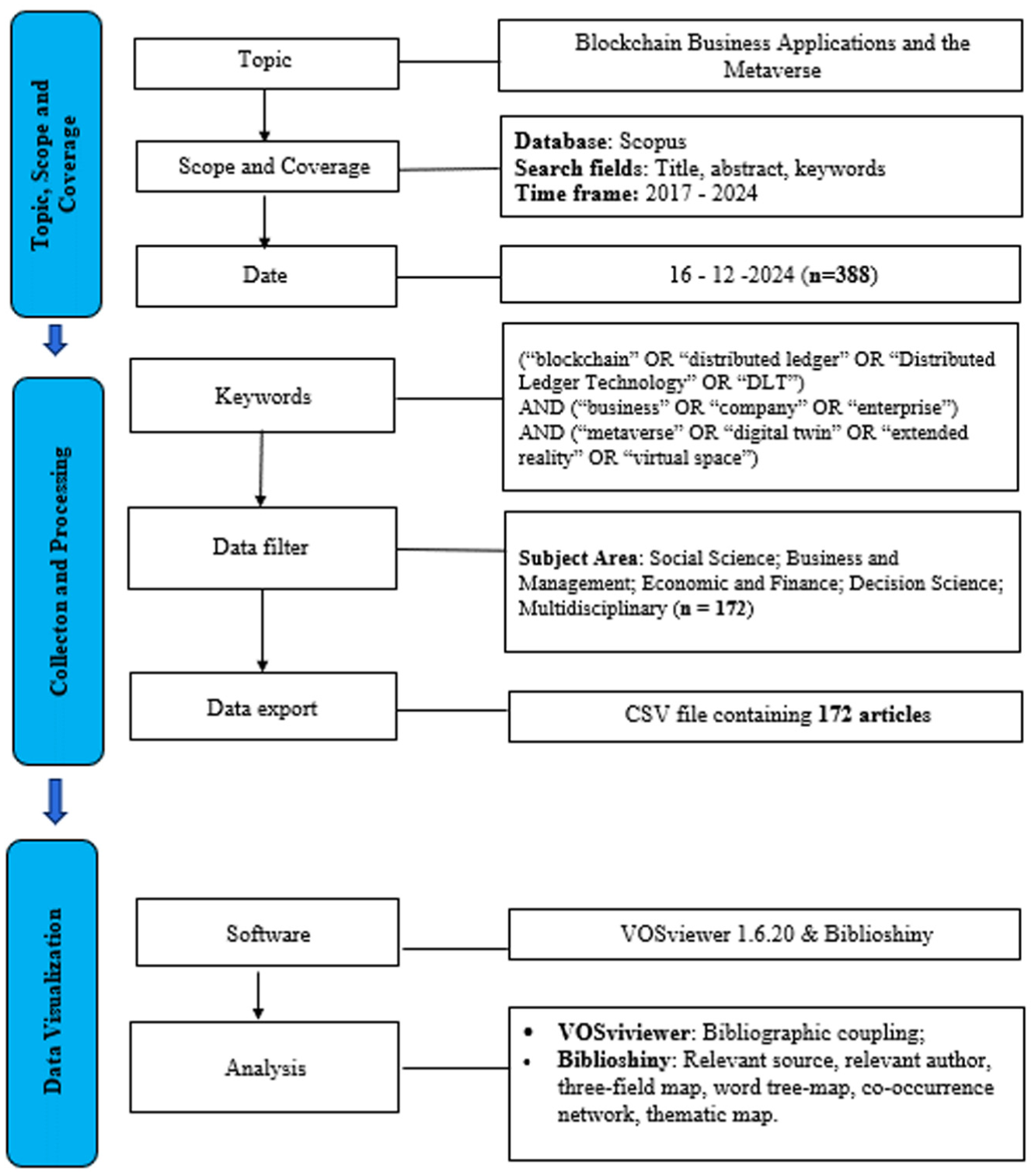
PRISMA flow diagram for article’s selection process.
Data Analysis
Multiple software tools were used to conduct the bibliometric analysis to make sure that the results of the research were represented fully and visually. It was initiated by the extraction and tabulation of the data whereby all the bibliographic data acquired through the Scopus database was exported and converted to CSV format. The data was then purged and sorted out and ready to be analyzed later on.
Bibliometric analysis was conducted in the R Studio environment with the help of Bibliometrix package created by Aria and Cuccurullo (2017). It had a web-based interface, Biblioshiny, which was used to analyze and visualize its data interactively. The CSV file has been imported into Biblioshiny to analyze a few, such as relevant source, relevant author, three-field map, word tree-map, co-occurrence network, and thematic map. These visualizations can be used to determine the powerful research themes, links between authors and keywords, and the intellectual organization of the discipline. Also, to carry out bibliographic coupling analysis VOSviewer (version 1.6.20) was used, which enables one to identify thematic clusters and intellectual connections between the publications. Scopus CSV file was also translated to Microsoft Excel format to investigate finer trends and do more mapping.
As stated above, the dataset comprises of 172 bibliographic records, or bibliographic metadata, on which the bibliometric analysis in this study are based.
At the same time, these are the two papers with the highest total citations, as shown in Table 1, further confirming this. Bansal et al. (2022) have 149 citations, ranking first, while Ritterbusch and Teichmann (2023) rank second with 130 citations.
Top 10 Cited Papers.
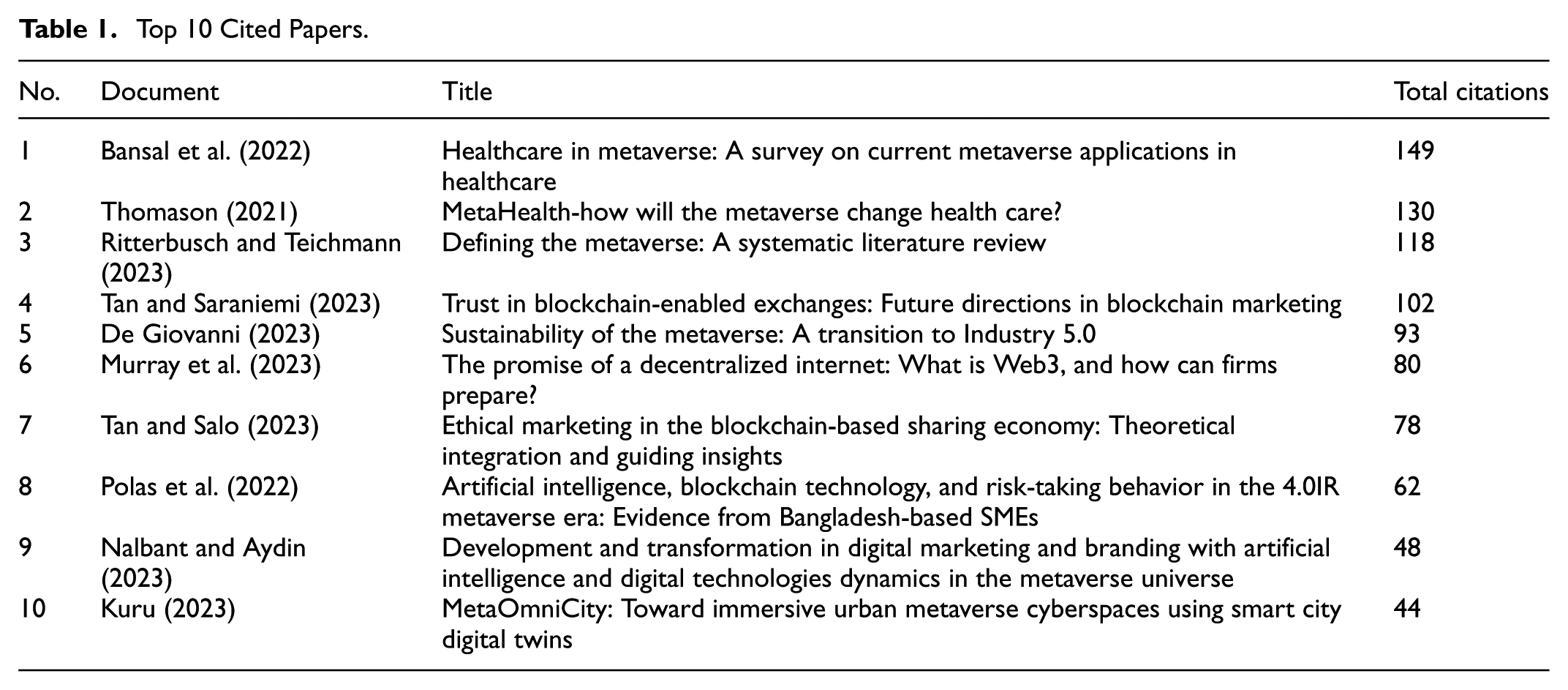
Figure 2 shows the bi-coupling network, so exposing the intellectual framework of the field depending on the frequency of joint citation of authors or publications. Differently colored distinct clusters point to thematic subfields. Highly cited and powerful works are larger nodes including Ritterbusch and Teichmann (2023) or Tan and Saraniemi (2023). Stronger co-citation interactions are reflected in thicker links between nodes. With Murray et al. (2023) and Tan and Saraniemi (2023), the green cluster points to a concentrated thematic area. Other clusters-blue, orange, purple, red, and yellow-indicate related research domains, so defining important intellectual connections and significant contributions.
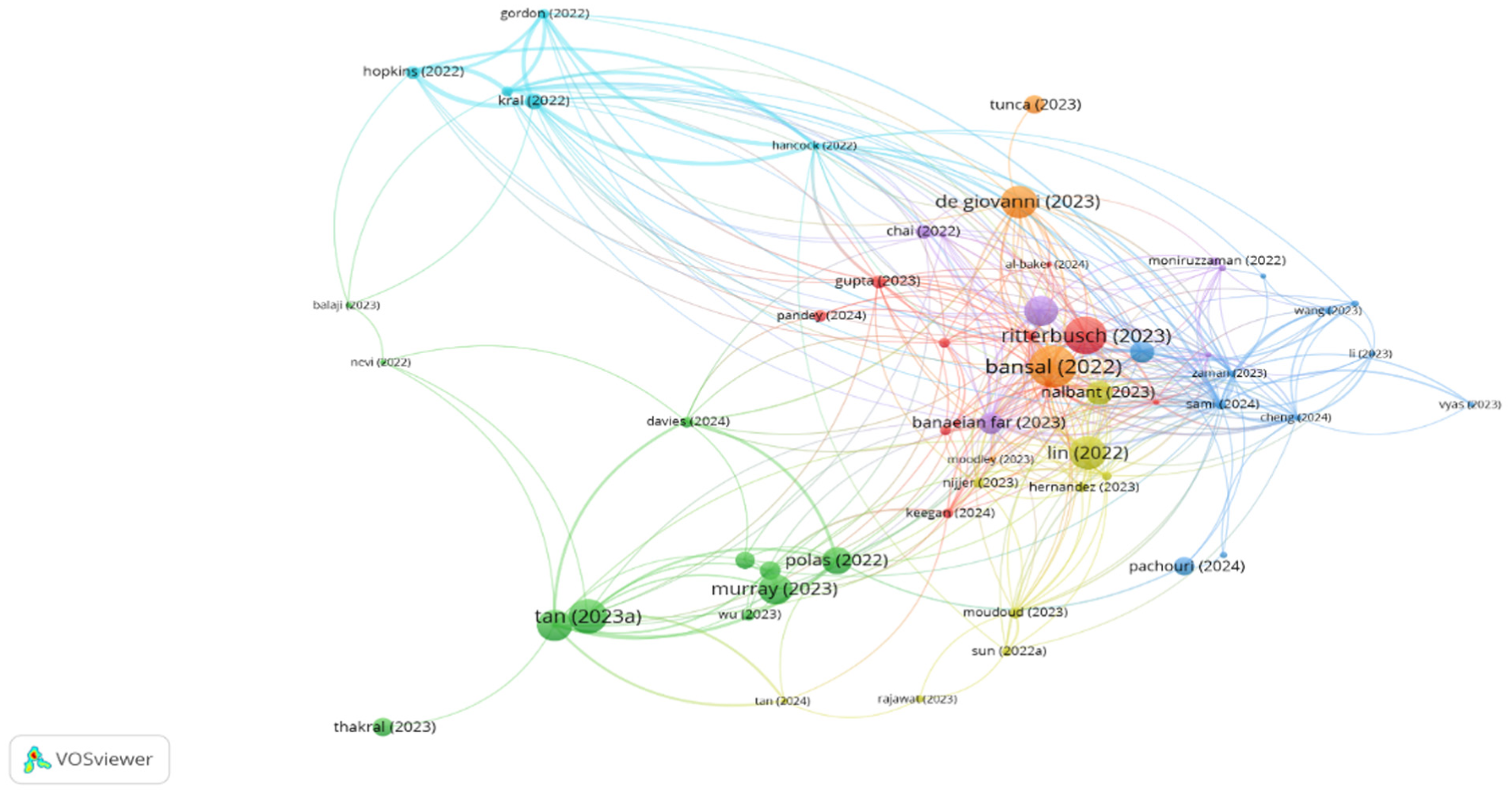
Bi-coupling analysis.
To maintain analytical coherence and transparency, every research question (RQ) is discussed systematically in the following sections of this work. In particular, RQ1 and RQ2 will be analyzed based on quantitative and qualitative findings that are described in section “Findings” and define the patterns of publication, thematic organization, and multidisciplinary presuppositions of blockchain applications in the field of metaverse business. The discussion of RQ3 includes section “Integrative Blockchain – Metaverse Adoption and Impact Framework (IB-MAIF)” that conceptualizes the framework of blockchain technologies adoption and effects within metaverse spaces by designing the Integrative Blockchain – Metaverse Adoption and Impact Framework (IB-MAIF). Section “Challenges” and “Potential Development Opportunities” expand on RQ4 and provide a discussion on the major challenges and development opportunities that affect the globalization and use of blockchain. Lastly, RQ5 is examined in sections “Enhancing Blockchain Integration with AI, Big Data, IoT, and Emerging Technologies” and “Sustainable Development,” during which there are integration strategies and sustainable development directions of blockchain-enabled metaverse ecosystems. This design will guarantee the answering of every research question using a specific analytical or conceptual discussion, which will further improve the transparency and the logic of the study.
Findings
Quantitative Insights and Thematic Structure of the Literature
To answer RQ1, this section analyses the existing publication trends, thematic organization, and dominant research orientations in the field of blockchain-based business applications in the metaverse.
Publication Trends
From 2021 to 2024, academic curiosity in the junction of blockchain and the metaverse shot fast (Figure 3). Reflecting growing scholarly engagement, publication volume jumped to 27 in 2022, 74 in 2023, and 72 in 2024 while only one highly cited paper (141 citations) showed up in 2021. Notwithstanding this increase, average citations per article dropped from 23.96 in 2022 to 18.11 in 2023 and 2.92 in 2024 mostly due to the regency of more recent publications. Average yearly citations for 2024 showed a comparable drop as well.

Annual scientific production.
Figure 4 reveals increasing interest in “Metaverse” and “Blockchain,” with mentions rising sharply, “Metaverse” from 0 (2021) to 39 (2023), and “Blockchain” peaking at 37 in 2023. Reflecting cross-disciplinary convergence, related terms including NFTs, artificial intelligence, machine learning, and augmented reality/virtual reality also became popular. Especially NFT references from 2 (2022) to 6 (2024) match the commercialization of blockchain. Minimal attention to “Bitcoin,” on the other hand, points to a change from currency-based to utility-driven uses, such smart contracts. Underlining a developing field, the data show a sequence from early conceptual work (2021) to applied, solution-oriented research (2022–2024).
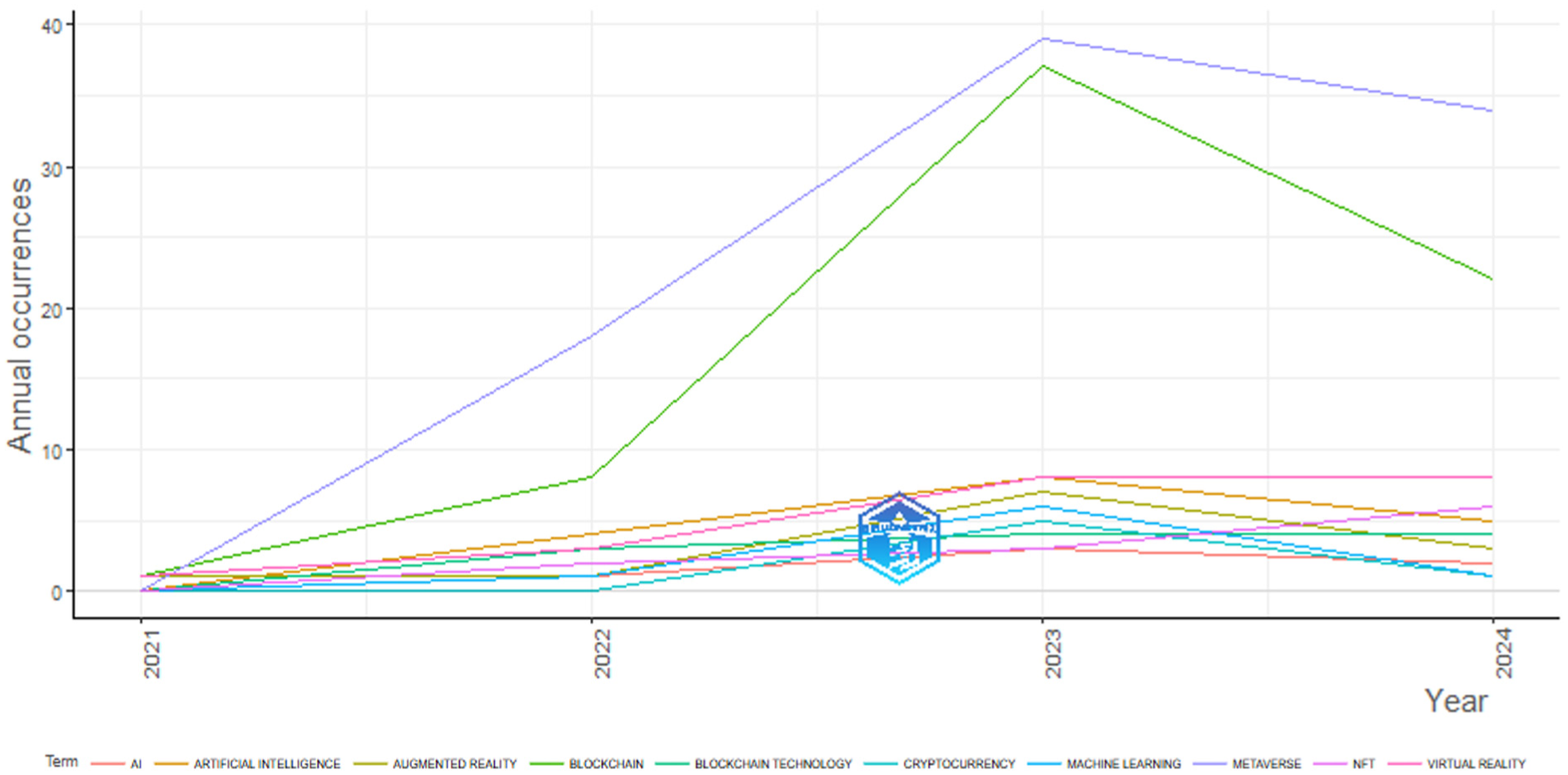
Word’s frequency over time.
Author’s Production Over Time
Figure 5 illustrates the publishing activity of leading authors on blockchain business applications in the metaverse from 2022 to 2024, with node size and color reflecting publication count and total citations per year. With four publications and strong citation impact, especially “Trust in Blockchain-Enabled Exchanges” (Tan & Saraniemi, 2023), which got 120 citations in 1 year, Teck Ming Tan stands out in showing his influence on blockchain’s part in virtual advertising (Figure 6).

Author’s production over time.

Corresponding author’s countries.
SK Panda, on the other hand, wrote six chapters for Metaverse and Immersive Technologies (Chandrashekhar et al., 2023), yet with poor citation performance, so suggesting a modest academic impact. These have contributions in multidisciplinary fields, including digital business ethics, marketing, supply chains, and energy systems.
Countries with the Highest Number of Publications
Research on blockchain commercial applications in the metaverse has seen increasing worldwide involvement since 2021. Leading with 19 papers (10.9%), India boasts 26.3% of them involving international cooperation. The U.S. has contributed 11 papers, primarily from a single country but with significant impact. follows. China and the UK each turned out seven papers, with 42.86% reflecting cross-border cooperation. Along with Finland, Canada (60% MCP) and Malaysia (67%) show strong international integration despite lower output (Figure 6).
By contrast, Italy and Greece concentrate on internal research; Italy’s output is centralized from a single source. Although total publishing volumes are still low, the existence of international alliances across different areas highlights a rising global awareness of the metaverse and blockchain as major areas of research frontiers.
Most Relevant Sources
Reflecting its multidisciplinary character, studies on metaverse blockchain business applications spread over several publishing venues. With 14 publications, Lecture Notes in Networks and Systems leads with a strong engineering and systems-oriented emphasis as seen in Figure 7. Each of Metaverse and Immersive Technologies, Business Horizons, IEEE Access, and Journal of Metaverse adds several pieces highlighting viewpoints from business, technology, and the social sciences.

Most relevant sources.
Conference events including those from MetaCom2023 and ICTMOD2022 show even more how actively peer-reviewed academic events are spreading newly developing ideas in blockchain and metaverse innovation. Publications in venues such as Studies in Big Data and Linguistic and Philosophical Investigations highlight the field’s thematic breadth, which includes not only technical but also philosophical and sociopolitical comments. This variety shows the transforming power of the metaverse across society, technology, and business.
Three-Field Plot
Figure 8 illustrates the global distribution of research interests in blockchain and metaverse applications, linking author countries (AU_CO), research descriptors (DE), and publication sources (SO). With an emphasis on metaverse, immersive technologies, and blockchain, India shows to be the most active contributor. The predominance of Indian publications in IEEE conference proceedings points to a practice-oriented strategy stressing actual virtual technology deployment.

Three-field plot (country-keyword-source).
Reflecting a regional emphasis on integrating artificial intelligence and distributed ledger systems to enable scalable, intelligent business solutions, Canada and the United States also show notable engagement, especially in areas such virtual reality, artificial intelligence, and blockchain. China and the United Kingdom, on the other hand, often concentrate on augmented reality and non-fungible tokens (NFTs), so indicating a desire in improving user interaction and monetizing techniques in virtual environments.
High-impact sources including Lecture Notes in Networks and Systems, IEEE Access, and major conferences including ICTMOD 2022 and MetaCom 2023 predominate in publication venues. This emphasizes the dynamic change of the field and the central part peer-reviewed conferences play in spreading innovative research.
Most Frequently Used Keywords
Examining 453 keywords from 172 papers (Figure 9) reveals “metaverse” (91 references) as the central idea; “blockchain” (68) underlines its function in digital asset security and distributed systems. “Virtual reality” (20) and “augmented reality” (12) point to mounting integration of immersive technologies. Rising interest in intelligent systems for automation and personalization is expressed in terms including “artificial intelligence” (17), “machine learning” (8), and “AI” (6). References to “NFT” (11), “cryptocurrency” (6), and “blockchain technology” (11) point even more to asset ownership and monetization. Future research expected to deepen in AI-personalization, safe asset management, and VR/AR-driven business innovation; these trends indicate increasing convergence across blockchain, artificial intelligence, and XR.
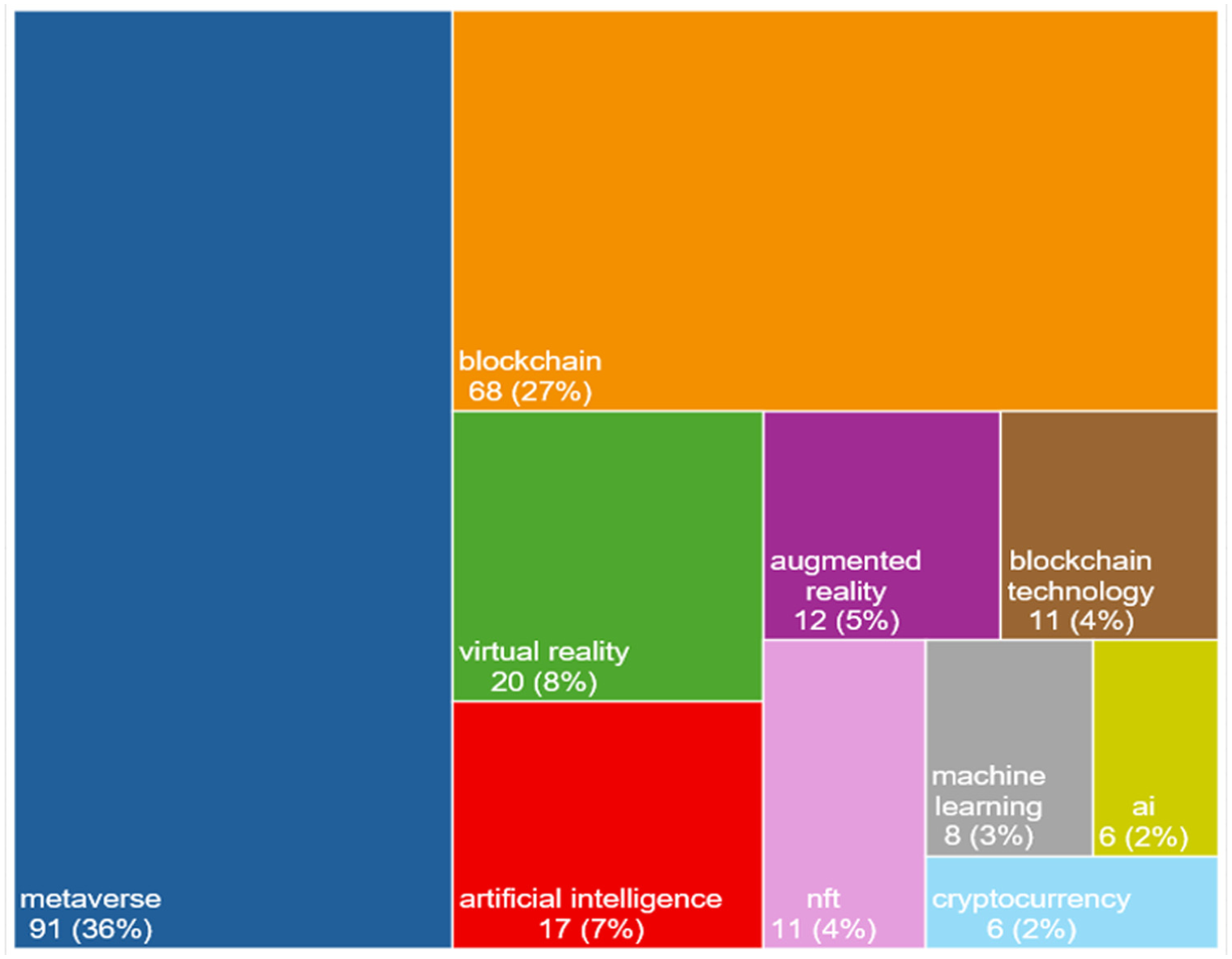
The top 10 most frequently occurring keywords.
Co-occurrence Networks
The conceptual framework of blockchain-based corporate applications in the metaverse was found by means of a co-occurrence network analysis. Figure 10, evaluated by centrality measures (betweenness, closeness, PageRank), finds “metaverse” (Red cluster) as the most central term (betweenness: 563.59; PageRank: .2391), so attesting to its conceptual dominance. Strongly connected, “blockchain” (200.41; .1779) links with “NFT,”“cryptocurrency,”“privacy,” and “digital twins,” so underlining themes of ownership, security, and identity. Rising ideas including “extended reality,”“avatars,” and “Web 3.0” point to more attention on immersive economies.

Co-occurrence network.
Featuring “blockchain technology,”“smart contracts,”“Web3,” and “digital assets,”the Blue cluster emphasizes infrastructure and economic design. Supported by edge computing, big data, and IoT, the Purple cluster centers on intelligent systems-that is, “artificial intelligence” (10.10; .0477), “irtual/augmented reality,” and “machine learning.”The Green cluster ties “retail,”“immersive,” and “analytics” to consumer experience. The network exposes a multidimensional research terrain overall, with future directions probably centered on integrated, intelligent, and immersive systems in distributed virtual environments.
Thematic Map
The thematic map offers a graphical depiction of the conceptual framework in the study domain of blockchain-based business applications inside the metaverse (Figure 11). While density shows a theme’s internal growth and maturity, centrality shows its relevance and connection throughout the research field. The circle size reflects the number of studies linked to each theme.

The thematic map.
The basic themes (bottom-right quadrant) form the foundational knowledge for blockchain applications in the metaverse. Essential to distributed systems and supporting digital ownership, automated transactions, and ethical governance are subjects including trust, sustainability, smart contracts, NFTs, and blockchain technology. Their low density, however, implies that more general metaverse integration requires additional theoretical development.
Motor themes (top-right quadrant) are both central and well-developed, encompassing blockchain innovation, distributed ledger technology, digital money, digital identity, and the broader digital ecosystem. Their great relevance and cohesiveness position them as drivers of scalable, safe interactions in virtual worlds and probably future business catalysts.
Niche themes (top-left quadrant), including business, data analytics, immersive environments, and retail, exhibit internal development but weak connections to core metaverse research. These could represent newly developing or applied fields not yet in line with fundamental ideas.
The emerging or declining themes (bottom-left quadrant) show weak development and marginal relevance. The only term used here, “applications,” seems to be conceptually scattered and underused, implying that contextualized studies would help to define their function.
While application-driven areas like trust and immersive business models remain under-theorized, offering opportunities for future research, overall the thematic landscape is anchored in core technologies like blockchain and artificial intelligence.
Overview of the Benefits of Blockchain Business Applications and the Metaverse
Blockchain is a foundational technology reshaping digital economic infrastructure through decentralized, transparent, and secure data exchange (Esmat et al., 2021; Tukur et al., 2024). Eliminating centralized middlemen helps to enable trustless transactions with wide-ranging consequences across finance, logistics, healthcare, and new virtual economies (Dutta et al., 2020).
Data is synchronized across nodes, so guaranteeing redundancy and fault tolerance; system integrity remains intact even if individual nodes fail (Sultan et al., 2018). Once validated, data becomes unchangeable, so improving resistance to manipulation (Sikorski et al., 2017; Zambrano, 2019).
Transparency is achieved in blockchain since the record and updating arrangements are transparent to all nodes in the network. Thus, the nodes in the network with high transparency can be utilized to check and control the records and activities in the network (Abe et al., 2018; Jansen, 2018). Moreover enabled by blockchain architecture are pseudonymous, cryptographically safe interactions. Through faster settlements, reduced transaction costs, and disintermediation, which helps to streamline efficiency, these tools enable efficiency (Christidis & Devetsikiotis, 2016; Hughes, 2018).
Blockchain supports digital identity, smart contracts, and asset ownership (Balaji et al., 2023) structurally in metaverse settings. Whereas NFTs provide verifiable, indivisible ownership, smart contracts automate transactions. These features taken together place blockchain as a major enabler of scalable, safe, interoperable virtual economies.
Blockchain Applications in the Multidisciplinary Metaverse
To address RQ2, this section examines how blockchain has been implemented across different metaverse business domains and identifies the key benefits and value creation mechanisms observed in the literature.
Although usually connected with cryptocurrencies, blockchain is changing the metaverse by allowing commercial applications in finance, healthcare, logistics, and beyond (Dutta et al., 2020). As an institutional technology, it presents distributed ledgers, public-key infrastructure, and digital currencies, so supporting distributed governance (Davidson et al., 2018; Tan et al., 2021).
Blockchain lowers centralized intermediaries and promotes more fair digital participation by lowering verification expenses and allowing trustless transactions (Tan & Saraniemi, 2023). By means of algorithmic execution and flexibility over terms, smart contracts automate transaction enforcement, so resolving conflicts and improving efficiency (Davidson et al., 2018; Hawlitschek et al., 2018).
Available, unchangeable transactions increase inter-organizational trust and reduce operational and financial risks. Blockchain also enables data traceability and real-time auditing, so simplifying corporate accounting (Dai & Vasarhelyi, 2017).
Blockchain develops from a technical solution into a new model of governance and value coordination in distributed systems by supporting shared, verifiable data, so strengthening cooperative ties (Tan & Saraniemi, 2023).
Education and Trainning
AI and blockchain together enhance efficiency in managing, sharing, and securing educational data in the Metaverse (Bhaskar et al., 2020). Timestamped records guarantee authorship integrity and discourage plagiarism and multiple submission behavior (Al-Hawamleh, 2023). Blockchain also supports distributed learning platforms, so lowering intermediaries and costs (Singh et al., 2022).
Smart contracts provide intellectual property more robust protection and legal clarity to academic agreements. Blockchain also allows tamper-proof, verifiable digital credentials. Such certificates are auditable and trustworthy in VR-based training, so supporting the credibility of immersive learning (Bansal et al., 2022).
Accounting, Banking, and Finance
Cryptocurrencies are the leading examples of blockchain assets and the most prevalent example of blockchain application (Mohamed & Faisal, 2024). First distributed on a blockchain, Bitcoin was first proposed by Nakamoto (2008). NFTs, immutable digital assets kept on public blockchains to confirm originality, are another big breakthrough. Introduced via Ethereum’s ERC-721 standard, NFTs are applied in digital art, virtual real estate, and collectibles with platforms like OpenSea and Rarible helping their trade (Mohamed & Faisal, 2024).
As a distributed system employing peer-to-peer networks and cryptography, blockchain removes middlemen in financial operations (De Franceschi, 2022). Smart credit cards, asset-linked mortgages, and automated payment systems (Belk et al., 2022) among other banking uses NFTs present show great promise. By using real-time financial data, blockchain can simplify mortgage evaluations in the metaverse so improving speed and accessibility (Melnyk et al., 2022).
Smart contracts automate agreement enforcement, so lowering fraud risk (Mystakidis, 2022). NFTs also support green finance projects, so improving the sustainability image and customer interaction of banks (Smith, 2022). Blockchain increases openness and responsibility in accounting by allowing distributed, tamper-proof transaction records, so reducing fraud and identity theft (Dwivedi et al., 2022; Secinaro et al., 2021; Yaqoob et al., 2022).
Entertainment, Media, and Marketing
Blockchain in the Metaverse extends beyond ownership to enable transparent, NFT-based brand engagement and consumer interaction (Balaji et al., 2023; Jin, 2024). In the metaverse which relies on VR and AR (Zhao et al., 2022), users can have truly immersive experiences and benefit from new economic opportunities like NFTs (Luo et al., 2021; Muhammad Sohail Jafar et al., 2024), whose growing use is expected to shape the future of the digital market and creative work.
Kumar (2018) identified blockchain as a key innovation transforming marketing, particularly in enhancing transparency and reducing fraud. It also supports peer-to-peer models of exchange central to the sharing economy (Eckhardt et al., 2019). Blockchain helps in marketing by allowing more moral, effective plans fit for consumer confidence.
The metaverse provides immersive experiences outside of physical constraints, so strengthening brand-consumer relationships (Keegan et al., 2024). From virtual sports to interactive performances (Kim, 2021; Suh & Ahn, 2022), lifelike virtual environments redefine entertainment. Supported by blockchain and NFTs to enable value exchange and enhanced human-AI interaction, digital goods including avatar fashion and events—Ariana Grande in Fortnite—showcase new experiential marketing (Dwivedi et al., 2022).
The BSM model uses blockchain, artificial intelligence, IoT, and big data to build participatory platforms with autonomous nodes, so optimising operations and profit-sharing (Zhan et al., 2023).
E-commerce and Retail
By allowing the creation, display, and sale of digital assets, such as virtual real estate and goods, through blockchain and NFTs, often at less costs than physical products, the metaverse presents great marketing potential and helps to support the shift to Industry 5.0. While distributed platforms remove middlemen, so reducing supply chain transaction costs, it lowers manufacturing and retail pressure by allowing AR/VR-based product trials before production (Queiroz et al., 2023).
NFTs guarantee authenticity and ownership, so building consumer confidence and increasing income (De Giovanni, 2021a). Blockchain-verified, safe virtual asset transactions with real-world value are made possible by sites such as Sandbox and Decentraland. In the end, this improves customer loyalty, raises purchase intention, and generates viral network effects, so opening fresh directions for management of customer relationships (Gadalla et al., 2013).
Healthcare and Medicine
Emerging technologies including blockchain, VR/AR, and AI are driving the third phase of the Metaverse, so creating a distributed socio-economic layer linked to the global economy (Augustin et al., 2023; Dincelli & Yayla, 2022; Dolata & Schwabe, 2023; Zhao et al., 2022).
Blockchain guarantees patient data and immutability, so improving telemedicine, VR-based training, and consultations in healthcare. Widespread use nevertheless encounters obstacles including identity security, hardware constraints, and energy needs (Bansal et al., 2022). The metaverse also aids pharmaceutical supply chains and drug modelling; examples include virtual pharmacies (iMining) and AR-based compound tracing (Sygnature Discovery). Blockchain supports these via secure Ethereum-based transactions. In mental health, VR tools like VRET and ARET offer exposure therapy (Slater et al., 2020), while digital twins and deepfakes help advance animal welfare and agri-efficiency in veterinary science (Neethirajan, 2021).
Blockchain with AI, IoT, and New Technologies in the Metaverse
Industry 4.0 technologies-including IoT, cloud/edge computing, artificial intelligence/ml, blockchain, AR/VR/MR, digital twins, and the Metaverse, are integrated into smart buildings (Khajavi et al., 2019). IoT and RFID enhance automation, energy use, and security, supported by 5G’s low latency and high bandwidth (Bhushan et al., 2017; Vermesan et al., 2022).
In transportation, sensors and RFID track flows; big data manages input; AI/ML forecasts accidents; blockchain secures system data (Arya & Arya, 2022; Balasubramaniam et al., 2021). Digital twins and metaverse technologies also help cities replicate infrastructure and services (Dolata & Schwabe, 2023).
Metaverse Digital Twins
Remote sensing data drives digital twins in the metaverse; data quality and cross-platform integration define model dependability (Yoon et al., 2021). By encrypting past events and connecting physical objects with their virtual counterparts via distributed ledgers, blockchain guarantees data integrity and helps to enable safe sharing (D. Lee et al., 2021; Shen et al., 2021).
By allowing distributed access to data, algorithms, and computational capability, blockchain also stimulates AI creativity. Its openness builds confidence in programs including cybersecurity and medical data sharing (Yang et al., 2022). On the other hand, in IoT systems AI improves blockchain by means of attack detection and optimal network conditions (Salimitari et al., 2019). AI and blockchain help to predict land use, crisis response, and environmental monitoring (Chen et al., 2021; Peng & Huang, 2022) in agriculture and forestry.
Supported by blockchain distributed validation and integrity, Web3 advocates user-owned data and monetisation (Murray et al., 2023). While Web3 opens regulatory space despite present interoperability difficulties (Park et al., 2023), DAOs formalize governance by code-based smart contracts (Lumineau et al., 2021; Vergne, 2020).
MetaOmniCity
As in the MetaOmniCity model (Kuru, 2023; Yaqoob et al., 2023), the metaverse can transform smart cities by combining virtual and physical environments. Blockchain enables user-controlled data sharing and asset traceability (Musamih et al., 2023).
Smart contracts secure transactions amid fraud risks (Ryu et al., 2022), while Urban Metaverse as a Service (UMaaS) ensures trusted data exchange via nontraditional blockchain architectures (Kalla et al., 2024). Integrated with 6G, it supports privacy-preserving TBSNs. However, quantum threats require resilient cybersecurity (Kuru, 2023). Affordable digital cooperation is promoted by NFT-based ecosystems including DareChain (Li et al., 2023).
Sustainability of the Metaverse
Blockchain and metaverse technologies could completely rethink social, environmental, and financial sustainability (De Giovanni, 2023). The metaverse might limit travel, so lowering carbon emissions, but it might also limit social interaction. Its development should coincide with Industry 5.0 values, stressing human rights, working conditions, and environmental responsibility (De Giovanni, 2021b), if it is to be sustainable. Metaverse is understudied in this context even if blockchain and artificial intelligence have looked at these concerns (Broccardo et al., 2023).
Blockchain and NFTs help companies to trade digital assets at less cost than physical goods, so supporting sustainable digital transformation. By letting users test goods before buy, AR and VR in the metaverse help to lower needless production (Queiroz et al., 2023). While decentralized systems lower supply chain transaction costs (Huynh-The et al., 2023), they create problems if suppliers lack cryptocurrency infrastructure.
While the metaverse enhances inventory and process efficiency in manufacturing and logistics, it could replace physical logistics employment (Kshetri, 2022). Blockchain improves traceability and openness but calls for new knowledge and exception handling problems (Allam et al., 2022). Blockchain and the metaverse taken together can support innovation and enable sectors to reach the U.N. Sustainable Development Goals (De Giovanni, 2023).
Discussion
Integrative Blockchain – Metaverse Adoption and Impact Framework (IB-MAIF)
To respond to RQ3, this section develops an integrative framework (IB-MAIF) that conceptualizes blockchain adoption and its multidimensional effects within metaverse environments.
This systematic review examines blockchain business applications in the metaverse through 172 studies in Scopus, employing Technology–Organization–Environment (TOE) and Actor–Network Theory (ANT) frameworks to analyze how blockchain enables multidisciplinary applications across education, finance, healthcare, entertainment, e-commerce, and smart cities. The study reveals blockchain’s core features (transparency, immutability, decentralization, security) converging with emerging technologies (AI, IoT, AR/VR, Digital Twins) to create new business models, while identifying key challenges including privacy concerns, interoperability issues, and regulatory uncertainty. An integrative conceptual framework (IB-MAIF) was developed as Figure 12, consisting of six interconnected layers: (1) Technological Infrastructure providing blockchain and complementary technology affordances, (2) Actor-Network layer showing human and non-human actor interactions, (3) Organizational Capability layer addressing internal readiness, (4) Environmental and Institutional layer covering external influences, (5) Application Domains where value is created across sectors, and (6) Outcome layer delivering triple bottom line value (economic, social, environmental). The framework operates through four causal pathways, affordance generation, translation and alignment, domain deployment, and value realization with feedback, demonstrating how blockchain transforms from technical infrastructure through socio-technical networks into sustainable business value aligned with SDGs, while TOE forces act horizontally across all layers and ANT dynamics provide vertical integration, creating a dynamic system that continuously evolves through feedback loops and adaptation.

Integrative Blockchain – Metaverse Adoption and Impact Framework (IB-MAIF).
Challenges
To answer RQ4, this section discusses the key challenges that hinder the adoption and global diffusion of blockchain technologies within metaverse ecosystems. These challenges are categorized into privacy and security, interoperability and interaction issues, user acceptance, and regulatory constraints, reflecting both technical and institutional barriers to large-scale implementation.
Privacy and Security
Through issues such as identity theft, data breaches, and fraud, security and privacy are major metaverse concerns. Blockchain’s full transparency compromises user anonymity even if it has great potential since all transactions are openly visible (Al-Hawamleh, 2024).
Users could want privacy about interactions and virtual assets. This conflict emphasizes the need of privacy-preserving blockchain solutions free of compromise of responsibility.
Blockchain is naturally secure, but poor implementation or configuration can still create major hazards, particularly when digital assets have practical consequences.
Interaction
While blockchain does not now seamlessly interact with other fundamental components including AR, VR, and AI, the metaverse calls for flawless integration across many technologies. A unified and safe user interface is still technically difficult, which emphasizes the need of consistent blockchain systems inside the metaverse.
Emerging technologies, such as body sensors, VR/AR/MR, and Brain–Computer Interventions (BCIs)—also create usability problems including user discomfort during extended use and prohibitive development expenses. These restrictions limit their general use, particularly in settings requiring data-intensity.
Furthermore, blockchain deployment is capital-intensive and requires large outlay of specialized infrastructure. This makes adoption difficult, especially for small businesses and personal users looking to interact with metaverse platforms enabled by blockchains.
Acceptance and Adoption
Despite its benefits, blockchain acceptance in the metaverse confronts several important obstacles that might limit its general implementation. Blockchain is a rather new and complicated technology that many consumers and companies still do not know about, thus early adoption is limited and learning curves are created.
Technical obstacles include the demand for significant computing capability and user knowledge, which would exclude people with limited access or technological literacy. Furthermore adding to hesitation in trying blockchain-enabled virtual environments are risk aversion and ignorance.
Blockchain integration is still rare even if big companies including Meta, Microsoft, and Google are investing in the metaverse. These companies seem wary, probably waiting for more definite evaluations of their feasibility before committing to extensive application.
Business Operations and Government Regulations
Companies like Roblox and Meta, who want to create generally accepted virtual environments, drive the idea of the metaverse right now. Still, current applications are few. A more expansive view of the metaverse includes combined scenarios spanning employment, education, and entertainment. Realizing this calls for major industry cooperation and the development of common regulatory standards to guarantee interoperability and system-wide efficiency (Yang et al., 2022).
The metaverse’s scale and distributed character mean that hazards including market manipulation, economic crime, and legal ambiguity are rather important. As Kaur (2022) notes, these issues call for strong government systems. International cooperation among regulators is indispensable to protect user rights, guarantee transaction transparency, and preserve the integrity of metaverse ecosystems without a defined jurisdiction.
Potential Development Opportunities
Continuing the discussion of RQ4, this subsection highlights potential development opportunities that can facilitate blockchain adoption and accelerate its globalization in metaverse business environments. These opportunities include emerging blockchain-based verticals such as DeFi, SocialFi, GameFi, and DAO-driven governance models that promote decentralization, transparency, and innovation across industries.
Blockchain is widely regarded as a transformative force in computer networks, with deep applications across industrial revolutions and the emerging metaverse (Attaran & Gunasekaran, 2019). Its openness, immutability, and interoperability help to develop creative business models, so encouraging investor involvement and economic growth.
Blockchain-based verticals are developing in many different fields. By means of user-friendly blockchain interfaces, BusiFi uses decentralized apps (DApps) to support corporate and government operations (Sun et al., 2021). FanFi helps brands and public personalities tokenize their fan interaction, thus enhancing loyalty analytics (Hu et al., 2021). By letting NFTs and virtual assets (Solouki & Bamakan, 2022) be monetized, GameFi transforms play-to-earn systems. MediaFi guarantees fair compensation in the creative economy, automatically contracts, and improves copyright enforcement (Banaeian Far et al., 2023).
While SocialFi launches decentralized social platforms that reward user interaction and content governance, SciFi uses smart contracts to manage research budgets, collaboration, and innovation pipelines (Guidi & Michienzi, 2022). These industries taken together show how increasingly blockchain is shaping a fair and data-driven digital economy.
Enhancing Blockchain Integration with AI, Big Data, IoT, and Emerging Technologies
To answer RQ5, this section explores how blockchain can be integrated with AI, big data, and IoT to advance sustainable and inclusive metaverse ecosystems.
Blockchain combined with artificial intelligence, IoT, machine learning, and distributed learning opens big commercial prospects. Blockchain and artificial intelligence improve data openness and fraud detection in finance, so supporting the creation of DeFi platforms free from middlemen. IoT and blockchain help to create safe product tracking and operational risk lowering in supply chains. AI-activated smart contracts help to increase efficiency and lower transaction costs. Moreover, blockchain data analysis by artificial intelligence and machine learning can guide strategy and streamline procedures. In dynamic markets, this integration improves customer insights, raises productivity, and supports competitive advantage generally.
Sustainable Development
Continuing the response to RQ5, this subsection discusses how blockchain–metaverse convergence contributes to economic, environmental, and social sustainability in line with Industry 5.0 and SDGs.
Metaverse and blockchain influence all three pillars of sustainability: economic, environmental, and social, and should evolve in line with Industry 5.0 values such as inclusion, rights, and environmental respect (De Giovanni, 2021b, 2023). Their integration enhances waste management, energy savings, and tracing, which enhances stability in erratic markets. An example is food supply chains that use blockchain technology which have been shown to reduce by up to 40% of waste by improving the tracking of products and process transparency. Collectively they change supply chains, retail, manufacturing, and logistics and make these industries more adaptive and sustainable.
IoT and smart contracts enable companies to accurately track logistics, production, and agriculture. The prompt identification of inventory, water usage, or soil moisture violations through real-time IoT sensor data sent to distributed ledgers allows saving on waste of materials and operation costs. Metaverse facilitates a pull-based production model that enables dematerialization of production and optimization of production scheduling and inventory even with intense energy demands. As an illustration, Siemens uses metaverse-like environments and digital twins to model the operational manufacturing processes in order to create on-demand manufacturing, which reduces physical waste and energy use.
VR- and AR-based technologies can increase operational efficiency and employee training in logistics, although they can also lead to displacement of labor unless they come with a program of sufficient reskilling. Although blockchain promotes cost-efficiency and transparency in the retail sector, resistance to cryptocurrencies by vendors is a problem. Simultaneously, blockchain reveals any digital skill deficiency that might leave social inequality unchecked unless active digital education and inclusion policy is introduced. Financial inclusion is another essential device in promoting SDGs 1 (No Poverty), 8 (Decent Work and Economic Growth), 9 (Industry, Innovation and Infrastructure), and 10 (Reduced Inequalities) and is promoted by blockchain. Cross-border payment networks like Stellar and Ripple can reduce the cost of remittance by underserved populations by a significant margin, whereas DeFi applications like Aave and Compound offer credit and savings instruments to the unbanked. To those without official records, decentralized identity (DID) can be used to get a job, education, and even medical services. When discussing examples, it is possible to speak about blockchain-based digital certificates that are used to battle credential fraud and increase scholarship and job opportunities, which refers to SDG 4 (Quality Education) and SDG 8 (Decent Work and Economic Growth).
Circular economy, transparent carbon accounting, peer-to-peer renewable energy trading, both in the digital and physical market, are also supported by blockchain. The process of traceability systems allows to verify the lifecycle of sustainable products and recycle materials, as is the case with projects such as Plastic Bank and Everledger. Moreover, ongoing projects like the Brooklyn Microgrid are an example of how a blockchain may be used to create peer-to-peer energy exchange to encourage the use of renewable energy and decrease emissions as per SDG 7 (Affordable and Clean Energy). Carbon credits and emissions can be monitored reliably with the help of blockchain records because their immutability guarantees a record of the carbon credits and emissions and help firms with environmental compliance and sustainability reporting.
However, regardless of these benefits, blockchain, and metaverse technologies also present some serious sustainability concerns. The proof-of-work (PoW) blockchains are electricity guzzlers making the environmental issues even more worrisome. Even though switching to proof-of-stake (PoS) mechanisms resulted in a 99.9% reduction in energy consumption in large networks, the total energy demand of 5G network and metaverse data centers is significant. On the social front, higher automation, and virtualization can potentially alter the labor organization, which can either cause job displacement in the absence of reskilling programs. Also, regulatory uncertainty, lack of technological literacy, and biased access to digital infrastructure in developing areas can impede inclusive adoption.
Blockchain and the metaverse have the potential to encourage industry innovation, build environmental stewardship, and promote economic equity when implemented strategically and with the proper governance structures that enable them to be the building blocks of a sustainable and technology-centered future. They can improve transparency, resource efficiency, and social inclusion, but they need constant monitoring with respect to energy consumption, ethics and equality. Consequently, these technologies should be combined with strong policy and technical protection to make them indeed be drivers of an inclusive and sustainable digital future.
Conclusion
The article is a comprehensive discussion of the rising role of blockchain as a foundational platform of the metaverse. Through a systematic literature review (SLR) consisting of 172 studies, we map blockchain applications in major fields, among them, education, finance, healthcare, entertainment, marketing, and retail. Our analysis is motivated by the Technology–Organization–Environment (TOE) and Actor–Network Theory (ANT) models which capture the socio-technological factors affecting adoption and structural factors. Besides documenting current practices, the article highlights the synergies of blockchain and artificial intelligence, IoT, DeFi, and big data. These crossing points offer pathways to sustainable digital innovation as per the Sustainable Development Goals (SDGs), hence emphasizing the supportive value of converging technologies in addressing viable issues.
Continuing regulatory uncertainty, data privacy, and cybersecurity threats, low user awareness, and integration complexity are also noted in our findings. Despite these challenges, the nature of blockchain such as transparency, lack of edits and decentralized control present significant business opportunities of value generation in virtual economies.
This study offers a two-level theoretical approach because it integrates both TOE and ANT at the same time. Whereas ANT captures the dynamic relationships and transactions between non-human and human players in metaverse ecosystems, TOE provides a disciplined prism to access adoption environments. The combination of these systems offers a valuable analytical value to both scholars and practitioners who bargain around the introduction of blockchain in technologically changing environments.
Managerial and Practical Implications
This study offers key insights for stakeholders navigating blockchain’s integration into the metaverse. It draws attention to distributed services, virtual real estate monetization, and newly arising business prospects in NFT markets. Blockchain also improves customer involvement by means of participatory environments supporting loyalty. Knowing new revenue models and user involvement techniques is crucial for companies trying to carve a presence in this digital economy.
Management supervising this change must have strategic foresight. Risk management systems have to cover vulnerabilities unique to blockchain systems including security concerns and smart contract breakdowns. Building internal capabilities for using blockchain-enabled metaverse applications depends also on investments in technical training and workforce development.
Maintaining fair metaverse development mostly depends on policy makers. Our results highlight how urgently flexible rules are needed to handle digital ownership, cross-border jurisdiction, and taxation of digital assets. Promoting trust and reducing systematic risks depend on open government and protections of user rights.
To achieve general adoption, developers have to concentrate on creating scalable and safe infrastructure ranging from strong digital wallets and identity systems to dependable smart contract platforms.
Beyond effects in one sector, our study advocates an inclusive and sustainable metaverse. Designing blockchain systems that support environmental responsibility, fair access, and ethical governance helps to guarantee that technological development does not aggravate inequality or ecological damage in this changing digital terrain.
Theoretical Contributions
The study integrates Actor–Network Theory (ANT) with the Technology–Organization–Environment (TOE) framework to progress theoretical knowledge of blockchain adoption in metaverse environments. While ANT exposes the socio-technical networks of actors, technologies, and discourses, TOE catches the technological, organizing, and environmental aspects of adoption. Representing a methodological contribution to digital innovation research, their mix presents a more complex, multidimensional viewpoint than either framework by itself.
Apart from its theoretical value, the study offers a cross-sectorial mapping of blockchain applications over retail, finance, healthcare, education, marketing, and industry. Analyzing the distribution of blockchain across several sectors reveals both general trends and sector-specific adaptations by which researchers and practitioners investigating use cases and inter-sectorial cooperation in the developing metaverse economy may find pragmatic insights.
At last, the research connects the acceptance of blockchain’s metaverse to the Sustainable Development Goals (SDGs), so stressing its possibilities to support sustainability, ethical government, and inclusive digital creativity. This alignment transforms blockchain not only as a technical change but also as a means of solving world problems. The study adds to a more general theoretical agenda aimed at creating a more fair and sustainable digital future by including technical, economic, and societal viewpoints.
Limitations and Future Research Directions
Despite offering valuable insights, this study acknowledges several limitations that open pathways for future research. The review has been confined to the Scopus database, which may have excluded relevant studies indexed in other repositories. The query and choice of keywords might not have fully captured emerging terms such as wearables or industry-specific blockchain applications. Moreover, the analysis relies primarily on bibliometric and conceptual synthesis without empirical validation or cross-sectorial comparison, thus restricting the generalizability of the findings. The overview section has yet to provide comparative insights across industries to reveal similarities, differences, transferable lessons, and broader sustainability strategies. Finally, the study has not thoroughly examined the institutional, economic, and cultural incentives driving blockchain and metaverse adoption, which deserve deeper exploration in future work.
Future investigations should consider broader contextual factors, methodological enhancements, and emerging application domains.
RQ1: How do socio-cultural and regulatory differences across regions affect blockchain trust and adoption in the metaverse?
RQ2: What change management strategies can organizations implement to foster employee adaptation to blockchain-enabled digital environments?
RQ3: How can quantitative models predict business outcomes (e.g., profitability, operational resilience) resulting from blockchain integration across industries?
RQ4: What are the environmental impacts and sustainability trade-offs of blockchain adoption in large-scale metaverse applications?
RQ5: How can decentralized governance models be designed to regulate business activities effectively in blockchain-enabled metaverse environments?
RQ6: What strategies can mitigate the risk of digital exclusion and socioeconomic inequality driven by blockchain-based metaverse platforms?
Future studies are encouraged to deploy mixed-methods approaches, including user perception surveys, structural equation modeling (SEM), agent-based simulations, and cost-benefit analyses. Such research would enrich both theoretical and practical understandings of blockchain adoption in the evolving metaverse landscape.
Footnotes

Consent to Participate
Not applicable.
Funding
The authors received no financial support for the research, authorship, and/or publication of this article.
Declaration of Conflicting Interests
The authors declared no potential conflicts of interest with respect to the research, authorship, and/or publication of this article.
Data Availability Statement
Data available on request from the authors.