




Abstract
Digital health has become increasingly vital for managing the needs of rapidly aging populations. This study reviews and maps research on digital health and aging in Asian countries from 2000 to 2024, identifying key opportunities, challenges, and emerging themes. Using a systematic and bibliometric approach, we screened 3,236 studies from Scopus and Web of Science and analyzed 753 eligible articles. Bibliometric techniques—including co-word, co-citation, and co-author analyses—were applied using the Bibliometrix R-package and its Biblioshiny interface to uncover the intellectual and thematic structure of the field. Our findings reveal a significant increase in research since 2018, driven by researchers based in China, Japan, South Korea, and Singapore, with a strong emphasis on telemedicine, mHealth, AI- and IoT-based systems, wearable devices, and smart home technologies. These digital health innovations enhance the quality of life, reduce fall risks, and improve care for frail older adults with chronic conditions in both clinical and community settings. However, significant gaps remain in Southeast and South Asia, and most studies are small-scale or pilot-based, which limits their generalizability. This review highlights the potential of digital health interventions to transform aging care in Asia and underscores the need for context-specific studies, multicounty collaborations, and supportive policy frameworks.
Plain Language Summary
As people in Asia live longer, digital health tools are becoming more important to help older adults stay healthy and independent. This study looks at research from 2000 to 2024 about how digital health is used to support aging populations in Asian countries. The authors reviewed nearly 3,800 studies and analyzed 649 of them in detail. They found that technologies like smart devices, wearable monitors, artificial intelligence, and the Internet of Things can help improve the quality of life for older people. These tools can lower the risk of falls, help manage long-term illnesses, and improve care both in hospitals and at home. Countries like China, Japan, South Korea, and Singapore are leading the way in using digital health, especially since the COVID-19 pandemic. While digital health has many benefits, more research is still needed to understand how to use these tools most effectively. This study helps guide policymakers and healthcare providers in designing better digital health solutions for older adults.
Introduction
The increase in life expectancy over recent decades has led to a growing proportion of older adults, many of whom prefer to live independently. By 2050, it is projected that 80% of older adults will reside in low-and middle-income countries (World Health Organization, 2024). As fertility rates decline and life expectancy continues to increase globally, the pace of population aging is accelerating, with the proportion of the global population over 60 years nearly doubling from 12% in 2015 to 22% by 2050 (World Health Organization, 2024). In Asia, in particular, many countries such as Japan, South Korea, and China are being classified or will soon be classified by the WHO as “aged” and “super-aged societies,” where more than 14% and 21% of the population is 65 years or older (Nakatani, 2023). Whether due to lower birth rates or the benefit of improved healthcare, what is also worrying is the speed of these demographic transitions among Asian countries. For instance, it is estimated to have taken Japan 24 years to be classified as an “aging” society, but 23 years for China and 17 years for South Korea (Chen et al., 2019; Kim & Kim, 2020). These demographic shifts have forced significant shifts in health policy among Asian countries to ensure that chronic illnesses, health risks, and required care for the aged are provided so that the long-term quality of life of this segment of the population can be maintained (Chen et al., 2019; Hwang et al., 2023; Kim & Kim, 2020).
Simultaneously, the advancement of mobile and digital technologies, including tablets, smartphones, and wearable devices, has significantly transformed healthcare delivery. By the end of 2023, over 5.6 billion people (approximately 69% of the global population) had subscribed to mobile services, with 4.7 billion using mobile internet, marking substantial growth since 2015 (GSMA Intelligence, 2024). This has propelled digital health solutions to support and supplement health services globally. Indeed, digital health encompasses the use of information and communication technologies (ICTs) in healthcare to manage illnesses, mitigate health risks, and promote overall wellness (Ronquillo et al., 2024). This broad field includes health information technology, mobile health (mHealth), telehealth, wearable devices, telemedicine, and mobile computing applications (Istepanian, 2022). The introduction of 5G technology and growing digital literacy globally also enhances the use of this technology through increased bandwidth and speed, and by facilitating patient acceptance enabling the creation of customizable solutions for a broad range of applications, which can be readily available to large populations both nationally and internationally (Iyengar et al., 2016; Nundy et al., 2014; Singh et al., 2024).
Several studies have also highlighted the role of digital health in advancing key Sustainable Development Goals (SDGs) among countries worldwide. For instance, Asi and Williams (2018) discuss how digital health can contribute to Sustainable Development Goal (SDG) 3—Good Health and Well-Being, particularly in conflict-affected populations in Asia. Konduri et al. (2018) explores how digital health technologies can enhance access to medicines and pharmaceutical services, thereby aiding in the achievement of the Sustainable Development Goals (SDGs), Sinha and Schryer-Roy (2018) emphasize the intersection of digital health, gender, and health equity, advocating for inclusive approaches. Novillo-Ortiz et al. (2018), it also highlights the role of digital health in supporting the SDGs, particularly in low- and middle-income countries.
Most recently, the COVID-19 pandemic has accelerated the development and adoption of digital health solutions, particularly among the elderly globally. This has underscored the potential benefits of its use while also exposing its limitations. Some of the pandemic-era solutions include applications for symptom detection, risk assessment, contact tracing, monitoring and improving health conditions, and increasing the quality of life through increased connectivity and virtual support (Bentley et al., 2018; Tchalla et al., 2012). Digital health solutions have also been beneficial for homebound individuals (Mitzner et al., 2017). However, digital health technologies have also faced challenges related to adoption and effectiveness due to regulatory constraints and public health guidelines. Moreover, security and privacy concerns about the collection, storage, and sharing of sensitive health data have emerged as significant issues (Istepanian, 2022). Overall, digital health holds immense promise for transforming healthcare delivery and improving patient outcomes. However, successful implementation requires addressing regulatory constraints, ensuring practical effectiveness, addressing privacy concerns, and overcoming user adoption challenges. Despite the growing body of literature, a notable gap remains in bibliometric analyses of digital health research on aging populations across different locations. This is particularly relevant given differences in population growth dynamics, digital literacy levels, advances in digital technology, and cultural uniqueness, all of which can influence varied responses and differentiated impacts in the use of digital health solutions for the aged (Aung et al., 2022; Yap et al., 2022). Asian countries are unique in this regard. Apart from having an increasing proportion of aged populations globally, Asian countries also lead the world in terms of the percentage of internet users, while countries that make up the Association of Southeast Asian Nations (ASEAN) region have one of the world’s fastest rates of digital literacy and penetration (Isono & Prilliadi, 2023; Vu, 2017). Innovation in digital technology solutions is also evolving rapidly among Asian countries. As a result, more Asian countries such as China, India, Singapore, Malaysia, South Korea, Indonesia, and Japan are increasingly turning to digital health solutions to provide accessible, scalable, and cost-effective healthcare solutions tailored to the needs of older adults (Anshari et al., 2024). For instance, China and South Korea are leading the way in the use of wearable health devices and telemedicine to address the needs of their aging demographics. Malaysia has pioneered several new mobile applications (mHealth), which have successfully integrated users into a network of doctors, pharmacists, and other specialists, enabling consultations through chat, voice, or video calls. In India, digital health initiatives are advancing healthcare accessibility and quality. As Al Dahdah and Mishra (2023) emphasize, digitized healthcare is bridging gaps through tools like remote monitoring and mHealth applications specifically designed for older adults. Collectively, these digital health strategies aim to relieve pressure on urban healthcare facilities while effectively managing remote patient care (Bhatti et al., 2022; Rha et al., 2022). This approach is also particularly important in underserved or rural areas, where conventional healthcare access remains limited (Al Dahdah & Mishra, 2023; Alruwaili et al., 2023). In conflict-affected Asian countries, digital health solutions can provide continuity of care for vulnerable populations, including older adults (Asi & Williams, 2018). Overall, digital health technologies can support sustainable healthcare delivery, improving access and quality of life for older adults in rapidly aging societies across Asia, with lessons that can be transferred to other locations globally.
Overall, the Asian region now plays a central role in the global digital health market. Its diverse population and its unique cultural, socioeconomic, and healthcare landscape offer a rich environment for exploring various digital health technologies, while its rapidly growing economy and growing levels of digital literacy provide a substantial market both for the development and use of innovations. More recently, healthcare challenges, particularly those associated with COVID-19, have catalyzed increasing research and the development of new digital health applications for the aged in Asia. Unfortunately, to date, there have been very limited comprehensive reviews examining the theme of “digital health and aged” in the Asian region (see Table 1). To date, this is one of the first reviews to focus on the wider issue of digital health and aging in the context of Asia. Past reviews have focused on the specific elements of digital health, such as home-based telehealth solutions or focused on research covering a narrow sub-group of Asian countries (A. J. He & Tang, 2021; Mohd Rosnu et al., 2022; Penno & Gauld, 2017; Saito & Izawa, 2021). In this light, the objective of this paper is to review the recent literature (covering the period 2000–2024) that examines the intersection of digital health and aging populations among countries in the Asian region. Specifically, we want to answer four key research questions.
Firstly, what are the current publication trends on the use of digital health as it relates to aging populations among Asian countries?
Secondly, who are the most significant authors pursuing research in the intersection of digital health and the aging population?
Thirdly, what are the key emerging thematic research areas on digital health and aging in Asia?
What are the possible research gaps and, by extension, opportunities for future research in this area?
To ensure consistency, transparency, and reproducibility in our results, we will utilize a combined systematic and bibliometric approach for analysis. The methodology for conducting systematic reviews was first developed in medical sciences to improve not only the transparency, reproducibility, and accuracy of results but also to minimize the chance of bias among researchers (Fink, 2019; Pearson, 2008). As such, the semantic approach was rapidly adopted by researchers in the social and management sciences (Gale et al., 2013). We also employ the bibliometric approach, which utilizes several science mapping techniques, such as co-word analysis, co-citation, and co-author analysis, to uncover the intellectual structure of a selected research field (Cobo et al., 2011; Van Raan, 2005). Finally, we utilize the R-Package Bibliometrix Stable Version developed by Aria and Cuccurullo (2017), which is executed within the R-Studio software operating environment using the command Biblioshinny. Bibliometrix is an open-source software that can not only visualize, analyze, and map bibliometric data extracted from most scholarly databases but also provides a high level of statistical correctness and completeness in the results (Aria & Cuccurullo, 2017). Ultimately, we aim not only to understand key research themes but also to identify new potential topics relevant to advancing our understanding of digital health among the aged in Asia. More importantly, we hope that this analysis will offer some insight into how digital health can be tailored to meet the needs of the world’s aging population, ultimately contributing to enhanced healthcare delivery and outcomes globally.
Summary of Key Review Articles on the Theme of Digital Health and Aging.

Source. Table prepared by authors.
This article is divided into six sections. Section “Review of the Literature” provides a review of recent systematic and bibliometric reviews examining the themes of digital health and aging populations. Section “Methodology and Data” outlines the methodology and data used for this study. Section “Results” summarizes the results, while section “Discussion” discusses the implications of our findings. Finally, conclusions and policy implications are outlined in final section.
Review of the Literature
This article builds on the work of key recent systematic reviews that examine the core theme of digital health and aging, with a particular focus on Asia. For instance, Alruwaili et al. (2023) review key papers that examine the adoption rates, efficacy, and overall experiences of digital health interventions aimed at promoting healthy aging. Their systematic review is based on an examination of 15 articles. Based on their review, they found that adoption rates of digital health increased significantly during the COVID-19 pandemic. Factors like social influences, perceived usefulness, and benefits are key factors that support adoption. However, key barriers to adoption remain, such as digital literacy, particularly among certain subgroups, including those of lower socio-economic status and those living in rural areas. There is also a continued high level of distrust. They highlight the importance of a patient-centric approach, which considers the needs and capacities of older adults and is transparent and ethical in its design. Unfortunately, their review is based on an examination of only 15 articles, and the authors remain vague regarding the actual search string and period used to select the articles. Another study review that attempts to build on this research is Wegener et al. (2023), whose focus is on how frail or impaired older people are involved in the design and development of digital health technologies. Based on their review of 22 articles, they find some variability in how and when older people are engaged in the development process, with a notable emphasis on greater engagement during the evaluation stage. Multiple methods were used to involve older participants, including surveys, interviews, focus groups, and usability testing. However, the authors found some inconsistencies in reporting, particularly in the way participants’ input was ultimately integrated into the outcomes of the technology development process. There were also significant gaps in the recruitment process for the targeted population, particularly among minority groups and those with lower incomes. Zou et al. (2023) recently undertook a systematic review to assess the effectiveness, feasibility, acceptability, and satisfaction of digital health technologies (DHTs) in delivering care to older adults during the COVID-19 pandemic. The review focused on examining the challenges and opportunities associated with implementing DHTs in this population. Their review was based on research papers examined between January 1, 2020, just before the start of the pandemic, and January 5, 2023. Despite their relatively small review of 20 articles, they found DHTs to be effective in the care of older adults, particularly those with chronic diseases, such as dementia, type 2 diabetes, and obesity. Digital technologies frequently utilized include traditional telehealth methods (telephone and video consultations) as well as emerging technologies like humanoid robots and laser acupuncture teletherapy. Some of the key challenges highlighted included technical difficulties, communication barriers, and hearing impairments, which could hinder the effectiveness of these technologies for some older adults. Some of the recommendations highlighted by the authors included the need for more resources to enhance older adults’ awareness and technical skills regarding mobile devices, as well as the creation of more user-friendly digital health tools that cater specifically to the needs and preferences of older adults, such as larger text and simplified navigation.
Solis-Navarro et al. (2022) also recently undertook a systematic review focusing specifically on the effects of home-based exercise (HBE) programs delivered through digital health interventions (DHI) on physical function in older adults. Based on their review of 28 studies, they find that home-based exercise (HBE) programs delivered through digital health interventions (DHI) significantly improved physical function in older adults. Key outcomes include improvement in physical function, reductions in falls, enhanced health-related quality of life, and specific benefits for older adults with diseases. The researchers, however, noted that the studies examined had diverse populations with different baseline characteristics, which may affect the generalizability of the results. Finally, Linn et al. (2021) discuss the practical issues, user experience, and outcomes of digital health interventions (DHIs) among the older population, particularly focusing on individuals living with frailty, which includes but is not limited to those with comorbidities and chronic conditions, such as diabetes, heart disease, arthritis, others with cognitive impairments, such as Alzheimer’s and memory loss, and also others suffering from mood disorders, exhaustion, and weakness. Based on their review of 105 studies, they identify a variety of digital health interventions that have been developed and implemented targeting specifically frail older patients, including telehealth services, mobile health applications, and wearable technologies. These interventions aim to support communication, monitoring, and management of health among frail older adults. While most of the studies examined focused on countries within Europe and North America, they concluded that digital health solutions have the potential to enhance health outcomes for frail older adults by improving access to care, facilitating communication, and promoting engagement in health management.
Saito and Izawa (2021) is one of the few studies that examine the intersection of digital health specifically telehealth solutions in home-based care for aging among Southeast Asian countries. Based on their review of six research articles, they confirm that home-based telehealth solutions have equal or better effects on the physical function of the elderly in locations spread across China and South Korea. Overall, while this contribution remains somewhat meaningful, the limited number of articles and the limited number of Asian countries from which this study was drawn make it challenging to be representative of the entire Southeast Asian region. Additionally, the study focuses on the impact of just one dimension of digital health, namely telehealth, without consideration of other forms of digital health such as mobile health, wearable devices, and the use of artificial intelligence, which is becoming increasingly relevant to Asia in general.
Our article aims to build on this work, by first, examining a higher number of articles, which focuses on a wider range of solutions related to digital health and also covers a longer period from 2000 to 2024. Finally, we also leverage the latest bibliometric software to support our analysis. We also utilize an extended 24-year period, so that we can examine changing patterns in research on digital health solutions delivered for aging populations focusing specifically on the Asian region. Based on our analysis we will identify new potential areas of research, particularly during the post-COVID-19 era.
Methodology and Data
For this review study on digital health and aging, we utilize a combined systematic and bibliometric review of literature. By using a combined approach, we hope to offer a comprehensive overview of recent literature on digital health for aging populations among Asian countries, revealing the current state of the field, the most influential authors and academic institutions, key research themes, emerging trends, and opportunities for further exploration and development (Nayak et al., 2023). This approach will also be invaluable for guiding future research directions and informing policymaking, particularly to the extent that digital technologies can be effectively leveraged to enhance the health and well-being of older adults in Asian societies.
Figure 1 summarizes the overall methodological approach used for this study. In the first stage, we refine our research questions and define the study’s scope based on a review of key past studies in this area. During this stage, we identified several recent studies examining the role of digital health for the older population. Based on this analysis, we proceed to stage 2, where we also develop our keyword search operator and select the database to be used in the study. Specifically, we identify keywords that can retrieve the highest number of relevant articles with the minimum number of false positives and negatives (Donthu et al., 2021; Ramsawak et al., 2024). Based on our review of similar we selected Boolean keywords, such as “Digital Health,”“Telemedicine,”“eHealth,” and “MHealth,” combined with terms like “Ageing” and “Older Adults,” and “Asia” OR “Asian” which also reflect the core focus areas identified in key studies (see Table 2). In our search options, we included journal titles, abstracts, keywords, and keywords plus. Additionally, we included no limits in terms of language and subject area. Results of the key outcomes based on the search string are listed in Table 2. Scopus was the preferred database used for this study. Scopus offers approximately 20% more coverage compared to the Web of Science, while Google Scholar’s results may vary in accuracy (Falagas et al., 2008). Additionally, Scopus offers various other functions such as source type, period, and document type, enabling researchers to limit and refine data in a reproducible manner (Pranckutė, 2021). After completing the first and second stages, we found 2,638 documents based on our search string.

Scheme showing search strategy to obtain publications on digital health and aging-related publications. The search strategy was based on keywords related to digital health, aging, and population in Asia, source type “journal articles, excluding errata documents.”
Summary of Search Strategy.

Source. Table prepared by authors.
During stage three, we applied the Preferred Reporting Items for Systematic Reviews and Meta-analysis (PRISMA) guideline (Liberati et al., 2009), which provides for transparency and replicability of results (Figure 2). This approach ensures a comprehensive capture of relevant research, facilitating a detailed bibliometric analysis. During this stage, we apply our inclusion and exclusion criteria. Focusing on peer-reviewed articles published in Asian countries and limiting the period of the study between the years 2000 and 2024. After this stage, we were left with 669 research articles.

Scheme showing search strategy to obtain publications on digital health and ageing-related publications. The search strategy was based on keywords related to digital health, aging, and population, source type “journal articles, excluding errata documents.”
To ensure the eligibility of the selected articles, we also reviewed the titles, abstracts, and keywords of each article to ensure that the selected articles were well aligned with the aims and objectives of our study, and also eliminated duplicates. To do this, we distributed the shortlisted articles among the research team to determine the final selection. In instances where there was no agreement on the inclusion of these articles, a majority consensus was used for the final selection of the articles, based on inclusion and exclusion criteria and overall objectives of the study. During this stage, 20 articles were removed based on this collective review.
Next, we uploaded the final list of 649 articles to the bibliometric analysis software Biblioshinny in R-studio software (Nayak et al., 2023) for further Bibliometric analysis. Selected highly cited articles were read in detail to supplement results and deepen our understanding of reported results.
Results
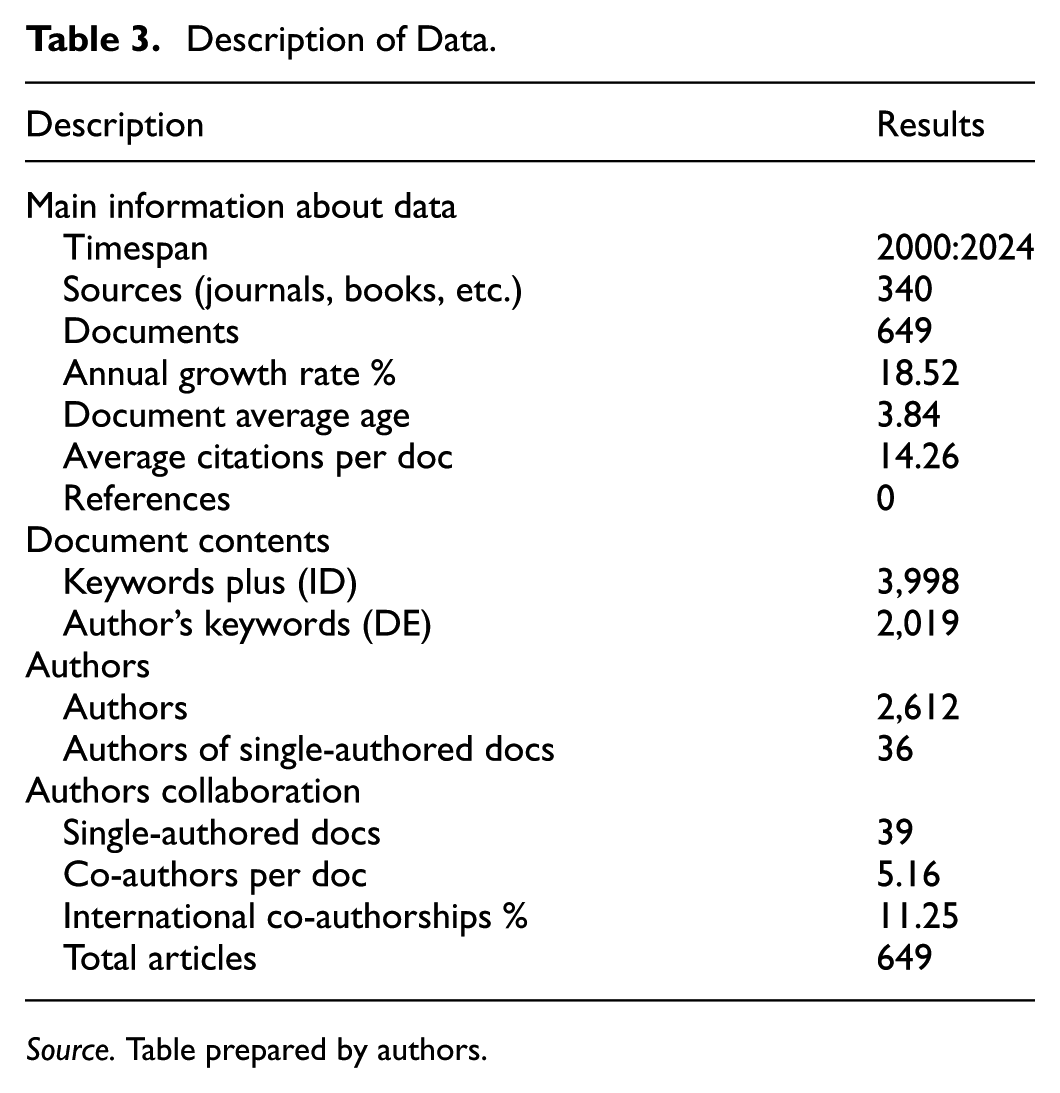
Table 3 provides a comprehensive overview of the bibliometric analysis conducted in a study covering the period from 2000 to 2024. There are 340 sources (journals, books, etc.) included in the analysis, suggesting a diverse range of literature sources. A total of 649 documents were analyzed. We note a healthy increase in the volume of scholarly output, particularly in the period 2018 to 2024 (see Figure 3). Each document, on average, is cited 14.26 times, reflecting the impact or influence of the analyzed literature. The extensive use of keywords (3,998 keywords plus and 2,019 authors’ keywords) and relatively high-level collaboration among authors, with an average of 5.16 co-authors per document. Approximately 11.25% of documents involve international co-authorships, indicating global and regional participation in the research. Overall, this table provides a rich dataset for bibliometric analysis, showcasing trends in publication types, collaboration patterns, and citation impact over a significant period.
Description of Data.
Source. Table prepared by authors.

Sources production overtime.
Key Journals
Table 4 shows the top 10 journals that frequently publish on the topic of Digital Health and Aging in the Asian region. The top three journals with significant contributions in this field: (1) Journal of Medical Internet Research (JMIR): This journal has experienced a consistent increase in publications since 2005, establishing itself as a leading platform for digital health research. Its focus includes health informatics, telemedicine, and the impact of digital technologies on health outcomes; (2) International Journal of Environmental Research and Public Health (IJERPH): Published monthly by MDPI, IJERPH is a peer-reviewed, open-access journal covering various aspects of global health, including digital health. Affiliated with the International Society of Doctors for the Environment (ISDE) and the Italian Society of Environmental Medicine (SIMA), the journal has seen a notable increase in publications since 2019. (3) Telemedicine and e-Health: This peer-reviewed journal focuses on telemedicine applications, aiming to enhance patient care and outcomes. It is recognized for its impact factor of 4.7 and Cite Score of 8.1, reflecting its prominence in the field.
Top 10 Journals that Frequently Publish on the Topic of Digital Health and Aging.

Source. Table prepared by authors.
Figure 4 displays the countries with the highest number of citations based on the first author’s affiliation. China leads with by far the highest number, 4,329 citations, followed by South Korea with 1,390 citations, and Israel with 1,000 citations. Other countries such as Malaysia, India, Singapore, and Hong Kong have also made significant contributions to research on Digital Health and Aging, in the Asian region, reflecting demographic shifts toward older populations in many of these regions.

Top 10 countries production numbers.
Most Relevant Authors and Institutions
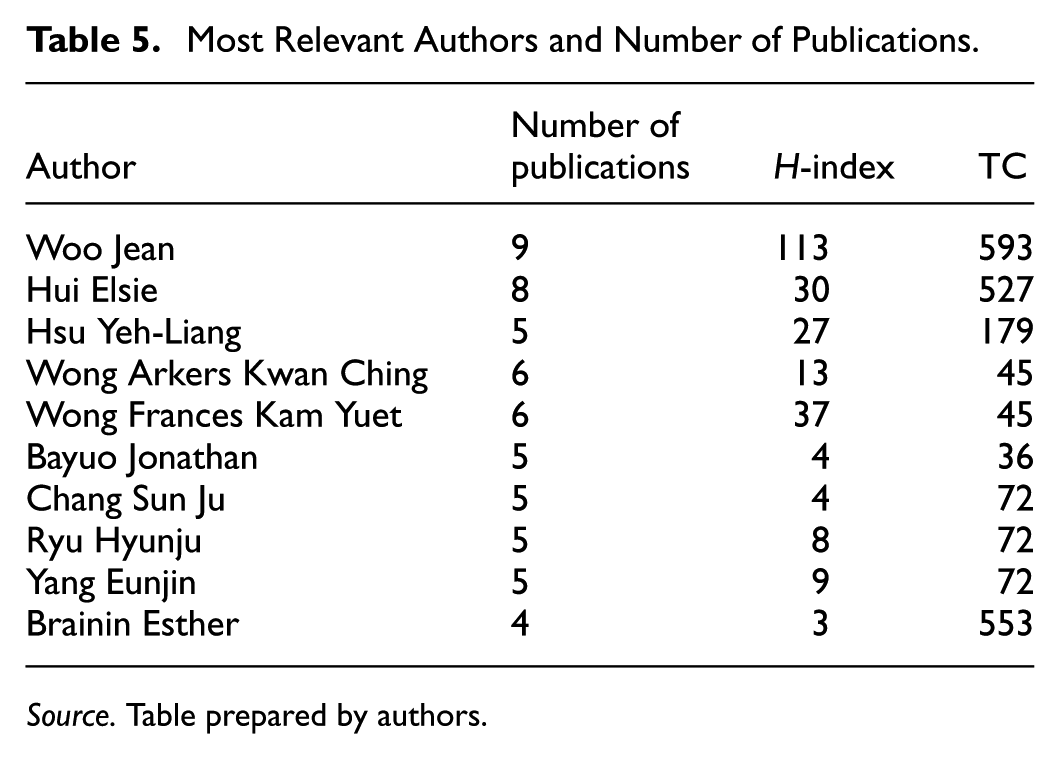
Overall, there were 2,616 authors associated with 649 articles included in this review. Table 5 outlines the most relevant authors based on the number of publications-Index scores, and total citations.
Most Relevant Authors and Number of Publications.
Source. Table prepared by authors.
Key contributors in the field of digitalization and aging include Professor Woo Jean of the Chinese University of Hong Kong, who is recognized for her pioneering work on leveraging digital solutions to improve the quality of life for aging individuals, particularly those with chronic diseases such as cognitive impairment and frailty. Dr. Hui Elsie of Shatin Hospital, China, focuses on leveraging telehealth solutions to provide geriatric services and support to those living in nursing homes and those suffering from chronic diseases related to aging. Thirdly, Professor Yeh-Liang Hsu from the Yuan Ze University (YZU) Taiwan specializes in research related to gerontology (the study of aging) with technology to develop solutions aimed at improving the quality of life, health, and independence of older adults. Other notable authors include Dr. Arkers Wong, Professor Kam Yuet Wong, and Jonathan Bayuo of the Hong Kong Polytechnic University, whose research interests focus on digital innovation in primary healthcare, including telehealth, mobile health (mHealth), and wearable monitoring devices. Also important are Dr. Chang Sun Ju and Dr. Ryu Hyunju, both working at Seoul National University, who focus on leveraging digital solutions to improve the quality of life for the aging population. Not surprisingly, four of the top 10 leading institutions in terms of publications on digital health and aging in Asia are based in China. Also important are academic institutions based in South Korea, specifically Yonsei University and Seoul National University, as well as institutions based in Singapore, specifically the National University of Singapore and Nanyang Technological University (Figure 5).

Relevant institutions.
Citation and Network Analysis
Citation analysis helps establish an article’s overall influence on a given field. It is based on the number of times other articles have mentioned a given article. Figure 6 outlines the collaborative network among researchers included in this sample. The largest collaborative network consists of authors primarily from mainland China such as Yuting Zhang of Wuhan University, Yuhui Wang of Guangzhou University, and Jaiayin Wang of Xia’an Jaiotong University. This network focuses on research related to digital and mobile health solutions for older Chinese adults. The second largest network consists of researchers primarily from South Korea focusing on research related to e-health literacy and factors related to digital adoption in older adults in the case of South Korea. Other smaller research clusters focus on such niche themes as leveraging M-Health and E-Health solutions with nursing support (Wong, Wong, et al., 2022; Wong, Bayuo, et al., 2023), also digital health solutions customized for the chronically ill and older adults that require home-based, or long-term care (J.-Y. Choi et al., 2020; S. A. Choi et al., 2021; Lu et al., 2024; Wu et al., 2023).

Co-authorship network on digital health and aging, generated using Bibliometrix software.
Table 6 presents the top 10 globally cited documents in digital health and aging in Asia. When examining the top three papers included in this list, the paper on e-Health Literacy by Neter and Brainin (2012) aims to identify factors related to e-Health Literacy in the context of Israel. Not surprisingly, they find that younger and more educated populations are more digitally literate and better able to develop effective search strategies and leverage digital resources to manage their health. Furthermore, the researchers found that this group achieved better cognitive, instrumental, and interpersonal health outcomes than those who were less e-health literate. Despite their contributions, the results of this article remain quite specific to the case of Israel and stay silent on particular strategies that can be used to increase e-health literacy. Deng et al. (2014) examine the differences in mobile health adoption among middle-aged and older adults in China. Based on their results, they found that factors such as perceived value, attitude, perceived behavioral control, and resistance to change were key factors that best explained mobile health adoption among middle-aged respondents. For older adults, additional factors such as technological anxiety and the need for self-actualization were particularly relevant. These recommendations have practical implications for the design of mobile health solutions for these targeted groups.
Most Global Cited Documents.

Source. Table prepared by authors.
Uncovering Key Research Themes
A key element of our review is to assess key research themes among articles included in the study. As a first step in this process, we examined the most frequently used words derived from the keywords included among articles in the sample. Figure 7 highlights the most frequently used words in the studies. The term “Aged” appears 3,102 times. This prevalence reflects the demographic shift towards an older population, characterized by increased life expectancy and declining fertility rates. These changes underscore the success of health and development policies implemented over recent decades (World Health Organization, 2024). The term “telemedicine” appears 2,785 times. Although telemedicine encompasses a broad range of applications, there is still limited data on the clinical and cost-effectiveness of many telemedicine solutions, highlighting the need for further research in this area (Hjelm, 2017). Other frequently used terms include “humans,”“Middle-aged,”“Ageing,” and “healthcare,” which indicate the broad scope of research related to the aging population and health management. We also notice other important but less frequently used words related to research methods, such as controlled and clinical studies, as well as sub-themes like COVID-19, chronic diseases, and specific locations like China.
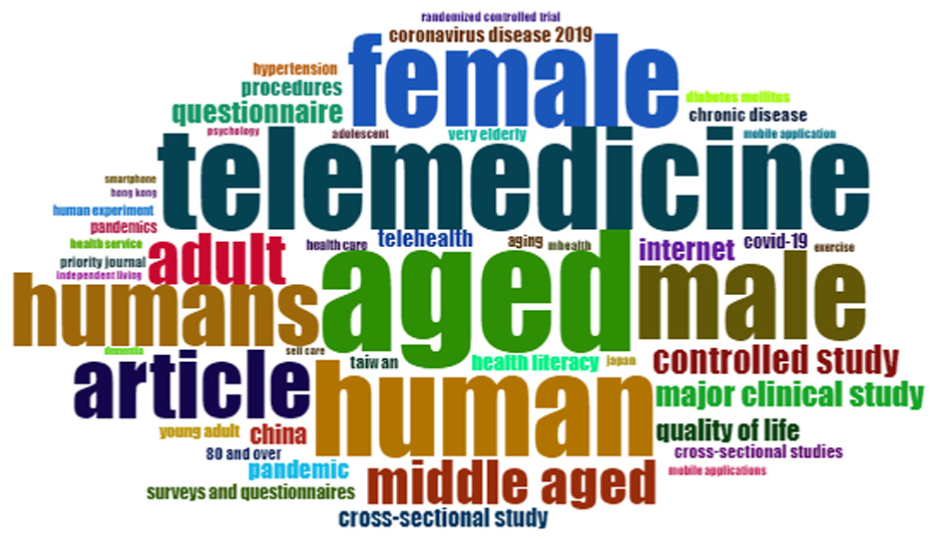
Word cloud of most frequently used words.
More importantly, Figure 8 displays the progression of keywords over time. We are beginning with initial topics related to home health and remote monitoring. Long-term care is found to be one of the longest-running themes. We also note the emergence of key themes related to relatively new digital health and new digital technologies such as telemedicine, cloud computing, digital health, M-Health, and E-Health, as well as issues pertaining to E-Health Literacy. Also notable are topics related to the emergence of COVID-19 and the ensuing pandemic. Finally, most recently, there has been a high frequency of keywords related to research on older adults.

Sources production overtime.
To identify specific themes related to Digital Health and Aging in the context of Asia we utilize thematic map analysis. A thematic map uses cluster and network analysis to classify keywords into core themes which in turn are divided into key strategic sections based on density (x-axis) and centrality (y-axis) measures (Ramsawak et al., 2024). Centrality measures reflect the growing importance of an identified theme, while density measures reflect the development of a given theme. The thematic map is divided into four quadrants. High centrality and density measures (top right) or motor themes reflect well-developed or important themes (Cobo et al., 2011). Alternatively, low centrality and density measures (bottom left) reflect newly emerging or declining themes that are either underdeveloped or losing importance. High density and low centrality measures (top left) reflect niche themes, which are well-developed but peripheral. Finally, low-density and high-centrality measures (bottom right) reflect basic themes, these are important themes but are not yet well developed and as such can be potential areas of new research.
Figure 9 presents a Thematic Map illustrating how research on Digital Health and Aging in the context of Asia. The map highlights several key findings. Perhaps the largest motor theme “human/humans” has grouped articles related to leveraging the use of telehealth and digital solutions to improve the quality of life and care of the aged and older adults particularly those suffering from chronic illnesses. One notable example is Wong, Wong, et al. (2022) who examine the use of mobile health solutions, coupled with nursing support to promote better self-care health management among the elderly in Hong Kong. Based on the results of a three-armed random control trial, they found little difference in outcomes among subjects that received combined mHealth and nursing support. However, subjects that mHealth users were found to have better physical and mental health outcomes, relative to the control group. Overall, based on these results the researchers questioned the long-term benefits of nursing-directed telephone calls.
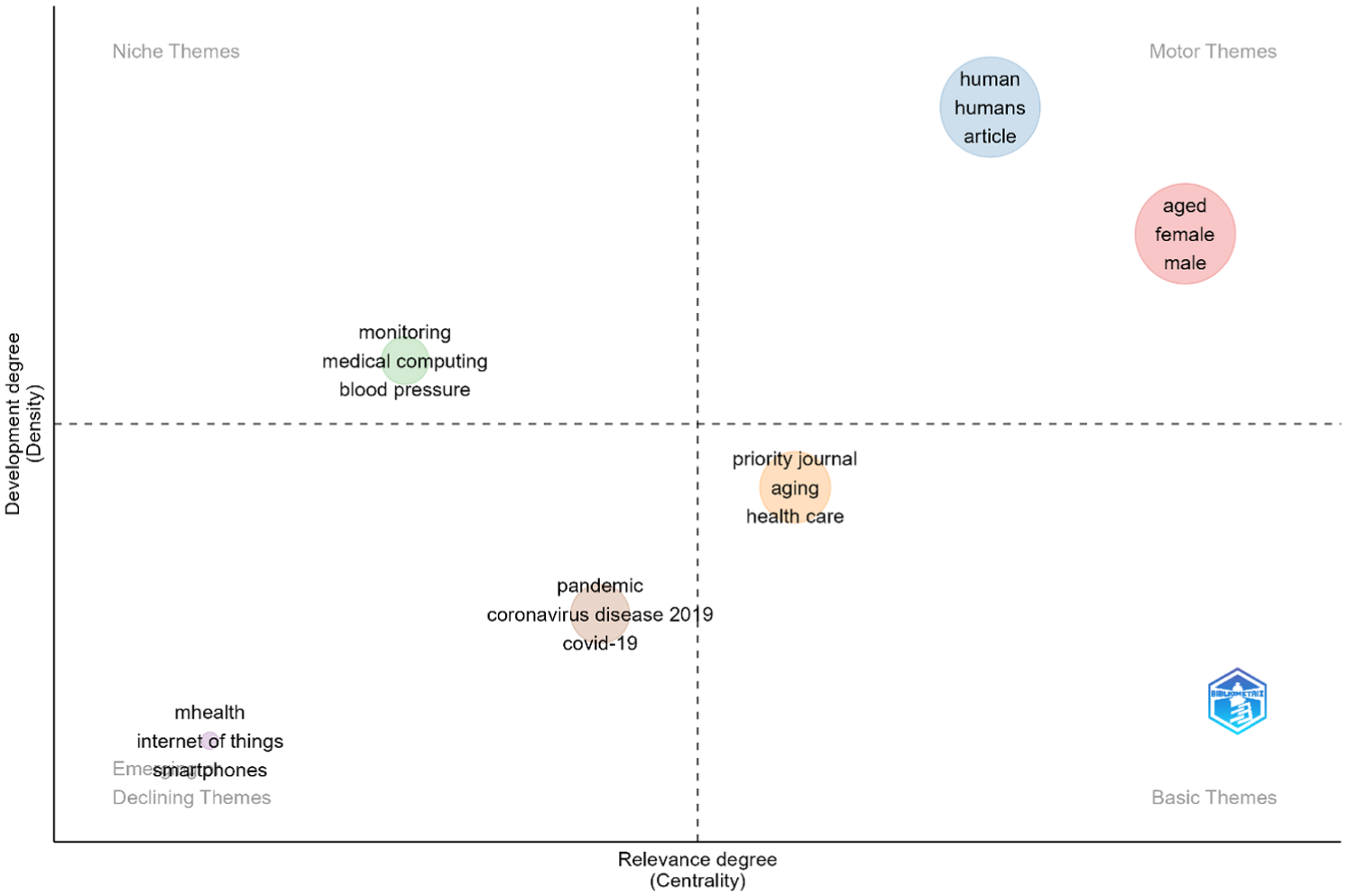
Thematic map.
The second motor theme concerns “aging” and specifically the adoption of digital health technologies for older adults, converging on key issues such as eHealth literacy, usability challenges, and cultural factors in healthcare management. Across several studies, eHealth literacy emerges as a crucial factor in improving the health and well-being of older adults. For example, research on older Chinese adults demonstrates that higher eHealth literacy is associated with better health-related quality of life (HRQoL) and cognitive health. Studies by S. Li et al. (2021) and S.-J. Li et al. (2020) show that this positive effect is mediated through health-promoting behaviors and lifestyles. However, these studies rely on cross-sectional designs, making it difficult to establish causality. Moreover, self-reported data limit the generalizability of findings, particularly regarding actual eHealth literacy skills (Yang et al., 2021).
Related to this is our basic theme “priority” which focuses on the adoption and usability of digital health technologies. Factors such as perceived usefulness, ease of use, and family support have been found to play a significant role in influencing older adults’ willingness to adopt and to continue using these technologies. For instance, Jen and Hung (2010) study on mobile healthcare services shows that families’ attitudes toward technology are influenced by perceived benefits and ease of use. Other research, like Tsung-Yin et al. (2019) mixed-methods study, highlights usability issues with tele-healthcare devices, which negatively affect satisfaction and adoption rates among older users. Furthermore, studies like Zhong and Rau (2020) research on the use of mobile apps for monitoring gait in older adults reveal that age-related usability concerns, such as small font sizes, can hinder effective use. Cultural factors also influence telehealth adoption, as shown by Tsai et al. (2014) research on telecare in Taiwan, where family trust and filial piety play significant roles in sustaining technology use. The commonalities between these themes highlight the importance of eHealth literacy in both improving health outcomes and facilitating the adoption of digital health technologies.
The niche theme “monitoring” and medical computing emphasizes technological advancements that enhance healthcare delivery through secure, efficient data handling and real-time patient monitoring. In this context, C. He et al. (2013) developed a six-layer private cloud platform tailored for healthcare applications. This platform uses a publish/subscribe model to manage high data demands, enabling stable, concurrent access to healthcare information and supporting seamless service delivery, even under significant user loads. On the other hand, C.-T. Li et al. (2017) tackled security challenges in IoT-enabled medical systems by creating an improved authentication scheme based on elliptic curve cryptography (ECC). This innovation strengthens user privacy and protects against security risks like password guessing and data disclosure, enhancing the trustworthiness of IoT-based healthcare interactions. Together, these studies demonstrate the transformative role of cloud and IoT technologies in modern healthcare, though practical issues in privacy, deployment, and integration with existing infrastructures remain areas for future work.
More recently, research related to COVID-19, and the pandemic is increasingly being seen as an emerging theme among researchers. These papers focus on attempts to leverage digital and e-health solutions both during and after the pandemic. For instance, Vaitheswaran et al. (2020), examined the needs and experiences of caregivers of persons with dementia during the COVID-19 pandemic in the case of India. Based on the results of their qualitative survey they highlighted the need for a pragmatic multilayered approach, involving systemic changes, policies, increased awareness, use of technology, and better access to health services. Building on this Lai et al. (2020), examine the efficacy of telehealth solutions, specifically, video conferencing during COVID-19 for improving the well-being of both caregivers and care recipients suffering from neurocognitive disorders (NCD) such as dementia in the context of Hong Kong. Based on survey results of treatment and control groups, they found that the quality of life and well-being, both mental and physical health of caregivers and patients improved significantly, with the support of regular video-conferencing consultations delivered by such mediums as Zoom and WhatsApp which lasted for a period of up to 30 min. Apart from the limited period used for this study (3 months), some of the additional shortcomings included the non-randomized allocation of members of the sample between treatment and control groups.
Another important emerging theme is mHealth focused on research that examines the use of mobile health solutions, that utilize the latest Fourth Industrial Revolution (4IR) technologies to address key issues and risks associated with aging. For instance, Hou et al. (2018), Shahzad and Kim (2019), and Sri Harsha et al. (2021) leverage sensors and data derived from modern smartphones together with variations in machine learning algorithms to detect high-risk human movements, such as falls among aged users, in the contexts of China, Pakistan, and India. Overall, based on the experimental results the researchers find a high degree of accuracy in fall detection, in some instances with minimized power consumption. Lin et al. (2022) propose a novel Internet of Things (IoT)-based smart healthcare system that integrates location-based mesh networks and big data analytics to monitor patient health in China. It enhances healthcare efficiency by providing real-time health monitoring and location tracking through a variety of interconnected IoT devices. The system also leverages big data analytics to process and analyze vast amounts of health data, enabling predictive insights and better decision-making in healthcare management. The study finds IoT-based system provides effective real-time health monitoring with improved data transmission reliability due to the mesh network. The system is also found to reduce healthcare response time and enhance patient outcomes through timely interventions based on predictive analysis. Some of the concerns found in the study relate to improving the security and privacy aspects of the system to protect patient data during transmission and storage. There is also a need to explore ways to reduce the setup costs and improve the system’s performance in areas where network connectivity remains an issue, such as in rural locations. Most recently, Khamaj and Ali (2024) examined the challenges older adults face in using mobile health (mHealth) applications, focusing again on usability and accessibility issues. Based on the results of interviews and usability tests, they highlight key barriers such as small text, complex navigation, and lack of personalization. The study also identifies a gap between app design and the cognitive and physical abilities of older adults, highlighting the need for improved design guidelines to enhance mHealth accessibility for this demographic.
Discussion
Overall, we observe a significant increase in the number of publications on digital health and aging among Asian countries, particularly over the period from 2018 to 2024, and more pronounced during the post-COVID-19 period. China remains the country with the largest number of publications, followed by South Korea, Israel, and Japan. Not surprisingly, we find the dominance of researchers from China, working in Chinese higher education institutions. However, authors from several key Asian institutions such as the National University of Singapore and Seoul National University are emerging as influential contributors to this field. Some of the key topics examined by researchers based on keywords used by authors include remote monitoring, telehealth, e-health, and digital health. We also note the growing importance of research related to digital health and aging, both during and after the COVID-19 pandemic. Indeed, the advent of COVID-19 has forced an increasing application of digital health applications among the elderly, which in turn has generated new research examining the efficacy and usability of these applications.
A closer look at the key themes, based on our thematic map analysis, confirms that the bulk of the research focuses on the varied digital and mobile technology solutions used to improve the quality of life for the aged and chronically ill. For instance, our main motor themes focus on the use of telehealth and mHealth solutions to improve the quality of life among the elderly, particularly those requiring home care, patients with limited mobility, and those suffering from advanced neurological and psychological disorders, such as dementia, Parkinson’s, and depression. Some of the solutions included home-based exercise interventions (HBEIs), with follow-up telephone support, regular customized culturally aligned telephone support for those suffering from psychological disorders, and the development of Android-based fall detection and emergency alert apps. In many instances, these solutions were developed to work with the support of medical health professionals and caregivers. Apart from highlighting key telehealth and digital solutions, the second key branch of research focused on factors that both promote and hinder the adoption of digital health technologies among older adults in Asia. Key among these is the importance of digital literacy, as well as unique cultural factors such as lettering and font size, particularly for mobile applications. Additionally, the support of family members is crucial in the adoption process. Interestingly, digital literacy was also found to be a common barrier in some Asian countries, in addition to constraints in digital health infrastructure, and a lack of policies and protocols to guide the implementation and ensure security in the application of these technologies.
More recently, two core themes have emerged in the literature. The first is related to research on the use and efficacy of telehealth and mHealth solutions, such as telephone and video conferencing, during the pandemic. Indeed, many of these studies uncovered essential new solutions and risks in the use and application of these solutions. For instance, Kok et al. (2024) documents the experience of implementing a nationwide, centrally managed telemedicine service in Singapore to manage and triage cases during the COVID-19 pandemic. AlFawaz and Alrasheed (2023) drawing from their experience of a telehealth system in Saudi Arabia highlights the benefits of telemedicine in residency training among healthcare practitioners. Another key emerging theme focuses on integrating the latest Industry 4.0 technologies in digital health solutions in Asia. Some of these include IoT-based innovative healthcare system that incorporates location-based mesh networks and big data analytics to monitor patient health, the use of human activity recognition (HAR) based on the integration of wearable devices, and machine learning algorithms aimed at monitoring patient activity and movements, and the use of smartphone sensors and machine learning techniques to human activity and detect falls (Hou et al., 2018; Sri Harsha et al., 2021).
In terms of areas of further research, indeed much of this research is based on several pilot-tested solutions based on short-term laboratory or community-based experiments, which remain one of the key limitations of these studies, such that generalizability to larger populations remains particularly limited. Our review also highlights the need for more context-specific research and solutions related to unique circumstances across diverse Asian locations. There are opportunities for a comparative analysis of digital health solutions for aging among Asian economies. Mulati et al. (2022) for instance, examine differences and potential synergies in digital health-based policy and health promotion among “super-aged societies” in Asia, specifically Japan and South Korea. They also include Singapore and Thailand in their analysis, given the growing proportion of aging population and high levels of digital penetration among the population of all four countries. The authors highlight that the promotion of healthy habits has resulted in their population not only living longer but also living healthier lives. Each country has sought to leverage digital technologies in different ways, to address the circumstances for instance the use of digital solutions to deal with problems of frailty and loneliness in Japan particularly during the COVID-19 pandemic, the extensive use of telemedicine in Korea, and mHealth solutions in Singapore as well as the promotion of eHealth in Thailand.
There are also opportunities for further research related to our emerging theme of mHealth, which focuses on utilizing the latest Industry 4.0 technologies to develop digital health solutions for the elderly in Asia. Given the emergence of Industry 5.0, which focuses on the integration of humans and technology to provide solutions. An interesting twist to this cluster can be the privatization of these solutions, both the development and deployment. Hoe (2022) for instance, examines the steady growth of digital health start-ups and related solutions in Asia, which cater to the growing aging population across many locations, the also simultaneously benefit from high levels of internet penetration and usage.
Conclusions
This study provides a comprehensive analysis of the trends and patterns in the field of Digital Health and Aging, focusing specifically on the Asian context. The bibliometric analysis, conducted from 2000 to 2024, examined 649 documents published across 340 sources. One of the most notable findings is the substantial growth in the volume of scholarly publications, especially between 2018 and 2024, signaling a heightened interest in the intersection of digital health and aging.
Key contributors to this growing field have made significant advancements in wearable sensors, smart home technologies, and telehealth solutions, all aimed at addressing challenges related to aging. Prominent countries, including China, Japan, South Korea, and India have been central to the development of these technologies, driving research and innovation in this domain. Their research focuses on managing chronic conditions such as hypertension and other mobility issues, which are critical for aging populations. This growing body of research illustrates the importance of digital health in improving the lives of older adults and managing the increasing burden of aging-related health issues. Citation analysis reveals that countries like China, South Korea, and Israel are leading in terms of citation volume, while countries such as Malaysia, India, Singapore, and Hong Kong are also making significant contributions. These findings reflect the demographic shifts occurring in the region, where aging populations are becoming more prominent. Citation analysis and collaborative network analysis reveal a growing trend of collaboration among researchers, particularly from China and South Korea. These collaborations focus on areas such as e-health literacy, mobile health adoption, and digital health solutions for aging populations. The increased interconnectedness between researchers is fostering the development of more effective and integrated solutions to the challenges posed by aging populations, particularly in the digital health space. A keyword analysis further highlights the key research themes emerging in the field, such as telemedicine, aging, healthcare, M-Health, E-Health, and the impact of COVID-19 on digital health for older adults. The thematic map analysis also reveals well-developed research clusters in areas like long-term care, digital health technologies, and e-health literacy. Emerging topics, including the impact of COVID-19 and chronic diseases, reflect the evolving nature of research in this domain and the increasing focus on how digital health can address these emerging challenges.
Despite its comprehensive approach, the study has several limitations. One of the main drawbacks is the reliance on the Scopus database, which may exclude relevant literature available in other databases like PubMed or Web of Science. The bibliometric approach also does not capture the qualitative aspects of research, such as the depth and context of findings, which could impact the interpretation of their significance. Finally, given the rapid pace of advancements in digital health technologies, the study’s findings may not fully represent the latest trends or developments up to 2024. In conclusion, this study offers valuable insights into the current state of research on digital health for aging populations and provides a roadmap for future advancements in this field.
Footnotes

Ethical Considerations
There are no human participants in this article, and informed consent is not required.
Funding
The authors received no financial support for the research, authorship, and/or publication of this article.
Declaration of Conflicting Interests
The authors declared no potential conflicts of interest with respect to the research, authorship, and/or publication of this article.
Data Availability Statement
Data is available upon request.