




Abstract
The role of entrepreneurial support organizations within the entrepreneurial ecosystem remains unclear to date. More specifically, entrepreneurial support organizations play a crucial role in fostering entrepreneurship, yet limited research exists on how they contribute to the development of female entrepreneurs. This study aims to enhance our understanding of the role of entrepreneurial support organizations from the institutional perspective through the lens of institutional theory. The study was conducted qualitatively, and 14 respondents from different supporting organizations were purposively selected and interviewed. The analytical technique that was employed was thematic analysis. Nine sub-themes emerged from the findings, which were organized under three main themes: strategic and structural support mechanisms, relational and cultural dynamics, and institutional limitations. This study contributes to the literature by confirming that supporting organizations function as institutional entrepreneurs, often extending beyond traditional support roles. However, their continued adherence to neutral support practices may inadvertently hinder the development of female entrepreneurship. Ultimately, this research offers valuable insights for supporting organizations and policymakers, guiding efforts to cultivate more inclusive and resourceful entrepreneurial ecosystems.
Keywords
Introduction
Many academics believe that female entrepreneurship is an emerging phenomenon of the 21st century, where women work hard to preserve their welfare and care for their families (Rashid & Ratten, 2020). In the literature on female entrepreneurship, many researchers have focused on women’s entrepreneurial traits, orientation, leadership and startup challenges, and these findings remain fragmented, especially when comparing the contexts of developed and developing countries (Brush et al., 2009; Corrêa et al., 2022). Every country has unique social and cultural barriers that influence women entrepreneurs differently (Henry et al., 2021; Rashid & Ratten, 2020). This highlights the need for further research that delves deeper and improves our comprehension of female entrepreneurship in developing countries. To promote long-term economic growth in Asia, the Global Entrepreneurship Monitor Report (2019, 2022) also stressed the importance of supporting female-led businesses. Due to the importance of entrepreneurship to the expansion of the economy, research on women entrepreneurs is a thriving area (Cabrera & Mauricio, 2017). Additionally, the continuing global challenges (such as climate change and COVID-19) highlight the need for women to participate in entrepreneurship for nations to meet economic development goals (Henry et al., 2021; Rahayu et al., 2023).
The UN’s adoption of 17 Sustainable Development Goals (SDGs) in 2015 has drawn more attention to the issue of women’s entrepreneurship for the benefit of society and the economy. As a result, Sri Lanka, a developing South Asian nation, acknowledged the importance of female participation in the economy for the nation’s advancement (ILO, 2016). Despite progress, women still represent a small portion of the workforce in many countries (GEM, 2022). Even though men and women in Sri Lanka have equal access to education, women’s economic participation remains well below their potential. In contrast to 73% of men, women made up a much smaller percentage of the labour force in 2018, at only 40% (Central Bank of Sri Lanka, 2022). Thus, the unemployment rate for women is significantly higher. Furthermore, there is a significant gender disparity in the percentage of women who work as unpaid family caregivers as opposed to men—20.4% versus 3%. Women comprise a small portion of the owners of legal small and medium-sized businesses (SMEs) in Sri Lanka (Surangi, 2018), making up just 25% of SME sector entrepreneurs, although approximately 45% of Sri Lanka’s GDP and 50% of all jobs are held by SMEs (Central Bank of Sri Lanka., 2022). These figures demonstrate Sri Lanka’s low rate of female entrepreneurship, which in turn is an indicator of how the many constraints women face contribute to Sri Lanka’s low level of economic activity.
Numerous barriers hinder their entry into entrepreneurship, including restrictive government policies, limited access to financing and inadequate resources such as infrastructure and information technology (Anderson & Funmi, 2022; ILO, 2016). These challenges constrain women’s ability to seize entrepreneurial opportunities across different contexts and may lead to business failure (Ahmetaj et al., 2023; Anderson & Funmi, 2022; Xiong et al., 2020). Additional obstacles include cultural norms, low motivation, high crime rates, and issues related to government benefits and employment laws, all of which further impede the growth of women entrepreneurs (Corrêa et al., 2022).
Even though various studies have examined the gender-based challenges faced by Asian female entrepreneurs, few have examined the significance of institutional support in the growth of female entrepreneurship, particularly from the institutional perspective (Biru et al., 2021). Compared to their male colleagues, female entrepreneurs in this environment require more assistance from supporting groups. In China, more women than men are discouraged from pursuing entrepreneurial professions by a perceived lack of regulatory support, such as formal entrepreneurial aid, legal assistance, and counselling (Shinnar et al., 2014). As to the rationale, the absence of institutional assistance may cause additional psychological stress to female entrepreneurs who are already bound by conventional gender norms, intensifying the uncertainty of the business environment (Neumeyer et al., 2019); this acknowledges that supporting institutional backing is a key factor in women’s self-confidence and willpower. Some women are still driven despite these prevalent, persistent obstacles, justifying the necessity to encourage female entrepreneurs. Therefore, it is important to investigate the role of supporting institutions in assisting female entrepreneurship.
However, institutional support remains unclear and fragmented often lacking consistency in whether it is short-term or long-term, rarely sector-specific and frequently not tailored to the unique needs of women entrepreneurs. While there is a substantial body of research exploring female entrepreneurs’ experiences with support organizations, limited attention has been given to the institutional perspective. Supporting organizations themselves hold valuable insights into their strategies, constraints and interpretations, which also shape the entrepreneurial ecosystem. This study addresses this gap by shifting the lens to the institutional voice, offering a fresh and original perspective that contributes to a more holistic understanding of how support for female entrepreneurs is conceptualized, delivered, and constrained from within the institutions themselves.
Further, researchers revealed that many supporting organizations adopt so-called gender-neutral policies by claiming to provide equal services to both men and women. However, this approach often leads to the neglect of gender-specific challenges faced by women, thereby reinforcing existing inequalities rather than addressing them. Therefore, this study specifically examines whether supporting organizations are genuinely gender-sensitive and inclusive, or whether they simply adopt a one-size-fits-all approach under the guise of equality. By focusing solely on the institutional perspective, the research enables a deeper investigation into the internal dynamics, strategies and policy frameworks of these organizations insights that are often obscured or diluted in multi-perspective studies.
Thus, the structure of our paper is as follows: The second section summarizes key findings in the literature on female entrepreneurship and supporting organizations. The third section describes the methodology used, while the fourth presents the findings and discusses them. The final section provides the conclusions and implications of this research.
Literature Review
The main purpose of this section is to contribute to understanding female entrepreneurship development within the context of institutional support and to review the related theories.
Female Entrepreneurship
The definition of female entrepreneurship differs significantly between developed and developing countries. In developed contexts, female entrepreneurship is often associated with innovation, opportunity-driven ventures, and high-growth potential (Owalla et al., 2021). In contrast, in developing countries, the definition is broader and frequently includes self-employment and necessity-driven enterprises (Owalla et al., 2021). Female entrepreneurship in developing countries typically refers to women who initiate and operate businesses under resource limitations and within restrictive cultural and institutional environments (Surangi, 2018; Xiong et al., 2020). These ventures often exist in the informal sector, where registration is not mandatory, and as a result, their contributions frequently go unrecorded in official statistics. This invisibility has led to the characterization of female entrepreneurship in developing countries as “invisible entrepreneurship” (Corrêa et al., 2022). Many of these women operate in subordinate roles, balancing business responsibilities with household and caregiving duties (Brush et al., 2022). Additionally, while many female entrepreneurs in developing nations start businesses out of necessity, such as to support their families or due to a lack of employment opportunities, those in developed countries are more likely to be motivated by personal fulfilment, innovation or career advancement (Corrêa et al., 2022). Whereas classical entrepreneurship theories tend to emphasize economic outcomes such as growth, productivity and profit, female entrepreneurship in developing countries often serves as a form of social activity, deeply shaped by societal expectations, gender norms and cultural values (Guzman & Kacperczyk, 2019; Rashid & Ratten, 2020). As such, it requires a broader lens that acknowledges both economic and socio-cultural dimensions.
Being of critical import to economies as a whole, and with gender discrimination having been proven to hinder economic growth (Brush et al., 2012), women’s entrepreneurship has been embedded within several of the UN’s Sustainable Development Goals, particularly SDG 5: Gender equality and SDG 8: Decent work and economic growth. However, according to Surangi (2018), there are three male entrepreneurs for every female entrepreneur in Sri Lanka. Since there are no objective grounds for assuming that women entrepreneurs perform worse than men once women-founded businesses are established, the Sri Lankan government must remove obstacles hindering women’s entrepreneurship to accomplish these SDGs. Furthermore, factors such as general cultural expectations (e.g., women should care for the children), lack of confidence in oneself, and female prejudice that inhibits investor confidence and funding all contribute to the fear of failure experienced by women entrepreneurs in male-dominated societies around the world (Xiong et al., 2020).
On surveying existing entrepreneurial studies focusing on the role of the (male/female) entrepreneur, research on innovation in women-owned enterprises continues to be notably lacking (Brush et al., 2022; Owalla et al., 2021). This is due to women being under-represented in industries that are driven by innovation, with the majority of women-owned enterprises found in low-tech, low-value industries, including education, healthcare and retail (Brush et al., 2022). This is especially evident from the data on participation in the ICT sector, as just 2.3% of females work in this field, compared to 5.3% of males.
Several factors can explain this condition. The significance of women’s training and educational backgrounds is emphasized in numerous studies. For example, according to the latest data for Europe, in 2021, more than one-third of STEM graduates were female (Eurostat, 2024). Scholars have offered several explanations for this gender gap in STEM education, including the persistence of gender stereotypes in society, gender segregation in the workplace, family socialization that is still predicated on traditional gender roles, and, last but not least, the lack of female mentors and role models (Guzman & Kacperczyk, 2019). Therefore, barriers that prevent women from pursuing entrepreneurship in any industry significantly impact supporting organizations. Consequently, it is unsurprising that there is only a small body of research on the subject to date.
Role of Supporting Organizations for Female Entrepreneurship Development
Many prior researchers have cited descriptive statistical studies showing reduced death rates among sponsored versus unsupported enterprises; although the research indicates that support services improve startup performance, it is crucial to remember that there is currently little empirical data to back these assertions (Mohamed et al., 2024; Salmon & Singleton, 2025). Numerous studies are now being conducted to quantify and provide empirical evidence on how supporting organizations can enhance the performance of newly established businesses. According to a 2002 study by the European Commission, startups that receive assistance from companies that specialize in business creation have a significantly higher chance of surviving (Guzman & Kacperczyk, 2019). Further, Corrêa et al.’s latest study from 2022 emphasized the importance of helping organizations enhance their business performance.
Due to their inherent weaknesses, such as lack of desire, willpower and self-confidence, and numerous other barriers, female entrepreneurs require assistance from organizations, this is crucial to overcoming the difficulties of starting an enterprise. According to Bergman and McMullen (2022), support services affect funding and intellectual property protection. And lack of resources during the formation stage might cause startups to fail (Althalathini & Tlaiss, 2023). According to recent research by Oladipo et al. (2023), support greatly increases the likelihood that female-owned firms will survive. However, it should be highlighted that a key factor in the success of startups is the calibre of the counsel they receive (Spigel, 2017). The type of business assistance relationship determines the quality of the guidance. Existing research indicates a linkage between learning, skills transfer, and the quality of supporting relationships, but few studies have directly linked the enhanced performance of new enterprises to the nature and quality of this relationship (Biru et al., 2021). Furthermore, a recent study by Thang et al. (2024) found that support-receiving startup projects have greater survival rates in the short and medium term. Numerous authors emphasize the significance of a co-constructed support connection (Mohamed et al., 2024).
Through systems of gender and social structures, written and unwritten norms, values and standards that influence and guide entrepreneurial behaviour, institutions impact female entrepreneurship (Brush et al., 2022; Owalla et al., 2021). While context is widely recognized to be important in entrepreneurship (Brush et al., 2022; Surangi, 2018), there are still many aspects of this concept that warrant more research, particularly in understudied populations (e.g., female entrepreneurs, etc.) and understudied environments (e.g., developing countries, etc.; Surangi, 2018). According to Zhai and Su (2019), institutional support has several sides that reflect normative, regulatory, and cognitive aspects. The laws and regulations that encourage entrepreneurship are called the regulatory dimension. These dynamics are clarified by the expanding amount of recent research, which emphasizes the significance of institutional support for the success of entrepreneurs. These supporting organizations experience contradictions that arise when traditional gender norms conflict with the expectations placed on female entrepreneurs. This tension often results in a mismatch between gender-neutral policies and the actual needs of women.
While numerous studies have examined the issues, challenges and lived experiences of female entrepreneurs, particularly in their interactions with supporting organizations, there has been limited attention paid to the institutional voice. Specifically, existing research often overlooks how support organizations align (or fail to align) with the actual needs of women entrepreneurs, how they interpret and implement gender inclusivity, and how they perceive their own contributions to the development of female entrepreneurship. This study addresses these gaps by positioning supporting organizations as institutional entrepreneurs and critically examining their roles, strategies and limitations within the Sri Lankan context.
Theoretical Framework
Institutional theory is an increasingly popular lens in entrepreneurship studies. The significance of technological requirements and economic factors in forming social and organizational systems is recognized by institutional theory. Additionally, it looks at the choices and actions of people, organizations and other external factors (Zhai & Su, 2019). Instead of focusing only on efficiency-seeking conduct, the institutional theory takes into account the regulatory, social and cultural factors that contribute to an organization’s legitimacy and survival (Xiong et al., 2020). The theory places emphasis on the external elements that an organization encounters, including societal norms, regulations and standards that organizations must adhere to. These give these organizations legitimacy and support (Althalathini & Tlaiss, 2023; Zhai & Su, 2019).
The institutional theory includes three pillars: normative (a person’s behaviour based on required aspects of social, professional, and organizational interaction), cognitive (a person’s behaviour based on subjectively constructed rules and meanings that set boundaries for acceptable beliefs and behaviours) and regulative. The regulative pillar, founded on sanctions and conformity, is a rational actor behaviour model rooted in economic studies. Institutions regulate behaviour through surveillance, enforcement and game rules (Thang et al., 2024).
In this study, the institutions—mainly government agencies, financial institutions and international donor organizations—are the major enterprise support organizations. These institutions establish the regulatory, normative and cognitive infrastructures for small companies in developing nations (Bamfo et al., 2023). Since these organizations provide guidelines for female entrepreneurs, small enterprises are expected to follow them. Therefore, female entrepreneurs’ adherence to these organizations’ regulations is essential to developing entrepreneurship capacity (Ahmetaj et al., 2023). The degree of flexibility of these regulations and the entrepreneurs’ willingness to follow them determine compliance (Bamfo et al., 2023). This necessitates cooperation between the institutions and entrepreneurs. At the cognitive level, the training and education programmes of these enterprise support organizations are influential in the establishment and expansion of small enterprises, and consequently, their ability to be entrepreneurs (Biru et al., 2021). Nonetheless, many academics concentrate on the micro level of this theory rather than its macro one (Thang et al., 2024). The literature currently published limits our comprehension of the dynamic entrepreneurship phenomena and fails to address the topic of “how external institutions impact female entrepreneurs’ business activities.” Thus, this study aims to improve our knowledge by focusing on the main research question: How does institutional theory help us comprehend Sri Lankan entrepreneurial contexts?
Methodology
The specific focus of this study is the role of organizations that promote female entrepreneurs and how it relates to the interactions between different parties. However, these interactions may be a part of larger societal institutions rather than occurring in a vacuum. Because of the focus on relationships and wider societal factors, the researchers decided to more closely consider social constructionism as a potential philosophical foundation for this study. The research questions were addressed using a qualitative approach, and the information acquired was grounded in the first-hand experiences of support organization representatives that a quantitative approach is unable to capture.
The actual experiences of the respondents were explored through qualitative research, with a specific focus on the institutional perspective, an area often overlooked in existing literature. Data were collected using a semi-structured interview guide. The rationale for employing purposive sampling lies in its ability to identify information-rich cases that offer deep insights and a comprehensive understanding of the research context (Naeem et al., 2023). Information-rich cases were selected using a combination of purposive sampling techniques, specifically typical case and opportunistic sampling. Typical cases included organizations actively engaged in supporting entrepreneurship. Initially, 11 such organizations were chosen, each represented by a managerial-level respondent directly involved in entrepreneurship development. During fieldwork, additional opportunities arose to enhance data collection. For example, during an interview with a manager from the Entrepreneurship Development Division of the Export Development Board, we were referred to a manager in the Research and Development Division who works specifically with women entrepreneurs applying for patents. Similarly, two other valuable contacts were identified in the field. As a result, the total number of interviews conducted increased to 14. The interviews were conducted in person at the respective organizational premises over a 4-month period from May to August 2024. Each interview lasted approximately one and a half hours. While determining the precise point of data saturation in qualitative research can be challenging, by the 14th interview, participants were consistently providing similar responses with no emergence of new themes. Therefore, the researchers concluded that data saturation had been achieved and ceased further data collection. A summary of the sample is presented in Table 1.
Sample Profile.

Note. NCC = National Craft Council; IDB = Industrial Development Board; EDB = Export Development Board; SEDD = Small Enterprise Development Division; NEDA = National Enterprise Development Authority; NEDA = National Enterprise Development Authority; CB = Commercial Bank; BOC = Bank of Ceylon.
The gathered material was analyzed using thematic analysis. The authors adopted a hybrid approach to data analysis. Initially, codes were developed deductively, guided by institutional theory and relevant literature. At the same time, the analysis remained open to themes emerging inductively from the participants’ explanations. Although there are various approaches to thematic analysis, this study adhered to the five-step procedure outlined by Naeem et al. (2023). Transcribing the recorded interviews to the degree of information required for the study was the first stage in the familiarization process. Where appropriate, excerpts were condensed to eliminate pointless repetition, discussion and participation instances. The coding/labelling phase came next, in which transcript segments were highlighted and their contents were described using labels or codes. Finding themes was the third step. Themes are more expansive than codes because multiple codes can typically be grouped under a single theme. The researcher then attempted to confirm that the patterns found were true study depictions. To ensure the trustworthiness of the study, member checking was conducted by sharing the prepared transcripts with participants and incorporating their feedback. Additionally, an audit trail was maintained, allowing competent peers to review the research process and evaluate its rigour. Data analysis was carried out manually. Throughout the research process, ethical considerations were carefully observed. Specifically, informed consent was obtained from all participants prior to data collection. Although the names of organizations were disclosed, the identities of individual respondents were kept confidential through the use of pseudonyms. All collected data were treated with strict confidentiality.
Data Analysis and Discussion
Role of Supporting Organizations
The primary aim of this analysis is to examine the role of supporting organizations in the context of Sri Lankan businesses. The structure of the analysis is based on themes outlined in the semi-structured interview schedule. Drawing from participant interviews, nine sub-themes were identified and categorized under three major themes: (1) Strategic and structural support mechanisms, (2) relational and cultural dynamics and (3) institutional limitations. This section presents the thematic findings, supported by direct quotes from representatives of the supporting organizations to provide a rich understanding of their perspectives and experiences.
Strategic and Structural Support Mechanism
Focus on the Outcome, Continuous Innovation and High-Growth Entrepreneurship: Acting as Pacemakers
Entrepreneurs must think creatively and transform their ideas into valuable products to thrive commercially; this is called innovation. Innovation is crucial in any competitive corporate climate, and the supporting organizations are fully aware of this (Thang et al., 2024). Supporting organizations provide extensive assistance beyond the initial stage to foster innovative cultures. They offer funding and other support for long-term growth across several stages (Lisa & Harold, 2001), their primary focus being ongoing improvement. Furthermore, these supporting organizations prioritize outcome-oriented innovation regardless of whether they are reaching specific milestones (Kraus et al., 2021).
This is supported by the information provided by the NCC: We offer the necessary support if we get donor organization funding. We have provided money for business startups and progressive funds for 3 to 4 years. Our primary criteria for funding an organization are its innovative product nature and ongoing improvement. Additionally, we collaborate with IT companies to help entrepreneurs (NCC, R1).
According to this quote, NCC is a bridge to link others, promote innovation, and provide access to cutting-edge technologies. These organizations help maintain momentum in the research and development phase and beyond by providing resources like technology (Kraus et al., 2021). The organization engages with entrepreneurs throughout the business life cycle rather than merely providing seed funding and initial support. These organizations are known as pacemaker organizations. Pacemaker organizations differ significantly from traditional intermediaries, which typically offer short-term, transactional support such as training, funding, or incubation. In contrast, pacemaker organizations are characterized by their long-term and sustained engagement in the entrepreneurial journey (Katrina & Robert, 2018). Accordingly, this study defines pacemaker organizations as institutional entrepreneurs that not only deliver support services but also actively shape institutional structures over time. Their key functions include adapting support to the evolving needs and contexts of female entrepreneurs, bridging institutional gaps by connecting entrepreneurs with various formal and informal support systems, respecting and working within relevant cultural norms while gradually fostering inclusive practices, and ensuring continuity and coherence in support throughout the entrepreneurial lifecycle. Furthermore, pacemaker organizations embody core attributes of institutional theory, such as legitimacy, adaptive capacity and normative influence, positioning them as critical agents of institutional change within the female entrepreneurship ecosystem. For example, in the marathon of growing a business, pacemaker organizations assist entrepreneurs in reaching their objectives, much like pacers assist elite marathon runners in winning races (Katrina & Robert, 2018).
Similar proof was discovered at one of the organizations that supports Sri Lanka (IDB), which stated: Yeah, we are maintaining that kind of fund for innovations. Women business owners can apply for loans and complete the necessary paperwork for other programs. We currently support two primary projects: the creation of goods with added value from fish and prawns, and the production of value-added products from vegetables and fruits. As two factories, we are working on these two projects. The organization’s goals are to improve the lives of small farmers and growers, supply wholesome organic food to the public, and promote an innovative culture. We even host awareness sessions and training programs for entrepreneurs to continue innovating in the IDB. (IDB, R2)
Entrepreneurs are regularly assisted by supporting organizations in defining precise outcome-based metrics other than financial success. These include market data, product acceptance rates, awareness and more. Ongoing assistance could involve monitoring the results, providing guidance or resources, and meeting deadlines to ensure entrepreneurs are headed in the correct direction.
Many supporting organizations prefer to help and invest in high-growth companies. NGO 1, for instance, shared their position,
We specifically assist growth-oriented business owners in advancing. We offer resources to help them grow their enterprises, including financial assistance, asset support, and capacity-building facilities (NGO 1, R 6).
A better-organized approach to business organization was more common among high-growth-oriented entrepreneurs, indicating a more disciplined approach to firm management (Lisa & Harold, 2001). The subject of what kind of entrepreneurship best contributes to economic progress is brought up in these quotations. These findings support the central tenet of the institutional theory that related businesses frequently adopt similar structures or practices, as these organizations employ comparable strategies, such as assisting growth-oriented and innovative entrepreneurs (Althalathini & Tlaiss, 2023; Thang et al., 2024; Zhai & Su, 2019). Drawing from institutional theory, pacemaker organizations can be understood as institutional entrepreneur entities that both respect existing institutional norms and simultaneously introduce innovative strategies to drive transformative change. These organizations operate within the established cultural and regulatory frameworks while actively challenging outdated practices and institutional voids. In doing so, they play a pivotal role in advancing female entrepreneurship by introducing innovative support models, fostering inclusive ecosystems and setting new benchmarks that challenge existing literature and institutional practices.
Securing Financial Capital and Other Forms of Facilities
Money is a fundamental resource for business owners. Even the most innovative concepts could have trouble penetrating the market or accomplishing their goals and objectives without sufficient funding. Knowing the value of money, supporting organizations make it a top priority when providing assistance (Clayton et al., 2018).
Indeed, we provide a low-interest lending program called ‘Siriliya Saviya’. In addition, we have deposits such as ‘Kaantha Ran Ginum’. According to the criteria, 10%, 20%, or 30% of the cash we receive from the ADB should go to female entrepreneurs. From a financial perspective, we consistently support female entrepreneurs. We examine their financial situation and the viability of their firm (BOC, R11).
CB, SANASA and SARVODAYA also expressed similar views,
We support female bankers with our ‘Anagi’ account, which offers a somewhat reduced interest rate. Supporting female entrepreneurs is a top priority for all our sites (CB, R10). We have a Credit Plus program and the ‘Uththamavi’ lending plan specifically designed for female entrepreneurs (SANASA, R12). The project management unit and Sarvodaya Bank comprise most of the Sarvodaya movement. Sarvodaya banks offer all lending facilities, from microfinance to other loan programs (SARVODAYA, R13).
It is clear from reading the participant extracts that many organizations provide financial support. Numerous supporting organizations provide seed money to assist entrepreneurs in covering their first expenses, including product development, legal bills and market research (Hruskova et al., 2022). This money enables business owners to launch their ventures without depending only on loans or personal savings. Moreover, these organizations prioritize and concentrate on the financial needs of female entrepreneurs. And in addition to financial support, they offer entrepreneurs many other forms of essential assistance.
IDB provides services in five main categories: legal assistance, human resource management, marketing, engineering and technology, and finally, finance. There is no differentiation between male and female entrepreneurs when we consider entrepreneurs. That is the theory in the act—that there is no differentiation. We consider them the same (IDB, R2).
Despite assisting entrepreneurs in many ways, support organizations do not prioritize women; they are not viewed as a distinct category.
We provide more than just loans. Since 2010, we have trained about 15,000 SMEs through 130 sessions of our various skill development programs. Under the direction of the International Finance Corporation, we redesigned our programs last year with an emphasis on productivity enhancement, recovery plans, and business planning. We ran digital programs as well (SEDD, R7).
One of the primary needs of female entrepreneurs is support, particularly resources, given that they often start their enterprises with their own funds, no experience, and no networks. The findings align with existing literature, as most business support providers extend various forms of assistance to participants through collaborations with other institutions (Bergman & McMullen, 2022). Based on institutional theory, an organization’s behaviour is shaped by its formal rules and procedures, as well as its underlying norms and cultural values. Within this framework, the various forms of support, such as financial assistance, training programmes, recognition initiatives and ecosystem coordination, reflect the institutional commitment of supporting organizations to foster the development of female entrepreneurship.
Recognition Through Competitions and Awards
Any business award celebrates the accomplishments of great businesses and offers nationwide recognition. Recognizing and celebrating entrepreneurial achievements through awards and competitions is pivotal in fostering innovation, encouraging excellence and inspiring future entrepreneurs (Azadegan & Pai, 2008). These accolades honour individual and team accomplishments and provide platforms for networking, mentorship and access to resources (Stolz, 2022). This study shows evidence of notable awards and competitions that recognize and support entrepreneurial endeavours. For example, NCC states,
We provide numerous companies with awards and recognition. We conduct an award ceremony for the flagship. The National Business Excellence Awards ceremony, which has been in place for 19 years, is the primary one. In addition, we have been working with NEDA for four years to conduct the Western Province Entrepreneur Awards. In terms of acknowledgement, we are examining the actions taken by the business community in corporate governance, financial growth, sustainability, and product innovation (NCC, R1).
IDB, R2 also relates,
Certificates will be awarded, and the best entrepreneur circle will be selected. Female entrepreneurs (IDBs) have their own category at the Presidential Awards event. Our competition assists in creating sustainable, inventive, and eventually scalable firms by recognising and fostering Sri Lanka’s emerging, creative, high-growth entrepreneurial potential (IDB, R2).
It is easy to see why industrial awards have become increasingly popular. Awards encourage competitiveness, draw attention to exceptional work, and boost profitability (Stolz, 2022). According to Azadegan and Pai (2008), rewarding entrepreneurs encourages them to develop innovations that can help other supply chain participants. Furthermore, by including entrepreneurship and product awards as a gauge of a firm’s innovativeness, and integrating innovation awards into a discourse primarily focused on quality, this discussion expands on the study linking awards to performance (Biru et al., 2021). In line with institutional theory, by recognizing and rewarding the success of female entrepreneurs, these organizations aim to empower women and challenge prevailing gender stereotypes. This form of symbolic validation not only inspires others to pursue entrepreneurship but also promotes gender inclusivity within the institutional environment.
Inspiring Next-Generation Entrepreneurship
Inspiring the next generation of entrepreneurs is vital for ensuring sustained innovation, economic growth and societal advancement. Supporting organizations, educational institutions, existing entrepreneurs and communities play a crucial part in this attempt. Strategies to inspire and support the next generation of entrepreneurs from the participant extracts in the study are presented in Table 2 below.
Excerpts from Interviews Pertaining to Inspiring Next-Generation Entrepreneurship.

The development of skills necessary for business, marketing, and entrepreneurship has become a greater priority for colleges and universities, and educators are looking for creative and novel ways to incorporate experiential and active learning methods that can help students prepare for their future employment (Bergman & McMullen, 2022). According to Pocek et al. (2022), experiential learning is a type of participatory learning in which participants use a variety of cognitive processes to synthesize information in an engaging and dynamic setting. Accordingly, supporting organizations constantly collaborate with educational institutions and prioritize the next generation. By specifically targeting youth entrepreneurship, particularly among young women, these organizations challenge traditional gender norms that limit entrepreneurship as a viable career option for females. In doing so, they contribute to building a more inclusive and gender-sensitive entrepreneurial ecosystem.
Relational and Cultural Dynamics
Focus on the Coordination of Teams
Supporting organizations always try to foster team coordination among entrepreneurs. Effective teamwork is crucial for driving business success, and supporting organizations understand this, dedicating resources and strategies to ensure that teams within startups and entrepreneurial ventures are cohesive, well-coordinated, and capable of collaborative success (Clayton et al., 2018; Nate et al., 2022). Successful business operations depend on effective teamwork (Ahmed & Harrison, 2022). The results of this study revealed how supporting organizations prioritize and encourage teamwork among entrepreneurs, focusing on team coordination.
We offer the necessary support, such as growing ‘Kochchi’ and ‘Nai Miris’ [chilli peppers], making soap, incense sticks, mushrooms, etc. All of these things are also taking place as actual projects. So, we have special initiatives like that. When people need us, we get ten people together from two different places and plan a program with the necessary facilities, supplies, and a qualified resource person (SEDD, R7).
The entrepreneurial path is complicated and necessitates a wide range of abilities, viewpoints, and concepts that can only be successfully utilized by a cohesive team (Nate et al., 2022). When people with similar interests meet, they can share knowledge. These results are supported by the community of practice theory, which contends that social interaction improves learning. Furthermore, the organization also finds it easier to target the team, as it is a cost-effective and time-efficient use of resources.
Additionally, NEDA’s experience can be used to further demonstrate a focus on the coordination of teams. They state: We organize small groups and train them for small company ownership in rural regions. It is called the Cluster Rural Campaign and has achieved great success. They receive a grant from us to start a business (NEDA, R8).
It is uncommon for entrepreneurs to possess all the talents required to run a firm, including marketing, finance, and management. They can, however, exchange ideas when they gather as a team with shared interests. Although the challenges faced by different entrepreneurs may vary, collaboration can help them develop innovative solutions to these problems, as they originate from the same industry. Supporting organizations frequently hold workshops and team-building exercises to foster closer bonds among entrepreneurial teams (Ahmed & Harrison, 2022). These gatherings support teams in creating a common goal, enhancing communication and fostering trust.
Fosters Organizational Learning
Workshops and trainings can cover a range of topics, from startup funding and intellectual property to understanding clients and routes to market, which help entrepreneurs acquire the information and skills they need to launch and manage their enterprises (Bergman & McMullen, 2022; Hruskova et al., 2022).
EDB States
To help non-exporters comprehend the export industry, we host many trade shows, exhibits and exposure tours. Resources such as resource centres, manuals, checklists, PDF brochures, podcasts, films and workshops are all available on our website to assist you in understanding the fundamentals of beginning a business (Table 3).
Excerpts from Interviews Pertaining to Organizational Learning.

Table 1 clarifies that many Sri Lankan organizations attempt to encourage organizational learning through various workshops, training courses, trade shows, and fairs. However, the overlapping of identical goals that the various organizers attempt to accomplish may create a state of disarray. It could be the cause of the numerous SME startup failures in Sri Lanka. In order to effectively provide entrepreneurs with services, these institutions need to be properly coordinated. In keeping with institutional theory, the supporting organizations offer specialized training and workshops to female entrepreneurs, thereby providing normative support and integrating the concept of entrepreneurship into societal norms and values (Bamfo et al., 2023). Many Sri Lankan support organizations adopt gender-neutral programmes, often lacking training tailored to the specific needs of women. These formally neutral policies can act as barriers by overlooking deeply embedded gender norms, thereby failing to address the real and context-specific challenges faced by female entrepreneurs.
No Priority, No Prejudice Against Women
Gender equality in entrepreneurship stimulates social advancement, economic expansion, and innovation (Guzman & Kacperczyk, 2019). A more inclusive business environment can be achieved by providing tailored support for female entrepreneurs, even though it is crucial to prevent prejudice and guarantee equal opportunities for everyone. Due to their particular problems and difficulties, female entrepreneurship was seen as distinct from other research areas after 1990 (Brush & Cooper, 2012). But particularly in developing nations where patriarchal values are prevalent, this condition deteriorates. Likewise, women’s special needs are not paid significant attention by Sri Lankan support groups. For instance, discussions in interviews done for the study relate,
In what ways does your organization assist female business owners? Is it the same for everyone, or is there any particular help?
No, both are the same (SEDD, R7).
Do you provide a lot more resources for female business owners?
That is not necessary, in my opinion. The same guidelines are in effect. We treat them equally because they make up the bulk of the population (NEDA, R8). We educate women about the culture of beauty. We do not have a particular plan for women. We do not consider whether that person is male or female (IDB, R3).
Similarly, the government offers several initiatives to assist business owners generally, but not exclusively female entrepreneurs. As previously stated, the majority of government agencies work to support entrepreneurs in general; very few specifically target female entrepreneurs. Female entrepreneurs play a critical role in economic development at the local and global levels. However, it is regrettable that female entrepreneurs have not been a specific focus of government-sponsored development initiatives.
Many Sri Lankan supporting organizations claim to adopt a “no bias” approach, offering equal treatment to both male and female entrepreneurs. However, this position of neutrality can carelessly disadvantage women entrepreneurs. Viewed through a feminist lens, it becomes clear that despite the existence of formal rules and policies, cultural norms surrounding entrepreneurship in Sri Lanka remain largely male-dominated. This institutional ignorance of gendered realities often leads to the exclusion of women’s specific needs, such as mobility restrictions, domestic responsibilities, and societal expectations, thereby hindering their entrepreneurial development. Moreover, applying the lens of intersectionality highlights that supporting institutions must recognize the diverse identities of entrepreneurs, including gender, ethnicity, marital status, and socio-economic background. Yet, Sri Lankan institutions often fail to account for these intersecting factors. As a result, a “no bias” approach can become a form of passive exclusion, where equal treatment does not translate into equitable access or opportunity.
Institutional Limitations
Ecosystem Coordination
Coordination of ecosystems is critical for entrepreneurs because it provides them with the networked support system they require for success. This coordination of the entrepreneurial ecosystem is largely facilitated by supporting organizations, including government agencies, universities, industry groups, accelerators, incubators, and venture capital firms (Hruskova et al., 2022).
We work together inside the fintech ecosystem as a strategic enabler, bringing together leaders, experts, investors, and talent from around Sri Lanka to build, support, and enable the digital technology ecosystem (NGO 2, R14).
Entrepreneurial ecosystems are composed of many different actors, such as consultants, investors, government organizations, non-governmental organizations, and current and past business owners. They offer the resources and services that aspirational business owners require to launch and expand their enterprises. These resources are most accessible to entrepreneurs in settings marked by networks, trust and supportive culture (Neumeyer et al., 2019; Spigel, 2017). One significant feature of entrepreneurial ecosystems is that they are able to effectively support ambitious and innovative startups due to the relationships among these numerous individuals (Spigel, 2017). Similar evidence was found in CB; they claim,
We created an information hub that gathers data from both the state and private sectors, proving invaluable for entrepreneurs. Additionally, we launched the Commercial Bank Leaf, a pioneering business ecosystem beyond a trading platform. This platform includes two features: networking, where over 300,000 businessmen and nearly 8,000 bank employees are registered, and e-commerce, allowing entrepreneurs to build e-stalls free of charge, establish supply chains, publish articles, and share resources (CB, R10).
Entrepreneurship support organizations (ESOs) are an essential element of entrepreneurial ecosystem. By offering tools, information and expertise, ESOs help entrepreneurs launch and grow their businesses (Bergman & McMullen, 2022; Neumeyer et al., 2019). This support can be intangible (like guidance and coaching) or physical (like funding and workspace), and it varies depending on the stage of the entrepreneurial process (pre-startup, startup and growth).
Lack of Coordination Among Supporting Organizations
Numerous organizations in Sri Lanka encourage the growth of businesses. They do not, however, appear to be significantly coordinated (Surangi, 2022). Evidence of this was obtained during the participants’ interviews;
For instance, when doing an exhibition also, the most significant issue is that the institutes have no internal coordination. Small businesses, Samurdhiya, IDM, National Research Centre, National Craft Council, Lak Sela, Ministry of Industry, NEDA and Vidatha Centre conduct varied aspects, and no coordination exists among these institutes. Entrepreneurs go to all these institutes. NEDA is there to construct entrepreneurs. We need to do the training part. However, they also do the training, and we do the training. The thing is the quality of the training. IDJ is there for certifications, yet we also do certifications. There is a huge gap between these two. EDB is there for export concerns. They need to coordinate services with us. So, the lack of coordination among these institutions is the main problem. (IDB, R2)
In the 2007 Doing Business report, Sri Lanka is ranked 89th for the policy and regulatory environment, which is better than China (93) or India (134), but there is still significant space for improvement (ILO, 2016). However, no concerted policy exists to improve the institutional and regulatory environment (ILO, 2016; Surangi, 2022). In addition, at the district or provincial level, micro- and small business development is not prioritized. Improving the environment for micro- and small businesses does not generally form part of development planning or day-to-day decision-making (ILO, 2016). Regulation-enforcing officers are more concerned with control than facilitation (Surangi, 2022). The country offers unique incentive programmes for the growth of small businesses, including lending programmes, export promotion towns, industrial estates, and subcontracting agreements (UN, 2020). The problem is the lack of a proper coordination mechanism (UN, 2020). Supporting institutions such as government-sponsored bodies, NGOs, donor agencies, etc., means that there exists a duplication of assistance in some areas, an issue that has yet to be addressed. These results are consistent with institutional theory as entrepreneurs must balance investor expectations, regulatory compliance, and innovation aims, as observed by Xiong et al. (2020). They further state that the perspectives of different supporting organizations can occasionally clash, posing difficulties for entrepreneurs.
A deeper examination of the role of supporting organizations reveals another critical weakness: the lack of sectoral focus. While a few institutions, such as the Industrial Development Board (IDB), have attempted to address specific sectors, the majority of organizations adopt a generalized approach. As a result, they often fail to understand the actual needs and bottlenecks faced by female entrepreneurs. Women tend to be concentrated in specific sectors such as floriculture, garments, and handicrafts, which require tailored support in terms of training, resources, and market access. However, most institutions overlook this important aspect. In such a context, the necessity of disaggregating support by sector to identify and address these unique needs is largely ignored, thereby limiting the effectiveness of institutional support for women entrepreneurs.
Based on the data analysis, the model presented in Figure 1 was developed.
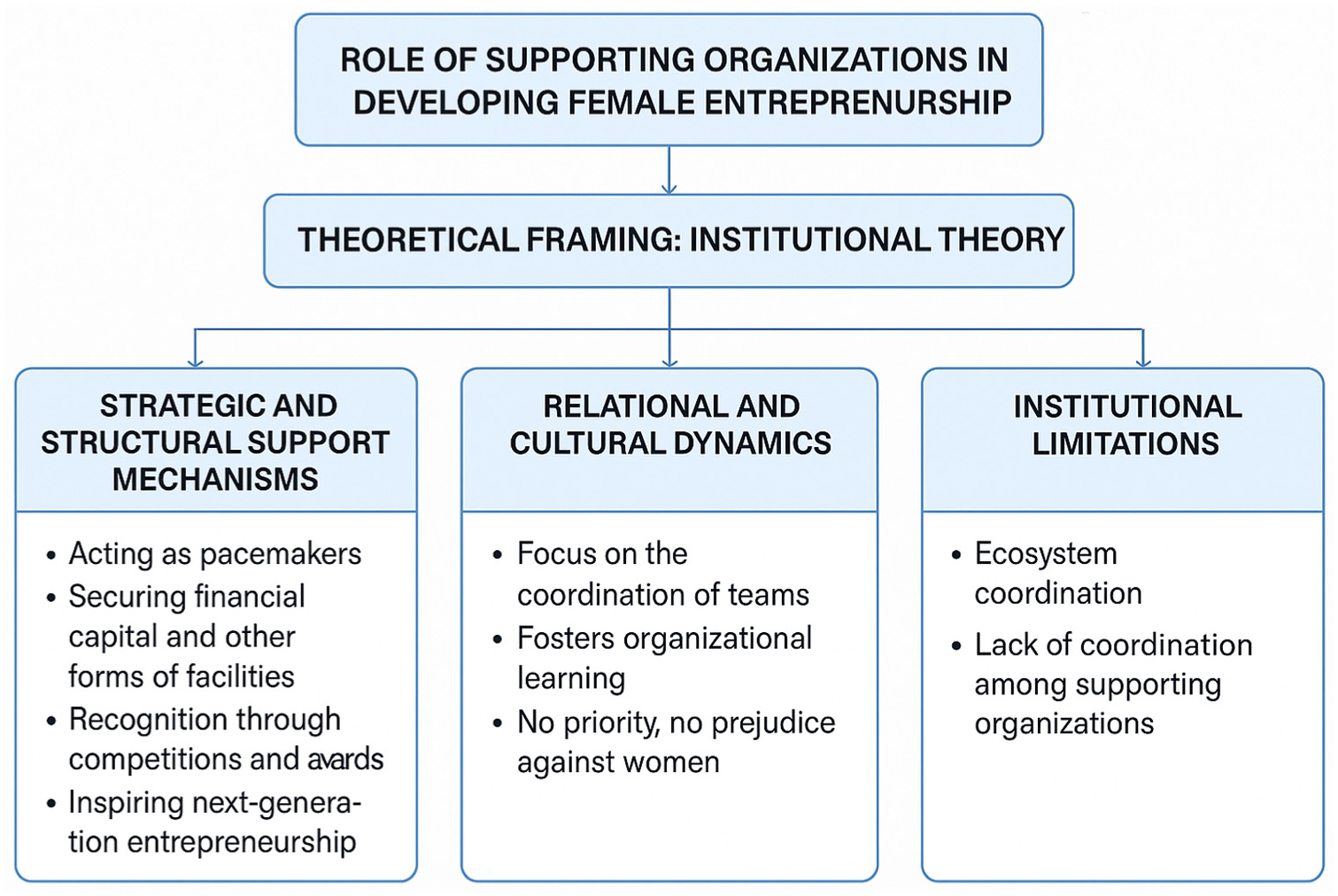
Research model.
Figure 1 presents the model developed based on the key findings of the study. It highlights that the development of female entrepreneurs is influenced not only by the strategic support provided by supporting organizations but also by institutional neglect and specific cultural dynamics. These factors interact to shape the entrepreneurial journey of women, underscoring the need for a more nuanced and context-sensitive approach to institutional support.
Conclusion and Future Research Agenda
The main findings of this study are organized into nine sub-themes under three overarching themes. The first theme, Strategic and Structural Support Mechanisms, illustrates how supporting organizations act as institutional entrepreneurs by introducing innovative support models to foster female entrepreneurship. The second theme, Relational and Cultural Dynamics, captures how these organizations operate within specific cultural contexts, highlighting the normative tensions between gender-neutral approaches and existing gendered expectations. The third theme, Institutional Limitations, reflects the presence of institutional voids, which hinder the development of an inclusive and sustainable entrepreneurial ecosystem for women.
The findings of this study contribute to institutional theory by demonstrating that supporting organizations can act as institutional entrepreneurs, even within resource-constrained and gendered environments. By integrating a gender analysis into institutional theory, the study reveals that gender equality policies alone are insufficient, as they often overlook the specific needs and experiences of women, leading to their exclusion in entrepreneurial processes. Therefore, this research extends our understanding of institutional theory by encouraging a rethinking of how gender norms are embedded within institutional structures and how they can be challenged from within organizations. As an option for emerging-market entrepreneurs to consider, our research has revealed a new kind of entrepreneurial support organization called a pacemaker organization, or pacer. Spanning a year to a lifetime, pacers provide long-term support to entrepreneurs. Some organizations have changed their business models during the last 20 years to become pacemakers, helping to bridge the gap in the entrepreneurial support systems of emerging countries. The findings revealed that these pacemaker organizations play a proactive role in driving structural changes within the institutional environment and in addressing context-specific challenges faced by female entrepreneurs, distinguishing them from traditional support organizations.
According to our data, the ecosystem offers various support activities that give entrepreneurs access to a wealth of tools and services. However, despite clear weekly collaboration among the supporting institutions, there is insufficient evidence that they adequately distinguish between the diverse funding needs of startups, thereby providing redundant instead of efficient support. Overall, this indicates that while the ecosystem of female entrepreneurs is growing and has harmonious internal interactions, it lacks depth of linkages and diversity of actors (Surangi, 2018).
Important practical and policy implications for female entrepreneurs have been brought to light by this qualitative study. Based on the findings, several key recommendations can be made to enhance the development of female entrepreneurs in Sri Lanka: First, the establishment of a national digital platform is essential to integrate and centralize the various forms of support offered by Sri Lankan institutions. This platform would improve accessibility, coordination, and transparency across support services. Second, promoting public–private partnerships among these institutions can foster innovative and targeted solutions to address the specific bottlenecks faced by women entrepreneurs, such as limited market access, finance, and technology. Finally, the introduction of sector-specific and gender-focused funding and support schemes and policies is critical. These initiatives should prioritize industries where women are significantly represented and provide tailored financial and non-financial assistance to bridge existing gaps in support and opportunity.
Despite offering new insights, this study, like many others, has certain limitations. One key constraint was the exclusive focus on members of supporting organizations, without incorporating the perspectives of female entrepreneurs. To develop a more comprehensive understanding, future research should include the voices of female entrepreneurs to provide a bottom-up perspective on institutional support. Furthermore, future studies could explore how supporting organizations address institutional voids and enhance coordination among themselves. Adopting an intersectional approach would also be valuable in examining how gender, ethnicity, geographical location and social class influence access to support services
Footnotes

Ethical Considerations
Ethical approval for this study was obtained. Informed consent was obtained from all participants prior to data collection. Participation was voluntary, and confidentiality was ensured throughout the study.
Author Contributions
H. A. K. N. S. and W. A. D. S., and S. M. A. K. did the research project. W. A. D. S. and S. M. A. K. collected data and H. A. K. N. S. helped to analyze the data. H. A. K. N. S. S. wrote the manuscript. H. A. K. N. S. took the lead in writing the manuscript. Others provided critical feedback and helped shape the research, analysis and manuscript. All authors read the final manuscript and approved it.
Funding
The authors received no financial support for the research, authorship, and/or publication of this article.
Declaration of Conflicting Interests
The authors declared no potential conflicts of interest with respect to the research, authorship, and/or publication of this article.
Data Availability Statement
Authors confirm that most of the data generated or analyzed during this study are included in this article. The rest of the data are available from the authors upon reasonable request.