



Abstract
With the increasing prevalence of traditional and cyberbullying, their negative impact on adolescents’ mental health has drawn growing attention. However, the differences in their underlying psychological mechanisms remain insufficiently explored, particularly concerning how emotion regulation and family support influence these processes. To compensate for this shortcoming in prior studies, this study proposes a moderated mediation framework drawing upon the theoretical perspectives of stress coping mechanisms and the process model of emotional regulation, aiming to examine the distinct pathways through which traditional and cyberbullying victimization affect adolescents’ mental health. A total of 582 Chinese secondary school students completed validated questionnaires assessing bullying victimization, emotion regulation strategies, family support, and mental health. Partial least squares structural equation modeling (PLS-SEM) was used to test the proposed model and hypotheses. Both traditional and cyberbullying victimization significantly and negatively associated with adolescents’ mental health. Cognitive reappraisal and expressive suppression acted as partial mediators. Family support served as a significant moderator, especially in traditional bullying contexts. This study highlights the differential psychological mechanisms of traditional and cyberbullying victimization. The findings support the presence of the mediating role of emotion regulation and the moderating effect of family support, offering theoretical insights and practical implications adolescent mental health interventions.
Keywords
Introduction
In the context of a society increasingly shaped by digitalization and socialization, bullying has become a prominent risk factor with escalating harm to adolescents’ mental health (MH). Traditional bullying victimization (TBV) (e.g., physical assault, social exclusion) and cyberbullying victimization (CBV) (e.g., online insults, privacy violations) are two core forms of bullying that have received widespread attention due to their prevalence and detrimental effects. Recent global reports indicate that approximately 30% of adolescents have been involved in bullying incidents, either as victims or perpetrators, and that CBV has shown a rapid upward trend due to the increasing use of social media (Yang et al., 2022). In a study of 2,582 adolescents, Chen and Chen (2020) reported that 20.4% of youth in Hong Kong, 7.7% in mainland China, and 20.6% in Taiwan had engaged in cyberbullying behaviors. Moreover, the prevalence of CBV continues to rise (Bai et al., 2021). Empirical evidence has demonstrated that experiencing bullying significantly elevates adolescents’ risks of developing depression, anxiety, self-injurious behaviors, and suicidal tendencies, and continuously disrupts their emotional stability and social adaptability (Yang et al., 2022; Zhang et al., 2019). However, TBV and CBV differ substantially in their forms and mechanisms. TBV typically occurs in offline settings such as schools or communities and is characterized by direct confrontation and situational visibility. In contrast, CBV takes place on virtual social platforms and features anonymity, persistence, and wide dissemination, making it more difficult for victims to escape or obtain immediate support (Liang et al., 2025).Therefore, this study theoretically conceptualizes TBV and CBV as interrelated yet relatively independent social risk events, aiming to compare their respective pathways of association with adolescents’ mental health across different contexts. Given the collectivist orientation of Chinese culture, where social harmony and interpersonal reputation are highly valued, both TBV and CBV may generate stronger emotional distress and social pressure among adolescents (Jiang et al., 2025). Within this cultural context, systematically examining how different forms of bullying victimization relate to adolescents’ MH can deepen theoretical understanding of bullying-related psychological processes and provide empirical evidence to inform school-based psychological education and social interventions in China.
To improve adolescent MH, numerous a large body of study has investigated how emotion regulation abilities and positive interpersonal connections can serve as buffers against the harmful consequences of bullying (Chen et al., 2025; Vacca et al., 2023). As outlined in the Emotion Regulation Process Model, cognitive reappraisal and expressive suppression represent adaptive and maladaptive regulation strategies (Gross, 1998). Research has shown that individuals with stronger adaptive emotion regulation skills tend to build more positive interpersonal relationships and report higher levels of MH (Zhang et al., 2022), which helps reduce the detrimental impact of bullying on depressive symptoms (Zhou et al., 2024). In contrast, individuals who rely on maladaptive regulation strategies are more prone to experiencing negative psychological consequences, including diminished emotional well-being (Du et al., 2024). Furthermore, based on the Stress-Coping Theory, family support plays a vital role in adolescents’ psychological development. Recognized social support functions as an important psychological asset that helps individuals cope with challenging and stressful environmental factors, such as bullying, and maintain their MH (Rosenstock, 1974; Wu et al., 2024). Therefore, identifying the key mechanisms that explain individual differences in MH outcomes following bullying victimization—particularly the internal regulation capacities of adolescents under stress—has become a critical direction for current research. Among these mechanisms, enhancing adolescents’ use of adaptive emotion regulation strategies to buffer the psychological damage caused by bullying has become a focal point in both intervention practices and theoretical explorations.
However, current research has not yet provided a clear understanding of whether the effects of TBV and CBV on adolescent MH differ in their underlying mechanisms. To bridge this gap, the present research proposes a moderated mediation model informed by the Stress-Coping Theory and the Emotion Regulation Process Model, incorporating variables such as TBV and CBV, emotion regulation strategies, and family support. In contrast to existing literature, this research investigates how adolescent MH is shaped by distinct psychological routes associated with TBV and CBV. By incorporating emotion regulation as an intervening variable and family support as a contextual moderator, the study seeks to clarify the divergent mechanisms underlying the influence of these two bullying types.
Theoretical Framework and Hypotheses
Theoretical Basis
The Stress-Coping Theory is an important theoretical framework that explains how individuals cope with stressors and their consequences, emphasizing the critical impact of individuals' cognition of stressors (such as bullying victimization) and the coping strategies they adopt on their mental and physical health (Lazarus & Folkman, 1984). This theory is widely applicable and insightful in understanding various stressors, including interpersonal violence. In the context of adolescent bullying victimization, both traditional bullying and cyberbullying serve as significant stressors that influence an individual's choice of emotional regulation strategies, ultimately affecting their MH outcomes (Wethington et al., 2015). Furthermore, research indicates that effective coping resources, for instance, family support, may help reduce or mitigate the harmful psychological impact caused by bullying victimization (Bowen, 1993; Cohen & Wills, 1985).Therefore, interventions based on the Stress-Coping Theory can help deepen the understanding of the differential impact of these two types of bullying on adolescents and enhance their ability to cope with bullying, thereby improving their MH.
The Emotion Regulation Process Model systematically explains how individuals monitor, evaluate, and adjust their emotional responses to achieve their goals, with the central idea that cognitive reappraisal and expressive suppression are instrumental in adapting to stress and maintaining MH (Gross, 1998). Research shows that when adolescents effectively employ cognitive reappraisal strategies, they can mitigate the negative effects of stress, maintain emotional stability, and reduce psychological harm (Zhang et al., 2022; Zhou et al., 2024). However, unhealthy coping patterns like expressive suppression can exacerbate psychological distress, particularly when adolescents experience bullying. In such cases, negative emotions may not be effectively released due to the suppression strategy, thereby worsening MH issues (Tsuno, 2022; Van den Brande et al., 2016). Therefore, based on this theory, exploring the similarities and differences in the emotion regulation processes of adolescents following traditional and cyberbullying victimization is of significant importance for understanding adolescent MH.
In summary, the Stress-Coping Theory and the Emotion Regulation Process Model provide an integrated framework for revealing the psychological mechanisms of bullying victimization. The Stress-Coping Theory emphasizes how individuals cope with external stressors through emotion regulation strategies and underscores the critical buffering role of family support, while the Emotion Regulation Theory specifically reveals the distinct effects of cognitive reappraisal and expressive suppression in coping with stress. By adopting this comprehensive analytical model, the present research broadens the theoretical application of both the Stress-Coping Theory and the Emotion Regulation Process Model within adolescent MH studies, while also offering conceptual and empirical insights into how bullying victimization, emotion regulation, and family support are interrelated.
Hypotheses
Bullying Victimization and Mental Health
Being subjected to bullying victimization is broadly acknowledged as a major contributing factor to poor MH among adolescents, with TBV and TBV being two major forms of bullying victimization that have received extensive attention in research. TBV typically occurs in face-to-face interactions and is characterized by repetitive negative behaviors such as physical assault, verbal abuse, and social isolation (Hu et al., 2021; Olweus, 2010). Olweus (2010) first identified three defining characteristics of bullying: intentionality, repetitiveness, and power imbalance, which laid the conceptual foundation for subsequent research. Building on this framework, Hu et al. (2021) further validated the cultural features of TBV in Chinese school settings, such as interpersonal humiliation and social exclusion. In contrast, CBV involves the use of electronic media to perpetrate behaviors such as online insults, privacy violations, and malicious spreading of information. It is marked by anonymity, rapid spread, and a broad impact (Smith et al., 2006).
Numerous studies have consistently shown that both TBV and CBV are substantially negatively associated with adolescents' MH (Islam et al., 2020; Yang et al., 2021). To illustrate this point, Chai et al. (2020) revealed that experiences of bullying are closely linked to emotional distress, self-injury, and increased risk of suicide among adolescents, all of which detrimentally impact their psychological well-being. Notably, the adverse effects of bullying on adolescents tend to be long-lasting (Anderson et al., 2022). Wang et al. (2025) further reported that exposure to bullying victimization tends to increase the likelihood of adolescents developing emotional disorders, particularly depressive and anxious symptoms, with victims being more likely to suffer from persistent emotional problems—effects that may even extend into adulthood. Moreover, traditional and cyberbullying often overlap substantially, with many adolescents simultaneously experiencing both forms of victimization (Wolke, 2017). Yang et al. (2021) emphasized that adolescents subjected to both types of bullying exhibit greater vulnerability to mental health issues than those exposed to only one type, often exhibiting comorbid psychological symptoms. This cumulative effect of bullying demonstrates a dose–response relationship, wherein dual victims show marked vulnerability and an elevated risk for MH problems (Dantchev et al., 2018; Lanzillo et al., 2023). Taken together, traditional and cyberbullying constitute major sources of social stress for adolescents, with both types of victimization being negatively associated with MH. Dual victimization, in particular, poses a heightened threat, potentially leading to severe psychological distress. Accordingly, the present research puts forward the following hypotheses:
Mediating Role of Emotion Regulation
Emotion regulation is defined as a person’s capacity to manage their emotional experiences or expressions through specific psychological strategies, including cognitive reappraisal and expressive suppression (Gross, 1998). Existing research has found that adolescents who experience bullying often face dysfunction in their emotion regulation strategies. On the one hand, due to limited cognitive resources, they may reduce their use of cognitive reappraisal. Conversely, they tend to adopt expressive suppression to shield themselves emotionally in stressful social contexts (Schunk et al., 2022; Vranjes et al., 2018). Furthermore, there may be differences in the impact of TBV and CBV on emotion regulation strategies (Labella et al., 2024). TBV often involves direct confrontation and strong emotional arousal, which can interfere with cognitive processing and hinder individuals from using cognitive reappraisal. In contrast, CBV, characterized by anonymity and repetitiveness, tends to elicit expressive suppression. Ćwieluch and Błachnio (2022) found that online anonymity encourages individuals to adopt defensive suppression strategies. Rey et al. (2020) noted that victims often suppress emotions to maintain social image. Tengxu et al. (2022) further revealed that prolonged CBV exposure depletes emotional regulation resources, making suppression a passive defense mechanism. Therefore, bullying victimization regardless of its form, may weaken individuals’ ability to employ Cognitive reappraisal and increase their reliance on expressive suppression, thereby elevating MH risks.
Existing research indicates that adolescents' MH can be strongly affected by the specific emotion regulation strategies they adopt (Vacca et al., 2023; H. B. Wang, Zhang, et al., 2024; Y. Wang, Wang, et al., 2024). For example, H. B. Wang, Zhang, et al. (2024) emphasized that employing cognitive reappraisal enables people to shift their interpretation of experiences toward a more favorable viewpoint, which contributes to reducing emotional distress and fostering better psychological health. In contrast, expressive suppression is frequently related to reduced psychological adaptability and elevated risks of MH issues, including depressive and anxious symptoms (Vacca et al., 2023). Besides this, adolescents subjected to bullying are more prone to difficulties in emotion regulation, which may signal an increased risk of psychological issues (Schunk et al., 2022). Y. Wang, Wang, et al. (2024) reported that a habitual reliance on expressive suppression, coupled with minimal use of cognitive reappraisal, tends to amplify the detrimental consequences of bullying victimization on psychological well-being in adolescence. In summary, emotion regulation not only serves as a psychological response mechanism to bullying but may also represent a critical mediating pathway through which bullying affects MH. Accordingly, the present research puts forward the following hypotheses:
Moderating Role of Family Support
Family support refers to the dynamic interactive process through which family members provide emotional, behavioral, or resource-based assistance to help individuals cope with stress and meet their needs (Cohen & Wills, 1985). Family support, as an essential dimension of overall social support, is commonly identified as a mitigating influence that can moderate the impact of stressful life events, such as bullying victimization, and an individual’s MH. This view has been widely supported by empirical research (Davidson & Demaray, 2007). First, researches have found that a strong family support system helps prevent adolescents from experiencing bullying victimization (Elgar et al., 2014). For instance, Grunin et al. (2021) found that adolescents who report stronger perceptions of familial support are less prone to participate in cyberbullying behaviors, whether as offenders or targets. Furthermore, Biswas et al. (2022) found that improving family relationship quality can effectively reduce the occurrence of bullying victimization and other high-risk behaviors. Second, family support plays a significant protective role in adolescent MH after bullying victimization occurs (Hawkins et al., 2021). Findings from Hawkins et al. (2021) and Healy et al. (2024) suggest that the presence of strong family support can reduce the psychological harm caused by bullying victimization, acting as a crucial protective factor in this dynamic. Specifically, Klomek and Koren (2021) observed that adolescents subjected to sustained bullying but who report strong family support tend to show significantly fewer symptoms of depression, anxiety, and related psychological issues than those lacking such support. Theoretically, these findings can be attributed to the Stress-Coping Theory of social support, which suggests that emotional or instrumental support from the family system can reduce the subjective distress and psychological burden caused by stressful events, thereby mitigating the negative impact on an individual’s MH (Cohen & Wills, 1985). In conclusion, family support plays a dual role by decreasing the chances of bullying victimization and alleviating its negative impact on adolescents’ MH. As such, family support is considered a key protective factor in adolescent bullying contexts. Accordingly, informed by the stress-buffering model and related empirical research, this study incorporates family support into the analysis model to explore its moderating role between bullying victimization and MH. Accordingly, the present research puts forward the following hypotheses:
Current Research
Focusing on psychological mechanisms, this research investigates whether cognitive reappraisal and expressive suppression serve as intermediary processes linking bullying victimization to adolescent MH outcomes, and further explores if variations in family functioning influence the strength of these associations. Drawing upon the theoretical perspectives of Stress-Coping Theory and the Emotion Regulation Process Model, this research seeks to uncover the specific pathways through which bullying victimization, as a stressor, affects MH and explores the buffering effect of family support as an external resource. Figure 1 illustrates the theoretical framework proposed in this research:

Research model.
Methods
Participants
To evaluate the hypothesized model, this research utilized the online platform Questionnaire Star (www.Sojump.com) for data collection. Data collection took place from February to April 2025. Prior to administering the questionnaire, all participants received clear information regarding the objectives of the study prior to their involvement, and the research team guaranteed the confidentiality of all personal data. Additionally, the research underscored that participation was entirely voluntary and that specific procedures were in place to ensure the confidentiality of personal data. Participants were required to be full-time secondary school students aged 13 to 18 years, with no reported cognitive or psychiatric disorders, and to provide informed consent (and parental consent for minors). Using a random sampling approach, several secondary schools were selected from Hunan Province in China, and students from different grade levels were invited to participate.
Based on Kline (2018) guideline requiring at least ten participants per survey item, and factoring in a projected 20% dropout rate, the researchers distributed a total of 600 questionnaires. In the data validation stage, 18 were discarded due to issues such as extensive nonresponse (leaving more than one-fifth of items blank) or an excessive tendency to select extreme values. After excluding these problematic entries, the final dataset comprised 582 valid responses, accounting for 97% of the total sample collected.
In terms of sample characteristics (see Table 1), there were 286 male participants (49.14%) and 296 female participants (50.86%). The age distribution was as follows: 69 participants aged 12 to 13 years (11.86%), 78 participants aged 14 to 16 years (13.40%), and 435 participants aged 17 to 18 years (74.74%). Regarding grade levels, 176 participants (30.24%) were in junior high school, and 406 participants (69.76%) were in senior high school. Regarding adolescent MH, no significant differences were found across gender (p >.05), age (p > .05), or grade level (p > .05). The diversity and size of the sample help ensure that the study results have broad applicability to a wider adolescent population in this research context.
Demographic Profile of Study Participants.

Measurement Tools
Traditional Bullying Victimization
This study employed the Traditional Bullying Victimization Questionnaire developed by Olweus (1996) to measure the extent of TBV among adolescents (Yang et al., 2022). The TBV subscale consists of six items, rated on a five-point Likert scale from 1 (indicating never) to 5 (indicating very frequent occurrences, such as several times per week). The total TBV score was calculated by summing the responses to all items, with higher scores reflecting more severe traditional bullying experiences. In the present study, the questionnaire exhibited strong internal consistency (Cronbach’s α = .923). Additionally, the Kaiser-Meyer-Olkin (KMO) value was 0.916, and Bartlett’s test of sphericity reached statistical significance (p < .001).
Cyberbullying Victimization
This study used the Chinese Cyberbullying Intervention Project Questionnaire developed by Brighi et al. (2012) to measure the extent of CBV among adolescents (Wang et al., 2025). The CBV dimension of the questionnaire consists of 7 items, rated on a 5-point Likert scale ranging from 1 (never) to 5 (very frequently—several times a week). The total score is the sum of the individual item scores, with higher total scores indicating a higher level of CBV. The results indicated excellent internal consistency for the scale, with a Cronbach’s α of .950. The KMO measure was 0.948, and Bartlett’s test of sphericity produced a statistically significant result (p < .001).
Emotion Regulation
This study employed the Emotion Regulation Questionnaire (ERQ) developed by Gross and John (2003) to evaluate adolescents’ emotion regulation abilities (Tang & He, 2022).The scale includes two dimensions: cognitive reappraisal (6 items) and expressive suppression (4 items). Responses were rated on a 7-point Likert scale ranging from 1 (strongly disagree) to 7 (strongly agree), with each subscale score calculated as the sum of its corresponding items. In this study, the Cronbach’s α coefficient was .977 for the cognitive reappraisal subscale and .956 for the expressive suppression subscale, indicating excellent internal consistency. The overall KMO value was 0.949, and Bartlett's test of sphericity was significant (p < .001).
Family Support
This study employed the Family APGAR Scale developed by Smilkstein (1978) to assess the level of family support among adolescents (Zhang et al., 2024). The scale consists of five items, each rated on a 3-point Likert scale, with the total score calculated as the sum of all item scores. In the present research, the scale demonstrated good internal consistency, with a Cronbach’s α of .794. The KMO value was 0.837, and Bartlett’s test of sphericity was statistically significant (p< .001), indicating the scale’s suitability for factor analysis.
General Health Questionnaire-12
This study used the General Health Questionnaire (GHQ-12) developed by Goldberg and Williams (1988) to assess adolescents’ MH (Liang et al., 2016). The scale consists of 12 items rated on a 4-point scale ranging from 1 (not at all) to 4 (rather often), with reverse scoring applied to negatively worded items. The total score is obtained by summing all items, where a higher score indicates better MH, reflecting fewer psychological problems and greater psychological adjustment. The results of this research indicated that the scale possessed outstanding internal consistency, with a Cronbach’s of .967. The KMO measure was also 0.962, and the outcome of Bartlett’s sphericity test was statistically significant (p < .001).
Statistical Analysis
To analyze the relationships among variables and validate both measurement and structural components, this research adopted the PLS-SEM technique. As highlighted in prior literature, PLS-SEM excels in prediction-focused analysis, tolerates smaller sample sizes, and remains reliable even when data distributions are non-normal (Leguina, 2015). Its capability to handle intricate model configurations further supports its use in this research context (Preacher & Hayes, 2008). Thus, PLS-SEM was selected as the most fitting analytical strategy for this investigation.
The data analysis consisted of two main components. First, the evaluation of the outer model, which focuses on reliability and validity. Reliability was assessed using item reliability, composite reliability, and Cronbach’s alpha. Validity assessment included both convergent and discriminant validity. To verify discriminant validity, the Fornell-Larcker criterion and cross-loadings were applied. Second, the inner model was evaluated, including tests for collinearity and the model’s explanatory power (R2), among others.
Result
Measurement Model
Following the recommendations of Hair Jr et al. (2021), this study evaluated the reliability and validity of the measurement model (see Table 2). All items exhibited outer loadings above 0.70, indicating strong item reliability (Byrne, 2013). In addition, the composite reliability values for all constructs ranged from 0.858 to 0.981, and Cronbach’s α coefficients ranged from .794 to .977, both exceeding the recommended thresholds and demonstrating high internal consistency (Hair Jr et al., 2021). The Average Variance Extracted (AVE) values ranged from 0.548 to 0.898, meeting the criteria for convergent validity (Henseler et al., 2015).
Reliability and Validity of the Model.

Note. TBV = traditional bullying victimization; CBV = cyberbullying victimization; CR = cognitive reappraisal; ES = expressive suppression; FS = family support; MH = mental health.
Discriminant validity was confirmed using the Fornell-Larcker criterion, which requires that the square root of each construct’s AVE exceeds its correlations with other constructs (Fornell & Larcker, 1981; Henseler et al., 2015). This condition was met (Table 3).
Fornell-Larcker Criterion.

Note. TBV = traditional bullying victimization; CBV = cyberbullying victimization; CR = cognitive reappraisal; ES: expressive suppression; FS = family support; MH = mental health. The diagonal values in bold indicate the square root of the AVE for each construct.
Henseler et al. (2015) proposed the Heterotrait-Monotrait ratio (HTMT) method for assessing discriminant validity. Each HTMT value remained under the 0.90 cutoff point (Table 4), indicating good discriminant validity (Hair Jr et al., 2021).
Heterotrait–Monotrait Criterion.

Note. TBV = traditional bullying victimization; CBV = cyberbullying victimization; CR = cognitive reappraisal; ES = expressive suppression; FS = family support; MH = mental health.
Common Method Bias (CMB) and Confirmatory Factor Analysis (CFA)
First, we applied Harman’s single-factor test to assess CMB. The analysis extracted seven factors with eigenvalues greater than 1, and the first factor accounted for 39.154% of the total variance, which is well below the commonly accepted threshold of 50% (Podsakoff et al., 2003). This result suggests that CMB was not a serious concern in this study. In addition, we conducted a CFA using AMOS 26.0 to further examine the potential influence of common method variance. The baseline model showed satisfactory fit indices, indicating good construct validity of the measurement model. Subsequently, the unmeasured latent method construct (ULMC) approach was employed by adding a common latent factor to the CFA model. As shown in Table 5, the differences in model fit indices (GFI, AGFI, CFI, IFI, and TLI) between the baseline model and the model including the method factor were all less than 0.01, and the change in RMSEA was less than 0.05. These results indicate that there was no substantial CMB issue in this study (Cheung & Rensvold, 2002).
Results of Common Method Bias Tests.

Note. CMIN = chi-square value; DF = degree of freedom; RMSEA = root mean square error of approximation; SRMR = Standardized Root Mean Square Residual; GFI = goodness-of-fit index; AGFI = adjusted goodness-of-fit index; CFI = comparative fit index; IFI = incremental fit index; TLI = tucker-lewis index.
Structural Model
To assess the reliability and explanatory power of the model, this study employed multiple evaluation indicators, including confirmatory factor analysis, collinearity diagnostics, significance testing of path coefficients, and the model’s explanatory power (R2).
Collinearity Test
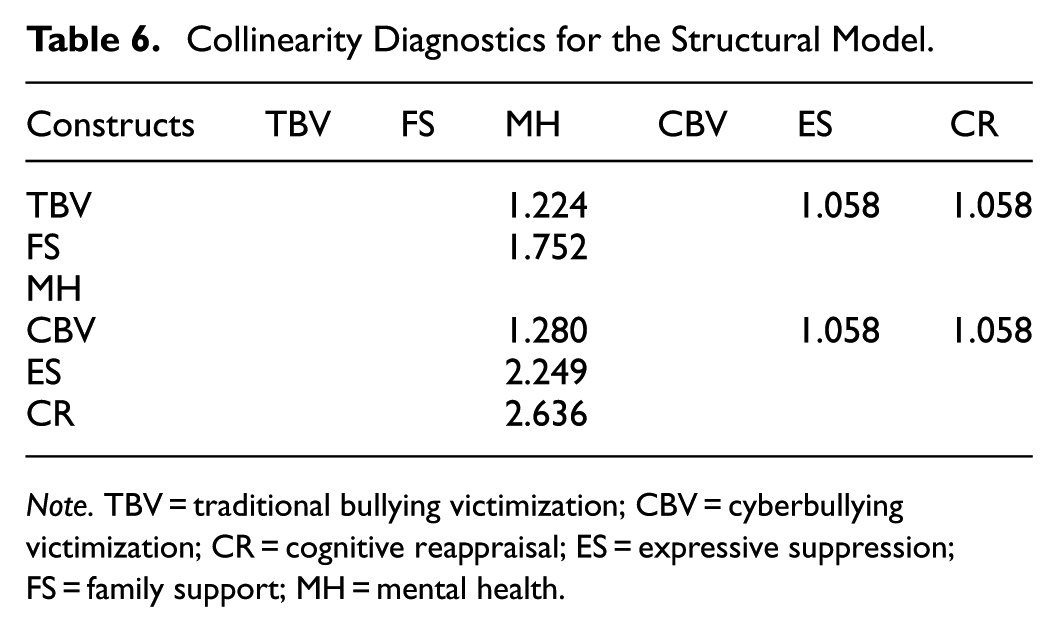
This research assessed multicollinearity using the Variance Inflation Factor (VIF) (Hair Jr et al., 2021). All VIF values for the latent constructs were below the critical threshold of 3.3 (Table 6), indicating no issues of multicollinearity in the model (Hair Jr et al., 2021).
Collinearity Diagnostics for the Structural Model.
Note. TBV = traditional bullying victimization; CBV = cyberbullying victimization; CR = cognitive reappraisal; ES = expressive suppression; FS = family support; MH = mental health.
Coefficient of Determination (R2) and Predictive Relevance (Q2)
The coefficient of determination (R2) is used to assess the extent to which independent variables explain the variance of the dependent variable. Based on Chin (1998), criteria, R2 values above 0.67 are strong, 0.33 to 0.67 moderate, and below 0.19 weak. The R2 value for MH is 0.600, suggesting moderate to strong explanatory power.
In addition, Stone-Geisser’s Q2 test was employed to evaluate the predictive relevance of the structural model (Geisser, 1974; Stone, 1974). The Q2 value for MH is 0.477, suggesting that the model has moderate predictive relevance.
Path Hypothesis Analysis
To test the hypothesized relationships in the structural model, this study applied statistical significance analysis to evaluate directional effects from independent to dependent constructs. As shown in Table 7 and Figure 2, all path coefficients had p-values less than .05 and absolute t-values greater than 1.96, indicating that all hypothesized relationships in the model were statistically significant. Therefore, H1 and H2 were supported.
Results of Path Hypothesis Testing.

Note. TBV = traditional bullying victimization; CBV = cyberbullying victimization; CR = cognitive reappraisal; ES = expressive suppression; FS = family support; MH = mental health.

Path coefficients after Bootstrapping.
Mediation Effect Analysis
This study conducted mediation analysis using the bootstrapping method within the PLS-SEM framework (see Table 8). The findings showed that cognitive reappraisal and expressive suppression had substantial indirect influences on the relationships between both types of bullying victimization and MH. Additionally, the direct effects of bullying victimization on MH remained significant. These findings indicate that cognitive reappraisal and expressive suppression serve as partial mediators in these relationships, thereby supporting H3 through H6.
Mediation Effect Analysis.

Note. TBV = traditional bullying victimization; CBV = cyberbullying victimization; CR = cognitive reappraisal; ES = expressive suppression; FS = family support; MH = mental health.
Moderation Effect Analysis
Findings from the moderation analysis (see Table 9) reveal that family support significantly moderates the relationship between TBV and MH, as well as the relationship between CBV and MH. The simple slope analyses (Figures 3 and 4) further reveal that at lower levels of family support (−1 SD), both forms of bullying victimization show a stronger negative association with MH. In contrast, at higher levels of family support (+1 SD), these negative associations are substantially weakened. This suggests that family support functions as a potential protective factor that mitigates the negative association between bullying victimization and MH. To further identify the specific regions of significance, the Johnson–Neyman analyses were conducted. The results indicated that for TBV, the negative association with MH remained significant when family support scores were below 10.53 on the Family APGAR scale, but became nonsignificant above this threshold. Similarly, for CBV, the negative association was significant when family support was below 10.40, and nonsignificant beyond this point. These findings suggest that adequate family support—corresponding approximately to the transition from moderate to good family functioning (APGAR ≥ 10)—effectively buffers the detrimental effects of both traditional and cyberbullying victimization on adolescents’ mental health. Therefore, H7 and H8 are supported.
Moderation Effect Analysis.

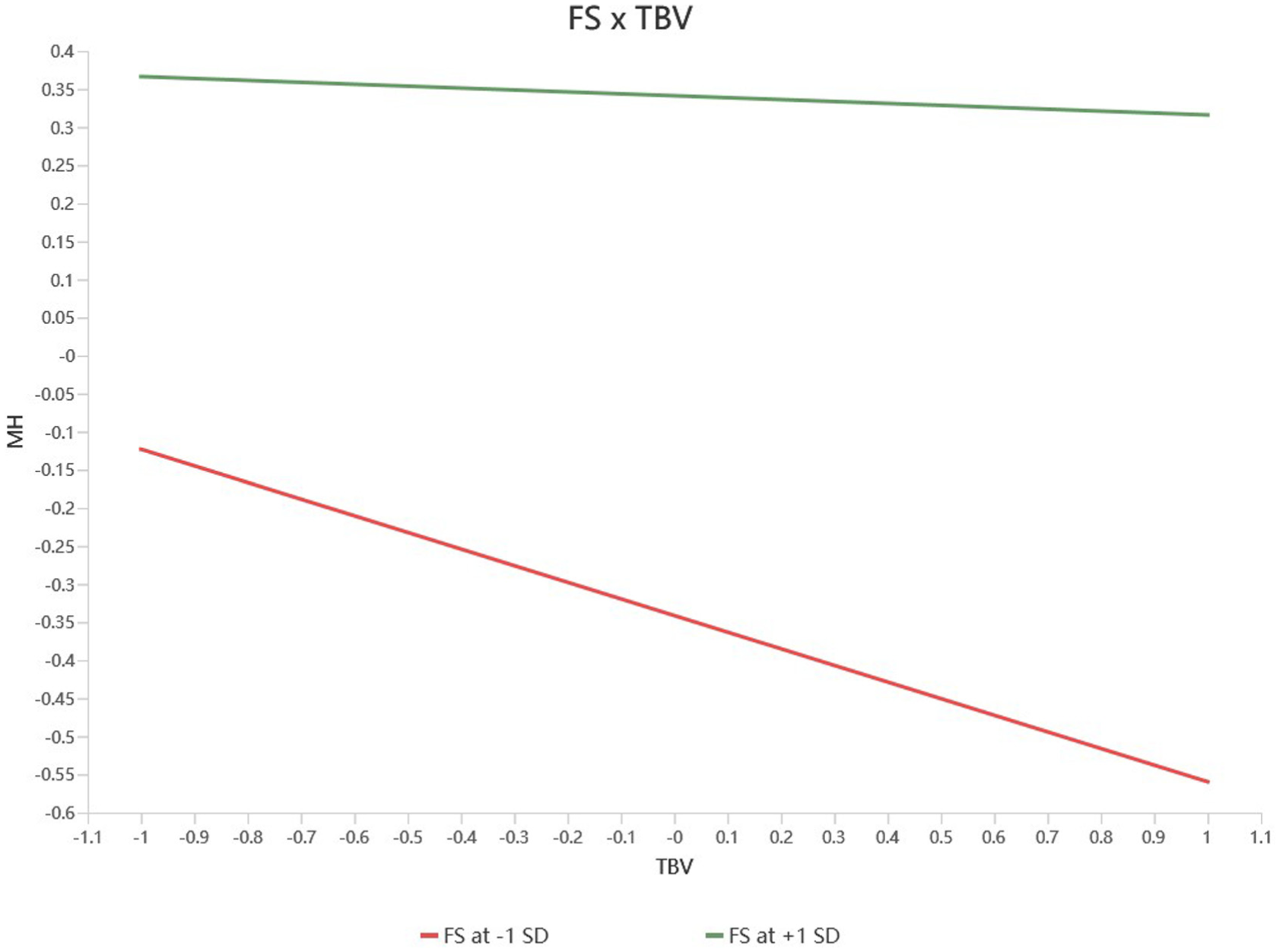
Family support moderation of TBV and MH.
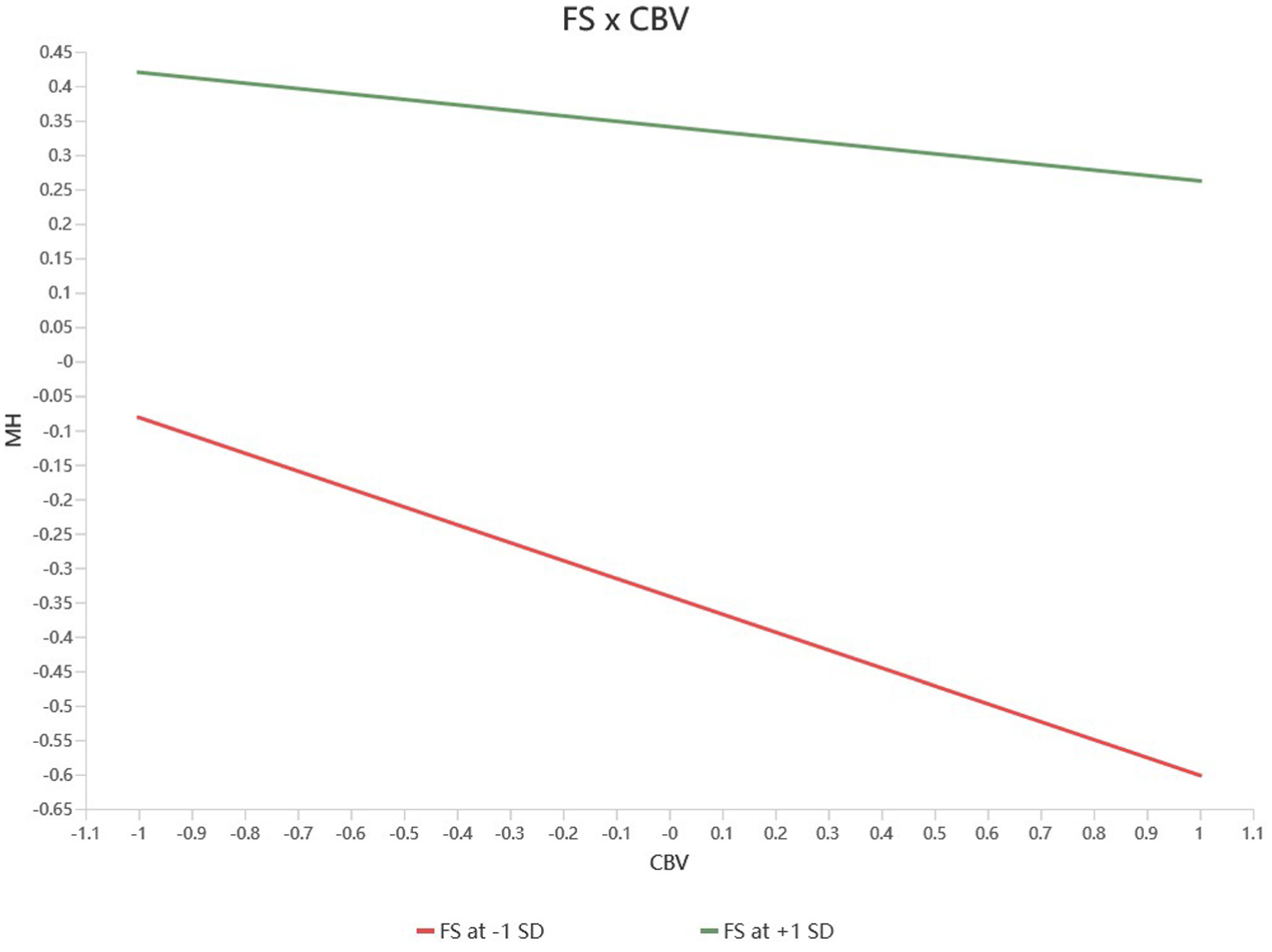
Family support moderation of CBV and MH.
Discussion
By systematically investigating the psychological consequences of TBV and CBV, this research elucidates the underlying mechanisms through which emotion regulation processes mediate, and family support conditions, the effects of bullying victimization on adolescent MH. The results show that both TBV and CBV are significantly negatively correlated with MH, and that cognitive reappraisal and expressive suppression function as partial mediators in this relationship. Additionally, the extent to which bullying experiences impact adolescents’ MH depends on the extent of family support available to them. Such results underscore the notion that cognitive reappraisal and expressive suppression are key internal mechanisms through which bullying victimization affects adolescent MH, and that family support is an important protective factor. This result is consistent with recent findings showing that both forms of bullying victimization are significantly negatively associated with MH (Li et al., 2025). Moreover, CBV tends to exhibit a stronger negative association with MH (Tian et al., 2018), while FS serves as a buffering factor that mitigates the adverse effects of both TBV and CBV on adolescents’ MH (Li et al., 2018; Man et al., 2022). By integrating emotional regulation and FS mechanisms into a unified theoretical model, this study provides new evidence supporting the cross-study consistency of these associations.
Bullying Victimization and Mental Health
Adolescent MH is adversely associated with bullying victimization. This present study offers additional empirical support for this negative association, aligning with the findings reported by Wang et al. (2025), who highlighted the higher risks of depression and anxiety among bullying victims. These adverse psychological consequences further lead to lower social acceptance and insufficient social skills, creating a vicious cycle that deeply disrupts the development of adolescents (Almeida et al., 2021; Williams et al., 2024). This study examined the effects of TBV and CBV on MH, and both were found to exert significant negative associations with adolescents’ MH. This suggests that bullying experiences, whether occurring in real-life or online contexts, may trigger similar psychological risks. These findings align with previous research showing that although different forms of bullying vary in manifestation, they share a common outcome—undermining adolescents’ sense of social belonging and emotional security (Barlett et al., 2024; Drubina et al., 2023). Therefore, this study highlights the need for future research to focus more on the shared psychological mechanisms of bullying victimization rather than solely on contextual distinctions, particularly processes related to perceived threat, loss of control, and disrupted social connectedness, which collectively contribute to the decline in adolescents’ MH. However, given the cross-sectional nature of the data, causal inferences cannot be drawn, and longitudinal or experimental designs are needed to further validate these observed associations over time.
Mediating Role of Emotion Regulation
Bullying victimization is related to adolescents’ MH, partly through its association with cognitive reappraisal. The research identified a significant inverse relationship between bullying victimization and adolescent MH, with cognitive reappraisal notably reducing this negative link. The present results corroborate the conclusions of Y. Wang, Wang, et al. (2024), whose research investigated how bullying experiences relate to depressive symptoms among adolescents. Their research showed that actively using cognitive reappraisal helps alleviate depressive symptoms in adolescent bullying victims. Specifically, adolescents with stronger cognitive reappraisal skills are more inclined to cope with bullying experiences in a constructive and adaptive way, offering protection against poor MH and promoting higher levels of prosocial behavior (Hein et al., 2018). This finding supports the core idea of the emotion regulation process model, which holds the view that an individual's cognitive reappraisal ability in response to stressors is an important protective factor for MH (Gross & John, 2003). Additionally, some studies have pointed out that bullying victimization depletes cognitive reappraisal resources and leads to emotion regulation dysregulation (Chen et al., 2025; H. B. Wang, Zhang, et al., 2024). However, it has been increasingly demonstrated that the use of cognitive reappraisal strategies contributes to the reduction of negative emotions in adolescents (Yang et al., 2024; Zhan et al., 2017). This seemingly contradictory finding suggests that while it is important to enhance adolescents’ cognitive reappraisal abilities, we should avoid excessive use to maximize the promotion of adolescents’ psychological growth.
Bullying victimization is linked to adolescents’ mental health, partly through its association with expressive suppression. The present findings align with prior research, emphasizing the exacerbating effect of expressive suppression on the psychological consequences of bullying (Rey et al., 2020; Schunk et al., 2022). Specifically, adolescents who are bullied and tend to suppress emotional expression show significantly higher levels of internalized problems. This suppression also reduces their social support, which in turn leads to lower life satisfaction (Chervonsky & Hunt, 2018). Moreover, sustained expressive suppression can activate the sympathetic nervous system, intensifying stress-related physiological responses and creating a “psychological-physiological” vicious cycle (Nolen-Hoeksema, 2012). These findings support the emotion regulation process model, which suggests that expressive suppression may worsen psychological stress by hindering emotional release and the acquisition of social support (Gross & John, 2003). These results underscore the critical need to encourage constructive emotion regulation approaches as a means of enhancing adolescents’ MH development. Nonetheless, the measurement of emotion regulation in this study was based solely on self-report, which may not fully capture the dynamic and situational nature of adolescents’ emotional processes. Future research could employ multi-method approaches, such as behavioral or physiological indicators, to provide a more comprehensive understanding of emotion regulation mechanisms.
Moderating Role of Family Support
The extent to which bullying victimization is associated with adolescents’ MH varies with the level of family support, highlighting its potential buffering role. This study’s outcomes corroborate the conclusions drawn by Healy et al. (2024), who found that positive parent-child relationships are a crucial protective factor for Chinese adolescents in coping with bullying and contribute to the development of their MH. This study found that bullying victimization was significantly negatively associated with adolescents’ MH, while family support effectively buffered this negative association (Man et al., 2022; Ttofi et al., 2014). Specifically, supportive family relationships empower adolescents to cope more effectively with the adverse effects of bullying victimization by fostering internal resources such as confidence, emotional security, and self-value, ultimately preventing the intensification of negative emotional experiences (Giumetti et al., 2022; Gloppen et al., 2018). One noteworthy point emerging from this study is that the buffering role of family support in the link between TBV and MH was more pronounced than in the case of CBV. The results showed that the buffering effect of family support on TBV and CBV was consistent in direction, with no significant difference between the two. This suggests that family support serves as a universal protective factor across different forms of bullying contexts (Liu & Guo, 2024). Interpreted through the lens of social support theory, this result reflects the idea that family support can provide emotional security and alleviate the detrimental effects of BV on MH (Cohen & Wills, 1985). In addition, Healy et al. (2024) further confirmed the moderating role of supportive relationships between bullying victimization and psychological distress, noting that family support not only reduces adolescents’ risk of prolonged exposure to bullying but also alleviates long-term psychological distress. Therefore, this study underscores the importance of FS in fostering adolescents’ psychological resilience and adaptability, suggesting that schools and families should work collaboratively to strengthen support systems that help youth cope with the psychological risks associated with bullying. Nevertheless, the present study focused only on perceived family support and did not consider the potential influence of peer or teacher support, which may also play critical roles in buffering bullying-related stress. Future studies should adopt a broader ecological perspective to capture the interplay among multiple sources of social support.
Implications and Limitations
Theoretical Implications
First, guided by the stress-buffering theory and the emotion regulation process model, this study systematically examined the combined effects of bullying victimization, emotion regulation, and family support on adolescents’ MH. The results showed that cognitive reappraisal and expressive suppression partially mediated the association between bullying victimization and MH. This finding aligns with the core assumptions of the emotion regulation process model, suggesting that emotion regulation may serve as an essential psychological mechanism through which individuals cope with stressful experiences.
Second, by introducing family support as a social-level moderating variable, this study found that family support may buffer, to some extent, the negative association between bullying victimization and MH. This finding supports the key proposition of the stress-buffering theory, which posits that social support resources provide emotional security and environmental stability, helping individuals maintain psychological balance when facing threatening events. However, given the cross-sectional design of this study, these associations should be interpreted as correlational rather than causal.
Finally, based on the integration of internal emotion regulation and external social support, this study proposed a multilevel protective model. This model emphasizes that emotion regulation represents an individual-level self-regulation mechanism, whereas family support functions as a social-level protective resource. The two operate independently yet complement each other, jointly contributing to the maintenance and restoration of adolescents’ MH. This integrative framework not only extends the emotion regulation process model by incorporating a social contextual dimension but also provides a practical theoretical foundation for future psychological interventions.
Practical Implications
In practice, this study provides scientific evidence and effective approaches to promote adolescents’ MH, offering diversified intervention strategies. At the school level, this research verifies the detrimental influence of bullying experiences on adolescents’ MH and underscores the mediating function of cognitive reappraisal strategies in this relationship. Schools should pay attention to enhancing the role of cognitive reappraisal in improving adolescents’ MH. It is recommended that schools set up anonymous reporting boxes, check and address reports weekly to establish a normalized mechanism, increase the number of campus surveillance cameras, and reduce blind spots. For traditional bullying, schools should conduct monthly “Bullying Situation Response” training sessions, integrate emotion regulation training into the MH curriculum, and establish emotion regulation strategy learning groups led by school psychologists. For cyberbullying, schools should organize digital literacy improvement groups and use situational simulations to help adolescents improve their ability to identify online bullying victimization.
Second, within the family environment, the results suggest that the moderating effect of family support on the direct association between bullying victimization and adolescent MH outcomes. It is advisable that parents establish WeChat groups and maintain regular contact with school teachers to stay informed about their children's situation. Parents should also regularly participate in online or offline parent communication skills workshops to strengthen communication with their children. Moreover, parents should set positive examples and avoid violent behaviors in the family environment. Finally, at the adolescent level, teenagers should be aware of the harm that bullying victimization can cause to their physical and MH. They should learn to preserve evidence and report bullying incidents immediately. Additionally, a tripartite coordination mechanism should be established to prevent secondary harm caused by bullying incidents to adolescents.
Limitations
While this research has advanced the understanding of how bullying victimization, emotion regulation, family support family support, and MH are interrelated, certain constraints remain and should be taken into account in subsequent investigations. First, this study adopted a cross-sectional design and relied on self-report data, making it difficult to establish causal relationships. The results may also have been affected by common method bias and same-source effects, which could overestimate the associations among variables. Future research should employ longitudinal designs or multi-source data (e.g., peer, parent, or teacher reports) to enhance the robustness and interpretability of the findings. Second, the sample was drawn from schools in a single province using convenience sampling, which limits its representativeness. Future studies could improve generalizability through large-scale, multi-regional random sampling and further verify the model’s applicability and stability across adolescents of different genders and developmental stages by conducting multi-group analyses or measurement invariance tests. Third, the bullying victimization scale used in this study primarily assessed frequency without accounting for the severity or duration of bullying incidents. Moreover, TBV and CBV may overlap in real-world contexts, which could influence the interpretation of their independent effects. Future research may incorporate multidimensional indicators or latent variable modeling to capture bullying victimization characteristics more comprehensively and explore the interactive effects of TBV and CBV. Finally, as this study was conducted within a Chinese cultural context, the applicability of its conclusions to other cultural settings remains to be verified. Future research could employ cross-cultural comparisons to examine how cultural differences shape the relationships among bullying victimization, emotion regulation, and MH.
Conclusion
With reference to the Emotion Regulation Process Model and the stress-coping theory, this research explored how experiences of TBV and CBV influence adolescent MH, while also analyzing the indirect pathways through emotion regulation strategies and evaluating whether family support alters the strength of these relationships. The results indicated that both TBV and CBV had significant negative effects on adolescent MH. Moreover, cognitive reappraisal as a form of emotion regulation, served as a positive mediator in the relationship between bullying victimization and MH, while expressive suppression had a negative mediating effect. family support, as a protective factor, moderated the direct path from bullying victimization to MH. This study not only enriches the theoretical model of factors influencing adolescent MH but also deepens the understanding of the mechanisms by which emotion regulation strategy’s function. It provides new insights for future research and offers scientific evidence and effective approaches for promoting adolescent MH. The findings suggest that educators should focus on cultivating adaptive emotional skills, such as cognitive reappraisal, and emphasize building positive and supportive relational networks in MH interventions. Nevertheless, given the cross-sectional design of this study, the prospect of reverse causality between variables cannot be fully ruled out. To further explore the temporal dynamics of these associations, future research is advised to employ longitudinal study designs to enhance causal inference. Overall, this research contributes novel empirical insights into adolescent MH and offers valuable implications for future theoretical and practical work.
Footnotes
List of Abbreviations
CFA = Confirmatory Factor Analysis; VIF = Variance Inflation Factor; KMO = Kaiser-Meyer-Olkin; CMIN = Chi-Square Value; DF = Degree of Freedom; RMSEA = Root Mean Square Error of Approximation, SRMR = Standardized Root Mean Square Residual, GFI = Goodness-of-fit Index, AGFI = Adjusted Goodness-of-fit Index, CFI = Comparative Fit Index, IFI = Incremental Fit Index, TLI = Tucker-Lewis Index; AVE = Average Variance Extracted; HTMT = Heterotrait-Monotrait; CPM = Complementary Partial Mediation; TBV = Traditional Bullying Victimization; CBV = Cyberbullying Victimization; CR = Cognitive Reappraisal; ES = Expressive Suppression; FS = Family Support; MH = Mental Health.

Ethical Considerations
The researchers confirms that all research was performed in accordance with relevant guidelines/regulations applicable when human participants are involved (e.g., Declaration of Helsinki or similar). This study was approved by the Ethics Committee of Hunan Normal University (Approved no. 2025-0051).
Consent to Participate
The participants received oral and written information and provided written informed consent before participating in the study.
Author Contributions
Conceptualization: Anbang Hu, Liu Bai; Methodology: Anbang Hu, Yunqi Sun; Formal analysis and investigation: Anbang Hu; Writing—original draft preparation: Anbang Hu; Writing—review and editing: Anbang Hu; Supervision: Cuixia Lin. All the authors have read and agreed to the published version of the manuscript.
Funding
The authors disclosed receipt of the following financial support for the research, authorship, and/or publication of this article: The National Social Science Fund of China Major Project : Research on the Connotations and Values of Inheriting Chinese Civilization in the Construction of Chinese-style Modernization (No.23ZDA017).
Declaration of Conflicting Interests
The authors declared no potential conflicts of interest with respect to the research, authorship, and/or publication of this article.
Data Availability Statement
The data that support the findings of this study are available on request from the corresponding author.