




Abstract
This study examines the entrepreneurial intention of university students by analysing the necessity and sufficiency of its precursors through a combination of partial least squares structural equation modelling and necessary condition analysis. Grounded in the Theory of Planned Behaviour, the research identifies essential factors (“must-have” elements) that are critical for forming an entrepreneurial intention, distinguishing them from beneficial but non-essential (“should-have” elements). This approach offers a fresh perspective in entrepreneurship research by highlighting the necessary conditions that contribute to entrepreneurial intention. The findings provide valuable insights for universities seeking to enhance their entrepreneurial ecosystems and for policymakers aiming to foster entrepreneurial talent. By clarifying how various factors interact to shape entrepreneurial intention, this study makes significant contributions to both theoretical advancements and practical applications in promoting entrepreneurship among students.
Plain Language Summary
This study examines what drives university students to want to start their own businesses. It examines which factors are necessary for developing that entrepreneurial intention and which are helpful but not essential. Using a combination of two research methods, the study distinguishes between “must-have” factors that are crucial for fostering entrepreneurial intentions and “nice-to-have” factors that simply support it. The research provides a new perspective by focusing on the essential elements needed for students to develop entrepreneurial intentions. The findings can help universities improve their programs to encourage entrepreneurship and guide policymakers in supporting future entrepreneurs. By explaining how different factors influence students’ desires to become entrepreneurs, the study offers both theoretical insights and practical advice for boosting entrepreneurship among students.
Keywords
Introduction
Entrepreneurship plays a central role in fostering both local and global innovation and economic growth. Yet, new businesses face high mortality rates, with a substantial share closing within the first few years (Fairlie & Desai, 2021; Hering, 2020; Hoang Vu et al., 2021; Vu et al., 2022). Before entrepreneurial ventures can be created, individuals must first form an entrepreneurial intention (EI)—a sine qua non precursor to entrepreneurial behaviour. This study focuses on understanding the antecedents of EI, particularly in the context of university students, whose educational experiences often shape their future career trajectories. While entrepreneurial behaviour and venture success are widely studied, understanding EI at an earlier stage is critical for fostering a robust entrepreneurial environment in academic settings.
This study is anchored in Ajzen’s Theory of Planned Behaviour (TPB), a broadly applied model for explaining and predicting human behaviour (Armitage & Conner, 2001). TPB posits that individuals’ intentions to engage in a specific behaviour are determined by three key factors: their attitudes toward the behaviour (ATB), the subjective social norms (SSN), and their perceived behavioural control (PBC) (Ajzen, 1991). Because the present research investigates how university students form their EI, TPB provides a robust theoretical foundation for linking individual perceptions and contextual influences to behavioural outcomes.
The EI of individuals reflects their readiness, commitment, and motivation to undertake entrepreneurial activities (Batz Liñeiro et al., 2024; Belchior & Lyons, 2021; Obschonka et al., 2012). The importance of EI as a predictor of entrepreneurial behaviour is well recognized. For university students, this stage is pivotal because educational programs and supportive ecosystems can shape their career choices toward entrepreneurship (Aeeni et al., 2015). Historically, universities have attempted to influence EI through entrepreneurship education programs. However, the impact of these programs has been inconsistent (de Sousa et al., 2024; Wu et al., 2022), leading researchers to explore broader factors, such as the university environment and support system (ESS) (Bazan, Datta, et al., 2019; Chahal et al., 2023; Martins et al., 2023; Sim et al., 2021; Trivedi, 2017).
This study advances our understanding of the antecedents of EI by integrating “sufficiency” and “necessity” logics into the theoretical framework, drawing from the TPB (Ajzen, 1991). Using a combination of partial least squares-structural equation modelling (PLS-SEM) and necessary condition analysis (NCA), we investigate the factors that are both necessary and sufficient for forming EI. TPB has been widely used to predict entrepreneurial behaviour. Still, this study pioneers the use of NCA to identify factors necessary for forming EI—those whose absence guarantees the absence of EI (Dul, 2016).
Our study contributes to both theory and practice in two essential ways. First, we empirically examine the utility of the precursors of EI—ATB, PBC, and SSN—within the TPB framework to determine whether they serve as necessary conditions for forming EI. While these precursors are often assumed to be essential, this has not been fully explored using necessity logic. Second, we redefine the role of the university ESS, not just as an enabler but as a distal antecedent influencing the formation of EI. These insights provide universities with actionable strategies to foster the entrepreneurial potential of their students.
This article proceeds as follows: the Theoretical Background section outlines the theories and hypotheses guiding our methodological approach; the Methodology section details the data collection and analysis process; the Results and Discussion section presents the findings and discusses their implications for universities; and the Conclusion highlights future research directions and practical recommendations for supporting entrepreneurial ecosystems in academic settings.
Theoretical Background
The Theory of Planned Behaviour (Ajzen, 1991) extends the earlier Theory of Reasoned Action (Fishbein & Ajzen, 1975). As mentioned above, TPB proposes that intention—the most proximal antecedent of behaviour—is shaped by three constructs: attitude toward the behaviour, or the individual’s positive or negative assessment of performing it; subjective social norms, or the perceived social pressures from important others to engage or not engage in the behaviour; and perceived behavioural control, which reflects the person’s confidence in their ability and resources to execute the behaviour. Together, these factors explain why individuals decide to act in particular ways across diverse domains, from health and consumer choices to technology adoption and entrepreneurship (Armitage & Conner, 2001; Kautonen et al., 2015; Venkatesh et al., 2003).
Within the literature, there is a compelling argument that entrepreneurial behaviour—such as venturing into a new business—is fundamentally intentional (Batz Liñeiro et al., 2024; Belchior & Lyons, 2021; Vamvaka et al., 2020). Consequently, this behaviour is better predicted by an individual’s intention toward it rather than by their personality traits, beliefs, or demographic characteristics (Ajzen, 2001). EI refers to an individual’s conscious state of mind that directs their attention, experience, and behaviour toward undertaking entrepreneurial activities (Obschonka et al., 2012). It encompasses the individual’s preparedness, motivation, and willingness to commit the necessary effort to become an entrepreneur. EI is a crucial predictor of entrepreneurial behaviour, as it precedes the decision to start a new business (Krueger & Carsrud, 1993). Understanding the factors that shape EI is essential for universities and policymakers aiming to foster entrepreneurship among students.
To explore this phenomenon, researchers have proposed various mathematical models to gain a deeper understanding of EI. This study introduces a novel mathematical model of EI grounded in the TPB framework. We focus on exploring the impact of the university ESS on the precursors of intention and their effect on the EI of university students. Specifically, we investigate three critical antecedents (precursors) of intention: ATB, PBC, and SSN. These antecedents of entrepreneurial behaviour can be defined as a group of precursors or factors that influence an individual’s decision to undertake entrepreneurial activities. These antecedents shape the intentions and motivations that lead to actual entrepreneurial actions. They are interconnected and collectively shape the intention to perform entrepreneurial behaviours. Together, they form a comprehensive framework that explains how personal attitudes, social influences, and perceived capabilities contribute to entrepreneurial action. This study investigates both the sufficiency and necessity of these factors in predicting EI.
In this study, we build upon the TPB-based mathematical model of EI initially proposed by Trivedi (2016, 2017). Our modifications, inspired by Bazan, Shaikh, et al.’s (2019) work, are depicted in Figure 1. This path model represents hypotheses on the relationships among constructs and describes the complexity of different contributing factors producing the outcome based on theoretical reasoning. These relationships build on well-established theoretical (additive) arguments. Thus, we assume they are sufficiency relationships, that is, if the conditions increase, the outcomes will also increase (Richter et al., 2020). Notably, our departure from previous models lies in the conceptualization of the university ESS. Specifically, we contend that the university ESS exerts influence through two interconnected elements: entrepreneurship training (ET) (such as courses and workshops) and startup support (SS) (including mentorship and seed funding). These elements influence the entrepreneurial milieu (EM), shaping the overall entrepreneurial ecosystem, which, in turn, influences the three antecedents of EI of university students.
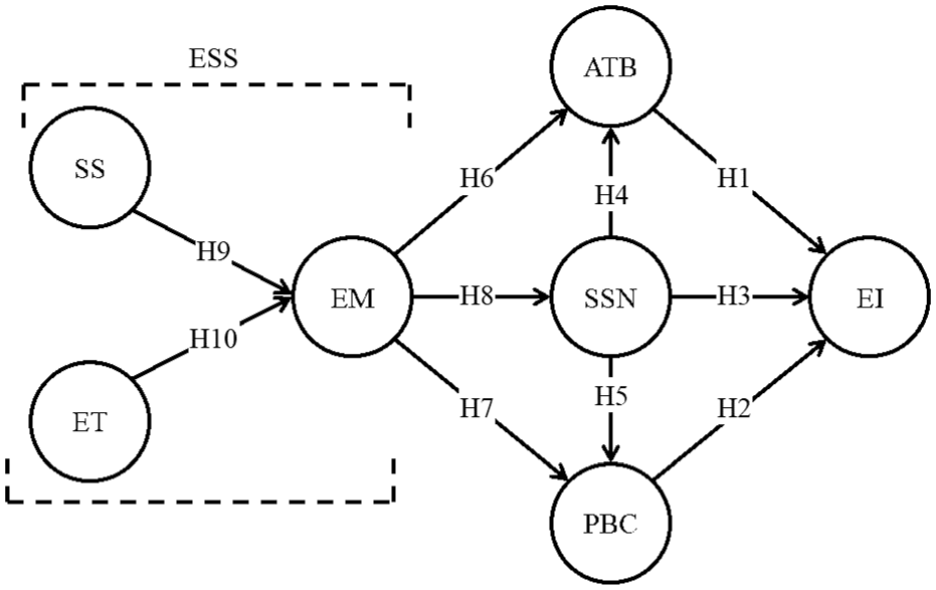
Mathematical model of entrepreneurial intention.
The entrepreneurial milieu refers to the immediate entrepreneurial environment within the university that results from the combination of entrepreneurship training and startup support. It captures the culture, networks, resources, and attitudes that create an ecosystem in which students perceive entrepreneurship as feasible and desirable (Etzkowitz, 2013; Guerrero & Urbano, 2012). EM, therefore, acts as an intermediate construct, translating the broader institutional support system into students’ individual ATP, SSN, and PBC related to entrepreneurship.
In Figure 1, ATB represents an individual’s favourable or unfavourable assessment of a particular behaviour (desirability). When someone holds a positive attitude toward creating a new business, it logically follows that they are more likely to have a stronger intention to proceed with launching the venture. Various studies have supported this relationship (Al Halbusi et al., 2023; Anjum et al., 2021; Pruett et al., 2009; Varamäki et al., 2013). The existing literature has consistently identified ATB as one of the most influential constructs in explaining the intention to launch a new business (Amofah & Saladrigues, 2022; Anjum et al., 2023; Batz Liñeiro et al., 2024; Ozaralli & Rivenburgh, 2016). Based on this premise, we formulate the following hypothesis:
H1a—ATB positively influences EI.
PBC refers to an individual’s perception of the ease or difficulty in performing a specific behaviour (feasibility). It encompasses the presence or absence of needed resources and opportunities and the perceived control over these elements (Swann et al., 2007). While related to self-efficacy, PBC has a broader conceptual scope. For instance, when considering starting a new business, a strong sense of PBC—rooted in competencies, experience, and anticipation of obstacles—typically leads to a robust intention to engage in entrepreneurial behaviour (Ajzen, 1991; Chandler & Jansen, 1992). Researchers have consistently highlighted PBC as pivotal in shaping EI (Bayona-Oré, 2024; Sabah, 2016; Vamvaka et al., 2020). Based on this premise, this study formulates the following hypotheses:
H2a—PBC positively influences EI.
SSN refers to the perceived social pressure to perform or refrain from certain behaviours (compliance). Specifically, SSN revolves around whether important individuals—such as family members, friends, or role models—would approve or disapprove of a person’s decision to start a new business. Additionally, it considers the importance of those opinions to the individual (Ajzen, 1991, 2001). When the views of these significant people matter to an individual, their intention to start a new business tends to be stronger when they receive encouragement from them (Pruett et al., 2009). However, the literature on SSN’s impact on EI has yielded inconsistent results (Anderson, 2023; Bird, 2015; Engle et al., 2010; Kautonen et al., 2013). Some studies have found a substantial connection between SSN and the precursors ATB and PBC, consistent with the original conceptualization of Ajzen’s TPB (Ajzen, 1991). Several researchers have empirically corroborated this argument (Bazan, Datta, et al., 2019; Liñán & Santos, 2007). Therefore, this study formulates the following hypotheses:
H3a—SSN positively influences EI.
H4a—SSN positively influences ATB.
H5a—SSN positively influences PBC.
ESS comprises two interconnected elements, SS and ET, positively influencing the university’s EM. The existing literature indicates that situational and contextual factors indirectly impact EI through the three antecedents: ATB, PBC, and SSN. Researchers have consistently demonstrated that the university ESS can indirectly influence the EI of university students (Bazan, Shaikh, et al., 2019; Sesen, 2013; Shirokova et al., 2016; Trivedi, 2017). Among these precursors, ATB and PBC appear to be particularly susceptible to the impact of the university ESS (Shirokova et al., 2016). However, recent research underscores another critical aspect: the university ESS can help students gain the support of their friends and families. These influential people affect SSN, thereby influencing the EI of university students (Bazan, 2022).
Prior studies show that contextual factors shape individuals’ evaluations of entrepreneurship by providing access to opportunities, training, and visible success stories (Bazan, Shaikh, et al., 2019; Shirokova et al., 2016). A supportive EM fosters positive ATB by normalizing entrepreneurship as a viable career option and by highlighting its potential benefits. When students perceive a rich entrepreneurial environment within their university, they are more likely to develop favourable evaluations of entrepreneurial behaviour. To explore these dynamics further, we formulate the following hypothesis:
H6a—EM positively influences ATB.
EM also contributes to PBC. A university environment that offers resources such as mentoring, networking, and incubator programs signals to students that they have access to the skills and support required to start a venture. These contextual enablers enhance students’ sense of competence and feasibility regarding entrepreneurship (Lu et al., 2021; Sesen, 2013). Therefore, we hypothesize:
H7a—EM positively influences PBC.
In addition, EM influences SSN by shaping the social fabric around students. When peers, faculty, and institutional culture endorse entrepreneurship, students perceive greater approval from their important referents. This institutional backing can strengthen the social legitimacy of entrepreneurship as a career path (Anderson, 2023; Bazan, 2022). To gain insight into this phenomenon, we hypothesize that:
H8a—EM positively influences SSN.
SS refers to the institutional mechanisms universities provide to help students transform ideas into ventures, such as mentorship, incubator programs, pitch competitions, seed funding, and access to entrepreneurial networks. Prior research has shown that such direct supports contribute to the development of an entrepreneurial climate by reducing barriers to entry and signalling that entrepreneurship is valued and encouraged (Sesen, 2013; Shirokova et al., 2016). By offering tangible resources and opportunities for venture creation, SS not only equips students with practical tools but also strengthens the overall EM of the university. In this sense, SS serves as a foundational building block that shapes the broader entrepreneurial ecosystem within which students form their ATB, SSN, and PBC toward entrepreneurship. Thus, we hypothesize that:
H9a—SS positively influences EM.
ET, such as courses, workshops, and experiential learning opportunities, plays a similarly essential role in influencing the EM. ET provides students with knowledge of business models, opportunity recognition, and resource mobilization, while also exposing them to entrepreneurial role models and peer learning. Studies have demonstrated that structured entrepreneurship education contributes to the emergence of an entrepreneurial culture by fostering entrepreneurial competencies and legitimizing entrepreneurship as a career path (Anjum et al., 2023; Lu et al., 2021). These educational interventions thus accumulate into a shared climate that encourages entrepreneurial thinking and behaviour. Accordingly, ET strengthens the EM by embedding entrepreneurial values and skills within the university context. Therefore:
H10a—ET positively influences EM.
As mentioned above, the TPB employs precursors such as ATB, PBC, and SSN to predict the strength of an individual’s intention to behave. However, theories that overlook necessary conditions risk inadequately predicting outcomes (Bokrantz & Dul, 2023). The perspective of necessity logic emphasizes that an outcome cannot occur if a required causal element is missing. Put differently, the reasoning follows “Y occurs only if X is present.” Such factors are indispensable: they must be in place whenever the intended outcome is observed. When absent, they function as bottlenecks that block the outcome. However, their presence does not ensure success; rather, their absence guarantees failure. Moreover, these conditions are non-compensatory—strengthening other predictors cannot make up for their lack (Dul, 2016).
The practical relevance of necessity theories is that satisfying all necessary conditions is crucial to avoiding failure (Bokrantz & Dul, 2023). In conjunction with additive logic, which characterizes sufficiency relationships between concepts in the TPB, this study proposes using necessity logic to describe these relations. By doing so, we can define the domain of generalizability and applicability of the TPB more precisely, for example, within the context of an entrepreneurial university. Necessary conditions delineate where the outcome becomes possible. Predictions derived from necessity theories fundamentally differ from those made by the TPB (“X produces Y”). Consequently, this study advocates integrating a necessity theory as an embedded component of a modified TPB.
As mentioned and hypothesized above, the precursors of intention play a pivotal role in shaping the EI of university students. According to the TPB, favourable ATB, SSN, and greater PBC lead to a heightened intention to participate in entrepreneurial behaviour (Ajzen, 1991). However, prior research has not thoroughly examined whether these precursors are necessary to form EI among university students. Existing studies have examined how variations in the university ESS condition students’ likelihood of pursuing entrepreneurial careers (Bazan, Datta, et al., 2019; Bazan, Shaikh, et al., 2019; Makai & Dőry, 2023; Murad et al., 2024). The university ESS encompasses important support mechanisms, including business incubation services, startup coaching and mentoring, technology transfer and commercialization, and intellectual property protection. These contextual conditions operate as indirect determinants of EI through their impact on fundamental beliefs and motivational processes. Previous studies have demonstrated that the university ESS significantly impacts the EI of university students through the antecedents ATB and PBC (Bazan, Datta, et al., 2019; Lu et al., 2021; Saeed et al., 2015; Trivedi, 2016, 2017; Zamrudi & Yulianti, 2020), and SSN (Bazan, 2022).
Therefore, our study posits that the absence of the antecedent (e.g., ATB) will correspondingly result in the absence of the outcome (e.g., EI). Based on this premise, we formulate the following hypotheses:
H1b—ATB is necessary for EI.
H2b—PBC is necessary for EI.
H3b—SSN is necessary for EI.
H4b—SSN is necessary for ATB.
H5b—SSN is necessary for PBC.
H6b—EM is necessary for ATB.
H7b—EM is necessary for PBC.
H8b—EM is necessary for SSN.
H9b—SS is necessary for EM.
H10b—ET is necessary for EM.
These hypotheses integrate traditional intention models based on the TPB with an additional layer of necessity logic, proposing a novel approach to understanding the influences on EI of university students. By incorporating necessity logic, we aim to define more precisely the conditions under which EI is formed, thereby enhancing the predictive power and applicability of the TPB within the entrepreneurial university context. The proposed model acknowledges the complex interplay between individual perceptions (ATB, PBC, and SSN) and the broader university ecosystem (EM, SS, and ET). It suggests that while certain conditions may not be sufficient to guarantee EI, their absence can prevent such intentions from forming. This insight would be crucial for university administrators and policymakers focused on fostering an entrepreneurial mindset among university students.
While TPB has demonstrated substantial explanatory power across a variety of behavioural domains, prior studies have generally emphasized the three proximal determinants of intention without sufficiently examining their importance and how broader institutional and environmental contexts shape these determinants. For instance, although ATB and PBC are largely individual-level cognitions, SSN are often influenced by distal factors such as cultural values, organizational structures, and institutional support systems. In the context of academic entrepreneurship, limited research has explicitly considered how such contextual elements shape subjective social norms and, in turn, behavioural intentions. This gap is significant because it restricts our understanding of how intentions develop within environments where external supports, constraints, or role models play a central role. The present study addresses this gap by extending TPB to incorporate the influence of the university ESS on the importance of the antecedents of intention. By integrating TPB with these contextual factors, the research contributes to theory by refining the conceptual boundary conditions of TPB and offering empirical evidence of how distal institutional mechanisms interact with proximal cognitive determinants in shaping intentions.
Methodology
Kraaijenbrink et al. (2010) identified three motivational factors influencing EI within the university context by developing and validating a university ESS scale. Building upon their work, several researchers have modified this scale to understand the impact of the university ESS on the antecedents of EI (Bazan, 2022; Bazan, Shaikh, et al., 2019; Trivedi, 2016, 2017). In this study, we designed a structured questionnaire to collect data (see Appendix), incorporating validated scale indicators from the existing literature. Specifically, we measured the following constructs: ATB, SSN, PBC, EI, and the university ESS components (SS, ET, and EM). An expert panel of three faculty and a group of five non-participating students evaluated the instrument to assess its comprehensibility and user-friendliness.
The study protocol was reviewed and approved by the university’s Interdisciplinary Committee on Ethics in Human Research. Recruitment letters were subsequently sent to students, outlining the study’s purpose, assuring confidentiality, and providing survey instructions. Responses were captured on a seven-point Likert scale from “1” (Strongly Disagree) to “7” (Strongly Agree). To encourage participation, students were offered the opportunity to win small incentives.
This study used purposeful sampling to collect the data from students at a mid-sized public university on the East Coast of Canada. NCA does not prescribe a minimum sample size. Accordingly, we applied sampling theory principles (Sarstedt et al., 2017) and assessed sample adequacy by considering the statistical power of PLS-SEM estimates when evaluating the predictive model. This study employed the inverse square root method to set the minimum sample size (Kock & Hadaya, 2018). This method accounts for the probability that the ratio between a path coefficient and its standard error will exceed a critical value, as given by the test statistic for a given significance level (Hair et al., 2021). This approach is rather conservative; thus, it slightly overestimates the required sample size. Assuming a minimum path coefficient of 0.11 to 0.20, a significance level of 5%, and a power of 80%, the required sample size is 155 usable responses.
We used the software packages IBM SPSS Statistics (IBM Corp., 2022), SmartPLS v4 (Ringle et al., 2024), and RStudio 2023.12.1+402 (RStudio Team, 2024) for data processing. SPSS was used to curate the raw data, while PLS-SEM and NCA were used to process the final dataset. PLS-SEM is particularly suitable for studies where the underlying theory is evolving. Its primary objective within the context of structural equation modelling is to explain and predict primary endogenous constructs (Hair et al., 2022). PLS-SEM was an appropriate choice to identify the determinants that can increase an outcome. In addition, we probed deeper using the NCA library v4.0.1 in RStudio. NCA aims to identify the essential prerequisites that must be present for EI to occur (Dul, 2016). Unlike traditional methods focusing on average effects, NCA sheds light on the boundaries and necessary degrees of preconditions for success or failure in shaping EI among university students. By understanding these critical factors, we gain valuable insights into the complexities of this entrepreneurial phenomenon.
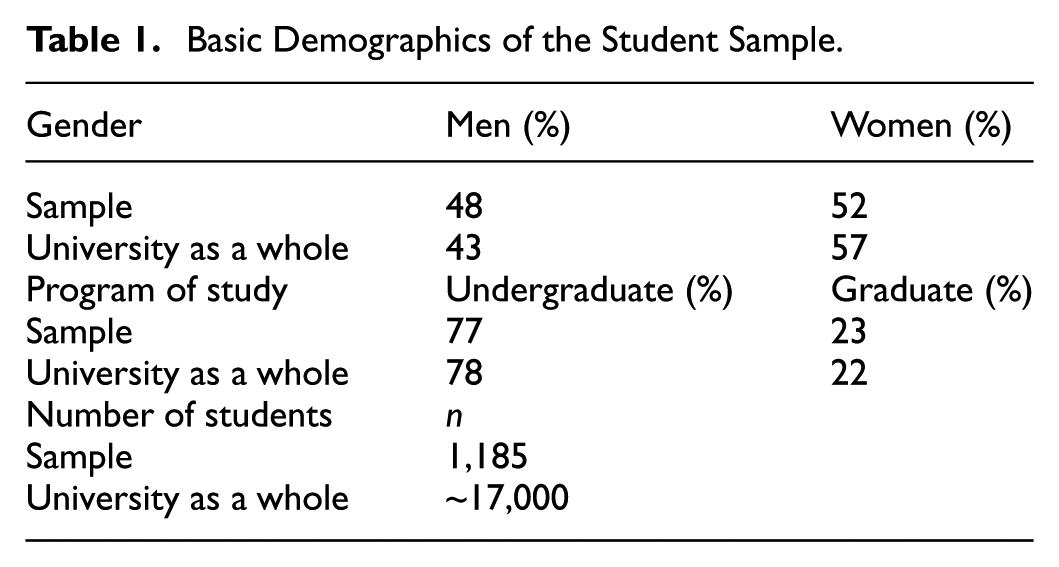
The data collection period spanned from October to December 2022, during which we distributed the recruitment letters to approximately 17,000 students enrolled in the fall semester. We collected 1,824 responses during the data collection period. A careful screening of the data identified and promptly removed 243 rows with missing entries. Additionally, 211 rows exhibited peculiar response patterns and low completion times; thus, we excluded them. We detected and deleted 18 rows of potential outliers by boxplot inspection. We eliminated 185 rows using the Mahalanobis distance method. These outliers deviated significantly from the expected distribution based on a chi-square distribution with equivalent degrees of freedom (Aguinis et al., 2013). This step is crucial in an NCA context since a single case can reduce the necessity of the effect size (Richter et al., 2020). We assessed data normality through skewness and kurtosis. The largest skewness and kurtosis were –1.148 and 1.398 for SSN5, slightly higher than the prescribed threshold of ±1. These deviations from normality further validate our choice of using PLS-SEM. Note that neither PLS-SEM nor NCA requires any particular distributional characteristics. The curated dataset comprises 1,167 rows with seven columns of demographic data. The final sample size surpasses the minimum requirement of 155 samples. However, we emphasize that this study does not claim to represent the student population fully. Instead, our focus was on achieving adequate statistical power for PLS-SEM analysis. Table 1 shows the select demographic data of the final sample.
Basic Demographics of the Student Sample.
Data Analysis
Several previous studies have shown that the university ESS impacts EI indirectly through the mediating effect of the more proximal antecedents ATB, PBC, and SSN (Bazan, 2022; Bazan, Datta, et al., 2019; Trivedi, 2016, 2017). This study adopted this assumption, as depicted in Figure 1. Before testing the hypothesized path model, we tested the effect that each of the individual exogenous constructs in the model, ATB, PBC, SSN, EM, SS, and ET, exerts on EI, for example, EM→EI (see Figure 2). Testing the magnitude and statistical significance of the direct effects before testing for indirect effects this way serves at least two purposes (Judd & Kenny, 2015). (1) The direct effects of distal constructs, for example, EM, SS, and ET, on the EI construct must be substantial for interaction, for example, for mediation to occur. (2) Inconsistent interactions, that is, suppression of effects, might become evident by comparing individual and complete path models (Maassen & Bakker, 2001).

A simple model to test the effect of individual constructs.
Furthermore, learning the importance of the interactions can inform possible refinements to the path model by which exogenous constructs affect an outcome (Ledermann & Macho, 2015). The naïve path models for the solo effect of ATB, PBC, SSN, EM, SS, and ET (in turn) on EI fit the data very well. Table 2 shows the magnitude of the path coefficients linking each construct and EI, which are statistically significant (p < .001).
Effects of Individual Constructs on EI.

Note. Statistical significance notation: p < .001 (***), p < .05 (**).
The path model used in this study has seven constructs, including reflective (ATB, PBC, SSN, EM, and EI) and formative (SS and ET) constructs. Together, EM, SS, and ET constitute the university ESS. The endogenous central construct, EI, has five indicators. The ATB, PBC, and EM constructs have five indicators. The exogenous constructs SS and ET have five indicators each. The indicators of the SSN construct are the product of two groups of measures (Kolvereid, 1996). The first group comprises four items assessing the extent to which friends and family regard entrepreneurship as a preferred career and the degree of support they would provide for such a decision. The second group has two indicators representing how important those opinions are to the student (Kibler, 2013). The latter two indicators represent weights scaling the first group of four indicators.
This study advances an embedded necessity framework, in which necessity relations are integrated within an established theory such as TPB. Under this approach, specific hypotheses are expressed as necessity relations, while others follow the conventional sufficiency logic. Embedded necessity theories are complex by design, adding depth to existing frameworks by highlighting the indispensable role of necessary conditions. Each necessity relation centres on a causal element whose absence—or insufficient level—prevents the outcome, regardless of other influences. In contrast to sufficiency, where a condition produces the outcome directly, necessity logic permits the outcome but does not itself generate it. Empirical investigation of embedded necessity theories requires combining necessity-oriented techniques (e.g., NCA) with conventional sufficiency methods (e.g., PLS-SEM). PLS-SEM is inadequate for testing necessary conditions; thus, combining PLS-SEM and NCA is essential to ensure a robust theory-method fit (Richter et al., 2020).
This study follows the guidelines for combining PLS-SEM and NCA by Richter et al. (2020). When combining PLS-SEM and NCA, we must ensure that the path model meets the assessment guidelines to evaluate the quality of measurement models in the context of PLS-SEM. Thus, we use the confirmatory composite analysis (CCA) approach to confirm measurement models when using PLS-SEM (Hair et al., 2020). CCA maximizes the variance extracted from the exogenous variables, facilitating the prediction of the endogenous constructs and confirmation of the measurement models.
The model in this study includes reflective and formative measurement models. This study specified the measurement models for the SS and ET constructs as formative. We argue that the SS indicators SS1, SS2, SS3, SS4, and SS5 listed in the Appendix cause (form) the startup support construct. We also claim that the ET indicators ET1, ET2, ET3, ET4, and ET5 listed in the Appendix cause (form) the entrepreneurship training construct. The theoretical substantiation of the measurement model specification for both constructs is as follows (Bollen & Diamantopoulos, 2017; Jarvis et al., 2003). (1) The set of indicators defines the characteristics of the construct. (2) Changes in the construct would not necessarily cause changes in the indicators. (3) The set of indicators does not have similar content. (4) Dropping an indicator in the construct would alter the conceptual domain of the construct. (5) The indicators in the set do not covary with each other. In essence, the indicators in both constructs are concrete representations of the university ESS, for example, SS1: [University Name] organizes business idea competitions, ET1: [University Name] provides students with the knowledge needed to start a new business, to which students respond based on their level of familiarity with these resources.
This study specified the measurement model for the EM construct as reflective. We argue that the EM indicators EM1, EM2, EM3, EM4, and EM5 listed in the Appendix are reflections of the entrepreneurial milieu construct. The theoretical substantiation of the measurement model specification for this construct is as follows (Bollen & Diamantopoulos, 2017; Jarvis et al., 2003). (1) The set of indicators are manifestations of the construct. (2) Changes in the construct would likely cause changes in the set of indicators. (3) The set of indicators shares similar content and are interchangeable. (4) Dropping an indicator in the construct would not alter the conceptual domain of the construct. (5) The indicators in the set covary with each other; thus, a change in one indicator may relate to changes in the other indicators. This study used confirmatory tetrad analysis (CTA) to verify the correct theoretical specification of the EM measurement model (Bollen & Ting, 1993, 2000). CTA can confirm the appropriateness of a reflective measurement model specification. First, we inspected whether the indicator correlations of the EM construct were sufficiently different from zero. The minimum correlation is 0.444 (between EM4 and EM5). Then, the bias-corrected and Bonferroni-adjusted confidence intervals indicate that zero falls into the confidence intervals. This result implies that the tetrads are not significantly different from zero (they vanish), suggesting that the indicators should be reflective.
Validating reflective measurement models involves assessing (1) indicator reliability, (2) construct reliability, (3) convergent validity, and (4) discriminant validity. Table 3 summarizes the results and their recommended thresholds, while we discuss the evaluation further below. (Note: For this study, bootstrapping was implemented with 10,000 resamples under the accelerated bias-corrected method, applying two-tailed tests and a 5% alpha level.)
(1) Indicator reliability: We assessed indicator reliability by examining the loadings and significance of the indicators and the amount of variance shared between the individual indicator and its construct. Analysis of the indicator loadings showed that all exceeded the recommended cutoff and were statistically significant (p < .001). The lowest indicator loading is 0.721 (SSN4), which produces a corresponding indicator reliability of 0.520, supporting indicator reliability.
(2) Construct reliability: We report three metrics of construct reliability. (i) Cronbach’s α: The lowest Cronbach’s α value in the model is 0.794 (SSN). (ii) Composite reliability (ρA): The minimum ρA value in the model is 0.838 (SSN). (iii) Composite reliability (ρC): The minimum ρC value in the model is 0.863 (SSN), while one ρC value, 0.950 (EI), slightly exceeded the higher bound. Nonetheless, we retained all indicators in the construct because they are part of a validated scale battery popular in the literature. Collectively, the three results provide evidence of reliable measurement across the reflective constructs.
(3) Convergent validity: We assessed the convergent validity by examining the average variance extracted (AVE). The minimum AVE value in the model is 0.605 (EM), therefore supporting the convergent validity of the measurement models.
(4) Discriminant validity: For completeness, we report the following discriminant validity metrics: (i) Cross-loadings: Each indicator’s loading was compared to its correlations with other constructs, and the analysis confirmed that no cross-loadings were present in the model. (ii) Fornell–Larcker criterion: The AVE for every construct exceeded the squared correlations with other constructs, supporting discriminant validity. (iii) Heterotrait–monotrait (HTMT) ratio: As shown in Table 4, the HTMT values were within acceptable limits. Because ATB and EI both capture the appeal and desirability of entrepreneurship, the highest HTMT value (0.937) was observed between these two constructs, as anticipated.
The three metrics pertinent to validating the formative measurement model are (1) convergent validity, (2) indicator multicollinearity, and (3) size and significance of indicator weights. Table 3 summarizes the results and their recommended thresholds, while we discuss their evaluation below.
(1) Convergent validity: We conducted separate redundancy analyses for both formative constructs using global single-item measures with a generic assessment of the concept representing SS and ET of the university ESS. This analysis yields path coefficients of 0.816 (SS) and 0.825 (ET), both statistically significant (p < .001), which exceed the recommended threshold of 0.70. These results provide support for the convergent validity of the formative constructs.
(2) Indicator multicollinearity: We checked the variance inflation factor (VIF) values of the formative measurement models for collinearity. The VIF values are consistently below the conservative threshold of 3.0, with the highest VIF value equal to 1.819 (ET5). Therefore, collinearity does not represent an issue when estimating the model.
(3) Size and significance of indicator weights: We considered the significance of the indicator weights using bootstrapping (see bootstrapping settings above). Table 3 shows the results and their recommended thresholds. Examining the indicator weights revealed that they are all statistically significant (p < .001). Table 3 also shows the indicator loadings of the formative constructs, which are also statistically significant (p < .001). The minimum indicator loading is 0.716 (SS5). An indicator loading is crucial in forming the formative construct when it is ≥0.50 and statistically significant (Hair et al., 2020).
The assessment of the measurement models confirmed that all reflective and formative constructs satisfied the established evaluation criteria. Collectively, the findings demonstrate the model’s reliability and validity.
Summary of Measurement Model Metrics.

Heterotrait-Monotrait Ratio.

This study is interested in understanding whether the relations within the path model also represent necessary conditions. Thus, we exported the latent variable scores for all the constructs and individual indicators of the exogenous formative constructs from SmartPLS to a file we can import into RStudio. We performed different NCA runs for each of the endogenous constructs and the single indicators for the two formative constructs to test whether they are necessary conditions for the outcome to occur (Richter et al., 2020). This study chose the ceiling envelop-free disposal hull (CE-FDH) as the default ceiling line for the NCA. The CE-FDH is a step function used when the variables are discrete with a limited number of levels, for example, 1-7 Likert scale. We specified 10,000 permutations to estimate the p-value in the statistical test. Table 5 presents the effect sizes
NCA Effect Sizes d and Their Significance.

Note. Statistical significance notation: p < .001 (***), p < .05 (**).

Scatter plots with CE-FDH ceiling lines in the upper-left corner.
The second step in assessing PLS-SEM results involves evaluating the structural model. This study followed the recommendations by Hair et al. (2022) and Hair et al. (2019) to evaluate the structural model. We assessed the following: (1) structural model collinearity, (2) explained variance, (3) predictive relevance, and (4) size and significance path coefficients.
(1) Structural model collinearity: We examined the VIF values of all the predictor constructs to assess collinearity and ensured that the size of the VIF values does not bias the regression results. The highest VIF value in the model is 2.808 (ET→EM), which is below the recommended conservative threshold (3.0). Thus, collinearity among the predictor constructs is not an issue.
(2) Explained variance: We measured the explained variance for each endogenous construct using the coefficient of determination (R2) and the effect size ( f2). The literature affords guidelines based on the study context: R2 values of 0.75, 0.50, and 0.25 representing substantial, moderate, and weak in-sample predictive power, respectively (Hair et al., 2011; Rigdon, 2012). The R2 value for the EI construct (0.819) is substantial, while the R2 values for the ATB (0.227), SSN (0.261), and the PBC (0.381) constructs are weak. Table 6 shows the effect size f2 values for all combinations of endogenous constructs (columns) and corresponding exogenous constructs (rows). As a guideline, values of 0.35, 0.15, and 0.02 represent large, medium and small
(3) Predictive relevance: We examined the model’s out-of-sample prediction power using the PLSpredict algorithm. After dividing the dataset into k = 10 groups, we calibrated the model with a training sample and subsequently tested its predictive performance on holdout data. We used ten repetitions to ensure a large enough sample size for each subgroup. The PLSpredict results focus on EI, the target endogenous construct in the model. We used a linear regression model to compare the model’s performance against the naïve benchmark. This comparison shows that the
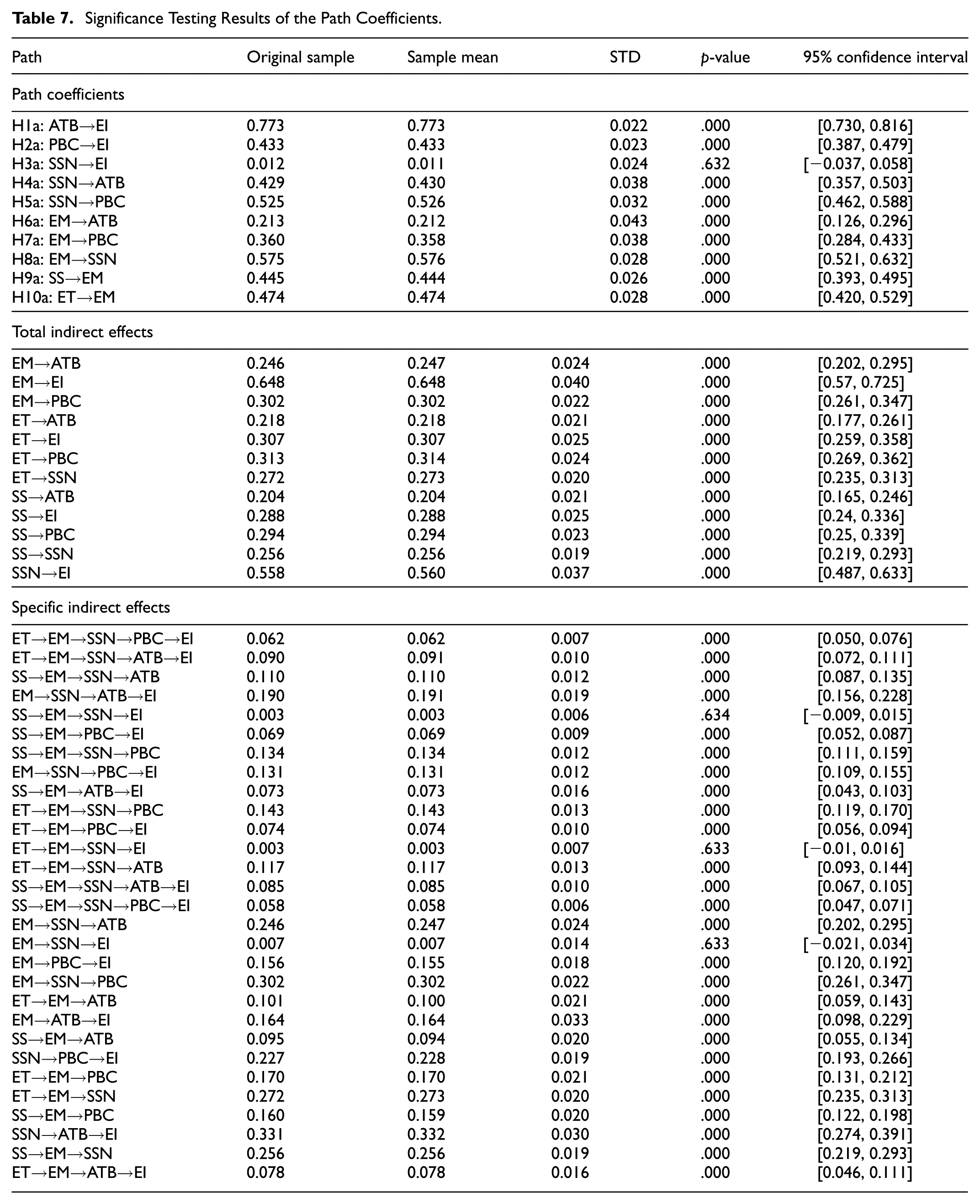
(4) Using the previously outlined bootstrapping procedure, we evaluated the path coefficients and their significance levels. The analysis also included calculations of both total and specific indirect effects for each exogenous variable. Table 7 presents these results along with the bootstrap mean, standard deviation, t-statistics, and 95% bias-corrected confidence intervals.
Figure 4 depicts the results of the structural model: statistically significant path coefficients close to +1 and −1 represent strong positive and negative relationships, respectively.
Effect Size

Significance Testing Results of the Path Coefficients.

Structural path model with standardized path coefficients.
Table 8 summarizes the hypotheses tested in this study and their outcomes. We adopted the following criteria for hypothesis acceptance in a combined analysis using PLS-SEM and NCA. (1) A sufficiency hypothesis is accepted if the path coefficient is statistically significant at the p < .05 level. A necessary hypothesis is accepted if the path coefficient is statistically significant at the p < .05 level and the effect size is relevant, d > 0.1 (Dul, 2024; Karwowski et al., 2016; van der Valk et al., 2016). Table 9 shows the bottleneck table for the conditions that met the acceptance criteria for the necessary hypotheses. The first column of the bottleneck table is the set of values of the Likert scale, and the subsequent columns show the corresponding required levels of the conditions for a particular outcome. This study used Table 9 to conduct the necessary condition analysis in degree further below.
Hypotheses Tested and Outcomes.

Bottleneck Table.

Note. NN: Condition is not necessary for the corresponding level of the outcome.
For completeness, we compared the proposed model to the model proposed by Bazan, Datta, et al. (2019), which has a slightly different configuration of the university ESS. Those authors used a second-order model to represent the assumption that the common underlying, higher-order construct ESS can account for the seemingly distinct but related constructs ET, SS, and EM. We estimated both models using the PLS-SEM algorithm and examined the Bayesian information criterion (BIC) to compare them. The BIC favours a balance between the model’s goodness of fit and complexity to select a model that is both a good fit to the data and as simple as possible. The proposed model produces a lower BIC value (−1,965.223), generally indicating a better model quality than the previous model (−1,974.519) (Hair et al., 2024).
Results and Discussion
The goal of this study is to help understand the sufficiency and necessity of the precursors of intention on the EI of university students in the context of an entrepreneurial university. An entrepreneurial university strives to provide its students with an environment and resources that motivate them to consider an entrepreneurial career after graduation. Additionally, we proposed a new mathematical model of EI grounded on the TPB that rearranges the university ESS to analyse the paths that this influence may follow to form the EI of students. Overall, this model fits the data very well, indicating that the four antecedents of EI, that is, ATB, SSN, PBC, and indirectly ESS (SS, ET, EM), explain 81.9% of the variance in the EI of university students. Given the novelty of this study’s research approach, we thoroughly discuss the results below by interpreting the acceptance or rejection of the proposed hypotheses. At the end of this section, we compare your findings with existing literature (if available) by highlighting similarities, differences, and how our results confirm or contrast with earlier work.
H1: (a) ATB positively influences EI (accepted), and (b) ATB is necessary for EI (accepted). (a) ATB appears to be the most influential direct precursor of EI, ATB→EI (β = 0.773***). This result is consistent with previous results in the literature. (b) ATB is also necessary for EI (d = 0.374***). In addition, visual inspection of the NCA scatter plot in Figure 3 reveals a high density of cases in the lower-left and upper-right corners and emptiness of cases in the upper-left corner, supporting the necessary condition hypothesis. Because of the additional emptiness of cases in the lower-right corner, we tested whether a low level of ATB is sufficient for a low level of EI and accepted this additional hypothesis (d = 0.118***). Figure 5 shows the corresponding scatter plot with the CE-FDH ceiling line. We also tested whether a high level of ATB is necessary for a high level of EI and sufficient for a low level of EI through the aggregate effect size. We accepted this additional hypothesis (d = 0.493***). However, an entrepreneurial university would be interested in an EI response of at least 5 (somewhat agree). Thus, the bottleneck of Table 9 reveals that an average ATB score of 4.031 is necessary for that to occur.
H2: (a) PBC positively influences EI (accepted), and (b) PBC is necessary for EI (accepted). (a) PBC is the second most influential direct precursor of EI, PBC→EI (β = 0.433***). (PBC is half as influential of EI as ATB.) This result is also consistent with previous results in the literature and reinforces the notion that (b) PBC is necessary for EI (d = 0.116***). In addition, visual inspection of the NCA scatter plot in Figure 3 reveals a high density of cases in the lower-left and upper-right corners and emptiness of cases in the upper-left corner, supporting the necessary condition hypothesis. Because of the additional emptiness of cases in the lower-right corner, we tested whether a low level of PBC is sufficient for a low level of EI and accepted this additional hypothesis (d = 0.183***) (see Figure 5). We also tested whether a high level of PBC is necessary for a high level of EI and sufficient for a low level of EI through the aggregate effect size. We accepted this additional hypothesis (d = 0.299***). The bottleneck of Table 9 reveals that an average PBC score of 1.619 is necessary for an EI response of at least 5.
H3: (a) SSN positively influences EI (rejected), and b) SSN is necessary for EI (rejected). (a) SSN does not appear to be an influential direct precursor of EI, SSN→EI (β = 0.012). This result is consistent with previous results in the literature. (b) SSN is not necessary for EI (d = 0.069***). In addition, visual inspection of the NCA scatter plot in Figure 3 reveals a high density of cases in the lower-left, upper-left, and upper-right corners, rejecting the necessary condition hypothesis. Again, previous results in the literature found that SSN did not positively influence EI directly, and when it did (i.e., giving statistically significant results), that influence was low.
H4: (a) SSN positively influences ATB (accepted), and (b) SSN is necessary for ATB (rejected). (a) SSN seems to have a strong influence on ATB, SSN→ATB (β = 0.429***). This result is also consistent with previous results in the literature. (b) SSN is not necessary for ATB (d = 0.041***). In addition, a visual inspection of the NCA scatter plot in Figure 3 reveals the high density of cases in the lower-left and upper-right corners, covering the upper-left corner, which causes the rejection of the necessary condition hypothesis. Thus, SSN positively influences but is not necessary for ATB.
H5: (a) SSN positively influences PBC (accepted), and (b) SSN is necessary for PBC (accepted). (a) SSN seems to have a strong influence on PBC, SSN→PBC (β = 0.525***). This result is also consistent with previous results in the literature. (b) SSN is necessary for PBC (d = 0.113***). In addition, visual inspection of the NCA scatter plot in Figure 3 reveals a high density of cases in the lower-left and upper-right corners and emptiness of cases in the upper-left corner, supporting the necessary condition hypothesis. Because of the additional emptiness of cases in the lower-right corner, we tested whether a low level of SSN is sufficient for a low level of PBC and accepted this additional hypothesis (d = 0.207***) (see Figure 5). We also tested whether a high level of SSN is necessary for a high level of PBC and sufficient for a low level of PBC through the aggregate effect size and accepted this additional hypothesis (d = 0.320***). The bottleneck of Table 9 reveals that an average SSN score of 1.649 is necessary for a PBC response of at least 5.
H6: (a) EM positively influences ATB (accepted), and (b) EM is necessary for ATB (accepted). (a) EM seems to have a low influence on ATB, EM→ATB (β = 0.213***). This result is consistent with some previous results in the literature in that ESS has a weak or no effect on ATB. (b) EM is necessary for ATB (d = 0.108***). In addition, a visual inspection of the NCA scatter plot in Figure 3 reveals a high density of cases in the lower-left and upper-right corners and an emptiness of cases in the upper-left corner, supporting the necessary condition hypothesis. It also reveals no emptiness of cases in the lower-right corner. This finding suggests there is no point in testing whether a low level of EM is sufficient for a low level of ATB. Thus, EM positively influences and is necessary but not sufficient for ATB. The bottleneck of Table 9 reveals that an average EM score of 1.788 is necessary for an ATB response of at least 5.
H7: (a) EM positively influences PBC (accepted), and (b) EM is necessary for PBC (accepted). (a) EM seems to have a medium influence on PBC, EM→PBC (β = 0.360***). This result is also consistent with previous results in the literature in that ESS has a weak to medium effect on PBC. (b) EM is necessary for PBC (d = 0.237***). In addition, a visual inspection of the NCA scatter plot in Figure 3 reveals the high density of cases in the lower-left and upper-right corners and the emptiness of cases in the upper-left corner, supporting the necessary condition hypothesis. However, it shows no emptiness in the lower-right corner. This finding suggests there is no point in testing whether a low level of EM is sufficient for a low level of PBC. Thus, EM positively influences and is necessary but not sufficient for PBC. The bottleneck of Table 9 reveals that an average EM score of 3.000 is necessary for a PBC response of at least 5.
H8: (a) EM positively influences SSN (accepted), and (b) EM is necessary for SSN (accepted). (a) EM seems to strongly influence SSN, EM→PBC (β = 0.575***). This result is consistent with recent results in the literature, which show that ESS can have a medium to strong effect on SSN. (b) EM is necessary for SSN (d = 0.255***). In addition, a visual inspection of the NCA scatter plot in Figure 3 reveals the high density of cases in the lower-left and upper-right corners and the emptiness of cases in the upper-left corner, supporting the necessary condition hypothesis. It also shows no emptiness in the lower-right corner. This finding suggests there is no point in testing whether a low level of EM is sufficient for a low level of SSN. Thus, EM positively influences and is necessary but not sufficient for SSN. The bottleneck of Table 9 reveals that an average EM score of 3.424 is necessary for an SSN response of at least 5.
H9: (a) SS positively influences EM (accepted), and (b) SS is necessary for EM (accepted). (a) SS seems to strongly influence EM, SS→EM (β = 0.445***). This result is new and adds to the evolving literature regarding the influence of the university ESS on the EI of university students. (b) SS is necessary for EM (d = 0.314***). In addition, a visual inspection of the NCA scatter plot in Figure 3 reveals a high density of cases in the lower-left and upper-right corners and an emptiness of cases in the upper-left corner, supporting the necessary condition hypothesis. Because of the additional emptiness of cases in the lower-right corner, we tested whether a low level of SS is sufficient for a low level of EM and accepted this additional hypothesis (d = 0.308***) (see Figure 5). We also tested whether a high level of SS is necessary for a high level of EM and sufficient for a low level of EM through the aggregate effect size. We accepted this additional hypothesis (d = 0.621***). The bottleneck of Table 9 reveals that an average SS score of 3.212 is necessary for an EM response of at least 5.
H10: (a) ET positively influences EM (accepted), and (b) ET is necessary for EM (accepted). (a) ET seems to have a strong influence on EM, ET→EM (β = 0.474***). This result is also new and adds to the evolving literature regarding the influence of the university ESS on the EI of university students. (b) ET is necessary for EM (d = 0.301***). In addition, visual inspection of the NCA scatter plot in Figure 3 reveals a high density of cases in the lower-left and upper-right corners and emptiness of cases in the upper-left corner, supporting the necessary condition hypothesis. Because of the additional emptiness of cases in the lower-right corner, we tested whether a low level of ET is sufficient for a low level of EM and accepted this additional hypothesis (d = 0.272***) (Figure 5). We also tested whether a high level of ET is necessary for a high level of EM and sufficient for a low level of EM through the aggregate effect size. We accepted this additional hypothesis (d = 0.573***). The bottleneck of Table 9 reveals that an average ET score of 2.970 is necessary for an EM response of at least 5.
SSN does not directly impact EI; still, it has a substantial direct effect on PCB and ATB. Through those paths, SSN has a strong total indirect effect on EI (β = 0.558***). It is worth noting that the indirect paths SSN→ATB→EI (β = 0.331***) and SSN→PBC→EI (β = 0.227***) are both statistically significant, while the direct path SSN→EI is not. The findings support the conclusion that the effect of SSN on EI is fully mediated by ATB and PBC (Carrión et al., 2017). This study shows the direct effects of EM on ATB (β = 0.213***), PBC (β = 0.360***), and SSN (β = 0.575***). The total indirect effect of EM on the EI of students is substantial (β = 0.648***) and follows several paths, as shown in Table 7. The influence of EM on EI revealed in this study agrees with some other studies in the literature. This study examines the effect of the university ESS by reorganizing the constructs to reflect its multifaceted influence on students’ EI. Interestingly, we can also track the total effects exerted on EI by SS (β = 0.288***) and ET (β = 0.307***).

Scatter plots with CE-FDH ceiling lines in the lower-right corner.
Furthermore, this study allowed us to assess the effects of SS and ET on EM with a higher granularity. Table 5 shows that several elements forming the SS and ET concepts are not necessary for EM. That is, SS3: [University Name] provides students with ideas to start a new business (d = 0.082***) and SS5: [University Name] provides students with the financial means to start a new business (d = 0.026**) are not necessary for forming the EM of the university. Similarly, ET1: [University Name] provides students with the knowledge needed to start a new business (d = 0.025) and ET2: [University Name] offers entrepreneurship training (d = 0.088***) do not seem necessary in the formation of the university’s EM. These are essential insights for the university under study. They give the university a more detailed visibility of its ESS components that require further investigation and analysis.
Our findings align with earlier studies showing the importance of ATB and PBC in predicting entrepreneurial intention (Ajzen, 1991; Kautonen et al., 2015). However, our results diverge slightly from prior work, as we found a weaker direct influence of SSN compared to earlier studies, such as Liñán and Chen (2009), which could be attributed to this study’s specific cultural and educational context. On the other hand, our findings related to PBC are consistent with previous studies, such as those by Kolvereid and Isaksen (2006), who found that self-efficacy plays a significant role in shaping EI. However, using NCA adds a novel dimension, showing that PBC is influential and a required precursor for entrepreneurial intention to emerge. This suggests that universities and policymakers must focus on building students’ confidence in their ability to start a business as a critical component of entrepreneurial education. However, to our knowledge, this is the first study to apply NCA to the EI of university students within the TPB framework. As such, there are no existing studies for direct comparison. However, the NCA results provide a novel perspective by identifying necessary conditions—factors that must be present for entrepreneurial intention to emerge. This complements previous research using TPB, which focuses on sufficiency, by showing that certain factors are critical, even if they are not always sufficient to lead to entrepreneurial intention.
Our study, conducted in the Canadian context, offers insights that reflect global trends in EI and specific local elements. For instance, studies conducted in other countries, such as those by Liñán and Chen (2009), have highlighted the importance of entrepreneurship education in shaping EI. However, in Canada, where universities strongly emphasize entrepreneurship and innovation, this relationship is further supported by robust government initiatives to foster startup ecosystems (e.g., government funding programs such as Mitacs). This likely contributed to the decisive role of PBC observed in our findings, as students in Canada may feel more confident about accessing the resources needed to start a business. Additionally, cultural attitudes toward entrepreneurship in Canada, emphasizing careful planning and risk mitigation, may explain the necessity of ATB as a precursor to EI.
Limitations of the study: This study recognizes several limitations that align with challenges commonly identified in previous research. First, the focus on entrepreneurial intentions rather than actions acknowledges the well-established fact that starting a new business is an infrequent occurrence. Therefore, the intention to start new ventures might not always lead to actual entrepreneurial activities. Second, our data reflect student perceptions, which may not always correspond with objective reality (Frommeyer et al., 2022). However, understanding these perceptions is crucial as they can significantly influence students’ entrepreneurial intentions (Turker & Selcuk, 2009). Third, we collected data through a self-administered questionnaire, relying on the participants’ self-reported entrepreneurial intentions as a trustworthy source. Fourth, using purposeful sampling may limit the representativeness of the results. However, this method still allows for the exploration of valid correlations between variables, which was the primary focus of this study rather than achieving demographic representativeness. Fifth, our approach involved cross-sectional data, which does not establish a causal relationship between observed outcomes and exposures; it merely identifies associations at a single point in time. Sixth, adopting a cohort study design in future research could enhance our understanding of these dynamics over time, potentially increasing the robustness and relevance of our findings. This longitudinal approach would help better assess the incidence of the university ESS and the validity of our theoretical framework. Last, the limitations of statistical inference and generalizing from a sample to a population are the same for any other data analysis technique, including NCA. NCA is also subject to the replication logic. One study is not enough to claim a necessity causal relationship beyond the context of the university under study.
Conclusion
This study aimed to answer a fundamental research question: How do necessary conditions, identified through NCA, complement sufficiency-based approaches to understanding EI? The findings provide a clear answer and offer novel insights into the factors shaping entrepreneurial intention. Thus, the central contribution of this study is advancing our understanding of EI by integrating necessity theories into the analysis alongside the sufficiency-based logic of the theory of planned behaviour. This combined approach allows us to identify “must-have” factors essential for forming EI that universities must address to cultivate a thriving entrepreneurial ecosystem. By pinpointing these necessary conditions, our results provide actionable insights for universities seeking to enhance their entrepreneurial support and create environments conducive to nurturing future entrepreneurs.
These findings are particularly relevant for aspiring student entrepreneurs, highlighting the critical support elements needed for EI to emerge and develop into action. By addressing the “must-have” factors, universities can better prepare students for entrepreneurial success, helping them move from intention to action more effectively.
The implications for policymakers are equally significant. Policymakers who support entrepreneurship can use these insights to design interventions and policies that strengthen the higher educational system and environments necessary for entrepreneurial growth. Ensuring that the identified critical factors are present to foster a more supportive ecosystem that encourages students to pursue entrepreneurial careers, thereby driving economic growth.
This study has limitations. The findings are based on data from a single university context, which may limit the generalizability of the results to other settings. Additionally, while novel and valuable, the NCA approach needs to include existing comparative studies in this specific context, making it difficult to validate the necessity claims beyond this study. Future research could address these limitations by applying the methodology to a broader and more diverse set of institutions and by conducting longitudinal studies to assess the long-term impact of the university ESS on entrepreneurial intention and behaviour.
Footnotes
Appendix
Table A1 shows the Likert-type scale and the indicators used in the questionnaire.
Acknowledgements
We acknowledge the support from the Atlantic Canada Opportunity Agency (ACOA), the Government of Newfoundland and Labrador, and the Memorial Centre for Entrepreneurship. We also recognize the additional support provided by the Office of the Vice-President (Research) and the Office of the Dean of Business Administration at Memorial University. We also acknowledge the help provided by Md. Jahangir Alam Zahid during the data collection.

Funding
The author disclosed receipt of the following financial support for the research, authorship, and/or publication of this article: This project was partially funded by the Social Sciences and Humanities Research Council (SSHRC) Insight Development Grants 430-2022-01019.
Declaration of Conflicting Interests
The author declared no potential conflicts of interest with respect to the research, authorship, and/or publication of this article.
Data Availability Statement
Data sharing not applicable to this article as no datasets were generated or analysed during the current study.