



Abstract
This study investigates the impact of digital transformation (DT) initiatives on the reputation of public higher education institutions (HEIs) in Jordan, focusing on the mediating roles of operational efficiency and educational quality. Using quantitative data collected from 397 academic and administrative staff across Jordanian HEIs, the study employs Structural Equation Modeling (SEM) to test the proposed relationships. The findings reveal that DT initiatives have a significant positive effect on corporate image (β = .198, p = .001), operational efficiency (β = .673, p < .001), and educational quality (β = .642, p < .001). Moreover, operational efficiency and educational quality partially mediate the relationship between DT and corporate image, with mediation effects of β = .221 and .155, respectively. These results suggest that while DT directly enhances institutional reputation, its impact is amplified when institutions improve internal processes and educational outcomes. Practical implications include the need for universities to invest in robust digital infrastructure, provide continuous faculty training in digital pedagogy, and for policymakers to support DT through national standards and funding. This research contributes to understanding how digital transformation drives reputation in resource-constrained educational environments.
Plain Language Summary
This study explores how digital technologies can enhance the reputation of public universities in Jordan. By adopting various digital tools and strategies, these institutions can improve their educational services, administrative processes, and overall image. The research examines the benefits and challenges of digital transformation in higher education, providing insights into how universities can effectively implement these changes to attract more students and gain a competitive edge.
Keywords
Introduction
Digital transformation (DT) is becoming a cornerstone of innovation, competitiveness, and strategic growth in higher education worldwide (Alenezi, 2023). It provides institutions with vital tools to enhance operational efficiency, educational quality, and institutional reputation, enabling them to meet the evolving expectations of students, faculty, and stakeholders (Alsayed et al., 2023). In today’s rapidly changing academic landscape, the need for higher education institutions (HEIs) to adopt digital technologies has never been more urgent. This study examines the role of digital transformation initiatives in public higher education institutions in Jordan, focusing on how these initiatives influence operational efficiency, educational quality, and corporate image. Digital transformation encompasses a wide range of technologies, including Learning Management Systems (LMS), data analytics, cloud computing, and digital administrative platforms, all reshaping teaching, learning, and institutional management (Díaz-García et al., 2022). These technologies have shown significant potential in streamlining administrative tasks, personalizing learning experiences, and strengthening the reputation of HEIs as modern, forward-thinking organizations. In particular, DT enhances institutional processes, improves student engagement, and fosters innovation in curriculum delivery (Ifenthaler & Yau, 2020; Selwyn, 2016). Studies have shown that integrating digital tools can improve student satisfaction and institutional rankings, contributing to a more competitive academic environment (Kaputa et al., 2022; Rof et al., 2020).
Institutional reputation remains critical in attracting students, faculty, and funding, especially in developing regions where HEIs face unique challenges such as limited resources and regulatory constraints. In Jordan, public universities are under increasing pressure to modernize in response to global trends and regional demands. Although digital transformation presents significant opportunities, it also poses challenges related to infrastructure, faculty readiness, and cultural acceptance of technology (Gkrimpizi et al., 2023). Despite these hurdles, Jordanian HEIs have begun adopting digital solutions to improve operational performance and academic delivery, particularly accelerated by the COVID-19 pandemic (Alsayed & Alassaf, 2023). However, there is limited empirical research on how these efforts translate into improved institutional reputation, particularly regarding operational efficiency and educational quality.
This gap is particularly notable given the experience of other countries in the Middle East and beyond. For example, universities in the UAE and Saudi Arabia have leveraged substantial investments in digital infrastructure to enhance global visibility and academic standing (Nguyen-Anh et al., 2023). Similarly, institutions in countries like Estonia and South Korea have pioneered e-learning platforms and digital research initiatives that position them as leaders in digital education. These global benchmarks demonstrate the potential for scalable, impactful digital strategies that Jordanian HEIs can learn from while acknowledging the need for context-specific solutions.
This study focuses on public higher education institutions in Jordan, a sector critical to national development, yet facing systemic challenges in adopting and sustaining digital transformation. The research investigates how DT initiatives influence operational efficiency and educational quality, and how these factors, in turn, mediate the relationship between DT and institutional reputation. By exploring this interplay, the study aims to provide actionable insights for university administrators, policymakers, and educators seeking to enhance institutional performance and global competitiveness through strategic digital initiatives. Higher education institutions serve as hubs for knowledge creation, dissemination, and innovation, and their reputation hinges on the quality of their academic and administrative practices (Alkhawaldah et al., 2024). Operational efficiency ensures that resources are utilized effectively, reducing costs and improving service delivery, while educational quality encompasses curriculum relevance, teaching excellence, and student outcomes. Both dimensions are essential in building a strong institutional image, attracting stakeholders, and ensuring long-term sustainability (Bates, 2015; Daniel, 2015). Digital transformation catalyzes this process, enabling HEIs to align their operations with global best practices, enhance academic delivery, and position themselves as leaders in a competitive education market.
To address these objectives, this study poses the following key research questions:
Using a robust methodological framework, this research explores the dynamic relationship between digital technologies, internal institutional performance, and external perceptions of reputation. The findings are expected to offer strategic guidance for HEIs and policymakers in Jordan and similar developing contexts, emphasizing the importance of aligning digital transformation efforts with institutional goals. The remainder of the paper is organized as follows: a review of relevant literature, a detailed methodology section, presentation and analysis of results, and a discussion on the implications of digital transformation for higher education in Jordan and beyond.
Literature Review and Hypotheses Development
Digital transformation (DT) is reshaping the higher education sector globally, with universities increasingly adopting digital technologies to improve operations, enhance educational quality, and strengthen institutional reputation. This literature review examines the critical role of DT initiatives, such as Learning Management Systems (LMS), data analytics, and digital administrative tools, in transforming higher education institutions (HEIs) and discusses their implications for institutional reputation and competitiveness. The literature review begins by exploring the concept of DT in higher education, focusing on its impact on teaching, learning, and administrative efficiency. In Jordan, this transformation has accelerated in recent years, particularly in response to the COVID-19 pandemic, which has led to widespread adoption of digital tools. Next, we discuss how DT initiatives contribute to institutional reputation by improving operational efficiency and educational quality, which are essential for building a positive image and attracting stakeholders.
Additionally, we review research on the mediating roles of operational efficiency and educational quality, which are hypothesized to strengthen the relationship between DT and institutional reputation. Building on these insights, we develop hypotheses to investigate how DT initiatives in Jordanian HEIs impact their corporate image, specifically through operational efficiency and educational quality enhancements. This section aims to provide a theoretical foundation for understanding the strategic implications of DT in higher education and to offer guidance for HEIs in developing regions aiming to leverage digital tools effectively.
The Status of Digital Transformation in Jordan’s Higher Education Sector
Digital transformation (DT) in higher education has become a pivotal focus for universities worldwide, as they increasingly rely on digital technologies to stay competitive in a rapidly evolving academic environment. At its core, DT integrates digital technologies across all facets of university operations, including administrative processes, teaching methodologies, and learning environments, fundamentally altering the educational framework. The adoption of e-learning platforms exemplifies this transformation, revolutionizing education delivery by enabling more flexible, personalized, and accessible learning experiences. The higher education landscape in Jordan has undergone significant changes in recent years, marked by a transition toward greater reliance on digital technologies. Initially driven by the urgent needs of the COVID-19 pandemic, this shift has led to lasting changes in how education is delivered and managed within universities. A vital aspect of this transition has been the adoption and continued use of Learning Management Systems (LMS) such as Moodle. These platforms, once a response to emergency remote teaching requirements, have become central to universities’ daily operations. They are extensively used to facilitate remote and blended learning environments, underscoring a broader shift toward greater flexibility and accessibility in education. Alongside these LMS, tools like Microsoft Office, Google Meet, and Zoom have become standard fixtures, further supporting this new paradigm in educational delivery.
Recognizing the importance of faculty competencies in digital pedagogy, Jordanian universities have invested in professional development programs for educators. These programs focus on enhancing the skills required for designing and delivering effective online and virtual learning experiences. Often developed in collaboration with international organizations, these training initiatives are vital for ensuring educators are well-equipped to meet the demands of a digitally oriented educational landscape. Parallel to these educational reforms, there has been sustained investment in ICT infrastructure across Jordanian higher education institutions. This includes upgrading internet connectivity to support the increased demand for online learning, acquiring advanced digital learning tools, and enhancing cybersecurity measures. Such investments are crucial for creating robust and secure digital learning environments that can support the diverse needs of students and faculty alike. Furthermore, policy and regulatory changes that began as immediate responses to the pandemic have evolved into long-term reforms within the higher education sector. These reforms aim to standardize online education, ensuring its integration with traditional learning methods while maintaining quality standards. The goal is to create a cohesive educational system that leverages the strengths of both digital and conventional pedagogies. The digital transformation in Jordanian universities extends beyond technological adoption; it represents a cultural shift in the approach to education. Universities are now more focused on student-centered learning experiences, leveraging digital platforms to provide personalized and engaging educational content. This shift is pivotal in preparing students for the evolving demands of the global workforce and a digitally interconnected world.
Moreover, the emphasis on digital literacy and competencies prepares students for academic success, lifelong learning, and adaptability in a rapidly changing world. By integrating digital literacy into their curricula, universities ensure that graduates possess the skills to navigate and contribute to a digital society effectively. Another critical aspect of this transformation is the increased collaboration and partnership within the higher education sector. Universities in Jordan are engaging more with tech companies, international educational institutions, and organizations to share resources, best practices, and innovations in digital education. These collaborations are crucial for staying at the forefront of educational technology and ensuring that Jordanian higher education remains competitive and relevant globally.
In summary, the status of digital transformation in Jordan’s higher education sector is a testament to the country’s commitment to embracing change and innovation. By investing in digital infrastructure, enhancing the digital competencies of faculty and students, and adopting forward-thinking policies, Jordanian universities are well-positioned to navigate the digital age’s challenges and provide their students with a rich, diverse, and globally relevant education. This transformation responds to immediate challenges and strategically moves toward a more resilient and dynamic educational future. However, despite these advancements, barriers to effective DT implementation remain significant in Jordan and the Middle East. Gkrimpizi et al. (2023) identified persistent challenges including limited financial resources, insufficient ICT infrastructure, and faculty resistance to change. These issues often result in uneven DT adoption and inconsistent outcomes. Additionally, Almaiah et al. (2022) emphasize the role of institutional leadership and national policies in facilitating successful DT, highlighting how regional disparities in policy support can affect progress. Timotheou et al. (2023) further caution that rapid DT shifts, especially post-COVID, have led to tech fatigue and worsened digital inequality among students in resource-constrained environments. These findings suggest that while DT holds promise, its success heavily depends on contextual factors beyond technology itself.
Institutional Reputation
The reputation of higher education institutions (HEIs) is a critical and multifaceted concept that plays a vital role in their success and longevity. It is shaped by various factors, including the quality of academics, research achievements, stakeholder engagement, and global visibility (Al-Shboul et al., 2014; Sá et al., 2018). Comparative research across the Middle East shows that DT’s influence on institutional reputation varies depending on government involvement and institutional readiness. For example, Alsayed et al. (2023) found that public HEIs in Jordan are often slower in adopting advanced DT tools than Gulf Cooperation Council (GCC) countries due to more restrictive funding and policy environments. Additionally, a study by Nguyen-Anh et al. (2023) comparing Vietnam and Singapore highlighted that governmental policies and institutional autonomy play critical roles in how DT translates into improved reputation. These insights underline the importance of considering external policy and resource factors in assessing the broader impact of DT on HEIs’ public image.
A robust institutional reputation attracts top faculty, students, and funding, thereby enhancing the institution’s competitive standing on a global scale. However, the impact of digital transformation on institutional reputation remains insufficiently explored, particularly in developing regions like Jordan. While studies by Welch et al. (2005) suggest that digital tools can boost research impact and foster global engagement, there is limited empirical evidence directly linking digital transformation initiatives to improvements in institutional reputation. This gap is especially pronounced in contexts such as the Middle East, where cultural, economic, and political factors significantly influence the adoption and effectiveness of digital technologies. In Jordanian HEIs, the successful integration of digital technologies often faces challenges such as resistance to change, inadequate infrastructure, and limited digital literacy among stakeholders. These issues can hinder the effective implementation of digital initiatives, potentially affecting the institution’s reputation. Understanding the interplay between these factors and digital transformation efforts is crucial for devising strategies that can effectively enhance the reputation of HEIs in such environments.
Operational Efficiency and Educational Quality
Digital transformation (DT) has been widely acknowledged for its potential to significantly enhance operational efficiency and educational quality within higher education institutions (HEIs). Operational efficiency refers to the ability of an institution to manage resources effectively, reduce costs, and streamline administrative processes. Meanwhile, Educational quality pertains to the effectiveness of teaching and learning processes and the overall educational experience provided to students. Research by Daniel (2015) and Timotheou et al. (2023) highlights how digital technologies can streamline administrative operations, improve decision-making, and enhance educational delivery. For example, implementing Learning Management Systems (LMS) and other digital tools has optimized course content management, enhanced interactions between students and teachers, and enabled more personalized learning experiences. These advancements are critical not only for improving the internal functioning of the institution but also for shaping its external perception. However, despite the recognized benefits of DT in boosting operational efficiency and educational quality, the connection between these improvements and broader institutional reputation still needs to be explored. Although some studies, such as those by Picciano (2017) and Rawas (2024), suggest that enhanced operational efficiency and educational quality contribute to a positive institutional image, there is a need for further empirical research to solidify this link, particularly in the context of Jordanian HEIs. Moreover, some studies highlight potential downsides to over-reliance on DT. Alenezi et al. (2023) caution that insufficient training and digital readiness among faculty can lead to ineffective use of DT tools, undermining intended gains in efficiency and quality. Furthermore, Mirgorodskaya et al. (2023) argue that initial improvements may plateau without ongoing support and investment, and institutions may face difficulties maintaining long-term digital engagement. These perspectives suggest a need for continuous evaluation and adaptation of DT strategies, especially in dynamic educational environments like Jordan.
Digital Transformation Initiatives and University Corporate Image
The relationship between digital transformation (DT) initiatives and the corporate image of higher education institutions is becoming increasingly significant. Corporate image in higher education refers to the institution’s overall reputation and perceived value among its stakeholders, including students, faculty, alumni, and the broader community. Research indicates that digital transformation can significantly enhance an institution’s corporate image by modernizing operations, improving educational quality, and expanding global engagement (Acuña, 2023; Rof et al., 2020). Despite these insights, the literature remains underdeveloped, especially concerning empirical studies examining this relationship in specific regional contexts like the Middle East. In Jordan, the impact of digital transformation on corporate image is likely influenced by a range of factors, such as cultural norms, economic conditions, and political dynamics. Jordanian HEIs might face limitations such as constrained resources, resistance to change, and the need to comply with government policies, which could impede their ability to leverage digital transformation effectively for reputation enhancement. This study seeks to address this gap by providing a detailed analysis of how digital transformation initiatives affect the corporate image of Jordanian HEIs, with a focus on the roles of operational efficiency and educational quality.
Digital transformation is increasingly recognized as a crucial factor in shaping the reputation of higher education institutions. Globally, an institution’s reputation is influenced by several key elements, including educational quality, research output, global engagement, and the overall student experience. Digitalization is central to enhancing these aspects, thereby contributing to a more robust institutional reputation (Al-Shboul et al., 2014; Kaputa et al., 2022; Sá et al., 2018). For instance, adopting digital tools in research has allowed institutions to engage in international collaborations, thereby increasing their research impact and global presence (Welch et al., 2005). Although the theoretical benefits of digital transformation are well-documented, there is a noticeable gap in empirical research that directly links these initiatives to tangible improvements in university reputations and operational efficiencies. The concept of a university’s corporate image—its overall reputation and perceived value among stakeholders—has become closely connected to its digitalization efforts. Scholars like Sá et al. (2018) and Al-Shboul et al. (2014) argue that adopting digital tools can significantly improve a university’s educational quality and global engagement. These advancements allow universities to offer innovative educational experiences and participate in broader international collaborations, enhancing their corporate image. By integrating digital technologies, universities can project an image of modernity, innovation, and forward-thinking. However, while these studies provide valuable theoretical insights, they often lack empirical data to support the claimed relationship between digital transformation initiatives and improvements in the corporate image of HEIs.
de Boer et al. (2020) emphasize that digital transformation is pervasive within higher education institutions, impacting every aspect of their operations. This transformation involves developing new infrastructures and integrating digital media and technologies across various domains, including teaching, learning, research, support services, administration, and communication. Moreover, there is a growing need for students and staff to acquire and refine digital skills essential for their current and future professional environments. Historically, universities have been pivotal in knowledge dissemination, education, and training, continually adapting to societal changes. This adaptability positions universities as key institutions that respond to and drive societal evolution. In Jordanian HEIs, digital transformation initiatives significantly influence corporate image. Integrating advanced digital technologies reshapes traditional teaching and learning paradigms (Bates, 2015; Jackson, 2019). Initiatives such as e-learning platforms and digital libraries (Burland & Grout, 2017; Kholiavko et al., 2022; Mohamed Hashim et al., 2022) modernize the educational experience and elevate the institution’s image as innovative and forward-thinking. As Daniel (2015) and Choudhury and Pattnaik (2020) noted, using digital tools in research and administration further reinforces this image of modernity and efficiency. Given the theoretical and empirical insights discussed, the following hypothesis is proposed:
Operational Efficiency and Educational Quality as Mediators
Literature frequently underscores the potential benefits of digitalization in improving university performance, particularly regarding operational efficiency and academic productivity. Various studies have documented how integrating digital technology within university settings enhances these aspects. Daniel (2015) comprehensively analyzes how digital tools like data analytics, cloud computing, and automated systems can streamline administrative processes, improve decision-making, and achieve better resource management. This transformation simplifies administrative tasks, leading to significant cost savings and more efficient resource allocation. Kane et al. (2015) similarly explore the impact of digital transformation on operational efficiency in higher education, highlighting how embedding digital solutions into everyday administrative tasks improves workflow efficiency and resource management. The integration of technology into academic activities has also attracted significant interest. Studies by Picciano (2017) and Rawas (2024) demonstrate how digital tools, such as LMS, enhance academic productivity by effectively managing course content, facilitating student-teacher interactions, and tracking student performance. Selwyn (2016) further investigates the impact of digitalization on teaching and learning processes, showing how online platforms and digital content creation tools foster more dynamic and engaging educational experiences. These technological integrations lead to more productive learning environments, enhancing overall educational quality.
Kraus et al. (2023) extend this perspective by focusing on digital transformation from a resource management angle. Their work illustrates how digital technologies contribute to optimal resource allocation and budget management, further improving institutional efficiency. Additionally, Ifenthaler and Yau (2020) examine the use of learning analytics in higher education, suggesting that data-driven decision-making, facilitated by digital tools, can enhance resource utilization, improve course design, and strengthen student support services. These improvements in operational efficiency and educational quality are pivotal in shaping the corporate image of HEIs. As Daniel (2015) highlights, implementing digital administrative tools streamlines processes and projects an image of efficiency and effectiveness. Similarly, Kane et al. (2015) emphasizes the importance of a robust ICT infrastructure in ensuring seamless digital experiences, directly contributing to operational excellence.
Studies by Sharlovych et al. (2023), Brown et al. (2024), and Wang et al. (2023) have further explored the impact of e-learning and digital tools on academic outcomes. Bates (2015) notes that e-learning extends learning opportunities beyond traditional classrooms, offering more flexible and personalized educational experiences. Brown et al. (2024) highlights the effectiveness of digital tools in fostering productive and engaging research environments within universities, while Burland and Grout (2017) emphasizes the role of digital technologies in streamlining research processes, including using digital repositories and online collaboration tools. Bates (2015) also discusses the impact of digital transformation on educational quality, emphasizing that adopting digital tools like e-learning platforms and virtual classrooms directly contributes to enhancing the learning experience. This enhancement is not limited to content delivery but creates more engaging and interactive learning environments. Bates suggests that when students perceive their education as high-quality due to integrating innovative digital tools, their perception of the institution improves, enhancing its corporate image. Selwyn (2016) underscores the transformative power of digital technologies in education, illustrating how e-learning platforms and virtual classrooms enrich learning experiences and elevate an institution’s status as a provider of quality education. These innovations create more engaging and effective learning environments, positioning institutions at the forefront of educational innovation. Selwyn also highlights that adopting online resources and digital content creation tools fosters a vibrant and interactive educational landscape, significantly boosting an institution’s appeal and reputation among stakeholders.
Beyond the classroom, Daniel (2015) illuminates the benefits of digital transformation in enhancing administrative efficiency. The digitization of functions such as enrollment and record management, combined with the strategic use of learning analytics, as discussed by Ifenthaler and Yau (2020), refines educational strategies and enhances student support mechanisms. These advancements underscore the comprehensive benefits of digital transformation, emphasizing its crucial role in strengthening higher education institutions’ operational vitality and academic excellence. These studies indicate that digital transformation is a key driver of higher education institutions’ operational efficiency and academic productivity. Integrating digital technologies in administrative and academic processes simplifies and enhances these activities and opens new avenues for innovative educational practices and research collaborations. However, successfully implementing these digital initiatives requires a well-thought-out strategy, adequate infrastructure, and a focus on developing digital literacy and competencies among staff and students. Based on the theoretical and empirical insights discussed, the following hypotheses are proposed for examination in the context of higher education in Jordan:
Digital transformation (DT) in higher education is recognized for its potential to enhance institutional operations and reputation. However, the existing literature often focuses on technological advancements, with limited attention to the strategic implications of DT, particularly in developing regions like Jordan. While studies by Bates (2015) and Daniel (2015) highlight the benefits of digital tools in improving operational efficiency and educational quality, they need to explore the impact on institutional reputation in non-Western contexts sufficiently. Recent research, such as Alsayed et al. (2023), discusses the enduring changes by DT, especially post-pandemic, yet it frequently overlooks the specific challenges faced by institutions in resource-constrained environments. Moreover, while collaboration is increasingly emphasized (Almaiah et al., 2022), more detailed strategies for fostering effective partnerships in developing countries must be developed. This study addresses these gaps by examining how DT initiatives in Jordanian HEIs influence institutional reputation through operational efficiency and educational quality improvements. The research critically analyzes these relationships, offering insights into the broader implications of DT in similar contexts.
The Study Model
The study aims to examine the impact of digital transformation on the corporate image and performance of public higher education institutions (HEIs) in Jordan. By leveraging the Resource-Based View (RBV) and drawing insights from previous research, this study develops a comprehensive model to understand and analyze various aspects from the perspective of HEIs. Central to the model are the exogenous variables focused on digital transformation initiatives. These encompass deploying digital technologies such as e-learning platforms, digital administrative tools, and ICT infrastructure and enhancing organizational digital capabilities. This approach aligns with the RBV, highlighting the significance of unique organizational resources in achieving a competitive advantage.
Research by Berman and Bell (2011) and Westerman et al. (2014) has demonstrated that digital transformation initiatives positively influence operational efficiency and educational quality in universities, impacting their corporate image. The corporate image of the HEIs is considered an endogenous variable in this model. It is hypothesized that digital transformation initiatives will influence it. The Corporate Image Theory supports this hypothesis, suggesting that an effective digital transformation strategy can enhance HEI’s corporate image, thereby improving its reputation. This hypothesis is informed by studies such as those by Gil-Garcia and Luna-Reyes (2003) and Welch et al. (2005), which indicate that various stakeholders perceive universities with robust digital capabilities more favorably. Additionally, the model proposes that digital transformation initiatives significantly affect operational efficiency and educational quality. Previous research, including works by Daniel (2015) and Burland and Grout (2017), suggests that digitalization leads to enhanced operational processes and innovative educational approaches in HEIs, contributing to an improved corporate image.
The model anticipates examining the relationships between these constructs, with digital transformation initiatives as the independent variables and the corporate image as the dependent variable, mediated by operational efficiency and educational quality. Statistical methods like structural equation modeling were used to test these relationships. This methodology will provide insights into the complex interplay between digital transformation initiatives, operational efficiency, educational quality, and corporate image in Jordanian higher education. The expected relationships among these constructs are illustrated in Figure 1.
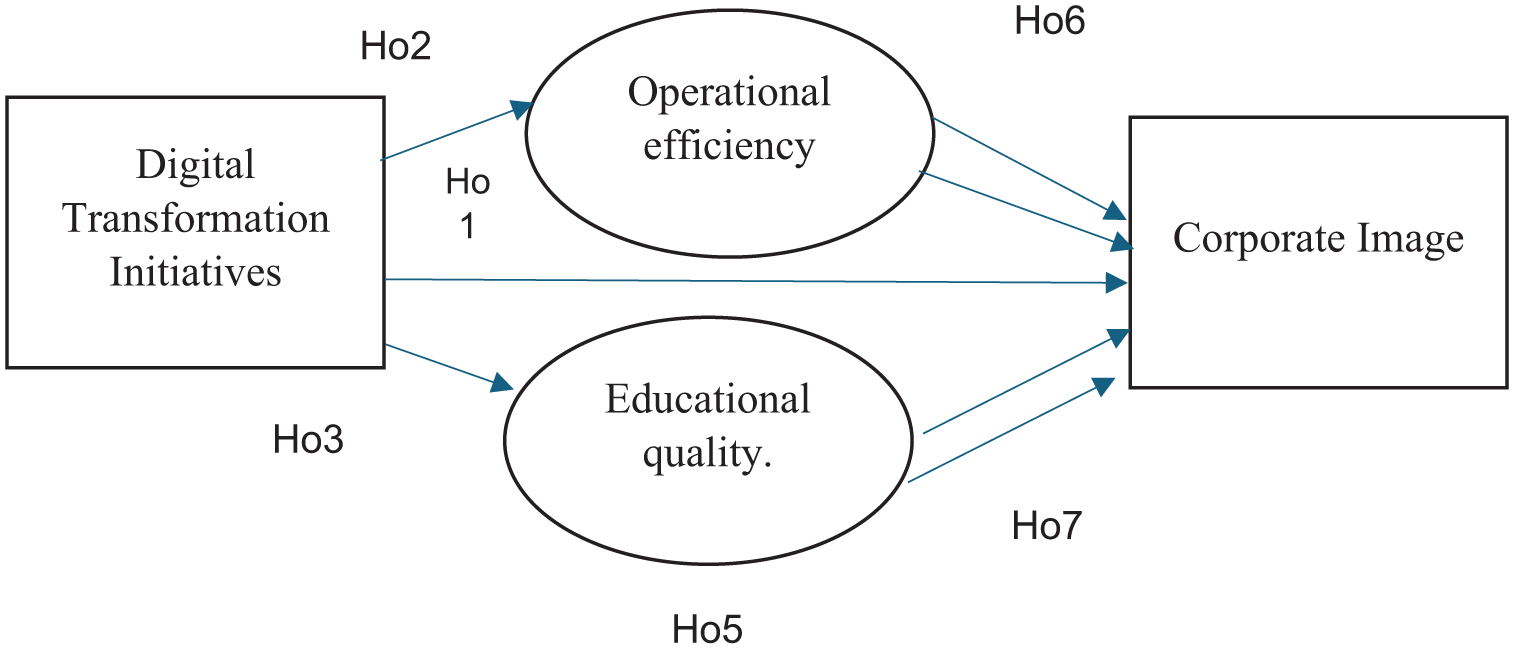
The study model.
Research Methodology
This research employs a quantitative methodology to profoundly investigate the intricate relationships among digital transformation initiatives, operational efficiency, educational quality, and the corporate image of universities in Jordan. The primary goal is to assess the impacts of digitalization on both the operational performance and the public image of higher education institutions (HEIs) while also exploring the intermediary role played by the quality of education. Data was gathered from 397 valid responses via a Google Forms survey, targeting 500 leaders and administrators from various public universities across Jordan. This specific group was intentionally chosen to gather various perspectives on the strategic effects of digital transformation in the educational sector. A stratified random sampling strategy was employed to ensure a representative cross-section of Jordan’s higher education landscape, categorizing the target population by institution type and administrative role. This approach aimed to achieve a balanced representation across various ranks and types of institutions, thereby enriching the study’s depth and validity.
Leaders and administrative staff in public universities were selected as the focal points of this study for several key reasons. First, these individuals are central to implementing and managing digital transformation within their institutions, providing a profound understanding of the strategic aims behind adopting digital technologies and the practical obstacles encountered. Their insights are crucial for evaluating the real effects of digitalization on operational efficiency and the quality of education in HEIs. Second, these leaders and administrators significantly influence the institutional corporate image and how the external environment views the institution’s commitment to innovation and educational excellence. The study focuses on this group to comprehend how digital transformation efforts enhance the university’s reputation and competitiveness in the academic sector.
While data collection was conducted at the individual level, the focus of this study is on institutional-level phenomena. Aggregating individual perceptions to reflect institutional outcomes is supported by the respondents’ roles, comprising deans, department chairs, and senior administrative staff, who have comprehensive oversight of institutional strategies and operations. To ensure validity in this approach, the responses were evaluated for within-group agreement, and the intraclass correlation coefficient (ICC) was calculated, yielding an acceptable value (e.g., ICC(1) = .12 and ICC(2) = .74), which supports aggregation. These statistics indicate sufficient homogeneity within institutions to justify treating the aggregated data as representative of institutional-level constructs. Moreover, the study focuses on collective perceptions of operational efficiency, educational quality, and corporate image, which are inherently shaped by institutional policies and practices rather than isolated individual experiences.
Additionally, the deliberate selection of respondents from across Jordan’s public universities ensures that the study encompasses a broad perspective on the digital transformation landscape in the higher education sector. The stratified random sampling technique further strengthens the study’s comprehensiveness and validity, ensuring that findings reflect the diverse experiences and viewpoints within Jordan’s public higher education system. Lastly, selecting leaders and administrative staff as respondents guarantees high-quality, informed feedback on nuances of digital transformation initiatives, implementation challenges, and outcomes. Their strategic insights are essential for accurately examining the connections between digital initiatives, operational efficiency, educational quality, and the corporate image of universities, and they are crucial for devising effective strategies to leverage digital transformation to enhance institutional reputation and operational effectiveness. The survey tool was meticulously crafted following an extensive literature review, incorporating questions on demographics, digital transformation efforts, operational efficiency, educational quality, and university image. Answer options were presented on a five-point Likert scale, based on validated scales from prior research by Daniel (2015), Kane et al. (2015), Picciano (2017), and Selwyn (2016), for constructing pertinent variables. The survey’s content validity and reliability were rigorously verified through a pilot study and consultations with experts, focusing on achieving accuracy and relevance in the questionnaire. In our methodology, we took various steps to address potential biases, such as ensuring the anonymity of participants and applying statistical methods for the temporal separation of different constructs. The comprehensive data analysis, using advanced statistical tools, sought to illuminate the relationships among the variables, providing insightful conclusions on how digitalization influences the operational performance and public image of HEIs in Jordan. This detailed approach underlines our dedication to a nuanced understanding of digital transformation’s impacts within the context of Jordan’s educational landscape, reflecting a commitment to rigorous academic inquiry into the evolving dynamics of higher education due to technological advancements.
The study used Confirmatory Factor Analysis (CFA) to test the measurement model’s construct validity, ensuring the scales’ reliability and validity. Structural Equation Modeling (SEM) was employed to analyze the relationships between digital transformation initiatives and the dependent variables: operational efficiency, educational quality, and corporate image. The analysis was conducted using SmartPLS 4, which facilitated the assessment of the model’s fit and the examination of direct and indirect effects. Bootstrapping with 5,000 replications was performed to evaluate the significance of the mediation effects of operational efficiency and educational quality on the relationship between digital transformation initiatives and corporate image. Variance Inflation Factor (VIF) values were calculated to check for multicollinearity, and all values were found to be within acceptable limits, indicating that multicollinearity did not affect the results.
Table 1: “Respondents Profile” showcases the demographics of leaders and administrative staff in Jordanian universities, detailing their gender, age, experience, academic ranking, and positions. A slight gender imbalance is evident, with males (57.93%) outnumbering females (42.07%), reflecting broader regional leadership trends. The age distribution indicates a mature respondent base, particularly highlighted by the largest group, those aged 45 to 54 years (38.79%), suggesting a seasoned cohort at the helm of academic and administrative functions. Professional experience is varied, with a significant portion having 15 to 24 years (28.97%), highlighting the depth of expertise within these institutions. Similarly, the academic rankings range from Assistant Professors, the most represented at 29.97%, to Full and Associate Professors, demonstrating that many in leadership come from substantial academic backgrounds.
Respondents Profile (N = 387).

Department Chairs make up over half of the respondents (53.40%), emphasizing the role of departmental heads in university governance. Faculty Members also form a considerable segment (34.51%), indicating their involvement in leadership beyond teaching and research. Meanwhile, executive positions such as President and Vice President should be represented more, underscoring the survey’s focus on departmental and academic leadership. The profile underscores the experience, academic prowess, and leadership roles of those steering Jordanian universities, reflecting the challenges and responsibilities of managing key educational institutions. This comprehensive demographic breakdown provides insight into the governance landscape of higher education in Jordan, showcasing the rich blend of expertise and leadership guiding these pivotal entities.
Data Analysis
This study employed a descriptive analysis to explore participant demographics and the relationships among all variables using SPSS 26. The analysis followed the two-step structural equation modeling (SEM) approach Henseler et al. (2009) recommended, utilizing SMART-PLS4. Initially, confirmatory factor analysis (CFA) was conducted to test the construct validity of the measurements by examining the measurement model. Following satisfactory outcomes from the measurement model, the structural model was evaluated. The assessment of proposed relationships utilized bootstrapping with 5,000 replications to determine coefficient values and significance levels, as per Wetzels et al. (2009). Hair et al. (2019) outlined three criteria for supporting hypotheses: (1) a t-value of at least 1.645, (2) a p-value of .05 or less, and (3) confidence intervals at the 95% level that do not include zero. Additionally, a variance inflation factor (VIF) below 3.3 indicates the absence of bias from single-source data in regression results (J. F. Hair et al., 2011). The model’s predictive accuracy was evaluated using Stone-Geisser’s cross-validated redundancy (Q2) and the explained variance portion (R2), following Stone (1975), Geisser (1975). According to Cohen (1988), R2 values between .02 and .12 are weak, values from .13 to .25 are moderate, and values of .26 and above are substantial.
Given the cross-sectional, self-reported nature of the data collection, potential common method variance (CMV) was a concern. To mitigate CMV, both procedural and statistical remedies were employed. Procedurally, the survey assured respondents of anonymity and confidentiality to reduce social desirability bias. Furthermore, the questionnaire items were carefully randomized and structured to reduce pattern answering, and ambiguous or leading questions were avoided. Statistically, Harman’s Single-Factor Test was conducted as an initial diagnostic tool. The results indicated that the first unrotated factor accounted for 42.989% of the total variance, below the critical threshold of 50%, suggesting that CMV is unlikely to significantly bias the results (Podsakoff et al., 2003). Additionally, a Variance Inflation Factor (VIF) test was used to detect multicollinearity and potential CMV. All VIF values were below the recommended threshold of 3.3, indicating that CMV is not a significant issue (Köck et al., 2015). Although more sophisticated methods like the marker variable technique or latent CMV factor analysis were not applied, the combination of procedural and statistical controls provides reasonable assurance that CMV does not compromise the validity of the findings.
CFA Findings
The two primary criteria used to evaluate the CFA are discriminant validity and convergent validity. Table 2 presents the factor loadings, AVE, CR, and Alpha values, confirming that all constructs exceed the recommended thresholds for convergent validity2 (J. F. Hair et al., 2010). The standardized factor loadings for DT17 and DT18 were 0.430 and 0.382, respectively, as indicated in Table 2. Since both values fell below the 0.6 cutoff, they were eliminated.
Convergent Validity and Internal Reliability.

Note. AVE = average variance extracted; C.R. = composite reliability; Alpha = internal reliability Cronbach alpha a = denoted to be deleted due to factor loading less than 0.6.
The remaining items’ standardized factor loadings ranged from 0.601 (for DT12) to 0.912 (for CI3), all of which were above the 0.6 thresholds, as advised by J. F. Hair et al. (2006). As J. F. Hair et al. (2006) suggested. Table 2 demonstrates that all the Average Variance Extracted (AVE) values, which indicate the total variance in the indicators accounted for by the latent construct, were above the cutoff of 0.5. These values ranged from 0.535 (for Digital Transformation Initiatives) to 0.766 (for Corporate Image). The composite reliability (C.R.) values ranged from .841 (for Operational Efficiency) to .943 (for Digital Transformation Initiatives), indicating the extent to which the construct indicators indicate the latent construct. These values exceeded the recommended minimum value of .6 for all constructs, as Peterson and Kim (2013) recommended. The Cronbach’s alpha values, which indicate the degree of error-freeness in a measure, were above Nunnally and Bernstein’s (1994) threshold of .7. They ranged from .834 (for Operational Efficiency) to .941 (for Digital Transformation Initiatives). The means and standard deviations of the constructs are displayed in Table 3. Table 3 also presents discriminant validity, which is the question of how truly different a construct is from other constructs, using two methods: Henseler et al. (2015) used an approach to assess the results of the Heterotrait-Monotrait ratio of Correlations (HTMT), while Fornell and Larcker (1981) compared the square root of AVE and standardized correlations.
Descriptive Statistics and Discriminant Validity, Using Fornell and Larcker Approaches and HTMT.

Note. M = mean; S.D. = standard deviation; DT = Digital Transformation Initiatives; OE = Operational Efficiency; EQ = Educational Quality; C.I. = Corporate Image.
Values in parentheses display the square root of the average variance extracted; Values below the diagonal display correlations of the Fornell and Larcker approach; Values above the diagonal display HTMT results; All constructs have a 7-point Liker scale: 1 = not important at all, 7 = extremely important; *p < .05; **p < .01; ***p < .001. As shown in Table 2, the square root of the average variance extracted for each construct is higher than the correlations of that construct with other constructs (J. F. Hair et al., 2010). Further, the correlations between constructs were all less than the threshold of .85, ranging between .574 (correlation between Digital Transformation Initiatives and Corporate Image) and .738 (correlation between Operational Efficiency and Educational Quality), indicating a satisfactory discriminant validity between the constructs (Kline, 2010). The HTMT values of the latent constructs were below 0.90 and ranged between 0.602 and 0.850. Therefore, it confirms that each latent construct measurement discriminates against the others (Henseler et al., 2015). Table 2 Also represents the descriptive statistics of the constructs, including the mean values of all constructs above the mid-point level of 4 out of a 7-point Likert scale. The lowest mean was Corporate Image (M = 4.913), while the highest was Digital Transformation Initiatives (M = 5.676). The overall mean levels of all constructs were important.
Hypotheses Findings
The structural model was evaluated with satisfactory results in the measurement model. Table 4 summarizes the standardized path coefficients, significance levels, and model fit indices, confirming support for hypotheses
Results of Path Analysis to Examine Causal Effect Hypotheses.

Note:β = standardized effect; SE = standard error; DT = digital transformation initiatives; OE = operational efficiency; EQ = educational quality; CI = corporate image.
p < .05. **p < .01. ***p < .001(two-tailed).
Bootstrapping with 5,000 samples was used as a robust method to conduct mediation analysis (Hayes & Scharkow, 2013). In this method, the sampling distribution is computed by intensive repeated iterations. First, the path model was assessed using the bootstrapping technique without the mediator (total effect). From that sampling distribution, the effects of the direct and indirect paths are evaluated (Awang et al., 2015). J. F. Hair et al. (2016) suggest a mediation strength VAF (variance accounted for) score to check the strength of mediation. Calculating VAF is considered only if the indirect effect is significant (J. F. Hair et al., 2016).
According to J. F. Hair et al. (2016), if the VAF value is above 80%, it is called complete mediation. If it lies between 20% and 80%, it is called partial mediation, and VAF below 20% is accounted for as no mediation. Table 5 Presents the results of examining the Mediation effect hypothesis (i.e.,
Results of Path Analysis to Examine Mediation Effect Hypotheses.

Note. β = standardized effect; SE = standard error; DT = digital transformation initiatives; OE = operational efficiency; EQ = educational quality; CI = corporate image.
p < .05. **p < .01. ***p < .001(two-tailed).
The bootstrapping estimation on the indirect effect of Digital Transformation Initiatives (DT) on Corporate Image (CI) through Operational Efficiency (OE) was significantly positive; β = .221, t = 5.217 > 1.645, p < .001, 95% CI [0.140, 0.305]. The results provide support for

Model of findings and estimation results.
Discussion
The findings from this study underscore the transformative impact of digital transformation initiatives on Jordanian higher education institutions (HEIs), particularly in enhancing operational efficiency, educational quality, and institutional corporate image. These results are consistent with the Resource-Based View (RB-V) theory, which posits that unique organizational resources, such as advanced technology, are crucial for gaining a competitive advantage and driving strategic improvements.
The RBV theory emphasizes that not all resources equally contribute to competitive advantage; only those that are valuable, rare, inimitable, and non-substitutable (VRIN) can drive sustained performance (Barney, 1991). In Jordanian HEIs, digital transformation initiatives can be considered strategic resources under RBV when effectively aligned with institutional goals and capacities. However, the effectiveness of these initiatives also depends on the institution’s ability to integrate these technologies into their core processes, a process often influenced by user acceptance. Here, the Technology Acceptance Model (TAM) provides additional insight. According to TAM (Davis, 1989), digital tools’ perceived usefulness and ease of use shape their adoption and impact. Therefore, the reputation gains from DT may be moderated by how well staff and students accept and utilize these tools, not just their existence.
This study confirms that digital transformation significantly elevates HEIs’ performance metrics, aligning with insights from leading scholars in educational technology and management. In exploring the effects of digital transformation on Jordanian HEIs, the study reveals marked improvements in operational efficiency and educational quality. This is corroborated by Bates (2015) and Allen and Seaman (2014), who emphasize the critical role of e-learning platforms in expanding access to diverse educational resources and personalizing the learning experience. Similarly, the study’s findings on operational efficiencies echo Daniel’s (2015) emphasis on the importance of digital administrative tools in optimizing university workflows, thereby increasing productivity and reducing complexities. Beyond technological enhancements, this study highlights the strategic implications of digital transformation in raising educational standards and operational effectiveness, thus enhancing the corporate image of HEIs. This strategic shift is consistent with A. Khan and Ahmed’s (2016) findings, which underline the role of digital libraries and online databases in boosting research productivity and fostering innovation. Recent studies, including those by Alsayed et al. (2023), further underscore the long-term changes brought by digital technologies, particularly in the post-pandemic era, with the adoption of Learning Management Systems (LMS) and other digital tools facilitating more flexible and accessible education.
Moreover, the study identifies the importance of strengthening digital competencies among faculty members, supporting Barreto et al.’s (2023) assertion of the need for professional development programs to enhance digital pedagogy skills. The role of digital transformation in fostering collaboration and partnerships within the educational sector is also evident, as highlighted by Almaiah et al. (2022), who discuss the growing partnerships between HEIs, technology companies, and international educational organizations to exchange resources and best practices in digital education. This study also addresses the challenges inherent in integrating digital transformation within HEIs’ existing frameworks, including the complexity of technological integration, the development needs of faculty and administrative staff, and evolving regulatory standards. These challenges highlight the multifaceted nature of digital transformation and the strategic planning and resource allocation required to navigate these obstacles successfully.
Beyond internal initiatives, external factors such as government policies, national ICT strategies, and funding availability play a crucial role in shaping the reputation of HEIs. For instance, government-driven mandates for digital education or national rankings systems may influence public perception independently of individual institutions’ efforts. Moreover, cultural attitudes toward technology, regional economic conditions, and political stability can also affect how DT impacts are perceived and valued by stakeholders. These contextual elements might explain variations in corporate image beyond the scope of DT initiatives alone.
Practical Implications: For university administrators, this study highlights the need for strategic investment in advanced LMS platforms, integration of data analytics tools, and development of institution-wide digital strategies. Additionally, continuous professional development for faculty in digital pedagogy should be a priority, ensuring that educators are equipped to maximize the potential of DT. Creating dedicated Digital Transformation Committees within institutions can support ongoing assessment and refinement of DT strategies. For policymakers, support through targeted funding schemes, establishing national digital education standards, and promoting public-private partnerships can accelerate the digital transformation of higher education. Policies that provide incentives for innovation and set clear guidelines for digital security and quality assurance are critical. For educators, embracing DT requires technical training and institutional support to innovate in curriculum design and student engagement. Initiatives to foster peer collaboration, digital content co-creation, and student digital literacy programs will enhance the overall impact of DT on learning outcomes.
It is also important to consider that the impact of digital transformation may vary based on institutional characteristics, such as size, resource availability, and digital maturity. Larger universities with greater financial and technical resources may implement more sophisticated DT initiatives, achieving greater operational efficiencies and reputational gains. Conversely, smaller institutions might face limitations despite adopting similar tools. This suggests that institutional size and resource capacity could moderate the relationship between DT and corporate image, warranting further research into differential outcomes based on institutional profiles.
In addition to the significant findings within the Jordanian higher education context, the results of this study have broader implications for higher education institutions globally. As observed in this study, the positive impact of digital transformation on operational efficiency, educational quality, and corporate image suggests that similar benefits could be realized in other developing and developed countries facing analogous challenges. By adapting the strategies outlined in this study, institutions worldwide could enhance their competitiveness, improve educational outcomes, and strengthen their global reputation. Future research could explore these findings in different geographical contexts to validate the generalizability of the results.
This study sheds light on the pivotal role of digital transformation (DT) within higher education institutions (HEIs) in Jordan, showcasing its significant benefits on operational efficiency, educational quality, and the institutional corporate image. However, it recognizes certain limitations that underline the necessity for expanded research. Among these is the critical need to assess the enduring effects of DT initiatives on student outcomes and the broader success of HEIs over time. The dynamic nature of technology and its integration into educational systems suggests that the long-term implications might evolve, necessitating a deeper investigation into sustained impact and potential shifts in effectiveness. Moreover, the study highlights the challenges and barriers to adopting digital technologies in varied educational settings. These obstacles may range from infrastructural deficiencies to cultural resistance, each impacting DT’s seamless integration and optimization in education. Future research endeavors should dissect these barriers, offering insights into overcoming them and promoting a more holistic adoption of DT across different contexts.
Additionally, an essential avenue for future inquiry involves examining DT’s role in enhancing inclusivity and accessibility within education. As technological advancements continue to shape the educational landscape, ensuring that these innovations benefit all student demographics, irrespective of socio-economic background or physical abilities, is imperative. This focus on equitable access to education through technology is crucial for fostering a more inclusive and diverse learning environment. Future studies should also explore the integration of emerging technologies and their potential to revolutionize educational practices further. Exploring artificial intelligence, augmented reality, and blockchain within the educational sphere could unveil new dimensions of DT, driving the agenda for innovative and effective teaching and learning methodologies.
Limitations and Directions for Future Research
This study sheds light on the pivotal role of digital transformation (D.T.) within higher education institutions (HEIs) in Jordan, showcasing its significant benefits on operational efficiency, educational quality, and the institutional corporate image. However, it recognizes certain limitations that underline the necessity for expanded research. Among these is the critical need to assess the enduring effects of D.T. initiatives on student outcomes and the broader success of HEIs over time. The dynamic nature of technology and its integration into educational systems suggests that the long-term implications might evolve, necessitating a deeper investigation into sustained impact and potential shifts in effectiveness. Moreover, the study highlights the challenges and barriers to adopting digital technologies in varied educational settings. These obstacles may range from infrastructural deficiencies to cultural resistance, each impacting D.T.’s seamless integration and optimization in education. Future research endeavors should dissect these barriers, offering insights into overcoming them and promoting a more holistic adoption of D.T. across different contexts. Additionally, an essential avenue for future inquiry involves examining D.T.’s role in enhancing inclusivity and accessibility within education. As technological advancements continue to shape the educational landscape, ensuring that these innovations benefit all student demographics, irrespective of socio-economic background or physical abilities, is imperative. This focus on equitable access to education through technology is crucial for fostering a more inclusive and diverse learning environment. Future studies should also explore the integration of emerging technologies and their potential to revolutionize educational practices further. Exploring artificial intelligence, augmented reality, and blockchain within the educational sphere could unveil new dimensions of D.T., driving the agenda for innovative and effective teaching and learning methodologies. While this study contributes to understanding D.T.’s impact on higher education in Jordan, it also opens the door for comprehensive future research. By addressing these limitations and exploring the outlined directions, subsequent studies can build upon the foundational insights provided, deepening the knowledge of D.T.’s strategic value and operationalizing its benefits across the global educational landscape.
Footnotes
Acknowledgements
We want to thank all respondents for their support and participation in collecting the data for this study.

Ethical Considerations
Minimizing Risk of Harm: The study design involved collecting non-sensitive, anonymous survey data from academic and administrative staff at public higher education institutions in Jordan. Participants were not asked to disclose any personal or identifying information, and no vulnerable populations were involved. The research posed minimal risk, as it did not include any physical, psychological, or social interventions. All responses were kept confidential, and data were aggregated to ensure that no individual could be identified. Benefit-Risk Justification: The potential benefits of the study substantially outweigh any minimal risk. This research offers valuable insights into how digital transformation can enhance institutional efficiency, educational quality, and reputation in higher education, which are key priorities for national development and institutional growth in Jordan and similar contexts. It also supports evidence-based decision-making for university administrators and policymakers, contributing to broader societal benefits in educational innovation and competitiveness. The study was approved by the Institutional Review Board, as indicated by Decision No. 4808. Informed consent was obtained from all individual participants included in the study. All procedures were conducted in accordance with the institutional and national research committee’s ethical standards.
Consent to Participate
Participants were provided with detailed information about the purpose, scope, and voluntary nature of the study at the beginning of the online survey. Informed consent was obtained through an explicit consent checkbox on the survey form, which participants had to acknowledge before proceeding. Respondents were informed that they could withdraw at any time without penalty and that all responses would remain anonymous and confidential.
Funding
The authors received no financial support for the research, authorship, and/or publication of this article.
Declaration of Conflicting Interests
The authors declared no potential conflicts of interest with respect to the research, authorship, and/or publication of this article.
Data Availability Statement
The data is available and can be requested from the correspondence author.