




Abstract
Students with disabilities in Bulawayo’s tertiary institutions face linguistic degradation due to a lack of knowledge about appropriate terminology. Terms like “victims” or “sufferers” perpetuate negative stereotypes, failing to recognize them as whole individuals who seek respect and affirmation. This study sought to investigate non-affirming linguistic terms and their impact on the lived experiences of students with disabilities in tertiary institutions, Bulawayo, Zimbabwe. This study adopted a phenomenological qualitative research design on 22 students with disabilities in tertiary institutions in Bulawayo through in-depth interviews of personal narratives and one focus group discussion with seven participants. Data analysis procedures mainly consisted of describing, summarizing, and interpreting the gathered data through thematic analysis. The study identified three main disability types: speech impediments, mobility impairment, and vision impairment. Non-affirming terms like “isilima/chirema” were frequently used against those with visible disabilities, while those with less visible conditions encountered subtler stigma. Participants reported significant psychological effects, including diminished self-worth, lost friendships, declining academic performance, and distrust in relationships and religious beliefs after acquiring disabilities. Additionally, discriminatory language restricted academic opportunities despite participants’ evident capabilities. The use of language that is devoid of positive connotations feeds negative preconceptions, diminishes the value and dignity of people with disabilities, and keeps them outside society. This study’s suggestions for adopting person-first and affirmative language align with larger initiatives to advance the inclusion and rights of people with disabilities, as seen in international agreements and domestic laws.
Introduction
Disability is defined as any restriction or lack of ability to perform an activity in a manner or within a range considered normal for a human being (Bickenbach, 2011). Disability may be physical, cognitive, mental, sensory, emotional, developmental, or a combination of these (Werner & Shulman, 2015). It is alluded that when disability is referenced, physical disability is the first disability that comes to mind, with little focus paid to mental disabilities (Makaudze, 2020). Thus, it is critical crucial to note that, overall, the condition includes impairments, limitations, and restrictions on an individual’s body. Disability is a universal human problem that many communities tackle in various ways. Contemporary society has seen efforts by United Nations (UN) member states to adopt, uphold, and safeguard the rights of persons with disabilities in various instruments, such as the Convention on the Rights of Persons with Disabilities (World Health Organization, 2023). In Africa today, the constitutions of various countries have provisions for the rights of persons with disabilities, including Zimbabwe, which dedicates Section 83 to elaborate on these same rights (Magosvongwe, 2017). The ratification of conventions and the emergence of constitutions that recognize the rights of people with disabilities, however, does not imply that African nations did not previously provide a place and a platform for those with disabilities (Magosvongwe, 2017). Many African societies had traditional frameworks for inclusion, but these were often undermined by colonial systems (Malherbe, 2023).The disability persisted and continued to exist. It has been discussed, taught, advised, and forewarned.
Disability language comes in a variety of forms, and not all fit neatly into established linguistic categories (Dunn & Andrews, 2015). As time has progressed, disparities created and emphasized by the use of derogatory linguistic terms have led to the permeation of what is referred to as “apologetic naming” (Kamenetsky & Sadowski, 2020). This refers to a positive naming technique that employs positively connotated adjectives and terminology that restricts negatively connotated language to a difference or struggle, such as “physically challenged” (Kamenetsky & Sadowski, 2020). It is founded on the premise that everyone is different, has strengths and problems, and may even imply a rejection of any fundamental negative disparities between people with disabilities and those without disabilities (Darling & Heckert, 2010). “Person-first naming,” such as “someone with a physical impairment,” is a second positive naming technique. This statement makes an effort to avoid a scenario in which a person’s impairment is given greater consideration than their humanity (Żychowska-Skiba, 2023). Scenarios in which a person’s impairment has led to derogatory linguistic terms being used about them continue to abound, regardless of strides made to counterbalance these derogatory terms (Żychowska-Skiba, 2023).
In an ideal setup, students with disabilities would receive the same treatment as non-disabled students. This speaks not only to being treated in a humane and dignified manner concerning economic and social opportunities, but also to speech. This is not the situation on the ground, as students with disabilities are frequently referred to with derogatory linguistic terms more frequently than non-disabled students (McLean, Heagney & Gardner, 2003). This affects students’ sense of self negatively, as language plays a critical role in cohesion and exclusion from the same societies (Crepeau-Hobson & Bianco, 2012). The continued use of non-affirming terms on students with disabilities in institutions leads to poor self-ideation among affected students. People with disabilities are often described as disempowered, discriminated against, degraded, and easily offended (Crepeau-Hobson & Bianco, 2012). Negative words such as victim or sufferer reinforce the stereotype that people with disabilities are defined by their condition and should be viewed as objects of “pity.” These non-affirming terms and stereotypes are not true (Bianco, 2005). People with disabilities want their lives to be respected and affirmed. There seems to be a dearth of knowledge regarding the appropriate terms used for persons with disabilities in tertiary institutions. Therefore, this study seeks to explore non-affirming linguistic terms and their impact on the lived experiences of students with disabilities in tertiary institutions, Bulawayo, Zimbabwe.
Methodology
Study Area
The study was carried out in the City of Bulawayo which is Zimbabwe’s second largest city, with an estimated population of over 665,940 in 2022 (ZIMSTAT, 2022). According to Zimbabwe’s 2022 population census results, the disability prevalence rate was 1.4%. Thus, there are 9,323 people had disabilities in Bulawayo. While tertiary institutions in Bulawayo have significantly increased the enrolment of students with disabilities, these individuals continue to face inequalities and exclusion. This population’s challenges include inadequate physical infrastructure (e.g., inaccessible buildings and lecture halls), limited assistive technologies, discriminatory attitudes from peers and staff, and a lack of inclusive policies that hinder full participation in academic and social life (Manungo & Dohwe, 2023). Additionally, non-affirming language persists, reinforcing harmful stereotypes and further marginalizing students with disabilities. Beyond education, persons with disabilities seek healthcare services from government institutions such as Mpilo Central Hospital, United Bulawayo Hospitals, and Ingutsheni Hospital. The private sector also has many healthcare facilities that offer services to disabled people. The city also houses the National Council of Disabled Persons in Zimbabwe, whose mandate is to advocate for inclusion and equal participation in all sectors of life. A map of the study area is shown in Figure 1.
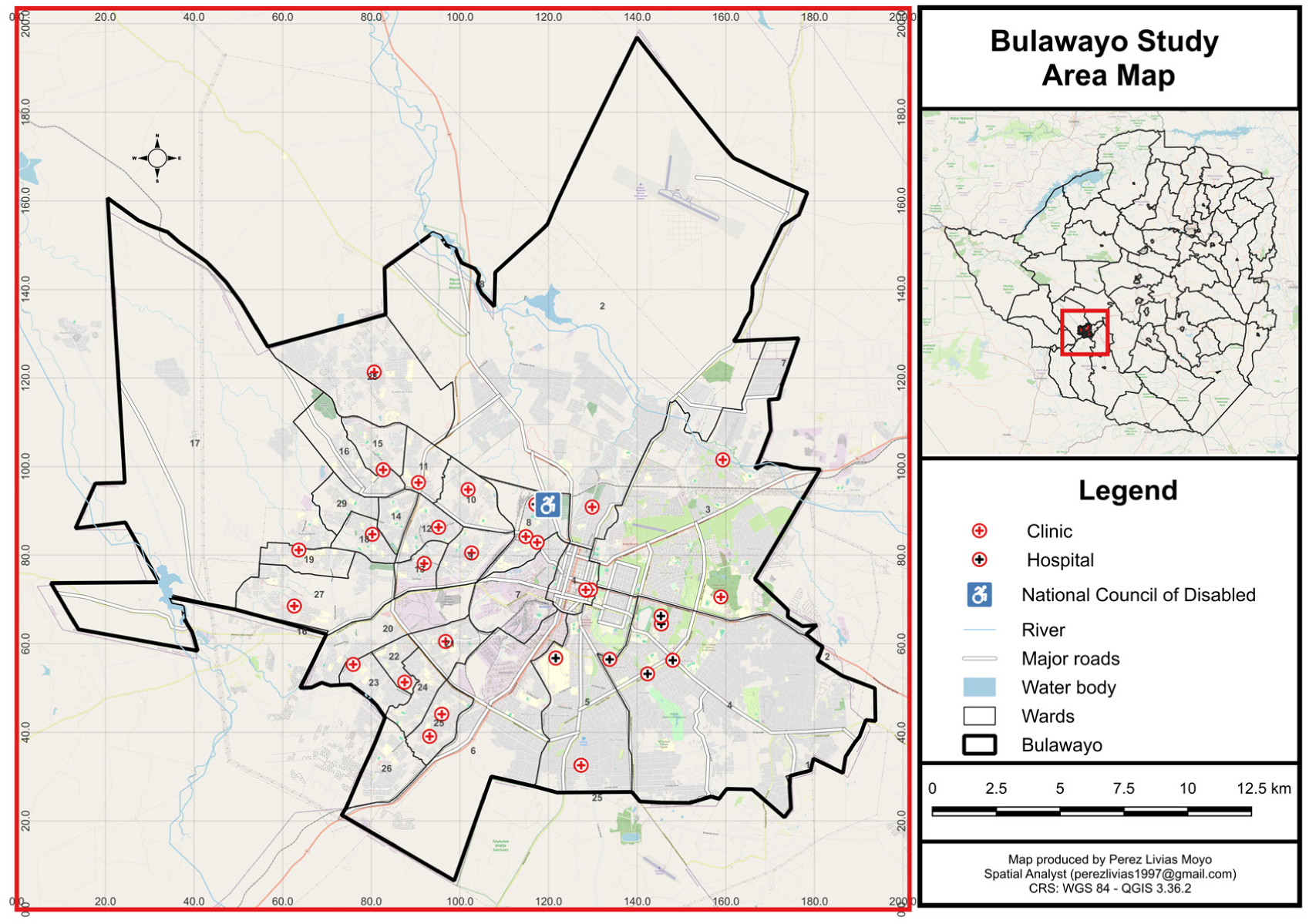
Study area map of Bulawayo.
Study Design
This study employed a phenomenological qualitative approach, and the data collection techniques used were focus group discussions (FGD) and in-depth interviews. Qualitative interviews and FDGs were used to triangulate data. A qualitative approach was imperative as the research problem required “…to make sense of the phenomena in terms of the meanings people bring to them” relating to the experiences faced by students with disabilities in the current policy position (Sadovnik & Coughlan, 2016). The qualitative research method was adopted to focus on discovering and understanding the experiences, perceptions, and views of participants of the study and hence interpret the data collected. The research tools adopted are better considered because they allowed participants to provide their information in environments where they are comfortable and provide a full description of the participants involved.
Target Population and Sampling
The target population for this study comprised individuals residing in Bulawayo, Zimbabwe, who self-identified as having a disability. This included individuals with various forms of disabilities, such as physical, sensory, and intellectual disabilities. The inclusion criteria for the target population were individuals who were living in Bulawayo and self-reported having a disability. Exclusion criteria included individuals residing outside Bulawayo or those who did not identify as having a disability. Recruitment methods included reaching disability support organizations, community centers, healthcare facilities, and other relevant institutions in Bulawayo to identify and connect with potential participants. Additionally, snowball sampling techniques were used to expand the reach within the target population. This study used a sample size of 22 participants (15 for interviews and 7 for FDGs). The sample size was guided by the principle of data saturation, when the participants gave no new information.
Data Collection Methods
Focus group discussions and in-depth interviews were conducted because the thrust of this research was to delve into the personal narratives and experiences of living with a disability in Bulawayo.
In-Depth Interviews
In-depth interviews were a vital element of the data collection process for the study, as they delved into the personal narratives and experiences of people with disabilities in Bulawayo. The interviews consisted of 15 participants, and interview sessions ranged from 20 to 40 min each. The structured interview guide, comprising open-ended questions, served as a foundation for in-depth conversations on the challenges encountered by individuals with disabilities. Before the recordings, participants granted their consent, and pseudonyms were employed to safeguard their identities and maintain confidentiality throughout the research.
Focus Group Discussion
A single focus group discussion (FGD) was organized with a group of seven participants, focusing on exploring the personal narratives and experiences of living with a disability in Bulawayo. This 45-min FGD provided a collaborative platform for participants to engage in group dialogues, exchange insights, and collectively delve into the intricacies of service accessibility for individuals with disabilities. The structured FGD guide, featuring open-ended questions, directed the discourse towards identifying strategies to enhance service uptake within the disability community in Bulawayo. Before recording, consent was sought from all FGD participants, and pseudonyms were allocated to uphold their privacy and ensure confidentiality of their contributions throughout the research.
Data Analysis
Thematic analysis was employed to analyze the qualitative data from in-depth interviews and focus group discussions using an inductive coding approach to identify key themes related to derogatory terms and lived experiences. Coding was conducted in MAXQDA Version 20 Pro, with codes categorized into descriptive (e.g., types of derogatory terms) and analytical (e.g., impacts on self-worth) codes. The analysis was guided by Braun and Clarke’s six-step method: becoming familiar with the data, generating initial codes, searching for themes, reviewing themes, defining themes, and writing. In-depth interviews and focus group discussions were organized into major and minor themes, as guided by the interview guides. To ensure rigor, data was coded by the three authors separately, and the outputs were compared to check for consistency in the codes and themes identified. The codes identified were compared across different participants to identify patterns in derogatory terms and how they impacted personal and lived experiences. All authors sat down and discussed all the themes identified, and other coding discrepancies were addressed and dealt with.
Ethical Considerations
Participation was voluntary, and participants were given the freedom of choice in which they decided whether to participate or decline. Consent forms were provided to participants to sign, indicating that they were willing to be part of the study. One of the principles for all research requires researchers to protect the life, health, integrity, right to self-determination, privacy, and confidentiality of research participants’ personal information (Goodyear & Ellis, 2008). Therefore, the anonymity and confidentiality of the participants were preserved by keeping their names and identities away from the research findings and reporting of the study. As prescribed in the Declaration of Helsinki, other protocols and principles related to studies involving human participants were followed.
Results
Distribution of Disability
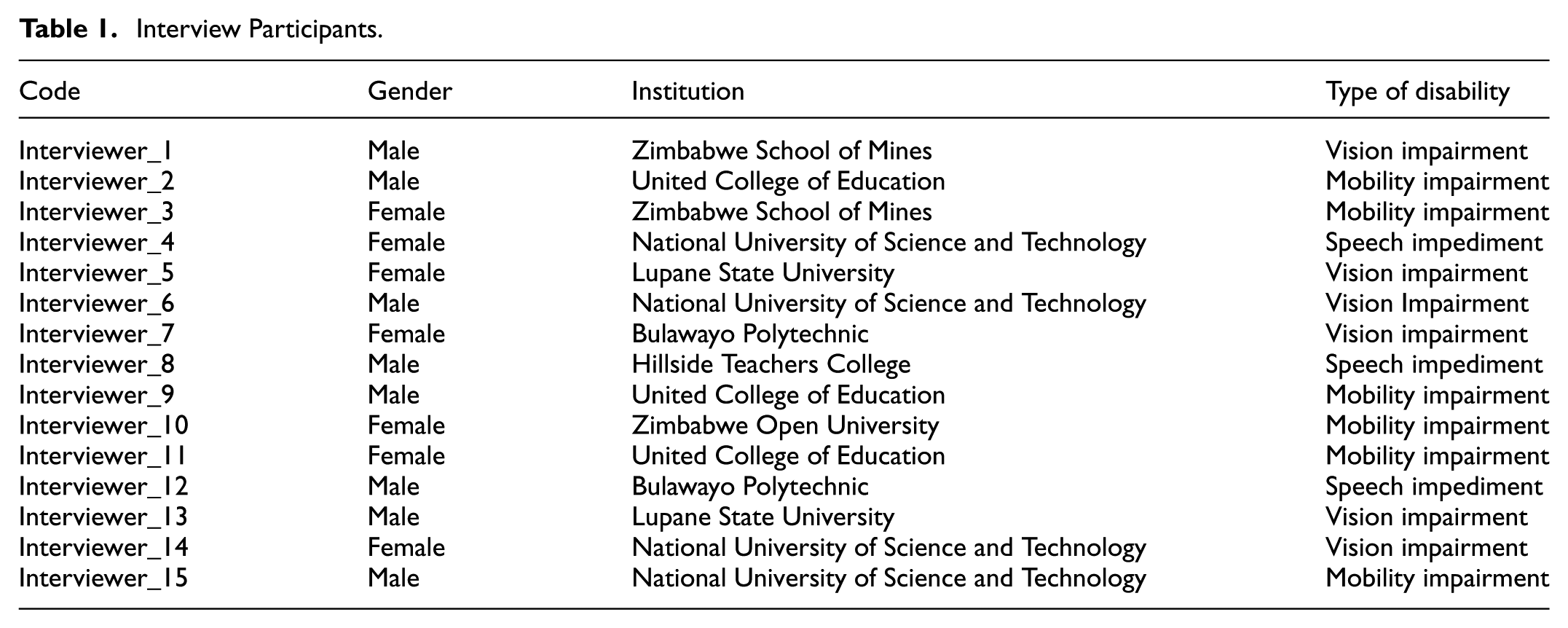
Out of the sampled people with disabilities, three main forms of disability were recorded: speech impediment, mobility impairment, and vision impairment. Tables 1 and 2 show the demographic information of the participants of the study.
Interview Participants.
FDG Participants.

Common Terms Used to Refer to and Identify People with Disabilities
The study findings identified some non-affirming and affirming terms used by people to refer to people with disabilities. Most of the terms were in the local languages of Ndebele and Shona. The terms used are listed in Table 3.
Non-Affirming and Affirming Terms Used in Local Language.

Personal Experiences and Impacts of These Non-Affirmative Terms
Discrimination and Stigma
The findings revealed that the majority of students with disabilities feel discriminated against whenever they are referred to with non-affirming terms such as “isilima/chirema,”“isigoga,”“isiphofu,” or any other. These terms were revealed to emanate from co-workers, neighbors, relatives, other students, and in some cases by lecturers. These non-affirming terms are discriminatory because the “able-bodied” students are usually referred to by their names, but students with disabilities are referred to by their type of disability instead of their names. Notably, participants with visible physical disabilities (e.g., wheelchair users) reported more frequent encounters with derogatory language compared to those with less visible disabilities (e.g., speech impairments), who faced subtler forms of stigma, such as mockery of their speech patterns.
“Isilima ngumuntu ongasiwalutho,” which means that these non-affirming terms are degrading. Whenever I’m referred to this way I feel like I am nothing. (Interview_3, mobility impairment) I also want to be referred to just like any other able-bodied person, being referred to by my nam. (Interview_1, vision impairment) The worst is when they use “isidlakadli” (useless eater) behind my back. I hear it in whispers when I wheel past groups of students. They think I don’t notice, but it cuts deeper each time. (FDG_7, mobility impairment) In my practical, the tutorial assistant said “Let the blind girl touch the equipment first so she feels included.” As if inclusion was about pity rather than equal participation. I scored higher than half the class on that experiment. (Interview_13, vision impairment)
Shift in Perception
The findings of the study revealed significant insights into the impact of non-affirming language on individuals' perceptions of the world around them. Participants who had acquired disabilities due to accidents expressed a pervasive sense of distrust, often feeling that people can be deceitful or insincere, particularly in the wake of traumatic changes like a disability. This shift in perspective has deeply influenced their ability to trust others, leading to feelings of isolation and vulnerability. The study also highlighted a painful reality for many participants: several reported losing friendships after their accidents, indicating that the onset of a disability not only transformed their lives but also fractured their social connections, leaving them to navigate their experiences largely alone.
Ngingakayenzi (Before the) iaccident ngangilabangane abanengi, kodwa (I used to have friends, but) soon after my accident I was left with only few friends. (Interview_5, vision impairment) My neighbor and I used to be good friends, but kodwa ngathi sengilimele nxa elayela abantu iaddress yakhe uthi ngihlala next door lesilima lesiyana esihamba nge wheelchair (after the injury when directing someone to their homestead), they say they live next to the disabled person using the wheelchair. (FDG_3, mobility impairment) Before the accident, I was student leader. Now when I attend meetings in my wheelchair, they speak slowly like I’ve lost my mind along with my legs. The hardest part isn’t the pain- it’s watching people rewrite who I am based on what they see. (Interview_16, acquired mobility impairment)
Questioning Religious Beliefs
The research revealed that derogatory terms have a profound impact on the values and religious beliefs of individuals with disabilities. Several participants reported feeling so affected by these negative labels that they began to doubt the existence of God. Among those interviewed, two individuals who had experienced a life-altering disability due to a motor vehicle accident a few years prior provided valuable insights. Their contrasting experiences before and after the accident enriched the understanding of how such challenges can reshape one’s outlook on life and spirituality.
Just because I’m like this, people are calling me with disrespectful names and I even start to wonder why God did this to me. Because people see my disability first before they see me as a person, sometimes I wonder if uNkulunkulu (God) really exists coz I pray and cry if God can restore my old self. (Interview_7, vision impairment)
Under the same theme, other participants from the focus group discussions stated that
You know what’s concerning is those people who refer to us with distressful names go to church and you wonder why they even bother, if that is Christianity, I no longer wanna be a part of it. (FDG_1, speech impediment) My pastor told my mother my cerebral palsy was punishment for her sins. Now when I see him preach about God’s love, I want to scream. If heaven is full of people like him, I’d rather not go. (FDG_7, mobility impairment).
Self-Worth and Self-Confidence
The findings of the study shed light on the profound impact that non-affirming language has on individuals with disabilities, significantly undermining their sense of self-worth and self-confidence. One participant, who lived with a cleft lip and palate, shared that thoughts of suicide frequently crept into their mind during moments of despair. Meanwhile, those with speech impediments expressed a deep-seated anxiety that inhibited their ability to express themselves in front of others. They hesitated to participate in class discussions, gripped by the fear that their peers would mock them, which led to a pervasive sense of isolation and insecurity.
Some even go to the extent of greeting me to hear just so they could hear my response and laugh at my disability. It has also affected my confidence as I feel like I can’t do anything… You know things are tough in Zimbabwe and its even difficult to do business to make a living as there are no jobs in Zimbabwe, what can I sell to people if I can’t talk properly. (Interview_6, vision impairment) After years of being called “dumb” because of my stutter, I started believing it. I turned down a scholarship because the interview terrified me. That’s what these words do—they steal futures. (FGD_1, speech impairment).
Along the same lines, participants disclosed that these terms had a detrimental effect not only on their confidence, but also on their ability and intelligence, which in turn lowered their grades. Some students, particularly freshmen, who came from high schools for individuals with disabilities, were not accustomed to the mixed setting of tertiary education and had not encountered a non-affirming language from such establishments.
I won’t lie in my first semester, it was hard and my grades were not good because I was adjusting with the fact that I had to deal with these offensive names I was being given and this affected my performance a lot because I was never used to college life. (FDG_4, vision impairment)
Stereotype
In-depth interviews and focus group discussions revealed significant insights regarding the language used to describe individuals with disabilities. Participants noted that when language emphasizes a person’s disability over their complete identity, it can reinforce the damaging belief that a disability is the primary defining trait of that person. This tendency to categorize individuals in such a limited way often leads to oversimplified and inaccurate assumptions about their capabilities, needs, and life experiences.
During one particularly engaging group session, participants voiced their deep concerns regarding the use of non-affirming language. They argued that framing a disability in a negative or limiting manner can lower expectations for the academic and social potential of students with disabilities. Such language not only fails to capture the complexity of these individuals but also undermines opportunities for personal growth and achievement, particularly beyond the confines of tertiary education. The discussions highlighted the critical importance of using affirming and holistic language that recognizes the full person, rather than reducing them to their disability.
Every time people and students see me walking with my wheelchair, they just assume I need special care and I am not able to do what other fully abled students can do, such as presentations and experiments. This is not true because my legs might be weak, but I am capable of using my hands and by the way they are very strong’. (FDG_3, mobility impairment). I remember during my attachment year, I struggled to get a place for attachment as most companies were turning me down saying I was not going to keep up with their standards, I was hurt coz you see working in a bank I don’t necessarily need legs to carry out my duties. (Interview_10, mobility impairment) I aced all my teaching practicums, but the school refused to hire me, saying parents wouldn't accept a teacher with a limp. They praised my work while denying me the career it earned. (Interview_11, mobility impairment).
Discussion
The purpose of this study was to determine how non-affirming language affect the real-world experiences of students with disabilities. The findings revealed that language that is disparaging and non-affirming is often used when referring to students with disabilities in Bulawayo’s higher education institutions. This negatively affects students’ sense of self and reinforces negative stereotypes. The findings align with earlier studies regarding the significance of language and certain terminology in molding the perspectives and encounters of people with disabilities. Some studies have reported that the use of stigmatizing or non-affirming language can reinforce negative stereotypes, lead to social exclusion, and diminish the dignity and self-worth of those with disabilities (Bianco, 2005; Kamenetsky & Sadowski, 2020). It is therefore important to use respectful terms that do not resonate with stereotypes among students with disabilities, as this is crucial in eliminating stigma among this population. The power of language to shape social reality and perpetuate stigma is a well-established concept in sociolinguistics (Livingston, 2021).
The study findings revealed that the person-first approach was the most preferred way to address students with disabilities. This approach conveys respect, recognizes a person’s inherent dignity, and avoids dehumanization. Person-first language is important because it places the person before the disability, emphasizing the student’s worth rather than defining them solely based on their form of disability or condition. The study findings concur with those of other scholars who conducted the same study on students with disabilities. Physical disabilities are more readily recognized than mental or cognitive disabilities (Magosvongwe, 2017). This phenomenon, in which visible disabilities gain more immediate recognition and often provoke different societal reactions compared to non-visible ones, is documented by other scholars (Ysasi et al., 2018). Visible physical disabilities tend to take precedence in discussions around disabilities, often overshadowing the capabilities of students with disabilities (McLean et al., 2003; Manungo & Dohwe, 2023). This study’s emphasis on the value of employing person-first and affirmative language aligns with the suggestions made by academics and activists for disability rights. It has been extensively advocated to avoid objectifying people and acknowledge their innate humanity by using the person-first language, which puts the person before the disability (e.g., “person with a disability”; Kamenetsky & Sadowski, 2020).
The adoption of affirming terminology in place of derogatory terminology is key to reducing stigma and stereotypes among students with disabilities. Language is not merely descriptive but also performative, actively constructing social hierarchies, and identities (Fuller, 2007). The effort is to change public attitudes and promote an atmosphere that is more accepting and affirming of those with disabilities. Studies have reported that non-affirming language hurts self-worth and confidence in students with disabilities. This has been reported to affect confidence and performance. The results regarding the negative effects of non-affirming language on the self-perception and lived experiences of students with disabilities are consistent with the social identity theory, which holds that the use of stigmatizing or derogatory language can contribute to the marginalization and devaluation of individuals within a dominant social group (Hogg, 2016). A student representative for students with disabilities should be in place at these tertiary institutions so that their voices can be heard, and these institutions must adopt no-shaming policies to foster inclusion of students with disabilities and lessen the stigma and discrimination of people with disabilities. Inclusive approaches that involve students with disabilities in policymaking are considered best practices for achieving true inclusion (Rajohane Matshedisho, 2007).
Limitations and Implications
The study involved a small sample size of only 22 students with disabilities who were recruited using purposive and snowballing sampling methods. Owing to the small sample size, the findings may not represent the general population of students with disabilities. Moreover, due to differences in the forms of disability, some of the lived experiences may be different and cannot be applied across the board because some impacts are related to specific forms of disability. Despite certain limitations, the study’s findings have important practical implications. They offer valuable, evidence-based insights for tertiary institutions in Zimbabwe and similar contexts, suggesting the need to develop and implement mandatory sensitivity training for both staff and students. This training should emphasize the effective use of affirming language and challenge deeply rooted stereotypes. Additionally, the results highlight the urgent requirement for tertiary institutions’ counselling services to adopt disability-competent practices that address the specific psychological effects of stigma and discrimination identified in this study.
Conclusion
The findings of the study highlight the vital importance of language in shaping the viewpoints and lived experiences of students with disabilities in Bulawayo. It becomes evident that employing language stripped of positive connotations perpetuates harmful stereotypes, undermines the inherent worth and dignity of individuals with disabilities, and serves to marginalize them from the broader social fabric. The recommendations put forth by this research advocate for the adoption of person-first and identity-first language, as preferred by individuals which resonates with broader movements aimed at fostering inclusion and championing the rights of people with disabilities. This aligns seamlessly with international agreements and local legislation that seek to promote a more equitable society for all.
Footnotes
Acknowledgements
Acknowledgement goes to the Sexual Rights Centre team for assisting with the mobilization of the study participants.

Ethical Considerations
The research proposal was reviewed by the National University of Science and Technology (NUST) Institutional Review Board (IRB) and ethics clearance was granted (ethics number: NUST/IRB/2023/76) as part of the approval process to conduct this study. The study was part of a broader study on key population inclusion health services.
Consent to Participate
Participation was voluntary, and participants were given the freedom of choice in which they decided whether to participate or decline. Consent forms were provided to participants to sign, indicating that they were willing to be part of the study. One of the principles for all research requires researchers to protect the life, health, integrity, right to self-determination, privacy, and confidentiality of research participants’ personal information (Goodyear & Ellis, 2008). Therefore, the anonymity and confidentiality of the participants were preserved by keeping their names and identities away from the research findings and reporting of the study. As prescribed in the Declaration of Helsinki, other protocols and principles related to studies involving human participants were followed.
Consent for Publication
An information sheet detailing the purpose of the study was available to the participants before they sought their consent for participation. Written consent was obtained from all the participants.
Authors Contributions
PLM, MYK, and PRN conceptualized the research idea and drafted the research. WNN supervised, guided and coordinated the manuscript writing process, and revised the draft manuscript. All authors have read and approved the manuscript.
Funding
The authors received no financial support for the research, authorship, and/or publication of this article.
Declaration of Conflicting Interests
The authors declared no potential conflicts of interest with respect to the research, authorship, and/or publication of this article.
Data Availability Statement
Data sharing not applicable to this article as no datasets were generated or analyzed during the current study.