




Abstract
The rapid evolution of consumer behavior in the digital era has positioned Generation MZ (born 1980s–2000s) as a dominant force in the marketplace, yet their splurge consumption patterns remain insufficiently understood. This study investigates the impact of splurge consumption culture on Generation MZ’s (born 1980s–2000s) consumer behavior in the food and beverage sector. Employing structural equation modeling on data from 265 respondents, we assess how taste, price, menu diversity, and trends influence satisfaction, word-of-mouth, and repurchase intentions. Our findings reveal that taste, menu diversity, and trends significantly affect satisfaction, while only trends directly impact word-of-mouth. Both satisfaction and word-of-mouth ultimately influence repurchase intentions. Notably, we uncover a significant moderating effect of consumption value orientations, with hedonic-oriented consumers exhibiting greater sensitivity to trend-related attributes compared to utilitarian-oriented consumers. This research contributes to understanding digital-era consumption behaviors within Generation MZ, highlighting the complex interplay between various factors and value orientations. Our study offers strategic insights for businesses, emphasizing the importance of aligning with this generation’s preferences and consumption styles. Furthermore, it illuminates the evolving consumption patterns of Generation MZ, characterized by a shift from traditional ownership-focused consumption to experience-oriented and socially-driven spending. The observed differences between hedonic and utilitarian groups suggest potential for differentiated marketing strategies based on consumer value orientations. This study provides a foundation for future research into broader aspects of Generation MZ’s consumption patterns and their implications in the rapidly evolving marketplace.
Plain Language Summary
In the digital era, Generation MZ (born 1980s–2000s) has emerged as a dominant force in the consumer market, yet their splurge consumption patterns remain inadequately understood. This study examines the impact of splurge consumption culture on Generation MZ’s consumer behavior in the food and beverage sector. Analysis of data from 265 respondents using structural equation modeling revealed that taste, menu diversity, and trends significantly influence consumer satisfaction. However, only trends directly impact word-of-mouth. Both satisfaction and word-of-mouth ultimately affect repurchase intentions. A particularly noteworthy finding was the moderating effect of consumption value orientations. Hedonic-oriented consumers showed greater sensitivity to trend-related attributes compared to utilitarian-oriented consumers. This suggests the potential for differentiated marketing strategies based on consumer value orientations. This research contributes to understanding digital-era consumption behaviors among Generation MZ, highlighting the complex interplay between various factors and value orientations. It also provides businesses with strategic insights on aligning with this generation’s preferences and consumption styles. The consumption patterns of Generation MZ are shifting from traditional ownership-focused consumption to experience-oriented and socially-influenced spending. Understanding these changing patterns will be crucial for business success in the rapidly evolving marketplace. RetryClaude can make mistakes. Please double-check responses.
Keywords
Introduction
In the domain of contemporary consumer behavior studies, this research focuses on the MZ generation, a cohort born between the 1980s and 2000s, encompassing both Millennials and Generation Z as a unified demographic entity (Kara & Min, 2024). This generation is distinguished by its trend-setting proclivities and innate proficiency in navigating the digital landscape. Their digital fluency and inclination towards novel experiences are well-documented phenomena (Francis & Hoefel, 2018). Having been immersed in an internet-rich environment since birth, the MZ generation’s daily existence is intricately interwoven with social media and smart devices. A hallmark behavior of the MZ generation is their engagement in information acquisition and social interaction, predominantly through platforms such as Instagram. In this context, social media transcends its role as a mere vehicle for self-expression, evolving into a multifaceted sphere. The MZ generation’s ability to expand their horizons through a diverse array of life experiences, particularly those disseminated via viral social networking services (SNS), is noteworthy (J. Y. Lee, 2020). Their heightened sensitivity to professional information disseminated by influencers and the consequent high level of trust placed in such content is crucial. This trust significantly influences purchasing behaviors and repurchase intentions, especially in the context of time efficiency. Recent research indicates that MZ generation’s consumption behaviors are influenced by various factors, particularly sustainability and value-oriented consumption. Makowska et al. (2024) analyzed generational differences in food choices and consumer behaviors, finding that the MZ generation considers not only traditional factors such as price when making food choices but also balances other values like sustainability. This reflects a paradigm shift in consumption patterns, transitioning from a focus on ownership and consumption to a preference for experiences and sharing. Ruzgys and Pickering (2024) applied the theory of planned behavior to examine sustainable diets among Generation Z, emphasizing that this generation’s food consumption decisions are closely tied to environmental and ethical values beyond mere taste or price. This research suggests that MZ generation’s consumption decision-making is multifaceted, shaped by personal preferences, social influences, and value-oriented characteristics. The significance of the MZ generation in the consumer spending sector, amplified by their growing representation in the workforce, necessitates a comprehensive analysis of their consumption patterns. These patterns exhibit a paradigm shift—transitioning from a focus on ownership and consumption to a preference for experiences and sharing; from offline to online modalities; and from cost-effectiveness to an emphasis on personal taste and emotional value. This shift was further catalyzed by the restrictions and anxieties engendered by the COVID-19 pandemic, leading to an increased preference for luxury and premium products. Consequently, consumption is evolving from a traditional paradigm of mere acquisition and enjoyment of products to a pursuit of unique experiences and online validation in fulfillment of personal aspirations (Francis & Hoefel, 2018). Recent studies on MZ generation’s behavior in online shopping platforms provide important insights into splurge consumption in digital environments. Oktaviana and Irawan (2024) investigated the impact of financial literacy on impulsive buying behavior toward online food delivery among Generation Z and Millennials in Indonesia. Their study emphasized that MZ generation’s food consumption is influenced by immediate gratification and impulsive decisions beyond planned purchases. These impulsive consumption patterns are closely related to the splurge consumption discussed in this study. For a deeper understanding of the MZ generation’s consumption decision-making process, Nguyen and Duong (2024) analyzed factors influencing Gen Z customers’ purchasing behavior in Vietnam. They found that social media influence, product quality, and online reviews play important roles in Gen Z’s purchase decisions. These findings support our hypothesis about the importance of word-of-mouth in splurge consumption. Ulita et al. (2024) argued in their study on Gen Z’s empathy map toward healthy food that food entrepreneurs’ design strategies should reflect Gen Z’s preferences. Their research emphasized that new approaches to food marketing are needed, particularly highlighting that factors such as taste, variety, and trends have decisive impacts on Gen Z’s food choices. This is closely related to the determinants of splurge consumption investigated in this study. Within the realm of consumption and consumer behavior research, the existing literature provides insightful precedents. The present study aims to augment this area of research by expanding its investigative scope to encompass the MZ generation across a broader geographic spectrum. Extending this discourse further, the current study hypothesizes that dining establishments gaining prominence through popular culinary programs and notable SNS presence are likely to witness increased revisit rates. This hypothesis aligns with the growing trend of consumer decisions being influenced by social media content (Collin et al., 2011). This research endeavors to meticulously examine the multitude of factors influencing splurge consumption within the MZ generation. It focuses on a spectrum of determinants including brand, taste, price, service quality, menu diversity, ambiance, and prevailing trends. The objective is to elucidate their impact on repurchase intentions, thereby informing the development of both menu and marketing strategies in the consumption sphere. Central to this study is the hypothesis that these aforementioned consumption factors significantly contribute to customer satisfaction and word-of-mouth, which subsequently exert a pivotal influence on repurchase intentions. The academic contributions of our study are as follows. First, it expands the theoretical understanding of consumer behavior in the digital era by comprehensively identifying the relationships between MZ generation’s splurge consumption determinants and outcomes. Second, by verifying the moderating effects of hedonic and utilitarian value orientations, it explores the heterogeneity within the MZ generation and deepens the understanding of diverse consumer segments within this generation. Third, extending the research of Ruzgys and Pickering (2024), it provides a framework for understanding not only sustainability and value orientation in MZ generation’s food choices but also aspects of splurge consumption that seek immediate satisfaction and social recognition. From a practical standpoint, in conjunction with the research of Ulita et al. (2024) and Nguyen and Duong (2024), this study contributes to the development of practical strategies for food service businesses to understand and respond to the complex consumption patterns of the MZ generation. In particular, by empirically verifying the impact of key determinants such as taste, menu diversity, and trends on satisfaction, word-of-mouth, and repurchase intentions, it provides insights that businesses can use to offer differentiated services for the MZ generation and develop effective marketing strategies. Empirical validation of this hypothesis is sought through the deployment of surveys, specifically targeting the MZ generation with experience in splurge consumption. Ultimately, this study aims to provide practical insights for entities operating in the consumption sector. By providing an in-depth understanding of how various factors in consumption choices influence customer satisfaction and word-of-mouth, this research aims to empower enterprises to offer more differentiated services. Additionally, the study may offer practical aid in the formulation of effective marketing strategies, thereby enhancing the understanding of the dynamics that underpin customer repurchase intentions.
Literature Review
MZ Generation and Splurge Culture
The MZ generation encompasses Millennials and Generation Z, born between the 1980s and 2000s, characterized by digital familiarity and desire for new experiences (Francis & Hoefel, 2018). This generation seeks instant gratification with individualistic values differing from previous generations’ focus on long-term saving. Ozuem et al. (2024) found MZ generation actively shares consumption experiences through social media, while Fromm and Read (2018) noted they express themselves through brand choices. Sheth’s (2020) research shows post-COVID-19 conspicuous consumption has become more digitized and value-oriented.
Satisfaction and Word-of-Mouth Communication
Customer satisfaction is a subjective evaluation achieved when consumers’ expectations are met (J. H. Kim, 2017), leading to trust and increased repurchase likelihood (J. G. Kim, 2021). Dangaiso et al. (2024) found e-satisfaction directly influences e-word-of-mouth and customer retention, particularly among digitally native MZ generation. Word-of-mouth influences consumer decisions by reducing purchase risk through trusted information (Huete-Alcocer, 2017; Y. H. Kim et al., 2017), with impact amplified through social media platforms.
Repurchase Intention
Repurchase intention reflects consumers’ propensity to repeatedly use products based on positive experiences (Pham et al., 2018). Martínez García de Leaniz et al. (2025) found MZ tourists prioritize social responsibility when selecting destinations, with social media sharing influencing revisit intentions. Repurchase intentions reflect final product evaluations (Trivedi & Yadav, 2020), with satisfaction strongly influencing consumer attitudes (J. H. Kim, 2017) and generating positive word-of-mouth (Pham et al., 2018).
Taste of Food Affects Satisfaction and Word-of-Mouth
Food flavor significantly impacts customer satisfaction (Hidalgo-Milpa et al., 2016; Treich, 2021), with Krishna’s (2012) research highlighting taste’s influence on consumer perception and behavior. Xu (2024) found taste-related reviews directly influence purchase intentions, with MZ generation valuing detailed descriptions. For Gen MZ, taste is a major food choice determinant, with research showing strong tendencies to trust and act on oral information (Criss et al., 2020; Salmiah et al., 2024).
Price of Food Affects Satisfaction and Word-of-Mouth
Generation MZ considers price important in dietary decisions (Makowska et al., 2024). Bernarto et al. (2024) found price fairness directly influences satisfaction and word-of-mouth, with MZ generation valuing price-value balance over simply low prices. Research by Vehapi and Šabotić (2021) showed this generation’s willingness to pay premium prices for organic options, while Maziriri et al. (2023) emphasized “value for money” as more important than low prices.
Menu Diversity of Food Affects Satisfaction and Word-of-Mouth
Menu variety significantly affects consumer satisfaction (Ryu & Zhong, 2012). Catubig and Catubig (2024) found menu diversity directly influences satisfaction and word-of-mouth, with MZ generation particularly valuing diverse options. J. S. Han and Yang (2017) demonstrated positive effects of menu variety on customer happiness, while Mejia et al. (2022) identified menu diversity as crucial for socially sustainable restaurant operations, aligning with Gen MZ’s value consumption desires.
Trend of Food Affects Satisfaction and Word-of-Mouth
Young consumers actively seek trendy foods and dining styles, prompting industry investment in innovative offerings (Meneses et al., 2017). Generation MZ’s food consumption patterns often follow cohort-shared trends, with alignment between food trends and demographic expectations shaping consumption choices (Goldgehn, 2004; McCreanor et al., 2013). Dost et al. (2015) found young people’s consumption behavior is heavily influenced by online trends and social media, explaining Gen MZ’s trend sensitivity. McCreanor et al. (2013) noted younger generation’s consumption culture is shaped by social media and marketing, strongly influencing word-of-mouth and consumption behavior.
Satisfaction Affects Word-of-Mouth
Customer satisfaction and word-of-mouth communication show strong positive correlation in the restaurant industry. Chao et al. (2021) and Jalilvand et al. (2017) demonstrated customer satisfaction significantly impacts word-of-mouth intentions in food service. Gen MZ’s digital native nature and social media activity amplifies satisfaction’s impact on word-of-mouth during splurge consumption. C. Y. Kim and Cha (2023) found consumer satisfaction directly influences online word-of-mouth in restaurant consumption, particularly pronounced for digitally-familiar Gen MZ, with digital platform sharing potentially strengthening the satisfaction-WOM relationship during splurge spending.
Satisfaction Affects Repurchase Intentions
Cha and Kim (2023) showed satisfaction significantly impacts repurchase intentions in Generation MZ’s luxury goods consumption, supported theoretically by expectancy-affirmation theory and planned behavior theory. Satisfaction is a key antecedent of customer loyalty, potentially amplified among social media-sharing Gen MZ. Watts and Chi’s (2019) meta-analysis found strong correlation between satisfaction and repurchase intentions across industries, applicable to food splurging. C. Y. Kim and Cha (2023) identified satisfaction as a key predictor of repurchase intentions in experiential purchases, offering insights into experience-oriented Generation MZ’s consumption characteristics.
Word-of-Mouth Affects Repurchase Intentions
Van Vaerenbergh et al. (2012) demonstrated strong positive relationship between word-of-mouth and favorable behavioral intentions in service contexts. Heryana and Yasa (2020) emphasized electronic word-of-mouth’s impact on younger consumers’ purchase intentions. Theoretical support comes from the elaboration likelihood model (Petty and Cacioppo, 1986) and social influence theory (Kelman, 1958), explaining word-of-mouth’s persuasive function and individuals’ alignment with peer opinions during high-stakes decisions like food consumption.
Consumer Value
Consumer value orientation’s moderating effect has been studied across contexts. Konuk (2019) showed hedonic values moderate customer satisfaction and behavioral intentions in fast-casual restaurants. Y. G. Kim and Eves (2012) found hedonic values moderate satisfaction with local food consumption and revisit intention, while Ha and Jang (2010) demonstrated hedonic values strengthen satisfaction-behavioral intention links in Korean restaurants. W. G. Kim et al. (2016) found hedonic factors moderate social media reviews and restaurant visit intentions, with Teng et al. (2015) extending this to hotel services.
For utilitarian values, Ryu et al. (2008) showed functional value moderates satisfaction and behavioral intention in restaurants. Ha and Jang (2010) found service and food quality moderate satisfaction-repeat visit relationships in ethnic restaurants, while W. G. Kim and Moon (2009) demonstrated functional value factors moderate satisfaction-behavioral intention relationships across restaurant types. Jeong and Jang (2011) found functional factors moderate electronic reviews and revisit intentions, while Z. Zhang et al. (2010) suggested functional factors moderate word-of-mouth-visit intention relationships for online reviews. Liang et al. (2018) showed functional value moderates word-of-mouth, satisfaction, and repurchase intentions for Airbnb services. Both hedonic and utilitarian values likely play important moderating roles in MZ’s conspicuous consumption, with hedonic value potentially moderating consumption attributes’ effects on satisfaction, particularly for hedonically-oriented consumers.
Methodology
Research Hypotheses
Based on the literature review, this study proposes the following hypotheses:
Hypotheses Related to Taste
Hypotheses Related to Price
Hypotheses Related to Menu Diversity
Hypotheses Related to Trend
Hypothesis Related to the Relationship Between Satisfaction and Word-of-Mouth
Hypotheses Related to Repurchase Intention
Hypotheses Related to Consumer Value Orientation
Research Model
The proposed research model illustrates the relationships between the independent variables (taste, price, menu diversity, trend), mediating variables (satisfaction, word-of-mouth), and the dependent variable (repurchase intention), as well as the moderating effect of consumer value orientations (hedonic and utilitarian). Based on the above hypotheses, we constructed a research model as shown in Figure 1.

Research model.
Data Collection and Analysis Procedures
This study employed a rigorous methodological approach to investigate the consumption behaviors of Generation MZ, a demographic cohort known for its propensity towards indulgent spending. A comprehensive survey was conducted over a two-week period from June 10 to June 24, 2023, targeting a sample of 265 respondents representative of this generation as Table 1. The data collection process was designed to capture nuanced insights into the consumption patterns and preferences of Generation MZ. Following the data gathering phase, a multi-stage analytical procedure was implemented to ensure the robustness and validity of the findings.
Data Collection Details.

First, the research team selected 25 representative splurge food and beverage venues in Seoul, Gyeonggi, and 5 major metropolitan cities a preliminary survey. The selection criteria were (1) popular on social media (more than 10,000 followers), (2) with an average price of more than 30,000 won per person, and (3) with a high proportion of MZ generation visits (based on the venues’ own surveys). Second, two trained surveyors were deployed at each location to conduct both mobile and face-to-face surveys via QR codes on-site. Third, respondent selection was limited to those who were (1) born between 1980 and 2000, (2) had experienced splurging within the last three months, and (3) were willing to participate voluntarily. Fourth, we offered a $5,000 gift certificate to survey participants to increase response rates. Fifth, we included two attention check questions in the survey to eliminate insincere responses, and we also excluded cases with excessively short response times (less than 3 min) from the analysis. Finally, we excluded 33 incomplete responses out of a total of 300 responses, resulting in 265 valid responses (88.3% valid response rate).
This study employs structural equation modeling (SEM) to analyze the conspicuous consumption behavior of Generation MZ. Structural equation modeling is a particularly appropriate method of analysis for this study for the following reasons. First, it allows for the simultaneous analysis of the complex relationships between the determinants (taste, price, menu variety, and trends) and outcome variables (satisfaction, word-of-mouth, and repurchase intentions) of splurging (Hair et al., 2010). Second, structural equation modeling provides more accurate estimates by accounting for measurement error, which is especially important in social science research such as consumer behavior studies (Kline, 2016). Third, it can effectively test the mediating effects of latent variables such as satisfaction and oral history, which are important in this study (Byrne, 2016). Fourth, the moderating effect of consumer value orientation can be systematically verified through multi-group analysis, which can clarify the differences between hedonic and utilitarian value groups within the MZ generation (Marsh et al., 2013). These methodological advantages are essential for a comprehensive understanding of the mechanisms of conspicuous consumption among Generation MZ, which is the purpose of this study.
Initially, an exploratory factor analysis (EFA) was performed using SPSS 25.0.0 software to uncover the latent structure of the variables and to refine the measurement scales. This step was crucial in identifying the underlying dimensions of splurge consumption behavior among Generation MZ. Subsequently, a confirmatory factor analysis (CFA) was conducted using AMOS 26 structural equation modeling software. This step served to validate the measurement model and assess the construct validity of the scales. Concurrently, discriminant validity was evaluated to ensure that the constructs were sufficiently distinct from one another. The final stage of the analysis involved hypothesis testing through path analysis, allowing for a comprehensive examination of the proposed relationships within the research framework. This approach enabled the assessment of both direct and indirect effects among the variables of interest. The sample size of 265 participants was determined based on statistical power considerations and is consistent with recommended guidelines for structural equation modeling (Hair et al., 2010). This sample size ensures adequate statistical power for detecting moderate effect sizes while maintaining practical feasibility. By employing this methodical and statistically rigorous approach, the study established a solid empirical foundation for analyzing the complex spending patterns and consumption behaviors of Generation MZ in the context of splurge consumption.
All measures were reviewed by three consumer behavior experts for content validity and pilot tested with 30 Gen MZers to ensure item clarity and appropriateness before being included in the final survey as shown in Table 2.
Measures and Sources of Study Variables.

Degree of Agreement: 7point Likert.
Results
Sample Characteristics and Descriptive Statistics
The demographic composition of the sample is presented in Table 3. The gender distribution consists of 49.8% male (n = 132) and 50.2% female (n = 133) respondents. The age distribution comprises individuals in their twenties (62.6%, n = 166), thirties (18.9%, n = 50), forties (13.2%, n = 35), and teenagers (5.3%, n = 14). Regarding occupational status, students constitute 44.5% (n = 118), followed by office workers (26.8%, n = 71), self-employed individuals (12.8%, n = 34), civil service employees (7.2%, n = 19), homemakers (6.8%, n = 18), and other occupations (1.9%, n = 5). The frequency of splurge consumption is distributed as follows: once or twice per quarter (44.9%, n = 119), annual (27.9%, n = 74), monthly (18.1%, n = 48), weekly (8.7%, n = 23), and other patterns (0.4%, n = 1). The total sample size is 265 respondents.
Demographics.

Measurement Model Assessment
Exploratory Factor Analysis (EFA)
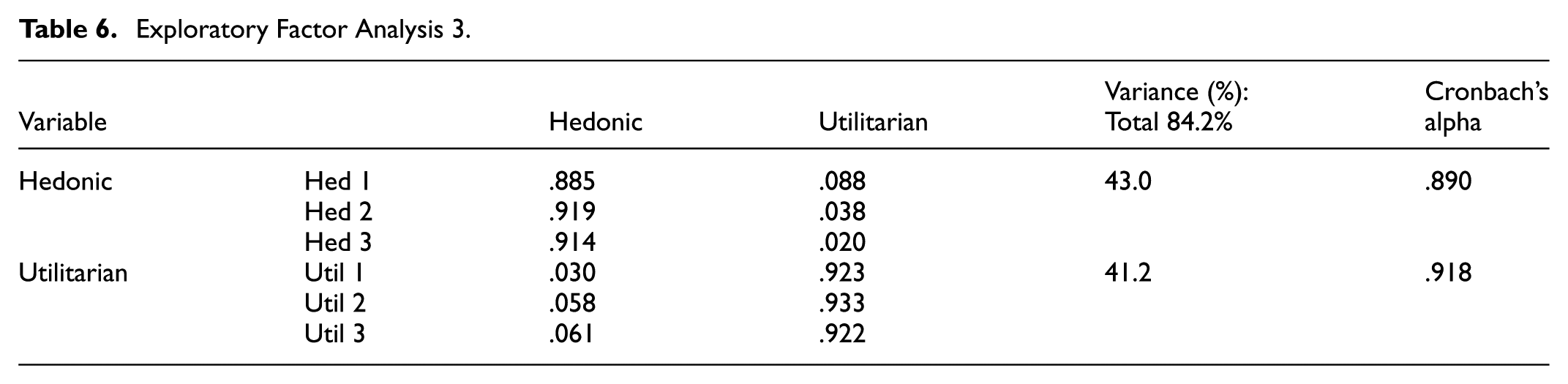
The exploratory factor analysis was conducted on the constructs of splurge consumption, satisfaction, word-of-mouth, and repurchase intention. Tables 4, 5, and 6 present the EFA results. Table 4 shows the factor loadings for the primary constructs of splurge consumption (Price, Taste, Menu Diversity, and Trend). The factor loadings for all constructs exceed 0.7, with Price construct loadings ranging from 0.758 to 0.912. The cumulative variance explained by these four factors is 80.2%. Tables 5 and 6 present the EFA results for Word-of-Mouth (WOM), Satisfaction, Repurchase Intention, and the Hedonic and Utilitarian values. The WOM items have loadings ranging from 0.756 to 0.885, Satisfaction items from 0.769 to 0.864, and Repurchase items from 0.710 to 0.914. The Hedonic and Utilitarian constructs exhibit loadings ranging from 0.885 to 0.919 and 0.922 to 0.933, respectively. The Cronbach’s alpha coefficients for each construct are: Price (α = .922), Taste (α = .893), Menu Diversity (α = .890), Trend (α = .883), WOM (α = .929), Satisfaction (α = .919), Repurchase Intention (α = .730), Hedonic Value (α = .890), and Utilitarian Value (α = .918). The cumulative variance explained by the constructs in Tables 5 and 6 is 83.7% and 84.2%, respectively.
Exploratory Factor Analysis 1.

Exploratory Factor Analysis 2.

Exploratory Factor Analysis 3.
Confirmatory Factor Analysis (CFA)
Table 7 presents the confirmatory factor analysis results. The standardized factor loadings (λ) for the Taste construct range from 0.78 to 0.87, for the Price construct from 0.71 to 0.97, for the Menu Diversity construct from 0.72 to 0.95, and for the Trend construct from 0.73 to 0.91. The Satisfaction construct has loadings from 0.84 to 0.92, Word-of-Mouth (WOM) from 0.74 to 0.96, and Repurchase from 0.72 to 0.80. The Average Variance Extracted (AVE) values are: Taste (0.709), Price (0.750), Menu Diversity (0.751), Trend (0.724), Satisfaction (0.783), Word-of-Mouth (0.773), and Repurchase Intention (0.575). The Composite Reliability (CR) values are: Taste (0.879), Price (0.922), Menu Diversity (0.899), Trend (0.886), Satisfaction (0.915), Word-of-Mouth (0.931), and Repurchase Intention (0.730).
Confirmatory Factor Analysis.

Discriminant Validity
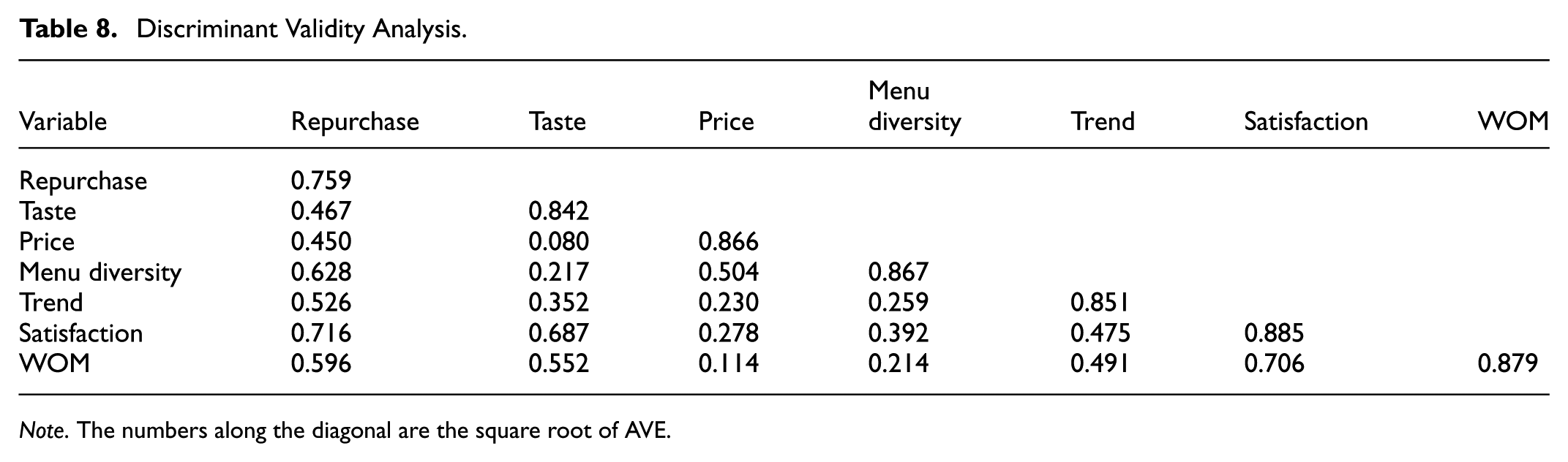
Table 8 presents the discriminant validity analysis results. The diagonal elements of the matrix, representing the square root of AVE for each construct, range from 0.759 for Repurchase Intention to 0.885 for Satisfaction. The off-diagonal elements, representing the inter-construct correlations, are all lower than the corresponding AVE square roots on the diagonal.
Discriminant Validity Analysis.
Note. The numbers along the diagonal are the square root of AVE.
The correlations between Satisfaction and Repurchase Intention (0.716) and Taste (0.687) are higher than other correlations. The correlations between Price and other constructs range from 0.080 to 0.504. The Word-of-Mouth (WOM) construct shows moderate correlations with several constructs, particularly with Satisfaction (0.706).
Hypothesis Testing Results
Table 9 presents the path analysis results from the structural equation modeling. The analysis shows that taste has a positive effect on satisfaction (β = .53, t = 9.408, p < .001), supporting H1-1. Menu diversity has a positive impact on satisfaction (β = .14, t = 3.217, p < .01), supporting H3-1. Trend also has a positive effect on satisfaction (β = .18, t = 4.122, p < .001), supporting H4-1. The effect of price on satisfaction (β = .088, t = 1.868, p = .062) is not statistically significant, thus H2-1 is not supported.
Results of Hypothesis Testing.

p < .05, **p < .01, ***p < .001.
Regarding the antecedents of word-of-mouth (WOM), only trend exhibits a significant positive effect (β = .211, t = 3.649, p < .001), supporting H4-2. Taste (β = .111, t = 1.287, p = .198), price (β = −.088, t = −1.489, p = .136), and menu diversity (β = −.06, t = −1.074, p = .283) do not significantly impact WOM, leading to the rejection of H1-2, H2-2, and H3-2. Satisfaction shows a positive effect on WOM (β = .756, t = 6.765, p < .001), supporting H5. Both satisfaction (β = .725, t = 6.778, p < .001) and WOM (β = .197, t = 2.467, p < .05) significantly affect repurchase intentions, confirming H6 and H7, respectively. As illustrated in Figure 2, these relationships are summarized in the structural model.

Result of the study.
Moderating Effect of Consumption Value Orientation
Table 10 presents the multi-group analysis results examining the moderating effect of consumption value orientation. The analysis reveals a statistically significant moderating effect in the relationship between trend and satisfaction (Tre → Sat). The standardized regression coefficient for the hedonic group (β = .232) is higher than that of the utilitarian group (β = .068), with a significant chi-square increment (Δχ2 = 5.084, p < .05). For the taste-satisfaction relationship (Tas → Sat), the coefficient for the hedonic group (β = .612) is higher than the utilitarian group (β = .568), but this difference is not statistically significant (Δχ2 = 0.163, p = .098). For the price-satisfaction relationship (Pri → Sat), the coefficient for the hedonic group (β = .133) is higher than the utilitarian group (β = .017), but this difference lacks statistical significance (Δχ2 = 1.120, p = .290). The menu diversity-satisfaction relationship (Men → Sat) shows the utilitarian group with a higher coefficient (β = .367) compared to the hedonic group (β = .113), but this difference is not statistically significant (Δχ2 = 1.483, p = .223).
Comparison of Utilitarian and Hedonic Value Group.

p < .05.
Discussion
Summary of Key Findings
This study investigated the determinants of splurge consumption behavior among Generation MZ and their effects on satisfaction, word-of-mouth, and repurchase intention. The empirical analysis revealed several key findings.
First, among the determinants of splurge consumption, taste, menu diversity, and trend significantly influence satisfaction, while price does not have a significant effect. Second, only trend directly affects word-of-mouth, while taste, price, and menu diversity do not show significant direct effects on word-of-mouth. Third, satisfaction has a strong positive impact on both word-of-mouth and repurchase intention, and word-of-mouth positively influences repurchase intention. Fourth, consumption value orientation moderates the relationship between trend and satisfaction, with hedonic-oriented consumers showing higher sensitivity to trend factors compared to utilitarian-oriented consumers.
Theoretical Implications
Implications of the Determinants’ Effects on Satisfaction
The significant positive influence of taste on satisfaction (β = .53, p < .001) aligns with previous research by Treich (2021), confirming that taste remains a fundamental driver of satisfaction in food consumption experiences. This strong relationship underscores that even within the context of splurge consumption, where experiential and social factors might be expected to dominate, the basic sensory experience remains paramount. For Generation MZ, who are often characterized by their pursuit of unique experiences, the core product quality (taste) still forms the foundation of their satisfaction judgment. The significant effect of menu diversity on satisfaction (β = .14, p < .01) supports findings by Mejia et al. (2022), indicating that Generation MZ values variety and choice in their consumption experiences. This finding extends our understanding of how menu diversity contributes to satisfaction in high-end consumption scenarios, suggesting that the ability to explore different options enhances the perceived value of the experience for this generation. The significant impact of trend on satisfaction (β = .18, p < .001) is consistent with research by Dost et al. (2015), highlighting the importance of trend alignment in Generation MZ’s consumption experiences. This finding contributes to the literature by demonstrating how trend-sensitivity influences satisfaction in splurge consumption contexts, reflecting the social currency aspect of consumption for this generation. The non-significant relationship between price and satisfaction challenges conventional wisdom about luxury consumption, where higher prices are often associated with higher perceived quality and satisfaction. This unexpected finding may indicate a shift in how Generation MZ evaluates value in splurge consumption contexts. Rather than using price as a proxy for quality or prestige, this generation may be more focused on the experiential aspects of consumption, as suggested by Francis and Hoefel (2018). This finding contributes to the evolving understanding of value perception among younger consumers and suggests a need to reconsider traditional price-quality associations in luxury marketing theory.
Implications of the Determinants’ Effects on Word-of-Mouth
The finding that only trend directly affects word-of-mouth (β = .211, p < .001) while taste, price, and menu diversity do not have significant direct effects is particularly noteworthy. This pattern suggests a fundamental difference in the drivers of satisfaction versus the drivers of word-of-mouth for Generation MZ. While satisfaction appears to be primarily driven by product attributes (taste) and experience factors (menu diversity, trend), word-of-mouth is directly influenced only by trend factors. This observation supports the concept that Generation MZ’s communication behavior is highly influenced by social currency considerations. Content that aligns with current trends is more likely to be shared, regardless of personal satisfaction with other aspects of the experience. This finding extends the work of Salmiah et al. (2024) on social media and electronic word-of-mouth by highlighting the specific importance of trend alignment in driving sharing behavior among Generation MZ. The strong positive effect of satisfaction on word-of-mouth (β = .756, p < .001) is consistent with established literature (Chao et al., 2021) and suggests that satisfaction serves as a critical mediator between most product/service attributes and word-of-mouth behavior. This mediating role of satisfaction helps explain why factors like taste and menu diversity, while not directly influencing word-of-mouth, still contribute indirectly to sharing behavior through their impact on satisfaction.
Implications of Satisfaction and Word-of-Mouth on Repurchase Intention
The significant effects of both satisfaction (β = .725, p < .001) and word-of-mouth (β = .197, p < .05) on repurchase intention align with previous research (Cha & Kim, 2023; Watts & Chi, 2019) and confirm the importance of these factors in driving behavioral loyalty. The relatively stronger effect of satisfaction compared to word-of-mouth suggests that personal experience remains the primary driver of repurchase decisions for Generation MZ, despite their reputation for being highly influenced by social proof and peer opinions. This finding contributes to the understanding of Generation MZ’s decision-making process by clarifying the relative importance of personal experience versus social influence in determining repurchase behavior. While social factors play a role, the primacy of personal satisfaction reinforces the need for businesses to deliver exceptional experiences rather than merely focusing on generating positive social media buzz.
Implications of the Moderating Effect of Consumption Value Orientation
The significant moderating effect of consumption value orientation on the relationship between trend and satisfaction contributes to the understanding of heterogeneity within Generation MZ. The finding that hedonic-oriented consumers exhibit greater sensitivity to trend factors (β = .232) compared to utilitarian-oriented consumers (β = .068) aligns with recent research on consumer perception and brand associations (K. Zhang et al., 2022) and extends it to the specific context of Generation MZ’s splurge consumption. This result indicates that value orientations remain important differentiators even within generational cohorts, challenging the notion that Generation MZ can be treated as a homogeneous consumer segment. The distinction between hedonic and utilitarian value orientations provides a more nuanced framework for understanding the diversity of preferences and behaviors within this generation. The lack of significant moderation in the relationships between other determinants (taste, price, and menu diversity) and satisfaction suggests that these factors may hold universal importance across value orientations. This finding is consistent with the concept of “must-have” attributes in service quality literature (Cadotte & Turgeon, 1988) and indicates that certain fundamental aspects of the consumption experience transcend individual value orientations.
Comparative Analysis With Previous Studies
This study’s findings both align with and diverge from previous research in several important ways. Regarding the influence of taste on satisfaction, our finding (β = .53) shows a stronger effect than that reported by Shahzadi et al. (2018) in their study of fine dining restaurants and Rather (2020) in his examination of customer experience in tourism destinations. This difference suggests that taste may play an even more critical role in splurge consumption contexts for Generation MZ than in general dining scenarios, highlighting this generation’s heightened focus on product quality despite their reputation for being trend-driven. Our finding that price does not significantly affect satisfaction (β = .088, p = .062) contrasts with Ashraf et al. (2018) study, which found a significant relationship between perceived value and brand loyalty in service sectors. This divergence may reflect a fundamental shift in how Generation MZ evaluates value in splurge consumption contexts, suggesting a decreasing importance of price as a satisfaction determinant for this demographic compared to previous generations. The significant influence of trend on both satisfaction (β = .18) and word-of-mouth (β = .211) extends beyond the findings of Buhalis and Sinarta (2019), who identified real-time co-creation and nowness as significant but with different magnitudes in hospitality contexts. This comparison highlights the increasingly important role of trend alignment in Generation MZ’s consumption evaluation process compared to earlier millennial-focused studies. The strong relationship between satisfaction and word-of-mouth in our study (β = .756) is notably higher than that reported by So et al. (2021) in their respective studies of consumer engagement and word-of-mouth. This difference suggests that satisfaction may have a more powerful influence on sharing behavior among Generation MZ compared to general population samples in previous research, potentially due to this generation’s heightened propensity for social media sharing. Our identification of a significant moderating effect of consumption value orientation (particularly for trend factors) builds upon but differs from the findings of Shin et al. (2019), who explored technology innovation in hospitality broadly without the specific context of Generation MZ. The magnified effect of trend on satisfaction for hedonic-oriented consumers (β = .232 vs. β = .068) represents a novel contribution that extends hedonic consumption theory into the digital age and the specific consumption patterns of Generation MZ. The confirmed relationship between word-of-mouth and repurchase intention (β = .197) is consistent with but weaker than that found by Buhalis and Sinarta (2019), suggesting that while word-of-mouth remains significant, its relative importance as a direct driver of repurchase may be slightly diminished compared to other factors for Generation MZ. These comparative analyses reveal how this study both builds upon and extends previous research, providing a more nuanced understanding of splurge consumption behavior specifically within the Generation MZ context. The differences in effect magnitudes and significance patterns highlight the evolving nature of consumer behavior across generations and the unique characteristics of Generation MZ’s consumption evaluation processes in high-end dining scenarios.
Practical Implications
Implications for Food and Beverage Marketing Strategies
The strong influence of taste on satisfaction underscores the fundamental importance of maintaining high product quality in food and beverage establishments targeting Generation MZ. Despite the emphasis on experiential and social aspects of consumption, businesses should not neglect the core product offering. Investing in culinary excellence and consistent food quality remains essential for creating satisfying experiences for this demographic. The significant impact of menu diversity on satisfaction suggests that establishments should offer a varied and innovative menu selection to appeal to Generation MZ’s desire for exploration and novelty. Regularly updating menus, offering seasonal specialties, and providing diverse options can enhance satisfaction levels among this consumer group. The unique role of trend as both a direct driver of satisfaction and word-of-mouth highlights the critical importance of trend alignment in marketing strategies targeting Generation MZ. Businesses should actively monitor social media trends, popular culture, and emerging consumption patterns to ensure their offerings and marketing communications resonate with current trends. This trend sensitivity is particularly important for encouraging word-of-mouth, which serves as both a marketing channel and a driver of repurchase intentions. The non-significant relationship between price and satisfaction suggests that businesses should reconsider traditional premium pricing strategies when targeting Generation MZ. Rather than relying on high prices to signal quality or exclusivity, establishments should focus on creating and communicating value through exceptional experiences, trend alignment, and product quality. This finding challenges the conventional wisdom in luxury marketing and suggests a need for more sophisticated value propositions beyond mere price premiums.
Leveraging the Satisfaction-Word-of-Mouth-Repurchase Chain
The strong relationships between satisfaction, word-of-mouth, and repurchase intention highlight the importance of managing the entire customer journey to build long-term loyalty. While trend factors directly influence word-of-mouth, businesses should not overlook the critical mediating role of satisfaction in driving both sharing behavior and repurchase decisions. Establishments should implement comprehensive satisfaction monitoring systems to track and improve customer experiences. Given the dominant effect of taste on satisfaction, particular attention should be paid to maintaining consistent food quality. Additionally, creating “shareable moments” that align with current trends can encourage word-of-mouth behavior, which in turn contributes to repurchase intentions. The finding that personal satisfaction has a stronger effect on repurchase intentions than word-of-mouth suggests that businesses should prioritize delivering exceptional individual experiences over generating social media buzz. While social media visibility is important, it should be viewed as a complement to, rather than a substitute for, creating personally satisfying experiences.
Tailoring Strategies to Different Value Orientations
The significant moderating effect of consumption value orientation on the trend-satisfaction relationship provides valuable insights for segmentation and targeting strategies. Businesses should recognize the heterogeneity within Generation MZ and consider developing differentiated approaches for hedonic and utilitarian value segments. For consumers with hedonic value orientations, emphasizing trendy and experiential aspects of the offering can be particularly effective in driving satisfaction. Marketing communications can highlight the emotional, sensory, and social aspects of the consumption experience, focusing on how the offering aligns with current trends and provides unique, memorable experiences. For consumers with utilitarian value orientations, while trend remains relevant, other factors like taste and menu diversity may be relatively more important. Marketing messages for this segment might emphasize practical benefits, consistency, and value for money, while still maintaining relevance to current trends. The lack of significant moderation in other relationships suggests that certain core attributes, such as taste, should be emphasized consistently across segments. This finding supports a balanced approach that addresses both functional and hedonic aspects of the consumption experience, with varying emphasis depending on the target segment’s dominant value orientation.
Limitations and Future Research Directions
Despite its contributions, this study has several limitations that provide opportunities for future research. First, the cross-sectional nature of the data limits causal inferences. Longitudinal studies could provide more robust evidence of the temporal relationships between splurge consumption determinants, satisfaction, word-of-mouth, and repurchase intention. Second, the study focused exclusively on Generation MZ within a specific geographic context. Future research could extend this investigation to different cultural contexts and compare findings across regions to enhance generalizability. Third, while this study examined the moderating role of consumption value orientation, other potential moderators such as social media usage intensity, brand consciousness, or price sensitivity could be explored in future research. Understanding how these factors influence the relationships between splurge consumption determinants and outcomes could provide additional insights for targeting and positioning strategies. Fourth, this research focused on splurge consumption in the food and beverage sector. Future studies could examine whether similar patterns exist in other consumption categories such as fashion, technology, or travel. Cross-category comparisons would enhance our understanding of Generation MZ’s splurge consumption behavior across different domains. Finally, qualitative research approaches could complement these quantitative findings by exploring the deeper motivations, meanings, and social dynamics underlying Generation MZ’s splurge consumption. In-depth interviews, focus groups, or netnographic studies could provide richer insights into how this generation experiences and interprets their splurge consumption behaviors.
Footnotes

Ethical Considerations and Consent Statement
This study was conducted following the ethical guidelines of the Declaration of Helsinki. All participants were informed of the purpose of the research and voluntarily participated without coercion.
Consent to Participate
Informed consent was obtained from all respondents prior to the data collection process. The participants were assured of anonymity, confidentiality, and the right to withdraw at any time.
Funding
The authors received no financial support for the research, authorship, and/or publication of this article.
Declaration of Conflicting Interests
The authors declared no potential conflicts of interest with respect to the research, authorship, and/or publication of this article.
Data Availability Statement
The data that support the findings of this study are available from the corresponding author upon reasonable request.