




Abstract
This study constitutes a comprehensive review of research conducted in the field of eating disorders that pose a risk for children with autism spectrum disorder. The research involved the scanning of 1761 articles published between 2000 and 2024 using the Web of Science (WoS) database, and the inclusion of 521 articles in the review due to limitations and analyses.The analysis of the data was conducted using open-source R software and bibliometric analysis programs, namely VOSviewer and Biblioshiny.The study revealed an increase in the number of studies on eating disorders in children with autism spectrum disorder over the years. The countries where the greatest number of studies have been conducted include the United States, the United Kingdom, and Italy.The most frequently studied topics in recent years have been "microbiome, COVD-19, parents, and behavior." Author productivity is quite low in the area of eating disorders in children with autism spectrum disorder.Despite the recent rise in interest, further research is necessary to advance our understanding in this domain.
Introduction
Autism spectrum disorder (ASD) is a neurodevelopmental disorder that manifests during childhood and leads to clinical deterioration in brain function, characterized by restrictive and repetitive behaviors, impaired social interaction, limitations in both verbal and nonverbal communication, areas of interest and focus, and memory problems (Masi et al., 2017; Susuz & Doğan, 2020). The fifth edition of the Diagnostic and Statistical Manual of Mental Disorders (DSM-5) incorporates multiple diagnoses of pervasive developmental disorder under the umbrella diagnosis of ASD due to the challenges in distinguishing between these two diagnoses and determining the most appropriate diagnosis (American Psychiatric Association, 2013). Furthermore, symptoms associated with ASD can fluctuate significantly across different phases of life, with the severity of these symptoms varying considerably from one individual to another. This disorder can be conceptualized as an umbrella term, given its broad scope encompassing numerous symptoms and diagnoses, and its nomenclature is derived from the term “spectrum” (Elias & Lord, 2022).
The prevalence of autism spectrum disorder (ASD) has increased significantly over the years, especially in the last decade (Zeidan et al. 2022). On average, the prevalence of ASD has been reported to be 1% in North America, Asia, and Europe, while it has been reported to be 1 in 59 children worldwide (Wang et al. 2023). While the etiology of ASD remains to be fully elucidated, current research suggests a multifactorial origin, with genetic and environmental factors thought to be contributing elements (Lord et al. 2020).
A meticulous examination of the symptoms associated with ASD reveals that these symptoms extend beyond neurodevelopmental problems. A multitude of additional complications are also present, including somatic disorders, metabolic disorders, gastrointestinal system disorders, selective eating and undereating, food allergies or intolerance, and eating disorders (Madra et al. 2020; Raspini 2021). Notably, within the context of ASD, malnutrition, excessive fondness for specific foods, aversion or disgust for other foods, and behavioral challenges during mealtimes are among the most prevalent issues (Belousova et al. 2023). Selective eating behavior is understood to be a consequence of repetitive and obsessive behaviors observed in individuals with ASD (Narzisi et al. 2021). Furthermore, children with ASD have been observed to categorize foods based on sensory attributes such as color, smell, temperature, and texture, likely due to their heightened sensory sensitivity (Akhalil et al. 2023). The foods most frequently consumed by children with ASD are fruits and vegetables, as well as foods high in energy and sugar. However, this dietary restriction can lead to adverse outcomes, such as vitamin deficiency or obesity due to a single dietary pattern. This phenomenon can also indirectly impact parental attitudes (Tan et al., 2023).Furthermore, parents of children with ASD tend to employ emotional feeding strategies more frequently and offer their child's preferred foods to soothe them during periods of restlessness or unhappiness (Demir & Özcan, 2022). Taken together, these findings suggest that children with ASD are more likely to develop eating disorders compared to their typically developing peers (Dhaliwal et al. 2019).
A substantial body of research has identified the prevalence of eating disorders in children with ASD, with studies reporting higher rates of selective eating, food refusal, and eating problems in this demographic compared to their neurotypical peers (Guo et al., 2019). Furthermore, these studies have noted significantly lower levels of vitamin A and D in children with ASD compared to their neurotypical counterparts. A notable relationship has been identified between sensory processing disorders and eating behavior in children with ASD in a particular study. Consequently, there is a compelling need for studies that explore sensory inputs in individuals with eating disorders (Zulkifli & Rahman, 2021). A comprehensive review of the extant literature reveals that 84% of children with ASD have reported selective eating, 78.7% have reported food refusal, 76.5% have reported hasty and fast eating, 60.3% have reported problems with chewing, and 19.1% have reported vomiting (Leader et al. 2020). A recurring finding in studies examining eating disorders in children with ASD is the heightened risk for eating problems in this demographic. Gastrointestinal problems in children with ASD can be addressed, vitamin and mineral deficiencies resulting from food refusal can be addressed, and obsessive eating behaviors (e.g., consuming the same type of food, selecting foods based on sensory properties, food refusal, etc.) can be prevented (Kaynar & Yılmaz 2020). A separate study reported that children with ASD exhibited feeding difficulties during infancy and encountered more challenges when transitioning to complementary feeding. It was also observed that parents of these children used emotional, instrumental, and tolerance-controlled feeding methods more frequently (Demir & Özcan, 2022). A subsequent study reported that children with ASD have difficulty transmitting and processing oral sensory input to the brain, that mealtimes are not clearly defined, that parents provide visual stimuli to children during meals, and that children do not eat independently and exhibit selective eating behaviors (Kars et al., 2019).
In recent years, the prevalence of autism has increased rapidly, and the mechanisms by which autism occurs are not yet fully understood. Consequently, numerous studies have been conducted to elucidate the relationships and causes of ASD and eating behavior. In addition, studies have demonstrated that proper eating behavior has a positive effect on the symptoms of individuals with ASD and enhances their quality of life (Buro et al., 2024).
This study aims to conduct a bibliometric analysis of studies on eating disorders in children with autism spectrum disorder. These analyses are expected to reveal the current state of the literature and to guide future research. The provision of a roadmap for future research endeavors is expected to empower researchers to develop more conscious and effective strategies.
Methods
Study Design
The objective of this study was to examine academic studies conducted in the field of eating disorders in children with autism spectrum disorder (ASD) and to reveal the relationships among these studies. To this end, a bibliometric analysis method was employed to systematically examine the extant studies in this context. Bibliometric methods involve the analysis of academic studies written on a specific subject from multiple perspectives and the examination of the bibliographic features of the studies from publication databases (Kaya & Çelik, 2023). Bibliometric studies are typically conducted to identify productive research components, such as authors, institutions, countries, and journals within a specific research field. From a scientific perspective, these studies reveal the bibliometric structure by examining the networks between research components that contribute to the intellectual structure based on the clustering of related themes (Donthu, 2021). Bibliometric analysis is a widely utilized method that enables the examination and evaluation of extensive scientific data (Mukherjee, 2022) while facilitating the comprehension of subfields related to the primary studies. The bibliometric analysis method utilizes data from the Web of Science (WoS), PubMed, Scopus, and Google academic databases as data sources. In this study, the number of publications in the field of eating disorders in children with autism spectrum disorder between 2000 and 2024, the most cited journals, the most commonly used keywords, the most trending topics, the international cooperation network, thematic mapping, and Lotka's law analysis were determined via the bibliometric method.
Data Collection and Search Strategy
The research data consists of studies in the widely used Web of Science (WoS) database. The selection of the Web of Science (WoS) database is predicated on its status as the most widely used, oldest, and most effective database. The data collection process commenced on November 29, 2024, and concluded on December 5, 2024. Prior to the database searches, a keyword determination study was conducted to ensure the optimal outcomes. In this context, a review of prior studies on eating disorders in children with autism spectrum disorder was conducted, and the keywords for the scan were determined.
The study included children aged 0-18 with autism who experienced feeding difficulties. The diagnosis and clinical symptoms of autism spectrum disorder most commonly emerge during childhood (Aydın & Özgen, 2018). Eating disorders are directly related to developmental processes, manifesting particularly in early childhood with issues such as picky eating and sensitivity to textures and colors. They also differentiate during school age and adolescence with changes in social environment, routines, and body image (Abdoli et al., 2023). Because childhood and adolescence are critical periods in which eating behaviors are shaped and potential future health outcomes are determined, examining this age group both offers an opportunity for early clinical intervention and reflects the focus of the existing literature. Therefore, focusing on the 0 to 18 age group is important for a holistic evaluation of the developmental characteristics of eating disorders in autism.
This study examined studies within the general heading of autism spectrum disorder (ASD), and no separate exclusion criteria were established for subgroups (e.g., atypical autism). The main reason for this is that the subcategories of autism were gathered under a single umbrella diagnosis, “autism spectrum disorder”, with the DSM-5 diagnostic system (Tsai & Ghaziuddin, 2013).
The search yielded a total of 1761 articles. The database was filtered by selecting the date range of 2020 to 2024, publications in English, original articles, reviews, and early access articles. This filtration process yielded a total of 1,248 articles. Subsequently, a review of studies not related to eating disorders in children with autism spectrum disorder was conducted, resulting in the exclusion of 1,093 articles. Following these exclusions, 521 articles were deemed eligible for inclusion in the study. The bibliographic data of these 521 articles were then downloaded as plain text files and saved to a computer. The data were then consolidated into a single plain text file. The scanning process and the inclusion and exclusion stages are presented in Figure 1.

Flow diagram of the inclusion of articles in the study.
Keywords
A search of the database was conducted using the keywords “autism” or “autism spectrum disorder” or “pervasive developmental disorder” and “malnutrition” or “eating disorder” or “food selectivity” or “eating problem.”
Data Analysis
In this study, measurements such as word frequency, number of publications per year, and number of citations were performed via bibliometric analysis. The distribution of publications on eating disorders in children with autism spectrum disorders by year was examined, and the frequency of keyword use by year was analyzed. This analysis provides insights into the conceptual structure of eating disorders in children with autism spectrum disorder and its temporal evolution.
The analysis of the data was conducted using the VOSviewer 1.6.20 package program and the open-source R software program. The VOSviewer was utilized to visualize the collaboration network between countries and keywords. The R software program incorporates statistical package programs that facilitate numerous analyses. The biblioshiny program, an interface provider in the bibliometric package program, was also utilized. The Biblioshiny program was employed to perform trend analyses, create thematic areas, and present strategic diagrams.
In this study, the number of publications was analyzed by year, and the historical development of the studies in this field was examined. Subsequently, the most relevant journals in the field of research, the countries with the most publications, the cooperation network between countries, and the number of local and global citations to the studies were analyzed. The evaluation of the number of publications was conducted to ascertain the effectiveness of the journals, while the analysis of effective documents and publications was informed by the number of local and global citations. Local citations indicate the citations made in the articles included in the analysis, while global citations express the total number of citations in the relevant database (Sabancı Baransel et al. 2023).
The publication productivity of the countries was evaluated by local and global citation counts. The cross-country collaboration network was then represented visually via a cluster diagram. Clustering, a fundamental enrichment technique, aims to identify thematic or social groups within bibliometric analysis. The creation of network clusters and the subsequent examination of their development contribute to a more profound understanding of the formation and evolution of a research field (Donthu, 2021).
The focal points of the research area were determined via the most frequently used keywords and common word analysis. Keyword trend analysis was conducted to determine the current topics and trends in the relevant field. Bibliometric analysis is a multifaceted discipline that utilizes various criteria, including the number of publications, the number of citations, and the frequency of keywords (Uçar et al., 2023).
Results
In this section, the number of publications by year, the most relevant journals, the most locally cited journals, Lotka’s law, the scientific production status of countries, the local impact factor, the most frequently used keywords, common keywords, trending topics, and thematic mapping graphics are presented. These data are based on 521 studies obtained as a result of a search of the Web of Science database.
The distribution of studies conducted in the field of eating disorders in children with autism spectrum disorder by year is presented in Figure 2. A subsequent examination of the distribution of relevant publications by year reveals a significant annual increase in the data. This increase is particularly pronounced after the year 2010. While the number of articles was comparatively lower between 2001 and 2009, a marked increase was observed in 2010. A further surge in publications was evident starting in 2020, with a sustained upward trend continuing until 2024. A particularly notable year in terms of publication output was 2022.

Distribution of articles on eating disorders in children with autism spectrum disorder by year of publication.
The most relevant journals in studies on eating disorders in children with autism spectrum disorder are presented in order in Figure 3. The table indicates that the journals with the most publications on eating disorders in children with autism spectrum disorders are “The Journal of Autism and Developmental Disorders” and “Research in Autism Spectrum Disorders.”

Journals with the highest numbers of articles about eating disorders in children with autism spectrum disorder.
Figure 4 presents the journals that received the most local citations in studies on eating disorders in children with autism spectrum disorder (ASD). The figure indicates that the journals that receive the most local citations in studies on eating disorders in children with autism spectrum disorder are “The Journal of Autism and Developmental Disorders” and “Research in Autism Spectrum Disorders.” The Journal of Autism and Developmental Disorders is ranked first, with 2,754 citations. This journal is widely recognized as a leading authority in the fields of autism spectrum disorders and developmental disorders. It is the most frequently cited journal, setting the standard for autism studies. The journal “Autism,” with a citation count of 764, is also a significant source in the field of autism research. The journal “Research in Autism Spectrum Disorders” is ranked third, with 662 citations.

Journals with the highest numbers of local citations about eating disorders in children with autism spectrum disorder.
As illustrated in Figure 5, the distribution of author productivity regarding eating disorders in children with autism spectrum disorders conforms to Lotka’s Law. Lotka’s law, as defined by Tunç et al. (2023), pertains to the distribution of publications within specific fields according to the authorship of a given period. In this context, studies conducted in the field of eating disorders in children with autism spectrum disorders revealed that 81.4% of the authors had only one publication, 10.8% had two publications, and the remaining 7.8% had three or more publications. This analysis suggests a limited degree of specialization within the field.

Distribution of authors with publications on eating disorders in children with autism spectrum disorder according to Lotka’s law.

The distribution of countries according to their scientific production in research on eating disorders in children with autism spectrum disorder is presented in Figure 6. The analysis reveals that the three countries with the highest number of publications in this field are the United States, the United Kingdom, and Italy. The United States is distinguished by its leading position in scientific production in this field. The United Kingdom is the second most active country in this research, while Italy is the third most active country. These findings suggest a correlation between the emphasis placed on scientific research in the domains of autism and eating disorders and the development of these countries.

Scientific production of countries of eating disorders in children with autism spectrum disorder.
Table 1 presents a compendium of local impact factors in the domain of eating disorders in children with autism spectrum disorder. The Journal of Autism and Developmental Disorders has been identified as the publication with the highest h-index value. This finding indicates that the journal exerts a substantial influence within the academic community, as evidenced by the frequent citations of its publications. These indices provide a long-term perspective on the journal’s impact. The g-index value of The Journal of Autism and Developmental Disorders is the highest. The g-index is a particularly noteworthy metric, as it is a citation-oriented impact measure that is based on the highest citation numbers of the publications in the journal. The journal with the highest m-index is Frontiers in Psychiatry. The m-index value indicates that the journal consistently produces innovative and cited studies. This observation underscores the notion that Frontiers in Psychiatry is a recently established yet effective and rapidly evolving journal, while The Journal of Autism and Developmental Disorders has sustained its impact within the field over an extended period.
Local Impact Factor in the Field of Eating Disorders in Children with Autism Spectrum Disorder.

The following section presents a table containing the ten articles on the most locally cited studies in the field of eating disorders in children with autism spectrum disorder (ASD). The global citations indicated in the table represent the number of citations of the studies in the WoS database. An examination of Table 2 reveals that the most locally cited articles are Bandini et al. (2010), Sharp et al. (2013), and Schreck et al. (2004). The study with the most global citations is Cermak et al. (2010). The study by Bandini et al. (2010) investigated the definition of food selectivity in children with autism spectrum disorder (ASD) and typically developing children. The researchers compared food selectivity indices and examined the effect of food selectivity on food adequacy. Sharp et al. (2013) conducted a meta-analysis of studies on nutritional problems and nutritional status in children with autism spectrum disorder. Finally, Schreck et al. (2004) compared reports of eating problems by caregivers of children with autism and typically developing children. Cermak et al. (2010) explored the impact of sensory factors, such as sensory sensitivity, on food selectivity and nutritional adequacy in children with autism spectrum disorder.
Articles with the Most Citations.

The following section presents the 20 most frequently used keywords in studies on eating disorders in children with autism spectrum disorder (ASD). These keywords are listed in Table 3. The most frequently used keywords were “children” (f = 267), “anorexia nervosa” (f = 60), and “feeding” (f = 30). Additionally, “autistic traits” (f = 23), “comorbidities” (f = 20), “diet” (f = 20), and “obesity” (f = 18) are frequently used keywords that occur with similar frequencies. The keywords also provide information about frequently studied areas related to the subject.
Most Frequently Used Keywords.

In order to ascertain the most prevalent subjects in recent years, the frequency of keywords utilized on a yearly basis is represented in Figure 7. The identification of trending topics entails the analysis of keywords' frequency of use over time, facilitating the discernment of topics that have witnessed a surge in popularity or a decline in relevance in comparison to their predecessors. A thorough examination of Figure 7 reveals that the subjects of “microbiome, Coronavirus, Parents, and Behavior” have emerged as the most frequently studied contemporary subjects in recent years. The enduring relevance of the subjects of “intervention and dietary intake” is evident, despite their longstanding research history. A more detailed examination of these topics is facilitated by the division of trending topics into relevant subgroups.

Trending topics of eating disorders in children with autism spectrum disorder.
A co-word analysis was conducted to reveal the conceptual structure of the studies on eating disorders in children with autism spectrum disorder (ASD). The results of this study are presented in Figure 8. The red cluster is the densest and includes frequently studied areas together with other topics. In this context, topics such as autism, children, the novel corona virus (SARS-CoV-2), feeding behavior, and feeding difficulties represent this area. The green cluster, which is the second largest, encompasses subjects such as nutrition and eating disorders, parent education, intervention, applied behavior analysis, and child feeding disorders.The blue cluster, the third largest, is notable for its focus on anorexia, a concept related to treatment.The purple cluster, the fourth largest, is centered on nutrition and obesity.The yellow cluster, the smallest, is characterized by the presence of autistic characteristics, selective eating, and anxiety. The yellow cluster, in particular, signifies the emergence of novel research subjects, underscoring the dynamic interconnectivity among these domains. The network analysis elucidates the intricate relationships and synergies among the diverse clusters, providing a comprehensive framework for understanding the multifaceted nature of these research areas.
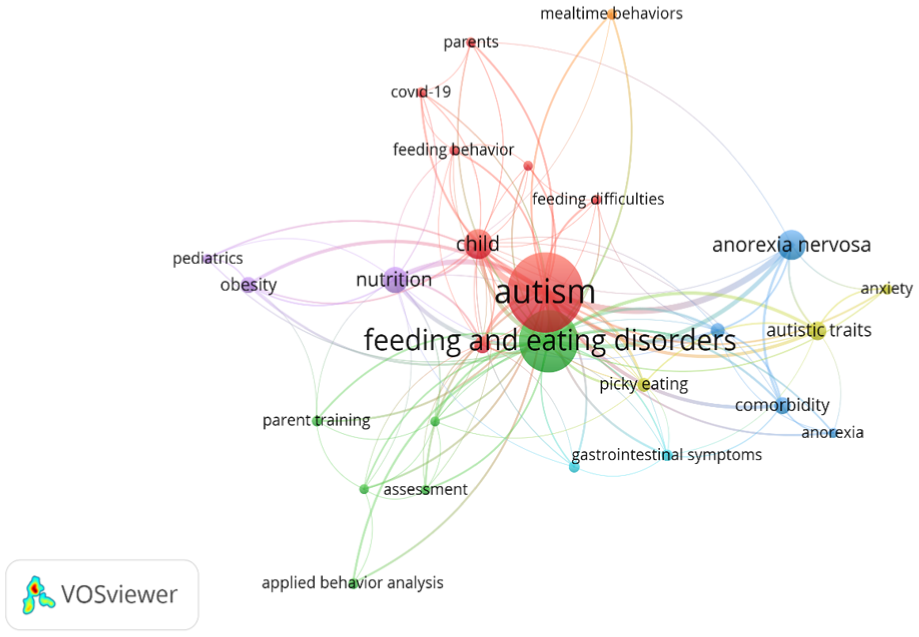
Co-word analysis of articles on eating disorders in children with autism spectrum disorder.
The international collaboration network of studies on eating disorders in children with autism spectrum disorder is presented in Figure 9. This figure illustrates the collaborative connections among countries concerning autism spectrum disorder and eating disorders, the frequency with which countries collaborate with each other, and the intensity of their collaborative relationships. The USA, which is in the red cluster with the most studies on eating disorders in children with autism spectrum disorder, is at the center of the collaboration network and has strong connections. The USA has robust collaborative relationships with both developed countries, such as Canada and England, and developing countries, including Turkey, Brazil, and Malaysia. This observation indicates that the USA is at the epicenter of the dissemination of information regarding autism spectrum disorders and eating disorders, signifying its leading position in these fields. China, located in the red cluster, plays a significant role by collaborating with the U.S. and establishing connections with other Asian countries. Similarly, Australia, positioned in the purple cluster, has established connections with both the U.S. and European countries. England, positioned in the green cluster, is the second country with the most cooperation after the US. England's emergence as a pivotal nation in Europe is evident, with robust collaborative relationships with other European countries. Developing countries such as Turkey, Brazil, and Malaysia primarily engage in cooperation with countries including the U.S. and China. While the formation of cooperative connections among nations is predominantly influenced by the leadership of dominant countries (e.g., the U.S., the U.K., and China), peripheral countries contribute significantly to global research by participating in these networks. The enhancement of scientific studies, both in quality and scope, is primarily driven by this collaborative dynamic, which fosters a paradigm shift towards more solution-oriented approaches.

International cooperation network.
The thematic structure of the study area on eating disorders in children with autism spectrum disorder is illustrated in the strategic diagram in Figure 10. The motor theme section, which is the most extensively studied central section of a research area in bibliometric analyses, is represented in Figure 10. In this context, areas such as autism, autism spectrum disorder, and food selectivity are foundational and intensively researched subjects. Additional research areas include anorexia nervosa, eating disorders, selective eating, and the impact of the novel Coronavirus (SARS-CoV-2) on these conditions. The identification of fundamental themes is pivotal in fostering the diversification of research domains, as they delineate specific subject areas within a cohesive framework. In the context of autism spectrum disorders (ASD), the analysis of food refusal behaviors and the phenomenon of escape extinction have emerged as foundational areas for the study of eating disorders in children with ASD. Niche themes, by contrast, are those that emerge and differentiate in a new context within a specific field of research. The niche theme encompasses qualitative research and implementation topics. The final category, the emerging or declining section, encompasses autistic disorders, nutritional status, and gastrointestinal symptoms.
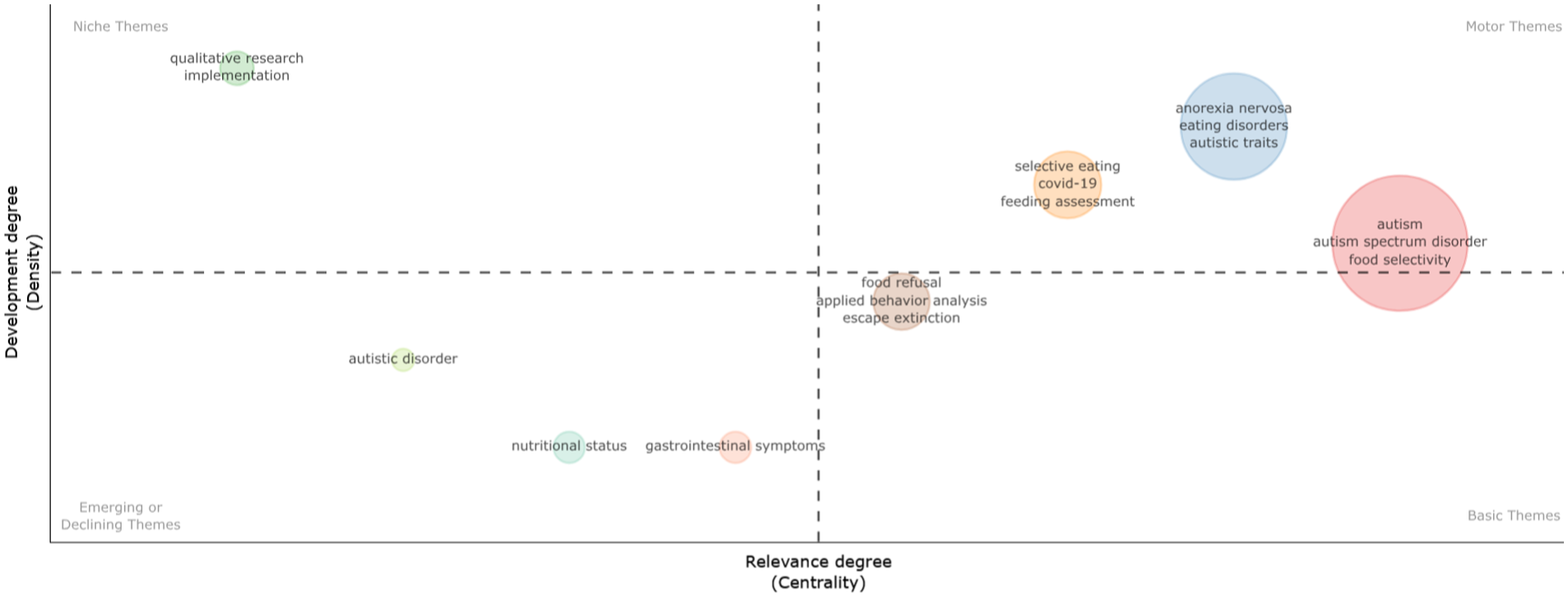
Thematic mapping.
Discussion
This study constitutes a comprehensive review of research conducted in the field of eating disorders that pose a risk for children with autism spectrum disorder. The study's objective was to ascertain the prevailing trends, research priorities, research areas, collaborative networks, and research gaps in research conducted in the field of eating disorders in children with autism spectrum disorder. The study employed a bibliometric analysis method to examine studies conducted in the WoS database between 2000 and 2024.
An examination of the distribution of studies conducted in the field of eating disorders in children with autism spectrum disorder by year reveals a significant increase in the number of publications over time. This surge in publications became particularly evident after the year 2010. While the number of articles remained relatively low between 2001 and 2009, it began to rise in 2010. A similar trend is evident in the subsequent years, with a sustained increase in the number of publications until 2024. A particularly notable year in terms of publications was 2022. This observation aligns with the growing global prevalence of autism spectrum disorders (Alahmari et al., 2022). Despite the absence of a definitive diagnostic framework for autism spectrum disorder, research has identified genetic susceptibility and nutritional deficiencies as contributing factors. Children diagnosed with autism spectrum disorders have been shown to have an elevated risk for nutritional deficiencies (Zarezadeh et al. 2023). The prevalence of nutritional challenges in children with autism spectrum disorder has been observed to rise, with these children exhibiting up to five times more eating problems than typically developing children (Ausderau et al., 2024). Sharp et al. (2013) also reported that children with autism spectrum disorders have more feeding problems than their peers. Furthermore, Restrepo et al. (2020) reported that the prevalence of gastrointestinal diseases in children with autism spectrum disorder is greater than that in typically developing children. The rising incidence of autism and selective eating behavior indicates a growing need for research on eating disorders in children with autism spectrum disorder. In their study, Asil et al. (2022) reported that obesity and nutritional problems cause selectivity, food refusal, and obsessive eating behavior in children with autism spectrum disorder. A meta-analysis by Doreswamys et al. (2020) further delineates these eating patterns, classifying children with autism spectrum disorder as selective eaters who exhibit a preference for specific types of foods, tastes, and textures.
A comparative analysis of publications in the field of eating disorders in children with autism spectrum disorder reveals that the three countries with the most publications are the United States, the United Kingdom, and Italy. The United States is distinguished by its leadership in scientific production in this domain. The United Kingdom is the second most active country in this research, while Italy is the third. In the United States, the prevalence of autism spectrum disorder (ASD) among children is reported to be one in 59 (Gok et al. 2021). A notable increase in autism spectrum disorder diagnoses among children in the United States has been observed, with a 178% surge since the year 2000 (Gray et al., 2024).
The international collaboration network of studies on eating disorders in children with autism spectrum disorders occupies a central position within the collaboration network. The United States, represented by the red cluster, has the highest number of studies. The United Kingdom, situated in the green cluster, is the second most prolific contributor after the USA. Denmark, a nation not included in the network, exhibits the lowest number of publications. Intensive studies on eating disorders in children with autism spectrum disorder are also prevalent in countries where eating disorders are common and collaboration is necessary to address this issue. In his research on robotics in children with autism spectrum disorder, Pazarcıkcı (2024) stated that the USA produces the most publications and is in the international collaboration network. He also stated that financial support, advanced research institutes and laboratories, and support for research in university environments are effective in this area. Shekarro et al. (2021) reported that the USA is the leading contributor to autism research and is part of the collaboration network of studies. Additionally, they noted that the USA provides significant financial support for autism research. These findings suggest that the rise in autism diagnoses has been accompanied by a corresponding increase in research activities in the United States. Notably, prominent journals specializing in eating disorders in children with autism spectrum disorder have incorporated studies on autism spectrum disorders and developmental disorders, underscoring the growing prevalence of research in these areas.
An examination of the author's productivity analyses on eating disorders in children with autism spectrum disorder reveals a paucity of specialization in this field, with a need for increased quantitative studies. Fidan and Özkaya’s (2024) study revealed that autism spectrum disorder encompasses a range of characteristics, with genetic characteristics exhibiting variability across these characteristics. This variability suggests the potential for enhanced effectiveness of personalized nutrition recommendations, attributable to the distinct genetic profiles. Consequently, the necessity for extensive studies on diet recommendations is underscored. The limitations of studies on eating disorders in children with autism spectrum disorder may be attributable to personalized diet interventions, variations in interventions, and the challenges in acquiring evidence-based data on eating disorders.
In the domain of eating disorders in children with autism spectrum disorder, the most frequently cited studies are those by Bandini et al. (2010), Sharp et al. (2013), and Schreck et al. (2004). The study by Cermak et al. (2010) has received the most global citations. These studies address various aspects of autism spectrum disorder, including its relationship to food selection, nutritional deficiencies, and eating problems. These studies explore the multifaceted relationship between autism and nutrition, elucidating the nature of the connection between them. In a similar vein, Bandini et al. (2010) investigated the definition of food selectivity in children with autism spectrum disorder (ASD) and typically developing children. They compared food selectivity indices and measured the effect of food selectivity on food adequacy. The study evaluated the relationship between food selectivity and adequate food intake. The findings of this study suggest a direct correlation between food selectivity and adequate food intake, underscoring a reciprocal relationship between these variables. The eating disorders observed in children with autism spectrum disorders have been shown to affect both their eating habits and their physical health. Sharp et al. (2013) examined nutritional problems and nutritional status in children with autism spectrum disorder. The study's findings indicated that children with autism spectrum disorder exhibited a higher prevalence of nutritional problems compared to typically developing children, and their calcium intake levels were also found to be lower. In a related study, Schreck et al. (2004) compared reports of eating problems by caregivers of autistic and typically developing children. The study's findings indicated that autistic children exhibited feeding problems and a more restricted range of foods. Cermak et al. (2010) explored the impact of sensory factors, including sensory sensitivity, on food selectivity and nutritional adequacy in children diagnosed with autism spectrum disorder (ASD). The study posits that food selectivity has emerged as a significant problem for individuals with autism spectrum disorder, and that autism spectrum disorder is associated with sensory sensitivity in a substantial number of children. The study further suggests that food texture, and consequently, food selectivity, are crucial factors that warrant further investigation. A review of relevant literature reveals that eating disorders in children with autism spectrum disorders have the potential to impact various aspects of their lives.
The most frequently used keywords in studies on eating disorders in children with autism spectrum disorder were “children,”“anorexia nervosa,” and “feeding.” Additionally, the terms “autistic traits,”“comorbidity,”“diet,” and “obesity” were utilized with comparable frequencies. The analysis of keywords yielded two overarching themes: general and specific. Shekarro et al. (2021) noted that the most frequently used keyword in their bibliometric study on autism spectrum disorder executive functions was children. Pazarcıkcı (2024) similarly highlighted that the most frequently used keyword in his research on autism spectrum disorder robot technology was also children. Healy et al. (2019) reported that the obesity rate was higher in individuals with autism spectrum disorder than in those without autism. Arslan et al. (2024) reported that children with autism spectrum disorders are at risk for obesity and that uncontrolled eating behavior can be problematic for children's health. A substantial body of research has demonstrated the pivotal role of diet in autism, underscoring its efficacy in safeguarding children's health. The frequent use of the concepts of diet, obesity, and nutrition in the field of eating disorders in children with autism spectrum disorder is due to the importance of the relationship between obesity and nutrition.
A subsequent examination of the analysis results, which are based on the frequency of use of keywords over the years, will determine the trending topics in recent years. The most frequently studied current topics are “microbiome,”“COVID-19,”“parents,” and “behavior.” Despite the longstanding research on “intervention” and “dietary intake,” these areas remain pertinent. This observation underscores the necessity for further research in this domain. Furthermore, the analysis reveals that microbiota, behavioral interventions, and parent education are among the trending topics. A thorough examination of these subjects reveals their division into subgroups. The frequent use of the keyword “covid-19” in scientific publications mirrors the escalating prevalence of pandemic practices on a global scale.
Conclusion
This study explored the scientific implications of research trends on eating disorders in autism through bibliometric analysis and reviewed the literature related to the field from 2000 to 2024. The results are intended to add to the existing literature and offer a comprehensive view of research gaps and current trends.
According to the results of bibliometric analysis, the number of studies on eating disorders in people with autism has increased globally in recent years. Articles on this topic have been published in high-impact journals. Furthermore, the quality of these studies appears to be high. The countries with the highest number of studies (the US, the UK and China) are leading the way in international collaboration, while others are participating in these networks and contributing to global research. It appears, therefore, that the level of a country's scientific, economic and technological development contributes to the intensification of autism research and the rise in awareness of the field. As the global increase in autism spectrum disorders is linked to advances in medical technology and the resulting increased scientific interest in this topic, interest in eating disorders in autism has also grown.
The results of this study are important for two reasons: first, they provide a valuable overview of the current state of research on eating disorders in autism; second, they establish a methodological and theoretical foundation for future research in this field. Taking a multidisciplinary approach to this field by integrating clinical studies with theoretical research and increasing cross-cultural comparative studies will enrich the literature and contribute to the development of practical solutions. The analyses provide valuable insight into the current state of research on eating disorders in autism and will guide future research. The results of this study will inform future research and contribute to the development of different methods and approaches.
Limitation
This study is subject to several unavoidable limitations. A search was conducted of the WoS database, a prominent multidisciplinary database utilized within the scientific research community. Other large multidisciplinary databases that can be used for bibliometric analysis, such as Scopus and PubMed, which are used worldwide, were not used in this study. This may limit the number of studies published on this subject from different countries. Nevertheless, given the substantial number of publications included in the study, it is reasonable to assume that it reflects the trends related to the research topic. Because the primary focus of this study was quantitative trends within the scope of the bibliometric analysis, trends across all publications in the database were considered. Methodological details such as method types, sample groups, or age ranges were not categorized. Making such methodological classifications in future research will reveal the evidence base more clearly by summarizing and synthesizing the results of existing studies on the subject.
Footnotes
Author Note
Authors approved the final version for submissions.

Ethical Considerations
Since this study was compiled based on the results of previous research and does not involve personal data collection or ethical issues, it was not necessary to obtain ethics committee approval.
Consent to Participate
Since this manuscript is a conceptual review and does not involve the collection or analysis of human participant data, informed consent was not applicable
Author Contributions
Study Design, EB, OE, AK; Data Collection, EB, OE, Statistical Analysis, EB, OE, AK; Data Interpretation, EB, OE, AK; Manuscript Preparation, EB, OE, AK, SA; Literature Search, EB, OE, AK, SA. All authors have read and agreed to the published version of the manuscript.
Funding
The authors received no financial support for the research, authorship, and/or publication of this article.
Declaration of Conflicting Interests
The authors declared no potential conflicts of interest with respect to the research, authorship, and/or publication of this article.
Data Availability Statement
Data used in this study are available by request.