



Abstract
As an essential part of national innovation and development, the urban innovation ecosystem supports modernization. Many countries are exploring innovation legislation and improving innovation policies from an ecosystem perspective. As a typical resource-dependent region, the “high input-high output” development path in Northeast China has been blocked. To meet the demands of transformation, Northeast China has been given great expectations for innovation, and Northeast China’s cities have also made great efforts. However, current research on the urban innovation ecosystem in Northeast China is minimal. To fill this gap, this paper analyses the operational status and innovation efficiency of the urban innovation ecosystem in Northeast China under the guidance of innovation ecosystem theory and attribution theory. With the help of the Data Envelopment Analysis (DEA) Tobit model, it is found that the efficiency of the urban innovation ecosystem in Northeast China is echelon distribution. Among them, the advantages of resource allocation and innovation transformation in medium-sized cities are prominent. Most cities have serious redundancy in innovation ecosystem investment. The innovation ecosystem of Northeast China’s cities is still in the formation and development stage.
Plain language summary
This study is an innovative study on the efficiency level and influencing factors of urban innovation ecosystem in Northeast China. With the help of DEA-Tobit model, it is found that the efficiency of urban innovation ecosystem in Northeast China is echelon distribution. Among them, the advantages of resource allocation and innovation transformation in medium-sized cities are prominent. The urban innovation ecosystem in Northeast China is still in the stage of formation and development. This study provides theoretical basis and empirical evidence for the innovation and development of resource-dependent cities. This study shows the problems existing in the efficiency improvement of traditional urban innovation ecosystem and the future development direction.
Introduction
Ecosystem originated from the biological metaphor, emphasizing the complex relationship between different subjects (Kummitha, 2018). Under the new background of pursuing innovation, ecosystem subjects pay more attention to improving the overall innovation efficiency through external interaction and internal basic conditions. Scholars have proposed an innovation ecosystem—innovation network relationships formed by interacting with different sectors and institutions—for innovation practices (Liu, Tang, et al., 2023; Guo et al., 2024). Currently, the initiative of building a sustainable city provides a new geographical carrier and application scenario for the innovation ecosystem (Appio et al., 2019). Specifically, the urban innovation ecosystem is an organic whole that focuses on improving innovation capability with the city as the geographical carrier (Linde et al., 2021). The innovation ecosystem comprises innovative actors such as government, enterprises, educational organizations, R&D organizations and intermediaries (Mei et al., 2019; Riasanow et al., 2021). The urban innovation ecosystem has become essential for cultivating regional and national innovation capabilities (Lei and Wei, 2017).
Driven by the practice of urban innovation, the urban innovation ecosystem has become an essential topic in academic circles (Sorri et al., 2024). Existing research mainly focuses on the function and construction path of the urban innovation ecosystem. First is the research on the function of the urban innovation ecosystem. Park and Page (2017) and Jiao et al. (2023) suggested that urban innovation with green development as a priority is a good choice to balance urban economic development and a green environment. Hu et al. (2024) also believed that relying on urban innovation systems can promote economic development while reducing environmental pollution, thus achieving sustainable urban construction. Zukin (2021) suggested that, in line with the trend of technological development, placing cities in an innovation ecosystem can effectively control the scale of the value of fixed capital and human capital and fully unleash the potential of scientific and technological power. Keskin and Markus (2024) commercialized the city concept, arguing that urban innovation ecosystems use digital technologies to combine social capital and communication infrastructure in cities. This will improve urban public services’ quality and satisfaction and respond flexibly to significant societal challenges. Bevilacqua et al. (2023) borrowed the case of urban transformation in Boston and Cambridge and explicitly suggested that the urban innovation ecosystem is a key factor in solving the problem of urban transformation. Second, many scholars have researched the construction path of the urban innovation ecosystem. For example, Iaconesi and Persico (2016) proposed innovation organizations’ internal and external relationships in Kansas City. It was found that cooperation and exchange between innovation organizations can facilitate the development of an urban innovation ecosystem. De Marchi and Grandinetti (2017) also pointed out, based on the Italian innovation case, that innovation not only relies on technological development institutions but also needs to cooperate with local culture and social networks to form an alliance to improve urban innovation performance. Based on Montreal and Rotterdam, Witte et al. (2018) suggested that developing an urban innovation ecosystem should be promoted in line with market demand. Guo et al. (2024) used a social network model to analyze the spatial structure of urban innovation in China’s Yangtze River Economic Belt. They found that improving the network density and connectivity of the innovation ecosystem will positively impact urban innovation.
The urban innovation ecosystem is complex (Luo et al., 2024). Although some scholars began to focus on individual typical areas to analyze the urban innovation ecosystem, they lacked the necessary understanding of the overall efficiency level and key influencing factors. Few studies focus on the innovation ecosystem’s efficiency level and key influencing factors in resource-dependent cities. Cities in Northeast China are a typical sample and the essential epitome of resource-dependent cities in the world (He et al., 2017). Northeast China is located in the center of Northeast Asia, which not only has the most extensive forest land, the best grassland and the most extensive grain base in China but is also rich in water and mineral resources (X. Wang et al., 2015; D. M. Li et al., 2021). For a long time, cities in Northeast China have followed the typical development path of resource-dependent cities—economic growth at the cost of enormous resource consumption and severe environmental pollution (P. D. Zhang et al., 2018; Li, Yi, et al., 2020). As China’s economy shifts from high-speed growth to high-quality development, the traditional development path of resource-dependent cities is hindered, driving the transformation of urban development methods (Li, Yi, et al., 2020). Cities in Northeast China have begun to embrace innovation as a new engine of development, continuously stimulating the potential of innovative resource elements (Ruan et al., 2020). However, due to objective reasons such as information disclosure and data collection difficulties, there are very few studies on constructing an innovation ecosystem for cities in Northeast China.
This research gap is detrimental to the theory building of urban innovation environments and the sustainable development of the urban innovation ecosystem. It hinders the transformation process of other resource-dependent cities in similar parts of the world. Therefore, this paper takes cities in Northeast China as the research object and thoroughly analyses the construction of an innovation ecosystem in resource-dependent cities. This is an essential addition to existing research and a case reference for the innovation and development of other global resource-dependent cities. Compared with other studies, the main contribution of this paper is to focus on typical resource-dependent cities to conduct urban innovation ecosystem research. The research results can effectively fill the current research gaps and promote the sustainable development of the urban innovation ecosystem.
Guided by the attribution theory, this paper combines urban innovation with the ecosystem, measures the efficiency level of the innovation ecosystem in resource-dependent cities, and explores the key factors affecting efficiency performance. Taking the cities in Northeast China as the research object, the efficiency level of the innovation ecosystem in 34 cities was measured by the DEA method. Using the Tobit model, this paper analyses the critical factors affecting the efficiency performance of the innovation ecosystem in resource-dependent cities (Figure 1). This study aims to clarify the sample characteristics and key influencing factors of the urban innovation ecosystem in Northeast China and promote the construction of an innovation ecosystem in Northeast China and other similar cities.

Research framework diagram.
Section 2 (Theoretical Mechanism) of this paper systematically reviews the research findings closely related to the urban innovation ecosystem and presents research hypotheses. Section 3 (Research Design) presents the main models and index systems. Section 4 (Results) explains the results of measuring the efficiency of the urban innovation ecosystem in Northeast China and analyses the influencing factors. Section 5 (Conclusion) summarises this paper’s theoretical findings and practical contributions and discusses the shortcomings and future of the study.
Theoretical Mechanism
Based on attribution theory, Danylchenko (2012) and Ginder et al. (2021) defined the influencing factors and functional orientation of efficiency in terms of internal and external factors. As a multi-task entity, the urban innovation ecosystem is easily influenced by both internal and external factors (Ruan et al., 2020; Y. Wang, 2022). Regarding internal factors, cities are the gathering places of different innovative resource elements. The combination and change of internal resource elements directly affect the urban innovation ecosystem’s efficiency level and the region’s core competitiveness (Granstrand and Holgersson, 2020). Regarding external factors, cities are the basic units that support national and regional innovation. Changes in external forces directly impact the functioning of the urban innovation ecosystem (Adner and Kapoor, 2010). Liu, Tang, et al. (2023) used social networks to analyze urban innovation ecology. They found that internal and external factors, such as innovation resources and subjects, influence the efficiency level of the urban innovation ecosystem. Although some scholars have started to explore the efficiency of the urban innovation ecosystem from the perspective of internal and external factors, the existing research has not reached a consensus on the efficiency level and influencing factors of the urban innovation ecosystem. In particular, it has not paid timely attention to the critical research object of resource-dependent cities. Therefore, based on the attribution theory, this paper analyses the innovation ecosystem’s efficiency level and influencing factors in resource-dependent cities by combining internal and external factors.
Internal Factors
Internal factors mainly refer to the influencing factors that individuals or organizations can control and change directly or indirectly. Regarding the urban innovation ecosystem, the potential of innovation resource elements can be stimulated by optimizing key internal factors (Y. Yu and Lyu, 2023). Among them, the degree of openness to the outside world (Hasegawa et al., 2019; J. H. Lee et al., 2014) and innovative infrastructure (Grimaldi and Fernandez, 2017) are the key factors that influence the urban innovation ecosystem. This study analyses the role of key internal factors in influencing the efficiency level of the innovation ecosystem in resource-dependent cities along two dimensions: the degree of opening of the city to the outside world and the construction of urban infrastructure.
Degree of City Opening to the Outside World
The innovation ecosystem is not a closed entity. Openness is one of the notable characteristics of the innovation ecosystem (Alberti and Pizzurno, 2017). From the perspective of resource elements, Ahvenniemi et al. (2017) and Lyu et al. (2019) proposed that the openness of cities to the outside world is conducive to the introduction of key elements of the innovation ecosystem, such as capital, technology, talent and information. Rich and diverse key elements can promote knowledge sharing and thus improve the efficiency level of the innovation system. From the perspective of knowledge network construction, Johnston and Huggins (2016) point out that open cities can form extensive knowledge cooperation networks, stimulate creative thinking, and promote the development of technology specialization and commercialization. Von Schönfeld (2021), from the perspective of organizational development, suggested that the interaction between the subjects of the innovation ecosystem can stimulate the vitality of the innovation ecosystem. However, Yan and Sun (2022) and Fan et al. (2014) proposed from the perspective of healthy competition that the degree of urban openness can attract many resources and talents. However, it will also increase the intensity of competition. High-quality innovation elements may be squeezed out of the market by ample capital, affecting urban innovation and development. From the perspective of effective public participation, Hasegawa et al. (2019) pointed out that the current process of urban opening is mainly driven unilaterally by the government, which fails to mobilize public participation effectively. The urban innovation ecosystem lacks public support. From the perspective of cultural inclusion, Ye et al. (2021) pointed out that the high degree of urban opening may lead to conflicts between different cultures and affect social stability and cohesion. In addition, the open and changing environment may cause innovators to worry about risks and affect innovation efficiency and motivation (Kroh, 2021).
Urban Infrastructure Construction
Infrastructure is an essential part of the hardware environment of the urban innovation ecosystem (Q. Wang et al., 2024). C. Li et al. (2024) and Deng et al. (2024) proposed from the perspective of attracting talent and investment that the government should strengthen the construction of digital infrastructure, improve the level of urban informatization, and attract talent to flow in innovative subjects to the station. X. Cao et al. (2019) put forward from the perspective of innovation alliance networks that efficient infrastructure construction can promote the construction of communication networks, resource utilization and technology diffusion, thus reducing the innovation threshold and transaction cost. From the perspective of organizational construction, Fan (2021) believed that cities with high-quality infrastructure conditions are more prone to the agglomeration effect of innovation subjects. The agglomeration of innovative subjects positively impacts improving the efficiency of the urban innovation ecosystem. However, Sengupta (2013) proposed from the perspective of innovation elements that tacit knowledge, as an essential element of innovation, presents the form of spatial concentration. The construction of urban infrastructure cannot help tacit knowledge to achieve informal face-to-face communication, nor can it break geographical limitations. From the perspective of resource agglomeration, Duranton (2017) suggested that the concentration of infrastructure in certain areas may form an “innovation circle.” Innovation subjects in the non-innovation core circle are at a competitive disadvantage because they can’t enjoy high-quality infrastructure, leading to a decline in overall innovation capacity. From an environmental protection perspective, Broadhurst (2019) points out that infrastructure construction is often accompanied by environmental damage and social cost losses. This is not conducive to retaining existing innovation targets or attracting new ones.
Previous studies have found that internal factors play an essential role in the efficiency of the urban innovation ecosystem. However, scholars have not consistently understood the influence’s specific effect and action path (see Figure 2). Based on the development law of the innovation ecosystem in resource-dependent cities and the actual urban development in Northeast China, this paper puts forward the following two research hypotheses.

Related literacy review summary (internal factors).
External Factors
External factors mainly refer to those individuals or organizations can’t directly control but can only passively deal with or adapt to. As far as the urban innovation ecosystem is concerned, the innovation process has changed from simple internal optimization activities to a comprehensive practice with external factors (Van den Buuse et al., 2021). Government financial support (J. Z. Li and Wang, 2018) and the level of urban economic development (J. X. Wang and Deng, 2022) are external factors that cannot be directly changed in a short period. These factors are the key elements that reflect the characteristics of the urban innovation ecosystem. Therefore, this paper focuses on government financial support and urban economic development level to analyze the impact of external key factors on the efficiency of innovation ecosystem in resource-dependent cities.
Government Financial Support
Knowledge is the intellectual support for innovation activities. From the perspective of human capital accumulation, Q. H. Zhang et al. (2024) pointed out that government financial support for education helps cultivate more high-level talents with innovative capabilities. Promoting knowledge application and fostering urban innovation processes with creative skills. Bevilacqua et al. (2023) and Afaq (2019) also believed that government financial support for science, technology and education positively impacts the development of the urban innovation ecosystem. Gu et al. (2024), from the perspective of scientific research development of enterprises, suggested that local governments should encourage enterprises and research institutions to invest in science and technology through special funds and preferential tax policies to enrich innovation activities in the region and enhance urban innovation competitiveness. Based on urban planning and design, J. Z. Li and Wang (2018) proposed that the government should use financial support as a tool to guide the planning pattern of innovative urban construction and promote the development of creative cities. However, continuous financial support from the government may lead to the dependence of enterprises and scientific research institutions and a lack of motivation for independent innovation (Cornaggia et al., 2015). In addition, Z. H. Li et al. (2023) suggested from the resource allocation perspective that funders tend to reject important innovative projects with good prospects but high risks due to risk control instincts. As a result, projects that need support may not receive sufficient financial support, which affects the healthy development of the urban innovation ecosystem.
Urban Economic Development
The availability of resources is a necessary foundation and driving force for innovation activities. From the perspective of resource supply, Y. Yu and Lyu (2023) suggested that urban economic development can provide resource support for innovation subjects in the region and reduce development obstacles. This can directly contribute to the construction of an urban innovation ecosystem. Erdogan et al. (2021) and Q. M. Zhang and Zhao (2024) also found that cities with strong economic capacity can attract significant investments. These funds provide financial support for start-ups and innovative projects to grow. From the perspective of land marketization, G. F. Cheng et al. (2022) suggested that cities with a loose economic environment expand the degree of land marketization through land financing, market selection and other means to obtain urban innovation investment and enhance urban innovation capacity. However, Yigitcanlar and Lee (2014) pointed out that there is no inevitable relationship between the degree of urban economic development and the realization of urban innovation goals. Excessive economic growth may lead to environmental pollution and resource depletion, affecting the sustainable development of cities.
The innovation ecosystem is stable, open and synergistic (J. Zhang et al., 2023). Previous studies have found that other innovation subjects internally and externally influence innovation subjects in the innovation ecosystem. However, scholars have not reached a common understanding of the external factors affecting the urban innovation ecosystem and lack the support of quantitative research (see Figure 3). Therefore, based on the development law of the innovation ecosystem in resource-dependent cities and the development reality in Northeast China, this paper proposes the following two research hypotheses.

Related literacy review summary (external factors).
Research Design
DEA-BCC Model
Data Envelopment Analysis (DEA) is a classic research method widely used in operational research, management, economics and other disciplines. It was first proposed in 1978 by Charnes, Cooper and Rhodes. The DEA model is mainly used to calculate and compare the relative efficiency of multiple decision-making units (DMUs) in multi-input-multi-output complex systems (Ji et al., 2023). Compared to other models, the main advantage of the DEA model is that there is no additional constraint on the input and output indexes. And there is no need to calculate the weight of each index in advance. This avoids possible calculation errors caused by artificial allocation and selection (Dufrechou, 2016). Scholars have derived hundreds of advanced models based on the concept of the DEA model. Among them, the DEA-BCC model is the most widely used. This model mainly focuses on each DMU’s technical efficiency performance under constant returns to scale. The underlying logic of the DEA-BCC model is more in line with actual scenario characteristics. That is, managers have more control over resource inputs than outputs. As this study focuses on the efficiency of resource-dependent urban innovation ecosystem, the input-oriented DEA-BCC model is chosen as the efficiency measurement tool concerning the classical research design of Zhou and Zhang (2024). The calculation formula is as follows.
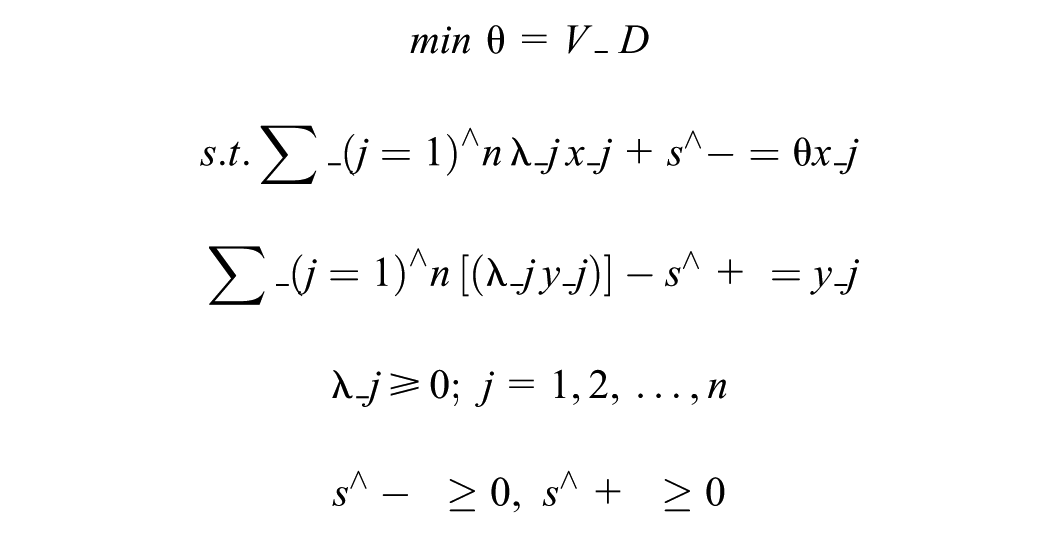
Where x and y represent the input and output of the j-th DMU respectively. θ repesents the efficiency evaluation score of the j-th DMU. θ is a positive indicator in the interval (0, 1). The closer θ is to 1, the higher the resource allocation efficiency of the DMU, and the more reasonable the resource allocation state. On the contrary, it means that the resource allocation efficiency of the DMU is lower, and there is a waste of resources.
Super-Efficiency DEA Model
As a typical non-parametric analysis method, the DEA model can largely avoid the influence of subjective factors. However, the model can’t sort the DMUs at the front of the production line. The DEA model cannot comprehensively compare the efficiency performance of all DMUs. In the process of calculating the efficiency of the innovation ecosystem in resource-dependent cities, we find that there are 13 DMUs at the same time. The relative efficiency of multiple agents is relatively effective simultaneously, so it is impossible to carry out in-depth efficiency analysis and comparison. This paper refers to Choi et al. (2024) to advance the research progress and uses the super-efficiency DEA model to differentiate the relative efficiency values. Andersen and Petersen propose the super-efficiency DEA model. Compared with other models, the super-efficiency DEA model can compare the efficiency performance of DMUs on the same production frontier (X. H. Yu et al., 2023). This feature can well meet the requirements of refined calculation of differentiated characteristics in real problem situations. The calculation formula is as follows.

Tobit Model
Compared to the traditional DEA model, the super-efficiency DEA model constructs a global production technology reference set with input and output data for the entire cycle as references. This model design makes the efficiency values in different periods horizontally comparable. However, the super-efficiency DEA model can’t profoundly analyse the factors influencing efficiency. Therefore, the Tobit model is further introduced in this paper. The Tobit model is a regression model with a restricted dependent variable. It was first proposed by Tobin, who won the Nobel Prize in Economics in 1958. Compared with the traditional regression analysis model, the Tobit model is mainly suitable for special situations with limited dependent variables. As far as this paper is concerned, the efficiency values calculated according to the super-efficiency DEA model mostly fall within the interval (0, 1). The value of the dependent variables in the analysis of the drivers is limited. The calculation results may be distorted if the general regression model is used directly. Therefore, to more accurately measure the efficiency influencing factors, this study refers to Belgin’s (2024) research design to solve the efficiency influencing factors of innovation ecosystem in resource-dependent cities using the measured efficiency value as the dependent variable. The standard expression of the Tobit model is as follows.
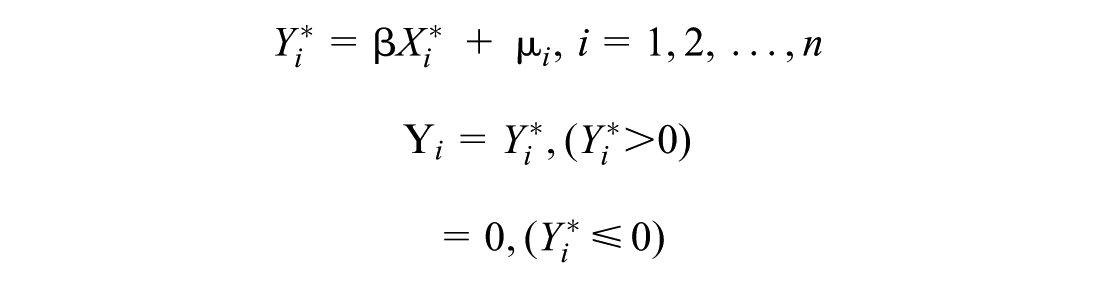
Where Y represents the restricted observed explanatory variable. X represents the explanatory variable. μ is a random confounding term. i represents a specific DMU. β represents the regression coefficient. The value of
Index System
Sun (2024) evaluated the competitiveness of urban science and technology innovation regarding input-output and influencing factors. Taking this as a reference and combining the objectivity and specificity of the research object, this study analyses the efficiency of the innovation ecosystem in resource-dependent cities in terms of input-output, dynamic transformation, and influencing factors.
Input Indicators
Most existing studies consider scientific research funding and human resource investment as input indicators. Based on the existing research, this paper integrates the ecosystem theory. Taking the subject as the division standard, the input of the urban innovation ecosystem is divided into the investment of enterprises, universities, research institutes, governments, technology intermediaries and other subjects. First, research institutes mainly use application-oriented basic, applied, and product development research. In the innovation ecosystem, scientific research institutes are directly linked to universities and enterprises. They are an essential part of the main input body of the urban innovation ecosystem (Yao et al., 2020). The number of scientific research institutes (I1) is the key index to reflect the innovation investment of scientific research institutes. Second, the government plays multiple roles in the innovation ecosystem. Providing financial support for scientific and technological innovation activities is one of its essential functions (Nilssen and Hanssen, 2022). Government investment in science and technology (I2) is the core index reflecting government investment in innovation. Third, enterprises are the direct implementers of innovation activities and the essential subjects of the urban innovation ecosystem. Improving the operational efficiency of the urban innovation ecosystem cannot be separated from the agglomeration of firms engaged in innovation activities (Ma et al., 2023, pp. 20–23). The number of high-tech enterprises (I3) in the city is considered an important index reflecting the innovation investment of enterprises. Fourth, university teachers are the main body engaged in teaching and scientific research activities and the disseminators and theoretical researchers of the basic knowledge needed for innovation (Wu et al., 2020). The number of full-time teachers in colleges and universities (I4) is an important index reflecting investment in innovation. Fifth, technology intermediaries are also a significant population in the innovation ecosystem. Technology intermediaries provide specialized technological innovation services to facilitate the flow and diffusion of energy (Colovic et al., 2024). In addition, technology intermediaries play an essential role in nurturing high-tech enterprises, reducing innovation risks, and promoting the transformation of scientific and technological achievements (Dong and Pourmohamadi, 2014). The number of national science and technology intermediaries (I5) in cities is taken as an index of innovation investment. Compared with existing research, the input index system of this paper can better reflect the systematicity, integrity and coordination of the input model of the innovation ecosystem in resource-dependent cities.
Dynamic Transformation Index
The dynamic transformation index indicates the interaction between innovation subjects and between subjects and the environment. The dynamic transformation mechanism of the urban innovation ecosystem mainly reflects the allocation and transformation of innovation elements such as capital, information and talent, including the information circulation mechanism, the financing mechanism and the talent attraction mechanism (C. Li et al., 2024). First, information flows such as innovation demand response and project cooperation require the supply of funds. The scientific research expenditure of enterprises on scientific research institutions and other innovative subjects reflects the collaboration and interaction of innovative subjects (Xue et al., 2022). The more R&D funds flow between enterprises and scientific research institutions, universities and other enterprises, the more active the information flow mechanism is (G. F. Chen et al., 2022). Therefore, this paper takes the expenditure of scientific research funds from enterprises to scientific research institutions, universities and enterprises (I6) as a detailed index of the information flow mechanism of the urban innovation ecosystem. Second, innovation itself is a risky activity. As an essential innovation resource and flow element of the innovation ecosystem, capital plays a key role in the innovation process of innovation subjects. Loans provided by financial institutions are one of the crucial channels for innovative financing of enterprises (Cuong and Hau, 2021). Through the loan balance of financial institutions in each city, we can know the credit support of financial institutions to innovative enterprises and the operation of financing mechanisms of innovative ecosystems. Therefore, this paper selects the RMB loan balance of financial institutions (I7) as a detailed index under the financing mechanism. Third, the talent attraction mechanism is another critical dimension of the dynamic transformation mechanism of the innovation ecosystem. Urban livability reflects the construction of the innovation environment and the interaction between the innovation subject and the environment. It is an essential reference factor for cities to attract innovative talents (Q. Wang et al., 2024). Therefore, this paper uses the urban livability index (I8) as a quantitative index that reflects the talent attraction mechanism.
Output Indicators
The operation of an innovation ecosystem is not a meaningless process but a process of effectively transforming innovation input into innovation output (S. Chen and Huang, 2022). The core value of the production of urban innovation ecosystem lies in creating economic value and social benefits shared by the members of the system and society. Most existing studies on innovation efficiency consider the number of patent applications, scientific papers, sales revenue of new products and turnover of contracts as important indicators reflecting innovation output (Dang and Motohashi, 2015). Aiming at the core value orientation of the urban innovation ecosystem, this paper measures the production of the urban innovation ecosystem from two aspects: the improvement of productivity level and the improvement of market creation ability. First of all, the improvement of productivity level is mainly composed of indirect and direct variables. Indirect variables primarily refer to the scientific and technological output of the urban innovation ecosystem. Direct variables mainly refer to the economic production of the urban innovation ecosystem. The period from patent application to patent approval is extended. Therefore, considering the time lag problem, this paper adopts the number of patent applications (O1) as the measurement index of the scientific and technological output of the urban innovation ecosystem and the turnover of technology contracts (O2) as the measurement index of the economic production of the urban innovation ecosystem. Second, the dimension of improving market creation capability. Enterprises rely on their strength to develop new markets. The more income from the main business of an enterprise, the stronger the possibility of opening up new development space, promoting innovation diversification and value creation (Shi et al., 2023, pp. 20–23). The primary business income of industrial enterprises (O3) is the key index that reflects the ability to create markets. The specific situation of the urban innovation ecosystem efficiency evaluation index is shown in Table 1.
Evaluation Index System.

Indicators of Influencing Factors
First, the degree of openness of the city to the outside world. The degree of city opening to the outside world reflects the openness of the urban innovation ecosystem (Guo et al., 2023; Han, 2024). The ratio of total import and export volume to GDP (A1) is the key index to measure the degree of openness to the outside world. Based on this index, the relationship between the degree of openness of a city and its innovation ecosystem is calculated. The higher the share of total imports and exports, the higher the degree of economic openness of cities. Second, the level of urban innovative infrastructure construction. Infrastructure construction is an important environmental factor of the innovation ecosystem (Tang et al., 2024). The construction of urban transportation facilities and natural environment comprehensively reflects urban innovative infrastructure construction. The urban road area (A2) is chosen to represent the construction of urban transport facilities. The green cover of urban built-up area (A3) is chosen to represent the construction of urban natural environment. Third, government investment in science and technology education. Education is the foundation and source of innovation; science and technology support are essential. The government’s financial investment in science and education is critical for innovation (Leceta and Konnola, 2019). In government financial expenditure, expenditure on science and technology and education reflects government investment in science and technology education. The government expenditure on science and technology (A4) is chosen to express the government’s support for science and technology, and the government expenditure on education (A5) is chosen to express the government’s support for education. Fourth, the level of urban economic development. Economic function is one of the essential functions of the government. Economic growth provides vital support and guarantees for the innovative behavior of the creative population (B. Cao et al., 2023). GDP per capita (A6) is taken as an essential index to measure the level of urban economic development. The specific indicators of the factors influencing the efficiency of the urban innovation ecosystem are shown in Table 2.
Indicators of Influencing Factors.

Data Description
This paper strictly controls the data scope to accurately portray the typical characteristics of the research object and clarify the key factors affecting the efficiency level of the innovation ecosystem in resource-dependent cities. It limits the research scope to the critical period. Under the influence of COVID-19, the allocation of urban innovation resources in Northeast China after 2020 has changed dramatically compared to previous years. Therefore, with the attitude of being responsible for the objectivity and scientificity of the research results, this paper refers to the research design of B. Chen et al. (2024) and mainly compares and analyses the efficiency of the urban innovation ecosystem in Northeast China from 2016 to 2019. The scope of research data can better represent the actual situation of the research object, which is helpful for accurately analyzing research problems.
At the same time, the time lag of resource allocation in the urban innovation ecosystem is considered. See Y. S. Zhang and Jeong (2016), who set the time lag period to 1 year. All data are obtained from public databases, such as government statistical departments and official websites of science and technology departments. The data is accurate and reliable and can illustrate the research problem more comprehensively and objectively.
Results and Discussion
Correlation Test and Multicollinearity Test
Correlation Test
The correlation between input and output indicators must be tested to ensure the objectivity of the index system’s scientific nature and the research findings (Bhattacharyya and Cummings, 2015). Therefore, this study carefully analyses the resource-dependent urban innovation ecosystem indicators with the help of the Pearson correlation coefficient command, referring to the research design of Djordjevic et al. (2021). The results are presented in Table 3.
Pearson Correlation Coefficient Between Indexes.

Note. *, **, *** indicate significance levels of 10%, 5% and 1%, respectively.
Table 3 shows a correlation between the input and output indexes in the innovation ecosystem’s efficiency evaluation index system in resource-dependent cities, which meets the essential efficiency measurement and analysis requirements. Specifically, the correlation between eight input indices, the number of patent applications (O1), and the turnover of technology contracts (O2) is significant at the 0.01 level. Most correlation coefficients are between 0.8 and 1.0, indicating a strong correlation between the indices. However, the correlation between eight input indexes and the output index, primary business income of industrial enterprises (O3), is slightly lower than that of the first two output indicators. However, all five indexes are significantly correlated with O3, which can meet the basic requirements of analysis and comparison. Therefore, the evaluation index system of innovation ecosystem efficiency in resource-dependent cities is scientific.
Multicollinearity Test
The evaluation index system for the efficiency of the innovation ecosystem in resource-dependent cities includes eight input indexes and three output indexes. A total of 34 DMUs are included in the overall efficiency calculation. DMUs are almost three times the sum of the input and output indicators. There is a possibility of collinearity between indicators. If there is multicollinearity among indicators, it will affect the reliability of the regression analysis results and hinder the correct understanding of the influence relationship (Sadahiro and Wang, 2018). Therefore, in this paper, the VIF command of Stata software is applied to test the multicollinearity of the index system. The results are presented in Table 4.
Results of Multicollinearity Test.

As shown in Table 4, the maximum value of VIF is higher than 10, which means that the value of VIF meets the evaluation criterion of multicollinearity among variables. This indicates multicollinearity in the evaluation index system of the innovation ecosystem of resource-dependent cities in Northeast China. Therefore, the indicators were downgraded. In addition, to avoid the influence of multiple covariances of independent variables, the explanatory variables of the analysis of the factors influencing the efficiency of the innovation ecosystem of resource-dependent cities were also tested for various covariances concerning the research design of Asongu et al. (2020). The results of this test are presented in Table 5.
Test Results of Multicollinearity of Explanatory Variables.

According to Table 5, the maximum value of the VIF is less than 10, that is, the value of the VIF does not meet the assessment criteria of multicollinearity between variables. This indicates no multicollinearity between the explanatory variables in the regression analysis stage. The correlation index meets the basic requirements of regression analysis and does not need to be processed.
Efficiency Analysis of Urban Innovation Ecosystem
The innovation ecosystem efficiency scores of cities in Northeast China were analysed in depth using DEAP 2.1 software. The comprehensive technical efficiency, pure technical efficiency, scale efficiency and returns to scale of the urban innovation ecosystem were calculated. The details are shown in Table 6.
Efficiency Value of Urban Innovation Ecosystem in Northeast China.

Taking 34 cities in Northeast China as an example, the efficiency of the innovation ecosystem in resource-dependent cities is complex and diverse. Among them, the comprehensive technical efficiency value of innovation ecosystem in 13 cities, including Harbin, Daqing, and Changchun, is 1. These cities have reached the standard of efficiency. The comprehensive technical efficiency of Liaoyang, Chaoyang and Qiqihar is less than 1. The efficiency of the innovation ecosystem in these cities is in a weakly effective state. The comprehensive technical efficiency, pure technical efficiency, and scale efficiency of the innovation ecosystem in Dalian, Benxi, and Siping are all less than 1. This indicates that the efficiency of the innovation ecosystem in these cities is ineffective.
In terms of scale efficiency, the scale efficiency of urban innovation ecosystem in the Northeast is mainly on the production frontier side. However, there are still significant differences in scale efficiency between cities. Among them, 13 cities have scale efficiencies below the average. For example, cities such as Jixi, Hegang and Shuangyashan have high pure technical efficiency but low scale efficiency. This suggests that these cities have a high level of innovation technology, but the scale of innovation resource inputs is unreasonable. Specifically, there is an imbalance between innovation outputs and innovation inputs in cities, which leads to high operating costs of urban innovation ecosystem, and the scale of innovation needs to be adjusted to achieve the optimal scale allocation.
In terms of returns to scale, except for the 13 cities with effective DEAs, such as Harbin, Daqing and Changchun, 20 cities are increasing returns to scale, and one city is in the stage of decreasing returns to scale. This indicates that most cities in the Northeast region still have excellent development potential and room for scale expansion of the innovation ecosystem. For cities with effective DEA, their innovation scale has reached the optimal state, and there is no need to adjust the innovation scale. However, it can respond to the new demands of the development stage and actively explore new directions of innovation output to improve the quality of innovation efficiency further. For cities in the stage of increasing returns to scale, their innovation scale is smaller than the expected requirements of the optimal state. Therefore, these cities can further expand the scale of innovation resource input and pursue the overall goal of efficient scale reward of the urban innovation ecosystem. The analysis found that only Jilin City is in the stage of diminishing returns to scale in the city cluster of Northeast China. The reason affecting the increase of its returns to scale is the distortion of resource input. This is manifested in the fact that a greater or equal proportion of output growth does not accompany the development of resource input. In practice, this problem leads to inflated input costs and wasted resources. Therefore, cities in the stage of diminishing returns to scale should appropriately reduce the scale of innovation and optimize the relationship between innovation agents and the overall innovation environment to improve the performance of returns to scale.
This paper uses DEA-SOLVER Pro 5.0 software to analyze the efficiency value of the urban innovation ecosystem in Northeast China and further compare each DMU’s innovation ecosystem performance on the production frontier. The results are shown in Table 7.
Efficiency Value of Urban Innovation Ecosystem in Northeast China.

In terms of pure technical efficiency, the average value of urban innovation ecosystem in the Northeast region is 0.957, which is higher than the average value of super efficiency of 0.782. Among them, 22 cities have a value of 1, meaning they have reached the practical state of DEA. The super-efficiency DEA model also shows the same result. This indicates that the pure technical efficiency of urban innovation ecosystem in the Northeast region is generally higher and better than the super efficiency.
In terms of super-efficiency performance, the super-efficiency of urban innovation ecosystem reached DEA effective in 13 out of a sample of 34 cities, or 38.2% of the total. The number of cities with super-efficiency in the range [0.5,1) is 11, representing 32.4% of the total. The number of cities with super-efficiency below 0.5 is 10, representing 29.1% of the total. The lowest value of super-efficiency of urban innovation ecosystem among the observed cities is 0.203, that is, taking the input-output transformation of the city with efficient resource allocation as a criterion, the city can achieve the current level of innovation output by investing 20.27% of the actual resource input. Some cities have inefficiently functioning innovation ecosystem, with a more pronounced gap with other cities and the region. These cities in the Northeast region have more room for improvement in allocating urban innovation resources.
Projection Analysis of the Optimal Scale of the Urban Innovation Ecosystem
According to the optimal scale projection analysis, there is still much room for adjusting and improving innovation ecosystem inputs and outputs. Specifically, 21 cities in the Northeast region have urban innovation ecosystem efficiency not reached DEA effectiveness, accounting for about 61.76% of the total. Cities with ineffective or weakly effective DEA are mostly exposed to redundant innovation inputs and insufficient innovation outputs. Therefore, reducing inputs and increasing outputs is necessary to achieve effective DEA. Taking Dalian as an example, the total projected value of innovation input is −35.28%, and the projected value of information flow indicator is 16.92%. The projection value of financing indicator is −36.03%. The projection value of talent attraction is −35.73%. There are redundancies in both the total input indicators and the dynamic transformation mechanism indicators, as well as deficiencies in the output indicators. For the 13 cities that have reached the practical state of DEA, the improvement values of the input indicator data show positive values, and the improvement values of the output indicators are all 0. As shown in Table 8, taking Harbin as an example, based on the actual innovation input situation, its overall innovation input should be increased by 17.3%. Expenditure on scientific research by industrial enterprises on research institutions, universities and enterprises should increase by 0.63%. The balance of RMB loans from financial institutions should increase by 41.78%. The urban livability index should increase by 15.07%.
The Optimal Scale Projection.

Note. S− and S+ represent the optimal scale projection at the input end and the output end respectively. Among them, S1−, S2−, S3− and S4− represent the optimal scale projections of input, information flow, financing, and talent attraction indicators, respectively. S1+, S2+, and S3+ denote the number of patent applications, the turnover of technology contracts, and the primary business income of industrial enterprises, respectively.
Overall, in the case of cities in Northeast China, there is a mismatch between input and output factors within the innovation ecosystem of resource-dependent cities. Theoretically, the input and dynamic transformation mechanisms of innovation populations should be in a synergistic state. However, the analysis shows a large gap between the existing innovation resource allocation and the optimal allocation state. The innovation inputs and the innovation process of most urban innovation ecosystem often cannot be fostered synergistically. This has resulted in wasting multiple inputs due to an irrational allocation of resource factors.
Analysis of Influencing Factors of Urban Innovation Ecosystem Efficiency
First, there is no significant correlation between the degree of openness to the outside world and the efficiency of innovation ecosystem in resource-dependent cities (Table 9). This is mainly because import and export trade may not be the main channel of environmental openness of urban innovation ecosystem in the Northeast. This finding supports Kroh’s (2021) research view that urban innovation diffusion depends not only on technological feasibility, but also on the basic structure of urban innovation ecosystem. This study provides further scenarios to explain this view. Trade deficits mostly dominate the import and export trade of cities in the Northeast. This trade structure is challenging to promote the rapid flow of financial factors in the urban innovation ecosystem. In the case of Northeast China’s cities, the opening up in the economic field has not injected new vitality and operational power into the resource-dependent urban innovation ecosystem, and it is even more challenging to realise the spillover effect of the innovation ecosystem.
Results of Regression Analysis.

Fossil fuels dominate Northeast China’s import and export trade. Trade in primary commodities can hardly directly stimulate research and development of new energy technologies in cities, let alone motivate innovative subjects to generate innovations. It is naturally difficult for such trade exchanges dominated by primary products to have a significant positive impact and influence on the efficiency of the innovation ecosystem. Therefore, this study refers to C. Li et al. (2024), which suggests that resource-dependent cities should actively upgrade their original industrial structure and eliminate dependence on traditional industries. In addition, in light of the innovation development of urban clusters in the Northeast region, this study also suggests that new power sources that can enhance the efficiency of urban innovation ecosystem and improve the comprehensive capability of urban innovation should be actively explored in the practice of continuous opening up to the outside world.
Second, there is a significant positive relationship between the construction of transport facilities in urban innovation infrastructure and the efficiency improvement of innovation ecosystem in resource-dependent cities. Still, the role of the construction of the natural environment in influencing the efficiency improvement is not significant. This finding confirms the research of Liu, Tang, et al. (2023). A well-developed transport infrastructure reduces logistics and transaction costs, strengthens the connection and cooperation between enterprises within the industrial cluster, and effectively promotes the flow of innovation factors. For example, through the well-connected transport network, the iron and steel industry in Anshan and the iron ore industry in Benxi have efficiently transported raw materials and products. This promotes cooperation and innovation among enterprises at each link in the industrial chain, thereby enhancing the overall competitiveness of the cluster. This study attributes the main reasons to the following two aspects. First, roads are essential to the innovation infrastructure, information transmission, and diffusion channel. The more developed the level of construction of transport facilities, the more it can minimize the cost of information transmission, thus improving the operational efficiency of the innovation ecosystem. For example, the Northeast One Region Multimodal Transportation Development Alliance was formally established on March 29, 2024. The alliance comprises the region’s transport companies, social organizations and research institutions. The coalition aims to build an efficient multimodal transportation system and reduce societal logistics costs. As of October 2024, 194 companies and institutions have joined. The processing time for interprovincial permits for large cargo has been reduced from 15 days to 2.8 days. This research result not only responds to B. S. Zhang and Qi’s (2021) study that transport infrastructure facilitation contributes to the construction of urban innovation space. It also incorporates urban transport conditions into the indicator system of factors influencing the efficiency of the urban innovation ecosystem based on the innovation practices of resource-dependent cities.
The results of the analyses in this study confirm the assertions of existing studies and break through the common understanding of the value of the natural environment in the urban innovation ecosystem. The regression analyses show that the role of the natural environment changes with the development of the urban innovation ecosystem. Specifically, cities in the Northeast region are generally in the early stage of innovation ecosystem development. During this period, transportation facilities, as an essential basic challenging environment, played a much higher role than the natural environment in improving innovation efficiency. The role of natural environment construction, such as urban greening and pollution control, on the efficiency of the urban innovation ecosystem is often reflected through subtle and indirect effects. Suppose other elements and facilities of the urban innovation ecosystem in Northeast China are not yet complete. In that case, improving the natural ecological environment cannot be the main driving force for the behavior of innovation subjects.
Third, there is no significant relationship between government investment in education and the efficiency improvement of the innovation ecosystem in resource-dependent cities. The improvement depends on the rapid transformation of innovation outcomes and the construction of knowledge-based cities (Johnston and Huggins, 2016). However, education is an essential area with an extended return period and requires long-term and stable supporting investments (Stenberg and Westerlund, 2016). Government fiscal expenditure in education cannot be quickly translated into innovation outcomes and productivity, and its direct impact on improving the efficiency of the urban innovation ecosystem is limited in the short term. Therefore, this study proposes that to promote the construction of an innovation ecosystem in resource-dependent cities, it is necessary to steadily promote the growth of knowledge factors and comprehensively build knowledge-based cities.
On the other hand, there is a negative correlation between government investment in science and technology and the efficiency of the innovation ecosystem in resource-dependent cities. This conclusion is quite different from the findings of Song and Wen (2023) and Van den Buuse et al. (2021). Previous studies have consistently insisted that urban innovation capacity improves spontaneously with the growth of S&T expenditure. In the case of cities in the Northeast region, the transformative efficiency of government S&T spending is not high. Even the efficiency of the urban innovation ecosystem declines as government S&T spending increases. To address this phenomenon, this study argues that the efficiency of the urban innovation ecosystem is not equivalent to innovation output or outcome. It measures the operational status of the urban innovation ecosystem. Thus, this study innovatively suggests that focusing only on inputs in operating a resource-dependent urban innovation ecosystem is undesirable and that the dynamic transformation mechanism and resource utilization must be continuously improved.
Fourth, there is a significant positive correlation between the level of urban economic development and the improvement of innovation ecosystem efficiency in resource-dependent cities. Urban economic development is the material basis for promoting innovation and ecosystem efficiency. This finding corroborates J. Zhang et al.’s (2023) assertion on the relationship between urban economic development and innovativeness. This study also finds that when people are affluent, they have higher consumption demand and purchasing power for innovative products as consumers. Positive consumption will stimulate the generation of new innovative behaviors. In this research scenario, the dichotomous interaction between economic development and the urban innovation ecosystem is characterized by the interaction between consumers and producers in a resource-dependent urban innovation ecosystem. Together, both promote the healthy functioning of the innovation ecosystem.
Take Shenyang, the largest city in the Northeast region, as an example. In 2023, Shenyang’s GDP reached 812.21 billion yuan, an increase of 6.1% over the previous year, which was 0.9% higher than the national growth rate. Meanwhile, economic growth has provided an essential basis for the government to introduce economic policies that support science, technology and innovation. According to the “Several Policies and Measures of Shenyang Municipality to Support the Construction of a Special Science and Technology Zone in the Science and Technology City of Hunnan District” issued in June 2024, Shenyang has provided a cumulative maximum of RMB 100 million in financial support for major scientific and technological achievement industrialization projects for three consecutive years. These policies have effectively promoted scientific and technological innovation and the development of the city’s innovation ecosystem. By the end of September 2024, there were 24,477 science and technology enterprises in Shenyang, ranking first among the city clusters in the Northeast region. Shenyang has established 79 state-level science and technology innovation platforms and is among the 15 Chinese science and technology innovation sources.
Conclusion
Theoretical Significance
Previous studies have one-sidedly reduced the efficiency of the urban innovation ecosystem in calculating input and output factors. Under the influence of linear thinking, it is easy to breed the concept of fragmentation. Guided by innovation ecosystem theory and attribution theory, this study focuses on constructing an innovation ecosystem in resource-dependent cities. A quantitative analysis model is used to comprehensively and systematically analyze the level of innovation ecosystem efficiency of resource-dependent cities and its influencing factors. During the demonstration process, this study integrates the innovation ecosystem concept into innovation efficiency evaluation indexes and establishes a comprehensive index system. Based on the traditional "innovation input-innovation output" evaluation model, this study adds indicators of the dynamic transformation mechanism. Taking the multidimensional index system of "innovation input- dynamic transformation mechanism- innovation output" as the research carrier, we explore the efficiency performance of the urban innovation ecosystem and clarify the interaction between the subject and the environment in the urban innovation ecosystem. This is a significant addition to the existing research and can significantly enrich the theory of urban innovation efficiency.
Practical Value
The study adopts the DEA-Tobit model to investigate the efficiency level and influencing factors of a resource-dependent urban innovation ecosystem. First, the efficiency level measurement study found that the urban innovation ecosystem in Northeast China has serious input redundancy. The overall innovation ecosystem is still in the formation and development stage, given the large gap between the output levels of the urban innovation ecosystem. The urban innovation ecosystem as a whole should promote the inter-regional mobility of innovation subjects and innovation factors. Communication is used to break the geographical boundary constraints of the urban innovation ecosystem to create a win-win situation for the urban innovation ecosystem. Second, the analysis of factors influencing efficiency finds no significant correlation between the degree of urban openness to the outside world, the construction of the urban natural environment, government education funding and the efficiency of the urban innovation ecosystem in Northeast China. Government funding for science and technology has a negative impact. The level of urban economic development and the construction of transport facilities all positively affect urban innovation ecosystem efficiency. Therefore, the connection and interaction between innovation subjects and populations should be strengthened, the potential of resources should be deeply explored, and the pattern of innovation resource allocation should be optimized. The above findings support the innovation development of urban agglomerations in Northeast China and are a valuable reference for constructing innovation ecosystems in other resource-dependent cities worldwide.
Future Research
Although relentless efforts have been made to fill the current research gap effectively, the study has some limitations. First, this study mainly uses public data released by the Chinese government to conduct the research. Public data ensures the comparability and availability of data and enhances the credibility of the analysis results. However, it also inevitably hides the individual characteristics of each city. Second, to accurately represent the typical characteristics of the research object, this study deliberately controls the scope of the data. The research perspective is limited to the critical period. This research design improves the explanatory power of the research results but also inevitably limits the interpretative scope of the research results. Then, this study refers to existing studies and starts with quantifiable integrated inputs and outputs. To meet the needs of the research questions, the super-efficiency DEA-Tobit model is chosen to measure and analyze the efficiency performance. With the continuous deepening of the research, this study gradually realizes that there are non-quantified integrated inputs and outputs in urban innovation development practices. Therefore, in future research, we will further optimize the dimensions of analysis by expanding the data sources and refining the data units to enrich the urban innovation ecosystem research continuously.
Footnotes

Author Contributions
All authors have read and agreed to the published version of the manuscript.
Funding
The authors disclosed receipt of the following financial support for the research, authorship, and/or publication of this article: This work was supported by The Science and Technology Strategy Research Project of Liaoning Province (grant number: 2024JH4/10200008).
Declaration of Conflicting Interests
The authors declared no potential conflicts of interest with respect to the research, authorship, and/or publication of this article.
Data Availability Statement
The data utilized in this study are sourced from publicly accessible databases, including those maintained by government statistical bureaus and official websites of science and technology departments.