




Abstract
While existing literature on R&D organizational structure has primarily focused on the coordination of R&D activities, the critical role that R&D organizational structures play in facilitating knowledge integration remains underexplored. This study aims to address this gap by examining how different R&D organizational structures, specifically centralized versus decentralized frameworks, interact with the knowledge base, which encompass both breadth and depth of knowledge, to influence a firm’s innovation performance. Utilizing panel data from publicly listed manufacturing companies in China, our empirical analysis reveals that centralized R&D structures significantly strengthen the relationship between knowledge breadth and innovation performance. Conversely, decentralized R&D structures enhance the integration of deep knowledge, thereby reinforcing the connection between knowledge depth and innovation outcomes. This research contributes to the knowledge-based view by providing a more nuanced understanding of the organizational structures that foster effective knowledge integration. Additionally, it offers practical insights for firms aiming to align their R&D organizational structures with the specific attributes of their knowledge bases.
Plain Language Summary
This study looks at how different types of research and development (R&D) organizational structures affect a company’s ability to innovate by integrating knowledge. Most research so far has concentrated on how R&D activities are coordinated, but we want to explore how the way R&D is organized can help or hinder the sharing and use of knowledge within a company. We compare two types of R&D structures: centralized, where decisions are made at the top, and decentralized, where decision-making is spread out across different teams. Our research uses data from publicly traded manufacturing companies in China to see how these structures interact with a company’s knowledge base, which includes both the range (breadth) and the depth of knowledge held by the organization. Our findings show that centralized R&D structures help companies use a wide range of knowledge more effectively, leading to better innovation results. On the other hand, decentralized structures are better at integrating deeper, specialized knowledge, which also boosts innovation. This research helps deepen our understanding of how organizations can be structured to enhance knowledge sharing and innovation. It also provides valuable advice for companies looking to align their R&D setups with the type of knowledge they possess, ultimately helping them innovate more successfully.
Introduction
The classic paradigm of structure following strategy in organizational theory suggests that enterprises dynamically transform their R&D organizational structures to achieve their innovation strategic goals (Birkinshaw et al., 2002; Kerr, 2025). A prime example of this phenomenon can be observed in the recent restructuring efforts of Chinese tech giants Baidu and Tencent. In 2020, both companies consolidated their previously dispersed technical R&D activities into company-level technical committees, signaling a shift from a “bottom-up” to a “top-down” innovation model. This strategic realignment raises a fundamental question: Through what mechanisms does R&D organizational structure influence corporate innovation performance?
Existing literature provides diverse theoretical perspectives on the influence of R&D organizational structures on innovation performance, primarily focusing on two key areas: R&D activity coordination and knowledge integration. The coordination perspective emphasizes how R&D organizational structure impacts the cost and efficiency of R&D activities (Eklund, 2022; Menguc & Auh, 2010). Advocates of this view argue that centralized R&D structures can reduce inter-departmental coordination costs and foster economies of scale and scope, which are more likely to yield broadly impactful innovations (N. S. Argyres & Silverman, 2004). In contrast, decentralized R&D structures are believed to enhance psychological ownership, mitigate managerial opportunism (Walheiser et al., 2021), and streamline internal information processing, thereby enabling more agile market responses and facilitating localized innovation. The knowledge integration perspective, rooted in the knowledge-based view of the firm, conceptualizes organizations as coordination mechanisms that facilitate knowledge integration (Grant, 1996). This approach posits that organizational structure provides the framework for knowledge integration, and firms must strategically select their R&D structure based on the potential for knowledge synergy and recombination (Birkinshaw et al., 2002; Karim & Kaul, 2015). Furthermore, organizational structure influences not only internal knowledge integration but also the assimilation of external knowledge from alliance partners, suppliers, and customers (Belderbos et al., 2021; Kafouros et al., 2018). However, existing studies often overlook the structural attributes of the knowledge base, despite empirical evidence suggesting that innovation performance is more significantly influenced by these structural characteristics (Wei et al., 2022). Specifically, this study asks: How does the centralization of R&D organizational structure moderate the relationship between knowledge base characteristics (breadth vs. depth) and innovation performance?
We distinguish between knowledge base breadth and depth, hypothesizing that increasing R&D centralization enhances the integration of broad knowledge bases and subsequent innovation performance. Conversely, for firms with specialized, deep knowledge bases, centralized R&D may induce cognitive fixation and path dependence, potentially stifling innovation. In such cases, decentralized R&D activities might be more conducive to integrating internal and external knowledge and enhancing innovation performance. We test and support these hypotheses using data from publicly listed manufacturing companies in China.
This study makes two primary contributions to the literature. First, by elucidating the differential effects of R&D organizational structure on the integration of broad versus deep knowledge bases, we extend the knowledge-based view of the firm. While previous research has explored optimal R&D organizational designs for knowledge integration, our study suggests that these designs should be aligned with the firm’s knowledge base structure, thereby deepening our understanding of organizational mechanisms conducive to knowledge integration. Second, we address inconsistencies in existing research regarding the impact of knowledge base structure on firm innovation. By positing that firms with broad knowledge bases are better suited to centralized R&D structures for innovation, while those with deep knowledge bases benefit more from decentralized structures, we provide a nuanced explanation for these conflicting findings. This perspective challenges the implicit assumption of firms as monolithic entities, highlighting the importance of considering the distribution of knowledge across various R&D departments within organizations.
The structure of this paper is organized as follows: We begin with a review of the literature on the relationship between knowledge-based structures, R&D organizational forms, and corporate innovation. We then conduct a theoretical analysis rooted in the knowledge-based view and formulate our research hypotheses. Following this, we detail the research design, including data sources, regression models, and key variables. Next, we present the empirical regression analysis, summarizing the results of the benchmark regression, robustness tests, moderating effect analysis, and heterogeneity analysis. Finally, we conclude with a summary of the research findings, their implications, and the study’s limitations.
Literature Review
Knowledge Base Structure and Corporate Innovation
The concept of a knowledge base is rooted in prior investments in knowledge and accumulated experiential learning, which collectively shape a company’s capacity to comprehend and apply new knowledge for innovation (Nwankpa et al., 2022). The knowledge base’s breadth and depth are pivotal dimensions of a company’s knowledge structure (Zhou & Li, 2012). Specifically, knowledge base breadth pertains to the diversity of knowledge fields a company engages with, reflecting the range of knowledge domains it possesses (Xu & Cavusgil, 2019). Conversely, knowledge base depth refers to the complexity and sophistication of a company’s knowledge within key technological areas, indicating the quantity of knowledge in critical domains (Ko & Liu, 2019). Thus, the breadth of the knowledge base captures the horizontal dimension and extent of heterogeneous knowledge inclusion, while the depth represents the vertical dimension and the intricacy and uniqueness of domain-specific knowledge (Yao et al., 2021).
In-depth knowledge within a specific industrial field is crucial for innovation, as it anchors new ideas into tangible innovative outcomes (Xie et al., 2018). Many companies falter in innovation not due to a lack of new ideas, but because they lack the requisite depth of knowledge to solve complex problems (Wang et al., 2015). Nevertheless, an excessive depth of knowledge can lead to cognitive inertia, restricting the scope of knowledge exploration and confining companies to their existing technological paradigms, thereby impairing their innovative capabilities (Floret al., 2018).
The inconsistency in research findings has led some scholars to reconsider the dynamics at play. Luca and colleagues posited that a knowledge base alone is insufficient for corporate innovation; companies need internal mechanisms to acquire, interpret, and deploy their knowledge resources effectively (De Luca et al., 2010). Building on this premise, other scholars have investigated the roles of organizational redundancy, knowledge integration mechanisms, and the interplay of knowledge bases in fostering corporate innovation (Yu & Yan, 2021).
R&D Organizational Structure and Corporate Innovation
Coordination Perspective of R&D Activities
Organizational structure delineates the decomposition and coordination of tasks within an enterprise (Klessova et al., 2020). Contemporary research has extensively explored the efficiencies associated with coordinating R&D activities across different organizational structures. A centralized R&D organizational structure is more suited to coordinate fundamental research and the development of general-purpose technologies. These activities often have significant spillover effects and are not tied to specific business unit needs (Albert, 2024). In multi-business corporations, each subsidiary enjoys limited autonomy and is accountable for its individual profits, leading them to prioritize R&D activities that cater specifically to their own innovation requirements rather than investing in basic research projects with significant spillover benefits. This tendency arises because subsidiaries bear the full cost of R&D projects without being able to fully capitalize on the resulting benefits. Centralized R&D structures, on the other hand, retain centralized decision-making authority, which can mitigate short-term R&D orientations and reduce transaction costs associated with inter-subsidiary R&D activities. This structure is conducive to focusing on exploratory innovation projects that are advantageous to the company’s long-term development (Tsai-Lin et al., 2025). Furthermore, centralized R&D can transcend the constraints of current customer demands, facilitating the development of disruptive technologies valuable to potential or lower-end customers (Eklund, 2022).
Conversely, a decentralized R&D organizational structure is better suited for coordinating localized and department-specific innovation activities. Decentralization enhances incentives for department managers and reduces opportunistic behaviors among R&D personnel. In a centralized R&D framework, the initiative of subsidiaries in undertaking R&D activities is limited, and the absence of specific R&D performance metrics can decrease subsidiary decision-makers’ investment in R&D, thereby hindering the motivation of subsidiary personnel to propose ideas and pursue subsequent innovation activities (Belderbos et al., 2023). Additionally, a decentralized R&D structure can improve information processing capabilities. By dispersing R&D decision-making authority, the information and time demands on senior managers are reduced, thereby facilitating the processing of internal information within the organization (Kafouros et al., 2018). In contrast, centralized R&D structures, where innovation-related decisions are made by the parent company’s R&D department, are less conducive to promptly perceiving customer needs and making corresponding product improvements and innovations due to the distance from market information (Wu et al., 2019). The prevailing literature suggests that decentralization in R&D organizational structures encourages personnel in each business unit to develop products tailored to local market needs. This approach tends to lead to exploitative innovations, which generally focus on a narrower range of technological fields (Eklund, 2022).
Knowledge Integration Perspective
The knowledge-based view posits that the critical role of knowledge in securing competitive advantage for firms necessitates the facilitation of knowledge transfer, sharing, and integration as fundamental purposes of a firm’s existence (Grant, 1996; Kogut & Zander, 1992). However, due to the tacit and context-dependent nature of knowledge, these processes are often difficult, costly, and uncertain (Cecchi et al., 2022). Consequently, knowledge emerges as a crucial contingency factor in organizational design (Grant, 1996). Building on this perspective, scholars have extensively explored the impact of organizational structure on knowledge integration.
Birkinshaw et al. (2002) contend that the embeddedness of knowledge systems complicates the transfer of knowledge across departments, suggesting that in such instances, granting greater autonomy to R&D units while maintaining a lower degree of integration among these units is advisable. As the degree of openness to innovation increases, R&D organizational structures should be arranged to facilitate the integration of external knowledge (Bos et al., 2017). Some scholars suggest that decentralized R&D structures are more conducive to benefiting from the integration of external knowledge compared to centralized structures (Arora et al., 2014). However, other literature indicates that different R&D organizational structures are conducive to the integration of different types of external knowledge (Yu & Yan, 2021). Beyond static organizational structures, scholars have also focused on the reshaping of knowledge integration capabilities brought about by changes in organizational structure. Changes in R&D organizational structure can alter the network of inventors within a firm, thereby impacting innovation (N. Argyres et al., 2020). The effect of organizational structure changes on firm innovation is closely related to the characteristics of the firm’s knowledge resources. For instance, when knowledge coherence and the quality of knowledge resources are high, organizational restructuring can enhance the potential for knowledge integration, ultimately leading to positive impacts on innovation performance (Karim & Kaul, 2015).
A review of the literature indicates that the choice of R&D organizational structure depends on the characteristics of the knowledge being integrated, and there is no one-size-fits-all model for knowledge integration. However, existing literature has not adequately considered the impact of knowledge base characteristics on the choice of R&D organizational structure. Empirical research shows that a firm’s innovation performance is more influenced by the characteristics of the firm’s knowledge base, particularly its breadth and depth (Wei et al., 2022). Following this logic, this paper will explore the forms of R&D organizational structure that are suitable for integrating specific structured knowledge bases.
Research Hypotheses
The knowledge-based view posits that knowledge resources are a key source of competitive advantage for firms (Grant, 1996), and frames the creation of new knowledge as a process of finding novel or better combinations of knowledge elements (Karim & Kaul, 2015). Combinatorial innovation requires firms to integrate both new and existing knowledge elements (Xiao et al., 2022). This paper defines knowledge integration as a process based on the unique capabilities of individuals, teams, or organizations, whereby complementary knowledge is purposefully reorganized and integrated, often involving the generation of new knowledge (Klessova et al., 2020). In the innovation process, the more specialized the knowledge, the more it requires dynamic knowledge integration. A firm’s capacity for knowledge integration is contingent upon the characteristics of the knowledge being integrated and necessitates the establishment of suitable organizational mechanisms to facilitate this process (Birkinshaw et al., 2002). Organizational structure is a critical factor influencing the successful recombination of knowledge elements (Bos et al., 2017). Firms often unlock the potential for knowledge element recombination by reconfiguring their organizational structures (Karim & Kaul, 2015). Following this logic, in the process of integrating knowledge elements to create new knowledge, it is essential to select R&D organizational structures conducive to innovative integration based on the characteristics of the knowledge base.
Knowledge breadth refers to the number of knowledge domains a firm engages in, indicating the scope of the company’s knowledge domains. Firms with a broad knowledge base invest in multiple knowledge domains, providing a foundational base for innovation across various technological fields (Lyu et al., 2020). Such firms have greater potential for recombining different knowledge elements to create new knowledge (Xu & Cavusgil, 2019). Diverse knowledge also encourages management to make explicit cognitive investments, reducing reliance on past successful experiences and stimulating the organization to learn from a broader perspective. However, in multi-business firms, each division or subsidiary conducts R&D activities, and knowledge breadth can also create barriers to cross-departmental knowledge integration. The tacit and socially embedded nature of knowledge complicates its transfer across functional units (Cecchi et al., 2022). Shared principles and overlapping knowledge facilitate the dissemination and internalization of knowledge among members of different departments within the same technological domain. Conversely, heterogeneous technological backgrounds can impede mutual understanding between departments. Merely acquiring a limited amount of external knowledge or having a superficial grasp of core knowledge is insufficient for achieving innovative outcomes (Klueter, 2012).
A centralized R&D organizational structure significantly enhances a firm’s ability to integrate knowledge across diverse domains. Effective knowledge integration begins with the systematic identification of all essential knowledge components. The technological diversity within a firm indicates a broad spectrum of technical expertise, thereby increasing opportunities to establish innovative connections among existing knowledge elements (Xiao et al., 2022). However, due to bounded rationality, organizational members often find it challenging to consider all potential knowledge elements and combinations, resulting in a tendency to conduct primarily localized searches for new knowledge combinations (Kogut & Zander, 1992). In a decentralized R&D structure, the unique cognitive frameworks of different departments, along with political barriers stemming from inter-departmental competition, can complicate the process of cross-departmental heterogeneous knowledge search. In contrast, a centralized R&D structure, characterized by geographical concentration and the removal of internal boundaries, promotes both formal and informal interactions among R&D personnel. This enhanced connectivity strengthens the network of R&D staff and facilitates the exploration of heterogeneous knowledge (N. Argyres et al., 2020). Consequently, when knowledge is concentrated within limited geographical units, the likelihood of overlooking essential knowledge components is reduced, thereby fostering more effective knowledge integration (Carlile & Rebentisch, 2003).
Effective knowledge transfer is pivotal for successful knowledge integration, particularly after identifying the essential knowledge components (Grant, 1996). A broad knowledge base, encompassing diverse fields, can enhance a firm’s innovative potential (Zhou & Li, 2012). However, technological disparities often impede cross-departmental knowledge transfer (Kafouros et al., 2018). In decentralized R&D structures, employees tend to have a strong allegiance to their respective departments, further complicated by performance evaluation systems which discourage inter-departmental knowledge sharing. Additionally, geographical separation exacerbates communication barriers, posing a persistent managerial challenge (Kerr, 2025).
Transferring heterogeneous knowledge within a single unit is more straightforward than across different organizational units (Bos et al., 2017). In contrast, centralized R&D structures, by situating technical staff in close spatial proximity, foster both formal and informal knowledge exchanges (N. Argyres et al., 2020). This proximity enhances the sharing of experiences and knowledge, cultivating an innovative environment. By removing boundaries between organizational units, centralized R&D structures encourage more communication and collaborative development, thereby facilitating the transfer of heterogeneous knowledge (Lyu et al., 2020).
A centralized R&D organizational structure enhances the integration of diverse knowledge fields, positively impacting a firm’s innovation outcomes (Karim & Kaul, 2015). Innovation, fundamentally a process of recombination, relies on the creation of new knowledge through the amalgamation of existing knowledge (Xiao et al., 2022). Centralized structures broaden the scope of knowledge search, increasing the likelihood of accessing diverse knowledge domains (Flor et al., 2018). The introduction of heterogeneous knowledge offers fresh perspectives, enabling the understanding and integration of knowledge elements from various fields (Grant, 1996). Much like a kaleidoscope creating unique patterns, a firm can combine and integrate broad knowledge in novel and unexpected ways, generating breakthrough innovations (Xiao et al., 2022).
For ideas to evolve into tangible innovative outcomes, a comprehensive understanding and application of acquired knowledge are crucial (Roswell & Maleki, 2021). Centralized R&D structures facilitate robust, close-knit interactions among R&D personnel, allowing for experimentation and refinement of ideas into final technological outputs (N. Argyres et al., 2020). When technical challenges arise, it is easier to seek advice or solutions from colleagues within the same department. Conversely, in decentralized R&D structures, geographical distance and performance evaluation systems hinder deep sharing and collaboration on technical knowledge across different business units, complicating the transformation of ideas into concrete technological outcomes (Belderbos et al., 2021).
The depth of a company’s knowledge base reflects the complexity inherent in its domain-specific expertise. Complex knowledge denotes the extent to which knowledge is composed of various distinct and interdependent elements (N. S. Argyres & Silverman, 2004). Organizations with deep technical knowledge are capable of understanding the unique interrelationships and dependencies among different components of knowledge within a specific field (Birkinshaw et al., 2002). Enterprises with deep knowledge bases accumulate extensive experience and technical proficiency in specific technological domains (Grant, 1996). However, such intricate and interdependent knowledge may limit the company’s ability to generate novel insights and discover new connections among disparate knowledge elements (Christensen, 2006). Once an enterprise establishes deep knowledge and core capabilities in a specific field, it often focuses on specialized research within that existing domain (Menguc & Auh, 2010). A centralized organizational structure, characterized by efficient internal knowledge search and sharing, fosters a deeper and more detailed understanding of existing knowledge, thereby promoting the integration and utilization of internal best practices (Eklund, 2022). Nevertheless, sharing specialized knowledge within the same technological field may not generate substantial new knowledge and could even reinforce a self-perpetuating capability cycle within the enterprise, creating an inertia barrier to exploring new technological fields (Burcharth et al., 2014).
To overcome organizational inertia, it is imperative for enterprises to learn from external market participants. Research by Arora et al. (2014) suggests that companies with centralized R&D structures are less dependent on external knowledge, whereas those with decentralized R&D structures are more inclined to seek new technologies beyond corporate boundaries. In a decentralized R&D organizational structure, the scope of organizational knowledge search is broadened (Wu et al., 2019). R&D personnel within business units, being closer to the market and customers, actively interact with them to gather needs and market knowledge (Eklund, 2022). This acquisition of external knowledge provides enterprises with opportunities to access diverse fields, reasoning methods, and problem-solving approaches, fostering the generation of new ideas essential for innovation (Xu et al., 2019). During the knowledge transfer phase, shared knowledge within the organization enables employees to comprehend the knowledge of other departments, while proximity to and interaction with customers facilitate the transfer of external market knowledge (Ko & Liu, 2019). The introduction of heterogeneous external knowledge can effectively counteract cognitive inertia induced by technical depth, aiding in the discovery of innovative ways to connect knowledge elements and form novel perspectives on problems (Lin & Wu, 2010). A deep knowledge base enables enterprises to more effectively encode external knowledge into the shared language and symbols of organizational members (Kogut & Zander, 1992). By integrating potential market knowledge with the enterprise’s profound understanding of existing technological knowledge, companies can identify future market trends and strategically invest to explore these trends (Ye et al., 2019).
Based on this theoretical foundation, we propose the following hypothesis:
Extant literature consistently underscores the importance of organizational adaptation in response to the dynamism, complexity, and unpredictability of the external environment (Koberg & Ungson, 1987). In relatively stable environments, organizations often centralize decision-making authority at higher hierarchical levels to enhance operational efficiency. In contrast, increasing environmental uncertainty typically drives organizations to decentralize decision-making, thereby enabling more agile and responsive actions in the face of change (Patel, 2011).
This principle of organizational adaptability is particularly salient in the context of research and development (R&D) activities. According to information processing theory, firms operating in stable environments face limited demands for processing novel or ambiguous information (Moser et al., 2017). In such settings, a centralized R&D structure is generally more efficient, capitalizing on economies of scale and scope to enhance innovation outcomes (N. S. Argyres & Silverman, 2004).
However, as environmental uncertainty intensifies, R&D structures must evolve to effectively process increasingly complex, dynamic, and heterogeneous information inputs. For example, technological turbulence accelerates the obsolescence of products and processes, compelling firms to closely monitor innovations from both direct competitors and cross-industry entrants (Chen &, Yu, 2022). Similarly, market uncertainty gives rise to rapidly shifting consumer preferences and the emergence of new market segments. In such volatile contexts, centralized R&D configurations may prove inadequate. They often hinder timely interpretation of fast-changing external signals and impede the recognition of emergent market opportunities (N. S. Argyres & Silverman, 2004). Moreover, the inherent delays in centralized decision-making processes can restrict the effective integration of diverse and dispersed knowledge (Grant, 1996). In contrast, decentralized R&D structures are better suited to navigating environmental uncertainty. By relaxing hierarchical constraints, they enhance information processing capabilities, shorten response times, and promote adaptive behavior (Eklund, 2022). Subsidiaries with greater autonomy in R&D decisions are better positioned to detect and respond to market signals and pursue cross-boundary knowledge exploration—thereby enabling the firm to respond more effectively to environmental shifts (Arora et al., 2014). Building on this theoretical foundation, we propose the following hypotheses:
The theoretical framework is shown in Figure 1.

Theoretical framework.
Research Design
Data Sources
This study examines listed companies on the Shanghai and Shenzhen stock exchanges from 2012 to 2020. Manufacturing enterprises, as key drivers of innovation, account for approximately 80% of corporate R&D expenditures. According to the 2021 National Science and Technology Investment Statistical Bulletin, jointly released by the National Bureau of Statistics and other relevant departments, the total corporate R&D investment in 2021 amounted to 21,504.1 billion RMB, with the manufacturing sector’s R&D investments reaching 16,914.3 billion RMB, representing 78.66% of the total. Given this significant contribution, our study specifically focuses on manufacturing listed companies. The following criteria were applied to exclude certain samples from the analysis: (1) companies that did not apply for invention patents during the reporting period; (2) ST (Special Treatment) companies; (3) companies that experienced changes in their main business operations; (4) companies with incomplete data; and (5) continuous variables that were winsorized at the 1% and 99% levels to mitigate the influence of outliers.
Data on patents for listed companies and their subsidiaries, as well as other relevant financial data, were obtained from the CSMAR database. After applying these exclusion criteria, the final dataset consists of 3,929 sample points, which will be utilized for further analysis in this study.
Variable Construction
Innovation Performance
Patent applications entail various costs, including application fees, substantive examination fees, registration fees, and other associated expenses. Consequently, companies are likely to evaluate potential patent applications through a cost-benefit analysis. This makes patent application data a more accurate reflection of the innovation project screening process compared to data on new product sales.
In comparison to utility models and design patents, invention patents represent higher technological levels and possess greater innovative value. To mitigate the lag effect of patent applications and address potential endogeneity issues that could influence the study’s conclusions, this research employs the number of invention patent applications filed by listed companies and their subsidiaries in the previous year as a measure of corporate innovation performance.
R&D Organizational Structure Concentration
The ownership of patents by either the publicly listed company or its subsidiaries reflects the authorization and management framework of research and development (R&D) activities (Belderbos et al., 2023). If most patent applications are submitted by subsidiaries, it indicates that these subsidiaries undertake a significant portion of R&D activities, implying a more decentralized R&D organizational structure.
Based on the research of Arora et al. (2014) and Belderbos et al. (2023), we use
In 2012, Changan Automobile, a publicly listed company, filed a total of 353 invention patents, while its subsidiaries filed 58, resulting in an aggregate of 411 invention patents filed by both the parent company and its subsidiaries. The degree of centralization within its R&D organizational structure can be calculated by dividing the number of patents filed by the parent company (353) by the total number of patents filed (411), yielding a figure of 85.9%. This indicates that the majority of Changan Automobile’s R&D activities are conducted by the parent company, thus reflecting a highly centralized organizational structure.
In contrast, TCL Corporation filed 215 invention patents as the parent company in 2012, while its subsidiaries filed a substantial 1,650 patents, culminating in a total of 1,854 invention patents. The degree of centralization in TCL’s R&D organizational structure is determined by dividing the number of patents filed by the parent company (215) by the total number of patents filed (1,854), resulting in 29.7%. Consequently, the degree of decentralization in TCL’s R&D organizational structure is 70.3%. This suggests that a significant portion of TCL’s R&D activities is carried out by its subsidiaries, signifying a more decentralized organizational structure (Table 1).
Calculation of R&D Organizational Structure Centralization.

Knowledge Base Breadth and Depth
Patents serve as a widely recognized proxy indicator for assessing the knowledge base of enterprises, especially within the manufacturing sector. Manufacturing firms can establish temporary monopolies by securing invention patents. Each patent articulates a specific technical problem along with its proposed solution (Walker, 1995), and an analysis of patents provides insights into the trajectory of a company’s knowledge accumulation. Furthermore, patent classification facilitates the categorization of the underlying knowledge into distinct domains, thereby enabling the measurement of both the breadth and depth of technological expertise.
In our approach to utilizing patent data, we carefully considered the potential depreciation of knowledge value over time. To approximate the currency of a firm’s knowledge stock, we employed a 5-year window of prior patents for each firm and year, consistent with existing literature (Rothaermel & Deeds, 2004). For example, a firm’s knowledge stock in 2020 was calculated as the sum of patents granted to the firm between 2016 and 2020.
Technological Breadth serves as an indicator of the scope of knowledge. We use the number of international patent classification (IPC) subclasses of invention patents obtained by the company in the past 5 years as a proxy variable for the breadth of the company’s knowledge base.
Technological Depth reflects the concentration of knowledge. We calculate technological depth in two steps: In the first step, the Revealed Technological Advantage (RTA) was calculated using Equation 1:

In Equation 1,
In the second step, we calculate the coefficient of variation of RTA values across different technological fields for the company:

where
Control Variables
To account for other factors influencing innovation performance, and drawing from existing literature, we incorporated the following control variables: R&D investment: Measured as the natural logarithm of a firm’s R&D expenditure. Debt-to-asset ratio: Calculated as the ratio of total liabilities to total assets. Ownership concentration: Operationalized as the combined shareholding percentage of the top five shareholders. Firm size: Quantified using the natural logarithm of total assets. Firm Performance: Measured by the return on assets (ROA). Additionally, we employed industry dummy variables to control for industry-specific variations in innovation performance.
Regression Model
Given that the dependent variable (patent applications) is a non-negative integer, we employ a count model for regression analysis. Considering that the variance of patent applications significantly exceeds the mean, a negative binomial regression model is more appropriate. Using the Hausman test to compare the time random effects model and the time fixed effects model, we find that the time fixed effects model is superior. Therefore, we use a time fixed effects negative binomial regression model for the analysis.
To test Hypothesis H1, this paper constructs the following model:

where
To test Hypothesis H2, this paper constructs the following model:

To test Hypothesis H3a, this paper constructs the following model:
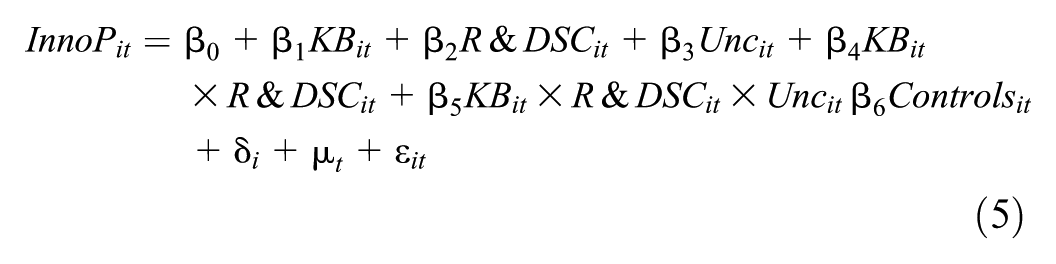
where
To test Hypothesis H3b, this paper constructs the following model:
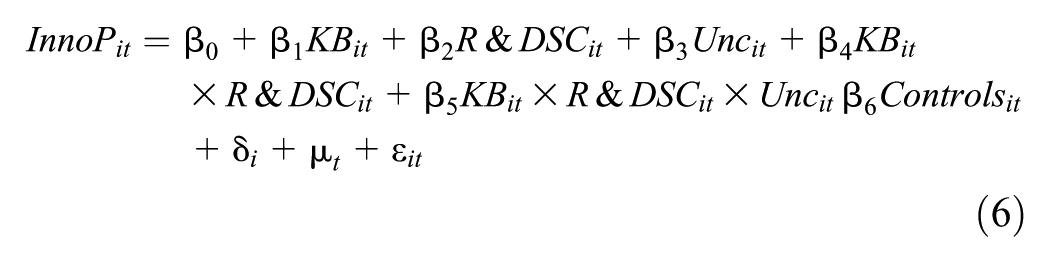
Results
Sample Statistics
Based on the descriptive statistics of the variables presented in Table 2, the sample firms file an average of 22.52 invention patents annually. The average degree of centralization in the R&D organizational structure is 0.49, suggesting that 49% of the patents are submitted by the listed companies themselves. The average breadth of the knowledge base is 7.02, with a standard deviation of 10.68, while the average depth of the knowledge base is 1.092, accompanied by a standard deviation of 2.231.
Descriptive Statistics.
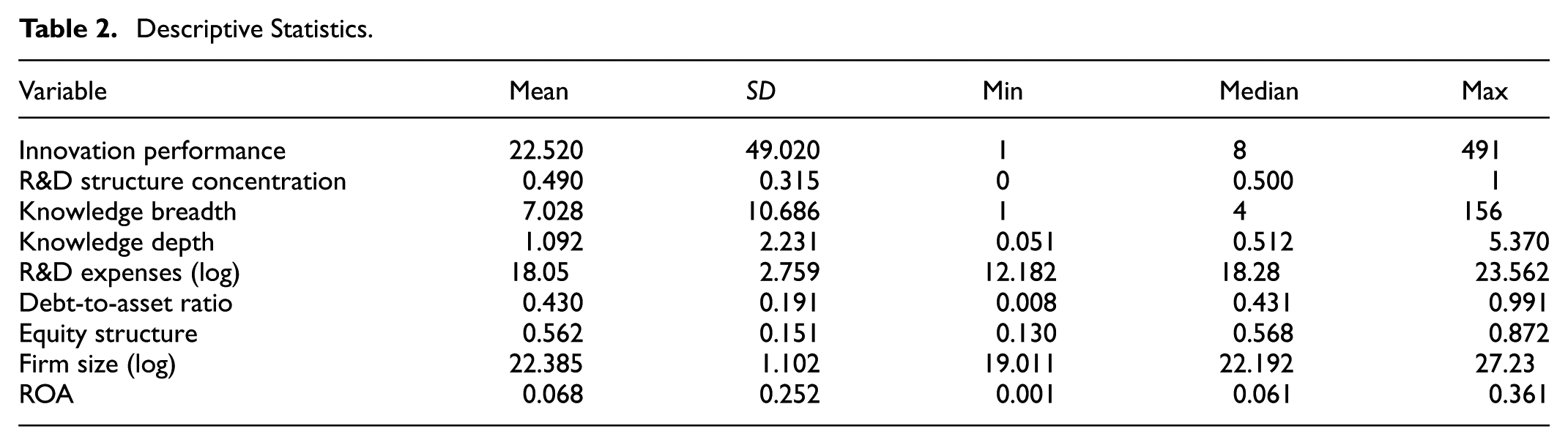
Table 3 reports the correlation coefficients between the variables. The variance inflation factors (VIF) for each variable were tested, and all VIF values were found to be less than 5, indicating that there is no significant multicollinearity problem among the independent variables.
Correlation Matrix.

, **, and *** are used to indicate p < .1, p < .05, and p < .01, respectively.
Regression Analysis Results
Table 4 reports the results of negative binomial regression models with time fixed effects. Model 1 includes only control variables, while Model (2) incorporates R&D organizational structure concentration, knowledge base breadth, and knowledge base depth. Models 3 and 4 build upon Model (2) by adding interaction terms: R&D organizational structure concentration × knowledge base breadth, and R&D organizational structure dispersion × knowledge base depth, respectively. To mitigate potential multicollinearity issues, all variables in the interaction terms were mean-centered.
Benchmark Regression Results of the Model.

, **, and *** are used to indicate p < .1, p < .05, and p < .01, respectively.
The results of Model (3) in Table 4 reveal a significant positive interaction between R&D organizational structure concentration and knowledge base breadth on corporate innovation performance (β = .009, p < .01). This finding suggests that when a firm possesses a broad knowledge base, a centralized R&D organizational structure is more conducive to integrating heterogeneous knowledge from diverse domains, thereby enhancing innovation performance. Thus, Hypothesis 1 is supported.
Model (4) in Table 4 demonstrates a significant positive interaction between R&D organizational structure dispersion and knowledge base depth on corporate innovation performance (β = .035, p < .05). This result indicates that when a firm has a deep knowledge base, a dispersed R&D organizational structure facilitates the acquisition of external heterogeneous knowledge, promoting innovation performance. Consequently, Hypothesis 2 is supported.
Robustness Analysis
Alternative Measures of Corporate Innovation Performance
We conducted two robustness checks using alternative measures of corporate innovation performance:
First, to account for the lag in invention patent applications, we used a two-year lagged measure of corporate invention patent applications as an alternative dependent variable. Employing negative binomial regression with time fixed effects, we obtained results presented in Table 5. Model (1) supports Hypothesis 1, while Model (2) supports Hypothesis 2.
Robustness Check: Alternative Measurement of Dependent Variable.

, **, and *** are used to indicate p < .1, p < .05, and p < .01, respectively.
Second, considering the diverse forms of corporate innovation, we utilized a 1-year lagged measure of all three types of patent applications (invention, utility model, and design patents) to assess corporate innovation performance. We re-ran the regression analyses, and the results are reported in Table 5. Model (3) provides support for Hypothesis 1, and Model (4)corroborates Hypothesis 2.
Replacement of R&D Organizational Structure Measurement
(1) The preceding analysis primarily evaluates the R&D organizational structure based on the number of patents filed by the parent company and its subsidiaries, without considering the qualitative differences in patent value between these entities. However, if high-value patents are predominantly held by the parent company, even with a relatively small patent portfolio, it would still indicate a concentration of crucial R&D activities within the parent company, thus reflecting a more centralized R&D organizational structure. Patent citations serve as a widely accepted proxy for patent value. The frequency with which a patent is cited correlates positively with its contribution to subsequent technological advancements and, consequently, its inherent value. This section reconstructs the company’s R&D organizational structure measurement by analyzing patent citation data from both the parent company and its subsidiaries
The centralization of the company’s R&D organizational structure is calculated using
The regression results are presented in Table 6. Column (2) shows that the interaction term between the concentration of the R&D organizational structure and the breadth of the knowledge base has a significantly positive coefficient. Similarly, in Column (4), the interaction term for the dispersion of the R&D organizational structure and the depth of the knowledge base is also significantly positive. These findings reaffirm that the study’s conclusions are robust, even when accounting for the distribution of patent value.
Robustness Check: Alternative Measurements of Independent Variables (Patent Citation).

, **, and *** are used to indicate p < .1, p < .05, and p < .01, respectively.
(2) Following the methodology of Arora et al. (2014), we constructed dummy variables based on the tertiles of patent proportions held by listed companies to measure R&D organizational structure, replacing the previous continuous variable for robustness testing. Specifically, we defined three dummy variables: the top tertile was designated as a centralized R&D structure (1 if in this tertile, 0 otherwise); the middle tertile as a hybrid R&D structure (1 if in this tertile, 0 otherwise); and the bottom tertile as a dispersed R&D structure (1 if in this tertile, 0 otherwise). The regression results are presented in Table 7.
Column (1) results reveal a positive coefficient for the interaction of centralized R&D structure × knowledge base breadth and a negative coefficient for hybrid R&D structure × knowledge base breadth. Column (4) results show negative coefficients for both interaction terms of hybrid R&D structure × knowledge base breadth and dispersed R&D structure × knowledge base breadth, with the latter having a larger absolute value (0.020 > 0.014). This indicates that compared to hybrid structures, dispersed R&D structures exhibit a stronger negative impact of knowledge base breadth on innovation performance. This further supports the notion that centralized R&D structures enhance the relationship between knowledge base breadth and corporate innovation performance, corroborating Hypothesis 1.
Robustness Check: Alternative Measurements of Independent Variables.

, **, and *** are used to indicate p < .1, p < .05, and p < .01, respectively.
Column (2) shows a significant negative coefficient for centralized R&D structure × knowledge base depth and a significant positive coefficient for hybrid R&D structure × knowledge base depth. In Column (4) both interaction terms of hybrid R&D structure × knowledge base depth and dispersed R&D structure × knowledge base depth are positive, with the latter having a larger coefficient (0.055 > 0.039). This suggests that compared to hybrid structures, dispersed R&D structures exhibit a stronger positive effect of knowledge base depth on corporate innovation performance. This indicates that as R&D structures become more dispersed, the positive relationship between knowledge base depth and corporate innovation performance strengthens, supporting Hypothesis 2.
This study’s findings suggest that a hybrid R&D organizational structure facilitates knowledge integration at a level intermediate between centralized and decentralized R&D structures, albeit closer to the decentralized model. The hybrid R&D structure demonstrates a nuanced impact on knowledge integration. On one hand, it proves advantageous for integrating the firm’s deep knowledge base, although its efficacy is somewhat diminished compared to the decentralized structure. Conversely, while the hybrid structure is less effective in integrating the breadth of the knowledge base, its negative impact is attenuated relative to the decentralized structure.
Addressing Endogeneity Issues
To address potential self-selection bias arising from the non-random selection of R&D organizational structures influenced by factors such as R&D investment scale, we employed propensity score matching (PSM). Covariates included firm size, R&D investment, R&D personnel, asset-liability ratio, ownership structure, and firm performance. Samples were grouped based on the median of R&D structure concentration, followed by 1:1 nearest neighbor matching. Post-matching tests revealed absolute standardized mean differences below 10% for all matched variables, indicating no significant differences in means. Regression results using the matched sample are presented in Table 8. The findings show that after controlling for self-selection, the interaction term between R&D organizational structure concentration and knowledge base breadth remains significantly positive, consistent with Hypothesis 1. Similarly, the interaction term between R&D organizational structure dispersion and knowledge base depth is significantly positive, supporting Hypothesis 2.
Results of Endogeneity Control and OLS Model.

, **, and *** are used to indicate p < .1, p < .05, and p < .01, respectively.
To mitigate potential endogeneity from omitted variables, we incorporated additional control variables. These include ownership nature, institutional shareholding ratio, board size, independent director ratio, and industry competition to control for ownership structure, corporate governance, and industry environmental effects on innovation. The regression results in Table 6 continue to support our research conclusions.
Alternative Regression Models
To assess the robustness of our findings, we employed an alternative regression approach in addition to the negative binomial regression used in our primary analysis. We transformed the dependent variable by taking the natural logarithm of the number of invention patent applications plus one. We then applied a fixed-effects ordinary least squares (OLS) regression model.
The results of this alternative approach are presented in Table 8. The direction and significance of the key variables remain consistent with our main findings, providing further support for our hypotheses. Specifically, the coefficients of the interaction terms maintain their signs and statistical significance, corroborating the robustness of our results across different model specifications.
Moderating Effect of Environmental Uncertainty
Environmental uncertainty plays a crucial role in shaping organizational structures, necessitating firms to adapt their structures to effectively respond to changing conditions. To quantify environmental uncertainty, we utilize a measure based on the coefficient of variation of firm sales revenue, adjusted for industry benchmarks (Magerakis & Habib, 2022). This measure is derived from an OLS regression of a firm’s annual revenue on time over a continuous five-year period. The standard deviation of the resulting residuals, normalized by the industry average, provides an annual indicator of environmental uncertainty, with higher values signifying greater levels of uncertainty faced by the firm.
To test the hypothesized moderating effects, we incorporated interaction terms into our regression models. As shown in Column (2) of Table 9, the three-way interaction term among environmental uncertainty, R&D centralization, and knowledge base breadth yields a statistically significant negative coefficient (p < .05). This finding indicates that as environmental uncertainty increases, the moderating effect of centralized R&D structures on the relationship between knowledge base breadth and innovation performance diminishes. Therefore, our results support Hypothesis H3.
Moderating Effect of Environmental Uncertainty.

, **, and *** are used to indicate p < .1, p < .05, and p < .01, respectively.
Furthermore, the regression results in Column (4) reveal a statistically significant positive coefficient for the interaction term involving environmental uncertainty, R&D decentralization, and knowledge base depth. This suggests that, under conditions of heightened environmental uncertainty, the moderating effect of decentralized R&D structures on the relationship between knowledge base depth and innovation performance becomes stronger. These findings provide support for Hypothesis H4.
To further validate the presence of a three-way moderating effect, this study employed the testing method proposed by Hayes (2013) using the Bootstrap approach. Environmental uncertainty was categorized into three levels (high, medium, and low) by adding or subtracting one standard deviation for analysis, with the results presented in Table 10. The findings indicate that as environmental uncertainty increases, the interaction effect of R&D organizational structure centralization and knowledge base breadth on innovation performance gradually weakens, with a regression coefficient difference of .011 between the highest and lowest levels. This provides further support for Hypothesis H3. In the lower half of Table 10, the regression coefficients for the interaction between R&D organizational structure decentralization and knowledge base depth increase with rising environmental uncertainty, with a coefficient difference of 0.059 between the highest and lowest levels, further supporting Hypothesis H4.
Moderating Effect Test Results Based on the Bootstrap Method.

Heterogeneity Analysis
Industry Heterogeneity
Innovation activities vary significantly across different manufacturing industries. High-tech enterprises allocate more resources to R&D, both in terms of funding and personnel, which influences their choice of R&D organizational structure. According to the National Bureau of Statistics’“High-Tech Industry (Manufacturing) Classification 2017,” industries such as pharmaceutical manufacturing, aerospace equipment manufacturing, electronics and communication equipment manufacturing, computer and office equipment manufacturing, medical instruments and apparatus manufacturing, and information chemical product manufacturing are categorized as high-tech due to their high R&D intensity. Separate regressions for the grouped data reveal the results presented in Table 11.
Heterogeneity Analysis: Industry Characteristics.

, **, and *** are used to indicate p < .1, p < .05, and p < .01, respectively.
The comparative analysis indicates that within high-tech industries, the regression coefficient for the interaction term between R&D organizational structure concentration and knowledge breadth is significantly lower than that in non-high-tech industries (0.614 < 0.925, p < .01). Conversely, the regression coefficient for the interaction term between R&D organizational structure dispersion and knowledge depth is markedly higher in high-tech industries compared to those with lower R&D investments (0.046 > 0.026, p < .01). This disparity may be attributed to the fact that firms in high-tech industries, due to their substantial investment in R&D funds and personnel, possess larger overall R&D organizational scales. Consequently, the advantages of centralized organizational structures diminish significantly, whereas the benefits of dispersed R&D organizational structures are amplified.
Firm Size Heterogeneity
As firms grow in size, the coordination and incentive challenges they encounter necessitate a moderate decentralization of power. This study examines the impact of firm size on R&D organizational structure by dividing the sample into two groups based on the median total assets, with the regression results detailed in Table 12. A comparison of columns (1) and (2) reveals that the regression coefficient for the interaction between the centralization of R&D organizational structure and knowledge base breadth is significantly higher in the smaller firm sample (0.034) compared to that of the larger firm sample (0.013, p < .01). This indicates that as firm size increases, the involvement of a broader range of technological knowledge areas diminishes the integrative effect of a centralized R&D structure on extensive knowledge bases. Furthermore, a comparison with the results presented in Column (3) shows that for larger firms, the regression coefficient for the interaction between R&D organizational structure decentralization and knowledge base depth is significantly positive, whereas for smaller firms, this coefficient is not statistically significant. This suggests that decentralizing the R&D organizational structure is more advantageous for the integration of deep knowledge as firm size increases.
Heterogeneity Analysis: Firm Size.

, **, and *** are used to indicate p < .1, p < .05, and p < .01, respectively.
Firm Firm Life Cycle Heterogeneity
At different stages of the firm life cycle, significant variations exist in the degree of power centralization within firms (Beber et al., 2018). Consistent with existing research methodologies, this study classifies firms into growth, maturity, and decline stages using the comprehensive cash flow method. Given that firms in the decline stage are less active in innovation activities and represent a smaller sample size, the analysis primarily focuses on comparing firms in the growth and maturity stages.
The regression results presented in Table 13 reveal that in the maturity stage, the regression coefficient for the interaction term between R&D organizational structure concentration and knowledge base breadth is significantly higher than in the growth stage (0.048 > 0.011, p < .01). Conversely, in the growth stage, the regression coefficient for the interaction term between R&D organizational structure dispersion and knowledge base depth is significantly higher than in the maturity stage (0.079 > 0.039, p < .01).
Heterogeneity Analysis: Firm Characteristics.

, **, and *** are used to indicate p < .1, p < .05, and p < .01, respectively.
These findings can be attributed to the strategic orientations of firms at different life cycle stages. Mature enterprises, often experiencing stagnation in their core businesses, tend to diversify into multiple business domains, thereby developing a broader knowledge base. In such a context, a centralized R&D organizational structure may offer greater advantages. In contrast, firms in the growth stage typically concentrate on deepening their expertise within primary business domains, where a decentralized R&D organizational structure may be more conducive to fostering innovation.
Discussion and Conclusion
This study investigates the impact of research and development (R&D) organizational structures on the integration of both broad and deep knowledge, within the framework of the knowledge-based view, while also considering the moderating role of environmental uncertainty. An empirical analysis of publicly listed Chinese manufacturing firms yields several key findings.
First, the study shows that firms with broad knowledge bases derive greater innovation performance benefits from centralized R&D structures, while those with deep knowledge bases achieve better innovation outcomes through decentralized R&D structures. This finding highlights the importance of aligning R&D organizational arrangements with the characteristics of a firm’s knowledge base to facilitate optimal knowledge integration, thereby contributing to the limited literature on this alignment.
Second, environmental uncertainty plays a moderating role in these relationships. Specifically, it weakens the positive effect of R&D centralization on the link between knowledge breadth and innovation performance, while strengthening the positive impact of R&D decentralization on the relationship between knowledge depth and innovation performance. This suggests that environmental uncertainty exacerbates the drawbacks of centralized R&D structures, such as insufficient incentives and slow decision-making, while enhancing the advantages of decentralized structures.
Finally, the study uncovers industry- and firm-specific contingencies. In industries with low R&D investment, smaller firms, and mature enterprises, centralized R&D structures are more effective in integrating broad knowledge bases and enhancing innovation performance. In contrast, firms operating in high R&D investment industries, larger organizations, and growth-phase companies benefit more from decentralized R&D structures for integrating deep knowledge bases.
Theoretical Contributions
First, we contribute to the knowledge-based view of the firm by elucidating the differential effects of R&D structures in integrating knowledge bases with distinct structural characteristics. While extant literature suggests that R&D structure design should facilitate knowledge integration, our study further proposes that the efficacy of knowledge integration through R&D structures is intrinsically linked to firms’ knowledge base structures. This nuanced perspective enhances our understanding of how organizational design interacts with knowledge resources to drive innovation.
Second, our study provides a plausible explanation for the inconsistent conclusions in existing literature regarding the importance of knowledge base structure for innovation. We demonstrate that centralized R&D structures benefit innovation in firms with broad knowledge bases, while potentially reinforcing path dependencies and inhibiting innovation in firms with deep knowledge bases. This insight addresses the limitations of previous research that treated firms as homogeneous entities without considering the distribution of knowledge across R&D units.
Practical Implications
Our findings offer valuable guidance for managers seeking to enhance innovation performance through the strategic alignment of knowledge base structure and R&D organizational design:
Managers should calibrate their R&D structures based on the breadth and depth of their knowledge bases. Companies with broad knowledge bases should adopt centralized R&D structures, while those with deep knowledge bases should opt for decentralized structures to maximize innovation benefits from accumulated knowledge.
Our study provides theoretical support for the centralization of R&D functions through technological middle platforms in diversified companies. As businesses expand into broader technological domains, centralizing R&D activities through middle platforms can more effectively integrate knowledge elements across different fields, overcoming challenges in cross-domain knowledge sharing and development.
Limitations and Future Research Directions
While our study offers valuable insights, we acknowledge several limitations that present opportunities for future research: our use of patent distribution between parent and subsidiary companies to measure R&D structural centralization may be subject to bias, as patents only partially reflect innovation outcomes. Future research could incorporate more comprehensive indicators such as new product development, R&D personnel distribution, and R&D investment allocation. The internal mechanisms through which the interaction between R&D structure and knowledge base structure affects innovation warrant further exploration. Future studies could examine how centralized R&D structures influence innovation performance through internal knowledge sharing behaviors, external knowledge acquisition, and changes in R&D personnel network structures. Longitudinal studies could provide deeper insights into the dynamic interplay between R&D structure, knowledge base evolution, and innovation performance over time.
In conclusion, our study underscores the critical importance of aligning R&D organizational structure with knowledge base characteristics to optimize innovation performance. By doing so, firms can more effectively leverage their knowledge resources and enhance their competitive advantage in increasingly complex and dynamic business environments.
Footnotes

Funding
The authors disclosed receipt of the following financial support for the research, authorship, and/or publication of this article: This work was supported by the Shanghai Fund for Philosophy and Social Sciences [Grant No. 2021BGL013].
Declaration of Conflicting Interests
The authors declared no potential conflicts of interest with respect to the research, authorship, and/or publication of this article.
Data Availability Statement
Data will be made available at the request.