




Abstract
Parent-adolescent communication on sexual reproductive health (SRH) is crucial in addressing adolescents’ needs and mitigating risks, such as early pregnancies. However, studies mapping this evidence within Indigenous Peoples in Latin American countries remain scarce. This scoping review examines the barriers and facilitators of parent-adolescent SRH communication among Indigenous Peoples in the Americas. This review follows the six-stage Arksey and O’Malley framework, the Joanna Briggs Institute Manual, and the PRISMA-ScR checklist. A keyword-based search across seven electronic databases was conducted for publications in Spanish and English from January 2000 to August 2024. Two reviewers screened and extracted data, using a Socio-Ecological Framework to synthesize the data and explore how individual, interpersonal, and community-level factors influence communication. Fifteen articles were included from an initial 1,087, with most studies conducted in Mexico, Guatemala, and Peru. Key barriers included parents’ limited education and knowledge due to their upbringings and low educational attainment, fear, shame, societal taboos, and stigma, especially around contraceptives and sexual activity. Traditional gender roles, changes in family structures, and intergenerational shifts compounded these barriers. Facilitators included leveraging parents’ experiences to strengthen emotional bonds and enhance communication. Other facilitators include same-sex conversations, particularly with mothers, and the evolving gender roles that empower female adolescents and women to access SRH information and services. This review highlights the SRH communication challenges Indigenous Peoples in the Americas face and identifies opportunities to improve these discussions. Future research should focus on underexplored content of conversations, underrepresented countries, and explore how economic, social, cultural, and policy factors influence parent-adolescent SRH communication.
Plain Language Summary
Indigenous adolescents in Latin America often face limited access to SRH information and services, which increases their risk of unintended pregnancies, early parenthood, violence, and sexually transmitted infections (STIs), including HIV/AIDS, unsafe abortion, and poor health outcomes for mothers and babies. Parents play an important role in communicating SRH information to their children, yet there is limited research on how Indigenous parents and adolescents communicate about these topics in the Americas. This review maps and reports the barriers and facilitators influencing parent-adolescent SRH communication among Indigenous communities in Latin American countries. The review follows established guidelines for scoping reviews and includes 15 studies selected from 1,087 articles. The findings reveal several communication barriers, such as parents’ limited education and knowledge about SRH topics, fear, shame, beliefs, social taboos, stigma, and changes in family composition. Facilitating factors include parents’ empirical knowledge and experiences, appropriate timing for discussions, the importance of coming-of-age rituals, same-sex conversation (e.g., fathers communicating to sons and mothers or motherly figures talking to daughters), and adolescent girls and women’s empowerment. The review also highlights a research gap, with most studies focused on Mexico, Guatemala, and Peru, while other countries with large Indigenous populations remain underrepresented. More research should focus on underexplored content of conversations, underrepresented countries and conduct systematic reviews or cross-country comparison studies to understand how economic, social, cultural, and policy contexts influence parent-adolescent SRH communication in the region.
Keywords
Introduction
Conversations about sexual and reproductive health (SRH) play a crucial role in promoting healthy sexual choices and practices among adolescents (Muhwezi et al., 2015). Research has shown that adolescents receive SRH information from various sources, including parents, close family members (older siblings, aunts, or uncles), respected community members, schoolteachers, healthcare providers, friends, the Internet, and social media (Magno et al., 2022; McGuire et al., 2024; Muhwezi et al., 2015). However, adolescents mainly rely on parents as their primary source of socialization and early guidance on SRH (McGuire et al., 2024; Muhwezi et al., 2015). Parent-adolescent SRH communication encompasses a wide range of topics. For example, couple relationships, sexual relations and practices, consent, contraceptive methods, pregnancy, motherhood, fatherhood, sexually transmitted infections (STIs; including HIV/AIDS), abortion, SRH rights, gender, sexual diversity, pleasure and intimacy, violence, and mental well-being related to SRH, such as body image, self-esteem, and suicide (Muhwezi et al., 2015).
The evidence demonstrates that parent-adolescent SRH communication is often hindered due to the upbringing parents experienced during their childhood and adolescence, since they may not have had someone to inform or educate them about these matters (Pineda Marin et al., 2019). Without proper guidance and education, many parents lack the knowledge and skills to convey SRH information and engage in conversations with their children. Even when parents engage in discussions, they frequently focus on the biological aspects of sexuality and reproduction. For instance, body parts, menstruation, and pregnancy, but often leave out topics related to contraceptive methods, STIs, risk behaviors, gender or power relations, violence, and emotional facets encompassing romantic relationships and sexual pleasure (Macintyre et al., 2015; Pineda Marin et al., 2019; Sevilla et al., 2016).
Interventions designed to enhance parent-adolescent SRH communication have been found to increase parents’ knowledge, improve communication skills, and increase adolescents’ condom use and delay sexual debut (Atienzo et al., 2011; Ramírez-González et al., 2021). Despite these benefits, research in Latin America still shows limited SRH communication between parents and adolescents (Pineda Marin et al., 2019). Consequently, adolescents continue to experience significant gaps in knowledge regarding their sexuality and reproductive roles, resulting in premature initiation of sexual relations without proper contraception. Studies in the region suggest that the mean age of first sexual intercourse for male and female adolescents is between 15.7–16.3 years and 15.5–17.1 years, respectively (Atienzo et al., 2009; González et al., 2013).
Previous studies have explored parent-adolescent SRH communication among Indigenous Populations in North America and Australia (Healey, 2014; Vujcich et al., 2018) and non-Indigenous populations within different geographical contexts (Al Zaabi et al., 2021; Likith, 2024; Ndugga et al., 2023; Othman et al., 2020). Additionally, few systematic reviews have focused mainly on African countries (Eshete & Shewasinad, 2020; Mekie et al., 2020; Usonwu et al., 2021). These studies have identified common barriers to parent-adolescent SRH communication, including fear, shame, and deep-rooted family, religious, and cultural norms that deem such conversations taboo (Al Zaabi et al., 2021; Likith, 2024; Othman et al., 2020; Usonwu et al., 2021). A frequent facilitator expressed by adolescents is their preference for discussing SRH issues with their mothers, who are generally perceived as more open than fathers (Usonwu et al., 2021).
A multi-country study among Indigenous adolescents in Bolivia, Ecuador, Guatemala, Nicaragua, and Peru found that 50% of participants did not engage in such conversations with their parents, contributing to misinformation and an increased risk of unintended early pregnancies (Organización Panamericana de la Salud, 2010). In many Indigenous communities, when parents address SRH topics with their children, they often reproduce traditional patriarchal, monogamous, and heteronormative models that reinforce gender-based discrimination and violence, particularly against girls and women (Organización Panamericana de la Salud, 2010). Notably, many of these contemporary models and values on sexuality are legacies of colonial impositions. For example, diverse pre-colonial expressions of sexuality, erotic behaviors, and sentiments among Indigenous communities lacked notions of modesty and shame (Gutiérrez, 1992). Recognizing these historical trajectories and the emergence of what today might be recognized as traditional or normative models provides essential context for understanding current SRH communication patterns among Indigenous communities in Latin America. This colonial legacy is not merely historical; it continues to shape present-day adolescents’ SRH choices and practices, reinforcing the urgency of examining SRH communication within Indigenous Peoples.
Although similarities exist with non-Indigenous populations, there are compelling reasons to focus specifically on Indigenous Peoples in the Americas. Latin America is home to approximately 42 million Indigenous Peoples belonging to over 400 distinct groups and a diversity of Indigenous languages spoken across the region (Montenegro & Stephens, 2006; The World Bank, 2015). This diversity, combined with the enduring impacts of colonization, poverty, discrimination, racism, and social exclusion, creates structural barriers that affect Indigenous Peoples’ access to education and healthcare information and services, including SRH (Naciones Unidas, 2011). This situation poses many challenges for program developers tasked with designing and implementing healthcare programs and interventions within the biomedical health sector, which often fail to align with Indigenous Peoples’ needs and priorities (Organización Panamericana de la Salud, 2010). Understanding this shared historical context and the heterogeneity of Indigenous communities throughout the Americas is crucial to developing and implementing effective SRH health programs while respecting their distinct traditions, experiences, and values (Organización Panamericana de la Salud, 2010).
This scoping review aims to examine and report the available evidence on the barriers and facilitators surrounding parent-adolescent SRH communication among Indigenous Peoples in Latin America. Additionally, the review seeks to map and summarize the evidence across the region, identifying research approaches and countries where additional research is needed. The results of this research are expected to enhance understanding of the challenges Indigenous Peoples from Latin America face, identify research gaps, and promote efforts that support Indigenous Peoples’ participation and collaboration in a culturally and contextually appropriate manner. This scoping review was conducted with the guiding question: What are the key barriers to, and facilitators of, parent-adolescent SRH communication among Indigenous Peoples across Latin American countries?
Methods
The approach adopted in this scoping review followed Arksey and O’Malley’s framework (Arksey & O’Malley, 2005), the Joanna Briggs Institute Reviewer’s Manual (Peters et al., 2024), and the Preferred Reporting Items for Systematic Reviews and Meta-Analyses extension for Scoping Reviews (PRISMA-ScR) checklist (Supplemental File 1; Tricco et al., 2018). The study adhered to the steps outlined in the protocol published elsewhere in 2023 (Chaparro Buitrago & Pimentel, 2023). The protocol guided the process, encompassing a six-stage process to ensure methodological rigor and accuracy: (a) identifying the research question, (b) identifying relevant studies, (c) study selection, (d) Charting the data, (e) collating, summarizing, and reporting the results, and (f) consultation.
Identifying Relevant Studies
Search Strategy
An expert librarian assisted in developing the search strategy. With her support, the first author employed the PCC (Population, Concept, and Context) model to determine key concepts, define eligibility criteria, and search terms (Peters et al., 2024). The population of interest included adolescents, parents or extended family members, and Indigenous Peoples. The core concept focused on parent-adolescent SRH communication. The context included countries in Latin America, specifically Central and South America. The search strategy included a combination of keywords and adjusted for each database by incorporating specific filters, Boolean operators, and language preferences, whether in Spanish or English. This approach allowed the refinement of the search and obtained more precise and targeted results based on the criteria set for the study.
The search terms included: (“adolescent” OR “young people” OR “teens” OR “juvenile” OR “youth”) AND (“parents” OR “father” OR “mother” OR “extended family”) AND “Indigenous populations” OR “Indigenous” OR “Indigenous people” OR “Indigenous communities” OR “ethnic group”) AND (“communication about sexual and reproductive health” OR “communication about contraceptives” OR “sexuality communication” OR “conversation about sex” OR “talk about sex” OR “sexual education”) AND (“Latin America” OR “Central America” OR “South America” OR Mexico OR Belize OR Guatemala OR El Salvador OR Honduras OR Nicaragua OR Costa Rica OR Panama OR Colombia OR Venezuela OR Ecuador OR Peru OR Bolivia OR Brazil OR Suriname OR French Guiana OR Paraguay OR Uruguay OR Chile OR Argentina) AND (language:(“en” OR “es”)) AND (year_cluster:[2000 TO 2024]). The preliminary search strategy was developed and tested, adding additional keywords as needed. The final search strategy employed in this scoping review is presented in Table 1.
Search Strategy.

Note. Global Health Database from January 2000 to August 2024, week 34 (August 28, 2024).
The search was conducted across seven electronic databases: PubMed/MEDLINE, EMBASE, Scopus, Web of Science, Global Health, Latin America and Caribbean Health Science Literature (LILACS), and SciELO. Additionally, a manual hand search of the reference lists of all articles included in the full-text review was performed to capture any relevant studies that may have been missed through the electronic search. The first author screened the titles of each cited article for keywords related to the study’s search terms and had direct relevance to the research question. A new manual list was created to compile each article’s information. Following this process, the first author and a second reviewer examined the abstract of each article, and those that met the inclusion criteria underwent full-text review.
Selection Criteria
The population of interest included adolescents, defined by the World Health Organization as individuals aged 10 to 19 years (World Health Organization, 2015), parents and extended family members, and Indigenous Peoples. Within Indigenous communities, extended family members, such as grandparents, uncles, aunts, and older cousins, often play a key role in socializing youth about SRH (Gabster et al., 2021). Articles that discussed the concept of parent-adolescent SRH communication, specifically exploring barriers and facilitators, were included. The context included studies conducted in Latin American countries, specifically Mexico, Belize, Guatemala, El Salvador, Honduras, Nicaragua, Costa Rica, Panama, Colombia, Venezuela, Ecuador, Peru, Bolivia, Brazil, Suriname, French Guiana, Paraguay, Uruguay, Chile, and Argentina. This geographical scope was chosen because Indigenous Peoples represent about 10% of the population across these territories (Montenegro & Stephens, 2006).
We also included studies from different research designs, including quantitative, qualitative, mixed methods, and review articles. This diversity allowed for a comprehensive understanding of the topics from various research approaches. We only included peer-reviewed articles to ensure the credibility and scholarly rigor of the evidence. We focused on articles published in Spanish and English between January 2000 and August 2024. The decision to include articles published within the last two decades stems from obtaining the most recent evidence available to provide relevant insights for informed decision-making in research, program development and implementation, and policy initiatives that remain challenging.
We excluded book chapters, conference abstracts, and gray literature. We also excluded studies conducted outside Latin American countries, as they were beyond the geographical scope. Additionally, articles published in languages other than Spanish and English were excluded. Despite Brazil being considered the country in South America with the highest number of Indigenous Peoples living in isolation and having an approximate Indigenous population of 896,917 (International Work Group for Indigenous Affairs [IWGIA], n.d.), articles published in Portuguese and Indigenous languages were excluded due to the language proficiency constraints of the authors, the capacity of the research team, and the available resources for translating these studies. The impact of this exclusion was mitigated by considering that Mexico, Guatemala, Peru, and Bolivia account for more than 80% of the Indigenous population living in Latin America, where Spanish is the primary language spoken in these territories (Montenegro & Stephens, 2006).
Study Selection
The articles were retrieved from electronic databases. Subsequently, they were organized and screened based on the predetermined inclusion and exclusion criteria using Covidence (Harrison et al., 2020). After removing duplicates, the primary author and a second reviewer reviewed the titles, abstracts, and full texts. In cases where there were disagreements regarding inclusion, the reviewers discussed the content of the articles until a consensus was reached. No additional communication with the authors of the primary sources was conducted. The reasons for excluding articles were documented. A report listing the studies included and excluded from the analysis has been provided to enhance methodological rigor and ensure transparency (Supplemental File 2).
Charting the Data
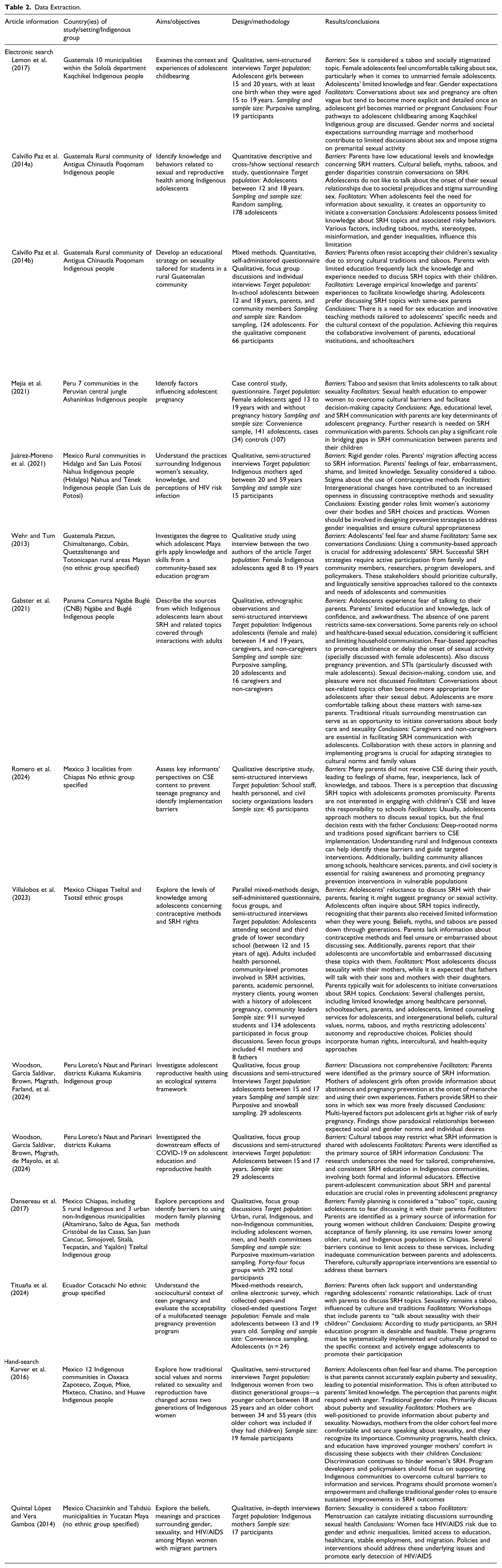
A preliminary test of the data extraction template was performed to ensure its accuracy, leading to necessary adjustments. Data were primarily extracted from the primary studies’ design, methods, results, and discussion sections, following best research practices (Pollock et al., 2023). The extracted data were subsequently organized and classified into the following categories: (a) article information, (b) country(ies) of study, research setting, and any relevant details regarding the Indigenous group to which the study participants belong, (c) aims and objectives of the study, (d) study design and methodology, (e) results (e.g., barriers or facilitators) and conclusions (see Table 2). Initially, the study protocol considered indicators of communication effectiveness; however, this information is deemed more suitable for further studies, such as a systematic review (Pollock et al., 2023).
Data Extraction.
Collating, Summarizing, and Reporting the Results
The first author performed the data extraction and validated it by a second reviewer, as suggested elsewhere (Peters et al., 2024). The extracted data were summarized and organized into two main categories: barriers and facilitators. Subsequently, the extracted data within each category were reviewed to identify patterns and group them into sub-categories using a Socio-Ecological Framework. This framework guided the data synthesis and facilitated an exploration of the factors influencing parent-adolescent SRH communication, specifically at the individual, interpersonal (family environment), and community levels (Supplemental File 3; Max et al., 2015; Sidamo et al., 2023). A narrative summary of these categories and sub-categories and full citations of the primary sources are provided.
Consultation
A global health specialist and chief gynecologist from the Dr. Manuel Gea González General Hospital in Mexico City and two researchers from the Gender and Feminism Studies Program at the Latin American Faculty of Social Sciences from Guatemala participated in the consultation process. This process aimed to collect feedback from these experts on the interpretation of the preliminary findings and validate the content of the results. This validation ensured consistency between categories and sub-categories and the cultural and contextual appropriateness of the findings. The consultation was conducted after the summary and preliminary data analysis. The experts received a draft document containing the results and a questionnaire to guide their feedback. They reflected on how accurately each sub-category aligned with the main categories (barriers or facilitators) and provided additional comments to assess its content. Subsequently, the first author and a second reviewer reviewed and discussed the experts’ comments and suggestions. Their recommendations helped refine the wording of sub-categories, identify areas that required further exploration, and incorporate literature to support the discussion, particularly concerning the content of parent-adolescent SRH conversations. Their comments also helped identify additional gaps in the existing reviewed literature.
Results
The electronic database search identified 1,161 articles. After eliminating 74 duplicates, 1,087 articles were title and abstract screened. From this process, 1,022 articles were excluded for failing to meet the selection criteria. The full-text review was conducted on 65 articles, excluding 52, mainly because they did not include Indigenous populations in the sample and did not address the topic of interest (Figure 1). Furthermore, the hand search yielded two additional documents that were included in the final review.
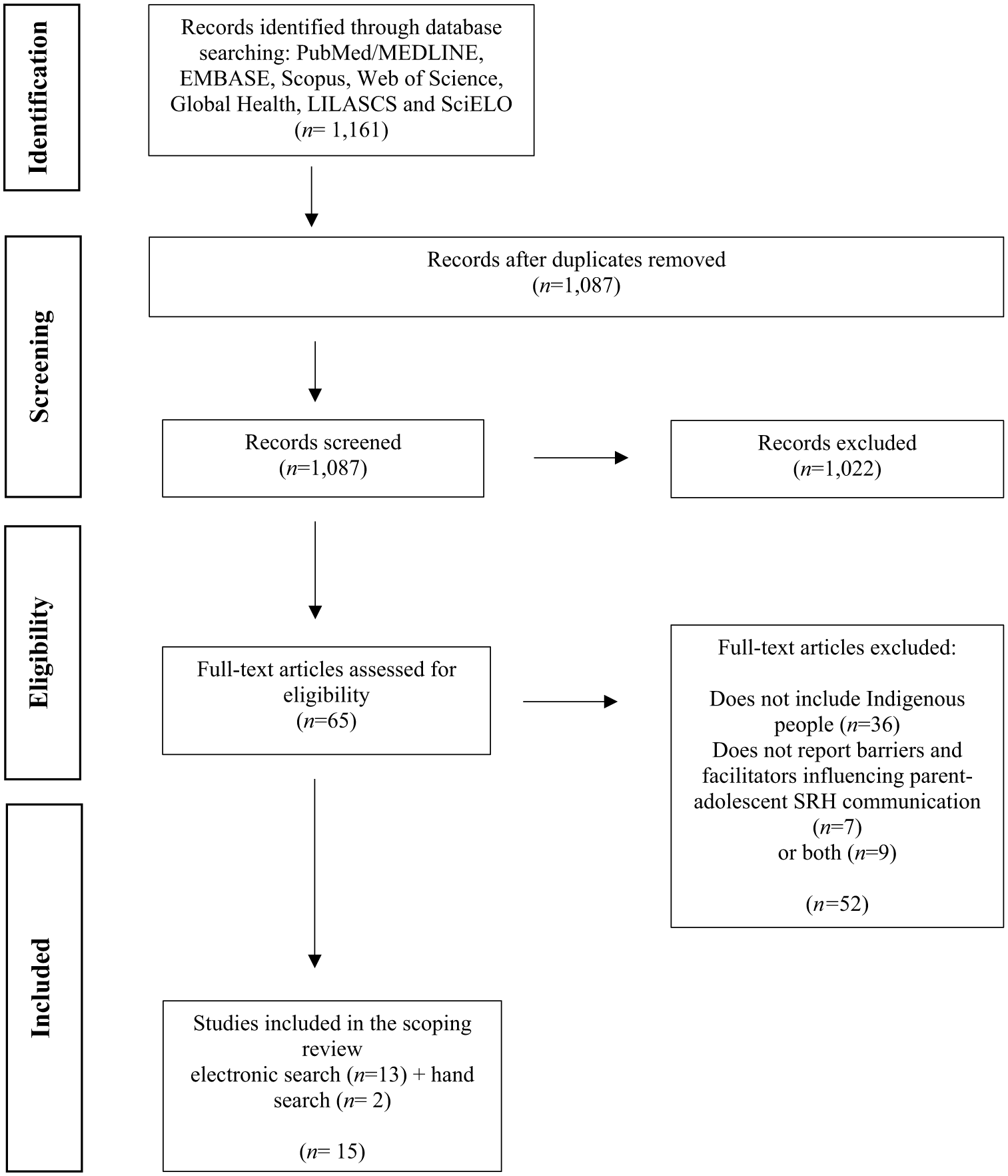
PRISMA flowchart.
Fifteen articles were included in the final review and data extraction process. Ten articles adopted a qualitative study design, employing semi-structured and in-depth interviews, focus group discussions, and ethnographic observations (Dansereau et al., 2017; Gabster et al., 2021; Juárez-Moreno et al., 2021; Karver et al., 2016; Lemon et al., 2017; Quintal López & Vera Gamboa, 2014; Romero et al., 2024; Wehr & Tum, 2013; Woodson, Garcia Saldivar, Brown, Magrath, de Mayolo, et al., 2024; Woodson, Garcia Saldivar, Brown, Magrath, Farland, et al., 2024). Two articles implemented a quantitative study design, primarily relying on questionnaires (Calvillo Paz & Rodríguez Cabrera, 2014a; Mejia et al., 2021). Three articles used a mixed methods approach, incorporating self-administered questionnaires and online surveys alongside focus group discussions and individual interviews (Calvillo Paz & Rodríguez Cabrera, 2014b; Tituaña et al., 2024; Villalobos et al., 2023). Six of these 15 articles were carried out in Mexico (Dansereau et al., 2017; Juárez-Moreno et al., 2021; Karver et al., 2016; Quintal López & Vera Gamboa, 2014; Romero et al., 2024; Villalobos et al., 2023), 4 in Guatemala (Calvillo Paz & Rodríguez Cabrera, 2014a, 2014b; Lemon et al., 2017; Wehr & Tum, 2013), 3 in Peru (Mejia et al., 2021; Woodson, Garcia Saldivar, Brown, Magrath, de Mayolo, et al., 2024; Woodson, Garcia Saldivar, Brown, Magrath, Farland, et al., 2024), 1 in Panama (Gabster et al., 2021), and 1 in Ecuador (Tituaña et al., 2024).
Barriers
Barriers influencing communication encompass numerous factors that hinder parents or adolescents from initiating, developing, and maintaining conversations on SRH. These challenges often manifest as fear, silence, avoidance, or discomfort, resulting in misinformation, lack of awareness, inadequate understanding, and limited access to SRH information and services. The findings uncover the following five barriers:
Factors at the Individual Level
Parents Limited Education and Knowledge of SRH
Seven articles examined parents’ difficulties in talking with their children about SRH, primarily attributed to their limited knowledge (Calvillo Paz & Rodríguez Cabrera, 2014a, 2014b; Gabster et al., 2021; Juárez-Moreno et al., 2021; Karver et al., 2016; Romero et al., 2024; Villalobos et al., 2023). The main reasons for parents’ limited knowledge are because they did not receive SRH information during their adolescence or due to low educational attainment, which hinders their access to information (Calvillo Paz & Rodríguez Cabrera, 2014a, 2014b; Gabster et al., 2021; Juárez-Moreno et al., 2021; Romero et al., 2024; Villalobos et al., 2023). Consequently, parents struggle to provide their children with the necessary information, focusing on the biological aspects of sexuality and abstinence (Gabster et al., 2021; Karver et al., 2016). Topics like the sexual decision-making process, condom use, and pleasure are rarely addressed by parents (Gabster et al., 2021). This aligns with adolescents’ perspectives, who emphasize that, due to their parents’ limited knowledge, they may receive vague, incomplete, or misleading information (Karver et al., 2016). For example, parents might suggest that simple acts like holding hands or kissing could lead to early pregnancy or infections (Gabster et al., 2021; Karver et al., 2016). None of the articles included information about the parent’s educational level.
Fear, Shame, and Lack of Trust
Nine articles discussed fear, shame, and lack of trust when parents or adolescents discuss SRH-related matters (Calvillo Paz & Rodríguez Cabrera, 2014a; Gabster et al., 2021; Juárez-Moreno et al., 2021; Karver et al., 2016; Lemon et al., 2017; Romero et al., 2024; Tituaña et al., 2024; Villalobos et al., 2023; Wehr & Tum, 2013). The findings revealed that parents often experience shame when engaging in conversations with their children (Gabster et al., 2021; Juárez-Moreno et al., 2021). These feelings can be intensified when parents approach these discussions with their sexually inexperienced children, leading to heightened challenges in communication (Gabster et al., 2021). Additionally, parents fear that such conversations can promote early sexual intercourse or promiscuity (Romero et al., 2024; Villalobos et al., 2023). Adolescents also share similar fear, shame, and lack of trust when discussing SRH matters with their parents (Gabster et al., 2021; Karver et al., 2016; Lemon et al., 2017; Tituaña et al., 2024; Wehr & Tum, 2013), mainly when the topic revolves around sexual debut, as it involves individual experiences and emotions that may be difficult to express and share (Calvillo Paz & Rodríguez Cabrera, 2014a). Furthermore, adolescents’ perceptions of their parents’ potential negative reactions add to the complexity of these interactions. Many adolescents fear their parents may respond angrily or disapprove, discouraging a trustful dialogue (Karver et al., 2016).
Factors at the Interpersonal Level (Family Environment)
Beliefs, Taboos, and Stigma
Ten articles investigate the beliefs, taboos, and stigma that permeate the communication on SRH (Calvillo Paz & Rodríguez Cabrera, 2014a, 2014b; Dansereau et al., 2017; Juárez-Moreno et al., 2021; Lemon et al., 2017; Mejia et al., 2021; Quintal López & Vera Gamboa, 2014; Tituaña et al., 2024; Villalobos et al., 2023; Woodson, Garcia Saldivar, Brown, Magrath, de Mayolo, et al., 2024). The data reveals that discussions about SRH are still considered taboo due to family norms, traditions, and beliefs that hinder parents’ ability to access information and address these topics with younger generations (Calvillo Paz & Rodríguez Cabrera, 2014a, 2014b; Quintal López & Vera Gamboa, 2014; Tituaña et al., 2024; Villalobos et al., 2023; Woodson, Garcia Saldivar, Brown, Magrath, de Mayolo, et al., 2024). Stigma, particularly around contraceptive methods and sexual activity for unmarried adolescents, poses unique difficulties due to concerns about punishment and repercussions that lead adolescents to conceal relationships, pregnancy, and sexual assaults (Dansereau et al., 2017; Lemon et al., 2017).
Family Composition and Intergenerational Change
Two articles explored family composition and intergenerational changes impacting SRH communication (Gabster et al., 2021; Juárez-Moreno et al., 2021). Data shows that grandparents become the primary caregivers when parents migrate for better jobs and economic opportunities (Juárez-Moreno et al., 2021). As a result of this generational change, addressing SRH issues with adolescents becomes more challenging, as communicating with grandparents may prove to be more difficult. Therefore, the absence of parents during critical periods of adolescent development can hinder SRH discussions. Likewise, the evidence shows that the absence of one parent poses additional difficulties (Gabster et al., 2021). This is particularly important within Indigenous communities where gendered information transmission prevails, which may also contribute to differences in how SRH topics are addressed between fathers and sons, mothers and daughters.
Factors at the Community Level
Power Relations and Gender Stereotypes
Six articles highlighted power dynamics and gender stereotypes that hinder adolescents’ and women’s autonomy in the SRH decision-making process and communication (Calvillo Paz & Rodríguez Cabrera, 2014a, 2014b; Juárez-Moreno et al., 2021; Karver et al., 2016; Lemon et al., 2017; Wehr & Tum, 2013). Within Indigenous communities, gender stereotypes perpetuate an image of women as passive, submissive, and primarily caretakers, while men are portrayed as strong, dominant, and family breadwinners (Karver et al., 2016; Lemon et al., 2017). Men often hold power in relationships, intimate sexual relationships, and the decision-making process for family planning (Juárez-Moreno et al., 2021; Wehr & Tum, 2013). Adolescent girls and women are often discouraged from seeking SRH information and services, especially unmarried girls or those without children (Karver et al., 2016). The perpetuation of such stereotypes influences how adolescents and women communicate, express, and practice their sexuality and reproduction and contributes to the maintenance of gender inequalities, leaving adolescents and women at a disadvantage (Calvillo Paz & Rodríguez Cabrera, 2014a). For example, the restricted agency of adolescents and women in negotiating condom use with their partners puts them at a higher risk of STIs, including HIV/AIDS (Juárez-Moreno et al., 2021).
Facilitators
Facilitators influencing parent-adolescent SRH communication contribute to open and constructive dialogues. Open and constructive SRH communication refers to the ability and willingness of parents and adolescents to engage in honest, respectful, and free-of-judgment discussions. It involves sharing information, thoughts, questions, feelings, and concerns that can help break down taboos, stigma, and myths. This is especially crucial for young people as they begin to navigate the complexities of romantic relationships and sexual experiences. The findings revealed the following five facilitators:
Factors at the Individual Level
Empirical Knowledge and Parent’s Experiences
Six studies highlighted the importance of parents, close family members, and educational institutions as key educational and socializing agents in adolescents SRH (Calvillo Paz & Rodríguez Cabrera, 2014b; Quintal López & Vera Gamboa, 2014; Tituaña et al., 2024; Wehr & Tum, 2013; Woodson, Garcia Saldivar, Brown, Magrath, de Mayolo, et al., 2024; Woodson, Garcia Saldivar, Brown, Magrath, Farland, et al., 2024). However, the findings revealed that parents are perceived as the primary source of SRH information for young people (Dansereau et al., 2017; Woodson, Garcia Saldivar, Brown, Magrath, de Mayolo, et al., 2024; Woodson, Garcia Saldivar, Brown, Magrath, Farland, et al., 2024). The evidence shows the importance of leveraging the empirical knowledge and experience of parents and emotional ties with adolescents, which could constitute an avenue for knowledge and information sharing (Calvillo Paz & Rodríguez Cabrera, 2014b; Woodson, Garcia Saldivar, Brown, Magrath, Farland, et al., 2024). Two articles mentioned the importance of involving parents in workshops to improve affective relationships with adolescents and thus improve SRH communication skills (Calvillo Paz & Rodríguez Cabrera, 2014b; Tituaña et al., 2024).
Factors at the Interpersonal Level (Family Environment)
Timing
Six articles discussed the optimal timing for initiating SRH conversations with adolescents (Calvillo Paz & Rodríguez Cabrera, 2014a; Gabster et al., 2021; Lemon et al., 2017; Quintal López & Vera Gamboa, 2014; Villalobos et al., 2023; Woodson, Garcia Saldivar, Brown, Magrath, Farland, et al., 2024). The data suggests that these conversations often start when adolescents feel the need for such information, when parents believe their children have initiated their sexual lives, or in the event of adolescent pregnancy or marriage, as these circumstances are deemed more appropriate for discussing these topics with adolescents (Calvillo Paz & Rodríguez Cabrera, 2014a; Gabster et al., 2021; Lemon et al., 2017; Villalobos et al., 2023). Likewise, the data suggested that the onset of menstruation serves as a pivotal moment to start such conversations (Quintal López & Vera Gamboa, 2014; Woodson, Garcia Saldivar, Brown, Magrath, Farland, et al., 2024). One of the articles discussed the need to increase communication from an early age (Lemon et al., 2017); however, none of the articles defined the ideal starting age for these conversations or explored potential differences based on gender.
Same-Sex Conversations
Seven articles underscored the importance of addressing same-sex SRH conversations, wherein mothers communicate with their daughters and fathers with their sons (Calvillo Paz & Rodríguez Cabrera, 2014b; Gabster et al., 2021; Karver et al., 2016; Romero et al., 2024; Villalobos et al., 2023; Wehr & Tum, 2013; Woodson, Garcia Saldivar, Brown, Magrath, Farland, et al., 2024). Within Indigenous families, it is customary to transmit information based on gender (Calvillo Paz & Rodríguez Cabrera, 2014b; Villalobos et al., 2023; Wehr & Tum, 2013). The adolescents corroborate and report these traditional approaches as the most appropriate ways for sharing SRH information and knowledge (Gabster et al., 2021). The findings reveal that mothers or maternal figures (e.g., grandmothers, aunts, sisters) are deemed the most appropriate sources of information when providing SRH guidance to adolescents (Karver et al., 2016; Villalobos et al., 2023; Woodson, Garcia Saldivar, Brown, Magrath, Farland, et al., 2024); however, the final decision rests with the fathers (Romero et al., 2024).
Factors at the Community Level
Coming-of-Age Rituals for SRH Education
One article highlighted the importance of traditional coming-of-age rituals, noting that while some rituals have become less prevalent and acceptable within communities, soft versions could serve as catalysts for communicating SRH information (Gabster et al., 2021). Based on the findings, the value of reactivating these traditional rituals with the support and guidance from community leaders and parents can offer a culturally appropriate approach to adolescent sexual health education while upholding scientific rigor (Gabster et al., 2021).
Adolescent Girls and Women’s Empowerment
Three articles explored the generational and gender role shifts within communities, leading to improved access to SRH information for parents, particularly women (Juárez-Moreno et al., 2021; Karver et al., 2016; Mejia et al., 2021). Evidence indicates that establishing community programs, clinics, and educational workshops has opened information-sharing and training spaces, benefiting and empowering women (Karver et al., 2016; Mejia et al., 2021). This transformative development has resulted in a generational shift, wherein younger mothers now enjoy increased opportunities to access SRH information and services and feel more at ease and assertive in discussing sensitive topics with their children (Karver et al., 2016). Consequently, this shift has facilitated progress toward gender equality and has positively changed women’s roles within families (Karver et al., 2016). Mothers are now taking on more active roles in shaping the SRH education of their children, breaking away from traditional gender norms that previously limited their involvement and communication in such matters (Juárez-Moreno et al., 2021; Karver et al., 2016).
Discussion
The findings of this scoping review shed light on the barriers and facilitators in parent-adolescent SRH communication among Indigenous communities in Latin American countries, revealing significant factors that come into play.
At the individual and interpersonal levels, limited parental education and knowledge of SRH emerged as a significant barrier in the reviewed studies. This data aligns with previous research in the region, highlighting how parents’ upbringing in family environments where conversations about SRH topics were deliberately avoided due to shame or discomfort (Caricote Agreda, 2008; Orcasita Pineda et al., 2018). Some parents find themselves inadequately informed, grappling with a negative perception of their sexuality driven by fear, societal taboos, and stigma that were introduced to them (Caricote Agreda, 2008). This knowledge gap has further perpetuated across generations, affecting parents’ capacity to discuss with younger generations (Orcasita Pineda et al., 2018). However, parents’ recollections of their childhood experiences have motivated them to actively seek information and break the silence, initiating and normalizing SRH conversations with their children (Domínguez et al., 2015; Orcasita Pineda et al., 2018). Silence has served as a tactic used for generations to censor topics, especially those related to menstruation or contraceptive methods, or as a means of avoiding conversations (Domínguez et al., 2015). Therefore, the evidence underscores the importance of programs addressing parents’ deficiencies in SRH knowledge to help dispel stigma, dismantle taboos, and break the silence around SRH (Atienzo et al., 2011). Further research in the region is needed to explore whether higher parental education levels and SRH knowledge enhance their skills to communicate with their children (Ndugga et al., 2023).
At the community level, another salient factor is the persistence of traditional gender roles coupled with entrenched stereotypes and power dynamics that influence SRH communication, behaviors, choices, and practices. Traditional gender norms persist in these communities, restricting adolescent girls’ and women’s autonomy in making informed choices and putting them at higher risk (Caricote Agreda, 2008; De Meyer et al., 2014). However, these persisting gender norms have created a window of opportunity for the emergence of spaces like healthcare services and community programs (Karver et al., 2016; Mejia et al., 2021). These spaces have served as platforms for facilitating and delivering information and fostering education that dismantles traditional roles and empowers female adolescents and women. By recognizing how these entrenched gender roles and power dynamics both restrict and simultaneously create opportunities for change, researchers and program developers can better identify strategies to harness the facilitators of empowerment. As a result, when female adolescents and women gain access to SRH information and resources, they become better equipped with information, subsequently fostering improved communication and decision-making capacity within households (Karver et al., 2016).
Additionally, various facilitators were explored. For instance, at the interpersonal level, key life events, such as menarche, the onset of sexual relationships, pregnancy, and marriage, were considered triggers for initiating SRH conversations. At the community level, the gradual reintegration of traditional rites of passage was examined as a potential facilitator. While these instances can catalyze starting conversations, ideal age, timing, and related differences based on gender for initiating such discussions remain challenging to determine (Atienzo et al., 2009). The initiation of conversations between mothers and adolescents typically occurs before the first sexual intercourse experience, correlating with increased condom usage, while fathers tend to initiate such conversations after the event occurs (Clawson & Reese-Weber, 2003). Additionally, same-sex interactions also play a role, with mothers or motherly figures more frequently communicating with their daughters and fathers with their sons (Wilson & Koo, 2010). While mother-female adolescent conversations tend to focus on pregnancy and STI prevention and abstinence/delaying sexual onset, father-male adolescent conversations take on a more explicit nature, often involving tangible actions such as providing condoms (Sevilla et al., 2016). These findings emphasize the importance of timing and same-sex interactions in these dialogues. However, the variability of the markers and the underlying reasons that underscore these communication patterns remain unidentified, thereby necessitating further research to uncover whether specific circumstances and attitudes exhibited by same-sex parents act as catalysts for such tendencies.
Previous research has shown that SRH conversations often lack precision, parents convey misleading information and tend to focus on biological aspects, reproductive functions, and pregnancy (Magno et al., 2022; Pineda Marin et al., 2019; Sevilla et al., 2016), which closely mirrors the results of this review. Parents often promote the concept of cuidarse (i.e., taking care of themselves), which for unmarried and sexually inexperienced female adolescents means to caution them from engaging in romantic and sexual relations to prevent pregnancies, while for male adolescents, it implies respect for women (Calvillo Paz & Rodríguez Cabrera, 2014b; Dansereau et al., 2017; Juárez-Moreno et al., 2021; Lemon et al., 2017; Woodson, Garcia Saldivar, Brown, Magrath, de Mayolo, et al., 2024). However, topics such as sexual behaviors, relational dynamics of sexuality (including boundaries and consent), contraceptive methods, eroticism, pleasure, same-sex relationships (including information related to LGBTQ+), masturbation, violence, abortion, and mental health related to SRH receive scant attention, as documented elsewhere (Pineda Marin et al., 2019; Sevilla et al., 2016). The latter is crucial, considering emerging studies indicating a higher risk of suicide attempts among pregnant adolescents (Al-Halabí et al., 2021) and especially the elevated suicide rate among Indigenous pregnant adolescents (FLACSO, 2019). Stigma, taboo, socioeconomic factors, violence, sexual abuse, lack of family, partners, and community support, discrimination, social exclusion, and clinical aspects have all been linked to this problem (Al-Halabí et al., 2021). Therefore, substantial focus, dedicated funding, and concerted efforts to comprehend and address the intricacies of this issue are urgently required.
Likewise, messages centered around abstinence and prohibition are extensively documented in the literature (Campero et al., 2010; Rouvier et al., 2011; Sevilla et al., 2016). They are significant in this context, characterized by conservative, traditional, and religious values, where virginity is deeply intertwined with moral principles (Orcasita Pineda et al., 2018). However, abstinence-based messages alone have shown limited efficacy in influencing adolescent SRH behaviors, attitudes, or practices (Campero et al., 2010). Therefore, the results of this review align with the need for further research that sheds light on how researchers, program developers, and policymakers can transcend reductionist and abstinence-driven approaches, urging a shift toward a more comprehensive approach and positive stance on sexuality.
The data showed a noticeable gap in research in Latin America. Among the 20 Central and South American countries included in this review, most of the research was concentrated in Mexico, Guatemala, and Peru; this aligns with the substantial Indigenous population residing in these territories (The World Bank, 2015). Researchers often face challenges in guaranteeing Indigenous populations’ participation in their studies due to language, geographical dispersion, and limited access to these territories, resulting in populations that have been historically discriminated against and socially excluded receiving insufficient attention and consideration (The World Bank, 2015). Collaborative efforts involving local researchers, program developers, and policymakers are crucial to bridging these gaps and adapting research methodologies to include Indigenous Peoples’ values, beliefs, and ways of knowing (Drawson et al., 2017). This closely resonates with the results of this scoping review, which identified that 10 articles employed qualitative data collection methods, presumably the most suitable approach for study participants. This points to the potential of promoting participatory action research to shift away from the conventional and dominant models of evidence-based research and instead move towards a horizontal knowledge exchange (Loewenson et al., 2014). Such a shift is fundamental in the context of the anti-colonial research agenda, which seeks to rectify the historical issues of extractive and appropriation of ancestral Indigenous knowledge in research (Datta, 2017; Zavala, 2013).
Limitations
This scoping review has several limitations. First, a significant amount of research conducted in the region may not be published in the databases or peer-reviewed journals included in this review, leading to the exclusion of potentially relevant studies. Second, studies published in Portuguese and Indigenous languages were excluded, which may have introduced geographical and linguistic biases. Third, many studies lacked sociodemographic data on participants’ self-identification as Indigenous, limiting the ability to capture ethnicity and language-specific differences. Finally, although extended family members were included in the study’s criteria, few articles recognized their role in shaping SRH discussions.
Implications for Future Research
Future studies should address these limitations by including gray literature and institutional reports to capture insights from local organizations or community-based studies. Furthermore, greater interdisciplinary research collaboration and translation tools to expand linguistic coverage are needed to ensure more inclusive and comprehensive review in multiple languages. Future research should collect and disaggregate sociodemographic data by ethnicity, language, and other relevant stratifiers to ensure accurate self-identification and better representation of Indigenous populations (World Health Organization, 2022). This should also include exploring the role of extended family members in SRH communication, considering the varying cultural definitions of family within Indigenous populations, and how communication patterns differ between adolescents, nuclear, and extended family members. Additionally, no data is available on how language influences parent-adolescent conversations. Given that Spanish has replaced Indigenous languages in several countries in the region, especially among younger generations (The World Bank, 2015), it is important to explore whether parents are accustomed to engaging in SRH discussions in their local languages and how this linguistic shift shapes communication. Beyond these gaps, future work should examine underexplored content of conversations, such as cultivating healthy relationships, STI prevention and testing, sexual diversity, abortion, and gender-based violence, while also considering the emotional and mental dimensions of SRH. Finally, more research is needed in countries that have received less attention and conduct systematic reviews or cross-country comparative studies to examine how other factors, such as economic conditions, social contexts, cultural practices, and local policies, influence parent-adolescent communication on SRH.
Conclusion
This scoping review highlights the complex interplay of individual, family, and community-level factors shaping parent-adolescent SRH communication among Indigenous populations in the Americas. Barriers, including parents’ limited SRH knowledge, taboos, stigma, and fear, constrain meaningful conversations, while facilitators such as same-sex SRH conversations, particularly between mothers and adolescents, show promise for improving discussions. Addressing these barriers while capitalizing on facilitators requires culturally appropriate strategies incorporating diverse voices, languages, and family structures in research and interventions. Strengthening local research capacity and broadening geographic and linguistic representation will be critical to developing inclusive, culturally appropriate, context-specific approaches that advance adolescent SRH equity across the region.
Supplemental Material
sj-docx-1-sgo-10.1177_21582440251383221 – Supplemental material for Parent-Adolescent Communication on Sexual and Reproductive Health Among Indigenous Peoples: A Scoping Review of Barriers and Facilitators in the Latin American Context
Supplemental material, sj-docx-1-sgo-10.1177_21582440251383221 for Parent-Adolescent Communication on Sexual and Reproductive Health Among Indigenous Peoples: A Scoping Review of Barriers and Facilitators in the Latin American Context by Diana Carolina Chaparro Buitrago, Lorenzo Castillo Venegas, Patricia Ogba, Christy Gombay, Andrea Baumann, Olive Wahoush and Tim O’Shea in SAGE Open
Supplemental Material
sj-docx-2-sgo-10.1177_21582440251383221 – Supplemental material for Parent-Adolescent Communication on Sexual and Reproductive Health Among Indigenous Peoples: A Scoping Review of Barriers and Facilitators in the Latin American Context
Supplemental material, sj-docx-2-sgo-10.1177_21582440251383221 for Parent-Adolescent Communication on Sexual and Reproductive Health Among Indigenous Peoples: A Scoping Review of Barriers and Facilitators in the Latin American Context by Diana Carolina Chaparro Buitrago, Lorenzo Castillo Venegas, Patricia Ogba, Christy Gombay, Andrea Baumann, Olive Wahoush and Tim O’Shea in SAGE Open
Supplemental Material
sj-docx-3-sgo-10.1177_21582440251383221 – Supplemental material for Parent-Adolescent Communication on Sexual and Reproductive Health Among Indigenous Peoples: A Scoping Review of Barriers and Facilitators in the Latin American Context
Supplemental material, sj-docx-3-sgo-10.1177_21582440251383221 for Parent-Adolescent Communication on Sexual and Reproductive Health Among Indigenous Peoples: A Scoping Review of Barriers and Facilitators in the Latin American Context by Diana Carolina Chaparro Buitrago, Lorenzo Castillo Venegas, Patricia Ogba, Christy Gombay, Andrea Baumann, Olive Wahoush and Tim O’Shea in SAGE Open
Footnotes
Acknowledgements
The authors of the manuscript would like to acknowledge Dr. Atziri Ramírez Negri from the Dr. Manuel Gea González General Hospital in Mexico City and Ana Lucía Ramazzini and Emma López from the Gender and Feminism Studies Program at the Latin American Faculty of Social Sciences (FLACSO-Guatemala) who participated in the consultation process, provided valuable feedback, and helped validate the results of this study.

Ethical Considerations
No ethical approval was needed to conduct this scoping review as the information was retrieved from previous publicly published articles. The primary studies included in this review followed ethical guidelines, including approval from institutional ethics boards at the local and partner institution levels. In some cases, approval was sought from local authorities and community leaders. Informed consent processes were outlined, with minors required to provide assent and parental/guardian consent while adults signed their consent forms. Consent was either written or oral, depending on the study. Some studies also addressed data protection, ensuring confidentiality and anonymity, and in some studies, participants were informed of their right to withdraw or refuse to answer questions.
Author Contributions
DCCHB contributed to the conceptualization, methodology, data curation, analysis, design, and draft and edited the initial and final manuscript. LCV contributed to methodology, data curation, analysis, and data validation and provided feedback to the initial and subsequent drafts of the manuscript. PO contributed to methodology, data curation, analysis, and data validation and provided feedback to the initial and subsequent drafts of the manuscript. CG contributed to conceptualization, methodology, and supervision and provided feedback to the initial and subsequent drafts of the manuscript. AB contributed to methodology and supervision and provided feedback to the initial and subsequent drafts of the manuscript. OW contributed to methodology and supervision and provided feedback to the initial and subsequent drafts of the manuscript. TO contributed to supervision and provided feedback to the initial and subsequent drafts of the manuscript.
Funding
The authors received no financial support for the research, authorship, and/or publication of this article. The publication benefited from a publishing agreement between McMaster University and SAGE Open, which provided a discount on the article processing charge.
Declaration of Conflicting Interests
The authors declared no potential conflicts of interest with respect to the research, authorship, and/or publication of this article.
Data Availability Statement
All relevant data are included in the manuscript and its supplemental materials.
Supplemental Material
Supplemental material for this article is available online.
References
Supplementary Material
Please find the following supplemental material available below.
For Open Access articles published under a Creative Commons License, all supplemental material carries the same license as the article it is associated with.
For non-Open Access articles published, all supplemental material carries a non-exclusive license, and permission requests for re-use of supplemental material or any part of supplemental material shall be sent directly to the copyright owner as specified in the copyright notice associated with the article.
