



Abstract
This paper establishes a theoretical foundation for evaluating the development level of national fitness through a comprehensive review of the literature. To achieve this, an evaluation system is constructed based on scale, structure, and quality to measure the development level of national fitness. Utilizing sports exercise data from the 2017 CGSS national survey, the study employs economic statistical methods to assess the fitness development level across 28 provinces (cities) in China. In addition, a deeper analysis is conducted on key indicators of investment in sports, particularly the impact of financial funding and the “Six Mass Sport Projects” initiative on the national development level, scale, structure, and quality of national fitness. As a result, the findings indicate that increasing financial investment is a crucial pathway to advancing high-quality development in national fitness. There is a need for enhanced funding to engage more social resources, meet personalized fitness needs, and improve the quality of the exercising population. The government should increase financial support, incorporate fitness indicators into performance assessments, and precisely address weak areas to promote high-quality growth in sports participation across regions. Furthermore, in response to demographic changes, the cost of fitness participation should be reduced, cultivate a sports culture, and rectify structural imbalances in nationwide fitness.
Keywords
Introduction and Literature Review
National fitness plays a vital role in achieving the well-being of all individuals, serving as fundamental guarantee for enhancing physical fitness and leading a joyful life. Moreover, it serves as a crucial pillar supporting the socio-economic advancement of the nation. As a result, the visionary objectives of constructing a sports powerhouse and fostering a healthy China by 2035 were clearly set out during the Fifth Plenary Session of the 19th CPC Central Committee. This session not only outlined a grand blueprint for the realization of socialist modernization but also marked the first time that the notion of “more discernible and substantive progress in achieving the common welfare of all people” was introduced. Health is an important component of realizing common prosperity. Health for all, as an important goal, has been widely emphasized globally, and many countries are actively promoting national fitness and health programs, with the aim of improving people’s quality of life and enhancing the nation’s health (Csányi et al., 2015; Lee et al., 2017; Macdonald, 2013). Fitness can effectively promote health, and the fitness industry is growing steadily in a number of countries (Batrakoulis, 2019). Therefore, the sports industry is a vital component of the nation’s economic and social development. The development of China sports industry requires financial investment and support from the government (C. K. Chen & N. Chen, 2024; Y. L. Li et al., 2018).
International evidence on national fitness initiatives provides a valuable reference for evaluating and refining China’s approach. Comparative analyses across OECD countries demonstrate that coordinated policy frameworks that integrate public health, education, and urban planning yield higher participation rates in regular physical activity (Kohl et al., 2012; OECD & European Commission,2024; World Health Organization,2020). For instance, nations that embed physical-education mandates within school curricula and support community-based programming often achieve a measurable increase in daily moderate-to-vigorous exercise among children (Chin et al., 2019; Dobbins et al., 2013). Moreover, surveys reveal a strong correlation between the availability of affordable, well-maintained recreational facilities and overall population-health outcomes, suggesting that supply-side investments can stimulate demand when paired with targeted outreach (Bedimo-Rung et al., 2005; Saadati & Nadrian, 2024). Research on governance structures underscores the importance of inter-agency coordination (Milman et al., 2024). Additionally, the adoption of digital platforms for monitoring facility usage, health outcomes, and financial flows has been shown to reduce administrative redundancies and improve accountability (Huisman et al., 2022; Kwilinski et al., 2024). These international experiences highlight that effective national-fitness strategies depend on integrated policy design, equitable infrastructure provision, coordinated institutional mechanisms, and data-driven management—key levers that can guide China’s efforts to enhance the efficiency, equity, and impact of its national-fitness investments.
The development of national fitness is inseparable from the promotion of the sports industry and the allocation of national financial and material resources. However, the overall efficiency of the financial resources for sports public services in China is generally low (P. Zhu, 2022), and there remains considerable scope for improvement (C. H. Liu, 2017). Furthermore, there is considerable variability in the allocation of public sports resources across China (L. Liu et al., 2024; Y. Zhu & Yu, 2019), with substantial regional differences in the financial funding for sports public services among various provinces (Bo & Lei, 2024; L. Li & M. Y. Li, 2024; L. Li & Yang, 2019; Pan, 2018), and the efficiency of financial investments in mass sports in the central region surpasses that of the entire nation (C. Liu et al., 2019). To reduce the variability of investment in sports, some researchers have proposed the idea of promoting the equalization of public services for national fitness in China (Tao & Zheng, 2024; S. B. Wang et al., 2024; Y. Wang & F. B. Zhang, 2023). Y. Zhu and Yu (2020) argue that the resources for public sports services in China should encompass human, material, financial, and organizational elements, among which the investment in material resources has the greatest impact on public sports. On the other hand, the utilization efficiency of existing resources still needs to be improved. Despite the increase in the total amount of inputs, there is duplication of construction, idleness, and waste in the actual utilization process (Luo & Bao, 2024). In addition, a lack of long-term thinking in the planning and construction of fitness facilities makes it difficult to meet the changing and diversified needs of different population groups (Hu & Feng, 2024). Although the efficiency of the allocation of public sports resources for national fitness in China is steadily improving, the improvement mainly stems from the increase in factor inputs (H. W. Chen et al., 2016), and there are significant differences in the level of the allocation of public sports resources in China (Y. Zhu & Yu, 2019).
The mass-sports development model, which is “government-led, sectorally coordinated, and jointly participated in by the whole of society,” reflects the country’s vision of promoting mass sports from the national level to the local level and from a universal approach to a diversified one (X. R. Li, 2015). However, the Chinese sports industry now faces problems regarding scale, development quality, and output efficiency, which prevent it from fully meeting contemporary needs (H. B. Zhang, 2024). In this context, it is especially important to examine how systematic management and effective policy guidance can improve the efficient utilization of public sports service resources, thereby enhancing national fitness.
Existing research on sports investment and national fitness mainly focuses on calculating the input-output efficiency of public sports services and constructing indicators for these services or related resources (Y. Li et al., 2020). Most of this research evaluates public sports services. Few studies have examined national fitness as the research object to explore the role and benefits of sports investment for national health development. Therefore, this paper identifies and consolidates the core indicators of national fitness, establishes an evaluation system to assess national-fitness levels across China, and measures these indicators in 28 provincial-level units. Through empirical quantitative analysis, it examines the extent to which sports investment influences national fitness. Finally, based on the core-indicator evaluation system and the observed impact of sports-investment inputs on national fitness, we propose policy recommendations to promote high-quality development of national fitness, providing a reference for future initiatives.
Logical Framework of the Pyramid Theory of National Fitness—Sports Input—Physically Active Population
For a deeper exploration of national fitness, a pyramid-shaped logical framework (see Figure 1) was constructed to provide a comprehensive overview of the three key participatory elements of national fitness. Using a top-down approach, information at the upper level is decomposed into lower-level components, and the analysis is organized into three tiers. The first tier is the top-level design set by the government. The national fitness strategy has been deployed, recognizing that the population’s physical fitness underpins economic construction and social development and serves as a key indicator of social progress and overall national strength. Since 2014, “national fitness” has shifted from a sports-focused deployment to a national-strategic agenda, thereby being substantially upgraded from a sports value to a strategic national value. The second tier is the middle level of implementation, wherein the sports sector is tasked with the effective execution of the national fitness strategy. Building a higher-level public-service system for national fitness has become a new requirement, which cannot be separated from the investment of human, financial and material resources (Y. Zhu and Yu, 2020). Moreover, the application of scientific, evidence-based methods can enhance the efficiency of national-fitness investment. Evaluating the performance of sports investment in national fitness across provinces tests the effectiveness of national fitness in the new era, providing evidence for self-examination and innovative reforms. The third tier is the grassroots level, where the participants are the entire population. The Action for a Healthy China (2019~2030) states that “physical activity is an important element of a healthy lifestyle and is the most active, effective and economical means of achieving national health.” Thus, universal participation in physical exercise is the ultimate goal of the top tier. However, evaluating national fitness cannot rely solely on a single dimension (e.g., regular physical-exercise participation); it is crucial to develop a scientific and reasonable multi-dimensional evaluation system. Nonetheless, each of the three tiers faces distinct challenges, as outlined below:

Pyramid structure of elements of national fitness strategy, investment in sport and physically active population.
Top-Level Design: The Huge Task of a National Fitness Strategy for the Next 15 years
Increasing the proportion of people who regularly engage in physical exercise is a core indicator of national fitness (see Table 1). During the 13th Five-Year Plan period, public awareness of sports and fitness in China generally increased, and the proportion of the population regularly engaging in physical exercise reached 37.2%, achieving the target of 37% by 2022 ahead of schedule. Moreover, the National Fitness Plan (2021–2025) proposes that by 2025 the public service system for national fitness will be more complete, sports and fitness activities will be more convenient for the public, enthusiasm for fitness will rise further, participation in various sports will continue to grow, and the proportion of the population regularly engaging in physical exercise will reach 38.5%. The Outline for the Construction of a Strong Sporting Nation explicitly sets a target of more than 45% for the proportion of the population regularly engaging in physical exercise by 2035. To meet this goal, the proportion must rise by 6.5 percentage points over the 10-year period from 2026 to 2035.Given the limited time and the challenging task, it requires breaking down institutional barriers and achieving comprehensive integration of government, market and society. Thus, a systematic review of the implementation of the national fitness program is needed. Therefore, the present article takes the physically active population as the object of study for national fitness.
Relevant Elements of The National Top-Level Design Regarding The Physically Active Population.

Middle-Level Execution: Sustained Support For The Realization Of The National Fitness Is A Priority For The Sports Sector
The middle-level executive body of the sports sector serves as a bridge between the upper and lower tiers. These sports departments ensure effective implementation and coordination, and they are also responsible for implementing policies and requirements issued by the central government. Under the guarantee of the national-fitness strategy and its associated policies, the sports industry department builds institutional frameworks, reinforces foundations, formulates implementation plans in line with policies, and creates supply and input-output mechanisms (F. B. Zhang et al., 2020). For example, Jiangsu Province has set targets for the proportion of regularly physically active residents to reach 41% in 2022 and 43% in 2025; simultaneously, the proportion of urban and rural residents meeting the National Physical Fitness Standard is targeted at 93.3% in 2022 and 93.8% in 2025.
Implementation of national fitness directives falls under the jurisdiction of the sports industry department, reflecting its core responsibility to promote national fitness. National fitness depends on inputs from the sports sector, including human, financial, and informational resources. Furthermore, the ongoing implementation of the “Six Mass Sport Projects” and the increased funding for national fitness constitute key avenues for the sports sector to achieve comprehensive and sustainable development (see Figure 1). Traditionally, driven by the interests of “rational economic actors,” sports authorities have prioritized profit maximization and have used the number, scale, and effectiveness of national-fitness facilities, organizations, and activities as performance metrics. This focus has resulted in substantial resource waste, formalism, and bureaucratic practices (G. Y. Liu & Dai, 2018). Therefore, evaluating the effectiveness of sports-investment indicators for national fitness enables the detection of under- or over-investment by sports departments, thereby better meeting public demand for fitness, addressing the issue of “where to exercise,” and promoting the sustained, healthy development of mass-sports work (Figure 2). Consequently, this study will examine whether China’s sports investment-both financial investment and the “Six Mass Sport Projects”-has effectively enhanced the development of national health.

Current situation of the core indicators of national fitness in 28 provinces (cities) of China.
Bottom-Level Unit: Substantial, Equalized, High-Quality Growth In The Exercising Population As A Core Indicator Of Results In National Fitness
The national fitness strategy must inevitably begin with—and ultimately aim to satisfy—the people’s needs (G. Y. Liu & Dai, 2018). The grassroots level of national fitness comprises individuals with varying levels of physical activity. Rather than the term “sports population,” the phrase “regular physical exercise population” has achieved broad consensus in the scholarly community (Ma, 2019; X. R. Li, 2009) (see Table 2). Currently, indicators for China’s physically active population should capture dimensions of dynamism, growth, development, and historical trends. Given China’s socio-economic development and the evolving national-fitness initiatives across periods, growth should serve as the primary criterion for evaluating the physically active population. Since its inception in the 1995 Outline of the National Fitness Program, the initiative has progressed through six 5-year plans. During this time, China’s external socio-economic context has changed rapidly, while the internal organization of the sports sector responsible for mass-sports work has also undergone significant transformation. However, since the third national survey on mass sports in China, assessments have relied mainly on horizontal comparisons of grassroots participation using quantitative metrics (frequency, duration, intensity). Yet, there is a paucity of nuanced indicators that capture internal diversity and growth to evaluate the exercise status of these units. Consequently, this paper constructs a national-fitness indicator system centered on three dimensions: substance, equity, and quality-driven growth.
Conceptualization of the National and International Literature on “Sports Population,”“Regular Physical Exercise Population” and The Present Study.

The interplay between government investment in sport infrastructure and national fitness can be elucidated by integrating the Social Ecological Model, Policy Feedback Theory, and the Theory of Planned Behavior (TPB) (Ajzen, 1991; Bronfenbrenner, 1979; McLeroy et al., 1988; Pierson, 1993). Social Ecological Model posits that health-related behavior is shaped by nested layers ranging from macro-level policies and institutions to meso-level community contexts and micro-level individual factors. Government spending on public sports facilities represents a macro-level policy intervention that, through the lens of Policy Feedback Theory, generates material resources and symbolic cues that reshape citizens’ perceptions of the state, their trust in public institutions, and normative expectations about physical activity. These policy-induced changes directly influence the TPB constructs: they improve attitudes toward exercise (by highlighting its health benefits), strengthen subjective norms (as community campaigns convey a socially endorsed fitness culture), and enhance perceived behavioral control (through increased facility accessibility and reduced cost barriers). Consequently, the combined framework predicts a cascading causal chain: investment, positive policy feedback, favorable TPB determinants, higher likelihood of regular exercise, ultimately elevating the national fitness level.
Construction and Analysis of the National Fitness Evaluation Indicator System
Connotation of the Construction of the Evaluation System of the National Fitness Level in China
Definition of national fitness: all members of the population, irrespective of gender, age or other demographic characteristics, improve strength, flexibility, endurance, coordination, and overall bodily control, thereby becoming physically strong and healthy.
The core indicators of national fitness examine the regular-physical-exercise population across three dimensions: scale (substance), structure (equity), and quality (high quality).
Scale captures the extent of public participation in fitness and serves as a key gauge of national health awareness. Widespread involvement is essential for national fitness to generate broad societal impact. Equitable structure guarantees fairness and inclusivity, avoiding the marginalization of any group, and thus fulfills the aim of national fitness. Because demographic groups differ in gender, education, income, and other factors, an equitable structure better accommodates these diverse needs (Lu & Miu, 2024; Xiong & A. Y. Wang, 2020; H. M. Zhong & Z. H. Wang, 2024). Quality requires that fitness activities transcend mere participation and raise performance standards. High-quality fitness improves health outcomes, reduces injuries and unscientific practices, and yields better functional results.
In this study, the “regular physical-exercise population” is defined as individuals who engage in moderate-to-vigorous physical activity at least twice per week, with each session lasting a minimum of 30 minutes.
Principles, Indicators and Methodology
Principles for the Construction of Indicators
In principle, the construction of the evaluation-indicator system for national fitness (hereinafter referred to as the evaluation system or evaluation index) should be guided by the principles of systematicity, comparability, and feasibility. Indicator selection must fully reflect China’s concrete mass-sports context, its future development plans, development priorities, and the availability of data.
Data Sources and Selection of Indicators
The 2017 Chinese General Social Survey (CGSS) household data constitute the first large-scale, comprehensive, and continuous national social survey in China that tracks physical-exercise behavior (X. T. Li & Xing, 2014; F. B. H. Wang et al., 2015). The dataset has been widely used to study intergenerational physical-activity behavior (M. N. Liu, 2017), exercise, physical and mental health, self-perceived well-being, socioeconomic status, and other related factors (Man, 2017; Xu & Zhu, 2020; H. Y. Zhang et al., 2023; H. M. Zhong et al., 2020). By the end of 2018, the CGSS database had produced more than 2,400 papers both domestically and abroad. In 2017, CGSS collected 12,582 respondents; after excluding invalid cases, the final analytical sample comprised 12,575 observations. China has 34 provincial-level administrative regions. Because data were unavailable for six of them, this study examines 28 provinces. This paper investigates three dimensions—scale, structure, and quality—and the specific core-indicator system is presented in Table 3.
Indicator System for Evaluating the National Fitness Level.

Entropy Method
In this paper, the entropy method of objective assignment is chosen to measure the level of the core indicators of national fitness. The principles of the entropy method are as follows:
Step 1. The raw data of the indicators are taken as an
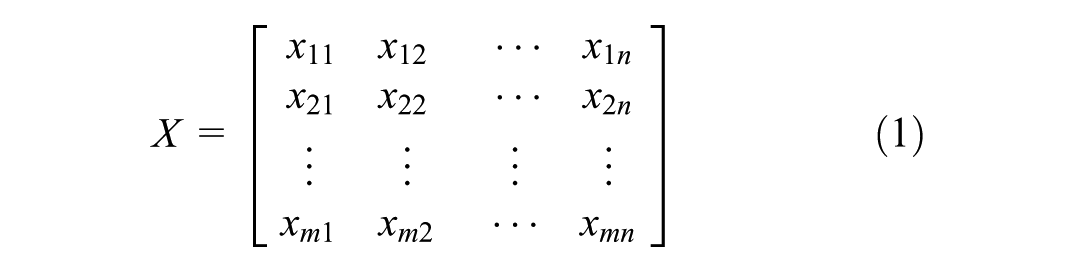
Step 2. Data normalization
Taking into account its differences in dimension and magnitude, the original data cannot be directly used for assessment. After collection of the original data, the process of data normalization is necessary. All indicators are classified into two categories: the positive and the negative. The positive indicator is the indicator for which bigger values are better. The negative one refers to the indicator for which smaller values are better.
When

When

where
Step 3. Calculation of the entropy value of the
To calculate the entropy value of each indicator, the standardized value of indicator

Then, calculate the entropy value of the

Where
Step 4. The weighting value of the

Where
Step 5. The level of the core indicator is defined as Equation (7):

and the level of the three dimensions combined is defined as Equation (8):

Among them, the larger the value of
Measurement Results and Analysis
Measurement Results and Analysis of The Weights of Different Indicator Levels
Table 4 presents the weights of the secondary and tertiary indicators, and a larger value of
Measurement Results of the Weights of the Core Indicators of China’s National Fitness.

Results and Analysis of The Measurement of The Core Indicators From A Multidimensional Perspective
From a holistic perspective: first, the level of national fitness in China still requires substantial improvement. The mean of the core-indicator scores for the 28 provincial-level units is 76.17, and the median is 76.07; neither exceeds the 80-point benchmark. Only the scores of Beijing, Shanghai, Zhejiang, and Guangdong surpass 80 points. Second, there are marked disparities in national-fitness levels across provinces. The maximum gap in core-indicator scores—between the highest-scoring Beijing (86.65) and the lowest-scoring Inner Mongolia (64.40)—is 22.26 points. Third, provinces (including municipalities) that achieve higher national-fitness scores are clustered in eastern China and other economically advanced regions. Beijing, Shanghai, Zhejiang, Guangdong, Jiangsu and Hebei rank among the top six and are all located in the east; their 2016 GDP and GDP per capita also rank among the highest in the nation.
Adequacy and differences of the three dimensions of the core indicators of national fitness: on the one hand, the adequacy of the scale, structure, and quality dimensions of national fitness needs to be enhanced to achieve an overall adequate level of national fitness. The median scores are 74.6669 (scale), 80.4248 (structure) and 72.9506 (quality), indicating that the quality dimension in particular requires substantial improvement. Using a threshold of 70 points for each dimension, the provinces that fall below this benchmark are:
Scale dimension: Gansu, Yunnan, Ningxia, Anhui, and Inner Mongolia;
Structure dimension: Inner Mongolia (the only province below the threshold);
Quality dimension: Inner Mongolia, Hunan, Beijing, Jiangsu, Tianjin, Shanghai, and Fujian.
On the other hand, each sub-indicator exhibits notable variability. Using the range (maximum–minimum) as a variability measure, the ranges are 38.94 points for the scale dimension, 22.76 points for the structure dimension, and 26.06 points for the quality dimension, indicating that the scale dimension shows the greatest disparity. Specifically, taking Beijing (set to 100) as the reference, its total sports population and the proportion of sports participants both rank first nationwide; the gap between Beijing and Inner Mongolia (61.06) is 38.94 points. Consequently, to promote coordinated development of national fitness, priority should be given to advancing lagging regions.
(3) Based on the perspective of the scale level of national fitness: first, provinces with higher levels of economic development tend to exhibit higher scale levels of national fitness. GDP per capita is employed as a proxy for provincial economic development; the Pearson correlation coefficient between GDP per capita and the scale level of national fitness is .7527, indicating a substantial positive association. Second, the scale level of national fitness closely mirrors the comprehensive national-fitness level. The rankings of provinces by these two indices coincide for the top five and bottom three provinces. Pearson’s r for the relationship between the scale level and the national-fitness level is .8670, signifying a strong positive correlation.
(4) Based on the perspective of the structure level of national fitness: provinces (cities) that achieve a higher fitness level tend to exhibit more pronounced structural problems: the five jurisdictions that rank highest in the comprehensive national-fitness index—Beijing, Shanghai, Zhejiang, Guangdong and Jiangsu—have relatively low quality-level rankings, occupying the 21st, 18th, 15th, 16th and 25th positions nationwide, respectively. A Pearson correlation analysis of the scale and structure dimensions for these five regions yields a coefficient of r=−.8943, indicating a strong, statistically significant negative relationship; in other words, the more adequate a region’s overall fitness status, the greater the disparity in its regular-exercise population with respect to gender, urban-rural residence, and income, as reflected by a higher proportion of male participants, a predominance of urban over rural participants, and an over-representation of individuals who self-identify as middle class or above.
(5) Based on the perspective of the quality level of national fitness: provinces (cities) that have a relatively high level of national fitness nonetheless lag in the health and well-being quality of their residents. Those regions experiencing rapid development in national fitness urgently need to shift from quantitative expansion—such as increasing participation rates and exercise frequency—to qualitative improvement, i.e., enhancing physical fitness levels and overall health promotion. Beijing, Shanghai, Zhejiang, Guangdong and Jiangsu, which rank among the top five regions in the comprehensive national-fitness index, rank 24th, 27th, 21st, 16th and 25th, respectively, in the national quality-level ranking. Correlation analysis yields a coefficient of –.4083 between the scale of national-fitness implementation and its quality level, indicating a negative relationship. In economically developed provinces and municipalities, high-quality development of core national-fitness indicators is required, including improvements in population BMI, physical health, mental health and overall well-being.
(6) National fitness development across China’s eastern, central, western, and northeastern regions exhibits pronounced spatial imbalance. Figure 3 visualizes the national-fitness level for 28 provincial-level units, grouping them into four tiers (low → high). According to the comprehensive national-fitness index, 14 of these units fall into the “sub-hot” tier, highlighting clear regional disparities. Eastern China leads the nation in overall fitness level; however, intra-regional gaps persist. Beijing, Shanghai, Zhejiang, and Guangdong belong to the “hot” tier, whereas the remaining eastern provinces/municipalities are classified as “sub-hot” or “sub-cold.” In the central region, Anhui and Hunan are “sub-cold,” while the other four provinces are “sub-hot.” In the western region, Yunnan, Gansu, and Ningxia are “sub-cold,” Inner Mongolia is “cold,” and the remaining five provinces are “sub-hot.” Finally, in the northeast, Liaoning and Heilongjiang are “sub-cold,” and Jilin is “sub-hot.”
(7) The disparity between scale and quality is a key driver of regional inequalities in national-fitness outcomes. This study employs the Theil index to quantify the degree of national-fitness imbalance across China; the results are summarized in Table 5. When the nation is treated as the analytical unit, the Theil index for structural imbalance is 0.00144, whereas the indices for scale imbalance and quality imbalance are higher, at 0.00457 and 0.00379, respectively. These figures indicate that the mismatch between scale and quality contributes substantially to inter-provincial disparities in national fitness. To narrow regional gaps and promote balanced, coordinated development of national fitness, policy priorities must be tailored to each area. The East Central disparity is driven primarily by differences in scale and quality; the western disparity is dominated by scale and structural components; the northeastern disparity is largely a function of structural and quality dimensions. The Gini-coefficient analysis yields patterns consistent with those derived from the Theil index, underscoring the robustness of our findings.

Spatial distribution of the national fitness level and the level of its three dimensions.
Regional Imbalance Measurements of National Fitness.

The Results and Analysis of the Impact of Sports Investment on The National Fitness
Construction of the Model and Selection of Indicators
Based on the previously mentioned pyramid logical framework, it can be seen that sports system prioritizes national fitness in sports development strategy, gives priority to the allocation of human, financial and material resources, dominates the national fitness development, and the “Six Mass Sport Projects” project is an important tool for the implementation of the national strategy of national fitness. Therefore, this paper further explores the input elements of the sports business that drive the national fitness development, and selects official statistics such as the 2016 China Sports Statistics, and chooses 14 representative indicators to measure the development level of the sports business from six aspects (

Where
Analysis of Empirical Results
In this paper, sports organizations, fitness facilities, sports events, fitness guidance, fitness culture and the financial inputs in the development of sports business around the masses are introduced into the model (9) one by one. Due to the limitation of the sample size, in order to ensure the accuracy of the regression parameters, each model introduces at most two explanatory variables, and the parameters to be estimated in the model are measured sequentially using ordinary least squares regression, and the specific results are shown in Table 6.
Specific Indicators of Investment in Sports in China.

Results of the Influence of the “Six Mass Sport Projects” on the Level of the National Fitness
(1) The impact of sports social organizations on the level of national fitness is not significant, but the number of sports private non-enterprise units has a significant positive effect on the national fitness, i.e., on average, for every increase of sports private non-enterprise unit in each province, the national fitness level in China will be increased by 0.0053 units (regression 1). China’s sports organizations are divided into sports social organizations, sports foundations and sports private non-enterprise units, but due to the serious lack of data on sports foundations in 28 provinces (cities), this paper focuses on analyzing the impact of sports social organizations and sports private non-enterprise units on national fitness.
(2) Fitness facilities have a significant positive effect on the national fitness. At the 10% significance level, the total number of pieces of equipment in China’s national fitness path projects and national fitness activity centers has a significant positive effect on China’s national fitness, that is, for every 10,000 pieces of sports and fitness equipment, the level of China’s national fitness will be raised by 0.11 units (regression 2). National Fitness Path Project and National Fitness Activity Center are the main activity venues for Chinese residents to carry out physical exercise, and this paper sums up the number of pieces of equipment and site area of the two, respectively, and obtains the measurement indexes for measuring the infrastructure of national fitness.
(3) Sports events can effectively drive the national fitness activities, in which the most influential and large-scale event is the marathon, therefore, this paper selects the number of marathons held in each province (city) in that year as the indicator of the sports event. The results show that each province (city) organizes one more marathon event, it will pull the national fitness level up by 0.2224 units on average (regression 3).
(4) The effect of the cumulative number of social sports instructors on the national fitness level is not significant, while the cumulative number of national fitness test stations has a positive effect on the national fitness level (regression 4), i.e., each province (city) will drive the national fitness level to increase by 0.0033 units for every national fitness test station (point) it establishes on average. The indicators in the available data that best reflect fitness guidance are the cumulative number of social sports instructors and the cumulative number of national fitness test stations.
(5) Promoting the fitness culture can enhance the awareness and sense of honor of physical exercise among the masses. The increase in the total number of Olympic gold medals in each province (city) will significantly drive the national fitness development, with a specific pull effect of 0.2356 (regression 5). Carrying forward the Olympic spirit and Chinese sportsmanship, the spirit of “humanistic Olympics” as an important carrier to carry forward the culture of health, and promote the participation of all people in physical exercise (P. Zhang & Zhang, 2007). The quantification of fitness culture poses a considerable challenge. Therefore, this paper opts to utilize the cumulative count of provincial summer and winter Olympic gold medals as a significant indicator for evaluating fitness culture.
The Results of The Impact of The Financial Inputs in Sports on The National Fitness Level
Both government sports expenditure and sports lottery public welfare fund investment are important economic support for the development of mass sports. The expenditure of sports lottery public welfare funds on mass sports is mainly divided into three parts: funding national fitness activities, funding national fitness organizations and conducting scientific fitness guidance. The investment of sports funds (provincial government sports expenditure and sports lottery public welfare funds) is not a factor that directly affects the national fitness level, but through the investment of funds into the “Six Mass Sport Projects,” which in turn affects the national fitness. Therefore, this study focuses on analyzing the impact of government sports expenditure and sports lottery public welfare funds on the national fitness level. The empirical results in Tables 7 and 8 show that:
As the total government expenditure on sports increases, and the proportion of that expenditure allocated to mass sports rises, the level of national fitness development in China also sees significant improvement. Specifically, for every 10,000 yuan increase in total government sports expenditure, the national fitness development level increases by 0.000034 units. While this increase may seem small, it reflects the positive impact of even modest financial input over time. More importantly, when the proportion of government sports expenditure dedicated to mass sports rises by 1%, the national fitness development level increases by 0.0032 units. This indicates that the allocation of funds plays a crucial role in enhancing fitness initiatives, particularly when more resources are directed toward grassroots and community-level sports. By focusing spending on mass participation, the government can achieve greater long-term results, supporting the growth of fitness facilities, the organization of public activities, and national sports engagement among the general population (Regression 6, 7).
The public welfare fund from sports lotteries has played a crucial economic role in supporting the development of national fitness programs in China. As a source of public financing, the sports lottery fund not only injects new vitality into the country’s sports sector but also provides essential financial backing for the promotion and popularization of mass sports activities. Research findings indicate that an increase in the total amount of the sports lottery public welfare fund allocated to mass sports can significantly enhance the level of national fitness development. Specifically, for every 10,000 yuan increase in the amount spent from the sports lottery fund on mass sports, the national fitness development level rises by 0.00012 units. The analysis in Regression 8 examines the differential impact of sports lottery funding. Covering data from 28 provinces (cities), it explores the relationship between the total sports lottery funds allocated to mass sports and the corresponding national fitness development levels. These findings not only provide a reference point for enhancing the effectiveness of national fitness programs but also offer data-driven insights on how to allocate and utilize sports lottery funds more effectively, aiming to promote more balanced and sustainable sports development nationwide.
The allocation of public welfare funds from sports lotteries to national fitness activities is a significant factor in positively enhancing the level of national fitness development. This finding indirectly confirms the importance of financial investment in sports and fitness activities as part of the “Six Mass Sport Projects” initiative, which aims to bring sports facilities and opportunities closer to residents’ daily lives, promoting widespread participation in physical exercise. Specifically, research indicates that for every additional 10,000 yuan invested from sports lottery funds in national fitness activities, the national fitness development level improves by 0.0002 units (as demonstrated in Regression 9). While the immediate impact of each individual funding increment might appear modest, the cumulative effect of sustained investment over time becomes increasingly significant, leading to more substantial and long-term improvements in the general fitness level of the population. This demonstrates that adequate funding can effectively boost public participation in sports and fitness activities, ultimately enhancing the national health and quality of life in society.
Although the direct impact of public welfare funds from sports lotteries on promoting national fitness organizations has not yet fully materialized (as indicated by Regression 10), their indirect influence is clear, particularly in driving the development of sports fitness organizations within the “Six Mass Sport Projects” initiative. This initiative aims to bring accessible fitness facilities and services closer to the public, thus increasing participation in physical activities. However, based on current data, the direct effect of these funds on national fitness organizations may be limited, possibly due to factors such as fund allocation, organizational efficiency, or public engagement. Nevertheless, it is important to highlight that sports lottery funds have significantly promoted the development of sports fitness organizations (as seen in Regression 12 and 13). These organizations are not only the main entities executing fitness activities but also vital in promoting fitness culture and spreading the spirit of sports. The financial support from sports lottery funds has not only allowed these organizations to grow but also expanded their influence and reach within society.
The use of sports lottery public welfare funds in the development of scientific fitness guidance has played a crucial role in advancing the national fitness movement (as seen in Regression 11). Scientific fitness guidance not only enhances public awareness of fitness but also provides a more effective and structured approach to exercise. This guidance helps individuals adopt correct exercise methods, reducing the risk of injury and maximizing fitness results. Over time, this contributes to a national improvement in public health and fosters a positive environment for widespread participation in fitness activities. Additionally, these public welfare funds have had a significant positive impact on increasing access to fitness guidance resources in local communities. Through financial support, the cumulative number of social sports instructors has grown considerably (as indicated by Regression 14). This increase in trained professionals has greatly improved the organization and management of fitness activities, ensuring that more people have access to qualified fitness guidance in their daily lives. The growing number of instructors not only raises the level of participation in national fitness activities but also enhances the quality and professionalism of these programs. Moreover, the allocation of these funds has substantially contributed to the establishment of national physical fitness testing stations (Regression 15). These stations provide the public with convenient access to scientific methods for testing their physical fitness and tracking their fitness progress, allowing individuals to create more effective exercise plans. This initiative not only increases the scientific foundation of fitness activities across the country but also strengthens the infrastructure for public health promotion. The creation of these testing stations represents a major step forward in supporting the long-term development of national fitness initiatives.
Measurement Results of the Impact of the “Six Mass Sport Projects” on National Fitness.

Note. *, ** and *** represent significant at the 10%, 5% and 1% levels, respectively, and the values in parentheses are robust standard deviations. (Same below).
Measurement Results of the Strength of China’s Financial Investment in Sports on National Fitness.

Note. *, ** and *** represent significant at the 10%, 5% and 1% levels, respectively, and the values in parentheses are robust standard deviations.
Recommendations
As a key driver, increasing investment in the sports sector is essential for improving national fitness. This study combines theory with empirical evidence. First, it constructs a comprehensive evaluation index system for national fitness, measures fitness performance across the 28 provincial-level units in China, and analyses their developmental trajectories. Second, it examines how core resources and financial inputs of the sports sector influence national-fitness outcomes. Based on our empirical findings, we propose the following recommendations:
Recommendations for the Input of the “Six Mass Sport Projects” to Promote National Fitness
Provincial governments should intensify the development of private, non-profit sport organizations, continue to allocate fitness equipment to public fitness activity centers in an efficient manner, and increase the spatial area of sports facilities. The upgrading and renovation of intelligent public-fitness pathways and public fitness activity centers should be encouraged, together with the timely maintenance of aging fitness equipment and apparatus, to enhance the utilization rate of venues and facilities.
Drawing on the experience of Beijing’s “Fitness for All and the Olympics Together” campaign and the Shanghai Municipal Games, the organization of mass-participation sporting events such as marathons should be promoted to catalyze the development of community sports events across regions. Furthermore, the soft cultural symbolism associated with Olympic gold medals should be incorporated into publicity efforts to strengthen public enthusiasm for physical exercise.
Recommendations on the Financial Investment in Sports to Promote National Fitness
Increase the share of fiscal expenditure on public sport-service provision in gross domestic product (GDP) from the current roughly 0.3% to 0.5% (the 2028 target shall not be lower than this level), and ensure that annual outlays constitute at least 0.2% of total national fiscal spending. Implement preferential fiscal-transfer arrangements for the central and western regions, guaranteeing that 40% of any additional fiscal investment is earmarked for the construction of sports facilities in poverty-stricken locales. Adopt a “1: 1 matching” financing mechanism: for every 10 billion allocated by the central government, local governments must contribute no less than 5 billion toward comparable projects, thereby establishing a coordinated vertical investment framework.
Recommendations for the Planning of National Fitness
Standardized fitness trails, open-air sports fields, and community fitness centers should be incorporated into newly built residential districts, existing older neighborhoods, and rural townships; schools, enterprises, and social organizations ought to co-construct and jointly manage sports venues, ensuring they remain open to the public after school hours and beyond working hours, thereby truly realizing the concept of “exercise anytime, anywhere.” Tax incentives should be provided to enterprises and foundations that donate to or operate public sports facilities, and public-private partnership (PPP) models should be promoted to jointly build and operate community sports venues. Employers should be encouraged to establish employee fitness programs, offer fitness subsidies or on-site facilities, fostering a diversified, co-constructed, and shared ecosystem for physical activity. In urban-rural master plans, dedicated sport-related land should be reserved and multifunctional exercise spaces—such as pedestrian streets, cycling lanes, and public squares—should be developed. Finally, public-transport routes should be optimized to enable a “walking + bus” approach to community sports venues, reducing residents’ time costs in accessing these facilities.
Conclusion
This study highlights the pivotal role of government investment in promoting national fitness in China. By analyzing sports data from the 28 provincial-level units, we found that financial investment—particularly through initiatives such as the “Six Mass Sport Projects” and the broader allocation of public resources—is a critical factor in improving the scale, structure, and quality of national fitness. This finding underscores the importance of targeted government support for reducing regional disparities and ensuring equitable access to sports and fitness resources.
Nevertheless, the study has several limitations. First, the reliance on data from the 2017 CGSS survey restricts the scope of our analysis of national-fitness outcomes, and subsequent changes in government policy or economic conditions may affect the relevance of the findings. Second, although we evaluated financial inputs and their impact on fitness levels, the analysis does not incorporate other determinants—such as cultural norms and social dynamics—that may shape participation in fitness activities. Finally, the study relies on provincial-level data and does not examine intra-provincial (local-level) disparities, which could provide a finer-grained understanding of regional variations in national fitness. Future research should address these limitations and offer a more comprehensive view of the drivers of national fitness in China.
Footnotes
Acknowledgements
I would like to express my sincere gratitude to Southwest Petroleum University and the support provided by the Sichuan Provincial Natural Science Foundation, the Humanities and Social Sciences Special Fund of Southwest Petroleum University, and the Tianfu International Sports Events Research Center, a key research base for philosophy and social sciences in Sichuan Province.

Ethical Considerations
Ethical review and approval were not required for the study of human participants in accordance with the Local Legislation and Institutional Requirements.
Consent to Participate
This study did not involve any investigators or direct participation from human participants.
Funding
The authors disclosed receipt of the following financial support for the research, authorship, and/or publication of this article: This research was supported by the following funds: Sichuan Natural Science Funding Program (2023NSFSC1043, 2024NSFSC1066); Tianfu International Sports Events Research Center (YJY2021Z02); The Southwest Petroleum University Humanities and Social Sciences Special Fund Project (2022-2023RW001).
Declaration of Conflicting Interests
The authors declared the following potential conflicts of interest with respect to the research, authorship, and/or publication of this article: My co-authors and I declare that there are no potential competing interests that could have influenced the writing and submission of this paper.