




Abstract
Cause-related marketing (CRM) has become increasingly popular as a strategy for increasing the value of a company by promoting profit-driven charitable contributions. While the notion of CRM has been the topic of much study, only a small number of studies have done thorough literature reviews. Consequently, this study integrates SPAR 4 SLR (Scientific Procedures and Rationales for Systematic Literature Reviews) guidelines with the TCCM (Theory–Context–Characteristics–Methodology) framework in the domain of CRM to answer the 3W1H (What, Where, When, and How) research question. Through the application of the TCCM review framework, this study offers a thorough analysis of the many theories, contexts (such as industries and nations), characteristics (such as antecedents related to consumers, campaigns, companies, causes, and products), mediators, moderators, and outcomes, and methodologies (such as research design and data analysis techniques) that were applied in CRM research between 1988 and 2024. Findings indicate that Social Identity Theory and Attribution Theory are the most frequently applied, while trust, altruism, and brand-cause fit emerge as dominant antecedents. Brand attitude and purchase intention are the most commonly reported outcomes, while trust and donation framing frequently examined as mediating and moderating variables respectively. CRM research is largely concentrated in the U.S. and India and is predominantly quantitative in nature, with SEM and ANOVA as the leading analytical techniques. This review offers an integrated understanding of CRM’s conceptual development and methodological trends and proposes a future research agenda targeting underexplored theories, qualitative approaches, and context-specific applications. The findings offer practical insights for academics, marketers, and policymakers seeking to design evidence-based CRM strategies.
Introduction
In today’s market, an organisation is facing many challenges so as to survive and keep on working, as it is characterised by an excess of goods and services of comparable quality and value (Shetty et al., 2021). Also, the funding of business organisations for social issues has increased substantially in the past decade, as customers have become more socially aware (Woodroof et al., 2019). Buyers are of the opinion that the organisation should engage in socially responsible practices (Niharika & Yadav, 2023; Singh & Pathak, 2023). Consequently, organisations are leveraging the implementation of effective marketing strategies to accomplish both their business objectives of profit maximisation and social good. These examples show how corporate social responsibility (CSR) programmes are spreading across international marketplaces (Wei et al., 2020). One of the organisations’ most current strategies for promoting CSR is cause-related marketing (CRM) (Brønn & Vrioni, 2001). CRM is a cooperative strategy that yields win-win outcomes for both the business and the cause (P. K. Pandey & Bajpai, 2024; Yadav et al., 2025). Businesses are using this tool to enhance their brands and highlight their social responsibilities (Bhatti et al., 2023; Schamp et al., 2023; Suryavanshi et al., 2024).
CRM is defined as “the development and implementation of marketing initiatives that involve a firm presenting an offer to donate a specified sum to a chosen cause when consumers participate in transactions that generate revenue, thereby fulfilling both organisational and individual goals” (Varadarajan & Menon, 1988, p. 60). Further Furman and Maison (2020) defined CRM as “a tool that connects the sale of a product with the support of a cause” (p. 2980). CRM has garnered significant attention from both marketing practitioners and academicians since the initial CRM campaign, which was initiated by American Express (Amex) in 1983 to restore the Statue of Liberty in the United States. Subsequently, numerous organisations have implemented this marketing instrument to establish a sustainable competitive advantage. Numerous instances of CRM exist; for example, Hotel Oberoi and CRY India (Child Rights and You) implemented an internationally recognised CRM campaign. Visitors to the Oberoi resorts contributed a significant portion of the funds. This donation was contingent upon the purchase of accommodations at Oberoi hotels and the transfer of funds to the non-profit organisation CRY, which is dedicated to the education of underprivileged children (P. K. Pandey et al., 2024). The interest in and development of CRM scholarship have been further bolstered by the global proliferation of CRM campaigns. In addition, CRM has become an essential component of marketing communication as a result of the increased expectations of consumers for corporate entities to be socially responsible (Badenes-Rocha et al., 2022).
Despite the extensive literature on CRM (Bhatti et al., 2023; Guerreiro et al., 2015; Lafferty et al., 2016; P. K. Pandey et al., 2024; S. Singh and Dhir, 2019; Thomas et al., 2020), there remains a gap in research that thoroughly explores the comprehensive factors explaining CRM. The most recent review by P. K. Pandey et al. (2024) is limited to the years 2010 to 2022 and did not utilise the SPAR 4 guidelines for systematic literature review, which offer a more robust framework (Ghorbani et al., 2022; Paul et al., 2021). Additionally, they have narrow their review on influence of CRM on attitude and purchase intention. Also review by Bhatti et al. (2023), S. Singh and Dhir (2019), and Thomas et al. (2020) primarily concentrate on bibliometric analysis. In order to fill this research gaps, this study conducts a systematic literature review that incorporates the SPAR-4-SLR (Scientific Procedures and Rationales for Systematic Literature Reviews) protocol with the TCCM (Theory–Context–Characteristics–Methodology) framework, providing a structured synthesis of CRM research for the first time. This study exclusively employs the Scopus database to conduct a comprehensive literature analysis of CRM research. In addition, to guarantee a rigorous selection process, only papers designated under Australian Business Deans Council (ABDC) in the Scopus classification system, have been included. Journals that fall under these categories are generally regarded as prestigious and reputable by the academic community. Due to their rigorous peer-review procedures, which guarantee that only high-quality research is published, they typically have a larger readership and higher impact factors than lower-tier journals. Overall, the review offers three main contributions. First, the review synthesises existing knowledge. Second, the review builds a conceptual model of CRM from prior research findings. Third, the review identifies research gaps and future research directions.
In this review TCCM is integrated with a modified 3W1H questions of Callahan (2014), adapted to suit the domain of CRM, resulting in five guiding research questions focussed on theoretical, contextual, characteristic, methodological, and future-oriented dimensions:
RQ1: How do existing theories explain CRM?
RQ2: What are the primary antecedents, mediators, moderators, and outcomes associated with CRM in existing studies?
RQ3: In which geographical and industry contexts has CRM research been conducted so far?
RQ4: How has CRM research been approached and conducted in existing literature?
RQ5: What are the emerging trends and future directions in CRM research?
The subsequent sections of the article are organised as follows. In Section 2, the review approach is introduced, the methodological decisions are explained, and the research field is briefly reviewed. The subsequent section, Section 3, will address the review findings, which are organised in accordance with the TCCM framework (Paul & Rosado-Serrano, 2019). Section 4 provides detailed conclusion and summary of the study. In Section 5, a research agenda for future studies is presented, once more utilising TCCM as an organising framework. Subsequently, Section 6 provides limitations of the study.
Review Approach
The systematic literature review is a recognised research tool for synthesising emerging research areas (Paul et al., 2021; Paul & Criado, 2020). Paul et al. (2021) identified five distinct categories of systematic literature reviews, and this review employs a domain-based review approach. In contrast to theory-based (Shahab et al., 2021), method-based (Tavakoli & Mura, 2018), meta-analytical (Frigerio et al., 2020), or meta-systematic reviews (Lim & Weissmann, 2023) domain-based reviews (Lim, 2020) is the development of a specific research area or topic (Paul et al., 2021). To be more specific, this domain-based review utilises the TCCM framework proposed by Paul and Rosado-Serrano (2019) to categorise the review outcomes and future research directions.
A theory (T) is a set of concepts explaining relationships among constructs or phenomena. Contexts (C) are settings, such as an industry, nation, or consumer group that affect the study. Characteristics or components of constructs in a model typically consist of antecedents, mediators, moderators, outcomes, and their linkages. Methods (M), these involve specifications of sampling, measurement of scales, research plan, analytical instrument The TCCM framework helps to systematically synthesise the existing literature by bringing logic and order across the theoretical lens, contexts, construct-level variables, and methods (Paul et al., 2024).
According to Ghorbani et al. (2022), the choice of the appropriate procedure to conduct a systematic literature review is as essential as the choice of a robust organising framework. The SPAR-4-SLR technique was used for this study by Paul et al. (2021) to ensure methodological transparency and conceptual depth. The TCCM provides directions for thematic synthesis while SPAR-4-SLR offers a robust step-by-step mechanism to identify, purify and analyse relevant literature, enhancing the review’s credibility and reproducibility.
SPAR-4 SLR Protocol
Over the last few years, more and more systematic literature reviews (SLRs) are being published and articles discussing their methodology. Currently, a number of guidelines (Booth et al., 2021; Denyer and Tranfield, 2009; Fernandez, 2019; Paul and Criado, 2020; Snyder, 2019) detail the stages involved in carrying out systematic literature reviews. These guidelines only differ very slightly in their numbering and categorisation. The SPAR-4-SLR framework was developed by Paul et al. (2021) to resolve the methodological difference. This comprehensive modal protocol (Lim et al., 2022) has been used in the marketing industry and contains up-to-date recommendations enshrined in a strict process. As a result, this review follows the SPAR-4-SLR guidelines. It is comprised of three stages: the initial stage involves the identification and acquisition of literature, the second stage involves the organisation and purification of the literary synthesis, and the third stage involves the evaluation and reporting of the synthesised literature (Sharma et al., 2023).
Assembling
Identification
The study only considered peer-reviewed academic journal articles, which are generally considered to be of superior quality than conference proceedings and book chapters (Paul et al., 2021). Moreover the grade of the journal was identified by Australian Business Deans Council (ABDC) (2022) list. Journals indexed in ABDC categories are usually considered prestigious and reliable. In comparison to lower-tier journals, they have greater impact factors and draw a bigger readership, largely because of their stringent peer-review procedures that guarantee the publication of high-calibre research.
Acquisition
The investigation was limited to articles from the Scopus database. It was selected due to its status as the most extensive scientific archive of scholarly articles that have been peer-reviewed and have a high impact factor. The first paper on CRM is written by Varadarajan and Menon (1988). So the literature was searched between the year in 1988 and April 2024. The search for keywords “Cause-related marketing” OR “Cause marketing” OR “Social cause marketing” OR “Cause-brand alliance” OR “Charity-linked brand” OR “Product-charity bundle” OR “Cause-linked promotion” in article as their “titles, abstracts and keywords,” resulting 902 articles. These keywords were selected after examining scholarly article, as they are frequently used in place of the term Cause related marketing in past studies.
Arranging
Organisation
First, the bibliographic information was entered in order to organise the article (refer to Figure 1). Since it enables the review of a variety of literature-related factors, the TCCM was selected at this point as the broad organising framework.

SPAR-4 protocol.
Purification
In the initial data collection phase, 902 articles were retrieved. After removing 65 articles due to irrelevant subjects, the articles were filtered to include only those in “Business Management Accounting,”“Economic Econometric & Finance,”“Social Science,”“Arts & Humanities,”“Psychology,” and “Environmental Science.” Additionally, only articles written in English were selected, resulting in the exclusion of eight articles. Subsequently, the titles and abstracts of all the articles (n = 902) were transferred to an Excel spreadsheet. The journals were then cross-referenced with the ABDC (2022) list, excluding 249 articles that were not on the list. Manual screening was then conducted using the following inclusion criteria:
The article must discuss the impact of CRM on customer behaviour
At least one empirical study (quantitative or qualitative) must be included in the article, while other literature reviews and conceptual works precluded.
After reviewing the abstracts, 167 articles were excluded. A further 93 articles were excluded after a full-text review due to lack of relevance to the research questions. Ultimately, 140 articles spanning 36 years were included in the final study.
Assessing
Evaluation
A review protocol was devised by employing the TCCM framework. The research team collaboratively coded each article in Excel, categorising the theoretical themes, contexts (such as countries and industries), characteristics (including antecedents, mediators, moderators, and consequences), and methodologies.
Reporting
The final phase entailed the development of summary tables and visualisations that were derived from the comprehensive analysis conducted during the evaluation phase. According to the TCCM framework, Figure 2 illustrates the findings’ overall structure, as well as the sections, figures, and tables that are associated with it.
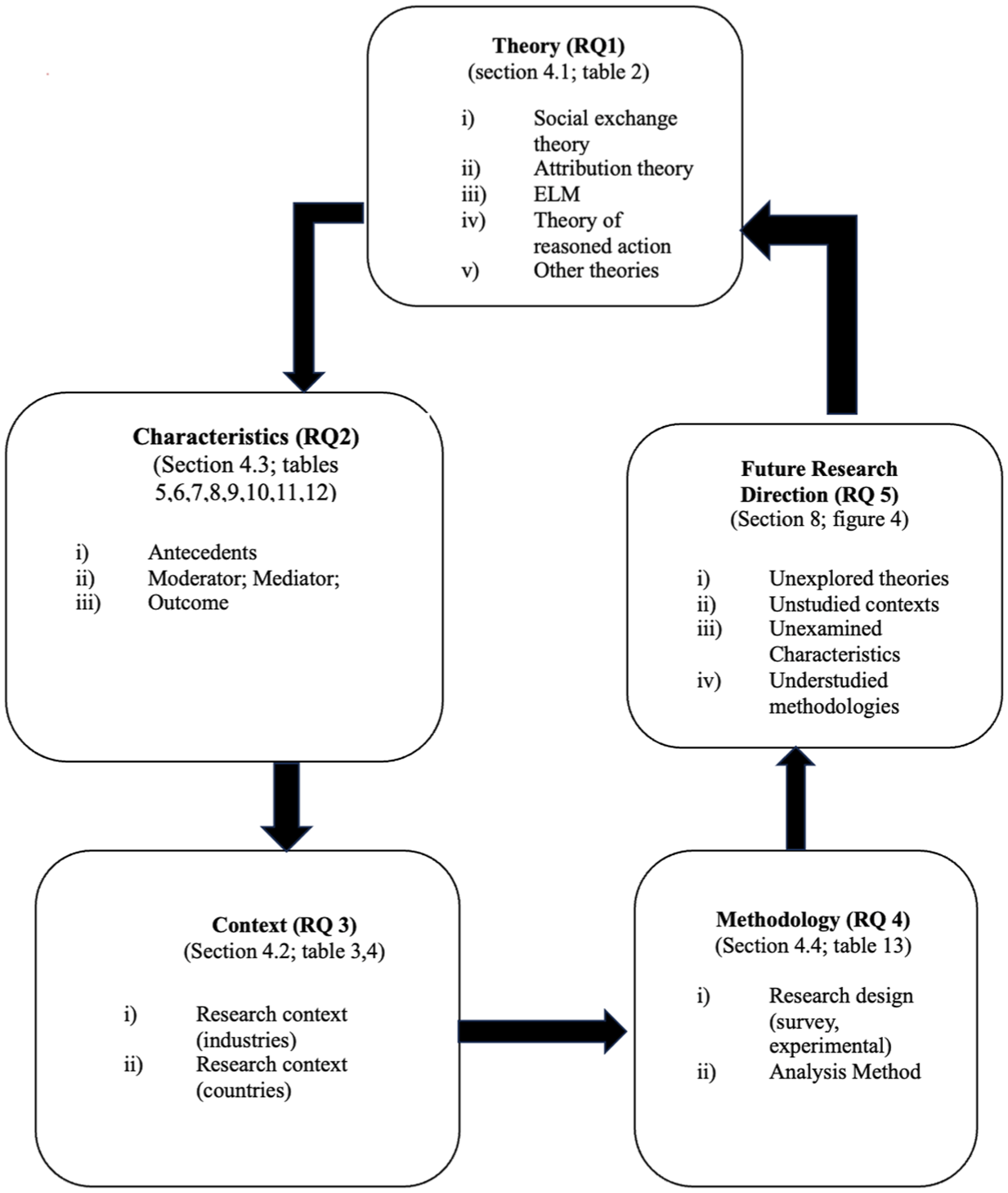
Review results and related components organised in accordance with TCCM derived from (Paul & Rosado-Serrano, 2019).
Methodological Integrity and Practical Relevance
The review approach adheres to the SPAR-4-SLR protocol and TCCM framework, and further guarantees robustness by deliberately aligning its data collection strategy with the research questions. Furthermore, the multi-stage filtering process not only prioritised research quality but also reinforced thematic relevance to CRM-specific constructs. By emphasising articles that empirically examine customer responses to cause-related campaigns, the synthesis facilitates the development of findings that are both contextually grounded and applicable to real-world CRM strategies. This methodological discipline not only strengthens the credibility of the review but also establishes a reliable basis for future empirical testing, policy formulation, and campaign planning in a variety of cultural and industry contexts.
Publication Outlet in CRM Research
This study identified the main academic journals contributing to CRM research based on citation counts, ABDC ranking, H-index, and SJR quartile ratings (refer Table 1). This research reveals that the Journal of Advertising and the Journal of Business Research are the preeminent publications in the area, with total citations of 1,289 and 1,226, respectively. Both are categorised as A under ABDC and classified as Q1 journals in SJR. Prominent high-impact journals, like the Journal of Retailing, Journal of the Academy of Marketing Science, and Journal of Consumer Research, significantly highlight CRM’s robust incorporation into mainstream marketing studies.
Prominent Journal.

Moreover, specialised journals such as the International Review on Public and Non-Profit Marketing are notable for their publishing volume (TP = 23), despite having lower impact metrics, highlighting their dedicated focus on socially oriented marketing research. Temporal distribution trends indicate that CRM articles in these leadings journals have had consistent growth, particularly throughout the 2019 to 2025 timeframe.
Review Findings
Theory
A theory is a condensed set of concepts that are logically related and amenable to empirical investigation (Rudner, 1968). A variety of theories and frameworks can be used in conjunction with CRM research to effectively characterise the phenomenon.
This study has analysed the important theories presently being addressed in the CRM literature, which is essential for the future progress of the discipline. The paper outlines 34 distinct theories that scholars use to elucidate the notion and process of CRM (Table 2). Researchers have mostly employed social identity theory in their previous researches. According to social identity theory, people tend to view themselves as part of a cooperative community sharing common values, attitudes, and goals (Rudner, 1968). A cause represents the community that collaborates, as CRM indicates. This theory suggests that consumers will be more likely to support a cause if they are able to establish a psychological connection with it, which will be the case especially if they are able to identify with it (Silva et al., 2020). The second most important theory in this area is attribution theory. Attribution theory focuses on people’s natural tendency to explain the cause of an event or outcome (Deb et al., 2021). People will look for an explanation of why the brand is linked with the cause to form an opinion about cause-brand alliances according to this theory. The organisation can communicate its CRM initiatives in a way that makes the audience believe that these motives are either altruistic (good for society) or selfish (good for business). Myers et al. (2012) claims that this theory provides a conceptual framework for analysing the claims of consumers regarding CRM and the impact of such claims on their response to CRM. The Elaboration likelihood model is another important theory, in the CRM settings. This model was developed by Petty and Cacioppo (1979). It assumes that there are two categories of processing information, namely the central route and the peripheral route. People who are highly engaged, that is, very likely to process a message on the subject also investigate its content and arguments using a central route. In contrast, consumers who do not engage much depend on peripheral signals like celebrities’ endorsements or emotional appeals rather than analysing the content of the message in an extensive manner (Kureshi & Thomas, 2020). Ajzen (1980) theory of reasoned action is another vital theory in the context of CRM. This theory states that a consumer’s attitude and subjective norms (which is the consumer perception) affect the intention to purchase, propensity to purchase and consumption behaviour. This theory is applied in the CRM context to assess the impact of consumer perception of the social nature of brand association and the organisation’s capability to create and distribute on brand attitude. Aside from that, the concept of CRM has also been explained by the authors using signalling theory. The signalling theory refers to how information is stored in the form of signals and then sent from the sender to the receiver. In accordance with signalling theory, this type of information is crucial for consumers to assess information that they are unable to observe, thereby enabling them to make the most suitable decision and corresponding behaviour (Spence, 1973). The information contained in the cause-related campaign may serve as signals to the target consumers, thereby assisting them in evaluating the cause-related product, as per CRM (Anuar & Mohamad, 2012). Other theories were also there in the field of CRM, like the theory of planned behaviour, construal theory, congruency theory, equity theory, persuasion knowledge model, social exchange theory, information integration theory, and regulatory focus theory (refer to Table 2).
Prominent Theory.

Note. “Naïve theory” refers to consumers’ intuitive belief systems, as used in marketing and psychology literature, and is not to be confused with mathematical or statistical theories such as Naïve Set Theory or Naïve Bayes.
Context
The study examine and analyse the countries and industries that have contributed to CRM research in terms of context.
Countries
In this section, the study highlights the countries where studies have taken place. CRM research is more prevalent among Western and Asian researchers. In Table 3, the US was responsible for the maximum studies (38). One reason could be that CRM originated in the United States, which is why the United States maintains its dominance. Contrary to expectations, India is the second-largest contributor to CRM research, with 18 studies. This notable contribution may be attributed to significant technological and economic advancements in Indian markets over the past decade, as well as the introduction of mandatory corporate social responsibility (CSR) provisions for certain companies under the New Companies Act of 2013. In addition to this, China (5), Germany (4), Spain (4), Taiwan (4), Egypt (3), Italy (3), Brazil (2), and South Africa (2) also contribute to CRM research. It is notable that a few studies (5) have conducted cross-country analyses. For example, Rezaee Vessal et al. (2023) compared two countries, Turkey and France, to determine the impact of cause familiarity on attitudes towards brands. In a similar vein, S. Pandey et al. (2022) conducted a comparison between Indian and Philippine customers to investigate national disparities in customer attitudes and intention to partake in CRM. The objective of these multi-country investigations is to comprehend the diverse cross-cultural essences of CRM. Research contributions from developing’s nation including Lithuania, Japan, South Korea, Portgue, Norway, Netherland, Pakistan, and the UK are limited. It is essential that future research concentrate on these countries, as they have substantial commercial and technological potential and can, as a result, benefit from CRM.
Prominent Country.

Industry
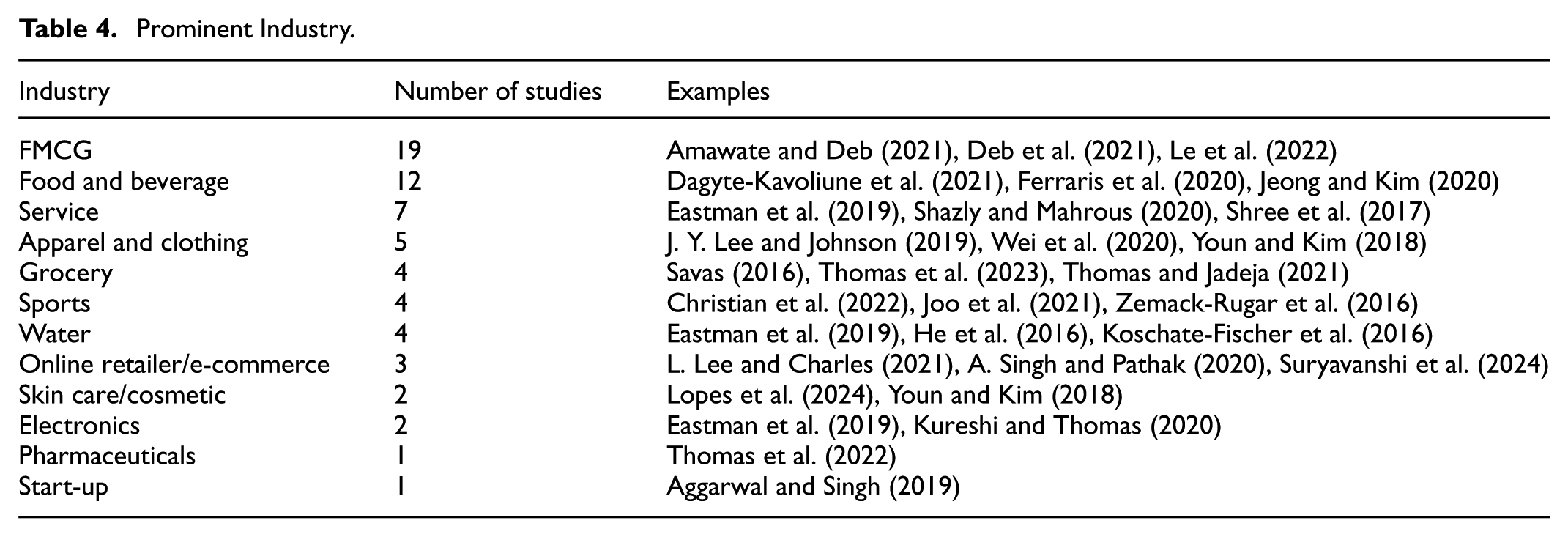
The review suggests that CRM has been investigated in a variety of industries, including fast moving consumer goods (FMCG), food and beverages, service sector, apparel and clothing, grocery, and sports. Out of 140 articles reviewed, 19 research studies related to FMCG industries for example, Amawate and Deb (2021), Deb et al. (2021), and Le et al. (2022). The second most prominent industry is food and beverage (12) studied by, for example, Dagyte-Kavoliune et al. (2021), Ferraris et al. (2020), and Jeong and Kim (2020). The service sector is another prominent industry in the CRM domain (Choi & Seo, 2017; Eastman et al., 2019; Shazly & Mahrous, 2020). Service sectors include hospitality, restaurants, insurance, travel, telecom, insurance, and health. Beside apparel and clothing, grocery, electronics, sports, online retailers/e-commerce, and water are other prolific industries in the domain of CRM. Start-up and pharmaceutical industries with only one study provide scope for future researchers. Refer to Table 4.
Prominent Industry.
Characteristics
The primary antecedents, mediating, moderating, and outcome variables are outlined in this section. Numerous independent variables have been identified in CRM studies in previous research. This study aims to categorise the variables into five categories: consumer-related, campaign-related, company-related, cause-related, and product-related factors in order to establish a coherent analysis and identify research gaps for future studies.
Consumer-Related Factors
The CRM campaign’s achievement is dependent upon the involvement of consumers. The CRM strategy aims to influence consumers. The study outlines a variety of antecedents related with customers. One of the most significant factors in the CRM domain is consumer scepticism (Amawate & Deb, 2021; Deb et al., 2021; S. Pandey et al., 2022). It is defined as “doubt about the effectiveness of the campaign” (Amawate & Deb, 2021). Altruism is another important variable, which is defined as “motivation that benefits society or raises awareness for a specific cause” (L. Lee & Charles, 2021; Lopes et al., 2024; A. Singh & Pathak, 2020). The next most prolific consumer related antecedent is cause involvement (Shazly & Mahrous, 2020; Thomas et al., 2022, 2024). Cause involvement“is the degree to which consumers find the cause personally relevant to them” (Grau & Folse, 2007). Trust in CRM campaign and company is the next vital consumer related factors explained by Lopes et al. (2024), Thomas et al. (2023), and Thomas and Jadeja (2021). The study also identified customer cause fit and affinity as important factors in CRM settings (Hammad et al., 2014; Savas, 2016; Sung et al., 2021). It refers to “consumers’ perceived affinity for or liking for a cause” (Barone et al., 2007). Sociodemographic characteristics like age, gender, and income have been used in many studies (Galan Ladero et al., 2015; Hyllegard et al., 2010; Shazly & Mahrous, 2020). Consumer characteristics (individualism and collectivism) were also discussed by many prior researchers (C.-T. Chang & Cheng, 2015; Deb & Amawate, 2019; Thomas & Jadeja, 2021). Researchers like Duarte and Silva (2020) and Silva et al. (2020, 2021) have discussed consumer-cause identification as an independent variable in CRM settings. Apart from this, studies have also focussed on religiosity as an important antecedent in CRM (Thomas et al., 2024; Youn & Kim, 2008). This review also identifies additional variables, including empathy, guilt, attitude towards CRM, subjective norms, self-construal, and personality. Refer to Table 5 for all consumer related antecedents.
Consumer-related Antecedents.

Campaign-Related Antecedents
The study found that Donation is the most studied campaign related factors (Winterich & Barone, 2011). The factors of donation consist of donation size, donation type, donation framing, and donation magnitude. The second most studied variable is the time duration of the campaign (long vs. short), which is another important factor in the domain of CRM (C.-T. Chang et al., 2021; Chéron et al., 2012; S. Pandey et al., 2022). Message focus (benefit vs. cost focussed, positive vs. negative, informational vs. buying) is also an important campaign related factor in the field of CRM (Samu & Wymer, 2014; Seo & Song, 2021; Sunitha & Edward, 2018). The next most studied factor is CRM appeal (guilt vs. no guilt), which was used in the study by (Bae, 2016; C.-T. Chang, 2011; J. Singh et al., 2020). Apart from these factors, like campaign feedback, the type of CRM campaign has also been studied. Refer to Table 6.
Campaign-Related Antecedents.

Company/Brand-Related Antecedents
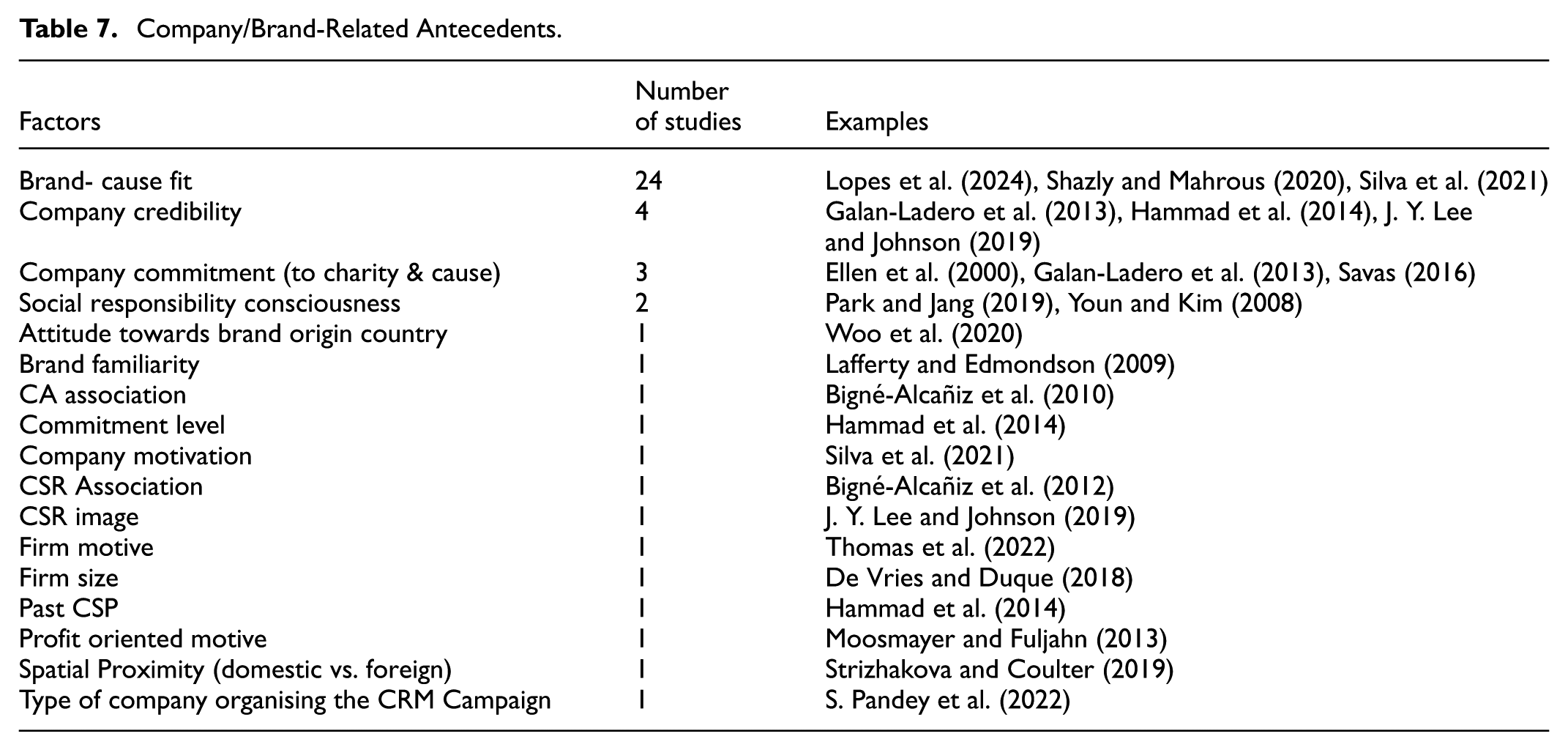
This section focuses on all the critical elements relevant to the company and brand in a CRM campaign. In this scenario, brand-cause fit is most prolific factors studied in 24 studies from 1988 to 2024. It is defined as “the degree of similarity and compatibility between a company and the cause adopted by it” (Galan-Ladero et al., 2013). Another most prolific brand related factor is company credibility (Galan-Ladero et al., 2013; Hammad et al., 2014; J. Y. Lee & Johnson, 2019). Galan-Ladero et al. (2013) found that consumer satisfaction with CRM depends on brand credibility. Company commitment to charity or cause is also studied by Galan-Ladero et al. (2013), Lafferty (2007), and Savas (2016). Consumers have a positive image for companies that are committed to causes and charity (Lafferty, 2007). Another important brand related factor is social responsibility consciousness (Park & Jang, 2019; Youn & Kim, 2008). This study identifies a variety of brand or company-related factors, such as the type of company organising the CRM campaign, spatial proximity, firm scale, firm motive, and brand familiarity. Refer to Table 7 for the company/brand-related factor in CRM.
Company/Brand-Related Antecedents.
Cause Related Antecedents
This section focusses on all of the recognised factors that are pertinent to the cause in a CRM campaign. Regarding this, cause-product fit is the most significant factors studied in past (Das et al., 2016; Kerr & Das, 2013; Sung et al., 2021). The second most studied cause related factor is proximity of cause (global vs. local) studied by (Hammad et al., 2014; Strizhakova & Coulter, 2019). Hoeffler and Keller (2002) investigated in their research that consumers are more likely to support local causes than national or global causes, as local causes would have the most immediate impact on local citizens. Cause acuteness (sudden disaster or ongoing tragedy) is another most studied variable in the context of cause related factors. It was studied in four papers. In contrast to ongoing tragedies, individuals are more inclined to endorse CRM campaigns that involve abrupt disasters (Zheng et al., 2019). Cause familiarity is another important cause-related factor studied in CRM research (Jacobs, 1995; Lafferty & Edmondson, 2009; Rezaee Vessal et al., 2023). Previous research has demonstrated that brand attitude is positively influenced by cause familiarity (Rezaee Vessal et al., 2023). Choice of cause is another important cause related factor (Barone et al., 2000; Kull & Heath, 2016; A. Singh & Pathak, 2020). Consumers perceive a more substantial role for themselves in contributing to the cause when they are given the opportunity to participate in a CRM campaign with a choice (Robinson et al., 2012). This review also identifies additional variables, including cause scope, participation required from customer, cause relevance, the novelty of the cause, and reputation of the NPO. Refer to Table 8.
Cause Related Antecedents.

Product Related Factors
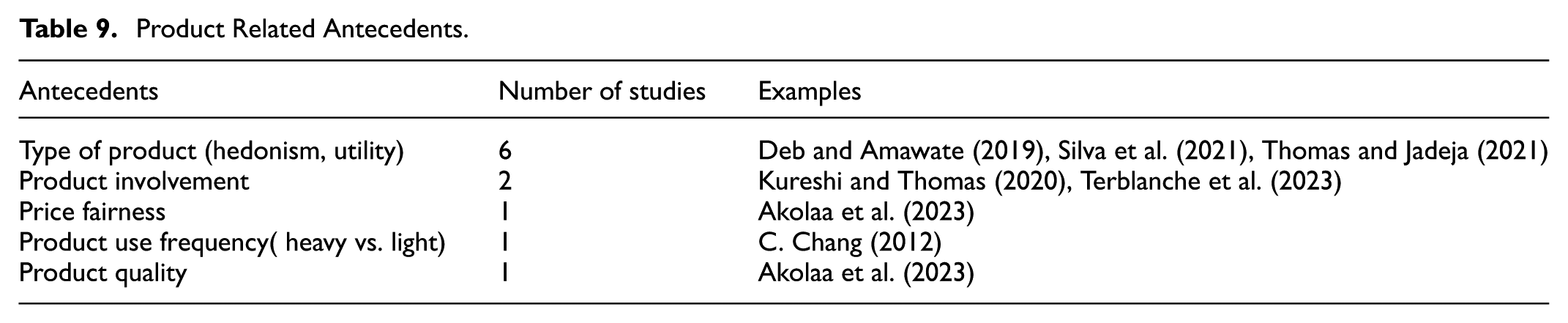
The following lists all factors deemed relevant to the product participating in the CRM campaign. Between 1988 and 2024, type of product is the most frequently studied product-related factor, with occurrence of six-time (Deb & Amawate, 2019; Silva et al., 2021; Thomas & Jadeja, 2021). According to Silva et al. (2021), products can be hedonic and utilitarian. Hedonic products are motivated by looking for sensory pleasure while utilitarian products are motivated by essential needs (Galan-Ladero et al., 2013). According to the findings, hedonic goods having social causes have a better contribution than utilitarian goods because of emotional responses (C. Chang, 2008; Christofi et al., 2020). Kureshi and Thomas (2020) and Terblanche et al. (2023) also note product involvement as an important factor. According to Stewart et al. (2019), individuals categorise an object as having high involvement when they perceive the object to have a high level of personal significance and low involvement when they perceive the object to have a low level of personal significance. Other factors that previous research identified are price fairness, how often we use the product and product quality. Refer to Table 9.
Product Related Antecedents.
Mediating Variables
As for mediating variable, this specific review has found brand attitude as the most prolific variables in the CRM studies (Christian et al., 2022; J. D. Patel et al., 2017; Shazly & Mahrous, 2020). According to Lafferty and Goldsmith (2005), cause brand alliances have an effect on consumer evaluations of brand attitude. According to H. Kim et al. (2005), when a brand implements CRM, consumers maintain a favourable attitude towards it. The study of CRM found that trust is the second most common mediator after brand attitude (Mendini et al., 2018; Silva et al., 2020; Thomas et al., 2023). Trust refers to the faith one place in both the brand and the CRM campaign overall. The credibility of firms was also examined as a mediating variable in three studies (Alcañiz et al., 2010; Bae, 2016, 2018). The fit within the cause-brand alliance is studied as a mediator in the area of CRM (Myers et al., 2013; Rezaee Vessal et al., 2023). Myers et al. (2013) and Rezaee Vessal et al. (2023) assert that familiarity with the cause negatively affects attitude towards the brand but positively influences attitude towards fit. Thus, the relationship between cause familiarity and attitude towards the brand is mediated by attitudes towards fit in a cause-brand alliance.
In addition to message strength and framing, cause affinity, attributed company motive, donation, guilt, and company motive are also studied as a mediators in the CRM setting. Refer to Table 10 regarding all mediating variables.
Mediating Variable.

Moderating Variables
This review determined that donation was the most extensively discussed moderating variable in CRM research in relation to the moderating variables (De Vries & Duque, 2018). S. Singh and Duque (2020), in their study, found that donation information enhances trust perceptions and evaluations when a brand collaborates with a charity that is less well-known. Another substantial moderating variable is brand-cause fit (Ferraris et al., 2020; Silva et al., 2020; Yucel-Aybat & Hsieh, 2021). A CRM campaign that is more effective and has a greater impact on consumers’ purchase intentions may be the result of a higher perceived alignment between the company and the cause (Ferraris et al., 2020). Another most prolific moderator is gender (Amawate & Deb, 2021; Ferraris et al., 2020; Thomas et al., 2024). According to Amawate and Deb (2021) and Nelson and Vilela (2017), CRM campaigns are met with a more emphatic response from women than from men. On the other hand, research findings by Thomas et al. (2024) suggest that the behavioural intentions of male and female Generation Z consumers are not significantly different. Other important moderating variables include cause involvement, product type, scepticism, and religious value. Refer to Table 11 regarding all moderating variables.
Moderating Variable.

Outcome Variables
The 140 articles in the systematic review underline the extent to which CRM impacts a diverse array of customer behaviours throughout the entire customer journey (i.e., outcomes). The review highlights that purchase intention is the most commonly studied outcome in the field of CRM, appearing in 65 out of 140 articles, for example, C.-T. Chang et al. (2021) and Seo and Song (2021). This review identified that CRM has a positive impact on purchase intention (Dagyte-Kavoliune et al., 2021; Ferraris et al., 2020; Terblanche et al., 2023). The second most prominent outcome studied in the area of CRM is brand attitude (Mora et al., 2021; Rezaee Vessal et al., 2023; J. Yang & Mundel, 2021). Apart from this, CRM participation intention has also been studied as a dependent variable in many studies (Akolaa et al., 2023; R. Patel et al., 2024; Thomas et al., 2024). According to Grau and Folse (2007), the outcomes of campaign participation could be enhanced by influencing CRM consumer responses. The influence of CRM on brand image has also been studied in the past (H. Kim et al., 2019; Müller et al., 2014; Vilela & Nelson, 2016). Through CRM strategy, companies endeavour to establish a salient, favourable brand image because a good brand image enables them to charge a premium price, grow their market share, and foster brand loyalty (H. Kim et al., 2019). Moreover, attitude towards CRM, loyalty, CRM patronage intention, intention to donate money to NPO, repurchase intention are also identified as outcomes in the domain of CRM. Refer to Table 12 for all outcome variables.
Outcome Variable.

Methodology
In this portion, the methodology and analytical techniques used in previous studies to identify the primary relationships in CRM research has been assessed. The review found that quantitative research designs were implemented in 131 of the examined investigations. Among these, surveys were implemented by 66 of these, while experiments were implemented by 68. Furthermore, three studies implemented qualitative methodologies, while three others implemented mixed methodologies.
Regarding the data analysis technique, structural equation modelling (SEM) is the most popular technique used in 49 studies out of the total 140 articles reviewed, for example, R. Patel et al. (2024), Suryavanshi et al. (2024), and Thomas et al. (2023). ANOVA is the second most prominent data analysis technique used in 40 studies (Kulow et al., 2021; Terblanche et al., 2023; Wen et al., 2023). Regression has been used in 10 studies (Ferraris et al., 2020; Jeong & Kim, 2020; Joo et al., 2016). Similarly, MANOVA analysis has also been used in 10 studies (Harmon-Kizer, 2019; Jaber & Jaber, 2020; Zheng et al., 2019). Beside this, other analysis techniques are ANCOVA (Harmon-Kizer, 2019; L. Lee & Charles, 2021; Seo & Song, 2021), and process macro (Park & Jang, 2019; Rezaee Vessal et al., 2023; Song et al., 2021) are used in eight studies each.
MANCOVA analysis (Christian et al., 2022; Eker Iscioglu & Borak, 2020; Woo et al., 2020) is reported in four studies. Co-joint analysis (Moosmayer & Fuljahn, 2013), and correlation analysis (Shree et al., 2017) are reported in one study each (refer Table 13).
Research Design.

Note. Examples have not been listed separately for the overall “Quantitative” category, as this category encompasses both “Survey” and “Experiment” designs, for which individual examples are already provided.
Discussion
This systematic literature review identifies significant trends in the development of CRM research. The prevalence of Social Identity Theory in the theoretical framework underscores the importance of consumer identity in the efficacy of CRM campaigns, aligning with previous research that stresses the psychological congruence among brand, cause, and consumer (Duarte & Silva, 2020; Woo et al., 2020). The consistent application of Attribution Theory illustrates that perceived brand motives, whether altruistic or opportunistic, profoundly influence consumer trust and reactions.
The concentration of research in the U.S. and India corresponds with the historical emergence of CRM in Western markets and the recent regulatory and cultural focus on CSR in India. The frequency of research in the FMCG and food and beverage sectors is anticipated, given that these industries involve regular consumer interaction and emotional branding—settings conducive to CRM success (Amawate & Deb, 2021; Dagyte-Kavoliune et al., 2021).
The research also validates that consumer-related antecedents, including scepticism, altruism, and cause involvement, remain predominant, indicating a sustained emphasis on individual-level motivators in advertising efficacy. Mediators like brand attitude and trust, as supported by experts such as Christian et al. (2022) and Thomas et al. (2023), elucidate the psychological mechanisms behind CRM persuasion. Moderators such as donation framing, gender, brand cause fit, and religion indicate demographic and message-specific impacts that organisations must account for when customising CRM activities. Purchase intention, brand image, and CRM participation intention are identified as fundamental outcomes, affirming the significance of CRM in influencing both cognitive and behavioural reactions.
Conclusion
Using the SPAR-4 SLR procedure and the TCCM framework, this research thoroughly analysed CRM literature over 36 years. It provides a detailed synthesis of CRM research encompassing its theoretical basis, contextual diversity, variable attributes, and methodological approaches. The findings support the discipline’s grounding in theories like Social Identity Theory and Attribution Theory, which explain the psychological processes that underlie CRM response. Results also demonstrate the dominance of industry applications in FMCG and Food and Beverage contexts, as well as in contextual settings like America and India.
The main consumer-related characteristics studied are scepticism, altruism, and cause participation. Brand-cause fit and message fit are other crucial factors. Mediators, including brand attitude and trust, along with moderators such as donation framing, brand cause fit, and gender, were consistently validated. The most significant outcomes identified were purchase intention, brand image, and CRM participation intention. This consistency across empirical findings strengthens the field’s theoretical and practical credibility.
The implications of this review are twofold. First, it provides academics with a comprehensive framework for future CRM research by pinpointing conceptual, contextual, and methodological deficiencies. Second, it offers practitioners practical insights to create CRM strategies that correspond with consumer values, bolster credibility, and provide quantifiable results.
Comprehensive Framework of CRM
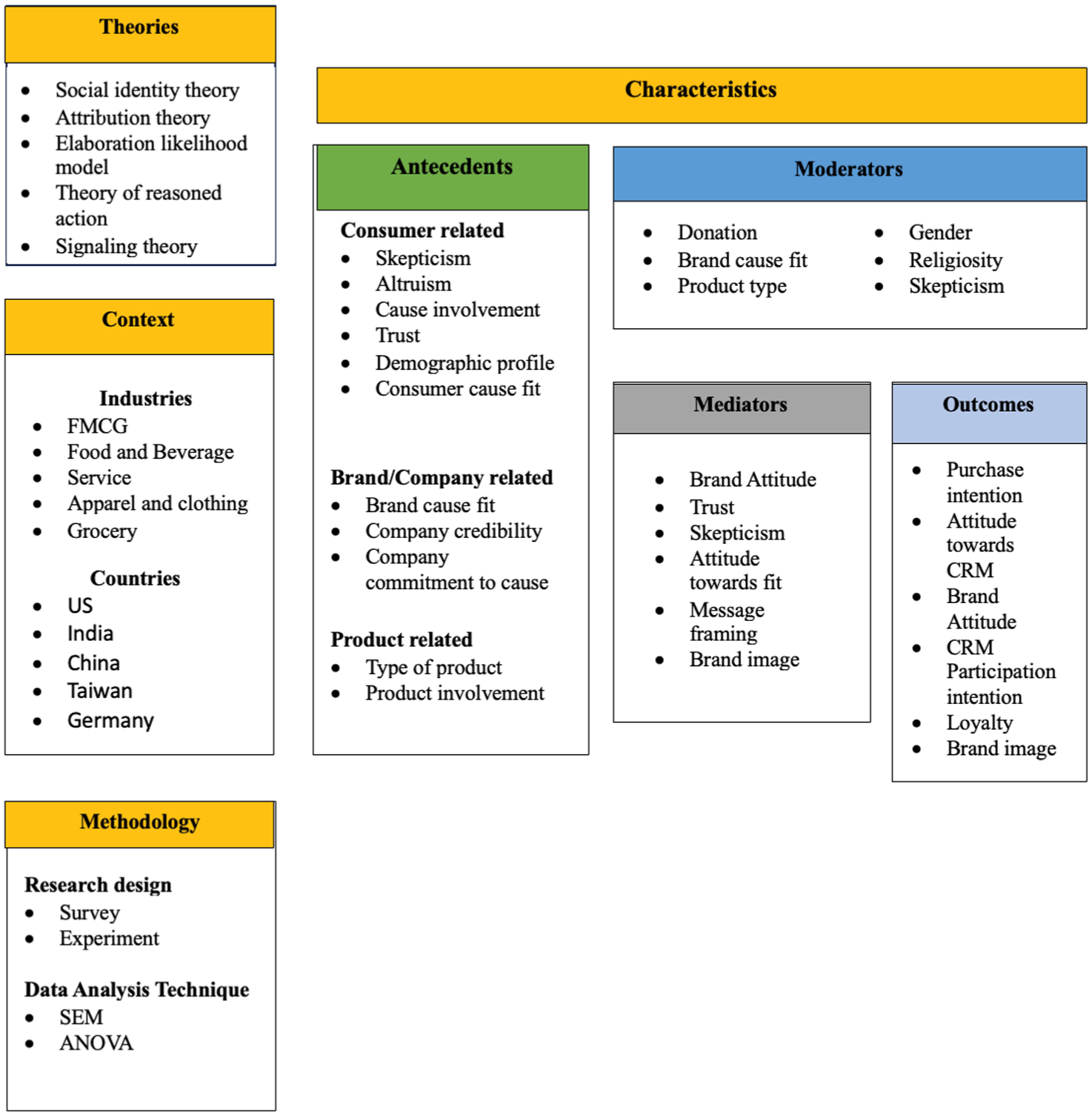
To consolidate and visualise the key insights derived from this systematic literature review, a comprehensive framework of CRM is presented in Figure 3. This framework consolidates the essential aspects of CRM research via TCCM, amalgamating results from 140 empirical investigations conducted from 1988 to 2024.
Comprehensive framework of CRM.
The framework is fundamentally intended to capture the multifaceted and interdisciplinary nature of CRM. It starts with the basic theoretical lenses that researchers have used to describe how consumers see and react to CRM efforts. These theories form the conceptual foundation upon which CRM research has evolved, and their repeated application bolsters the theoretical coherence and legitimacy of the discipline.
The characteristics dimension includes the most detailed components of CRM research. It consolidates the many antecedents, mediators, moderators, and outcomes into a cohesive framework. Consumer-related antecedents such as scepticism and altruism combined with brand-related, campaign-related, and cause-related factors to influence campaign effectiveness. Mediators such as brand attitude and trust elucidate the psychological processes behind CRM, while moderators include donation amount, brand cause fit, and demographic variables influence the intensity of these linkages. Outcomes such as purchase intention, CRM engagement, and brand perception illustrate CRM’s capacity to influence both attitudinal and behavioural customer reactions.
From a methodological perspective, the framework demonstrates the prevailing influence of quantitative research, particularly experimental and survey designs, with SEM and ANOVA being the most frequently employed analytical tools. The empirical rigour with which CRM has been investigated is emphasised by this methodological pattern.
Future Research Directions
The study provides a number of suggestions for additional research that are in accordance with the TCCM framework (Paul & Rosado-Serrano, 2019). It is advisable for future researchers to incorporate theories that were not completely utilised in the CRM research, including the theory of planned behaviour (TPB), pro social behaviour theory, naïve theory (consumer psychology), moral identity theory, and so forth. To the best of our knowledge, only one study integrated the Big Five personality theory into CRM (R. Patel et al., 2024). Therefore, it is recommended that future studies employ well-known personality theories like humanistic theory by Ismail and Tekke (2015), psychoanalytic theory by Freud (1995), in the study of CRM to explore the importance of personality in the CRM domain. The finding revealed that the US is the most prominent country in the domain of CRM, with 34 studies out of 140. In contexts that are classified as collectivistic and where there is a dearth of existing CRM literature, such as nations from South Asia and Africa, it is necessary to verify the concept of CRM. Additionally, there are only five studies that have adopted cross-country analysis. In addition, the contributions of Asian nations such as India, China, and Taiwan are on the rise, and additional research is necessary from countries such as Korea, Russia, Turkey, and France.
In terms of industries, the FMCG and food sectors were the focus of the preponderance of research. Future academicians may investigate CRM in sectors such as pharmaceuticals, electronics, start-ups, and emerging fields like artificial intelligence. In terms of characteristics, the study analysis of primarily antecedents revealed that the majority of the studies employed concepts that were tailored to consumers. However, it is imperative that researchers also consider the role of other significant factors in the CRM study, including campaign-related antecedents, brand-related antecedents, cause-related antecedents, and product-related antecedents. The review also found that the CRM literature has devoted significant attention to specific factors, including scepticism, altruism, cause involvement, donation, time and duration of the campaign, fit, proximity, and type of products. Certain factors that have a limited number of citations require further investigation to determine their significance in a particular context. Prospective researchers may investigate additional gaps, such as moderating and mediating variables. Mediating variables have been implemented in research, including scepticism, corporate credibility, trust, and brand attitude. In the future, researchers may employ certain mediating variables that have not been extensively examined, such as consumer engagement, empathy, values, interpersonal generosity, and attitude towards add. Research has employed donation, brand cause fit, gender, scepticism, cause involvement, and product type as prominent moderators in the context of moderating variables. Some moderators have not been thoroughly explored and could be utilised by future researchers in their studies. These include religious value, social theme, altruism, NGO size, and prior involvement in philanthropic activities. Purchase intention, brand attitude, CRM participation intention, loyalty, and attitude towards CRM are the most prevalent variables in terms of outcome variables. Future research may investigate specific outcomes that have not yet been investigated, including brand image, word of mouth intention, willingness to pay, and customer trial. In terms of methodology, surveys and experiments are the most popular research designs. Future researchers can also focus on qualitative and mixed-design research methods. The primary focus of the researchers’ primary survey was the millennial generation. Therefore, focussing on distinct age groups in future research may facilitate the elimination of age biases in previous studies.
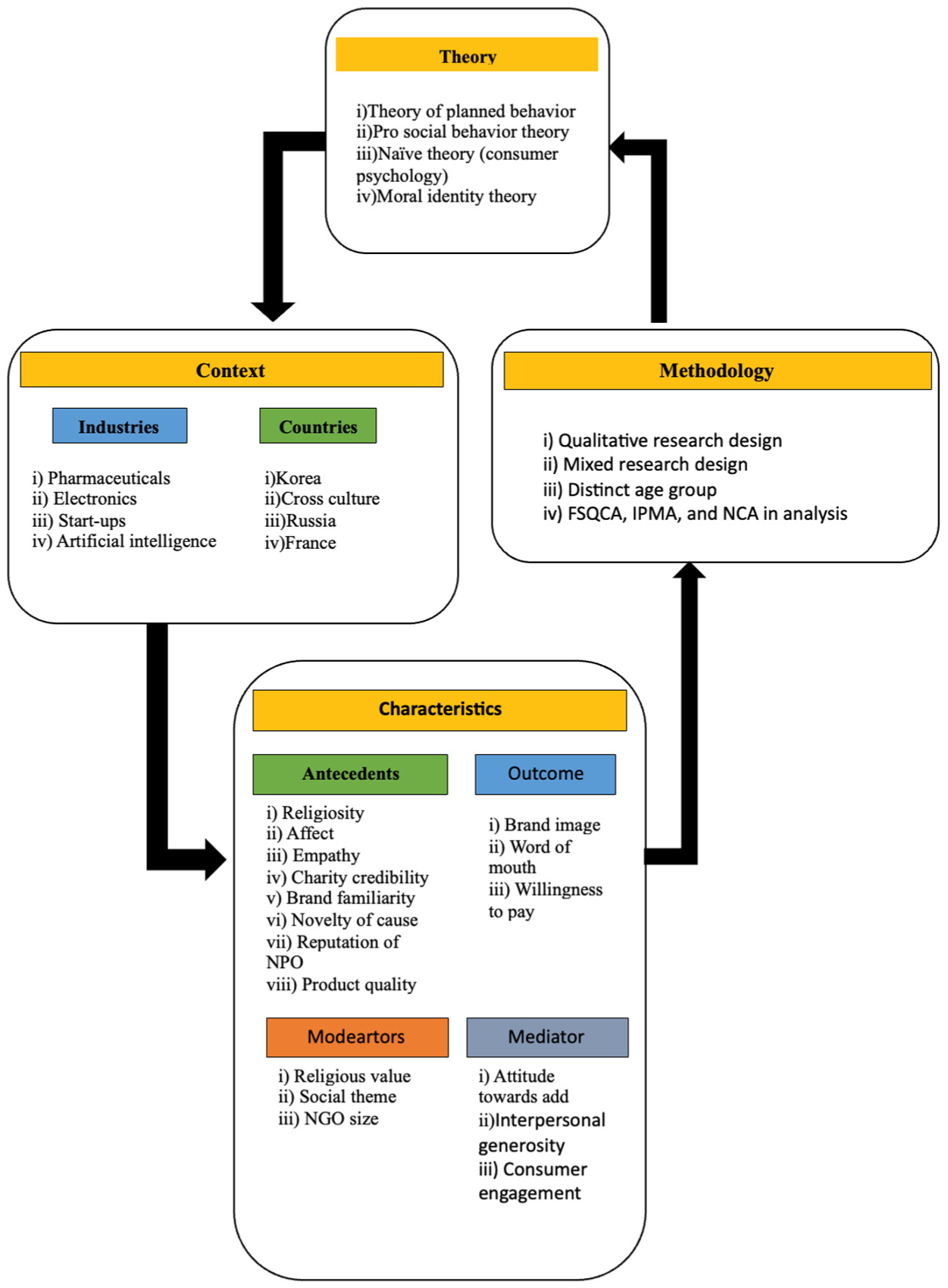
Figure 4 delineates a systematic future research plan based on the TCCM framework. The arrows connecting each block illustrate the logical progression and interrelation among various aspects. It starts with the recognition of underexamined theories, including the theory of planned behaviour, pro-social behaviour theory, naïve theory (consumer psychology), and moral identity theory. These theories provide essential frameworks for comprehending consumer responses to CRM.
Future research agenda.
The arrow from Theory to Context underscores the need of experimentally validating these theories in diverse environments, including sectors like as medicines, electronics, artificial intelligence, and start-ups, as well as in nations like Korea, France, and Russia, along with cross-cultural samples. These contexts are under-represented and provide new opportunities for theoretical application.
The emphasis transitions from Context to Characteristics, indicating that novel theories and contexts may influence or uncover distinct patterns among antecedents, mediators, moderators, and outcomes. For instance, unexamined factors like as religion and brand familiarity, or mediators like interpersonal generosity, may exhibit divergent behaviours in culturally or technologically distinct contexts.
The arrow from Characteristics to Methodology underscores that this extended conceptual work necessitates methodological innovation. Future research need to use qualitative and mixed-method designs, examine other age groups beyond Millennials, and utilise advanced methodologies such as FSQCA, IPMA, and NCA to more effectively encapsulate contextual complexities.
Together, this sequence constructs a research roadmap in which theory informs context, context influences variable interactions, and technique facilitates their thorough investigation. Consequently, Figure 4 functions as a visual synthesis illustrating the potential evolution of CRM research in a systematic and compelling manner.
Limitations
All studies have certain limitations that allow scope for further research. The systematic literature review in this research has only employed the Scopus database. Future research may merge various datasets or employ additional databases, such as the Web of Science (WoS). Peer-reviewed articles and review papers are the document types used in this investigation. Researchers may consider conference papers for future investigation. To sum up, the current study merely carried out a systematic literature review; future research can consider a bibliometric analysis with the help of a tool like VOS viewer and Cite Space along with a systematic literature review.
Footnotes

Funding
The authors received no financial support for the research, authorship, and/or publication of this article.
Declaration of Conflicting Interests
The authors declared no potential conflicts of interest with respect to the research, authorship, and/or publication of this article.
Data Availability Statement
Data sharing not applicable to this article as no datasets were generated or analysed during the current study.