




Abstract
Despite their potential for promoting environmental sustainability, understanding consumer adoption of green products is limited since such behavior is complex, as it may differ from typical purchasing motives and cultural values. Theory of Planned Behavior (TPB) was used in this study to address the main research problem of how PBC attitudes, subjective norms, environmental (un)concern, and environmental knowledge, influence consumers’ green product purchase intention. It also explores how cultural values moderate these relationships, specifically man-nature orientation and LTO. This study proposes a structural model with multigroup analysis to address the moderating impacts on a sample of 216 respondents participating in an online survey. Results show that attitude, subjective norms, perceived behavioral control, and environmental knowledge positively influence consumers’ green product purchase intention. The group analysis results imply that the dominant group’s environmental concern negatively impacts purchase intention, while this relationship is not significant in the subordinate group. Also, the influence of subjective norms on purchase intention is significantly stronger in the dominant group. The long-term orientation also moderates the relationship between attitude toward green products and purchase intention. The insights from this research extend the literature in TPB and provide practical implications to marketing managers concerning developing marketing communication strategies, perceived value proposals, and the reputation of green products.
Keywords
Introduction
Excessive consumption has led to environmental degradation worldwide, causing increased environmental concerns. Companies and consumers worldwide are now aware production and consumer behavior directly impact the environment. They face the significant challenge of protecting and preserving Earth’s resources (Gan et al., 2008). The global community is actively addressing the negative impacts of human activities on the environment by finding socially acceptable solutions (Ogiemwonyi, 2024). The United Nations has sought solutions to global environmental issues and challenges through sustainable development (Podnar, 2019). The World Commission on Environment and Development defines sustainability as development that meets current needs without compromising future generations’ ability to meet their needs (Wced, 1987). In 2015, the United Nations General Assembly provided 17 sustainable development goals (Barbier & Burgess, 2017). The 12th goal, “Responsible Consumption and Production,” is particularly relevant to our research.
Environmentally sustainable consumption could contribute to achieving environmental sustainability (Paul et al., 2016). Environmentally sustainable consumerism, also called green behavior, has become a popular response to pressing environmental issues, as it can mitigate adverse environmental impacts and improve overall wellbeing (Ogiemwonyi & Jan, 2023). Environmentally sustainable consumption involves using products and services that fulfill basic needs and improve quality of life while minimizing resource consumption and reducing waste and pollution. This approach ensures that future generations can also meet their needs (Maichum et al., 2016). Ogiemwonyi and Harun (2021) also refer to green behavior as the specific actions individuals take to discard a product or utilize a service that meets their environmental needs without causing harm to the environment and society (Ogiemwonyi & Jan, 2023). That is why understanding the factors that drive green behavior is essential for achieving our goals of ensuring the planet’s survival and protecting the natural environment (Ogiemwonyi & Jan, 2023).
Slovenia is committed to reducing environmental impact and has adopted the 17 sustainable development goals, including responsible consumption (Sachs et al., 2024). Its mixed economy, fueled by industry, services, and tourism, enjoys low unemployment and stable growth. With a strong healthcare and education system, Slovenia achieves high human development indicators. Though predominantly Roman Catholic, it is mainly secular, promoting freedom of religion. Many Slovenians prefer eco-friendly products, reflecting widespread environmental awareness (Hojnik et al., 2020; Jagodič et al., 2016). With its evolution post economic transition, Slovenia offers valuable insights into responsible consumption and green product purchase intentions.
Despite the potential of green products for achieving environmental sustainability, consumers’ adoption, purchase, and consumption remain unsatisfactory (Lim et al., 2013). This indicates a gap between beliefs about green behavior and the accessibility of products (Trivedi et al., 2018). According to Ogiemwonyi and Jan (2023)“this evidence-to-action gap implies that sizeable consumers claim to be eco-friendly but do not ethically respond to green behavior activities and ethical consumerism.” Understanding and predicting environmentally sustainable behavior is challenging, and most purchasing intent models focus on direct benefits and costs. In contrast, benefits derived from environmentally sustainable behavior are, at best, long-term and may never be realized, while the costs are immediate (McCarty & Shrum, 2001). Ogiemwonyi (2022) also acknowledges the distinction between conventional and green purchasing behavior. The trade-off between personal benefits and costs and the additional environmental benefits influences the latter.
Environmental sustainability in consumerism is not only the result of legal regulations (Wu & Chen, 2014); understanding consumers’ values is of interest for companies, as they influence the purchase of green products. Such understanding can improve environmentally sustainable marketing strategies (Lee, 2017) and enable more effective targeting of specific consumer segments (Lim et al., 2013). Ogiemwonyi and Jan (2023) emphasize the importance of consumers’ motivations for buying green products. Although the Theory of Planned Behavior (TPB) is commonly used to study human behavior (Maichum et al., 2016; Paul et al., 2016; Yadav & Pathak, 2017), it often overlooks the effect of cultural values on TPB constructs. The importance of integrating cultural values has been highlighted (Liobikiene et al., 2016; Nguyen et al., 2017; Qi & Ploeger, 2019; Van Tonder et al., 2023), as they have been shown to improve the ability of TPB in determining green purchase intentions (Qi & Ploeger, 2019). Incorporating different cultural dimensions was recommended, with collectivism being the most studied (Ogiemwonyi & Jan, 2023).
While earlier research has dealt with the connection between culture and factors determining purchase (Lee, 2017), they have rarely explicitly shown how specific values can moderate those relationships since only a direct impact on predecessors of purchase intentions has been tested. The study at hand focuses on man-nature (MNO) and long-term orientation (LTO). Sreen et al.’s (2018) study included MNO and LTO as exogen variables and did not specifically show how these factors can moderate specific relationships inside TPB. Liobikiene et al. (2016) also included LTO as a moderating variable but only on the level of national cultures. Additionally, Ansari and Siddiqui (2019) studied LTO variables but not in the context of TPB.
Since there is a lack of understanding of how those two cultural factors moderate the relationship between different factors of TBP and purchase intentions, we address these gaps and gain a better understanding of these relationships, as this is vital in working toward reducing environmental challenges (Ogiemwonyi, 2022). The examination focused on how attitudes toward green products (ATGP), subjective norms (SN), perceived behavioral control (PBC), environmental concern (EC), and knowledge (EK) influence the intention to purchase green products (GPPC). Additionally, an assessment of how LTO and MNO moderate these relationships was made. Grounded in the TPB (Ajzen, 1991), this research focuses on Slovenian consumers and explores the cultural values that impact green product purchasing intentions. Therefore, the following research questions are considered: (1) How do ATGP, SN, PBC, EC, and EK influence the intention to purchase green products among Slovenian consumers? (2) To what extent do cultural values, specifically LTO and MNO, moderate these relationships?
Cultural values, shaped by individual experiences, can vary significantly within the same culture. By integrating cultural value moderators into the Theory of Planned Behavior (TPB), one can improve its predictive power and accuracy. Recognizing these cultural variables enhances the understanding of behavior in contexts where factors like MNO and LTO matter. This approach helps avoid oversimplification and provides relevant applications. Incorporating cultural moderators into TPB can guide businesses in tailoring marketing strategies to diverse consumer groups and supports the need for culturally sensitive campaigns that respect the unique values of various segments.
This paper first reviews the literature to establish a conceptual framework and propose several hypotheses. Based on TPB and relevant research findings, a conceptual model was developed (see Figure 1). The research methodology is explained, followed by the results and a discussion of the theoretical and practical implications for marketing strategies aimed at environmentally sustainable consumers.
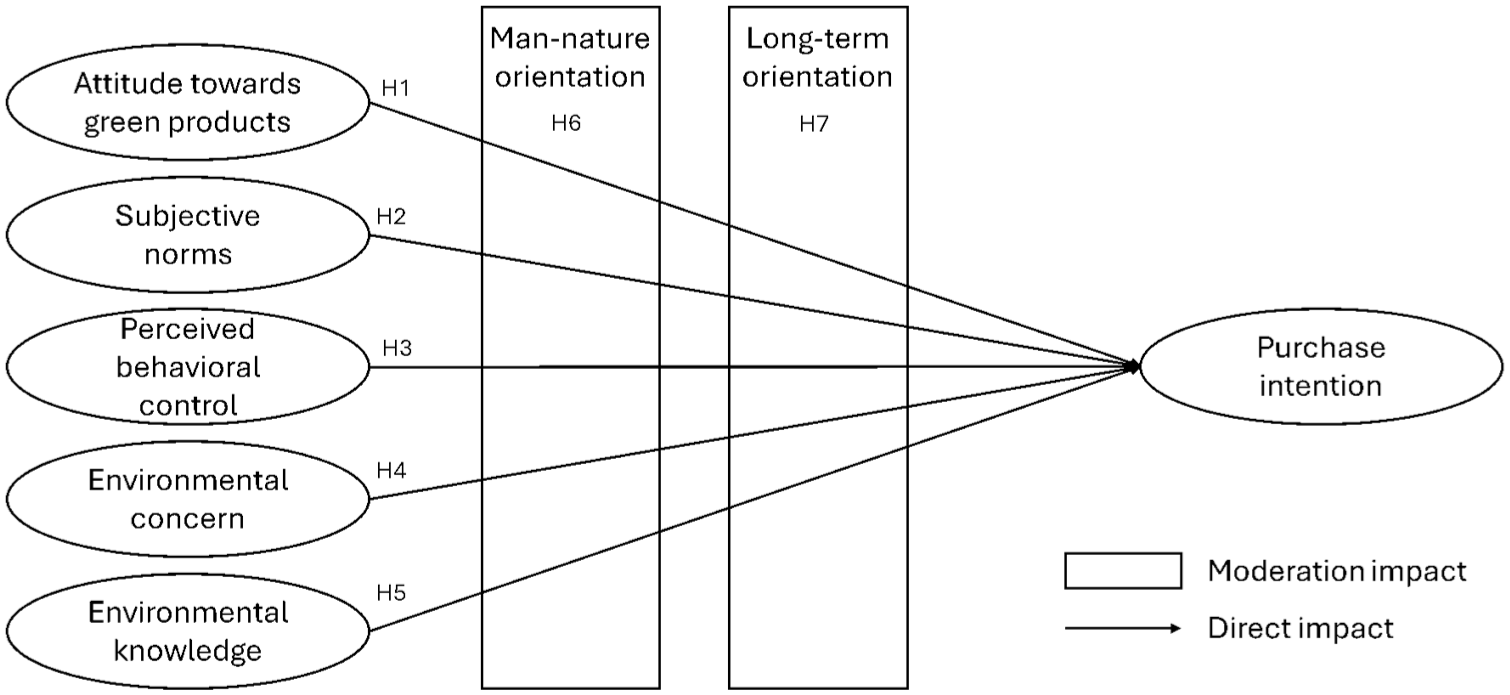
Conceptual model.
The Extended Theory of Planned Behavior
This study is based on Ajzen’s TPB, a prominent model for predicting behavioral intentions (Maichum et al., 2016). TPB posits that an individual’s intention to use products, like green products, is influenced by ATGP, SN, and PBC (Ajzen, 1991; Sreen et al., 2018). It indicates the motivational factors influencing behavior, with intentions that are stronger also lead to a higher possibility of action (Ajzen, 1991).
TPB is frequently used in studies of environmentally sustainable behavior (Lee, 2017) because it successfully predicts and explains variance in voluntary behavior, examining the connection between values, beliefs, attitudes, intentions, and actions (Chekima et al., 2016). Several studies confirmed the validity of TPB in understanding environmentally sustainable consumption (Berki-Kiss & Menrad, 2022; Ogiemwonyi, 2022; Ogiemwonyi & Harun, 2021), also among European consumers (Nekmahmud et al., 2022). Bonini and Oppenheim (2008) demonstrated how this theory can help to accomplish environmental sustainability. Arli et al. (2018) found that factors of TPB significantly predict environmentally sustainable consumer behavior in Indonesia. Similarly, Yadav and Pathak (2017) determined that TPB fully supports the Indian consumers intention to purchase green products. Similar findings were also reported by Wu and Chen (2014) as well as Sreen et al. (2018), stating that attitude, SN, and PBC positively influence behavioral intention, impacting consumers’ actual behavior.
TPB can be enhanced with alternative constructs (such as EC and EK) or by changing the trajectory of variables to improve its predictive power (Lavuri & Susandy, 2020; Paul et al., 2016; Yadav & Pathak, 2016). Other researchers, such as Ogiemwonyi (2022) and Chaudhary and Bisai (2018), have found this helpful approach in the context of environmentally sustainable behavior. Including these factors can help explain the variance in the green products purchase intentions (Mostafa, 2006; Zaremohzzabieh et al., 2021), as confirmed by the study of Otika et al. (2021). Our research incorporated two factors: EC and environmental knowledge. This will offer a deeper understanding of its effectiveness in predicting environmentally sustainable consumer behavior.
Attitude Toward Green Products
Attitude toward behaviors like purchasing green products reflects an individual’s evaluation of that behavior, whether favorable or unfavorable (Ajzen, 1991; Chaudhary & Bisai, 2018). It is the evaluation of performing a specific behavior, which can be either positive or negative (Yadav & Pathak, 2017). The more positive the attitude, the more likely an individual will engage in a particular behavior (Yadav & Pathak, 2016).
Attitude determines an individual’s favorability or unfavorability toward a particular object (Sreen et al., 2018). It is an expression of emotions that reflects individual liking or disliking toward an object or group of specific objects, and it is the result of psychological factors. Consumer attitudes refer to their positive or negative views on objects or subjects, resulting in positive or negative purchase intentions (Debora Indriani et al., 2019).
Studies have found that a positive ATGP positively influences its purchase intentions. This has been observed in various countries such as Egypt, Iran, China, India, Indonesia, and South Africa (Anvar & Venter, 2014; Chan, 2001; Debora Indriani et al., 2019; A. Kumar et al., 2021; Mostafa, 2006; Naalchi Kashi, 2020). Ogiemwonyi and Jan’s (2023) study revealed that attitude significantly influenced how Malaysian consumers responded to green behavior, similar to a previous study involving a sample of Nigerian consumers (Ogiemwonyi, 2022). Consumers with a more positive ATGP are more likely to purchase green products than those with a negative attitude. Therefore, the following is hypothesized:
Subjective Norms
SN reflects an individual’s perception of social expectations regarding the decision to perform or refrain from a specific behavior (Ajzen, 1991). It is the influence of people who are significant to the individual in their decision-making process. If an individual believes that their social group approves or disapproves of a certain behavior (e.g., support environmentally sustainable purchasing behavior), they have a greater or lesser tendency to engage in that behavior (Ogiemwonyi, 2024; Yadav & Pathak, 2016). SN is an assessment of the preferences and support in different social groups for a particular behavior. These groups serve as a comparative point for an individual in shaping general or specific values, attitudes, and specific behavioral guidelines (Taufique & Vaithianathan, 2018).
SN stems from shared beliefs and the desire to conform. Normative beliefs involve the perception of how others expect us to behave (Yadav & Pathak, 2017) and the pressure to conform to those expectations (Wu & Chen, 2014). This motivation reflects a desire to align with the opinions of significant others (Yadav & Pathak, 2017). Indeed, according to Ogiemwonyi and Jan (2023), consumers’ willingness to adhere to individuals’ decisions to engage in green behavior seems to be the underlying reason for the relationship between the SN and purchase behavior. As indicated by Lavuri and Susandy (2020), SN positively influence green behavior as they accelerate individual reasoning. How people behave and what they believe can be shaped by the perception of others (Moser, 2015). According to Khare (2015), social influence impacts consumer desire to purchase green products and encourages collective action to promote environmentally sustainable behavior.
Research has yielded mixed results on the influence of SN on green product purchasing intentions. According to some authors (A. Kumar et al., 2021; P. Kumar & Ghodeswar, 2015), SN significantly impact consumers’ environmentally sustainable purchasing behavior in India. Mei et al. (2012) discovered that peer pressure or the guilt individuals feel for not complying with what others have done can lead to significant behavioral shifts and is significantly related to purchasing green products. Contrary to that, Paul et al. (2016) found that SN is not so important in the purchase intention model. Since representatives of SN may not fully understand the benefits of environmentally sustainable behavior, they might think that purchasing such products is not socially accepted. Hence, the following hypothesis is formulated:
Perceived Behavioral Control
PBC determines how an individual perceives the level of difficulty of performing a specific behavior. It depends on the resources and opportunities available; greater perceived resources and fewer anticipated obstacles lead to higher perceived control. Individuals who have a lot of control over a particular task are generally more likely to have a stronger intention to execute it. Perceived power and control beliefs influence the PBC. Perceived power is a confidence in the ability to perform a specific behavior, while control beliefs relate to self-assessment of this ability (Zhuang et al., 2021). Control beliefs refer to the convictions regarding the factors that can either support or obstruct the execution of a specific behavior, as well as the belief that a certain behavior is attainable based on previous experiences (Wu & Chen, 2014). Perceived power concerns the personal evaluation of the impact of these factors on facilitating or hindering a specific behavior (Yadav & Pathak, 2017).
Consumers often face challenges when trying to engage in environmentally sustainable behavior. These are a lack of information about sustainable products, high costs, and unavailability of these products (Ogiemwonyi et al., 2020), which can prevent thepurchase of green products (Sreen et al., 2018). For example, individuals who view time as a barrier typically do not seek out green products (Ogiemwonyi et al., 2020). Behavioral control can be internal or external. Consumers with strong PBC are confident they can to plan and execute actions, while those with strong external control can overcome obstacles like financial constraints or time limitations (Kidwell & Jewell, 2003; Mabkhot, 2024; Ogiemwonyi, 2022). The more control consumers perceive over their behavior, the better equipped they are to participate in environmentally sustainable behaviors, as confirmed by Ogiemwonyi (2022).
PBC positively and significantly impacts consumer intention to purchase green products (Paul et al., 2016; Ruangkanjanases et al., 2020). Ogiemwonyi (2024, 2022) also demonstrate that PBC influences green behavior. Also, perceived consumer effectiveness predicts environmentally sustainable behavior, including purchasing and recycling practices (Ellen et al., 1991). It is considered the most important influencing factor among young Indian consumers, as found by Taufique and Vaithianathan (2018). Mostafa (2006) also found that PBC positively influences the intention to purchase green products among Egyptian consumers. Therefore, the hypothesis is constructed:
Environmental Concern
EC is individuals’ awareness of environmental issues, their support in addressing these issues, and their willingness to participate (Paul et al., 2016). It can also refer to the emotional involvement or concern consumers feel about the destruction of nature (Lasuin & Ng, 2014). Khaola et al. (2014) define EC as recognizing that the natural environment is endangered by overexploitation of resources and pollution. Mostafa (2006) describes it as a spectrum from indifference to deep concern, noting that it can significantly impact an individual’s willingness or motivation to change their behavioral habits to address environmental issues.
Davari and Strutton (2014) believe that environmentally concerned consumers are internally motivated to seek and use green products. Such consumers are also willing to pay higher prices. According to Khaola et al. (2014), consumers with higher EC are more likely to purchase green products. Several studies in Malaysia, Egypt, and India have resulted in a direct positive impact between their EC and intentions to buy green products (Lasuin & Ng, 2014; Mostafa, 2006; Yadav & Pathak, 2016). Consumers with strong s are more inclined to use sustainable products (Kim & Choi, 2005). Saari et al. (2021) and Maichum et al. (2016) found that these concerns may relate to behavioral intentions and green products purchase intentions among European consumers. Hence, hypothesis H4 is constructed:
Environmental Knowledge
EK involves an individual’s comprehension of environmental problems, familiarity with facts and concepts regarding the nature and ecosystem, and the shared responsibility of a person in achieving sustainable development (Mostafa, 2006). EK is also defined as a level of knowledge on a subject that influences individuals’ decisions (Mei et al., 2012). Ogiemwonyi and Harun (2021) define awareness as a combination of both knowledge and the willingness of individuals to engage in environmentally sustainable behaviors.
EK includes two main components: awareness of environmental issues and knowledge of action strategies. Awareness refers to a person’s understanding of environmental issues, including their causes and possible solutions. To be truly aware, individuals must be educated on how a product can significantly impact the environment. The second component, knowledge of action strategies, refers to individuals’ understanding of how their actions can mitigate or exacerbate these environmental issues. This includes comprehending the product and insights into its sustainable production practices (Khandelwal & Bajpai, 2011; Sharma & Foropon, 2019). EK encourages consumers to be more cautious in choosing products which may potentially impact themselves and the environment (Debora Indriani et al., 2019). As consumers become more informed, they are more inclined to make environmentally sustainable purchases and are motivated to act according to their knowledge (Maichum et al., 2016).
In the literature, the link between EK and the intention to purchase green products has been proven. Saari et al. (2021) discovered that EK directly impacts sustainable consumption and predicts sustainable behavior. A study on generation Y’s green behavior highlights the importance of consumer awareness in shaping their choices regarding green products (Ogiemwonyi, 2022). Chan and Lau’s (2000) research on Chinese consumers suggests a positive impact of EK on the green products purchase intention. This finding was also supported by Mostafa’s (2006) and Sharma and Foropon’s (2019) research. Lee (2017) studied this phenomenon among consumers in Korea and China and found that EK is influencing purchasing intentions in both countries. Mei et al. (2012) identified EK as the most important variable in determining Malaysian consumers’ intention to purchase green products. Hence
Cultural Values as Moderating Variables
The influence of culture on environmentally green consumption is well researched (Liobikiene et al., 2016; Ruiz de Maya et al., 2011). Sarigöllü (2009) discovered significant differences in environmental attitudes across cultures. Additionally, Soyez (2012) found that the relationship between green product purchase intention and value varies significantly across cultures. Ogiemwonyi’s (2024) study confirmed a positive relationship between culture and green behavior, emphasizing the importance of examining how culture influences environmentally sustainable behavior. Values form the foundation for developing attitudes and beliefs, impacting behavior indirectly through specific attitudes or beliefs related to an object, topic, or idea (Kim & Choi, 2005). McCarty and Shrum (2001) also found that fundamental values or beliefs influence more specific psychological constructs, consequently affecting behavior. Ansari and Siddiqui (2019) suggested exploring the influence of cultural dimensions as moderating variables in future studies. Bhardwaj et al. (2023) study also showed that the values variables in TPB explain more variance in green purchase intention than the original model. Several researchers have proposed using TPB and cultural values to predict environmentally sustainable consumer behavior. For instance, Aertsens et al. (2009) recommended incorporating Schwartz’s values to better understand organic food consumption. Additionally, Ruiz de Maya et al. (2011) found that Schwartz’s values moderate relationships within TPB. Furthermore, Cai and Pavlou (2002), Tan et al. (2006), and Dinev et al. (2009) studied the moderating effect of Hofstede’s (2011) cultural values on the relationships between the constructs of TPB.
Our research explores the moderating role of cultural values on consumer behavior regarding environmental sustainability, as environmental issues, attitudes toward them, and sustainable behaviors vary among cultures. This study incorporates two cultural dimensions as moderator variables in the model: MNO and LTO. MNO is based on Kluckhohn and Strodtbeck’s (1961) theory of intercultural variations. This theory has been overlooked in determining green purchase intention (Sreen et al., 2018). LTO is a cultural dimension from Hofstede’s (2011) theory, which was frequently the basis to explain the consumer purchase intention (Sreen et al., 2018). Cultural values were analyzed at the individual level, as they can vary significantly among individuals within a culture (Ansari & Siddiqui, 2019).
Man-Nature Orientation
Kluckhohn and Strodtbeck’s (1961) theory of value orientation suggests that all societies face universal problems with limited solutions, but they prioritize these solutions differently based on their values. Values define what is considered desirable, influencing actions and goals. Measuring these preferences reveals a society’s core values (Hills, 2002). Kluckhohn and Strodtbeck (1961) argue that any society reflects the basic orientation toward its environment, which the authors term the MNO. This reflects the capacity of a person to live together with nature and has three value attitudes. The dominant attitude involves complete control over the power of nature. The harmonious attitude reflects a belief that we can live in partial, but not complete, balance with natural forces. Finally, the subordinate attitude asserts that we cannot control natural forces (Hills, 2002; Sreen et al., 2018).
Chekima et al. (2016) conducted a study that supported a positive relationship between MNO and green products purchase intentions. Similarly, Wang et al. (2016) found that traditional Chinese cultural values, including MNO, are related to sustainable consumption. Bhardwaj et al.’s (2023) study revealed a positive relationship of biospheric value with all three constructs of TPB; however, biospheric value indirectly impacted intentions to buy, mediated by ATGP and PBC, while this impact was not evident in SN. Additionally, Van Doorn and Verhoef (2015) and Katz-Gerro et al. (2017) highlighted the importance of examining biospheric values in explaining environmentally sustainable behavior.
According to Sreen et al. (2018), societies prioritizing harmony with nature have a more positive ATGP than societies prioritizing control over nature. Their study also revealed that the MNO has a direct and positive influence on the ATGP and an indirect influence on the purchase intentions. Similarly, Chan (2001) found that the MNO affects the ATGP, affecting the intention to purchase such products. Chekima et al. (2016) found that the attitude toward nature influences an individual’s environmentally sustainable behavior, leading to positive purchase intentions. Essentially, the MNO increases consumer interest in and desire to purchase green products to express their aspiration to environmental protection and to harmony with nature. Chowdhury et al. (2021) also found that consumers with a more submissive ATGP positively consider them essential for maintaining ecological balance and minimizing the negative environmental impacts.
Previous research has not explored the moderating effect of MNO on the relationship between SN and green product purchase intentions or PBC and green product purchase intentions. It was assumed that individuals with a more submissive MNO may feel smaller and less capable compared to nature, making them more aware of social expectations and norms related to environmental behavior. Furthermore, individuals with a more submissive orientation may seek guidance from their environment and social norms to better adapt to the natural environment. Such individuals also believe in living in harmony with nature and maintaining ecological balance. Individuals with a submissive MNO are more susceptible to SN that encourage environmentally sustainable behavior, as they consider collective efforts to preserve nature and protect the environment essential to achieve the goal of harmonious coexistence with nature. Bouman et al. (2020) found in researching biospheric values that consumers were more likely to engage in environmentally sustainable purchasing behavior if they perceived support for purchasing green products from people important to them.
People with a more submissive relationship with nature often believe in living in harmony and not interfering with it. They take responsibility for protecting and restoring the environment. Such individuals value environmental sustainability and should already be internally motivated to buy green products. They have higher behavioral control and make conscious choices in favor of green products. Their perception about the importance of environmental sustainability and the consequences of irresponsible behavior makes them knowledgeable about ways to contribute to a harmonious life with nature and the impact of individual actions. Rahman and Reynolds (2017) revealed a positive correlation between individuals scoring high on biospheric value and their readiness to pay a premium price for organic wine. Therefore, it is assumed that biospheric values influence PBC.
In their study, Chan and Lau (2000) explained how Chinese consumers’ attitudes toward nature impact their level of EC and knowledge. The study’s findings suggest that a submissive attitude toward nature significantly impacts EC, with Chinese consumers expressing a more submissive attitude expressing a higher level of EC. Similarly, Hassan (2014) found that a positive natural orientation indicates high levels of EC. Chan and Lau (2000) explained that Chinese consumers’ high EC is due to their attitude toward nature compared to people from developed countries. Individuals with strong biospheric values are more conscious about environmental issues, leading them to engage in environmentally sustainable actions (Channa et al., 2022; Hartmann et al., 2018).
Consumers with a submissive attitude toward nature tend to recognize the connection between humans and nature and how their actions can affect the environment. This understanding makes them more conscious of the importance of environmental sustainability and the outcomes linked to conventional product usage. As a result, they are more likely to pay attention to the environmental characteristics of products and choose more environmentally sustainable ones. These consumers usually better identify with sustainability values and acknowledge the significance of nature conservation. Their EK strengthens this identification and motivates them to buy products that align with these values. Moreover, they are more aware of the ecosystem services offered by nature, such as clean water, air, soil, and climate regulation. Due to their profound understanding of these services and their connection to environmental sustainability, they are more likely to buy products that contribute to preserving these ecosystem services. Hence:
Long-Term Orientation
Long-term and short-term orientation describes the direction of individual efforts, focusing on the past, present, or future (Hofstede, 2011). In essence, it shows the degree to which social groups upholds long-term perspectives versus short-term objectives and cultural traditions (Chekima et al., 2016). Societies with LTO value perseverance, thrift, maintaining relationships based on status, and a sense of shame. Societies with short-term orientation focus on mutual social obligations, respect tradition more, preserving “face,” personal stability, and steadiness (Hofstede, 2011).
Authors have considered LTO as a possible moderator in the context of green product purchase intention. However, it has been shown that a LTO is a predictor of the intention to purchase environmentally green products. This is because environmentally sustainable consumption is believed to preserve the natural environment and save money in the long term, trying to ensure a better quality of life for all (Chekima et al., 2016). Sreen et al. (2018) and Ansari and Siddiqui (2019) also found that LTO influences the intention to purchase green products indirectly through the fundamental factors of the TPB. Nguyen et al. (2017) states that consumers who value LTO are more likely to engage in nature friendly purchasing habits. These principles foster pro-environmental attitudes and perceived social expectations to act environmentally responsibly. Moreover, they help reduce the inconvenience of adopting eco-friendly purchasing habits.
Consumers vary in their concern for the future consequences of their behavior. Some prioritize actions that may lead to positive outcomes, even at an immediate cost. These consumers are willing to sacrifice short-term benefits for long-term gains. In contrast, others prefer immediate benefits or lower costs, even if these choices may have negative future consequences. They tend to overlook the potential future advantages of their actions, as Davari and Strutton (2014) noted. Consumers with LTO tend to have a positive attitude toward green products, considering their benefits for the future (H. F. Hu et al., 2023; Sreen et al., 2018). However, they found only a negligible direct relationship between LTO and attitude. They attribute this to the scarcity of green products in India, leading to a lack of knowledge about their long-term benefits. On the other hand, Leonidou et al. (2010) suggest that individuals with an LTO usually hold traditions and families in high regard and make plans to succeed in the future. Also, they tend to adopt a positive attitude toward preserving the environment so that their families can thrive in the future.
Interestingly, Liobikiene et al. (2016) found that in EU countries with short-term orientation, people tend to neglect their future, leading to higher confidence in green products and their suppliers, who are perceived as more trustworthy. As a result, when LTO is promoted in the context of an economic downturn, it may have a negative impact on trust in green products and indirectly reduce sustainable purchasing behavior (Liobikiene et al., 2016).
Individuals with a LTO tend to seek others’ opinions before purchasing, especially when unsure about the product’s future benefits. When it comes to green products, consumers often feel uncertain about their long-term environmental benefits. In this context, social norms can influence the intention to purchase these products (Sreen, 2018). LTO is directly linked to SN. Long-term-oriented consumers are also known for their social consciousness and prioritize future relationships within their society (Hofstede, 2011). Therefore, they avoid actions that violate social norms (Nguyen et al., 2017). S. Kumar and Sreen (2020) identified a positive correlation between LTO and SN among Indian consumers, who are willing to make sacrifices in the present for future generations due to their belief in karma.
Individuals who prioritize the long-term well-being of future generations are said to have a LTO toward sustainable development. They make choices and adopt behaviors that benefit the environment, even when it is inconvenient for them (Sreen et al., 2018). Such individuals often have significant savings and resources (Hofstede, 2011), allowing them to purchase green products, and they believe they can contribute to environmental protection through their efforts. Sreen et al. (2018) found that an LTO is directly related to PBC. Nguyen et al. (2017) argue that such consumers are more inclined toward environmentally sustainable purchase behavior, as they strive toward overcoming barriers such as extra effort because of their hardworking, persistent (Hofstede, 2011), and inconvenience-tolerant nature associated with green products. S. Kumar and Sreen (2020) found a positive impact of LTO on PBC in Indian consumers.
Consumers with a long-term perspective understand that their decisions can have long-lasting environmental effects. They are more aware of sustainability and the potential effects of their actions on future generations. These individuals acknowledge their role in both their actions and the effects, recognizing that environmental protection is essential for the well-being of society and the planet in the long run. These challenges require long-term solutions and adjustments, which can strengthen their concern for the environment and motivate them to act. Even though previous studies did not address this, it is reasonable to assume that such consumer awareness has a stronger impact on their purchases because they plan for the future, which appears uncertain if we continue to harm the environment at our current rate.
People who prioritize long-term thinking have a greater consciousness of how their actions affect environment and future generations. They are motivated to learn more about environmental issues and apply that knowledge to their purchasing decisions, as they understand their responsibility toward the planet and future generations. By buying products made of sustainable materials and using sustainable practices, they show their understanding of the importance of sustainable use of natural resources. Even if green products are more expensive or require more effort, they are willing to invest in them, knowing the long-term benefits they provide to the environment. A good understanding of environmental issues and potential solutions leads to better planning, preparedness, and adaptation to environmental changes. Therefore, the impact of EK on green product purchase intentions should generally be stronger in this group. Hence:
Methodology
Measurement Instrument
The measurement instrument was developed using a multi-phase approach. It included items from relevant literature and additional self-generated items for comprehensive coverage. Three consumer behavior and marketing experts reviewed the instrument to establish content validity. It was then tested on a smaller sample to assess clarity and redundancy.
Some scales were derived from previous ones to measure the selected constructs influencing purchase intention. Adapted scales employed a five-point Likert format ranging from 1 (“completely disagree”) to 5 (“completely agree”) to capture respondents’ level of agreement. The items used to assess attitudes toward green products were used from Wu and Chen (2014) and Couto et al. (2016) Items from Maichum et al. (2016), Sreen et al. (2018), and Arli et al. (2018) were used and adapted to measure SN. The items assessing PBC were adapted from Wu and Chen (2014). For measuring EC, items were sourced from Mostafa (2006) and Chen and Chai (2010). EK items were also adapted from Mostafa (2006) and Maichum et al. (2016). Finally, the items to measure purchase intentions were adopted from Mostafa (2006) and Maichum et al. (2016). A detailed list of these items is provided in Table 1.
Indicators of Manifest Variables and Their Means, Standard Deviations, Factor Loadings, CR, and AVE.

Note. Fit indices: χ2 = 204.23; df = 131; GFI = 0.917, CFI = 0.959, TLI = 0.946, IFI = 0.959, RMSEA = 0.051.
Items to measure LTO were adapted from Sreen et al. (2018) and Ansari and Siddiqui (2019), with one example item being “When I shop, I try to think about how my use of purchased products will affect the environment in the future.” Items to measure MNO were adapted from Straughan and Roberts (1999) and Chan and Lau (2000); example item: “Animals and plants exist primarily to meet the needs of humans.”
Data Collection and Sample
Fort data collection the online survey method with the 1 KA web survey tool was used. In this study, the participants were potential customers of green products who had previously expressed interest in purchasing and consuming such items and had experience buying green products. Data collection was conducted through a dedicated Facebook channel, which allowed for direct engagement with a targeted audience likely to provide relevant insights. This approach is justified as it leverages social media’s reach and accessibility, enabling researchers to gather diverse perspectives from individuals interested in sustainability. Furthermore, using a platform where participants have self-identified as interested in green products ensures that the data reflects informed opinions rather than probability sampling. This method facilitated a deeper analysis of consumer motivations and behaviors related to eco-friendly products. About 23.4% of the potential respondents who accessed the web questionnaire were willing to participate in the research. Only fully completed responses from respondents were used for the subsequent analysis, which led to a final sample of 216 respondents.
The sample comprised 34% males and 66% females. Most respondents (58.8%) belonged to the 18 to 26 age group, followed by 27 – 35 (15.7%), 46 – 55 (12.5%), 36 – 45 (6.5%), and 56+ (6.5%). Regarding education, 47.2% held higher vocational or university degrees, 35.2% had secondary education, 8.3% possessed lower or middle vocational education, and 8.3% had master’s or doctoral degrees. Only 0.9% reported incomplete primary or primary education.
Data Analysis
This study followed a causal research design and used covariance-based structural equation modeling (CB-SEM) with AMOS software. CB-SEM allows for the simultaneous representation and assessment of multiple statistical relationships, treating latent variables as dependent and independent (Haenlein & Kaplan, 2004; Hair et al., 2021). Its primary goal is to explore relationships between latent variables through observed indicators. CB-SEM was preferred over partial least squares SEM (PLS-SEM) for several reasons. CB-SEM is best suited for confirming established theories, as it aims to minimize the difference between the observed covariance matrix and the theoretical model (Hair et al., 2017). Additionally, it calculates factor loadings and residuals for manifest variables, allowing us to eliminate less relevant variables and enhance latent constructs. This method also enables a better quantitative evaluation of latent variable covariance (Bagozzi & Yi, 2012) and provides a comprehensive approach to assessing model fit through various indices. Only reflective indicators were used in this study.
Additionally, we deployed CB-SEM analysis between groups to test the moderating effect of man-nature and LTO. The procedure involved invariance testing between groups in the first phase with the multiple group confirmatory factor analysis (MGCFA) and then testing the differences in structural paths according to the procedures suggested by Steenkamp and Baumgartner (1998) and Vandenberg and Lance (2000).
Validity and Reliability of the Scales
Confirmatory factor analysis (CFA) was deployed to check the validity and reliability of the scales. It revealed a two-factor conceptualization of EC: EC and environmental unconcern (EUC). Specific items were excluded during model validation to address convergent and discriminant validity concerns, resulting in a final model with 19 indicators distributed across seven latent variables.
The indicators, together with factor loadings, composite reliabilities (CR), and average variance extracted (AVE), are presented in Table 1. The model fit of the measurement model was assessed using the following fit indices: chi-square (χ2), normed fit index (NFI), goodness of fit index (GFI), root mean square error of approximation (RMSEA), comparative fit index (CFI), and Tucker-Lewis index (TLI). Established criteria by Byrne (1994), L. T. Hu and Bentler (1999), and MacCallum et al. (1996) were employed, with acceptable thresholds of RMSEA < 0.08, GFI > 0.90, CFI > 0.90, TLI > 0.90, and IFI > 0.90. While the non-significant χ2 can be explained due to the sample size, the χ2/df ratio 1.55 indicates a good fit. Additionally, other fit indices met the criteria, as shown in Table 1.
Concerning the convergent validity indicator, loadings ranged from 0.559 to 0.926, exceeding the recommended threshold of 0.6 for all but one item. AVE values were distributed between 0.426 and 0.698, and all but SN and ATGP were at or above the 0.5 threshold. Composite reliabilities for all constructs exceeded 0.6, confirming acceptable convergent validity (Fornell & Larcker, 1981) and ensuring internal consistency of the scales (Table 2).
Latent Variables Correlations and Square Roots of AVE.
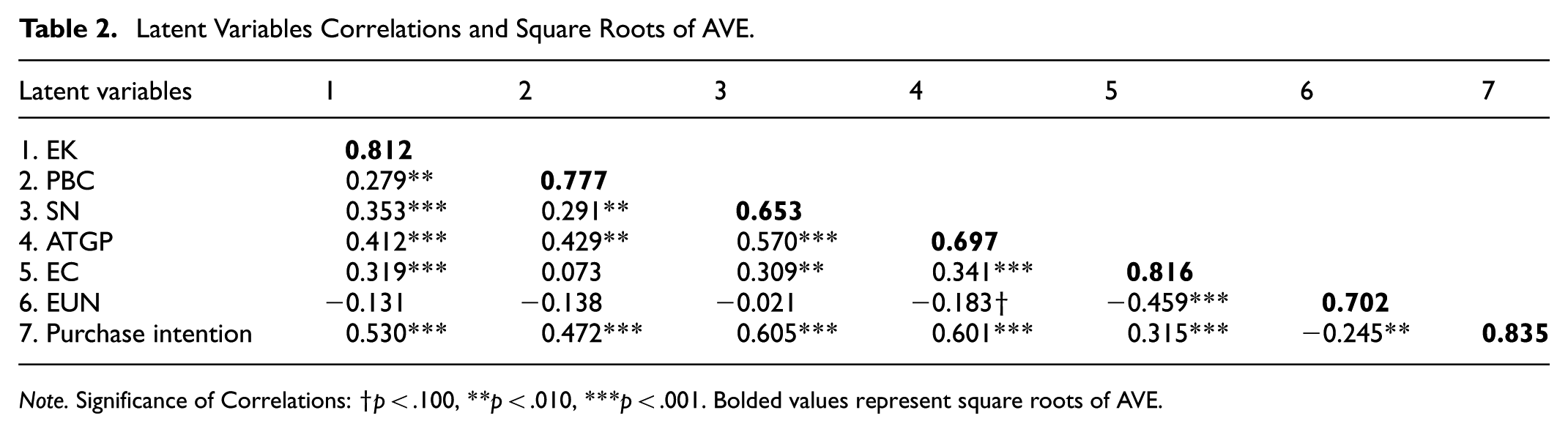
Note. Significance of Correlations: †p < .100, **p < .010, ***p < .001. Bolded values represent square roots of AVE.
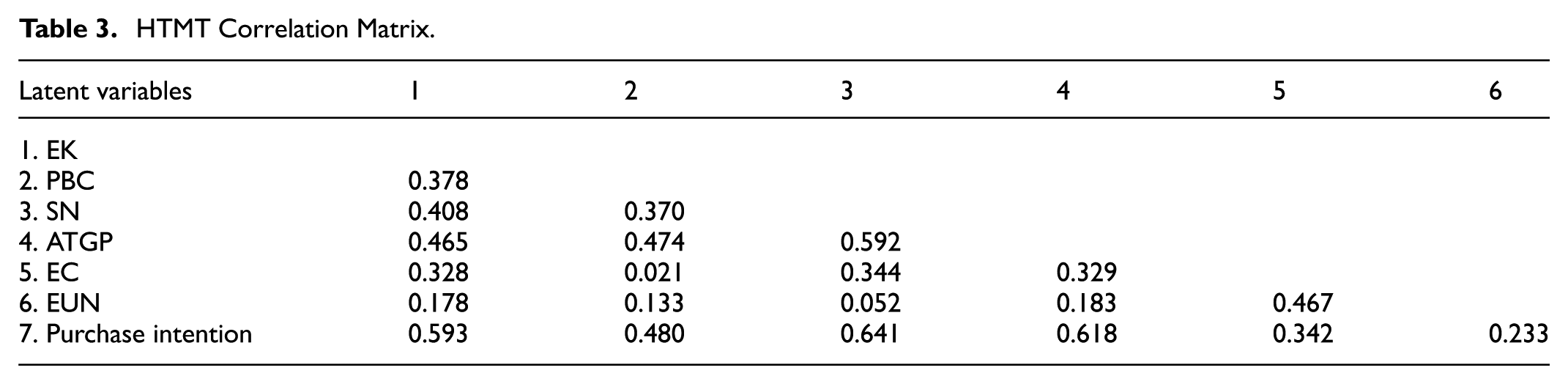
To ensure that the constructs examined were conceptually different, we conducted tests for discriminant validity using both the Fornell-Larcker criterion and the Heterotrait-Monotrait (HTMT) ratio (Henseler et al., 2015). According to the Fornell-Larcker test, the square root of each construct’s AVE should be greater than all off-diagonal elements (latent variable correlations) in the matrix to have discriminant validity. The HTMT (heterotrait-monotrait) matrix analysis also supported this finding, with all values below the recommended threshold of 0.85, demonstrating that each construct captured unique variance (Table 3).
HTMT Correlation Matrix.
Results
The process of testing hypotheses involved three phases. First, the structural model was tested on the entire sample, then the invariance between groups was assessed, and in the third phase, differences in the latent variable impacts were tested.
Results Based on the Entire Sample
The first phase of our analysis involved constructing and evaluating a structural model based on the proposed hypotheses. The chi-square test (χ2) indicated a statistically significant discrepancy (χ2 = 204.23, df = 131, p < .001). However, alternative fit indices were considered due to the test ’s sensitivity to sample size. GFI of 0.917, NFI of 0.894, and IFI of 0.959 exceeded the recommended thresholds (>0.90), suggesting an acceptable model fit. Furthermore, TLI and CFI of 0.946 and 0.959 indicated substantial improvement over null and baseline models. Finally, the RMSEA of 0.051 fell well below the recommended cutoff (<0.08), providing additional evidence of the model’s adequacy in representing the observed data.
ATGP positively and significantly impacted purchase intention (β = .189, p < .1), supporting H1. This finding signifies that individuals with more positive ATGP are more inclined to make such purchases.
SN, representing the perceived pressure to purchase sustainable products from others, displayed a strong and significant positive relationship with purchase intention (β = .353, p < .001), confirming H2.
Furthermore, PBC, reflecting individual confidence in their ability to undertake sustainable purchases, exhibited a significant positive association with purchase intention (β = .196, p < .01), supporting H3. This finding indicates that individuals who perceive themselves as capable of making sustainable choices are more likely to do so.
Contrary to expectations (H4), EC exhibited no statistically significant impact on purchase intention. However, EUN demonstrated a negative and significant association (β = −.154, p < .1) with purchase intention, suggesting that individuals who have a lower EC are less inclined to make sustainable buying decisions. Therefore, H4 could not be supported.
Additionally, EK significantly and positively influenced purchase intention (β = .261, p < .001), supporting H5. It shows that greater environmental literacy contributes to a higher likelihood of practicing sustainable consumption.
Invariance Testing Between Groups
In the second phase, two groups were created twice: the first division was based on MNO, with one group being subordinate and the other dominant, and the second division was based on LTO, with one group having a short-term focus and the other a long-term focus. To ensure convergent validity and reliability, exploratory factor analysis was performed for both constructs. All indicator factor loadings for both constructs were higher than 0.6 on the underlying factor and less than .3 on other factors. The Cronbach alphas for man-nature and LTO were 0.816 and 0.785, respectively. Once factor scores were calculated, the respondents were divided into two groups based on their median number.
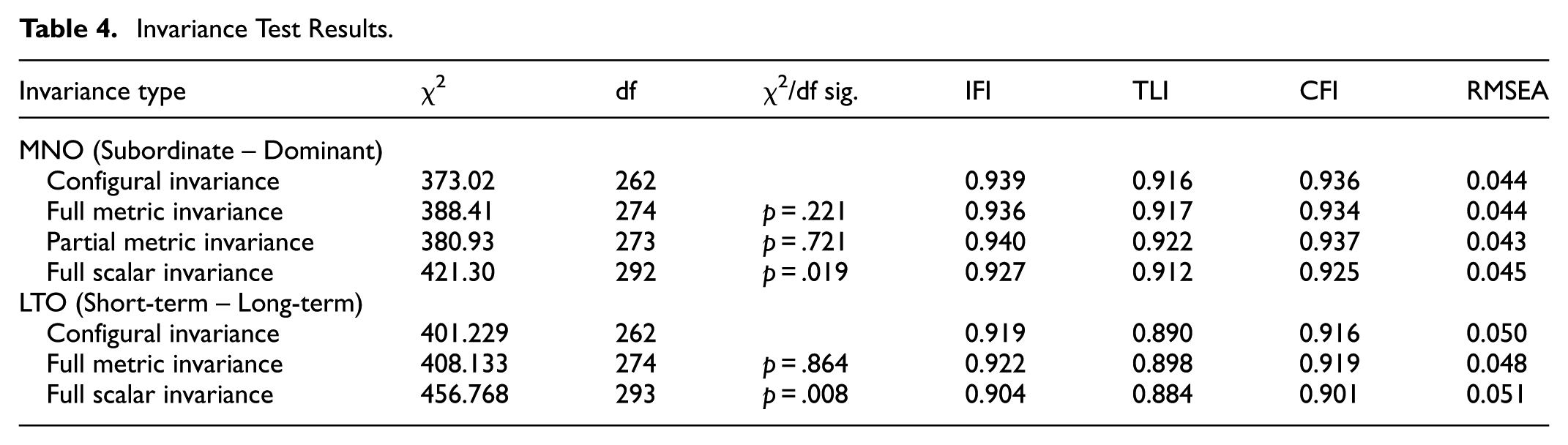
Invariance tests were deployed on the measurement model to ensure the two groups had the same understanding of the constructs. Our goal was to test the impact differences between the constructs, which required an assessment of required types of invariances (configural, metric, and scalar invariance). At least configural and partial metric invariance had to be achieved to directly compare the latent variable impacts (Steenkamp & Baumgartner, 1998). According to Table 4, configural invariance, tested for MNO, was supported, as all fit indices exceeded 0.9. RMSEA was below 0.1. It was aimed for full metric invariance by constraining factor loadings across groups and found that there was no statistically significant difference in Δχ2/df between the configural and full metric models (p < .05), indicating that full metric invariance was present. Despite this, the constraint for one indicator for the attitudes group was additionally relaxed to achieve an even better model fit, which was confirmed by other fit indices. Also, full metric invariance was supported for LTO, as the Δχ2/df between the configural and full metric models was also insignificant. Finally, full scalar invariance was achieved at p > .01, but only for MNO division.
Invariance Test Results.
Differences in the Latent Variable Impacts
Tests were conducted to check the structural model path differences across groups. First, the model without constraints was analyzed, then equality constraints for the structural paths were introduced while retaining loading constraints for invariance. Finally, each path was tested individually, and partially constrained models were examined. In the MNO division, significant differences in two paths were found: from EC to purchase intention and from SN to purchase intention. The partially constrained model yielded the best fit indices, as shown in Table 5 (χ2 (277) = 383.72, CFI = 0.937, IFI = 0.940, TLI = 0.920, RMSEA = 0.043). Table 6 indicates that the dominant group’s EC significantly negatively impacts purchase intentions (βdominant = −0.194; p < .1), whereas this relationship was insignificant in the subordinate group. The influence of SN on purchase intention is significantly stronger in the dominant group (βsubordinate = 0.268; p < .05; βdominant = 0.602; p < .001). According to that, H6 is supported.
Comparisons Between Structural Models.

Structural Paths for the Entire Sample and MNO and LTO Groups.

Note. Bolded values indicate significant differences between groups.
In the LTO division, the path from ATGP to purchase intention was found significantly different between short-term and long-term groups, namely the impact of attitudes is strong in the short-term orientation group (βshort-term = 0.495; p < .001) and non-significant in the long-term group (Table 6). The partially constrained model had the best fit indices and was significantly better than the constrained model (χ2 (279) = 410.27, CFI = 0.920, IFI = 0.922, TLI = 0.900, RMSEA = 0.047). Consequently, H7 is supported.
Discussion
This study shows a positive link between ATGP and purchase intentions, consistent with earlier research (Chan, 2001; Mostafa, 2006; Naalchi Kashi, 2020). Understanding consumer needs is crucial for creating products that effectively balance sustainability and quality. Additionally, highlighting the actual environmental benefits and providing transparent claims can boost the reputation of sustainable products.
SN exert the strongest impact on purchase intention, revealing a tendency for individuals to conform to positive social attitudes within their networks. Earlier research has yielded conflicting findings regarding the relationship in question. Specifically, P. Kumar and Ghodeswar (2015) and Mei et al. (2012) both reported a positive effect of SN on purchase intention, while Taufique and Vaithianathan (2018) and Paul et al. (2016) did not support that. This suggests two key motivators: social approval and the desire to contribute to a sustainable society. Further research could explore how to leverage these motivators to encourage sustainable consumption.
Interestingly, perceived control over sustainable purchasing behavior negatively influenced purchase intention. This relationship has generally proved stronger in previous studies (Mostafa, 2006; Paul et al., 2016; Ruangkanjanases et al., 2020). Potential explanations include other possible barriers, such as a lack of awareness or competing priorities overshadowing perceived control. Our findings suggest that respondents felt a sense of control, leading them to be more influenced by social norms.
Contrary to some previous studies (Kim & Choi, 2005; Maichum et al., 2016; Mostafa, 2006; Yadav & Pathak, 2016), EC did not influence green product purchase intention. These contradict established assumptions about environmentally conscious individuals making eco-friendly choices. One explanation might be a “psychological distance” phenomenon, where environmental issues lack immediate relevance for some consumers, diminishing the perceived importance of green choices. However, the negative impact of EUN, which previous studies did not include, shows that individuals with low EC might perceive environmental issues as distant and abstract, reducing the perceived personal relevance and immediacy of their actions. This can lead to a diminished perception of personal responsibility and lower motivation to engage in sustainable behaviors, including purchasing green products. Consumers with low EC might prioritize price and convenience and harbor distrust toward the effectiveness of eco-friendly claims, resulting in resistance to such products.
EK emerges as a vital variable in the decision-making process. This underscores the importance of raising awareness about sustainable products, their benefits, and readily available alternatives. This outcome echoes the prior research efforts by Kim and Choi (2005), Sharma and Foropon (2019), and Lee (2017), which have demonstrated a significant positive impact on EK and their propensity to purchase green products.
Our study confirmed the moderating influence of the MNO. The greatest differences between the two groups are evident in the influence of EC and SN on the intention to purchase green products. EC among individuals with a dominant MNO negatively impacts purchase intention. This may be due to their belief that they have more control over nature, which can make them feel less vulnerable to environmental issues. Such individuals may be less aware of the severity of environmental threats and may not see the need to purchase green products. They may view EC as a challenge to their identity based on the belief that nature is something to be controlled or exploited. This can lead to resistance or rejection of changes in their behavior or lifestyle demanded by EC, which may contradict their established beliefs and way of life.
Contrary to expectations, the influence of SN on purchase intention is significantly higher among individuals with a more dominant MNO. Being part of a social circle where environmentally conscious behavior is the norm can make individuals conform to these expectations to avoid social discomfort or rejection. Those who believe in dominating nature may also recognize the growing acceptance of eco-conscious behavior and purchase green products to achieve a positive social image.
Our study also confirmed the moderating influence of LTO. Despite the expectation that the impact of ATGP on the purchase intention of green products would be higher for long-term-oriented consumers, results show the opposite. Individuals who prioritize short-term goals and trends may be more likely toward such purchases if they find them fashionable or popular at a particular time. We speculate that in some communities, green products have become a symbol of environmental awareness and social responsibility, which can influence the purchasing behavior of individuals more concerned about their social status or reputation.
Theoretical Implications
Our study builds on prior research examining green product purchase intentions through the TPB and cultural values (Barbarossa et al., 2017; Katz-Gerro et al., 2017; Liobikiene et al., 2016; Mancha & Yoder, 2015; Ogiemwonyi & Jan, 2023; Sreen et al., 2018). We contribute to TPB by showing how MNO and LTO moderate the relationships among its components.
Prior research (Sreen et al., 2018) demonstrated that MNO positively influences ATGP. This study further suggests that MNO can moderate the relationships between SN and purchase intention, as well as between EC and purchase intention. The concept of MNO offers a fresh perspective on how deeply ingrained beliefs about nature dominance can change the concern and behavior interrelationship, challenging the traditional TPB assumption that concern directly drives pro-environmental intentions. Furthermore, our study contributes to TPB by giving evidence that the impact of SN can vary based on underlying cultural orientations. Social pressure may precede personal beliefs in certain instances, particularly when social approval is associated with purchasing green products.
LTO has also been known to influence attitudes and PBC (Sreen et al., 2018). It moderates the relationships between factors constituting purchase intention and negatively impacts purchases of green products (Liobikiene et al., 2016). Our study has further implications in showing how this mechanism works since it suggests that individuals who prioritize short-term goals and trends may make more purchases of green products if their attitudes are more positive. This might enrich TPB by revealing that attitudes toward specific products in the long-term oriented group might be shaped more by social signaling than attitudes and other factors.
Managerial Implications
Since the four between ATGP and purchase intention is positive, companies should focus on increasing the reputation of green products as solutions that help to solve environmental problems. It is also important that their environmentally sustainable claims are honest and sincere since this can influence building attitudes toward green products.
SNs are also important in customer intentions to buy green products. Therefore, marketing should highlight the societal benefits of purchasing these products. Collaborating with influencers and opinion leaders who advocate for green products can effectively shape consumer perception and behavior, as many people aspire to follow their lifestyles.
As respondents perceive the least control over behavior with money, marketing managers can further facilitate the purchase of green products by offering such products and their alternatives at as many points of sale as possible, along with discounts, which increases the likelihood of their purchase. Communication messaging should let consumers know that every purchase, small or large, matters and that each consumer can and should contribute to solving environmental problems to the best of their ability.
While a lack of EC negatively impacts purchase intentions, expressing such concern might not necessarily lead to positive outcomes. Therefore, companies should emphasize non-environmental benefits like performance, design, affordability, and appealing features to attract a wider audience. Additionally, they must ensure their green claims are transparent, verifiable, and backed by credible certifications.
Marketing managers must recognize that EK significantly impacts consumers’ intention to purchase green products. To educate consumers about environmental problems, marketers should use marketing communication to the fullest extent possible. This includes providing information about the activities consumers can undertake to contribute to environmental solutions, environmental labels and certifications, and symbols for properly handling products during and after use. Marketing communication should extend consumer knowledge to the entire life cycle of products so that they are aware of the environmental consequences during production, use, and after use. This information should be truthful, credible, and tailored to individual consumers to make it more effective.
Given that individuals with a more dominant MNO exhibit a negative impact of EC on the intention to purchase green products, we suggest that marketing managers, instead of emphasizing the environmental benefits of products in their communication messages, focus on other benefits or values that these individuals appreciate, such as product efficiency or personal reputation. Instead of focusing solely on product promotion, companies can launch educational campaigns to inform their target audience about the significance of environmental awareness and sustainable behaviour.
Marketing messages can also highlight how such products are in line with societal values and norms, emphasizing the growing trend of environmental awareness. By illustrating that buying green products is increasingly accepted and valued, individuals with an MNO may be encouraged to make environmentally conscious choices. Advertising can focus on how purchasing green products enhances social reputation and status.
To encourage people to buy green products, businesses can use marketing techniques that highlight the immediate benefits and lower costs. By offering immediate benefits or rewards, marketing experts can attract people interested in short-term gains to purchase green products. Green products have become symbols of environmental awareness and social responsibility, so marketing professionals can use this to enhance the reputation of these products by emphasizing their status as symbols of an individual’s concern for the environment. They can also appeal to consumers by emphasizing the relevance and trendiness of green products and creating a sense of exclusivity around them.
Policy Implications
Policymakers can promote green consumption by initiating campaigns highlighting the social approval of eco-friendly behaviors, as SN positively impacts purchase intention. For example, community-led initiatives such as local green consumption groups or eco-conscious events can foster a feeling of mutual accountability, strengthening the influence of social norms.
Policymakers need to recognize that consumers’ EK influences their decision to purchase green products. Consumer knowledge should encompass the entire lifecycle of products, including their impact on the environment during production, use, and after production. This information should be authentic, truthful, and tailored to individual customers. EK should also be integrated into educational programs. Additionally, companies could be stimulated to allocate a certain portion of their advertisements and packaging to information that enhances consumer understanding of environmental issues and their solutions.
The findings regarding people’s orientation toward nature suggest that individuals with different perspectives on nature may require different strategies. For those who believe in dominating nature and are short-term oriented, policies could focus on appealing to social norms or the status associated with green consumption rather than EC alone. For example, presenting green products as high-status or trendy could resonate with this group. On the other hand, individuals with stronger environmental beliefs may respond better to campaigns that emphasize the personal impact of environmental issues, helping to reduce the “psychological distance” by making EC more immediate and relevant.
Limitations
Our research has some limitations. Firstly, it does not include perceived value and price, which are important for consumers when purchasing. Secondly, while LTO and MNO have been identified as crucial factors, focusing solely on them may fail to reflect the complete view of the moderating effects. Other cultural values and personal circumstances can also significantly influence how people perceive and prioritize green products. It is also worth noting that focusing on a specific green product or brand could lead to different results.
In conclusion, while we applied Harman’s (1976) one-factor test and found that the total variance extracted by a single factor is significantly below the recommended threshold of 50%, as well as conducted a confirmatory factor analysis (Williams et al., 2010), we must still consider the potential risk of common method variance. This variance can artificially inflate the perceived relationships between variables (Podsakoff et al., 2003). This bias often occurs when a single questionnaire is used to measure both independent and dependent variables (Smither et al., 1989). Additionally, since all participants answered the questionnaire at the same time and location, the potential for systematic errors due to the research environment cannot be completely ruled out (Podsakoff et al., 2003).
Conclusion
This study underscores the importance of the extended TPB model in understanding intentions to purchase green products. By incorporating cultural dimensions such as man-nature and LTO as moderators, we have expanded on existing research and gained a deeper understanding of how cultural values influence green purchasing decisions. The practical implications of this research are valuable for both marketers and policymakers, as they highlight the necessity of customizing marketing strategies to different consumer segments based on cultural values. For example, individuals with dominant MNO may respond better to campaigns that emphasize societal approval, and the reputation associated with green behavior. On the other hand, individuals with short-term orientation may be more receptive to messages highlighting immediate benefits derived from green consumption. The implications of these findings are crucial for developing culturally sensitive marketing and policy strategies aligned with consumer motivations, leading to more effective promotion of environmentally sustainable consumption. This approach supports sustainable development goals and enhances consumer engagement, paving the way for increased adoption of green products. Ultimately, this research holds significance for both academic theory and real-world application, providing a foundation for future studies in green consumer behavior.
Footnotes
Acknowledgements
Not applicable.

Ethical Considerations
This study was conducted in accordance with the ethical principles outlined in the Declaration of Helsinki. Participation in the online survey was entirely voluntary and anonymous. Respondents were informed about the purpose of the research and the confidentiality of their answers before completing the questionnaire. No sensitive or personally identifiable data were collected. Given the non-invasive nature of the research, formal ethical approval was not required.
Funding
The authors disclosed receipt of the following financial support for the research, authorship, and/or publication of this article: The authors acknowledge the financial support from the Slovenian Research Agency (research core funding No. P5-0023 (A), Entrepreneurship for Innovative Society).
Declaration of Conflicting Interests
The authors declared no potential conflicts of interest with respect to the research, authorship, and/or publication of this article.
Data Availability Statement
Data sharing not applicable to this article as no datasets were generated or analyzed during the current study.