




Abstract
This article explores the philosophical concept of “affect” as articulated by Baruch Spinoza and its relevance to design and Human-Computer Interaction (HCI). Affect, unlike emotion, refers to underlying forces and potentials that exist before individual feelings take form that influence and are influenced by social, material, and technological systems. Drawing on the theories of Spinoza, Gilbert Simondon, and Bernard Stiegler, the article examines the processes of individuation, transindividuation, and memory as they relate to interaction design. This theoretical inquiry challenges conventional emotion-centric models in HCI by proposing affect as a foundational framework for understanding user experience, design ethics, and interaction systems. The goal is to establish a new conceptual lens for critical and exploratory design research in HCI, grounded in affect theory.
Plain Language Summary
I am investigating the notion of affect as elaborated by Baruch Spinoza (17th century Dutch philosopher – 1632-1677). The general framework I am following is given by the critique of current forms of the unelaborated concept of “emotion” in user experience design studies, which I am inclined to replace by “affect.” I also will address these different levels of production and reproduction through what is elaborated by early twentieth-century French Philosopher Gilbert Simondon as “transindividuality” or “transindividuation.” What we describe as “the individual” in the works of economists and philosophers in 19th century is eclipsed by a social imaginary. Simondon argues that individuation is a process through which a pre-individual state, a state that is necessarily in tension or conflict, resolves itself, or is resolved into a process of individuation. Simondon argues that psychic individuation, the individuation that constitutes a character, personality, or psyche, is not opposed to collective individuation, but rather is integral to it, and vice versa. I see here a progression from Betti Marenko’s work on how the production of subjectivities within a biopolitical /affective framework is mediated by psychopharmaceutical technologies (Marenko, 2009a) and on the emotional entanglement that characterizes our relationship with objects, which she has reframed within a neo-animist paradigm (Marenko, 2009b). I argue that we cannot look at design without first addressing how emotion itself is being designed as labor within the current new spirit of sociality that is created through the binary of collectivity or individuality described in the 19th century.
Keywords
Introduction
In the past two decades, the field of Human-Computer Interaction (HCI) has seen a remarkable shift. Historically defined by a predominant functionalist paradigm focused on usability, efficiency, and cognitive modeling, HCI has progressively included the discourse of emotion and affect as essential design considerations. The “third wave” of HCI emerged with an emphasis on visual appeal, user experience, and the cultivation of emotional engagement (Bødker, 2006). Academics such as Norman (2004) have popularized the notion of “emotional design” by emphasizing that positive emotions enhance system appeal and, crucially, improve problem-solving, creativity, and overall efficacy. Similarly, the pioneers of the nascent design and emotion community established theoretical frameworks and empirical methodologies for assessing user emotions, encompassing Desmet’s (2004) metrics of emotional responses and Jordan’s (2000)“new human factors,” which prioritized pleasure as a central aspect of valid design considerations. Together, they proclaimed a momentous shift: design is now characterized not just by technical functionality, but also by its capacity to evoke pleasurable emotional responses.
This development has significant conceptual restrictions. When emotions are treated as quantifiable, distinct entities—for the sake of measurement, prediction, and enhancement—they risk becoming subsumed under the principles of commercialization and reductionism (Ahmed, 2004; Illouz, 2007). In many instances, design has shifted from a speculative, transformational process to a mechanism for emotional regulation, measuring happiness, frustration, or engagement into feedback loops that support broader optimization and control systems (Marenko, 2010). The danger is that user experience becomes homogenized, reduced to algorithm-readable categories, and governed by the principles of digital capitalism (Papacharissi, 2015). The open, ambiguous, relational dimension of human experience, which eludes precise representation, is what is lost in translation.
This essay aims to overcome these constraints by utilizing affect as a more substantial conceptual foundation for design theory and HCI. The differentiation between emotion and affect has been essential in modern philosophy and cultural theory. Emotions are perceived as socially constructed, representational states, while affect denotes pre-personal intensities, relational dynamics, and processes of being that occur prior to conscious awareness (Massumi, 2002). Affect, in this context, is not limited to subjective emotions; it is ontological rather than psychological. It traverses across bodies, technology, and settings, altering the abilities to act, perceive, and connect (Deleuze, 1988; Spinoza, 1993). Embracing affect as the foundational concept of design reframes user experience: shifting from quantifiable outcomes to emergent circumstances, from static things to dynamic processes, and from control to transformation.
Emphasizing emotion in Human-Computer Interaction has several ramifications. Initially, it allows us to conceptualize users not as static creatures with predetermined wants, but as subjects in development, constantly influenced by interactions with technical systems, physical settings, and communal behaviors (Combes, 1999; Simondon, 1964). In Simondon’s concept of individuation, the individual is not a finalized entity but a metastable phase within a larger process of becoming. Subjectivity arises from interactions with pre-individual domains and collective environments. This process-oriented ontology contests the static models inherent in much user-centered design, where the user is frequently seen as a distinct unit of analysis. It necessitates a reevaluation of the temporality of design: not as the provision of static solutions, but as the establishment of circumstances for continuous alteration.
Secondly, affect highlights the role of memory, temporality, and technology in shaping experience. Stiegler (1998, 2010a) elaborates on Simondon’s theory by introducing tertiary memory—externalized systems of recording, archiving, and transmission that mediate individual and collective existence. For Stiegler, technologies are neither neutral tools or mere extensions of organic processes; instead, they are active agents of subjectivation that shape the governance of attention and influence the perception of the future. In the current digital landscape, where algorithms, platforms, and media structures seize and monetize both attention and emotion, this viewpoint is especially persuasive (Citton, 2010; Stiegler, 2009). The politics of design are intrinsically linked to the politics of memory and individual identity; every interface element and artifact is intertwined with profound conflicts over the nature of thought, remembrance, and emotional investment.
Third, embracing an emotional approach challenges the assumptions of emotion-based HCI models. Emotion research and UX often focus on the detection, modeling, or prediction of emotional states (Picard, 1997); however, an affective approach rejects reduction to mere metrics or predictive algorithms. It recognizes the obscurity, undecidability, and indeterminacy of affect—qualities forever absent in data but that integrally constitute experience at its most profound levels (Massumi, 2015; Reckwitz, 2012). Design with emotion entails creating affordances of undecidability, contemplation, and plurality, rather than closure or optimality. It values caring over control, transformation over efficiency, and open-ended involvement over predictability.
This argument is based on three interconnected traditions. Spinoza’s Ethics presents the notion of affect as a fluctuation in a body’s ability to act, with pleasure and melancholy representing enhancements and diminutions of this capacity (Read, 2016; Sharp, 2011). This relational ontology positions affect not inside the private interiority of the subject but in the dynamic interaction between self and world. We inherit from Simondon a processual perspective on individuation, wherein existence is ever evolving, and identity arises from metastable conflicts among the individual, the collective, and the pre-individual realm (Iliadis, 2013). This view opposes both psychologism and sociologism by highlighting the relational co-constitution of the person and the environment. Stiegler elucidates the role of technics and tertiary memory in the process of individuation, highlighting the political implications of design in the management of attention, memory, and feeling (Stiegler, 2010b). Collectively, these frameworks offer a robust alternative to the utilitarian, behaviorist, and neurocognitive paradigms that have historically influenced HCI.
The purpose of this paper is not to provide an additional toolbox for emotional UX design or affective computing. It proposes the construction of a conceptual framework that could facilitate an alternative form of inquiry: one that perceives affect not as something to be manipulated or as an outcome, but as a transformative force, a state of experience, and a locus of resistance against the homogenizing principles of digital capitalism. This connects with the broader “affective turn” in the humanities and social sciences, where researchers utilize affect theory to reevaluate subjectivity, media, and politics (Ahmed, 2010; Brennan, 2004; Papacharissi, 2015). This signifies that, for HCI, the design of design processes must consider the pre-personal intensities of contact, the relational development of subjectivity, and the long-term effects of technological mediation.
The fundamental inquiry that drives this book is no longer how we design for certain emotions. What does it mean to design for affect? Designing in this manner acknowledges that all technology systems, by their subtle, localized interventions, shape not just transient experiences but also the fundamental ontological, temporal, and political structure of existence itself. Design should be regarded as an ethics of becoming: a discipline that facilitates transition, ambiguity, and caring. Through the reconfiguration of design via the perspective of affect, we are prompted, alongside McPherson, Mohan, and Ahmed, to conceive potential realities that elude confinement, embrace multiplicity, and affirm the indeterminacy of human existence within algorithmic control.
Diagram 1 illustrates how the main authors and their theories are linked with each other in the entire article. Diagram 2 illustrates the layout of the intellectual key concepts and theories and how they are linked with each other in the first part of the article.

A diagram of main authors and literature mentioned in the entire article.
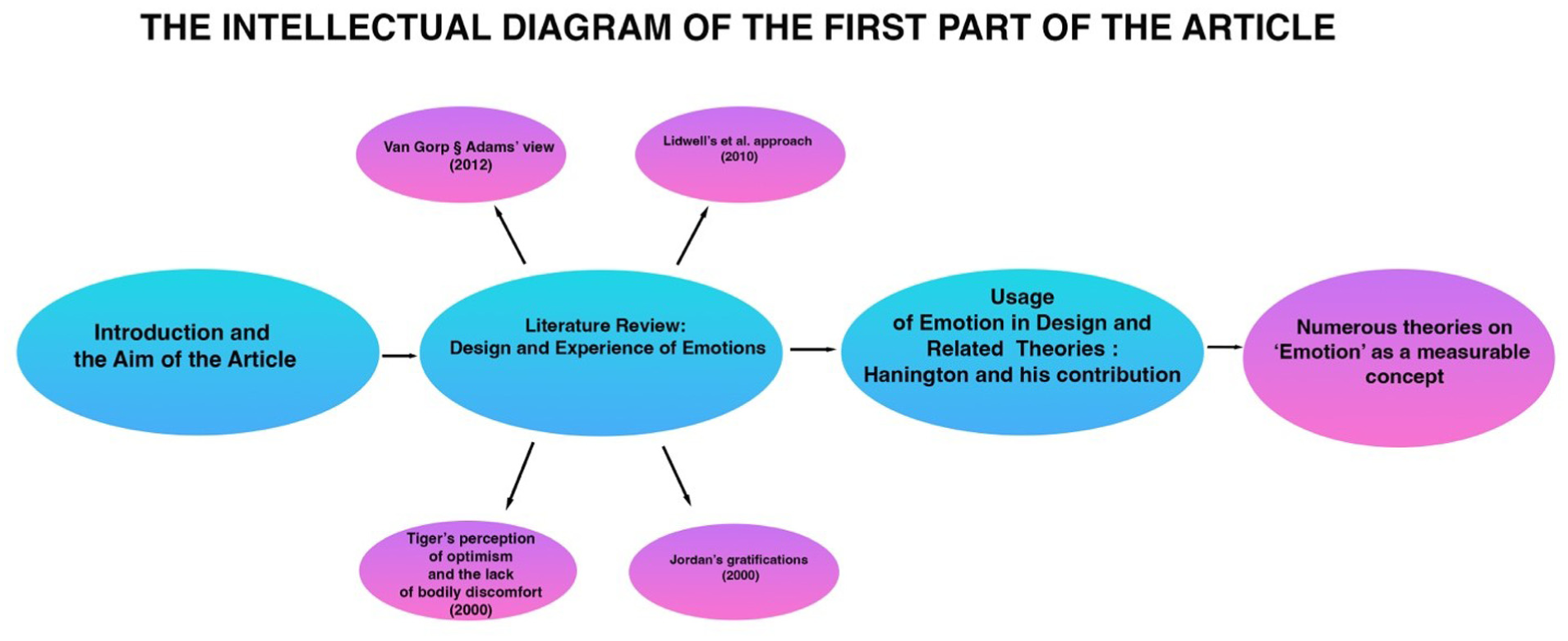
An intellectual diagram of the first part of the article.
Literature Review: Design and Emotional Experience
The relationship between design and emotion has become a critical focal point within the study of user experience (UX) in recent years. As design practices evolve, the integration of emotional considerations into product, system, and environmental design has emerged as an essential element influencing how users interact with and experience these entities. Emotions play a pivotal role in shaping user perception, decision-making, behavior, and overall engagement with design. From a psychological perspective, emotions can profoundly impact users’ cognitive processing and behavioral responses, which ultimately affects the success of the interaction. In this sense, the role of emotion in design is not merely a supplementary aspect but a core factor influencing user satisfaction, attachment, and loyalty to a product or system. As such, designers now have the opportunity to intentionally harness emotional cues to steer user behavior, foster positive attachment to a product, and enhance the usability and perceived value of an interface or system.
Van Gorp and Adams (2012) underscore the notion that the intensity or degree of emotional stimulation embedded within a design can significantly affect user motivation, influencing both approach and avoidance behaviors. Their work suggests that emotional engagement is not merely a passive occurrence but an active force that can guide the user’s relationship with a product. When users experience positive emotions, such as feelings of joy, relaxation, or pleasure, these emotions may lead to a more favorable attitude toward the design and, as a result, more persistent and productive interaction. These emotional states influence users’ ability to navigate complex tasks, decision-making processes, and problem-solving situations. Norman (2004) supports this assertion by highlighting that positive emotional states can contribute to enhanced problem-solving abilities, particularly in technically demanding or high-stakes contexts. This finding underscores the critical importance of designing for emotional resonance, as users who are in a positive emotional state are more likely to engage deeply and thoughtfully with a product, leading to improved outcomes in both performance and user satisfaction.
One of the most prominent and widely studied concepts within the field of emotional design is the “esthetic-usability effect,” a phenomenon first introduced by Lidwell et al. (2010). This concept suggests that users are more likely to perceive interfaces that are esthetically pleasing as being more usable, even when their functionality is no different from that of less visually appealing counterparts. The esthetic-usability effect highlights the intricate interaction between cognitive and emotional processing during user interactions, revealing that users often base their perceptions of usability not solely on functionality but also on their emotional response to the design’s esthetics. This effect is of particular importance when considering the design of user interfaces, as it suggests that a product’s visual appeal can significantly impact users’ overall assessment of its functionality, usability, and overall value. The emotional impact of design esthetics, therefore, goes beyond surface-level appeal, influencing users’ cognitive evaluations of the product’s usability.
However, despite the increasing attention given to emotional design, the notion of pleasure and positive emotional states in the context of design remains a subject of considerable debate and scholarly discussion. In particular, the definitions of pleasure often remain ambiguous, with many conceptualizations relying on vague notions of optimism or the mere absence of discomfort, rather than clearly defined positive emotional states (Tiger, 2000). This lack of specificity in definitions poses challenges for both researchers and practitioners, as it complicates the process of measuring and operationalizing the concept of pleasure in design contexts. B. Hanington (2017), however, offers a more nuanced interpretation, suggesting that pleasure can also emerge from experiences that involve enduring or overcoming discomfort or challenges. This perspective expands the understanding of pleasure, positioning it as a more complex and multifaceted experience that does not necessarily rely on the absence of negative stimuli but may emerge from the successful navigation of such stimuli.
Building on this idea, Jordan (2000) further enriches the discussion by categorizing different types of gratification that users may experience through interaction with products. Jordan’s framework recognizes that enjoyment is not a singular or monolithic experience but rather encompasses a range of diverse emotional responses, including both immediate gratification and long-term satisfaction derived from solving problems or achieving goals. This classification underscores the complexity of user experience, emphasizing that emotional responses in design are not purely reactive but are shaped by the user’s goals, challenges, and cognitive processes throughout the interaction. Such insights suggest that pleasure in design cannot be reduced to simple pleasure versus discomfort dichotomies but instead requires a deeper understanding of the varied and often contradictory emotions that users experience throughout their interactions with a product.
The expansion of this discourse on emotional design also calls for a broader exploration of how emotions influence not only user behavior and engagement but also the deeper psychological and socio-cultural dimensions of design. Future research in this field may benefit from an interdisciplinary approach, drawing on insights from psychology, neuroscience, and sociology to develop a more comprehensive understanding of the emotional underpinnings of design. Such research could help refine existing theoretical frameworks and offer practical guidance for designers seeking to optimize emotional engagement in their work. Additionally, as emotional design continues to evolve, it is crucial to consider the ethical implications of using emotional manipulation within design. While emotional engagement can enhance user experience, it also raises questions about user autonomy, consent, and the potential for emotional exploitation.
Development of Emotion in Design and HCI
The role of emotion in design is deeply rooted in historical theory, where ancient principles laid the foundation for modern design practices. As early as the Roman architect Vitruvius, there was an emphasis on three core tenets in architectural design—utility (utilitas), firmness (firmitas), and delight (venustas). These foundational concepts not only set the framework for creating structures that are functional, durable, and esthetically pleasing but also anticipated the emotional response that design could invoke in its users. Vitruvius recognized that an environment’s emotional resonance, or “delight,” could influence human experiences profoundly, a perspective that continues to influence design thinking today. While Vitruvius was concerned primarily with architecture, the core principles of this framework were later expanded to a broader spectrum of design, encompassing industrial design and, eventually, the digital sphere. Modern design scholars and practitioners, particularly Don Norman, drew from these principles, formalizing them in the 1990s with his work on human-computer interaction (HCI). Norman (1993) integrated these classical notions into the realm of digital interaction, emphasizing that usability in design is not only about functionality but also the emotions it elicits from users. Norman’s approach highlighted that product design should consider not only the physical and functional aspects of interaction but also the emotional responses of users, marking a significant shift in HCI from a purely task-focused discipline to one that incorporated the emotional dimension of interaction.
However, the integration of emotional considerations into HCI was not always at the forefront of the field. In its early stages, HCI, influenced largely by engineering and cognitive science, focused primarily on issues of usability, functionality, and efficiency. The emotional engagement that had long been a critical aspect of industrial design was often overlooked in the early HCI discourse. It wasn’t until the 1980s and 1990s that HCI began to embrace the idea that emotional experiences were central to user interactions with digital systems. Early contributions to this shift came from Krippendorff and Butter (1984), who introduced the concept of “product semantics.” This concept focused on the symbolic meanings attached to design elements such as form, color, material, and texture. The work of Krippendorff and Butter expanded the traditional view of product functionality, arguing that designs could convey psychological and emotional resonance. Their research introduced a semiotic approach to design, acknowledging that the visual and tactile elements of products could communicate much more than just their practical use; they could evoke emotions and influence perceptions in profound ways. This theoretical framework opened the door for design to be understood not merely as a functional pursuit but as a deeply psychological and emotional endeavor, where the interaction with a product could affect users’ moods, thoughts, and behaviors in unexpected and complex ways.
Parallel to this development in the field of design, research in the social sciences began to explore the role of objects in shaping human identity and emotional experience. Rochberg-Halton and Csikszentmihalyi’s (1981) groundbreaking work demonstrated how seemingly mundane household objects could carry significant symbolic and emotional value. Their research revealed that everyday objects—ranging from furniture to appliances—are imbued with meaning that extends beyond their utilitarian function. These objects, they argued, play a vital role in shaping individuals’ sense of self and their emotional engagement with the world around them. By examining how people interact with household items, Csikszentmihalyi and Rochberg-Halton illustrated how material possessions are not only tools but also affective artifacts that influence identity and emotional well-being. Their findings were particularly influential in broadening the scope of design, emphasizing that even objects designed for mundane, everyday tasks could evoke deep emotional responses. This perspective greatly influenced design thinking by encouraging designers to consider how their products resonate emotionally with users, as well as functionally. In 1991, their ideas were synthesized in a highly influential article in Design Issues, making their work more accessible to the design community and sparking widespread interest in the emotional dimension of design.
The mid-1990s marked a particularly transformative period in the development of emotional engagement in HCI with the emergence of affective computing, largely driven by the pioneering work of Rosalind Picard. Picard’s research, published in 1997, championed the notion that computers and digital systems could not only recognize human emotions but also respond to them in meaningful ways. Affective computing aimed to bridge the gap between human emotional experience and machine interaction, proposing that computers could be designed to understand and even simulate human emotions. This research signaled a major shift in HCI, from focusing solely on the functional and cognitive aspects of interaction to considering emotional engagement as a core component of user experience. The development of affective computing marked a critical turning point in the evolution of HCI, as it underscored the importance of creating technology that acknowledges and responds to the affective needs of users. Höök (2009) extended this notion with her concept of the “emotional cycle,” which emphasizes that user engagement with digital systems is not only cognitive but also embodied and emotional. Höök’s work highlighted how emotions and sensations play a key role in shaping users’ experiences throughout the interaction process, emphasizing that technology should be designed not just as a tool but as an emotionally resonant experience.
In parallel to these developments, Jordan (2000) introduced the concept of “new human factors,” which represented a shift away from the traditional focus on efficiency and functionality in design. Jordan’s framework advocated for a more holistic approach to design, emphasizing that products and systems should be designed with an awareness of the emotional and pleasurable experiences they can evoke. This view marked a departure from the utilitarian principles that had dominated early HCI thinking, embracing instead the idea that design should not just solve problems but also generate positive emotional responses. Jordan’s work reinforced the idea that design is a sensory and affective experience, and he drew on anthropological and psychological research, particularly the work of Tiger (1992), to further explain how design shapes human emotions, behaviors, and interactions. His perspective encouraged designers to think about the full spectrum of user experience, including emotional resonance, as an essential factor in the success of a design.
As the field of HCI continued to evolve, Blythe et al. (2004) challenged the narrow, utilitarian focus that had characterized much of the early work in HCI. They argued that HCI research and practice needed to account for the subjective experiences of users, including enjoyment, fun, and esthetic pleasure. Their work called for a broader understanding of user experience, one that includes emotional and esthetic dimensions, as these are integral to how users perceive and engage with technology. This shift in focus was particularly relevant as digital devices began to permeate everyday life, becoming ubiquitous in social, professional, and personal contexts. With the increasing integration of technology into daily life, there was a growing need for designs that were not only functional but also emotionally attuned to the needs and desires of users.
Building on these foundational ideas, Kuru and Forlizzi (2015) provided a comprehensive analysis of the evolution of user experience (UX) design, emphasizing the central role of emotion in shaping how users interact with technology. Drawing on Alben’s (1996) criteria for quality of experience, Kuru and Forlizzi highlighted how UX research increasingly recognized interaction as a complex event that involves cognitive, esthetic, and emotional dimensions. This recognition of emotion as an integral part of user experience has led to a broader understanding of the significance of emotional engagement in design. HCI researchers, including Hassenzahl (2008), have expanded on this idea, arguing that positive emotional experiences can enhance user satisfaction, increase engagement, and foster long-term attachment to products and services.
McCarthy and Wright (2004) further deepened the emotional framework of HCI by drawing on the philosophical work of John Dewey. They challenged traditional models of usability that viewed technology as a mere tool for achieving functional tasks. Instead, they proposed that technology is an integral part of daily life that both shapes and is shaped by emotional, sensory, and cognitive experiences. McCarthy and Wright’s work suggested that the emotional dimension of user experience cannot be divorced from the broader context of how technology is embedded in users’ lives. They emphasized that understanding user experience requires a holistic view that integrates emotion, sensation, and cognition, reshaping how designers approach the creation of interactive systems.
Theoretical Frameworks of Emotion in Design and HCI
The increasing recognition of emotion in design is clearly evidenced by the activities of the Design and Emotion Society, which, through its conferences and research initiatives, has brought attention to the emotional dimensions of user experience. This movement is multifaceted, incorporating an array of topics such as well-being, sustainability, social connection, and inclusive design, all of which are deeply intertwined with how users engage with products, systems, and environments on an emotional level. As the field continues to evolve, researchers are beginning to investigate how design can actively shape emotional experiences, not just by enhancing usability, but by fostering positive emotional states, supporting users’ psychological needs, and even addressing broader social issues. For instance, in a world where well-being is a central concern, how can design not only meet functional needs but also contribute to users’ emotional health? Similarly, concepts like sustainability and social connection evoke emotional responses that shape how individuals interact with products, often influencing choices, values, and even societal behaviors. In this light, emotion in design is no longer a supplementary aspect but a core principle that guides the creation of user experiences that are not only functional but also emotionally resonant and socially responsible.
One of the foundational frameworks within this discourse is the Yerkes-Dodson Law, (Figure 1) which illustrates the relationship between arousal and performance. This psychological principle posits that moderate levels of stress or arousal can enhance motivation, engagement, and performance, while both excessive and insufficient levels of arousal can hinder performance (Van Gorp & Adams, 2012). This model provides designers with a valuable theoretical tool for calibrating the emotional stimuli embedded in their products. By carefully manipulating arousal through elements like notifications, alarms, or visual cues, designers can optimize user engagement without overwhelming or under-stimulating the user. For example, in the context of gaming or productivity applications, ensuring that users experience a level of challenge that stimulates motivation, but not to the point of frustration or disengagement, can enhance the overall user experience. Similarly, in designing systems that notify users about important information, such as health monitoring devices or financial alerts, the right balance of emotional stimulation can facilitate positive responses without inducing unnecessary anxiety.

Law of Yerkes-Dodson showing performance as stress function (from Yerkes & Dodson, 1908).
Disalvo et al. (2003, 2004) provide another insightful contribution to the understanding of emotional engagement in design by categorizing emotional relationships with products into three types: catalysts, extenders, and proxies (Figure 2). Catalysts are products that evoke new emotional experiences, sparking excitement or curiosity in users. Extenders, on the other hand, sustain ongoing emotional experiences, allowing users to maintain their connection to the product or service over time. Proxies, as defined by DiSalvo et al., are products that serve as reminders or representations of past experiences, thus facilitating an emotional connection through memory. These categories help designers better understand how objects and products become emotionally meaningful to users. For example, a product that serves as a catalyst might evoke positive emotions of novelty and exploration, such as the first use of a new technological device, while an extender might maintain user engagement by providing ongoing satisfaction through personalized features or long-term rewards. Proxies, on the other hand, can create a sense of nostalgia or sentimental value, allowing users to form deep emotional attachments to objects that serve as representations of past experiences or relationships.
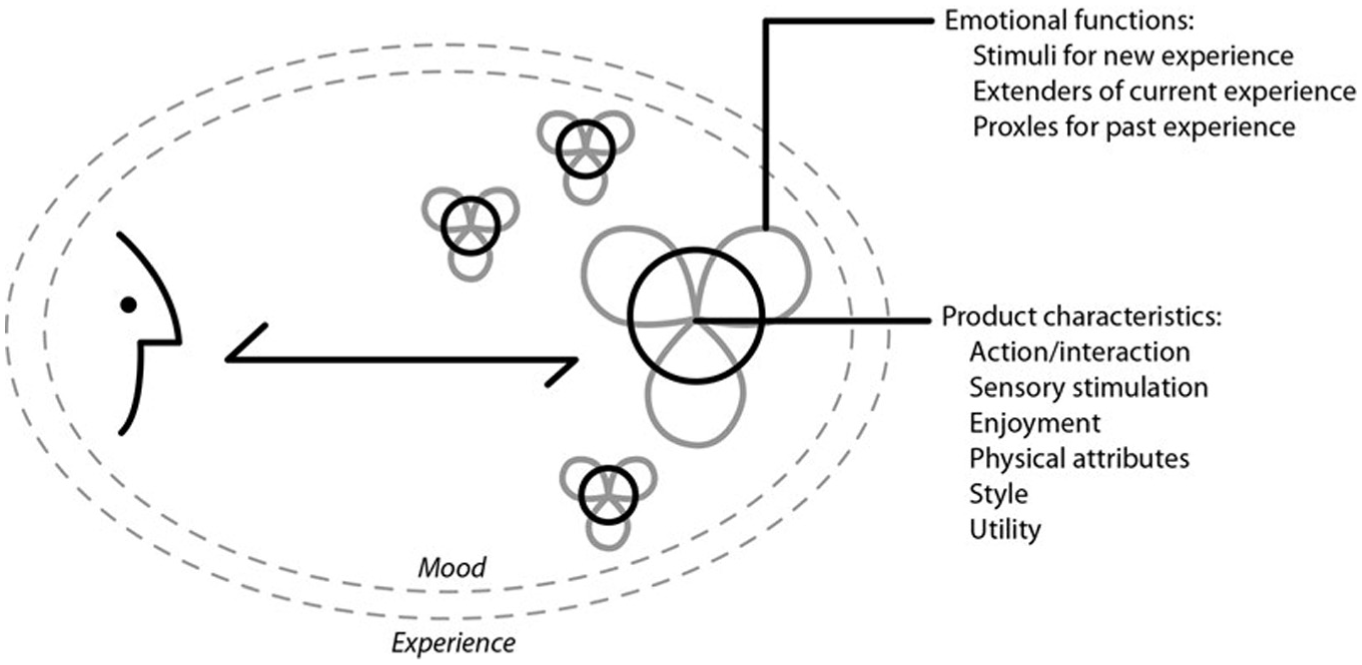
Emotional experiences with product features (from Disalvo et al., 2003, 2004).
Zimmerman (2009) applies attachment theory to design, illustrating how people form emotional connections with products as expressions of identity, social role, or personal history. This framework posits that users perceive certain products as integral parts of their self-concept and emotional well-being. This perspective is expanded by Odom et al. (2011, 2012), who explored the role of digital possessions in shaping adolescent identity, particularly in the online environment. Their research highlights how digital possessions—such as social media profiles, virtual goods in online games, or digital artifacts—serve as extensions of self-identity in the digital world. These digital possessions allow users, particularly adolescents, to craft and express their identities, fostering a deep emotional attachment to these products and systems. By applying attachment theory to the design of digital products, designers can better understand how users relate to technology in deeply personal ways, creating experiences that foster a sense of identity, belonging, and emotional fulfillment.
Norman’s (2004) work on emotional design builds on these ideas, identifying three distinct levels of emotional engagement in design: visceral, behavioral, and reflective. Visceral design pertains to the immediate esthetic response to a product or system, influencing the initial emotional reaction. Behavioral design addresses the functional aspects of the product, focusing on how well the system meets users’ needs and expectations. Finally, reflective design involves the personal and cultural meaning that users associate with the product, which shapes their long-term emotional connection to it. These three levels of emotional design are interdependent, as users’ visceral reactions can influence their behavioral engagement, while reflective experiences shape their overall perceptions of the product. Van Gorp and Adams (2012) and Scupelli and Hanington (2014) further align with Norman’s model, expanding it to consider how user experience involves not only psychological layers but also physiological, social, and ideological layers (Table 1). This integrated view of emotional design underscores the complexity of user experience, recognizing that emotional engagement is influenced by a wide range of factors, from individual psychology to broader social and cultural contexts.
A Total Evaluation of User Experience (from Scupelli & Hanington, 2014).

Csikszentmihalyi’s (1990) theory of “flow” has been widely adopted in the design of games and interactive systems, as it emphasizes the importance of balancing challenge and skill to achieve deep engagement and optimal performance. According to Csikszentmihalyi, flow is characterized by a state of intense concentration and enjoyment, where users experience a seamless, effortless interaction with a system (Figure 3). Flow theory has significant implications for design, as it provides a framework for understanding how designers can create experiences that facilitate this state of deep engagement. Schell (2008) and Lefebvre (2011) extend this idea into non-game contexts through the concept of “gamification.” They argue that incorporating game-like elements, such as competition, progression, and achievement, into non-game environments can enhance motivation and engagement. This approach has been widely adopted in various domains, from education to healthcare, where designers integrate game mechanics to foster positive emotional experiences and improve user outcomes.

A diagram of the balanced challenge increasing the skill-building that is necessary to reach a “flow” (from Csikszentmihalyi, 1990).
In contrast to the more structured concepts of emotional design, Massumi (2002) presents a more fluid and dynamic conception of emotion through his theory of affect. Massumi describes affect as “autonomous intensity,” an underlying force that precedes and exists independently of its recognition or categorization as emotion. In this view, affect is not a fixed or stable experience but rather a fluid, indeterminate quality that exists as potential before it is recognized as emotion. Emotion, on the other hand, is the socially and culturally codified interpretation of this affective change. Affect, then, is an immediate and raw experience, while emotion is the structured, intelligible response that emerges from it. This distinction has profound implications for design, as it suggests that designers need to account for both the pre-cognitive, affective experiences users have with products, as well as the emotions that are socially constructed and expressed through these experiences. In order to construct my argument, I will use several philosophers and theoreticians from several centuries (starting from 17th century) and several concepts from these authors through a textual and theoretical framework and will develop my arguments for my point to be considered in the literature of HCI studies. Diagram 3 shows the mapping of the intellectual concepts and theories used by these authors.

An intellectual diagram of concepts and theories mentioned in the second part of the article.
Analysis I: Affect and Spinoza
Spinoza’s ethical framework, as discussed by Read (2016) and Sharp (2011), further elaborates on the relationship between affect and power. According to Spinoza, an affect is considered good if it enhances a body’s capacity to act and bad if it diminishes that capacity. In this context, positive emotions, such as joy, are seen as increasing one’s potential and power, while negative emotions, such as sadness, are associated with diminished capacity and limitations. Read and Sharp extend this framework, suggesting that emotions like joy and sadness are not fixed categories but represent degrees of power and potential, reflecting the dynamic interplay between the self and the world. Lordon (2014) takes this concept further by exploring how affect influences our relationship to work, particularly in the context of labor under late capitalism. In this framework, affect becomes a crucial force that mediates the tensions between desire, necessity, and control, shaping how individuals engage with their work and broader social structures.
In the context of late capitalism, precarity becomes an affective condition, defined not just by economic instability but by heightened emotional states such as anxiety, hope, and desire (Citton, 2010; Lordon, 2014). Precarity is more than an economic state; it becomes an emotional and psychological condition, one that is experienced as a constant state of vulnerability and uncertainty. Lordon (2014) argues that affect functions as a regulatory force, channeling behaviors toward economic goals while simultaneously eroding personal autonomy. In this context, affective experiences are not merely personal but are intricately linked to broader socio-economic structures, influencing how individuals navigate the uncertainties of contemporary life.
Analysis II: Simondon and the Process of Individuation
Gilbert Simondon’s philosophy offers a transformative and revolutionary framework for understanding being, identity, and design, moving beyond conventional notions of static being and fixed identity that dominate much of Western philosophy. In his seminal 1958 work, Du mode d’existence des objets techniques (The Mode of Existence of Technical Objects), Simondon challenges traditional ontological categories by rejecting essentialist views of “substance” and “individual” and instead positing that individuation—the continuous and dynamic process of becoming—is primary. For Simondon, the individual is not a pre-existing or static entity but a moment in an ongoing, ever-evolving process. The individual is conceived not as a static, completed being, but as a phase or stage in the broader movement of individuation, a process that includes pre-individual potentials and collective formations. These pre-individual potentials are the conditions of possibility for the emergence of individuated beings, while collective formations or environments continually shape and are shaped by individual processes.
Simondon’s critique of static and fixed ontologies leads him to propose that individuality is inherently in flux. This focus on flux over stasis is a key feature of his thinking. Instead of concentrating on pre-established or already-formed entities, Simondon turns his attention to the genesis of beings—investigating the emergence and becoming of beings through relational and metastable systems. Metastability, in Simondon’s terms, refers to a state of equilibrium that is not permanent but is always subject to transformation as it continuously stabilizes and destabilizes in response to external forces. Simondon asserts that being is not an essence that is, but a process that becomes; therefore, ontogenesis—the process by which being comes into being—is more fundamental than ontology, which typically concerns itself with the study of what is, what exists in a static state. By prioritizing ontogenesis, Simondon opens up a new perspective in philosophy that emphasizes the processual nature of existence, allowing for a deeper understanding of the dynamic interplay between subjects and their environments, knowledge, and social structures.
This ontogenetic framework significantly alters our conception of knowledge, subjectivity, and meaning. According to Simondon, these concepts should not be seen as internal attributes of an individual subject or fixed in relation to the world. Rather, they are outcomes of the interrelations between heterogeneous systems, each influencing the other in an ongoing dynamic process. Subjectivity is not an isolated, self-contained inner world, nor is meaning something derived solely from the outside world. Rather, it is an emergent property that arises through interaction between individuals, other subjects, technologies, and the environments in which they are embedded. This relational view of subjectivity and meaning challenges more traditional, essentialist views of these concepts, arguing instead that both are contingent on ongoing, fluctuating interrelations and not fixed or stable truths.
A particularly important aspect of Simondon’s philosophy is his concept of transindividuation. This idea refers to the co-evolution of individuals and collectives through a shared process of becoming. Transindividuation refers to the point where individual and collective individuations intersect, thereby creating a shared space for human beings to access collective memory, language, and culture. In this view, identity is not solely a personal or individual affair, but a relational and shared process that takes place between the individual, their community, and their environment. Simondon critiques both psychologism and sociologism for their tendency to isolate internal psychological processes from external social and collective dynamics. Instead, he argues that individuation is always both relational and distributed, involving interactions between the individual, their social context, and their material and technological environment. In this sense, transindividuation reflects the interconnectedness of individual and collective existence, demonstrating how both personal development and social formations mutually inform and influence one another.
This framework of transindividuation has significant implications for the field of design, particularly in the context of human-computer interaction (HCI) and the broader field of user experience (UX) design. If individuals are in a constant state of becoming through their interaction with environments, including technological and social systems, then design must shift its focus from static products and fixed solutions to processes that support and facilitate transformation. Rather than delivering pre-determined, static outcomes, designers must create products, systems, and interfaces that serve as dynamic agents in the ongoing process of individuation for users. This view emphasizes design as a tool for facilitating change and growth, rather than providing final, fixed solutions. In practical terms, this means designing systems that allow for adaptability, learning, and personalization, enabling users to engage with products in ways that evolve over time in response to their own personal journeys of individuation.
Simondon’s critique of philosophical traditions such as atomism and hylomorphism also carries weight in the context of design. Atomism, which posits that beings are isolated, independent entities, and hylomorphism, which argues that form is imposed upon matter, both fall short of capturing the dynamic and relational processes that Simondon believes are at the heart of being. Instead, he proposes that beings emerge as the result of ongoing, dynamic processes within heterogeneous fields, where a multiplicity of factors—including physical, psychological, and social influences—coalesce to create temporary moments of coherence within an ever-evolving system. According to Simondon, the goal of individuation is not to reach a fixed, final state but to achieve a momentary coherence within a system that is constantly in flux. This continuous process of becoming, of individuation, is at the heart of knowledge, design, and technology. Design, therefore, is not a matter of imposing predetermined forms upon passive users, but of creating the conditions in which users can engage in their own processes of individuation, in a manner that is adaptive, relational, and responsive to changing needs and contexts.
Simondon’s ideas challenge us to rethink not only the nature of being and individuation but also the very nature of design itself. Traditional design processes often emphasize finality and closure, with a focus on delivering products that meet specific, predefined needs. However, in Simondon’s view, design must embrace the fluid and ongoing nature of individuation. It must support processes of transformation rather than simply providing static solutions. This shift calls for a more flexible, responsive approach to design that is attuned to the dynamic and relational nature of human existence. Moreover, it emphasizes the role of design in shaping not just individual users but the collective processes of social and cultural formation, as users engage with products and systems in ways that continuously contribute to their personal and collective becoming.
Analysis III: Stiegler, Transindividuation, and the Politics of Memory
Bernard Stiegler builds upon Gilbert Simondon’s theory of transindividuation, extending it by introducing the dimensions of temporality and technical memory, positioning them as fundamental components in the individuation process. While Simondon emphasizes the relational and collective nature of individuation, Stiegler contends that individuation is also deeply historical, shaped by the continuous interaction between individuals and externalized systems of memory. For Stiegler, individuation is a dynamic process, where the individual is not merely a product of present relational exchanges but is also shaped by a historical flow of memory, culture, and technology. Central to Stiegler’s argument is his concept of “tertiary memory,” which refers to the externalized forms of memory embedded in cultural and technological artifacts. These artifacts, ranging from ancient manuscripts and oral traditions to modern digital technologies, mediate and structure both individual and collective life, allowing for the preservation and transmission of knowledge across generations.
Stiegler’s work further refines the concept of memory by distinguishing three different types: primary memory, secondary memory, and tertiary memory. Primary memory refers to biological memory—the fundamental memory of living organisms, which allows them to respond to stimuli and retain basic information for survival. Secondary memory is the realm of personal lived experience—what we typically think of as individual memory, which is shaped by personal experience, emotions, and subjective perceptions. Tertiary memory, however, is the key to Stiegler’s argument; it represents the externalization of memory, stored in forms such as language, books, images, and more recently, digital media. Tertiary memory allows individuals to access and participate in shared cultural timelines and collective institutions, forming the basis for transindividuation. Through the interaction with technological artifacts—whether they be books, computers, or social media platforms—individuals are able to engage with collective knowledge and memory, which in turn influences their sense of self, identity, and social role.
The role of technology in transindividuation is not neutral, however. Stiegler emphasizes that the systems that manage memory and attention are not only shaped by technological and cultural forces but are also deeply intertwined with the political and economic structures of society. In the context of late capitalism, these systems—media, algorithms, digital platforms, and other technological infrastructures—are designed to capture and commodify human affect and cognition. These technologies, far from being passive tools, actively shape the way individuals and collectives process memory, knowledge, and experience. Stiegler’s critique is grounded in the notion that when technologies of memory are controlled by market forces, they can lead to what he calls “proletarianization.” This term refers to the erosion of individuals’ and collectives’ ability to engage in critical thought, creativity, and meaningful agency. In Stiegler’s view, proletarianization occurs when people’s access to and control over their own memory and attention is systematically undermined by commercial interests, leading to a society in which individuals become mere consumers of pre-packaged information and content, rather than active producers and creators of knowledge.
This critical assessment of the role of technology in memory and individuation leads Stiegler to critique Simondon’s model of individuation, particularly its linearity. While Simondon’s theory focuses on the continuous and dynamic process of individuation, Stiegler argues that memory is not merely transmitted in a straightforward manner from one generation to the next. Instead, memory is continually transformed as it is passed on, with each generation inheriting and reinterpreting the symbolic resources of the previous one. These symbolic resources—the cultural artifacts, ideas, and practices handed down through history—are not static but are continually redefined and recontextualized as they are integrated into the lived experiences of each new generation. As a result, memory and knowledge are not fixed entities but are subject to ongoing reinterpretation and transformation. This view of memory as a dynamic and ever-evolving process has profound implications for design. It challenges designers to think beyond traditional notions of usability or esthetics, urging them to consider the deeper implications of their work in terms of how it shapes the conditions of thought, desire, and attention.
In Stiegler’s view, design is not merely about creating functional or esthetically pleasing products; it is about understanding how artifacts and interfaces mediate the process of individuation. Rather than being passive tools, artifacts and interfaces are active participants in the ongoing process of memory formation and transformation. They store, transmit, and reshape tertiary memory, influencing how individuals and collectives engage with knowledge, culture, and history. This makes designers ethically responsible for considering how their creations condition the processes of individuation. When designing technologies, interfaces, or systems, designers must be aware of the long-term effects their work may have on users’ cognitive and emotional processes, as well as on the broader social and cultural contexts in which these technologies will be deployed.
This understanding of design within the framework of memory and transindividuation reframes the role of designers as not only creators of products but also as mediators of human development and social progress. Design becomes a deeply political act, one that shapes the ways in which individuals and collectives interact with the world, shape their identities, and engage with the collective memory of their culture. Stiegler’s framework situates design within a broader political economy of memory, where technologies of memory are not neutral instruments but are deeply entwined with power structures that influence the way knowledge, attention, and affect are governed. In this context, the design of systems and experiences must be understood not only in terms of immediate user experience or engagement metrics but also in terms of their long-term effects on human development, social structures, and cultural inheritance.
By positioning design as an active participant in the process of transindividuation, Stiegler challenges the field of design to move beyond the short-term goals of user satisfaction or engagement. Instead, designers are encouraged to adopt more critical and speculative modes of practice, considering the broader implications of their work on human subjectivity, collective memory, and social change. This call to action asks designers to take on a more responsible, ethical role in shaping the technologies that mediate human experience, encouraging them to think critically about how their designs may influence the processes of individuation over time.
Conclusion: Toward a Politics of Affect in Design
This article proposes a shift from emotional design to affective design, grounded in a philosophical understanding of becoming, memory, and relationality. It views design as a process of subject formation and cultural mediation, not merely problem-solving. In an era defined by automation, surveillance, and algorithmic control, such a shift is not only conceptually necessary but ethically urgent. Thus this article has sought to critically reevaluate the fundamental notions that support modern design theory and practice, especially in the field of Human-Computer Interaction (HCI). By contesting the supremacy of emotion-focused models and introducing a comprehensive theoretical framework based on the philosophical works of Baruch Spinoza, Gilbert Simondon, and Bernard Stiegler, it reconceptualizes affect as an essential, dynamic element in the design process—one that surpasses the subjective and measurable aspects of emotion. Affect should be comprehended not merely as a psychological condition, but as an ontological intensity—an open, pre-personal ability to influence and be influenced, which is transmitted through and molded by technological artifacts, cultural systems, and socio-historical contexts.
Affect as Ontological Foundation
Affect is not a subjective feeling to be engineered, but a dynamic force that flows through technologies, bodies, and environments. It precedes and exceeds emotion, organizing attention, identity, and social relations. Affect thus calls for a new ethics of design—one that values openness, emergence, and transformation over control and prediction. In this light, design becomes a site of becoming rather than a means of managing affective outputs.
This redefinition of affect challenges the traditional assumptions inherent in user-centered design techniques and questions the epistemological frameworks prevalent in empirical HCI research. Conventional models frequently diminish emotional experience to functional input or behavioral signals, facilitating a type of instrumental rationality that harmonizes perfectly with the demands of usability, efficiency, and capitalist optimization. This paper demonstrates that affect cannot be reduced to such frameworks; it functions at the level of intensities and relational changes that are inherently integrated within larger assemblages of power, temporality, memory, and social individuation. The affective turn in design theory signifies a significant transformation—not merely in focus or emphasis, but in ontology and ethics.
A key theoretical contribution of the study is the delineation of transindividuation as a conceptual link between affect and design. Utilizing Simondon’s critique of hylomorphic thought and his focus on ontogenesis, the article presents individuation not as a finality or essence, but as an ongoing struggle between pre-individual potential and social actualization. Stiegler’s work temporally expands this framework by introducing the concept of the third memory—cultural, technical, and symbolic repositories that mediate both individual and community existence. In this framework, design artifacts are neither neutral or merely functional; they are emotive infrastructures that influence the formation of identities and the modification of social relationships. Design is not only a means of generating answers; it is a methodology of transformation, a domain where futures are envisioned, challenged, and experienced.
This philosophical shift has substantial practical consequences for the domain of HCI. Initially, it necessitates a thorough reevaluation of the conceptualization of “users.” Instead of viewing users as consistent, rational entities whose preferences can be quantified through surveys or usability metrics, the affective approach emphasizes users as dynamic individuals shaped by their interactions with technologies, systems, interfaces, and discourses. This indicates that designing for affect encompasses not only predicting reactions but also interacting with the circumstances that shape experiences, wants, and abilities. This strategy promotes a transition from creating products intended to evoke specific emotions (such as happiness or satisfaction) to developing settings that facilitate open-ended, emotionally nuanced interactions—termed affective affordances. This necessitates a reevaluation of design methodologies, instruments, and criteria, advancing beyond ergonomics and usefulness to encompass esthetics, politics, and temporality.
Implications for HCI
This framework disrupts prevailing user-centered models by proposing a shift from “users” as fixed entities to “subjects in formation.” Affect cannot be reduced to metrics, personas, or predictive algorithms. Instead, affective design must cultivate spaces for ambiguity, reflection, and affective affordances—elements that enable emergent and non-linear interactions.
Pragmatically, this shift entails a reorientation of design priorities:
From usability to transformation
From satisfaction to individuation
From metrics to meaning
From optimization to care
Affective affordances are not merely tools for increasing engagement but invitations to co-create identity, meaning, and memory. This calls for design methods that are speculative, critical, and situated—able to engage the full complexity of emotional, cultural, and historical life. For instance, consider a speculative interface for a digital journaling platform designed not to capture metrics of emotional state, but to accommodate ambiguity, hesitation, or contradiction in mood over time. Rather than prompting users to “rate their mood,” the system might present fluid visualizations or open-ended narrative prompts that evolve with user interaction, supporting affective exploration instead of quantification.
Furthermore, the study analyzes the historical simplification of emotion to a series of predictable, commodifiable states, a trend that has been especially evident in both commercial UX research and early affective computing paradigms. The study illustrates that this reductive perspective is not only a theoretical lapse; it constitutes a political strategy that corresponds with the overarching principles of cognitive capitalism, where attention, desire, and emotion are used for value extraction. Affect, conversely, eludes such encapsulation. It represents excess, indeterminacy, and resistance; it cannot be entirely quantified, anticipated, or confined. Acknowledging this paves the way for a fundamentally distinct design ethics—one that emphasizes care, ambiguity, plurality, and evolution rather than control, efficiency, and finality.
Nonetheless, the proposed framework is not without of constraints. It is largely theoretical and hypothetical, devoid of substantial empirical validation. The philosophical depth enhances the analysis’s complexity and rigor but may complicate practical implementation, particularly for designers and practitioners in search of explicit methodology or design principles. The abstract nature of ideas such as affect, transindividuation, and third memory may complicate their operationalization without additional translation into design-specific terminology or illustrations. The framework may inadvertently hide the material and institutional restrictions within which designers’ function by highlighting the instability and openness of affect.
To tackle these issues, forthcoming research should explore multiple complimentary avenues. Empirical studies are required to examine the progression of affective dynamics in specific interaction contexts, utilizing methods such as ethnographies of user practices, participatory design initiatives, or longitudinal case analyses of affective technologies. Special emphasis should be placed on instances of rupture, dissonance, or transition, as they frequently elucidate the presence of affect most distinctly. Researchers should methodically explore innovative techniques and methodologies that might effectively capture the emergence, variability, and interconnection of affect, potentially via arts-based research, speculative design, or practice-led inquiry. In theory, subsequent research may amalgamate this affective paradigm with critical racism, gender, and disability studies, which have consistently highlighted the corporeal, political, and contextual aspects of experience.
This study simultaneously encourages a comprehensive reevaluation of pedagogical and institutional frameworks. Design education could gain from deeper engagement with philosophical and political theory, prompting students to critically examine the assumptions inherent in their tools, methods, and perspectives. Similarly, institutions and funding organizations must be prepared to endorse exploratory, speculative, and critical research that defies rapid instrumentalization. Only with persistent structural support can the affective paradigm begin to transform the prevailing trajectories of design research and practice.
This essay advocates for a redefinition of design, viewing it as a relational, emotive, and temporal practice intertwined with broader processes of subject creation, collective existence, and technological mediation, rather than introducing a new toolset or technique. In a time increasingly characterized by instability, automation, and algorithmic control, this transition is not only desirable but essential. Affect underscores that design is inherently biased, and that any interface, technology, or system represents a battleground concerning the essence of humanity, relationships, memory, and personal evolution. By prioritizing affect, we do not forsake reason or functionality; rather, we broaden the scope of what design may comprehend, experience, and accomplish. We are embracing the incomplete, the evolving, and the transformative—within ourselves and in the world, we are endeavoring to shape.
Designers engaged in the development of interaction systems must prioritize facilitating human behaviors that are intricately woven into the intricacies of daily life, rather than concentrating solely on logical coherence or technical sophistication. This change in focus could significantly alter the overall emotional effect of these systems. According to Simondon (1964), the human subject is essentially an affective being, whose experience is influenced by interactions with both transindividual and epiphylogenetic memory, the latter idea further elaborated by Stiegler (1998). Notwithstanding its grandiose aim, Apple’s 1998 partnership with Don Norman to create activity-centered operating systems eventually proved inadequate in functionality. Bødker (2006) notes that the domain of Human-Computer Interaction has transitioned into a third wave, defined more by the subtle emotive aspects of usage than by technological proficiency. The regulation of affective states provides profound insights into current interaction paradigms within this developing terrain. In short, designers must recognize that every interface, system, or artifact participates in shaping what it means to be human. By embracing affect, we acknowledge the messiness, ambiguity, and potential of human experience—and create space for more just, caring, and transformative futures.
Conclusion: Toward an Affective Turn in Human-Computer Interaction
The paper has launched a long-distance philosophical investigation into the concept of affect as an organizing principle in redesigning design theory and Human-Computer Interaction (HCI). By drawing on the ontological, ethical, and epistemological reflections of Baruch Spinoza, Gilbert Simondon, and Bernard Stiegler, it has tried to catalyze a shift in concept from emotion-based models of interaction to a more proximate experience of affect as a force that precedes or exceeds, and that organizes human experience. Affect, in this perspective, is not merely a user reaction to an interface, or an emotion to measure and streamline; it is the pre-personal intensity that shapes subjectivity, memory, and individuation in technology-mediated space. By highlighting this concept, the paper has argued that HCI, as a discipline, requires reconsideration critically its assumptions, values, and practices facing a more sophisticated understanding of what designing for experience means.
Design, within this new paradigm, is not simply the creation of usable or enjoyable artifacts, but the shaping of circumstances within which subjectivities come into being, change, and interact with others and technology. Spinoza’s ethics teaches us that emotion is related to power and the ability to act; Simondon’s theory of individuation places the subject as becoming-being, never yet whole yet always becoming shaped by interaction among material and social milieus; and Stiegler’s tertiary memory theory places design within the core of a political and technological economy that regulates attention, care, and thought. Taken together, these theorists provide a rigorous alternative to the utilitarian, behaviorist, or neurocognitive paradigms that have characterized much work within HCI research.
The consequences of this theoretical rethinking have multiple axes. In the first instance, the concept of the “user” is fundamentally rethought. Instead of being a reified object with quantifiable needs or foreseeable behaviors, the user becomes a processal subject—emergent, relational, and historically constructed. Design is no longer a matter of providing pre-determined emotional outputs but generating scenarios for affective resonance, transmutation, and mutual individuation. Technologies are not mere servants or satisfiers of users but co-participants in the constitution of memory, identity formation, and social imaginaries.
Second, this framework requests that we rethink the role of esthetics, ambiguity, and temporality within interactive systems. Affective design does not tend toward closure, optimization, or smooth operation; rather, it opens up space for hesitation, multiplicity, and reflection. Interfaces become temporal agents that participate within the unfolding of the user and not just respond to pre-defined metrics of success. Designing then must become more speculative, critical, and ethically accountable—entangled within technical affordances and taking up the political, emotional, and existential dimensions of interaction.
Third, this paper resists the dominant discourses of affective computing, which far too frequently compress emotion into legible data for processing by algorithms. Such models, technically impressive though they may be, pose the risk of reducing the richness of affect to commodifiable states conducive to the imperatives of digital capitalism. As an alternative, the approach developed here insists upon the irreducibility of affect—refusal to be quantified, capability for rupture and transformation. In doing this, it brings design into alignment with an ethics of care, one attuned to the vulnerability, opacity, and contingency of human experience.
Indeed, such a shift conceptually is not without its problems. This thus elaborated framework still largely exists on the theoretical plane and requires further empirical exploration and methodological innovation. How, for example, do we trace changes within affect over time? How do we create systems to sustain indeterminacy without sacrificing usability? What does one mean to teach designers to work with uncertainty, with intensities, with memory? These are not readily answerable questions but indisputably if design is to continue to address the complications of everyday life. Briefly, this paper suggests that we recognize design not simply as a problem-solving discipline but as a speculative and ethical field mindful of the elemental conditions of human becoming. Affect in this sense becomes a site of vulnerability and an agent of transmutation. To design for affect means to design for futurities yet unforeclosed—for subjectivities still in the making, memories still to come, collectivities still to gather. To care for every interface as a threshold and every system as an environment for transmutation and every act of design as an expression of care for the open-endedness of life.
Footnotes
Acknowledgements
I sincerely thank Bruce Hanington and Scupelli for letting me use their table (Table 1) and Bruce Hanington, Jodi Forlozzi and DiSalvo for letting me use their figure (Figure 2). Figures of Yerkes-Dodson (Figure 1) and Csikszentmihalyi (Figure 3) are in courtesy of their owners. As stated above, all the necessary permission for the figures and the table used have been taken and granted.

Ethical Considerations
Since there are no experiments related with this article, there is no ethics statement needed.
Funding
The authors received no financial support for the research, authorship, and/or publication of this article.
Declaration of Conflicting Interests
The authors declared no potential conflicts of interest with respect to the research, authorship, and/or publication of this article.
Data Availability Statement
My research data is available and can be shared.
Academic Interests
Visual Communication Design, Multimedia and Web Design, User Exprience Design, User Interface Design.