




Abstract
In the evolving landscape of educational ecology, informal learning environments offer valuable opportunities to bridge formal instruction with real-world experiences. The Mobile-Assisted Seamless Vocabulary Learning (MASVL) framework integrates mobile technology to support continuous and contextualized Chinese vocabulary acquisition. This study examines the effectiveness of MASVL in enhancing vocabulary development and learner engagement among tertiary-level students. A total of 32 students with diverse proficiency levels participated in a 16-week intervention using DingTalk, a mobile-based social media platform designed for seamless learning. Adopting a design-based research (DBR) methodology with a mixed-methods approach, the study collected both quantitative and qualitative data. Quantitative analysis of 1,921 learner-generated Chinese artifacts employed the Uber Index (U), a lexical diversity metric that calculates the ratio of unique word types to total tokens using a logarithmic formula. Results from a two-way repeated measures ANOVA showed significant effects of time and proficiency group (p < .001). Lexical diversity increased by 42.2% overall, with high-performing learners improving by 52%, medium performers by 41%, and low performers by 33%. A one-sample t-test confirmed strong perceived learning success (M = 3.97 out of five, p < .001). Qualitative findings from student reflections and interviews indicated that ease of use, perceived usefulness, and timely peer interaction enhanced motivation and learner autonomy. Some limitations related to platform editability were noted. Overall, MASVL proved to be an effective, learner-centered framework that supports vocabulary acquisition through real-life, mobile-supported interaction. The study offers implications for integrating seamless learning into second language instruction.
Plain Language Summary
Learning a new language requires practice in both formal classroom settings and real-world situations. This study explores how mobile technology can help university students learn Chinese vocabulary more effectively by integrating learning into their daily lives. The Mobile-Assisted Seamless Vocabulary Learning (MASVL) framework allows students to engage with vocabulary continuously using DingTalk, a social media platform. Over 16 weeks, 32 students participated in the study, using the platform to create and share artifacts in Chinese. Researchers analyzed both numerical data (such as vocabulary growth and engagement levels) and students’ feedback to understand how well the approach worked. The results showed that students significantly improved their vocabulary over time. Those who actively used DingTalk to practice and interact with their peers had better learning outcomes. Students found the platform easy to use and helpful, though some wished for improvements, such as the ability to edit their posts. This study confirms that mobile technology can effectively support language learning by making vocabulary practice more interactive and engaging. It offers practical strategies for teachers to use social media to enhance learning, encourage student independence, and improve language skills beyond the classroom.
Keywords
Introduction
The swift development of digital technologies has profoundly transformed the landscape of education, providing learners with increased flexibility and access to knowledge beyond traditional classroom boundaries. Among recent pedagogical innovations, seamless learning stands out for its emphasis on the continuity of formal and informal learning across diverse contexts (L. H. Wong et al., 2021; Zhou & Goh, 2025a). Seamless learning helps students to apply academic information in actual, real-world settings, resulting in deeper engagement, persistent practice, and meaningful learning experiences.
In the discipline of CFL, vocabulary acquisition remains a fundamental but particularly difficult aspect of language learning. Due to the logographic structure of Chinese characters, low phonological transparency, and the absence of cognates for many learners, mastering vocabulary often requires intensive effort and time (Jiang, 2004; Wen et al., 2025). Conventional instruction methods frequently rely on mechanical drills and rote memorization, which limit learners’ ability to internalize vocabulary and use it effectively in communicative contexts (Nation, 2001; Webb & Nation, 2017). Consequently, learners often struggle to transfer vocabulary knowledge from the classroom into real-world language use.
To address these limitations, the present study introduces the MASVL framework. This framework is designed to integrate structured classroom instruction with informal, everyday language practice through mobile technologies. Central to MASVL is the use of learner-generated artifacts, including sentence construction and vocabulary-rich photo task. These tasks are designed not as add-ons but as core mechanisms for reinforcing vocabulary use through contextual, meaningful, and socially situated learning activities (L. H. Wong et al., 2016; Zhou & Goh, 2025a).
Although computer-assisted language learning (CALL) and AI-supported platforms have contributed to vocabulary instruction, they often emphasize structured drills, explicit instruction, and decontextualized content delivery (Arani et al., 2024; Wu & Pan, 2025). AI-based systems, while capable of adaptive feedback, typically lack opportunities for authentic interaction and long-term engagement in meaningful vocabulary use (Wen et al., 2025; Yeh, 2025). As Ren and Tan (2025) and Zhang et al. (2025) point out, learner acceptance and engagement with mobile learning are strongly influenced by usability, learner awareness, and context relevance. The MASVL framework addresses these limitations by positioning learners as active participants in situated, socially mediated learning processes rather than passive recipients of content.
In contrast, MASVL adopts an ecologically grounded and pedagogically integrated approach. Its portability, ease of use, and contextual responsiveness help address limitations of more complex technologies (L. H. Wong et al., 2021; Zhou & Goh, 2025b). It bridges formal instruction with informal learning experiences by encouraging learners to create mobile-based artifacts such as vocabulary-embedded photographs, contextual sentence construction, and scaffolded reflective writing embedded in daily life (Aw et al., 2016; Zhou & Goh, 2025b). The model is informed by Situated Learning Theory (Lave & Wenger, 1991), Constructivist Pedagogy (Vygotsky, 1978), and Connectivism (Alam, 2023), providing learners with continuous, socially interactive vocabulary practice. With strong theoretical foundations and demonstrated empirical impact, MASVL offers a compelling alternative to conventional models for tertiary-level CFL learners.
Despite growing interest in mobile-assisted vocabulary learning, empirical research on sustained interventions in tertiary CFL settings remains limited (Chen et al., 2022; Song & Hwang, 2022). This study addresses these gaps using a DBR approach to examine how MASVL supports vocabulary development over a 16-week period.
Specifically, the study investigates:
Using a mixed-methods DBR design, the study analyzed 1,921 learner-generated artifacts using Uber Index metrics and examined student reflections and interviews. Results revealed a 42.2% increase in lexical diversity overall, with high-performing students improving by 52%. Students also reported positive experiences with usability, peer interaction, and contextual learning. These findings suggest that MASVL is an effective, learner-centered model that supports vocabulary acquisition through mobile-supported social interaction and continuous engagement.
This study contributes to a deeper understanding of how mobile-assisted, context-rich environments promote vocabulary development in second language education. It also provides theoretical and practical insights for designing psychologically responsive, technology-integrated learning models that enhance lexical growth and learner autonomy in CFL contexts.
Literature Review
Seamless learning is increasingly recognized in educational technology for its ability to connect formal and informal learning across contexts, locations, time, and social networks (L. H. Wong et al., 2015). It involves the continuous and contextual integration of diverse learning experiences, enabling knowledge transfer between school and daily life through mobile and digital tools (Abdullah & Hashim, 2021; Hambrock & De Villiers, 2023; Zhou & Goh, 2025b). Research has shown its effectiveness in vocabulary development, particularly through mobile-based sentence-making and photo-taking (Foomani & Hedayati, 2016; L. H. Wong et al., 2016). However, most studies focus on primary learners in Singapore and emphasize sentence-level artifacts, with limited attention to learner autonomy, possibly due to the cognitive demands of self-directed learning (Aw et al., 2016; Song & Hwang, 2022; L. H. Wong et al., 2021).
Compared to established models such as web-based instruction and AI-supported learning, seamless learning in Chinese as a Foreign Language (CFL) education remains underexplored (Chen et al., 2022; Wen et al., 2025). Existing findings often lack generalizability due to narrow implementation scopes and limited research in authentic tertiary CFL contexts, especially within mainland China (Zhou & Goh, 2025b). These gaps underscore the need for further investigation into how seamless learning can be effectively adapted and sustained in higher education CFL programs.
This study is guided by a theoretical framework that integrates Situated Learning Theory, Neo-Constructivism, Connectivism, and the Technology Acceptance Model (TAM). Each theoretical strand informs a specific dimension of the MASVL framework and underpins its instructional design, technological deployment, and learning principles.
Situated Learning Theory (Lave & Wenger, 1991) asserts that effective learning occurs through authentic, contextualized activities within communities of practice. In the MASVL framework, this principle is operationalized through context-rich vocabulary tasks that require learners to apply Chinese in everyday scenarios, such as captioning photos, constructing sentences, and composing short essays. These tasks embed vocabulary learning into learners’ social and physical environments, enhancing transferability and relevance (Zhou & Goh, 2025b).
Neo-Constructivism highlights learner autonomy and the co-construction of knowledge through scaffolded, personalized tasks. As discussed by McCourt (2016) and extended by Jumaah (2024), learning is most effective when students actively reconstruct knowledge through iterative practice and reflection. In MASVL, learners are encouraged to build vocabulary competence through personalized artifact creation that aligns with their lived experiences. These artifacts are progressively scaffolded from sentence to paragraph to essay-level tasks, enabling learners to exercise creative control while internalizing target vocabulary.
Connectivism, proposed by Alam (2023), focuses on how learning occurs in digital networks through the formation of connections between individuals, information sources, and technological tools. The MASVL model integrates DingTalk, a mobile-based social learning platform, to facilitate peer interaction, sharing, and multimodal engagement. Learners collaborate through photo uploads, contextual sentences, and peer feedback, all of which are mediated through digital interactions that support both social and cognitive development (Sun et al., 2023; L. H. Wong et al., 2016).
Furthermore, the TAM (Davis, 1989) provides a valuable framework for understanding how learners perceive and engage with mobile technologies in educational contexts. While extended versions of TAM incorporate variables such as computer self-efficacy and subjective norms, its core constructs include Perceived Ease of Use, Perceived Usefulness, Intention to Use, and Actual Use. These constructs represent the cognitive, attitudinal, and behavioral dimensions of technology acceptance (Al-Emran et al., 2018; Davis, 1989).
This study specifically focuses on the cognitive dimension of TAM by examining learners’ perceptions of ease of use and usefulness. As the qualitative component of this mixed-methods research centers on thematic analysis of learner reflections and interviews, constructs such as intention to use and actual use are not included. These latter constructs typically require behavioral tracking or log data, which fall outside the scope of this study. In contrast, learners’ subjective evaluations of usefulness and usability provide directly observable and pedagogically relevant insights into the effectiveness of the MASVL learning environment (Rondan-Cataluna et al., 2015; Zhou & Goh, 2025b).
Within MASVL, these cognitive factors are reflected in the intuitive platform design and the integration of meaningful, context-based vocabulary tasks. Previous research has shown that mobile learning environments which emphasize ease of use and task relevance can support learner autonomy, increase motivation, and sustain long-term engagement (Alexiadou & Sougari, 2025; Hayadi & Hariguna, 2025; Stockwell & Liu, 2015). Integrating TAM into the theoretical framework helps explain how learners interpret and respond to MASVL’s technological features during their learning process.
This theoretical synthesis builds upon existing frameworks proposed by Abdullah and Hashim (2021) and L. H. Wong et al. (2021), while adapting the model to address the specific needs of Chinese vocabulary learners in the CFL context. The theoretical framework is illustrated in Figure 1.

Theoretical framework supporting MASVL.
Despite the growing interest in seamless language learning, existing research remains limited in both scope and depth, especially in tertiary CFL education. Most prior studies are either short-term interventions or focus on young learners in primary school settings (e.g., Aw et al., 2016; L. H. Wong et al., 2016). Very few have explored longitudinal, artifact-driven, mobile-assisted vocabulary development among adult CFL learners in real-world university classrooms. Moreover, the influence of learner proficiency, motivation, and technology acceptance has rarely been integrated within a single design framework (Wen et al., 2025; Zhou & Goh, 2025a). These gaps highlight the need for theory-informed, ecologically valid studies that bridge formal instruction with informal vocabulary practice.
To address these gaps, this study adopts a DBR methodology to implement and evaluate MASVL over a 16-week intervention with tertiary CFL learners. The intervention engages students in regular artifact creation using target vocabulary from HSK Level 4. Learners document their use of vocabulary across multiple stages, with the creation of Chinese artifacts serving as a primary assignment that promotes both contemplation and expression. This pedagogical model aligns with Nation’s (2001) emphasis on frequent, meaningful, and varied lexical encounters for long-term acquisition.
Through quantitative analysis of lexical diversity in learner-generated artifacts and qualitative analysis of student feedback, this research contributes both empirical evidence and theoretical advancement to the field of technology-enhanced vocabulary learning in CFL higher education contexts.
Methodology
This study employed a DBR methodology (Barab & Squire, 2004) with an embedded mixed-methods design to examine the effectiveness of the MASVL framework in supporting Chinese vocabulary development and learner engagement. DBR is a flexible, iterative research approach grounded in the learning sciences, designed to explore pedagogical innovations in authentic educational settings. Its dual aims are to refine instructional practice and to develop usable, context-sensitive theories that inform both research and practice (Barab & Squire, 2004).
In alignment with the DBR paradigm, this study adopted an embedded mixed-methods approach (See Figure 2), wherein quantitative data served as the primary dataset and qualitative data were integrated to provide contextual depth and insight. The quantitative component focused on lexical diversity development, while the qualitative component explored learners’ perceptions, engagement, and attitudes toward the MASVL framework.

A mixed method design of this study.
Notably, a control group was not included in the research design. This decision reflects both the methodological philosophy of DBR and ethical considerations within the formal instructional context. DBR emphasizes ecological validity, iterative refinement, and responsiveness to authentic classroom dynamics rather than controlled comparison (Ko & Lim, 2022; Song & Hwang, 2022). Given institutional constraints such as fixed enrollments and the obligation to ensure equitable access to learning resources, the study prioritized examining change within a naturally occurring classroom community.
A within-group repeated-measures design was therefore adopted, allowing for intra-group comparisons of vocabulary growth across proficiency subgroups while preserving the authenticity of the learning environment.
The Participants
A total of 32 international undergraduate students (10 males, 22 females; mean age = 21.5) enrolled in degree programs at a public university in mainland China were recruited through purposive sampling (Andrade, 2021). All participants were studying CFL and placed at an intermediate level (corresponding to CEFR B1), enabling them to engage with mobile-assisted vocabulary tasks.
To better understand differential effects of the intervention, participants were categorized into three proficiency subgroups based on their standardized scores on the HSK Level 3 exam and institutional writing placement tests. For instance, high-proficiency students scored approximately 290 out of 300 on the HSK and above 90% on writing assessments, while low-proficiency students scored around 180 on the HSK and 65% on writing. Despite this stratification, all students followed the same HSK Level 4 curriculum, ensuring consistency in instructional materials, learning objectives, and classroom delivery.
Although participants were generally experienced with mobile platforms such as WeChat and Facebook, none had prior exposure to mobile-assisted seamless learning or artifact-based vocabulary tasks. This ensured that the MASVL framework constituted a novel instructional model for all students.
The class instructor, who had 4 years of CFL teaching experience, implemented the MASVL intervention and contributed observational insights. Prior to the study, a formal briefing was held with university administrators to secure institutional support, and informed consent was obtained from all participants in accordance with ethical research standards.
Designing Learning Materials, Processes, and Contexts
Each of the participants were expected to learn and retain a standardized set of 240 vocabulary items, systematically selected from the official HSK Level 4 word list, which comprises 600 words. The target vocabulary was chosen using four main criteria: (1) relevance to students’ everyday and academic situations (Zhou & Goh, 2025a), (2) contextual complexity, (3) frequency of usage, and (4) alignment with the thematic substance of the learning exercises (Zhou & Goh, 2025a). Words like
The word selection process was guided by three CFL experts (each with over a decade of teaching experience) and adhered to the Syllabus of Chinese Language Program for Foreign Learners in Colleges and Universities (2002). This rigorous procedure ensured both standardization and relevance, establishing a uniform foundation for vocabulary learning and cross-comparison.
The MASVL framework (Figure 3), inspired by L. Wong and Looi’s (2010) seamless learning model, was implemented using smartphones and the DingTalk platform, which serves as the central hub for all instructional, social, and reflective learning activities. This framework facilitated transitions between formal classroom instruction and informal real-world learning, thereby promoting contextualized, task-based vocabulary use.

MASVL framework: “Seamlessly learn vocabulary!.”
It is worth noting that the “Seamlessly learn vocabulary!” process encompassed four distinct activity types:
(1) In-class learning engagement (Activity 1): Under the guidance of the instructor, a blended learning strategy was implemented, integrating traditional teaching methods with multimedia resources. For instance, during a lesson on transportation, the instructor utilized visual aids and facilitated vocabulary-focused discussions. An example sentence used in class was “
(2) Personalized contextual learning (Activity 2): Students reinforced target vocabulary by applying it in real-life situations through sharing photos and captions on social media platforms. For example, after a lesson on food-related vocabulary, a student might create a Chinese artifact such as “
(3) Online peer learning (Activity 3): Within the MASVL framework’s learning circle on DingTalk, students participated in peer feedback by commenting on and reviewing each other’s posts. This interactive process fostered collaborative learning and promoted deeper cognitive engagement with vocabulary use.
(4) Learning consolidation (Activity 4): Students returned to the classroom to reflect on and consolidate their learning, guided by the instructor. Peer feedback and self-generated artifacts were revisited to reinforce vocabulary acquisition (Zhou & Goh, 2025a).
Subsequently, To effectively embed the principles of seamless learning into CFL acquisition, this study placed particular emphasis on the DingTalk platform’s Learning Circle function (see Figure 3). The Learning Circle serves as a dynamic, interactive learning space that integrates formal classroom learning with informal, context-rich language practice.
As illustrated in Figure 4, within an HSK Level 4 Learning Circle, a student shared a sentence artifact reflecting her daily experience:

HSK Level 4 learning circle within the MASVL framework.
A key feature of the Learning Circle is its peer feedback mechanism, which fosters collaborative evaluation in an informal yet purposeful environment. Students were encouraged to provide feedback on peers’ posts, focusing on word choice, sentence structure, and overall clarity. This practice enhanced learner engagement while fostering evaluative reasoning and heightened language awareness.
Through peer interaction, learners are exposed to a variety of linguistic expressions and pragmatic uses, enriching their understanding of how vocabulary can be employed effectively in different communicative scenarios.
An example of this interactive process is shown in Figure 5. In another HSK Level 4 Learning Circle, a student posted a culturally grounded sentence: “

A case of students’ artifacts making and online peer discussion.
Intervention Procedures and Schedule
The intervention was conducted over a 16-week semester starting in March 2023. Each 4-week period constituted a mini-cycle within the DBR structure. Students participated in two weekly sessions: one formal (2 hr) and one informal (1 hr).
Each week, 40 min were allocated to explicit vocabulary instruction using the HSK Level 4 Standard Textbook. Following this, students used mobile devices to create and share sentence artifacts on DingTalk. This marked the start of the informal, self-directed learning phase. These artifacts, often paired with images, allowed students to demonstrate vocabulary use in personally meaningful contexts.
Subsequently, students engaged in peer review by commenting on each other’s posts, further reinforcing their learning through collaborative dialog. Lastly, each session concluded with a 20-min consolidation activity, where instructors facilitated reflection on vocabulary usage and peer feedback.
Students created weekly sentence-level artifacts on the DingTalk platform, which were peer-reviewed and discussed. Over time, this led to more complex written productions, aligning with the core idea of seamless learning.
Data Collection
This study adopted a multi-source data collection strategy to evaluate both vocabulary development and learner experiences within the MASVL framework. While various types of data were collected, the analysis primarily focuses on student-generated artifacts and qualitative insights obtained from interviews and student feedback.
Lexical Diversity Metrics
A total of 1,921 student artifacts (30–50 words each) were collected and analyzed using the Uber Index, a lexical diversity metric. This analysis tracked the range and richness of vocabulary usage across the intervention. Although social interactions through peer comments were part of the learning process, they were excluded from the primary analysis to focus on vocabulary production within artifacts.
The MASVL Questionnaire
To explore learners’ attitudes and perceptions toward the MASVL approach, a 22-item questionnaire was administered on July 18, 2023. Developed based on prior research (Aw et al., 2016; Riniati, 2024), the questionnaire employed a five-point Likert scale and was structured into two domains:
MASVLQ (A). Vocabulary Enhancement (10 items): Assessed perceived improvement in vocabulary knowledge and use. MASVLQ (B). Perceptions of the DingTalk Platform (12 items): Explored learners’ engagement, motivation, and satisfaction with the platform.
The questionnaire was validated by two domain experts in CFL education and instructional technology. It demonstrated strong internal consistency, with a Cronbach’s α of .82 overall and .86 for each subscale.
Information Box
Since the DBR approach was used as one of the qualitative methods in this research to guide, design, and support students’ MASVL process, gathering students’ feedback was crucial and relevant to obtain their true voice in learning (Barab & Squire, 2004).
To qualitatively address RQ 2, the purpose of employing the Information Box function (Figure 6) on the DingTalk platform was to gather feedback from CFL students during their MASVL. In total, there were 70 pieces of feedback from CFL students in the Information Box.
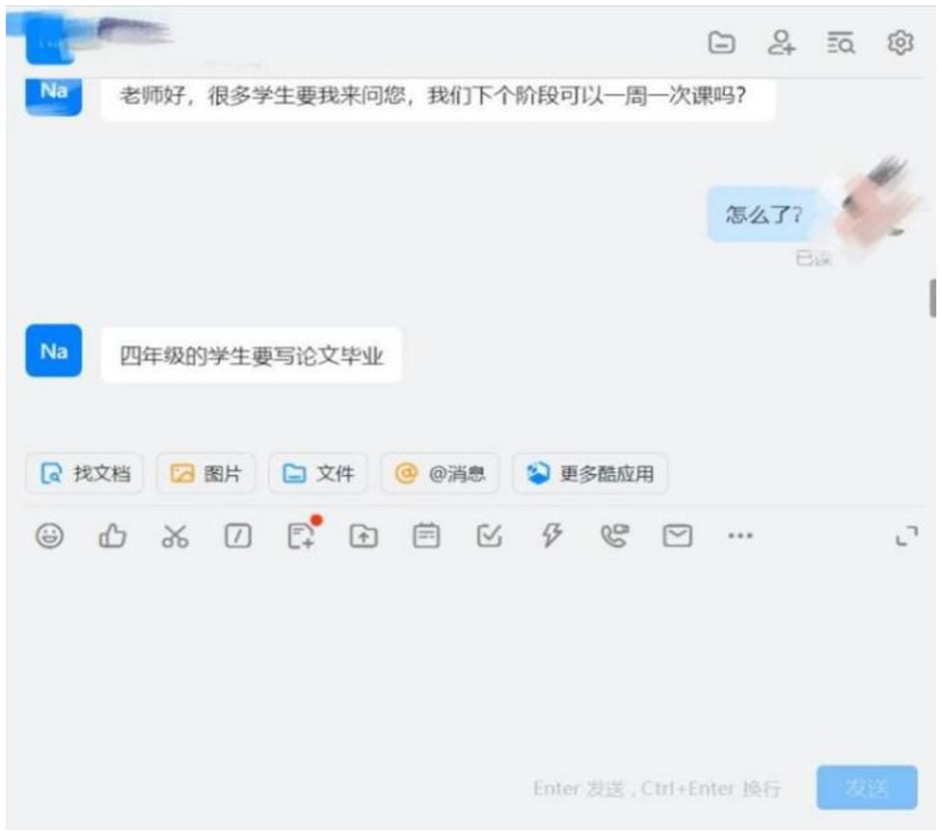
One student’s feedback in the Information Box.
Semi-Structured Interviews
A total of 32 CFL learners took part in the study, each participating in at least one semi-structured interview across the four 16-week phases. During each phase, 4 to 5 open-ended questions were used to prompt reflection on learners’ experiences and their perceptions toward the use of MASVL framework. Interviews were scheduled biweekly, lasting approximately 10 to 30 min per session. All interviews were performed in Chinese and then transcribed to English for analysis.
These interviews were useful in guiding the DBR process and answering RQ2, as they provided extensive insights into learners’ spontaneous reflections and nuanced perceptions of both the MASVL framework and the DingTalk platform as a language learning tool.
Addressing Self-Reported Bias
Given the study’s reliance on qualitative data, such as semi-structured interviews and reflective feedback, potential biases related to self-reporting were acknowledged. These include the risks of social desirability, selective memory, and subjective interpretation. To enhance the credibility and trustworthiness of the findings, several strategies were adopted.
First, triangulation of data sources was implemented. This included classroom observations, anonymized open-ended questionnaires, student reflections, and interview transcripts. Triangulating these multiple data sources allowed for a more balanced and comprehensive understanding of learners’ experiences within the MASVL framework.
Second, all interviews were conducted by a researcher who was independent of the course instruction. This separation helped minimize power dynamics and encouraged participants to share their experiences more openly and honestly.
Third, anonymity and confidentiality were ensured throughout the data collection process. Participants were informed that their identities would remain protected and that their responses would not influence their academic evaluation. This approach helped create a safe environment for honest expression.
Together, these procedures were designed to mitigate bias and enhance the methodological rigor of the qualitative findings. They also reflect best practices in design-based educational research, ensuring that the data collected genuinely represent learners’ perspectives and experiences.
Data Analysis
To assess learners’ perceptions of the MASVL framework, a one-sample t-test was conducted at a 0.05 significance level. Perception scores were based on a 5-point Likert scale, with a threshold mean of 3.5 (50%) indicating a positive perception, following Fernández-Calderón et al. (2016) and J. Liu and Keating (2022). A two-way repeated measures ANOVA was used to evaluate changes in lexical diversity over time across three proficiency groups. This analysis captured both main and interaction effects across four learning stages.
A total of 1,921 Chinese writing artifacts submitted via DingTalk were compiled in Excel and analyzed using the Uber Index (U) as the primary measure of lexical diversity. The Uber Index (Jarvis, 2002, p. 59) is calculated as follows:

The Uber Index (Jarvis, 2002, p. 59) is preferred over the traditional Type-Token Ratio (TTR) for its consistency with longer texts and reduced sensitivity to text length (Treffers-Daller et al., 2018). Lexical diversity reflects the range of vocabulary used and indicates learners’ lexical proficiency and overall writing quality.
All texts were analyzed in their original form to maintain authenticity. Chinese word segmentation was performed using the Languagedata tool (https://www.languagedata.net/tester/). An illustrative example is provided below:

The quantitative analyses were carried out using SPSS 26.0. Two-way repeated measures ANOVA was used to identify statistically significant differences in lexical variety throughout the four stages, taking into account time and learner proficiency group. Furthermore, Pearson correlation analysis was applied to investigate the association between students’ lexical growth and involvement with the DingTalk platform.
To supplement the quantitative findings, qualitative data were evaluated utilizing thematic analysis, as per Braun and Clarke’s (2006) six-phase paradigm (see Figure 7). The NVivo 12 Plus software made it easier to code and organize data.

Six-phase framework of thematic analysis (Adapted by Braun & Clarke, 2006).
The first phase involved familiarizing with the data through repeated reading of interview transcripts and learner reflections. The first author transcribed all materials, which were independently reviewed by co-authors for reliability. In phase two, initial codes were generated systematically based on interview and reflection prompts. A second coder conducted parallel coding, with high overlap observed.
In phase three, codes were grouped into potential themes. Some emerged naturally, while others required interpretation and refinement. The lead author conducted the initial analysis, which was reviewed by two external experts in Chinese language education and qualitative research. A research meeting was held to finalize the coding framework through consensus.
Thematic analysis, inherently recursive and non-linear (Braun et al., 2019), required revisiting and refining initial codes, many of which were descriptive. This led to a more interpretive and nuanced thematic structure. In the final phase, themes were clearly defined and integrated into the report, offering deeper insight into learners’ MASVL experiences.
Two main themes emerged: (1) perceived ease of use and (2) perceived usefulness of DingTalk. Inter-coder reliability was strong, with Cohen’s Kappa values of 0.86 and 0.87 (MacPhail et al., 2016).
Participants were anonymized using unique identifiers. Students were grouped by proficiency level: low (S1–S10), medium (S11–S21), and high (S22–S32). Data sources were labeled as interviews (I) or feedback (F), for example, “S1, Low, I, Week 1.”
Results
This section is organized into three subsections aligned with the research questions: (1) the effectiveness of the MASVL framework on vocabulary development, (2) students’ perceptions of using the DingTalk platform within a MASVL environment, and (3) the relationship between students’ vocabulary development and their usage of the DingTalk platform. Each subsection presents empirical evidence addressing the respective research question.
Effectiveness of MASVL Framework on Vocabulary Development
To address RQ1, quantitative data from MASVLQ (A) were analyzed using a one-sample t-test. The results are presented in Table 1.
Learners’ Perceptions of the MASVL Framework in Enhancing Vocabulary Retention and Development (One-Sample t-Test).

Note. The test value was set at 3.5. M = mean; SD = standard deviation; df = degrees of freedom; p = probability value.
As shown in Table 1, the mean score of 3.97 (SD = 0.56) was significantly higher than the reference value of 3.5, t(29) = 9.57, p < .001. This result suggests that learners perceived the MASVL framework as highly effective in enhancing their Chinese vocabulary acquisition.
Next, a total of 1,921 Chinese language artifacts were examined in order to better understand vocabulary development. Lexical diversity was assessed using the U value, which quantifies variation in language usage. The growth of vocabulary across stages and performance groups was evaluated using a two-way repeated measures ANOVA.
The results in Table 2 show that both the group and time main effects were statistically significant. Lexical diversity (measured by U values) increased significantly from 23.48 to 33.40 (F = 177.66, p < .001). Furthermore, the group main effect was significant (F = 76.21, p < .001), with the high-performance group continuously outperforming the medium group and the medium group outperforming the low one. This trend is visually illustrated in Figure 8.
Two-Way Repeated Measures ANOVA: U Values Across Four Stages and Three Performance Groups.

Note. M = mean; SD = standard deviation. Superscripts indicate significant differences: acompared with high-performance group (p < .05); bcompared with medium-performance group (p < .05).
p < .001.

Lexical diversity growth in Chinese language artifacts across four stages by performance groups.
Furthermore, the interaction effect was statistically significant (p < .001), warranting post hoc tests to examine group differences across learning stages (see Table 3).
Post Hoc Tests of U values Among Performance Groups Across Four Learning Stages.

Note. CI = confidence interval.
p < .05 marked as significant.
The overall trend indicated that U values increased consistently across all performance groups as the learning progressed. However, an exception to this trend emerged in Stage 3. The difference in U values between the medium- and low-performance groups was smaller than in previous stages and reached only marginal significance (p = .01). This deviates from the consistent pattern observed in other stages, where the differences between these two groups were highly significant (p < .001).
In summary, the quantitative analyses confirmed a consistent and statistically significant improvement in students’ lexical diversity over time. These improvements were evident across performance levels and supported the effectiveness of the MASVL framework in promoting vocabulary development in Chinese writing.
Students’ Perceptions of Using DingTalk in a MASVL Environment
To address RQ2, data from MASVLQ (B) were analyzed using a one-sample t-test. The results are shown in Table 4.
Students’ Perceptions of the DingTalk Platform in the MASVL Environment (One-Sample t-Test).
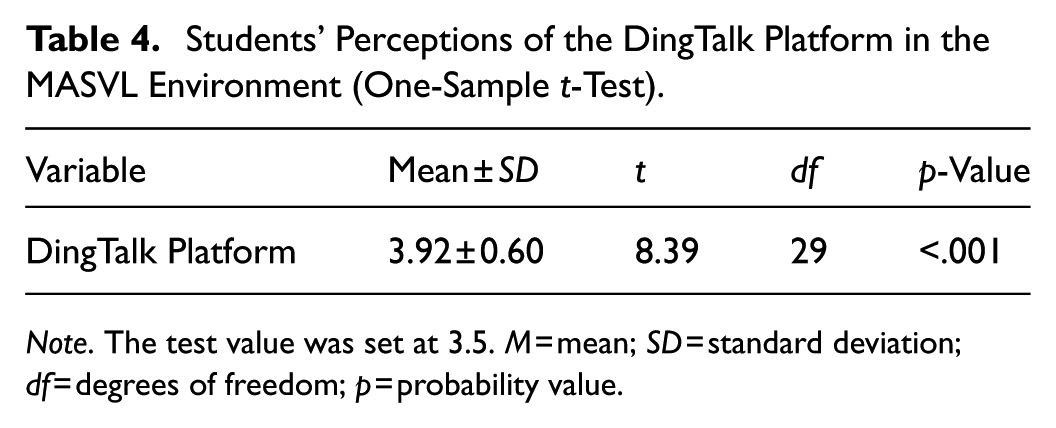
Note. The test value was set at 3.5. M = mean; SD = standard deviation; df = degrees of freedom; p = probability value.
As shown in Table 4, the mean score of 3.92 (SD = 0.60) was significantly above the benchmark of 3.5, t(29) = 8.39, p < .001. This suggests that learners held favorable perceptions of the DingTalk platform when integrated into a MASVL environment.
To further explore students’ authentic perspectives on using DingTalk in a MASVL environment, qualitative analysis identified two key themes: “Perceived DingTalk’s ease of use” and “Perceived usefulness of DingTalk.” The following sections present supporting evidence from various data sources, including student feedback and interviews.
Theme 1: Perceived DingTalk’s Ease of Use
Perceived ease of use refers to an individual’s belief regarding how effortless it is to use a particular platform or application (Grover et al., 2019; Davis, 1989). In this study, the theme of perceived ease of use of DingTalk captures students’ subjective experiences with the DingTalk platform, particularly as they relate to motivation and usability in the context of vocabulary learning. Figure 9 presents an overview of students’ positive and negative perceptions regarding their use of DingTalk throughout the learning process.

Students’ positive and negative perceptions of the use of dingtalk.
Subsequently, Figure 10 illustrates the frequency of students’ specific positive and negative views, categorized as sub-themes. Positive perceptions included: “the platform is free to use” (F = 25), “DingTalk offers fast and responsive access” (F = 16), “flexibility in posting artifacts” (F = 14), and “a safe and supportive environment for learning Chinese” (F = 13). In contrast, negative perceptions included concerns that “posted artifacts cannot be edited or revoked” (F = 12) and that “artifacts could not be shared to other social media platforms” (F = 9). In total, 89 coded responses were collected, reflecting a nuanced understanding of students’ experiences with the DingTalk platform.

Frequencies of students’ positive and negative perceptions of DingTalk usage.
Sub-Theme 1: Positive Views on Using DingTalk
Use for free: 28.09% (F = 25) of the views showed that the students appreciated that the DingTalk platform can be used for free. This was the biggest advantage of using the platform. The data garnered from some students through the data sources demonstrated that:
“This is my first time using DingTalk…… and it’s free of charge.” (S3, Low, I, Week 2) “DingTalk is the best free social media platform for me to learn Chinese, I really like it.” (S15, Medium, F, Week 2)
Fast turnaround time: 17.97% (F = 16) of the views pertaining to ease of access, that is, the value of speed and quick turnaround. The learners remarks emphasized the importance of speed in assisting them with their learning. As one student stated:
“It was so great that after learning Chinese, I can quickly enter the Learning Circle and post my Chinese artifacts.” (S6, Low, F, Week 2)
Also, the value of the time factor in the interview data source was also evident in the following quotations:
“It feels good to be able to do exercises immediately after studying.” (S4, Low, I, Week 2) “Wow! I find access to DingTalk platform was faster than access to Chaoxing. I like to use the platform.” (S26, High, I, Week 2)
This suggests that students developed a time-sensitive emotional connection or curiosity toward each piece of writing they produced. To sustain this curiosity, it was essential for learners to receive timely responses and feedback from both their instructor and peers on their posted texts.
Flexibility: 15.73% (F = 14) of the views commented that the HSK Level 4 allowed flexibility by granting them more autonomy to post their created artifacts freely at their own desired time and place, as they wished.
When the findings on flexibility in posting artifacts in DingTalk were analyzed, the students stated that “I can post Chinese artifacts at my convenience” (F = 5) and “making Chinese learning easy for the students” (F = 7), where some of the views were as follows:
“It is very easy to post Chinese artifacts in the HSK Level 4 Learning Circle on the DingTalk platform.” (S10, Low, I, Week 12) “I like to study Chinese on the DingTalk platform, it allows me to work at my own pace to take photos, post artifacts anytime, anywhere.” (S16, Medium, I, Week 2)
Safe learning space provided: Regarding the safe learning space provided by the DingTalk platform, 14.61% (F = 13) of the codes that showed the views of the students on the safety of practicing Chinese vocabulary and posting Chinese artifacts in the HSK Level 4 Learning Circle. As one student stated that:
“The HSK Level 4 Learning Circle is safe and transparent and it has a protective effect, I like it.” (S26, High, F, Week 4)
Likewise, the data from another student derived from another data source (i.e., interview) confirmed that:
“The Learning Circle is great. I can post lots of artifacts, and I can also comment on others. In my opinion, the best part is the privacy, only my classmates and teachers can see it and comment on it; others can’t, so it has a protective effect.” (S30, High, I, Week 4)
Furthermore, a significant perceived benefit of the HSK Level 4 Learning Circle, according to the students, was to protect privacy:
“From my point of view, the HSK Level 4 Learning Circle is limited to people in this circle who can comment. I think it’s safe to protect our privacy because the Chinese artifacts posted by some students are not very good, and they do not want unknown people to review their mistakes.” (S11, Medium, I, Week 4)
These findings illustrate that DingTalk provided a psychologically safe space for learners to take risks and make mistakes without fear of judgment. This sense of safety likely contributed to increased participation and reduced language anxiety.
Sub-Theme 2: Negative Views on Using DingTalk
On the other hand, 13.48% (F = 12) of the views were negative where students expressed that the posted artifacts were not able to be withdrawn and should be deleted or re-posted. Furthermore, 10.11% (F = 9) of the views indicated that some students reported that they could not share the artifacts on other social media platforms. Therefore, the following are some of the students’ negative perceptions of this sub-theme based on the two datasets.
In the interviews, one of the students talked about the problem in posting Chinese artifacts:
“Although the Learning Circle is safe, one problem is that once an artifact is posted, it cannot be withdrawn or modified. Similar to other social media platforms, the artifact must be deleted and re-posted in order to make changes.” (S21, Medium, I, Week 4)
Students expressed a desire to revise their work to improve accuracy and presentation. The lack of an edit function limited opportunities for self-correction, which may have impacted both their confidence and their sense of agency in the learning process. This highlights the importance of providing flexible revision tools in mobile-assisted learning environments.
A smaller portion of students (10.11%, F = 9) raised concerns about the restricted ability to share their artifacts outside the Learning Circle.
“When I want to share my Chinese artifacts posted in the HSK Level 4 Learning Circle to my friends, my friends cannot see and comment because they are not in this Learning Circle. I realized the Learning Circle is too sealed.” (S5, Low, F)
While privacy was valued, some students also wished to share their learning achievements with a broader audience. The platform’s closed nature limited opportunities for wider peer validation or informal social learning, which may be important motivational factors for certain learners.
Theme 2: Perceived Usefulness of DingTalk
“Perceived Usefulness of DingTalk” (Davis, 1989) refers to the perceived utility and value of DingTalk as a learning platform. As demonstrated by Sun et al. (2023), DingTalk serves as a techno-pedagogical model that seamlessly integrates formal classroom-based language instruction with real-life language use and reflective practices. It engages students in the ongoing creation and interaction within social media platforms as part of their learning environment (Sun et al., 2023; Yan, 2021). For instance, the Learning Circle function serves as a seamless learning space to enable students to carry out seamless learning activities. Other functions and tools, including Reminder, Ding Drive, and others were utilized to assist students in MASVL.
Hence, as shown in Figure 11, there are two sub-themes of “Perceived Usefulness of DingTalk,” which are “Motivating and Empowering” and “Supported by DingTalk Learning Tools.” These are presented in two ways: positive and negative.
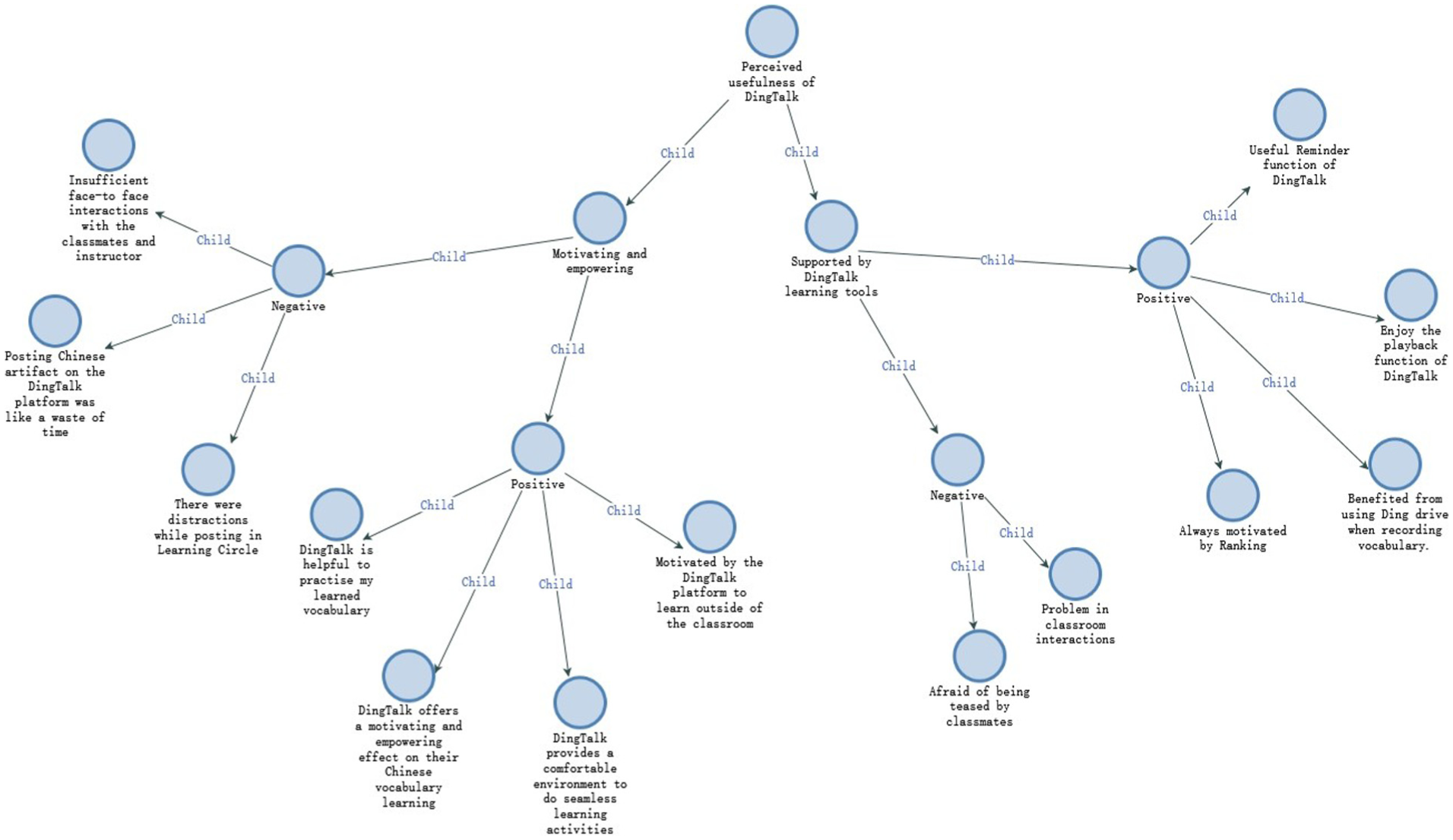
Students’ positive and negative perceptions of usefulness of DingTalk.
While presenting the findings, the examples from the sub-themes with the highest frequency were included to state the common opinion. The frequencies of the positive and negative views of the learners about the usefulness of DingTalk are depicted in Figure 12.
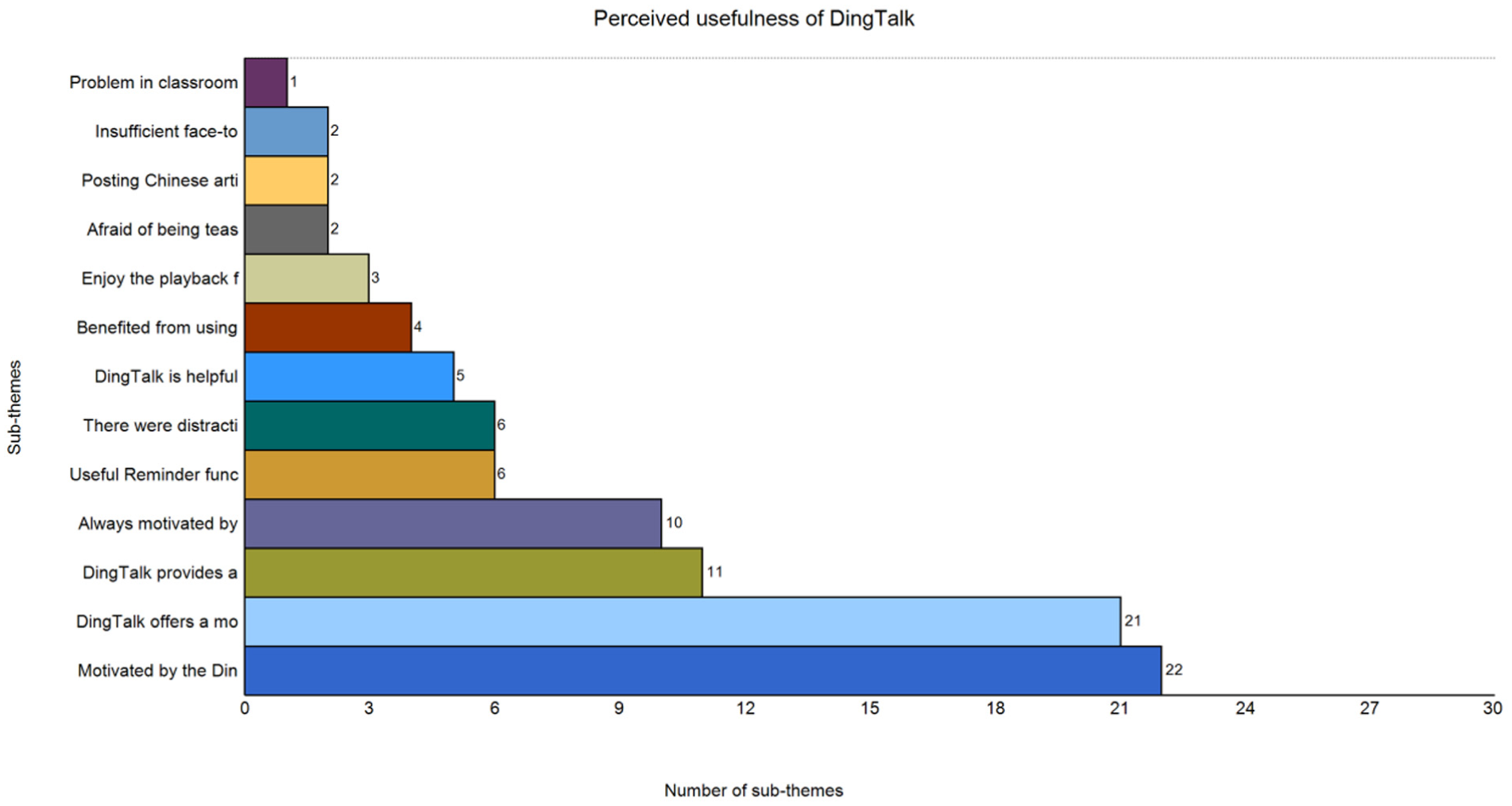
Number of students’ positive and negative views on the usefulness of DingTalk.
Figure 11 shows that students were motivated by the DingTalk platform to learn outside of the classroom (F = 22); DingTalk offers students a motivating and empowering effect on their Chinese vocabulary learning (F = 21); DingTalk platform provided a comfortable environment (F = 11); the students were constantly motivated by the Ranking function (F = 10); the Reminder function was useful (F = 6); DingTalk was helpful to do seamless learning activities (F = 5); the students benefited from using the Ding Drive when learning vocabulary (F = 4); and the students enjoyed the playback of DingTalk (F = 3). On the other hand, it was found that there were distractions while posting artifacts in the Learning Circle (F = 6); posting Chinese artifacts on the DingTalk platform was a waste of time (F = 2); there was insufficient face-to-face interactions with the classmates and instructor (F = 2); the students were afraid of being teased by classmates (F = 2); and there were problems in classroom interactions on the DingTalk platform (F = 1). In total, 95 coded views were identified to demonstrate students’ positive and negative views on the usefulness of DingTalk.
Subsequently, further explication of the findings with regards to students’ perceived usefulness of DingTalk is provided below, with reference to the students’ quotations.
Sub-Theme 1: Motivating and Empowering
Motivation to Learn Beyond the Classroom: A significant proportion of students (23.16%, F = 22) reported increased motivation to engage in vocabulary learning outside of the classroom due to the DingTalk platform. This motivation appeared to stem from the platform’s interactive features, such as immediate peer feedback, encouragement messages, and gamified tools like ranking. For instance, through the interview, some students stated that:
“I was too lazy to learn Chinese, so I took this course with the attitude of giving it a try, but when I posted my Chinese artifacts in the HSK Level 4 Learning Circle for the first time, I quickly received ‘likes’ from my classmates, it was really interesting. I am very happy to study Chinese in DingTalk platform.” (S7, Low, I, Week 4) “I am always motivated by the “ranking” feature of DingTalk, which encourages me to keep practicing and posting Chinese artifacts.” (S18, Medium, I, Week 4)
Also, four students out of the 32 (12.5%) in the Feedback data reported that the notifications from the DingTalk platform made them motivated, as illustrated in the following quotation:
“Make It Happen! I like this word. Every time I open my DingTalk platform, there are different words of encouragement that keep me motivated to learn.” (S12, Medium, F, Week 12).
These excerpts indicate that the DingTalk platform fostered both intrinsic and extrinsic motivation. The social validation through likes and rankings encouraged continued participation, while emotionally uplifting messages enhanced learners’ confidence and positive emotional states. The platform’s design played a critical role in shifting students’ attitudes toward vocabulary learning.
Comfortable environment: 11.58% (F = 11) of the views expressed that the students perceived that the DingTalk platform provided them with a comfortable environment. Some of the views from Interview dataset are presented as follows:
“It was the first time I posted Chinese artifacts on the platform yesterday. I feel very comfortable to post Chinese artifacts.” (S14, Medium, Week 2) “I am very used to posting Chinese in the Learning Circle; it is very comfortable. And I can also see other students’ posts, likes, and comments.” (S32, High, I, Week 4)
The platform’s familiar social media-like interface appears to have reduced anxiety and created a non-threatening space for practice. This level of comfort likely supported autonomous engagement and encouraged sustained participation.
However, some of the students stated that they had insufficient face-to-face interactions with their classmates and instructor (F = 2), as illustrated in this statement:
“Actually, I am not interested in peer discussion in the HSK Level 4 Learning Circle, I prefer face-to-face communication and discussion, so that it will be very helpful to improve my Chinese vocabulary learning.” (S31, High, I, Week 8)
This finding reflects a common concern in mobile-assisted learning environments. While digital platforms offer convenience and flexibility, they may not fully replicate the immediacy and depth of in-person social interaction, which some learners find more effective.
Sub-Theme 2: Supported by DingTalk Learning Tools
It should be noted that there are many functions and tools, including Ranking, Reminder, Ding Drive, and others that were utilized to assist students in MASVL.
Ranking function: The Ranking function was popular among the students. This function was used by the instructor to record students’ artifacts, resulting in diverse outcomes. This includes a weekly ranking, a monthly ranking, and a final ranking. Some students were encouraged by the ranking function to post more artifacts on the DingTalk platform. As reflected from the two datasets of 10 students (31.3%), out of the 32, the following excerpt shows that:
“If I saw my friend has a higher score than me, I think it would motivate me to compete with him and surpass him.” (S19, F, Week 11)
The development of a competitive learning environment, along with an increased desire among students to demonstrate their abilities to peers, may partially account for the positive perceptions some students held toward DingTalk.
The ranking system introduced gamification into the learning process. This approach encouraged goal-setting and peer comparison, which can stimulate motivation when used appropriately.
However, one low performance student argued that:
“I do not like it, because some of students are not good at Chinese writing and few artifacts posted, it can lead to upsetting their classmates and humiliating them.” (S1, Low, I, Week 8)
This response illustrates the dual-edged nature of competition. For some lower-performing students, public ranking may trigger feelings of inadequacy or disengagement, suggesting that competition should be balanced with inclusive design principles.
Reminder function: For the Reminder tool, 6.32% (F = 6) of the views expressed that it was very helpful. Take one student’s quotation as an example:
“I kind of like the fact that there is a ‘Reminder’ function of DingTalk platform often reminding me to do the seamless learning activities.” (S9, Low, I Week 8)
This tool served as a subtle nudge, helping learners maintain regular vocabulary practice. It likely supported learners with weaker self-regulation skills.
Helpful Learning Circle function: 5.26% (F = 5) of the views showed that the DingTalk Learning Circle was helpful to do seamless learning activities. Some students reported that posting Chinese artifacts in the Learning Circle was helpful to practise their learned vocabulary. As stated by one student:
“DingTalk is very user-friendly and it is very helpful to practise my learned vocabulary and do seamless learning activities at this platform.” (S3, Low, I, Week 8) “HSK Level 4 Learning Circle is very supportive of my vocabulary learning and writing.” (S7, Low, F, Week 4)
The Learning Circle acted as both a learning community and an archive of progress. Its affordances supported both social presence and asynchronous participation, reinforcing the continuity aspect of seamless learning.
Ding Drive tool: Regarding the Ding Drive tool, 4.21% (F = 4) of the views informed that students benefited from using the Ding Drive when they learned vocabulary. One student said:
“The Ding Drive is particularly useful and helps me to remember the Chinese vocabulary and sentences I have learnt.” (S10, Low, F, Week 8)
Playback function: 3.16% (F = 3) of the views illustrated that some students enjoyed the playback of DingTalk. One student stated that:
“When I miss a class, the teacher will send us the replay of the class, and I will watch the replay in the dormitory the next day.” (S4, Low, F, Week 4)
These tools supported self-paced review and served as a form of cognitive scaffolding. They allowed learners to revisit instructional content at their convenience, thus supporting long-term retention.
Yet, other voices shared negative views for the sub-theme of “Supported by DingTalk learning tools.” A total of 13.68% (F = 13) negative views were identified. Some of the students’ negative views were as follows:
“I don’t think it’s interesting to post Chinese artifacts in the Learning Circle, because I can learn Chinese in normal Chinese classes, and I think I can improve my Chinese by not posting artifacts.” (S32, High, I, Week 2)
Also, the data garnered from another data source (i.e., Feedback) confirmed that:
“when I am posting Chinese artifacts via my mobile phone, both the Learning Circle and DingTalk chat box are open. I am typing there in Learning Circle, DingTalk pops up a lot of messages to distract me.” (S3, Low, F, Week 11)
These responses highlight that while the MASVL model has strong motivational and instructional features, some learners felt disengaged from the artifact-posting process or found the interface distracting. These limitations warrant further attention in future design refinements.
Relationship Between Students’ Vocabulary Development and Use of the DingTalk Platform
To address RQ3, a Pearson correlation analysis was performed to investigate the relationship between students’ vocabulary development and their engagement with the DingTalk platform.
As indicated in Table 5, the results revealed a statistically significant and strong positive correlation between the two variables, r(28) = .803, p < .001 (two-tailed), indicating that higher engagement with the DingTalk platform is associated with greater vocabulary gains.
Pearson Correlation Between Vocabulary Development and Use of the DingTalk Platform.

p < .001 (two-tailed).
These findings suggest that increased utilization of DingTalk’s features, such as artifact creation, peer feedback, and mobile accessibility, may play a facilitative role in supporting vocabulary learning among tertiary CFL learners.
Discussion
This study provides empirical support for the effectiveness of the MASVL framework in enhancing vocabulary retention and development among CFL learners. Findings from the one-sample t-test indicated that learners perceived MASVL as an effective approach to vocabulary learning, consistent with prior studies demonstrating the motivational impact of positive learning experiences and emotional engagement in technology-assisted language learning environments (Arani et al., 2024; Barham & Clarke, 2022). These results underscore the MASVL model’s potential to foster learner autonomy, sustained engagement, and deeper involvement in the vocabulary acquisition process.
Quantitative findings revealed a statistically significant increase in lexical diversity across all proficiency groups over the 16-week intervention. The Uber Index (U) rose from a mean of 23.48 in Stage 1 to 33.40 in Stage 4, indicating a 42.2% improvement in vocabulary richness. Two-way repeated measures ANOVA showed significant main effects for time (F = 177.660, p < .001) and proficiency group (F = 76.207, p < .001), with high-performing learners consistently producing more lexically diverse artifacts than their peers.
These results suggest that learners became increasingly capable of integrating newly acquired vocabulary into meaningful written contexts. This supports the Comprehensible Output Hypothesis (Swain, 1985), which highlights the role of language production in internalizing linguistic knowledge. The MASVL framework, through structured artifact creation tasks, offered learners opportunities for active vocabulary use, reflection, and revision—reinforcing findings by L. H. Wong et al. (2016) and Zhou and Goh (2025a) on the effectiveness of mobile-assisted writing in promoting long-term vocabulary retention.
The analysis of subgroup performance highlights the influence of learners’ proficiency on vocabulary use. High-performing learners consistently produced more lexically diverse artifacts compared to their medium- and low-performing peers, a pattern similarly observed in previous CFL research (Wen et al., 2025; Zou, 2022). Learners in the low-performance group, many of whom had recently completed HSK Level 3, appeared to struggle with vocabulary application—likely due to limited prior exposure to a wider lexical range (Luo & Watts, 2024). These learners may have been in the early phases of productive vocabulary acquisition, which can hinder their ability to express ideas with lexical variety and precision. These observations reinforce the need for differentiated support based on learners’ developmental stages and prior knowledge.
The MASVL framework is theoretically grounded in Situated Learning Theory (Lave & Wenger, 1991), Constructivist Pedagogy (Vygotsky, 1978), and Connectivism (Alam, 2023), which emphasize authentic, context-rich, and socially mediated learning. Within DingTalk, learners engaged in real-time interactions, sharing artifacts and receiving peer feedback, thus framing learning as participatory and collaborative. Reflections indicated that observing peers’ work and receiving “likes” and comments enhanced motivation and accountability.
While not employed as a predictive model, the cognitive dimension of the TAM was used to interpret qualitative findings. Thematic analysis of Analysis of 89 coded responses showed that 29.5% highlighted ease of artifact creation, 24.6% valued peer interaction, and 17.2% appreciated mobile flexibility, aligning with perceived ease of use and usefulness (Davis, 1989).
However, 9.0% of the 95 coded views expressed frustration over the inability to edit submitted artifacts, which some perceived as limiting autonomy and increasing anxiety. This tension suggests that while learners were engaged, technical limitations may hinder user satisfaction, reinforcing the need for alignment between functionality and pedagogical goals (Gyawali & Mehndroo, 2024; Yan, 2021)
The strong, positive correlation between DingTalk usage and vocabulary development further supports the effectiveness of mobile-assisted artifact creation in CFL education. Previous research has shown that mobile platforms offering real-time feedback, social interaction, and contextualized practice foster deeper learning and greater autonomy (Alisoy & Sadiqzade, 2024; Stockwell & Liu, 2015). The MASVL framework, by integrating these affordances with scaffolded output tasks, provided a structured yet flexible environment for vocabulary development.
Nonetheless, several considerations must be acknowledged. While the intervention yielded promising outcomes, other factors may have influenced the results, including learners’ prior vocabulary knowledge, individual learning strategies, and familiarity with digital tools. These variables warrant further exploration. Additionally, the novelty effect of the platform may have temporarily boosted engagement, which future longitudinal studies should investigate more closely.
In summary, the MASVL framework effectively facilitated vocabulary development by supporting continuous, contextualized, and socially interactive learning. However, the study also draws attention to the importance of addressing usability issues and tailoring support for learners at varying proficiency levels to fully realize the pedagogical potential of mobile-assisted seamless learning.
Implications
This study offers key implications for researchers, educators, and curriculum developers. From a research perspective, the findings contribute to the MASVL literature by demonstrating its effectiveness in improving vocabulary retention and lexical diversity among CFL learners. They also highlight the need for further research on adaptive strategies, especially AI-driven feedback tailored to varied proficiency levels (Wen et al., 2025). Future studies should explore the cognitive processes involved in mobile vocabulary learning and assess MASVL’s long-term impact across diverse sociocultural contexts.
For educators, the study underscores the value of differentiated instruction in seamless learning environments. MASVL’s artifact-based tasks—sentence creation, paragraph writing, and reflection—encourage meaningful, contextualized vocabulary use. Teachers are advised to implement staged writing activities and address platform limitations, such as the inability to edit posts on DingTalk, by incorporating draft submissions or peer-review stages to enhance accuracy and learner confidence.
In curriculum development, the findings support embedding mobile-assisted learning into formal instruction to foster continuous, real-world language use. MASVL’s phased vocabulary progression suggests that curricula should include task-based, mobile-supported activities. Designers may also integrate AI-powered feedback tools to promote learner autonomy and vocabulary retention (Yeh, 2025). Ensuring equitable access to reliable digital tools remains crucial, especially in under-resourced settings.
Conclusion and Future Research
This study introduced the “Seamlessly Learn Vocabulary!” initiative and provided empirical support for the effectiveness of the MASVL framework in promoting vocabulary development among CFL learners. Addressing the first research question, quantitative findings demonstrated a significant improvement in learners’ lexical diversity over a 16-week intervention. On average, U values increased by approximately 42.2% over time. Group-specific improvements were also notable, with the low-performing group improving by 33% and the high-performing group by 52%, reflecting differentiated progress. These findings provide strong evidence of vocabulary enrichment supported by the MASVL framework.
In response to the second research question, qualitative data revealed that learners generally perceived the DingTalk platform as useful, accessible, and motivating. Specifically, 29.5% of coded views highlighted ease of use, 24.6% valued peer interaction features, and 17.2% emphasized the flexibility of mobile access. These perceptions reflect strong engagement with MASVL tasks. However, 9% of students expressed concerns about the inability to edit posted artifacts, indicating a gap between learner expectations and platform functionality.
Regarding the third research question, vocabulary development corresponded closely with learners’ level of engagement in mobile artifact creation. The combination of contextual tasks, peer interaction, and regular practice fostered a participatory learning environment conducive to deeper lexical growth. These findings support the Comprehensible Output Hypothesis and affirm the pedagogical value of output-based learning in mobile-supported environments.
Theoretically, the study contributes to the literature by synthesizing perspectives from Situated Learning Theory, Constructivism, Connectivism, and the TAM to inform the MASVL design. The findings reinforce the value of socially situated, context-driven vocabulary learning tasks supported by intuitive mobile platforms. Moreover, the integration of perceived ease of use and perceived usefulness from the TAM framework extends prior technology acceptance research into the domain of mobile-assisted vocabulary learning for CFL learners (Ren & Tan, 2025; Suwadi et al., 2025; Zhang et al., 2025).
Practically, this research offers instructional insights for designing mobile-supported vocabulary interventions that are adaptable, learner-centered, and grounded in authentic communication. Educators can leverage MASVL strategies to create environments that foster vocabulary retention, encourage spontaneous language production, and cultivate learner agency. The positive reception of mobile tools such as DingTalk also affirms the role of lightweight, familiar technologies in supporting long-term learning outcomes, particularly in resource-constrained or flexible learning environments.
Despite these contributions, several considerations should be noted when interpreting the findings. The study was conducted in a single institutional context with a modest sample size, which may limit the breadth of generalizability. However, the design-based research approach prioritizes ecological validity and iterative refinement, allowing for meaningful insights into real-world classroom dynamics. The absence of a control group, although methodologically aligned with the DBR framework, suggests that future studies might benefit from comparative designs to strengthen causal interpretations. Additionally, while self-reported data such as interviews and reflections provided rich qualitative insights, they are inherently subjective. To enhance robustness, these data were triangulated with classroom observations and anonymous feedback to support credibility and depth of interpretation.
Looking ahead, future research could explore the implementation of MASVL across diverse learning settings and learner populations, potentially incorporating longitudinal designs and larger samples. Comparative studies contrasting MASVL with traditional vocabulary instruction or AI-based learning environments could provide further insights into its relative strengths and areas for improvement. Moreover, integrating behavioral analytics, such as engagement logs or artifact revision patterns, may offer additional perspectives on learner interaction and development within seamless digital learning ecosystems.
Taken together, this study contributes to the growing body of literature on technology-enhanced language learning and supports the ongoing development of pedagogically grounded, context-aware approaches to vocabulary instruction in the CFL context.
Footnotes
Acknowledgements
The authors would like to express their gratitude to all participants who contributed to this study. Additionally, we acknowledge the valuable insights and feedback from colleagues and reviewers that helped enhance this research.

Ethical Considerations
This study was conducted in accordance with the recommendations of the Research Ethics Committee at Universiti Teknologi MARA (UiTM). The research protocol was reviewed and approved by the committee under protocol number [600-TNCPI (5/1/6)]. Prior to participation, all individuals were provided with detailed information about the study’s purpose, procedures, potential risks, and benefits.
Consent to Participate
Written informed consent was obtained from all participants in accordance with the ethical principles outlined in the Declaration of Helsinki.
Author Contributions
In this study, Dayi Bai led the conceptualization, investigation, data curation, formal analysis, methodology development, software implementation, and validation, while also contributing to manuscript review and editing. Xiaosheng Zhou contributed to conceptualization, data curation, formal analysis, investigation, and methodology, and oversaw project administration, supervision, visualization, and manuscript drafting and revision. Chaoying Wang contributed to conceptualization, data curation, formal analysis, and methodology, and provided validation, and critical manuscript review.
Funding
The authors received no financial support for the research, authorship, and/or publication of this article.
Declaration of Conflicting Interests
The authors declared no potential conflicts of interest with respect to the research, authorship, and/or publication of this article.