




Abstract
In recent years, digital museums have employed information and communication technologies, such as sensor technology and machine vision, to provide new opportunities for preserving, exhibiting, and disseminating cultural heritage. The user-centred design approach is further advanced by the virtualised, portable, and intelligent display features of digital museums. Hence, it is crucial to clarify the components that affect user attitudes and experiences as well as the underlying mechanisms of these factors. This study combines the Information Systems Success Model and Expectation Confirmation Model to establish a research model for user satisfaction with digital museums. The findings indicate that (1) perceived platform quality, which encompasses information, system, and service quality, is the key factor that significantly affects user satisfaction; (2) confirmation of expectations partially mediates the relationship between perceived platform quality and user satisfaction; (3) perceived usefulness mediates the relationships between information quality and user satisfaction as well as system quality and user satisfaction; and (4) perceived usefulness and confirmation serve as chain mediators between perceived platform quality and user satisfaction. This study enriches the theoretical framework for evaluating user satisfaction in digital museums and emphasises the crucial roles of information, system, and service quality, confirmation, and perceived usefulness. This study provides valuable insights for managers, curators, and practitioners aiming to build and enhance digital museum user experiences.
Plain language summary
This study explores the components that affect user satisfaction and the underlying mechanisms of these factors in digital museums. By collecting data through an online questionnaire from 355 users who accessed the China Zisha-Ware Digital Museum, we evaluated these factors using a research framework based on the Information Systems Success Model (IS Success Model) and the Expectation Confirmation Model (ECM). The findings enrich the theoretical understanding of digital museum user experience and underscore the critical roles of information, system, and service quality, confirmation, and perceived usefulness in shaping user satisfaction, providing guidance for professionals to enhance museum services and promote user engagement.
Keywords
Introduction
With the increasing adoption of digital transmission methods for information dissemination and knowledge sharing, it is imperative to scrutinise their applications in digital museums from the user experience perspective (Bekele et al., 2018; Ke & Jiang, 2019; Yung & Khoo-Lattimore, 2019). Specifically, digital museums offer users online displays, personalised searches, and immersive interactive experiences using new technologies such as digital simulations, virtual immersion, and intelligent tools. This approach not only blurs the boundary between realistic and virtual experiences but also enhances accessibility, communication, and understanding of museum collections (Bec et al., 2019; Trunfio et al., 2020). This deepens the relationship between digital museums and their users (S. Dong et al., 2006). Amid this novel human-object interaction paradigm, users’ visits transition from passive to active participation and exploration (Shi et al., 2023). Their focus is no longer confined to displayed artefacts because they have the freedom to select content based on their individual interests. Moreover, they aspire to actively participate in museum activities; become integral parts of the museum’s historical trajectory, heritage, and development (Easson & Leask, 2020); and collaboratively generate value through interactions with museums and fellow visitors (Payne et al., 2008). This shift has led museums to prioritise users’ needs and experiences, placing their requirements, preferences, and expectations at the core of their activities and initiatives (Pesce et al., 2019; Trunfio et al., 2020; Zollo et al., 2022). Hence, a thorough examination of users’ values, learning patterns, and behaviours in the digital era and an evaluation of factors impacting their acceptance of digital museums are crucial to the success of digital museums in the information age. As suggested by J. Li et al. (2022), exploring the behaviours and needs of museum users has become a key focus in contemporary museology. This trend symbolises the modernisation of museums and may shape the future of the industry.
Currently, within digital museums, scholars have initiated discussions covering both theoretical and empirical aspects to explore user needs and experiences. This study focuses on four main areas: (1) Assessing the behavioural features of digital museum users, encompassing their searching styles (Skov & Ingwersen, 2008), motivations for access (Walsh et al., 2020), and fluctuations in emotional and behavioural responses (Marty, 2007, 2008). (2) Offering theoretical directions for user experience design primarily through qualitative studies. For example, Maqbool and Maxwell (2023) discussed the digitisation of museums and cultural heritage and explored the potential of innovative design work as a means of prompting practical changes. Wu and Yuan (2023) clarified the principles, concepts, and methodology behind virtual interactive animation experience design. In their systematic literature review, Menezes et al. (2023) utilised PRISMA techniques to compare digital transformation measures across museums. They also summarised the strategies of each institution towards adopting innovative technologies and shifting operational structures. (3) Investigating the impact of digital technology on the user experience of museums. According to scholars such as Izzo et al. (2023), innovative technologies are crucial in generating value for users, museums, and society. They notably influence user well-being (Menezes et al., 2023), museum consumption, satisfaction, and sharing behaviour (Shutrick, 2023). (4) Evaluating the factors influencing user experience. First, this area concentrates on the design factors for digital museums, encompassing navigation (J. Li et al., 2022), aesthetics (Pallud & Straub, 2014), information quality, and content accuracy (Shutrick, 2023). Second, attention was paid to users’ personal responses, including expectation (S. Dong et al., 2011), self-cognition (Z. Wang, 2018), perceived value (H. Chen & Ryan, 2020), multisensory cues (K. Guo et al., 2023), and other factors.
Previous studies on user experience of digital museums provide a practical and theoretical foundation. However, these studies present some limitations and our study attempts to address these gaps. First, current research primarily focuses on comprehensive digital museums, and there is a dearth of studies on small- and medium-sized museums. The smaller museums, renowned for their abundance, grassroot origins, accessibility, and strong community ties, are particularly prevalent in China. They have substantial potential and play crucial roles in cultural representation and public service (Liang, 2023). However, they often struggle to capture public interest owing to substandard facilities, unoriginal content, and a lack of distinctiveness compared to their larger counterparts. Digital technology has presented new prospects for the growth of smaller museums by helping them conduct digital exhibitions to varying extents (Mei & Duan, 2020). Consequently, it is imperative to carry out comprehensive studies on user experiences in small- and medium-sized digital museums. Second, thematic digital museums have not received sufficient attention. These museums are characterised by a network resource system that focuses on a specific theme, forming an essential part of the museum infrastructure. As thematic digital museums are not limited by collection size or scale, they can curate resources that match particular themes, enabling unlimited expansion, and ease of accessibility (Ying & Gao-yue, 2013). Additionally, thematic digital museums demonstrate enhanced proficiency in creating virtual environments centred on specific themes, leading to a more immersive cultural experience for users. Therefore, the development is integral to the overall advancement of digital museums. Third, although previous studies have identified the factors affecting user experience in digital museums, they have disregarded how these factors function. Elucidating the mechanism of these influential factors and their impact on user experience will help draw precise and nuanced conclusions. These findings will provide essential theoretical support for future applications.
Based on the aforementioned analysis, this study chose the China Digital Zisha-ware Museum (CZDM) as the research subject. Launched in May 2022, CZDM was established to preserve and promote the unique cultural heritage of Yixing Zisha (Bureau of Culture, S, Radio, Television, and Tourism of Yixing, 2022). As a regional, specialised, and small-to-medium-sized museum, CZDM faces numerous challenges in its digital development compared to larger, national-level museums with greater capabilities. However, with the strong support of the Yixing Ceramic Museum, the local government, and local enterprises, remarkable progress has been made in its construction. As China’s first modern digital panoramic museum focused on Zisha, CZDM has successfully integrated advanced technologies, such as blockchain, 360° panoramic virtual tours, and VR, recreating the true 3D space of the Yixing Ceramic Museum. This allows users to explore the museum and view every detail of its Zisha collection from their mobile devices, without leaving their homes (Account, 2022). The Yixing Ceramic Museum was also listed in Jiangsu Province’s 2023 Smart Tourism Scenic Spots Directory (Yixing Daily, 2022). These achievements make CZDM a valuable case for understanding the development of small-to-medium-sized and specialised museums in the digital age.
Additionally, this study integrates the Information Systems Success Model (IS Success Model) and Expectation Confirmation Model (ECM), two well-established theories with strong predictive capabilities (Efiloğlu Kurt, 2019; Wei et al., 2022), to explore the mechanisms mediating user satisfaction in digital museums. Although widely applied in information systems research, these models remain in the exploratory stage within this context. By integrating users’ perceptions of system quality with the psychological process of expectation confirmation, this study provides a deeper perspective on how user satisfaction is shaped. The findings contribute to the theory and open avenues for future research and practical applications.
Our paper is organised as follows: In Section 2, we present the research variables and propose a theoretical model and hypotheses for digital museum user satisfaction based on existing research. In Section 3, we explain how we designed a questionnaire based on previous literature and used a questionnaire survey to collect sample data. In Section 4, the structural equation model is used to test the research hypotheses and the results of the data analysis are presented in detail. Section 5 discusses and analyses the findings. Finally, Section 6 summarises the theoretical and practical significance of this study and outlines future research directions and suggestions. Our study serves to provide a theoretical foundation and empirical reference for improving the user experience of digital museums.
Theoretical Background and Research Hypotheses
Digital museums are information systems (IS) built using digital technology. In studies exploring user satisfaction with information systems, IS Success Model and ECM are widely used.
The IS Success Model was first proposed by DeLone and McLean in 1992 (DeLone & McLean, 1992) and later updated in subsequent research (DeLone & McLean, 2003; Figure 1). This model links system quality, information quality, service quality, and user satisfaction to assess an organisation’s overall performance. It has been extensively used in studies on system success factors and user satisfaction across various fields such as e-government (Khayun et al., 2012), online communities (H.-F. Lin & Lee, 2006), healthcare services (Okazaki et al., 2015), mobile group buying (W.-T. Wang et al., 2016), business simulations (Wei et al., 2022), and e-learning (Jami Pour et al., 2022), demonstrating its broad applicability and effectiveness. As digital museum users generally follow information system user behaviour patterns, the IS Success Model is suitable for studying user satisfaction in digital museums.

Information systems success model.
ECM, proposed by Bhattacherjee in 2001 (Bhattacherjee, 2001b; Figure 2), explains user satisfaction by analysing the gap between expectations and actual experience (B. Kim, 2011; Oghuma et al., 2016). In recent years, ECM has been validated and extended across various fields, including online learning (Alraimi et al., 2015), knowledge sharing (B. Kim & Han, 2009), social applications (Chan et al., 2015), and mobile libraries (Z. Zhong et al., 2015). However, research on digital museums remains limited. Based on an analysis of digital museum websites and social media, this study found that users hold certain expectations for the VR services of digital museums. Therefore, ECM is introduced to explore the relationship between users’ post-use confirmation of expectations and their satisfaction.

Expectation confirmation model.
Building on this, this study integrates the IS Success Model and ECM to provide a more comprehensive perspective on how perceived platform quality influences user satisfaction. Specifically, the IS Success Model explains users’ perceptions of information, system, and service quality whereas ECM focuses on users’ cognition and expectations to explain their internal psychological processes. The combination of the two models allows the examination of both the perceptual and psychological dimensions of user satisfaction, providing a more in-depth and comprehensive theoretical foundation for understanding digital museum user experience.
Perceived Platform Quality and Satisfaction
In line with the IS Success Model, it can be deduced that information, system, and service quality are integral factors that influence the success of a digital museum platform. In this study, these three determinants are collectively referred to as perceived platform quality.
Information Quality (INQ) and User Satisfaction (SAT)
Information quality concerns the users’ assessment of both the content and format quality of the information system output (T. G. Kim et al., 2008; McKinney et al., 2002), including completeness, accuracy, and timeliness of the information obtained through a service interface (Liu et al., 2010). This quality is primarily characterised by four dimensions: accuracy, completeness, timeliness and format (Nelson et al., 2005). Specifically, ‘accuracy’ refers to the degree to which users perceive the information to be correct; ‘completeness’, the degree to which users perceive the system as providing all the necessary information; ‘timeliness’, the degree to which users perceive the information to be timely and up-to-date; and ‘format’, the degree to which users perceive the presentation of the information to be appropriate and well-structured.
In recent years, studies have increasingly used these four indicators to assess users’ perceptions of system information quality, confirming the relationship between information quality and satisfaction through empirical investigation. Satisfaction is the overall evaluation that users make based on their experience of purchasing or consuming goods or services (E. W. Anderson et al., 1994). It can be understood as a subjective assessment of users’ actual feelings and expectations while receiving digital museum services, and serves as a crucial element in assessing museum user experience (Harrison & Shaw, 2004). In mobile shopping research, high-quality Augmented Reality (AR) technology enhances decision-making by providing realistic product representations, thereby increasing satisfaction (Park & Yoo, 2020; Yoo, 2020). In the context of digital museums, a strong correlation between information quality and satisfaction has been established (Fenu & Pittarello, 2018). The use of AR and other technologies to provide efficient, accurate, and comprehensive information regarding cultural artefacts can enable users to obtain complete data and enrich their visual experience, thus increasing their satisfaction with the user experience (Q. Jiang et al., 2022).
Therefore, we propose the following hypothesis:
System Quality (SYQ) and User Satisfaction (SAT)
System quality primarily measures the ability of a system to process information and the interaction between users and the system (Rodgers et al., 2005). DeLone and McLean (2003) stressed the importance of system quality for the success of information systems and suggested that reliability, flexibility, integration, responsiveness, and accessibility should be considered as critical dimensions of system quality. Specifically, ‘reliability’ refers to the dependability of the system’s operation; ‘flexibility’, the system’s adaptability to users’ evolving needs; ‘integration’, the degree to which the system consolidates data from disparate sources; ‘responsiveness’, the timeliness of the system’s response to information or behavioural needs; and ‘accessibility’, the system’s ease of access and convenience for users.
System quality is widely regarded as a critical antecedent of user satisfaction (T.-P. Dong et al., 2014; Wei et al., 2022). According to Algharabat and Zamil’s (2013) research on online information systems, ease of navigation, usability, user-friendliness, and convenient access are highlighted as important prerequisites for customer satisfaction. In the study of e-government systems by Stefanovic et al. (2016), it is emphasised that system quality has a direct impact on user satisfaction and is a component in measuring the success of electronic systems. Therefore, we hypothesise that smooth interactions and user-friendly page navigation on digital museum platforms positively influence user satisfaction. Conversely, the presence of system defects, such as errors, instability, and slow response to queries, negatively impacts user satisfaction.
Therefore, we propose the following hypothesis:
Service Quality (SEQ) and User Satisfaction (SAT)
Service quality is an important predictive indicator in the service industry (Lai, 2004). It is defined as ‘a global judgment or attitude relating to the superiority of a service’ (Ganguli & Roy, 2010; Parasuraman et al., 1985) and is also considered the variance between users’ expectations and their perception of the quality of the services received (C.-C. Chou et al., 2011; J. J. Jiang et al., 2002). According to Grönroos, service quality includes two dimensions: functional quality and technical quality. Functional quality refers to how the service is delivered, while technical quality refers to the outcome of the service (Grönroos, 1984).
Previous studies have identified perceived service quality as a fundamental performance metric in mobile communication and an important antecedent of satisfaction (Chiu et al., 2005; Lai, 2004; Roca et al., 2006). Similarly, several studies have demonstrated a direct correlation between service quality and satisfaction. For example, Forgas-Coll et al. found that in the context of museum tourism, users who perceived the museum’s service quality to be high also reported higher satisfaction levels (Dang & Segers, 2020; Forgas-Coll et al., 2017). Therefore, we suggest that if CZDM can offer users consistent and reliable services and promptly address any problems that may arise, it would demonstrate the competence of the information system in fulfilling its role, consequently leading to increased user satisfaction.
Thus, we hypothesised the following:
Mediating Effect of Confirmation
Confirmation refers to the extent to which users’ expectations of an information technology or system are confirmed after use. To understand confirmation, it is crucial to identify users’ expectations of the system as a whole and evaluate its real-world functionality to encapsulate the fluctuations in expectations (Lai, 2004). Cognitive dissonance theory suggests that when users’ pre-adoption expectations of a technology exceed its post-adoption performance, significant cognitive disharmony arises (Festinger, 1957). Conversely, when users’ expectations of the information system are confirmed through actual use, user satisfaction occurs. In synthesis with the expectation-confirmation model, numerous researchers have studied user experience in areas such as mobile social commerce, massive open online courses, and the mobile Internet. Findings suggest that expectation confirmation makes a significant positive contribution to user satisfaction (Cheng, 2021; Hew et al., 2016). Users often engage with CZDM to fulfil specific needs, such as learning about Zisha exhibits or Zisha culture. Consequently, users formulate certain expectations for the information system before visiting the CZDM. In line with the findings of expectation-confirmation model-related research, this study posits that when users’ expectations, such as completing scientific research tasks, acquiring necessary resources, and improving learning efficiency, are confirmed by the digital museum, user satisfaction will be enhanced.
Thus, we hypothesised the following:
The link between perceived platform quality and confirmation has consistently attracted scholarly attention. Several studies have confirmed the link between information quality and confirmation (Chiu et al., 2005). Regularly updated, comprehensive information tends to meet or exceed users’ expectations (Y. Lee, 2006; B.-C. Lee et al., 2009). In other words, if users perceive the information quality to exceed their expectations, they are likely to confirm the system positively (Bhattacherjee, 2001a, 2001b; Roca et al., 2006). AR technology in digital museums enhances information quality through three-dimensional presentations (Q. Jiang et al., 2022; Yavuz et al., 2021). Consequently, this study infers that digital museums with superior information quality are more likely to meet or exceed users’ expectations, leading to positive confirmation of digital museums.
Concomitantly, the users’ perceived quality of an information system serves as a crucial precursor to their confirmation of the information system. In the context of open online courses, as users engage with the features provided by the e-learning system, their perception that the system quality exceeds their expectations leads to a positive confirmation of the system (Cheng, 2021, 2023).
In addition, previous studies suggest that service quality is not only a key performance indicator for information systems but also an essential prerequisite for confirmation (Lai, 2004). Cheng et al. illustrated that users’ perceptions of the quality of online support services provided by e-learning systems can be recognised as an influential factor that positively impacts their confirmation of the system (Cheng, 2023; Roca et al., 2006). Zhao et al. empirically confirmed that service quality significantly affects users’ expectation confirmation. Analogous evidence can be found in the work of C. Guo and Ming (2020).
In summary, we suggest that information, system, and service quality can have a significant positive influence on users’ confirmation of CZDM, with confirmation being a critical determinant of satisfaction. Biswas et al. showed that confirmation acts as a positively significant mediator in the relationship between website service quality and user satisfaction. Furthermore, Roca et al. (2006) stated that when using information systems, users form expectations about the quality of their platforms (information, system, and service quality), and when these expectations are confirmed, they experience satisfaction or dissatisfaction. Therefore, this study suggests that confirmation can serve as a mediating factor between the quality of a digital museum platform and user satisfaction.
Thus, we hypothesised the following:
Mediating Effect of Perceived Usefulness
Perceived usefulness is the extent to which users believe that their effectiveness or efficiency can be enhanced using a particular technology or system (Akram et al., 2021; Fülöp et al., 2022). It is an important variable in IS Success Models and ECM, and can help clarify users’ understanding of particular technologies, web interfaces, and so on (Davis, 1989). As users perceive digital museums as more useful (e.g., meeting their needs or motivations), their satisfaction increases (Kang et al., 2018). Hung et al. (2013) also confirmed that the enhancement of perceived usefulness in digital museums helps users develop a more positive attitude towards their use.
Thus, we hypothesised the following:
Previous research also supports the positive relationship between users’ perceptions of system information quality and perceived usefulness (Salloum et al., 2019). For example, Motaghian et al. (2013) emphasise that the more relevant, accurate, and comprehensive the information output from a web-based learning system, the easier it is for users to find what they need. Z. Jiang and Benbasat (2007) suggest that inadequate internet interfaces can hinder users’ decision-making by limiting access to detailed product information. Similarly, we propose that only if CZDM provides timely, accurate, and diverse information resources will users find it valuable for their studies, work, and scientific research. Compared to traditional browsing systems, digital museums using AR and other technologies can provide higher quality information, helping users easily access detailed and understandable exhibit descriptions, thereby enhancing their perception of usefulness.
The relationship between system quality and perceived usefulness has been widely recognised. For example, C. Guo and Ming (2020) found that system quality significantly affects users’ perceived usefulness of mobile libraries. Yin and Li (2017) identified the system quality as the most important factor in a health application case study. This conclusion was reinforced by T. Zhou et al.’s (2019) study of the key success factors of mobile commerce websites. In the context of digital museum use, the key system quality criteria include stability, reliability, navigability, and responsiveness. A well-performing digital museum system is more likely to be perceived as useful for studying and working, thus enhancing users’ perceived usefulness.
Similarly, service quality has a direct impact on perceived usefulness. For example, Fan’s (2017) research on mobile libraries showed that service quality has a significant impact on users’ perceived usefulness. Empirical studies in the field of e-learning, such as those by Cheng (2014) and J.-W. Lee (2010), show that if users believe they can receive comprehensive and high-quality support services from the help desk or service administrators of e-learning systems, learners will perceive these e-learning systems as useful. Consequently, this study infers that service quality has a positive impact on the perceived usefulness of CZDM.
In conclusion, perceived usefulness has a significant positive impact on satisfaction. Furthermore, information system and service quality each have a positive influence on perceived usefulness. Consequently, this study hypothesises that perceived usefulness may act as a mediating variable between perceived platform quality and user satisfaction.
Thus, we hypothesised the following:
Chain Mediating Effect of Confirmation and Perceived Usefulness
Based on the above evidence, confirmation and perceived usefulness may serve as mediators between perceived information quality, system quality, service quality, and user satisfaction, respectively. According to Hayes (2013), when a mediation model includes multiple mediating variables, and if these mediators are interrelated, they can function as a chain mediation mechanism. Empirical studies have indicated that users’ confirmation significantly affects perceived usefulness. For instance, Bhattacherjee et al. noted that when users’ experiences exceeded their prior expectations, they tended to perceive the service as useful (Bhattacherjee, 2001b; B. Kim & Han, 2009). Joo and Lin, among others, revealed through empirical studies on portals that users’ confirmation influences their perceptions of usefulness (Joo & Choi, 2016; C. S. Lin et al., 2005; Tsao, 2018). Therefore, if users’ expectations of a digital museum are confirmed, they are more likely to perceive the system as useful.
These studies support the view that higher perceived information, system, and service quality enhance users’ confirmation, which in turn, strengthens their perceived usefulness and ultimately improves satisfaction. According to information processing models (Wickens & Carswell, 2012), when evaluating a digital museum, users first assess the performance of information, system, and service quality, then compare it with their expectations, forming confirmation of the system. This sense of confirmation further influences their perception of perceived usefulness. Therefore, confirmation and perceived usefulness likely serve as functions of chain mediators between perceived platform quality and user satisfaction.
Thus, we hypothesised the following:
Proposed Theoretical Model
By incorporating IS Success Model and ECM, and thoroughly considering the unique characteristics of the digital ceramic museum, we propose the model shown in Figure 3. This model consists of six constructs and examines the adoption of CZDM through 21 related research hypotheses.

Proposed research model.
Research Design and Method
This study adopts a positivist research paradigm, combining the IS Success Model and ECM, to examine how users’ perceived platform quality of digital museums impacts their satisfaction. Data were collected through a questionnaire survey and analysed using a Covariance-Based Structural Equation Model (CB-SEM) to test causal relationships between variables. CB-SEM was selected for its ability to precisely estimate the path relationships between latent variables in complex models, making it suitable for theoretical validation and model-fit scenarios. The specification of dependence relationships in our model is entirely theory driven.
Following the classical process of SEM, this study was structured into four key phases: (1) model construction; (2) questionnaire design and data collection; (3) data analysis and hypothesis testing; and (4) discussion and conclusion (Figure 4).
(1) Model Construction. The study begins with a clear definition of the research problem, specifically examining how users’ perceptions of digital museum platform quality affect their satisfaction, and the roles of perceived usefulness and confirmation in this process. Drawing on existing theoretical frameworks and empirical findings, appropriate research variables were identified, and their logical relationships were established. Corresponding research hypotheses were then proposed, and a structural equation model was constructed, defining the paths and causal relationships within the model. This phase was completed in the previous sections.
(2) Questionnaire Design and Data Collection. First, a representative experimental platform was selected to provide a uniform user experience. Second, the measurement items were developed by combining established scales in the specific context of this research. To enhance data validity, confirmation and test questions were included. Additionally, a pilot test was conducted to identify and address the relevant issues. Next, the participants were recruited via an online platform to complete a virtual tour and questionnaire. Finally, data were collected, and invalid questionnaires were excluded.
(3) Data Analysis and Hypothesis Testing. First, VIF tests ensured that independent variables were not excessively correlated, whereas CMV tests verified that the relationships between variables were not biased by the data collection method. Second, the reliability and validity of the constructs were examined to confirm the robustness of the measurement model and reliability of the data. If model fit was unsatisfactory, modifications were made. Last, the research hypotheses were tested, and the results were interpreted.
(4) Discussion and Conclusion. First, the findings were discussed based on the analysis results, summarising the key insights and their significance. Second, the theoretical, managerial, and practical contributions of the study were considered, along with reflections on its limitations. Finally, directions for future research are proposed to facilitate academic exploration and practical applications.
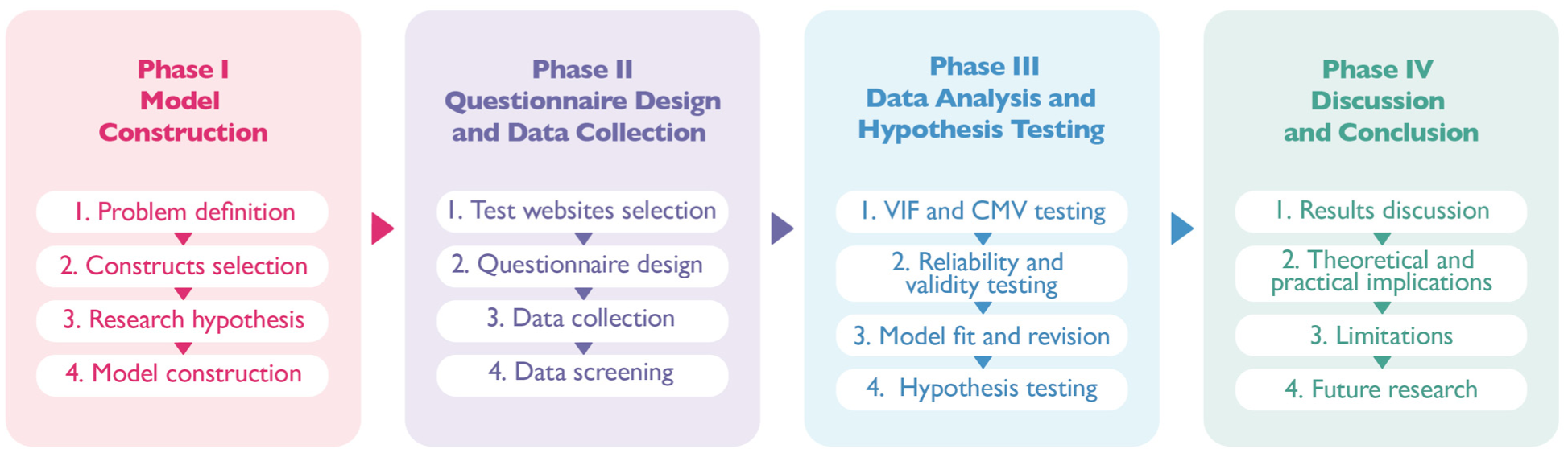
Research process framework diagram.
Stimulus Websites
This study selected the China Zisha-ware Digital Museum, a platform providing free online access and learning (China Zisha Digital Museum, n.d.), as the stimulus website. It uses advanced digital technologies, enabling users to transcend spatial and temporal limitations and interact with the museum environment in various ways. These interactions include scene navigation by clicking on white light spots on the ground, viewing high-resolution images and textual descriptions by clicking on blue light spots near the exhibits, and selecting the VR mode, in which users can follow a character’s perspective using handheld devices to automatically navigate through the scenes, thereby allowing for an immersive CZDM visit (Bureau of Culture, S, Radio, Television, and Tourism of Yixing, 2022). These features provide a unique opportunity to study how users engage with digital cultural platforms and to assess their satisfaction. Additionally, the digital museum features high-quality visuals, a well-structured interface, harmonious colour schemes, and a relatively clear navigation system, making it a strong representative of local, small-to medium-sized, and specialised digital museums.
Questionnaire Design
Considering existing research findings and characteristics of CZDM, this study developed an initial questionnaire to quantify the influence of perceived platform quality on user satisfaction in digital museums. The questionnaire was divided into two sections: basic respondent information and variable measurements. Based on empirical findings from respected scholars in structural equation modelling, larger scales offer greater reliability and validity than smaller scales (Brown, 2011). Consequently, a seven-point Likert scale (1 = strongly disagree, 7 = strongly agree) was used for the variable measurement section.
A pilot test of the questionnaire was conducted, followed by consultations with two experts in the relevant field. Based on the analysis, items that failed to meet reliability and validity standards or exhibited low factor loadings were removed. Additionally, the language was revised, potentially leading questions were eliminated, and the number and order of items were adjusted. The final questionnaire comprised 6 variables and 22 items. The specific items and their sources are listed in Table 1.
Measurement Model and Sources.

Sample and Data Collection
This study fully adhered to ethical guidelines and did not involve human biological specimens. Data were collected using the Credamo platform, which was completed voluntarily by adult participants. All data were completely anonymous with no personally identifiable information or sensitive questions. The questionnaire included an informed consent statement outlining the study’s purpose, duration, procedures, and voluntary participation. Participants were informed of their right to withdraw at any time without penalty and could proceed only after affirming their consent by clicking the ‘I have read and understood the above information and consent to participate’ button. By ensuring anonymity and confidentiality, this study minimised potential risks to the participants. The anticipated benefits (such as improving the digital museum experience design) outweigh the potential risks.
To ensure response validity and authenticity, this study used an anonymous survey to inform the respondents of this condition during recruitment. This step was taken to prevent any external pressure that might have influenced their answers, allowing them to freely express their genuine thoughts. The questionnaire began with navigation instructions and confirmatory questions. The instruction question asked participants to follow the prompt (X. Zhong et al., 2021): ‘Please make sure to click the link below, visit the CZDM, and explore it before completing the questionnaire’. Given that relying solely on instruction questions might not ensure thorough participation, a follow-up confirmation question was introduced, asking: ‘Have you completed your tour of the Digital Zisha Museum?’ If respondents selected ‘No’, the system automatically terminated the survey. Furthermore, Credamo’s IP restriction feature was used to ensure that each participant could only respond once from a single IP address (Y. Wu et al., 2022).
To ensure sample quality, three criteria were used to screen the questionnaires (Y. Wu et al., 2022). First, a time-tracking function was enabled on the Credamo platform. Based on time standards from relevant literature (C. Wang et al., 2023) and results from our pilot study, it was estimated that the virtual tour of the digital museum would take 5 to 8 min, and completing the questionnaire would take 3 to 5 min. Therefore, participants whose completion times fell outside expected ranges were considered invalid. Specifically, participants who spent less than 5 minutes on the tour or less than 3 minutes answering the questionnaire were deemed careless, and their data were considered invalid. Second, questionnaires with identical responses throughout were removed (X. Zhong et al., 2021). Finally, attention check questions were added to the questionnaire, such as ‘The information and content provided by CZDM are clear. (This is an attention check question; please select option 5.)’ If respondents selected any option other than 5, their responses were deemed invalid (Shi et al., 2023).
After excluding 17 invalid questionnaires, 355 valid responses remained and were used for formal data analysis. As the valid sample size exceeded 10 times the number of items (26), it met the requirements for SEM (Jackson, 2003). Descriptive statistics were performed using SPSS 26.0, and detailed results are shown in Table 2. Among the respondents, 41.7% were male and 58.3% were female. Most respondents had a bachelor’s degree (44.2%) or higher (39.2%). Regarding age, most respondents were between 18 and 25 years (47.9%), aligning with research indicating that individuals in this age group are more inclined to use digital technologies to access information (Z. Wang, 2018).
Demographic Information of Respondents.

Data Analysis Methods
SPSS 26.0 and AMOS 28.0 were used to analyse the data in this study. Internal reliability of the scale was assessed through Cronbach’s α coefficient, whilst validity was assessed via constructive validity, including convergent and discriminant validity. Path analysis for the structural equation model was conducted using the AMOS software to estimate the model parameters. To assess the significance of each path coefficient in the model, we conducted path tests. For the mediation effect, we used the bootstrap method in the AMOS software to examine the mediating variables. We then performed a thorough analysis and discussion of the results.
Data Analysis and Model Validation
Variance Inflation Factor (VIF) and Common Method Bias Test
The Variance Inflation Factor (VIF) is used to detect multicollinearity among variables. In this study, all VIF values range between 1.608 and 1.996 (Table 3), which are well below the commonly cited thresholds of include 10 (Kline, 2016), 3.3 (Petter et al., 2007), and 3 (Hair et al., 2022). The results suggest that multicollinearity is not a concern among the independent variables, ensuring that the stability of the model estimation is not compromised.
Reliability Analysis Results.

Note. VIF = variance inflation factor.
To further enhance the rigour of the study, we applied Harman’s single-factor test to assess possible variations in the common method before conducting the data analysis. We conducted an unrotated principal component analysis on all items in this study. The total variance explanation table demonstrates that the first factor explains 32.35% of the explanatory variation, which is below the critical value of the 40% (H. Zhou & Long, 2004). This result suggested that there was no serious common method bias in this study.
Reliability Test
The reliability test was used to examine the internal consistency and stability of data. From the data in Table 3, it can be observed that the Cronbach’s α coefficients for each structure surpass the threshold of 0.7 (Nunnally et al., 1967), and the CITC values are all greater than 0.4. Additionally, the elimination of the random term does not result in a significant increase in the Cronbach’s α, indicating that the data possess high reliability and are suitable for subsequent analysis.
Exploratory Factor Analysis
Exploratory Factor Analysis (EFA), which is mainly used to confirm the internal consistency of each construct, generate meaningful outcomes when the KMO value surpasses 0.5, and the significance of Bartlett’s sphericity test is lower than 0.05, indicating a notable association between the variables (Kaiser, 1958; Norusis, 1992). The results reveal that the KMO values for all variables surpass 0.6, and the significance of Bartlett sphericity test is below 0.05, conveying that the research data is suitable for factor analysis.
Factor extraction using the Principal Component Analysis (PCA) indicates that the total variation explained by the principal components of the constructs ranges from 62.681% to 69.931%, implying that the constructs adequately reflect the original data. Additionally, the PCA results suggest that only one factor is proposed per construct, with the characteristic value of this factor being greater than 1 (Harman & Harman, 1976), illustrating strong internal consistency within the questionnaire constructs (Kohli et al., 1998; Table 4).
Results of KMO and Bartlett Sphere Test.

Confirmatory Factor Analysis
Confirmatory Factor Analysis is used to assess both the convergent and discriminant validity of each potential variable, thereby assessing the inherent quality of the model. Convergent validity specifically examines whether different measures derived from a single latent variable primarily converge on a single construct. AMOS 28.0 was used to calculate both the Composite Reliability (CR) and Average Variance Extracted (AVE) of the data. The results indicate that AVE is greater than 0.7 and CR is greater than 0.5 (Table 5), further supporting the notion that measured variables adequately capture the characteristics of potential variables, thus confirming the acceptability of convergent validity (Fornell & Larcker, 1981).
Reliability and Convergent Validity.

Note.***p < 0.001.
Discriminant validity is concerned with the measurement of two different potential variables; a significantly low correlation implies differential validity between the variables (J. C. Anderson & Gerbing, 1988). Discriminant validity is assessed by comparing the correlation coefficient with the square root of the average variance extracted from the given variables. Specifically, if the correlation coefficient between a variable and other variables is lower than the variable’s square root of the average variance extraction, it indicates that the variable has good discriminant validity (Fornell & Larcker, 1981). As shown in Table 6, each bold data point represents the square root of the average variance extraction and exceeds all values in its corresponding column. Therefore, the model has adequate discriminant validity, which further confirms the adequate inherent quality of the model.
Correlation Matrix and AVE.

Note. The items on the diagonal on bold represent the square roots of the AVE.
Structural Model Assessment
The model fit indices assesses the coherence between the hypothetical model and the observed data. The fit indices shown in Table 7, including CMIN/DF = 1.082 (less than 3), RMSEA = 0.015 (less than 0.08), CFI = 0.995 (greater than 0.9), GFI = 0.951 (greater than 0.8), NFI = 0.934 (greater than 0.9), TLI = 0.994 (greater than 0.9), and IFI = 0.995 (greater than 0.9) indicate a satisfactory overall fit of the model. This result suggests that the model can be efficiently used for subsequent hypothesis testing.
Main Test Indicators for Model Fitting.

The path coefficient of the structural equation assists in determining the significance of the hypotheses. The explained variance (R2), which represents the proportion of variance in the response variable that can be explained by the predictor variable(s) in the model, highlights the explanatory and predictive capacities of the independent variable over the dependent variable (Figure 5). As per Table 8, the model verification indicated that the impact of SEQ’s influence path of SEQ on PU was insignificant (p = .131 > .05). This finding implies that SEQ does not have an impact on PU, thereby making it impossible to support H6c. The remaining 11 paths, however, have been verified. According to the data in the table, INQ (p = .016 < .05), SYQ (p = .039 < .05), and SEQ (p = .023 < .05) have positive effects on SAT; therefore, H1a, H1b, and H1c are supported. CON (p = .003 < .01) and PU (p = .027 < .05) have positive effects on SAT, therefore, H2 and H5 are supported. INQ (p = .016 < .05), SYQ (p = .007 < .01) and SEQ (p < .001) have positive effects on CON, therefore, H3a, H3b and H3c are supported. INQ (p < .001), SYQ (p < .001), and CON (p = .004 < .01) have positive effects on PU, therefore, H6a, H6b, and H8 are supported.

The influence between variables in the structural model.
Hypothesis Test Results.

Note.→represents the path relationship; ***p < 0.001.
Mediating Effect Test
Bootstrapping is considered the most efficient method for testing multivariate mediating effects (Preacher & Hayes, 2008). The Bias-Corrected Percentile method or the BC method, has been found to be superior to the Percentile method or PC method (K. Chen & Wang, 2023). Therefore, this study employs the BC Method to analyse any intermediary effects. Within AMOS 28.0, a sample size of 4,000 samples was established, and a 95% confidence level was set for the Bias-corrected Confidence Intervals. Table 9 presents the results.
Results of Testing Mediation Effects.

Note.→represents the path relationship.
The mediation effects of information, system, and service quality on satisfaction were examined, supported by 95% bias-corrected confidence intervals (excluding 0, p < .05). Specifically, the mediation paths ‘Information Quality → Perceived Use → User Satisfaction’, ‘System Quality → Perceived Use → User Satisfaction’, and ‘Service Quality → Perceived Use → User Satisfaction’ were tested. Among these, the path for service quality did not meet significance; therefore, Hypothesis H7c is not supported, while H7a and H7b are supported. Similarly, the mediation paths ‘Information Quality → Confirmation → User Satisfaction’, ‘System Quality → Confirmation → User Satisfaction’, and ‘Service Quality → Confirmation → User Satisfaction’ were supported, confirming H4a, H4b, and H4c.
Moreover, chain mediation paths such as ‘Information Quality → Confirmation → Perceived Use → User Satisfaction’, ‘System Quality → Confirmation → Perceived Use → User Satisfaction’, and ‘Service Quality → Confirmation → Perceived Use → User Satisfaction’ were found significant, supporting Hypotheses H9a, H9b, and H9c. The direct and total effects of information, system, and service quality on user satisfaction were all statistically significant (p < .05), indicating that perceived use and confirmation play important partial mediating roles.
This study explores the chain mediation roles of confirmation and perceived usefulness between perceived platform quality and user satisfaction, revealing the factors and mechanisms influencing CZDM user satisfaction.
Discussion
Perceived Platform Quality and User Satisfaction
Structural equation analysis revealed that perceived platform quality (information, system, and service quality) significantly impacts user satisfaction (supporting H1a, H1b, and H1c). Among these, information quality has the largest direct effect on satisfaction. This could be because CZDM is a specialised cultural heritage museum that serves users primarily seeking to acquire new cultural knowledge or historical information, either to broaden their horizons or satisfy intellectual curiosity. This finding is supported by previous studies on digital museum users’ needs (Booth, 1998; Marty, 2004; Skov & Ingwersen, 2014). Efficient, accurate, authentic, and useful information satisfies users’ knowledge and cultural demands, enhances their content understanding, and improves their satisfaction with the experience (DeLone & McLean, 2003; Q. Jiang et al., 2022). This result differs from studies on commercial simulation games and mobile group buying, in which users need to focus on different aspects. Digital museum users value information accuracy and depth, while game users prioritise system entertainment and smoothness (Wei et al., 2022), and group-buying users mainly focus on standardised, formatted content such as prices and discounts (Q. Li et al., 2018), which do not require complex interpretation or in-depth analysis. Consequently, users may subjectively perceive less variation in information quality. Thus, the effect of information quality on satisfaction depends on user needs and the system’s context.
Next, system quality significantly influences user satisfaction. However, this contrasts with some findings such as Stefanovic et al.’s (2016) study on e-government systems, which found no significant impact of system quality on satisfaction. This may be because employees using such systems are highly familiar with platform operations, which reduces their sensitivity to system quality. This highlights digital museum users’ reliance on platform stability and usability during interactions. In addition to traditional museum needs, digital museum users demonstrate a growing demand for stability, convenience, accessibility, and interactivity in the digital age (Marty, 2008; Müller, 2002). On one hand, a stable system reduces the likelihood of malfunctions, thereby increasing trust. On the other hand, a user-friendly interface and operational simplicity lower the learning curve and improve efficiency. Additionally, digital museums can offer users interactive experiences through features like VR, mobile, and zoom functions. These features ensure smooth interactions between users and the platform, making system quality a key contributor to user satisfaction.
Furthermore, high service quality typically signifies a reliable and responsive service, instilling confidence in the functional and technical quality aspects of the service system and reducing dissatisfaction from delays, thereby leading to higher satisfaction. Conversely, poor service quality may indicate the system’s inability to fulfil its tasks effectively, resulting in lower satisfaction. This result aligns with previous studies on online communities (H.-F. Lin & Lee, 2006), healthcare services (Okazaki et al., 2015), and museum tourism (Dang & Segers, 2020; Forgas-Coll et al., 2017). However, it is noteworthy that Chiu et al, (2007) and Cidral et al. (2018) found no significant impact of service quality on satisfaction in their studies on e-learning systems. Specifically, our study participants had diverse educational and professional backgrounds, whereas the respondents in previous studies shared similar learning backgrounds. This discrepancy may be one of the reasons for the differing effects of service quality on satisfaction.
Mediating Effect of Confirmation
The study confirmed that confirmation plays a significant partial mediating role in the relationship between perceived platform quality and user satisfaction (supporting H4a, H4b, and H4c). In other words, perceived platform quality indirectly affects satisfaction through confirmation.
First, confirmation is significantly influenced by the dimensions of perceived platform quality (supporting H3a, H3b, and H3c), consistent with previous studies (B.-C. Lee et al., 2009; Zhao & Gao, 2015). This suggests that perceived platform quality indirectly affects satisfaction by enhancing users’ level of confirmation. This is because digital museum users expect not only accurate and rich information, but also interactive, stable, and timely support. However, differences in study populations may lead to varying results. For instance, in studies on health apps, information and system quality were not significant. Users of these apps prioritise continuous, personalised, and timely feedback and support (Yin & Li, 2017), which offer immediate and tangible benefits, while the accuracy of health information and system stability are secondary. Furthermore, when these expectations are met or exceeded, positive confirmation enhances user satisfaction (supporting H2) (J.-W. Lee, 2010; Lu et al., 2019; Oliver, 1980).
Notably, the mediating role of confirmation between service quality and user satisfaction is the relatively higher, with an effect size of 0.068. This indicates that, in digital museums, reliable and stable services are more likely to evoke positive confirmation, further reinforcing satisfaction (Biswas et al., 2019). One possible explanation is that digital museums often contain vast amounts of background information and specialised knowledge spanning long periods. Users may feel confused or overwhelmed when exploring such content independently. A high-quality service system can significantly reduce this cognitive load through timely feedback and assistance (E. Y. Chou & Hsu, 2021), improving the user’s confirmation experience, and ultimately increasing satisfaction. This finding aligns with studies on online shopping where users may encounter complexity or information overload by browsing numerous products, comparing prices, and reading reviews (Biswas et al., 2019). Features such as instant help, intelligent recommendations, and online customer service assist users in solving issues quickly, reinforcing the mediating role of service quality.
The mediating effect of confirmation between system quality and user satisfaction is second, with an effect size of 0.043. This may be because, although system quality (e.g., performance and stability) is important, users focus more on whether it ‘runs smoothly’. As long as the system meets a basic performance level, users may not significantly increase their satisfaction evaluation. Furthermore, the mediating role of confirmation between information quality and user satisfaction is the smallest, with an effect size of 0.038. Information quality in digital museums may be considered a basic attribute (X. Guo et al., 2021). This means that if the information is inadequate, users will feel dissatisfied; however, if it meets or exceeds expectations, they will feel satisfied, leading to a smaller impact on confirmation. In summary, user satisfaction in digital museums depends not only on basic system and information functions but also on the significant value-added effect of service quality through confirmation.
Mediating Effect of Perceived Use
This study found that perceived usefulness partially mediates the relationships between information quality and user satisfaction, and system quality and user satisfaction (supporting H7a and H7b). In other words, both information quality and system quality are antecedents of perceived usefulness which directly influences satisfaction (supporting H6a, H6b, and H5). When CZDM provides up-to-date, relevant, or accurate information and the system is usable and responsive, users are more likely to perceive greater benefits from the digital museum. This perception encourages users to positively evaluate the system. The mediation path shows that information and system quality directly affect user experience and indirectly influence satisfaction through perceived usefulness. Notably, the effect size of perceived usefulness on the link between information quality and perceived usefulness (effect size = 0.041) is slightly greater than that on the link between system quality and perceived usefulness (effect size = 0.037). This may be because information quality is critical to the direct value that CZDM users gain from task completion and knowledge acquisition. In contrast, on platforms like e-EXCISE and e-government systems (Khayun et al., 2012; Stefanovic et al., 2016), information quality impacts perceived usefulness less than system and service quality, as users primarily value strong system performance over information quality.
Additionally, the direct impact of service quality on perceived usefulness and the mediating role of perceived usefulness between service quality and user satisfaction did not reach statistical significance (H6c and H7c are not supported). While some studies have also found these connections to be insignificant (Hajiheydari & Ashkani, 2018), these results differ from the findings in task-oriented systems such as learning platforms (Urbach & Ahlemann, 2010; Yang et al., 2017). This discrepancy may arise because learning systems are task-driven environments, in which users expect to acquire specific skills. Consequently, service quality (e.g., content-loading speed and Q&A functionality) directly influences learning outcomes and perceived usefulness. In contrast, digital museums are non-task-oriented environments in which users acquire knowledge more exploratorily, with less stringent demands for service quality than in educational systems. Therefore, the effect of service quality on perceived usefulness is relatively minor.
Chain-Mediating Effect of Confirmation and Perceived Usefulness
The study further validated the chain mediation role of perceived usefulness and confirmed the relationship between perceived platform quality and user satisfaction, supporting hypotheses H9a, H9b, and H9c. These findings underscore the importance of confirmation and perceived usefulness in shaping digital museum users’ satisfaction. The results specifically confirmed that confirmation directly affects perceived usefulness (supporting H8), which is consistent with previous studies (Bhattacherjee, 2001b; Shiau et al., 2020). This may occur because, after users confirm that the digital museum’s information and services meet their expectations, they are more likely to view the system as effective in helping them acquire knowledge and experience the culture. This sense of validation directly enhances their perception of the system’s usefulness.
DeLone and McLean (2003), Oliver (1980), and Bhattacherjee (2001b) explored and validated the direct relationships between perceived platform quality dimensions, perceived usefulness, confirmation, and user satisfaction but did not address their chain mediation effects. However, when a mediation model includes multiple interrelated mediating variables, they can function through a chain-mediation mechanism (Hayes, 2013). In the context of digital museums, we validated this mechanism, offering new insights into how users experience satisfaction in complex digital environments. Specifically, digital museum users expect high-quality information, smooth system performance, and effective service support. When these expectations are met or exceeded, users’ sense of confirmation is strengthened, which in turn, enhances their perception of the platform’s usefulness. This confirmation not only increases users’ trust in the system, but also strengthens their perception of its utility, further improving their overall satisfaction. Ultimately, the interaction between the cognitive and perceptual factors collectively enhances user satisfaction.
Conclusions and Suggestions
This study developed a structural model for evaluating user satisfaction in CZDM by integrating the IS Success Model and ECM. By analysing the direct and indirect relationships among the latent variables, this study provides multidimensional and in-depth theoretical insights for developing service models, enhancing user experiences in digital museums, and assisting relevant managers, technical personnel, and researchers in making more informed decisions regarding online strategies and resource allocation.
Theoretical Implications
This study presents three theoretical contributions:
(1) This study proposes an extended model that integrates the IS Success Model and ECM, thus expanding the application of these two major theories to digital cultural heritage. It also provides important theoretical insights for exploring user experience in digital museums. By addressing the limitations of using a single theory, this study offers a more comprehensive framework for understanding user satisfaction. The IS Success Model examines users’ perceptions of platform quality, including information, system, and service quality as well as how these perceptions influence user satisfaction. In contrast, ECM explores intrinsic psychological drivers by exploring the process of expectation confirmation. The integration of these models provides a deeper explanation of the formation mechanism of user satisfaction by combining the dimensions of system quality perception and expectation confirmation. This approach not only enhances our understanding of the factors affecting user satisfaction but also supports theoretical innovation and practical applications in future information system research.
(2) The study highlights the crucial role of users’ perceptions of information, system, and service quality in directly or indirectly enhancing user satisfaction in digital museums. This finding offers practical guidance for optimising interaction designs and service improvements. By gaining a deeper understanding of these key influencing factors, digital museum practitioners can more effectively meet users’ needs for information, system, and service support, thereby fostering positive user attitudes and improving overall satisfaction.
(3) This study proposes and verifies the mediating and chain-mediating effects of confirmation and perceived usefulness between information, system, and service quality, and satisfaction. While previous studies focused on direct effects, this study is the first to verify the chain mediation mechanism in digital museums. It provides new insights into how users form satisfaction in complex digital environments. This research not only enriches the theoretical framework of digital museum user experience but also deepens the understanding of the mechanisms influencing user satisfaction. Additionally, the proposed model can be applied to other types of museums or similar digital information systems, helping explore more pathways to enhance user experience.
Practical Implications
Considering the aforementioned analysis and discourse, we propose three practical recommendations to enhance digital museum system construction, thereby augmenting user experience and satisfaction.
(1) Strengthening the development of informational content in digital museums. Rich digital resources are fundamental to the sustainable development of digital museums (Ruiying, 2016). To achieve this, priority should be given to digitising museum resources, including cataloguing, imaging, and 3D modelling of artefacts, to ensure that digital museums possess abundant information. Next, careful curation is essential to maintain high-quality content dissemination. Digital museums should not merely replicate traditional content, but integrate unique features, artefact resources, and communication methods to ensure accuracy and authority. Moreover, digital museums should leverage their advantages by utilising technologies like AR, VR, and 3D imaging to enrich content presentation. For example, the digital restoration of ancient sages in the Suzhou Museum enables user interaction, creating a novel, immersive experience that increases user engagement (Yang, 2024).
(2) Enhancing the stability and service infrastructure of digital museum systems. The technical system is the core feature that distinguishes digital museums from traditional museums and deserves special attention from developers. On one hand, it is necessary to strengthen the technical support for interactive features to ensure the system’s stability and high availability. For example, technologies such as load balancing and automated operations can ensure that the system runs smoothly during peak user visits, thereby preventing lags or crashes. On the other hand, expanding communication channels with users is equally important. Digital museums should focus not only on human-computer interaction but also on designing effective interpersonal interactions. Specific measures could include embedding frequently asked questions (FAQs), real-time online support, AI-powered consultations, and integrating social media platforms to enable users to inquire and provide feedback via multiple channels.
(3) Prioritising user expectation management and confirmation. When designing the top-level architecture of a digital museum, users’ psychological expectations should be fully considered, and refined management of these expectations can enhance the user experience. In the early design stages, user surveys can be conducted to understand expectations regarding content, system performance, and service, guiding targeted improvements. This data-driven expectation management helps increase user satisfaction. For instance, personalised recommendation technologies can deliver customised content based on individual interests, help exceed expectations compared to traditional display models, and enhance visitor experience. It is worth emphasising that enhancing user satisfaction cannot rely improving a single factor alone; instead, all potential variables should be comprehensively considered to collectively optimise user experience.
Limitations and Future Research
Although this study reveals the mechanism through which perceived platform quality influences user satisfaction and offers a significant theoretical foundation for enhancing digital museum user satisfaction, several limitations remain.
(1) This study focuses on examining the attitudes of users interested in digital museums without incorporating control variables such as gender, age, occupation, and education level. Such demographic characteristics could contribute to behavioural differences among groups. Therefore, future studies should introduce additional control variables to better understand the influence of these characteristics on user satisfaction. Moreover, the study employed a targeted sampling approach rather than a comprehensive population survey, limiting the analysis across different demographic groups. Future studies should consider using population census data or more refined sample segmentation to explore the differences in satisfaction and other variables among different user groups, thus providing a more precise understanding of users’ diverse needs.
(2) Although this study examines several facets of digital development in small and medium-sized museums, it does not fully capture their unique characteristics in terms of technological resources, user demographics, local culture, and exhibition content. Future studies should introduce additional variables that reflect the unique features of these museums, thereby capturing their distinctiveness more thoroughly. Additionally, specific digital technology variables such as ease of use, system interactivity, and multimedia integration should be incorporated into the model to directly reflect the impact of digital technology on user satisfaction.
(3) As this study mainly relied on survey questionnaires, respondents’ subjective biases may have affected the objectivity of the results. Future studies could adopt more diverse data collection methods, such as observational or experimental methods, to mitigate subjectivity-related biases.
(4) Given the rapid pace of changes in the research context, the results of this study may only be valid for a specific period or specific population in developing countries such as China. Future studies could test the proposed model on user samples from diverse cultural backgrounds and verify its universality and differences through cross-cultural comparisons.
Footnotes

Ethical Considerations
The study was reviewed and approved by the Medical Ethics Committee of Jiangnan University (Approval Number: JNU202406RB025).
Consent to Participate
Informed consent was obtained from all participants involved in the study.
Funding
The authors disclosed receipt of the following financial support for the research, authorship, and/or publication of this article: This work was supported by the Postgraduate Research and Practice Innovation Program of Jiangsu Province under Grant KYCX23_2424, the Fundamental Research Funds for the Central Universities, and the Humanity and Social Science Research Project of the Ministry of Education of China (Grant 23YJC760010).
Declaration of Conflicting Interests
The authors declared no potential conflicts of interest with respect to the research, authorship, and/or publication of this article.
Data Availability Statement
The datasets generated and analysed during the current study are available from the corresponding author upon reasonable request.