




Abstract
Our research aims to evaluate the impact of teachers’ behavior on the intention of master students from two generations (Generation Z and Millennials) to participate in volunteering activities. We also aim to assess the factors that influence master students’ motivation toward volunteering activities, how intention mediates the relationship between teachers’ behavior and master students’ motivation, and between the perceived behavioral control of master students and their motivation to be involved in volunteer activities. We collected data online from 412 master students and used structural equation modeling with partial least squares (PLS-SEM) to analyze the data. We found that perceived behavioral control strongly impacts master students’ intention and that age moderates the relationship between intention and motivation. We used the Functional Attitude Theory to support our findings, and we found differences between generations (i.e., teachers’ behavior does not influence Generation Z master students’ intention to volunteer, and teacher’s behavior does not influence the motivational behavior of Millennials master students’ volunteers). Our study has theoretical and practical implications, providing insights for reconfiguring the relationship between teachers and master students. It considers the increasing complexity of factors influencing master students’ volunteering activities. Future research will focus on the mediating role of artificial intelligence in communication between teachers and master students and the advantages of volunteering activities.
Plain language summary
Purpose: To evaluate the impact of teachers’ behavior on the intention of master students from two generations (Generation Z and Millennials) to participate in volunteering activities. Methods: We used structural equation modeling with partial least squares (PLS-SEM) to analyze the data. Conclusions: We found differences between generations (i.e., teachers’ behavior does not influence Generation Z master students’ intention to volunteer, and teacher’s behavior does not influence the motivational behavior of Millennials master student volunteers). Limitations: The study was applied only to Romanian respondents.
Keywords
Introduction
Practicing volunteering has emerged as a passion for students. Volunteer work actively fosters collaboration between students and the community members who take advantages from their dedication.
Most studies aimed to analyze the impact of mentoring programs on youth development (Bayer et al., 2015; Spencer et al., 2022; Stoeger et al., 2021; Weiler et al., 2019) and focused less on the analysis of the impact that educational programs and teachers have on young people’s intention to get involved in volunteer activities. That is why our research fills the gap in the literature regarding teachers’ impact on the motivation and involvement of master students in volunteering activities.
Generation Z (1997–2012) and Millennials (1981–1996) are two generations with different volunteering approaches. Thus, if members of Generation Z are devoted to volunteering (Connors, 2023), Millennials are concerned with their image. Therefore, volunteering activities represent an opportunity to demonstrate their autonomy and self-control (Ertas, 2016), but with all, they need peer acceptance (Williams & Page, 2011).
Universities, with the coordination of teachers, are initiating volunteering programs to raise young people’s awareness about the positive impact of volunteering on their personal and professional growth. It has been found that educational practices and volunteering programs directly influence master student performance, mainly when master students are motivated to engage in volunteering activities based on their attributes, as concluded by Slavin (2002).
Nolen and Putten (2007) observed that students’ untapped potential can be directed toward volunteer activities, and teachers play a vital role in developing students’ critical thinking by adopting effective teaching methods. Bayer et al. (2015) also found that the teacher-student relationship contributes to improving students’ academic performance and personal skills, and students’ active and constant involvement in volunteering programs is necessary for achieving this.
Our study focuses on teachers’ impact on Generation Z and Millennial master students. It sheds new light on academic practices and suggests the integration of curricula that encourage formal and non-formal communication between teachers and master students. This communication helps students understand the potential impact of volunteering in their personal and professional development. Therefore, master students no longer view participation in volunteer projects as an obligation but as an added value extracurricular activity. For example, the statement “if I do not get involved in the faculty volunteer project, I will get an A+ grade with more effort” is transformed into “if I do not get involved in the faculty volunteer project, I will miss the opportunity to gain new knowledge and interact with people from the academic, business, and social environments.”
Literature Review and Hypotheses Development
Volunteering has multiple benefits for students because, through the practical experience they acquire, they learn, develop, and gain recognition of leadership skills that will help them orient themselves toward a career that can ensure a balance between their personal and professional lives (Holmes et al., 2021). Moreover, volunteering, together with well-being, exerts a positive influence on students’ health, but the danger generated by overestimating the positive effects of volunteering on well-being should be addressed (Lawton et al., 2021). Therefore, the teacher is a moderating factor between students’ intention and involvement in volunteer projects.
Veres et al. (2020), based on the Dark Triad elaborated by Paulhus and Williams (2002), observed that the three constructs, which are three personality typologies (narcissism, Machiavellianism, and psychopathy) observed that the benefits of volunteering are reflected in the development by students of pro-social (the good of other members of the community) and less self-oriented concerns. These benefits of volunteering for students lead us to the premise that the teacher, through his formal investment in the educational process, must have the ability to use the formal element as a springboard for the informal side of volunteering, especially if we consider that students of with a master’s degree, they have a certain life experience, a job, a family, and children.
Functional Attitude Theory
The intention of students to participate in volunteer activities is the critical factor that drives them to become volunteers. According to the Functional Attitude Theory (Katz, 1960), individuals have certain attitudes toward objects and phenomena for various reasons. Motivation plays a significant role in measuring individuals’ attitudes toward specific activities, such as volunteering. As a result, students’ motivation to engage in these activities significantly impacts their willingness to volunteer.
Functional attitude theory is a framework used to understand why young people intend to volunteer. The theory identifies five functional attitudes that determine human behavior, psychological development, and self-worth through volunteer work, the opportunity to gain social recognition due to interacting with other people, obtaining tangible or intangible rewards (i.e., extra credits), and acquiring new knowledge.
Smith et al. (1956), focusing on opinions and personality, and later Katz (1960), focusing on persuasive messages, produced different typologies of attitude functions, but these were combined into a single typology that encompassed five functions.
According to Smith et al. (1956) and Katz (1960), the utilitarian function for attitudes helps individuals differentiate between how they perceive what pleases them and what does not please them, thus contributing directly to achieving goals and satisfying personal needs by maximizing utility. Thus, through volunteering, students, on the one hand, achieve some personal goals (e.g., self-esteem and the desire to help those in difficulty). On the other hand, they also satisfy some personal needs, which contributes to increasing self-esteem.
The social-adjustive function is a combination of social influences exerted on attitudes (Katz, 1960) and a means by which interpersonal relationships are regulated (Smith et al., 1956). These social interactions serve as a motivational factor for students to engage in volunteer activities.
The expressive value function directly contributes to students’ expression of abstract values and, at the same time, helps them maintain some consistency of individual values. Therefore, due to its abstraction, this function does not provide tangible results that are materialized in rewards or reprimands, but it contributes to producing a level of satisfaction that students associate with the principles that they promote through a volunteer project.
An ego-defensive supports students to create a shield to protect them from the interference of external factors in their personal lives, which contributes, in an indirect way, to the increase of students’ self-esteem if the purpose of the volunteering project is it folds, more or less, on certain deficiencies of the self. Moreover, through volunteering projects, students can use various mechanisms that contribute to reducing or even eliminating inevitable frustrations (Stotland et al., 1959), which positively impacts self-esteem (Clary et al., 1998).
The function of knowledge is found only in Katz (1960). We believe that this function has a substantial impact on students who get involved in volunteer projects because it helps them, through knowledge, to achieve various goals, such as:
Understanding the mission that they have in the volunteering project,
Observing and knowing the environment in which they carry out their activities,
empathizing with the people whose problems volunteering solves and being aware of situations that could have a real impact on their own lives.
In agreement with Herek (1986), we believe that volunteering projects offer students the opportunity to empirically reevaluate attitudes’ functions by referring to their personality. That is why the typology of attitude functions developed by Herek (1986) distinguishes between evaluative functions (e.g., experiential-specific, experiential-schematic, and anticipatory-evaluative), anticipatory-evaluative, and expressive functions. These evaluative functions offer students the opportunity to get involved in volunteering projects, which leads, on the one hand, to the possibility of solving their interests, resulting in rewards, and on the other hand, if the rewards are missing, it generates the opportunity, at least, for students to avoid the application of punishments that are not the result of their volunteering. Anticipation-evaluation functions inform students about the rewards or punishments that a certain attitude would generate. According to Herek (1986), expressive attitude functions (social-adjustive functions and expressive values) are similar to those of Katz (1960), and the defensive function is equated with Katz’s (1960) ego defensive function.
Students’ personalities contribute to the different manifestations of attitude functions. That is why the role of the teacher, in a certain context, is decisive in enhancing a certain function of attitudes, from outlining the students’ intention to become volunteers to their actual involvement in volunteering projects.
The Particularities of Generation Z’ and Millennials
The particularities of the two generations (Generation Z and Millennials) have attracted the attention of researchers since the members of these generations became active in the labor market.
Mahapatra et al. (2022) conducted comparative research between Generation Z and Millennials, concluding that social events left their mark on the members of these two generations, with a preponderance on Millennials.
Millennials are characterized by autonomy but are less open to change, being more conservative (Cennamo & Gardner, 2008; Lyons et al., 2007).
Generation Z is connected to social networks, characterized by a strong desire for social justice, equality, and freedom of expression that materializes through virtual communication (Schroth, 2019). These characteristics of Generation Z are an asset for the success of volunteering projects.
Virtual communication also negatively affects Gen Z members, as it diminishes their ability to build authentic relationships based on listening, face-to-face problem-solving, and conflict resolution.
The teacher’s role in motivating members of the two generations (Z and Millennials) to get involved in volunteering projects is dictated precisely by their similarities (autonomy, flexibility, continuous learning).
The teacher must be able to attractively present the advantages of student volunteering and transform the teacher-student relationship into a source of student responsibility and personal development (Schlee et al., 2020). Furthermore, the teacher must highlight the challenges that students have to overcome in volunteer activities and be involved, through personal example, in shaping the atmosphere within the volunteer teams so that students feel that, through their involvement in volunteering projects, they contribute directly to increasing the well-being of a community.
The Master Student’s Intention to Carry Out Volunteer Activities as a Premise for Their Motivational Behavior
Students’ attitudes toward volunteering activities are influenced significantly by their intention to create a specific change, especially if alternative types of involvement overlap with other motivational factors (Levin et al., 2000). If students converge between professional goals and volunteering, they are more likely to continue volunteering even after completing a project (Clary et al., 1998).
Personal factors strongly influence students’ motivation to volunteer (Eberly-Lewis & Coetzee, 2015). However, external factors such as community (Wray-Lake et al., 2019), family (Stattin et al., 2011), and educational environment also play a role (Bayer et al., 2015; Flanagan et al., 2007; Silke et al., 2020). According to Ajzen (1991), the intention is triggered by motivational factors that generate a specific volunteering behavior. Thus, the likelihood that students will exhibit volunteering behavior depends on internal factors (i.e., the effort the student is required to make to carry out a volunteer project) and external factors (i.e., the teacher’s formal and informal interaction with students).
The teacher plays an essential role in triggering the behavioral intention and motivation that influences the volunteering behavior of the students. Intention is a factor that promotes motivation and influences the manifestation of a particular behavior in students, which leads them to get involved in volunteering projects (Conner & Armitage, 1998). Therefore, the behavior of teachers oriented to volunteering influences students to prove a desire to get involved in volunteering activities because the strongest motivation for students to volunteer consists of personal advantages, especially professional ones that they can have. Moreover, teachers can meet students’ expectations by enhancing students’ positive emotions and inducing a sense of usefulness of volunteering activities for all stakeholders (both for students and beneficiaries and promoters of volunteering projects).
The influence of gender on students’ entrepreneurial intentions proved that women have a higher level of empathy, strengthening their intention to become social entrepreneurs (Cardella et al., 2024).
We will want to see how each generation (i.e., age variable) perceives the relationship between the intention and the motivation to participate in volunteering projects. Millette and Gagné (2008) observed that the factors that have a substantial impact on the intention and motivation of individuals to engage in volunteer activities are the following: teamwork, the opportunity to acquire new skills, establishing contacts between volunteers and other parties involved, enhancing the decision-making power of volunteers and increasing the attractiveness. Alexander et al. (2015) and Schlesinger and Gubler (2016), analyzing the factors that influence the voluntary activity of young people in the field of sports, observed that the relationship between motivation and their intention to carry out volunteer activities is a triggering factor of young people’s desire to get involved in volunteering.
Therefore, we developed the following hypotheses:
H1: Students’ intention to carry out volunteer activities directly influences their motivational behavior as volunteers (INT -> MVB).
H2: Age moderates the relationship between students’ intention to carry out activities and their motivational behavior (Age × INT -> MVB).
Perceived Behavioral Control of Volunteer Students
Young people, regardless of their generation (Generation Z or Millennials), want to be in control of their activities. Therefore, volunteering activities represent one way to satisfy this need.
Smith et al. (1956) started from the premise that attitude functions are associated with personality. Katz et al. (1957) and Stotland et al. (1959) believed that authority manifests ego-defensive attitudes toward other groups. However, practical research has oscillated between confirming (Debono, 2000) and denying (Dillard & Hunter, 1989) this hypothesis. Therefore, young people can use their involvement in volunteer activities to manifest their authority and promote their ego toward other colleagues.
Gudzinskiene and Kurapkaitiene (2022) observed that young people involved in volunteer activities, especially those who have had difficult experiences in their personal lives, have reached the level where they can control their actions. Moreover, a subsequent manifestation of their ability to control was also reflected in how they accepted voluntary activities at the expense of imposed activities. In this context, the role of teachers is to mediate the relationship between volunteer project activities and young people’s motivation to get involved in these activities. That is why, to achieve a synergy between the young volunteers and between them and the beneficiaries of the volunteer actions, the teachers must give the students the freedom to choose. Thus, we elaborate the following hypotheses:
H3: Perceived behavioral control of student volunteers directly influences their intention to carry out volunteer activities (PCVB -> INT).
H4: Perceived behavioral control of student volunteers directly influences their motivational behavior (PCVB -> MVB).
Teachers’ Behavior in the Relationship With Master Students
Holdsworth and Brewis (2014) consider that in practice, if volunteering is assimilated into co-curricular activities and students benefit from some advantages, students no longer have control, visibly reducing their ability to voluntarily choose volunteer activities to participate in because they are, in an indirect way, obliged to participate in those voluntary activities from which they obtain some school advantages. In this case, limiting students’ control over volunteering activities, in the long term, may negatively affect their intention to engage in volunteering activities. Volunteer identity is associated with students’ desire to control how they engage in volunteering activities. Therefore, volunteering is a motivating factor that leads to increasing young people’s desire to improve their personal and professional experience.
Forster et al. (2015) evaluated the impact that teachers involved in the ITE (Initial Teacher Education) program have on students who want to practice voluntary activities and observed teachers themselves, as a result of the activities undertaken together with students, contribute to increasing the reputation of the university and the development of students’ intention to continue to be involved in volunteering programs after the completion of their studies.
The results of González et al.’s (2019) research indicated that, through personal example, teachers have a significant impact on the performance of students involved in volunteer projects aimed at reducing social inequalities in the community. Furthermore, Barton and Tan (2020) confirm previous results in the literature and state that teachers engage with students in volunteer programs, and the student’s professional and personal performances are influenced by the fact that teachers engage with students.
According to McComb and Eather (2024), working conditions, very poor welfare, and the high pressure exerted on higher education institutions can negatively influence the relationship between teachers and students regarding communication of the utility of volunteering activities. H. Cho et al. (2020) confirmed the positive relationship between volunteer management and their intention to continue volunteering. Consequently, teacher behavior determines students’ intention to get involved in volunteer activities. However, the role of teachers is to instill in students the idea that they can get involved in volunteer projects and have control over their behavior. Engle et al. (2010) consider that individuals who feel they can display a specific behavior in carrying out an activity are much more motivated to complete it.
As a result of the analysis of the specialized literature, we developed the following hypotheses:
H5: The teacher’s behavior directly influences the students’ intention to carry out volunteer activities (TC -> INT).
H6: Teacher behavior directly influences the motivational behavior of student volunteers (TC -> MVB).
H7: Teacher behavior directly influences the perceived behavioral control of student volunteers (TC -> PBCV).
Figure 1 shows the conceptual model of the relationship between teachers and students in volunteering projects.
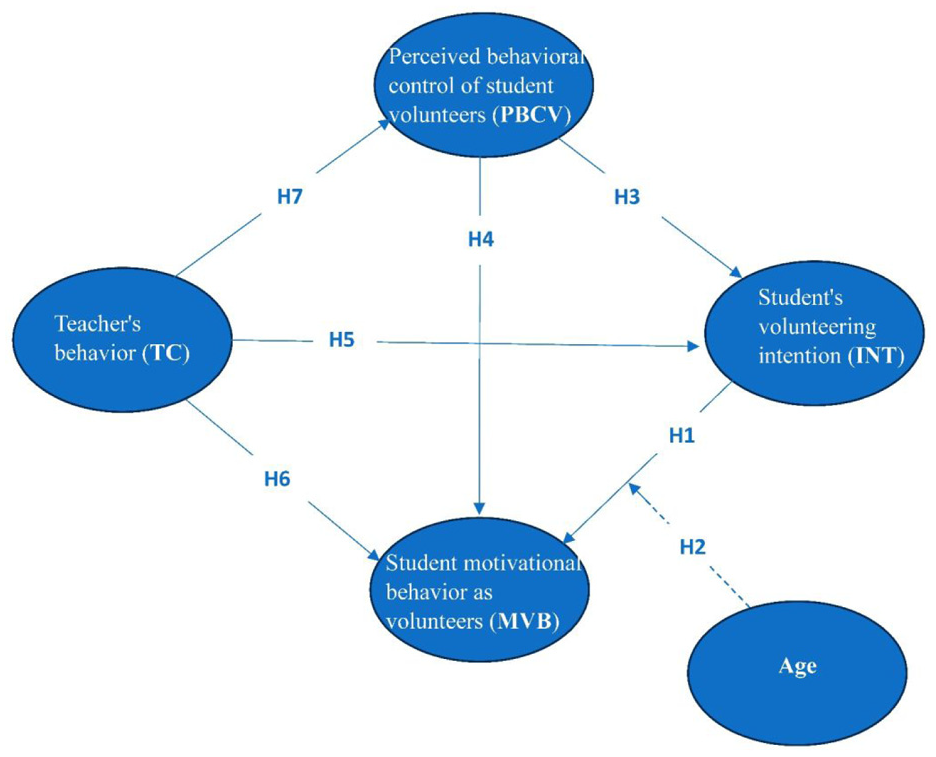
The theoretical model of volunteering research.
Methodology
Procedure
Our research was directed at master students from two generations (Generation Z and Millennials) to assess how the academic environment and teachers influence the motivational behavior of students to volunteer activities.
The study was approved by the Ethics Committee of the University of Craiova (No. 797/2024), and it was conducted in accordance with the ethical standards outlined in the 1964 Declaration of Helsinki and its subsequent amendments. Informed consent was obtained online prior to participation. Respondents could terminate the survey at any time without penalty.
As a member country of the European Union, Romania adapted the Romanian education system to the requirements of the Bologna Process, which, from the moment of its creation (1998–1999), was oriented toward creating a European Higher Education Area. Romania has a diploma system in higher education focused on three cycles (Bachelor’s, Master’s, and Doctorate). That is why, in order to be able to compare the two generations (Z and Millennials), our research focuses on master’s degree students who have the opportunity to enroll in the master’s degree when they consider that they either have a specific financial stability and family (which justifies the presence in our sample of Millennials students aged 26–30), whether it is time to acquire new abilities or develop existing ones.
Instrument
Our study instrument was a questionnaire that assessed the factors influencing students’ motivational behavior to volunteer for activities.
Our study instrument was a questionnaire assessing the factors that influence students’ motivational behavior to volunteer for activities.
The questionnaire was pre-tested on 125 master’s students, and the results were discussed with the members of the doctoral guidance committee. Based on their recommendations, the structure of the items was modified to be more accessible to the respondents. We used a random sampling method.
The questionnaire was posted online on the Google Form platform to ensure the respondents’ confidentiality and anonymity. During the pre-test and the study period, the questionnaire started with a section in which respondents’ consent was requested. If the students did not agree to participate in the study, the questionnaire was completed. If the students agreed to participate in our study, the questionnaire was run section by section so that it was impossible for the respondents not to go through the entire set of questions.
Participants
Of the 497 questionnaires received, 412 were valid, with all answers completed. The questionnaire was pretested on 100 students to eliminate items irrelevant to the research objective and keep items essential to the research.
Of the 412 final respondents, 217 (52.7%) were male and 195 (47.3%) were female. Regarding age, the majority group is represented by students from 18 to 25 years: Generation Z (60.4%—249 respondents), and students from 26 to 30 years: Millennials (39.6%—163 respondents). Instruments were developed from the existing literature using a five-point Likert scale (1 = strongly disagree; 5 = strongly agree).
Students’ intention to volunteer was measured using four items adapted from Venkatesh et al. (2012), such as: “I perceive this activity as a means of professional development.” Perceived behavioral control of volunteers was measured using three items adapted from Fernandes and Matos (2023) and Holdsworth and Brewis (2014), such as: “My involvement in volunteer activities is also driven by the fact that I have control over how I spend my time.” Students’ motivational behavior was measured using four items adapted from Al Mutawa (2015), Mason (2016), and Suhud (2013), such as: “I carry out volunteer activities to develop my professional and personal skills.” Teachers’ behavior (was measured using three items adapted from Bayer et al. (2015), Hager and Brudney (2004), and Pusztai et al. (2021), such as: “I often discuss with teachers the opportunities volunteering offers for my career.” The full list of items is available in Appendix 1. The teacher’s behaviors can influence students’ volunteer intentions, depending on the psychological aspects that are better highlighted by their actions. Thus, considering the characteristics of the two generations, it is not straightforward to establish a clear hierarchy between utilitarian functions and social-adjustive functions. On the one hand, students are aware of the role that volunteer activities play in shaping and developing their careers. On the other hand, social rewards motivate students to integrate and contribute to the development of a culture based on altruism and devotion to a noble social cause. The combination of practical benefits of volunteer actions and the tacit or implicit social awards, especially in the era of Artificial Intelligence, can lead to added value for many actors (students, teachers, and society).
Taking into account the conclusions reached by Wentzel (1997), we believe that, regardless of age, students, in order to be influenced by teachers’ behavior in volunteer actions, first, teachers must demonstrate that they are indeed concerned and care about the students’ wishes and aspirations, and then to support them in carrying out these actions, and finally to appreciate their effort and results. Therefore, teachers must refrain from encouraging defensive attitudes toward volunteering in their students through their behavior. Moreover, teachers must adopt more open and inclusive attitudes and styles, as only by doing so can they contribute to strengthening the relationship between students’ intention to participate in volunteer activities and their level of social acceptance and career success. Teacher behaviors have a direct impact on how students perceive volunteer actions as agreeing with their values. Therefore, Table 1 reflects the relationship between the theoretical functions and the survey variables/items.
The Map of Functions of Functional Attitude Theory and the Study Variables/Items.

Data Analysis
To analyze our composite-based model and rely on bootstrapping to obtain estimates of the standard errors of model parameters, we have employed Partial Least Squares Structural Equation Modeling (PLS-SEM) by utilizing SmartPLS (version 4.0).
According to Jakobsen and Jensen (2015), self-report data collection techniques are prone to Common Method Variance (CMV), which can lead to inflation or deflation of the relationships between the variables under analysis. Therefore, from the outset, we assessed the risk of CMV by carefully examining the characteristics of the variables and their items to minimize the potential for substantial error variance (MacKenzie et al., 2011). Furthermore, we adapted the questions based on studies that have already been validated in the specialized literature on volunteering, eliminating those questions that could have confused the respondents.
During the data collection stage, we ensured the anonymity of the respondents by eliminating all questions that could have led to their identification. Moreover, according to Podsakoff et al. (2003) during the data processing stage, we performed an exploratory factor analysis without rotation based on a single-factor test (Table 2).
Total Variance Explained.
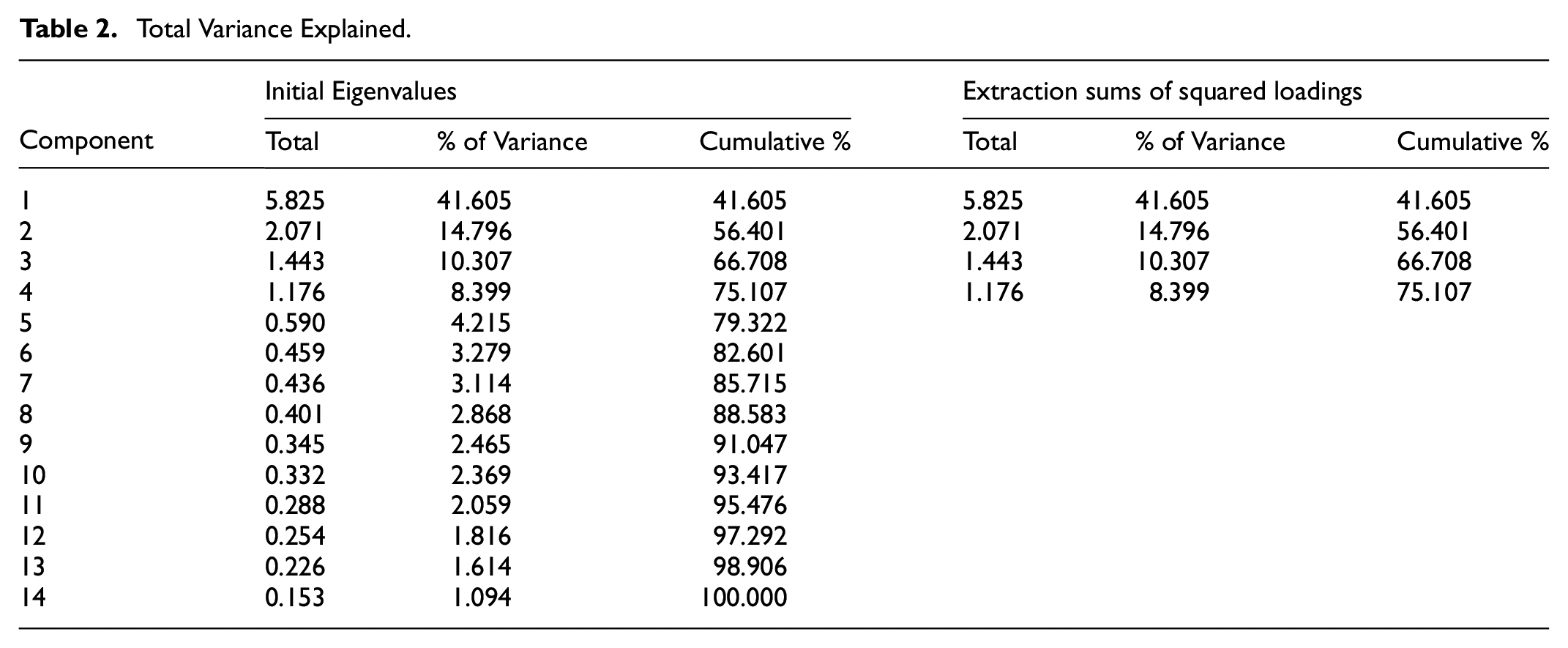
Extraction Method: Principal Component Analysis
The results indicate that the newly introduced common latent factor explains 41% of the variance, which is less than 50% of the variance. In conclusion, there is no severe distortion of the common method bias.
We continued with the assessment of the reliability and validity of our measurement model, and the results are presented in Table 3.
Statistical Values of the Four Variables.
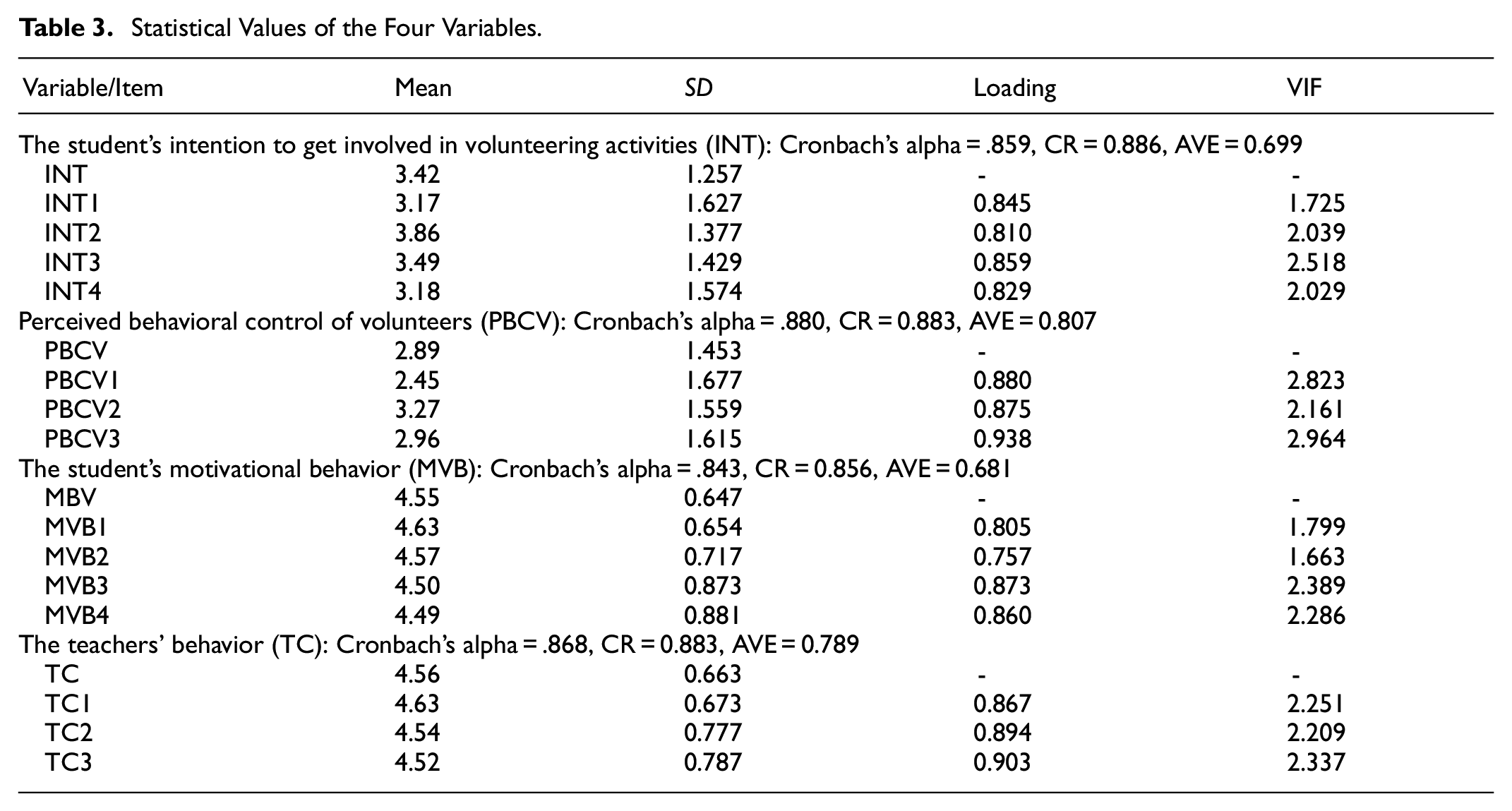
Analyzing the table above, it is evident that the value of the loadings ranged from 0.757 to 0.938, more significant than the threshold value of 0.700, and the values of Cronbach’s alpha (ranged from .843 to .880) and composite reliability (ranged from .856 to .886) all exceeded .70, indicating sufficient construct reliability (Hair et al., 2022).
The average variance extracted (AVE) values are between 0.681 and 0.807, above 0.600. Therefore, the convergent validity is building up, and we continue to evaluate the discriminant validity. The values of the heterotrait–monotrait ratio of correlations (HTMT) range from 0.024 to 0.659 and are all values below the threshold (0.85) recommended by Henseler et al. (2015), proving that we have no problems related to discriminant validity.
The standardized root mean residual (SRMR) was 0.071, lower than the stipulated criterion of 0.08, and the normed fit index (NFI) was 0.923, above the value recommended 0.9; these two indicators prove a good model fit (Henseler et al., 2015).
The volunteering activities model does not show multicollinearity issues because the variance inflation factor (VIF) values ranged from 1.663 to 2.964, which is less than 3.3 (Kock & Lynn, 2012). Table 4 proves the status of hypotheses and the mediator role of age between the students’ intention to get involved in volunteering activities and their motivational behavior for volunteering.
Hypotheses Testing.
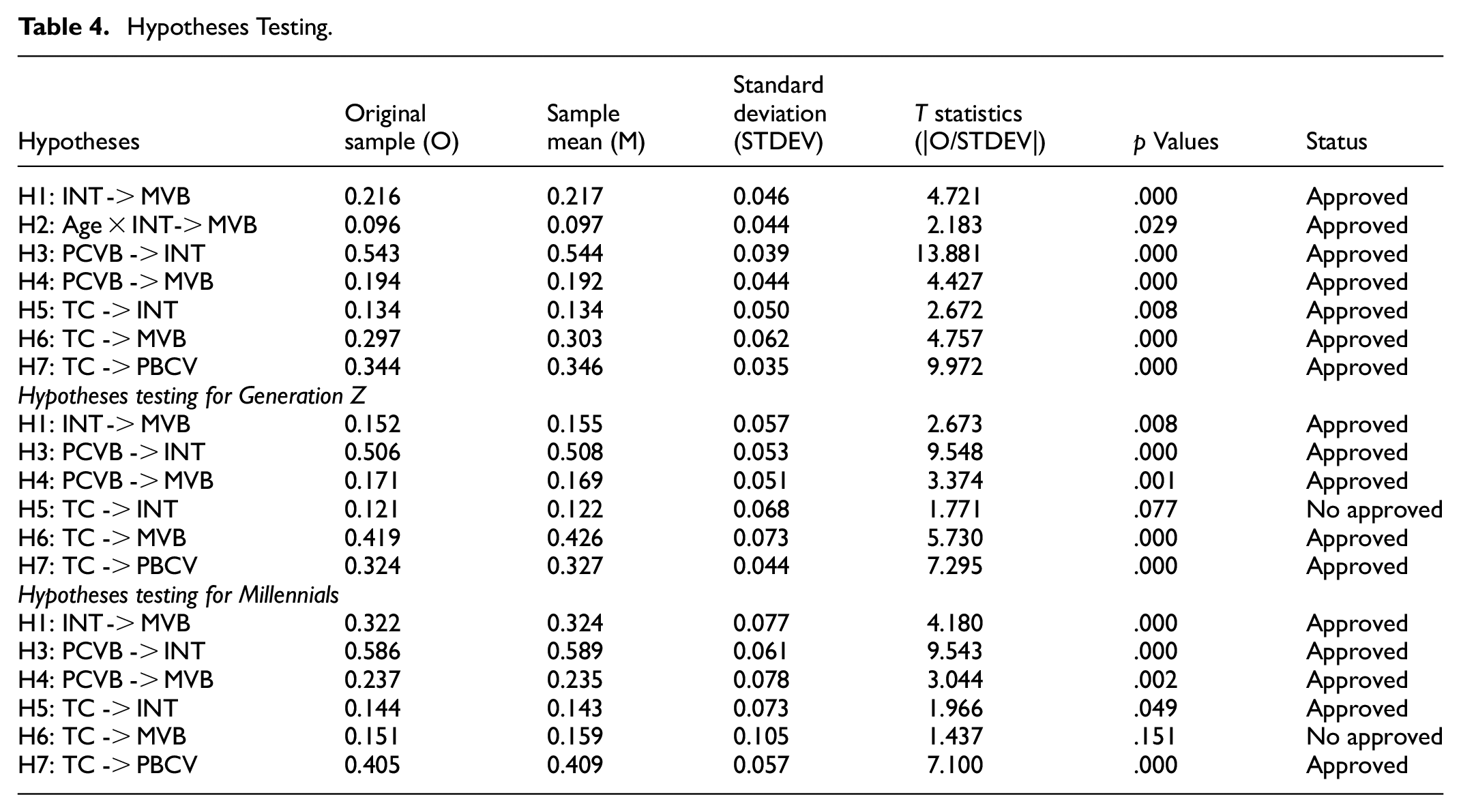
Paradoxically, analyzing the table above, we notice that all master students’ hypotheses were approved. Instead, there are differences between the two generations regarding teachers’ influence on certain variables that influence master students’ intention and motivation to participate in volunteering projects. Therefore, a detailed discussion of the interactions between the variables in our model is warranted, which we will do below.
Discussion
The students’ motivational behavior is influenced by external factors from the educational environment and personal factors, and the synergistic intercorrelation between these factors leads to a high motivation to practice volunteering. Therefore, in agreement with Farrell et al. (1998), student volunteers are motivated by the desire to contribute to the well-being of the community, allowing them to socialize and interact with their peers while assuming professional and personal responsibilities.
Our study stands out as we have utilized the Functional Attitude Theory (Katz, 1960) to examine the influence of teachers on students’ motivation and behavior toward volunteering activities. Furthermore, we have assessed how teachers, including teacher coordinators (TCs), play a role in enhancing students’ perception that they have control over the decision to participate in volunteering activities.
H1 was validated, demonstrating that intention has a strong influence on students’ motivation for volunteering. Our results confirm previous research (Chuan Chen & Hwan Shyr, 2021) that links students’ intention directly to their motivation to volunteer and expand their personal experiences. Volunteers expect to receive some benefits, and in this context, teachers play an important role in providing students with detailed information about volunteering projects. This will motivate students to participate in volunteer activities (Thomas & Nair, 2023).
H2 found that age moderates the link between intention and motivation to volunteer. Generation Z shows higher motivation than Millennials, confirming that younger students are more driven to volunteer (Niebuur et al., 2018). Our findings support those of Khan et al. (2023), who noted that Generation Z (21–30) exhibits a greater desire to participate in volunteer projects than Millennials, who become more selective as they age.
H3 and H4 results indicated that students are more motivated to volunteer when they perceive control over personal factors (such as time management or skill development) and have opportunities for individual recognition. Holdsworth and Brewis (2014) observed that young people want to control their own lives, even though, in academia, students are sometimes forced to engage in volunteer activities to gain academic advantages that they would otherwise achieve with greater effort. Validation of H5, H6, and H7 confirmed that the academic environment, particularly teachers, is critical for developing students’ altruistic motivation. Teachers’ messaging notably shapes students’ intention and sense of control over volunteering, consistent with VFI and related studies.
Veludo-de-Oliveira et al. (2015) contend that young people’s motivation to engage in voluntary activities decreases as time constraints and various obstacles arise. Consequently, the role of educators is redefined to include supporting young people in organizing their time to balance voluntary activities with recreational pursuits that foster personal and professional development. In addition, educators can emphasize that participation in volunteer activities enables students to develop self-regulation and decision-making skills.
Aresi et al. (2021) observed that youth are influenced by the nature and quality of their relationship with teachers, and thus, student outcomes depend on how they resonate with a particular teacher’s behavior. In some cases, the psychological pressures exerted on students by the academic environment through teachers can generate feelings of obligation or responsibility toward the organization and its beneficiaries. Therefore, confirmation of our research model demonstrates that teachers have a direct and positive impact on students’ intention to engage in volunteer projects and to continue volunteering. Nulman and Alkalay (2025) concluded that emotional attachment is a decisive factor in establishing a good relationship between teacher and student, which in turn implies more favorable attitudes toward volunteer activities among students.
Universities are encouraged to develop innovative strategies for student engagement in volunteer projects that align with both national and international priorities, as well as the Sustainable Development Goals. The research findings facilitate a comparison of how educators’ behaviors affect the intentions and motivations of Generation Z and Millennial students. Notably, the findings refute hypothesis H5 for Generation Z, thereby affirming that educators’ behaviors do not influence the intention of master’s students from this cohort to participate in volunteering.
Divergences between the two respondent generations may be attributed to distinct generational characteristics. Desai and Lele (2017) note that Generation Z students possess advanced digital competencies and devote significant time to virtual environments, with a preference for communication predominantly via social networks (e.g., TikTok and Instagram). Thus, their willingness to engage in volunteer activities is shaped primarily by online trends rather than direct contact with individuals in formal educational settings. Additionally, Adecco (2015) reports that Generation Z students favor interactive communication that transcends conventional protocols.
Kim et al. (2022), who conducted a study in Korea that also evaluated the impact of university education management quality on graduate employability, observed that volunteering activities negatively affect the employability of graduates. Generation Z values independence in choosing their volunteer projects and prefers autonomy, even if they appreciate teacher support—a contrast to Millennials, for whom this preference is less pronounced (Seemiller & Grace, 2017).
H6 was not confirmed for Millennials, indicating that teacher behavior does not influence these students’ motivation to volunteer. Millennials are driven by alignment with their values and experiences, so teachers should understand and match students’ goals to volunteer missions to motivate participation.
Millennial students, balancing early career and family life, are less motivated by teacher behavior. Their volunteer involvement is more selective, requiring alignment between available resources and skill development. Guan et al. (2016) observed, through their study among UK students, that the volunteering activities students carried out during their studies positively impacted their careers, as they led to the development of skills that employers later appreciated.
Resch et al. (2022) observed that for the success of volunteering projects, both students and teachers must converge toward shared meaning for student engagement in volunteering through a formal recognition that is realized either by granting certificates or letters of recommendation that confirm the active involvement of students and allow them to apply for specific jobs. Our findings show that motivation to volunteer varies across cultures and generations. Japanese students are driven by social influence and a sense of duty (Iizuka & Aldrich, 2022), whereas US students prioritize learning and career benefits (M. Cho et al., 2018). For Generation Z, value and knowledge are key factors in deciding to volunteer.
We found Romanian Generation Z students, like those in the US, are motivated by utilitarian reasons. Millennials, both in Romania and the US, engage in volunteering to boost self-esteem and support their communities. Danish Generation Z students volunteer for clear goals, similar to their Romanian peers. No major cultural differences were found among Millennials; however, they are most engaged when volunteering aligns with social causes and boosts their self-esteem (McLay, 2015).
We believe that the success of changes in students’ mentality attitude and the promotion of their responsible behavior in the long term depends, in a defining way, on the university environment, which, through the teachers, must represent a model that inspires students to contribute to the development of their self-efficacy and to continuously improve the way of approaching volunteering through the lens of two-way communication.
The attitude of individuals toward volunteering depends on several factors, such as the emotions that result from their accurate perception of the events that occur during volunteering (Lazarus, 2001). Therefore, teachers’ behavior must be correlated with each stage of student involvement in volunteering, from presenting the advantages to their actual involvement in volunteering projects. Furthermore, students need to experience positive emotions and, when faced with failures or other challenges, transform them into constructive experiences that lead to their desire to continue volunteering after completing their studies.
Implications for research: Our research adds to the studies related to the relationship between teachers and students in promoting a behavior based on the principles of volunteerism by creating and validating the theoretical model that confirms the critical role that teachers have in substantiating the intention and motivation, and behavior guided by the control of students in the activities of volunteering. Moreover, the interaction between situational factors leads to the manifestation of specific behavioral intentions to carry out volunteer activities, which are based on emotional attitudes. These attitudes are influenced by how teachers motivate students and convey to them the emotions that can be experienced through volunteering. Our research fills the gap in the specialized literature regarding how the demographic variable, specifically age, influences the interaction between individual behavior and motivation to participate in volunteering projects. Thus, understanding the differences between generations is essential for teachers, as they will adapt their motivational and emotional levers to persuade students to get involved in volunteer projects, depending on the particularities of the generation to which the students belong.
The students indicated that it is essential for teachers to establish the optimal connection between their plans and how volunteer activities can contribute to their implementation. We have noticed that students want their teachers to combine formal and informal interactions to promote volunteering and allow students to establish new personal and professional connections. That is why universities need to develop and implement strategies to improve student volunteering, in which teachers encourage and motivate students to participate in volunteering projects by presenting the immediate benefits. However, the medium and long-term advantages are reflected in the support for the career and personal development of the students.
The literature highlighting the potential of Functional Attitude Theory in influencing knowledge and acquisition is a justification that volunteers from different generations perceive teacher behavior differently, shaping their intention and motivating them to get involved in volunteer activities. Therefore, students’ attitude toward volunteering is influenced by their need for knowledge, which is also satisfied by the teacher’s attitude (Locander & Spivey, 1978).
Implications for practice: The research results emphasize the importance of formal and informal communication between teachers and students in promoting volunteering as a key factor in shaping careers and enhancing students’ success in their chosen profession. The academic environment, through teachers, can contribute to combining curricular activities with volunteering to foster the altruistic spirit and promote ethical and fair behavior among students.
Regardless of the type of volunteering, the desire for independence and control of students who want to manage their time efficiently and base their decisions on the relationship between effort and results should be addressed. Volunteering guides for students must include elements that allow for the individualization of volunteering activities according to the skills and aspirations of each student. Teachers are the essential pawns who decide the success or failure of volunteering projects when developing these elements.
The impact of digitization on student behavior will be increasingly felt in terms of their involvement in volunteer activities. That is why teachers will increasingly play the role of mediator between students and the stakeholders of volunteering projects, because volunteering will no longer represent for students only the opportunity to contribute to the achievement of an altruistic goal, but also a possibility to develop personally and outline the premises of a professional career.
Conclusions
The implications of our study are both theoretical and practical and represent a starting point in reconfiguring the relationship between teachers and students through the prism of the increasing complexity of the factors and attitudes that influence the involvement of young people in volunteering activities.
Gender does not moderate any relationship of our model, which confirms that, regardless of the generation (Generation Z or Millennials), gender is no longer a variable that influences students’ intention, motivation and perceived behavioral control. The homogenization, from the point of view of gender, of the student’s perception of the added value of volunteering for personal and professional development demonstrates that gender-based discrimination is increasingly reduced, tending toward its elimination among students.
Analyzing the trend regarding the time evolution of the age variable, we can state that future studies will demonstrate that between Generation Z and Generation Alpha, there will no longer be differences in the perception of the importance of volunteering activities. This assumption is based on the fact that both generations are under the strong influence of digitalization and are familiar with the daily challenges due to international instability generated by armed conflicts, economic and health crises, climate change, and the deterioration of the political and social climate.
In conclusion, these negative phenomena will be a strong motivating factor for young people to get involved in volunteering activities in order to prove to themselves that they have control over their actions and because volunteering increases their sense of usefulness and responsibility for the family, friends, community, environment and even for the entire planet.
In the context in which students communicate a lot through virtual networks, teachers will have the difficult task of making students aware of the importance of face-to-face communication and the need for physical involvement in volunteering actions because, in this way, they will maximize the effectiveness of volunteering that is perceived as both a recreational activity, but also an activity that produces immediate and long-term advantages. Therefore, future research will be oriented toward the mediator role that artificial intelligence plays in the communication between teachers and students in the promotion of volunteering projects as a motivating factor leading to the increase of students’ self-esteem and the promotion of ethical and fair principles in the academic environment, principles that must be respected and put into practice primarily by teachers to be seconded by students.
Our research has some limitations that will be addressed in future studies. First, the study was applied only to Romanian respondents. Second, for our research model, we used age as the sole moderating variable. Therefore, future research will focus on using other control variables as mediating or moderating factors (i.e., gender, social status, occupation). Third, we utilized self-reported data from students regarding the impact of teachers’ behavior on their intention to participate in volunteer activities.
Francis (2011), based on a self-report study of student volunteers, suggested that the specialized literature would greatly benefit from studies aimed at identifying factors that influence students’ motives and intentions to volunteer (e.g., communication). Students may exhibit bias toward causes that align with their teacher’s behavior, which can impact their intention to volunteer. In agreement with Francis (2011) conclusions, we note that young people can be influenced by the personal example of individuals who represent, at a given moment, a model of social and ethical behavior to their close social surroundings. Therefore, our future research will utilize other objective data (i.e., observation) to mitigate common method biases.
Footnotes
Appendix 1. Items of the Variables

Ethical Considerations
The study was approved by the Ethics Committee of the University of Craiova (No. 797/2024), and it was conducted in accordance with the ethical standards outlined in the 1964 Declaration of Helsinki and its subsequent amendments.
Consent to Participate
Informed consent was obtained from all participants in the study.
Funding
The authors received no financial support for the research, authorship, and/or publication of this article.
Declaration of Conflicting Interests
The authors declared no potential conflicts of interest with respect to the research, authorship, and/or publication of this article.
Data Availability Statement
The data will be available upon request.