




Abstract
The aim of this study is to synthesize the results of research conducted on families of children attending inclusive education in Turkey and the accumulated knowledge in this field using the PRISMA methodology. A search criterion based on five databases covering the last 10 years (2013–2023) was determined to create a general perspective with current studies and to reach evidence-based results. The 11 qualitative research articles included in this study were synthesized in terms of quality standards (JBI) and descriptive results. The systematic review process followed PRISMA 2020 guidelines, and findings were analyzed through meta-ethnographic synthesis. As a result, the evaluation of the relevant studies in line with quality standards was included in the review study analyzed within the framework of Türkiye. In general, it was found that most of the studies met high methodological standards, but some studies had deficiencies in certain criteria, such as researcher reflexivity, sufficient inclusion of participant views, and ethical compliance. In addition, the articles included in this study were described in terms of purpose, sample characteristics, method, design, data collection techniques, data analysis techniques, field of interest, and results. The results of the studies were analyzed thematically and evaluated. As a result of these analyses, the meanings that parents attribute to inclusive education, their expectations, their experiences during the pandemic process, and their positive and negative views on inclusive education were emphasized. The findings of the study show the multidimensional nature of inclusive education and reveal that various understandings of inclusive education have been developed from different perspectives.
Plain Language Summary
This study reviewed recent research to understand the experiences of families whose children attend inclusive education in Turkey. Eleven qualitative studies published in the last 10 years were systematically analyzed. The studies examined in detail the challenges, expectations, and support needs of families during the inclusive education process. Using a careful methodology to integrate the studies, the review found that although most of the research articles followed strong scientific standards, a few had shortcomings, such as not including enough participatory voices. The results show that some families welcome inclusive education for their children’s development, but often feel unsupported by the school environment, teacher attitudes, or communication gaps. The distance learning process, especially during the COVID-19 pandemic, has been challenging for many families in terms of access and emotional burden. The findings show that family experiences of inclusive education are shaped in different ways and that the applicability of these experiences in the classroom environment has both strengths and challenges. This study highlights the importance of listening to the voices of families to improve the quality of inclusive education.
Introduction
Education is a fundamental process that supports individuals’ social integration, fosters the development of their potential, and contributes to the fulfillment of social responsibilities. The principle of equal opportunity ensures that this process is accessible and inclusive for all. However, individuals with special needs often require additional support services and accommodations to benefit equally from education. Inclusive education stands out as a key approach to promoting educational equity (Karaca, 2022). It enables students with special needs to receive instruction alongside their peers in general education classrooms, with attention to individual differences (Garrote et al., 2017; Sakız & Woods, 2015; Shaw, 2017). This practice not only promotes social integration but also contributes to raising awareness and sensitivity among typically developing students.
The success of inclusive practices largely depends on the positive attitudes and collaboration of all stakeholders involved—teachers, school administrators, guidance services, and especially families (Graham et al., 2023; Sarı et al., 2019). Families play a central role in transferring acquired skills into daily life and ensuring the continuity of learning outcomes. Their engagement is critical for identifying challenges and enhancing the quality of inclusive practices (Erden & Aslan, 2022; Magumise & Sefotho, 2020). In addition, parents’ support for inclusion practices and cooperation with experts are important factors in the success of the process. Therefore, they are one of the most important stakeholders in their children’s education (Sirem, 2024), and their roles in inclusive education are becoming even more critical. It is necessary to determine the perspectives of stakeholders—who are key to the success of inclusive education—regarding the problems encountered and proposed solutions in inclusive practices (Batu et al., 2018; Magumise & Sefotho, 2020), as well as the importance they assign to standard solutions proposed in the literature (Burak & Ahmetoğlu, 2021). Given the critical role of parents in the inclusion process, particular emphasis is placed on studies focused on this group (Fedina et al., 2023). A deep understanding of parents’ perspectives on the factors influencing inclusive education will enrich the knowledge base on inclusive schools and enhance parents’ potential to assume a more active and collaborative role in the process (Puig & Evenson, 2023; Rice, 2018; Sirem, 2024). In recent years, the experiences of parents whose children benefit from inclusive education have become an increasingly important focus of educational research. These studies stand out as parental views on inclusive practices (Esentürk, 2019; Koçyiğit, 2015; Magumise & Sefotho, 2020; Rice, 2018), parental experiences on inclusive education (İnce-Çakan, 2024), parental needs during the inclusive education process (Tekinarslan et al., 2018), and parental attitudes toward inclusive education (Fedina et al., 2023; Mohsin, 2013; A. Page et al., 2020). The studies reveal the difficulties parents experience in the inclusive education process, the obstacles they face, the support they need, and their expectations regarding the process (Fedina et al., 2023; Puig & Evenson, 2023; Sirem, 2024). Although parental perspectives have been examined in many studies, the fragmented nature of findings and the lack of a context-specific synthesis highlight the need for a comprehensive and systematic evaluation of research in Türkiye. Today, a limited number of compilation studies have synthesized qualitative research on the experiences, attitudes and perspectives of stakeholders regarding the inclusion of students with developmental disabilities (Genovesi et al., 2022) and analyses of research on the parental perspectives of parents of students with intellectual disabilities regarding inclusive education (Shurr et al., 2023). In this context, the main objective of the study is to systematically review research conducted on parents of students with special needs receiving inclusive education in Türkiye, identify key trends in this area, and provide recommendations for future research. This review is expected to offer an integrative perspective on how parental views shape inclusive education practices and to serve as a guiding framework for future educational policies and family-oriented support strategies in the Turkish context.
In Türkiye, inclusive education has been part of the national agenda; however, implementation challenges remain regarding family participation and individualized support (Erden & Aslan, 2022). Considering that national education policies and legal regulations significantly affect parents’ experiences, the scope of the study was limited to studies conducted in Türkiye. In this regard, fundamental issues such as parents’ attitudes toward integration education, the difficulties they experience, the obstacles they encounter, their support needs, and their contributions to their children’s education process were examined. At the end of the study, gaps in the existing literature and suggestions for future research were presented. In addition, solutions to the difficulties encountered by parents in inclusive education were developed, and strategies for supporting parents in this process were proposed. These efforts gain further significance when considered within the framework of Bronfenbrenner’s Ecological Systems Theory (1979), which highlights how family experiences are shaped by multilayered contextual interactions. Given this context, the present systematic review was conducted to explore the literature with a focus on the following research questions. In line with this aim and the identified need in the literature, the following research questions were formulated to guide the systematic review:
What do studies on parents of individuals with special needs attending inclusive education in Türkiye say?
Based on the interpretations of the findings of this study group, what are the recommendations for further research?
Methodology
Methodology Design
This study is a systematic review that aims to systematically compile and meaningfully synthesize qualitative studies focusing on the experiences of parents with children in inclusive education settings. Systematic review is a systematic and unbiased search of studies conducted on the same subject in accordance with specified criteria in order to find an answer to a research question prepared on a certain subject, evaluating the validity of the identified studies and synthesizing and combining them (Çinar, 2021; Grove et al., 2015; Hemingway & Brereton, 2009; Karaçam, 2013). The review process was conducted in line with the PRISMA 2020 guidelines (M. J. Page et al., 2021), and the inclusion/exclusion process, literature search steps, and flow of records were reported based on these guidelines. After the planning phase, including the pilot study, PROSPERO (National Institute for Health Research, 2024) registration was made on January 11, 2024, and the study was published online on January 22, 2024, with protocol number CRD42024501470. All of the studies included in the review are qualitative research, and beyond the superficial description of the findings, they provide content that will enable conceptual relationships between themes. For this reason, a meta-ethnography approach was adopted in the analysis phase, and the translation of concepts, creation of third-level themes, and documentation of the synthesis were carried out in line with the eMERGe reporting guidelines (France et al., 2019). Although the title only includes the term “systematic review,” the analytical depth of the study was expanded with a meta-synthesis approach; thus, the findings of the review were handled in an interpretative integrity, not only descriptively.
Search and Selection Procedures
A search criterion covering the last 10 years (2013–2023) was determined in order to create a general perspective with current studies and to reach more robust, evidence-based conclusions. A comprehensive search covering the years 2013 to 2023 was conducted between November and December 2023 based on five databases: Web of Science, Scopus, EBSCOhost, ERIC, and Tr Index. The words and expressions used in this study are as follows: “student with special needs” or “student requiring special education” or “a typically developing student” or “autism spectrum disorder” or “intellectual disability” or “learning disability” or “multiple disabilities” or “hearing disability” or “inclusive student” AND “inclusive education” or “integration education” or “inclusive education” AND “parents” or “parent” or “guardian.” It is important to note that experiences, opinions, awareness, perspectives, and attitudes were mentioned in this systematic review. The inclusion and exclusion criteria were determined by the researchers in order to determine the relevance of the articles and to create a clear data set.
The inclusion criteria are as follows:
Being a qualitative research article,
Being published between January 2013 and December 2023,
Being published in journals indexed in Tr Index, Scopus, EBSCOhost, ERIC, Web of Science,
Being studies on parents of children receiving inclusive education in Türkiye.
The exclusion criteria are as follows:
Not being published in a refereed journal (graduate thesis, papers, reports)
Being published before January 2013 and after December 2023
Being published in languages other than English and Turkish.
In this study, inclusive education is defined as a holistic approach that aims for everyone to participate equally in a common educational environment and to benefit from the learning process to the maximum level, taking into account the individual differences of students. This definition was created in line with the studies of UNESCO (2017) and Florian and Black-Hawkins (2011) and guided both the article selection and the analysis process.
The researchers then searched five databases using the determined keywords, inclusion and exclusion criteria. In this study, only articles published in peer-reviewed journals were evaluated. This selection was made to ensure methodological consistency and scientific validity. However, this choice may have excluded alternative perspectives in other literature, such as theses, reports, and policy documents. The researchers found 957 articles from all databases. The distribution of these articles according to databases is as follows: TR Index 23, Scopus 118, EBSCOhost 55, ERIC 512, Web of Science 249. The researchers checked for duplication, and after eliminating duplications, a total of 932 articles constituted the first data set. Then, articles that met all the inclusion criteria and none of the exclusion criteria were classified as included articles. The researchers then reviewed the titles and abstracts to eliminate irrelevant articles. The articles eliminated at this stage were eliminated because they were outside of the defined setting (n = 919). The full texts of the remaining articles were then independently reviewed by all researchers to determine which articles met all inclusion criteria. Studies that did not comply with the methodology determined by the researchers in the inclusion criteria (n = 4) were excluded. The authors also reviewed the reference lists of the included articles according to the inclusion and exclusion criteria to identify additional articles that may have been overlooked, and two more articles were added. The final inclusion was approved by consensus of the three authors, resulting in the inclusion of 11 articles. A summary of the search and selection processes is given in Figure 1.
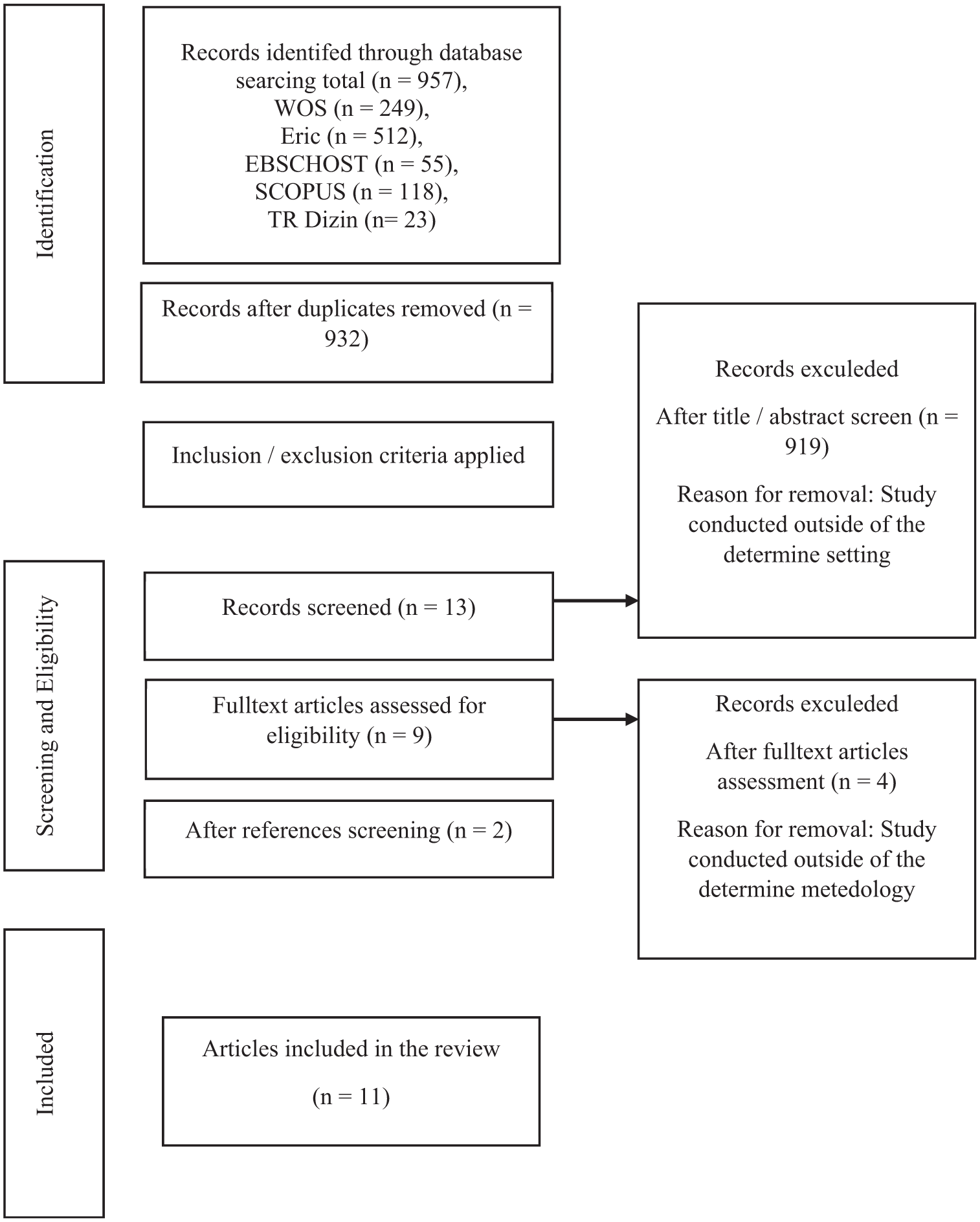
Search and selection.
Study Quality Assessment
The articles included in this systematic review were analyzed according to the quality assessment criteria tool for articles designed with qualitative research method developed by the Joanna Briggs Institute (JBI). All three researchers independently evaluated each article included in this systematic review according to whether it met acceptable standards as a qualitative methodology approach. Inter-rater reliability was calculated as 98% based on the results of the researchers’ evaluations. The purpose of conducting a quality assessment for all articles included in this study was to investigate whether the research design and methods were appropriate for the research questions posed in these articles. The researchers deemed it necessary to meet at least 80% of the quality assessment criteria and they included studies that met the 80% criteria in the study. Therefore, the results of the quality assessment did not determine whether the studies would be included in the review.
Data Collection Process
All 11 articles included in this systematic review were independently synthesized by three authors in terms of purpose, sample characteristics, method, design, data collection techniques, data analysis techniques, field of interest, and results. After independent reviews, a few disagreements were discussed by the authors and resolved through consensus. A table of this synthesis is presented in Table 1 to provide the reader with a deeper perspective.
Descriptive Information of the Studies Examined.

Synthesis
In this study, the meta-ethnography meta-synthesis approach was used as it offers an inductive and interpretative form of knowledge synthesis (Noblit et al., 1988). This analysis process was structured in accordance with the steps of the eMERGe reporting guidelines (France et al., 2019). The 11 articles selected and subjected to quality assessment were read repeatedly by the first author of the study to become familiar with the findings of the studies. The relationships between common and recurring key concepts in all articles were evaluated, a code list was prepared, and themes were created. The initial coding process was carried out independently by the first author. The second and third authors of the study independently reviewed the descriptive table, the full texts of the articles, the code table generated by the first author, and the relationships between the themes. In cases where there was disagreement among the coders, structured discussions were held within the team, and the interviews continued until consensus was reached. Then, the first article was summarized contextually according to the themes and concepts, and the second article was summarized according to the first article and the themes. In this way, the authors synthesized all the studies with mutual transformational analysis.
Researcher Reflexivity
This study emphasized researcher reflexivity throughout the analysis process, as recommended by the eMERGe guidelines. Therefore, it is important that the epistemological beliefs, positions, and possible biases of the researchers are made more explicit to ensure the consistency of this study. During the analysis, the researchers took notes in order to determine and be aware of their own positions. In these notes, personal assumptions, the influence of professional experience, and possible biases are questioned. The researchers’ aim is not only to eliminate subjective judgments altogether, but to ensure that they are managed with awareness and reported transparently. The research team discussed these reflective notes in regular meetings to assess the possible reflections of subjective influences on the themes. All of the researchers have experience in teaching students with special needs, training special education teachers, and conducting family education studies. The professional experience of the researchers led them to develop sensitivity to parental voices and expectations of inclusivity. The researchers adopt an interpretivist epistemological stance where reality is socially constructed and context-dependent. This stance was instrumental in adopting a meta-ethnography approach and using Bronfenbrenner’s Ecological Systems Theory (Bronfenbrenner, 1979) to analyze the multi-layered nature of parental experiences. In this context, the themes analyzed were evaluated at the microsystem (teacher, parent, peer), mesosystem (parent-school interaction), exosystem (administrative and digital access structures), macrosystem (social norms and policies), and chronosystem (time-varying environmental impacts such as pandemics) levels. This approach brought conceptual integrity to the synthesis process and enabled a more systematic and transparent interpretation of the findings.
Results
The evaluation results of the studies according to quality criteria, the results regarding descriptive information, and the results synthesized under four main themes created by the researchers will be shared with the reader in this section. Table 1 describes the studies included in this study in terms of purpose, sample characteristics, method, design, data collection techniques, data analysis techniques, field of interest, and results.
When the descriptive findings of the studies were examined, it was found that they generally aim to obtain the views of families on the obstacles to inclusive education, the meaning of inclusive education for families, and inclusive education processes in distance education. However, it was seen that the participants of some of the studies were teachers, administrators, school counselors and psychologists in addition to families. In these studies where the opinions of families on inclusive education were obtained, the participants were usually mothers, and it was interpreted that mothers tend to take on more responsibility for their children’s education. It was seen that the studies preferred phenomenology (Canbek & Ceylan, 2022; Kaya & Yazıcıoğlu, 2022; Seylim, 2023; Urkmez et al., 2023) and case study (Kayhan & Ozaydin, 2018; Yüksel et al., 2021) among the qualitative research designs. Some studies (Ceylan & Aral, 2016; Koçyiğit, 2015; Tuş & Tekinarslan, 2013; Ünsal & Öksüz, 2018; Yener & Dayi, 2021) did not specify a qualitative design. Semi-structured interview technique was used in the reviewed studies (Ceylan & Aral, 2016; Tuş & Tekinarslan, 2013; Yener & Dayi, 2021). On the other hand, no information was found regarding the research design in the studies (Koçyiğit, 2015; Ünsal & Öksüz, 2018). It was observed that one study used metaphor (Seylim, 2023), one study used structured interview form (Yüksel et al., 2021), and all other studies used semi-structured interview form as data collection tools. It was observed that researchers generally used content analysis as a data analysis method, but also preferred descriptive analysis (Yener & Dayi, 2021) and thematic analysis methods (Urkmez et al., 2023). It was seen that some of the studies focused on opinions (Ceylan & Aral, 2016; Kayhan & Ozaydin, 2018; Koçyiğit, 2015; Tuş & Tekinarslan, 2013; Yener & Dayi, 2021), some on perspectives (Seylim, 2023; Ünsal & Öksüz, 2018; Yüksel et al., 2021), and some on experiences (Canbek & Ceylan, 2022; Kaya & Yazıcıoğlu, 2022; Urkmez et al., 2023).
The studies included in the study were analyzed according to the quality assessment criteria tool developed by the Joanna Briggs Institute (JBI). JBI quality indicators differ according to the research methods. Table 2 shows the quality indicators for the studies designed with qualitative research methods. Each study included in this study was evaluated according to whether it met acceptable standards as a qualitative methodology approach.
Quality Assessment Criteria for Studies Designed With Qualitative Research.

Note. UC = uncertain; Y = yes; N = no; NA = not applicable.
The studies designed with qualitative research method were examined using the JBI quality assessment criteria tool and it was seen that all 11 studies were conducted in a way to meet at least 80% of the criteria required in this study. Only one of the studies was found to meet all 10 criteria (Urkmez et al., 2023). All of the remaining 10 studies did not meet the sixth criterion (Canbek & Ceylan, 2022; Ceylan & Aral, 2016; Kaya & Yazıcıoğlu, 2022; Kayhan & Ozaydin, 2018; Koçyiğit, 2015; Seylim, 2023; Tuş & Tekinarslan, 2013; Ünsal & Öksüz, 2018; Yener & Dayi, 2021; Yüksel et al., 2021). In addition, three studies (Ceylan & Aral, 2016; Kaya & Yazıcıoğlu, 2022; Koçyiğit, 2015) did not meet the fourth criterion, one study (Ünsal & Öksüz, 2018) did not meet the eighth criterion and one study (Yener & Dayi, 2021) did not meet the ninth criterion.
Ten of the 11 studies included in this study (Canbek & Ceylan, 2022; Ceylan & Aral, 2016; Kaya & Yazıcıoğlu, 2022; Kayhan & Ozaydin, 2018; Koçyiğit, 2015; Seylim, 2023; Tuş & Tekinarslan, 2013; Ünsal & Öksüz, 2018; Yener & Dayi, 2021; Yüksel et al., 2021) did not meet the criterion of “Is there a statement that positions the researcher culturally or theoretically?.” In qualitative research, the most important actor in the research process is the researcher(s). The researchers, who are active throughout the entire process from planning the study, defining and preparing research questions, selecting and analyzing data collection tools, collecting and analyzing the data, to producing evidence and results, need to be introduced culturally and theoretically. Therefore, the researcher(s) should introduce themselves culturally and theoretically. The cultural and theoretical position of the researcher(s) will facilitate the reader’s understanding of the researcher(s) and the research results during the evaluation and interpretation of the evidence and results presented to the reader. However, except for one of the studies included in this study (Urkmez et al., 2023), no statement reflecting the cultural and theoretical perspectives of the researchers was found in the studies.
When the studies (Ceylan & Aral, 2016; Kaya & Yazıcıoğlu, 2022; Koçyiğit, 2015) included in this study were examined, it was seen that they did not fully meet the criterion of “Is there consistency between the research methodology and the presentation and analysis of the data?” Research methodology refers to the methods used to answer the research questions and the data collection and analysis criteria of these methods. For example, it was observed that the study (Ceylan & Aral, 2016) did not provide information about the qualitative research approach preferred and the data analysis method used in the study. In the study (Kaya & Yazıcıoğlu, 2022), an interpretive paradigm was adopted as the methodology, and phenomenology was determined as the research design. In the study where interpretation was not included in the presentation and analysis of the data with the research methodology and the data were analyzed mostly through descriptive analysis, it was not encountered that the data were interpreted with a critical and exploratory perspective, which is a requirement of phenomenology. On the other hand, in the study (Koçyiğit, 2015), content analysis was used in the analysis of the data, but it was seen that the data were presented in line with the predetermined themes with the descriptive analysis technique.
Direct citations from participants’ views were used to support the findings and conclusions of the study and the explanatory nature of qualitative research (Merriam, 2015). In qualitative research, it is important to include direct citations from the views of the participants in order to reflect their views, ideas, beliefs and insights about the topic being researched as well as to ensure the validity of the study. When the (Ünsal & Öksüz, 2018) study was examined, it was seen that the participant views were not fully reflected in the study. Therefore, it was thought that it did not meet the criterion of “Are the participants and their views sufficiently included in the study?”.
It is expected that there should be an ethics committee document which guarantees that ethical criteria are followed in the scientific study conducted or other evidence to be specified by the researchers in the study. When the study (Yener & Dayi, 2021) was examined, since no ethics committee permission was found in the study, it was thought that it did not meet the criterion of “Was the study prepared in accordance with ethical compliance criteria or did it receive ethical approval from an institution? Is there any evidence of this in the study?”.
A synthesis was made by the researchers by analyzing the results of the articles included in the study. The themes of the research and the relationship between them are shown in Figure 2. This schema reveals that there is a conceptual unity among the themes derived from the findings of the study; it emphasizes that these themes are structured as analytical dimensions that interact and complement each other, rather than being isolated elements.

Themes and their relationships.
As a result of the synthesis, four main themes and eight sub-themes were reached. All main and sub-themes are associated with codes and related studies and presented in Table 3.
Themes, Subthemes, and Codes.
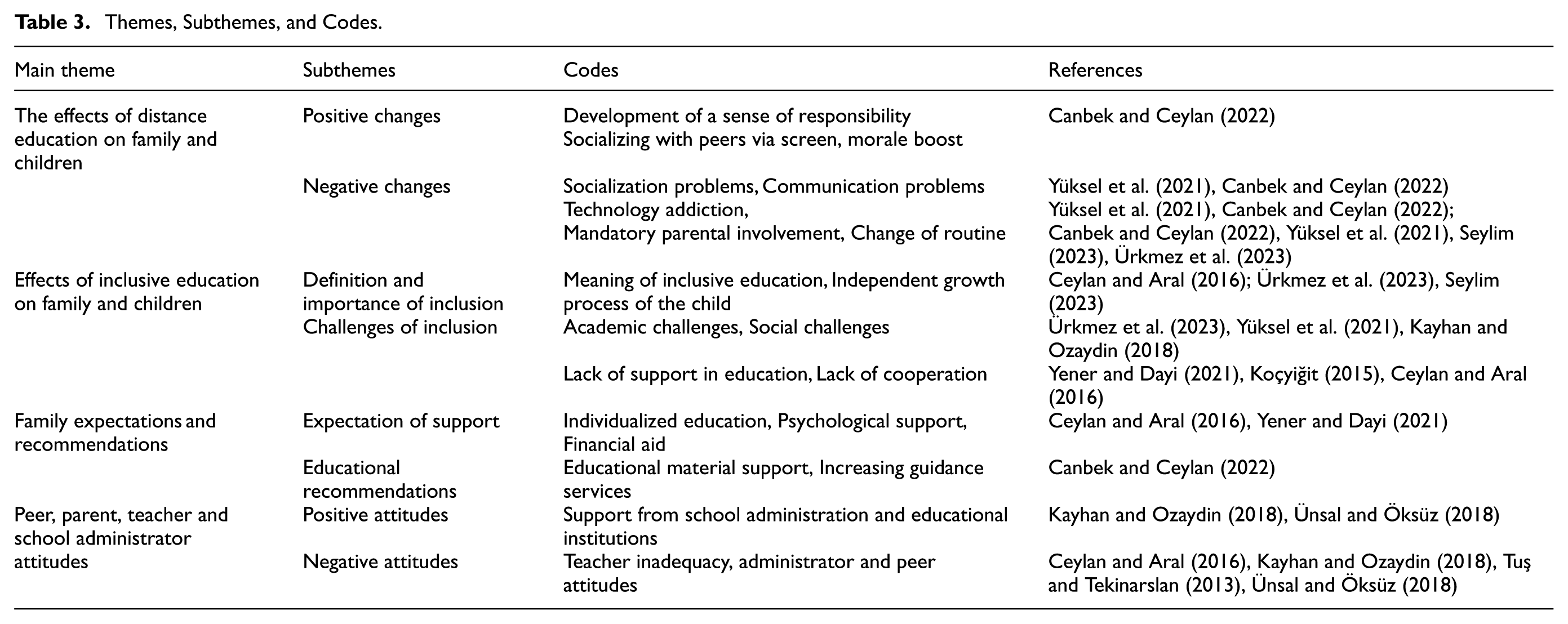
The main themes on which all three researchers agreed were the effects of distance education on families and children, the effects of inclusive education on families and children, expectations and suggestions of families, and attitudes of peers, parents, teachers, and school administrators. Eight sub-themes emerged under these four main themes. The results of the synthesis were discussed in the discussion and conclusion section in the light of the literature.
Discussion
Focusing on the experiences and views of parents with children in inclusive education, this systematic review examines the developments and implementation difficulties in inclusive education within the framework of the literature. The review, which examines Türkiye in particular, includes the evaluation of relevant studies in line with quality standards. In the study, descriptive findings regarding existing studies are presented. The results of the examined studies were thematically analyzed and evaluated. As a result of these analyses, the meanings parents attribute to inclusive education, their expectations, their experiences during the pandemic process, and their positive and negative views on inclusive education are emphasized. In this context, the findings of the reviewed studies are interpreted through Bronfenbrenner’s Ecological Systems Theory, which explains individual development through the interaction of multiple environmental systems and provides a comprehensive framework for analyzing the effects of inclusive education at various systemic levels.
The interpretation of the quality indicator table in the research findings is considered important in terms of assessing the methodological soundness of the studies in the review. The research findings show that they were evaluated according to the Joanna Briggs Institute (JBI) quality assessment criteria and the extent to which each criterion was met. This assessment reveals the compliance of the methods used in the studies with the quality standards. In all 11 studies assessed, it is seen that there is harmony between the methodology and the research question or objectives. Similarly, it is understood that there is mostly consistency between the research methodology, data collection methods and data analysis. This suggests that the researchers work in a methodological harmony to a large extent (Canbek & Ceylan, 2022; Ceylan & Aral, 2016; Kaya & Yazıcıoğlu, 2022). However, the sixth criterion, “Cultural or theoretical positioning of the researcher” is only achieved by the study (Urkmez et al., 2023). This suggests that the researchers do not fully clarify their cultural and theoretical perspectives in the other 10 studies. We think that determining the researcher’s cultural or theoretical positioning is an important criterion as it can provide a more transparent and open perspective in the interpretation of the data.
Considering the quality standards, the fourth criterion, “Consistency between the presentation and analysis of data” is observed to be lacking in some studies (Ceylan & Aral, 2016; Kaya & Yazıcıoğlu, 2022; Koçyiğit, 2015). This finding indicates that in some studies, sufficient methodological consistency is not provided in the analysis and presentation processes of the data, which partially affects the reliability of the research findings. For example, in the study conducted by Ceylan and Aral (2016), sufficient information about the data analysis method was not provided. Furthermore, the eighth criterion, adequate inclusion of participants and their views in the study, was not sufficiently met in the study by Ünsal and Öksüz (2018). This suggests that the participants’ views were only partially reflected in the study. Including participants’ perspectives in detail is crucial for the reliability of the research and for gaining a clearer understanding of the participants. Although the ninth criterion, the study was prepared in accordance with ethical compliance criteria or received ethical approval, was met in all other studies, it was not fulfilled in the study by Yener and Dayi (2021). Although the study conducted by Yener and Dayi (2021) does not explicitly mention ethical approval within the manuscript, this omission should not be interpreted as a lack of adherence to ethical research principles. In Türkiye, ethics committees affiliated with universities operate under the Council of Higher Education (YÖK), and researchers are generally required to obtain approval from these committees before conducting their studies. However, the practice of explicitly stating ethical approval in published articles has only become a standard requirement in many Turkish academic journals in recent years. Therefore, while the absence of an ethics statement in earlier studies may appear as a limitation, it likely reflects evolving publication norms rather than an oversight in ethical conduct.
When the quality standards of the studies are examined in general, it is seen that most of the studies meet high methodological standards, but some studies have deficiencies in certain criteria, such as researcher positioning and sufficient inclusion of participant views. We believe that these deficiencies may affect the reliability of the findings in the studies. Accordingly, researchers’ paying more attention to such quality indicators will contribute to the methodological strengthening of the studies.
The qualitative research designs used in these studies also vary. The preference for designs such as phenomenological approach and case study shows that researchers are trying to understand inclusive education experiences in depth (Canbek & Ceylan, 2022; Yüksel et al., 2021). While the phenomenological approach focuses on the subjective experiences of individuals regarding inclusive education, the case study is effective in addressing the processes that occur in a specific context in detail.
When analyzed in terms of data collection techniques, it is seen that semi-structured interview technique is frequently preferred. The semi-structured interview technique allows the participants to express their thoughts freely and also provides a certain structure for the research question. In this respect, it is seen that the findings are accessed in depth in the studies (Ceylan & Aral, 2016; Tuş & Tekinarslan, 2013; Ünsal & Öksüz, 2018).
Content analysis was predominantly preferred in the data analysis methods of the studies. Content analysis is a method that allows the experiences of the participants to be coded and categorized into themes and is frequently used in qualitative studies. In addition, the use of other methods such as descriptive analysis (Yener & Dayi, 2021) and thematic analysis (Urkmez et al., 2023) contributes to the methodological diversity of the studies. These different analysis methods make it possible to analyze the experiences, opinions and perspectives of the participants from different perspectives and enable the development of a more comprehensive understanding of inclusive education.
Despite methodological variety, not all studies demonstrated sufficient transparency regarding the researcher’s role in the research process. For example, in the study by Ünsal and Öksüz (2018), there is insufficient explanation regarding the researchers’ positioning, values, or potential influence on the research process. In qualitative research, providing transparency about how the researcher engages with the study and interprets the data contributes to a better understanding of the findings. The lack of such methodological clarification creates uncertainty about the extent to which the results may have been shaped by the researchers’ perspectives. Particularly in studies analyzing parental experiences, the way researchers reflect on their own standpoint plays a crucial role in interpreting participant narratives.
The descriptive findings of the articles evaluated within the scope of the study are seen to express various aspects regarding the obstacles of inclusive education, its meaning for families and inclusive education processes in distance education. This diversity stems from the diversity of the participant groups included in the studies. This reveals the multidimensional nature of inclusive education and how various stakeholders contribute to or experience difficulties in the inclusive education process. In particular, the finding that mothers take more responsibility for their children’s education reflects a cultural reality observed in the Turkish context and shows us the impact of gender roles within the family (Canbek & Ceylan, 2022; Kaya & Yazıcıoğlu, 2022).
The findings of the study show the multidimensional nature of inclusive education. For example, while some studies (Ceylan & Aral, 2016; Koçyiğit, 2015) focus on families’ views on inclusive education, other studies (Seylim, 2023; Ünsal & Öksüz, 2018) address participants’ perspectives or experiences. The findings of this study are also consistent with international evidence. For example, Genovesi et al. (2022), in their meta-synthesis of stakeholder experiences and attitudes toward inclusive education for children with developmental disabilities, emphasized the importance of family-school collaboration, teacher training, and the availability of support services. Similarly, the current review revealed that Turkish parents also demand individualized education plans, psychological and material support, and stronger cooperation with educational institutions. Moreover, Genovesi et al. (2022) pointed out that parents’ experiences are shaped by contextual factors such as societal attitudes and policy implementation, which aligns with the Turkish context where cultural expectations and limited institutional support systems influence parental engagement. This highlights the universality of specific challenges related to inclusion and also underscores the need for context-sensitive approaches to better meet the needs of families in inclusive education. These parallels between international and national findings are further reflected in the specific concerns expressed by parents in the reviewed studies conducted in Türkiye.
When reviewing the research, most of the studies emphasized the need for individualized support, strong parent–school collaboration, and increased resources. However, Canbek and Ceylan (2022) reported more positive parental experiences, noting improvements in communication and perceived progress in children’s learning. These divergent findings may be explained by contextual factors such as regional disparities, access to qualified teachers, and socioeconomic differences. For instance, families in urban areas with access to better-equipped schools may benefit from more effective inclusive practices compared to those in rural settings (Genovesi et al., 2022). Moreover, parental expectations and cultural norms surrounding disability may also shape how inclusive education is perceived and assessed (Shurr et al., 2023).
When the results of the articles in the studies are evaluated, the themes focused on include the views, perspectives and experiences of the participants. While the positive effects of distance education include the development of a sense of responsibility in children and the opportunity to socialize through the screen, the negative effects include difficulties such as attention problems, technology addiction, and the changes in parents’ routines. The effects of inclusive education on families and children are examined based on the definition and importance of inclusion education and the difficulties related to inclusive education. While families emphasize their expectations of support including individualized education, psychological support and financial aid, they suggest that educational material support and guidance services be increased. In addition, while positive support from school administration and educational institutions is mentioned, problems such as teacher shortage and negative peer attitudes are also noted.
Parents consistently emphasize the need for additional resources, individualized education plans, and support from teachers to ensure academic success for their children in inclusive settings (Dan et al., 2024; Georgiadi et al., 2019; Magumise & Sefotho, 2020). However, the inadequacy of these resources increases the challenges faced during the inclusive education process. In addition to limited educational support, parents are also concerned about issues such as their children’s social acceptance and the risk of being excluded by peers (Magumise & Sefotho, 2020). These findings are consistent with those of Shurr et al. (2023), who conducted a comprehensive scoping review of parent perspectives on inclusive education for students with intellectual disabilities across different countries. Their study revealed that, alongside the need for individualized support and teacher preparedness, parents placed strong emphasis on the necessity of clearly defined policies and culturally responsive practices. Similarly, in the Turkish context, parents expressed demands for individualized education plans, material and psychological support, and stronger collaboration with schools. These parallel concerns highlight that effective inclusive education requires not only structural provisions but also context-sensitive, culturally informed, and clearly articulated policies. In this regard, the experiences of Turkish parents reinforce the conclusions of Shurr et al. (2023) that inclusive education policies must be responsive to the specific sociocultural environments in which families live.
The pandemic process has been a significant turning point for children receiving inclusive education and their parents. The transition from face-to-face education to online education with the impact of the Covid-19 pandemic has brought many challenges for children receiving inclusive education. According to studies, although the distance education process contributed to the development of a sense of responsibility and duty in some children, negative effects such as distraction, loss of social skills and technology addiction were also observed during this process (Baş & Hazar, 2024; Canbek & Ceylan, 2022). The lack of in-class interaction and social support in online education has led to insufficient development of social skills in children receiving inclusive education. This has caused parents to be concerned about the social and emotional development of their children. In particular, the negative effects of online education on children receiving inclusive education are included in the themes in the research findings, as many parents stated that their children experienced a decline in social skills after the pandemic.
It has been observed that parents need educational support in order for their children to benefit more from education during the inclusive education process. Parents demand individualized educational plans, psychological support, material support and increased parent-school cooperation for their children to be successful in inclusive education (Ceylan & Aral, 2016; Mathur & Koradia, 2018). Especially when parents’ concerns about social acceptance are taken into consideration during the inclusive education process, it is realized that it is important for their children to be accepted by their peers in inclusive education environments.
Conclusion
This study aimed to examine the views of parents of children with special needs receiving inclusive education in Türkiye and to provide implications for future research. The findings reveal that parents have multidimensional experiences of inclusive education that are shaped by both supportive and challenging elements. Parents’ expectations highlight the need for individualized education plans, ongoing collaboration with schools, and increased psychological and financial support. From a methodological point of view, it is understood that there are limitations such as insufficient researcher reflectivity, limited presentation of participant views, and insufficient explanations of data analysis in the studies examined. This situation shows that methodological transparency and rigor should be increased in future studies. In addition, the results of the study show that parents play a critical role in the success of inclusive education and their voices should be systematically taken into account in both research and practice. Meeting parental needs and strengthening methodological standards will contribute to more equitable and effective inclusive education practices in Türkiye.
Implications for Research and Practice
The analysis of the reviewed studies revealed recurring methodological shortcomings that warrant attention in future research. For example, the lack of researcher reflexivity in most studies suggests a need for future research to clearly articulate theoretical and cultural positioning. Similarly, limited inclusion of participant voices calls for more participatory research designs. The absence of detailed descriptions of data analysis procedures indicates the need for better transparency and rigor in future qualitative studies. Improving the methodological shortcomings identified will strengthen the credibility and rigor of future research on parent perspectives in inclusive education.
The results of the analysis highlight the necessity of developing structured and culturally responsive parent–school collaboration models. One practical strategy is to implement regularly scheduled Individualized Education Plan meetings, held at least twice per academic year, where parents actively participate as equal partners in reviewing their child’s progress and educational needs. Additionally, schools can benefit from appointing family liaison personnel or forming dedicated teams responsible for maintaining communication with parents, addressing concerns, and coordinating support services. Organizing parent education programs is also essential; these sessions can help families build the knowledge and skills necessary to support their children’s learning and emotional development at home. Furthermore, the integration of digital tools, such as mobile applications or parent communication platforms, can enhance real-time updates and foster two-way communication between educators and families. Schools may also consider initiating peer support networks, bringing together families of children with similar needs to share experiences, coping strategies, and resources.
Finally, based on these findings, parents’ perspectives should be systematically integrated into inclusive education policies and teacher training curricula. Equipping teachers with culturally sensitive collaboration skills that value family participation and contributions can increase the effectiveness of inclusive practices.
Limitations
Several limitations have been identified in the literature review. First, only articles published in English and Turkish were included. Secondly, the inclusion of only peer-reviewed academic journal articles was intended to ensure methodological consistency and quality assurance. However, the exclusion of non-journal sources such as theses, reports, and policy documents may have resulted in the omission of diverse perspectives, particularly those related to practical applications and policy development. This may have narrowed the contextual diversity of the synthesized findings. Third, the review covers studies conducted between 2013 and 2023. Finally, some of the studies included in the review did not provide sufficient information regarding researcher reflexivity, including how the researchers’ own perspectives and potential influences may have shaped the findings. This increases the possibility of subjectivity in the reported results. Therefore, the thematic synthesis should be interpreted with this methodological limitation in mind.
Footnotes
Acknowledgements
“Special thanks are extended to the authors of the reviewed studies.” is added at the end of the article by the authors.

Ethical Considerations
Not applicable. Because this study is a systematic review.
Authors Contributions
Conceptualization: O. A. B and A. G. and M. A. K. Formal Analysis: O. A. B and A. G. and M. A. K. Investigation: O. A. B. and A. G. and M. A. K. Methodology: O. A. B. Project Administration: O. A. B and A. G. and M. A. K. Supervision: O. A. B Validation: A. G. and M. A. K. Writing: O. A. B and A. G. and M. A. K. Writing—Review & Editing: O. A. B.
Funding
This research was supported by Sakarya University.
Declaration of Conflicting Interests
The authors declared no potential conflicts of interest with respect to the research, authorship, and/or publication of this article.
Data Availability Statement
Data sharing not applicable to this article as no datasets were generated or analyzed during the current study.