



Abstract
This study examines the extent to which out-of-college factors (Political, Economic, Social, and Technological) influence teacher preparation programs through in-college experiences in Ethiopia’s Southern Nation, Nationalities, and People Region. Employing a mixed-methods sequential explanatory design, quantitative data from 294 participants (diploma-graduate teachers, instructors, and instructional leaders) were analyzed using SPSS and PLS-SEM to test hypotheses, followed by qualitative interviews to clarify findings. Four hypotheses explored whether curriculum implementation competencies, teacher attitudes, material provision, and instructional leadership mediate the relationship between PEST factors and the quality of teacher preparation. Results indicate that while PEST factors indirectly influence implementation quality, statistical significance is limited across all hypotheses. H1 and H2 showed weak mediation (p > .05), constrained by systemic challenges like resource scarcity, infrastructure deficits, and socio-economic pressures. H3 and H4 revealed strong indirect effects, suggesting practical mediation; however, high variability and non-significant p-values (p > .05) highlight external constraints that overshadow internal factors. Theoretical implications point to the need for adapting sociocultural principles and refining mediation models for college contexts. Practical recommendations include advocating for equitable resource distribution, fostering teacher resilience, adopting low-cost technology, and addressing systemic barriers. Future research should expand sample sizes, account for contextual variability, and explore unexamined factors to strengthen findings and inform policy improvements.
Plain language summary
This study explored how factors outside of colleges impact the quality of teacher training programs in a specific region of Ethiopia. Researchers gathered information from 294 teachers, instructors, and college leaders from four institutions. Key findings revealed that elements like school leadership, the quality of teachers, and the attitudes of graduates play a significant role in how well these training programs work. The research highlighted that social and cultural factors are more crucial than just having the right educational materials. To improve teacher training, the study suggests involving the community and enhancing teacher development. Recommendations include focusing on leadership training, ongoing professional development, and mentorship for teachers. Overall, by incorporating real-world experiences into teacher training, colleges can better prepare graduates for future challenges and help students succeed.
Introduction
Education during formative years serves as the cornerstone for cultivating skilled, civically engaged citizens capable of driving societal progress (Geiger et al., 2023). High-quality early childhood and K-12 systems not only equip individuals with foundational academic and critical-thinking skills but also foster economic mobility, health literacy, and cross-cultural empathy keys to breaking cycles of poverty and strengthening democratic participation (Autor, 2014; Dee, 2004; Heckman, 2006). However, disparities in educational access perpetuate inequities, undermining the development of competencies essential for civic engagement and workforce readiness (Duncan & Magnuson, 2013).
Central to addressing these gaps are teacher preparation programs (TPPs), whose implementation quality directly determines educational outcomes. As Darling-Hammond et al. (2020) assert, “Effective teacher preparation hinges on immersive clinical experiences and equity-centered pedagogy elements that bridge theory to practice and prepare educators to serve diverse learners.” Rigorous TPPs, integrating content mastery, evidence-based instructional strategies, and sustained student-teaching placements, have proven critical to improving learning outcomes and nurturing socially responsible citizens (Grossman, 2006; Ronfeldt, 2021). Thus, investing in healthy teacher training and equitable educational systems remains indispensable for fostering inclusive societies and sustainable development.
Extensive clinical experience, such as student teaching placements, is critical for developing instructional expertise and classroom management skills. The Organization for Economic Co-operation and Development (OECD), an intergovernmental body that promotes policies to improve economic and social well-being, underscores the need for teacher preparation programs (TPPs) to prioritize “pedagogical content knowledge, technological integration, and social-emotional learning (SEL) competencies to meet evolving educational demands” (OECD, 2023). Their report highlights the importance of certain elements for improving instructional quality in diverse and technology-driven classrooms, but systemic challenges like fragmented mentorship, under-resourced practicum sites, and misalignment between training and real-world classroom dynamics hinder new teachers’ effective application (Kumashiro et al., 2023).
As Dadvand et al. (2025) note, “Programs must bridge the gap between theory and practice through structured, context-rich clinical experiences that prepare educators to navigate complex educational ecosystems.” This highlights the urgent need for TPPs to adopt holistic, adaptable frameworks that address both pedagogical rigor and contextual realities, ensuring graduates are equipped to foster equitable student success.
The research study by König et al. (2024) emphasizes the need for teacher preparation programs (TPPs) to adapt to the evolving educational landscape. Many programs struggle to integrate emerging pedagogical approaches, technology, and the increasing diversity of student populations. Moreover, as stated by König et al. (2024) this gap creates challenges for newly qualified teachers.
To enhance the quality of TPPs, it is crucial to address the challenges teachers face (Darling-Hammond et al., 2020). Programs require a multifaceted approach that aligns curricula with changing educational needs and provides ongoing support for fresh teachers. Leithwood et al. (2020) research indicates that internal and external factors influence TPP outcomes. Therefore, qualified instructors, motivated students, visionary leadership, and high-quality materials are vital for TPP implementation (Goldhaber et al., 2020). Successful TPPs also depend on political, economic, social, and technological elements that shape supportive policies and ensure adequate funding (Korkor et al., 2024).
Political decisions significantly influence teacher preparation programs through funding allocations and policy frameworks. Budget cuts can lead to larger class sizes and limited course offerings, compromising program quality. Policies like the No Child Left behind Act establish standards that influence curriculum design and training priorities (Maxmudovna, 2024). Teacher unions advocate for educator support, but regulatory landscapes often stifle innovative teaching approaches, highlighting the need for adaptive strategies to sustain effective preparation amidst politicization (Ashley et al., 2022; Woo et al., 2022).
Economic factors significantly influence the quality of teacher preparation programs. During economic prosperity, increased education spending improves facilities, faculty recruitment, and innovative methods, while downturns lead to budget cuts (Woo et al., 2022). Higher teacher turnover in low-income schools intensifies shortages and strains preparation programs (Strategies, 2024). Economic conditions also affect the profession’s appeal, with modest pay deterring candidates and rising tuition costs excluding lower-income individuals (Carranza & McKenzie, 2024). These economic disparities limit access to quality training and challenge program efficacy (Vadivel et al., 2023).
Social factors, such as attitudes and support systems, significantly impact teacher preparation and training needs. A 2023 systematic review highlighted the importance of professional relationships, socio-emotional skills, and organizational support for occupational well-being, especially during stressors like COVID-19 (Nwoko et al., 2023; Ortan et al., 2021). Demographic shifts and societal perceptions of teaching also impact recruitment esteem and talent attraction, necessitating programs to foster resilience and adaptability in future educators.
The COVID-19 pandemic has accelerated the adoption of digital tools in teacher preparation, necessitating enhanced digital literacy training (Kidd & Murray, 2020). However, challenges like the digital divide persist, necessitating programs to address access disparities. Equipping teachers with these skills is crucial for a technology-driven educational landscape (Cilliers, 2021; Timotheou et al., 2023). Technological advancements are reshaping teacher preparation programs by integrating digital tools like learning management systems and educational software.
Continuous professional development is vital to keep pace with evolving tech demands. The interplay between internal and external factors is crucial for robust teacher preparation programs, with political backing, ample resources, qualified faculty, technological support, and socioeconomic conditions driving program success (Carver-Thomas & Darling-Hammond, 2019; Darling-Hammond et al., 2020, 2022).
Statement of the Problem
Existing studies on teacher preparation programs, both nationally in Ethiopia and internationally, have primarily focused on specific aspects such as classroom active learning, practicum experiences, or competency-based curriculum implementation, often neglecting a comprehensive evaluation of the factors affecting program implementation (e.g., Galana et al., 2023; Nombo, 2022; Teressa & Besha, 2020). While some research addresses in-college variables like instructor competencies or facilities (e.g., T. Seifu, 2005; A. Seifu, 2015) and others touch on out-of-college factors like policy or funding (e.g., Shimels et al., 2021; Tekle et al., 2024), there is a significant empirical gap in integrating these dimensions within a single study. Methodologically, prior studies employ varied designs qualitative or quantitative, or mixed but rarely use a sequential explanatory approach to deeply explore perceptions across stakeholders like diploma-graduate teachers, instructors, and instructional leaders, as proposed in this research. This lack of holistic analysis, coupled with insufficient attention to the implementation process (Stufflebeam, 2000), leaves a critical gap in understanding how in-college and out-of-college factors collectively influence the quality of primary school teacher preparation, particularly in Ethiopia’s Southern Nation, Nationalities, and People Region.
Theoretical Framework
Lev Vygotsky’s socio-cultural theory explains how social and cultural contexts influence learning and development (Pillai, 2025). It also considers socio-economic, political, and technological dynamics affecting educational systems. The effectiveness of socio-cultural principles in classrooms is influenced by teacher preparation programs and the quality of these factors (Koukoulidis et al., 2024). This perspective highlights the interconnectedness of societal factors and educational outcomes.
Socio-Cultural Theory, External Influences, and Internal Capabilities in College
The study emphasizes the significant influence of political factors on the application of socio-cultural theory in education systems. It suggests that policies affecting curriculum design, teacher training, and resource allocation significantly influence the quality of education (Mbewe, 2021). In stable, well-financed systems, governments may invest in inclusive learning models and teacher training programs, while in unstable or underfunded systems; funds may be deprioritized, leading to rote-learning approaches that contradict socio-cultural theory (Geeltu, 2023). Political ideologies can also restrict the inclusion of diverse cultural perspectives in curricula, limiting the theory’s potential for fostering critical thinking and cultural awareness.
The study by Darling-Hammond et al. (2020) highlights the complex relationship between the external environment and organizational capacities. It highlights how macro-level policies and funding can significantly impact the quality and availability of education, institutional access to resources, leadership strategies, instructor competencies, and prospective teachers’ attitudes, underscoring the dynamic nature of these factors.
Socio-cultural principles in education are influenced by social and economic conditions. Vygotsky’s theory highlights the importance of social interaction and cultural tools in cognitive development. However, access to these resources is often unequal, particularly in low-income communities as Darling-Hammond et al. (2020). Limited access to resources like books and technology can hinder learning within the Zone of Proximal Development. Conversely, Ramsey (2004) affluent learners benefit from diverse cultural environments. Socioeconomic disparities can widen the achievement gap, highlighting the need for policies and interventions to ensure equitable access to educational resources and culturally relevant learning opportunities.
Economic conditions s explored by Goldhaber et al. (2022), significantly influence the educational landscape, affecting resource allocation and an institution’s ability to provide high-quality training for instructors. Systems theory highlights the interconnectedness of the educational ecosystem, with economic factors influencing teacher preparation programs. Technological advancements offer opportunities for implementing socio-cultural theory, but careful planning is needed for inclusivity and accessibility (Adula et al., 2025; Petko et al., 2021; Trust & Whalen, 2021).
Hypotheses Formulation
The PEST framework, which includes Political, Economic, Social, and Technological factors, is a strategic tool for teacher preparation programs (TPPs). Although not always explicitly applied in teacher education research, its components align with extensive scholarly work on external factors influencing educational systems.
Political factors significantly influence TPPs, impacting funding, equity, and program quality (Martin & Mulvihill, 2017). Changes in governance, like privatization, can redirect resources, challenge infrastructure, and alter diploma graduate teachers’ professional outlook, influencing internal factors like instructor competencies.
Economic conditions significantly impact TPPs by determining resource availability, as Zeichner’s (2009, 2017) reducing funding for materials and facilities, and exacerbated shortages in high-inflation areas. These pressures affect leadership competencies within programs, affecting instructors’ ability to deliver effective training and shaping diploma graduate teachers’ attitudes toward the profession.
Social factors, as Goodlad (1984) argues, necessitate TPPs that prepare teachers for diverse, inclusive classrooms, influencing curriculum, and candidate integration. Additionally, teacher well-being and community support, as noted by Oliveira et al. (2021), enhance program implementation, affecting competencies and attitudes. Technological advancements also demand digital skill integration, affecting leadership competencies in tech-rich environments and mediating through material provision to ensure diploma graduates are ready for modern classrooms (Sangalang & Tirante, 2024; Williams et al., 2023; Willis & Raine, 2001).
Hypothesis 1
(H0) The curriculum implementation competences of instructors do not mediate the relationship between out of college factors and the quality of Teacher Preparation Program implementation.
(Ha) The curriculum implementation competences of instructors do mediate the relationship between out of college factors and the quality of Teacher Preparation Program implementation.
Hypothesis 2
(H0) The attitudes of diploma graduate teachers do not mediate the relationship between out of college factors and the quality of implementation.
(Ha) The attitudes of diploma graduate teachers do mediate the relationship between out of college factors and the quality of implementation.
Hypothesis 3
(H0): The provision of materials does not serve as a mediator in the relationship between out of college factors and the quality of implementation.
(Ha) The provision of materials does serve as a mediator in the relationship between out of college factors and the quality of implementation.
Hypothesis 4
(H0): Instructional leadership does not act as a mediator in the relationship between out of college factors and the quality of implementation.
(Ha) Instructional leadership does act as a mediator in the relationship between out of college factors and the quality of implementation.
Conceptual Framework
The quality of teacher preparation programs is influenced by various factors within a conceptual framework, including out-of-college influences (PEST), diploma graduate attitude, material provision, leadership, and instructor competencies. Further explanation is needed to understand how these factors interact.
The conceptual framework likely aims to map how external (out-of-college) and internal (in-college) factors interact to shape teacher preparation program quality. The “interconnected arrows” suggest a dynamic system where these factors do not operate in isolation but influence each other indirectly, potentially through mediation effects. Mediation involves one factor affecting another through an intermediary (Figure 1).

Conceptual framework.
To analyze mediation, researchers often use statistical techniques such as regression analysis, path analysis, or structural equation modeling. These methods allow them to quantify the direct and indirect effects of the implementation quality, as well as the strength of the mediation factor’s influence.
Method
Mixed Research Approach and Sequential Explanatory Design
The study uses a mixed methods approach, combining quantitative and qualitative techniques to provide a comprehensive understanding of the research topic, focusing on numerical data to identify patterns and test hypotheses, and non-numerical data to explore meanings, behaviors, and social phenomena (Creswell & Creswell, 2018; Yin, 2020).
Specifically, the researchers use a sequential explanatory design, where quantitative data is collected and analyzed first, followed by qualitative methods to explain unexpected findings (Bowen et al., 2017). This design combines the breadth of quantitative research with the depth of qualitative inquiry, enhancing the interpretative power of results by connecting numerical trends to narrative explanations (Creswell & Plano Clark, 2021). It is particularly effective in addressing complex social phenomena and has been widely recognized for its value in generating deep insights into multifaceted research questions (Bryman, 2022; Ivankova, 2015).
Population
The study conducted in the Southern Nations, Nationalities, and Peoples’ Region (SNNPR) of Ethiopia focuses on four teacher education colleges: Arbaminch, Bonga, Dilla, and Hossana, referred to here as College A, B, D, and H, respectively. This naming convention ensures participant confidentiality and minimizes bias, as highlighted in educational research practices (Wassie et al., 2019).
The target population comprises instructors and instructional leaders from these colleges, as well as diploma-graduate teachers from the surrounding areas, thereby ensuring a comprehensive representation of the educational ecosystem. The population is categorized into three groups from the four colleges and their catchment areas.
The college has a total of 115 instructional leaders, 777 college instructors, and 520 diploma-graduate teachers, who are recent graduates of their programs and currently teach in schools within the catchment area.
The total population size is 1,412 (520 + 777 + 115). This stratification into distinct groups allows for targeted sampling and ensures representation across various roles, which is essential for educational research aimed at generalizing findings (Dessie, 2015).
Sampling Method and Size
The study employs a stratified sampling technique to select a sample of 294 participants. The sample size was determined using the Cochran formula, which has given by

To determine the sample size (n0), the formula takes into account several parameters: t represents a value based on a selected alpha level, such as 1.96; p is an estimate of the probability of a successful outcome; 1 − p estimates the probability of failure; and d indicates the margin of error for proportional planning. While a sample size of 384 is standard for this technique, Cochran (1977) also offers a correction formula when the population is estimated to be less than 50,000. In these cases, the recommended sample size is adjusted accordingly.


The study had a calculated sample size of 302, but only 294 completed the questionnaire, allowing for the use of these respondents as the data source. The sample was proportionally allocated across strata, including 108 diploma-graduate teachers, 162 college instructors, and 24 instructional leaders (Table 1).
Proportional Stratified Sampling Distribution by Participant Category.

Note. The proportions calculated as Diplomas: 520/1412 ≈ 0.368, sample size = 0.368 × 294 ≈ 108. Instructors: 777/1412 ≈ 0.550, sample size = 0.550 × 294 ≈ 162. Leaders: 115/1412 ≈ 0.081, sample size = 0.081 × 294 ≈ 24.
The table outlines the sample allocation method for accurate representation of each group’s prevalence within the population (Dessie, 2015). The population consists of 1,412 individuals stratified into three groups, with a sample of 294 participants selected using a stratified design and adjusted for practical application.
Instrument for Collecting Quantitative Data
The study used a five-point Likert scale to survey respondents on curriculum implementation competencies and diploma graduate teachers’ attitudes. This scale ensured consistent responses while capturing nuanced perspectives, allowing respondents to express their agreement or disagreement with options like “Strongly Agree,”“Agree,”“Neutral,”“Disagree,” and “Strongly Disagree”(Cohen et al., 2007).
Instrument for Collecting Qualitative Data
This study uses semi-structured interviews with college instructors, instructional leaders, and diploma graduates to collect qualitative data. The data is transcribed confidentially and analyzed using systematic coding and categorization to identify patterns, themes, and examples. The data is collected after the quantitative phase to clarify significant results (Bowen et al., 2017; Toyon, 2021). The study aims to explore findings in greater depth by selecting a small qualitative sample from quantitative participants, ensuring the phases complement each other (Creswell, 2009; Creswell & Creswell, 2018).
Analytical Strategy
The study investigates if internal variables like instructor competencies, diploma graduate teacher attitudes, material provision, and instructional leadership mediate the relationship between out-of-college factors and the quality of Teacher Preparation Program (TPP) implementation. The hypothesis is presented as null and alternative pairs, requiring statistical testing to determine their significance.
The study used SPSS (version 26) and PLS-SEM (version 3) to analyze data, utilizing their strengths for data cleaning, preparation, and reliability testing (Field, 2018). SPSS was used for data cleaning, preparation, and composite scores, while PLS-SEM was used to test mediation hypotheses by estimating a structural equation model. The study assessed the significance of indirect effects to determine if mediators explain the relationship between PEST factors and TPP quality, enabling hypothesis testing (H0 vs. Ha). This combined approach provided comprehensive analysis and robust insights.
Result of the Study
Socio-Demographic of Participants
The study’s findings are influenced by the socio-demographic characteristics of its participants, including roles, gender, age, college affiliation, and academic department, which allows for a more nuanced analysis and identification of potential biases or influence areas (Table 2).
Participant Demographic Profile (N = 294).

The role of instructors in teacher preparation programs (TPPs), accounting for 56.1% of participants. This high proportion provides valuable data on practical implementation, pedagogical approaches, and perceived challenges. However, the smaller number of leaders (8.2%) may limit the focus on policy, strategic direction, and institutional support. The substantial presence of Diploma Graduates (35.7%) offers valuable insights into the program’s effectiveness, potentially influencing competency development and readiness for the teaching profession.
The study used a sampling strategy with a 50% proportionality formula for each participant group to ensure fair representation and generalizability of findings. This method mitigates the risk of under-representing critical groups like leaders while proportionally reflecting larger groups, strengthening the validity of conclusions about the overall TPP environment.
The study reveals a significant gender disparity in the educational landscape, with a 2:1 male-to-female ratio (69.4% male, 30.6% female). This imbalance could impact pedagogical approaches, subject matter focus, and the perception of the teaching profession, necessitating further investigation to understand its roots and potential implications.
The study’s majority of participants (45.6%) are mid-career professionals with extensive practical experience and stability in their roles. They have a mature understanding of teacher education challenges and opportunities. However, the lower representation of participants less than 25 years (17.0%) suggests less input from newer entrants or early career entrants, potentially limiting insights into the immediate impact of initial teacher training (Table 3).
Participant Distribution by Teacher Training College.
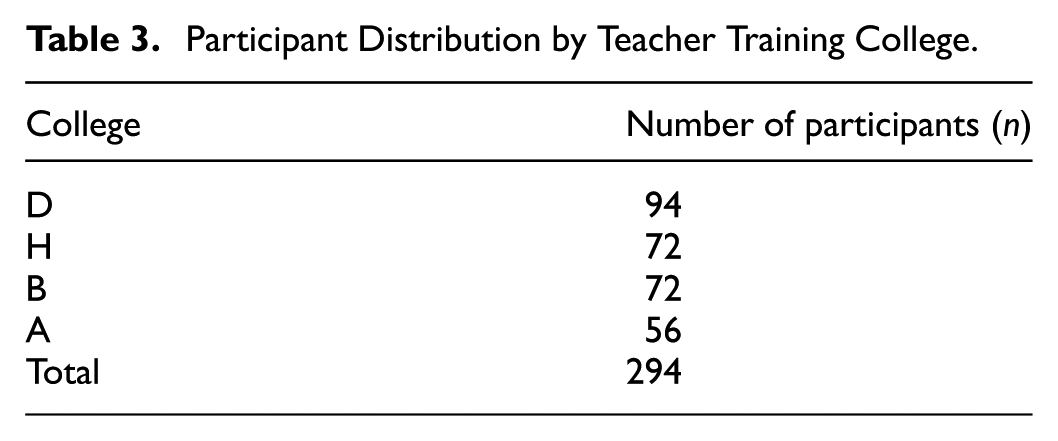
The varying distribution of participants across colleges is significant. College D’s highest representation (32%) suggests it might be a larger institution or have greater engagement with the study, implying its findings could heavily influence overall conclusions. Conversely, College A’s lowest representation (19%) points to a smaller contribution to the dataset, raising questions about the generalizability of findings to such institutions. These disparities highlight the importance of considering the contextual differences between colleges, such as their size, resource allocation, or program focus, which could profoundly impact the implementation and outcomes of TPPs (Table 4).
Participant Allocation by Academic Department.

The study reveals a significant disparity in participant representation across academic departments, revealing the strengths and weaknesses of different teacher preparation programs. Social Sciences (30%) and Languages (26%) departments show robust participation, suggesting larger or established programs. However, Natural Sciences, HPE/Art/Music, and “Other” departments have significantly lower representation, suggesting potential challenges such as smaller participants, differing program emphasis, or limited engagement. This highlights the need to analyze teacher preparation programs (TPPs) as a diverse landscape influenced by departmental specificities, resource allocation, and student interest. A holistic approach is needed to understand the quality of TPP implementation, considering factors like participant perception, instructor competencies, graduate teacher attitudes, and institutional leadership. By examining these dynamics, teacher education colleges can develop targeted strategies to enhance their TPPs quality.
Descriptive Analysis of Data on Study Variables
Descriptive statistics provide a foundational understanding of teacher preparation programs’ perceived state, allowing for inferential analyses. The mean and standard deviation of each variable reveal general sentiment and consensus among participants, guiding subsequent inferential analyses (Table 5).
Descriptive Statistics for Mediation Variables and Outcome Measures.

Note. The legend categorizes mean scores as: Strong (4.0–5.0): Highly positive perceptions, indicating effective performance. Average (3.0–3.99): Moderate to favorable perceptions, with room for improvement. Poor (1.0–2.99): Negative perceptions, signaling significant issues.
The study analyzes variables to understand the strengths and weaknesses of teacher preparation programs. The high mean for Instructor Curriculum Implementation Competencies suggests effective curriculum delivery, but variability suggests the need for targeted professional development (Lopez, 2021).
The average mean for Diploma Graduate Attitudes points to a generally favorable view of the preparation experience, but the higher standard deviation highlights significant inconsistencies. This calls for tailored interventions addressing the specific concerns of different graduate groups to enhance outcomes and satisfaction.
The study reveals a systemic issue in Educational Material Provision, requiring urgent attention to improve curriculum implementation, skill development, and program quality.
Instructional leadership performance and implementation quality ratings are average, indicating the need for standardized support frameworks and targeted interventions. The “Average” mean for Out-of-College Factors highlights the importance of a holistic approach to program improvement, considering the complex interplay between internal and external factors.
Path Analysis: Discharging Direct and Indirect Influences on Teacher Preparation Quality
The path analysis offers a comprehensive understanding of the interplay between political, economic, social, and technological factors, mediating variables, and the quality of Teacher Preparation Program (TPP), enabling a deeper exploration of causal pathways and assessing the significance of different influences.
PEST Factors: A Powerful Indirect Influence
The analysis reveals that political, economic, social, and technological factors significantly influence intermediate variables within the teacher preparation ecosystem (Geeltu, 2023), highlighting the crucial role of the external environment in shaping internal program dynamics. PEST factors significantly influence:
Instructor Curriculum Implementation Competencies (Path Coefficient = 0 201, T = 6.151, p < .001)
A supportive external environment, including progressive educational policies, economic stability, societal value for education, and technological advancements, directly influences instructors’ ability to effectively implement the curriculum, possibly due to better access to training, resources, and professional development opportunities.
Diploma Graduate Attitudes (Path Coefficient = 0 136, T = 3.388, p = .001)
A positive external context appears to foster more favorable attitudes among diploma graduates. This might stem from better job prospects, societal recognition of their profession, or access to diploma graduation support, all of which enhance their overall experience and perception of their training.
Instructional Leadership Performance (Path Coefficient = 0 134, T = 7.682, p < .001)
The external environment significantly impacts the effectiveness of instructional leadership. This could mean that supportive policy frameworks, adequate funding, and a culture that values educational leadership empower leaders to perform better, implement reforms, and provide stronger guidance (Redmond et al., 2018; Ronfeldt et al., 2015).
Educational Material Provision (Path Coefficient = 0 134, T = 6.806, p < .001)
Critically, PEST factors also have a significant positive influence on the provision of educational materials. This suggests that a favorable external environment, likely through economic stability or supportive government policies, facilitates the availability of necessary resources. This finding is particularly important given the “Poor” descriptive rating for material provision. It implies that while the issue exists, external factors can positively contribute to its resolution.
These statistically significant paths (all p-values <.05 and T-statistics well above 1.96) collectively confirm that the macro-environmental context is not merely a background but an active determinant of the internal well-being and functioning of TPPs (Schober et al., 2018). Therefore, efforts to improve teacher preparation must consider and potentially advocate for changes in these broader PEST factors.
The Mystifying Absence of Direct Effects on TPP Quality
The study found no significant direct effects of mediating variables on the overall quality of teacher preparation programs (TPP Quality). Factors such as instructor competences, diploma graduate attitudes, instructional leadership performance, and educational material provision showed high p-values, challenging the assumption that these factors directly contribute to program quality.
The unexpected result suggests that the current model may not fully capture the complex causal chains at play, as PEST factors could influence TPP Quality through intricate relationships with mediating variables or other unmeasured factors, suggesting that the existing model is too simplistic to reveal these complicated interactions.
Additionally, the absence of direct effects could reflect the specific context of this educational system. Other unmeasured or intervening factors such as cultural norms, political instability, or institutional dynamics may be overshadowing the direct influences of the variables studied.
Another possibility is that the relationships are not linear or that there exist threshold effects. For instance, it could be that educational material provision needs to exceed a certain level before it begins to affect TPP quality directly.
Finally, it’s important to consider the potential disconnect between participants’ perceptions and objective realities. The study relies on subjective assessments, and respondents might not connect issues like inadequate material provision to overall implementation quality in their evaluations.
The study highlights the importance of PEST factors in effective teacher preparation, but the lack of direct effects raises questions. Further investigation is needed to understand the complex determinants of effective teacher preparation. Qualitative research methods like interviews, focus groups, and case studies could reveal unmeasured variables and clarify how these factors influence TPP quality.
Qualitative Findings Mediators Factors Influence the Implementation Quality of Teacher Preparation
The study found that teacher preparation program implementation quality is not significantly influenced by instructor competencies, diploma graduate attitudes, instructional leadership performance, or educational material provision, but external systemic and resource-based constraints are significantly influential.
The Overarching Shadow of Scarcity: “Survival Mode” Deciders Program Quality
Participants from all colleges consistently report that “lack of basics controls everything” (Instructor, College A) and that the program “limps along on hope, not resources” (Academic Director, College H). Members from all colleges agree that the teacher training colleges are in a persistent “survival mode,” where systemic inefficiencies and inherent resource deficiencies condition program realities more profoundly than the intrinsic effectiveness of discrete components. This universal setting of need undermines or eliminates the direct beneficial effect that strongly developed internal factors could otherwise exert.
For example, the qualitative data vividly illustrates the “Poor” rating given to Educational Material Provision in the descriptive statistics (Mean = 2.89). A harsh image is painted by statements such as “virtually nonexistent” (Instructional Leader, College B), “instructional materials are a dream” (Instructional Leader, College A), and “we have none and make notes in the mud occasionally” (Instructor, College H). Even though materials might directly affect TPP quality, their absence so severely impairs fundamental functionality that any potential direct impact is less certain because of the total lack of resources.
The absences of basic infrastructure frequently cited as a fundamental flaw are “broken desks,”“no electricity,”“classroom unpainted,” and “no chalk or paper.” More sophisticated teaching techniques or better-designed curricula are unrealistic.
Instructor Competencies: Skills Dissatisfied by Context
While quantitative findings indicated “Average” teacher competencies, qualitative findings account for why such competencies seldom result in a short-term impact on TPP quality. Teachers tend to convey a disheartening mismatch between training and practice. They possess “decent curriculum skills” (Instructor, College H) or have “learned some techniques during my MA degree” (Instructor, College A), but are still “under-used” (Academic Director, College H) or cannot be “applied effectively” (Instructional Leader, College A) due to overcoming environmental limitations.
Such examples as “teaching 45 students with broken desks, without pen, and without overcoat” (Instructor, College A) or “teaching fractions using gravels because we had no paper” (Instructor, College D) more accurately depict how even highly competent teachers are driven to spontaneity, merely lowering the expected contribution of their expertise to directed program utilization. Competence alone is insufficient without context resources, infrastructure, and manageable class sizes. The moderately high quantitative instructor competence standard deviation (SD = 0.654) may indicate internal heterogeneity in application, where some teachers have more capacity to work within constraints than others, rather than simply reflecting underlying competence levels.
Diploma Graduate Teachers’ Perspectives: Suffering Hope and Systematic Frustration
The quantitative finding of “Average” Diploma Graduate Attitudes, coupled with a relatively high standard deviation (SD = 0.752), is profoundly elucidated by the qualitative data. Participants confirmed that while students may start with hope (“eager at first”– Instructor, College A; “start with hope”– Instructor, College B), their attitudes “shift” (Instructor, College A) or “crack” (Instructor, College H) as they confront the harsh realities of the system and the job market.
The direct quotes, “Why bother learning to teach well because just ends up unemployed?” (Instructional Leader, College A) and “I will finish, but teaching pays less than farming” (Academic Director, College H), underscore a deep-rooted existential disenchantment. The study suggests that despite pedagogical efforts to cultivate positive attitudes, external realities like unemployment, low pay, and lack of support often overshadow the impact of in-program experiences on students’ attitudes and program quality. Variability in attitudes may be due to individual elasticity, alternative opportunities, or exposure to different levels of external rigorousness.
Instructional Leadership Performance: Bounded by Begging, Not Building
The quantitative “Average” rating for Instructional Leadership Performance, paired with its highest standard deviation among all variables (SD = 0.786), is critically explained by the qualitative interviews. Leaders universally acknowledged that their performance was “limited by funding” (Instructional Leader, College A) and that they were “stuck begging for resources” (Instructor, College A). Their primary function shifted from strategic educational leadership to “managing chaos” (Instructional Leader, College D) and “fire-fighting bigger problems” (Instructional Leader, College B), such as fixing leaking roofs.
The bitter reality that a dean “once brought his computer to other services because we ran out” (Instructor, College A) or a director “begs supporters for help, but nothing changes” (Instructor, College H) sadly meant that even the most dedicated administrators were rendered “powerless” (Instructor, College B). The study suggests that leadership’s impact on TPP quality is immediate, but the challenge of maintaining operational functionality consumes their energy, hindering the implementation of educational reforms. The extreme variability in leadership performance likely reflects the uneven challenges and successes faced by individual leaders in navigating resource and organizational survival struggles, rather than inherent differences in leadership abilities (Nichols, 2024).
Summary: Strategic Predominance and Indirect Management of PEST Factors
The study suggests that leadership’s impact on TPP quality is immediate, but the challenge of maintaining operational functionality consumes their energy, hindering the implementation of educational reforms. The extreme variability in leadership performance likely reflects the uneven challenges and successes faced by individual leaders in navigating resource and organizational survival struggles, rather than inherent differences in leadership abilities.
Hypothesis Testing: Discharging the Absence of Direct and Mediated Effects on TPP Quality
This study employed p-value analysis to determine the statistical significance of direct and mediated pathways, comparing results against a significance level (alpha) of .05. If a p-value fell below .05 (p < .05), the null hypothesis (H0) was rejected in favor of the alternative hypothesis (Ha), indicating a statistically significant effect. Conversely, if the p-value was greater than or equal to .05 (p ≥ .05), the H0 was not rejected, concluding there was insufficient evidence to support a significant effect.
The study found that the implementation quality of Teacher Preparation Programs (TPP) is not significantly influenced by PEST variables, instructor competencies; teacher attitudes, educational materials delivery, and leadership performance (see Table 6 detailed). All pathways examined yielded p-values exceeding the .05 threshold for significance, indicating that the null hypotheses cannot be rejected. This is concerning, as these internal variables, such as competencies, attitudes, leadership, and materials, are expected to directly influence program quality. Therefore, their effects on TPP implementation are statistically undetectable through direct or mediated pathways.
Hypothesis Testing Outcomes for Mediation Pathways.

Synthesizing Quantitative and Qualitative Insights: The Systemic Dominate
The study found no significant direct or mediated effects on the quality of Teacher Professional Preparation (TPP) despite initial path analysis indicating PEST variables significantly influencing factors like instructor competence, attitudes, leadership, and material availability. Hypothesis tests revealed that these mediating variables do not translate into tangible improvements in the quality of direct TPP implementation.
Qualitative interviews underscore this disconnect, highlighting the predominant impact of “larger systemic issues,” such as severe resource shortages, extensive infrastructure deficits, and overwhelming socio-economic challenges. These issues tend to overshadow the potential direct effects of important internal drivers. All participants consistently remarked that, regardless of teachers’ capabilities or leaders’ earnest efforts, these external factors are invariably “overwhelmed by poverty and lack of infrastructure” (Instructional Leader, College A). Furthermore, the interviews stressed that although there are some positive perceptions regarding specific aspects such as instructor competence being qualitatively rated as “Average” their ability to directly influence program quality is significantly constrained by the “absence of essentials that govern everything” (Instructor, College A).
The study reveals that while PEST factors significantly impact internal educational elements, their impact is diluted due to a crisis in fundamental operational competence. The qualitative deficiencies identified in the data are reflected in shared narratives, where individual initiative and resources are overshadowed by an ongoing struggle for survival, highlighting the need for more effective mediation effects.
Analysis of Path Relationships: Interpreting Direct and Mediated Influences on TPP Quality
The path analysis diagram and coefficients offer a detailed view of the causal relationships between PEST factors, mediating variables, and the quality of Teacher Preparation Programs (TPPs). However, interpreting these magnitudes and their statistical significance is crucial for a comprehensive analysis (Figure 2).
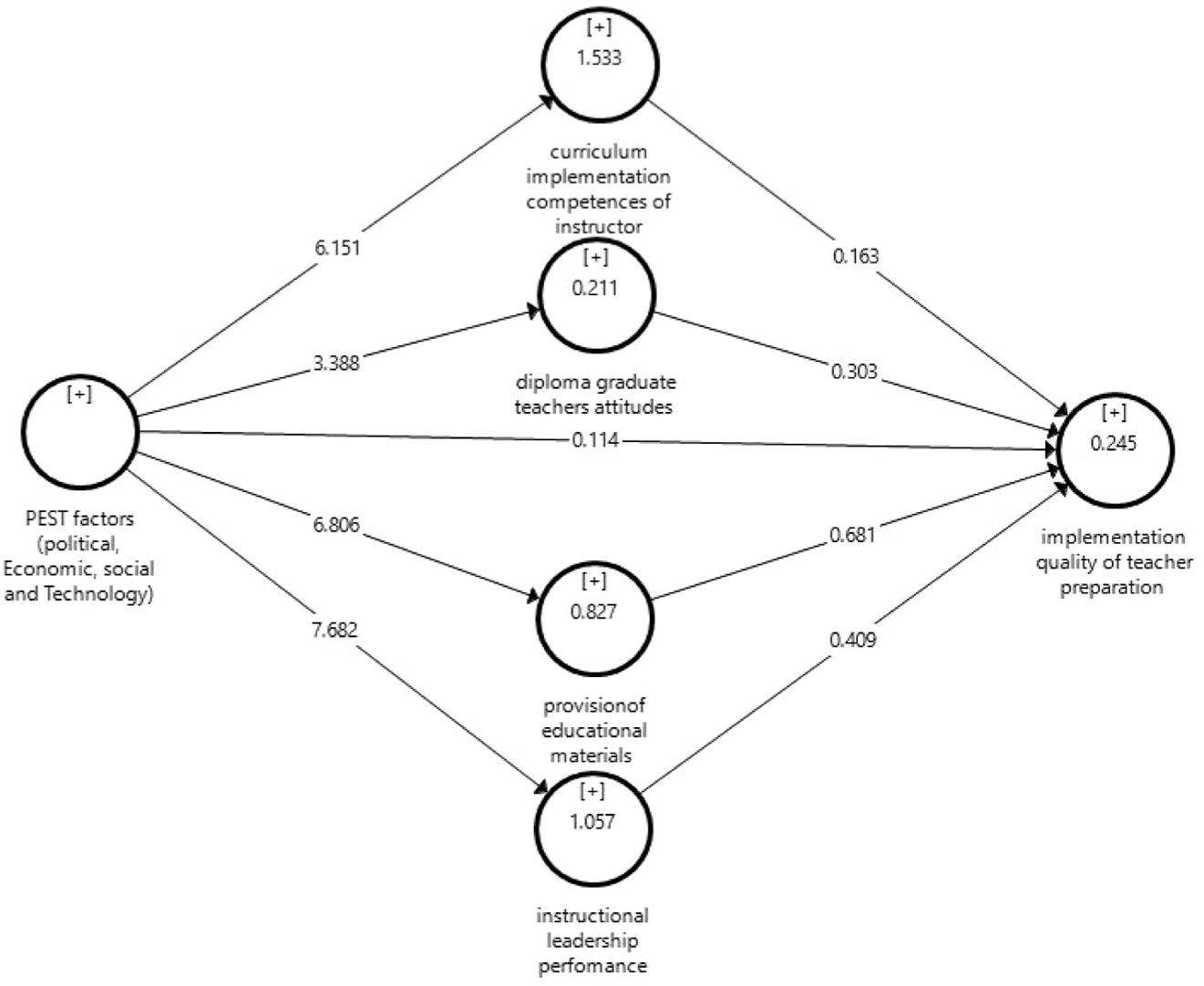
Path coefficients relationships between variables.
The Direct Effect of PEST Factors on TPP Quality: A Negligible Influence
The direct relationship between PEST factors and implementation quality yielded a coefficient of 3.292 (as shown in Table 7 of the previous section), but this result was found to be statistically non-significant (p = .909). The study suggests that while external environment (PEST factors) could potentially affect TPP quality, their impact is statistically undetectable in this model, suggesting that any effect is primarily indirect, operating through other mechanisms within the educational system. This finding aligns with the broader qualitative theme that suggests systemic issues are widespread, making direct effects obscured.
Path Analysis of PEST Factors on Teacher Preparation Quality: Direct and Indirect Effects.

Note. Statistical significance is assessed using a threshold of p < .05.
Mediation Hypotheses: Practical Relevance Amidst Statistical Non-significance
The analysis of the four mediation hypotheses reveals a complex picture where some pathways demonstrate considerable practical relevance (i.e., substantial indirect effect sizes) yet consistently fail to achieve statistical significance. This discrepancy between effect magnitude and statistical detectability is a central analytical challenge of this study.
Hypotheses 1 & 2: Weak Links in the Mediation Chain (Instructor Competences & Diploma Graduated Teacher Attitudes)
H1: PEST → Instructor Competences → TPP Quality (Indirect Effect = 1.002; p = .871)
H2: PEST → Diploma Graduated Teachers’ Attitudes → TPP Quality (Indirect Effect = 1.026; p = .762)
For both Instructor Competencies (H1) and Diploma Graduated Teachers’ Attitudes (H2), the indirect effects are moderate in magnitude (around 1.0), suggesting a plausible practical influence. However, their corresponding high p-values (.871 and .762, respectively) indicate that these mediation effects are not statistically significant, leading to the support of the null hypothesis (H0).
The reason for this non-significance, despite moderate indirect effects, can be attributed to the weakness of the mediator-to-outcome paths (i.e., the direct link from the mediator to TPP Quality). As seen in Table 7 (Path Analysis), the path coefficient for Instructor Competences → TPP Quality was 2.443 (p = .871), and for Diploma Graduate Attitudes → TPP Quality was 0.536 (p = .762). These p-values, mirroring the mediation p-values, confirm that the effect of the mediator itself on TPP Quality is not statistically significant.
This quantitative finding is powerfully illuminated by the qualitative insights. Participants explicitly stated that instructor skills were “underused” due to lacking resources, and student attitudes soured due to systemic failures. This suggests that while PEST factors might create conditions conducive to developing competencies and fostering attitudes (as shown by significant PEST → mediator paths), these mediators are then rendered largely ineffective in directly enhancing TPP quality due to overwhelming contextual constraints. The chain of influence is broken or severely attenuated at the point where these internal factors are supposed to translate into tangible improvements in overall program implementation.
Hypotheses 3 & 4: Strong Practical Effects Masked by Statistical Non-Significance (Educational Material Provision & Leadership Performance)
H3: PEST → Educational Material Provision → TPP Quality (Indirect Effect = 4.634; p = .496)
H4: PEST → Leadership Performance → TPP Quality (Indirect Effect = 3.142; p = .683)
Here’s the puzzle: Both providing educational materials (H3) and strong leadership performance (H4) show a significant practical impact when PEST factors influence them. In other words, changes in external conditions could meaningfully improve teacher preparation through these channels. However, despite this clear real-world relevance (indirect effects of 4.634 and 3.142), our statistical tests (p-values of .496 and .683) indicate these effects weren’t statistically significant, meaning we still support the null hypothesis.
This discrepancy between a large effect size and a lack of statistical significance points to a crucial methodological and contextual reality. The most probable explanation is high variability within the data or insufficient statistical power to detect these effects reliably. As seen in Table 7, the standard errors for the mediator-to-outcome paths are notably large (e.g., Educational Material Provision → TPP Quality has a coefficient of 0.293 with a large Std. Error of 0.681; Leadership Performance → TPP Quality has a coefficient of 1.216 with a Std. Error of 0.409). High variability within the measurement of “TPP Quality” or the mediator’s actual performance across different colleges or departments, as vividly described in the qualitative findings (“survival mode,”“managing chaos”), could inflate these standard errors, thereby diminishing the T-statistic and increasing the p-value.
In essence, while more educational materials or stronger leadership do seem to make a difference in practice (as indicated by the large indirect effects), the inherent noise and inconsistency in the challenging operational environment make it difficult for these effects to consistently reach a level of statistical confidence. The qualitative data further reinforces this: even “strong” leadership is “powerless without funds,” and materials are “scarcely” available, implying that their impact is constantly battling systemic deficiencies.
Overarching Implications for Teacher Preparation Quality
The consistent support for the null hypothesis across all mediation pathways, despite some notably strong indirect effects, leads to several critical analytical conclusions:
Systemic Overrides
The study strongly suggests that systemic and environmental factors are so overwhelmingly dominant in these contexts that they effectively mask or attenuate the direct and mediated effects of internal program components on overall TPP implementation quality (Vadivel et al., 2023). Instructor competence, graduate attitudes, leadership efforts, and material provision are important but struggle to significantly impact students due to resource scarcity and infrastructural deficiencies.
The Context is Key
The findings underscore that simply improving individual components (e.g., training instructors, fostering positive attitudes) may not yield significant improvements in overall TPP quality if the foundational enabling environment (influenced by PEST factors) is not simultaneously addressed.
Measurement Challenges in Complex Systems
The consistent statistical non-significance, particularly for pathways with strong practical effects, also highlights potential challenges in accurately measuring “TPP Quality” or in the model’s ability to capture the full complexity of relationships in a highly constrained environment. High variability in the outcome or mediator measures, reflecting the unstable operational realities, could be a significant contributing factor.
Beyond Statistical Significance
While statistical significance is a benchmark for generalizability, the “strong” indirect effects (H3, H4) should not be dismissed. They hint at practical leverage points that, if addressed with sufficient scale and consistency (e.g., through significant, sustained investment in educational materials or leadership development), could eventually yield statistically significant improvements.
In summary, the hypothesis testing provides an unambiguous quantitative confirmation of the qualitative narrative: the ability of key internal TPP components to directly or indirectly improve overall program quality (Darling-Hammond et al., 2020) is profoundly limited by an overarching environment of scarcity and systemic challenge, where even practically strong relationships struggle to achieve statistical confidence (Table 8).
Mediation Hypothesis Comparison: Indirect Effect Magnitude Versus Statistical Significance.

H1 and H2 both demonstrate moderate indirect effects (1.002 and 1.026), which are not statistically significant (p > .05). Additionally, the weak mediator-to-outcome paths hinder the overall strength of mediation. In contrast, H3 and H4 present strong indirect effects (4.634 and 3.142), indicating practical mediation; however, the p-values (.496 and .683) do not allow us to reject the null hypothesis (H0), suggesting a lack of statistical significance.
While H1 and H2 are consistent in path analysis (indicating weak mediation) and p-value outcomes (supporting H0), H3 and H4 reveal inconsistencies. The substantial indirect effects imply the presence of mediation (Ha), whereas the corresponding p-values uphold H0. This discrepancy necessitates further explanation.
Path analysis provides effect sizes that may be significant even in the absence of statistical significance. The high variance in p-values for H3 and H4 may limit the ability to detect significant mediation despite the significant indirect effects.
It is important to report both results for H3 and H4, highlighting that while the indirect effects suggests strong practical mediation, they do not achieve statistical significance (p > .05). Future research, particularly involving interviews, may help clarify these relationships (Bowen et al., 2017).
Unpacking the Discrepancies in Mediation Effects: Qualitative Insights
The quantitative analysis revealed a compelling paradox: although significant indirect effects were detected in Hypotheses 3 and 4 with coefficients of β = 4.634 for Educational Material Provision and β = 3.142 for Instructional Leadership Performance these effects did not achieve statistical significance (p > .05). This intriguing contradiction highlights the limitations of isolated quantitative models, which often fail to capture the intricate complexities of the context. To explore this issue further, we conducted in-depth interviews with 12 participants from Colleges A, B, D, and H comprising eight dedicated instructors and four visionary instructional leaders. Our objective was to uncover the subtle nuances, inherent inconsistencies, and elusive variables that might illuminate the statistical landscape and uncover the substantial practical effects underlying the surface.
Qualitative Insights: Unpacking the Discrepancies in Mediation Effects
The qualitative data on Educational Material Provision reveals that its indirect effect on Teacher Preparation Programs (TPP) quality is not statistically significant due to the extreme and inconsistent shortages across all colleges, creating variability and disruption within the system, making any direct impact on implementation quality obscured.
Interviewees uniformly described a dire situation regarding material availability, emphasizing the severe shortfalls they face. Teachers expressed frustration over the lack of “current textbooks or instructional aids,” relying instead on “incomplete” photocopied notes, which hinder their ability to introduce new teaching techniques effectively. This struggle extends beyond just advanced tools; fundamental necessities are also lacking. For instance, one instructor highlighted the challenge of teaching large classes of over 40 students with only a single chalkboard, while another noted that students are graduating without having worked with the tools they will need in their future classrooms.
The interviews also revealed stark inconsistencies in access to materials, both within institutions and over time. For instance, College A occasionally benefits from donated materials because of its proximity to the capital. However, they report that the distribution remains uneven, and budget cuts often leave them facing “semesters without updates.” In contrast, College B, situated further from supply centers, finds itself receiving shipments even less frequently, sometimes starting new semesters without materials due to delays in funding. This irregular and sporadic provision creates a situation where, even when materials do arrive, their impacts are not consistent or sustained enough to achieve a statistically significant effect on program quality as a whole. Furthermore, the experience of College D, which is described as “recently established” and thus “neglected” in comparison to older institutions, underscores how factors such as the age of the college and its political visibility can greatly influence the allocation of resources. Such disparities only add to the unpredictability of material access and utilization, contributing to the statistical noise that hampers effective measurement of educational outcomes.
Both instructors and leaders within educational institutions have highlighted significant external challenges that severely limit their operational capabilities (Geiger et al., 2023). A prevalent concern is budget cuts, which prioritize salaries and recurring expenditures over essential materials. This financial strain is compounded by technology gaps, with many institutions facing issues such as unreliable power supply or internet connectivity. Consequently, modern teaching methods and access to web-based resources remain largely out of reach. Furthermore, the absence of necessary equipment, such as computers or projectors, hampers effective teaching even when materials are available.
The situation is exacerbated by the poor infrastructure that delays the delivery of learning materials. Corruption is a significant issue that drains valuable funds, further restricting the resources available for education (Tekle et al., 2024). These pervasive external limitations act as a ceiling, stifling the productivity of any acquired educational materials. Even when some materials are procured, the lack of a supportive infrastructure undermines their consistent implementation, failing to significantly enhance educational quality.
The qualitative data indicates that instructional leadership performance is significantly impacted by operational crises, as leaders often find themselves in a reactive “firefighting” mode, hindering their ability to significantly impact educational quality and program quality.
Indeed, many instructors express frustration over leaders being bogged down by paperwork and continuously searching for additional funding. Instructional leaders themselves echo this sentiment, feeling trapped in a position where they are “begging for funds instead of leading.” Their focus shifts toward merely keeping the institution afloat rather than prioritizing educational quality. As they juggle a multitude of administrative and fundraising tasks, coupled with inadequate infrastructure, these leaders find themselves overstretched, and unable to provide the stable support necessary for enhancing program quality (Darling-Hammond et al., 2020). The constant distractions and the ever-changing nature of crises create a scenario where even the most capable leaders struggle to apply their skills consistently, making it challenging to achieve statistically significant improvements in teaching and program quality.
External Constraints Eroding Power and Purpose
Leaders face considerable pressures beyond their control that significantly affect their ability to perform their roles effectively. For instance, the expectation for “very fancy programs with no staff or technology” exemplifies the disparity between government expectations and reality. Bureaucratic interference and shifting policies create instability, forcing leaders into a constant state of adjustment rather than allowing them to engage in meaningful planning. The overarching “shortage of resources” mentioned in H3 also directly impacts leadership capabilities, as it prevents leaders from ensuring successful outcomes. This inherent lack of freedom and resources implies that a leader’s performance is often assessed based on their ability to “handle chaos,” rather than their direct influence on learning quality, resulting in a highly variable perception of their effectiveness.
Attitudinal and Internal Variances
While external factors play a predominant role, internal processes also contribute to variability in leadership effectiveness. Leaders recognize that “cultural resistance” from parents and teachers can undermine their efforts to introduce innovative approaches (College D Instructor 2). Furthermore, teacher attitudes are a crucial factor: leaders tend to be “effective when they are eager, not when they are simply well-prepared” (College D Leader). Therefore, the success of leadership hinges on staff morale and responsiveness (Geiger et al., 2023), both of which are influenced by the external pressures previously mentioned. This interplay between external obstacles and internal variability complicates the ability to statistically determine a direct impact of leadership on TPP quality.
Conclusion: Systemic Disruption as the Underlying Explanatory Factor
The qualitative findings illuminate the majority of differences observed in Hypotheses 3 and 4. The strong indirect effects of Instructional Leadership Performance and the Provision of Educational Materials are statistically overshadowed by the diverse challenges posed by the system. The colleges are entrenched in a “survival mode,” facing limited resources, deteriorating infrastructure, and leaders who are constantly “firefighting” operational crises. This results in a noisy and variable environment in which even theoretically effective mediators struggle to demonstrate a consistent and statistically significant impact on the overall quality of TPP implementation.
The interviews reveal that the “weak mediation effects” do not indicate a lack of intrinsic significance of leadership or materials. Rather, their potential is continually undermined by persistent external limitations, including PEST factors that manifest as “poverty, lack of infrastructure, and limited resources.” This analysis supports the conclusion that for internal factors to exert a consistent and significant influence on TPP quality, the underlying systemic and structural barriers must first be effectively addressed. Doing so would eliminate the variability that currently dampens their actual statistical impacts.
Discussion: Steering the Obstacles of Teacher Preparation Program Implementation Amid Systemic Constraints
The path analysis and qualitative findings reveal a complex correlation between Political, Economic, Social, and Technological (PEST) factors and the quality of teacher preparation programs (TPPs). Although PEST factors influence mediating variables, their direct impact on TPP quality is often influenced by contextual adversity. This discussion, based on quantitative data and qualitative report, is situated within relevant theoretical frameworks.
The Weakened Role of Internal Capacities: Instructor Competencies and Teacher Attitudes
Our test of Hypothesis 1 (Curriculum Implementation Competences) and Hypothesis 2 The analysis of the attitudes of diploma graduate teachers revealed small indirect effects (1.002 and 1.026 respectively), suggesting a practical significance. These effects, nonetheless, consistently failed to achieve statistical significance (p = .871 and .762). This absence of significance is due critically to weak mediator-to-outcome paths (0.163 and 0.303), indicating that even where PEST factors positively influenced these mediators (as shown in earlier path analysis), their influence on overall TPP quality was statistically trivial. Second, the absence of a significant direct influence of PEST factors on TPP quality (0.114) points out that the external environment’s influence is largely filtered through these, or other, internal mechanisms.
This is in stark contrast with the theoretical emphasis on human capital in educational development. While socio-cultural theory (Mbewe, 2021) draws attention to the potential of interactive learning spaces and competent educators in knowledge construction, the study highlights the challenges posed by resource deficits and systemic inefficiencies. Teaching personnel, while possessing “decent curriculum skills,” can feel they are unable to apply them effectively due to “broken desks, no pen, and no overcoat,” which forces them to employ “rote learning” as observed by Geeltu (2023) under similar underfunded circumstances. This indicates that individual capacity, while present, cannot translate into system-wide quality improvement without a necessary enabling environment.
Similarly, the weak indirect effect of teacher attitudes, coupled with high variance and statistical non-significance, is profoundly explained by the qualitative data. Early optimism on the part of the diploma graduates often gave way to disillusionment, and this was summed up neatly in the attitude: “Why bother learning to teach well because just ends up unemployed?” This specifies a key interaction whereby socio-economic pressures like high inflation and unemployment directly erode intrinsic motivation and perceived value of good training (Koukoulidis et al., 2024). While PEST factors can influence attitude formation, the overall structural disincentives to teaching overpower any direct mediating effect these attitudes can have on TPP quality.
The high p-values and standard deviations thus quantitatively reflect the overshadowing impact of these systemic issues – lack of infrastructure (teaching facilities, electricity) and socio-economic circumstances – which generate so much variability and noise that the mediating roles of instructor competences and teacher attitudes become statistically undetectable.
The Suppressed Potential: Educational Materials and Instructional Leadership
The analysis of Hypothesis 3, which focuses on the provision of educational materials, and Hypothesis 4, centered on instructional leadership performance, reveals a critical nuance within the findings. Both hypotheses exhibit substantial indirect effects with estimates of 4.634 and 3.142 respectively that underscore their high practical significance. However, it’s noteworthy that neither effect achieved statistical significance, with p-values of .496 and .683. This disparity highlights a significant “mismatch” between practical relevance and the statistical abilities to detect such effects, which stands as a key component of our argument.
From a socio-cultural perspective, as championed by Vygotsky, the exposure to quality cultural tools and meaningful social interactions forms the foundation of learning and development. The considerable indirect effect of providing educational materials aligns with this principle: when PEST factors enable access to such materials, there is a strong likelihood of improved teacher professional development quality. Yet, qualitative data reveals that this potential is consistently hindered by issues of chronic shortages, uneven distribution, and outdated materials. Instances where some teachers resort to teaching fractions with stones or where new school years commence without the necessary materials illustrate the vast variability within the system, which ultimately leads to the observed statistical non-significance. Even when educational materials are present and have a considerable practical impact, their inconsistent and insufficient availability prevents a reliably observable effect across the entire study population.
Furthermore, these challenges are exacerbated by political bureaucracy and funding shortages, as noted by Darling-Hammond et al. (2020), in addition to technological unreliability, including problems related to power and internet access, highlighted by (Adula et al., 2025). These factors hinder the effective utilization of whatever materials do exist. In parallel, instructional leadership performance emerges as a significant indirect influence, indicating both its intrinsic importance and the operational challenges that constrain its impact, as reflected in the statistical non-significance of the findings.
Interviews consistently portray leaders who are overwhelmed with paperwork, preoccupied with chasing funding, and managing chaotic environments. This aligns with the understanding that although leadership plays a vital role in directing complex systems, its effectiveness is heavily limited by the very PEST factors that define the context in which they operate.
Cultural resistance, low teacher morale, and weak infrastructure contribute to inconsistent or undermined efforts by leaders in teacher professional development implementation. This results in a lack of significant outcomes, highlighting the need for improved infrastructure and leadership.
The Overriding Influence of Context: A Multi-Faceted Challenge
The comprehensive confirmation of the null hypothesis across all pathways, despite the presence of significant indirect effects, underscores that the “underdeveloped context” within Colleges A, B, D, and H functions not merely as a backdrop, but as a dynamic, overarching force that alters and often suppresses both direct and mediated effects of other variables.
This pronounced variability and the lack of statistical power, which presumably contribute to the failure to reject the null hypothesis, reflect the characteristics of a resource-poor, and unstable environment (Ramsey, 2004). Consequently, the study contends that traditional linear causal models where variables such as leadership or instructor competency are expected to exert direct and substantial impacts on program quality are ill-suited for contexts where resource scarcity is severe and systemic weaknesses are prevalent. Instead, the findings point to a reality wherein exogenous challenges driven by PEST factors (such as funding cuts, inadequate infrastructure, rising unemployment, and bureaucratic obstacles) serve as significant “dampeners.” These factors hinder the full realization of internal competencies, resulting in a scenario where potential practical benefits remain statistically obscured (Petko et al., 2021).
Conclusion
The study reveals that PEST factors indirectly influence teacher preparation quality through curriculum competencies, teacher attitudes, resource provision, and leadership performance, yet statistical significance remains elusive across all hypotheses (H1–H4). H1 and H2 show moderate, non-significant mediation (p > .05), limited by weak mediator paths and systemic barriers like resource scarcity and socio-economic pressures. H3 and H4 suggest practical mediation with strong indirect effects, but high p-values (.496, .683) and variability (e.g., infrastructure gaps, cultural resistance) support H0, underscoring the dominance of external constraints over internal variables. The study highlights the need for contextualized educational models due to political instability, resource disparities, social and moral issues, and unreliable infrastructure.
Recommendations and Forward Direction for Stakeholders
For Educational Leaders
Develop contingency plans and advocate for funding to address infrastructure deficits. Conduct action research to test adaptive leadership strategies in resource-poor settings, measuring their impact on implementation quality.
For Instructors
Participate in workshops on creativeness and resilience to enhance competencies under constraints. Collaborate with peers to share effective low-resource teaching practices, contributing to a practical knowledge base.
For Policymakers
Implement policies ensuring equitable resource allocation and stable funding, prioritizing socio-cultural learning models. Launch longitudinal studies tracking policy impacts on teacher preparation across diverse contexts, refining resource distribution frameworks.
For Institutions (Colleges A, B, D, and H)
Developed community partnerships to complement resources and integrate scalable, low-cost technology solutions, taking integrated accessibility measures, evaluating their impact on leadership and learning outcomes, and piloting technology-enhanced programs as solutions.
For Researchers
Explore unaccounted variables and clarify discrepancies. Expand sample sizes and control for variability to increase statistical power, testing refined mediation models in similar contextual settings.
Footnotes

Ethical Considerations
Ethical permission with a number of DU/IEBS/121/16 obtained from Dilla University IEBS institute ethics committee for this research on September 05/05/2016 E.C.
Author Contributions
Befkadu Legesse: Since this study is part of my dissertation, conducted the research, Investigation, Methodology, Formal analysis, writing the original draft, reviewing the reviewers’ comments, and editing the final draft. Dr. Dawit Legesse and Dr. Mesfin Molla: Supervision, Reviewing and editing.
Funding
The authors received no financial support for the research, authorship, and/or publication of this article.
Declaration of Conflicting Interests
The authors declared no potential conflicts of interest with respect to the research, authorship, and/or publication of this article.
Data Availability Statement
The datasets used and/or analyzed during the current study are available from the corresponding author on reasonable request.
Consent Details
The study’s design included measures to minimize potential risks to participants. Confidentiality was ensured through the anonymization of personal data, and participants were free to withdraw from the study at any time without consequence. The research involved only non-invasive methods, such as interviews and questionnaires, and had been reviewed and approved by an institutional ethics committee. Significant benefits were anticipated from the study. The findings were expected to contribute to the improvement of instructional leadership practices in teacher education colleges, informing policy and curriculum development to enhance the quality of teacher preparation program and graduate readiness for the workforce. Participants had the opportunity to reflect on and share their professional experiences, potentially leading to personal and institutional growth. Instructional leaders and instructors could also gain insights into effective leadership strategies and teaching methodologies, while diploma graduates could voice their perspectives, potentially influencing future educational reforms.