




Abstract
This study examined relationships among perceived social support, social engagement, mindfulness, and psychological well-being in Chinese university students using a mixed-methods approach. Quantitative Structural Equation Modeling (SEM) of data from 379 students revealed significant direct and indirect relationships. Perceived social support and social engagement were key psychological well-being predictors, with mindfulness as a significant mediator. Mindfulness amplified social support and engagement positive effects, emphasizing its role in emotional regulation and stress management. Qualitative findings highlighted culturally specific practices—Tai Chi, calligraphy, and family-centered social engagement—as integral to mindfulness and emotional stability. Participants emphasized traditional and modern mindfulness practice integration and collectivist cultural value influence. These findings underscore the need for culturally sensitive interventions incorporating mindfulness training, enhanced social support, and fostered engagement to improve student mental health. This study expands mindfulness-as-mediator literature and offers practical implications for comprehensive university student mental health interventions.
Plain language summary
This study explores how social support, social engagement, and mindfulness affect the mental health of university students in China. The research used two methods: a survey completed by 379 students and in-depth interviews with 15 students. The survey results showed that students who felt supported by friends, family, and others tended to have better mental health. Being socially active also contributed to students’ well-being. Importantly, practicing mindfulness—paying attention to the present moment—helped students manage stress and improved their emotional well-being. Mindfulness acted as a bridge, strengthening the positive effects of social support and social engagement on mental health. The interviews provided deeper insights into how students maintain mindfulness through cultural practices like Tai Chi, calligraphy, and spending time with family. These traditional activities were found to help students manage stress and stay emotionally stable. The findings suggest that mental health programs for Chinese students should focus on boosting social support, encouraging social activities, and incorporating mindfulness practices. This approach could help improve students’ emotional and mental well-being.
Keywords
Introduction
University student well-being is a growing research focus due to rising academic pressures and mental health concerns (Diener et al., 2018; Ryff & Singer, 2008). Identifying factors that reduce stress and improve well-being is crucial, especially in Chinese higher education where academic achievement is tied to cultural values like collectivism. A comprehensive approach to mental health is needed, highlighting the roles of social engagement, mindfulness, and social support (Gloria & Robinson Kurpius, 2001; Rehman et al., 2023).
The mental health of Chinese university students is concerning, given increasing academic demands (Tam et al., 2020). While research has focused on student well-being, few studies have explored the interactions between social support, engagement, and mindfulness within collectivist cultures (Hofmann et al., 2010). Existing literature, often based on Western contexts, may not fully capture the dynamics of well-being in China, where family and group harmony are central (Cohen & Wills, 1985; Vedder et al., 2005). This study addresses this gap by examining these factors alongside culturally specific practices like Tai Chi, which support mindfulness (Zhang et al., 2021).
This study investigates the relationships between perceived social support, social engagement, mindfulness, and psychological well-being among Chinese university students, filling a key research gap. Employing a mixed-methods approach, it integrates quantitative and qualitative data to explore interactions within academic settings. Specifically, it examines social support and social engagement direct influence on well-being and mindfulness role as a mediator. By including qualitative data on culturally specific practices, the study offers deeper insight into factors contributing to mental health in a collectivist context. This study significance lies in its comprehensive approach, incorporating both traditional and modern mindfulness practices with social engagement. Findings are expected to inform culturally sensitive mental health interventions for university students, particularly in collectivist societies. By examining direct and mediated pathways to well-being, the research highlights how culturally embedded practices can enhance mental health in academic environments and addresses a literature gap by focusing on Chinese university students, a population often underrepresented in well-being research, especially concerning cultural values role in mental health.
Literature Review
Theoretical Framework
Self-Determination Theory (SDT; Deci & Ryan, 1985, 2000; Ryan & Deci, 2017) underpins this study. SDT highlights the innate human drive for well-being and growth through satisfying fundamental psychological needs: autonomy, competence, and relatedness. It provides a framework to understand how social and environmental factors either support or impede intrinsic motivation and well-being.
SDT posits that well-being flourishes when individuals experience autonomy (control over actions), competence (environmental effectiveness), and relatedness (connection with others; Ryan & Deci, 2000). Satisfying these needs cultivates intrinsic motivation—finding inherent enjoyment in activities—enhancing engagement, persistence, and well-being (Deci & Ryan, 2000). Conversely, unmet needs may decrease motivation or increase reliance on external pressures (Ryan & Deci, 2000). SDT also acknowledges that extrinsic motivation can become internalized upon recognizing an activity’s value (Ryan & Deci, 2017).
The wide application of SDT, including in education, demonstrates its relevance to understanding human behavior and motivation (Deci & Ryan, 2008). In education, SDT emphasizes creating learning environments that support autonomy, competence, and relatedness to foster intrinsic motivation, engagement, and academic achievement (Reeve et al., 2004; Vansteenkiste et al., 2020). For example, teachers supporting autonomy offer student choices and value perspectives (Reeve, 2009). Competence support involves providing optimal challenges and feedback (Vansteenkiste et al., 2006). Relatedness is fostered in caring, inclusive classrooms where students feel connected (Niemiec & Ryan, 2009).
This study uses SDT to examine how perceived social support, social engagement, and mindfulness interact to promote psychological well-being among Chinese university students. Each factor is considered multidimensional. Perceived social support (emotional, informational, tangible; House, 1981) primarily addresses the need for relatedness, fostering belonging crucial for well-being (Cohen & Wills, 1985; Ryan & Deci, 2017). Social engagement (behavioral, emotional, cognitive; Fredricks et al., 2016) enables students to feel competent and autonomous by developing skills and contributing to shared goals (Deci & Ryan, 2008). Mindfulness (attention regulation, present-moment awareness, non-judgmental acceptance; Bishop et al., 2004; Kabat-Zinn, 2015) enhances self-awareness and self-regulation, aligning with the SDT emphasis on autonomous functioning (Brown & Ryan, 2003).
Finally, this study considers how Chinese collectivist culture, with its emphasis on interdependence (Hofstede, 2001), may shape student experiences of social support and engagement. For instance, filial piety may strengthen the link between family support and relatedness needs satisfaction. This research builds on the growing body of work applying SDT to education, especially in non-Western cultures. By examining the interplay of these factors within the SDT framework, we aim to offer valuable insights for promoting student well-being and academic success.
Psychological Well-Being
Psychological well-being, a multidimensional concept, is crucial for student success, encompassing emotional, cognitive, and social aspects (Burkett-McKee et al., 2021; Diener et al., 2010; Ryff, 1989; Shengyao et al., 2024). Ryff (1989) identifies six dimensions: autonomy, environmental mastery, personal growth, positive relations, purpose in life, and self-acceptance. Autonomy is independent self-regulation; environmental mastery is managing life demands. Personal growth is continuous self-development; positive relations are interpersonal connections. Purpose in life is about goals; self-acceptance is a positive self-view. These dimensions together highlight the need to address multiple factors for enhanced well-being (Van Dierendonck & Lam, 2023).
Elevated psychological well-being links to greater life satisfaction and improved academic and social outcomes, enabling effective challenge navigation (Diener et al., 2018; Gál et al., 2022; Ryff & Keyes, 1995). It also protects against anxiety and depression by fostering adaptive coping (Dhanabhakyam & Sarath, 2023; Ryff & Singer, 2008; Wang et al., 2010). Each dimension has a unique contribution: positive relations lessen loneliness, while environmental mastery aids in managing academic pressures (Birditt et al., 2021).
A supportive environment is vital for well-being. Social relationships and institutional support boost belonging, enhancing mental health, academic performance, and motivation (Chaudhry et al., 2024). Academic and social community belonging is associated with improved mental health and positive behaviors (Arslan & Coşkun, 2023; Diener & Seligman, 2002; Gopalan & Brady, 2020). This link between belonging, relatedness, and positive relations shows the interplay of internal resilience and external support in promoting psychological well-being. Resilience is key for overcoming academic challenges, especially in high-stress contexts (Tam et al., 2020). It improves emotional stability, adaptability, and autonomy, supporting stress management and mental well-being despite setbacks (Mayordomo et al., 2021; Yu & Chae, 2020). Digital competence is also a key resilience aspect in remote learning, enabling effective navigation of online academics while fostering autonomy and control (Wang et al., 2021).
Social support is another critical factor in psychological well-being. Peer, family, and instructor networks strengthen positive relations, providing stress management resources (Zhang et al., 2024). Strong support systems link to greater resilience, motivation, and life satisfaction (Rehman et al., 2020). Teacher support is particularly important, fostering relatedness and improving academic and psychological outcomes. Pan et al. (2023) found Chinese EFL students perceiving strong teacher support reported higher well-being and motivation, highlighting the importance of teacher-student relationships within Self-Determination Theory framework (Ryan & Deci, 2000).
Extracurricular activities significantly contribute to psychological well-being by promoting social engagement and personal growth (Feraco et al., 2023). Activities like e-sports enhance accomplishment and connection, aligning with environmental mastery and positive relations dimensions (Cheng et al., 2023). They also reduce stress and improve social bonding, demonstrating the value of balancing academic and extracurricular demands for holistic well-being (Berger et al., 2020). In conclusion, psychological well-being is multidimensional, shaped by resilience, social support, digital competence, and teacher-student relationships. Extracurricular activities further enhance well-being by fostering engagement and growth. Addressing these dimensions allows for focused interventions promoting autonomy, relatedness, and environmental mastery, setting the stage for student success and well-being.
Perceived Social Support
Perceived social support, an individual’s belief in available social resources, includes emotional, informational, and tangible aid (House, 1981; Tomás et al., 2020). This study views it as multidimensional, reflecting its broad impact on student well-being. Aligned with Self-Determination Theory, perceived social support satisfies the need for relatedness, fostering belonging and intrinsic motivation crucial for psychological well-being (Ryan & Deci, 2017). It acts as a secure base, enabling students to face challenges and maintain emotional resilience. Strong social support is associated with reduced stress, anxiety, and depression, alongside improved physical health and immune function (Cohen & Wills, 1985; Lee & Goldstein, 2016).
In academics, social support significantly affects mental health, resilience, and performance (Gloria & Robinson Kurpius, 2001; Warshawski, 2022). Students with strong support networks report higher engagement and university life satisfaction, and lower dropout rates (McLean et al., 2023). Social support also buffers academic stress, helping students manage responsibilities and maintain well-being (Huang & Zhang, 2022; Mishra, 2020). Perception of social support varies individually and culturally based on attachment styles and social expectations (Cohen & Wills, 1985; House et al., 1988). Effectiveness depends on support quality: availability, responsiveness, and emotional sensitivity. Individual and cultural differences shape student social support experiences even in similar environments.
Transitional periods, like the first university year, emphasize support networks’ critical role in promoting emotional stability and adaptation during stress (Awang et al., 2014; Vedder et al., 2005). Support systems aid school adjustment, fostering resilience and helping students navigate demands (Gülaçtı, 2010; Tomás et al., 2020). Culture influences social support experiences. In collectivist cultures like China, familial support meets relatedness needs and reflects interdependence and filial piety (Hofstede, 2001; Alorani & Alradaydeh, 2018). Lebanese students’ well-being is strongly predicted by social support, demonstrating its universal significance yet cultural variability in expression and impact (Nauffal & Sbeity, 2013; Jolly et al., 2021). These cultural variations highlight the need for tailored support approaches in diverse settings.
Social support interacts with spiritual well-being and academic motivation, amplifying benefits. High social and spiritual support levels enhance life satisfaction and resilience (Alorani & Alradaydeh, 2018). Academic motivation mediates the social support-well-being link; supported students show greater motivation, mental health, and academic success (Emadpoor et al., 2016). Longitudinal research indicates strong social connections mitigate stressors and sustain emotional health and purpose over time (Cobo-Rendón et al., 2020). For international students, diverse support networks, including peers, family, and university services, are key to easing cultural and geographical challenges and enhancing social-emotional well-being (Brunsting et al., 2021).
In conclusion, perceived social support is a dynamic, multidimensional construct significantly influencing student psychological well-being. Its subjective nature, shaped by individual and cultural factors, necessitates environments fostering reliable, high-quality support systems. Educators and administrators should recognize emotional, informational, and tangible support importance, cultivating holistic environments that enhance both mental health and academic success.
Mindfulness
Mindfulness, originating from Buddhist practices, is central to contemporary psychology research and interventions (Kabat-Zinn, 1990, 1994; Lee et al., 2024). It is a multidimensional concept encompassing attention regulation, present-moment awareness, nonjudgmental acceptance, and experiential curiosity (Baer et al., 2004; Bishop et al., 2004; Sumantry & Stewart, 2021). This study adopts this view, defining mindfulness as the ability to monitor internal states (thoughts, emotions, sensations) and external stimuli with a non-reactive, accepting attitude (Bender et al., 2023). This framework offers a comprehensive understanding of mindfulness influence on psychological functioning (Baminiwatta & Solangaarachchi, 2021).
Mindfulness offers significant mental health benefits, including reduced anxiety, depression, and stress, and improved emotional resilience and cognitive function (Creswell, 2017; Hofmann et al., 2010; Keng et al., 2011). Its facets contribute uniquely: attentional focus aids academic performance, while nonjudgmental acceptance enhances emotional stability and resilience (Antony & Neelakantan, 2024). These dimensions provide adaptive coping strategies crucial for well-being in high-stress environments.
In education, mindfulness benefits students and educators. For students, practices like meditation and mindful breathing improve stress management, emotional regulation, and focus, enhancing classroom behavior and academic performance (MacQuarrie et al., 2021; Zenner et al., 2014). For educators, mindfulness fosters emotional balance and strengthens teacher-student relationships, improving their ability to address student needs (Emerson et al., 2017; Lee et al., 2024). Interventions targeting specific mindfulness facets, such as attentional control or reduced reactivity, can better address diverse student needs. Mindfulness-based interventions (MBIs), including Mindfulness-Based Stress Reduction (MBSR), are widely used in education and workplaces to reduce burnout, enhance performance, and promote well-being (Good et al., 2016; Zhang et al., 2021). These interventions systematically develop awareness and acceptance, building emotional resilience and cognitive flexibility. For university students, MBIs offer effective tools for managing academic and personal challenges, significantly improving psychological well-being, reducing stress, and enhancing focus (Galante et al., 2016; Mrazek et al., 2017; Singh et al., 2016).
Meta-analyses confirm these benefits, showing lasting improvements in mental health and academic outcomes among post-secondary students (Halladay et al., 2019). These effects are notable in high-pressure fields like healthcare, where mindfulness supports emotional well-being and professional development. By targeting attentional focus and emotional regulation, MBIs offer holistic benefits for students. Emerging research highlights mechanisms through which mindfulness enhances well-being. Social connection and self-esteem mediate its effects, indicating mindfulness fosters belonging and self-worth (Rehman et al., 2023). Lifestyle factors like flow experiences and sports participation further amplify these benefits, showing the interplay between mindfulness practices and other student life aspects (Lin, 2023). These findings highlight the need for a multidimensional perspective when studying mindfulness role in promoting well-being. Mindfulness is particularly beneficial for students from disadvantaged or marginalized backgrounds. Wu et al. (2023) found mindfulness mitigates perceived discrimination adverse effects and strengthens resilience, fostering emotional stability. Similarly, Bharti et al. (2023) emphasized its role in enhancing well-being during the COVID-19 pandemic, highlighting mindfulness capacity to build crisis resilience. These studies emphasize tailoring mindfulness interventions to address diverse student population unique challenges.
In summary, mindfulness is a multifaceted concept significantly enhancing resilience, stress management, and academic success. Its dimensions—present-moment awareness, emotional regulation, and nonjudgmental acceptance—offer holistic benefits for student well-being.
Social Engagement
Social engagement, a core component of student engagement, involves active participation in social interactions, group activities, and community involvement within education (Fredricks et al., 2004; Wong & Liem, 2022). While student engagement broadly encompasses behavioral, emotional, and cognitive dimensions related to academic tasks (Fredricks et al., 2016; Kahu & Nelson, 2018), social engagement specifically targets connections with peers, instructors, and the wider university community. This distinction is key to understanding how social interactions uniquely affect well-being and academic success, separate from academic motivation or cognitive engagement (Collie, 2022; Eriksen & Bru, 2023).
This study defines social engagement as multidimensional, including behavioral participation (e.g., extracurriculars, volunteering), emotional connection (e.g., belonging, relationship investment), and cognitive engagement (e.g., navigating social contexts) (Fredricks et al., 2004; Fredricks et al., 2011; Johnston, 2018; Wong & Liem, 2022). This framework highlights active student involvement and contributions to social interactions as vital for well-being and academic success (Fredricks et al., 2016; Wang et al., 2016). Social engagement yields physical, emotional, and cognitive benefits, lowering risks of chronic illness, cognitive decline, and emotional disorders, while enhancing resilience and well-being (Holt-Lunstad et al., 2015; Penninkilampi et al., 2018). It reduces loneliness, depression, and anxiety, promoting emotional stability and life satisfaction (McHugh Power et al., 2019; Zhang et al., 2019). Behavioral participation builds social skills and strengthens bonds, while emotional connection improves security and belonging—essential in high-pressure settings.
In education, social engagement complements academic engagement by emphasizing relational and communal experiences (Wong et al., 2023). Extracurricular and group participation not only improves academic performance but also develops key social skills and career readiness (Fredricks & McColskey, 2012; Gillen-O’Neel, 2021). Emotional engagement, marked by strong peer and teacher relationships, boosts motivation, lowers dropout rates, and fosters belonging (King et al., 2021). Cognitive engagement in social contexts, like collaborative problem-solving, strengthens ties to academic and social environments (Liu et al., 2023; Shi et al., 2021). Cultural norms and individual differences shape student social engagement experiences (Derakhshan et al., 2022; Tao et al., 2022). In collectivist cultures like China, emotional and cognitive aspects—such as group harmony and communal responsibilities—are prioritized over individualistic actions common in Western contexts (Lam et al., 2016; Markus & Kitayama, 1991). Culturally relevant interventions emphasizing emotional support and group dynamics are crucial for promoting social engagement in these settings.
Structured social engagement aids in preventing burnout in demanding academic environments. Ziegelstein (2018) indicated that students in group activities reported less burnout and better emotional well-being. This is especially relevant for Chinese university students facing high academic pressure and societal expectations. Social engagement buffers stress while developing key skills like empathy, communication, and emotional regulation (Demirci, 2020; Pietarinen et al., 2014). Social engagement and well-being are reciprocally related; social activity enhances well-being and encourages further engagement (Kahu & Nelson, 2018). For instance, Yu et al. (2018) showed that intrinsic motivation and collaborative participation significantly improve student academic and emotional outcomes, demonstrating the interconnected nature of engagement, well-being, and achievement.
This study uses a multidimensional conceptualization of social engagement, employing the scale by Fredricks et al. (2016) and Wang et al. (2016) to capture behavioral, emotional, and cognitive participation aspects. This approach allows for a detailed understanding of how engagement impacts psychological well-being in Chinese universities. The scale emphasis on collaborative and relational aspects aligns with collectivist values in China, where group harmony and social connection are highly valued (Hofstede, 2001). In summary, social engagement is vital for student well-being and academic success. Addressing its behavioral, emotional, and cognitive dimensions enables interventions that build social connections and foster supportive university environments. Future research should explore the long-term effects of social engagement on mental health and academic paths, particularly across diverse cultural and institutional contexts.
The Purpose of the Study
This study explores the complex relationships between perceived social support, social engagement, mindfulness, and psychological well-being among Chinese university students. These constructs are particularly relevant to mental health within the demanding context of higher education, where students face increasing academic pressures and societal changes (Diener et al., 2018; Tam et al., 2020). Grounded in Self-Determination Theory (Deci & Ryan, 2000), this research aims to understand how these factors facilitate student needs satisfaction for autonomy, competence, and relatedness, ultimately promoting their well-being.
This study also addresses gaps in existing literature. First, it examines mindfulness as a mediator, exploring mechanisms through which social support, social engagement, and psychological well-being interact. We propose mindfulness, with its focus on present-moment awareness and non-judgmental acceptance, is crucial for students navigating academic challenges, enabling stress management and emotion regulation (Brown & Ryan, 2003; Hofmann et al., 2010). This aligns with Self-Determination Theory emphasis on fostering intrinsic motivation and autonomous functioning, where individuals engage in activities with volition and personal meaning (Ryan & Deci, 2017). This mindfulness focus is especially relevant within Chinese culture, which has a long tradition of mindfulness practices like meditation, Tai Chi, and calligraphy.
Second, this study addresses unique challenges faced by Chinese university students, including intense academic pressure, rapid societal changes, and transitions to independent lifestyles. These challenges can significantly impact mental health and well-being. By examining the interplay of social support, engagement, and mindfulness within this specific cultural context, this study seeks insights into how these factors contribute to resilience and psychological well-being among Chinese university students.
Finally, to achieve a deeper, nuanced understanding of these complex relationships, this study uses a mixed-methods approach. Combining quantitative analysis of survey data with qualitative insights from semi-structured interviews allows for examination of statistical associations and exploration of student lived experiences within their cultural context. This mixed-methods approach is valuable for capturing the richness and complexity of investigated phenomena, providing both quantitative and qualitative understanding of factors contributing to student well-being.
Specifically, the quantitative phase of the study tests the following hypotheses:
Hypothesis 1: Perceived social support is directly associated with greater psychological well-being.
Hypothesis 2: Social engagement is positively associated with psychological well-being.
Hypothesis 3: Mindfulness mediates the relationship between perceived social support and psychological well-being.
Hypothesis 4: Mindfulness mediates the relationship between social engagement and psychological well-being.
These hypotheses are based on the theoretical frameworks and supported by prior research. For instance, the buffering hypothesis suggests social support can mitigate negative stress effects on well-being (Cohen & Wills, 1985), while SDT proposes social engagement can satisfy basic psychological needs, promoting well-being (Ryan & Deci, 2017). Furthermore, research indicates mindfulness enhances emotional regulation and coping skills, crucial for maintaining psychological well-being when facing challenges (Hofmann et al., 2010).
The qualitative phase complements the quantitative analysis by examining culturally specific mindfulness practices and social engagement behaviors among Chinese students. This phase explores how traditional practices, like Tai Chi and calligraphy, contribute to emotional regulation and stress management, reflecting the cultural significance of mindfulness in collectivist society (Singh et al., 2016; Wang et al., 2010). Qualitative findings are expected to enhance understanding of how Chinese students integrate traditional and modern mindfulness practices to address academic and social challenges.
Methods
Participants
This cross-sectional study investigated relationships between perceived social support, social engagement, mindfulness, and psychological well-being among mainland Chinese undergraduates. Participants were recruited from two large public universities in geographically distinct eastern and western China regions to enhance findings generalizability. Students from diverse academic disciplines (social sciences, engineering, business, humanities) were included to ensure sample representativeness and capture varied experiences across study areas.
Inclusion criteria required participants to be enrolled undergraduates, at least 18 years old, and able to provide informed consent. Three hundred seventy-nine students (198 female, 181 male), mean age 20.2 years (SD = 1.5 years), participated. Ethical approval was obtained from the corresponding author’s university Institutional Review Board. All participants provided written informed consent and were assured confidentiality and anonymity. Participation was voluntary. Online data collection occurred over two months (April–May 2024) to minimize academic disruption, using a secure research platform for study information, electronic consent, and self-report questionnaires completion at participant convenience. Survey completion time was approximately 20 min. Responses were reviewed for completeness and accuracy before statistical analysis.
The qualitative phase aimed to explore how participants’ cultural practices and daily experiences reflected the pathways identified in the quantitative analysis, specifically the mediating role of mindfulness in the relationships between social support, social engagement, and psychological well-being. Purposive sampling selected 15 participants (8 female, 7 male; mean age = 20.5 years, SD = 1.3 years) from the quantitative sample based on expressed willingness for follow-up interviews. To ensure varied perspectives, participants represented diverse academic disciplines and levels of engagement in traditional/contemporary mindfulness and social engagement practices. The purposive sample included students self-identifying with prior mindfulness (e.g., Tai Chi, meditation) or active social engagement (e.g., clubs, community activities) experience. This approach allowed diverse experience exploration within the social and cultural engagement framework for well-being.
Qualitative phase inclusion criteria were: (a) self-identified as ethnically Chinese; (b) currently enrolled mainland Chinese undergraduates; (c) prior familiarity with mindfulness or social engagement practices, traditional or contemporary; and (d) willingness to share personal insights on how these practices influenced daily lives and well-being. This phase aimed to gather in-depth qualitative data to understand cultural nuances of mindfulness and social engagement among Chinese university students.
Instrumentation
Perceived Social Support
To evaluate perceived social support, the Multidimensional Scale of Perceived Social Support (MSPSS) developed by Zimet et al. (1988) was utilized. This self-administered questionnaire aims to gauge individuals’ perceived support from various sources. It comprises 12 items, divided equally into three subscales: support from family, friends, and significant others. Each subscale includes four items, such as “My family gives me the help and emotional support I need” (family), “I can talk about my problems with my friends” (friends), and “When I have difficulties I have someone to support m” (significant others). Responses are recorded on a 7-point Likert scale ranging from 1 (strongly disagree) to 7 (strongly agree). In this study, the internal consistency of the MSPSS was high, with a Cronbach’s alpha of .88.
Social Engagement
Social engagement was measured using a subscale created by Fredricks et al. (2016) and Wang et al. (2016). This subscale includes seven items that assess the extent of students’ social engagement, with items such as “I build on other students’ ideas.” Each item is rated on a 5-point Likert scale, ranging from 1 (not like me at all) to 5 (very much like me). The internal consistency of the social engagement scale in this study was satisfactory, with a Cronbach’s alpha of .81.
Mindfulness
Mindfulness was assessed using the Mindful Attention Awareness Scale (MAAS) developed by Brown and Ryan (2003). This scale, consisting of 15 items, measures the extent of an individual’s attention to and awareness of the present moment. It employs a 6-point Likert scale where responses range from “almost never” (6) to “almost always” (1). Sample items include “I find myself concentrating on the same unimportant thoughts over and over” (reverse-scored) and “I work automatically without being aware of what I’m doing” (reverse-scored). The MAAS demonstrated high internal consistency in this study, with a Cronbach’s alpha of .87.
Psychological Well-Being
Psychological well-being was assessed using an 18-item abbreviated version of the Psychological Well-being Scale (Ryff & Keyes, 1995). This scale measures six dimensions of well-being: autonomy, environmental mastery, personal growth, positive relations, purpose in life, and self-acceptance. Each dimension is evaluated with three items. For example, autonomy measures independence, environmental mastery assesses environment management and need fulfillment, and personal growth captures perceived self-development. Positive relations gauges interpersonal relationship quality, purpose in life examines direction sense, and self-acceptance reflects positive self-attitude. Participants rate agreement with each item on a 7-point scale (1 = strongly agree, 7 = strongly disagree). Scores are reverse-coded so higher scores indicate greater psychological well-being. The scale demonstrated high internal consistency in this study (Cronbach’s α = .91).
Interviews
Semi-structured interviews explored participants’ culturally specific mindfulness and social engagement practices. The interview guide, informed by relevant literature and quantitative findings, focused on personal experiences, culturally embedded practices, and their impact on well-being. To ensure alignment with the research objectives and elicit responses relevant to the interplay of the four key variables (perceived social support, social engagement, mindfulness, and psychological well-being), the interview guide included questions such as:
“Can you describe how your connections with family and friends influence your emotional well-being?”
“How do you think your involvement in social activities at the university affects your ability to cope with stress and maintain a positive mood?”
“In what ways do you engage in mindfulness practices, and how do these practices impact your relationships and overall sense of well-being?”
“Can you share examples of how cultural values or norms shape your social interactions and your approach to mindfulness?”
The participants were also asked about specific practices, including meditation, Tai Chi, and time spent in nature, but these questions were framed within the broader context of the four key variables and their interrelationships. For example, instead of simply asking “Can you describe daily activities that help you stay present?” the interviewer might ask, “How do your daily activities, such as spending time in nature or practicing Tai Chi, contribute to your ability to stay present and mindful, and how does this, in turn, affect your relationships and overall well-being?”
Interviews were conducted in Mandarin by a bilingual researcher to ensure clear communication. Each interview lasted 45 to 60 min. The flexible format allowed for in-depth exploration of key themes. Interviews were conducted in person or online, accommodating participant preferences and ensuring privacy.
Procedures
Data collection for the quantitative phase occurred over two months, from April to May 2024, using a secure online platform designed for academic research. The platform distributed the study information sheet, electronic consent forms, and survey instruments. Participants completed the self-report questionnaires at their convenience, with an estimated completion time of 20 min. After collection, responses were reviewed for completeness and prepared for statistical analysis.
The qualitative phase followed, with participants selected from the original quantitative sample through purposive sampling. Fifteen participants were chosen based on their willingness to discuss culturally specific practices and their involvement in mindfulness and social activities. Semi-structured interviews were conducted by a bilingual researcher to ensure that language barriers did not affect the depth of responses. These interviews, lasting 45 to 60 min, were held in Mandarin to facilitate open and authentic discussion.
Data Analysis
Quantitative data from the questionnaires were screened for missing values, outliers, and normality. Missing data were handled using multiple imputation, and outliers were identified using Mahalanobis distance (Enders, 2010).
Structural Equation Modeling (SEM) was used in AMOS (version 24.0) to analyze the relationships between perceived social support, social engagement, mindfulness, and psychological well-being (Kline, 2016). First, a Confirmatory Factor Analysis (CFA) assessed the validity and reliability of the measurement model. Model fit was evaluated using CFI, TLI, RMSEA, and SRMR (Bentler, 1990), with acceptable fit determined by established thresholds (Hu & Bentler, 1999). Then, the structural model tested the hypothesized relationships. Mindfulness was tested as a mediator, with indirect effects assessed using bootstrapping (Preacher & Hayes, 2008).
We analyzed the interview data using thematic analysis following Braun and Clarke’s (2006) six-step framework: familiarization, generating initial codes, searching for themes, reviewing themes, defining and naming themes, and producing the report. A detailed coding scheme was developed based on the study’s objectives and the four key variables—perceived social support, social engagement, mindfulness, and psychological well-being. This scheme incorporated deductive codes informed by the theoretical framework and quantitative variables, as well as inductive codes emerging from the data. Examples included family support, friend support, and significant other support for perceived social support; group participation, peer collaboration, and sense of belonging for social engagement; traditional mindfulness practices like Tai Chi, modern practices such as meditation apps, and nature-based mindfulness for mindfulness; and emotional regulation, stress management, and sense of purpose for psychological well-being.
To ensure coding reliability, two independent coders analyzed the transcripts using NVivo software (Bazeley & Jackson, 2013). Discrepancies were resolved through discussion and consensus. Codes were then grouped into themes, considering cultural influences on identified practices. Themes were refined for coherence, and illustrative quotes were incorporated to enrich the interpretation.
Results
Quantitative Results
Descriptive Statistics and Correlations
Descriptive statistics and intercorrelations were computed for key variables before SEM analysis (Table 1). Perceived social support (M = 5.82, SD = .94) showed significant positive correlations with social engagement (r = .46, p < .001), mindfulness (r = .38, p < .001), and psychological well-being (r = .52, p < .001). Social engagement (M = 4.29, SD = 0.85) also positively correlated with mindfulness (r = .42, p < .001) and psychological well-being (r = .48, p < .001). Mindfulness (M = 4.75, SD = .79) had the strongest positive correlation with psychological well-being (r = .57, p < .001), indicating higher mindfulness levels associated with greater psychological well-being.
Descriptive Statistics and Intercorrelations Among Study Variables (N = 379).

p < .001.
Measurement Model
Confirmatory Factor Analysis (CFA) assessed latent construct adequacy. Model fit indices indicated acceptable fit: CFI = .93, TLI = .92, RMSEA = .05, SRMR = .04. These values aligned with recommended thresholds (CFI, TLI > .90; RMSEA < .08; Hu & Bentler, 1999), suggesting appropriate measurement model fit. CFI and TLI values above .90 indicate adequate explanation of covariance among observed variables, while RMSEA below .08 suggests close fit between hypothesized and population data (Byrne, 2010; Tables 2–6).
Standardized Factor Loadings for Latent Constructs.

Fit Indices for the Structural Model.

Standardized Path Coefficients for the Structural Model.

Indirect Effects Through Mindfulness.

Total Effects on Psychological Well-being.

All factor loadings were significant (p < .001), ranging from .65 to .87, indicating reliable measurement of latent constructs. Psychological well-being factor loadings were strong, especially for environmental mastery (.87) and self-acceptance (.84), suggesting their significant role in overall well-being. Perceived social support also showed robust loadings across subscales, reinforcing measure validity.
Composite Reliability and Convergent Validity
Composite reliability (CR) and average variance extracted (AVE) assessed construct reliability and validity. All constructs exceeded the CR threshold of .70: perceived social support CR = .84, social engagement CR = .81, mindfulness CR = .78, psychological well-being CR = .88, demonstrating internal consistency (Bagozzi & Yi, 1988). AVE values (.58–.69) indicated convergent validity, with over half of observed variable variance explained by latent constructs (Fornell & Larcker, 1981).
Structural Model
After measurement model validation, the structural model was tested to assess hypothesized relationships among perceived social support, social engagement, mindfulness, and psychological well-being. Structural model fit indices showed good data fit: CFI = .92, TLI = .91, RMSEA = .06, SRMR = .05. These values met standard criteria (CFI, TLI ≥ .90; RMSEA ≤ .08; Hu & Bentler, 1999), indicating adequate model fit. Figure 1 displays the final model path coefficients.
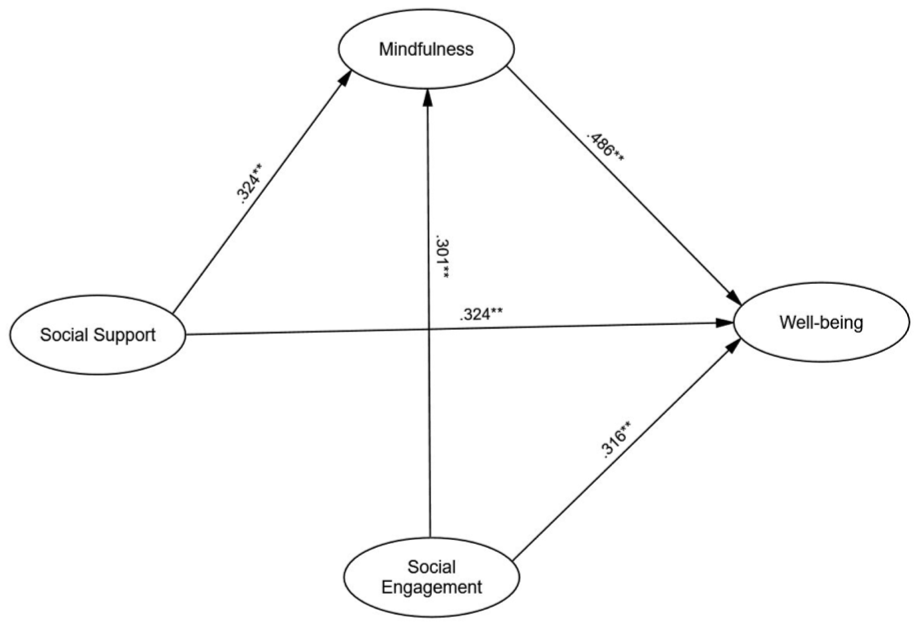
The model of perceived social support, social engagement, mindfulness, and psychological well-being.
The structural model confirmed key hypotheses. Perceived social support significantly and positively predicted psychological well-being (β = .324, SE = .045, p < .001), supporting Hypothesis 1. Social engagement also significantly predicted psychological well-being (β = .316, SE = .047, p < .001), supporting Hypothesis 2. Mindfulness significantly associated with psychological well-being (β = .486, SE = .049, p < .001). Direct effects emphasize the importance of mindfulness, social engagement, and perceived social support in promoting psychological well-being.
To further examine these relationships, mindfulness mediation was tested for perceived social support and social engagement on psychological well-being. Mediation analysis used bootstrapping (5,000 resamples), a robust method for testing indirect effects (Preacher & Hayes, 2008). Analysis confirmed significant mindfulness mediation for both pathways, supporting Hypotheses 3 and 4.
The indirect effect of perceived social support on psychological well-being via mindfulness was significant (β = .13, p < .001), as was social engagement indirect effect (β = .17, p < .001). These findings indicate that mindfulness partially mediates the positive influence of both social support and social engagement on well-being. Enhancements in student mindfulness partly explain why social support and social engagement link to better well-being. Bootstrapped confidence intervals for these indirect effects excluded zero, indicating reliable mediation.
Total effects, combining direct and indirect paths, were also calculated. Social support total effect on well-being was β = .45 (p < .001), and social engagement total effect on well-being was also β = .45 (p < .001). These total effects underscore the combined direct and indirect pathway impact on well-being.
In summary, the structural model indicated social support and engagement as key well-being predictors, directly and through mindfulness. Mindfulness enhances social resource benefits. These findings suggest interventions promoting social connections and mindfulness can effectively support student mental health. The model explained 58% of psychological well-being variance (R2 = .58), highlighting variable importance for student mental health.
Interaction Analysis for Synergistic Effects
To assess the combined effects of perceived social support and social engagement on psychological well-being, hierarchical regression analysis was conducted following established procedures (Aiken & West, 1991). An interaction term was created from centered scores of social support and social engagement. Step 1 included main effects; Step 2 added the interaction term.
Results showed a significant interaction between social support and social engagement (β = .12, p < .01). This indicates that high psychological well-being is associated with the combination of strong social support and active social engagement, more so than with either factor independently. Hierarchical regression results in Table 7 demonstrate that students reporting high levels in both social support and social engagement scored significantly higher on well-being measures compared to those low in one or both.
Hierarchical Regression Analysis Predicting Psychological Well-Being.
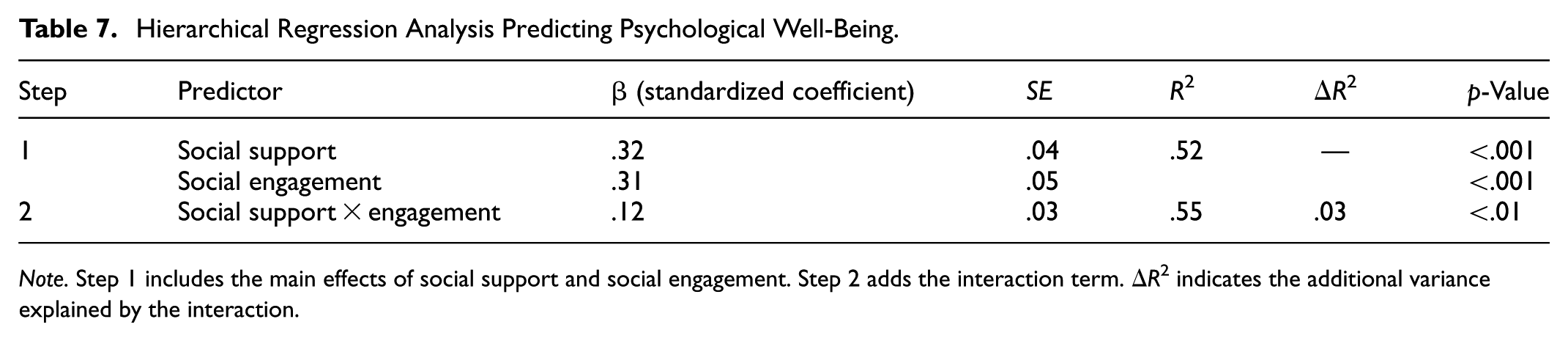
Note. Step 1 includes the main effects of social support and social engagement. Step 2 adds the interaction term. ΔR2 indicates the additional variance explained by the interaction.
These findings underscore the synergistic benefits of emotional support from family and peers combined with active involvement in group activities. This aligns with qualitative data where participants described supportive relationships and meaningful interactions as fostering emotional resilience and stability. The significant interaction term highlights the need for interventions simultaneously enhancing social support and social engagement to amplify their combined impact on student well-being. Future longitudinal research should explore the co-evolution of these factors and examine if mindfulness moderates their combined effects.
Qualitative Results
The qualitative phase explored culturally specific mindfulness and social engagement practices contributing to Chinese university students’ psychological well-being. Thematic analysis of semi-structured interviews revealed core themes on how students manage stress, enhance mindfulness, and foster social connections within their cultural context.
Theme 1: Nature as a Context for Mindfulness
A recurring theme that emerged from the data was the importance of nature as a setting for practicing mindfulness. Thirteen of the fifteen participants highlighted natural environments, such as parks, traditional Chinese gardens, or serene outdoor spaces, as integral to their mindfulness practices. This observation complements our quantitative finding that mindfulness is strongly associated with psychological well-being (r = .57, p < .001), as participants repeatedly noted that natural settings not only helped them achieve a calmer mental state but also served as informal meeting places for friends, thus linking mindfulness to social engagement. Participants found nature conducive to calmer mental states and also as informal social spaces, linking mindfulness to social engagement. Natural settings facilitated clear minds, stress management, and emotional balance, providing space for calm reflection and present moment focus. For instance, one participant described her experience in a nearby park:
I often walk in the park near my university when I feel stressed. The trees, the fresh air, the quiet—it helps me clear my mind and be more present. I notice the small details, like the way the leaves move or how the sunlight filters through the branches, and it calms me down. (Participant 7, female, 21 years old)
Beyond parks, other participants emphasized the specific features of different natural environments that contributed to their mindfulness experiences. For example, one participant discussed the role of traditional Chinese gardens in his mindfulness practice:
When I visit the Chinese garden near my home, the intricate design and peaceful atmosphere make it easier to focus and slow down. The sound of water and the way the plants are arranged really helps me settle my thoughts. (Participant 5, male, 23 years old)
Another participant found mindfulness in less structured outdoor environments:
For me, it’s the simple things, like going to a quiet place in the countryside where I can hear the wind in the trees. It helps me stay grounded and not get lost in stressful thoughts. (Participant 12, female, 20 years old)
Diverse natural settings served as mindfulness catalysts. Participants often visited these places with friends or family, reinforcing quantitative findings that social engagement (β = .316, p < .001) enhances psychological well-being. Mindfulness and social connection intertwined in shared natural settings, reflecting the integrated model suggested by quantitative data. While not always explicitly termed “mindfulness,” present-moment awareness and stress relief principles were consistent.
Theme 2: Mindful Movement Through Tai Chi and Calligraphy
Participants discussed both Tai Chi and calligraphy as effective methods of cultivating mindfulness, though each practice operates on different levels—physical movement and artistic expression. This theme aligns with the quantitative finding that mindfulness mediates the effects of both social support and social engagement on well-being. Participants who practiced Tai Chi or calligraphy often did so in group settings or learned these practices from family members, linking these activities to the social dimensions captured by our quantitative measures. Despite these differences, both practices contributed to emotional regulation and present-moment awareness in ways that helped participants manage stress and anxiety.
Six participants reported practicing Tai Chi, emphasizing how its slow, deliberate movements combined with controlled breathing enabled them to stay grounded and relaxed. Tai Chi was described as a physical embodiment of mindfulness, where focusing on movement and breath allowed participants to disconnect from daily stresses and refocus their attention on the present. One participant shared how Tai Chi helped him during stressful periods:
Tai Chi is more than just exercise. When I focus on the movements and how my body feels with each breath, it helps me stay grounded. My stress fades away as I move slowly and deliberately. It’s like I’m meditating, but with my whole body. (Participant 11, male, 22 years old)
Both male and female participants reported practicing Tai Chi, but slight gender differences in focus emerged. While male participants often emphasized the practice’s utility in managing physical and mental stress during intense academic periods, female participants highlighted the calming effects on their emotional well-being. Participant 9 explained:
When I’m feeling anxious or overwhelmed, Tai Chi helps me regulate my emotions. The slow movements make me feel in control, and focusing on my breath helps me calm down. (Participant 9, female, 20 years old)
Similarly, five participants described calligraphy as a meditative practice that allowed them to slow down and concentrate on the precise, repetitive motions of writing Chinese characters. This artistic practice required full attention to each brushstroke, encouraging present-moment awareness and helping participants regulate their emotions. One participant explained the mindfulness she experienced through calligraphy:
Calligraphy makes me focus on each stroke, and that helps me clear my mind. I slow down and pay attention to the brush in my hand, and as I do that, my thoughts get quieter. It’s very calming, almost like a form of meditation. (Participant 4, female, 20 years old)
Calligraphy was particularly favored by female participants, who found the artistic precision required to be a useful way of calming their thoughts and emotions. The meticulous attention needed for each character fostered a sense of emotional control and a break from the stress of academic life. One participant noted:
Calligraphy forces me to be patient and deliberate. It slows my mind down because I have to be careful with every character I write. By the time I’m done, I feel calmer and more in control. (Participant 13, female, 21 years old)
Despite differences, Tai Chi and calligraphy facilitated mindfulness and emotional regulation by grounding participants in the present. Participants also valued modern mindfulness tools like apps and online programs as complements, especially during busy periods or limited access to traditional practices, suggesting Chinese university students benefit from integrating both traditional and modern mindfulness approaches.
Theme 3: Cultural Values and Social Engagement
The interviews revealed that filial piety and collectivism, key cultural values in Chinese society, played a significant role in how participants engaged with family and peers, which in turn influenced their perceived social support and psychological well-being. However, within this culturally shaped context, participants’ experiences highlighted distinct roles for family-based support and peer-based engagement in fostering different aspects of well-being.
Of the 15 participants, 11 explicitly discussed family-oriented social engagement as a core aspect of their emotional and social support systems. This supports our quantitative result that perceived social support (β = .324, p < .001) is a significant predictor of well-being. Regular communication with family members was often cited as an essential practice rooted in the traditional value of Xiao (filial piety), which emphasizes respect and care for one’s parents and elders. This practice was especially common among students living away from home, who reported that staying in touch with family provided them with emotional stability. For example, Participant 9, a 20-year-old female student, noted:
Even though I am away from home, I talk to my parents every day. It’s a way to stay connected and show respect. My family is my main source of support, and knowing they are there for me makes me feel more grounded.
This quote illustrates how family support, grounded in the cultural value of filial piety, provides a sense of unconditional love and acceptance. This foundation helps students navigate challenges with greater confidence, knowing they have a secure base to return to. Family members were often seen as a source of unwavering support, offering encouragement and reassurance during times of stress or self-doubt. In addition to family connections, participants described how peer relationships and involvement in group activities—such as student clubs, academic group projects, and extracurricular organizations—were central to their social engagement. Ten participants emphasized that these activities fostered a sense of belonging and cooperation, which aligns with the collectivist norms in Chinese culture that stress group harmony and mutual support. Our quantitative findings confirm that social engagement predicts psychological well-being, reinforcing that these culturally shaped interactions work in tandem with the mediating role of mindfulness. Participant 3, a 21-year-old male student, described the sense of fulfillment he derived from participating in academic group projects and student organizations:
I feel like I belong when I participate in group activities with my classmates. We work together, help each other, and it makes me feel connected. In Chinese culture, it’s important to be part of a group, and that gives me a sense of purpose.
This participant’s experience highlights how peer-based engagement, while also reflecting collectivist values, offers a different kind of support. Unlike family relationships, which are often defined by roles and expectations, peer interactions provide a space for exploring shared interests, developing camaraderie, and negotiating a sense of identity within a chosen community. This type of engagement allows students to develop social skills, build confidence, and experience a sense of belonging based on shared goals and interests. Specific group activities varied widely among participants. While some favored formal academic group projects, others highlighted their involvement in student clubs, where they engaged in leisure activities like sports or arts. For example, Participant 12, a 22-year-old male, shared:
Being part of the university’s photography club has been a great way for me to make friends and feel part of a community. We meet regularly to share ideas, and it’s something that keeps me grounded, especially during stressful times.
These qualitative data suggests both family-based support and peer-based engagement are crucial for Chinese university student well-being, fulfilling distinct needs and contributing differently. Family provides security and unconditional love, fostering emotional stability. Peer relationships offer collaboration, shared learning, and belonging within the university.
Theme 4: Traditional and Modern Mindfulness Practices
The data revealed that participants utilized both traditional and modern mindfulness practices, often blending these methods to suit their personal needs. While eight participants engaged in traditional practices such as Tai Chi or calligraphy, six participants also reported using modern, technology-based mindfulness tools like mobile apps and online meditation programs. This finding supports the quantitative model in which mindfulness serves as a key mediator. Participants adapted their mindfulness practices—traditional or modern—not only for their own emotional regulation but also to fit into their social and academic contexts. By doing so, they reinforced the pathways identified quantitatively, where mindfulness, supported by social factors, contributes to psychological well-being. Participant 14, a 22-year-old male, discussed how he integrated both traditional and modern methods into his mindfulness routine:
I use a mindfulness app on my phone, especially during exam periods. It guides me through meditation and helps me focus. I think combining traditional practices like Tai Chi with these modern tools gives me the best of both worlds.
Some participants, particularly those under academic pressure, reported using meditation apps such as Headspace or Calm during exam periods to manage stress and enhance concentration. These tools were valued for their accessibility and flexibility, allowing participants to practice mindfulness on-the-go. Participant 7, a 21-year-old female, explained:
Using an app to meditate is convenient when I’m busy. I can just put on my headphones and listen to a guided session while commuting or between classes. It helps me manage stress and focus on my breathing.
Gender differences in the use of modern mindfulness tools were also observed. Female participants tended to favor apps that provided guided meditation for stress reduction, while male participants were more likely to use tools designed for focus and productivity, especially during periods of intense study. For instance, Participant 5, a 23-year-old male, mentioned:
During exams, I use a productivity app that incorporates mindfulness techniques. It’s not just about relaxation but also about staying focused and efficient.
These examples show how participants navigate and combine various mindfulness practices, drawing from cultural traditions and modern innovations. This flexibility mirrors the multifaceted relationships revealed by our quantitative findings, where mindfulness enhances well-being by working closely with social engagement and social support.
Overall, qualitative analysis underscored culturally specific ways Chinese university students use mindfulness and social relationships to support psychological well-being. By illustrating how participant mindfulness practices and social interactions complement quantitatively identified pathways, qualitative results triangulate and enrich understanding of how social support, social engagement, and mindfulness jointly contribute to psychological well-being. These findings provide rich cultural context broadening quantitative result interpretation, offering a more comprehensive understanding of mechanisms underpinning well-being in this population.
Discussion
This study examined the relationships between perceived social support, social engagement, mindfulness, and psychological well-being among Chinese university students using a mixed-methods approach. The results show both direct and indirect connections between these variables, offering valuable insights into how these factors interact within academic settings, especially in the context of Chinese higher education.
Quantitative analysis showed perceived social support significantly correlates with psychological well-being, directly and indirectly through mindfulness. This supports prior research on social support’s protective role in mental health (Awang et al., 2014; Brunsting et al., 2021; McLean et al., 2023). Consistent with the buffering hypothesis (Cohen & Wills, 1985; Rueger et al., 2016; Rehman et al., 2020), this study suggests social networks help students manage academic stress (Chaudhry et al., 2024), leading to greater life satisfaction, reduced anxiety, and better academic outcomes (Gloria & Robinson Kurpius, 2001; Huang & Zhang, 2022; Warshawski, 2022). Social support fosters belonging and emotional stability, crucial for well-being in demanding university environments (Arslan & Coşkun, 2023; Gopalan & Brady, 2020; Nauffal & Sbeity, 2013).
Qualitative data highlighted family connections as key to emotional stability, with daily family communication frequently cited. This reflects Chinese collectivist values, particularly filial piety, crucial for psychological well-being (Alorani & Alradaydeh, 2018). Strong familial bonds illustrate culturally specific social structures influencing well-being, reinforcing the significance of family support in collectivist societies (Vedder et al., 2005; Yu & Chae, 2020). Within the framework of SDT, these close family ties likely contribute to the satisfaction of students’ relatedness needs, fostering a sense of belonging and connection that supports their well-being (Ryan & Deci, 2017; Niemiec & Ryan, 2009). It is important to consider, however, that the strength of the association between social support and well-being might be moderated by individual differences in the extent to which students adhere to collectivist norms. Students who strongly endorse collectivist values, with their emphasis on interdependence and social harmony, may derive an even greater sense of well-being from strong social ties. Conversely, students who identify more with individualistic values might not experience the same level of benefit from social support (Lam et al., 2016; Markus & Kitayama, 1991).
Additionally, our study found that mindfulness partially mediates the relationship between social support and well-being. This means social support not only directly improves well-being but also enhances mindfulness, which further benefits mental health (Bharti et al., 2023; Lin, 2023; Rehman et al., 2023). Mindfulness promotes emotional regulation and resilience (Antony & Neelakantan, 2024; Baer et al., 2004; Baminiwatta & Solangaarachchi, 2021; Hofmann et al., 2010). Social support may provide a stable environment for students to engage in mindfulness practices (Rehman et al., 2023; Zhang et al., 2021). This aligns with Rehman et al. (2023), who found that social connection and mindfulness together promote well-being. This finding is consistent with SDT’s proposition that mindfulness, with its emphasis on present-moment awareness and non-judgmental acceptance, can enhance self-awareness and self-regulation, contributing to more autonomous functioning and well-being (Brown & Ryan, 2003; Deci & Ryan, 2000; Emerson et al., 2017). Social engagement was also a key predictor of well-being. Active involvement in social activities positively affects mental health, supporting the idea that social engagement fosters belonging and well-being (Fredricks & McColskey, 2012; Wong & Liem, 2022; Wong et al., 2023). Prior research shows that engaged students report better academic performance, satisfaction, and psychological outcomes (King et al., 2021; Pan et al., 2023). Social engagement builds community and purpose, essential for emotional health in academics (Gopalan & Brady, 2020; Cobo-Rendón et al., 2020).
Furthermore, our study shows that social engagement impacts well-being both directly and indirectly through mindfulness. Social activities provide opportunities for students to practice mindfulness, such as being present during interactions (Lin, 2023; Zhang et al., 2019). In collectivist cultures like China, where the emphasis on group harmony encourages individuals to be attuned to the needs and perspectives of others, social engagement may be particularly conducive to developing mindfulness (Derakhshan et al., 2022; Tam et al., 2020). This aligns with research on social engagement and its role in promoting emotional and cognitive engagement, key for academic success and well-being (Gillen-O’Neel, 2021; Pietarinen et al., 2014; Wong et al., 2023). Beyond their individual contributions, this study revealed a significant synergistic effect between social support and social engagement. The interaction analysis showed that students reporting both high perceived social support and active social engagement experienced significantly greater well-being than would be expected from either factor alone (β = .12, p < .01). This suggests that these factors work together to create a particularly supportive environment, fostering emotional security and a sense of belonging. Qualitative data reinforced this finding, with participants emphasizing how supportive relationships and meaningful social interactions contributed to their emotional stability and resilience (McLean et al., 2023; Rehman et al., 2020). These results underscore the importance of interventions that simultaneously enhance social support and engagement to maximize their combined benefits for student well-being.
Our findings highlight mindfulness as a mediator between social support, engagement, and well-being, consistent with its established role in enhancing emotional regulation and stress management (Brown & Ryan, 2003; Kabat-Zinn, 1990; Rehman et al., 2023; Wu et al., 2023). This mediating effect suggests that social support and engagement foster mindfulness, which, in turn, strengthens mental health (Antony & Neelakantan, 2024; Bharti et al., 2023). Qualitative data showed that Chinese university students integrate both traditional and modern mindfulness practices, adapting these approaches to their cultural and personal preferences (Lin, 2023; Zhang et al., 2021). Traditional practices such as Tai Chi and calligraphy were reported to provide holistic, culturally resonant mindfulness experiences. Participants described Tai Chi’s deliberate movements and breath focus as effective for stress management and cultivating calm, echoing its documented well-being benefits (Galante et al., 2016; Wang et al., 2010; Zhang et al., 2021). Similarly, the repetitive, intricate process of calligraphy enabled participants to quiet their minds and achieve present-moment awareness (Keng et al., 2011; Singh et al., 2016; Sumantry & Stewart, 2021).
The participants also valued modern, technology-based mindfulness tools, such as mobile apps and online programs, for their accessibility and convenience, especially during busy periods or when traditional practices were less feasible (Halladay et al., 2019; Lin, 2023). Integrating traditional practices with digital tools could provide a versatile mindfulness repertoire, balancing cultural depth with modern practicality (Bender et al., 2023; Zhang et al., 2019). For example, students might use Tai Chi or calligraphy for deeper mindfulness and apps for quick, daily exercises, reflecting the complementary advantages of each approach (Wu et al., 2023; Zhang et al., 2021). Future research should assess the effectiveness of such combined strategies for promoting well-being among Chinese university students (Antony & Neelakantan, 2024; Lin, 2023).
From a broader cultural perspective, this study also examined how cultural values, like filial piety and collectivism, shape social engagement and well-being among Chinese university students. Our findings reveal that family-oriented and peer-oriented social engagement each contribute to emotional well-being, but in distinct ways. Regular family communication, for instance, provides emotional stability, especially for students living away from home. This aligns with existing research emphasizing the importance of family support in collectivist societies where family is central to well-being (Alorani & Alradaydeh, 2018; Gülaçtı, 2010; Vedder et al., 2005). Indeed, our qualitative data revealed that family often serves as a secure base, providing unconditional love and acceptance that fosters resilience in the face of academic and personal challenges (Arslan & Coşkun, 2023; Cobo-Rendón et al., 2020). This foundation of support allows students to navigate the demands of university life with greater confidence, knowing they have a safe haven to turn to for encouragement and reassurance.
While family provides emotional security, peer relationships and group activities are crucial for belonging, especially in collectivist cultures like China (Demirci, 2020; Pan et al., 2023). Peer engagement extends beyond belonging, offering opportunities for collaboration, shared learning, and social skill development, thus building student confidence and community identity (King et al., 2021). Unlike familial roles, peer interactions enable exploration of shared interests and camaraderie in chosen social contexts. Culturally tailored interventions are important to enhance student well-being. Programs supporting family communication can maintain the benefits of familial ties, while initiatives promoting structured peer engagement, such as clubs and academic collaborations, can foster belonging and social connection within universities (Gillen-O’Neel, 2021; Wong & Liem, 2022). This dual approach—strengthening family support and facilitating peer engagement—can significantly improve psychological well-being by combining emotional security with social integration (Collie, 2022; Reeve et al., 2004). The interaction between social engagement and mindfulness also merits consideration. Family support, through unconditional acceptance, may create a foundation for individual mindfulness development, whereas peer interactions can promote mindful communication and collaboration (Jolly et al., 2021; Rehman et al., 2023). Future research should further examine these dynamics, exploring how different forms of social engagement contribute to mindfulness and well-being across cultures.
Finally, individual adherence to collectivist values varies even within China. Students strongly endorsing collectivist norms may show stronger links between social support and well-being, due to emphasis on interdependence. Conversely, individualistic students might show weaker associations (Lam et al., 2016; Vansteenkiste et al., 2005). Future research should explore these moderating effects by measuring collectivism and examining its influence on the relationships between social support, engagement, mindfulness, and psychological well-being, for a nuanced understanding of cultural factors shaping mental health in diverse student populations.
Implications
The findings of this study have significant implications for educators, mental health professionals, and university administrators working with Chinese university students. Given the observed interplay between social support, social engagement, and mindfulness in promoting psychological well-being, interventions should focus on fostering these interconnected factors through culturally appropriate and sustainable approaches. Rather than relying solely on Western mindfulness programs, such as Mindfulness-Based Stress Reduction (MBSR) and Mindfulness-Based Cognitive Therapy (MBCT; Good et al., 2016), universities should develop culturally adapted mindfulness interventions. Incorporating traditional practices like Tai Chi, calligraphy, and nature-based mindfulness activities can provide students with culturally resonant tools for managing stress and enhancing emotional balance. These practices, as highlighted in this study, are particularly effective in fostering mindfulness and emotional regulation among Chinese students, aligning with their cultural heritage.
To strengthen social support networks, universities could implement family-focused initiatives, such as virtual communication workshops and community events, that enhance family involvement in students’ academic and personal lives. These programs would capitalize on the protective effects of familial ties in collectivist societies, where family serves as a primary source of emotional stability. Similarly, facilitating structured peer-to-peer interactions through student clubs, collaborative academic projects, and community-building activities can promote a sense of belonging and mutual support. Research has consistently shown that such engagement fosters emotional and cognitive well-being (Wong & Liem, 2022).
Hybrid approaches that integrate traditional practices with modern, technology-based interventions also hold promise. For instance, mindfulness apps and online programs can complement traditional activities by offering flexible, accessible solutions during high-stress periods, such as exams. This combination allows students to leverage the grounding effects of traditional mindfulness while benefiting from the convenience of digital tools. By embedding these interventions into ongoing university wellness programs, institutions can create a comprehensive and sustainable mental health framework that supports both academic performance and psychological resilience.
Limitations and Future Research
Future research should investigate the long-term implications of the interplay between social support, social engagement, and mindfulness for Chinese university students’ well-being. Longitudinal studies tracking these factors across key transitional phases, such as the first year of university, graduation, or entry into the workforce, would provide insights into how their combined effects evolve over time (Awang et al., 2014; Vedder et al., 2005). Such research could help refine interventions to address students’ dynamic needs at different stages of their academic journey.
Additionally, future studies should examine how cultural values, such as collectivism, influence the observed relationships. Investigating how these values moderate the effects of mindfulness and social support can enhance the cultural relevance of interventions. Identifying specific elements of traditional mindfulness practices that are particularly beneficial for students could further help in designing culturally sensitive programs. Research should also consider individual and contextual factors, including academic stress, digital competence, and resilience, as potential moderators of the relationships between social support, engagement, mindfulness, and psychological well-being. Examining these interactions could provide a more comprehensive understanding of the dynamics that influence student well-being.
The cross-sectional design of this study is a limitation that restricts causal inferences and assessments of long-term impacts. Future research should adopt longitudinal designs to capture changes in mindfulness, social engagement, and well-being over time. This approach would provide a more nuanced understanding of how these factors interact and influence one another. Including measures of individual differences in collectivist values could further elucidate how cultural factors shape these relationships, addressing gaps in the current study.
Finally, future research should explore how digital mindfulness tools can complement traditional practices. Investigating how students combine technology-based tools with cultural methods may reveal innovative strategies to support mental health in demanding academic environments. Comparing the effectiveness of various interventions would help educators develop evidence-based approaches to enhance student well-being across diverse settings.
Conclusion
In conclusion, this study comprehensively examined relationships between perceived social support, social engagement, mindfulness, and psychological well-being among Chinese university students. Findings emphasize mindfulness as a key direct well-being predictor and mediator of social support and engagement effects. The qualitative phase further highlights culturally specific practices like Tai Chi, calligraphy, and filial piety in shaping these relationships. For universities and mental health practitioners aiming to improve student well-being, interventions incorporating mindfulness training, fostering social connections, and respecting cultural values are crucial for addressing Chinese student mental health needs. These interventions will enhance psychological well-being and contribute to academic success and life satisfaction.
Footnotes

Ethical Considerations
This study was approved by the Institutional Review Board (IRB) of Putian University.
Consent to Participate
All participants provided written informed consent prior to participation, and were assured of the confidentiality and anonymity of their responses. Participation was entirely voluntary, and participants had the right to withdraw from the study at any time without consequence.
Consent for Publication
All authors consent to the publication of this manuscript. Participants were informed that their anonymized data might be used for academic publications, and all agreed to the use of their data for this purpose.
Author Contributions
Lanfeng Zhou led the study design, data collection, and manuscript preparation. Liying Xie contributed to the literature review, data analysis, and qualitative coding. Both authors reviewed and approved the final manuscript.
Funding
The authors received no financial support for the research, authorship, and/or publication of this article.
Declaration of Conflicting Interests
The authors declared no potential conflicts of interest with respect to the research, authorship, and/or publication of this article.
Data Availability Statement
The datasets generated and/or analyzed during the current study are available from the corresponding author on reasonable request. Due to privacy and ethical concerns, the qualitative data (i.e., interview transcripts) will not be publicly available.