




Abstract
A major challenge for managers in the digital economy era is reduce uncertainty. Information interaction capabilities (IICs) have been proposed as an organizational capability that facilitates the creation of value by leveraging uncertainty. This is achieved by assisting managers in the configuration, application, and integration of diverse information interaction resources into novel capabilities within an emerging digital intelligence technology environment. However, due to the elusive nature of IICs, managers may encounter difficulties in creating value in digital economy if they are unable to accurately understand the formation mechanism of IICs. Therefore, we first seek to propose the components of IICs. Specifically, by the Gioia methodology, we identify a set of capabilities of IICs—bianyi capability (triadic mutability capability), self-cognizance capability (introspective capability), contextual empathy capability, and ecosystem orchestration capability. Second, through a longitudinal case analysis of Xiaomi’s evolutionary trajectory—segmented into three distinct phases based on milestone events—we systematically studied the formation mechanism of IICs. Xiaomi has demonstrated a relatively completely and weak IICs since its inception. Through case studies of its evolutionary trajectory, we observe that IICs has progressively evolved and strengthened via four interconnected dimensions, forming a mature and robust IICs. Finally, we explore the impact of IICs on competitive advantages and construct a framework of competitive advantage suitable for an environment of digital economy. The study’s implications for creating value in digital economy environments by revealing components and formation mechanism of IICs are discussed.
Keywords
Introduction
The growth of digital technologies is changing the nature of products, value chains, internal processes and business models, creating new competitive advantages (Bag et al., 2023; Remané et al., 2022). China, a major digital economy market, has a growing number of emerging enterprises adapting to its turbulent business environment. However, traditional businesses are struggling, and incumbent firms must adapt to digital uncertainty through digital transformation. This requires not only new technologies but also the transformation of existing organizational capabilities. Consequently, a key question arises: How can traditional industries build new digital capabilities? Valuable insights may be gained from internet enterprises within the digital economy.
Compared with established manufacturing firms, emerging smart manufacturing companies—leveraging technological superiority—exhibit greater agility, responsiveness to market changes, and ability to meet user needs, thereby creating significant business value more rapidly. For example, Xiaomi Corporation was founded in April 2010 and listed on the Main Board of the Hong Kong Stock Exchange on July 9, 2018 (1810.HK). Xiaomi is a consumer electronics and smart manufacturing company centered on smartphones and smart hardware interconnected via an IoT platform. Despite entering a fiercely competitive Chinese smartphone market, Xiaomi achieved remarkable early growth: within 3 years, its profits surged 135% year-on-year, reaching ¥74.3 billion (approximately $12.1 billion) in 2014, and rapidly attained a $45 billion valuation. However, 5 years post-launch, its smartphone sector experienced a significant decline; annual shipments dropped 36% in 2016, with market share contracting to 8.9%. Through strategic product upgrades, exploration of new retail models, and ecosystem cultivation, Xiaomi reclaimed a position among the global Top 5 smartphone brands by 2017, re-establishing itself as a market leader. Xiaomi has since expanded its core business to include automotive. According to its 2024 performance report, the Group sold 136,854 units of its SU7 series—exceeding Tesla China’s annual sales for calendar year 2024 (approximately 600,000 units). Globally, Xiaomi’s Monthly Active Users (MAU) reached approximately 685.8 million in September 2024. The company has also established the world’s leading consumer AIoT (AI+IoT) platform, connecting approximately 861.4 million smart devices (excluding smartphones, laptops, and tablets) as of September 30, 2024. Recognized as the fastest-growing intelligent manufacturing company, Xiaomi has been listed on the Fortune Global 500 for 6 consecutive years (2019–2024). Xiaomi’s trajectory raises critical questions: How did the company achieve this dramatic turnaround in a hyper-competitive market? Furthermore, what explains the significant competitive advantages exhibited by such emerging enterprises?
Dynamic capability is a key factor driving digital transformation in firms (e.g., Putritamara et al., 2023; Ritter & Pedersen, 2020). Furthermore, big data analytics capabilities (e.g., Mikalef et al., 2019; Pathak et al., 2025) and digital capabilities (e.g., Annarelli et al., 2021; Santana and Díaz-Fernández, 2023) demonstrably impact firm performance and business model innovation. While dynamic capabilities theory remains one of the most influential frameworks in management research (Schilke et al., 2018), its use in explaining competitive advantages of emerging intelligent manufacturing firms has been inconclusive (Mikalef et al., 2018). As noted by Schilke et al. (2018) and Wenzel et al. (2021), “research on dynamic capabilities has advanced considerably since its early years, when most contributions to this literature were purely conceptual.” Nevertheless, the core dynamic capabilities framework, formed at the beginning of this century and rooted in evolutionary economics, has remained essentially unchanged and faces significant challenges in the context of digital innovation (Teece, 2006, 2007, 2014). Traditionally, dynamic capability research focused on fast-moving high-tech sectors like semiconductors, information technology, and software. However, the external environment of today’s companies, driven by rapid technological change, differs markedly from that of traditional IT (McAfee & Brynjolfsson, 2012). Big data, for instance, is characterized by the real-time processing of vast volumes of diverse data, particularly emphasizing interactivity—a distinct departure from traditional information technology paradigms (Varadarajan et al., 2010). Moreover, these characteristics, coupled with heightened levels of business uncertainty (Teece, 2007), further challenge the applicability of the established framework. While scholars like (Teece, 2007, 2014) have refined and advanced dynamic capabilities theory, its fundamental theoretical structure persists. Defined as the ability to integrate, build, and reconfigure resources and capabilities to address changing environments (Eisenhardt & Martin, 2000; Mikalef et al., 2020; Teece, 2007), dynamic capability theory examines how organizations update their capabilities to adapt to external changes and the supporting processes (Lavie, 2006). Firms continuously update resource allocation by scanning the environment and identifying opportunities, but this primarily applies to enhancing existing capabilities (Lavie, 2006). Consequently, slow reactions to technological change can disadvantage incumbent firms (Lavie, 2006). Crucially, the current dynamic capabilities framework fails to adequately distinguish between the capabilities of traditional firms and those of emerging intelligent manufacturing firms. It also falls short in explaining the rapid growth trajectories and sustained competitive advantages of the latter. The digital economy and ongoing digital transformation are blurring and reducing the boundaries between traditional and emerging intelligent manufacturing enterprises. As a result, the theory appears less suited to guiding new intelligent manufacturing enterprises in capability development or assisting traditional firms undergoing digital transformation. The momentum of China’s digital economy is pivotal in this context (Zeng & Glaister, 2018). Many Chinese manufacturing companies have achieved successful digitalization, gaining global competitive advantages. However, current research predominantly focuses on European and American practices, leaving a significant gap in localized Chinese management theory development (Zeng & Glaister, 2018).
Author Sun et al. (2017) defines Information Interaction Capabilities (IICs) as mobilized, deployed and integrated capabilities leveraging various information interaction resources. This definition highlights the importance of: (1) The role of information interaction technology within the digital innovation environment; (2) Positioning IICs as a core competence while adopting a future-oriented strategic mindset; (3) Explicitly linking IICs to competitive advantages, thereby enabling user-centric value co-creation among the firm, value network partners, users, and user communities; (4) Integration of IICs throughout the entire business process. While research on IICs has advanced, establishing a theoretical framework, the dimensions of IICs remain inadequately defined, particularly concerning their micro-level formation mechanisms.
This paper advances research on Information Interaction Capabilities (IICs). It analyzes enterprise capabilities and competitive advantages within the digital economy era, thereby enhancing theoretical understanding of IICs. The paper is organized as follows. We begin with the background of IICs and a review of relevant literature. Next, we employ the Gioia methodology to identify and explore a set of capabilities of IICs. Subsequently, we trace the evolution of Xiaomi Corporation to examine the formation mechanisms of IICs. Third, we construct a novel framework delineating sources of competitive advantage within the digital economy environment and illustrate the impact of IICs on these advantages. Finally, we discuss the findings, present the integrated framework, and outline the theoretical implications.
Research Background
According to information theory, information reduces uncertainty (Shannon, 1948). Quantitatively, information is measured by the reduction in uncertainty achieved before and after its transmission (Shannon, 1948). Information transfer can result in three outcomes: the complete elimination of uncertainty and full acquisition of source information, partial reduction of uncertainty and partial acquisition of source information, or no reduction in uncertainty and no acquisition of source information (Titze, 2023). This fully embodies the core viewpoint that “information interaction capability is a strategic new capability that runs through the whole business process of an enterprise” (Sun et al., 2016, 2017, 2018).
Interaction occurs when two or more entities exchange information. Here, information interaction is defined as a continuous, repeated, and detailed exchange of information among enterprises, users, and value network members, facilitated by new technologies (Toms, 2002). This process aims to minimize information distortion, maximize value-added information, and eliminate uncertainty. Building on this foundation, Sun et al. (2017) conceptualized Information Interaction Capabilities (IICs) as an organization’s ability to configure, apply, and integrate diverse information interaction resources. From a value chain and multi-agent perspective, they proposed a classification system for IICs, developing the construct across four dimensions: R&D and design-oriented IICs, marketing management-oriented IICs, supply chain management-oriented IICs, and evolving IICs. This framework embodies the core proposition that “information interaction capability is a strategic new capability that runs through the entire business process of an enterprise” (Sun et al., 2016, 2017, 2018).
While a theoretical framework for IICs has emerged, research in this domain remains nascent. To advance theoretical understanding, this study will empirically explore and analyze the components and formation mechanisms of IICs.
Research Design
Research Method
To explore the core competences of enterprises in digital economy era, we adopted an in-depth, inductive, single-case study research design (Eisenhardt, 1989; Yin, 1994). As Eisenhardt (1989) and Eisenhardt and Graebner (2007) note, case studies are particularly suited for answering how and why research questions. This approach represents a well-established research strategy for theory building, utilizing rich empirical data from single or multiple cases (Eisenhardt, 1989). While single-case theoretical sampling is methodologically streamlined, its primary strength lies in exploiting unique opportunities to investigate significant, under-explored phenomena—often yielding highly insightful conclusions (Siggelkow, 2007). Given the limited theoretical and empirical foundation regarding the core competences of enterprises in digital economy era, our study is inherently exploratory. Furthermore, considering the nascent state of Information Interaction Capabilities (IICs) as a construct and the early stage of IICs framework development, the single-case methodology is particularly appropriate. This approach is consistently recommended as a robust method for theory building in such contexts (Siggelkow, 2007; Yin, 1994).
We employed inductive logic guided by the Gioia methodology (Corley & Gioia, 2011; Gioia et al., 2013). This approach systematically progresses through distinct analytical phases: (1) Identifying first-order terms; (2) Distilling second-order themes (researcher-derived conceptual groupings); (3) Developing aggregate dimensions (theoretical constructs); (4) Building an integrated data structure. The methodology provides a rigorous visual mapping of the analytical trajectory—from raw data to theoretical concepts—demonstrating methodological transparency and qualitative rigor. Particularly valuable for early-stage conceptualization, the Gioia approach offers a structured yet flexible process for generating new concepts and grounded theories through inductively rigorous qualitative inquiry.
Case Selection
A single-case study design entails in-depth examination of a singular organization, typically selected for its revelatory or paradigmatic characteristics that yield theoretical insights unobtainable from other contexts (Siggelkow, 2007). We selected Xiaomi Corporation as our case subject given its exemplary representation of China’s integrated internet and intelligent manufacturing enterprises.
Xiaomi exemplifies a consumer electronics and smart manufacturing innovator that has strategically developed IICs since its 2010 inception. As a new market entrant, it has seized unique opportunities within China’s digital economy by concentrating and integrating information interaction resources. This trajectory positions Xiaomi as a quintessential case for examining how emerging manufacturers integrate next-generation information technologies to cultivate core competences.
Data Collection
Xiaomi initially ranked among China’s fastest-growing tech startups and now stands as a paradigmatic example of emerging smart manufacturing enterprises. In 2010, as a manufacturing industry newcomer, the company initially selected industry-leading suppliers and production methods. Subsequently, it progressed to upgrading production capabilities through supply chain optimization and process re-engineering. In its third evolutionary phase, Xiaomi advanced to collaborating with manufacturers on joint R&D initiatives, leveraging pre-commercialization technologies to drive process innovation, technological upgrades, and strategic investments in advanced equipment.
Xiaomi’s growth trajectory has attracted significant scholarly and industry attention, yielding extensive publicly accessible interviews and publications. While Eisenhardt (1989), Yin (1994) and Corley and Gioia (2011) acknowledge potential inherent biases in such materials, they affirm their validity as research data when critically analyzed. As Langley (2007) and Yin (2014) argue, publications serve as reliable sources particularly during exploratory theory-building phases for theme refinement. Consequently, we prioritized publications as our primary data source while supplementing them with triangulated evidence from case study archives, corporate documentation, field observations, media reports, and industry analyses.
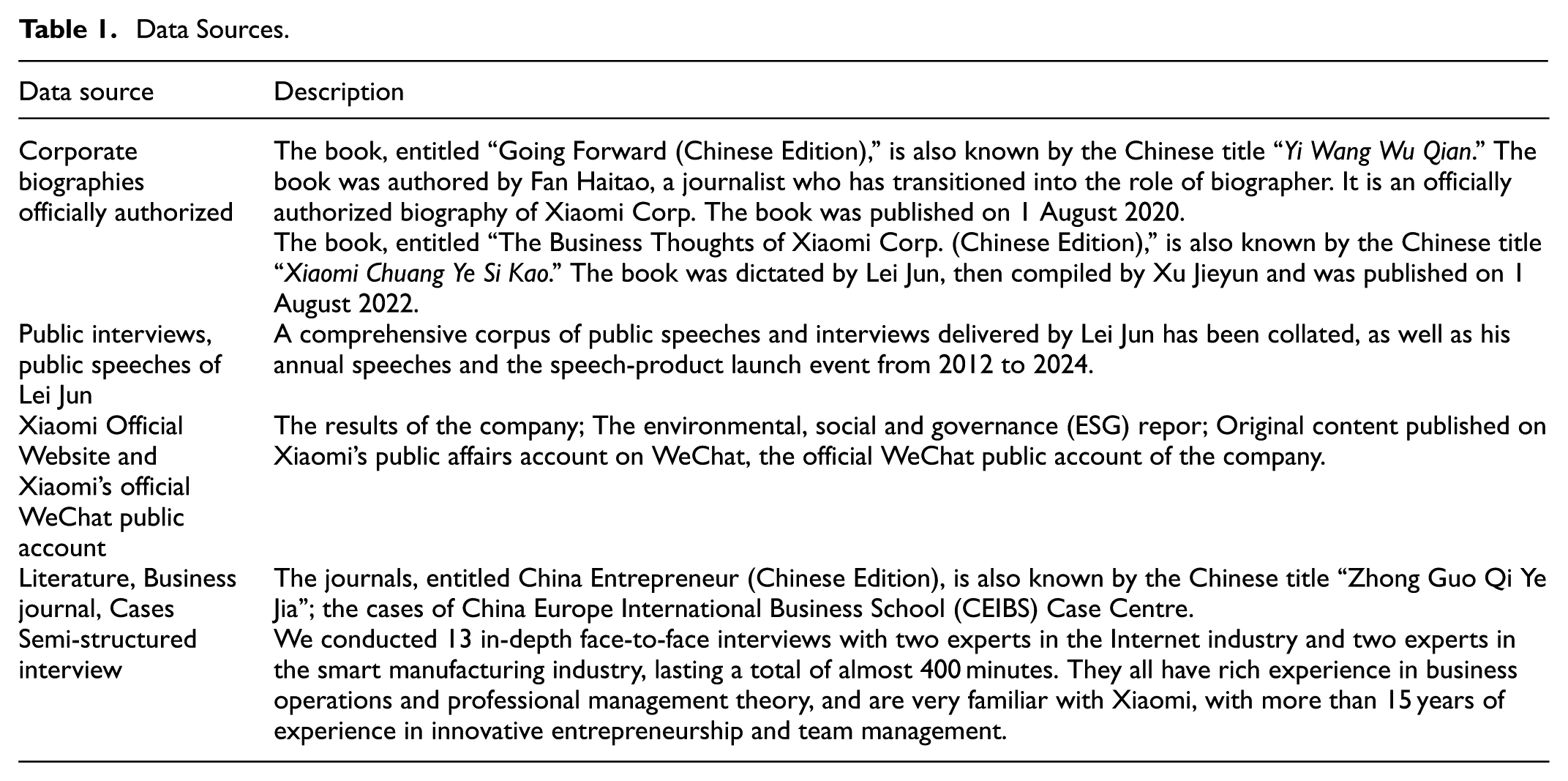
Following iterative analysis of secondary materials, we conducted semi-structured interviews (Table 1). Interviews began by presenting Sun et al.’s IICs framework, then solicited respondents’ perspectives on organizational core competencies. Respondents validated the IICs framework’s applicability while providing both retrospective and real-time accounts of capability development. This multi-source approach enabled rigorous data triangulation, enhancing interpretive validity and theoretical saturation.
Data Sources.
Data Analysis
To ensure internal validity and reliability, we applied Gioia methodology’s procedural coding techniques (Corley & Gioia, 2011). Two strategy management researchers conducted iterative reading and coding through three analytical phases:
First-order analysis: Employing open coding (Gioia et al., 2013), we analyzed public materials (Table 1) to develop preliminary memos using some of the terminology and coding references in the materials (Eisenhardt, 1989). Emergent codes from published sources yielded 39 first-order terms.
Second-order analysis: Conducting axial coding (Gioia et al., 2013), we compared the 39 first-order terms through independent theoretical sampling by both researchers. This multi-level analysis distilled 9 second-order themes.
Aggregate dimension development: Following Gioia et al.’s (2013) approach, researchers iteratively compared themes within theoretical domains, deriving 4 aggregate dimensions. This non-linear process continued until theoretical saturation was achieved.
We constructed a data structure (Table 2) comprising 39 first-order terms, 9 second-order themes, and 4 aggregate dimensions. This empirically derived framework established the theoretical foundation for subsequent analysis (Corley & Gioia, 2011; Glaser, 2002). The relationships between second-order themes and aggregate dimensions are examined in the following sections.
Data Coding of IICs.
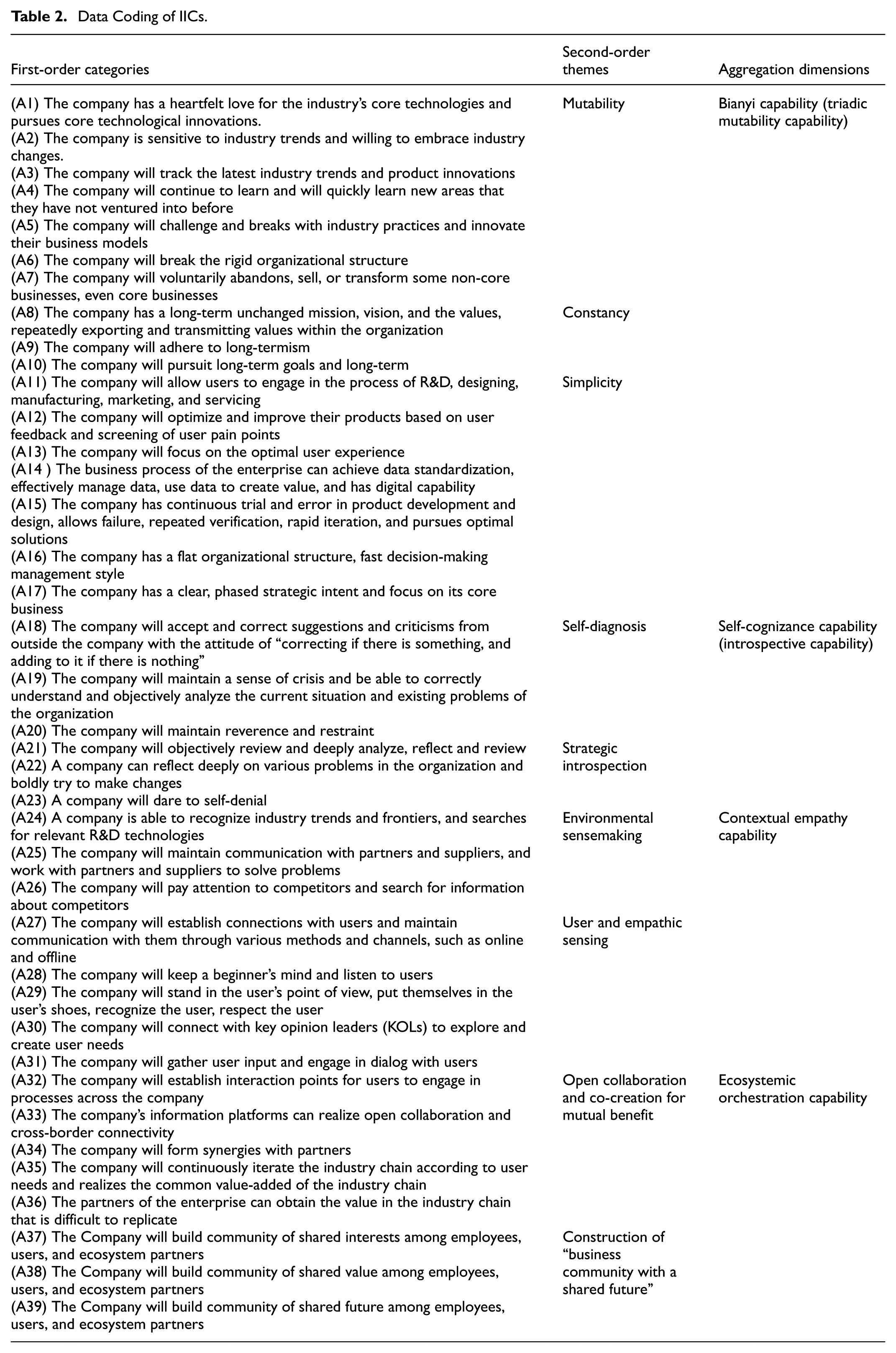
We propose four capabilities of IICs: Bianyi capability (triadic mutability capability), self-cognizance capability (introspective capability), contextual empathy capability, and ecosystemic orchestration capability.
Bianyi capability encompasses mutability, constancy, and simplicity, aligning with Teece’s (2007) dynamic capabilities theory that emphasizes adaptive reconfiguration. “Mutability” embodies innovation, transformation, break through, and renewing. Only through continuous innovation can an enterprise sustain its long-term competitive edge and thrive. Moreover, the founder and Top Management Team (TMT) should demonstrate the courage to challenge and break through established industry conventions, disrupt rigid organizational structures, and drive constant innovation in core technologies, products, and business models. Additionally, they should also dare to proactively divest of, adjust, sell, or transform non-core businesses—and even core businesses when necessary—to ensure strategic agility and long-term viability. “Constancy” serves as a fundamental pillar for enterprises to persevere and stay committed to their strategic course, whether during continuous development and innovation or amid substantial environmental pressures and significant setbacks. More specifically, it is not merely a belief in upholding the mission and core values, but also the strategic intent and organizational structure that ensure this belief is systematically implemented across the organization. The Founders and TMT consistently instill and reinforce organizational values within the organization, guiding organizational behavior with values anchored in the organizational mission. These practices thereby enable the enterprise to uphold and sustain its mission, vision, and values at the organizational level, embrace long-termism, and pursue long-term strategic objectives. When enterprises face high environmental uncertainty, “Simplicity” refers to the ability to transform complex environmental dynamics into simple and implementable approaches, processes, and models. Specifically, this capability encompasses user-centric orientation, engineering-driven thinking, digital proficiency, and agile decision-making.
Self-cognizance capability encompasses an organization’s dual capacities for self-diagnosis and strategic introspection, wherein institutionalized reflective processes determine the accuracy of self-cognition. Self-diagnosis refers to an organization’s ability to maintain crisis awareness, correctly recognize, and objectively analyze its current situation and existing issues. Strategic introspection denotes the organization’s objective review, in-depth analysis, self-examination, and retrospective assessment—processes through which it identifies internal challenges, dares to pursue initiate transformative actions, and demonstrates self-critical renewal. This construct aligns with the adjustment rationale of strategic change within the framework of strategic cognition.
Contextual empathic capability is operationalized as interactive empathy, which integrates the processes of environmental sensemaking with user-centric empathy through dynamic stakeholder interaction mechanisms to enable effective external perception. This integration facilitates not only the perception of environmental cues but also the internalization of user perspectives into organizational cognition, thereby contributing to the enhancement of adaptive decision-making.
Ecosystemic orchestration capability comprises two interrelated dimensions: open collaboration and co-creation for mutual benefit, and construction of “business community with a shared future.” Specifically, open collaboration and co-creation refer to forming a user-centric business ecosystem where enterprises, users, and partners engage in mutualistic symbiosis, aiming to maximize ecosystem-wide value creation and collective interests. Specifically, construction of “business community with a shared future” denotes three hierarchical dimensions: the ability of the company to build “community of shared interests,”“community of shared value,” and “community of shared future” among enterprises, users, employees, and ecosystem partners.
Findings
Xiaomi’s growth trajectory comprises three strategic phases (Figure 1):
Start-up (2010–2014): Established a hardware-software-internet tripartite model through single-product focus and fan community cultivation, initiating IICs development.
Revival & Transformation (2015–2017): Implemented all-channel retail and ecosystem supply chains, enabling scalable adaptation in dynamic markets with maturing IICs.
Rapid Growth (2018–2024): Advanced into smart home ecosystems and smart manufacturing via brand elevation, product diversification, and 5G+AIoT convergence, culminating in strategically mature IICs with higher-order capabilities.

Formation mechanisms of Xiaomi’s IICs.
Accelerated Foundation: IICs Formation in Startup Stage (2010–2014)
In 2010, the golden age of China’s mobile internet was just starting and companies were growing in the Chinese market. Lei Jun saw an opportunity, used his business experience to recruit experts, and founded the Xiaomi Corporation, which adopted internet thinking. The company grew during China’s mobile internet boom. At the start of operations, Xiaomi had significant IICs (see Figure 2).

The model of breakthrough period of Xiaomi’s IICs.
In 2010, during the nascent stage of China’s mobile internet boom, market conditions fostered rapid enterprise growth. Recognizing this strategic opportunity, Lei Jun leveraged his entrepreneurial expertise to assemble a founding team of specialists, establishing Xiaomi Corporation with platform-based business model innovation at its core. The company’s ascent coincided with China’s mobile internet expansion. Notably, from its operational inception, Xiaomi demonstrated strategically significant IICs, establishing a foundational competitive advantage (see Figure 2).
The Formation of Bianyi Capability
During this phase, Xiaomi’s TMT comprised high-caliber professionals exhibiting a strong “Internet of Thinking” mindset. The TMT demonstrated domain-specific expertise alongside rapid learning agility and interdisciplinary competence development. This distinctive combination fostered the organization’s robust Bianyi capability, operationally constituted by three core dimensions: mutability, constancy, and simplicity.
The newly formed TMT exhibited distinctive strengths in self-motivation, industry expertise, shared values, and vision alignment. A quote from the book Going Forward (Fan, 2020, p. 302) states: “The courage to break the norms, the belief in excellence, and Lei Jun’s entrepreneurial spirit that enable the organization to achieve rapid growth.” This demonstrates the organization’s constancy. Concurrently, the organization cultivated exceptional mutability. The TMT adopted “Internet of Thinking” mindset—incomprehensible to traditional enterprises—exemplified by developing MIUI (an Android-based OS) prior to hardware launch. This open-source platform, deployed across smartphones, tablets, and smart TVs, optimized user experience through co-creation with tech-savvy communities. Strategically, the corporation implemented value-driven pricing, loyalty cultivation via product/technology/business model innovation, and user co-development ecosystems. These practices enabled strategic agility (“mutability”), allowing resource reallocation through business portfolio optimization. Simultaneously, simplicity manifested through rapid decision protocols and direct user engagement. This dual focus permitted sustained growth while maintaining operational leanness, epitomizing organizational simplicity.
The Formation of Contextual Empathy Capability and Its Synergy With Bianyi Capability
Xiaomi’s contextual empathy capability emerged from its Bianyi capability, specifically manifesting through technology trajectory projection, policy/market change comprehension, user demand observation, and industrial bottleneck discernment. This capability was rooted in the TMT’s distinctive composition: Lei Jun and founding members were principally engineers and designers with extensive industry experience in product development, design, and management. Their seasoned expertise conferred deep insight into future market trajectories, enabling Lei Jun to systematically identify industrial opportunities through continuous environmental scanning, market trend analysis, strategic investment in volatile sectors, and real-time adaptation to industry disruptions.
Second, systematic user interaction enables Xiaomi to dynamically interpret needs and co-create product enhancements. All engineers actively monitor MIUI forums where users propose system/interface improvements, enabling real-time assessment of user needs. This participatory mechanism enhances Bianyi capability through adaptive response systems and embodies contextual empathy capability via embedded user sensemaking. Their synergistic co-evolution is empirically modeled in the integrated framework.
During its founding phase, Xiaomi demonstrated nascent contextual empathy capability, exemplified through its December 2010 launch of Mi Talk—an early domestic instant messaging application. Though innovative, this venture proved uncompetitive against WeChat. Relative to Tencent, Xiaomi’s technological reserves were inadequate to sustain instant messaging advantages, with Mi Talk’s message delivery reliability failing to ensure stable user experience. As documented in Going Forward (Fan, 2020, p. 99), the organization’s contextual empathy capability remained underdeveloped during this period, requiring systematic cultivation beyond reliance on founders’ individual experience.
Self-Cognizance Capability and Ecosystemic Orchestration Capability in Period of the Rapid Developing IICs Stage
During this phase, the organization’s self-cognizance capability remained nascent. However, explosive growth is the most distinctive characteristic in an early phase. Burgeoning market demand compelled the nascent technology venture to prioritize accelerated growth, precluding systematic self-reflection. Guided by Bianyi capability, Xiaomi’s TMT was dedicated to the firm’s strategic allocation and focused on the current business model with maximum self-control, which represented the company’s self-cognizance capability.
Unlike many internet companies, Xiaomi Corporation has demonstrated comparatively advanced ecosystemic orchestration capability since inception. This manifests in two dimensions:
First, user-centric ecosystem cultivation: The organization institutionalized deep user connections through constant interaction, fostering symbiotic value co-creation. As Going Forward notes: “Xiaomi cultivates fan loyalty while developing Android’s most open OS and premium hardware through persistent user engagement.” Second, strategic ecosystem investment: Capability development occurred through targeted investments in ecological chain enterprises, exemplified in Table 3. These dual mechanisms established robust ecosystem orchestration foundations.
Typical Examples Quoted in Period of Fast Developing IICs.

Reconfiguration: IICs Breakthrough in Revival and Transformation Phase (2015–2017)
Xiaomi formed an IICs during this phase, maintaining strong Bianyi capability and contextual empathy capability, as shown in Figure 3. The eco-chain enterprises were interconnected, gradually forming a system with a “bamboo forest effect,” and ecosystem orchestration capability was significantly enhanced. This transformation occurred after Xiaomi Corporation experienced a low point and subsequent comeback, which led to the development of its self-cognition capability. The role of Bianyi capability triggered breakthroughs in self-cognition capability, ecosystem orchestration capability, and contextual empathy capability. Of particular note are the synergistic effects between Bianyi capability, self-cognition capability, ecosystem orchestration capability, and contextual empathy capability, which together form a comprehensive IICs (Figure 1).

Path analysis of achieving competitive advantage by IICs for Xiaomi.
The Formation of Self-Cognizance Capability and Its Synergy With Bianyi Capability
On December 29, 2014, Xiaomi corporation declared it had raised $1.1 billion in a funding round, valuing the company at $45 billion. Owing to the absence of self-cognition capability, the organization failed to recognize the defects, potential risks, and intense external competition embedded in its rapidly expanding structure. Although IICs developed rapidly during the start-up phase, Xiaomi struggled to address the fierce competition in the smartphone market. As stated in the book Going Forward (Fan, 2020):
In 2015, amidst the intense competition in the mobile phone market, Lei Jun regained his composure. He discerned that the issues plaguing Xiaomi were far from coincidental. These issues encompassed sudden supplier shutdowns, overheating problems of Qualcomm chips, supplier—induced order delivery delays, the Samsung screen supply crisis, and malfunctions of the MI 5 fingerprint sensor. These were not isolated incidents. The company lacked sufficient awareness of risks related to suppliers and new technology development, and it was neither capable of accurately assessing these risks nor effectively mitigating them. Moreover, the team’s understanding of user demands failed to keep up with the rapidly evolving market reality.
It was in this context that Lei Jun, inspired by the spirit of entrepreneurship, became cognizant of the aforementioned issues. A quote from the book “Going Forward” states: “Reviewing the fund-raising round that valued the company at $45 billion, Lei Jun realized they could slide into a ‘strategic mistake’.” He decided to think deeply and evaluate the company. As of 2016, it was focused on Bianyi capability, driven by self-cognizance capability. The combination of Bianyi and self-cognizance capability was starting to become clear (Figure 2).
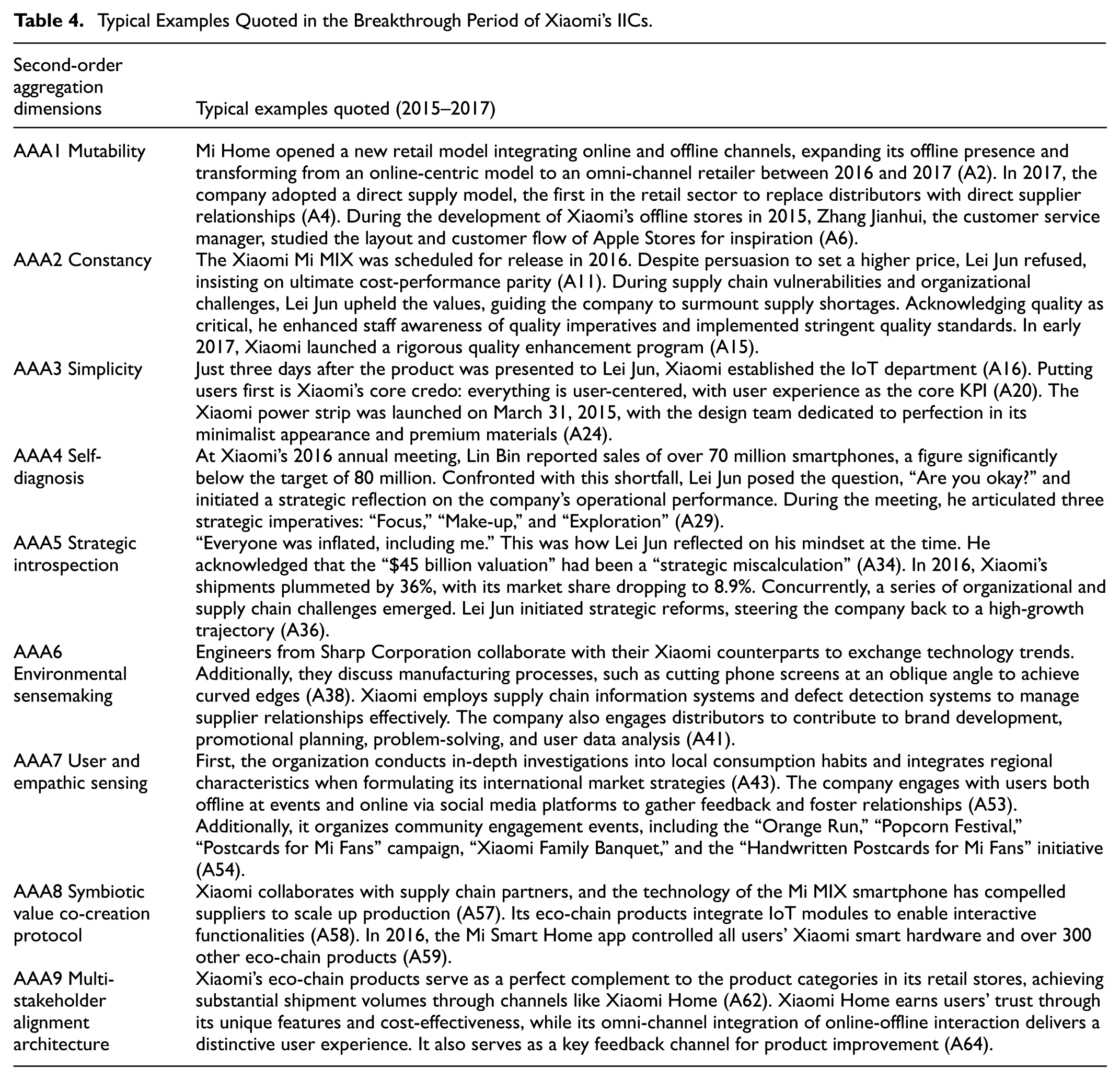
As Xiaomi’s initial development stage was followed by crises, conflicts, and difficulties, its Bianyi capability began to play a pivotal role. First, Lei Jun recognized that the organization could only turn around through profound introspection. As the founder, he was the first to identify internal problems. In his strategic intervention in the smartphone sector, Lei Jun adopted a teamwork-oriented incentive scheme while upholding established corporate values. This approach gradually facilitated the development of self-cognizance capability within the organization. Lei Jun’s awareness of these challenges was inspired by entrepreneurial spirit. As noted in Going Forward (Fan, 2020, p. 170): “Reviewing the $45 billion fundraising round, Lei Jun realized Xiaomi could slide into a ‘strategic mistake’.” He thus initiated a deep evaluation of the company. By 2016, Xiaomi, driven by self-cognizance capability, focused on cultivating Bianyi capability. The synergy between these two capabilities began to emerge (Table 4).
Typical Examples Quoted in the Breakthrough Period of Xiaomi’s IICs.
Contextual Empathy Capability During Revival and Transformation Phase and Its Synergy With Bianyi Capability
During the revival and transformation stage, Xiaomi’s enhanced contextual empathy capability proved crucial for acquiring in-depth supplier insights. The company proactively improved supply chain efficiency by implementing an information system to enhance operational transparency. A defect inspection system was introduced to strengthen quality monitoring in the upstream supply chain, ensuring product quality control from the outset. By contrast, during the startup phase, Xiaomi’s suppliers initially offered only standardized processes. However, as Xiaomi’s competitiveness and market share grew rapidly, suppliers became willing to share the latest mobile hardware technological trends with its engineering team. This collaboration fostered joint exploration of cutting-edge processes, enabling Xiaomi to excel in innovation and enhance its Bianyi capability (Figure 2). Contextual empathy capability also played a pivotal role in Xiaomi’s international expansion. When entering new markets, the company conducted comprehensive studies on local consumption habits and cultural characteristics. Additionally, in developing its online presence, Xiaomi leveraged traffic resources from cross-border e-commerce platforms (e.g., AliExpress and Amazon), capitalizing on its online operation expertise. These strategies facilitated the rapid establishment of the Xiaomi brand on these platforms.
The Formation of Ecosystemic Orchestration Capability and Its Synergy With Bianyi Capability
From the outset, Xiaomi’s strategic initiatives included incubating smart hardware manufacturers, enabled by user connections and strategic investments. This approach culminated in the development of a unique ecosystemic orchestration capability. During the subsequent revival and transformation stage, Xiaomi rapidly built a comprehensive ecosystemic orchestration capability through interlinking its ecological chain firms. Xiaomi’s ecosystem comprised enterprises across diverse hardware categories, all adhering to Xiaomi’s “simplicity” principle—defined by extreme cost-effectiveness and design thinking. As the ecological chain grew, the complementary effects among these enterprises intensified. In 2015, the ecological chain implemented reforms, including a unified cost assessment mechanism, business cooperation agreements, and a centralized procurement system. It also achieved networking and intelligence integration among its enterprises (Figure 2), forming an ecosystem with the “bamboo forest effect” (i.e., collective growth through interconnection). Xiaomi’s technology also drove supplier development. The Xiaomi MIX series prompted suppliers to upgrade manufacturing capabilities and influenced industry trends. Rigorous design standards established a unique MI-Look across ecosystem products, enhancing operational efficiency.
Xiaomi’s offline stores, known as Xiaomi Home, differ from conventional retail models. They generate revenue by offering a wide range of products at competitive prices rather than relying on high markups. By curating numerous items from Xiaomi’s product portfolio to attract customers, integrating online-offline channels, and providing interactive experiences, Xiaomi Home has established itself as a trusted brand, fostering strong customer loyalty.
The Xiaomi Home platform plays a pivotal role in capturing user feedback and insights within Xiaomi’s ecosystem. By connecting online and offline touchpoints, the frequent interactions between users and the enterprise demonstrate the interplay of ecosystem orchestration capability and Bianyi capability.
Strategic Maturation: Advanced IICs Deployment in Rapid Growth Stage (2018–2024)
By the end of 2017, Xiaomi’s business model transformation propelled its smartphones to the top five in global shipments. Under Lei Jun’s leadership, the company regained its position as a global smartphone leader, successfully listing on the Hong Kong Stock Exchange in 2018. From 2019 to 2024, Xiaomi Group was one of the fastest-growing enterprises in the Fortune Global 500 within the “Global Internet and Retail Industry.” The 2024 performance report showed that the Group sold more Xiaomi SU7 units than Tesla China’s annual sales total. Focused on smartphones, automobiles, and smart living, Xiaomi’s IICs (Internet of Intelligent Connected Things) ecosystem (Sun et al., 2017)—supported by its robust system—was poised for rapid growth.
Despite its rapid expansion, Xiaomi faced uncertainties, with past decisions illustrating how its IICs synergized. First, Xiaomi’s cost-approaching pricing strategy reflected its developmental self-restraint and the interplay between Self-cognizance capability and Bianyi capability. Additionally, leveraging its 4G-era experience and industry policy research, Xiaomi decided to discontinue certain flagship products and adjust new product launch frequencies as part of its 5G adaptation strategy. These initiatives enhanced its new technology prediction capabilities, demonstrating how contextual empathy capability influences Bianyi capability.
Xiaomi and its partners have established an interconnected smart living ecosystem centered on mobile phones, a core competitive advantage that exemplifies the synergy sets of capabilities of IICs. Typical cases are documented in Table 5.
Typical Examples Quoted in Xiaomi’s Mature Period IICs.

Path for Competitive Advantages Based on IICs
A firm’s competitive advantage can be measured by its strength and sustainability (Barney, 1991; Grant, 1991). The core objective is to transition from Region I to Region IV, achievable through three distinct paths illustrated in Figure 3.
Xiaomi has successfully transitioned from Path 2 to Path 3. Its R&D-oriented IICs for research and design have shifted focus from micro-innovation to breakthrough and core technology innovation. The Marketing-oriented IICs, originally targeting young consumers, have gradually fostered user loyalty as its user base matured. Meanwhile, supply chain-oriented IICs have evolved from short-term cooperation to cultivating long-term, stable partnerships, as depicted in Figure 3. Collectively, Xiaomi’s IICs-driven competitive strategy has shifted to Path 3 and is strategically advancing toward Region IV. By enhancing its “people-vehicle-home” full ecosystem-oriented IICs, Xiaomi has achieved sustainable competitive advantages—demonstrating both rapid adaptability and consistent growth for long-term success.
Evolution of IICs
This study examines Xiaomi Inc., a Chinese smart manufacturing firm, by dividing its developmental history into three phases based on milestone events. These phases reflect how Xiaomi built its IICs from scratch, maturing and strengthening them into a robust ecosystem. The formation of IICs was found to be a process of interaction between internal and external factors. External drivers of this evolution included interactive information technology, resources, and business objectives—though the latter could be argued as an internal factor. The combined effect of these drivers and external contexts enabled the company’s continuous evolution, leading to its current strength, sustainability, and transition to a new developmental stage. The process is outlined in Figure 4.
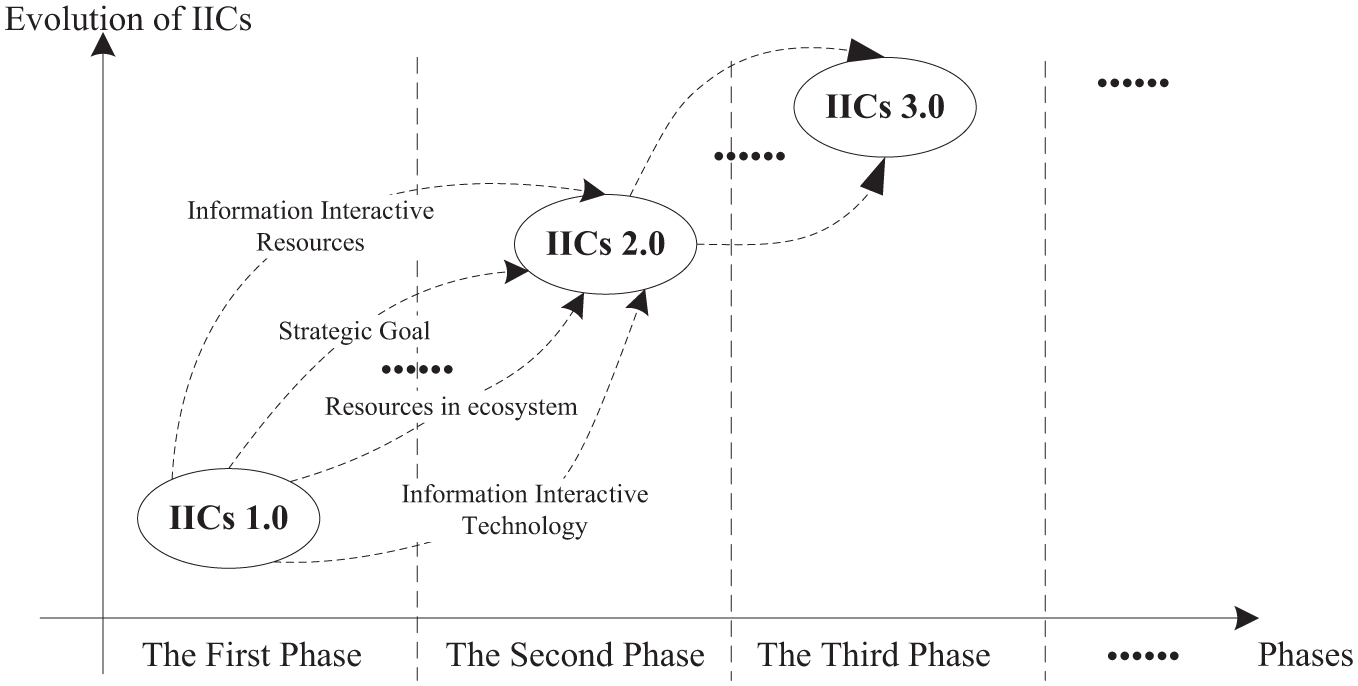
Evolution of IICs.
Case Summary
The case study of Xiaomi demonstrates that a set of capabilities constitute IICs: bianyi capability, self-cognizance capability, contextual empathy capability and ecosystemic orchestration capability. The mechanism through which these capabilities influence competitive advantage is outlined in Table 6. As illustrated in Figure 5, IICs represent a novel source of competitive advantage and a critical antecedent of sustained success in the digital economy. By centering on users and engaging in continuous, iterative, and in-depth information interaction with value network members, IICs enable firms to acquire comprehensive and consistent information. This process minimizes information distortion and discrepancies among users, businesses, and value chain participants, thereby maximizing information value and consistency. Ultimately, IICs help enterprises address their most challenging uncertainties.
The Impact of Bianyi Capability, Self-Cognizance Capability, Contextual Empathy Capability, and Ecosystemic Orchestration Capability on Competitive Advantage.


IICs and its components, competitive advantages.
Bianyi capability is the core of IICs. Self-cognizance capability and Contextual empathy capability form the basis for IICs to obtain information, while Ecosystemic orchestration capability is the goal of IICs. Enterprises develop IICs with the goal of building a harmonious and unified community of values, interests and destiny with employees, users and partners so that everyone can live better, longer and more meaningful lives.
Discussion and Conclusion
Theoretical Implications
This study employs Gioia methodology and a single-case study approach to explore the components and formation mechanism of IICs. This study yields three key findings. First, it proposes the constitutive elements of IICs and identifies a set of IICs (Table 2). Seconds, it explores the formation mechanism of IICs (Figure 5). Third, it constructs a competitive advantage framework tailored to the digital economy, illustrating how IICs influence competitive dynamics (Table 6). The theoretical and practical implications of these findings are elaborated as follows.
This study identifies four capabilities of IICs: bianyi capability, self-cognizance capability, contextual empathy capability, and ecosystemic orchestration capability. Specifically, The construct of “Bianyi capability” draws its theoretical roots from Yi Jing (or I Ching, the book of Changes, which is one of the oldest Chinese classic texts). Bianyi capability integrates the oriental wisdom of embracing flux with modern management theories, systematically integrating the ideas of “bianyi” from the traditional Chinese Philosophy into the research of corporate strategic management. By applying the three core elements (mutability, constancy, and simplicity) to the construction of core competences, we propose that “Bianyi capability” serves as a key component of IICs, whose essence lies in the dynamic balancing capability of “mutability without losing constancy.”Self-cognizance capability refers to an organization’s ability to cognize its own conditions. Through a series of collective activities—including focused attention, forced expression and reflection, promotion and maintenance of interaction, retrospective analysis, and bold changes (Vlaar et al., 2007)—this capability enables rapid internalization of external information, alleviates organizational cognitive burden and stress, and thereby constructs a shared collective mindset within the organization (Weick, 1995). Similar to dynamic capabilities’ emphasis on environmental scanning and opportunity identification (Sun et al., 2017), this study proposes that contextual empathy capability involves insightfully perceiving user needs and the external environment. However, unlike dynamic capabilities, contextual empathy capability emphasizes that enterprises can only achieve timely and accurate acquisition of external information by first establishing empathy with users, partners, and suppliers. Similarly to the concept of ecosystem strategy—where core enterprises in an ecosystem co-create value with multiple partners by constructing their ecosystem (Adner & Kapoor, 2010; Hou & Shi, 2021; Moore, 2006)—this study defines ecosystemic orchestration capability as the ability to achieve open collaboration for mutual benefit and construction of “business community with a shared future.” Notably, this study further proposes that cultivating ecosystemic orchestration capability is a process through which enterprises form communities of shared interests, values, and future with employees, users, and partners. In this process, enterprises can gain sustained competitive advantages and continuously create new value.
This study explores the formation mechanism of IICs through a single-case research approach. The four capabilities of Information Interaction Capabilities (IICs) are not isolated but rather interlinked, mutually reinforcing, and synergistic. As enterprises evolve, these components undergo cyclic iteration, ultimately culminating in the formation of more robust IICs. More specifically, Bianyi capability serves as the core of IICs, with self-cognizance capability and contextual empathy capability constituting the foundation for information acquisition, while ecosystemic orchestration capability embodies the overarching goal of IICs.
This study constructs a research framework to examine the impact of Information Interaction Capabilities (IICs) and its components on competitive advantages. By addressing fundamental questions—such as the new sources of competitive advantage for enterprises in the digital-intelligent technological environment and the pathways to acquire and sustain such competitive advantages—this research significantly enriches the theoretical framework linking IICs to competitive advantage. Through theoretical analysis and a single-case empirical inquiry, this study illuminates the mechanisms by which IICs and its components generate competitive advantage. The findings highlight that synergy among these components is critical for IICs to yield competitive advantages.
Implications for Managers
This study presents novel practical implications for enterprises to attain competitive advantage in the digital economy era. First, Bianyi capability denotes an enterprise’s capability to navigate uncertainties, drive transformative innovation, uphold “mutability without losing constancy,” and simplify complexities. It serves as the linchpin for enhancing market responsiveness, fostering continuous innovation, and maintaining dynamic equilibrium. This capability dictates whether an enterprise should change and the scope of change. Zhang Ruimin, the former CEO of Haier Group, has expounded on the utilization of the principle of “mutability, constancy, and simplicity” in Haier’s management model on multiple occasions. Zhang Ruimin, the former CEO of Haier Group, has elaborated on the application of the “mutability-constancy-simplicity” principle in Haier’s management model on numerous occasions. TMT and core R&D personnel should first nurture an intrinsic passion for core industry technologies, stay attuned to industry trends, and proactively embrace change. Through micro-level practices—such as monitoring cutting-edge industry developments, engaging in continuous learning, and swiftly entering new domains—they can cultivate organizational-level innovation and transformation capabilities. Concurrently, TMT should reinforce organizational values iteratively, guiding behaviors through mission-driven principles. Constancy serves as a foundational pillar, enabling the enterprise to uphold the values amid growth, innovation, or even crises. Our research indicates that in the digital economy era, the ability to transform complex dynamics, forms, and resources into simplicity accelerates the translation of capabilities into competitive advantage—exemplified by user-centric orientation, engineering mindset, digital proficiency, and agile decision-making.
Our studies have demonstrated that self-cognizance capability influences firms’ strategic choices and competitive advantage (Narayanan et al., 2011). Enterprises must sustain a perpetual sense of crisis to accurately appraise and systematically analyze their current state and underlying issues. When confronting external suggestions or criticisms, firms should adopt the principle of “correcting mistakes if any, and remaining vigilant if not”—embracing feedback, implementing improvements, and maintaining humility and restraint. Through the “collective cognition” of organizational identity and the “cognitive structure” embedded in strategic framing—mechanisms through which organizations filter and interpret information (Bogner & Barr, 2000; Nadkarni & Narayanan, 2007)—organizations construct an objective representation of their current reality. This representation dictates how they filter external inputs (e.g., embracing or rejecting criticism) and define strategic boundaries (e.g., business portfolio decisions) (Narayanan et al., 2011). Our research indicates that in the digital economy era, firms must routinely conduct objective retrospectives, engage in reflective learning, and perform post-implementation review—introspecting on organizational challenges and proactively pursuing change, including self-criticism when necessary. Through structured post-implementation review, problem analysis, and iterative adaptation, firms can reflect on operational practices, rapidly internalize external insights, and thereby revise or even transcend existing cognitive schemas (Gavetti & Levinthal, 2000). This process alleviates cognitive overload, mitigates decision-making stress, and fosters a shared collective mindset—strengthening organizational self-cognizance. Notably, when enterprises face crises or unforeseen disruptions, the synergy between Bianyi capability and self-cognizance capability often proves pivotal for successful turnaround (Weick, 1995).
Contextual empathy capability dissolves intra-organizational boundaries, constituting a critical capability for constructing organizational interaction mechanisms (Pavlovich & Krahnke, 2012). Our research demonstrates that fostering communication with partners and cultivating supplier connections enables enterprises to develop joint innovation capabilities and collaborative problem-solving capacities for technical challenges. When suppliers and partners engage in end-to-end processes—including product design, R&D, manufacturing, marketing, and brand building—such participation strengthens long-term collaboration and substantially elevates organization innovation. Establishing user connections—through feedback collection, dialogic engagement, active listening, and user-centric need interpretation—along with nurturing relationships with key opinion leaders (KOLs), not only facilitates deep insights into user demands but also plays a pivotal role in co-creating exceptional user experiences.
Our studies have demonstrated that the ultimate objective of cultivating IICs is to develop communities of shared interests, values, and future—enabling enterprises not only to thrive better and longer but also to thrive with profound organizational purpose. In the digital economy era, enterprises must establish user interaction points throughout the business process and form organic complementary partnerships to generate synergies. An enterprise’s information platform should facilitate open collaboration and cross-sectoral connectivity among diverse partners. By iterating their industry chains in response to user needs, enterprises can drive shared value enhancement across the chain, while partners gain non-replicable value within this ecosystem. The ecosystem co-evolution perspective posits that ecosystems are dynamic communities maintaining open exchange with the external environment (Adner, 2017; Jacobides et al., 2018). They foster continuous innovation through intra-community interactions and sustained environmental engagement (Moore, 2006), while core enterprises guide the construction of a shared vision. In practical, this requires enterprises to cultivate business community with a shared future with employees, users, and partners—thereby enabling value co-creation and sustaining long-term symbiotic relationships.
Conclusion and Future Research
Our study is not without limitations that present fruitful research avenues. The primary constraint is its single-case design focused on Xiaomi. Although Xiaomi’s trajectory is enlightening for studying the formation mechanism of IICs, the inherent limitations of a single-case approach remain.
To address this, future studies could incorporate multi-industry enterprise samples and validate the proposed IICs formation mechanism through multi-case exploratory qualitative designs. Additionally, future research should empirically examine components and mechanisms of IICs through large-scale quantitative studies, advancing theoretical refinement of the framework.
Despite these limitations, we have contributed to a nascent theory of IICs. Our study develops a theoretical framework for examining the impact of IICs and its dimensions on competitive advantages in the digital economy. Within this framework, IICs is a novel source of competitive advantages, comprising bianyi capability, self-cognizance capability, contextual empathy capability, and ecosystemic orchestration capability. Our study investigates the formation mechanism of IICs through a single-case study. The four capabilities of IICs do not operate in isolation; rather, they dynamically interact with one another. Through their dynamic interplay, these capabilities form more robust IICs, enabling firms to sustain competitive advantage and refining our understanding of IICs.
Footnotes
Acknowledgements
We are grateful to the editor and reviewers whose constructive comments have improved the quality of this manuscript considerably.

Ethical Considerations
This article does not contain any studies involving human participants or animals, and therefore ethical approval was not required.
Consent to Participate
Informed consent was not applicable, as the study did not involve the collection or use of any personal, behavioral, or identifiable human data, in accordance with Section 8.05 of the APA Ethical Principles of Psychologists and Code of Conduct.
Funding
The authors disclosed receipt of the following financial support for the research, authorship, and/or publication of this article: This research was supported by Zhejiang Provincial Natural Science Foundation of China under Grant No. LY22G020005, National Natural Science Foundation of China under Grant No. 71962013.
Declaration of Conflicting Interests
The authors declared no potential conflicts of interest with respect to the research, authorship, and/or publication of this article.
Data Availability Statement
The data that support the findings of this study are available from the corresponding author, Lu Sun (