




Abstract
This study aims to explore the adoption of Big Data Analytics (BDA) in manufacturing Small and Medium Enterprises (SMEs) in Saudi Arabia. This adoption is invaluable in developing a competitive edge in the current digital economic landscape. In the face of numerous challenges in the form of limited information and lack of frameworks, this study determines the influencing factors of BDA adoption, classified into technological dimension factors, namely security, compatibility, complexity, and adaptability, organizational dimension actors, namely top management support, relative advantage, IT infrastructure and training, and lastly, environmental dimension factors, namely government IT policies, competency, collaboration, digital transformation tools. The study’s examination is underpinned by the Diffusion of Innovation (DOI) with the support of Technology, Organization and Environment (TOE) model to assess the effect of BDA adoption on the decision-making process of manufacturing SMEs. There were 384 valid responses from the reviewed 435 returned responses and data within was exposed to Partial Least Squares-Structured Equation Modeling (PLS-SEM). The findings from the analysis indicated that the factors had significant effects on BDA adoption, and in turn, the decision-making processes of the SMEs. These findings extend the literature on the BDA adoption, specifically among manufacturing SMEs in Saudi Arabia as it developed, proposed and validated a BDA adoption framework, which SMEs can use for enhancing their decision-making, strategic positioning and market competitive edge. The framework guides and assists in forming policies and practices, promoting the successful and effective BDA use in the Saudi manufacturing SMEs sector.
Keywords
Introduction
In the current digital economic landscape, businesses generally view BDA as a core element to garner data-driven information to reach informed decisions (Li et al., 2022; Shahid & Sheikh, 2021). Specifically, BDA adoption among SMEs marks a transformative phase in achieving enhanced efficiency, innovation and competitiveness (Shahid & Sheikh, 2021). The combination of sophisticated data analysis methods allows SMEs to gain new opportunities for operations optimization, which was impossible with traditional methods that were resource-constrained (Han & Trimi, 2022). BDA adoption among manufacturing SMEs indicates a process that is not confined to data analysis but also trends prediction, streamlined production, and customized products that can satisfy the demands in the marketplace. Accordingly, this study’s examination begins with shedding light on the role of BDA in SMEs to establish the basis of an in-depth study of the challenges and effects of the system adoption. This is crucial in contexts whereby digital advancements are increasingly reforming the trends in the industry (Abuezhayeh et al., 2021; Ali & Essien, 2023; Lutfi et al., 2022; Maroufkhani et al., 2023).
SMEs, especially in the manufacturing sector, face distinct constraints compared to larger enterprises—including limited financial and human resources, lack of in-house technical expertise, and higher vulnerability to market and operational risks (Mukred et al., 2021, 2023). These challenges influence the pace and pattern of BDA adoption. Unlike large corporations with dedicated data science teams and established digital infrastructure, SMEs require more adaptable, resource-efficient solutions (Asiri et al., 2024; Omowole et al., 2024). Therefore, understanding BDA adoption in SMEs necessitates a separate investigation, particularly in emerging economies like Saudi Arabia, where national development agendas increasingly depend on SME participation in digital transformation (Hasnan et al., 2023).
Saudi Arabia is an enriching one to study, particularly its manufacturing SME sector, as such sector greatly contributes to the economic development of the country and its efforts towards diversification (T. Alam et al., 2021; Alaskar et al., 2021). Towards the realization of its Vision 2030, Saudi Arabia needs a strategic framework for how it can veer away from high dependence on oil by shifting towards economic diversification and public service sector development, in which case, digital transformation will have a major role. Within this environment, SMEs in the manufacturing sector can be viewed not merely as economic units but as key players in the nation's transformation. BDA adoption among them involves technological integration as well as alignment with the current national objectives concerning innovation, diversification of the economy, and digital empowerment. The country possesses a distinct landscape for examining BDA adoption, within which traditional business practices and the pressure towards a knowledge-based economic transformation exist (Almutairi, 2021; Hamed & Bohari, 2023).
Additionally, BDA has been hailed as the best technology currently in global businesses. However, empirical studies provided by the developing countries manufacturing SMEs is still lacking (Joubert et al., 2023). Literature primarily deals with major businesses in developed nations, leaving a gap in the distinct challenges and opportunities that SMEs are facing when it comes to BDA adoption in developing nations like Saudi Arabia (Lutfi et al., 2022; Joubert et al., 2023; Maroufkhani et al., 2023). This lack of literature is also compounded by the few studies that tested the technological, organizational and environmental factors affecting the adoption of BDA among SMEs (Aldossari et al., 2023). The increasing development of digital technologies in emerging nations supported by governmental policies and initiatives also contributes to the complex scenario and the dire need to examine the topic. Hence, this study intends to answer the call for more studies to minimize the literature gap by providing empirical findings concerning the factors that influence the adoption of BDA among manufacturing SMEs in Saudi Arabia, and in so doing, contribute an in-depth understanding of the system’s implementation in this particular context.
The main objective of the study is to shed light on the many challenges and drivers in adopting BDA among SMEs in the manufacturing sector of Saudi Arabia because regardless of its acknowledged benefits towards business revolution, decision-making and competitive edge, BDA adoption the manufacturing SMEs in the developing and emerging nations are still under-examined (Alalawneh & Alkhatib, 2021; Ali & Essien, 2023; Joubert et al., 2023; Maroufkhani et al., 2023). The resulting gap in literature highlights a crucial issue on how the Saudi manufacturing SMEs undergo BDA adoption successfully and integrate the system into its operations; and the influencing factors on such an adoption. These issues need to be empirically explored to reap the full benefits of BDA in improving strategies and operations among SMEs. Thus, this study poses three research questions which are (a) What are the key technological, organizational, and environmental factors influencing BDA adoption in Saudi manufacturing SMEs?; (b) How do these factors affect the decision-making processes within the enterprises?; and (c) How do government IT policies and digital transformation tools facilitate BDA adoption in the sector? The questions are directed towards exploring the BDA adoption complexities and clarifying the interconnections among different factors and their effects on the decision-making of manufacturing SMEs.
In order to elucidate how the study achieved the enumerated objectives, this paper is divided into seven parts; this introduction is followed by the literature review, which involves going through the existing relevant studies concerning the topic. This is followed by the methodology section which presents the research design and the employed methods in data collection phase in detail. The fourth section deals with developing the model and the formulation of the study hypotheses and the fifth one enumerates the obtained findings. This is followed by the sixth section, which interprets and discusses the findings in relation to literature. Lastly, the seventh section summarises the contributions and suggestions for future research, and the enumeration of the study’s contributions to theory and practice.
Literature Review
In the academic endeavors that examine BDA adoption among developing nations’ manufacturing SMEs, the corpus reflects a significant niche in the more general digital transformation discourse at the level of the global economy (Alalawneh & Alkhatib, 2021; de Moraes et al., 2022; Joubert et al., 2023). Therefore, in this review of relevant literature section, the purpose is to synthesize antecedent studies through their contributions and limitations to build and modify academic dialogues, particularly with the theoretical underpinning of Diffusion of Innovation (DOI) theory and Technology-Organization-Environment (TOE) model.
In Nasrollahi et al. (2021) foundational study, the authors built an extensive analysis of the digital approaches of SMEs but veered away from the inherent intricacies of BDA in the context of manufacturing sector. The study was conducted in the healthcare sector and examined the BDA adoption determinants, which may differ from that of the manufacturing sector.
In a related study, Lai et al. (2018) adopted TOE with DOI to provide insights into the BDA adoption modalities. Their empirical findings showed that intention towards BDA adoption is affected perceived benefits and top management support, which falls under the organizational dimension. Added to this are the environmental dimension factors, namely competitors’ adoption, government policy and supply chain connectivity, which had a moderating role between the adoption drivers and the adoption intention towards BDA.
In the context of Jordan, Lutfi et al. (2023) emphasized the transformative role of BD in marketing strategies but veered off from the core issues present in the manufacturing sector. Their findings showed that BDA adoption had significant contributions to the decision-making process, albeit it needs to be consistent with the technological capabilities and organizational support infrastructure of the enterprises along with a supporting external environment. The established connection between BDA adoption and enhanced performance further supports the system's role in strategic decision-making, in data-driven sectors for competitive advantages.
Moreover, in Baig et al. (2023) Malaysian study, the authors explored the nuances of BDA adoption in SMEs in the manufacturing sector by using the TOE framework. They proceeded to present key factors, including perceived benefits, technological complexity, organizational resources, management support, and government legislation in supporting BDA’s enhancement of marketing and operations sustainability. Notably, the study stressed the key roles of perceived benefits and management support in adoption success.
Added to the above studies, Al-Dmour et al. (2023) BDA study in Jordanian commercial banks provided insights that the present study can build on. Their study supported the crucial role of a structured framework for success of BDA implementation, within which organizational factors are the top variables. Their study findings showed the need for BDA among enterprises in developing countries and the positive relationship between BDA practices and improved performance of enterprises. Such findings are relevant to this study to support the BDA impact on the Saudi manufacturing SMEs decision-making and efficiency.
In another developing nation’s context, Chatterjee et al. (2023) study examined the BDA effect on decision-making and forecasting with the help of the Resource-Based View and Dynamic Capability View. Their study obtained 366 responses from Indian company representatives, which they exposed to PLS-SEM for analysis. Based on their findings, BDA enhanced the financial and operational performance of Indian firms, regardless of the privacy and security issues. Their findings also underlined the BDA role in improving strategic and operational processes, which is indicative of the role of its adoption in enhanced performance of firms, although they also noted the potential biases stemming from the large dependence on cross-sectional data.
Moreover, Nilashi, Baabdullah et al. (2023) explored the effect of Big Data and Predictive Analytics (BDPA) on the food waste and recycling sector in light of their operational performance and competitive positioning. The authors proposed an innovative framework built on resource-based, TOE and human-organizational theories and analyzed obtained data using PLS-SEM. According to their findings, employee knowledge and competitive pressure exerted top effects on effective BDPA adoption, and such adoption had a significant effect on the firms' competitive advantage, environmental and economic performance. The study contributed to knowledge concerning the strategic use of BDPA in improving organization’s efficiency and competitiveness in the food and waste recycling sector.
Also, the data challenges involved in gauging performance of Sustainable Development Goals (SDGs) was the focus of Nilashi, Baabdullah et al. (2023) study, which stressed the BDPA’s role in handling the challenges. Their study found a literature gap concerning Big Data use as a solution for firms’ cost-effectiveness when evaluating SDG performance. The authors also employed SWOT analysis to clarify the strengths, weaknesses, opportunities and threats and systematically analyse the connection between Big Data and SDG performance. They further brought forward the strategy of using sophisticated methods and tools of BDPA to analyze large and complex data, enhance issues connected to data quality and enhance the oversight of SDG indicators. Their study refined SDG indicators and advancement in monitoring, emphasizing the critical requirement for high quality data for development sustainability.
A thematic synthesis of these studies reveals a recurring emphasis on the interplay of technological readiness, internal organizational support, and enabling external environments as key drivers of BDA adoption. Across contexts—from Malaysian manufacturing (Baig, Yadegaridehkordi & Nizam Bin Md Nasir, 2023) to Jordanian banking (Al-Dmour et al., 2023)—factors like perceived benefits, top management support, security, and policy incentives consistently emerge as critical. However, few studies have examined how these dimensions operate concurrently within a single framework, particularly in the SME manufacturing sector of developing economies. This gap underlines the relevance of combining the Diffusion of Innovation (DOI) theory—which explains how innovations gain traction among adopters—with the Technology-Organization-Environment (TOE) framework that captures contextual and systemic influences. In adopting this dual-theoretical lens, the current study offers a more comprehensive model tailored to Saudi manufacturing SMEs
Building on the above studies and addressing their limitations, this study focuses on the topic of Saudi manufacturing SMEs, owing to the lack of studies in this context. The study classifies the drivers of BDA adoption into technological, organizational and environmental dimensions and combines both DOI and TOE to address the distinct context in a study transcending the generic employment of the models. The study adopts quantitative survey data, to present a holistic view of the BDA role in decision-making process.
Aside from contributing to the topic and extending literature, this study also empirically validates the proposed framework while responding to the call for more studies to be conducted to further validate past empirical findings with accurate findings. It seeks to present insights invaluable to practitioners and policymakers concerning BDA adoption in the SMEs manufacturing sector. A clarified exploration and presentation of BDA adoption phenomenon in the manufacturing SMEs can enhance the enterprises’ decision-making, boosting their market competitiveness in the current digitalized global scenery.
Methodology
This study adopted a quantitative research design to examine BDA adoption in the Saudi manufacturing SMEs. The underpinning theories of the proposed framework consisted of the Diffusion of Innovation (DOI) theory by Rogers (2010) and the Technology, Organization and Environment (TOE) model by Depietro et al. (1990). The former is employed to shed light on the BDA adoption and use as an innovative technology, whereas the latter is adopted as a supporting theory to provide a holistic perspective of the influence of the examined factors (technological, organizational and environmental) on the adoption.
Data was collected using a developed survey distributed to the Saudi manufacturing SMEs employees. The sample was selected using stratified random sampling, ensuring a diverse representation from the sector. The distributed survey using online means obtained high rate of response (from 435 responses, 384 were found valid).
The development of the survey was designed to contain different critical aspect to the study including sections on demographic information and items that measure the employees’ perceptions and experiences of technological factors (i.e., security, compatibility, complexity and adaptability), organizational factors (i.e., top management support, perceived relative advantage, IT infrastructure and training) and finally, environmental factors (i.e., government IT policies, industry competency, collaboration and digital transformation tools).
The study adopted the Partial Least Squares-Structure Equation Modeling (PLS-SEM) as the analysis technique because it is suitable for an exploratory study and its easy handling of complex models (Hair et al., 2023). The analysis was employed to thoroughly assess the measurement model for its reliability and validity, and the structure model for the construct’s relationships. Such robust statistical analysis was used to test the proposed hypotheses regarding the constructs influence over BDA adoption, and the adoption’s effect on the decision-making process of Saudi manufacturing SMEs.
The research process kept ethical considerations in mind from the first to the last step of the research and participants were informed about the objectives of the study and their consent was obtained prior to the initiation. The survey responses were kept confidential, and the respondents’ identities were kept under wraps to meet the established ethical standards of academic research. Table 1 shows the source for the constructs used in this study. The study was designed to minimize any potential harm to participants by ensuring anonymity, confidentiality, and voluntary participation. No sensitive personal data were collected, and participants could withdraw at any time without consequence. Informed consent was obtained before participation, with clear information provided about the study's purpose and data usage. The potential benefits of this research—namely, informing strategies to enhance BDA adoption and decision-making in SMEs—outweigh any minimal risks, as the study promotes technological advancement and policy support for Saudi SMEs.
The Sources for the Questionnaire Constructs.

Research Model and Hypothesis Development
The theoretical foundation of this study is anchored in two established models: The Diffusion of Innovation (DOI) theory by Rogers (2010) and the Technology-Organization-Environment (TOE) framework by Depietro et al. (1990). DOI provides insights into how and why new technologies are adopted by individuals and organizations, emphasizing innovation characteristics such as relative advantage, complexity, and compatibility. Meanwhile, the TOE framework offers a comprehensive lens for understanding technology adoption by examining three key contextual dimensions: technological factors, organizational conditions, and environmental influences. Together, these models offer both behavioral and contextual perspectives, making them well-suited for exploring BDA adoption in Saudi manufacturing SMEs.
Studies dedicated to IT have mostly opted for using the DOI theory to determine the determinants of technology adoption, for several types of technology at the organizational level. In this regard, it has been argued that identifying the determinants of technology adoption will greatly contribute to its implementation success and achieve the organization’s aims and objectives (Tornatzky et al., 1990). SMEs successful adoption of technology significantly affects their competitive edge through enhanced performance (Barney, 1986) and effective decision-making process (Mukred et al., 2021).
The significance of the study framework lies in the specificities of the technology adoption context in a developed nation as underlined by past studies (i.e., Abu-Shanab and Quigley (2010), Y. Y. Yuen et al. (2010), Venkatesh et al. (2012), M. Z. Alam et al. (2020) and Tawiah (2023)). The recognition of the influence of the variables on adopting technology varies from one context to the next, and thus, in this study, the author attempts to develop a tailor-made approach that suits the context of Saudi Arabia.
There are two major phases to developing the framework, namely the theoretical and the model design phases, with the former entailing a thorough review of relevant literature regarding the adoption of BDA, through which the major influencing factors are identified. The factors are divided under three classifications, which are technological, organizational and environmental dimension, with each having a key role in the BDA adoption process.
More specifically, the technological factors include compatibility, complexity, security and adaptability, which are important in their direct relationship to the technical characteristics influencing the user’s behavioral intention towards technology adoption (Nilashi, Baabdullah et al., 2023). These factors were identified according to the reviewed literature findings and the results from the feedback of the experts, obtaining a robust and clarified understanding of the BDA adoption requirements when it comes to technological aspects (Yadegaridehkordi et al., 2020).
Moving on to the organizational context, the focus is placed on the factors within the organization’s environment, where the acceptance, adoption and use of technology take place. This context includes top management support, relative advantage, IT infrastructure, and training, each of which contribute towards facilitating an environment that brings about the IS acceptance and effective use, and in turn, improve the adoption process in the whole organization (Mukred et al., 2023).
The final context, the environmental context, represents the significant influence of external factors on adopting BDA (Yadegaridehkordi et al., 2018, 2020). In this context, the factors include government IT policies, workforce competency, collaborative efforts, and the availability of digital transformation tools. In particular, government policies work as a regulatory oversight that can promote or prevent the process of adoption via the different incentives and compliance requirements established (Aldossari & Mokhtar, 2020) and workforce competency are the skills related to BDA that the workforce has, which dictates the system’s implementation efficiency and use. Moreover, collaboration is the partnerships and networks that play a key role in sharing the resource and solving problems when it comes to BDA, while the sophistication and compatibility of digital transformation tools are those that are currently available in the market and have a hand in the smooth BDA integration with the current processes in the organization.
Combined, the dimensions constitute the proposed research framework core, to provide a clear explanation of the dynamics revolving around BDA adoption among Saudi manufacturing SMEs. The framework is based on academic studies and enriched by practical and sound insights, creating a valuable contribution to the technology adoption field, specifically, in Saudi Arabia, a developing and emerging nation.
The next section details the study variables and discusses the development of the corresponding hypotheses to achieve the study objectives.
Technological Variables
Technology is the employed software and hardware in organizations for tasks completion, which indicates that they are the ICTs that ensure quality, reliability and security. In this BDA study, the examination focuses on four technological factors: security, compatibility, complexity and adaptability.
Based on the reviewed literature, the study proposes the following hypothesis;
H1: Technological factors have a significant relationship with behavioral intention to adopt BDA.
Security
The adoption of BDA calls for the system’s security as a technology variable (Lutfi et al., 2023; Mukred et al., 2022). It refers to the established measures and protocols for data protection against unauthorized access and cybersecurity threats like breaches. Security is of the utmost importance regarding BDA, considering the present technologies are prone to breaches and threats.
BDA security covers several dimensions: data encryption, access control, and the overall integrity of the analytics system. Security contributes to protecting confidential information – information in the large amounts of data the organisation stores (Lutfi et al., 2023). The perception of security or the lack of security can significantly affect the organisation's decision-making, which holds for BDA system adoption.
The perception that the BDA tools are secure would lead to a higher likelihood to trusting and adopting them, and acknowledging that they present valuable information while maintaining data protection (Mukred et al., 2023).
Owing to the above explained important role of security, as a technological factor of BDA adoption, this study hypothesizes that;
H1a: As a technology factor, security has a significant relationship with behavioral intention to adopt BDA.
Compatibility
Another technological factor examined in this study is compatibility in light of adopting BDA system in which it has a crucial role. It is described as the level to which BDA tools and systems are consistent with the current values of the organization, their prior experiences, their needs, and the infrastructure within them. The factor’s importance lies in its direct effect on the BDA integration into the existing operations and processes of the organization (Nilashi, Baabdullah et al., 2023; Verma & Chaurasia, 2019).
The compatibility concept has multiple facets that cover the consistency of BDA tools with the established setups in the organization, its culture and practices and the skills sets and experiences of employees (Lutfi et al., 2022, 2023).
Added to the above, compatibility also shows how BDA solutions can blend well and work together with the data formats and workflows, including the processing and analysis of data gathered and eventually stored in the database. This enhances the use and applicability of the produced analytics information. Based on the above role of computability in the BDA adoption success, this study proposes the following hypothesis for testing;
H1b: Compatibility, as a technological factor, has a significant relationship with the behavioral intention to adopt BDA.
Complexity
The third examined technological factor in this study is complexity and the study focuses on its effect on BDA adoption in organizations, specifically SMEs in Saudi Arabia. This study considers complexity as the difficulty level that the users perceive when understanding or using BDA systems and tools. The importance of this factor lies in its direct influence over which the employees can easily engage with and effectively use BDA in completing their tasks (Nilashi, Baabdullah et al., 2023; Verma & Chaurasia, 2019).
The concept of complexity represents the technical intricacies and nuances of the BDA tools, the degree of expertise needed for their operations, and the perceived challenges involved in their integration into the organisation's workflows. The perception of complexity or problematic use of BDA systems could prevent their adoption because employees would feel overwhelmed by its operations and intimidated by the complex interactions. Consequently, employees would resist adopting BDA systems and solutions (Nilashi, Baabdullah et al., 2023; Verma & Chaurasia, 2019).
On the other hand, a user-friendly BDA system with simplified operations and processes coupled with intuitive interfaces is more likely to be adopted and used effectively. BDA tools accessibility and usability are thus significant in predicting system adoption. Based on the above discussion on the importance of complexity in decision-making process when it comes to adopting BDA, this study proposes that;
H1c: Complexity, as a technological factor, has a significant relationship with the behavioral intention to adopt BDA.
Adaptability
The last examined organizational variable in this study is adaptability, which has a significant role in BDA adoption among SMEs. It is referred to as the BDA tools and systems flexibility and scalability in satisfying the dynamic needs of the organization and the changes in technology advancements. This factor determines BDA solution’s flexibility in business strategies, data volumes, analytics, and technology trends (Bi et al., 2023; Zamani et al., 2023).
Additionally, the adaptability concept also represents the ability of the BDA tools to take on new features, address huge amounts of data, and work seamlessly towards future business directions along with market dynamics. In an evolving environment where data sources, formats, and business objectives constantly change, BDA system adaptability becomes a major determinant of system relevance and long-term usage (Maroufkhani et al., 2020; Zamani et al., 2023). Adaptable BDA tools are invaluable for organizations as sustainable solutions that change with every-changing needs as a result ensure lasting return on investment (Nilashi, Baabdullah et al., 2023).
Furthermore, adaptability of the BDA system also refers to its customizable and configured nature to stay suitable to the organisation's requirements. This covers their ability to change with the data environments, business applications and industry-specific analytics. Owing to the above importance of adaptability in BDA system implementation and continuous use success, this study hypothesizes that;
H1d: As a technological factor, adaptability has a significant relationship with the behavioral intention to adopt BDA.
Organizational Variables
In literature dedicated to IS, IS adoption and IS use have been the leading discussion topics, with studies investigating differing environments at the individual and organizational level using different theoretical models (Ilie et al., 2009).
There is therefore a need to adopt BDA among enterprises and having said this, the organizational factors have a hand in its smooth and efficient adoption and implementation. Under organizational dimension, there are four examined factors, namely management support, relative advantage, IT infrastructure, and training, which are significant in successful BDA adoption.
The study proposes the following hypothesis about organizational factors;
H2: Organizational factors are significantly related to the behavioral intention to adopt BDA.
Top Management Support
Top management support is an important organizational factor contributing to BDA adoption in SMEs. It is described as the commitment and enthusiasm level of management and the resources that they appropriate towards BDA system integration with the present systems and its implementation. This variable reflects how the top management prioritizes the technology adoption; thus, it has a significant influence over the success of new technology initiatives (Maroufkhani et al., 2020).
There are different aspects to this variable, including providing a clear strategic direction, appropriating the required budget and personnel resources and other resources, and promoting culture centered on decision-making based on accurate data. Added to this, top management support entails promoting BDA tools adoption, addressing any possible resistance and ensuring that the system and initiatives are aligned with the objectives of business (Lutfi et al., 2022, 2023).
Moreover, top management's support and involvement are indicative of the importance that top management places on BDA initiatives, which can significantly affect the employees’ attitudes and behaviors (Lai et al., 2018). Top management support and commitment can work towards employees’ inclination towards acknowledging, adopting and using BDA tools, obtaining the required training and using the tools in their daily work (Mukred et al., 2021).
Owing to the influence of top management support on organizational behavior and technology adoption, this study proposes that;
H2a: As an organizational factor, top management support has a significant relationship with behavioral intention to adopt BDA.
Relative Advantage
The second examined organizational factor in this study is relative advantage. It is integral to adopting BDA in organizations, and in turn to the organizations’ decision-making process. This construct is based on the Diffusion of Innovation Theory, which describes the perceived benefits/improvements that BDA adoption can bring to the organization compared to the present technologies in use. It covers the level to which BDA is perceived as more effective and efficient in improving business processes, decision-making quality, operations efficiency and competitive advantage (Lutfi et al., 2022, 2023).
Juxtaposed to the case of BDA, relative advantage covers several perceived benefits like enhanced capabilities of data processing, analytical information, forecasting accuracy and data-driven strategies. Such benefits greatly influence the attitudes of the organization as a whole towards adopting BDA system and tools. In this regard, the recognition and understanding of the relative advantage of BDA in the organization can boost positive behavioral intention towards its adoption. Such recognition would promote higher willingness of decision-makers and workers to trust and invest in, learn and use BDA tools, with the expectation that tangible benefits can be reaped from the outcomes (Verma & Chaurasia, 2019; Verma et al., 2018).
Perceived benefits key role in technology adoption, and in turn, decision-making within enterprises leads this study to propose the following;
H2b: Relative advantage, as an organizational factor, has a significant relationship with the behavioral intention to adopt BDA.
IT Infrastructure
Another examined organizational factor in this study is IT infrastructure. It was evidenced to be a basic aspect in BDA adoption (Lai et al., 2018), covering the organisation's technological frameworks, systems and resources to facilitate smooth BDA implementation and use. The infrastructure generally constitutes hardware (servers and storage systems), software (data processing and analytics applications) and networking capabilities—working towards the collection, storage, analysis and dissemination of data (Maroufkhani et al., 2023; Narwane et al., 2023).
IT infrastructure that is robust, up-to-date, and scalable is important for determining the organisation's readiness and its capability to adopt and reap the advantages of BDA. Along this line of argument, a well-established and advanced IT infrastructure can function as a robust basis for the integration of BDA tools, allowing for the handling and processing of data in an effective way (Lai et al., 2018). In contrast, outdated or ineffective IT infrastructure can hinder the adoption of BDA system through issues such as bottleneck of data, incompatibilities between systems and processes, and insufficient measures for data security and protection (Maroufkhani et al., 2023; Narwane et al., 2023).
Recognizing the key role of IT infrastructure in adopting BDA system and tools has led the study to propose that;
H2c: as an organizational factor, IT infrastructure has a significant relationship with the behavioral intention to adopt BDA.
Training
The fourth organizational factor examined in this study is training, which is crucial for adopting innovative technology like BDA. It is described as the organization’s implemented programs and initiatives to inculcate the skill and knowledge to the workforce regarding how BDA tools and technologies are best used. Employees can be equipped by the required knowledge and skills for BDA system efficient and effective use through training and training can also ensure that the employees know how to extract the highest value from the system and tools (Maroufkhani et al., 2020, 2023).
Training generally involves the provision of educational activities (from fundamental data literacy to advanced analytical skills) and teaching the employees how to use BDA tools while promoting the way data can be useful for strategic decision-making (Wang et al., 2018). This construct significantly influences employees' comfort level with new and innovative technologies, minimises their resistance towards change, and improves their effective application of data in their work completion (Mukred et al., 2021).
The importance of training in the case of BDA lies in its complex and specialized nature and nuances as a result of which, without or lack of training could lead to confused employees who cannot use the tools effectively. In contrast, well-trained employees can adapt and adopt BDA and boost the data-driven transformation of the organization (Verma & Bhattacharyya, 2017; Verma & Chaurasia, 2019).
Owing to the invaluable role of training in successful BDA adoption, this study hypothesizes the following;
H2d: As an organizational factor, training has a significant relationship with the behavioral intention to adopt BDA.
Environmental Variables
The third category of variables constitutes the environmental variables contributing to adopting BDA. Amid today’s data-driven economy and business market, sustainable competitiveness is often obtained from data analytics and SMEs facing high competitiveness may be urged to adopt BDA to obtain and sustain their competitive edge. Studies have highlighted the role of environmental factors in promoting the adoption of technology and innovation (Mukred et al., 2019, 2021; Yadegaridehkordi et al., 2020).
Therefore, with regards to environmental factors, this study proposes that;
H3: Environmental factors are significantly related to the behavioral intention to adopt BDA.
Government IT Policies
The first examined environmental factors in this study is government IT policies, which significantly influence the BDA adoption among SMEs. Such policies are made up of regulations, guidelines, and initiatives established by government entities and they have a direct/indirect influence over IT and data analytics tools implementation and use. They may also include data protection regulations, privacy laws, cybersecurity standards, funding initiatives, tax incentives for investments in technology, and support for the development of digital infrastructure (Aldossari et al., 2023; Alshahrani et al., 2023; Ghaleb et al., 2021).
IT policies that are directed towards supporting government IT policies can enable BDA adoption – this may be exemplified by policies that promote the investments in technological innovation, provision of financial incentives towards such investment, or clear and fair data governance frameworks—all of which can make it easy for organizations to opt for investing in and adopting BDA tools. On the contrary, limited and ambiguous policies can prevent or hinder the adoption, creating issues that are linked to security, compliance and cost (Aldossari & Mokhtar, 2020; Aldossari et al., 2023; Ghaleb et al., 2021).
The influencing role of government IT policies in the adoption of BDA leads this study to propose the following;
H3a: As an environmental factor, government IT policies have a significant relationship with the behavioral intention to adopt BDA.
Competency
The second examined environmental factor in this study is competency and it is described as the collective skills, knowledge and expertise that can be found in the market, specifically that of BDA (Mahesh et al., 2018). This factor is represented by the expertise of the professionals in using BDA tools, their knowledge of complex datasets and the actionable insights that they can derive from data analytics. The competency level in the industry/region can significantly affect the organisation's ability towards BDA, adoption and use in an effective way (Thottoli & Thomas, 2022; K. F. Yuen et al., 2022).
The presence of high competency level in BDA in the labor market can make it easy for organizations to employ or train the workforce with the required skills. Skilled personnel can minimize the issues that prevent the adoption of BDA because organizations can develop teams skilled in effectively using data analytics tools. On the other hand, lack of such competency in the market can be problematic as this could lead to several challenges. Organizations may find it difficult to acquire and develop the needed talent for effective management and interpretation of complex data (Agrawal, 2015; K. F. Yuen et al., 2022).
Because of competency’s importance in BDA implementation and use success, this study hypothesizes the following;
H3b: As an environmental factor, competency has a significant relationship with the behavioral intention to adopt BDA.
Collaboration
As an environmental factor, collaboration plays a key role in BDA adoption it represents the level and nature of cooperative interactions and partnerships among different units (businesses, academic bodies, technology providers and other organizations). Such collaboration can be about knowledge-sharing, resources-sharing or best-practices sharing that revolve around BDA. The collaboration level in the industry/sector can significantly affect the method adopted by the organization in adopting BDA technologies (Hanslo et al., 2019; Safari et al., 2015).
Collaboration effectiveness is reflected through exchange of information, ideas and innovations regarding BDA, and henceforth providing an enriching understanding to the organization concerning the domain. This can result in developing additional analytics solutions, sharing data science experience and obtaining resources for the benefit of all. In a collaborative surrounding, a culture of learning and innovation is often promoted, which facilitates keeping abreast of the dynamic changes in data analytics (Hanslo et al., 2019; Safari et al., 2015).
Contrastingly, lack of or absence of collaboration within a competitive environment with little to no information sharing can prevent the ability of the organization to keep track of the latest BDA developments and the implementation of the same. In addition to assisting in knowledge-sharing and exchange, collaboration also helps address the BDA adoption complexities and challenges (Hanslo et al., 2019; Safari et al., 2015).
Owing to the significant relationship of collaboration in the external environment and technological adoption, specifically BDA, this study hypothesizes that;
H3c: As an environmental factor, collaboration has a significant relationship with the behavioral intention to adopt BDA.
Digital Transformation Assets
Another environmental factor integral to BDA adoption in the current business landscape constitutes the digital transformation assets, represented through tools, technologies, platforms and systems that bring about the organization’s digital transformation. These assets are advanced data analytics software, cloud computing resources, IoT (Internet of Things) devices, AI (Artificial Intelligence) technologies, and digital tools that collect, process, and analyze large amounts of data sets. These digital transformation assets can significantly affect the firm's capability and inclination towards BDA adoption (Capestro et al., 2024; Hassani & Babazadeh Sangar, 2024).
In the current environment which readily provides advanced digital transformation assets that are ever-evolving, organizations can easily opt for BDA because the assets facilitate the required technological basis for the effective use of big data and offers scalable solutions for the management and analysis of significant amounts of information. The tools sophistication and interoperability can lead to improved ability to insert BDA into the operations to reach more informed decisions and to obtain strategic information (Van Dyk & Van Belle, 2019).
On the other hand, lack or the absence of advanced digital transformation assets can prevent the smooth adoption of BDA. The obstructions may arise in the difficulty in searching for appropriate tools suitable for specific data needs or in integrating new technologies into the present IT infrastructure (Van Dyk & Van Belle, 2019).
Based on the importance of the digital transformation assets as an environmental variable that influences BDA adoption, this study proposes the following hypothesis for testing;
H3d: Digital transformation assets, as an environmental factor, have a significant relationship with the behavioral intention to adopt BDA.
Intention to Use/Adopt BDA
Intention to use or adopt refers to the user’s intention to use or adopt new technology (Schaper & Pervan, 2007). The user will have a higher possibility of using a system if he intends to use it; thus, such intention determines the possible use and adoption of the system.
In this study, this variable is considered as the user’s inclination towards and the planned effort to be exerted towards performing a behavior (Ajzen, 1991).
Studies concerning new technologies integration/adoption success in organizations have largely depended on the users' acceptance (Venkatesh et al., 2003; Zhou et al., 2015). In the case of BDA adoption in developing and emerging countries, based on past studies (i.e., Mahbub, 2012; Quintas et al., 2011; Qureshi and Syed, 2014; Rantanen et al., 2018), several factors have a significant influence over adopting technology in SMEs and they are, intention to adopt, acceptance of the user, satisfaction, attitudes, common beliefs, perceptions, reluctance and resistance towards new technologies. This validates the importance of identifying the determinants of attitudes and acceptance of technology to address the barriers that prevent such acceptance and its actual use (Mukred et al., 2023).
Added to the above, intention towards technology adoption needs to be studied in different contexts, based on different categories of factors (technological, organizational and environmental), and its influence on decision making (Mukred et al., 2023).
Studies of this caliber revealed that using DBA has become a popular trend in the livestock industry and in the decision-making of industries (Al-Dmour et al., 2023; Chatterjee et al., 2023; Li et al., 2022; Maroufkhani et al., 2023; Mukred et al., 2021; Nilashi, Baabdullah et al., 2023; Shahid & Sheikh, 2021) and as such, this study proposes that;
H4: The behavioral intention to adopt BDA has a significant relationship with its actual adoption.
The main focus of this study is to investigate the intention towards BDA adoption and the influence of technological, organizational and environmental factors on it. This is consistent with the assumptions of DOI and TOE. The study provides a clear picture of the factors influencing the adoption of BDA and in turn, the influence on the decision-making of SMEs (refer to Figure 1). The developed framework identifies the way the factors influence BDA adoption and improve decision-making among manufacturing SMEs in Saudi Arabia. The study’s objective is to extend literature in the field using a taxonomy that categorizes factors and facilitates the identification, categorization and examination of factors relationships.

Conceptual framework with hypothesis.
Past empirical findings supported the role of factors in driving behavioral intention towards adopting BDA and as such, this study extends past literature by adopting DOI and TOE as underpinning theories to determine the influence of the factors in BDA adoption success/failure. The technological and organizational factors were obtained from TOE, while the environmental factors were added to provide a holistic point of view to the process of BDA adoption. Figure 1 shows the developed framework for the BDA adoption among Saudi manufacturing SMEs.
Results
There are four parts to this section, namely demographic findings, measurement model, structural model, and coefficients and hypothesis testing, with every part having a critical role in explaining different research aspects, beginning from the demographic characteristics of the respondents to the reliability, validity of the model and the interconnections among different factors in light of their influence on the adoption of BDA.
Demographic Findings
The sample respondents appear to form a combination of different genders, age levels, education, job roles and levels of experience, albeit there are more male respondents and majority of the respondents were from the 30 to 40 age group. Data indicates that the respondents are well-educated, which is a positive indicator of their understanding of data analytics implementation, and they are predominantly from the ICT staff, which is suitable considering the technical knowledge and skills required for BDA adoption. They have occupied different job roles and hold different levels of experience that can provide clear perceptions of BDA and its usage in different functions and level of experience positions in Saudi manufacturing SMEs as seen in Table 2.
Demographic Information of the Respondents.

Measurement Model
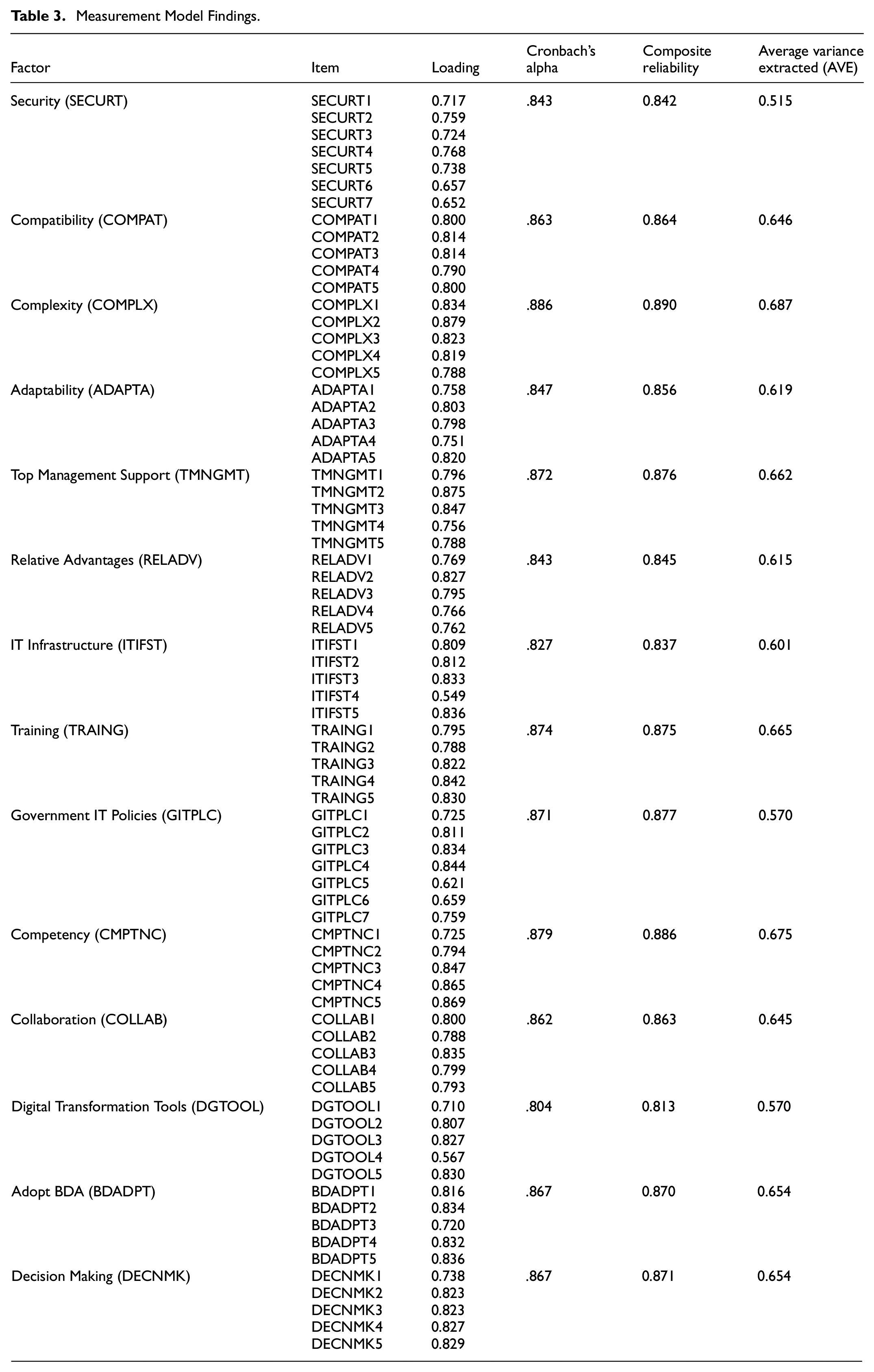
According to (Hair et al., 2017), reflective measurement models are evaluated based on their consistency, reliability and validity, and in this study, Table 3 shows that all the constructs loaded above the recommended thresholds proposed by Hair et al. (2009), which shows that the model has a good internal consistency level. The findings in this section are presented in Figure 2 and tabulated in Table 3.
Measurement Model Findings.

Measurement model.
To demonstrate the validity and reliability of the data collection instrument, standard tests were applied. Internal consistency reliability was confirmed through Cronbach’s alpha and composite reliability, with all constructs exceeding the recommended .7 threshold. Convergent validity was established as all factor loadings were above 0.7 and Average Variance Extracted (AVE) values surpassed .5. Discriminant validity was confirmed using both the Fornell-Larcker criterion and HTMT ratio, as shown in Tables 4 and 5. These results collectively validate the robustness of the instrument and its suitability for assessing BDA adoption and decision-making in the studied context.
Discriminant Validity.

Results of Discriminant Validity by HTMT.

The study constructs internal consistency reliability was analyzed using Cronbach’s alpha and composite reliability as shown in Tables 3 to 5. Based on the findings, the values of the former ranged from .804 to .886, whereas the latter's values ranged from .813 to .890. The obtained values fell within the accepted values higher than .7, which indicates that internal consistency of the model is excellent. The items are highly correlated and consistent in measuring the same underlying concept. This robust internal consistency throughout the constructs supports the reliability of the constructs and the items effectiveness in measuring the BDA aspects.
Moving on to convergent validity, this type of validity was analyzed using Average Variance Extracted (AVE) for each studied constructs, and the values ranged from .515 to .687, which all exceeded the least threshold of .50. The results show that the considerable part of the variance in the responses is explained by the constructs they are meant to measure. High values of AVE throughout constructs are indicative of good convergent validity, which means that the items in the constructs were effective in measuring the same underlying concept. This convergent validity level supports definitions of the constructs and the effectiveness of the items categorized for each construct.
Another validity analyzed in this study is the discriminant validity and it entails comparing each construct’s AVE and the squared inter-construct interrelations. Sufficient discriminant validity is confirmed if the AVE values of each construct exceed their squared correlation with any other construct. Owing to the high AVE values obtained in this study, there is a good likelihood that the constructs had sufficient discriminant validity level, albeit confirmation from a direct analysis of the inter-construct correlations is needed. The confirmation of discriminant validity of the constructs shows that each of the study constructs is distinct in capturing the BDA aspect it is meant to in comparison to other model constructs.
The path model details are represented in the structural model (Hair et al., 2021) and so through the evaluation of the structural model, the level to which the concepts in the research framework align with empirical data can be determined (Hair et al., 2023). The structural model results are presented in Figure 3.

Structural model.
The table containing the collinearity results for BDA Adoption (BDADPT) and decision-making (DECNMK) shows results that confirm the independence of the studied variables. Based on the Variance Inflation Factor (VIF) values (see Table 6), which all fall within acceptable limits for the independent variables, multicollinearity is not an issue. VIF values of 1 were obtained for security (SECURT), compatibility (COMPAT), complexity (COMPLX) and others, which confirms the absence of collinearity issues. Moreover, for top management support (TMNGMT) and government IT policies (GIPLC), the values of VIF are higher (3.231 and 2.432 respectively). However, they are still within the threshold of 5 or 10, which means that collinearity present is not significant to be an issue in regression analysis. This result validates the findings integrity and confirms the independent variables' effect on BDADPT and DECNMK can be confidently interpreted as there is no issue in inter-variable correlation.
Multicollinearity Test via Variance Inflation Factor (VIF).

The results of Coefficients of Determination (R 2) clearly show the constructs influence on BDADPT and DECNMK (refer to Table 7). In particular, the relationship between TOE constructs and BDADPT obtained (R 2) value of 3.82 means that around 38.2% of the variation in the latter is explained by the former. This result showed a moderate explanatory power and significant but not exclusive influence of the constructs on BDADPT. Also, BDADPT’s influence on DECNMK obtained (R 2) value of .293 means that 29.3% of the variance in decision-making is explained by BDA adoption. This is indicative of a significant but not overwhelming influence of BDA adoption on the process of decision-making—in other words, other additional factors play a major role in the formulation and execution of decisions in the SMEs.
Coefficient of Determination Result R 2.

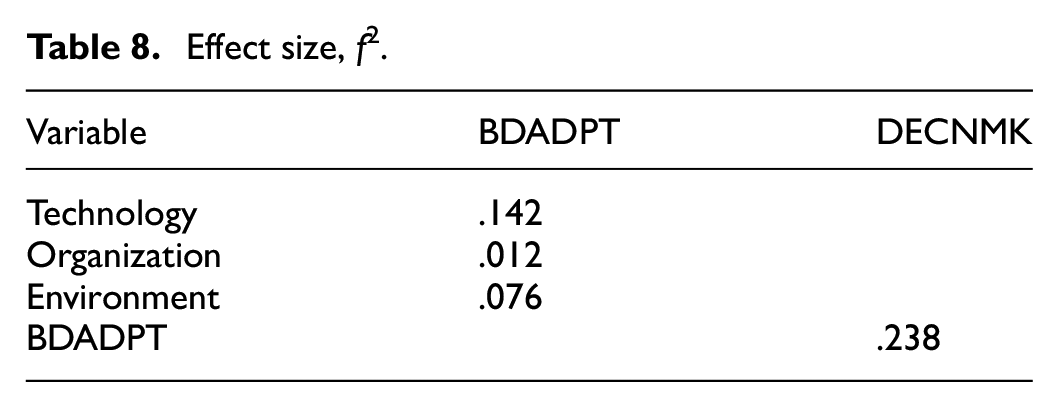
The findings concerning effect size (f 2) values show a detailed picture of the influence of the examined factors on BDA adoption and decision making. More specifically, technology has a moderate effect on adoption (f 2 = .142), which shows a significant influence over the adoption. Contrastingly, organization has the least impact at (f 2 = .012), which shows that although organizational factors hold relevance, they are the major drivers of BDA adoption. As for environmental factors, it has a small to moderate influence (f 2 = .076) on BDA adoption. It is worth noting that BDA adoption significantly influences decision-making (f 2 = .238), highlighting the role of BDA adoption in enhancing the decision-making process among SMEs in Saudi Arabia. Overall, the findings showcase the distinct effects of factors on BDA adoption, and in turn, the adoption’s effect on the SMEs decision-making process (see Table 8).
Effect size, f 2.
Coefficients and Hypotheses Testing
The study applied the Structural Path Analysis to determine the influence of the factors on BDA adoption and in turn, the adoption’s influence on decision making. Based on the analysis findings, technological factors, namely security (SECURT), compatibility (COMPAT), complexity (COMPLX) and adaptability (ADAPTA) had significant effect on BDA adoption, with security having the highest influence. As for the organizational factors, namely top management support (TMNGMT), relative advantage (RELADV), IT infrastructure (ITIFST), and training (TRAING), also had significant effect on the adoption, which supports the key role of internal organizational factors. Moreover, environmental factors, namely government IT policies (GITPLC), competency (CMPTNC), collaboration (COLLAB), and digital transformation tools (DGTOOL), illustrated a significant relationship with BDA adoption. It is noteworthy that the factors considerable direct effect on BDA adoption and in turn, decision making, emphasized the role of BDA in directing successful decision-making in manufacturing Saudi SMEs. The overall findings confirm the multiple and interrelated nature of the determinants of BDA adoption and the role of such adoption in the decision-making process of Saudi SMEs as seen in Table 9.
Structural Path Analysis Result and Hypothesis.

Discussions and Interpretation of Findings
The understanding of the determinants of BDA adoption is supported by this study while providing novel insights to Saudi manufacturing SMEs. Based on the significant effect of technological readiness, organizational support, and environmental factors in BDA adoption success, and the adoption’s effect on decision-making of Saudi SMEs, practitioners and policymakers can take the necessary steps in the sector. The study findings highlight the need for strategic planning and resource allocation to achieve BDA initiatives, and eventually contributing to the digital transformation of Saudi manufacturing SMEs. The demographic profile of respondents, particularly the high proportion of ICT staff and the concentration of respondents with bachelor's and master's degrees, helps contextualize the study’s findings. These groups are more likely to possess the technical awareness and digital readiness that support positive attitudes toward BDA adoption. Additionally, the prevalence of employees with 4 to 10 years of experience suggests a workforce mature enough to recognize the value of structured decision-making tools yet adaptable enough to embrace digital transformation. These characteristics may partially explain the strong influence of organizational factors—such as training and top management support—on BDA adoption, reinforcing the importance of targeted managerial strategies based on workforce composition
This study supports the findings from past studies concerning the importance of technological factors in adopting BDA, with security having the highest influence. The study findings in this regard are consistent with those reported by Mukred et al. (2022) and Lutfi et al. (2023), who revealed the paramount role of security in adopting BDA. On a similar note, past studies also found compatibility, complexity and adaptability to have significant roles on BDA adoption (i.e., Bi et al., 2023; Nilashi et al., 2023; Verma & Chaurasia, 2019; Zamani et al., 2023)—these studies found the above mentioned factors as major technology adoption determinants. This understanding is extended by this study in light of Saudi manufacturing SMEs, a sector characterized by a distinct technological readiness.
Moreover, this study’s simultaneous examination of organizational and environmental factors presents a novel picture of the BDA adoption determinants in Saudi manufacturing SMEs. The adopted approach assists in clarifying the interrelationships between the internal and external factors and their effects on the adoption.
To begin with, the relevance of organizational factors, namely top management support and training was consistent with the findings reported by Lutfi et al. (2023) who highlighted the need for internal support and capability development for technology integration success. This study takes it further by measuring the effect of the factors, thereby clarifying their relative importance in the SMEs context. Such measurement marks a significant contribution as it prioritizes the areas that need intervention and the establishment of policies. This may be exemplified by the significant role of security in SMEs which implies the dire need to support data security measures for successful adoption of BDA. The significant role of IT infrastructure in BDA adoption can be seen in the context of Saudi Arabia’s ongoing investment in Industry 4.0 technologies, where advanced ERP systems and cloud-based platforms are being increasingly adopted in manufacturing clusters. Similarly, the relevance of training aligns with recent national programs like the Human Capability Development Program under Vision 2030, which emphasizes data literacy and digital skills among industrial employees. Moreover, the influence of security concerns echoes global trends in cybersecurity investment, especially in sectors handling proprietary industrial data. These examples underscore the real-world technological shifts that contextualize and support the empirical findings of this study.
As for environmental factors (government IT policies and collaboration) significant influence, this agrees with literature on innovation adoption by Safari et al. (2015), Hanslo et al. (2019), Aldossari and Mokhtar (2020), Alshahrani et al. (2023) underscoring the role of external pressure and support systems in developing organizational strategies, information which can assist SMEs, particularly when they are in the midst of dynamic markets.
Notably, this study’s focus on Saudi manufacturing SMEs contributes towards minimizing the literature gap, as past studies primarily dealt with large-sized organizations with differing challenges and resources from those of SMEs.
Finally, the direct influence of BDA adoption on the SMEs decision-making process is also a new contribution, highlighting the potential of BDA in enhancing the enterprises’ decision-making—what appears to be a topic under-examined in literature.
The statistical analysis confirms the critical role of all three dimensions—technology, organization, and environment—in shaping BDA adoption decisions. Technological factors such as security and complexity were among the most influential, indicating the sector’s concern for data protection and system usability. Organizational elements, particularly training and top management support, underscore the necessity of internal capacity-building and leadership commitment. Meanwhile, environmental factors like government IT policies and digital transformation tools show that external infrastructure and regulatory encouragement are essential to foster innovation adoption. Together, these findings validate the TOE framework’s holistic view and confirm that successful BDA adoption in SMEs requires the alignment of internal readiness with external support mechanisms.
The findings of this study align with and diverge from global trends observed in other developing economies. For instance, the influence of top management support and perceived relative advantage on BDA adoption in Saudi SMEs mirrors results from Malaysian studies that emphasize internal leadership and resource readiness (Baig, Yadegaridehkordi & Nizam Bin Md Nasir, 2023). Similarly, Jordanian research by Lutfi et al. (2023) underscores the role of organizational infrastructure and government policy, which is echoed in our study's findings. However, unlike studies from India (Chatterjee et al., 2023) that emphasize market competition and customer orientation as primary drivers, Saudi SMEs face distinct institutional and regulatory influences shaped by Vision 2030 and national digitization policies. This divergence highlights the unique socio-political context of Saudi Arabia in shaping BDA adoption and reinforces the necessity for localized frameworks tailored to national priorities and sector-specific constraints
Conclusion
This study bridges a significant research gap by proposing and validating an integrated framework for BDA adoption tailored to Saudi manufacturing SMEs. By aligning theoretical constructs with empirical findings, it offers a balanced academic and practical contribution. The insights derived here lay a foundation for ongoing improvements in SME digital capabilities, contributing to the broader goals of national economic transformation and sustainable technological advancement.
Research Implications
This study contributes to theory and practice and is detailed separately in the next sub-sections.
Practical Contribution
This research has several implications for stakeholder groups concerned with BDA and manufacturing SMEs in Saudi Arabia. Practically, the study can be used as a source of information for SMEs concerning the technological, organizational and environmental factors that need close consideration for BDA adoption success. SMEs can leverage this information to improve their decision-making process, strategic positions, and market competitive edge in the face of a fast changing digital economy. For policymakers and industry practitioners, the role of government IT policies and digital transformation tools in BDA adoption and use is of value considering that they can focus on facilitating a supportive environment promoting the use of BDA. The proposed framework in this study can be used by SMEs inclined towards adopting BDA and by policy-makers in establishing policies and practices geared towards the effective use of big data, thereby achieving the objectives of economic and digital transformation. In sum, the study comprehensively and empirically validated the framework for the successful BDA adoption in the SMEs of Saudi Arabia. The findings are expected to contribute to businesses and policymakers in developing Saudi Arabia’s digital economy. To overcome BDA implementation challenges, managers in Saudi manufacturing SMEs should prioritize structured workforce training programs that focus on data literacy and BDA tools. Establishing dedicated cross-functional data teams and fostering a culture of continuous learning can ease resistance to adoption. Furthermore, ensuring strategic alignment between BDA initiatives and organizational goals—supported by clear top management commitment—can enhance adoption success. Investing in scalable IT infrastructure and adopting cloud-based analytics platforms can also reduce costs and improve system integration. Lastly, fostering partnerships with government-supported digital innovation hubs can help SMEs access expertise and tools otherwise beyond their capacity.
Theoretical Contribution
First, academic stakeholders can note the study's contribution to filling the literature gap regarding the adoption of BDA in Saudi SMEs as it presents a distinct viewpoint on how enterprises can address the complexities of digital transformation. The study's findings empirically validate the influence of factors on BDA adoption and extend the topic to a distinct under-studied context, namely Saudi manufacturing SMEs. The study also contributes to theory based on its combination of DOI and TOE as underpinning theories used to examine BDA adoption in Saudi manufacturing SMEs. The DOI theory mainly deals with adoption and dissemination of new technologies and ideas, and this study extends it by validating the theory in the context of Saudi SMEs BDA adoption. The study examined technological factors (computability, complexity and security) and found their significant roles in using advanced data analytics technologies in the current digital era. The study also validated and extended TOE framework, which assumes technological, organizational and environmental factors as major determinants of technology adoption. The study findings highlight the effect of top management support and training, as organizational factors, and government policies as environmental factors, supporting the applicability of the proposed framework in the current technological realm.
Another contribution of the theory is combining DOI and TOE theories to present an enriching analysis of the innovation characteristics and the factors under organizational and environmental dimensions. Such combination indicates a holistic and clear view of technology adoption as illustrated by the study's findings regarding the significant influence of the factors on the BDA adoption, specifically in Saudi SMEs. The study offers a theoretical foundation for future studies in this field through the empirical testing and validation of the theories in this particular technology. The proposed framework can be useful for future researchers and practitioners concerned with adoption of innovative technologies in different organizational settings.
Future Works
The findings of this study concerning the adoption of BDA in Saudi manufacturing SMEs are invaluable for future research as it can be used as a basis and further extended for further investigations. The use of a cross-sectional survey limits the ability to infer causality, and self-reported data may be subject to response bias. Furthermore, the study focuses solely on manufacturing SMEs in Saudi Arabia, which may affect the generalizability of the findings to other sectors or countries. Future research could adopt longitudinal or comparative methods to deepen the understanding of BDA adoption dynamics over time and across industries. Future studies may include other industries, regions or countries to enrich understanding the dynamics involved in adopting BDA. Studies may adopt the longitudinal approach to examine how BDA adoption and influence can change over time and the related long-term trends and effects. Future studies may also adopt a qualitative approach (e.g., in-depth studies and interviews) to determine organisations' experiences and challenges during their BDA integration. The connection between BDA and emerging technologies such as, Artificial Intelligence (AI) and the Internet of Things (IoT) is another topic worth taking up in future studies to uncover never before examined synergies and strategies towards achieving digital transformation.
In addition to the above possible future works, studies may also be conducted on BDA adoption's cultural and organizational behavioral aspects. This study’s highlight on the role of government policies stresses the need for future studies to delve into specific policies and regulatory frameworks and determine which support BDA initiatives' achievement. Uncovering the factors that prevent effective adoption, particularly in SMEs can assist in creating and establishing effective adoption strategies. Moreover, future studies may conduct a cost-benefit analysis to help SMEs reach informed decisions concerning their investments in BDA adoption with clarified return on investment. Finally, owing to the key roles that training and skill development plays in BDA adoption, future studies can determine the best training initiatives to minimize the existing skill gap in such adoption. These possibilities and avenues for future studies can be built on this study’s findings with the promise of a more enriching and clear understanding of BDA adoption in different types of organizations.
Footnotes
Author Note
We are submitting our manuscript titled “Empowering Saudi Manufacturing Small and Medium Enterprises: A Framework for Big Data Analytics Adoption and Its Impact on Decision-Making” for your consideration.

Ethical Considerations
This manuscript has received ethical approval as part of the PhD research conducted at the Faculty of Information Science and Technology for UKM-SEM2/2024. All respondents provided informed consent and were made aware that their participation was voluntary. They were fully informed about the nature of the study. All authors listed in the manuscript have agreed to the authorship, have read and approved the manuscript, and have given their consent for submission and subsequent publication.
Funding
The authors disclosed receipt of the following financial support for the research, authorship, and/or publication of this article: This work was supported by grant code: GUP-2024-045.
Declaration of Conflicting Interests
The authors declared no potential conflicts of interest with respect to the research, authorship, and/or publication of this article.
Data Availability Statement
The data associated with this article is available upon request.