




Abstract
This study aims to develop and validate the scale on the perceptions and knowledge of trainee teachers regarding the inclusion of students with disabilities (PERKIN), designed to assess the perceptions and knowledge of pre-service teachers regarding the inclusion of students with disabilities. Grounded in the recognition of inclusive education as a key pillar for quality and equitable education, this research addresses the need for diagnostic tools to identify strengths and gaps in teacher preparation. The study was conducted in three phases: (a) expert judgement, where the content validity index was calculated; (b) exploratory factor analysis (EFA); and (c) confirmatory factor analysis (CFA). The EFA was conducted with a sample of 342 students from the education faculties of several Spanish universities, while the CFA was conducted with an independent sample of 1,006 future teachers. The final version of the instrument includes 35 items grouped into 4 dimensions: acquired skills, innovative teaching competencies, inclusive organisational awareness, and cultural beliefs about disability. CFA results indicated an acceptable model fit (RMSEA = 0.053; CFI = 0.741; TLI = 0.722), and high internal reliability (total α = .90). In addition, test-retest reliability (r = .92) and intraclass correlation coefficient (ICC = 0.91) confirmed the temporal stability of the instrument. The PERKIN scale is concluded to be a psychometrically robust and useful tool for assessing the inclusive preparedness of pre-service teachers, offering guidance for training interventions and educational policies aimed at fostering inclusive and quality education.
Keywords
Introduction
Inclusive education has evolved significantly in recent decades: initially considered an ideology (Filippou et al., 2025), it is now recognised as a moral and legal imperative. It is understood as an educational approach that seeks to ensure that all students, regardless of their characteristics, abilities or needs, have access to quality education in regular settings (Kefallinou et al., 2020). Some authors conceive inclusive education not only as a pedagogical model but as the foundation of the right to education, on which all other rights depend (Korkie et al., 2025; Woodcock et al., 2022). A right on which the guarantee of all other rights emanates or depends (Lindner & Schwab, 2020). Furthermore, inclusive education is a cornerstone for building a future society that is democratic, inclusive, and sustainable (Casanova, 2020; Maeda et al., 2021; Saiz-González et al., 2025; Van Mieghem et al., 2020).
The increasing social demand for equity is evident in various international frameworks—such as the Convention on the Rights of Persons with Disabilities (ONU, 2006), the Incheon Declaration (2015), and the 2030 Agenda for Sustainable Development—which emphasise the need to ensure inclusive education for students with disabilities (Flores, 2023). These declarations identify inclusive education as a key challenge for educational systems, emphasising the need for specific training in inclusion during initial teacher education (Barikzai et al., 2025; Santos-González, 2022) so that future teachers are prepared to implement it effectively and confidently. In response, several European countries have begun reforming their teacher education policies to strengthen inclusion within their educational systems, addressing the shortcomings in initial training that hinder effective implementation (Florian & Camedda, 2020; Kefallinou et al., 2020).
Reinforcing this idea, it is essential to highlight that teachers play a crucial role in transforming educational environments and addressing the diversity present within them (Iarskaia-Smirnova et al., 2025). Their role in mainstream schools is invaluable for students with disabilities, to the extent that the success of inclusive education depends mainly on the preparation of teachers (Berikkhanova et al., 2021). However, their concerns and attitudes towards inclusive education pose a barrier to its implementation (Rojas et al., 2019). Hence, in recent years, initial teacher education has become increasingly relevant, as it is viewed as a crucial aspect of future learning and professional development (Pua et al., 2021). Furthermore, the social changes and educational challenges of recent times make it essential to have training programmes that focus on knowledge of inclusion to respond to the current needs of future teachers and be able to take on the challenge of offering inclusive teaching (Woodcock et al., 2022).
In the context of initial teacher education, it is imperative to emphasise the need to cultivate awareness of and respect for diversity, as well as to foster the recognition of prejudices and stereotypes that could negatively impact teaching and learning processes (Medina-García et al., 2021). This involves preparing future educators to understand and address the diverse needs and abilities of students, including developing skills to adapt the curriculum, employ different teaching strategies and evaluate each student’s progress in an individualised manner (Higueras-Rodríguez et al., 2023). This new paradigm recognises and values diversity in the classroom, fostering an environment where each student feels accepted, respected, and supported in their learning process (Akbarovna, 2022) and which benefits all students, regardless of whether they have a disability (Lindner et al., 2023).
Therefore, the comprehensive training of prospective teachers in inclusive competencies, understood as skills and attitudes that enable people to interact effectively and respectfully with individuals of diverse cultures, abilities, genders, and contexts, should be promoted as an essential element of their teacher preparation.
Having established the importance of initial teacher training for inclusive education, it becomes essential to identify the core components that should guide such training. Rodríguez Fuentes and Caurcel Cara (2020) argues that quality training in disability and inclusion requires equipping teachers with professional competencies to support students with disabilities in mainstream classrooms. These competencies include the ability to adapt teaching to students’ diverse needs and the development of inclusive attitudes that foster respectful and effective interaction across differences. Therefore, initial training should begin with the identification of individual learning needs and the adaptation of teaching strategies to address the diversity within each classroom (Chohan & Hu, 2020). This requires knowledge of appropriate methodological strategies (Arnaiz et al., 2021) and targeted knowledge not only of disability but also of inclusion itself (Medina-García et al., 2021). It is also essential to address broader systemic issues, such as school culture and organisational change, as identified by Kefallinou et al. (2020). Equally important is the promotion of teachers’ creativity, enabling them to generate innovative and flexible strategies for inclusive education (Li & Ruppar, 2021). Ultimately, teacher training should foster an understanding of education as a process of human development rooted in inclusive values (Alonso-Sainz, 2021), while also considering the guidelines of the European Agency for Special Needs and Inclusive Education (EADSNE) on teacher education for inclusion. This report outlines core competencies for pre-service teachers, such as valuing learner diversity, providing support and maintaining high expectations for all students, collaborating effectively, and engaging in lifelong professional development (Fernández-Valero et al., 2025). These competencies form the foundation of a flexible framework that can be applied across teacher education programmes (Smith, 2021).
Recent literature offers a comprehensive analysis of inclusive competencies in teacher education, highlighting a shared consensus on the need for further training in this area (Spörer et al., 2020). However, most studies focus on theoretical competencies and teachers’ attitudes or concerns regarding disability inclusion in the classroom (Murdaca et al., 2018). Few studies examine additional key competencies—such as school-wide organisational and cultural factors or the role of creativity in managing disability inclusion—despite their significance (Kefallinou et al., 2020; Li & Ruppar, 2021). The review of the current scientific literature (Rojo-Ramos et al., 2022; Saloviita, 2020) reflects the relevance of the situation that is the focus of the main objective of this study, which is to investigate the knowledge and perception that future teachers have about the inclusion of students with disabilities, in order to find out what is the future of inclusive education in the aspects previously identified as deficient when addressing this issue. This study aims to address this challenge by designing and validating an evaluation instrument to identify gaps in initial teacher training and their impact on achieving inclusive, high-quality education. To this end, the Perceptions and Knowledge Scale of Trainee Teachers on the Inclusion of Students with Disabilities (PERKIN) was developed to assess trainee teachers’ understanding and attitudes towards disability inclusion. The development of the PERKIN scale draws on previous validated instruments and empirical contributions from recent studies (Aldabas, 2020; Daniel & Cooc, 2018; Kefallinou et al., 2020; Li & Ruppar, 2021; O’Rourke & Houghton, 2006; Roca-Hurtuna & Sanz-Ponce, 2023).
The review of the current scientific literature (Bosse et al., 2018) reflects the relevance of the situation that is the focus of the main objective of this study, which is to investigate the knowledge and perception that future teachers have about the inclusion of students with disabilities, in order to find out what is the future of inclusive education in the aspects previously mentioned. With the challenge of analysing, through the design and validation of an evaluation instrument, the deficits present in the initial training of future teachers and how these affect the achievement of inclusive and quality education. To this end, a pre-assessment instrument has been developed to measure the perceptions and knowledge of trainee teachers regarding the inclusion of students with disabilities in the classroom, known as the Perceptions and Knowledge Scale of Trainee Teachers on the Inclusion of Students with Disabilities in the Classroom (PERKIN). For the construction of the instrument, it should be noted that previous contributions have laid the foundations for the creation of this new scale based on previous studies for its construction (Aldabas, 2020; Bosse et al., 2018; Daniel & Cooc, 2018; Li & Ruppar, 2021; O’Rourke & Houghton, 2006; Roca-Hurtuna & Sanz-Ponce, 2023).
Ultimately, this research aims to contribute to the improvement of initial teacher training in inclusive education for students with disabilities by developing a valid and valuable tool for educational management. The goal is to enhance inclusion by incorporating aspects that have been understudied until now, such as school culture, organisational structure, and creativity.
In the fields of education and psychology, it is essential to have tools that accurately identify the attitudes and opinions of the various stakeholders involved (Crisol-Moya et al., 2020; De Oliveira et al., 2023). This information not only helps to understand educational phenomena better but is also crucial for pedagogical decision-making, policy design, and the implementation of interventions tailored to real needs. In this context, the construction of valid and reliable instruments becomes particularly important.
Although various scales addressing this topic have been developed (Chathuranga et al., 2024; Fehervari, 2023; Grześkowiak et al., 2021), the present study is considered relevant for the development of a new instrument for several reasons. First, a lack of tools specifically adapted to the educational context has been identified. Second, many existing instruments do not account for initial teacher training related to disability. Finally, the proposed instrument aims to provide a critical, integrative, and contextualised perspective that complements existing approaches and addresses the needs identified in educational practice.
Finally, the research questions that articulate the research are the following: (1) How do prospective teachers perceive their preparation on issues of educational inclusion during their initial teacher education? (2) What are the main shortcomings of initial teacher education about educational inclusion? (3) What barriers do future teachers face in implementing inclusive practices in the classroom, and how can they be overcome?
Materials and Methods
The PERKIN questionnaire was developed and adapted based on previous instruments validated in earlier studies (Aldabas, 2020; Bosse et al., 2018; Daniel & Cooc, 2018; O’Rourke & Houghton, 2006; Roca-Hurtuna & Sanz-Ponce, 2023). Following Abdul et al. (2022), the instrument was developed in three phases: preliminary, exploratory, and final. The validity of the initial version was assessed through expert judgement, widely recognised as a robust method in social science research (Shih & Mabon, 2021). This method enhances reliability by promoting democratic meaning construction among experts, ensuring the inclusion of informed perspectives and avoiding biased group influence. Anonymity also prevents dominant individuals from influencing others’ opinions in group settings (Chen et al., 2019). The second phase focused on identifying the scale’s structure and dimensions using exploratory factor analysis (EFA). Finally, a confirmatory factor analysis (CFA) was performed to test the structural model of the scale in the study sample.
Participants
To avoid overfitting, two independent samples were collected for each type of factor analysis (Aranda-Vega et al., 2023). This approach ensures an adequate sample size for statistical reliability and generalisability (Vankelecom et al., 2024). The first step sought to identify the underlying dimensions of the questionnaire through EFA.
Data were collected from students in Faculties of Education across several Spanish universities. A total of 342 participated in the first phase (EFA).
The second sample (CFA) included 1,006 trainee teachers from the same universities involved in the EFA phase. These participants were surveyed specifically for the confirmatory analysis (Table 1). The sample was selected by non-probability convenience sampling, including students from the collaborating faculties who voluntarily agreed to participate in the study. Although the sampling was non-random, the large sample size ensures adequate statistical representativeness, exceeding the recommended 10:1 ratio of participants to items (Yousuf et al., 2023).
Distribution of the Sample by Provinces (EFA-CFA).
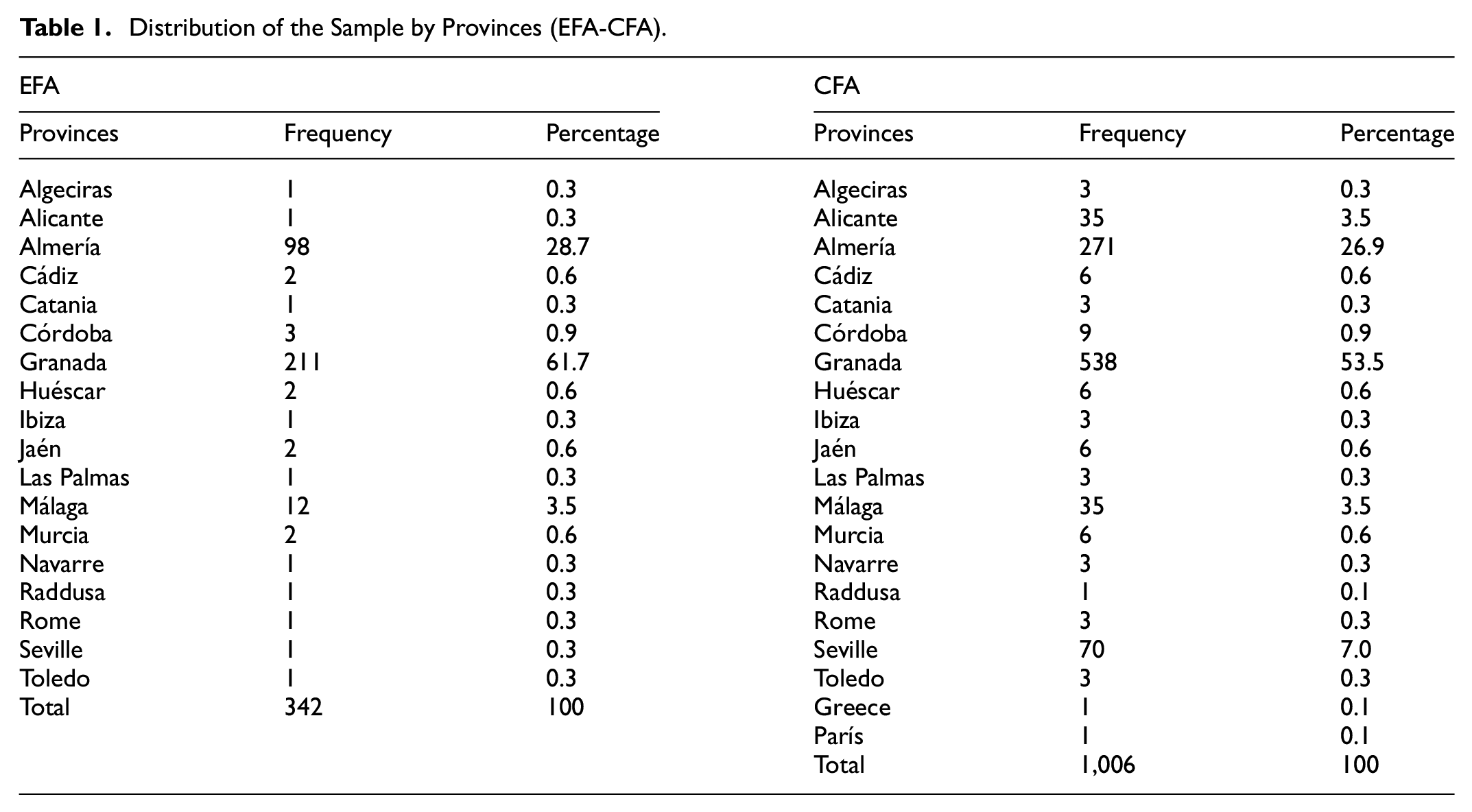
The final sample of 1,006 participants substantially surpassed the minimum required for a 37-item scale (n = 370), ensuring statistical robustness, thus meeting the established criteria for psychometric studies. Furthermore, this sample size was validated using a statistical formula based on the total number of students enrolled in the Faculties of Education in Spain (N = 64,665), using a confidence level of 95 % and a maximum margin of error of 10 %, which supports the representativeness and statistical robustness of the sample (Wang et al., 2024).
Participants in this first stage (EFA) ranged in age from 18 to 45 years (M = 21.08 years; SD = 3.242), with 68 (19.9%) males, 271 (79.2%) females, and 3 (0.9%) indicating a non-binary gender. In the second stage (CFA), participants ranged in age from 18 to 52 years (M = 21.25; SD = 3.873); of these participants, 241 (24.0%) were male, 756 (75.1%) were female, and 9 (0.9%) identified as non-binary. Additional socio-demographic variables are presented in Table 2.
Sociodemographic Variables (EFA and CFA).

Note. EFA = Análisis factorial exploratoria; AFC = Análisis factorial confirmatorio; HPEWD = Has People with Disabilities in their Personal or Family Environment.
Instrument
The adaptation and validation of the PERKIN questionnaire began with a literature review and an analysis of existing instruments on the topic, including instruments such as those by Aldabas (2020), O’Rourke and Houghton (2006), Roca-Hurtuna and Sanz-Ponce (2023), and Bosse et al. (2018), all of which assess teacher or student perceptions related to disability and inclusion. Among the reviewed tools, the instrument by Daniel and Cooc (2018) was selected for adaptation, given its accessible language, conceptual clarity, and robust psychometric properties (Klimeckil et al., 2018). Moreover, it offers an innovative approach to defining and diagnosing inclusion-related constructs.
The initial instrument consisted of 37 items; each scored along a Likert-type scale with 5 response options. Responses range from “not at all” (1) to “very much” (5).
The Spanish translation of the items was carried out by the version by Rojo-Ramos et al. (2022), ensuring contextual relevance for the target population. Content validity was examined to ensure the instrument accurately reflected the intended dimensions. Both clarity and relevance of the items were considered. In the initial phase, expert judgement was used to calculate the Content Validity Index (CVI), assessing agreement on each item’s clarity, relevance, and representativeness. Interquartile ranges were used to assess the level of agreement among experts. Based on these results, adjustments and modifications were made to refine and optimise the initial version of the questionnaire. Experts included professionals in educational institutions and university researchers specialising in disability and inclusion (Chorna et al., 2021). In total, sixteen experts from different universities collaborated: six researchers specialised in attention to diversity, seven experts in social inclusion, integration and citizenship, and three with lines of research directly related to the subject of the study.
Experts received the instrument by email for individual evaluation. The scale method was used to rate from 1 to 4 (1—I do not agree at all with the wording and/or the content of the item; 2—I partially agree with the wording and/or the content of the item; 3—I strongly agree with the wording and/or the content of the item; 4—I strongly agree with the wording and/or the content of the item) the importance of each item. Experts also assessed the questionnaire’s readability and relevance for trainee teachers, as well as the comprehension and wording of the items (Fernández et al., 2022). Qualitative feedback led to both major and minor revisions of several items. These modifications considered the indications of Gambluch and Vallejo (2022) for inter-rater agreement. The mean score of each item was analysed, with values equal to or above 2.5 considered acceptable. The median was used as the reference value for each item. Additionally, an ambiguity coefficient was calculated to assess the degree of dispersion in expert agreement using the interquartile range (IQR). If the difference between the 75th percentile (P75) and the 25th percentile (P25) was 0.0 or 1, the item was accepted or slightly adjusted. A difference between 1 and 2 indicated the need for revision and reformulation. Values greater than 2 led to the item being rejected due to high disagreement among experts. The final structure of the instrument was validated through factor analysis.
Procedure and Collection of Information
This study aims to analyse future teachers’ knowledge and perceptions about the inclusion of students with disabilities and to enhance initial teacher training through the development of a diagnostic tool for inclusive education.
A convenience sampling method was used, selecting participants based on accessibility and availability within the study timeframe (Caycho-Rodríguez et al., 2023). The sample size (N = 1,006) was determined using a statistical formula based on the total number of education students in Spain (N = 64,665; INE, 2024), ensuring representativeness. The formula applied a 95% confidence level and a 10% margin of error, ensuring statistical adequacy (Hu et al., 2022). The questionnaire was administered individually to volunteer students from various Spanish universities.
The questionnaire was administered individually to volunteer students from various Spanish universities. Although the participants were adults, their involvement followed ethical and legal guidelines for research with human subjects. Students completed the questionnaire in classroom settings under teacher supervision, with an average completion time of 12 to 20 min. Notably, Erasmus students required no additional language support, as they were proficient in the host country’s official language. This process adhered to the ethical principles outlined in the 1964 Declaration of Helsinki and its 2013 revision in Brazil. Additionally, the study followed the protocol approved by the Ethics Committee of the University of Granada.
Data Analysis
In the preliminary phase, the questionnaire was validated through expert evaluation. These experts had extensive experience in disability and diversity, both in educational practice and academic research within Spanish institutions. Their expertise included the assessment and diagnosis of factors linked to inclusive education.
Data analysis was conducted using IBM SPSS (version 28), starting with descriptive statistics and tests for normality (Loffing, 2022). An exploratory factor analysis (EFA) was then performed, employing principal axis factoring with Oblimin rotation based on the assumption of correlated factors (Nguyen & Waller, 2023). The internal consistency of the scale was assessed through Cronbach’s alpha, with a reliability threshold set at α = .90. In the second phase, a confirmatory factor analysis (CFA) was carried out using the latest version of Jamovi, an open source software for data analysis and statistical testing.
Results
Preliminary item analysis was followed by the calculation of key dispersion statistics. Table 3 shows expert responses and the decisions regarding the items’ content validity in terms of clarity and relevance. Although no items were eliminated, most required modifications based on interquartile range values (P75–P25 ≤ 1 or 2; Table 3). Table 4 presents the 37 items included in the validation process; 13 of them received ratings above 4 out of 5.
Results of the Expert Judgement Regarding the Content Validity Coefficient (CVC), Based on the Level of Agreement Concerning the Relevance and Clarity of the Questionnaire Items.

Mean and SD of the Items From the Scale on Perceptions and Knowledge of Pre-service Teachers About the Inclusion of Students With Disabilities in the Classroom.

Exploratory Factor Analysis
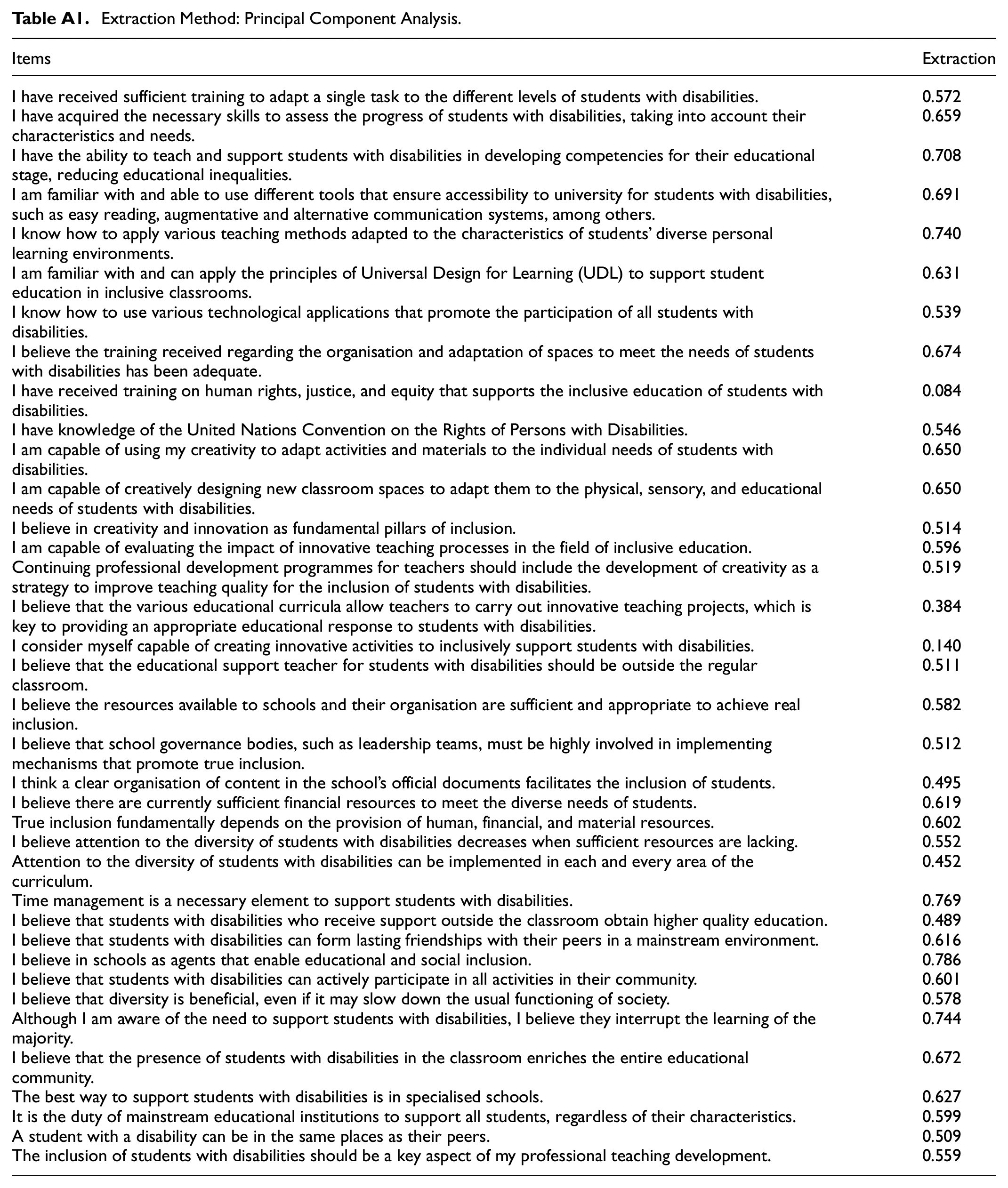
Exploratory factor analysis (EFA) revealed four distinct dimensions within the scale (Mir et al., 2020). The analysis was conducted using the principal component extraction method. Prior to this, principal axis factoring with Oblimin rotation was selected, given the expected correlation among factors (Nguyen & Waller, 2023); Kaiser normalisation was then applied. Items with commonalities equal to or greater than 0.30 were retained (Clayson, 2023). Multiple criteria were used to determine the number of factors and to select items for deletion. Items with factor loadings less than 0.30 or with a commonality coefficient less than 0.30 were eliminated (Jiang & Yu, 2024). EFA and internal consistency analyses were repeated after each item removal to minimise impact on the factor structure and reliability (Ariati et al., 2023; Castro-Schilo & Russo, 2021; Forber-Pratt et al., 2020; Appendix A, Table A1). This factor analysis was validated by the Kaiser-Meyer-Olkin Measure of Sampling Adequacy (KMO), which yielded a value of 0.915, and by Bartlett’s Test of Sphericity, with a value of X2 = 7,263.864 and a significance level of p = .00. The four factors extracted accounted for 63.58% of the total variance. The results of the factor analysis are presented in Table 5.
Rotated Component Matrix.
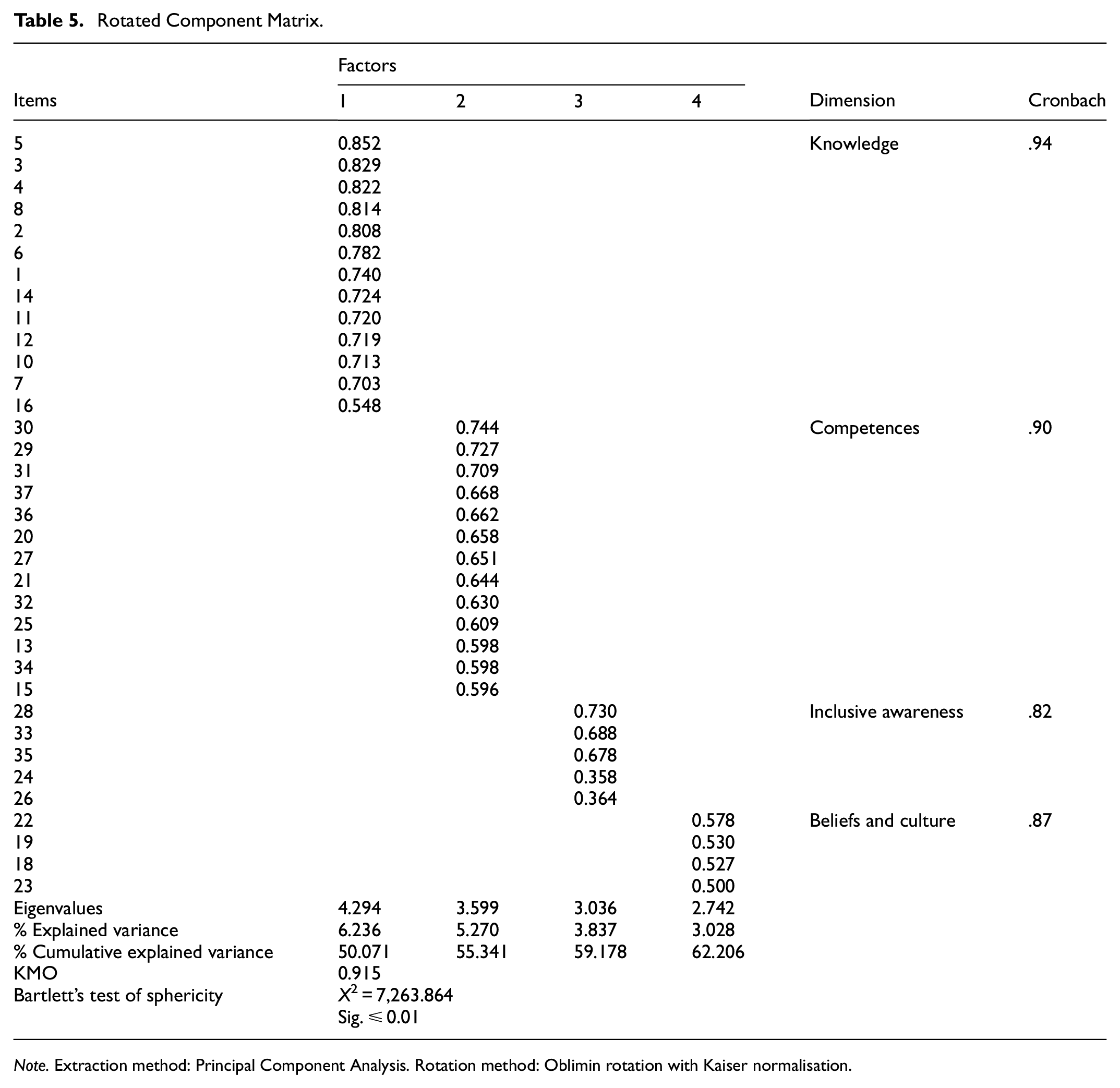
Note. Extraction method: Principal Component Analysis. Rotation method: Oblimin rotation with Kaiser normalisation.
Four dimensions emerged from the rotated component matrix. The first factor, named “Capabilities,” relates to knowledge acquired during university training for supporting students with disabilities. It reflects self-perceived competence in addressing disability in educational contexts (Karal & Wolfe, 2018). Additionally, it exhibits optimal internal scale consistency, with a Cronbach’s alpha value of.94. This dimension included 13 items assessing knowledge and confidence in addressing student needs related to disability.
The second dimension, “Innovative Teaching Competencies,” assesses future teachers’ ability to implement inclusive and creative strategies for students with disabilities. It also has a reliability above the minimum required values (Cronbach’s alpha of .90). There are a total of 13 indicators or items. These address competencies in innovative teaching for students with disabilities from an inclusive perspective. The third factor, “Inclusive Organisational Awareness,” reflects understanding of school-wide structures and strategies needed to support students with disabilities (α = .82). It includes five items focused on school organisation and systemic support for inclusion.
The fourth dimension, “Beliefs and Culture,” explores attitudes and cultural values about disability inclusion in future teaching practice, with four items addressing these considerations in prospective teachers, yielding a reliability of α = .87. These dimensions offer a novel contribution to literature, as they have not been previously addressed in this integrated form. The results obtained are in line with previous studies (Fuentes et al., 2021; Lipka et al., 2020), which addressed similar dimensions.
Confirmatory Factor Analysis
Following the EFA, a confirmatory factor analysis (CFA) was conducted to test the adequacy of the indicators in representing the latent constructs (Geramipour, 2021; Lopez-Pedersen et al., 2020). The CFA was performed on a sample of 1,006 participants using Jamovi (Figure 1). To carry out the CFA, the CMIN (Cb, minimum value of the discrepancy) was analysed with an x2 distribution (Table 6).
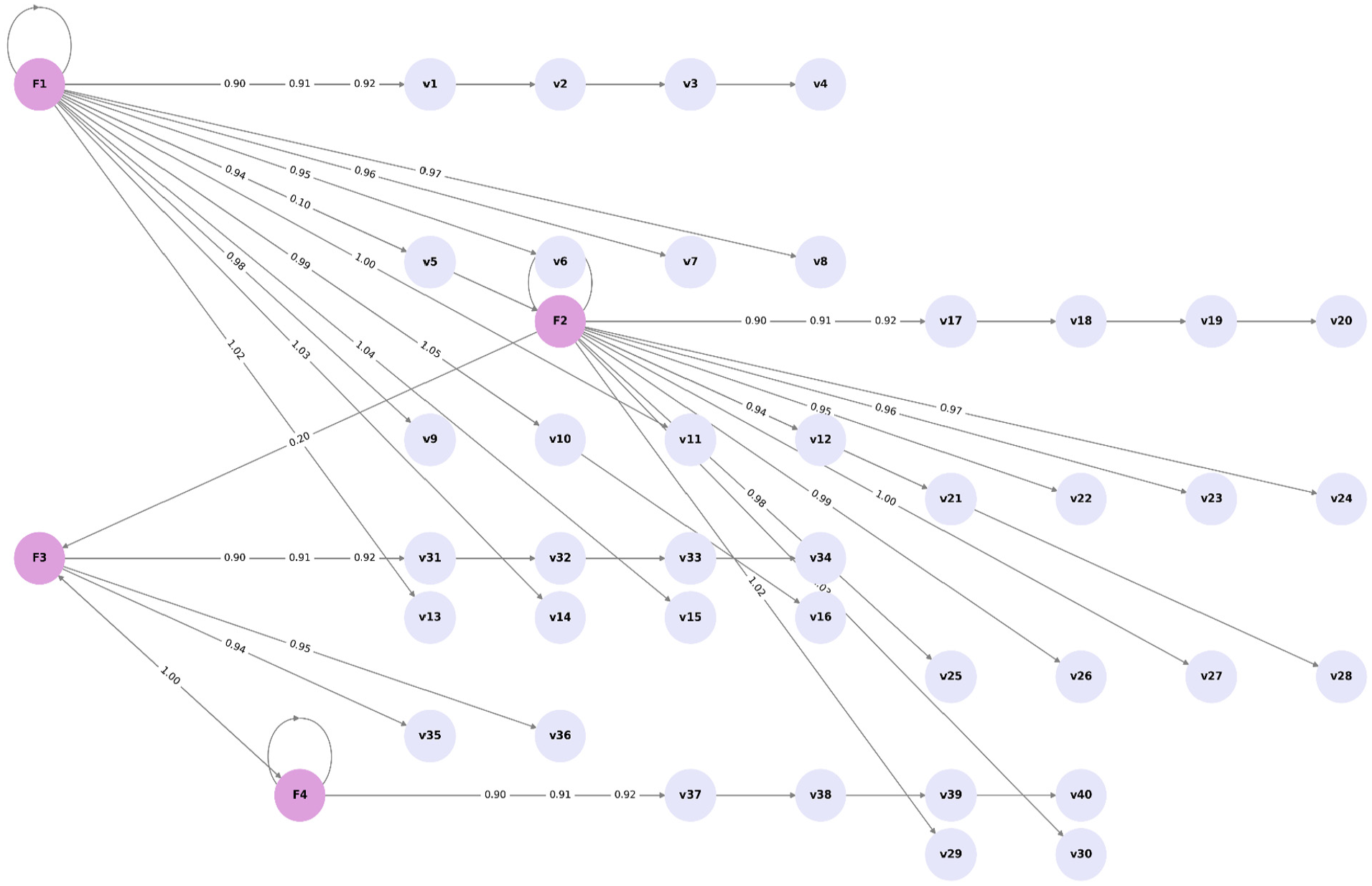
Structural equation modelling.
Goodness-of-Fit (1/3).

Note. CMIN = Cb, minimum discrepancy value.
This test was conducted with N = 1,006 participants and analysed with Jamovi software in its latest version 26 (Figure 1).
The chi-square minimum discrepancy statistic (CMIN) was examined as an indicator of model fit (Table 6).
However, as noted by previous studies (Casas & González-Carrasco, 2021; Fujikawa et al., 2023), chi-square tests may be unreliable with large samples. Thus, alternative indices such as the Comparative Fit Index (CFI), Tucker–Lewis Index (TLI), and Root Mean Square Error of Approximation (RMSEA) were also considered. These indices assess the fit between the observed and predicted covariance matrices (Gacek et al., 2022; Park, 2021). The CFI, TLI, and RMSEA values indicated an acceptable model fit (Tungkunanan, 2020). Although values close to 1.00 for CFI and TLI indicate a good fit (Cuadrado et al., 2023; Ramos et al., 2021), the results of this study (CFI = 0.741; TLI = 0.722) suggest a moderate fit (Table 7).
Goodness of Fit (2/3).

Note. NFI = normed fit index; IFI = incremental fit index; TLI = Tucker–Lewis index; CFI = comparative.
According to Fernández-Archilla et al. (2020) and Pegalajar (2020), RMSEA values below 0.06 indicate excellent fit—criteria met in this study (Table 8).
Goodness of Fit (3/3).

Note. RMSEA = root-mean-square error of approximation.
The model shows an acceptable level of congruence and supports the hypothesis of construct multidimensionality. The final model of the PERKIN scale consisted of 35 items representing 4 latent dimensions (see Figure 1).
Reliability of the Scale
After confirming the 35-item structure through CFA, internal consistency was reassessed using Cronbach’s alpha. The overall reliability of the instrument was α = .90. Internal consistency by dimension was as follows: Capabilities (13 items): α = .94; Innovative Teaching Competencies (13 items): α = .89; Inclusive Organisational Awareness (5 items): α = .86; Beliefs and Culture (4 items): α = .88. These values exceed the threshold of α ≥ .70, indicating high internal consistency (Durak et al., 2010). To complement Cronbach’s alpha, McDonald’s omega was also calculated, yielding ω ≥ .84, which confirms the robustness and stability of the measurements provided by the scale (Barbosa et al., 2024).
Construct validity was further supported by structural equation modelling (SEM), which confirmed the instrument’s psychometric soundness. Additionally, the scale demonstrated strong applicability to the target population. The EFA phase identified items with strong psychometric performance and led to a four-factor structure. The CFA subsequently confirmed this configuration, supporting its validity. Therefore, it can be concluded that the Perceptions and Knowledge Scale of Trainee Teachers on Classroom Inclusion of Students with Disabilities (PERKIN) is a reliable measurement tool as it meets the recommended psychometric properties (Satici et al., 2021).
Test-retest Reliability
Test–retest reliability was examined using responses from two time points in the study. Although each phase included different samples, a subset of repeated respondents enabled the calculation of test–retest reliability. The results indicated strong temporal stability of the instrument. Specifically, the Pearson correlation coefficient between both applications was r = .92, p < .001, indicating a strong positive relationship between responses at both time points. The Intraclass Correlation Coefficient (ICC) was.91 (95% CI: .86–.95), confirming excellent consistency between administrations. These results support the temporal reliability of the PERKIN scale and reinforce its usefulness as a consistent tool for assessing prospective teachers’ knowledge and perceptions regarding the inclusion of students with disabilities.
Discussion
The main objective of this study was to develop an instrument to assess the knowledge and perceptions of prospective teachers about educational inclusion and disability. This tool is intended to improve teacher training programmes by identifying key areas for development. Previous research has shown that initial teacher training is crucial for ensuring effective and sustainable inclusive education (Arnaiz-Sánchez et al., 2023; Iarskaia-Smirnova et al., 2025), as it affects both the acquisition of technical knowledge and the consolidation of attitudes and values favourable to diversity.
The validation phase confirmed the instrument’s internal consistency and its relevance, as highlighted by expert reviewers. Experts provided qualitative feedback through open-ended questions, offering critical insights into the clarity, relevance, and coherence of the items (Jury et al., 2023). Likewise, the validation process of the instrument was developed following a rigorous methodology widely supported in the scientific literature (Palomino et al., 2025), in which content validity and semantic clarity of the items were prioritised. These aspects are fundamental in the design of instruments for inclusive educational contexts, as noted in previous studies (Mann et al., 2024).
Empirical results reveal the need to strengthen initial training in inclusive education and diversity awareness. Participants expressed varied perceptions of their preparedness to work with students with disabilities, highlighting specific training gaps in university curricula. This supports Gezer et al. (2025), who stress the role of future teachers in co-designing inclusive educational resources, as their involvement facilitates the adoption of inclusive practices from the early stages of their training.
Based on expert input, several items were reworded to improve clarity and avoid misinterpretation (Mann et al., 2024). To ensure inter-rater agreement, the procedure followed the guidelines established by Palomino et al. (2025). Items were retained if their mean and median scores exceeded 2.5, and if at least 50% of raters assigned values above that threshold. An ambiguity coefficient based on interquartile range (IQR) was also used to measure rater dispersion. This ensured alignment with validity thresholds. Firstly, the validity and reliability of the questionnaire were assessed by consulting experts in the field, who qualitatively evaluated the instrument’s suitability for future teachers through open-ended questions.
The wording and comprehension of the items were also modified to avoid confusion in the responses (Mann et al., 2024). Experts recommended substantial modifications to several items. Following the guidelines proposed by Gutiérrez-Castillo et al. (2023) for assessing inter-rater agreement, the mean of each item was examined, requiring values equal to or above 2.5. The median was used as the item’s representative score, and the 50th percentile (P50) was expected to reach at least 2.5. Additionally, an ambiguity coefficient was calculated to assess the degree of dispersion in expert ratings based on the interquartile range. This procedure allowed the instrument’s validity to be aligned with established validation standards. As Fernández et al. (2022) point out, this method preserves the anonymity and independence of expert evaluations, thereby enhancing the objectivity and reliability of the instrument’s evaluation. The Likert-type items showed acceptable reliability and internal consistency. These results are consistent with previous studies using similar instruments (Sorkhi et al., 2022).
In the second phase, statistical analyses confirmed the psychometric robustness of the instrument. The high KMO value (0.915) further supported the suitability of the instrument for factor analysis. Two items were removed due to low statistical contribution, resulting in a final version of thirty-five items. This elimination responded to both low communality criteria and a low contribution to the variance explained, thereby ensuring that the retained items were truly representative of the proposed latent factors.
The final questionnaire consisted of four dimensions with strong internal consistency. EFA confirmed the relevance and psychometric quality of the retained items. The four resulting dimensions—Teacher Education, Innovation, Organisational Awareness, and Cultural Beliefs—showed acceptable inter-factor correlations. As Van Mieghem et al. (2020) argue, accessibility is key in educational measurement tools. In this regard, the PERKIN scale offers stronger psychometric performance than previous instruments (Aldabas, 2020; Bosse et al., 2018; Daniel & Cooc, 2018; O’Rourke & Houghton, 2006; Roca-Hurtuna & Sanz-Ponce, 2023). The instrument also prioritised inclusive, accessible, and non-stigmatising language—an advance over prior tools.
Previous studies addressed related constructs but lacked a comprehensive focus on initial teacher education for inclusion. Compared to O’Rourke and Houghton (2006), this study is based on a considerably larger sample, enhancing the representativeness of its findings. Unlike Daniel and Cooc (2018), this study places initial teacher education at the centre of inclusive education implementation—an area often overlooked. Roca-Hurtuna and Sanz-Ponce (2023), in contrast, employed a mixed-methods design focused on descriptive comparisons of students’ perceptions about inclusion and employability. This study contributes to a growing body of research exploring inclusive teacher preparation through robust psychometric validation. This research goes further than previous work by combining EFA and CFA to strengthen the scale’s psychometric validity.
A key distinction lies in the methodology, as this study employs CFA to analyse latent structure, while other studies such as those by Roca-Hurtuna and Sanz-Ponce (2023) relied on descriptive and comparative analysis of means. The present study integrates a confirmatory factor analysis to explore the correlations between items and dimensions. This methodological difference reflects an evolution in the analysis techniques employed, providing a deeper understanding of the underlying structure of the data collected. This study’s larger and more targeted sample (N = 1,006) enhances the generalisability of its findings. While the previous study focused on 360 students with various university degrees, the current study concentrates exclusively on students from the Faculty of Education (1,006 students), which is more in line with the research objective. In terms of reliability, this study outperforms previous tools—for example, Bosse et al. (2018) reported α = .79, while PERKIN achieved α = .94. This improvement strengthens the instrument’s validity and the robustness of the findings.
Unlike previous studies (Aldabas, 2020; Bosse et al., 2018; Daniel & Cooc, 2018; Kefallinou et al., 2020; Li & Ruppar, 2021; O’Rourke & Houghton, 2006; Roca-Hurtuna & Sanz-Ponce, 2023), it should be noted that the study developed includes the vision of future teachers who will have the responsibility of working with students and being able to change this perception and/or motivation towards student inclusion. Finally, the exploratory and confirmatory factor analysis method presented is considered more exhaustive than the study developed by Aldabas (2020), as it includes PFA, applying the principal component extraction method and Varimax rotation with Kaiser normalisation. In the first validation phase (EFA), it was demonstrated that the items exhibited good psychometric performance and that the instrument was structured into four dimensions with adequate levels of correlation. In addition, the composite consistency index (CCI) was calculated for each dimension, with values above 0.80, which reinforces the internal consistency of the instrument across its subscales. At this stage, it is important to emphasise that the results obtained during the questionnaire’s validation and adaptation process exceeded those reported for the original scales on which it was based (Lecerf & Canivez, 2018). This suggests that the instrument demonstrates strong validity and reliability within the intended field of application. Furthermore, the confirmatory factor analysis (CFA), conducted through Structural Equation Modelling (SEM), confirmed that the estimated coefficients aligned positively with theoretical expectations (Mendo et al., 2016; Ruales et al., 2020). The construct validation process supported the model’s excellent psychometric properties, reinforcing its suitability for the target population (Tomé-Fernández et al., 2019). Overall, the results indicate a good model fit and high reliability, positioning the instrument as a valuable tool for future researchers and practitioners in education seeking to evaluate teachers’ perceptions and knowledge. Furthermore, the data sample obtained from this newly designed instrument stands out, as it is more representative compared to samples from scales previously designed by authors such as O’Rourke and Houghton (2006) and Roca-Hurtuna and Sanz-Ponce (2023), which increases the transferability of the phenomenon in question. Moreover, its innovative approach is due, in part, to the scarcity of previous research (Aldabas, 2020; Bosse et al., 2018; Kefallinou et al., 2020; Li & Ruppar, 2021; O’Rourke & Houghton, 2006) that considers initial teacher education as a crucial aspect for the implementation of educational inclusion, an aspect that the new scale (PERKIN) considers. The study is particularly relevant to the analysis of initial teacher training in the inclusion of students with disabilities. With all these results, a more psychometrically accurate exploratory and confirmatory factor analysis process is observed than that proposed by other studies (Aldabas, 2020). In line with the above, this research addresses the shortcomings identified in other studies (Aldabas, 2020; Bosse et al., 2018; Li & Ruppar, 2021; O’Rourke & Houghton, 2006) regarding the exploration of additional competencies related to inclusive education, such as organisational, cultural or creativity aspects. Regarding the reliability of the instrument, the new scale (PERKIN) shows an excellent Cronbach’s alpha coefficient (.94), in contrast to previous scales, such as that of Bosse et al. (2018), which exhibits a reliability of .79. Hence, the importance of this study, as noted by authors such as Chorna et al. (2021), is evident: the development towards more inclusive classrooms has led to significant changes in teachers’ roles and responsibilities. However, these changes are often implemented without prior analysis of teachers’ beliefs and attitudes towards this process, which could significantly hinder progress on inclusion. Research on teacher thinking suggests that perceptions and attitudes are key elements in the processes of thought, action, and readiness to change in response to specific challenges. Research, such as Saloviita (2020), confirms that attitudes play a crucial role in understanding the development of the teacher’s instructional process and behaviour in the classroom. The results also show that teachers need to be prepared to deal with the diversity of their students, but current training is insufficient. Studies such as those by Fernández et al. (2022) highlight that the lack of teacher training leads to prejudices and obstacles to inclusion, as well as a lack of understanding of the legal framework and clarity about education from a diversity and recognition perspective. This is why this research becomes relevant, as the construction and validation of this instrument will help determine what knowledge future teachers possess and provide guidelines and orienting directives that allow for the establishment of lines of action to improve these teaching and learning processes.
Conclusion
This study resulted in the development and validation of the PERKIN scale, a psychometric instrument to assess future teachers’ perceptions and knowledge about educational inclusion and disability. The scale was built through a rigorous methodological process that included expert judgement, EFA, and CFA. The result is a valid and reliable tool for diagnosing essential competencies in initial teacher training. The final structure includes 35 items across 4 dimensions: university education (α = .94), teacher innovation (α = .89), inclusive awareness (α = .86), and cultural beliefs about inclusion (α = .88). This not only allows for a detailed assessment of the inclusive competencies of trainee teachers but also provides a comprehensive and contextualised view of the critical aspects that need to be strengthened in teacher education plans. The strong reliability and acceptable model fit indices confirm its utility as a diagnostic instrument for teacher training.
This research offers an innovative and valuable contribution to inclusive teacher education, both conceptually and methodologically. The PERKIN scale stands out for including underexplored areas such as pedagogical innovation and cultural attitudes towards disability, often absent in earlier tools. Which are fundamental aspects for comprehensive teacher training consistent with the principles of equity and social justice. These results have practical implications for policymakers and teacher education programmes. The scale enables the identification of specific training gaps, thereby guiding strategic actions for improvement in initial training programmes. This is especially important in contexts where educational quality and equity depend on teachers’ ability to address diversity. This is especially relevant given the lack of existing assessment tools focused on identifying gaps in trainee teachers’ inclusive competencies. The PERKIN scale addresses this need by offering a theoretically grounded instrument centred on effective teaching for students with disabilities (Pua et al., 2021).
The findings inform both teacher education practices and institutional policy decisions. Firstly, the PERKIN scale is presented as a valuable and accurate diagnostic tool for identifying strengths and weaknesses in the preparation of future teachers regarding the inclusion of students with disabilities. It can guide the design of training plans tailored to the real needs of future educators, promoting more contextualised, reflective, and practice-oriented preparation. As a scientifically sound and socially relevant tool, the PERKIN scale supports progress towards more inclusive and equitable education systems.
At the university level, the scale can be used as an initial assessment tool in teacher training programmes to adjust training interventions, integrate content on inclusion into curricula, and promote active methodologies aimed at educational equity. Its application can also foster self-reflection in trainee teachers by revealing beliefs and attitudes that may hinder or facilitate inclusive practices. For institutions and policymakers, the scale offers comparable data across programmes, cohorts, or universities to guide improvement. This facilitates the implementation of continuous improvement strategies and strengthens commitment to the 2030 Agenda, ensuring equitable and quality access for all students, including those with disabilities.
In summary, the PERKIN scale provides a solid foundation for future research on inclusive competencies and the effects of teacher education policies. It also enables longitudinal and comparative studies to track the development of inclusion training and its connection to effective classroom practice.
Limitations
A key limitation is the absence of focus group interviews during the item construction phase. Although the items were formulated based on a rigorous theoretical review, the participation of students or other key stakeholders at this stage could have enriched the content validity and provided additional nuance. Future research should integrate qualitative techniques—such as focus groups—into the initial development phase. Additionally, quantitative procedures like parallel-form reliability and split-half tests could complement this process.
This study was limited to a specific population, which may constrain the generalisability of findings beyond the national context. Moreover, vocational or non-educational trainees were not included in the sample. This limits the applicability of the results to broader trainee populations. The study relied on a quantitative approach centred on questionnaire validation. Complementary methods—such as interviews or focus groups—could yield deeper insights, especially within the specific research context.
These qualitative methods help capture participants’ perspectives and experiences more holistically, thereby complementing the quantitative findings from the questionnaire. While the statistical analyses were rigorous, the inclusion of alternative analytical methods could have broadened the understanding of trainee teachers’ views on inclusion and disability. Future studies should consider combining both approaches to gain a more comprehensive picture of the topic.
Footnotes
Appendix A
Extraction Method: Principal Component Analysis.
| Items | Extraction |
|---|---|
| I have received sufficient training to adapt a single task to the different levels of students with disabilities. | 0.572 |
| I have acquired the necessary skills to assess the progress of students with disabilities, taking into account their characteristics and needs. | 0.659 |
| I have the ability to teach and support students with disabilities in developing competencies for their educational stage, reducing educational inequalities. | 0.708 |
| I am familiar with and able to use different tools that ensure accessibility to university for students with disabilities, such as easy reading, augmentative and alternative communication systems, among others. | 0.691 |
| I know how to apply various teaching methods adapted to the characteristics of students’ diverse personal learning environments. | 0.740 |
| I am familiar with and can apply the principles of Universal Design for Learning (UDL) to support student education in inclusive classrooms. | 0.631 |
| I know how to use various technological applications that promote the participation of all students with disabilities. | 0.539 |
| I believe the training received regarding the organisation and adaptation of spaces to meet the needs of students with disabilities has been adequate. | 0.674 |
| I have received training on human rights, justice, and equity that supports the inclusive education of students with disabilities. | 0.084 |
| I have knowledge of the United Nations Convention on the Rights of Persons with Disabilities. | 0.546 |
| I am capable of using my creativity to adapt activities and materials to the individual needs of students with disabilities. | 0.650 |
| I am capable of creatively designing new classroom spaces to adapt them to the physical, sensory, and educational needs of students with disabilities. | 0.650 |
| I believe in creativity and innovation as fundamental pillars of inclusion. | 0.514 |
| I am capable of evaluating the impact of innovative teaching processes in the field of inclusive education. | 0.596 |
| Continuing professional development programmes for teachers should include the development of creativity as a strategy to improve teaching quality for the inclusion of students with disabilities. | 0.519 |
| I believe that the various educational curricula allow teachers to carry out innovative teaching projects, which is key to providing an appropriate educational response to students with disabilities. | 0.384 |
| I consider myself capable of creating innovative activities to inclusively support students with disabilities. | 0.140 |
| I believe that the educational support teacher for students with disabilities should be outside the regular classroom. | 0.511 |
| I believe the resources available to schools and their organisation are sufficient and appropriate to achieve real inclusion. | 0.582 |
| I believe that school governance bodies, such as leadership teams, must be highly involved in implementing mechanisms that promote true inclusion. | 0.512 |
| I think a clear organisation of content in the school’s official documents facilitates the inclusion of students. | 0.495 |
| I believe there are currently sufficient financial resources to meet the diverse needs of students. | 0.619 |
| True inclusion fundamentally depends on the provision of human, financial, and material resources. | 0.602 |
| I believe attention to the diversity of students with disabilities decreases when sufficient resources are lacking. | 0.552 |
| Attention to the diversity of students with disabilities can be implemented in each and every area of the curriculum. | 0.452 |
| Time management is a necessary element to support students with disabilities. | 0.769 |
| I believe that students with disabilities who receive support outside the classroom obtain higher quality education. | 0.489 |
| I believe that students with disabilities can form lasting friendships with their peers in a mainstream environment. | 0.616 |
| I believe in schools as agents that enable educational and social inclusion. | 0.786 |
| I believe that students with disabilities can actively participate in all activities in their community. | 0.601 |
| I believe that diversity is beneficial, even if it may slow down the usual functioning of society. | 0.578 |
| Although I am aware of the need to support students with disabilities, I believe they interrupt the learning of the majority. | 0.744 |
| I believe that the presence of students with disabilities in the classroom enriches the entire educational community. | 0.672 |
| The best way to support students with disabilities is in specialised schools. | 0.627 |
| It is the duty of mainstream educational institutions to support all students, regardless of their characteristics. | 0.599 |
| A student with a disability can be in the same places as their peers. | 0.509 |
| The inclusion of students with disabilities should be a key aspect of my professional teaching development. | 0.559 |
ORCID iDs

Ethical Considerations
Approved by the Ethics Committee of the University of Granada.
Author Contributions
A.I..I-G. and M.M-G. conceived the hypothesis of this study. J.M.O.-M. participated in the data collection. J.M.O.-M. and L.H-R. analysed the data. All authors contributed to the interpretation of the statistical analysis data and wrote the article with significant contributions. All authors read and approved the final manuscript.
Funding
The author(s) disclosed receipt of the following financial support for the research, authorship, and/or publication of this article: Part of this work has been funded by the project Knowledge of inclusion and disability in prospective teachers: keys to achieving inclusive education. Reference: PPJIA2023-104. Principal Investigators: María Lina Higueras-Rodríguez and Marta Medina-García.
Declaration of Conflicting Interests
The author(s) declared no potential conflicts of interest with respect to the research, authorship, and/or publication of this article.
Data Availability Statement
The data is available and can be consulted on request.