




Abstract
The issue of work-life balance (WLB) has received rising attention globally. Academic leaders are said to have a compromised WLB situation as they juggle multiple roles involving a wide range of challenging factors in their work-life environment. Yet, academic leaders, particularly in the context of developing countries, have to deal with gruelling circumstances ranging from lack of funding to political interference. On top of that, empirical studies on the WLB of academic leaders from the developing world are scant. Given this, this study examined WLB issues among academic leaders from public universities in Ethiopia to provide empirical evidence to narrow the knowledge gap on WLB (of academic leaders) from various contexts, especially from the less developed part of the world. Accordingly, the study surveyed the WLB circumstances of academic leaders in the study setting using a standard questionnaire, and a total of 205 complete questionnaires were collected from academic leaders of eight Ethiopian public universities. The (descriptive) analysis relied on mean analysis to assess the level of WLB among the academic leaders. The study found that the academic leaders’ WLB is severely compromised across all dimensions of WLB that this study drew on (role overload, quality of health, dependent care issues, time management, and support networks). Thus, in addition to extending the subject of WLB among academic leaders to less explored territories, this study provides empirical contributions as well as practical/managerial and social implications.
Introduction
Work-life balance (WLB) has continued to be a topical issue across several sectors and industries (Adah et al., 2023), including higher learning institutions/universities (Badri, 2024; Demir & Budur, 2023). There is a growing interest among researchers and academics in the subject of WLB (Alameddine et al., 2023; Calzón-Menéndez, 2023; Fauzi et al., 2024). The issue of WLB has received even heightened interest following the onset of the COVID-19 pandemic (Yerkes & van Hedel, 2024). In organizations and on the home front, the challenge of WLB is growing to the top of many employers’ and employees’ consciousness (Lockwood, 2003). Gregory and Milner (2009) also noted that the term WLB is gaining widespread use in everyday language and policy arenas, enabling a wider understanding of non-work concerns to be encompassed in organizational studies. More so, Fisher (2002) expressed that as many changes in the workplace and employees’ and managers’ lives have taken place over the past decades, such changes have led to an increase in the attention paid to the boundary between work and non-work issues among professionals. More importantly, Lewis et al. (2002) uphold that modern-day professionals emphasize the achievement of WLB more than their predecessors and are seeking their organizations to extend adequate organizational support to WLB in terms of practices, policies, and strategies.
The core idea is that the assertion of work and life, cast as WLB, has become an essential feature of much of government, practitioner, and academic debate; the main message of this debate is the need for good WLB (Eikhof et al., 2007). In other words, as work-life imbalance adversely affects both personal and work-life, WLB has become important and necessary for almost all categories of professionals (both leaders and staff), including those in higher learning institutions (Arif & Farooqi, 2014; Fatima & Sahibzada, 2012; Saltmarsh & Randel-Moon, 2015). All organizations including higher learning institutions are expected to consider WLB “as a means of tackling the problem of increasing amounts of stress in the workplace as people try to juggle a wide range of factors in their work/life environment, including work; family; friends; health; and spirit/self” (Byrne, 2005, p. 53).
Effective management of WLB is an issue increasingly recognized as of strategic importance to higher learning institutions (universities) and of significance to academic leaders and the rest of the stakeholders (Bryan & Wilson, 2014; De Cieri et al., 2005; Netemeyer et al., 1996). The issue of the WLB in higher learning institutions is becoming a serious concern as the last two decades have shown a dramatic change in academia, where there is enormous pressure to ensure higher productivity in administrative, teaching, and research fronts (Fauzi et al., 2024). According to Felstead et al. (2002), WLB is understood as “the relationship between the institutional and cultural times and spaces of work and non-work in societies.” More specifically, Karakas and Lee (2004) stated that WLB relates to issues such as spending good time with family members, availability of free time to be able to relax for the emotional well-being and health of family members, having good communication and support from colleagues and subordinates, access to high-quality child care and education; and being satisfied with the workload. Similarly, Fisher (2002) defined work-life as an occupational stressor regarding issues of time, energy, goal accomplishment, and strain. Consequently, Rothbard and Dumas (2006) maintained that managing the interface between work and home has emerged as a central topic for both practitioners and academicians.
Accordingly, at present, there is a growing pressure requiring organizations to increasingly attempt to create the right environments where employees experience WLB (Wood et al., 2020). Delecta (2011) noted that this subject interests almost everyone with a professional career. This widespread interest is partly due to its reflection on all aspects of life. For those who think that the main objective in life is to work, their career becomes the core of life. However, people have limited time and therefore have to perform many activities other than their jobs. Without a balance between the two, many mishaps can be experienced in both aspects (work vs. life).
In general, while there are numerous studies on the subject of WLB from the developed part of the world (Bryan & Wilson, 2014; Cannizzo & Osbaldiston, 2016; Gregory & Milner, 2009; Lester, 2015; Lord & Vinnicombe, 2010), research on this topic remains scarce in the context of the developing world (Abubaker & Bagley, 2016; Akanji, Mordi, & Ajonbadi, 2020; Kyambade et al., 2024; Stella et al., 2014). This leaves a gap in our global understanding of the WLB of academic leaders from diverse contexts. To help narrow this gap, this study exhibits empirical evidence on the subject of WLB of academic leaders from a developing country context (Ethiopia). Thus, this study extends the subject of WLB among academic leaders to uncharted (unexplored) territories. Moreover, the study will impart certain practical/managerial, and social implications. In doing so, the central research question of the study is what is the status of WLB among academic leaders of selected public universities in Ethiopia? In light of the WLB dimensions that this study drew on (role overload, quality of health, dependent care issues, time management, and support networks), the specific questions include: What is the status of role overload among the academic leaders? What is the status of the quality of health among the academic leaders? What is the status of dependent care issues among academic leaders? What is the status of dependent care issues among academic leaders? And what is the status of the support network among the academic leaders?
Literature Review
This section highlights the overview of WLB, the theoretical lens, WLB and academic leaders, and factors to assess WLB (dimensions of WLB).
Overview of Work-Life Balance
Organizations can no longer ignore issues of WLB (Lucas, 2004; Saiyad et al., 2024). As such, in today’s fast-paced society, human resource professionals seek options to positively impact the bottom line of their companies, improve employee morale, retain employees with valuable company knowledge, and keep pace with workplace trends. As a result, in organizations and on the home front, the challenge of work/life balance is rising to the top of many employers’ and employees’ consciousness (Lockwood, 2003).
According to Sandhiya (2020), the term WLB was coined in 1986 in response to the growing concerns by individuals and organizations alike that work can impinge upon the quality of family life and vice versa, thus giving rise to the concepts of family-work conflict and – work-family conflict. The former is also referred to as work interferes with family, while the latter is also known as family interferes with work. In other words, from the scarcity or zero-sum perspective, time devoted to work is construed as time taken away from one‘s family life. Besides, according to Kasbuntoro et al. (2020), WLB is defined as the ability of individuals to fulfill their work and family commitments, as well as other non-job responsibilities. The authors added that WLB programs include resources for parent and child care, care, health and welfare of employees, relocation benefits, offering family-friendly benefits that employees need to balance life and work, flex time, job sharing, telecommunicating, and others.
Theoretical Lens
There are different theoretical lenses/frameworks proposed for WLB, such as spillover theory, role theory, and Conservation of Resources (COR) theory. Spillover theory suggests that experiences in one domain, such as work or personal life, can influence the other, either positively or negatively (Ilies et al., 2024; Ratnaningsih & Idris, 2024). Role theory focuses on the multiple roles individuals hold and how conflicts or demands between these roles can impact WLB (Gerçek, 2024; Khatri & Shukla, 2024). The Conservation of Resources (COR) theory argues that individuals strive to preserve and build resources (e.g., time, energy) to manage stress, with imbalances leading to stress or burnout when resources are depleted (Liao et al., 2024; Shih & Yeh, 2024).
However, the most widely used theory in WLB studies is boundary theory (Khateeb, 2021; Kossek et al., 2023). Initially developed by Glaser & Strauss (1967), Boundary Theory posits that individuals create, maintain, and negotiate boundaries to separate or integrate their professional and personal roles. In the context of academic leaders in Ethiopian universities, the theory offers a valuable lens to explore how they balance the competing demands of teaching, research, administration, and family responsibilities. Boundary Theory asserts that while work and non-work domains are distinct, they are also interconnected, and individuals adopt strategies to manage these boundaries (Cingiene, 2024). These strategies can range from setting clear, impermeable boundaries to allowing for overlap, creating more permeable boundaries (Amirkamali et al., 2024). Moreover, Boundary Theory applies to studies of WLB involving academic leaders (Fauzi et al., 2024; Johnston et al., 2022).
The application of Boundary Theory to academic leaders could also allow for exploring how external factors, such as cultural norms, limited institutional support, and resource constraints, influence their ability to manage work-life boundaries effectively (Yesuf et al., 2024). This context often leads to high boundary permeability, where professional demands spill into personal lives, resulting in stress and reduced life satisfaction (Moges, 2022; Yesuf et al., 2024). The theory also underscores the importance of support networks in helping individuals manage boundary flexibility, suggesting that universities should implement policies that support WLB, such as flexible hours, mental health services, and role clarity (Flowers, 2020; Kossek et al., 2023). By actively managing these boundaries, academic leaders can reduce stress, improve personal well-being, and enhance professional effectiveness (Adisa et al., 2022). This theoretical framework is crucial for understanding the complexities of WLB in academic leadership, particularly in developing countries where these challenges are more pronounced (Sallee & Lester, 2017). So, this study relies on/is informed by the boundary theory, which holds that there is a boundary between work and life, and this is an important insight for WLB studies. Accordingly, as professionals juggle the work versus life boundary, some factors come into play, such as role overload, quality of health, dependent care issues, time management, and support networks. Details about these factors are presented in Section “Factors to Assess Work-Life Balance.”
Work-Life Balance and Academic Leaders
Academic leaders in universities are said to have compromised WLB circumstances as they perform multiple tasks, involving the responsibility to handle political and bureaucratic accountability whilst trying to balance educational, managerial, and leadership to promote their institutions. Coping with such challenging responsibilities is stressful, time-consuming, and burdensome (Aziz, 2014). Similarly, Kezar et al. (2005) stated that academic leaders, particularly in a developing country context, have to deal with issues related to funding, talent acquisition, autonomy, political interferences, and social inclusion, making their duty much more demanding and tormenting. As a result, the comprehensive demands of academic leadership, requiring intellectual, emotional, and physical energy, often raise concerns about the WLB of those in such roles (Banker & Bhal, 2020). Several emergent realities in higher education, including institutional autonomy and heightened inter-university competition, are intensifying the demands placed on academic leaders (Ekman et al, 2018; Kohtamäki, 2022). As such, Gmelch (2002, p. 12) maintained that “If we are to build a sustained leadership capacity in our colleges and universities, we must address the issue of professional balance in the academic leader’s life.” Despite this reality, studies on the WLB of academic leaders and academicians are scant both in the global and developing countries context (Bryan & Wilson, 2014; Cannizzo & Osbaldiston, 2016).
More so, academic leadership plays a crucial role in the success of higher education institutions (Eacott & Asuga, 2014). And the academic leaders, that is, department chairs, deans, directors, vice presidents, and presidents (Van den Brink, 2015), who are responsible for leading such institutions do toil and endure stressful situations to ensure the success of their respective institutions (Netemeyer et al.1996) by dealing with complex financial, educational, managerial, and ethical challenges continuously (Bikmoradi et al., 2010). Besides, while many aspects of management and leadership are common to most organizations, higher learning institutions present special challenges in both their fundamental character and practice; the presence of faculty and non-academic personnel in leadership roles in the same organization accompanied by other challenging circumstances create ambiguity and confusion (Rowley & Sherman, 2003). Further, Dex and Bond (2005) indicated that work pressures have grown in modern times across several sectors. Similarly, Saltmarsh and Randel-Moon (2015, p. 663) academic leaders too are faced with “the intensification of competition within the global knowledge economy, increasing levels of public scrutiny and public policy intervention in university affairs, managerial regimes of corporate governance and audit cultures, casualization, increasing staff-student ratios, and continuous demands for improved efficiency, accountability, and productivity.” Further, modern-day academic leaders have to deal with escalating stress and pressures along with organizational change, which has led to the increased importance of research on the issue of WLB amongst academic leaders; yet, very few studies have examined this issue (Bell et al., 2012). Understanding the work-life issues of academic leaders is essential to successfully manage and deal with the pressures and demands inherent in managing work and non-work-related activities, and build organizational capabilities and support to achieve acceptable integration between both domains by academic leaders (Lewis & Cooper, 2005; Visser & Williams, 2006).
Factors to Assess Work-Life Balance
As indicated in the methodology section, despite its growing importance, the field of WLB has suffered from a lack of theoretical foundations and measurement tools for a long time. However, recent contributions by Daniels and McCarraher (2000) and Fisher (2001) (see Dex & Bond, 2005; Mathew & Panchanatham, 2010) attempted to address the gap. Besides, further improvements on the works of Daniels and McCarraher (2000) and Fisher (2001) have been made by Mathew and Panchanatham (2011), and this has resulted in the introduction of a more comprehensive, 40-item, six-actor, and a 5-point scale for a WLB study. This is normally taken as a popular assessment tool in the field of WLB. The tool has five headings: role overload (item 1), quality of health (item 2), dependent care issues (item 3), time management (item 4), support network (item 5), and overall perception of WLB (item 6; Mathew & Panchanatham, 2011). Thus, this study assesses the status of WLB among university academic leaders in a developing country context (Ethiopia).
Role Overload
Role overload refers to the perceived inability to meet the demands of multiple roles due to time or energy constraints (Coverman, 1989; Huo & Jiang, 2023). Empirically, role overload is linked to burnout and reduced job satisfaction, as noted in studies by Dewi & Susanti (2021) and Kim et al. (2017). For academic leaders, the pressure to meet work commitments often leaves little time for personal life, contributing to role conflict and reducing their work-life satisfaction (Dube & Ndofirepi, 2024). Research also suggests that high role overload negatively impacts mental and physical well-being (Kinman & Wray, 2020), reinforcing the need for strategies that alleviate these pressures.
Quality of Health
The relationship between work-family conflict and health outcomes has been well-documented, with substantial evidence linking work stress to physical and psychological health issues (Lawson et al., 2021). The Conservation of Resources (COR) theory suggests that individuals feel stress when they perceive a threat to or loss of resources, like health. In high-stress roles like academic leadership, health often suffers due to long hours, poor sleep, and limited time for self-care (Hobfoll, 2011; Uddin et al., 2023). Empirical studies show that poor WLB is associated with increased health complaints, such as fatigue, headaches, and even chronic illnesses (Borowiec & Drygas, 2022). Moreover, researchers have observed that a lack of physical and mental health support exacerbates work-family conflict, particularly in contexts with limited healthcare infrastructure (Frank et al., 2021).
Dependent Care Issues
Dependent care responsibilities, including childcare and eldercare, often complicate the WLB of working professionals (Bouget et al., 2017; Lam, 2024). Boundary theory explains that when there is insufficient separation between work and caregiving roles, individuals experience increased stress and difficulty fulfilling their work responsibilities (Gordon et al., 2012). Studies in Western contexts, such as those by Lahaie et al. (2013), indicate that dependent care demands intensify work-family conflicts, especially for women who typically bear a larger share of caregiving responsibilities. In underdeveloped countries, these challenges are compounded by a lack of institutional support for dependent care (Stevens et al., 2024). Dependent care issues can lead to absenteeism, decreased productivity, and greater mental strain, impacting both organizational effectiveness and individual well-being (Marecki, 2023).
Time Management
Effective time management is essential for balancing work and personal roles (Irfan et al., 2023). Theories like the job demands-resources (JD-R) model (Demerouti & Bakker, 2023) suggest that time is a crucial resource that individuals use to cope with role demands. Poor time management is associated with increased stress and diminished job performance, as found in the study by Ma et al. (2020). Empirical research supports that employees who spend excessive time on work tasks often lack the energy to engage in family roles, leading to reduced WLB satisfaction (Lott & Wöhrmann, 2023). For academic leaders, whose roles often entail long hours and intense work demands, effective time management is essential but challenging, often resulting in insufficient time for family or self-care (Selim & Kee, 2022).
Support Networks
Social support is widely acknowledged as a buffer against work-life conflict (Uddin et al., 2023). Social support theory emphasizes the role of family, friends, and colleagues in providing emotional and instrumental resources to help individuals manage role-related stress (Thoits, 1995; Tian, 2024). In the WLB context, family and organizational support networks are crucial in enabling individuals to navigate role boundaries (Annink, 2017). Empirical studies, such as those by Yıldırım and Darıcan (2024), indicate that social support reduces job stress and improves WLB by providing individuals with the resources they need to handle competing demands. For academic leaders, strong support networks can play a key role in mitigating the stress associated with high workloads, dependent care responsibilities, and health challenges (Paitaridou et al., 2024).
Research Methodology
Study Design
The study applied a quantitative research design. A quantitative, descriptive method is utilized. There has been much discussion of the WLB of employees since the late 20th century, but the field has suffered from a lack of theoretical foundations and measurement tools, but the measurement contributions by Daniels and McCarraher (2000) and Fisher (2001) (see Dex & Bond, 2005; Mathew & Panchanatham, 2010). Lately, further refinements were made on those earlier measurement scales, when Mathew and Panchanatham (2011) introduced a more comprehensive, 40-item, six factors, and a 5-point scale for a WLB study (namely; 1 = Strongly Disagree; 2 = Disagree; 3 = Neutral; 4 = Agree; and 5 = Strongly Agree). The target populations were academic leaders of public universities in Ethiopia. The sampling frame comprised academic leaders from eight public universities in Ethiopia, who have shown interest in participating in the study, and the targeted respondents have diverse positions, including directors, deans, associate deans, department heads, and coordinators.
Sampling
The participants in the survey were academic leaders from public universities in Ethiopia. Academic leaders are individuals who have ascribed crucial roles to lead and manage academic institutions, and they include department chairs, deans, directors, vice presidents, and presidents (Van den Brink, 2015). The Cochran (1977) formula was employed in sample size calculation, and the sample size (n) was:

Where,
n = sample size
Z = the value on the Z table at 95% confidence level = 1.96
e = sampling error at 5%
p = maximum variability of the population at 50%, that is, (0.5)
q = 1 − p = 0.5.
While the study encompassed eight universities, the target population consisted specifically of academic leaders within those institutions. This included individuals holding diverse leadership roles (e.g., university presidents, vice presidents for academic affairs, vice presidents for administration and student affairs, vice presidents for research, vice presidents for strategic communication, directors of institutes, directors of functional areas [research, community engagement, etc.] deans, department heads, and coordinators) across numerous colleges and schools (e.g., College of Business, School of Law, College of Social Sciences, College of Natural and Computational Sciences, Education and Language Studies, College of Technology, and many more) within each university. Consequently, obtaining a precise count of academic leaders from each institution and their colleges, schools, institutes, departments, and units proved challenging.
Ultimately, out of 384 distributed questionnaires, a total of 205 usable questionnaires were received from academic leaders of eight Ethiopia’s public universities who were willing to participate in the study. The respondents were drawn from Addis Ababa University, Gondar University, Bahir Dar University, Jigjiga University, Ambo University, Jimma University, Wollega University, and Addis Ababa Science and Technology University. The 205 complete questionnaires result in a response rate of 53%. A response rate of at least 50% is regarded as adequate for analysis and reporting (Nix et al., 2019; Nulty, 2008; Randall & Gibson, 1990). The main reasons for this not-so-large response rate were that, like most developing countries, COVID-19 reached Ethiopia later than many other regions (Gudina et al., 2021; Watare et al., 2022). Moreover, due to various factors – such as limited healthcare infrastructure, economic constraints, and the challenges associated with being a developing nation – the pandemic’s impact on Ethiopia has been particularly persistent and has been prevalent until recently (Ameya & Ayal, 2024). The country’s limited resources and preparedness have led to prolonged disruptions (Ayalew et al., 2024; Kassa et al., 2024). And this coincided with this study’s data collection period (June–August, 2022), when the activities of researchers and scholars (e.g., in data collection and other research activities) in such contexts have been adversely affected by COVID-19 (Lokhtina et al., 2022).
Instrument and Data Collection Technique
This quantitative study employed a survey based on Mathew and Panchanatham (2011) assessment scale to explore WLB among university academic leaders in Ethiopia. This comprehensive questionnaire comprises 40 item scale with 6 headings (dimensions/factors of WLB): (1) role overload (8 items), (2) quality of health (7 items), (3) dependent care issues (9 items), (4) time management (8 items), (5) support network (7 items), and (6) overall perception of WLB (1 item). In other words, the variables (dimensions/factors of WLB) include “role overload,”“quality of health,”“dependent care issues,”“time management,” and “support network” (Mathew & Panchanatham, 2011). The first part of the questionnaire also captured data that relate to the demographic characteristics of respondents – including age, gender, marital status, highest current academic teaching appointment and academic duties, number of years employed in an academic position, and discipline or faculty; which are typical variables in WLB studies involving academicians (Bell et al., 2012). The questionnaires were distributed through in-person paper surveys using a convenience sampling technique, provided that the respondents had academic leadership positions in their respective institutions and were willing to participate in the study. While convenience sampling offers practical advantages, this study acknowledges its potential for introducing bias. However, to mitigate this limitation, the researchers employed multiple sampling points, drawing participants from diverse leadership roles (Directors, Deans, Associate Deans, Department Heads, and Coordinators) across eight universities, thereby broadening the scope of perspectives captured.
Analysis technique
Speaking of the analysis approach that this study employed, most quantitative studies in the field of WLB apply a descriptive approach due to the contemporary nature of the subject of the study, especially in the context of developing countries (Aranganathan et al., 2017; Maurya et al, 2015; Mramba, 2024; Sani & Adisa, 2024), this study also applied descriptive analysis, relying mainly on mean analysis. The Statistical Package for Social Sciences (SPSS), version 26, was used to analyze the data.
Results and Discussion
Preliminary Statistics
A total of 205 questionnaires were returned from academic leaders from several public universities that were willing to participate in the study. A pilot study was carried out earlier, before the actual survey, with 10 % of the sample size according to the guidelines provided by Connelly (2008). The pilot study was useful to enhance the validity of the instrument (by making sure that the items in the instrument were clear and complete enough for the respondents). More importantly, as per the feedback of the pilot study, participants indicated that the study topic relates to sensitive issues, as many respondents felt that it might be revealing and requested not to be asked about the name of their university while filling out the questionnaire, and chose to stay anonymous. So, the researchers removed the question that required respondents to indicate the name of their institution, but segregated the returned questionnaires according to their institutions at least to identify the public universities that have participated in the study. Further, the COVID-19 pandemic made it difficult to gather the data from the entire sample size of 384. In aggregate, however, gender-wise, 81.5% (167) and 18.5% (38) of the respondents were males and females, respectively (See Table 1). This relates /corresponds to the fact that most leadership positions (including academic leadership) in the underdeveloped world are dominated by men (Kohtamäki et al., 2024; Oumer & Yilma, 2024).
Gender.
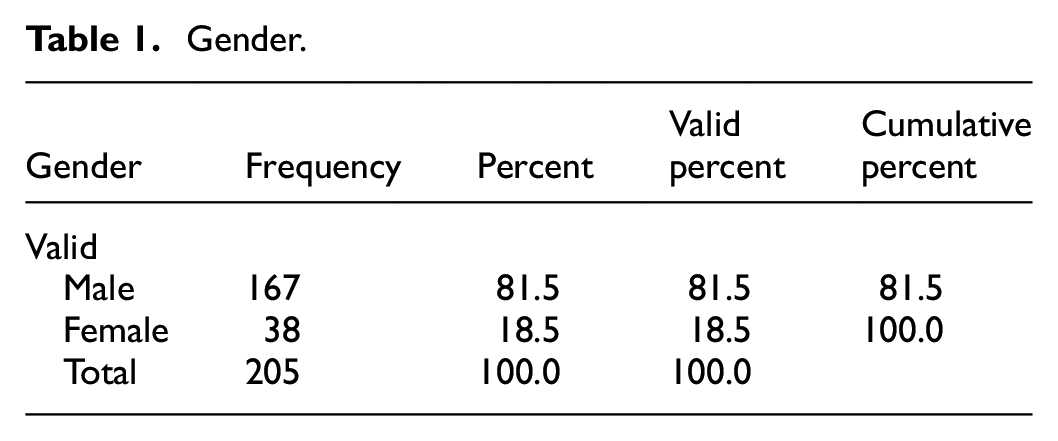
Table 2 illustrates the academic positions of the respondents. Accordingly, 38 directors (18.5%), 15 deans (7.3%), 38 associate deans (18.5%), 38 department heads (18.5%), and 76 coordinators (37.1%) participated in the study. Attempts made by the researcher and the data collectors to get the responses of academic leaders holding vice president and president positions did not succeed. This is due to the sensitive nature of the study topics, and the people in higher positions might think that their responses will easily be singled out and will also be revealing. The study attempted to keep the identities of respondents as anonymous as possible, but did not work to capture the views of the vice presidents and presidents of universities.
Academic Leadership Position.

Descriptive Study Results
This section exhibits the major findings of the study that investigated the WLB circumstances of the academic leaders in terms of the following factors (dimensions): (1) role overload; (2) quality of health; (3) dependent care issues; (4) time management; (5) support network; and (6) overall perception of WLB. Besides, it is worth noting that the descriptive analysis relied on the “mean/average” analysis. As such, according to Pihie et al. (2009), a mean score below 3.39 is considered low, a mean score from 3.40 up to 3.79 is considered moderate, and a mean score above 3.8 is considered high (See Table 3).
Comparison Based on the Mean Score of a 5-Point Likert Scale Instrument.

Source. Pihie et al. (2009).
Result of Factor 1: Role Overload
Table 4 demonstrates the descriptive results of eight items that measured the status of role overload among academic leaders.
Role Overload.
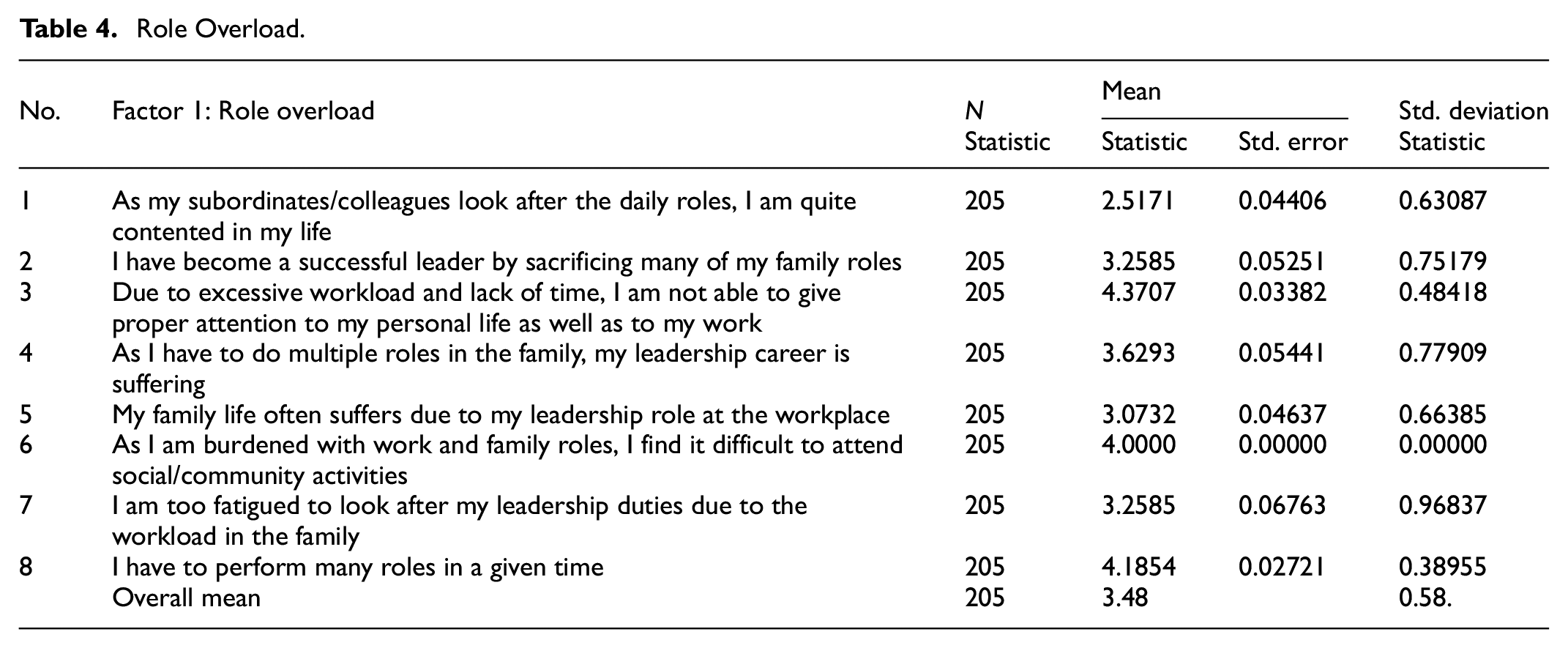
Accordingly, concerning item 1 of the role overload, which examined how content the academic leaders are with their subordinates, the mean result turned out to be 2.51, which is considered low. This indicates that academic leaders are not content with their subordinates. Concerning item 2, which deals with the necessity to sacrifice family roles, the mean value was 3.26. This mean score is still considered low. So, the result shows that academic leaders are sacrificing many of their family roles to succeed in their leadership positions. Concerning item 3, which is about lack of giving proper attention to oneself and work, the mean result turned out to be 4.37. A mean score of 4.37 is pretty high, and it testifies that the academic leaders are faced with a high workload, and this has caused them not to pay proper attention to their personal life and their work.
Concerning item 4, which is concerned with the issue of a compromised leadership career due to multiple roles, the mean score turned out to be 3.62, which is a moderate mean score. And that still entails that the academic leaders struggle with multiple roles. Item 5 was about whether the academic leaders’ families often suffer due to their leadership role at work, and the mean score was 3.07, which is low. This indicates that the families of the academic leaders suffer due to the leadership role that the academic leader has at work. Speaking of item 6 – whether the academic leaders are burdened with work and family roles, and finding it difficult to attend social/community activities, the mean score was 4, which is high. This implies that the academic leaders are burdened with work and family roles, and this is making it difficult for them to attend social/community activities. Next, concerning item 7 (whether they are too fatigued to look after their leadership duties due to workload in the family), the mean score result was 3.25, and this is considered low. This implies that academic leaders are not too fatigued to the extent of being unable to handle their leadership duties. Finally, for item 8 (performing many roles in a given time), the mean score was 4.12, which is a high score. This asserts that academic leaders perform many roles at a time.
Thus, concerning the first factor (Role overload), the study found that academic leaders are faced with several role overload issues. The empirical result shows that academic leaders are not content with their subordinates; they are sacrificing many of their family roles to succeed in their leadership position, and they are faced with a high workload and which is not allowing them to pay proper attention to their personal life and their work as well. Besides, the academic leaders struggle with multiple roles; they are burdened with work and family roles, making it difficult for them to attend social activities, and they are also under the pressure of performing multiple roles at a time. The aggregate mean score (3.48) is not impressive either.
Result of Factor 2: Quality of Health
Table 5 demonstrates the results of 7 items that measured the status of the quality of health among the academic leaders.
Quality of Health.
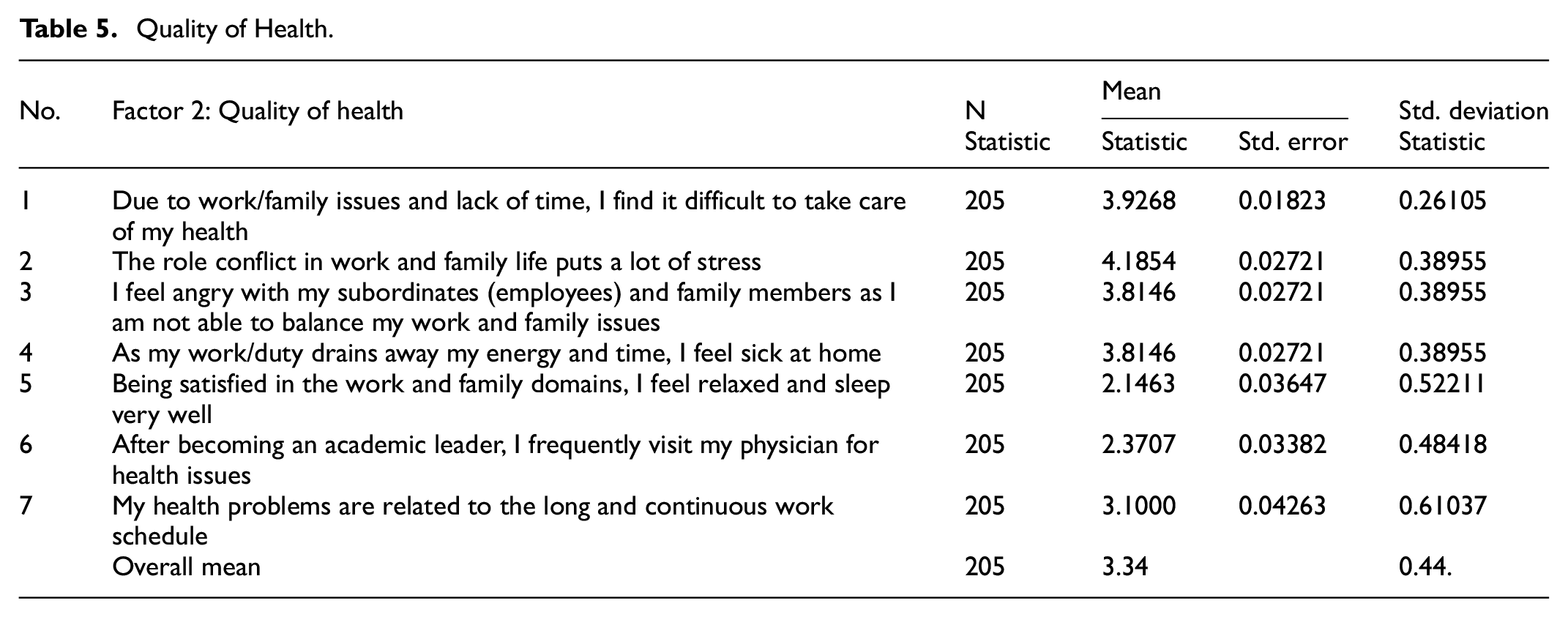
As shown in Table 5, the first item under the factor called – quality of health, relates to the issue of difficulty in taking care of one’s health due to work/family issues and lack of time. Accordingly, the mean score for this item was 3.92, which is high, and this indicates that the academic leaders do find it difficult to take care of their health due to the work/family issue and lack of time. The second item under quality of health is related to the issue of stress due to role conflict, and the mean score was 4.18, which is a pretty high score. The implication is that the academic leaders are dealing with lots of stress due to role conflict in their work and family life. Regarding the third item – feeling angry with subordinates and family members because of the inability to balance work and family issues, the mean result was 3.81. This is a high score and signifies that academic leaders are disappointed with their subordinates and family members as they are not able to balance work and family issues.
Concerning the issue of whether the duties are draining away their energy and time and feeling sick at home (fourth item), the mean result was 3.81, which is still a high score. This implies that the work/duty drains the energy of the academic leaders, and they feel sick at home. For the fifth item under the quality of health (being satisfied in the work and family domains, and feeling relaxed and sleeping very well), the mean score value was 2.15. This low mean score implies that the academic leaders are not satisfied with the work and family domains, and they do not feel relaxed and sleep very well. The sixth item of quality of health (after becoming an academic leader, the academic leader frequently visits his/her physician for health issues) produced a low mean score value of 2.37. This means that there is no way to imply that academic leaders frequently visit their physicians for health issues after becoming academic leaders. However, for the last item of quality of health –“my health problems are related to the long and continuous work schedule”– the mean score was 3.1. This is a low mean score, implying that currently, the long and continuous work schedule has no major influence on the health of the academic leaders.
Hence, about the second factor (Quality of health), the study found that there are still serious concerns. Academic leaders are dealing with lots of stress due to role conflict in work and family life; they have disappointment with their subordinates and family members as they are not able to balance work and family issues; the work/duty drains the energy of the academic leaders and they feel sick at home, and the academic leaders are not satisfied in the work and family domains, and they do not feel relaxed and sleep very well. The aggregate mean (3.34) score also proves this concern.
Result of Factor 3: Dependent Care Issues
Table 6 illustrates the results of nine items that examined the status of dependent care issues among the academic leaders.
Dependent Care Issues.

As can be seen from Table 6, the mean score value of 2.44 for the first item under dependent care issues (“I feel free and enjoy my profession, as I have no dependent care issues”) is pretty low. This implies that academic leaders do not feel free and enjoy their profession, as they still have to deal with dependent care issues. Regarding the second item – kid (s) being looked after by the academic leader, the mean score value is 3.44, which is a moderate score and implies that the academic leaders have responsibility at home to look after their kids.
Concerning the issue of difficulty concentrating on their work due to dependent care problems (third item), the mean score value was 4.0. And it is a high mean score. This implies that academic leaders have difficulty concentrating on their work due to dependent care issues. Regarding the fourth item under the dependent care issues (spouse/partner demanding greater attention), the mean score was again 4.0. This is a high score, and it implies that the academic leaders have certain issues/pressures from their spouses/partners to give them attention. Regarding the issue of whether the academic leaders have to take care of their aged parent(s)/in-laws (s) (item 5), the result holds a mean score value of 3.07, which is a low score. And this implies that the academic leaders are not that busy with taking care of their aged parents.
Concerning the issue of whether academic leaders find it difficult to manage elder care issues (item 6), the mean score value became 2.89. This is a low score, and it implies that the academic leaders are not burdened with elder care issues. However, speaking of whether the academic leaders find it more difficult to manage the child care needs (item 7), the mean score was 3.63, which is a moderate score, and this implies that the academic leaders are faced with difficulty managing the child care needs. Besides, regarding the issue of whether the academic leaders find it difficult to manage my work and dependent care issues at home simultaneously (item 8), the mean score value was 3.63. Again, this is a moderate mean score and asserts that the academic leaders have certain difficulty managing their work and dependent care issues at home simultaneously. More so, concerning the last item –“my preoccupation with work does not allow me to provide dependent care needs at home leading to the conflict,” the mean score was 3.63. A mean score value of 3.63 is a moderate score, and it tends to confirm that the academic leaders are preoccupied with work, and this does not allow them to provide dependent care needs at home, leading to conflict.
Therefore, regarding the dependent care issues, the study has found that academic leaders are faced with certain difficulties in this regard. The aggregate mean score (3.38) for this variable is not satisfactory. Among others, it is found out that the academic leaders do not feel free and enjoy their profession, as they still have dependent care issues; they have responsibility at home to look after their kids; they have difficulty concentrating on their work due to dependent care issues; the academic leaders have certain issues/pressures from their spouse/partners to give them time; the academic leaders are faced with a difficulty to manage the child care needs; they have certain difficulty to manage their work and dependent care issues at home simultaneously; and also they are preoccupied with work and this does not allow them to provide adequate dependent care needs at home leading to conflict.
Result of Factor 4: Time Management
As depicted in Table 7 (Time Management), the first item assessed the issue of whether the academic leaders come from the office late in the evening (item 1). Accordingly, the mean score value was 3.62, which is a moderate score, implying that the academic leaders usually come home late in the evening after spending long hours at work. On the second item under the time management dimension, which focuses on the issue of whether the academic leaders have enough time to spend on family duties and societal roles, the mean score value was 2.93.
Time Management.
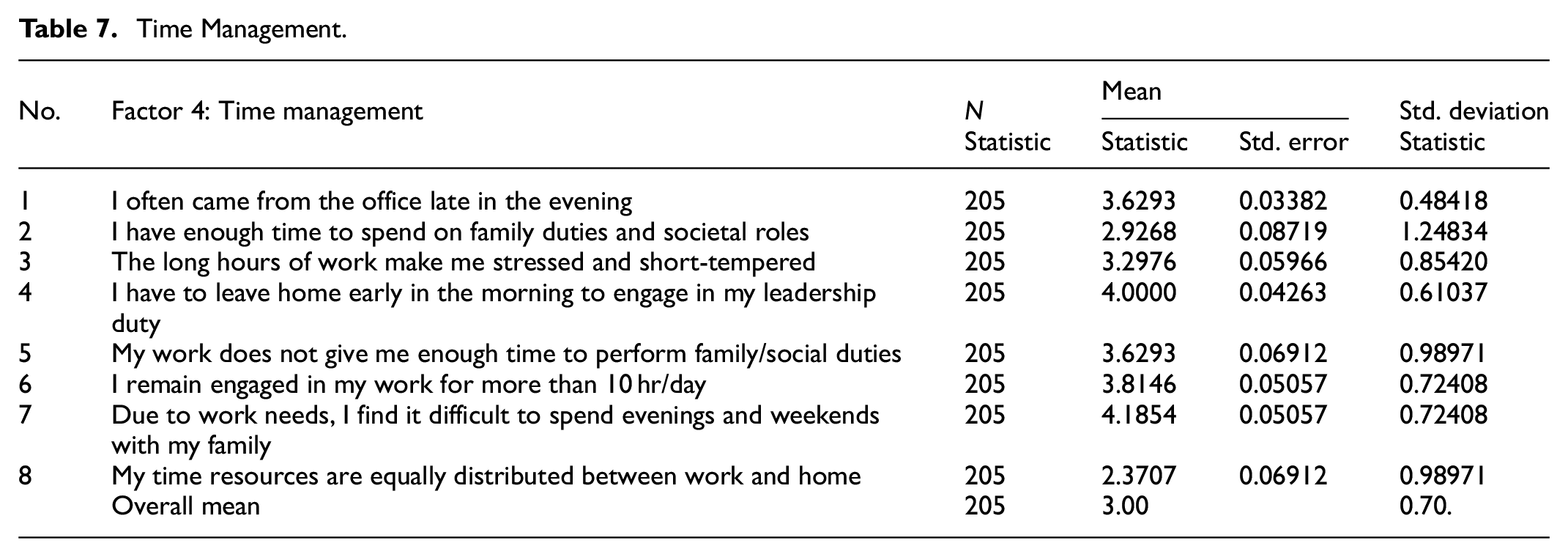
This is a low mean score value, and that indicates that the academic leaders have no adequate time to spend on family duties and societal roles. The third item is related to the issue of whether the long hours of work make academic leaders stressed and short-tempered. The mean result was 3.29, which is low. This result indicates that there is not enough evidence to imply that the academic leaders are being stressed and short-tempered due to the long hours of work.
The fourth item under the heading of time management examined whether academic leaders have to leave home early in the morning to engage in their leadership duties. The mean score value for this item was 4.0. This is a high score, and it implies that the academic leaders leave their homes early to engage in their academic duties. Regarding the fifth item, which inquires whether their work does not give them enough time to perform family/social duties, the mean score was 3.63, which is moderate, and implies that the academic leaders believe that their work does not give them enough time to perform family/social duties. The sixth item was concerned with investigating whether the academic leaders remained engaged in their work for more than 10 hr/day. The mean score result was 3.81 for this particular item, which is a high mean score, and it affirms that the academic leaders remain engaged in their work for long hours.
The seventh item assessed whether the academic leaders find it difficult to spend evenings and weekends with their family due to work needs. The mean score result for this item was 4.18, which is again a high score, and it implies that the academic leaders are faced with demanding work needs that make it difficult for them to spend evenings and weekends with my family. Finally, the last item under the dimension of time management assessed whether the academic leaders’ time resources are equally distributed between work and home. The mean score was 2.37 (a low score), and this confirms that the academic leaders do not have their time equally distributed between work and home.
In sum, speaking of the fourth factor/dimension of WLB, the study discovered that academic leaders are also faced with time management problems (with an aggregate mean score of 3.00) – due to the nature of their work, the academic leaders usually come home late in the evening; they have no adequate time to spend on family duties and societal roles; they have to leave their homes early to engage in their academic duties; their work does not give them enough time to perform family/social duties; they remain engaged in their work for long hours; they are faced with demanding work needs, and that makes it difficult for them to spend the evenings and weekends with my family; and the academic leaders do not have their time equally distributed between work and home.
Result of Factor 5: Support Network
As shown in Table 8, the first item under support network assessed whether the academic leaders could have concentrated more on their work if the social support network was available to them, and the mean score result for this item was 3.74, which is a moderate score that might imply that the academic leaders do not get adequate support system networks and this made it difficult for them to concentrate in their work. The second item was regarding whether the academic leaders have a social support network that is very helpful in dealing with dependent care issues. The mean score result was 2.89 for this particular item, which is deemed low, and it means that the academic leaders believe that the social support system is not that great in dealing with their dependent care issues. Regarding the issue of whether the academic leader is being respected and helped by society for being an academic leader (item 3), the mean score value turned out to be 2.56, which is low. This implies that the academic leaders do not believe that they are respected and helped by society.
Support Network.

In addition to the fourth item (“my family provides me the strength and support to face the challenges of my work”), the mean score was 3.63, which is moderate. This implies that academic leaders believe that their family provides them with the strength and support to face the challenges of their work to a certain extent. Concerning the issue of whether the family members of the academic leaders are overstretched to make the academic leader successful in their work (item 5), the mean score result turned 3.63, which is a moderate score and it implies that the academic leaders believe that their family members are overstretched to a certain extent to make the academic leaders successful in their work. Regarding the sixth item – whether their family members are not willing to listen to their work-related/personal problems, the mean score result was 2.18, which is low. This means that academic leaders do not believe that their family members are not willing to listen to their work-related/personal problems. The last item (item 7) assessed whether the academic leader’s spouse/partner understands and accommodates his/her preoccupation as an academic leader. Accordingly, the mean score value was 3.44, which is moderate. This implies that even though it is not that great, the academic leaders believe that their spouses/partners understand and accommodate their preoccupation as academic leaders.
Consequently, speaking of the support network dimension/factor of WLB, there are also concerning results (with an aggregate mean score of 3.17) – the academic leaders do not get adequate support system networks and this made it difficult for them to concentrate on their work; they believe that the social support system is not that great in dealing with their dependent care issues; they do not believe being academic leaders, they are respected and helped by the society, and they believe that their family members are overstretched to make the academic leaders successful in their work.
Result of Factor 6: Overall Perception of Work-Life Balance
Table 9 contains the mean score result for the inquiry –“Overall, I am having a satisfactory level of WLB,” and the mean score is 2.33, which is a low score. This implies that the academic leaders do not believe that they have a satisfactory level of WLB. In other words, regarding the issue of whether academic leaders have a satisfactory level of WLB in general, the study found that academic leaders believe that they do not have a satisfactory level of WLB.
The Overall Perception of Work-Life Balance.

Discussion
Concerning the study, examining the dimensions of role overload, quality of health, dependent care issues, time management, and support networks provides crucial insights into the challenges of WLB within underdeveloped country contexts, such as Ethiopia. Each of these dimensions scored low in WLB assessments, suggesting significant areas where employees struggle to balance their work and personal lives.
The findings indicate a low mean score for Role Overload, highlighting significant challenges in balancing leadership duties with personal and family roles. This strain reflects a chronic conflict between work and family responsibilities, which is consistent with studies showing that leaders in underdeveloped countries often feel overburdened due to limited supportive infrastructures (Eslami et al., 2024; Irfan et al., 2023). Excessive demands in both spheres can compromise career progress and family satisfaction (Khalil et al., 2020; Vatharkar & Aggarwal-Gupta, 2020). In line with Huo and Jiang (2023) research demonstrating that unresolved role conflicts lead to emotional exhaustion, the Ethiopian context shows similar stress levels, particularly given limited support for WLB. Magtalas (2024) noted that without organizational support, leaders are more prone to burnout, especially when personal time is frequently sacrificed, contrasting with findings in developed contexts (Uddin et al., 2020), where support networks help mitigate role overload. Ali et al. (2024) suggest that role overload reduces job satisfaction and hinders leadership effectiveness, underlining the need for systematic policy solutions. Supportive measures like flexible work options could significantly alleviate role overload challenges for leaders in this context.
The low mean score for Quality of Health indicates that work and family demands significantly impact the health of academic leaders, with work-family conflict contributing to stress and physical health issues. This aligns with the previous study of Fauzi et al. (2024), who found that such conflict leads to higher stress and poor health. Similarly, Koşarsoy and Özgül (2024) and Rahmasari et al. (2024) highlighted how workload and family responsibilities cause emotional distress and physical fatigue. Additionally, frequent healthcare visits, as reported in the study aligne with previous finding that there is a link between job demands and health problems (Rony et al., 2023). However, satisfaction in both domains can improve health, as noted by Shah and Gawande (2024). The findings suggest that academic leaders in Ethiopia face significant health challenges, emphasizing the need for organizational support to reduce the health risks associated with work-family conflict, as also stressed by Alameddine et al. (2023) and Medina-Garrido et al. (2023). These results highlight the importance of better WLB policies in Ethiopia.
The low mean score for Dependent Care Issues reflects the challenges faced by academic leaders in balancing work and caregiving responsibilities, particularly for children and elderly parents. This aligns with findings from Sheikh et al. (2018) and Van Egdom et al. (2024), who noted that caregiving duties create significant stress and role conflict, impairing work performance. Studies by Urooj et al. (2023) and Wen et al. (2024) further emphasize the negative impact of dependent care on job satisfaction and work-family conflict. Academic leaders, in particular, are often overwhelmed by long working hours and emotional demands, as highlighted by Rosa (2022). However, some leaders in the study reported better job satisfaction in the absence of dependent care responsibilities, which aligns with King (2018), suggesting that reducing caregiving burdens can enhance both professional and personal well-being. These findings underline the need for support systems to help leaders manage dependent care challenges effectively, ultimately improving WLB.
The low mean score for Time Management suggests that academic leaders face significant challenges in balancing their work responsibilities with personal and family obligations. The long hours spent at work, often leading to late evenings and early mornings, leave little time for family and social roles (Ugwu et al., 2024). This is consistent with the findings of Clark (2000), who emphasized that work demands often result in time scarcity, leading to work-life imbalance (Ingstad & Haugan, 2024). Additionally, the stress and irritability caused by excessive work hours align with studies by García-Buades et al. (2024), who found that time pressures lead to role conflict and increased stress. While time allocation between work and home appears to be a challenge, the findings also resonate with the work of Mathur et al. (2024), who noted that poor time management results in dissatisfaction in both personal and professional spheres. Despite the demands, the need for effective time management strategies, as highlighted by Das et al. (2024), remains evident in improving overall WLB. These challenges reflect broader issues in underdeveloped contexts like Ethiopia, where academic leaders struggle to balance multiple roles with limited time, pointing to the need for better time management policies and practices.
The low mean score for Support Network indicates that academic leaders in Ethiopia struggle to balance work and personal life due to limited social and family support. While some receive help from family, others face overstretched support, increasing stress, and role overload. This aligns with Halinski and Duxbury (2024) and Mattarelli et al. (2024) findings, which highlighted the importance of social support in reducing stress. Mubashir et al. (2023) noted that weak support networks lead to higher work-family conflict. Ganapathi et al. (2023) also emphasized that family members often bear the emotional strain, affecting WLB. Despite societal respect, the lack of robust support systems hinders effective role management. Studies by Azpíroz-Dorronsoro et al. (2024) and French et al. (2018) stress the need for organizational and social support to reduce work-family conflict. Strengthening support networks in Ethiopia is crucial for improving academic leaders’ WLB and well-being.
The low mean score of Overall, I am having a satisfactory level of WLB highlights a generally low level of perceived WLB among academic leaders. This finding suggests that they face challenges in balancing professional and personal responsibilities effectively, leading to an overall unsatisfactory WLB. This result aligns with previous studies, such as those by Paudel et al. (2024) and Dube and Ndofirepi (2024), which emphasize the impact of work demands on personal life satisfaction (Sani & Adisa, 2024). The low score underscores the need for enhanced support systems and policies to address WLB for academic leaders in challenging contexts like Ethiopia.
Conclusions
As noted in the foregoing sections of this paper, this study examined the WLB issues among academic leaders from public universities in a developing country context, where there is a paucity of similar studies. In other words, the study exhibited empirical evidence surrounding the WLB circumstances of academic leaders in the study setting in line with the WLB dimensions that this study drew on – role overload, quality of health, dependent care issues, time management, and support networks. Accordingly, the study found that the academic leaders have compromised WLB realities concerning all five dimensions. There are concerns about role overload (e.g., pressure of performing multiple roles at a time); quality of health (e.g., dealing with lots of stress due to role conflict in work and family life); dependent care issues (e.g., preoccupation with work inhibiting the academic leaders from providing adequate dependent care needs at home leading to conflict); time management (e.g., lack of adequate time to spend on family duties and societal roles); and support system (e.g., weak social support system making circumstances difficult for the academic leaders to concentrate on their work). Thus, generally, in addition to extending WLB studies to less-studied regions of the world, this study provides theoretical, empirical, practical, social, and managerial contributions/implications.
Theoretical Contribution
This study could help narrow our knowledge gap in the subject of the study by providing insight on the WLB of academic leaders in a developing country context, thereby contributing to a more comprehensive understanding of this issue across diverse contexts. Research specifically addressing academic leaders in developing countries remains limited. By examining five key dimensions – role overload, quality of health, dependent care issues, time management, and support networks – the study highlights the nature of WLB among academic leaders in the study context. It also underscores the relevance of boundary theory in capturing the complex interplay between professional and personal roles.
Empirical Contribution
This study is an empirical research and produced empirical evidence regarding the subject of WLB among academic leaders in a developing country context. As such, the empirical contribution is that it provided empirical evidence regarding the WLB circumstances of academic leaders from less-reported territories, and this helps to extend the subject of WLB to understudied territories. Therefore, this empirical study could be a contribution to filling the knowledge gap on WLB from this part of the world.
Managerial, Practical, and Social Implications
In addition to the empirical contribution stated in the preceding paragraph, the study also has managerial, social, and practical implications as it provides valuable insight for university administrators, policymakers, educators, researchers, and other relevant stakeholders in the study context about the nature and status of the WLB of academic leaders in the study setting. In other words, apart from realizing/understanding the status of WLB among academic leaders in the studied setting, a concerted effort is required from these diverse groups of stakeholders to improve the WLB of academic leaders in the study context. In other words, as the study discovered, the academic leaders have a compromised WLB; this requires immediate action by way of attempting to strike a balance between the work and life boundaries of the academic leaders. Among others, university administrators and policymakers/regulators of the education sector of the country could consider implementing plausible WLB policies at the organizational (university) level as well as at the sectoral level (higher education sector) to redress the problem. Moreover, educators, researchers, and other professionals and associations (NGOs and civic society institutions) that are concerned about the subject of WLB in the study context may need to work on expanding awareness on the subject and importance of WLB, which is in an infant stage in the study setting.
Limitation of the Study and Future Research Avenues
Finally, it is worth noting that, similar to other research works, this study has limitations that can serve as an avenue for future research opportunities. Among others, as this study only investigated the WLB of academic leaders from public universities in the country, future studies may consider examining the WLB of academic leaders in private higher learning institutions in the study setting. Besides, this study explored academic leaders’ WLB through dimensions of role overload, quality of health, dependent care issues, time management, and support networks. Future researchers could examine the WLB circumstances by incorporating other important factors such as boundary management, emotional labor, and organizational culture. Considering these additional dimensions will provide a more holistic understanding of the evolving WLB experiences of academic leaders.
Footnotes

Ethical Considerations
Ethical approval for this study was obtained from the Institutional Review Board (IRB) of the College of Business and Economics at Addis Ababa University. Data were collected using a questionnaire, and informed consent was obtained from all participants. The voluntary nature of participation was clearly communicated, including the right to withdraw at any time without consequence. Anonymity was ensured, and all responses were handled with strict confidentiality.
Funding
The author(s) received no financial support for the research, authorship, and/or publication of this article.
Declaration of Conflicting Interests
The authors declared no potential conflicts of interest with respect to the research, authorship, and/or publication of this article.
Data Availability Statement
The data that support the findings of this study will be provided upon reasonable request by the corresponding author.