




Abstract
This study examines how state-mandated translation policies shape the identities of translators in China’s Academic Translation Project (CATP), a state-sponsored initiative aimed at globalizing Chinese academic scholarship. Employing a document-based qualitative research design, the study analyzes translation policy documents and biographical data of translators, including gender, age, academic qualifications, and institutional affiliations. Findings reveal that translators are primarily elite academics: over 90% hold PhD degrees, and more than half are affiliated with China’s top-tier “985/211” universities. Women slightly outnumber men, and most translators fall within the 35–55 age range. Nearly 60% of translations target English. While translators function as linguistic and cultural intermediaries, their agency is constrained by policies governing text selection, terminology, and thematic focus, reducing their role to state-regulated “organic intellectuals” who balance scholarly legitimacy with ideological compliance. By foregrounding their multiple roles, the research enriches debates on translation’s instrumentality in authoritarian contexts through translation policy, where translators simultaneously enable cross-cultural dialogue and reinforce state ideologies.
Plain language summary
This study explores how government policies influence translators working in China’s Academic Translation Project (CATP), a national initiative to promote Chinese academic research worldwide. The research examines who these translators are, focusing on their gender, age, academic background, and institutional affiliations. Findings show that most translators are highly qualified academics—over 90% hold Ph.D. degrees, and more than half work at China’s top universities (985/211). The majority are between 35 and 55 years old, and women slightly outnumber men. English is the dominant target language, accounting for nearly 60% of translations. Despite their expertise, translators have limited decision-making power. Government policies determine what gets translated, which terms are used, and what themes are prioritized, shaping translators into state-regulated professionals. They serve as both cultural mediators and ideological agents, helping to share Chinese research globally while also reinforcing the government’s preferred narratives. This study highlights how translation policies in authoritarian settings both enable cross-cultural exchange and maintain state control.
Introduction
It is not a new translation phenomenon that state agencies/institutions implement translation practices as actors to safeguard national interests, construct national image, protect ideological security, and strengthen international communication (Lan, 2020). Historically, such practices have been observed across different nations. Nationalist control over translation flows is certainly nothing new (Pym, 2021). In the Chinese context, this phenomenon has been further conceptualized as the State Translation Program (hereafter referred to as STP), a term introduced by Chinese scholars in 2015, which refers to autonomous translation practices spontaneously implemented by sovereign states in the name of the state to achieve self-interested strategic objectives (D. Ren & Gao, 2015). However, despite the significant development of state translation programs in recent decades, both as a phenomenon and a concept, the translators, especially their identities, roles, and subjectivities within this state-sponsored framework, have only received little attention.
Since ancient times, states have exerted significant control over translators and their work, influencing both the choice of texts to translate and the methods used. In 250 BC, King Ptolemy II of Egypt initiated the translation of the Bible, known as the Septuagint. Starting from the mid-eighth century, the Harakah al-Tarjamah, launched by the rulers of the Abbasid Dynasty, began translating classics from various subjects, primarily from ancient Greek to Arabic. The three major translation peaks in ancient China were also under varying degrees of state control. In the Tang Dynasty, when translating Buddhist scriptures, a method known as the “translating centers” was adopted almost exclusively, which involved the gathering of a large group of people by authorities to work on translations under a strict division of labor system (Liu, 2009). It started from the end of the Han Dynasty to the Northern Song Dynasty (from the end of the second century to the middle of the 11th century AD), counting nearly 900 years in total. When it comes to modern times, such state translation programs, not only initiated but also sponsored by nation states, become even greater in number, such as the literary translation movement in Ireland (Tymoczko, 2000), poetry translation in Yugoslav (Jones, 2010), translation of minority language in Zimbabwe (Kadenge & Nkomo, 2011), along with many more similar translation activities in other countries.
While these examples illustrate the historical and global significance of state translation practices, existing studies have largely focused on the quality, influence, and institutional mechanisms of these programs, neglecting the translators themselves, especially their identities, roles, and status. The question of what parts translators play in state translation programs remains inadequately addressed.
Chinese Academic Translation Project (hereafter referred to as CATP) is part of China’s state translation program. Set up in 2010 and funded by The National Social Science Fund of China, this program was dedicated to promoting China’s cutting-edge academic achievements into mainstream authoritative communication channels abroad, deepening academic exchanges between China and foreign countries, and expanding the international influence of China’s philosophical and social sciences (Wu & Pan, 2024). Given its scale and strategic significance in the dissemination of Chinese culture abroad, CATP was selected as the focal point of this study.
Despite the program’s critical role in advancing China’s soft power and international academic presence, little attention has been given to the translators who carry out the work. Drawing upon Ren’s (2015) state translation program theory, this study seeks to address this gap by exploring the complex interplay between state translation policies and translator identities, with a specific focus on CATP.
Research on translators is still in its infancy today, and most translators have not become the main subjects of translation research (Wang, 2021). Although habitually muted, unassuming and unintrusive, translators’ voices have of late become louder and more persistent, with translation scholars listening in attentively more than ever. New transdisciplinary impulses from sociology, psychology, and the ever popular identity studies have pointed out unexplored aspects of the translator’s professional identity (Bednárová-Gibová & Majherová, 2021). Among these, translators working within state-sponsored translation programs form a particularly significant yet underexplored segment of the translator community. To explore the identity of translators working in state-sponsored translation programs, how their identities are shaped by translation policies, and most importantly, the interplay between language, power, and ideology in state-sponsored translation programs, this study aims to answer the following questions:
Q1: What are the backgrounds of translators involved in the CATP?
Q2: How do translators’ backgrounds reflect the state and ideological goals of the CATP?
Q3: How do translation policies shape translators’ practices and identities in the context of STP?
Literature Review
State Translation Program
Before the introduction of the concept of the State Translation Program (STP), the notion of institutional translation, while similar yet fundamentally distinct, had already been acknowledged and explored within translation studies. This translation activity was first identified by scholars as early as the 1980s (Mossop, 1988). Since then, there has been a continuous stream of scholars conducting research from various perspectives (Koskinen, 2014; Schäffner et al., 2014).
Drawing on the empirical observation of translation activities and events in China, the concept of STP was proposed by the Chinese scholar Ren Dongsheng in 2015. STP is characterized by three principal attributes: self-initiative, self-sponsorship, and self-benefit. It is categorized into two primary types: internal and external. Moreover, STP encompasses three hierarchical levels of agents: the state (high level), institutions (middle level), and translators (low level), with each level undertaking distinct responsibilities and roles. Building upon the foundational concept of STP, Ren further introduced the sub-discipline of state translation studies (D. Ren & Gao, 2023) within the broader field of translation studies. This sub-discipline addresses various STP-related topics, including the history of state translation (D. Ren & Wang, 2023), governance-oriented state translation (D. Ren & Zhou, 2023), and ethics in STP (D. Ren & Zhang, 2016). Subsequently, other Chinese scholars have turned their attention to STP, engaging in both theoretical and practical research under this framework (Lan, 2022; W. Ren & Li, 2021; Zhou & Ren, 2023). However, despite a decade of development, research on STP still faces several limitations. Firstly, most STP-related studies are conducted by Ren and his research team, which results in a lack of diverse perspectives from other scholars and disciplines. This narrow focus limits the theoretical richness and interdisciplinary potential of STP research. Secondly, a significant portion of STP studies remains theoretical, with insufficient empirical research to support or challenge the framework. This lack of practical studies hinders the theory’s development and applicability. Among the limited number of applied studies, there are very few studies on contemporary national translation projects and translators. Henceforth, this study seeks to fill this gap by investigating translators working in contemporary state translation programs by drawing on STP theory.
The phenomenon of STP is not unique to China. Globally, numerous scholars have explored STP practices in various countries (Badenoch, 2018; Kadenge & Nkomo, 2011; Selim, 2009; Zhurzhenko, 2002). While these studies provide valuable country-specific insights, they often lack a unified theoretical framework that addresses the complexities and broader implications of state-sponsored translation practices. Some international scholars have recognized the potential of STP theory but argue for its expansion and refinement. For instance, Habib advocated for a comprehensive theory that encompasses the diverse functions and implications of state-sponsored translation activities (Habib, 2020). Scholars who are strongly opposed to STP argue that it is a “manifestation of nationalism” and appears to run counter to the causes of intercultural positions and the ethics of cooperative communication between unequal parties (Pym, 2021, p. 59). Such critiques highlight the contentious nature of STP theory and the need for more critical engagement with its strengths and limitations.
Translation Policy
The concept of translation policy was first introduced by James S. Holmes in his translation map (Gentzler, 2001). In Holmes’ framework, translation policy was classified as part of applied translation studies. Since then, translation policy has evolved into a recognized and significant field within translation studies. Scholars such as Gideon Toury and Theo Hermans have expanded the definition of translation policy, incorporating a broader range of considerations. Toury emphasizes the role of norms and socio-cultural factors (Toury, 2021), while Hermans highlights the institutional and ideological dimensions of translation policy (Hermans, 1999). In recent years, the study of translation policy has garnered increasing attention from researchers, who have explored it from multiple perspectives. These perspectives include the intersection of public policy and translation (Núñez & Meylaerts, 2017), comparative studies of translation policy in different countries (Serrano, 2016; Van Doorslaer & Loogus, 2020), institutions (Tesseur, 2021), and the relationship between translation policy and language policy. Overall, international research on translation policy demonstrates a broad scope, extending beyond the study of cultural products to encompass diverse fields, including administration, judiciary, education, and more. The focus of this research largely lies in contemporary translation policy, with relatively fewer studies dedicated to historical translation practices. Additionally, international research is characterized by increasingly diverse methodologies and a growing emphasis on interdisciplinary approaches, reflecting the complex and multifaceted nature of translation policy studies.
The study of translation policy in China began relatively late, with the earliest scholars recognizing this research problem at the end of the last century. However, since 2010, research on translation policy in China has made significant strides in terms of scope, quantity, and quality. Chinese scholar Teng Mei has been a long-term contributor to this field, and her book, A Study on Translation Policies in China (Teng, 2013), is a comprehensive compilation of Chinese translation policy. Currently, research on Chinese translation policy can be categorized into three major directions: first, the study of translation policy throughout Chinese history, which examines the policies across different dynasties (Gao & Moratto, 2022, 2024; L. Huang & Zhu, 2012); second, the relationship between translation policy and talent cultivation (Yang & Luo, 2014); and third, case studies of translation policy (Jiang & Ma, 2022). Beyond these categories, there are also various sporadic micro and macro studies on translation policy (Zhang et al., 2024). Chinese translation policy research is primarily dominated by case studies, which fail to encompass a wide range of areas, such as historical stages, institutions, and organizations. The research perspectives are relatively narrow, lacking interdisciplinary approaches that could offer more comprehensive insights. Moreover, the predominant use of qualitative methods reflects a methodological limitation. More importantly, despite its pivotal role in STP theory, research specifically focusing on state translation policies remains scarce.
On a broader scale, translation policy research constitutes a relatively small segment within the entire field of translation studies, which is inconsistent with the important role it plays in translation practice. For this study, the definition of translation policy from Teng is adopted due to its comprehensive coverage of the subject. Teng’s definition is “All translation-related policies include macro policies, such as the status of translators and the training of translators, as well as micro policies, such as which books should be translated, why and how they should be translated, and so on” (Teng, 2013, p. 8). This definition allows for a more nuanced exploration of both the broad and specific aspects of translation policy that influence translators and their translation practices.
Studies Applied in STP and Translation Policy
Despite the growing recognition of the importance of translator studies within the broader field of translation research, there remains a significant gap in the literature concerning the intersection of translation policy and translators, particularly within the context of STP. Tian (2023) utilizes the discussion of cultivation and morality in Book of Rites: Great Learning to construct an ethical system for translators involved in STP, exploring the ethical guidelines for state translation activities. This work stands out as the sole research focusing on translators in STP. Regarding the CATP, its extensive scale, scope, duration, and impact have led to numerous studies exploring various aspects, such as publication outputs, international dissemination, and bibliometric analyses (Tan, 2022). However, there is a notable deficiency in research focusing specifically on the role of translators within this context.
This study seeks to build upon existing research on translators and translation policy by applying Ren’s STP theory. The underexplored role of translators within the STP framework is a critical oversight, especially considering the profound impact these individuals have on the realization and success of state translation policies. Addressing this gap not only enriches the theoretical landscape of translation studies but also offers innovative perspectives on the role of translators within state-driven translation activities.
Methodology
Data Source
For this study, a comprehensive database of projects funded by the Chinese Academic Translation Program (CATP) from its inception in 2010 through 2024 (the latest year for which project outcomes are available) was constructed. The data were derived from two categories of official policy documents: (a) The Project Application Announcements and (b) The Results of Granted Projects. Both documents are published by the National Office for Philosophy and Social Sciences and can be accessed via their official website: http://www.nopss.gov.cn/.
The first type of document, The Project Application Announcement, generally includes the following information: project objectives, funding scope, forms of application, project category and funding amount, eligibility for application, and application procedure. The second type of document, The Results of Granted Projects, typically includes the following information, with slight annual variations: the project titles in Chinese, the target language of the project, the project leaders (the scholars awarded the project who are responsible for the primary translation work), the affiliations of project leaders, the authors of the original works, the publishers of the academic works, and the types of projects (major or general).
Within the CATP framework, applicants are classified as individual scholars, publishing houses, academic journals, or joint applicants (individual scholars collaborating with publishing houses). In this study, the focus is on individual translators. Accordingly, projects led by independent scholars and those involving individual collaborators in joint applications are included in the analysis, since only individuals are explicitly identified as project leaders in the documents. In contrast, publishing houses or academic journals are excluded, because these entities typically do not specify the individual translators involved, and their institutional roles differ significantly from those of independent scholars. Since its establishment in 2010, the CATP has funded a total of 1,952 projects, of which 1,403 have been awarded to projects led by individuals (including joint applications led by individual scholars).
Data Collection
To examine the evolution of translator-related requirements in the CATP, this study collected and analyzed all 15 The Project Application Announcements (2010–2024) issued by the National Office for Philosophy and Social Sciences. These policy documents were examined using qualitative document analysis, focusing on shifts in eligibility criteria, particularly those about translators’ academic backgrounds and qualifications.
This study also built a structured dataset based on the full set of 1,403 translators explicitly listed as project leaders in The Results of Granted Projects. To enrich their demographic and professional profiles, supplementary information—such as gender, age, academic title, degree, and institutional affiliation—was systematically gathered from three publicly accessible sources via search engines (Baidu, Bing, and Google): (a) official websites of the translators’ affiliations, (b) author bios in papers indexed in CNKI (https://www.cnki.net/), and (c) additional official sources when institutional pages and CNKI were unavailable.
This study followed a systematic search protocol to gather information on each translator. The same procedure was applied uniformly to all individuals, as follows: First, translators’ names were identified by extracting the full names and listed affiliations of all project leaders from The Results of Granted Projects. These names formed the basis of our search queries. Second, the official websites of the affiliated universities or institutes were examined. Through site searches or departmental directories, individual profile pages or CVs were located, from which details such as academic background and professional titles (e.g., professor) were extracted. Third, the CNKI database was queried using translators’ names and affiliations as keywords to retrieve publication records, theses, and conference proceedings, which typically contain biographical and professional details. In most cases, translator information was retrieved directly from institutional homepages or CNKI author bios. When both failed, targeted keyword searches led to professional profiles hosted by third-party academic platforms or government sites.
Translators for whom no reliable information could be retrieved through any of the three channels, institutional websites, CNKI, or search engines, were excluded from the biographical analysis. On average, these excluded cases accounted for less than 4% of the total sample. Each exclusion was carefully documented, and potential bias was assessed to ensure that the integrity and representativeness of the overall dataset were not compromised.
Data on the institutional affiliations of translators, including their geographic location and institutional tier, were primarily obtained from official institutional websites. In cases of ambiguity or missing data, search engine results were used as supplementary sources. In addition, the target languages indicated in The Results of Granted Projects were extracted to analyze the linguistic directions of the funded translations. Furthermore, for the thematic analysis of translation content, the project titles, namely the titles of the books selected for translation, were systematically examined. These titles functioned as textual indicators of thematic trends, allowing the study to trace shifts in translation priorities and evaluate their correspondence with the evolving orientation of national translation policies.
All retrieved information was recorded in a structured Excel spreadsheet database that includes the project name, translators’ name, age, gender, academic title, degree, affiliation, affiliation level, affiliation location, and language version.
Research Methods and Tools
This study adopts a document analysis design rooted in qualitative research methodology to achieve its research objectives. Rather than relying on surveys or interviews, the study exclusively utilizes publicly available documentary sources, including official translation policy documents, institutional websites, and academic databases. This methodological approach is appropriate given the study’s goal of examining how state-issued translation policies shape translator identities within a structured institutional framework. Document analysis, as employed here, ensures transparency, traceability, and replicability.
To ensure rigor in data management and analysis, the study integrates multiple digital tools for both organization and interpretation. Microsoft Excel was used as the initial platform for data entry, preliminary analysis, and basic descriptive statistical assessments. For textual data, specifically the project titles, Python was used in conjunction with the Jieba library—a widely adopted open-source tool for Chinese word segmentation and keyword extraction. This enabled the thematic categorization of project titles and facilitated the identification of recurring lexical patterns, which were subsequently interpreted about broader policy agendas. In addition, R was employed for statistical visualization, with the ggplot2 package generating scatter plots graph, particularly in relation to quantitative demographic variables such as translators’ age. The combined use of Python and R allowed for a more precise, multimodal analysis that integrates both qualitative textual interpretation and quantitative profiling of translator characteristics.
Results
This section presents a comprehensive analysis of translators involved in the CATP, based on two primary types of documents: The Project Application Announcements and The Results of Granted Projects. The application announcements primarily outline the requirements for application, with a particular focus on the eligibility criteria for translators. In contrast, the results of granted projects provide detailed information about the awarded projects and the associated translators.
Translators in The Project Application Announcements
In the annual application announcement, the requirements for translators are listed in the section of eligibility for application. In most cases, there are requirements of degree, subject, and educational background for translators. Requirements have changed significantly in 2015, 2017, and 2019, respectively. Below are four versions of the requirements for translators. Overall, the requirements have become more detailed.
2010 to 2014 version: Domestic researchers with high professional level and bilingual writing ability in their academic field.
2015 to 2016 version: Domestic individual researchers with a high level of professionalism and bilingual writing ability in their own disciplines, with a professional title of associate senior or above, or with a doctoral degree may also apply, and the individual applicant must be the original author or the main translator.
2017 to 2018 version: Domestic researchers with professional and technical positions at or above deputy senior level or doctoral degrees, academic background in the research field to which the translated work belongs, and more than 1 year’s study and working experience in countries where the official language is the target language for translation are also eligible to apply. If an individual applies for the Chinese Academic Translation Program, the applicant must be the main translator.
2019 to 2024 version: Applicants for translations into English must possess professional and technical positions of deputy senior level or above or doctoral degrees; applicants for translations into other languages must possess professional and technical positions of intermediate level or above or doctoral degrees. Applicants for the program must have at least 1 year of study, visit or work experience in a country whose official language is the foreign language of translation, and have a high level of proficiency in the native language of the host country (based on the documents submitted in the Certificate of Returned Overseas Students).
Academic book projects are organized under a team system in which Chinese and foreign editors, translators and scholars work together, and the main body of the joint application will set up a project team by mutual agreement. The project applicants should be responsible for the main translation or subtranslation work, and have the ability to write in the language where the text is published or the research ability of the discipline involved in the work, and have the ability to liaise with the foreign academic community. The project team must have at least one foreign co-translator/reviser and one Chinese or foreign expert or scholar in the discipline of the project. The co-translators/revisers should mainly be native-speaking professionals from countries where the language of the text is an official language, and there is no limit to the number of participants in the project team. Overseas sinologists, outstanding Chinese scholars in the fields covered by the translations, and other foreign scholars are encouraged to participate in the project team in various forms. The foreign members must be earnest, responsible and friendly to China. The final published results must be signed according to the requirements of foreign publishing organizations in accordance with the actual work undertaken.
Regarding the selection of translation projects, the specific requirements are outlined in the scope of funding section of the application announcement. Although these requirements vary slightly each year, they consistently emphasize the following areas: politics (with a particular focus on socialism with Chinese characteristics), Chinese social and humanities sciences, Chinese traditional culture, and topics of common concern to humanity. These requirements reflect the evolving priorities and characteristics of the times. Additionally, the Chinese Fund for the Humanities and Social Sciences issues a recommended catalog each year, from which applicants are mandated to select their projects. Consequently, strict regulations dictate the content and fields of translation within the CATP, limiting translators’ choices to a predefined range of source texts and significantly constraining their freedom in selecting materials for translation.
As for translation strategy, the requirement has been very consistent from 2010 till now: Translations should ensure fidelity to the original text while adapting to the language habits of foreign audiences.
As demonstrated above, applicants’ ability to comply accurately and professionally with declaration policies has steadily improved. The shift from “fighting alone” as individual translators to collaborating within structured teams reflects significant progress in the division of responsibilities and adherence to team norms in foreign translation practices (Wu & Pan, 2024). Early translation policies primarily focused on the academic and linguistic capabilities of translators. Over time, these policies evolved to include more specific provisions, such as academic qualifications, professional titles, and overseas experience. This gradual shift highlights a growing recognition that successful translation requires not only linguistic proficiency but also a nuanced understanding of both source and target cultures. By elevating selection standards, these policies have redefined translators’ professional identities, framing translation as a demanding intellectual and cultural endeavor while deepening state control over the profession.
Within the framework of STP, the state functions as the higher subject exerting significant influence over the translators, who are positioned as the lower level. This relationship is mediated through an intermediate subject, specifically the National Office for Philosophy and Social Sciences, which acts as a conduit for the state’s will and directives. This governance is executed through translation policies that dictate crucial aspects of the translation process, including the identity of the translators, the selection of texts for translation, and the methodologies employed in the translation process. These policies are not merely procedural but are deeply intertwined with the state’s broader ideological and cultural objectives. The translators, therefore, become agents through whom the state’s ideology is disseminated, and the translation itself becomes a tool for cultural diplomacy, reflecting the national character and projecting the state’s values to an international audience. This dynamic interaction between state, policy, and translators emphasizes the role of translation as a critical site of ideological production and cultural negotiation, where the translator’s agency is both enabled and constrained by the overarching goals of the state.
Translators in the Results of Granted Projects
Translators’ Gender
It can be observed from Figure 1 that among individual translators, 58.02% are female, while 41.98% are male, with women outnumbering men by 16%. In fact, in the early years of CATP (2010–2014), male translators dominated grant allocations, highlighting an initial gender imbalance. This shifted as the number of projects grew, and by 2017, female translators outnumbered male participants.

Translators’ gender.
In China, male students tend to pursue STEM (science, technology, engineering, and mathematics) fields, while female high school graduates are more inclined to major in humanities and social sciences (Cheng et al., 2022), particularly in language-related disciplines. Research also indicates that female students generally demonstrate stronger motivation in language learning compared to their male counterparts (Coskun, 2014). This difference is not just a matter of academic performance but is deeply embedded in societal and cultural norms, including traditional expectations of gender roles.
This gender difference extends beyond education and persists into professional life. In higher education institutions, particularly in foreign language colleges and universities, women significantly outnumber men. This is reflected not only in student populations but also in the teaching staff, where women dominate language instruction roles. The prevalence of women in these fields emphasizes the continued influence of gendered educational and career pathways and the enduring perception that language-related professions are more suitable for women. This partly explains why there are more female than male translators in CATP.
In state-sponsored translation programs, the selection of translators is often influenced by gendered norms and expectations, which can impact the perception and construction of translators’ professional identities. Historically, male translators dominated fields like politics, law, and science, where the translation is closely tied to national interests and ideological dissemination. In contrast, women have become increasingly prominent in sectors perceived as culturally or pedagogically oriented, including literary and educational translation. Female translators, even when possessing equal qualifications may be underrepresented in high-prestige or politically sensitive projects due to persistent stereotypes concerning authority and expertise. Such patterns suggest that state-endorsed translator selection processes, while claimed merit-based, may inadvertently reproduce existing gender asymmetries in access, recognition, and visibility.
Translators’ Age
The age of the translator is calculated based on the year of their project application. Of all the independent translators at CATP, the youngest was 27 and the oldest was 84 at the time of the project. As can be seen from Figure 2, most translators are between 35 and 55 years old, with the largest number between 41 and 45. Translators under the age of 30 and over the age of 65 rarely get granted.

Translators’ age.
To get a clearer picture of the age of the translators, their ages were categorized into 12 ranges, spanning from 25 to 85 years old, with 5-year intervals. As shown in Table 1, the largest group falls within the 41 to 45 age range, comprising 23.33% of the total. This is followed by the 46 to 50 age group at 19.87%, and the third largest group is those aged 36 to 40, making up 17.78%. The fourth largest group is the 51 to 55 age range, accounting for 13.35%. Collectively, translators aged between 36 and 55 account for 74.33% of the projects.
Translators’ Age Range.

This age distribution can be explained by several factors. First, according to the requirements for translators in the application announcement, a doctoral degree and a professional and technical position at the deputy senior level or above are generally required. In China, individuals usually earn their doctoral degree around the age of 30, and it takes additional time to attain a deputy senior level or higher position. As a result, younger translators often do not meet the necessary qualifications, while older translators may be less inclined to apply due to factors such as the duration of the funding cycle, personal energy, and so on. By favoring established academics, the program promotes a translator profile that reflects state priorities in authority, expertise, and ideological conformity. This reduces opportunities for alternative perspectives, particularly from early-career translators, and helps consolidate a uniform, policy-oriented translator identity.
Translators’ Target Language
During the 15 years that CATP has been in operation, a total of 31 languages have been awarded projects. At the beginning of the program, there were only five languages, including English, French, Spanish, Russian, and German, but as time progressed, the variety of language types became richer and more diverse. However, the project has always taken English, French, Russian, Arabic, and Spanish as the main target languages. Other languages can also be funded, but focusing on the funding of famous classics recognized by both Chinese and foreign academics, or serving the countries and regions along the “Belt and Road,” as well as the cause of the exchanges and mutual appreciation between Chinese and foreign civilizations and the win-win situation of all countries.
Table 2 reveals that English has received the highest number of projects, totaling 1,155 and accounting for 59.17% of all CATP projects. Following English, Korean, Russian, and Japanese are the next most represented languages, with 9.43%, 8.91%, and 7.68% of the projects, respectively. A variety of European languages also appear, although their numbers are smaller, reflecting considerable linguistic diversity within this group. In addition, the table includes two other categories: languages of some Asian countries and languages spoken in countries along the Belt and Road Initiative. While these two categories have fewer projects, they demonstrate an increasing linguistic diversity.
Translators’ Target Language.

Note. The statistics in Table 2 include number of projects granted to both individuals and institutions.
Presently, with over 1.2 billion English speakers globally, the reach and ubiquity of the English language are evident (Zeng & Yang, 2024). Moreover, Chinese scholars are being encouraged to publish in high-impact international journals in English. State funds have also been invested in order to help with this policy and promote Chinese academic works through translation within a global market (Fan, 2017). Unsurprisingly, English is the primary target language, given its global prominence in academia. Korean, Russian, and Japanese also rank highly, reflecting China’s close geographical and cultural ties with these neighboring countries. Similarly, languages such as Kirghiz, Kazak, Uzbek, and Tajik have received funding, driven by the strategic objectives of the Belt and Road Initiative, which encourages linguistic and cultural exchange within these regions. These language choices thus serve as a form of linguistic diplomacy, positioning translation as a soft power tool in service of translation policy. Although consistent with application guidelines, the language selection reveals top-down prioritization, favoring languages with greater geopolitical or symbolic significance.
Translators’ Degree
As can be seen from Figure 3, most translators own a PhD degree, with the number being 1,262, comprising 90.4% of the whole individual translator group. In contrast, 114 translators possess a Master’s degree, which accounts for 8.17% of the group, while a mere 20 translators, representing approximately 1.43%, have only a Bachelor’s degree.

Translators’ degree.
Earning a doctoral degree is often considered a fundamental requirement and a key gateway to an academic career at a university. Consequently, the majority of faculty members at universities hold doctoral degrees. The requirements in the application announcement are higher for translators working on the English version than for those working on the other versions. The elevated requirements for English-language translations suggest that this language, often associated with higher international visibility and professional stakes, necessitates a more rigorous academic background. This is corroborated by the higher proportion of PhD holders engaged in English translation projects. Although most of the translators hold a doctoral degree, a small number of translators with a master’s degree still get granted, because most of them are translators for minority languages. This discrepancy may contribute to inconsistencies in translation quality. As for the few translators with BA degrees, most of them are professors over 60 years old or translators or reviewers with very rich experience in translation or revision. Their expertise stresses the notion that in translation practice, extensive experience and practical knowledge can sometimes supplement or even outweigh formal academic credentials, reflecting the state’s pragmatic use of linguistic expertise. Academic qualifications in the CATP are strategically conformed to the political and communicative priorities of each task, shaping a hierarchical translator identity that serves state agendas.
Translators’ Academic Title
In the CATP, the majority of translators come from universities with a small percentage from research institutions, resulting in a more diverse range of titles for the translators. Based on the requirements of applicants’ academic titles in the application announcements and the classification of academic titles for university faculty in China, the translators’ titles are classified into three levels based on the criteria outlined in the application announcement: intermediate, associate senior, and senior. Intermediate professional titles include positions such as lecturer, post-doctoral researcher, and assistant professor, with lecturers being the most common in this category. The associate senior level encompasses titles such as associate professor, associate research fellow, associate senior editor, associate senior translator, and deputy editor-in-chief, with associate professors making up the majority. Senior professional titles are reserved for roles including professor, research fellow, and senior translator, where professors are the most prevalent.
Figure 4 illustrates the distribution of projects among translators based on their academic titles. Translators with associate senior professional titles are the most involved, holding 590 projects, which represents 42.11% of the total. Next are translators with senior professional titles, who have been granted 483 projects, accounting for 34.55%. In contrast, translators with intermediate professional titles are responsible for only 23.34% of the projects.

Translators’ academic title.
In the application announcement, it is stipulated that translators working on the English version must hold a position of associate senior professional title or above. Given that English is the version with the largest number of projects, this requirement results in the largest group of translators holding associate senior titles, followed by those with the title of professor. Stricter criteria in high-profile languages construct a translator image defined by academic prestige and political reliability. Conversely, translators with lecturer-level titles predominantly work on minority languages. This distribution is consistent with their academic qualifications, as the demand for translations in these languages is lower and there are fewer doctoral programs available. Consequently, the requirements for these translators are less stringent compared to those working in English. This uneven distribution highlights a structural imbalance in qualification requirements, with stricter standards for English-language translators. Such disparities raise concerns about the fairness and consistency of these standards, especially given the lower academic requirements for translators working with minority languages.
Translators’ Affiliation
Chinese universities are classified into three categories based on their level: 985-project universities, 211-project universities, and other universities and institutions. The 211 Project started in 1995 intending to build around 100 well-known research universities in China by the 21st century. In May 1998, the Chinese government launched a new national 985 Project with the purpose of establishing several world-class universities (F. Huang, 2017). Among these, 985-project universities are regarded as the top tier, followed by 211-project universities. These two key projects aim to advance higher education reform and enhance university capabilities. The universities involved are renowned nationwide for their exceptional performance and influence. They stand out in faculty quality, research capacity, and discipline development while benefiting from strong state support through policies and funding. These institutions enjoy widespread recognition and prestige among both higher education professionals and the general public. According to Figure 5, other universities and institutions were awarded the majority of the projects, totaling 572. This was followed by 985-project universities, which secured 443 projects, and 211-project universities, which were awarded 388 projects. The respective percentages of the total are 40.77%, 31.58%, and 27.66%.

Translators’ affiliation.
While individual non-985/211 institutions secured the highest number of projects in absolute terms, the collective output of 985 and 211 universities, renowned for their academic prestige, distinguished faculty, and substantial institutional resources, accounted for a dominant share of funded projects. This disparity underscores their systemic advantage in competitive grant acquisition, attributable to institutional reputation, and resource concentration. Conversely, non-985/211 institutions, despite lacking comparable prestige, contributed significantly to the project pool due to their numerical predominance within China’s higher education landscape. Notably, certain non-elite institutions have cultivated niche strengths, fostering exceptional scholars and translators whose success challenges the assumption that project competitiveness is exclusively tied to institutional elitism.
Translators’ Location
Translators’ locations are categorized by province, with projects awarded across 30 out of 34 provinces in China. No translators from the four regions of Qinghai Province, Taiwan Province, Hong Kong, and Macau have received projects. As shown in Table 3, the regions with the highest number of projects are Beijing, Shanghai, and Shandong Province. As the capital of China, Beijing benefits from unparalleled resources, particularly in the realms of academia and education, surpassing those of other regions. Among the top 10 regions awarded the most projects, all but Chongqing and Shaanxi Province are situated in eastern China, particularly in the southeastern part. Collectively, these top 10 regions account for 81.68% of all funded projects, indicating that the vast majority of CATP translators are concentrated in the eastern part of China, especially in Beijing, Shanghai, and the southeastern coastal provinces.
List of Top 10 Areas Granted With Most Projects.
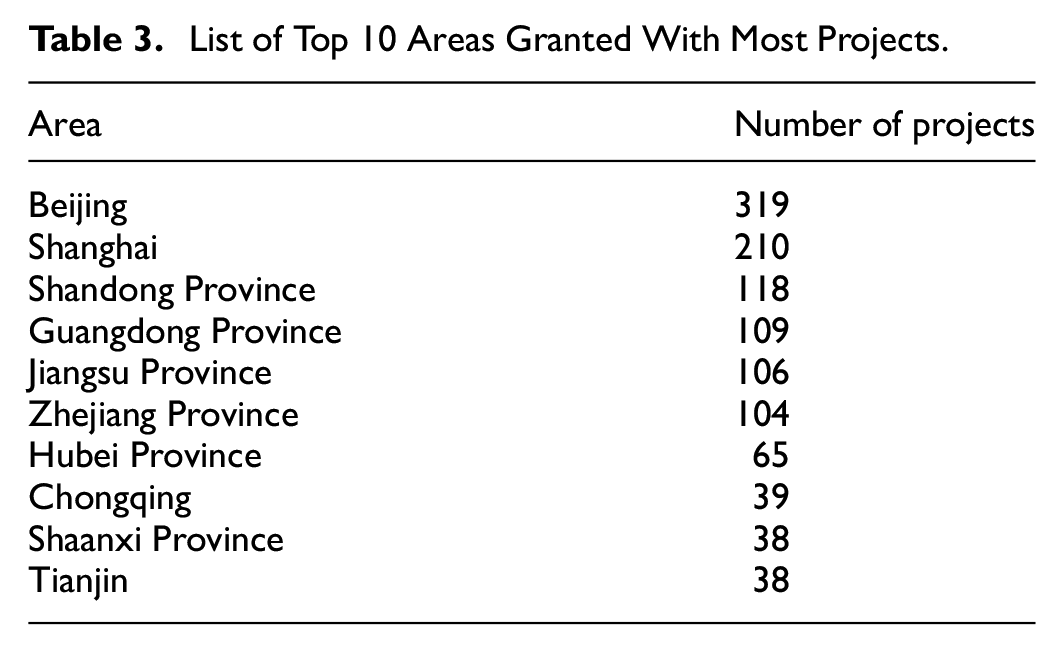
This regional distribution reflects broader patterns of educational attainment and economic development in China. Eastern provinces, with their financial strength and dense populations, naturally attract and nurture more talent. Although Chongqing and Shaanxi are in central and western China, their concentration of colleges and skilled translators stands out. The distribution of CATP translators shows clear regional disparity, with eastern provinces significantly outperforming their western counterparts. These imbalances reflect unequal access to educational and institutional resources, which shape who gets to participate in national translation projects. As a result, translators from less developed regions may be underrepresented, intensifying asymmetries in cultural visibility and discourse power.
Translators’ Thematic Trend
Based on all the 1952 project titles published in The Result of Granted Projects, Figure 6, a word cloud, was created to visualize thematic keywords. In the word cloud, the size of each word corresponds to its frequency of occurrence, with larger words indicating higher frequency. Additionally, Table 4 lists the top ten most frequent words. The analysis reveals that “China” (中国) appears with the highest frequency, significantly surpassing all other terms. Following this, “research” (研究) ranks second with 300 occurrences, “culture” (文化) ranks third with 125, “development” (发展) is fourth with 100, “society” (社会) ranks fifth with 95, “economy” (经济) is sixth with 88, and “philosophy” (哲学) comes seventh with 78 occurrences. These high-frequency words basically cover the main aspects of the humanities and social sciences.

Word cloud of thematic words.
List of Top 10 Frequent Words.

This thematic trend matches the core objectives of the CATP, which aims to enhance China’s academic influence and foster cross-cultural understanding. Furthermore, it also embodies the requirements for the selection of translation in the application announcement, which emphasizes the inclusion of academic works related to humanities, social sciences, and traditional Chinese culture. Additionally, the thematic trends correspond with the academic backgrounds of the translators and the disciplinary characteristics of their affiliations.
Discussions
Translators’ Backgrounds and State Ideological Goals
Based on the analysis of translators’ backgrounds, it can be observed from above that translators involved in CATP are predominantly senior scholars from top-tier institutions, with over 90% holding doctoral degrees and more than half affiliated with “985/211” universities. This elite composition reflects the state’s preference for highly credentialed academics capable of representing national scholarship on the global stage. The selection of such translators reflects a deliberate policy choice aimed at strengthening China’s global discourse power through the authoritative voice of academic elites.
Moreover, the thematic focus of the translated works indicates that the translators’ academic and institutional backgrounds are deliberately matched with the state’s ideological goals, ensuring consistency between individual disciplinary expertise and national interests. Translators’ backgrounds thus serve as a filter through which the state selectively channels knowledge production, advancing narratives that reinforce China’s global academic and ideological presence.
In this context, translators’ backgrounds serve not only as professional qualifications but also as instruments for conveying state ideology. Through the strategic appointment of elite academics, the CATP shapes a translator group that not only meets the standards of academic excellence but also reflects the state’s ideological expectations, thereby serving both its pursuit of global academic influence and the maintenance of internal ideological coherence.
Policy Influence on Translator Practices and Identities
An analysis of the two translation policy documents reveals a high degree of consistency between policy criteria and the profiles of selected translators, as there are hardly any translators who don’t meet the requirements published in the policy documents. These policies, established and enforced by centralized authorities, set clear boundaries for translator eligibility and define their operational roles, including the scope and direction of translation work. Within the framework of STP, this regulatory structure demonstrates significant control over both the construction of translator identity and the selection of translation content.
The analysis of translators’ backgrounds manifests a deeper correlation between state policies and translators’ identities. This practice reinforces the translators’ role as language intermediaries of state objectives, embedding their identities within the framework of STP. The thematic focus on showcasing China’s strengths highlights the STP’s self-benefit nature, using translation to project national achievements abroad. This reveals a tightly controlled system that prioritizes state interests while shaping translators’ identities and practices.
As illustrated in Figure 7’s depiction of the interplay between language, translator, state, and ideology. Translators operate within a hierarchical framework where translation policies, as conduits of the state-driven institutions, disseminate the power and ideology of the state, ultimately shaping their identities. In the context of STP, translators, often academic elites with expertise in foreign languages and cultural studies, are strategically positioned to serve the state’s ideological and cultural objectives. They exemplify Gramsci’s concept of “organic intellectuals,”“The intellectuals are the dominant group’s ‘deputies’ exercising the subaltern functions of social hegemony and political government” (Gramsci, 1971, p.12).

The interplay of language, power, and ideology in the state translation program.
However, the translators’ role is also characterized by a scale between their professional autonomy and the constraints imposed by the state. While their work is shaped by state mandates and institutional requirements, compelling them to abide by the national ideological priorities, they can also take the initiative to navigate the ethical and professional dilemmas arising from their subordination to state interests, since they are not merely producers of knowledge but also active agents in disseminating the ideology of the dominant social group. This duality reflects Gramsci’s observation that organic intellectuals are deeply embedded in power structures, serving as intermediaries between the ruling class and the broader society. In this sense, translators act as “deputies” of the state, facilitating the construction and propagation of its ideology, knowledge, and culture through translation.
In CATP, these translators serve as political signifiers, knowledge disseminators, and cultural mediators. As political signifiers, they translate texts that reinforce the state’s ideological narratives, thereby contributing to the consolidation of its discourse. As knowledge disseminators, they facilitate the global circulation of Chinese academic thought, enhancing the country’s cultural soft power. As cultural mediators, they negotiate between Chinese and foreign audiences, balancing cultural differences while advancing state objectives. This multifaceted role underscores Gramsci’s insight that organic intellectuals are not passive conduits of ideology but active participants in shaping and sustaining the dominant group’s hegemony.
Limitations and Future Research
This study is primarily based on publicly available data, which may limit its comprehensiveness and depth. The lack of direct input from translators—such as interviews or surveys—restricts the ability to capture nuanced perspectives on their professional practices and experiences. Furthermore, the analysis is limited to public online sources, potentially overlooking less visible aspects of translators’ roles and identities. Future research could address these limitations by employing qualitative methods, such as interviews or case studies, to explore translators’ experiences and their interactions with state policies more deeply. Expanding the scope to include cross-national comparisons of similar translation programs could also provide broader insights into the global dynamics of state-driven translation initiatives.
Moreover, current translation policies often prioritize efficiency over ethical integrity. To address these limitations, future policy frameworks should enhance transparency, involve translators in policy development, and establish mechanisms for reflecting on policy-imposed boundaries. Such measures would help safeguard translators’ expertise and promote more open forms of cultural communication.
Conclusion
This study has investigated translators in terms of who they are, including their gender, age, language, degree, academic title, affiliation, location, and thematic trend, what they translate and how should they translate from the perspective of translation policy, including application announcement as well as results of granted projects within the framework of STP.
The findings indicate that both female and male translators participate in CATP, with women slightly outnumbering men. The majority of translators are aged between 35 and 55, with the youngest being 27 and the oldest 84 at the time of project approval. Nearly 60% of the translations are into English, followed by Korean, Russian, and Japanese. Although English remains the dominant target language, there is a growing involvement of translators for Asian languages and languages spoken in countries along the Belt and Road Initiative, signaling increasing linguistic diversity in the CATP. Over 90% of the translators hold a PhD, with 8.17% holding a Master’s degree and only 1.43% holding a Bachelor’s degree—mostly in minority languages or with extensive translation experience. About 42.11% of translators hold associate senior professional titles, 34.55% hold senior titles, and 23.34% are at the intermediate level. More than half of the translators are affiliated with 985 and 211 project universities. Geographically, the majority are concentrated in eastern China, particularly in Beijing, Shanghai, and the southeastern coastal provinces. The translated content aligns with the translators’ academic backgrounds and the disciplinary focus of their institutions, encompassing key areas of Chinese humanities and social sciences, including politics, economics, society, culture, philosophy, and history.
This study reveals that state-sponsored translation is a politically embedded practice where language, ideology, and institutional power converge, shaping translators’ identities as Gramscian “organic intellectuals.” In the CATP, translators function less as neutral mediators and more as state-certified actors conveying official narratives to global audiences. Their identities are strictly regulated by translation policies that define who translates, what gets translated, and how, ultimately constructing a standard, even exemplary translator role that balances academic authority with political conformity. Translation thus emerges as both a cultural endeavor and a deliberate tool of national soft power.
Footnotes
Acknowledgements
We extend our gratitude to the editors and reviewers for their valuable comments and recommendations.
Author Note
Translations provided are my own unless otherwise stated.

Ethical Considerations
This article does not contain any studies with human participants performed by any of the authors.
Consent to Participate
This article does not contain any studies with human participants performed by any of the authors.
Funding
The author(s) received no financial support for the research, authorship, and/or publication of this article.
Declaration of Conflicting Interests
The author(s) declared no potential conflicts of interest with respect to the research, authorship, and/or publication of this article.
Data Availability Statement
The datasets generated during and/or analyzed during the current study are available from the corresponding author on reasonable request.