



Abstract
In the era of globalization, institutional translation has become increasingly important. The Panda Books Series (PBS) is an exemplar of institutional translation that translates and disseminates Chinese literature to other parts of the world. The present study provides a multimodal analysis of the book covers in the PBS in terms of their visual meanings and intersemiotic relations. Analysis of 129 front covers and 64 back covers reveals that a positive and non-threatening image of China is constructed by characterizing China as a gender-equal, peaceful, and rural country, while a modern and approachable image of Chinese writers is created to highlight the authorship. The verbal and visual modes that are present on the covers often repeat the same information to reinforce positive images of China and Chinese writers, which is instrumental in realizing the goal of the PBS. It is argued that the agency of subjects at different levels, that is, the political ideology of the state, the governmental institutions involved, and translators and editors, all combine to shape the book cover designs of the PBS. This study contributes to research on institutional translation, especially state translation program, from a multimodal perspective.
Introduction
In recent years, institutional translation has attracted considerable scholarly attention in translation studies. The notion of “institutional translation” refers to “the act or product of linguistic mediation carried out by individual or collective actors on behalf of or for the benefit of institutions” (Kang, 2020, p. 256). As the organizers of translation activities, translating institutions play an important role in the production and dissemination of translation products. However, as Mossop (1988, p. 65) astutely points out, translating institutions are often “missing factors” in discussions of translational phenomena. Up to the present, a number of studies in this area have considered particular translating institutions from various cultures, eras and ideological backdrops (Koskinen, 2011, p. 56), but few studies have dealt with institutional translation practices outside Europe. Thus, further exploration into and reflection on institutional translation practices in diverse historical and cultural contexts are required (Kang, 2020, p. 260); these might include yichang (an official institute for the translation of Buddhist scriptures) in the Tang Dynasty in China, the Turkish Translation Bureau, and the Middle East Media Research Institute (MEMRI). This article sets out to investigate the book covers in the Panda Books Series (PBS), one of the most influential state translation programs aiming to introduce Chinese literature to other parts of the world, launched by the Foreign Language Bureau (FLB), a state translating institution in China.
The reasons why book covers in the PBS were chosen as our research object are threefold. First, book covers, together with forewords, epigraphs, reviews, and other similar matter that are placed within or outside a book, constitute paratexts that serve as thresholds of interpretation mediating between book, author, publisher, and reader (Genette, 1997). Though some previous studies have noted the important role of covers in the state translation practice and included them in paratextual analyzes (e.g., Hou, 2013; X. Yu, 2017), they usually pay scant attention to the visual aspects of cover pictures, taking into account only one or two elements such as the color or the blurb. Visual paratexts can clearly afford valuable insights into translation phenomena (Pellatt, 2013a, 2013b). As the outermost paratext and a marketing strategy, book covers are closely linked with the “direct and principal” intention of translating institutions (Genette, 1997, p. 16). Therefore, examining them enables us to investigate the socio-cultural forces that give shape to the translations that are produced by translating institutions (Batchelor, 2018, pp. 34–36). Second, the PBS itself is an interesting translation practice driven by the source culture which deserves scholarly attention (Chang, 2015, 2017). Since the inception of the paradigm of descriptive translation studies, scholars have been focusing on translation activities taking place in the target culture; as Toury (2012, p. 23) notes, “translations are facts of target cultures.” However, the PBS is a type of source-initiated translation (Chang, 2015) or outbound translation (Wang, 2012), launched by the Chinese government whose culture was peripheral compared with the dominant Western culture. This constitutes a deliberate translation act that has a hidden intention (Dollerup, 1997, pp. 46–47). Finally, the FLB attaches great importance to book cover design; for example, in 1985 it invited American book binding professionals to train its staff (Dai & Chen, 1999b, p. 69). In other words, the covers of PBS are worthy of exploration.
Book covers are multimodal in nature where different modes such as words and images interact with each other to produce meanings. Compared with limited attention to covers in the filed of the multimodal studies (H. Yu & Song, 2017, p. 604), recent research on book covers in translation studies has started to adopt a multimodal approach. For example, Chen (2018) discusses the intersemiotic translation between verbal and visual materials on the covers of bilingual picture books from the perspective of social semiotics. H. Yu and Song (2017) investigate the congruence between cover image and verbal texts in presenting an image of a Zen master in two English translations in terms of their interactive meanings. Li et al. (2019) analyze how visual and linguistic patterns are applied together to realize ideological manipulation in translated book covers. All these studies attest to the validity and applicability of multimodal theories in research on translated book covers, but their research objects are restricted to a single source work. Some studies have selected larger numbers of covers (e.g., M. Jiang, 2021; Mossop, 2018; Serra-Vilella, 2018; Torres-Simon, 2015), their analyzes depend largely on the researchers’ subjective judgments and interpretations, lacking a theoretical framework to systematically capture visual meanings as conceptualized in Kress and van Leeuwen’s visual grammar (2006) which will be used in this study.
Thus, this study attempts to investigate the visual meanings and intersemiotic relationships on book covers in the PBS by adopting a multimodal approach, and to explore the socio-cultural reasons why covers are shaped in this way. In so doing, this study hopes to shed more light on institutional translation (practices), especially state translation programs.
The Panda Books Series and the Foreign Language Bureau
The PBS, launched by the FLB in 1981, has made a huge contribution to translating and disseminating Chinese literature in foreign countries. This idea was initially proposed by Yang Xianyi (
Then in 1987 the Foreign Literature Press (FLP) was established as an affiliated organization of the FLB and began to take over the operation of PBS. During the 1990s the sales of PBS books gradually decreased because of the domestic structural reform in publishing and the declining demand for such publications in the international market, and in 2001 the FLP was closed and the PBS came to an end. According to Geng’s (2021, p. 59) recent statistics, up to 2007 the PBS had produced approximately 200 items of translation, 134 of which were in English. If the reprints are included, the English translations total more than 200 items. Most of publications in the PBS are literary works such as fiction, poetry and drama, but other practical writings related to Chinese culture are covered as well.
The Foreign Language Bureau (FLB), now called the China Foreign Languages Publishing Administration, is a governmental translating institution in China. It was established in 1949, the year when the People’s Republic of China was founded. Initially it was called the International News Bureau and mainly undertook the task of international publicity (Dai & Chen, 1999a, p. 1). It took charge of transediting news and publishing political propaganda books for foreign readers. In 1952 it was reformed and renamed the Foreign Languages Press, responsible for editing, translating, and publishing books from Chinese into foreign languages (Dai & Chen, 1999a, p. 23). Translating Chinese literature to foreign countries was one of its major activities. Then in 1963 it was upgraded and renamed after the FLB, rising to become a principal institution for the translation of Chinese literature (F. Jiang, 2013, p. 70). Although it underwent other transformations later, its fundamental status and mission have not changed; it is a state translating institution with a degree of full-fledged institutionalization (Koskinen, 2014, p. 489), whose aim is to introduce and translate China to other parts of the world.
Multimodality
Holding that language is only part of a multimodal ensemble, multimodality is concerned with a multiplicity of communicational forms or modes that people use, such as sounds, images, gestures, etc., and the relationships between them (Jewitt, 2009, p. 14). Based on Hallidayan Systemic Functional Linguistics (SFL), visual grammar, developed by Kress and van Leeuwen (2006), provides a usable framework to analyze visual images. It proposes that images are functionally similar to language and may be assigned with three metafunctions: representational, interpersonal, and compositional functions (Kress & van Leeuwen, 2006, pp. 42–43). In other words, visual images can represent the world, establish interpersonal interaction and constitute a recognizable kind of text.
Therefore, visual grammar will be applied to analyze the visual meanings of book covers in this study according to certain sub-systems:
Representational meaning: represented participants, process types.
Interpersonal meaning: gaze, social distance, horizontal/vertical perspective, modality.
Compositional meaning: framing, information value, salience.
Although visual grammar can describe pictorial meanings, it may appear fruitless in handling a massive number of pictures because it is always “qualitative” and concentrates on “each text or text-genre” (Bell, 2004, p. 15). Considering that there are many distinctive covers in the PBS, we decide to introduce visual content analysis to help us to make generalizations about what is shown on a large number of pictures. This analysis technique can tell us “how frequently various visual features appear” on the PBS covers (Bell, 2004, p. 10), so that the comprehensive meanings of book covers produced by the PBS, or rather by the FLB, can be better construed.
Like corpus linguistics, visual content analysis requires “an empirical (observational) and objective procedure for quantifying” the recorded visual representation with “reliable” and “explicitly defined” categories (Bell, 2004, p. 13). It is stressed that categories of visual content shall be “explicitly and unambiguously defined and employed consistently” (Bell, 2004, p. 15). Here we introduce two key notions, namely variable and value, which are crucial to determine specific categories. The former denotes “any range of options of a similar type which could be substituted for each other” (Bell, 2004, p. 15), while the latter can be employed to describe certain features in a variable. For example, the represented participants’ gender role (variable) can be classified as male or female (value).
The intersemiotic relationships among different modes are another important aspect of multimodality. In the domain of text-image relationships, Barthes (1984) pioneering research provides a three-way classification: anchorage (text supporting image), illustration (image supporting text), and relay (balance between text and image). Integrating Barthes’ classification with Halliday’s (1985) logico-semantic relations in SFL, Martinec and Salway (2005) adapts the extant taxonomy into elaboration, extension, and enhancement. They agree that words and images work together to produce meanings. However, there is also a simultaneous semiotic relationship of identity and differentiation (Unsworth & Cléirigh, 2009, p. 154); in other words, the verbal and the visual may achieve dissonance within a single page. This also happens in book cover design, as found by M. Jiang (2021). Therefore, Lemke’s (1998) categorization and Moya and Pinar’s (2009) coding system are adopted in this study to explore the ideational intersemiotic relations (i.e., the “what”) on a single cover page in terms of:
Symmetrical interaction: words and images repeat the same information.
Complementary interaction: in order to provide additional information, images amplify the meanings of the word, and vice versa.
Contradictory interaction: words and images contradict each other or express totally different things.
In a nutshell, this study tries to investigate the visual meanings and intersemiotic relations shown on the book covers in the PBS. Figure 1 presents the analytical framework for the study.

Analytical framework of the multimodal analysis used in the study.
Methodology
Data Selection
Geng’s (2010), pp. 153–169) pioneering work on the PBS list in his doctoral thesis is our major data source. We also acquired data from an online book purchase website called Beijing Ancient Castle Books (
Moreover, only books published prior to 1999 fell within our research purview. While the PBS continued in operation until 2001, except for reprints, most books of the series published after 1998 were bilingual versions. Judging from their covers, those bilingual volumes seem to have been designed for domestic readers who are interested in English learning; this can also be evidenced by the use of a leaf-like icon coupled with a wordmark “University Reader” to replace the PBS logo. This was because the demand for English learning at that time was huge, in contrast with the lukewarm response from the English-speaking world toward Chinese learning (Xu & Geng, 2010, p. 51). These books clearly deviated from the original purpose of the PBS in translating and disseminating Chinese literature to overseas countries. Furthermore, if reprints were almost identical with the previous versions, with only minor changes such as the color used, they were also excluded from our data. In this way, we gleaned a final total of 129 book covers spanning from 1981 to 1998.
Data Analysis
This article presents a multimodal account of the book covers in the PBS. Specifically, it first describes the visual meanings and intersemiotic relationships on the cover pictures. Then it explores the possible reasons underlying why they were designed is this way, based on institutional documents, autobiographies, and narrations produced by translators and official staff in the FLB.
In the description stage, first, the visual data were manually processed and coded under the guidance of visual grammar and visual content analysis. Specifically, the three metafunctions of each cover picture were identified in the form of variable and value. The frequency of occurrence of each dimension was counted. Then the representational meanings produced by the visual aspects were compared with the semantic meanings of the titles to investigate whether the verbal and visual aspects on a particular cover page were symmetrical, complementary, or contradictory. To ensure the credibility and trustworthiness of the analysis, two authors co-coded all pictures independently and a research assistant cross-checked the entire data analysis. All three researchers, who are well-trained in multimodality, reached a high agreement percentage (91.4%) in the data analysis, and any divergent views were resolved through discussion. In what follows, our coding system is presented.
Representational metafunction means that any semiotic mode can “represent aspects of the world as it is experienced by humans” (Kress & van Leeuwen, 2006, p. 42). In this study we focused on the represented participants (RPs) because they are the core carriers of representational meanings, like the subject and/or object in a sentence. According to our observation, the RPs in the PBS could be divided into three types: character, scenery, and other. The boundary of the first two types may be blurred, since characters and scenery occasionally co-occur. To avoid confusion, this was dealt with as follows: when the cover presented many minimized and faintly painted people in a vivid landscape background, such as Liu E’s (
The interpersonal metafunction means that every semiotic mode can project the relations between the producer and the viewer. It can be realized through gaze, social distance, perspective, and modality. In terms of “gaze” variable, if RPs are making eye contact with the viewer the covers will be regarded as “demand” images; otherwise they are “offer” images. Social distance is related to the size of frame of shots (Kress & van Leeuwen, 2006, p. 124) and can be divided into three values: close, medium and long. In a close shot, the heads and shoulders of “character” RPs are shown while other RPs are shown in part. In a medium shot, “character” RPs are cut off above their knees while other RPs may be presented “in full but without much space around” (Kress & van Leeuwen, 2006, p. 127). In a long shot, more elements are incorporated as well as full-body descriptions of RPs.
The “perspective” variable can be sub-divided into horizontal and vertical. The horizontal comprises two values, frontal and oblique, while the vertical contains three values, namely high, medium, and low. Modality, the final variable, is elusive in definition due to many coding orientations (Kress & van Leeuwen, 2006, p. 165). Here we chose to use the “naturalistic orientation” that seems to be universally accepted. The “modality” variable was categorized into three values: high (hyper-real photo, color photo, black-and-white photo), medium (sketched drawing), and low (sketched caricature, line sketch) (Royce, 1999, p. 195). The reason why black-and-white photos were coded in the high modality in this study is that color photography was not common in China in the 1980s.
The compositional metafunction concerns how to integrate the two metafunctions above into a meaningful whole. Information value is linked with the placement of elements and endowed with three sets of values: left and right; top and bottom; and center and margin. Salience is affected by relative size, which can be measured by how much space the pictorial elements occupy. Framing is decided by the presence or absence of framing devices such as dividing lines, white space, and discontinuity of color.
To examine the ideational intersemiotic relations of a cover, the representational meaning produced by the visual mode (as described above) was compared to the semantic meaning of the titles according to the three relations of symmetrical interaction, ideational complementarity, and contradictory interaction. For example, the painting of a beautiful mountain village on covers of Gu Hua’s (

Front cover of Gu’s (1983)A Small Town Called Hibiscus (From A Small Town Called Hibiscus (front cover), by Y. Huang 1983, Chinese Literature Press. Copyright 1983 by the Chinese Literature Press.).
According to social semiotics, signs are motivated rather than arbitrary. Their meanings are constructed in relation to the sign-makers’ agency and the specific context (Kress & van Leeuwen, 2006, p. 7). Because it is subject to various socio-cultural constraints, the sign-making process is socially located. Therefore, we attempt to contextualize our descriptive results to explain why book covers in the PBS were shaped as they were, so that the purpose of the state translation program launched by the FLB can be better understood. It is hoped that our procedure might shed light for similar practices in the future.
Results
The numbers of covers with visual elements amount to totals of 129 on the fronts of books and 64 on the backs. In what follows we will analyze how visual meanings and ideational text-image relationships are constructed on the front and back covers in the PBS.
Front Covers
The layouts of the front covers of PBS books are almost uniformly designed, including the title, author, illustration, and PBS logo. Sometimes the name of the author does not appear if the book is an anthology. In comparison, the names of the translator and the publisher are almost always omitted.
Table 1 summarizes the ideational, interpersonal, and compositional meanings produced by the visual elements on front covers. In terms of the realization of representational meanings, we found that 67 of the RPs are characters, more than half of the total. The “scenery” RPs account for two-thirds of the previous group (44), while the “other” RPs only amount to 18, the lowest proportion of all. As to the “character” RPs, there are 21 and 24 covers that exclusively present female and male figures respectively. The rest are covers depicting mixed genders (22), in which people are mostly represented as a couple. The balanced ratio demonstrates that there is no marked gender preference or discrimination in the cover design. In addition, the majority of represented men are wearing long robes and behaving kindly, creating a historical aura. They are mainly not depicted as masculine, strong, or aggressive. This contrasts sharply with the fact that a larger number of women in the images are dressed in a relatively modern but modest fashion. They are not depicted as sexually seductive; this female wardrobe choice stands in contrast to the exotic stereotype whereby women from exotic countries are sometimes portrayed as being freely sexually available (Khoo, 2007, p. 6). This is also different from the sexualized Asian women often shown on translated book covers produced by the Western publishers (e.g., Furukawa, 2013; M. Jiang, 2021). In fact, many of these female characters are authors themselves, as shown in the anthology entitled Seven Contemporary Chinese Women Writers (Ru et al., 1982; see Figure 3). The number of “character” RPs who are shown wearing rural garments or living in the countryside is relatively small (12), but three times the number of people shown in urban environments. Furthermore, it is interesting to note that over 90% of the “character” RPs turn around at different angles, and some even have their backs to the viewer, as if they wanted to hide themselves or were shy about communicating with the readers.
Representational, Interpersonal, and Compositional Meanings of the Visuals on the Front Covers.

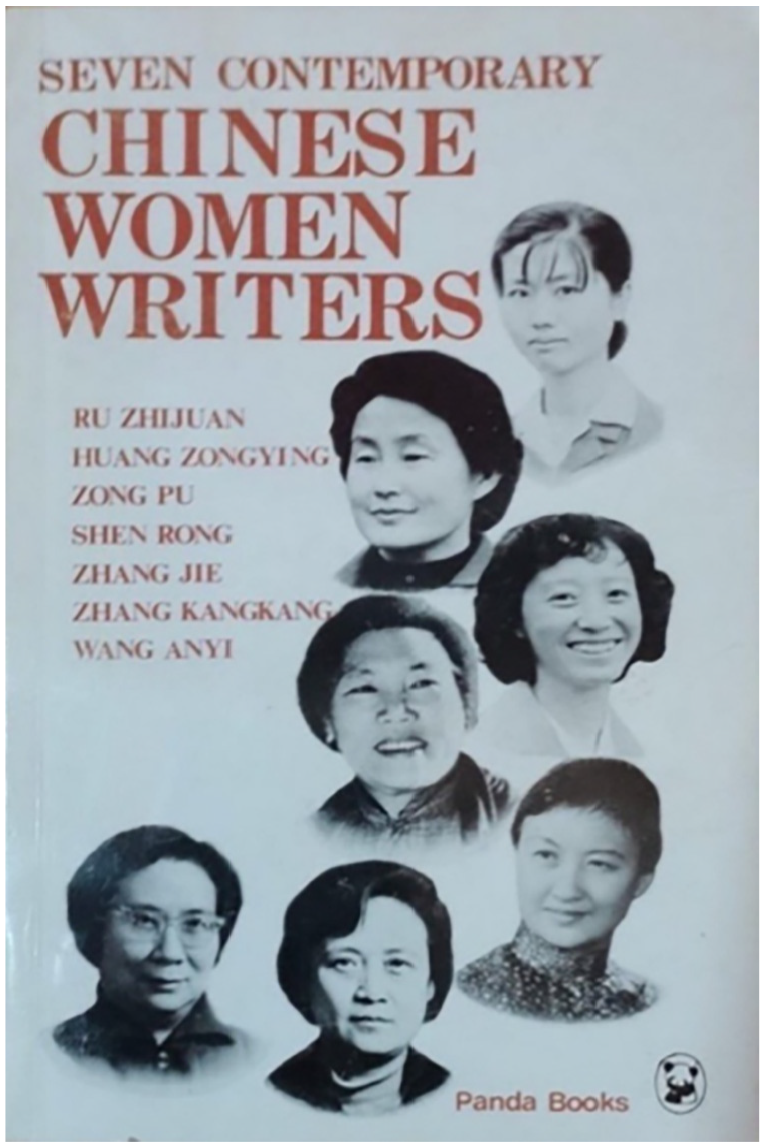
Front cover of Seven Contemporary Chinese Women Writers (1982) (From Seven Contemporary Chinese Women Writers (front cover), by L. Li 1982, Chinese Literature Press. Copyright 1982 by the Chinese Literature Press.).
Among the “scenery” RPs, 34 covers show a depiction of the countryside with several recurrent elements such as cottages, rivers, lakes, mountains, trees, and flowers, to name but a few. Though the works relate to different parts of China, the occurrence of covers featuring water towns in the south of the Yangtze River, where the landscape is gorgeous, tranquil, and elegant, is 11. This figure is significant because covers associated with regional areas only account for 12 instances. Other covers merely present common rural scenes, even though the work’s title and theme might contain strong regional connotations. For instance, Ma Lihua’s (
On the whole, the 34 rural covers depict a peaceful and serene image of the Chinese countryside. In contrast, there are only six covers associated with urban elements, showing either traditional Chinese urban buildings or modern urban cities exhibited in the low modality. Zhang Xinxin (
Among the “other” RPs, traditional cultural symbols such as the Chinese dragon and phoenix (3), Chinese calligraphy (3), eight-diagram-shaped appetizers (1), and Tibetan totems (1) are represented on the cover pictures, creating a historical atmosphere. Only five cover pictures depict the modern elements such as cartoons, tangrams, or modernist paintings.
In terms of interpersonal meanings, nearly 90% of the RPs address the viewer indirectly and make no eye contact as far as gaze is concerned. This can be partly explained by the high percentage of the “scenery” RPs where the “character” RPs are minimized or invisible. However, even when the “character” RPs dominate on the cover, they are usually looking at each other or at something beyond the viewer, expressing a low willingness to interact with the viewer. Images of this kind are “offers,” meant to be impersonal “objects of contemplation” (Kress & van Leeuwen, 2006, p. 119). This weak interaction is also reflected in social distance; more than 70% of the pictures are shot at a long distance, while only four pictures are composed by a close shot. Although they enable the viewer to observe more visual information from a cover, long shots can alienate them and make them feel distant. In terms of the few close shots, a careful inspection reveals three quarters of them from covers of anthologies of writing by contemporary Chinese women writers (see Figure 3), and these images indicate that the authors are kind and friendly.
Analysis of the horizontal perspective unfolds is also consistent with the findings above. Approximately 65% of the RPs are presented from an oblique axis, as if they are saying, “we come from a different world.” Consequently, there is a sense of detachment between the RPs and the viewer. According to the vertical perspective, the majority of the RPs are seen from a level view, suggesting that the RPs hope to build an equal relationship with the viewer. Finally, the most common modality is low-to-medium, since most of the pictures are Chinese woodcuts or watercolor paintings that are relatively distant representations from reality.
In creating compositional meanings, the framing applies to about three quarters of the covers, which once again creates detachment and social distance between the RPs and the viewer. On the one hand there is a sense of objectivity, but on the other hand this implies a kind of disunity between the verbal and the visual. In terms of information value, RPs are more likely to be placed in the center bottom, which suggests that they are treated as being real and important. In other words, they provide the viewer with more specific, practical, and essential information (Kress & van Leeuwen, 2006, p. 187). Furthermore, nearly all pictures take up a large area of the covers, which increases their salience.
In terms of ideational intersemiotic relations, the occurrence of symmetrical interaction is as high as 65 instances, accounting for the highest percentage (50.4%). The occurrence of contradictory interaction is 35 (27.1%), while that of complementary interaction is 29 (22.5%). In symmetrical interaction, the title is usually placed at the top, with the illustration presented below and expressing the same things as the title. In this way, the visual can be viewed as a kind of intersemiotic translation in which the meanings produced by the two modes are equivalent. When they work in line with each other, their combined meaning is conveyed in a stronger and more expressive way.
It is also worth mentioning that the semantic meanings of these titles are often associated with humans, places, animals, plants, and objects. Take Tie Nie’s (
In complementary interaction, the meanings of the titles are general and abstract, always bearing the role of genre distinction—for example, the covers of Contemporary Chinese Short Stories Zhang et al. (1983) shown in Figure 4. This title informs the readers of what genre this work belongs to and when it is written. The visual portrays a village by a lake with many boats moored alongside. In this way the visual extends the meaning of the verbal aspect, implying to readers that the image depicts a scene of contemporary China, and the target readership will gain easier access to the book’s content with the added information from the image. However, it is worth noting that this complementarity may be selective. In fact, Contemporary Chinese Short Stories (1983) encompasses a broad cross-section of regional writing in China from the 1980s. However, the cover picture is taken from Huang Pimo’s (

Front cover of Contemporary Chinese Short Stories (1983) (From Contemporary Chinese Short Stories (front cover), by P. Huang 1983, Chinese Literature Press. Copyright 1983 by the Chinese Literature Press.).
Contradictory interaction takes place when words and images deliver entirely different meanings and may even contradict each other. In most cases of this type of interaction on the PBS covers, the meanings of the titles have a negative connotation, which the visual components try to hide or tone down. Ai Qing’s (

Front cover of Ai’s (1982)The Black Eel (From The Black Eel (front cover), by L. Qin, 1982, Chinese Literature Press. Copyright 1982 by the Chinese Literature Press.).
Back Covers
The design of the back covers in the PBS is also relatively fixed and uniform. Roughly speaking, there are two main types. The first type only provides verbal information about the book, while the second adds a personal photo of the author either above or below the verbal information. It is interesting to note that the names of illustrators or cover designers are sometimes placed at the bottom of the back cover, which contrasts markedly with the absence of the translators’ names on the front covers.
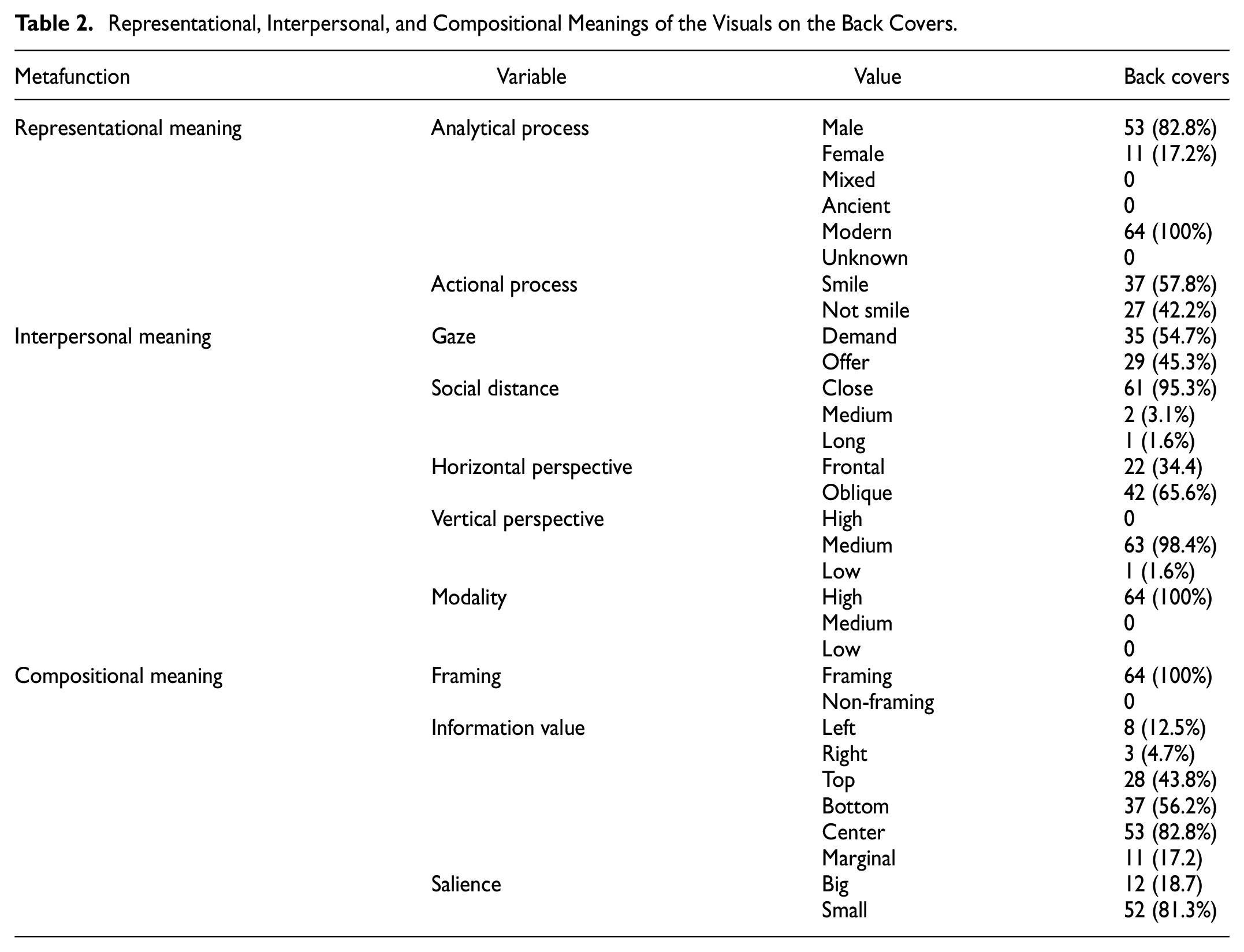
Table 2 summarizes the ideational, interpersonal, and compositional meanings produced by the visual elements on back covers. As shown in Figure 6, ideationally the RPs are the authors themselves, who are shown individually. The images usually show their upper body only, with focus placed on their faces, while the background setting is cropped. The overall background looks fuzzy. Such decontextualized photos channel attention to the writers themselves, rather than to their surroundings. Different from the front covers, which are prone to show gender equality, only 11 female writers are presented on the back covers, making up less than a fifth of the total. In addition, although it is sometimes difficult to judge because of the restricted space, all of them seem to be wearing modern clothes such as suits and shirts, which may be seen as a sign of their modernity. In fact, however, some of the authors of the PBS books are pre-modern or ethnic minority writers whose habitual dress codes are likely to be different, such as Liu E, Mala Qinfu (
Representational, Interpersonal, and Compositional Meanings of the Visuals on the Back Covers.

Back cover of Ding Ling’s Miss Sophie’s Diary and Other Stories (1985) (From Ding Ling’s Miss Sophie’s Diary and Other Stories (back cover), by R. Cai, 1985, Chinese Literature Press. Copyright 1985 by the Chinese Literature Press.).
Interpersonally, 35 writers make direct eye contact with the viewer, which means that “demand” images make more than half of the back covers containing pictures (54.7%). The writers’ direct gaze signals that they are demanding something from the viewer. Possibly they wish to welcome the viewer to enter their inner world and build a positive relationship. Almost all the writers are shown in close-up or medium shots, since they are always cut off at the level of or above their upper body. This close social distance reveals that they wish to develop a good rapport with the viewer. Similarly, nearly all the photos are shot from a level angle, suggesting their desire to build an equal relationship. In terms of horizontal perspective, 42 writers are presented obliquely, making up two-thirds of the total (65.6%). This is a surprisingly high percentage of images signaling limited involvement with the viewer and it seems inconsistent with the findings above. This may be because the writers are trying to signal their difference from Anglophone writers, refusing to be homogenized and maintaining their own identity. In terms of modality, the natural-looking photos are almost all black and white except for a few in color, which to some extent gives the viewer a sense of reality. Textually, all the photos are framed in a rectangular shape, with their faces taking up most of the image. More than half of them are placed in the bottom center of the back cover layout, which means that the writers are real and important.
Different from the front covers, the visual and verbal modes on the back are highly symmetrical (93.8% of the total). To be specific, the visual part presents the photos of writers, while the verbal part states the book’s authorship and tells the reader who the writer is. Some degree adjectives are used in the verbal mode to proclaim the writer’s talents and fame, with words such as “one of China’s most versatile modern writers,”“one of contemporary China’s foremost writers,”“one of China’s best-known contemporary authors,” etc. (Martin & White, 2005). Thus the words not only serve an indexicalizing and introductory function for the photos, but also accentuate the modern and positive image of Chinese writers that is found in the representational meanings. The visual and the verbal repeat the same thing, so that the Chinese writers’ images are reinforced.
Discussion
The above analysis has yielded two major findings. First, ideationally, the front covers primarily present a gender-equal, peaceful, historical, and rural image of China, while the back covers depict a modern and friendly image of Chinese writers. Interpersonally, China’s image is portrayed as detached from the viewer, while the image of Chinese writers is presented as being involved with the viewer. They both establish an imaginary equality. It may be inferred that the image of China is constructed as equal and non-threatening, while the image of Chinese writers is constructed as equal and approachable. Textually, images of China and Chinese writers are presented in a prominent and objective manner.
Second, in terms of ideational intersemiotic relations, both the front and back covers exhibit a high percentage of symmetrical interaction. This means that the verbal and visual aspects work together to reinforce the images presented on the covers. However, when the semantic meaning of the verbal is abstract, ambiguous, or negative, the visual is likely to add selective information or deliberately deviate from it. This is why complementary and contradictory interactions appear on some front covers of books in the PBS. In what follows, we try to explain the design of the PBS book covers in relation to the agency of sign-makers in the state translation program.
Sign-makers are understood in a broad sense. This is because subjects in the state translation program are multiple and hierarchical, encompassing decision-making subjects (high-level), publicizing subjects (medium-level), and implementing subjects (low-level). In the name of strategic and self-beneficial goals, the sovereign state as the high-level subject entrusts the translation action to the translating institution as the medium-level subject; translators and editors are appointed or authorized as the low-level subject by the translating institution (Gao & Moratto, 2022; Ren & Gao, 2015). It is thus argued that the visual meanings and the ideational intersemiotic relations embodied in the PBS book covers can reflect the complex dynamism among these subjects at different levels.
First, the political ideology of the state has a decisive impact on constructing a positive and non-threatening image of China on the book covers. The PBS was self-initiated at a time when the Chinese government was making significant efforts to communicate with the outside world. As a form of cultural diplomacy, it was mainly deployed to “create interest, empathy, and understanding and to positively influence or attract the other side, the other country” (von Flotow, 2018, p. 194). According to FLB’s working scheme, it was claimed that
[T]he object of external communication is to increase the knowledge of people around the world about us, to promote their friendship with us, to create an international environment that is beneficial to our Four Modernizations and anti-imperialist struggles around the world.
The principle of external communication is to introduce our country in a truthful, colorful, vivid, and timely way (Zhou & Qi, 1999a, p. 470).
Put simply, the mission of the FLB was “to monopolize the outward flow of information about China” and “to present an image of China for outside consumption” (McDougall, 2011, p. 29). Book covers in the PBS clearly reflect this kind of state act, engaging in external communication to increase its soft power and cultural attractiveness. On the one hand, the positive image of China is intended to leave a good impression on and spark the interest of the target readership, at a time when concerns about the feminist movement, deurbanization, the environmental movement, and so on were prevalent in the West. Although the rural and ancient elements shown on the book covers may be interpreted as signs of anachronism and backwardness, they also show significant potential for further development, which might attract more foreign capital investment.
On the other hand, the portray of a non-threatening image of China was largely influenced by the diplomatic strategy of “keeping a low profile and striving to make achievements,” as proposed by Deng Xiaoping (
Second, the modern, lively, and approachable image of Chinese writers on these book covers is closely related to the participation of interested governmental organizations such as the Chinese Writers’ Association (CWA). According to the workflow of the PBS, the final decision on the publication of a translation is dependent on Chinese editorship rather than that of translators or foreign experts (Zhou & Qi, 1999a, p. 473). In fact, the CWA was directly involved in the text selection for the PBS (McDougall, 2011, pp. 70–71). As declared in its constitution, the CWA aims to strengthen literary exchanges, participate in international literary activities, and promote solidarity with writers around the world (China Federation of Literary and Art Circles [CFLAC], 2007), and encourages Chinese writers to make their voices heard on the international stage. This is consistent with one of the stated objectives of the FLB, which was to help Chinese writers to grow their global reputations through translation in the international literary field (Zhou & Qi, 1999b, p. 26). Obviously, the interests of the CWA are consistent with the political goals of the state and the literary and cultural goals of the FLB. They are both endeavoring to promote Chinese culture and literature globally, so that foreigners can gain much easier access to China. Due to these mutual interests and pursuits, a favorable image of Chinese writers is presented in a prominent way.
Third, the incongruency of different modes on the front covers may be caused by the divergence between the political ideology of the state/institution and the agency of the individual. This demonstrates that even though the state translation program is highly institutionalized, the agency of the individual translator or editor still exists (Hu, 2020; Pan, 2014). However, the degree of individual agency in such an institutional setting is limited. If the agency is different from the political ideology of the state it will be negotiated and comprised, which leads to the possibility of contradictory interaction between the words and images on the cover. Yang Xianyi, the chief editor of the PBS, sometimes engaged in a debate with upper-level leaders about text selection (Zou, 2004). He hoped to include brilliant pieces of Chinese literature with diversified themes and techniques according to his own taste; this was also shown by Yang’s lack of enthusiasm for political translation (Yang, 2003). However, as analyzed above, the political stance of the FLB was that the PBS program must strive to develop a positive image of China on the international stage. The top priority for censors in the FLB was to avoid “a negative image of China for foreign consumption” through translation (McDougall, 2011, p. 68). Therefore, the cover designs sometimes seem to reflect a degree of compromise and negotiation between the political ideology of the state/institution and the preferences of the individual. If a book contains a translated version of work that the state/institution opposes, the book cover may conceal those inappropriate elements for international communication. The meanings of titles were unlikely to change substantially since the translation norm in the FLB was “faithfulness, comprehensibility and elegance” (Xu & Geng, 2010, p. 53). The illustration on the covers was therefore manipulated in order to redeem the book.
On the other hand, this incongruency in the front covers may also be attributed to the fact that cover pictures are individual art works in themselves, rather than conforming to a customized design. As discussed in Section 5.2, the names of illustrators or cover designers sometimes appear at the bottom of the back covers. In the eyes of the FLB the cover design itself is a kind of external communication to publicize the painting, which in can in itself be beneficial to the construction of China’s image (Zhou & Qi, 1999b, p. 28). Such a consideration prompted them to select paintings created by established painters. It is therefore not surprising that the pictures may be incongruent with the words on some of the front covers.
Conclusions
This study presents a multimodal analysis of the visual meanings and ideational intersemiotic relations on the book covers in the PBS. The results show that ideationally, a gender-equal, peaceful, historical, and rural image of China is constructed on the front covers, while a modern and friendly image of Chinese writers is presented on the back covers. Interpersonally, a detached, equal, and non-threatening image of China appears on the front covers, while the image of Chinese writers on the back covers is involved and equal. Textually, the images of both China and Chinese writers are constructed in a prominent and objective way. As for ideational intersemiotic relations, the verbal and the visual almost always interact with each other symmetrically, which strengthens and reinforces the images presented on covers. When the semantic meaning of the verbal is abstract, unclear, or negative, the visual tends to complement the verbal information or hide negative connotations by providing positive ones. It has been argued that the agency of subjects at high, medium, and low levels in the state translation program (i.e., the political ideology of the state, governmental/translating institutions involved, and translators and editors) has a considerable impact on the design of book covers within the PBS.
This study contributes to research on institutional translation in two ways. First, in terms of its findings, it reveals that the book covers are important materials that are often manipulated by translating institutions to achieve different goals in translation activities. It also provides precise and nuanced insights into the Chinese state translation program, which is different from other institutional translation programs in a general sense. Self-benefit is the core pursuit of the state translation program, in order to serve the political goals of its state-level governance. In the case of outbound translation, the state translation program is mainly deployed to enhance the international image of the country and to safeguard its interests.
Second, in terms of the approach, this study extends the use of multimodal analysis in understanding of paratexts, in particular book covers in relation to translating institutions. Although the multimodal approach has been widely adopted in audiovisual translation studies in the past, its use is still limited in research on paratexts in translation studies. In the age of post-translation studies (Gentzler, 2016), this approach will become increasingly significant in the exploration of translational phenomena.
The findings in this study are far from perfect. One limitation lies in that some subtle multimodal meanings may be neglected in visual content analysis, and only the visual-text relationship within the single cover page is explored. Future research could unveil more complexity in multimodal meanings by integrating other multimodal theories and extending the study of intersemiotic relationships beyond the cover page. Another limitation is that the use of first-hand information in the present study is restricted to some extent. More archival materials should be collected and face-to-face interviews with agents of the FLB could be carried out to further explore the agency of translating subjects behind and within the translating institutions.
Footnotes
Declaration of Conflicting Interests
The author(s) declared no potential conflicts of interest with respect to the research, authorship, and/or publication of this article.
Funding
The author(s) disclosed receipt of the following financial support for the research, authorship, and/or publication of this article: This work was funded by the Key Entrusted Projects from China National Committee for Translation and Interpreting Education (Project No. TIJZWWT202001), the Fundamental Research Funds for the Central Universities (Project No. S20220207), the Zhejiang Provincial Social Science Foundation of China (Project No. 22ZJQN08YB), and the Graduate Education Program of Graduate School of Zhejiang University (Project No. 20220319).
