




Abstract
During the period (2013–2024), learning engagement has been extensively researched. We reviewed the evolution of university students’ engagement in learning over 12 years and explored research hotspots and trends for sustainable development. We applied a bibliometric analysis to visualize and analyze 1,231 articles on the topic of university students’ learning engagement. We collected the data from the Web of Science database between 2013 and 2024, using CiteSpace and VOSviewer bibliometric software to map the nature of international university students’ learning engagement research. This mapping was executed by analyzing the country/region of publications, institutions of publications, hotspots, and emerging topics/themes. The results yielded a great understanding of undergraduate education. There is academic consensus on effectively engaging students to actively participate in class activities. International cooperation among researchers should be expanded to strengthen exchange of learning experiences between developed and developing countries for sustainability and quality education.
Plain language summary
The past research on university students’ learning engagement focused on quantitative research and university students’ explicit learning behavior. Learning environments before and after COVID-19 have a significant impact on university students. Hence, this study reviewed university students’ learning engagement over 12 years from 2013 to 2024 to explore learning engagement, research hotspots, research cooperation between countries/regions and emerging trends and frontiers for sustainable development in education. We first collected 1231 articles on university students’ learning engagement from the Web of Science database from 2013 to 2024, and then applied a bibliometrics analysis to analyze the articles in the past 12 years to identify the research trends of university students’ learning engagement. This mapping was executed by analysing the country/region of publications, institutions of publications, hotspots, and emerging topics/themes. By using CiteSpace and VOSviewer bibliometric software to analyze the articles collected from WoS, we found that social capital, race, risk, university, programme, gender, transition, knowledge, family engagement, and language are the most relevant contributing factors in recent studies on this topic. The visual information provided based on our findings will help researchers and institutions focus on effective teaching methods and guidance, providing a valuable reference for researchers to highlight the latest research on the topic in high-quality journals. This review is also meant to ensure quality education and sustainability among developed and developing countries through cooperative research.
Keywords
Introduction
In recent years, scientometric and bibliometric analyses have gained significant traction within academic research (Bornmann & Leydesdorff, 2014). Scientometrics, which includes citation analysis and research evaluation, serves as a pivotal tool for analyzing and measuring scientific knowledge (Glänzel et al., 2019). The advancement of scientometric techniques has unlocked new technologies and opportunities for scientific inquiry, particularly in higher education domains such as online learning and university student engagement. While scientometric techniques provide valuable insights into the structure and trends of research, they often lack the depth to critically examine the theoretical foundations and contextual variations of learning engagement (Halverson & Graham, 2019). Existing studies have predominantly focused on measuring learning engagement quantitatively, yet there is insufficient exploration of how cultural, social, and economic contexts influence engagement, particularly in developing countries (Trowler, 2010). This study addresses these gaps by reflecting critically on the evolution, hotspots, and emerging trends in university students’ learning engagement through scientometric analysis.
Student engagement is a key research area that reflects education quality and influences outcomes such as persistence, satisfaction, and academic success (Kuh, 2001, 2009a, 2009b). Courses such as “Entering Research” (Balster, 2010) demonstrate how creating structured courses for undergraduate researchers fosters community building and enhances engagement in STEM disciplines. Similarly, the Framework of Interactive, Constructive, Active and Passive (ICAP) (Chi & Wylie, 2014) links cognitive engagement to active learning outcomes, offering a theoretical basis for understanding engagement’s role in learning effectiveness. Student engagement is defined as the time and energy students invest in educational activities, encompassing both behavioural and psychological dimensions, as well as the impact of institutional policies and practices that facilitate such involvement (Al-Bogami & Elyas, 2020; Fredricks et al., 2004; Garton & Wawrzynski, 2021).
However, the dominance of Western countries in research on learning engagement—such as the United States, Australia, and the UK—reflects an imbalance in global academic contributions. As highlighted by Pinho-Gomes et al. (2020), this dominance may stem from disparities in research funding, access to resources, and systemic inequalities, including gender imbalances in authorship. Addressing these gaps by amplifying non-Western perspectives and underrepresented voices is essential to create a more inclusive and comprehensive understanding of student engagement. Recent studies have also emphasized how factors like race, gender, and socioeconomic status intersect with student engagement, contributing to diverse experiences and outcomes (Leath et al., 2019). For instance, Leath et al. (2019) stated that black students’ engagement levels are significantly influenced by their experiences with racial discrimination in school environments due to mistreatment from teachers and peers which can diminish their sense of belonging and academic motivation as they face more punitive disciplinary measures. Student engagement has been extensively studied and is associated with academic achievement (Ali & Hassan, 2018). Studies have shown that fostering learning engagement positively impacts critical thinking, lifelong learning, and academic achievement (Carini et al., 2006; Kuh, 2003). For instance, Mennenga (2013) showed that team-based learning in STEM courses significantly improves examination performance by promoting active participation. Similarly, the integration of undergraduate research experiences, such as the framework of Integrated Course-Embedded Undergraduate Research Experience (ICURE) (Russell et al., 2015), bridges theoretical learning with practical research, enhancing cognitive skills, and engagement.
Despite the extensive use of these terms, existing research exhibits several deficiencies. Firstly, there is a lack of consensus on the operational definitions of “engagement” and “participation,” leading to inconsistencies in measurement and interpretation across studies (Taylor & Robinson, 2012). For instance, while some scales focus solely on behavioural aspects of engagement, others incorporate emotional and cognitive dimensions (Wang et al., 2016). Secondly, much of the current literature focuses predominantly on quantitative approaches, such as large-scale surveys, which may overlook the nuanced, qualitative aspects of student engagement (Whyte & Boylan, 2008). Additionally, there is insufficient exploration of the interplay between individual student characteristics and institutional factors in fostering engagement (Pustai & Engler, 2014; Wolf-Wendel et al., 2009). For example, the role of family engagement and social capital in influencing student engagement has been underexplored in higher education contexts (Brereton, 2015; Strawn, 2002). Addressing these gaps requires a more integrated theoretical framework that distinguishes clearly between engagement and participation and incorporates diverse methodological approaches to capture the multifaceted nature of student involvement (Lapan & Quartaroli, 2009; Wang et al., 2016).
Despite the substantial body of literature, gaps remain in comprehensively understanding the multifaceted nature of student engagement, particularly concerning its evolution over time and the diverse factors influencing it. Addressing these gaps is essential for developing effective strategies that enhance student learning experiences and outcomes (Kuh, 2009a). Consequently, this study aims to systematically review the evolution of research on university students’ learning engagement from 2013 to 2024. It seeks to identify research hotspots and emerging trends, thereby providing a foundational reference for the sustainable development of student engagement strategies in higher education.
Literature Review
Many higher education institutions are under pressure to improve the quality of education (Almarghani & Mijatovic, 2017). Although research frameworks such as Astin’s involvement theory or Tinto’s integration theory are referenced in the literature, these models are often used descriptively rather than critically analyzed to deepen understanding of engagement dynamics. Exploring trends is also seen in the field of university students’ engagement in learning. Many universities employ traditional teaching and learning methods focusing on memorizing facts and indoctrination, as well as a lack of support for developing and/or improving students’ analytical thinking, problem-solving, creativity, innovation, and research skills. When less attention is given to teaching, especially in the era of commercialized higher education institutions that focus on research output to compete for QS ranking as an external factor which does not count much on teaching. In addition to traditional factors, recent research has highlighted that students from historically underrepresented racial groups, such as African Americans, may encounter additional barriers that influence their engagement, including systemic inequities and campus racial climate (Park et al., 2013). Gender also plays a role; for instance, gender identity and experiences with discrimination can shape how male and female students interact with academic environments (Leath et al., 2019). Similarly, socioeconomic status can affect access to resources and the capacity to engage fully in academic life, highlighting the need for tailored institutional support (Roksa & Kinsley, 2018). Once a discipline reaches a certain level of maturity, scholars in the field turn to literature reviews as a way of assessing its development (Ramos-Rodríguez & Ruiz-Navarro, 2004). Exploring trends is also seen in the field of university students’ engagement in learning. Traditional teaching methods in many universities often emphasize rote memorization and indoctrination, leaving gaps in supporting the development of critical skills such as analytical thinking, problem-solving, creativity, innovation, and research skills (Almarghani & Mijatovic, 2017). While the instructional paradigm of the American university classroom remains lecture, active learning techniques (e.g., student participation in study groups, classroom presentations, debates, and independent learning) have been as an educational priority (Tsui, 1999). However, in addition to the effectiveness of classroom teaching in higher education, which is influenced by factors such as the level of instructor delivery and the university environment, the level of university students’ engagement in learning is directly related to the academic achievements of the students themselves and is a necessary condition that contributes to the success of the university (Svanum & Bigatti, 2009).
Student Engagement Concepts
The terms of learner engagement and student engagement are widely utilized in educational research, sometimes leading to overgeneralization and conceptual ambiguity (Halverson & Graham, 2019). “Engagement” and “student participation” are often used interchangeably, they embody distinct concepts within educational research. Student participation typically refers to the extent and frequency with which students are involved in academic and extracurricular activities (Astin, 1999; Tinto, 2012). It emphasizes the quantity of involvement, such as attending classes, joining clubs, and completing assignments. On the other hand, student engagement encompasses a broader and deeper spectrum, including the quality of participation, emotional investment, and cognitive involvement in learning processes (Fredricks et al., 2004; Kuh, 2001). Recent studies have further differentiated these concepts by highlighting that engagement includes affective and cognitive dimensions that participation alone does not capture (Bigatel & Williams, 2015; Wang et al., 2016).
Astin (1999) defines student participation as the physical and mental energy students commit to their academic experiences. While participation broadly includes academic and social behaviours, learning engagement extends this concept by emphasizing the role of institutional opportunities and active student involvement (Wolf-Wendel et al., 2009). Kuh (2001) defined learning engagement as comprising two distinct yet interdependent components: first, the time and effort students invest in learning activities to promote academic success, and second, the institutional opportunities and resources provided to encourage student participation and optimize their educational outcomes.
In line with recent findings, Miao and Ma (2023) highlighted the role of teacher autonomy support in enhancing student engagement, particularly through its mediating effects on self-efficacy and self-regulated learning. Similarly, Wu and Kang (2021) demonstrated that the interaction between students’ expectancy of success and task value significantly influences behavioural engagement, which, in turn, mediates academic performance.
Recent bibliometric analysis supports this distinction. Miao and Ma (2023) found that factors such as teacher support, institutional resources, and self-regulated learning are interconnected and significantly influence engagement. Wu and Kang (2021) demonstrated that higher behavioural engagement mediates the relationship between students’ task value perceptions and their academic success, highlighting the importance of both individual effort and institutional support. However, Kuh believed that learning engagement places more emphasis on institutional responsibilities than learning engagement (Wolf-Wendel et al., 2009).
Wolf-Wendel et al. (2009) emphasized that involvement primarily focuses on human activities, while engagement integrates two aspects: student actions and institutional responsibilities, shaped by an inclusive and supportive institutional environment. The concept of academic student engagement, which relates to students’ active participation and responsibility for their own learning, was introduced into higher education with the aim of transferring teaching knowledge to teaching ability. Koenen et al. (2015) also pointed out that the curriculum content is out of context as it does not meet the market demands. Engagement measures students’ commitment to their studies, the time they spend on them, their level of interest in their courses, and their adoption of good study habits. Before COVID-19 outbreak, studies on student engagement mainly focused on university-related institutional activities, policies, and practices related to university students (Burch et al., 2015). In this context, student engagement focuses on the interaction between time, energy, and other relevant resources invested by students and their institutions to optimize student experience, improve student learning outcomes and develop, and improve the performance and reputation of the institution (Trowler, 2010). Higher education institutions indeed provided various opportunities for student participation via activities (Brower & Upchurch, 2022).
Research on Learning Engagement
A recent trend in the study of university students’ learning engagement has shown various reflections and criticism on the mainstream paradigm of this topic. For example, while quantitative approaches dominate, as seen in Lassoued et al. (2020), these often fail to capture the lived experiences of marginalized groups, such as students in low-income countries. The lack of qualitative and mixed-method approaches limits the ability to critically evaluate systemic inequities. Moreover, challenges in accessing online education during the pandemic, as explored by Baticulon et al. (2021), underscore the urgent need to integrate contextual and equity-driven research into this field. Some scholars have begun using qualitative interviews with small samples to conduct studies on learning engagement (Zhang et al., 2015). Some others have begun to break through the behavioural view of studies on learning engagement, treating learning engagement as a multidimensional psychological structure, and considering students’ input in behaviour, emotion, and cognition. Additionally, Kuh’s dual-aspect model (Pike & Kuh, 2005), which focuses on institutional practices and student effort, often requires refinement to address the nuanced dimensions of emotional, cognitive, and behavioural engagement highlighted in modern digital learning environments (Henrie et al., 2015). The work by Almutairi and White (2018) on blended-MOOC engagement emphasizes the importance of adaptive strategies to account for these multidimensional aspects. International research has further diversified these approaches by integrating cross-cultural methodologies and comparative studies, thereby enriching the understanding of learning engagement in different educational settings (Abuhassna et al., 2022; Raman et al., 2021). Although some scholars have constructed new theoretical models, these efforts remain fragmented and lack a unified framework (Halverson & Graham, 2019). Most studies have focused on behavioural indicators of engagement, such as attendance and participation, while neglecting emotional and cognitive dimensions. Furthermore, mainstream research largely adopts quantitative methods, which, while robust, fail to capture the nuances of individual experiences and contextual factors (Yin, 2015). However, despite these advancements, several shortcomings and controversies persist within the field. For instance, there is ongoing debate regarding the operational definitions of learning engagement, leading to inconsistencies across studies (Fredricks et al., 2016). Additionally, many existing studies rely heavily on self-reported data, which may be subject to biases and limit the generalizability of the findings (Contreras-McGavin & Kezar, 2007). Furthermore, the interplay between institutional factors and individual student characteristics is often underexplored, resulting in a fragmented understanding of the determinants of learning engagement (Lim et al., 2016). These gaps highlight the need for more robust and integrative research approaches to comprehensively understand the complexities of learning engagement.
However, Wang et al. (2014) have suggested that engagement can be measured at the same level as the intervention. Social constructivists believe that meaningful learning is fostered through active participation in social interactions and collaborative activities (Amineh & Asl, 2015). This concept aligns with social capital, which refers to networks, shared norms, and trust that facilitate cooperation and resource sharing (Putnam, 2000). In the context of university students’ learning engagement, teacher-student trust and peer collaboration have been identified as significant predictors of participation levels (Beattie & Thiele, 2016a; Miao & Ma, 2023). Additionally, Liu (2021) emphasized the importance of bridging the digital divide during COVID-19, as social capital plays a critical role in maintaining student engagement in both online and physical learning environments.
Yin (2018) pointed out that, after years of development, studies on university students’ learning engagement (including those in China) show the following characteristics. First, research methods on learning engagement mainly used quantitative approaches; second, the analysis of university students’ explicit learning behaviour was the main focus; and third, a large-scale questionnaire survey was the main means of obtaining data. Despite these methodologies, there are notable limitations. The reliance on quantitative methods often overlooks the nuanced, qualitative aspects of student engagement, such as personal experiences and contextual factors. Moreover, the predominant use of large-scale surveys may not capture the dynamic and evolving nature of engagement over time (Contreras-McGavin & Kezar, 2007). However, the formulation of definitions, models, and measures of learner engagement factors are important to determine whether a change in teaching methods (facilitators) leads to an increase in engagement (as measured by indicators). Although some researchers have explored learner engagement in mixed contexts, there is no theoretical framework to guide investigation and practice and there is no consistency or specificity in the definition and operation of participation. Halverson and Graham (2019) argue that establishing a comprehensive framework is necessary to understand engagement in hybrid environments. Based on Harasim’s (2012) framework, researchers such as Ng et al. (2022) have proposed the study of the operationalization of constructs such as “idea generation,”“idea organization,” and “intelligence gathering” in the process of online collaborative learning. OCL aims to leverage the potential of the internet and integrate it into education through large-scale online learning (Picciano, 2017). The results show that OCL can promote student engagement and teacher involvement, which are conducive to facilitating group discussions (Martin & Bolliger, 2018); there is a significant relationship between student engagement and OCL activities. However, the results failed to identify the evolutionary process and future development trends of university students’ learning engagement.
Thus, research demonstrates that studying university students’ learning engagement is both necessary and diverse. Digital content produced by students participating in university education is currently in its infancy and shows flaws in theoretical framework and research (Navío-Marco et al., 2022). The involvement includes university students learning the conceptualization, characteristics, and research methods related to “involvement” and “engagement.” In addition, a search of relevant studies on university students’ learning engagement yielded a limited number of studies on university students’ learning engagement in the past 12 years, and few studies have explored research trends in a visual form. The majority of literature revolves around its related concepts, such as the driving effect of university students’ achievement motivation (He & Tang, 2024) on learning behaviours, the significant enhancement of learning engagement by social support (Cobo-Rendón et al., 2020; Siyal et al., 2023) and interpersonal relationships (Zhao, 2024), as well as the deepening of engagement through self-directed learning (Hua et al., 2024) and emotion regulation training (Tian et al., 2021) in blended learning contexts. However, the existing literature did not address the cultural and contextual differences that may influence engagement, particularly in diverse and international student populations (Zawacki-Richter et al., 2017). This oversight can lead to generalized conclusions that do not account for specific student demographics and institutional settings. Therefore, based on previous research, this study used CiteSpace and VOSviewer to analyze the data in a more comprehensive and diverse way. Our study seeks to answer the following questions.
What is the distribution of the articles on university students’ learning engagement over 12 years from 2013 to 2024?
Which authors, organizations, countries, or regions constitute the main research force in the study of university students’ learning engagement?
How has research on university students’ learning engagement evolved over the period (2013–2024), and what are the characteristics of that evolution?
What are the contributing factors to the success of university students’ learning engagement?
What are the future research directions of university students’ learning engagement?
Limitations of Existing Research
While research on university students’ learning engagement has made significant strides, several limitations remain. First, the dominance of studies from developed countries such as the US, Australia, and the UK has led to a Western-centric perspective, with limited insights into how engagement manifests in culturally diverse and resource-constrained contexts (Almarghani & Mijatovic, 2017). Second, most research focuses on short-term outcomes, such as academic performance, neglecting long-term impacts such as critical thinking, innovation, and professional readiness (Koenen et al., 2015). Third, the overreliance on large-scale quantitative surveys often masks the lived experiences of students, particularly those from underrepresented or marginalized groups (Garcia-Reid et al., 2005; Leath et al., 2019). Lastly, the influence of digital learning tools on engagement remains underexplored, despite their increasing prevalence, particularly after COVID-19 pandemic (Ng et al., 2022).
Methodology
This paper aims to analyze the literature on university students’ engagement between 2013 and 2024, collected from the Core Collection of the Web of Science database. The analysis is based on two bibliometric analysis software, Citespace and VOSviewer. The study focuses on the country/region of publication, issuing institution, hotspots, and emergent themes and associated factors.
Search Methods and Data Sources
We employed a systematic and transparent data selection process to ensure methodological rigour and reproducibility. The data for this study were collected from the Web of Science (WoS) Core Collection Database, a well-established source of high-quality, peer-reviewed academic literature. The data selection process was conducted in three key stages.
Initial Search
The search was conducted using the keywords “student engagement” and “Student Involvement” in the Title, Abstract, and Keywords fields. The timeframe was limited to articles published between 2013 and 2024 to reflect recent trends and developments.
Refinement of Results
To ensure the focus and relevance of the dataset, the following inclusion and exclusion criteria were applied: (1) Document Type: Only research articles were retained; other types of publications such as book reviews, editorials, and conference proceedings were excluded. (2) Research Categories: The selected articles were limited to the following categories: “Education & Educational Research,”“Educational Psychology,”“Education Scientific Disciplines,”“Special Education.” (3) Language: Only English-language publications were included to ensure uniformity in analysis and comparability of results.
Final Dataset
Starting with an initial pool of 3,509 records, the above criteria were systematically applied, resulting in a final set of 1,231 articles that were included for further bibliometric analysis.
This step-by-step approach ensures transparency in the data collection process, enabling the replication of our study and enhancing its scientific rigour.
Data Analysis Tools: CiteSpace and VOSviewer
To analyze the bibliometric characteristics and research trends in the field of university students’ learning engagement, this study utilized two widely recognized bibliometric analysis tools: CiteSpace (version 6.3.R1) and VOSviewer (version 1.6.18).
CiteSpace: Developed by Chen Chaomei, CiteSpace is a Java-based software specifically designed for visualizing knowledge domains and analyzing the evolution of research frontiers. In this study, CiteSpace was used to: (1) Conduct Co-authorship Analysis; (2) Map Co-institution and Co-country Networks; (3) Identify Keyword Co-occurrence Trends; (4) Perform Co-citation Clustering to reveal research frontiers. These analyses enabled us to map the structure and dynamics of the research domain, as well as identify influential authors, institutions, and emerging themes (Chen et al., 2015).
VOSviewer: Developed by the Centre for Science and Technology Studies at Leiden University, VOSviewer is widely used for constructing and visualizing bibliometric networks. In this study, VOSviewer was applied to: (1) Analyze Co-authorship Networks to identify collaboration trends among researchers; (2) Perform Bibliographic Coupling to assess relationships among article; (3) Conduct Co-citation Analysis to identify significant literature in the field; (4) Utilize Text-Mining Capabilities to extract and visualize keyword co-occurrence networks.
Specific Steps for Analysis: The bibliometric analysis was carried out in the following steps: (1) Data Input: The final dataset of 1,231 articles was imported into both CiteSpace and VOSviewer. (2) Configuration: Key node types (Co-authorship, Keywords, Institutions, Citations) were selected for network analysis. (3) Clustering Algorithm: CiteSpace’s Log-Likelihood Rate (LLR) clustering was employed to identify research hotspots and trends. (4) Cross-Validation: The results from CiteSpace and VOSviewer were compared to ensure the robustness and consistency of the findings.
This combined approach leverages the strengths of both tools, providing a comprehensive and reliable bibliometric analysis of university students’ learning engagement research.
Results
This section includes the analysis results on the mainstream forces and frontier fields related to students’ engagement research at the tertiary level.
Five Mainstream Forces in Students’ Learning Engagement Research
This section is discussed in the following five sub-sections.
Year Distribution of the Literature
Figure 1 shows year distribution of the literature over 12 years for the 1,231 studies included in the analysis. Between 2013 and 2024, there was a general upward trend in publications on university students’ learning engagement, with notable exceptions in 2015 and 2022. The number of papers published surpassed 100 annually from 2020 onward, peaking at 242 in 2024. International research in this field experienced a slow growth before COVID-19 pandemic in 2020. After that, the number of papers published each year exceeded 100, reaching a peak of 242 in 2024. This trend indicates that the topic remains relevant in the academic community, reflecting its continued importance and research potential.

Annual trend in publication volume of university students’ learning engagement research.
Country/Region
To better display the research on university students’ learning engagement in a country/region by imparting all the 1,231 papers into CiteSpace, and the node type was only “country.” In the generated visualization map, the larger the node, the more papers published in that country/region related to the topic of university students’ learning engagement. Figure 2 shows that the top 5 countries/regions in terms of publication volume for the duration (2013–2024) were sequentially the United States, China, Australia, England (UK), and Canada. This geographic distribution, while illustrative, could be enriched by linking it to theoretical discussions on global education systems and their varying emphases on engagement.
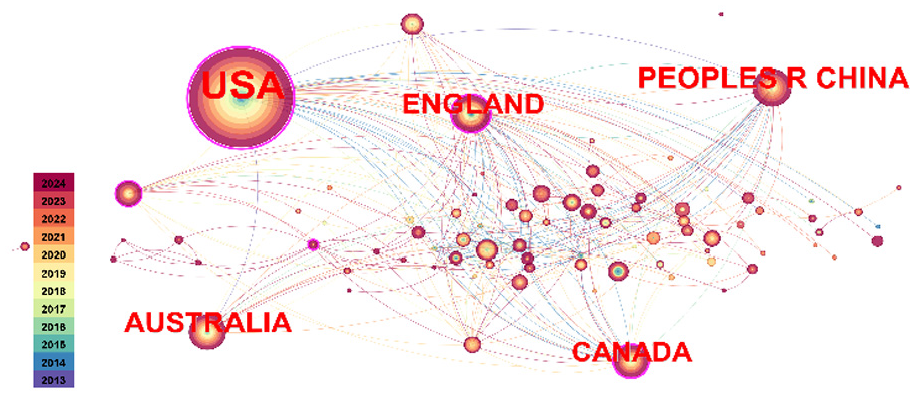
Visualization map of countries/regions with the most publications.
Table 1 lists the top 10 countries/regions. With 521 articles (42.32%) of the total, the USA ranked first and far ahead of all. However, this concentration of research output in developed countries raises questions about equity in global education research. As highlighted by Soudien (2020), the pandemic magnified existing inequalities, particularly in developing regions, where students face compounded barriers to engagement, including socio-economic disparities and limited institutional support. These factors underline the need for a more inclusive research agenda that prioritizes underrepresented regions and communities. The second- and third-ranked countries, China and Australia published 97 and 87 papers, respectively. In recent years, the increase in publications on student engagement in higher education institutions in countries as Australia and China highlights the growing recognition of its importance in enhancing educational quality and student learning outcomes (Kawser, 2023; Maloshonok, 2024). The pandemic has accelerated interest in student engagement, with a significant portion of recent literature addressing its impact on higher education (Castro, 2024). The top 5 countries/regions accounted for (84.04%) of the top 10 countries/regions’ total publications.
Top Countries/Regions (Top 10).
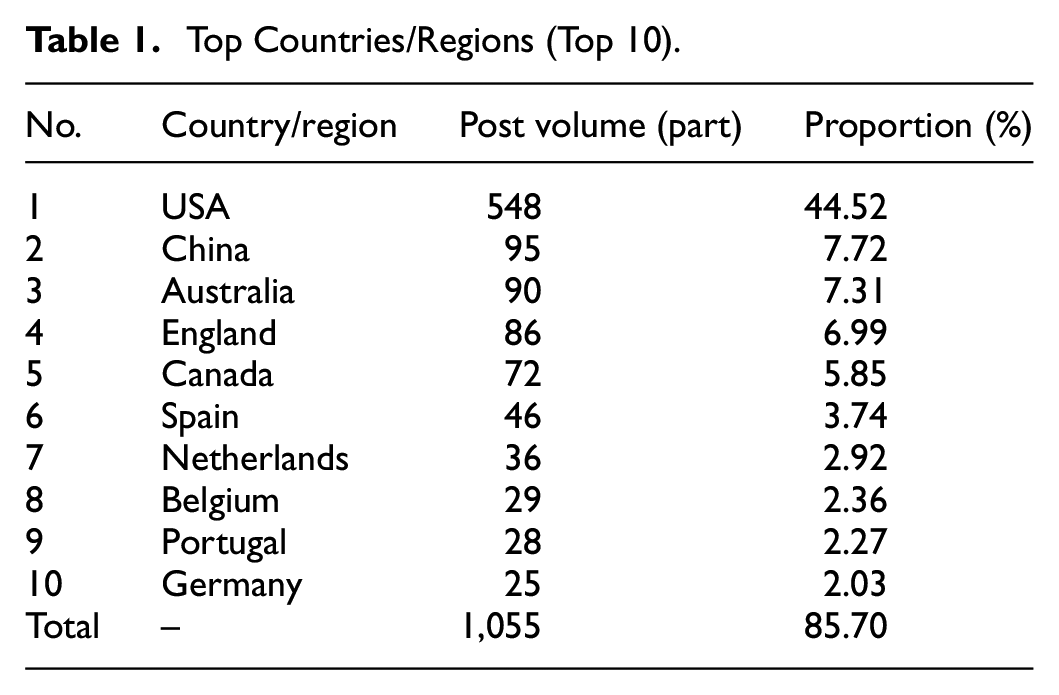
Table 2 presents the annual volume statistics for the top 5 countries. From 2013 to 2024, the number of studies on college students’ learning engagement in the United States was significantly higher than that in the other four countries. From 2020 to 2022, due to the impact of COVID-19 pandemic, the number of papers published on university students’ learning engagement in the United States and Canada tended to remain unchanged, while in Australia and England increased slowly. In contrast, the number of papers published in China maintained a steady growth. During the subsequent period of 2023 to 2024, the annual publication volume of the top 5 countries increased significantly.
Annual Publications of the Top 5 Countries/Regions.
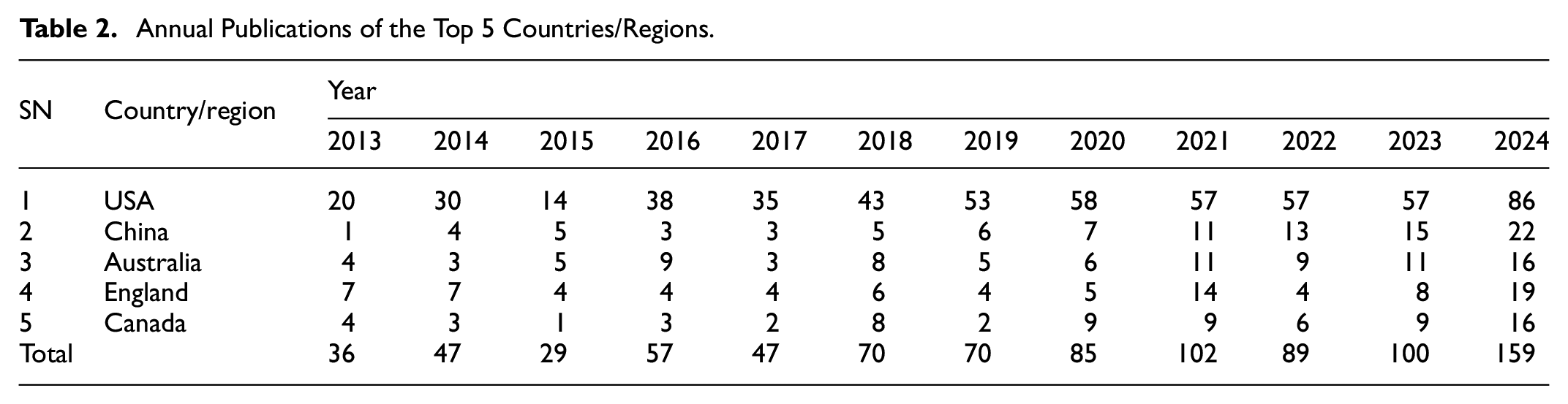
Figure 3 illustrates the annual publication trends of the top 5 countries/regions. In the United States, the number of publications has steadily increased over the 12 years from 2013 to 2024, especially peaking in 2024. Over the past 12 years, the trend in the number of studies on university students’ learning engagement in Australia, England, and Canada has been fluctuating, and the total number of their publications is less than that of American scholars. However, their strength in this field should not be underestimated. Such research mainly comes from developed countries, with few studies from countries that have begun to adopt the concept of student participation (Almarghani & Mijatovic, 2017). As the sole representative of developing countries, China has witnessed a significant change in the number of papers published over the past 12 years, which reflects the positive attention paid to the investment of university students.

Trend chart of the annual publication volume of the top 5 countries in the past 12 years.
Highest-Publishing Institutions
The knowledge map of research institutions helps understand leading research institutions in the field and their partnerships. The node type of CiteSpace software was set to “institution” and Top N was set to 40 to obtain the knowledge map of institutions co-occurring in the research of university students’ learning engagement (see Figure 4). We listed the number of agencies that issued the document. Because of the absolute dominance of American institutions, we expanded the number of institutions to top 20. Table 3 lists the top 20 institutions with the highest publishing capacities, headed by University of California System (38 articles); this list is also dominated by the US, within 18 universities.
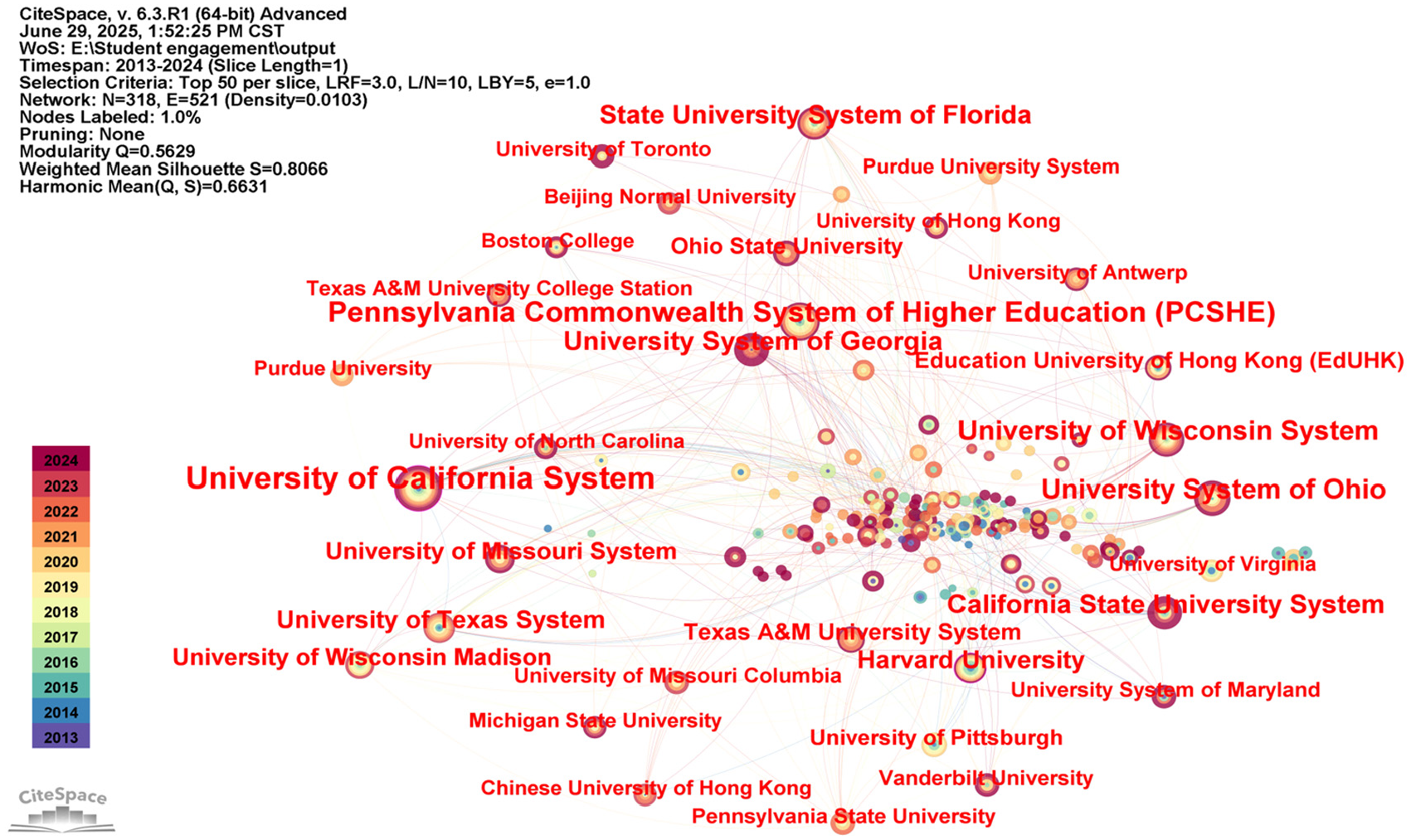
Visual map of the number of institutional publications.
Highest-Author Institutions (Top 20).
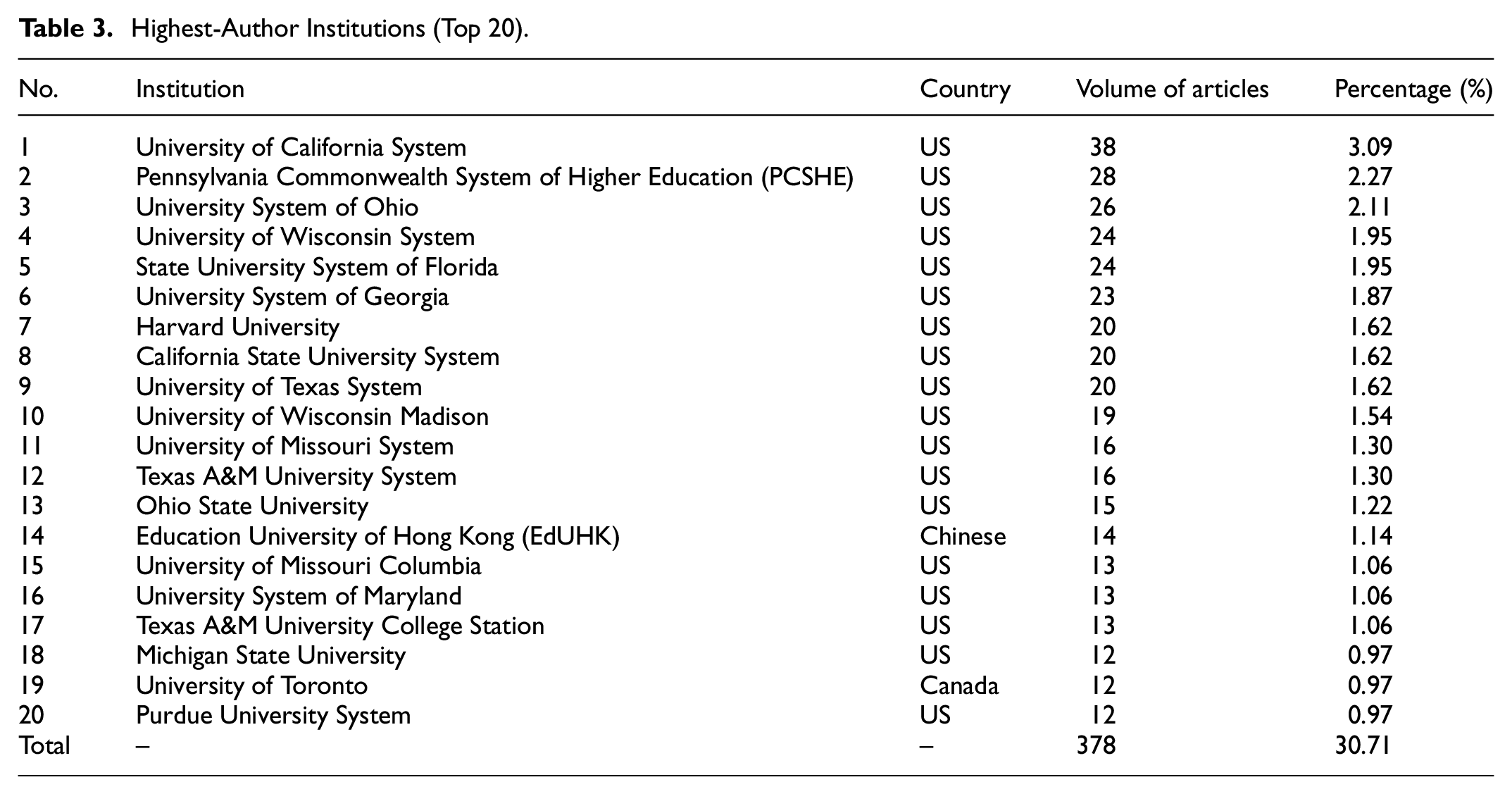
Based on the visualization of the volume of institutional publications shown in Figure 4, it can be seen that University of California System, The Pennsylvania Commonwealth System of Higher Education (PCSHE), The University System of Ohio, University of Wisconsin System, State University System of Florida, and other institutions have larger nodes. Larger nodes indicate more publications for these institutions on students’ learning engagement. The number of connecting lines indicates the connection between nodes, the higher number of connecting lines indicates that the nodes are more connected to each other, and the institutions are more closely connected, and vice versa indicates that the institutions are less connected or not close enough as seen in Figure 4.
Collaborative Network of Principal Authors
An author co-occurrence knowledge graph of the research on university students’ learning engagement was obtained (see Figure 5) in which communication and cooperation between authors formed the authors’ subnetwork structure. Only “Author” was selected from the Node type option of CiteSpace software, the time span was 2013 to 2024, and the time slice was 1 year. As shown in Figure 5, although research collaborations are emerging, key frameworks such as the ICAP Framework (Chi & Wylie, 2014) connects cognitive engagement levels—interactive, constructive, active, and passive—with corresponding learning outcomes, guiding educators to implement engagement-focused pedagogies and that academic exchange and cooperation between authors need to be further strengthened.

Co-presence map of university students’ learning engagement for the period (2013–2024).
Excel was used to organize the data obtained and presented as can be seen from Table 4. The highest number of articles comes from Martin, Andre w J with seven articles, focusing on research topics such as engagement (Collie et al., 2016; Martin et al., 2013), self-determination theories (Collie et al., 2016), and professional preparation and student capability (Martin et al., 2022). Other authors with a relatively large number of articles include Van Keer, Hilde, Archambault, Isabelle, Garbacz, S Andrew, which constitute a core group of authors and a core team of researchers in the field of students’ learning engagement, who have a strong influence.
Statistics on Authors with High Publications (Top 5).

Author cooperation network analysis is helpful for understanding the research status and progress in a certain field and reflects the prominent authors and their cooperative relations in this field. “Core author” refers to a scholar with a relatively high academic level and scientific research achievement in a certain field (Li et al., 2022). According to Price’s law, the number of published articles is an important factor in scientific research activities and directly reflects an author’s academic activities (Wang & Lv, 2021). If the stable number of core authors is 50% of the total number of papers, then a core group of authors is considered to have formed in the field, and the number of core authors can be calculated as follows:

where M represents the minimum number of papers published by the core authors, and Nmax represents the number of papers published by the authors with the largest number of papers published (Wang & Lv, 2021). Only the authors with more publications than M are influential in the field. We selected “Author” in the Node type of CiteSpace software and set the time span to 2013 to 2024 and the time slice to 1 year. In the data obtained, Nmax was 7 and the calculation formula was used to obtain approximately 1.98. In other words, in the field of university students’ learning engagement, authors with two or more publications can be regarded as core authors. According to Price’s law, the number of articles published by authors meeting this condition was 608, accounting for approximately 49.39% of the total. After that, we selected “citation” as the analysis type in VOSviewer, used “Authors” as the analysis unit, and ensured that the minimum number of articles for an author is “1” and the minimum number of author citations is “1.” A total of 1,000 authors were selected.
Figure 6 shows a map of the authors’ cooperation network. We used the number of citations as the weight standard for spots; that is, the higher the number of citations, the larger the number of spots (Wang & Lv, 2021). The occasional contact between authors of the same colour indicates that the scientific research circle among authors on university students’ learning engagement is not strong, and the number of publications is relatively small. In this case although a few core authors and research teams exist, a group of high-yield and high-influence core authors and research teams has not yet been established well.

Authors’ cooperative network map.
The timeline view focuses on outlining the relationship between clusters and the historical span of documents in the clusters (Chen et al., 2015). As shown in Figure 7, the 10 clusters in the timeline view are composed of 571 nodes and 3,410 lines, the network density is 0.021, and the module value after clustering is Q = 0.5629(>0.3), indicating that the clustering structure is significant. The Weighted Mean Silhouette S = 0.8426(>0.7) indicates that the clustering structure is convincing.

Cluster timeline view for learning engagement of university students over 12 years.
Keywords are the core representation of articles and research topics (Rawat & Sood, 2021). Analyzing the keywords in the related literature of a field helps to uncover the research hotspots in the field. In the keyword co-occurrence mapping, the nodes represent terms with high-frequency counts, and the lines represent the strength of co-occurrence between nodes. The size refers to the number of high-frequency keywords contained in the clusters, and the ordinal number of the clusters is also determined by its size. With the LLR algorithm, the keywords in each cluster are listed in Table 5 according to their importance, and the most important keywords become the featured words of the cluster (Wang & Lv, 2021), which are the words next to the cluster numbers in Figure 7.
Core Keywords for Six Clusters of Hotspots for Research on University Students’ Learning Engagement (Log-Likelihood Rate Algorithm).

Cluster 0 is the most active cluster. There are more large nodes and strong links in this cluster, indicating that this research type is active and in a state of benign development. The number of nodes in Cluster 1 and Cluster 2 is less than that in Cluster 0, but the solid line spans of these three research types are basically the same. This indicates that the research types of Cluster 1 and Cluster 2 are still in the development process and have a longer research time on the corresponding topics. However, the number of nodes in Clusters 3 and 5 is basically the same, which means that the importance of these research types may be relatively low; the nodes in Cluster 4 are mainly concentrated in 2013 and 2024, indicating that the corresponding research topics are more inclined towards the research needs at that time. At the same time, the time spans of these clusters are also significantly shorter, suggesting that research on these themes has not lasted long. In addition, the timeline graph shows that in the past 12 years, these clustered research themes were interconnected in the early years, with correspondingly fewer direct connections over time, and the density of the lines between clusters reflects the closeness of the relationship between each cluster.
Through the induction and analysis of important keywords in Cluster 0, we found the following three important research directions: The influence of family participation on university students’ learning. Cluster 1 and Cluster 2, respectively, contain the key words “Self-determination Theory” and “student participation.” Their research focus is different: Cluster 1 places more emphasis on students’ learning motivation and competence; Cluster 2 emphasizes the relationship between universities and the participation of students and families.
Cluster 3 and Cluster 4 can be related to university students’ subjective factors. Cluster 3 focuses on students’ learning methods and professional development research directions; Cluster 4 involves research on students’ learning performance. The key words of Cluster 5 reflect its relevance to colleges and universities. In this type of research, it can be found that early scholars have begun to pay attention to the student population with autism. The presentation of the above clustering content is helpful in hot topics on university students’ learning engagement. At present, university students’ learning engagement involves critical considerations such as family engagement, parental involvement, interaction between teachers and students, students’ learning ability, and higher education. Furthermore, recent research results (Miles et al., 2020; Ngussa et al., 2020) emphasized the need to incorporate mental health initiatives and equitable access frameworks to address the persistent gap in participation. Several studies have shown that teachers’ support and self-ability have a positive impact on students’ learning engagement (Tanjung et al., 2024). Tools such as synchronous discussions, asynchronous forums, and gamification of learning activities have also shown great potential to drive participation (Ng et al., 2022; Picciano, 2017).
Frontier Fields in Students’ Learning Engagement Research
The method of combining keywords and emergent words/phrases was adopted to analyze the evolution of research hotspots and driving factors over time. Emergent words/phrases highlight terms that experience a sharp rise in frequency within a defined period, providing insights into dynamic trends and critical developments (Wang & Lv, 2021). Using CiteSpace, we analyzed 1,231 articles, set the minimum burst duration unit of outburst words as 2, and extracted the top 10 emergent keywords (Table 6). The analysis identified three distinct stages of research focus as below.
Top 10 Keywords with the Strongest Citation Bursts.
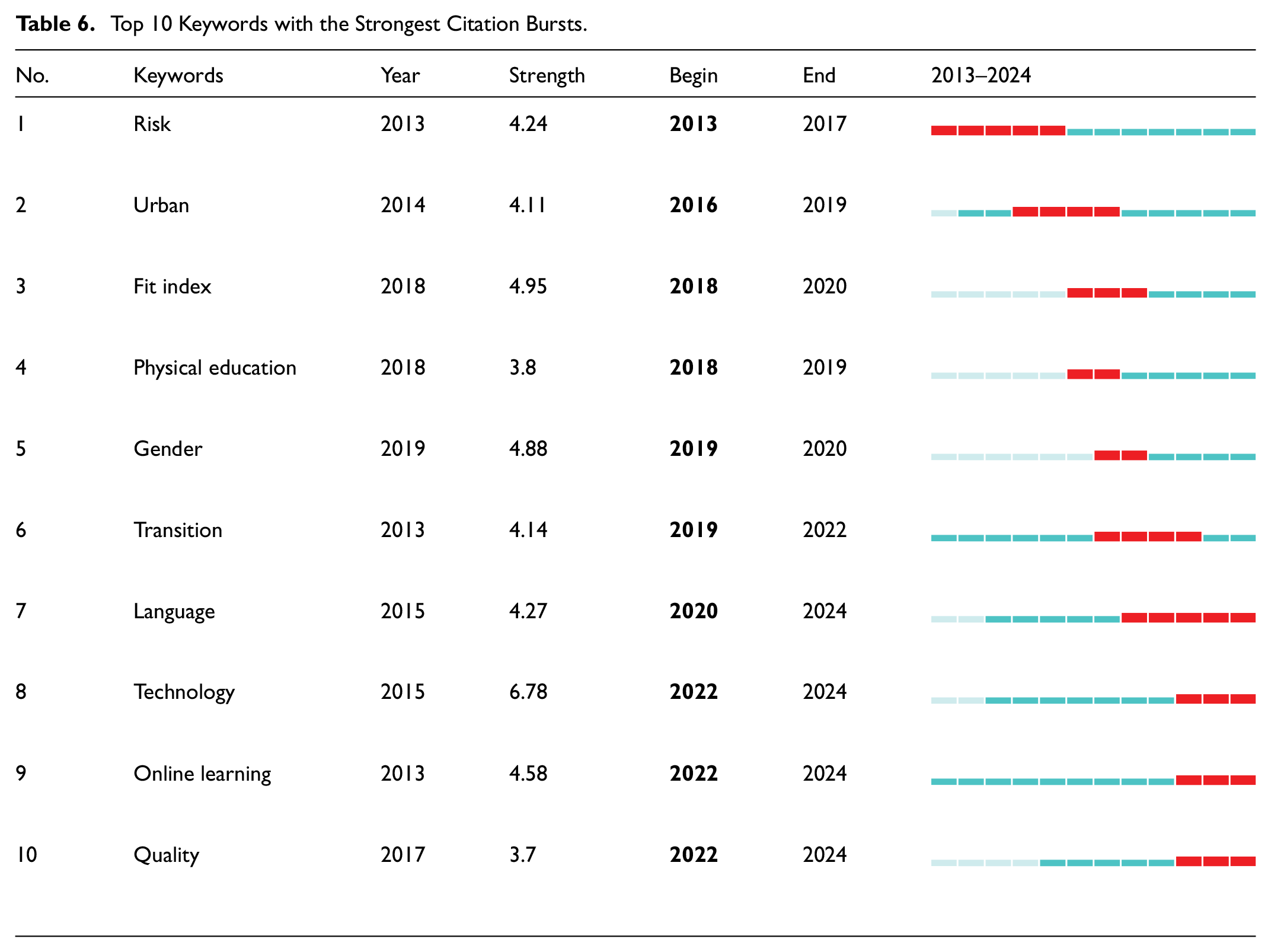
2013 to 2016: Social Factors and Disparities
During this stage, the main keywords were “risk,” and “urban.” Research mainly focused on the influence of the geographical location and degree of disadvantage of the institution (Povey et al., 2016) on students’ academic performance. For example, “risk” was frequently analyzed in relation to students’ vulnerabilities due to systemic inequities (Burzynska & Contreras, 2020). This period marked a critical phase in addressing social justice and policy advocacy, fostering discussions around inclusiveness in education, and the challenges faced by underrepresented communities.
2017 to 2019: Educational Research and Gender Dynamics
The emergent keywords “fit index,”“physical education,”“gender,” and “transition” signify a shift towards understanding Educational Research and gender-specific disparities. Studies explored how the results of higher education research can promote a smoother academic transition, especially for marginalized students (Dockx et al., 2019; Hornstra et al., 2020). A particular focus on gender dynamics revealed differences in self-regulated learning behaviours and academic stress between male and female students (Staniscuaski et al., 2021). This research underscored the systemic challenges faced by women and highlighted gender-responsive practices necessary for inclusive engagement (Soudien, 2020).
2020 to 2024: Online Learning and Student Literacy
The keywords “language,””technology,”“online learning,” and “quality” emerged prominently in this stage, reflecting a strong emphasis on universities on online learning and student-centred reading and writing skills. COVID-19 pandemic accelerated research on the challenges of teaching quality in the digital learning environment and maintaining students’ fair participation (Molokomme, 2024; Ngoatle et al., 2022).
Research demonstrated that family involvement played a critical role in supporting student success during remote learning and hybrid educational models (Kanapi-Villanueva & Campoamor-Olegario, 2024; Novianti & Garzia, 2020). Studies also highlighted disparities in technology access and their impact on learning outcomes for socio-economically disadvantaged groups (Bacher-Hicks et al., 2021; Gillis & Krull, 2020). The evolution of research focus across the three stages was shaped by key driving forces:
Social Awareness and Policy Advocacy (2014–2016): This phase focused on equity and racial disparities in education, with keywords as “risk” and “urban” highlighting the influence of socio-economic and geographic factors on students’ academic learning outcomes. Research emphasized the vulnerabilities of marginalized students due to systemic inequities and the need for policy reforms to promote inclusivity and equality (Rowan, 2019).
Institutional Responsibility (2017–2019): During this stage, research shifted to how institutions can address gender gaps and support marginalized students. Keywords such as “fit index,”“physical education,” and “gender” reflected studies on gender-specific disparities and the challenges students face during academic transitions. The focus was on creating inclusive educational environments that address gender inequities and support underrepresented groups (Wiredu et al., 2024).
Technological and Pandemic-Induced Shifts (2020–2024): The pandemic-driven shift to remote learning brought keywords as “technology,”“online learning,” and “quality” to the forefront. Research focused on maintaining teaching quality in digital environments and ensuring equitable participation, with an emphasis on family involvement and addressing disparities in technology access for disadvantaged groups (Lie et al., 2020; Wang et al., 2021). The phase highlighted the need for digital literacy and innovative pedagogical strategies to sustain academic engagement.
The emergent words/phase that began to appear in 2014 to 2016 are risk, and urban. During this period, Beattie and Thiele (2016b) academic interactions as forms of social capital that are sensitive to institutional characteristics. Regarding risk research, some authors have studied support for parents and teachers in terms of university engagement and trouble avoidance (Garcia-Reid et al., 2015). Other authors studied how cultural and community factors interact with individual-level factors to predict participation (Ungar & Liebenberg, 2013). Some argued that few university experiences generate racial/ethnic concerns in terms of student participation. Moreover, some students tend to participate or not which can lead to significant challenges when determining the impact of this form of participation (Bowman et al., 2014). Park et al. (2013) have found that socioeconomic and racial diversity is crucial for promoting a positive racial atmosphere on campuses.
From 2017 to 2019, the emergent words/phase included fit index, physical education, gender, and transition. At this stage, the process of university education and the gender of male and female students became research hotspots. Roksa and Kinsley (2018) have studied the relationship and effects of two different forms of family support, emotional and financial, on the academic outcomes (grades, credit accumulation, and persistence) of low-income university students after entering higher education. Their findings suggest that emotional support from the family plays an important role in promoting positive academic outcomes. Jeynes (2018) constructed a Dual Navigation Approach (DNA) model based on parental involvement and engagement in colleges and universities to guide university leaders/administrators to support the fact that these two components of parental involvement and engagement (PIE) work together and student educational outcomes can be greatly improved. In terms of student gender, Leath et al. (2019) have found that discrimination had harmful effects on the academic engagement of African-American adolescents, whereas racial identity beliefs had protective effects in different gender and school racial contexts. Similarly, recent studies (Jochman et al., 2019; Paulsen & McCormick, 2020) underline the importance of creating inclusive learning environments to mitigate discriminatory practices and enhance engagement among underrepresented student groups. In terms of transition and transformation, some researchers confirmed that belonging is a unique attribute related to engagement, and its importance can be reflected in the context of STEM classrooms. It also provides additional insights into the synchronous importance of self-efficacy in supporting student engagement (Wilson et al., 2015).
From 2020 to 2024, researchers are interested in factors such as language, technology, online learning, and quality. At this stage, artificial induction scholars focused on studying student literacy and technical aspects. Le-Thi et al. (2020) explored the effectiveness of motivational strategies and mental imagery (i.e., fantasy techniques) in promoting second language vocabulary learning. The research results of this scholar showed that both incentive strategies and fantasy techniques can effectively improve students’ ability to recognize the form of target sequences, and fantasy conditions are superior to the use of incentive strategies. Moreover, the growing reliance on hybrid learning models has brought attention to the role of tailored engagement strategies in optimizing learning outcomes. For example, online platforms must ensure accessibility, immediate feedback mechanisms, and collaborative learning tools to replicate the interactivity of face-to-face education. Conversely, face-to-face contexts should leverage peer-to-peer interactions and experiential learning opportunities (Hong et al., 2022). Regarding student literacy, some researchers suggested that higher education research pays less attention to the processes and development of students’ professional identities (Jensen & Jetten, 2016). Sølvik and Glenna (2021) pointed out that the lack of mutual understanding among researchers, policymakers, and teachers often bluses the discussion on how to enhance deeper learning through teaching, which further challenges the transformation of teachers in classroom practice.
Discussion
This study explored the current situation and evolution of university students’ learning engagement over the last 12 years using bibliometric analysis software. The transformative impact of online learning on engagement has become evident, especially in fostering new dimensions of engagement like digital collaboration and autonomy in learning. It has also highlighted challenges such as the digital divide and the need for enhanced teacher competencies to support students in virtual environments (Heflin & Macaluso, 2021). The results showed that the United States has an absolute advantage in terms of major research forces in the field of university students’ learning engagement. However, theoretical contributions, such as Kuh’s engagement theory or Bandura’s self-efficacy model, were underutilized in discussing the results. To address this gap, Emaliana’s (2020) work on epistemic beliefs and online engagement highlights the importance of understanding individual learning beliefs in online contexts. Integrating such frameworks could strengthen the interpretation of engagement in digital learning environments. Recent international collaborations, particularly among countries represented in this study, have begun to diversify the research landscape, introducing new perspectives and methodologies (Aristovnik et al., 2023; Raman et al., 2021). In addition, as shown in Figure 1. By 2020, the number of published papers exceeded 100. Although it declined in 2022, it rebounded strongly after that year, ushering in a new research boom. At the same time, as shown in Figures 4 –6, the corresponding nodes are not sufficiently close, indicating few connections between research institutions and co-authors and insufficient closeness among academic circles in this field. Among the five countries with a high number of published papers, there are four developed countries and China, a developing country. This finding is consistent with the results of Trowler (2010) and Krause (2011), who stated that educational policies, traditions, and experiences related to student participation in developed countries, especially North America, Australia, and the United Kingdom influence educational policies and practices in developing countries. The passive role of students in learning and education and the absence of student participation in university are common to developing countries (Almarghani & Mijatovic, 2017). Current discussions on student participation policies and educational practices are heavily influenced by the causal framework and marketization of higher education (Yin, 2018).
The results of this study showed that developed countries have the overwhelming dominance of research in the area of university student engagement, and student engagement. Although this dominance reflects the advantages of the academic system, it perpetuates systemic exclusion by marginalizing the voices of minority groups in non-Western countries and within Western countries, as their viewpoints and contributions are often overlooked in academic discourse (Kinnear et al., 2023). Furthermore, as Novianti and Garzia (2020) emphasized, parental involvement remains a key but not yet fully explored factor in many regions. Similarly, in male-dominated fields, female students may experience varying degrees of participation, depending on the existing support structure (Wilson et al., 2015). Therefore, schools must give priority to fair policies to create an inclusive environment that actively supports the participation of all students. We analyzed and determined the research priorities of the three main stages, each stage has witnessed various education challenges and the impact of external factors. Early studies emphasized “risk” and “urban,” reflecting the global efforts made to address the issue of equity in higher education. In the following years, “fit index,”“physical education,” and gender-related factors gained prominence, aligning with policies aimed at enhancing students’ success through targeted interventions. Recently, the epidemic has driven research centred on family participation, online learning dynamics, and student literacy. The pandemic has accelerated the research on online learning, giving rise to keywords such as “technology” and “quality” to cope with the shift to remote learning. Research is increasingly focusing on the challenges and strategies related to the digital educational environment, as well as how technology can bridge the gap in learning engagement, especially for marginalized and underrepresented student groups (Pettalongi et al., 2024). This study highlighted a transformation, the institutional framework to understand how to adapt to new challenges such as blended learning environment. It is necessary to further explore the long-term impact of family engagement on students’ success, especially in the context of online and blended learning. Furthermore, there is a dire need to study the participation of students in different types of institutions and how to utilize digital tools to promote a more inclusive and participatory educational environment.
Understanding these temporal changes provides valuable insights for future research. Scholars should explore how institutional frameworks adapt to emerging challenges, such as hybrid learning environments, and examine the long-term impacts of family involvement on student success, and there is still a dire need to examine student engagement. Assessment and feedback are important for student motivation, learning, and development (Evans, 2013), and active approaches to learning lead to positive changes in student engagement, and students perceive themselves as keener and consistently engaged in their learning (Almarghani & Mijatovic, 2017). The literature to date suggests that the main reason why student engagement has become a focus of attention for those aiming to improve the quality of learning and teaching in higher education is due to the large body of literature confirming that student engagement in educationally purposeful activities has a positive impact on academic achievement and development (Trowler, 2010).
In the learning environment, family involvement, and personal student factors play a pivotal role in enhancing engagement. For instance, Theobald et al. (2020) showed that active learning methods significantly reduced equity gaps among underrepresented groups in STEM disciplines. Meanwhile, Theobald et al. (2017) emphasized how renegotiating the classroom environment into a community-based learning space fosters inclusivity and student participation. These findings are consistent with those of Zhang et al. (2015), who pointed out three factors influencing the participation of Chinese University students: context (e.g., family, friends/classmates, and campus environment), institutions (e.g., course instructors), and attitudes (e.g., interests and personality). Moreover, Khaldi et al. (2023) emphasized gamification’s role in fostering intrinsic motivation and engagement through tailored digital learning experiences. This approach aligns with modern educational demands, offering actionable strategies to enhance engagement by addressing the diverse needs of students in STEM and other disciplines. However, empirical research on student participation in higher education institutions in China is still in its infancy, and the understanding of the characteristics of Chinese university students’ participation is limited. University students should be encouraged to develop qualities such as persistence, self-confidence, and effective learning. At the same time, instructors are encouraged to consciously provide students with training in self-regulating learning strategies, such as self-planning, self-monitoring, and time management (Yin, 2018). Teachers’ competence is crucial to student engagement (Sahin, 2014).
Furthermore, family involvement, students’ personal thoughts, and the learning environment have an impact on university students’ learning. However, these factors are seldom studied holistically. For example, Staniscuaski et al. (2021) highlighted the compounded challenges of gender, race, and parenthood during the pandemic, which influenced academic productivity and learning engagement. Addressing such intersectional barriers would provide a richer understanding of engagement dynamics.
In the list of emergent words, the factors influencing student engagement over the past 12 years have gradually changed. Compared with the early influencing factors, risk, and urban have deepened the understanding of university students’ participation in learning activities and revealed a potential difference between participation and psychological states (Wefald & Downey, 2009; Yin & Wang, 2016). Building on Mogadime’s (2016) work, which stresses the need for clarity in educational debates, universities should critically evaluate how systemic inequities, particularly those based on race and socioeconomic background, affect engagement. Efforts to create inclusive learning environments can address these disparities effectively. In subsequent studies on university education and student gender, researchers found family involvement and university attention contributing to students’ academic engagement and success, but inconclusive relationship between the ranking of institutions and the level of participation (Rocconi & Boyd, 2022). In addition, some researchers have used mixed-methods research to explore transgender undergraduate and postgraduate students’ explanations for their involvement or non-involvement in activities/promotions and the types of activities in which they are involved (Goldberg et al., 2020), and Brower and Brower (2022) examined the impact of institutional structures (e.g., university policies, funding, leadership, centres and institutes, institutional practices, and individual/groups activities) on the level of commitment to learning of undergraduates. As highlighted by Porcedda (2021), integrating innovative educational strategies such as Techno-CLIL (Content and Language Integrated Learning) enhances student motivation and critical thinking. Expanding these strategies to higher education could bridge the gap between technical and academic skills.
The visual analysis of the articles yielded that student literacy and parental involvement are influential factors that contribute to the success of university students’ learning engagement. Researchers believe that in a higher education environment, students’ self-quality can play a positive role in promoting learning, and university educators are strongly encouraged to be alert to students’ negative feelings about learning and their negative views of themselves. Feelings and perceptions such as anxiety, avoidance of failure, and uncertainty must be limited or eliminated to reduce maladaptive learning (Yin, 2018). Students’ families and communities are extensions of the classroom (Hong et al., 2022), allowing parents to be involved in students’ learning engagement and urging them to continue studying. In some cases, especially in the online learning environment since the pandemic Covid-19, students and teachers can interact with each other effectively by avoiding bad when students leave the classroom or get distracted. In addition to the opportunity to withdraw from the classroom without teacher’s permission, students’ inability to take the initiative in learning often results in lower engagement and learning outcomes (Heflin & Macaluso, 2021). Even though schools have returned to face-to-face learning, families and teachers still struggle to cope with the changing educational landscape (Milner & Lomotey, 2021). Therefore, research on university students’ learning engagement is developing a new trend with a positive impact on the academic cooperation of researchers and the formation of academic circles. To further this trend, recent research (Chen et al., 2020; Perkmann et al., 2021) calls for integrating digital tools and mental health support systems into engagement strategies, which will enhance resilience, inclusivity, and academic success across diverse student populations.
In summary, while significant progress has been made, future research should emphasize actionable strategies. For example, incorporating AI to personalize learning pathways, as suggested by Fazil et al. (2024) or adopting gamification techniques to sustain motivation (Ortiz et al., 2015) can revolutionize engagement. Universities should also strengthen international collaborations to establish a unified framework for understanding and enhancing engagement across diverse contexts.
Practical Applications and Policy Recommendations
The findings offer practical insights for improving higher education policies and practices. Education policymakers should focus on fostering active student participation through targeted programmes that enhance family engagement, student self-efficacy, and resilience (Zhao, 2024). For example, incorporating psychological training to strengthen emotional engagement and grit can improve students’ perseverance and learning outcomes.
Higher education institutions should prioritize interactive and student-centred pedagogies, such as augmented reality learning tools and active learning methods, which have proven effective in improving student engagement and performance (Gao et al., 2023). Faculty professional development programmes should emphasize integrating digital and collaborative tools into the curriculum to optimize learning experiences in both online and hybrid settings (Moubayed et al., 2018).
Students, as independent learners, can benefit from adopting self-regulated learning strategies and personalized approaches aligned with their academic goals. Institutions must provide adequate resources, psychological support, and inclusive learning environments that leverage technology to reduce disparities and increase engagement (Liu et al., 2024; Wang & Zhang, 2024). In developing countries, policymakers can apply insights from existing research to tailor educational systems, fostering positive outcomes in institutional performance and student success.
By implementing evidence-based strategies, policymakers, educators, and students can collectively improve educational practices, ensuring that university students’ learning engagement significantly contributes to academic achievement and lifelong learning capabilities.
Conclusions
In this study, we adopted the bibliometric method to analyze university students’ learning engagement and elaborated on its development. The findings underscore the necessity of critically evaluating current trends. For instance, Openo (2020) emphasized the enduring challenges of online education, including student disengagement and technological barriers. While our results confirm the utility of Kuh’s (2006) engagement framework, they also underscore the need for its adaptation to hybrid and online learning contexts. This includes incorporating emergent methodologies such as those described by Ferguson and Clow (2015) and Daniel and Schwier (2010), which capture multidimensional learner interactions. Future research should incorporate a more diverse range of international studies to capture the global variations in student engagement practices and outcomes (Abuhassna et al., 2022; Raman et al., 2021). The US, Australia, England, China, and Canada have been the main countries in studying students’ learning engagement. However, this distribution likely reflects a bias due to the exclusion of non-English studies, which may have overlooked valuable research contributions from non-Western, non-English-speaking countries. Findings indicate that core researchers lack close collaboration, and the academic community remains underdeveloped. The United States, Australia, England, China, and Canada have been the primary contributors to research in this area. The scope of these studies encompasses Risk, urban, fit index, physical education, gender, transition, language, technology, online learning, and quality. In the past 12 years, research on university students’ learning engagement has become increasingly interdisciplinary, incorporating advancements in technology, psychological models, and pedagogical innovation (Liu et al., 2024; Zhao, 2024). This interdisciplinary approach enhances the scientific understanding of higher education, particularly in how self-efficacy, grit, and emotional engagement contribute to academic success (Wang & Zhang, 2024).
The results also show that researchers should shift their attention from socially influential factors to student literacy. (Waqar et al., 2024) emphasized that mental health literacy and inclusive practices significantly impact student engagement and performance. Addressing these emerging factors will help foster a supportive educational environment that promotes equitable access to learning opportunities. Future studies should adopt interdisciplinary approaches by integrating insights from sociology, psychology, and physiology to holistically address university students as independent learners and socially embedded individuals. Additionally, the integration of mental health strategies and resilience-building measures Barrable et al. (2018) can enrich the holistic understanding of student engagement and address the increasing complexity of educational challenges in higher education, adopt interdisciplinary approaches, integrating insights from sociology, psychology, and physiology to holistically address university students as independent learners and socially embedded individuals. Therefore, it is worth focusing on the establishment of academic groups in this field, as it can help build academic consensus and effectively promote university students’ active learning engagement. Furthermore, it is necessary to actively expand the cooperative relations of core researchers and strengthen exchanges and communication between developed and developing countries.
Two limitations of this study are presented here. First, we selected only relevant literature from English journals from the countries included in the WoS Core Collection Database. This exclusion could have potentially skewed the geographical distribution of research by over-representing Western countries while under-representing non-English-speaking regions where significant contributions might exist. Second, this study used only the document type “paper” to analyze university students’ learning engagement. However, including other types such as “Early Access,”“Review,” or “Editorial Material,” could enrich the analysis by capturing diverse perspectives and emerging research trends. Fourth, this study is limited to the category of “education” to analyze the characteristics of the educational evolution of university students’ engagement in learning. Exploring interdisciplinary research paths, such as integrating psychology or management perspectives, could offer a more comprehensive understanding of how these fields influence or are influenced by educational research on learning engagement.
Future Research Directions
Future research should explore the interdisciplinary nature of learning engagement, particularly integrating psychological theories, such as grit and self-efficacy, into educational models (Wang & Zhang, 2024; Zhao et al., 2023). Further studies should investigate the role of technological advancements, such as augmented reality and digital collaboration tools, in fostering active learning and improving engagement (Gao et al., 2022; Moubayed et al., 2018).
Additionally, longitudinal and cross-sectional surveys can provide a deeper understanding of how family involvement, emotional engagement, and institutional practices influence learning outcomes over time. These approaches will help bridge gaps in existing research and offer actionable insights for policymakers and educators globally.
Footnotes

Ethical Considerations
Not applicable (it does not include human subjects).
Author Contributions
Wei Zhong: Conceptualization (lead); writing—original draft (lead); formal analysis (lead); Software (lead); funding. Ghayth Kamel Shaker Al-Shaibani: Organization, review, proofreading and editing (equal), paper supervision, methodology (lead). Gao Li: writing (supporting), formatting.
Funding
The author(s) disclosed receipt of the following financial support for the research, authorship, and/or publication of this article: This work was supported by the Project of top priority funding for education and teaching reform research of Nanjing Tech University Pujiang Institute in 2022 (Project No. 2022JG003Z).
Declaration of Conflicting Interests
The author(s) declared no potential conflicts of interest with respect to the research, authorship, and/or publication of this article.
Data Availability Statement
The data in this research are sourced from WOS in the form of research articles used in the manuscript.