




Abstract
As the global population continues to grow, and trade volumes increase, the demand for efficient and sustainable transportation infrastructure has become increasingly important. Notably, the role of smart ports in advancing sustainability has emerged as a critical concern. This study aims to provide a comprehensive systematic literature review (SLR) of smart port sustainability, capturing key research trends and proposing a research agenda based on an analysis of 68 peer-reviewed articles indexed in the Web of Science (WoS) between 2017 and 2023. In this respect, four themes were determined according to the thematic analysis. (1) Digital Transformation for Enhanced Efficiency and Sustainability; (2) Green Port Initiatives: Energy Efficiency and Renewable Energy Integration; (3) Smart Port Governance and Stakeholder Collaboration for Sustainable Development; (4) Challenges and Opportunities for Smart Port Sustainability. The findings reveal that while significant progress has been made in digitalization and environmental sustainability, gaps remain in balancing economic, social, and environmental dimensions. The study offers policymakers, port managers, and researchers recommendations to improve operatinonal efficiency, mitigate negative environmental effects, and promote inclusive governance. Future research could involve scaling digital solutions, furthering the maturity model, and other under-researched areas, including cybersecurity and financial incentives for sustainable technologies. By bridging these gaps, smart ports can evolve into resilient, future-ready ecosystems capable of thriving in an increasingly complex global maritime landscape.
Plain language summary
This systematic review article aims to offer a comprehensive analysis of the current state of knowledge concerning sustainability at smart ports. Drawing from a variety of academic sources, we explore the key features of smart seaports and their potential contributions to sustainable development.
Introduction
The maritime transport industry is a cornerstone of global trade with its low cost per cargo handled, high transport capacity and overseas freight transport capabilities. Ports serve as vital nodes within maritime transport, making it possible to change modes of transport of transit cargo in the supply chains of a wide range of industries. As such, port logistics plays a pivotal role in driving both regional and global economic growth and supply chain performance (Belmoukari et al., 2023). However, ports operate within a complex ecosystem shaped by intricate trade infrastructures, commercial transactions, and regulatory frameworks. Unlike other industrial systems, ports function within a highly competitive network, facing numerous challenges to ensure the efficient and sustainable movement of goods as key hubs in global supply chains (Molavi et al., 2020). Issues such as port congestion, delays, operational inefficiencies, information-sharing gaps, energy consumption, and security concerns significantly impact port performance (Braveboy, 2015). Environmental pressures further compound these challenges, including air and water pollution, waste management, rising energy costs, and the ecological impacts of port activities (Lim et al., 2018).
To address these environmental pressures and challenges, ports are transforming, particularly through the use of technology-based solutions, while taking new approaches to planning and managing operations. With this transformation, which is realized through the use of modern mobile information and communication technologies and decision support systems, ports can monitor their infrastructure in real time, improve the efficiency of handling operations, control traffic and customs information between transport modes, port security, and energy consumption, provide environmental control and respond to changing customer expectations.
This transformation aligns with the Industry 4.0 revolution, giving rise to the concept of smart seaports (the term smart port will be used in this study)—also referred to as Port 4.0 or fifth-generation port in the literature. The historical evolution of ports is illustrated in Figure 1 (Molavi et al., 2020). This figure presents a generational timeline, highlighting how ports have transformed from isolated logistics nodes to technologically advanced, smart infrastructures. In the 1960s, ports carried out very limited operations and were used only for loading and unloading. From the 1960s to the 1980s, ports became important with their transport, industrial and commercial functions. In the 1980s ports increased their integration with the city to ensure the rational use of resources and common spatial use. In the 2010s, ports started to realize their digital transformation within the framework of the Industry 4.0 revolution under the term of smart port. The transformation of ports through digitalization is not limited to these developments but continues within the framework of changes in the global economy.

Historical development of ports.
Today, the sustainability of ports has become a vital issue as much as their digitalization. Ports are increasingly adopting sustainable practices to comply with global regulations. When implemented effectively, smart port technologies and sustainability practices could provide a healthy and safe working environment as well as an environmentally friendly port environment (Belmoukari et al., 2023; Lee & Lam, 2016). However, there is no agreed clear definition in the literature on the concept of smart port and its main activities, which have emerged within the framework of the ever-changing global economy. Moreover, the relationship between the smart port concept and the concept of sustainability in economic, social, and environmental dimensions remains underexplored.
To address these gaps, this study aims to define the concept of smart port and its key activities and to reveal its relationship with sustainability, and proposing a research agenda for future research. This literature review (SLR) research, which examines 68 peer-reviewed articles, represents a pioneering and significant contribution to the field of sustainability of smart ports. The study will proceed by delving into the concept of smart ports and their role in promoting sustainability. Subsequently, the methodology section will elucidate the relationship between smart ports and sustainability using a SLR approach, complemented by a detailed thematic analysis. Finally, the discussion is organized into dedicated sub-sections for Practical Implications, Limitations and Future Research, and a Conclusion, providing actionable recommendations, acknowledging study constraints, and summarizing key insights.
Theoretical Background
The need for transformation of standard ports into smart ports has been driven by the digital industrial revolution, which has shortened industrial cycles and increased product complexity (Li et al., 2023). Smart ports utilize computerized and digitized documents, sharing real-time information among stakeholders to enable effective and sustainable decision-making (Wu et al., 2013). This transformation is not only driven by technological advancements but also by global legislative and environmental imperatives. For example, from a legislative perspective, the United Nations Conference on the Environment and Development emphasized that “port management should be geared towards sustainable development models.” In 2018, the World Ports Sustainability Program (WPSP) was established to promote the sustainable advancement of global ports in accordance with the United Nations (UN) Sustainability Agenda and its 17 Sustainable Development Goals (SDGs) (WPSP, 2020). Additionally, environmental challenges within the maritime sector are addressed through the MARPOL conventions, created by the International Maritime Organization (IMO), which tackle various pollution issues related to emissions, oil spills, and ballast water (Campisi et al., 2022; Lister et al., 2015).
Smart ports seek to enhance port operational efficiency, to enable digitalization and automation, to provide cybersecurity, to promote energy and environmental sustainability, and to integrate port stakeholders. Smart ports use elements such as Big Data, artificial intelligence, Internet of Things, automation, digitalization, Digital Twins, Blockchain, 5G, sensors. Smart ports integrate advanced technologies for a range of purposes such as managing vessel traffic, optimizing loading/unloading operations, monitoring inventory, improving security, and reducing environmental impacts. A smart port is a structure that brings together competent employees, smart infrastructures and automation to facilitate knowledge development and sharing, optimize port operations, increase port resilience, promote sustainable development and guarantee safe operations.
Traditional port activities are linked to various environmental issues, including pollution, greenhouse gas emissions, and resource depletion. The integration of smart technologies in port operations presents an opportunity to address these challenges while enhancing efficiency. Figure 2 summarizes a structured overview that links the key features of fifth-generation smart ports to their main activity domains and specific subdimensions (Molavi et al., 2020). This mapping helps clarify how sustainability-related capabilities are embedded into smart port design. In smart ports, the stage of receiving or loading cargo from ships, transporting the cargo to warehouses or other destinations is the operation stage. Since efficiency is essential in smart ports, all terminal operations are based on automation (Douaioui et al., 2018). While performing these operations, efficient management models and technologies that can continue the process quickly and safely are used to increase the productivity of operations and reduce costs. Today, ports are required to be value-creating actors in the global supply chain (Botti et al., 2017). Productivity of smart port operations refers to how efficiently port activities are executed within constraints such as time, budget, space, or available resources (Molavi et al., 2019).
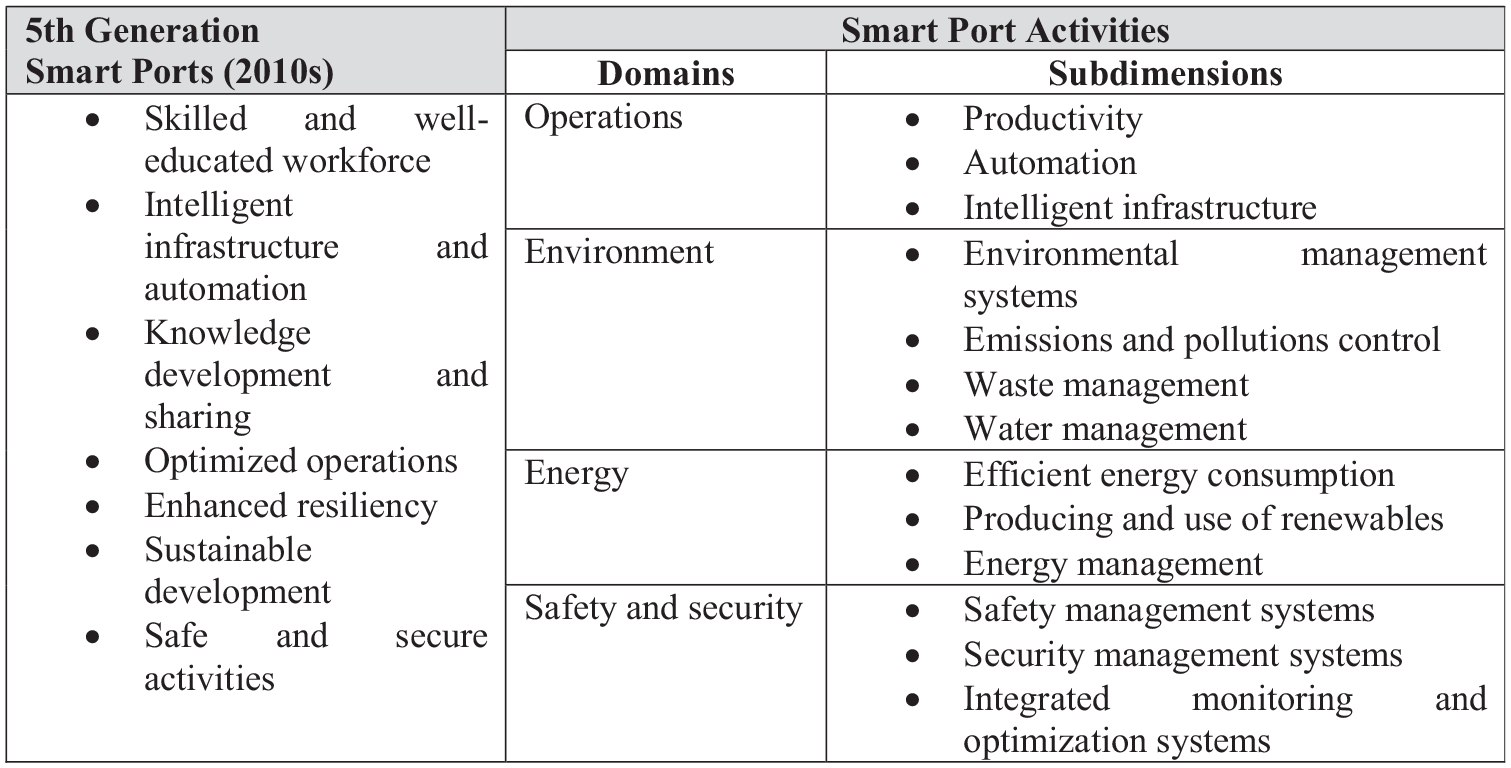
Features, activity domains and subdomains of smart ports.
Automation is critical for the interconnection of port logistics chains and efficient port operations (Douaioui et al., 2018). Industry 4.0, which requires the development of innovative information and communication technologies and their integration into the industry, involves the creation of products and services through smart networks, combining physical infrastructure with software, sensors, nanotechnology, or digital intelligence technology (Heilig et al., 2017). The use of such smart networks and collaborative platforms enables healthier decision-making processes based on data (Serrano et al., 2018).
Smart infrastructure applications in ports have the potential to increase efficiency and sustainability through real-time data collection, processing, and sharing. The rapid flow of information to port users through smart infrastructure applications facilitates smart and effective decision-making processes of port customers (Molavi et al., 2019). Intensive effort and technology should be used to anticipate, plan, and manage such problems in operations (Othman et al., 2020). Many studies have shown that care for the environment contributes to corporate image and thus economic development (Chuang & Huang, 2018; Moosa & He, 2022; Yau et al., 2020).
Ports and their logistics require large energy resources. Smart port technology also offers a pioneering method to reduce energy consumption. Using sustainable technology to improve energy efficiency and reduce greenhouse gas emissions will reduce costs (Yau et al., 2020). Energy management will not only provide savings and efficiency by addressing issues such as determining the source of energy to be used and analyzing energy consumption, but will also benefit the analysis of economic and environmental impacts (Othman et al., 2020).
In this context, smart ports use resources more efficiently by using technology and data-driven solutions, increase energy efficiency, reduce greenhouse gas emissions by using renewable energy sources and contribute to a sustainable future by finding solutions to competitive pressures. Government policies, public-private partnerships, and collaborative efforts are essential to drive the adoption of these technologies and pave the way for a greener and more efficient shipping industry (See Lin et al., 2022; Othman et al., 2022). Further research and development focusing on innovative solutions and sustainable technologies will be crucial to unlocking the full potential of smart ports in creating a truly sustainable maritime future. The achievement of sustainability, nevertheless, is not limited to environmental imperatives; it encompasses so much more, such as the economic and social dimensions. These aspects are reflected in the Triple Bottom Line (TBL) framework which is a holistic approach of sustainability (Park et al., 2016; Roh et al., 2023). Although smart port research so far has been seen mostly through the lens of environmental sustainability, economic dimensions (cost efficiencies, labor adjustments), and social dimensions (community engagement) have still been understudied. It is only through studying all three dimensions that smart ports can attain absolute immerse sustainability.
The future of sustainability of smart ports’ research area holds great promise and is gaining considerable attention. Despite its nascent state, it encompasses various subfields, emerging ideas, and evolving definitions. Moreover, the continuous increase in publications within this field further underscores the need for a systematic examination of empirical, review, and conceptual papers. This study, as the pioneering SLR in this field, assumes a critical significance.
Methodology
In order to explore the sustainability practices of the firm, a SLR was conducted with a particular focus on where sustainability factors in port environment is available. SLR is defined as “the process for assembling, arranging, and assessing existing literature in a review domain,” thus it may be in certain ways as domain based, theory based, and method based (Paul et al., 2021). SLR offers several benefits as it presents clear and defined procedures that researchers can follow to explore and evaluate relevant studies in a particular research area (Tian et al., 2018). For this study an SLR approach based on thematic analysis to gain a comprehensive understanding of the sustainability practices in port environments. The methodology employed in this study adhered to the well-defined guidelines provided by the PRISMA method, developed by Moher et al. (2009). Figure 3 presents the PRISMA diagram of the study, visually summarizing the article selection process through a four-stage flow from identification to inclusion in the final SLR dataset.

PRISMA diagram of the study.
Research Question
The topic of sustainability constitutes an issue of paramount importance for numerous industries. Both governmental bodies and enterprises are engaged in formulating ideas pertaining to this subject across various operational domains. Comparable strategies must also be devised for port facilities, which hold a critical significance in the context of global trade and transportation. The compilation of research endeavors in this realm holds substantial significance in the advancement of sustainable concepts. The literature review generally serves two purposes: to provide a basis for an empirical study and to stand as a separate work in itself. Literature reviews that aim to establish an empirical study or emphasize the gap the study intends to fill in the existing literature fall into the first category. On the other hand, literature reviews that result in a standalone work provide meaningful contributions to the relevant literature by offering interpretations, synthesis, and explanations related to the research topic at hand (Xiao & Watson, 2019). This study belongs to the second category, as it aims to make an independent contribution to the literature. In line with these considerations, the purpose of this study is to comprehend the scope of undertakings within the literature concerning the sustainability of port operations. This involves discerning the initiatives undertaken, technologies employed, and recommendations put forth in order to shed light on these aspects.
Search Strategy
The SLR was carried out utilizing Web of Science (WoS), recognized as one of the most exhaustive databases within the realm of social sciences, particularly in the field of business research. Web of Science is recognized globally as a leading citation database, known for its rigorous selection criteria. It indexes journals that are deemed to have high scientific quality (Mongeon & Paul-Hus, 2016). WoS provides extensive coverage across various disciplines, making it an excellent resource for a wide range of research areas. This feature ensures a breadth of indexed literature that is easily accessible, which is beneficial for comprehensive SLRs that require interdisciplinary insights (Falagas et al., 2008). Journals indexed in WoS generally undergo a rigorous peer-review process, which serves as a quality control mechanism to ensure that research is conducted and presented according to high academic standards. This approach minimizes the inclusion of flawed studies in review (Moed, 2005). Since the vast majority of the top journals in the Maritime field are in WoS, the framework of the research has been drawn in this direction.
Search was conducted in topics of articles which means the terms were searched for in “abstract, title, and keywords.” For the WOS search the following key terms were used in combination with the Boolean operators “AND” and “OR.” “Smart port” (Topic) or “smart ports” (Topic) or “intelligent port” (Topic) or “intelligent ports” (Topic) or “port 4.0” (Topic) or “ports 4.0” (Topic) or “smart seaports” (Topic) and “smart seaport” (Topic) or “autonomous port” (Topic) or “autonomous ports” (Topic) and “sustainab*” (Topic). The identification step ended up with 227 studies.
Inclusion and Exclusion Criteria
After determining the works to be reviewed in the study, inclusion and exclusion criteria for SLR was formulated in accordance with the principles mentioned in the literature. The inclusion criteria determine the specific segments of the literature to be taken into consideration during the selection process. The inclusion criteria for the studies were (i) articles published in scientific, peer-reviewed journals, (ii) articles which are written in English, and (iii) with accessible full-texts. Then, studies that were (i) identified as conference proceedings, books, and review articles, (ii) published in a non-English language, (iii) not available in full-text, and (iv) repetitions were excluded from the analysis. Accordingly, a total of 109 studies were excluded from consideration. This decision was made due to their classification as proceedings, books, or reviews, or because they were authored in languages other than English. After eliminating the studies whose full-text cannot be accessed, and repetitions, eligibility phase resulted in 113 studies. The diagram also quantifies how many studies were excluded at each phase, strengthening the transparency and traceability of the SLR process. See Figure 3 for details.
These studies were transferred to an Excel spreadsheet and documented within a devised coding scheme designed to address the research question of the study. During this stage, the authors thoroughly reviewed the content of the works and provided summaries categorized under the subsequent headings: study title, source title, author keywords, publication year, author(s), geographical scope, theory used (if any), study type (empirical, conceptual, or case study), research method (qualitative, quantitative, mixed), data collection method, analysis technique, name of the port that the data obtained (if any), smart technology focus (if any). Consequently, the authors precisely analyzed each study to categorize it based on pre-established criteria. Subsequent to this categorization, the coded data forms were juxtaposed and subject to comprehensive deliberation. To ensure inter-coder reliability, Krippendorff’s alpha (α) was calculated after both authors completed the Excel sheet. The resulting values ranged between .71 and .86, within acceptable limits (Neuendorf, 2001). The codes underwent a thorough and collaborative scrutiny process until a consensus was achieved.
Results
RQ1. What are the current performance trends, research methods and theoretical approaches of Smart Ports Sustainability research?
The data presented in Table 1 and Figure 4 indicate a clear upward trend in publications related to smart port sustainability. Table 1 summarizes the year-wise distribution of publications, while Figure 4 extends this analysis by integrating annual citation counts, providing a broader view of scholarly engagement with the topic. The notion of “smart ports” appears to be a relatively recent development in the literature, with research pertaining to sustainability in smart ports first emerging in the WoS database from the year 2017 onward. This observation underscores the novelty of the research domain, revealing significant opportunities for further exploration and development. In the period from 2017 to 2023 the average number of publications per year is 9.7. From the very beginning, the number of articles on this topic has been steadily increasing.
Year-wise Publications.

Source. Authors’ own elaboration.
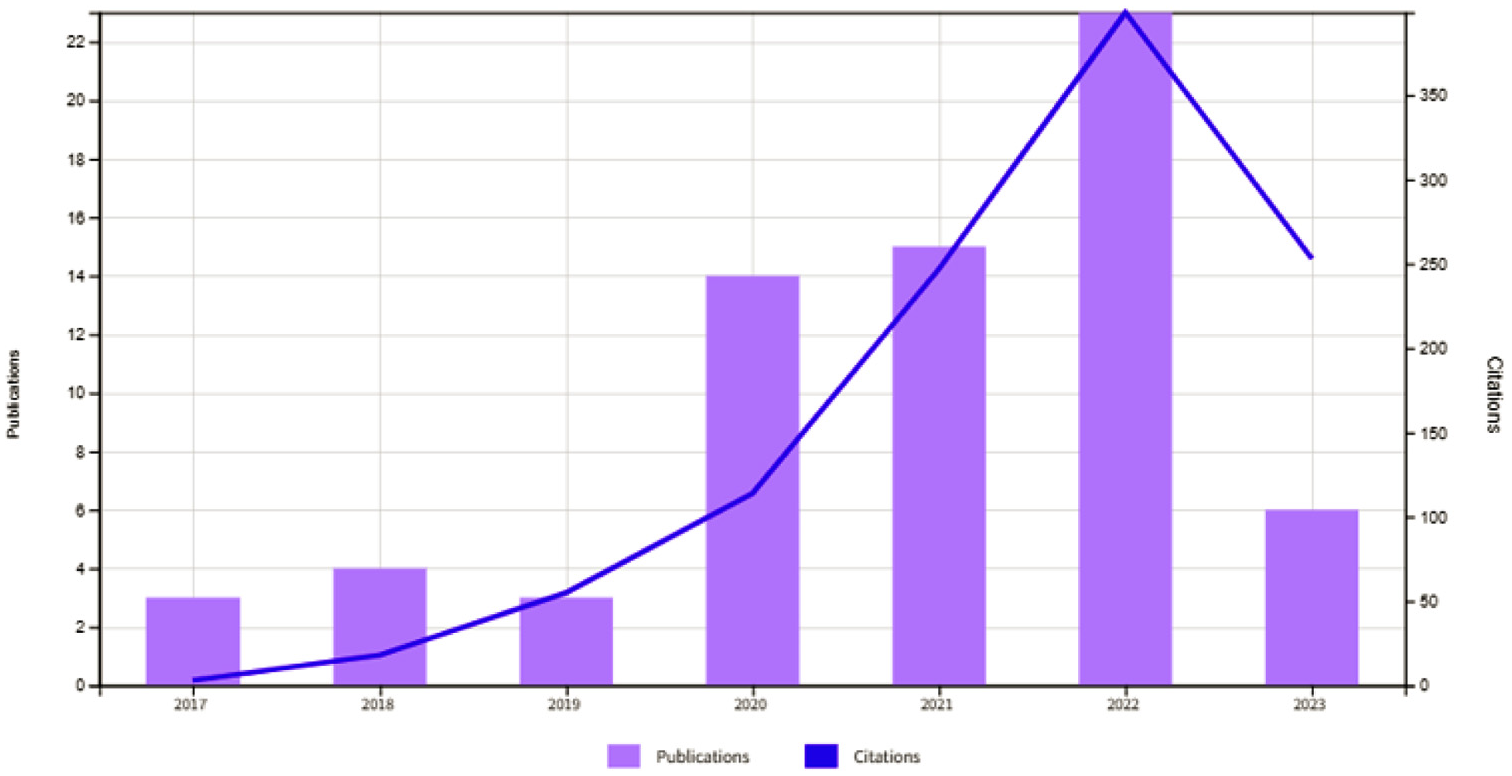
Times cited and year-wise publications.
In 2022, it reached its highest point. It is worth noting that this analysis was conducted in May 2023, and based on this trend, it’s likely that the number of publications in 2023 will surprass that of 2022. Given the rapid advancement of technology, coupled with the growing global emphasis on environmental and sustainability concerns, this field has garnered increasing attention from scholars each year. As such, it is anticipated that the upward trend will accelerate further in the future (See Table 1 and Figure 4).
In the scope of the research, an examination of the citation counts for the 68 analyzed articles over the years reveals a significant increase in citation counts starting from 2020. The publications within the scope of the analysis received a total of 3 citations in 2017, while the number of citations peaked at 400 in 2022. The average citation count per article stands at 16.9. Notably, the study by Yang et al. (2018) addressing the topic of the Internet of Things in smart ports received the highest number of citations, totaling 146. The visible yearly increase in citations can be attributed to the growing interest in this subject (See Figure 4).
Among the selected studies, 47 were empirical, 11 were review articles, and 10 were conceptual in nature. Within the category of empirical studies, 25 employed quantitative research methods, 17 utilized qualitative approaches, and 5 adopted mixed-methods designs. The quantitative studies employed various techniques, including the Analytic Hierarchy Process (AHP), surveys, index analysis, Delphi method, Data Envelopment Analysis (DEA), Interpretive Structural Modeling (ISM), Decision-Making Trial and Evaluation Laboratory (DEMATEL), game theory, and simulation methods. Qualitative and mixed-methods research predominantly featured single and multiple case analyses, as well as the interview technique. When examining the theories employed in the publications, it is observed that the articles are primarily based on the concepts of sustainability and smart ports rather than relying heavily on specific theories. Among the few theories that were employed, examples include game theory, triple bottom line, technology push theory, competitive theories, and scenario building theory. The empirical studies often draw on more narrowly focused frameworks or methodologies such as scenario building theory, game theory, or AHP to assess specific technological implementations or operational outcomes. These articles tend to treat theoretical elements as practical tools for measuring efficiency, emissions reduction, or stakeholder behaviors, rather than grounding their work in comprehensive theoretical constructs. The conceptual/review articles generally adopt broader theoretical perspectives, using integrative frameworks such as digital twin models, governance theories, or holistic sustainability paradigms (e.g., TBL) to map out strategic and policy-level implications.
RQ2. Where are the global hotspots and the countries, and institutes with the highest number of articles?
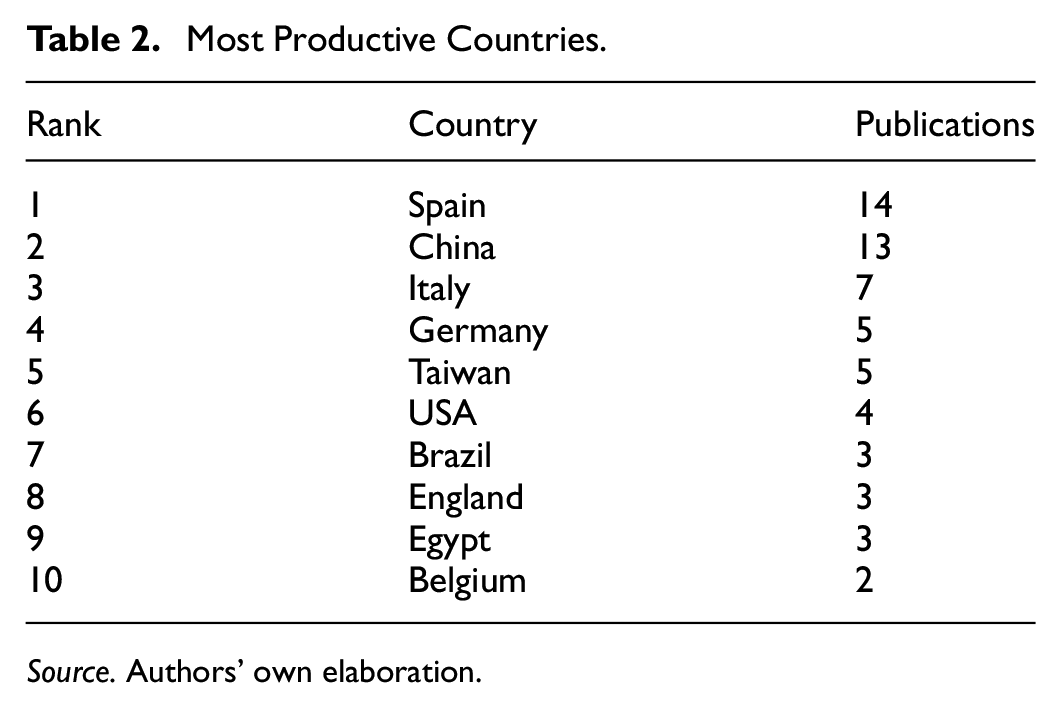
Scientific progress is widely regarded as the foundation of a nation’s economic and cultural development (Matcharashvili et al., 2014). Hence, the objective assessment of a nation’s scientific productivity assumes paramount significance. Currently, more than 20 countries and regions have made significant contributions to the field of sustainability research in smart ports. To aid researchers in identifying countries and universities for further exploration in this domain and to assist policymakers in pinpointing the optimal ecosystem for research and development endeavors, an analysis was conducted on the most productive and influential countries based on the number of publications. Table 2 presents the top 10 countries actively engaged in sustainability research in smart ports. The ranking is determined by the quantity of publications. This ranking not only reflects the intensity of academic activity by country but also indicates emerging regional hubs of smart port innovation.
Most Productive Countries.
Source. Authors’ own elaboration.
Figure 5 illustrates the global distribution of data collection regions in studies on the world map, with darker colors indicating a greater number of studies conducted in those regions, encompassing both empirical and non-empirical research. Used in tandem with Table 2, the figure helps visualize how scholarly contributions are geographically concentrated, highlighting global imbalances as well as key centers of academic interest. Spain leads with 14 publications, signifying a growing appreciation for this research area among Spanish academics. China follows closely behind with 13 publications, with Italy ranking third with 7 publications. Germany and Taiwan each have 5 publications, making them the subsequent contributors in this field.

Geographic distribution of scholarly output.
Examining the most productive institutions or universities that have made substantial contributions to this field of literature is another essential component of the SLR. A thorough review of the institutions that produce the most documents is provided in Table 3. This table provides not only a productivity ranking but also helps highlight institutional centers that drive global research on smart port sustainability. With a total of seven documents added to the research corpus, Universidad Politécnica de Madrid stands out as the university that has been the most prolific. Shanghai Maritime University, which has made a commendable five publications, is right behind in second place. Since then, a number of universities have achieved noteworthy advancements in the discipline, each with three publications to their name. These organizations include the University of Hamburg, the National Yang Ming Chiao Tung University, and the Egyptian Knowledge Bank (EKB).
The Most Productive Institutes and Universities.

Source. Authors’ own elaboration.
Moreover, when examining the geographical distribution of the most publishing institutions and universities in this field, it is observed that these institutions come from different regions of the world. For example, Universidad Politecnica de Madrid produces publications from Spain, Shanghai Maritime University from China and Egyptian Knowledge Bank from Egypt. National Yang Ming Chiao Tung University contributes from Taiwan, while the University of Hamburg provides important work from Germany. Figure 5 supports this institutional ranking by illustrating their global distribution, allowing readers to visually grasp how research capacity is spread across continents. This geographical diversity of countries from different continents reflects the international dimension and global engagement of research in the field of sustainable smart ports. See Table 3 and Figure 5.
RQ3. Which are the most influential publications, which WoS categories dominate the field, and who are the most influential authors in Sustainability at Smart Ports research?
Another pivotal aspect of the SLR is the examination of the most prolific journals that publish extensive research on sustainability in smart ports compared to others. Table 4 provides an overview of the top 10 journals that have contributed to this field. This table not only reflects journal productivity but also indicates the publishing platforms that are shaping the intellectual discourse of the field. Notably, Sustainability emerges as the leading journal in sustainability research within smart ports, boasting six publications. It is followed closely by the Journal of Marine Science and Engineering, as well as Logistics Basel, both of which have published four articles each. Subsequently, IEEE Access, Maritime Policy Management, and Transport Policy are tied with three articles each. This analysis sheds light on the prominent journals driving advancements in the research domain.
Top Journals in Sustainability Research for Smart Ports.

Source. Authors’ own elaboration.
Figure 6 presents a treemap visualization categorizing research studies into different subject areas based on their frequency. Each block represents a distinct category, with its size proportional to the number of studies in that field. Categories such as “Engineering Electrical Electronic,” “Transportation,” and “Environmental Sciences” have the largest representation, while others like “Oceanography” and “Operations Research Management Science” contain fewer studies. The color differentiation helps to visually distinguish between these subject areas (See Figure 6).

WoS categories of publications.
Studies within the first category focus on the integration of advanced technologies in the digitalization process of ports. Research addressing the complexity of port information systems evaluates the potential benefits that innovative technologies such as cloud computing, blockchain, 5G, virtual reality, and renewable energy can bring to the sector (See Abdallah et al., 2023; Barasti et al., 2022; Han et al., 2022; Sadiq et al., 2021).
The second category, under the transportation theme, centers on evaluating and implementing smart port technologies to boost operational efficiency. Studies in this group explore several key areas: some analyze smart port designs that streamline maritime transportation by enhancing overall performance; others develop quantitative metrics like the Smart Port Index to systematically identify and address operational weaknesses (See Molavi et al., 2020; Yen et al., 2023).
Although the third category lists 10 studies, a closer look shows they actually form 3 related subgroups: Environmental Sciences, Green Sustainable Science and Technology, and Management. The first subgroup falls under the field of environmental sciences. The common theme among the studies in this group is the crucial role of technological transformation in port operations for enhancing sustainable performance and improving both environmental and operational efficiency (See Koto N’Gobi et al., 2023; Lin et al., 2022; Othman et al., 2022). The second subgroup within the third category consists of ten studies under the theme of Green Sustainable Science and Technology. These studies focus on digitalization and enhancing sustainable performance in port operations (Harnischmacher et al., 2023; Nguyen et al., 2022; Philipp et al., 2021). The final subcategory of the third group is Management. These studies examine the impact of digital transformation and technological integration on sustainable performance, efficiency, and environmental management in port operations (de Moura, 2022; Henríquez et al., 2022; Yen et al., 2023).
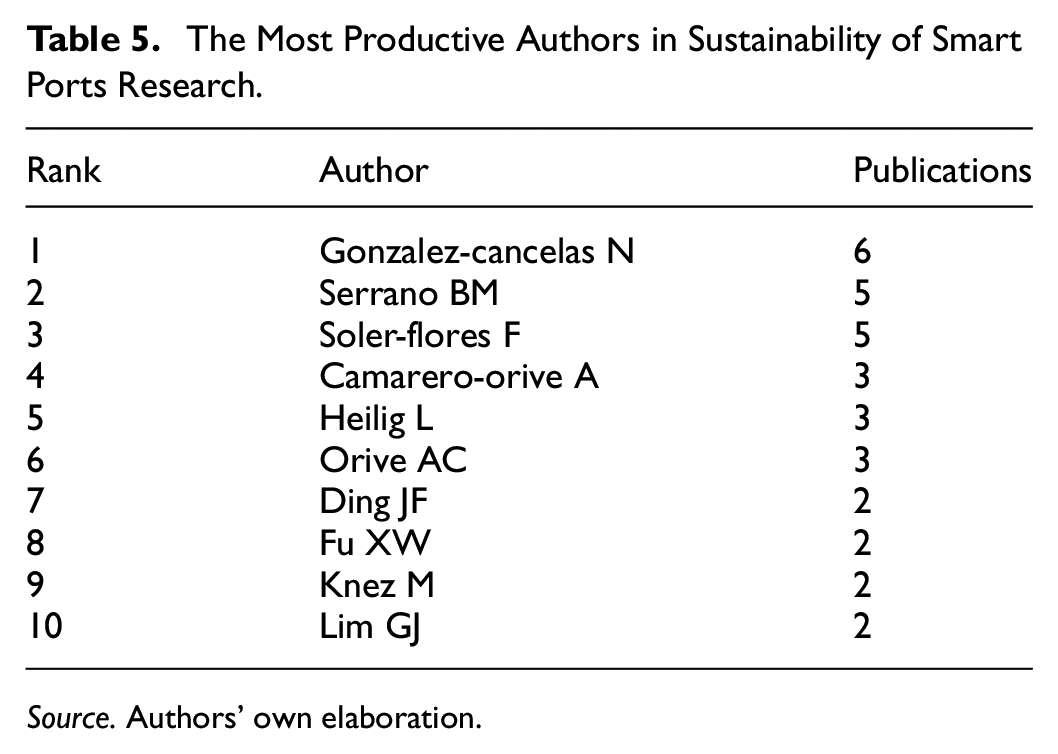
To address the study’s third research question, “Who are the most influential authors?” In this section, the bibliographic data was examined to determine who publishes the most frequently on the sustainability of smart ports; the findings are shown in Table 5. This author-level analysis offers insights into key contributors shaping the academic discourse and helps identify potential thought leaders in the field. Gonzalez-Cancelas, N. leads the way with six publications, followed by Serrano, B. M. and Soler-Flores, F., each with five (See Table 5.).
RQ4—What are the key thematic trends in the literature on the sustainability of smart ports?
The Most Productive Authors in Sustainability of Smart Ports Research.
Source. Authors’ own elaboration.
The data analysis followed a structured thematic approach, combining an initial open coding phase with axial coding to identify patterns and relationships within the selected literature (Braun & Clarke, 2006). First, the 68 articles in the dataset were reviewed and analyzed in relation to the smart port sustainability notions by two researchers working independently as a pair. Thematic coding was conducted where relevant segments of texts were assigned initial codes. Some of the codes included, “IOT,” “AI,” “Renewable Energy,” “Digitalization,” “Big Data,” “Reducing Emissions,” “ICT,” “Greenports,” “Govarnance,” “Efficiency,” and “Cybersecurity.” After thematic coding was complete, the researchers convened to collate and compare the codes for inter coder agreement. After sufficient inter-coder agreement was ensured the codes were compared and finalized on. Afterward, relationships and connections between the initial codes were sought to develop axial codes, which led to the overarching themes to the primary issues and trends within the dataset. The primary themes identified through the analysis highlight the interconnected factors influencing smart port sustainability and are discussed in detail in the following section.
Theme 1: Digital Transformation for Enhanced Efficiency and Sustainability
Digital transformation is revolutionizing smart ports by integrating cutting-edge technologies such as automation, IoT, big data analytics, blockchain, AI, and 5G. This goes beyond simply adopting new tools; it’s about fundamentally reimagining port operations to optimize efficiency and sustainability. For instance, Hsu et al. (2023) demonstrate that using secure electronic document transfer and harnessing big data can significantly streamline operations and cut turnaround times. Similarly, Gao et al. (2024) stress that having robust data governance is key for making the most of IoT, which in turn enables real-time analytics and predictive maintenance. Heikkilä et al. (2022) provide evidence that scenario-based digitalization can reduce delays and energy use, directly supporting sustainability, while Henríquez et al. (2022) show how Industry 4.0 tools can spark new business models and eco-friendly practices. Han et al. (2022) also highlight how a 5G-based VR solution boosts real-time decision-making. To exemplify these points Table 6 highlights three sample articles that illustrate how digital strategies are being used to improve port sustainability. It provides a simple overview of each study’s purpose, method, and key findings, helping readers see how different approaches contribute to smarter, greener port operations.
Digital Transformation for Enhanced Efficiency and Sustainability, Three Sample Articles.

Source. Authors’ own elaboration.
In addition, Durán et al. (2021), in “Boosting the Decision-Making in Smart Ports by Using Blockchain,” reveal that blockchain technology does not only add a layer of security during transactions and data exchanges but also enhances the transparency and accountability of port operations as well. Furthermore, Heilig et al. (2017) in “Digital Transformation in Maritime Ports: Analysis and a Game Theoretic Framework” provide a strategic lens by employing a game theoretic framework to analyze digital transformation, revealing how competitive interactions and coordinated investments among port stakeholders can drive sustainable innovation. Overall, digital transformation is the core of smart port today. Operational efficiency and ecological sustainability go hand in-hand because of real-time insights, predictive maintenance, and enhanced transparency. Applying various technologies such as AI, 5G, blockchain, and Industry 4.0 tools allows ports to optimize operations while minimizing the carbon footprint. This full-spectrum approach supports the construction of resilient, future-ready port ecosystems that will prosper within the uncertain environment of global trade. See Table 6 for details.
Theme 2: Green Port Initiatives: Energy Efficiency and Renewable Energy Integration
The Green port initiatives are all about decarbonizing port operations through improved energy efficiency, the use of renewable energy sources like solar and wind, and alternative fuels. These measures aim to reduce greenhouse gas emissions and improve the way energy is used by leveraging advanced energy management systems, simulation models, and the everyday use of renewables. For example, Harnischmacher et al. (2023) used simulation-based methods for battery degradation in vehicle-to-grid setups to analyze the energy trade-offs in electric port transportation. Similarly, Nguyen et al. (2022) reported the reductions in general energy consumption and carbon footprints brought by smart energy management systems, while Alzahrani et al. (2021) provided a comprehensive review emphasizing the requirement for renewable energy and cost-performance optimization in the quest for zero-emission operations. Sadiq et al. (2021) looked into the core elements of greenness for driving sustainable practices, while Tsolakis et al. (2022) argued that in container terminals, AI-driven automation could further curb energy consumption. In addition, Philipp et al. (2021) highlighted the use of renewable energy and automation for bulk cargo loading processes, which illustrates how these combined activities can reduce carbon emissions and enhance productivity in the ports at the same time. To further illustrate these examples, Table 7 presents three selected studies that demonstrate how various green port strategies are applied in real-world contexts.
Green Port Initiatives: Energy Efficiency and Renewable Energy Integration, Three Sample Articles.

Source. Authors’ own elaboration.
Together, these studies argue that for efficiency in ports, proper uptake of the more energy-efficient technologies, renewable energy sources, and supporting governance mechanisms will result in real changes in their contribution to environmental impacts, as well as operational savings. Such strategies for decarbonization have positive impacts on ports in complying with strict environmental regulations and facilitate future stewardship in sustainable, low-carbon maritime logistics. In that sense, the integrated approach reimagines traditional port operations into smart port ecosystems that are modern, green, and resilient. See Table 7 for details.
Theme 3: Smart Port Governance and Stakeholder Collaboration for Sustainable Development
Smart port governance is about creating strategic policies, robust regulatory frameworks, and building strong partnerships among port authorities, private operators, governments, and logistics providers. In essence, it’s about setting up clear, transparent decision-making processes and encouraging data sharing and international cooperation so that smart port projects truly serve wider economic, social, and environmental goals. For instance, Othman et al. (2022) examine how smart port practices and advanced technologies contribute to the sustainable performance of Egyptian Ports. The study emphasizes collaboration among stakeholders in advancing such initiatives and enumerates challenges on the technology side. Similarly, Lin et al. (2022) compared governance models in Taiwan and Spain and showed that having clear regulations and an active private sector leads to more effective, tailored port development strategies. Campisi et al. (2022) demonstrated how local partnerships can bring together public and private resources, sparking innovation and improving access to funding for sustainable projects. Boullauazan et al. (2023) introduced a maturity model that helps assess and steer smart port policies and operations, while Chen, Xue, et al. (2019) proposed a comprehensive framework that weaves together environmental, technological, and stakeholder factors into a roadmap for sustainable port development. Additionally, Serra et al. (2022) highlighted how blockchain-based solutions can boost transparency and trust, further reinforcing the collaborative decision-making needed in this sector. To illustrate these ideas more concretely, Table 8 brings together three representative studies that show how governance models and stakeholder collaboration support smart port sustainability efforts. Each study outlines different governance approaches and key takeaways for effective implementation.
Smart Port Governance and Stakeholder Collaboration for Sustainable Development, Three Sample Articles.

Source. Authors’ own elaboration.
As a whole, these studies describe effective smart port governance as involving the establishment of well-articulated policies and the deliberate and targeted engagement of all pertinent stakeholders in building resilient, transparent, and adaptive port ecosystems. Bringing diverse perspectives into focus using proper guidance from regulatory frameworks, participative decision-making, and contemporary technologies in public ports will enable ports to better align their operations with broader economic, social, and environmental goals. Such an integrated approach eventually becomes that which drives sustainability and long-term viability in the maritime sector. See Table 8 for details.
Theme 4: Challenges and Opportunities for Smart Port Sustainability
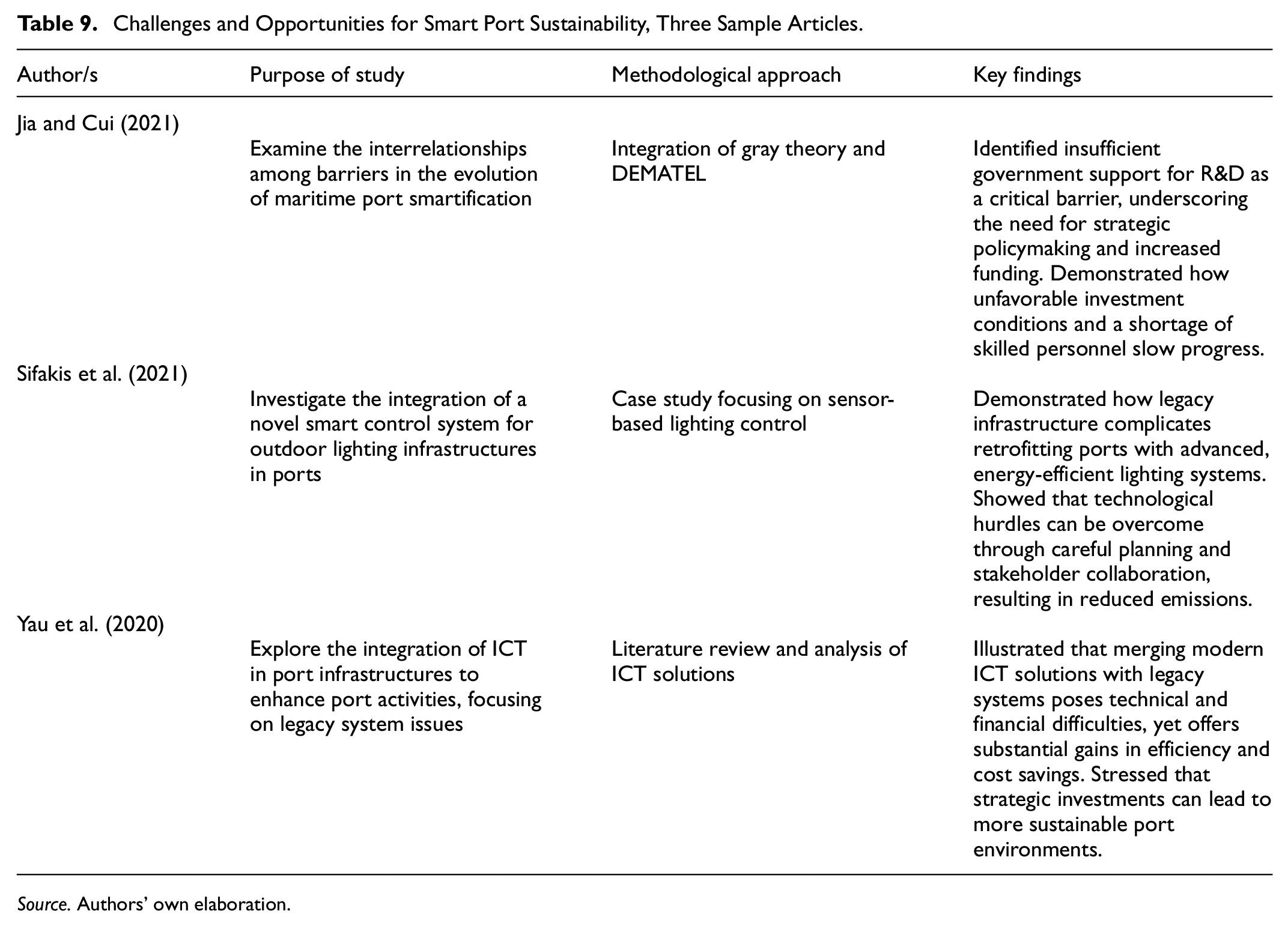
Despite the promising benefits of smart port transformation, its implementation still faces a range of challenges. These include technological limitations, financial constraints, cybersecurity risks, and workforce adaptation issues, among others. For example, Jia and Cui (2021) point out that unfavorable investment policies and a shortage of skilled personnel can seriously slow progress, highlighting both financial and workforce-related hurdles. Ben Farah et al. (2022) warn of escalating cybersecurity threats that come with increased digital integration, stressing the urgent need for robust protection measures. Sifakis et al. (2021) point out that retrofitting outdated lighting systems with advanced, sensor-driven controls is no simple task—legacy infrastructure often stands in the way of energy-efficient upgrades. Meanwhile, Wang et al. (2021) describe the difficulties in achieving seamless data integration and interoperability in digital twin–driven management systems, even as these technologies promise to enhance real-time decision-making and predictive maintenance. Boullauazan et al. (2023) also note the challenge of developing a universally accepted maturity model, which complicates benchmarking and policy refinement across diverse port communities. Yau et al. (2020) remind us that integrating modern ICT solutions with older systems can be both technically and financially demanding, though the potential efficiency gains and cost reductions make it a worthwhile investment. Finally, Dominguez et al. (2022) offer a detailed roadmap for implementing smart practices, showing that even in regions where definitions and practices are fragmented, a well-structured strategy can drive coordinated modernization. To illustrate some of these challenges and possible solutions in more detail, Table 9 presents three sample articles.
Challenges and Opportunities for Smart Port Sustainability, Three Sample Articles.
Source. Authors’ own elaboration.
The various studies above highlight that smart port sustainability is significantly threatened by the challenges they face; each such hurdle creates an opportunity for specific innovation, investment, and policy improvement. Port authorities can, by collaborative approaches, new technology acquisitions, and reformulating regulations, convert these challenges into stepping stones toward building resilient, efficient, and sustainable port ecosystems that are ready to thrive in a competitive world maritime landscape. See Table 9 for details.
Discussion
This paper provides a comprehensive review of the literature about smart ports and sustainability from the day when the related first article was published in 2017 to 2023. Using a SLR, a comprehensive examination of these gathered research studies has been conducted with the aim of gaining a deeper insight into the connection between sustainability and smart ports issues. The objective is to offer maritime professionals and scholars an overview of the present state of sustainability and their connectedness and contribution to smart ports. A total of 68 articles that were covered by WoS, were analyzed.
The key findings from the reviewed articles are; firstly, the fact that the initial article in this research field was published in 2017 indicates that the field is relatively new and open to development. The steady increase in the number of publications, from 2017 to 2023, with a total of 68 articles during this period, accompanied by a notable rise in the citation counts of these articles, signifies the growing popularity and prospective significance of this research area. Yang et al. (2018), with a total of 146 citations, have received the highest number of citations for their publication investigating IoT in Smart Ports, indicating its influential impact. An examination of the methodologies employed in the articles within the scope of this research reveals that 47 articles are empirical, 11 are reviews, and 10 are conceptual studies. Particularly, the Analytic Hierarchy Process (AHP) has emerged as one of the most frequently utilized methods in empirical articles (e.g., Hsu et al., 2023; Lin et al., 2022).
One of the intriguing findings of this study is the limited use of theories within the analyzed articles. Some of these theories include game theory, technology push theory, competitive theories, stakeholder theory, and triple bottom line (TBL) theory. The Triple Bottom Line (TBL) theory was introduced by Elkington in 1994 to define sustainable development. This concept approaches sustainable development from three fundamental perspectives: economic prosperity, environmental quality, and social justice (Gu et al., 2021). More specifically, the TBL theory has given perspective to sustainability as requiring all smart port initiatives to deal not only with the economic successes and environmental gains but also with social well-being. Evidence from Hsu et al. (2023) and Yau et al. (2020) suggests that digital technologies and automation have substantially lowered operational costs, reinforcing the economic viability of smart ports. In terms of achieving green outcomes, Tsolakis et al. (2022) and Sadri et al. (2022) further note that the provision of renewable energy and energy management systems will play a major role in reducing greenhouse gas emissions and reaching net-zero targets. On the social dimension, Othman et al. (2022) and Dominguez et al. (2022) state that effective stakeholder cooperation, transparent decisions, and inclusive governance frameworks are essential for ensuring that smart port practices also benefit port communities, workers, and local economies. All of them together provide evidence of the fact that long-run sustainability is assured if one follows the balanced approach in terms of keeping economic, environmental, and social dimensions all in consideration.
The maneuver through which all dimensions of the Triple Bottom Line are tackled strengthens a port’s competitive edge and help build a more resilient and inclusive maritime ecosystem. However, an intriguing insight from our analysis is that although TBL is acknowledged in theory, a significant portion of the empirical research still primarily focuses on the environmental dimension. In other words, while the ideal is to maintain a balanced approach as prescribed by TBL, in practice, environmental metrics (such as carbon emissions, pollution, and energy consumption) tend to dominate the literature—likely due to stringent regulations and the ease of measurement. In addition to the Triple Bottom Line perspective, circular economy principles are of utmost importance for sustainability in smart ports. For instance, Alzahrani et al. (2021) and Zhao et al. (2020) indirectly reflect circular economy concepts through their works on integrating renewable energy sources and optimizing resource use, among others. Their works reveal that smart ports will significantly reduce environmental impacts while improving efficiency by waste reduction, material reuse, and energy management. While such works are heavily focused on decarbonization, their conclusions indicate a very close relationship with circular economy principles. Sustainable port practice requires closing the loop of resources to form a resilient, resource-efficient system that is critically important for long-term viability. It is important to note that the majority of the studies have primarily advanced on an application basis rather than being rooted in theoretical foundations. This situation can be attributed to the relative novelty of the research field, which is still in its early stages of theoretical development. Therefore, it is reasonable to state that further research and theoretical progress are essential in this field.
When the number of publications is examined, the countries contributing the most to this research area are Spain with 14 publications, China with 13 publications, and Italy with 7 publications. The fact that Spain is the top contributor to the sustainability of smart ports’ research reflects its strong commitment to advancing and developing the ports sector, and can be interpreted as an indication of Spain’s proactive approach toward sustainable practices in the smart ports industry. China is also at the forefront of sustainability through technology-enabled practices, especially in its major ports, which have always been at the forefront of the world port rankings. As a leading country in the port industries with a growing economy and world maritime trade, China is a second major contributor to this research area. The high number of publications shows that China is actively participating in the global debate on sustainable port practices and management. Ranked third in this research area, Italy’s rich maritime heritage and strategic position have likely influenced its contributions to this field. Italy’s experience and expertise in the maritime and port sector can provide valuable insights for enhancing sustainability in the sector.
Finally, our study generated four key themes regarding the sustainability of smart ports: (1) Digital Transformation for Enhanced Efficiency and Sustainability, (2) Green Port Initiatives: Energy Efficiency and Renewable Energy Integration, (3) Smart Port Governance and Stakeholder Collaboration for Sustainable Development, and (4) Challenges and Opportunities for Smart Port Sustainability. The first theme, highlights the transformative role of technologies like AI, IoT, and big data analytics in optimizing port operations and promoting sustainability. The second theme, emphasizes the importance of decarbonizing port activities through energy efficiency, renewable energy integration, and alternative fuels. The third theme, underscores the need for effective governance frameworks, stakeholder collaboration, and transparent decision-making to ensure that smart port initiatives align with broader sustainability goals. The fourth theme, acknowledges the various hurdles faced by ports in their pursuit of sustainability, while also highlighting the opportunities for innovation, investment, and policy refinement. When taken as a whole, these themes highlight the need to balance cutting-edge technologies, environmental requirements, efficient governance, and proactive solutions to new problems in order to achieve smart port sustainability. Smart ports can develop into resilient, forward-thinking systems that can prosper in the increasingly competitive and unpredictable global marine environment by tackling these aspects comprehensively. By synthesizing these themes, this study lays the groundwork for a holistic approach to smart port sustainability, paving the way for future research and practical implications.
Practical Implications
The outcomes of this study offer a profound source of insights for policymakers and port managers dedicated to advancing smart port sustainability. For policymakers, the research highlights how to create regulatory frameworks that will not inhibit the use of digital technologies and integration of renewable energies but will instead encourage the involvement of relevant stakeholders. Above all enabling funding for green infrastructures, providing incentives for innovation, establishing robust cyber-security regulation, and creating cooperation and knowledge sharing among stakeholders serve as the basic ground for developing industry standards and best practices for smart port sustainability. The study indicates that a port manager should understand that investment in digital transformation and energy-efficient systems is of utmost importance. Using cutting-edge technologies in automation, IoT, and big data analytics, ports can quickly make operations more efficient, enable shorter turnaround times, and, in a way, manage energy better to reduce environmental impacts. By prioritizing sustainability, port managers can enhance their operational efficiency, reduce their carbon footprint, and improve their competitiveness in the global market. By integrating these recommendations, stakeholders can create resilient, sustainable, and inclusive smart port ecosystems that thrive in the face of global challenges.
Limitations and Future Research
There exist several limitations in this research, along with recommendations for future studies. First, it considered only articles published in English. The articles published in other languages could be useful but were not considered in the study. Secondly, while the Web of Science (WoS) is generally considered to be a reputable and comprehensive source for academic publications, it is possible that relying solely on it may have resulted in the exclusion of some relevant studies available in other databases. In addition, it should be noted that the scope of our review was limited to peer-reviewed journal articles. Other research materials, such as conference proceedings, books, book chapters, dissertations, and unpublished monographs, were not considered. While the thematic analysis was extensive, some dimensions of smart port sustainability may still remain unexplored. Despite these limitations, our study lays a solid foundation for understanding smart port sustainability and paves the way for future research to broaden and refine these findings.
While this study has provided a comprehensive overview of the current state of smart port sustainability research, several notable gaps and underexplored areas remain. Table 10 outlines key research questions organized around the four core themes of this study, highlighting underexplored areas where further scholarly attention could meaningfully advance the field of smart port sustainability.
Potential Future Research Avenues in Smart Port Sustainability.

Source. Authors’ own elaboration.
These can be summarized according to the four themes as follows. In the context of Digital Transformation for Enhanced Efficiency and Sustainability, future research could examine how modern digital solutions, such as AI-driven analytics and IoT-based monitoring, can be scaled up in ports at various resource levels, and which ethical or social dimensions (e.g., labor adaptation) should best be incorporated into technology adoption plans. Within Green Port Initiatives: Energy Efficiency and Renewable Energy Integration, research could explore the applicability of circular economy models in large-scale port implementations and examine the economic impacts of adopting renewable energy and alternative fuels. For Smart Port Governance, future research could examine, how participatory governance models can balance the economic, environmental, and social dimensions of sustainability, as outlined by the Triple Bottom Line (TBL) framework. Additionally, future research could delve deeper into the role of transparency in building trust among port stakeholders during digital transformations. Finally within the theme of Challenges and Opportunities for Smart Port Sustainability, future research should explore cybersecurity in increasingly digitized port ecosystems while developing innovative financial models to incentivize investment in sustainable technologies and comprehensive frameworks to guide best practices in addressing these challenges. These research efforts would lead to a future of smart ports that would be more secure, resilient, and sustainable, enabling them to adapt to today’s complexities of digital transformation and environmental responsibility.
Conclusion
This SLR highlights the critical role that smart ports can play in achieving sustainability in the maritime sector. By using the cutting-edge technology, renewable energy models, and participatory management frameworks, smart ports aim to optimize operational efficiencies and minimize their environmental footprint. Existing literature reveals that the economic and social dimensions of the TBL framework have been largely ignored, while environmental sustainability has received a lot of attention. Future research should adopt more inclusive and holistic frameworks to address these gaps. Policymakers, port managers, and researchers need to come together to build resilient, inclusive and future-proof smart port ecosystems. By adopting this comprehensive vision, the port industry will be able to meet global challenges and capitalize on the opportunities of a sustainable future.
Footnotes

Funding
The author(s) received no financial support for the research, authorship, and/or publication of this article.
Declaration of Conflicting Interests
The author(s) declared no potential conflicts of interest with respect to the research, authorship, and/or publication of this article.
Data Availability Statement
All data generated or analyzed during this study are included in this published article.