




Abstract
The main goal of this work was to use a phenomenological framework to deepen people’s understanding of mindfulness among students so that better support can be provided for college students experiencing severe stress. For this work, data were collected from interviews with college students majoring in meditation-related disciplines. These students frequently referred to the concepts of objectivity, awareness, and a concern for the essence of mindfulness. They also expressed biases about mindfulness, linked to religious views and associations with Buddhism, highlighting some of the barriers preventing wider engagement in mindfulness practices. Additionally, the research aimed to elicit the various stressors encountered by college students and the coping strategies they employ to manage stress. The three main sources of stress identified were: academic challenges, financial hardships, and social relationships. The implications of these findings for providing better professional and systematic support to college students are discussed.
Introduction
In recent times, issues pertaining to youth employment, such as the challenges of entering and maintaining a position in the labor market, including job search difficulties and unemployment, have gained recognition as a global problem. In South Korea, the younger generation faces numerous challenges as they try to survive and compete in society. Consequently, the term N-po generation (from N-posaedae, which loosely translates as “given up generation”) has emerged to describe people in their 20s and 30s who are foregoing dating, getting marriage, having children, and maintaining social relationships in order to try and get ahead professionally (Baek, 2018; J. S. Lee, 2020). And, perhaps most worrying of all, is that many people fail to attend to their mental health, leading to South Korea having the world’s highest suicide rates. This phenomenon is a matter of significant concern and discussion in Korean society.
In response to these challenging circumstances, higher education institutions are paying closer attention to students’ emotional well-being and mental health (Halladay et al., 2018). Despite the rising levels of stress and psychological challenges among college students each year, there remains, however, a shortage of student counseling services in universities (Long et al., 2021). College students who transition to university life often face the need to adapt to new environments and handle experiences such as personal responsibility and college lifestyle demands (Bai et al., 2020), academic stress (Smith & Renk, 2007), and time management (Saleh et al., 2017). A significant number of college students also experience heightened anxiety related to their future employment prospects (Park & Kang, 2022; Shin, 2019).
As one of the many alternatives for strengthening mental health and well-being, mindfulness practice has gained widespread popularity around the world. Evidence-based mindfulness practices have attracted considerable interest among clinicians, prompting them to incorporate these techniques into their therapeutic practice field (Desrosiers et al., 2013; Lyzwinski et al., 2018; Meghani et al., 2018). In addition, mindfulness offers a practical approach that can be easily integrated into our daily lives (D. J. Kim, 2022a). Perhaps because of this, the 2010s saw a great surge of interest in meditation within our society. It became common to see phrases such as “healing,”“temple stay,”“mindfulness,” and “brain education” on television or in public spaces. Mindfulness and counseling programs targeting college students have likewise been frequently featured on college websites in recent years.
Today, the global trend in mindfulness meditation is increasing converging with school education, with detailed methodologies for teaching mindfulness in educational settings being introduced (Schoeberlein & Sheth, 2009). Notably, numerous universities have taken the proactive step of incorporating mindfulness-based programs into their academic liberal arts courses, marking a positive development (Goodman & Schorling, 2012). However, it is worth highlighting that mindfulness-based programs are mainly used in the personal sphere of school education and are still relatively underutilized. Mindfulness practices and mindfulness-based interventions are still not popular in South Korea, for example.
Some research indicates that mindfulness programs incorporating both formal and informal practices are more effective than those emphasizing informal practices alone (Hindman et al., 2015). Conversely, informal practices have shown to enhance psychological well-being more effectively than formal practices (Kakoschke et al., 2021; Shankland et al., 2021). Nevertheless, a significant body of mindfulness research suggests that both mindfulness-based interventions and informal mindfulness practices are effective for college students (Bamber & Schneider, 2016).
One question raised here is how university students discuss mindfulness. Numerous previous studies have examined the effectiveness of meditation on groups or large populations, often falling short in capturing the specific experiences and meanings of individual participants. Notably, there is a lack of research focusing on college students majoring in mindfulness meditation. This research aims to explore how these students understand and practice mindfulness, and how they resolve stress in their real life context. Quantitative studies, which tend to reveal meditation’s effects through statistical data, do not fully capture individual lived experiences. Since meditation involves an inner experience that is difficult to quantify, a qualitative approach becomes essential.
This study attempts to add to this growing field by not only exploring the significance of mindfulness in the daily lives of students majoring in meditation but also investigating how they navigate the emergence of stress in their college lives. Thus, this study examines 10 university students majoring in meditation through in-depth interviews to address the following questions:
What does mindfulness (meditation) mean to students majoring in meditation?
What are the various stressors they encounter in their college life?
What coping strategies do they employ for managing stress?
Finally, this study considers how these findings can help to better support a wider body of students.
Review of Literature
Mindfulness has gained popularity worldwide due to its robust foundation in scientific evidence across various fields (Brown et al., 2007; D. J. Kim, 2022b; Pendola & Kim, 2022). But what exactly is mindfulness? Although there exist numerous definitions of mindfulness, it is commonly described as “paying attention in a particular way: on purpose, in the present moment, and non-judgmentally” (Kabat-Zinn, 1994, p. 4). Drawing from Jon Kabat-Zinn’s pioneering perspective, which provided one of the first modern Western definitions of mindfulness, the essence of mindfulness can be succinctly summarized as encompassing concepts like the present moment, awareness, moment-to-moment engagement, and non-judgment (Baer, 2003; Brown & Ryan, 2003; D. J. Kim, 2022b; Seung Sahn, 1982; Thich, 1975). Mindfulness, in essence, empowers individuals in their thinking and problem-solving abilities. It aids in gaining a deeper understanding of the nature of problems, thereby contributing to enhanced psychological well-being and stress reduction (Brown & Ryan, 2003). In addition, mindfulness assists in managing the positive aspects of emotions and bolstering self-esteem (Brown & Ryan, 2003; Carmody & Baer, 2008).
Mindfulness practices have garnered substantial research support, suggesting that mindfulness-based interventions can help to reduce stress and depression, benefiting individuals both clinically and non-clinically (Ghawadra et al., 2019; Kabat-Zinn, 1990, 2003; Kabat-Zinn et al., 1985; D. J. Kim & Pendola, 2022). This research suggests that supporting mental health programs can encourage individuals to actively want to seek professional help and improve their attitudes toward seeking such help (E. J. Kim et al., 2020).
Much scientific research has demonstrated the effectiveness of various mindfulness practices in alleviating stress and depression, including through activities such as journaling (Ergas, 2015; Thich, 1975), washing dishes (Thich, 2008), yoga (Elstad et al., 2020; Gorvine et al., 2019), emotional regulation (Bai et al., 2020; Bond et al., 2013; Crowley & Munk, 2017), as well as meditation and mindful walking (Alhawatmeh et al., 2022; Carpena et al., 2019; Mahfouz et al., 2018). Specific to further and higher education settings, mindfulness practices have been shown to greatly benefit students (De Vibe et al., 2013; Smit & Stavrulaki, 2021), such as by reducing loneliness (Rosenstreich & Margalit, 2015), helping with sleep issues (Dvořáková et al., 2017), and improving self-efficacy (Samuel & Warner, 2019).
Stress is an integral aspect of college life for students, intertwining with various challenges such as relationship difficulties, financial problems, academic challenges, depression, and anxiety (American College Health Association, 2020, 2021; Center for Collegiate Mental Health, 2022; Dong et al., 2021; Elsalem et al., 2020; Song & Lindquist, 2015). The COVID-19 pandemic compounded these challenges, as documented by many researchers (Clabaugh et al., 2021; D. J. Kim, 2022b; Yang et al., 2021). The shift to online learning and home-schooling due to the cancellation of in-person classes during the COVID-19 pandemic introduced a new paradigm (Daniel, 2020). Consequently, college students experienced a dearth of social activities and socialization opportunities (Easa & Bazzi, 2021; Tasso et al., 2021), leading to reduced sleep efficiency (Benham, 2020; Dvořáková et al., 2017; J. Kim et al., 2022) and heightened academic stress and anxiety (Clabaugh et al., 2021; Hoyt et al., 2021; J. Lee et al., 2021). It is worth noting that female college students appeared to be more vulnerable to mental health issues in these circumstances (Clabaugh et al., 2021; J. Lee et al., 2021). Even prior to the pandemic, increased drinking and smoking behaviors have been observed (E. Lee & Kim, 2018).
In this study, the South Korean higher education system is highlighted because of the author’s close positioning to it, and also because it provides a model of a particularly high-stress environment for college students. Despite South Korea’s impressive educational attainment rate of over 89%, which ranks highest among the Group of Twenty (G20) nations in 2021, the employment rate is only 62%, and the quality of life is rated at only 5.8 points out of 10 (Statistics of Korea, 2023). In addition to stresses related to student loans and housing costs, many college students in South Korea face considerable job-hunting stress, as the domestic employment market is extremely competitive. In 2023, 56.6% of college students felt that finding a job was more difficult than the Korean university entrance exam (Yoon, 2023).
These stressors significantly affect their psychological well-being in a negative manner (Ahn & Baek, 2013; E. J. Kim et al., 2020; Lim et al., 2018; You & Yoo, 2021). During their university years, Korean college students battle with career-related stress (B. Y. Choi et al., 2011; Kang et al., 2020), and this stress can lead to negative eating behaviors (J. Choi, 2020), smartphone overuse (Islam, 2021; H.-J. Kim et al., 2019), and internet gaming addiction (Ferguson et al., 2012; Sung et al., 2020).
Significantly, despite the multitude of challenges faced by college students, there is a striking lack of provision of professional help or mental health support services in South Korea (E. J. Kim et al., 2020). Compounding the issue is that a large portion of college students fail to seek out professional help or support when they need it (Auerbach et al., 2018). In South Korea, the majority of college students do not actively seek professional assistance in their academic institution (H. C. Kim, 2018). Universities need to develop a variety of counseling services for their students (E. Kim et al., 2021). Diversifying mental health support can contribute to the economic value of social costs and assist in managing psychological problems and well-being (S. M. Lee et al., 2009).
This study is informed by Lazarus & Folkman’s (1984) stress and coping theory that defines stress as a transactional process between an individual and their environment, emphasizing the cognitive and emotional appraisal of stressors and the coping strategies used to manage them (Lazarus & Folkman, 1984). In the at sense, according to this theory, stress is not merely an external event or situation; rather, it is a subjective experience shaped by an individual’s perception and interpretation of the stressor. It may be worth including students’ stress and stress-related experiences as part of the environmental context, considering that the demands of academic life can significantly influence how students appraise and respond to stress.
From this perspective, the way individuals evaluate stress and apply coping strategies plays a crucial role in academic settings. Students’ responses to academic stressors vary depending on their cognitive appraisal and the coping resources available to them. Even in identical situations, students may perceive stress differently—some viewing it as a challenge that fosters growth, while others experience it as a source of anxiety and helplessness. These variations underscore the importance of psychological and contextual factors in shaping stress outcomes. Understanding how students assess and manage stress can provide valuable insights for designing effective academic support systems that enhance resilience and well-being.
Methodology
Participants
Purposive sampling was used to create a targeted participant group. The participants in this current study were undergraduate students majoring in meditation counseling at a 4-year university located in South Korea. They voluntarily participated through a department bulletin board at the university. The participant group comprised two men (n = 2) and eight women (n = 8), all of whom were undergraduate students. The general characteristics of the participants are displayed Table 1.
Participant Information of the Meditation-Major Student Participants of this Study.

Ethical Consideration
Ethical considerations in this study focused on minimizing potential risks to participants, ensuring voluntary and informed participation, and preserving anonymity in accordance with ethical research guidelines. To reduce the possibility of coercion or bias, students who were enrolled in the researcher’s course during the study period were excluded from participation. All interviews were conducted using non-invasive, conversational methods in settings chosen by the participants to ensure comfort and privacy.
Participants were fully informed of the study’s objectives, procedures, and their rights, including the right to withdraw at any time without consequence. Written informed consent was obtained using documents approved by the Institutional Review Board (IRB) at the author’s affiliated institution. All participants also gave explicit consent for audio recording. To protect participant anonymity, each participant was assigned a pseudonym. Names used in this study (e.g., “J-Yeon” and “Su-Min”) do not refer to real individuals but were arbitrarily chosen by the researcher. The minimal risks associated with participation were outweighed by the potential benefits to both the participants and the broader academic and educational community.
Data Collection
Since the study places a strong emphasis on the personal experiences and activities of the participants (Moustakas, 1994), this study employs the phenomenological approach. In this way, such a study may help to provide a deeper understanding of the experiences of the participants, particularly students, and how mindfulness practices may influence their comprehension of academic life.
To analyze the qualitative data in this study, the researcher followed the phenomenological procedures outlined in Collaizzi (1978) descriptive phenomenological method, consisting of seven steps: (a) The researcher familiarized themselves with the transcriptions of each participant, thoroughly reading through all interview transcriptions several times. (b) Significant statements conveying pertinent information about the phenomenon were extracted. (c) Meaningful statements relevant to the phenomenon were reviewed and key expressions were highlighted. (d) Common meanings across all statements were clustered. (e) An exhaustive description of the phenomenon associated with the theme was developed. (f) The researcher synthesized the exhaustive description to produce a fundamental structure. (g) The significant statements were returned to participants for validation. For the data analysis, this research utilized NVivo 12 software. This software is a valuable tool for qualitative research, because it facilitates the systematic analysis of large amounts of qualitative data in a scientific manner (Richards, 1999).
Data collection involved conducting semi-structured interviews using an interpretative technique approach with 10 university students majoring in meditation counseling. This interview study is guided by an interpretive description approach. Thematic analysis was employed to analyze the data in this study (Creswell, 2014; Creswell et al., 2003). Each participant underwent a 60-min semi-structured interview individually. For each interview, around 60 pages transcript were generated. With the participants’ consent, all interviews were recorded using a portable digital recorder, and transcripts were subsequently generated. To ensure adherence to ethical standards, the researcher’s affiliated institution obtained approval from the Institutional Ethics Review Board. To ensure reliability and integrity, participants who were enrolled in the researcher’s class during the study period were excluded from the research. In addition, this study ensured participant anonymity and thus, each participant is given a pseudonym.
The interviews for this study were conducted individually between May to August 2023, with the schedule and location arranged to suit the participants. While a semi-structured interview question sheet was used as the foundation, the order of the questions was not rigidly set. Instead, the participants’ experiences and perspectives naturally shaped the course of the interview. Additionally, more detailed questions were asked in alignment with the study’s subject matter.
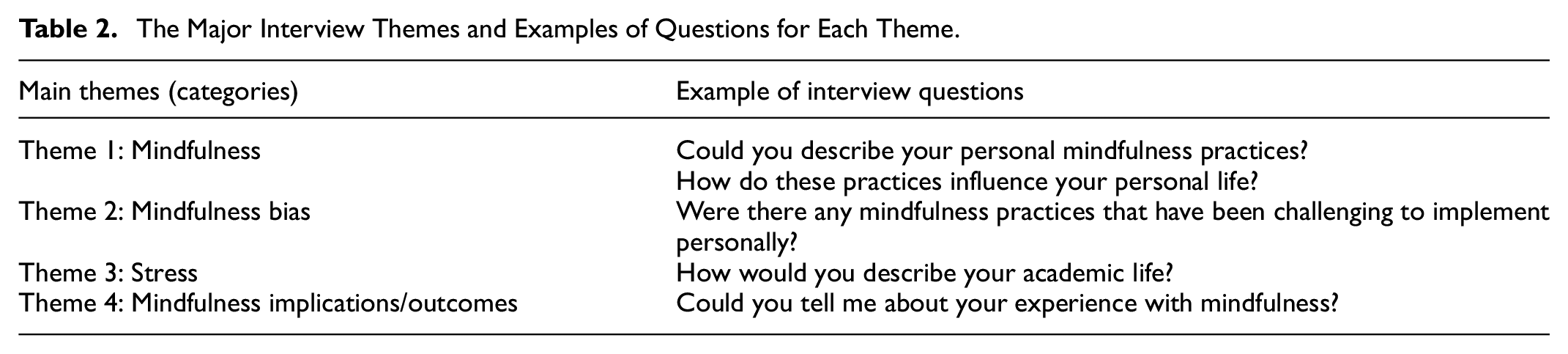
The interview started with a broad question such as “What does mindfulness mean to you?” followed by probing for more in-depth explanations, like “Could you elaborate further on this concept?” or “What does that mean?” more details of the interview progression is displayed in Table 2. Through these questions, the interviewer aimed to establish a concrete and natural connection to the participants’ own experiences.
The Major Interview Themes and Examples of Questions for Each Theme.
Data Analysis
To analyze the qualitative data in this study, the researcher followed the phenomenological procedures outlined in Collaizzi (1978) descriptive phenomenological method, consisting of seven steps: (a) The researcher familiarized themselves with the transcriptions of each participant, thoroughly reading through all interview transcriptions several times. (b) Significant statements conveying pertinent information about the phenomenon were extracted. The researcher used Nvivo 12 as the qualitative software to help in the organization and analysis process. (c) Meaningful statements relevant to the phenomenon were reviewed and key expressions were highlighted. By analyzing these statements, patterns in participants’ perceptions and experiences were identified, providing insight into how they internalize and articulate their understanding of mindfulness. For example, the expression expressed by one of the participants, “I think…[pensive] it is like recovering. For example, The feeling of recovering from a tiring day and also the tiring but pleasant feeling after a run,” reflects awareness that highlights one aspect of mindfulness. (d) Common meanings across all statements were clustered. (e) An exhaustive description of the phenomenon associated with the theme was developed. (f) The researcher synthesized the exhaustive description to produce a fundamental structure. (g) The significant statements were returned to participants for validation.
Findings
This section presents insights gained from each theme of the interviews. The illustrative interview extracts highlight key associative links by the participants, and demonstrate that although these students study subjects related to mindfulness and meditation, many of their thoughts around social relationships, the academic environment, and worries about the future can be said to be stressors common to much broader student populations.
Mindfulness
In general, many students recognized that mindfulness is difficult and not easy to approach. However, insights from students majoring in meditation-related fields shed light on the idea that mindfulness practices can be incorporated into our daily lives, making them more accessible. The participants applied mindfulness techniques as they explored how mindfulness contributes to positive personal change. According to the analysis of data from these students in meditation-related majors, participants expressed various viewpoints, encompassing their interpretations of mindfulness, biases related to mindfulness, and their personal mindfulness practices. This category of findings underscores the significant role of work in understanding mindfulness in general. Observing this through the experiences of students majoring in meditation-related fields, there appears to be the potential for making mindfulness practices more accessible to the general college student population.
Conveying the Meaning of Mindfulness
Most participants share a common thread in their stories, revealing that they have come to realize that mindfulness practices encompass a variety of activities, including dishwashing, walking, and journaling. Specifically, most students hold similar perspectives about the meaning of mindfulness, which involves objectivity, recovering, awareness, and living in the present moment (Bishop et al., 2004; Brown & Ryan, 2003; Kabat-Zinn, 1990, 1994; Seung Sahn, 1976). During the interviews, participants frequently referenced three key aspects of mindfulness: objectivity, recovery, and awareness. It is important to note that these elements are not distinct states but rather interwoven components of a continuous and cyclical process. They function in harmony, akin to the interlocking teeth of a saw-toothed wheel.
Objectivity
Mindfulness training, rooted in meditation, has been associated with enhanced objective attention performance (Kabat-Zinn, 1990). Several students reflected on how their mindfulness practice allowed them to adopt a more detached and impartial perspective on their thoughts and emotions. One participant described their experience during walking meditation, noting that the practice provided them with a sense of distance from their habitual viewpoint: “I believe that during walking meditation, I was able to gain some distance from my usual perspective. I found myself able to observe myself objectively, haha [faint smile]” (So-Hee). This suggests that mindfulness not only fosters attentional control but also cultivates a metacognitive awareness that enables individuals to view themselves with greater neutrality.
Another participant expanded on this idea, explaining how mindfulness helped them shift from being overwhelmed by their thoughts to a more reflective and observant stance: “Mindfulness… [reflecting deeply] … feels really comforting and stabilizing. I’ve noticed that I can view myself with a bit more objectivity. Normally, my mind is flooded with random thoughts, and I often lead a complex life without truly acknowledging my thoughts. But now, while meditating, I can objectively see how my mind and body change at that moment, and I can concentrate as much on the process of meditation” (Su-Min). This account underscores how mindfulness enables individuals to witness their mental and physical states in real-time, reinforcing a sense of present-moment awareness that is less entangled with habitual cognitive patterns.
Awareness
Awareness is a fundamental component of mindfulness, emphasizing full presence in the moment and directing attention to one’s current experiences (Baer, 2003; Kabat-Zinn, 1990; Seung Sahn, 1976). This cultivated awareness allows individuals to remain attentive to their thoughts and emotions without distraction (Siegel et al., 2009; Wells, 2016). By fostering a receptive state of attention, mindfulness supports moment-to-moment awareness (Siegel, 2007), promoting psychological and physical well-being (Davidson et al., 2003). Closely related to awareness is self-awareness, which refers to “knowledge about the self” (Brown & Ryan, 2003, p. 823). This heightened understanding of oneself can enhance motivation for healthy self-care (Richards et al., 2010).
Several students demonstrated their grasp of mindfulness through reflections on awareness, albeit in varying ways. For some, mindfulness was closely tied to self-reflection and understanding: “Simply, the meaning of mindfulness to me is like an awareness of myself. I think it is explained in a basic enough way [smiling]” (Ji-Yeon). Others, like Yu-Jin, hesitated but ultimately associated mindfulness with awareness and self-reflection: “[pensive]… really don’t know exactly, hm…, but … maybe awareness or thinking of myself … because I learned from a class.” This suggests that even when difficult to articulate, mindfulness is often perceived as a process of self-recognition.
Beyond defining mindfulness, some students described how awareness manifests in their daily lives. For example, one participant expressed how mindful walking allowed for a more structured approach to thoughts: “I think it’s awareness and awareness. I think I can organize my thoughts better because I recognize that this is mindfulness when walking. Now I think about the present moment without avoiding it anymore” (Hyun-A). This highlights how awareness fosters intentional engagement with the present rather than avoidance. Another participant illustrated awareness through a concrete analogy, comparing it to noticing the urgency of movement in daily life: “To explain: you know when an automatic door closes, I notice that I have to run quickly to pass through the door; but if others follow quickly behind me, I would feel a little nervous. That’s why I think I can keep noticing why I’m in such a hurry to keep moving when it's not that urgent” (A-Young). This reflection suggests that mindfulness enables individuals to question habitual responses and recognize unnecessary stressors.
Others associated mindfulness with a sense of restoration and balance. For instance, one student described mindfulness as a form of recovery, stating, “I think…[pensive] it is like recovering. For example, the feeling of recovering from a tiring day and also the tiring but pleasant feeling after a run” (Hyun-Woo). Another participant connected it to emotional regulation, succinctly stating, “Just calm down a little bit of excitement” (Jun-Ho). These insights reveal that awareness through mindfulness is not only about recognition but also about achieving a state of equilibrium and clarity.
Caring (Recovering)
Personal recovery is a crucial aspect of mindfulness, providing individuals with a sense of healing and self-compassion (Maki et al., 2021). For some participants, mindfulness was deeply intertwined with the idea of care and emotional restoration. One participant encapsulated this concept through a metaphor, describing mindfulness as a “bandage” that protects wounds even while they are still bleeding: “I suddenly remembered that mindfulness is like ‘a bandage’ in the sense of ‘caring’ or belonging’……[pensive] It’s because it’s not just a negative emotion, but it’s a feeling like this, because it helps to protect a wound even when it’s bleeding” (Ye-Rin). This perspective highlights how mindfulness fosters a nurturing approach to personal struggles, allowing individuals to acknowledge and tend to their emotional wounds rather than ignoring or suppressing them.
Beyond physical healing, the participant further connected mindfulness to the Korean term “Ma-eumchaeng-gim,” explaining that “‘ma-eum’ means mind and ‘chaeng-gim’ means caring, so mindfulness can mean caring of myself.” This linguistic interpretation reinforces the notion that mindfulness is inherently linked to self-care, emphasizing both awareness and the gentle act of tending to one’s mental and emotional state.
Other participants described mindfulness in terms of its effect on their emotional well-being, often linking it to sensations of lightness and relief. One participant likened the experience to walking on clouds, expressing a sense of weightlessness: “It feels like a person walking on clouds. My floating body has become very light (Smile)” (Min-Ji). This description suggests that mindfulness practice can foster a feeling of detachment from stress and burdens, enabling a state of tranquility and ease. Similarly, another participant summed up their experience with three simple yet powerful words: “just… comfortable… and stability” (Ye-Rin). These reflections illustrate how mindfulness provides a profound sense of emotional equilibrium, promoting a stable and comforting internal state.
Other Perspectives of Mindfulness Practices
While mindfulness fundamentally focuses on the present moment and the here and now, one participant offered an alternative interpretation, “I turn off all the lights in the room, draw all the curtains. After that, I space out at night” (Jun-Ho).
Mindfulness Bias
Most students held biases about mindfulness and its practice before becoming familiar with it. It is worth noting that although mindfulness practices originate from Buddhist philosophy, which emphasizes living in the present moment (Brown et al., 2007; Cigolla & Brown, 2011; D. J. Kim, 2022a), mindfulness, including MBSR, does not depend on any religious perspectives or ideology (Kabat-Zinn, 2012). Despite the abundance of mindfulness-based interventions (D. J. Kim & Pendola, 2022), many students lacked a clear understanding of mindfulness before they were introduced to it.
Religious Perspectives
Many students still associate mindfulness with religious practice, particularly Buddhism. This perception creates a psychological barrier that can make engagement with mindfulness practices seem less accessible to some individuals.
For instance, one participant acknowledged the benefits of mindfulness for emotional regulation but expressed concern about its perceived religious affiliation: “I think…well… it’s a really good thing to be able to help people who have a lot of emotional ups and downs like me… so that they don’t get swept away by one thing. But since there is an entry barrier called ‘meditation’, I think it's too religious” (Ji-Yeon). This suggests that the terminology and traditional roots of mindfulness may deter some individuals from fully embracing it, particularly if they associate meditation with religious or spiritual commitments.
Similarly, other participants echoed this sentiment, emphasizing the Buddhist connotations of mindfulness. One participant described it as having a “little bit of Buddhist color to it,” adding that it could sometimes feel “a little bit boring” (Yu-Jin). This response implies that for some, mindfulness is not only viewed as religious but also as an activity that lacks engagement outside of its spiritual framework. Another participant, in a more lighthearted response, simply stated, “Well … Buddhism [laughing] … difficult …” (A-Young), reinforcing the idea that the association with Buddhism may create a sense of complexity or inaccessibility.
Lack of Variety of Mindfulness Practices
Although mindfulness encompasses a wide range of practices—including breathing exercises, yoga, body scans (Kabat-Zinn, 1990, 1994), dancing mindfulness (Marich & Howell, 2015), and even everyday activities like mindful eating or dishwashing (Thich, 1975)—many participants initially held a narrow view, believing that mindfulness was limited to sitting meditation. This misconception often led to perceptions of mindfulness as monotonous or inaccessible.
For instance, one participant admitted that their understanding of mindfulness was initially confined to traditional meditation: “Other people probably think of this as well, but I thought that… um, there were not many types of meditation, such as sitting down and breathing meditation. I only focused on that and thought that it was just meditation and meditation, but I think it was amazing because there are so many things I can do in my daily life” (Su-Min). This shift in perception highlights the transformative potential of exposure to different mindfulness practices, broadening the understanding that mindfulness extends beyond seated meditation into everyday activities.
However, the perception of mindfulness as repetitive and difficult to engage with remained a barrier for some. One participant described meditation as “boring,” adding, “For me, and the meditation I talked about earlier, there will only be sitting meditation. And it seems to be difficult for ordinary people like me to do some meditation if they don’t learn it” (Su-Min). The association of mindfulness solely with seated meditation created an impression that it was both unengaging and challenging for beginners.
Others reflected on how their initial assumptions had changed after exposure to a wider variety of mindfulness practices. One participant described how learning about different forms of mindfulness practice helped them overcome their earlier reservations: “Anyway, the first time I heard it, …um… it was only meditation mindfulness. I didn’t really know when I heard this, so I felt a bit distant because it’s a key term. But now… that I know that walking around is meditation and there are many other types of mindfulness, I think I’m applying it a lot in real life. I think I looked at it with some prejudice” (Hyun-A). This realization illustrates how broadening the scope of mindfulness practices can make the concept feel more relevant and applicable to daily life.
Similarly, another participant acknowledged their prior misconceptions: “I’ve always thought of meditation where I just sit cross-legged and close my eyes unconditionally, and my father told me that, too. But when I came here, I learned how to lie down for a body scan like this, learned how to eat meditation, and learned music meditation like this” (Min-Ji). This learning experience helped them move beyond the rigid, traditional image of mindfulness and embrace its diverse applications.
Furthermore, some participants reflected on how mindfulness, despite its Buddhist origins, does not have to be confined to religious meditation. One participant noted that while they initially associated mindfulness with Buddhism, exposure to different activities changed their perspective: “Anyway, mindfulness itself started in Buddhism, so now it has a meditative element, but … I thought about this for some time. But now I have been doing various activities related to mindfulness, and now I am taking meditation and stress classes, so just sitting and meditating is not mindfulness, walking is a kind of mindfulness, and listening to music or eating is also mindfulness” (So-Hee). Another participant succinctly summarized their evolving viewpoint, stating, “My prejudice seems to be a bit archaic now, or it won’t be fun” (Hyun-Woo).
Stress
Many college students viewed the COVID-19 pandemic as having a negative impact on their daily lives. Upon analyzing the stress factors associated with the COVID-19 pandemic among college students, these factors included concerns about the decline in academic quality during remote classes, anxiety stemming from social disruptions, challenges in maintaining social relationships, and career-related stress.
Academic Quality
The shift to remote learning due to COVID-19 significantly impacted students’ academic experiences, particularly in terms of class quality and engagement. The 2020 and 2021 cohorts, both affected by the pandemic, faced different challenges in adapting to this format. The 2020 cohort, having entered college directly after the onset of COVID-19, had little to no prior experience with remote learning, making the transition overwhelming and frustrating. Many students from this group expressed feelings of disengagement and dissatisfaction with the effectiveness of online instruction. One participant reflected on their experience, admitting, “Honestly…, in remote classes, I was too lazy, and even though I didn’t participate in the class properly, I don’t remember anything that I got an A or higher grade for. I do not prefer remote classes. Sometimes, I only had memories of always sleeping with my laptop on” (Hyun-Woo). This highlights the challenge of maintaining focus and motivation in an environment where students felt little accountability or engagement.
Similarly, another student, who returned to school after military service, struggled to adjust to academic life due to the lack of structure in online classes: “To be honest, it’s been spring semester since I was discharged from the military, and there are things I can’t adapt to in my school life. Originally, in my first year, it was remote learning, so I just turned on the lecture, and to be honest, there were times when I did something else. … It was a complete waste of time and money” (Jun-Ho). This response underscores the perceived inefficacy of remote learning, with students feeling that their tuition and effort were not yielding the academic experience they had anticipated.
Even those who had prior experience with remote learning in high school found the quality of college classes disappointing. One participant expressed frustration at how little they retained from online coursework: “Yeah, that was inconvenient … inconvenient. When it was remote classes, I didn’t feel like going to school then … unfortunately, there was nothing left. I have to say that there was nothing left in my head, but the class was like that … so it was a little bit disappointing” (A-Young). The inability to fully immerse in the academic environment left students with a sense of lost opportunities. Another student similarly lamented, “There must have been a lot of things I could have done at school, but I couldn’t … I think that was a disappointment” (Su-Min), reinforcing the sentiment that remote learning lacked the depth and richness of an in-person college experience.
Beyond the passive nature of online learning, some students also found the interactive components of remote classes uncomfortable and disruptive. One participant described their discomfort with the virtual classroom dynamic: “While I was taking the online classes, I had to chat or turn on the microphone and answer. That made me feel a little uncomfortable. Because, when talking through the microphone, you may overlap with other classmates. And if you asked for an answer, but there is no answer, the flow of the class would be interrupted” (Yu-Jin). These logistical difficulties further diminished students’ ability to actively participate and engage with the material.
Ultimately, the lack of an authentic college experience was a prevailing concern. One participant summarized this frustration succinctly: “There was nothing like school life” (Ye-Rin). The absence of traditional in-person interactions, campus engagement, and hands-on learning experiences left many students feeling disconnected from their education.
Financial Difficulties
For some students, managing financial responsibilities independently adds significant pressure. One participant described the overwhelming challenge of securing housing and employment while also maintaining their academic responsibilities: “I have to find a room for myself, as well as a part-time job, but I have to pay for it all, so it’s hard, because I have to pay for the room. Finance is the biggest problem. I think financial difficulties may influence my academic achievement” (Hyun-A). The direct connection between financial strain and academic performance suggests that the stress of making ends meet can interfere with students’ ability to fully engage in their studies.
Beyond personal financial concerns, some students also feel the weight of supporting their families. One participant reflected on their struggles with tuition costs and their sense of duty to help their parents: “Tuition is so expensive, and I need to help my parents. Also, I received a student loan from the government. But, I love my parents and I don’t blame my parents” (Hyun-A). This statement highlights the emotional complexity of financial difficulties—while students may experience stress over their economic situation, they also navigate feelings of gratitude and responsibility toward their families.
Despite these challenges, some students have taken proactive steps to secure financial stability. One participant emphasized their efforts to prepare for the future by earning a steady income through part-time work: “I started to earn a small income. I do my part-time work near the school. I am raising funds for the future. Because there is no telling what may happen in the future. In our society, we see how people are destroyed by greed” (Hyun-Woo). This perspective reflects not only a sense of financial responsibility but also an awareness of broader societal issues related to financial insecurity.
Social Relationships
The COVID-19 pandemic significantly disrupted students’ ability to build and maintain social relationships due to social distancing measures, gathering restrictions, and limited in-person interactions. Many students found themselves isolated, confined to their homes, and struggling to establish meaningful connections. While this generation is highly adept at using the internet and social media for communication, the absence of in-person interactions created unique social challenges, particularly in a college environment where students come from diverse backgrounds and living situations.
For some students, the transition from high school—where friendships often continue from earlier years—to college, where peers come from vastly different regions, posed a significant social adjustment. One participant reflected on the difficulty of forming friendships in an unfamiliar environment: “At my college, it is sometimes difficult to meet friends who have all grown up in very different environments. When I was in middle school or high school, there were many cases where my middle school friends went on to the same high school. But in college, all my college friends came from other places, and since they all come from different areas, there are a lot of friends who don’t get on well with each other. [sigh]” (Min-Ji). This highlights the additional challenge of navigating new social dynamics in a setting where students lack common past experiences.
For others, the return to face-to-face classes after an extended period of isolation brought unexpected stress rather than relief. One participant described their struggle with the sudden reintroduction to in-person socialization: “Last year, when we returned to face-to-face classes, I suddenly thought of meeting a lot of people, and I was stressed out because of it, so I applied for a leave of absence” (Hyun-A). This suggests that prolonged social isolation may have heightened social anxiety or made re-engagement with peers overwhelming.
The overall difficulty of forming and maintaining social relationships during this period was a significant source of stress for many students. One participant succinctly expressed their struggle, stating, “The hardest thing was social relationships that I was experiencing for the first time [sigh]” (Ye-Rin). This statement reflects the deep impact that pandemic-related disruptions had on students’ ability to build social support networks, exacerbating feelings of loneliness and disconnection.
Mindfulness Implications/Outcomes
The students in this study engaged in a variety of mindfulness activities, including meditation, journaling, mindful walking, yoga, meditating with music, and even incorporating mindfulness into routine tasks such as cleaning and dishwashing.
For some students, mindfulness was introduced through structured assignments, leading them to engage more deliberately in the practice. One participant described how a journaling task helped them establish a meditation routine: “It was last year’s assignment in one of the classes, which was writing a meditation journal every day. So, I deliberately and forcefully meditated, but it seemed to be more effective than when I didn’t … because I think of myself as having a lot of emotional ups and downs and being a little weak mentally” (Ji-Yeon). This suggests that even when mindfulness is initially practiced out of obligation, it can still foster emotional resilience and psychological benefits.
Others found particular mindfulness techniques, such as breathing meditation, to be personally transformative. One student reflected on their experience, stating, “I think that breathing meditation is very helpful to me. When I enrolled as a freshman, it was a bit confusing because the environment itself was the COVID-19 era. I learned how to do breathing meditation at that time. I really felt it personally, and I was so amazed that I didn’t have random thoughts while meditating. Normally, my mind is flooded with random thoughts, and I often lead a complex life without truly acknowledging my thoughts. But now, while meditating, I can objectively see how my mind and body change at that moment, and I can concentrate as much on the process of meditation” (Su-Min). This highlights the ability of mindfulness to bring greater self-awareness and mental clarity, particularly in times of uncertainty.
Beyond meditation, students also integrated mindfulness into their daily routines through movement-based practices. One participant explained how mindful walking helped them process emotions and organize their thoughts: “I often walk, but I have a lot of thoughts, so originally, I tended to walk when I had a lot of thoughts. But I think I can organize my thoughts better because I walk with the awareness that this is mindfulness. In the past, if I had listened to songs and done something to avoid this stress right away, I think walking after learning mindfulness helped me focus on thinking about being stressed, why I was stressed, and what other people thought” (Hyun-A). This shift from distraction-based coping to intentional reflection demonstrates how mindfulness can transform even simple activities into opportunities for self-awareness and emotional regulation.
Other students embraced mindfulness in different ways, including yoga and journaling as tools for cultivating awareness: “I am doing yoga and journaling, which help with awareness” (Ye-Rin). Additionally, mindfulness meditation with music helped some students cope with stress in their living environments. One participant shared how they adapted meditation into their dorm life: “I was really stressed out last year, and I lived in a dormitory, so I had no problems with my roommate. But I was very stressed about living with someone. I had never lived like that before, but I was stressed about having to live in such a small space. Now, whenever I do that, I just sit on the bed and turn on a song and meditate for 10 minutes with a really calm song like a bird. When I did it, I really felt very comfortable as I didn’t have any thoughts in my head. … And I am doing a body scan, too” (Min-Ji). This illustrates how mindfulness can provide a sense of emotional stability and relaxation, even in physically or socially challenging environments.
Some students used mindfulness in everyday tasks such as cleaning and housework, which helped them stay present and grounded. One participant noted, “I think I’m just trying not to think about my stress while I’m walking, or rather I’m doing housework and cleaning my room, or something like that. This has helped me to focus on the present moment” (So-Hee). Another student found that walking meditation changed their perception of their surroundings: “There were a lot of mindfulness practices such as eating, meditation, etc., but I did walking meditation. It was not easy when I did walking meditation for the first time, because I needed to feel my whole body every moment and with every step … And now, when I am talking about my feelings about it, I can say that I could see things that I hadn’t seen. By walking slowly along the way, I recognized that there was a tree here and came to class while looking at it like this. That made a lot of sense” (A-Young). This demonstrates how mindfulness practice can heighten awareness and enhance appreciation for the present moment.
Discussion
Being a study centered on exploring the significance of mindfulness in college students, this work’s findings come with the aim to initiate discussions around mindfulness and mental health support in educational settings. The objective is to comprehend the meaning of mindfulness and the connection between mindfulness practices and daily life, based on a sample of Korean university students, and to consider how the ideas can be applied to broader student population. Overall, it is important to listen to young people’s voices. Ultimately, the study highlights that mindfulness has played a pivotal role in enhancing participants’ mental resilience.
The study’s findings have significant implications for the integration of mindfulness practices into college support programs. Given the effectiveness of informal mindfulness strategies, such as mindful walking and journaling, universities should consider incorporating flexible, accessible mindfulness initiatives that extend beyond traditional meditation practices.
Furthermore, the study highlights the barriers to mindfulness engagement, particularly religious biases and misconceptions about the practice’s variety. Some students associated mindfulness with Buddhism, leading to resistance in adopting mindfulness-based interventions. Others initially viewed mindfulness as limited to seated meditation, underestimating the range of applicable mindfulness techniques. These findings suggest that mindfulness education should emphasize secular, diverse, and easily integrated practices to increase student participation.
Additionally, many participants linked financial stress to their academic performance and mental well-being. This reinforces the necessity of holistic university support systems that integrate mindfulness with financial counseling and stress management resources. Mindfulness alone cannot eliminate financial burdens, but it may help students cope with the emotional toll of financial difficulties, making them more resilient in the face of economic challenges.
These findings align with prior research emphasizing mindfulness as a tool for stress reduction and psychological resilience (Shapiro et al., 2006; Widha et al., 2021). Similar to Birtwell et al. (2019), this study found that informal mindfulness practices were particularly effective for students, reinforcing the idea that daily activities like mindful walking, music meditation, and house cleaning can cultivate mindfulness. This supports the argument that accessible, daily-life mindfulness practices should be prioritized alongside formal mindfulness interventions in university settings.
Additionally, the study echoes research highlighting the importance of self-awareness in mindfulness-based stress reduction (Brown & Ryan, 2003). The participants’ experiences demonstrate that mindfulness enhances self-regulation, allowing students to acknowledge and navigate stress rather than reacting impulsively. This is particularly relevant in academic contexts where students face chronic stressors, such as coursework demands and future career uncertainty.
Lazarus and Folkman (1984) differentiate between problem-focused coping, which involves actively addressing the source of stress, and emotion-focused coping, which seeks to regulate the emotional response to stress. The findings suggest that mindfulness operates as both a problem-focused and an emotion-focused coping mechanism among students. For example, some participants described how mindfulness enabled them to reappraise their stressors with greater objectivity, a core principle of cognitive reappraisal in stress theory. One participant noted that mindfulness allowed them to gain distance from their usual perspectives and observe themselves more objectively. This suggests that mindfulness fosters a shift from emotion-driven to cognitive-driven stress appraisal, helping students regulate their responses to academic and social pressures. Moreover, mindfulness helped students develop self-awareness, a key component of emotion-focused coping. By practicing breathing meditation, mindful walking, and journaling, participants reported gaining greater awareness of their emotions, allowing them to process stress rather than suppress it. This aligns with the theory’s emphasis on emotional regulation as a key factor in adaptive coping.
While previous studies on mindfulness and student stress have largely focused on Western contexts, this study provides a unique perspective from South Korean college students, where mindfulness is less widely adopted. The findings suggest that cultural factors, including a strong emphasis on academic performance and financial self-sufficiency, shape students’ stress experiences differently than in other educational systems.
Furthermore, while many studies emphasize structured mindfulness programs, this research highlights how students organically adapt mindfulness into their daily lives, engaging in self-directed mindfulness practices rather than formal interventions. This suggests that institutions should promote student-driven approaches to mindfulness, allowing for flexibility in how students incorporate mindfulness into their routines.
Limitations
It should be pointed out that this research is subject to several limitations. The findings, based on qualitative interview data, cannot necessarily be generalized to a broader target population. While diversity was desired, the qualitative sample size remained small and the participants were recruited from a single university in South Korea. More diverse perspectives could emerge if students were included from elsewhere. Additionally, while we made every effort to accurately translate the interview contents from Korean to English, there may be some nuances in the choice of words that might be misleading to an English reader. The analysis method was also limited. An approach with more diverse phenomenological analysis methods would be preferable. Nevertheless, the interviews in this study still yielded rich and in-depth insights from college students specifically majoring in meditation-related disciplines.
Lastly, future research should focus on comparing students majoring in meditation related disciplines with those pursuing general majors. Such a comparative study should investigate the differences in perspectives regarding the meaning of mindfulness between these two groups. Currently, many college students in South Korea grapple with stress, depression, and anxiety. Consequently, it has become increasingly vital to prioritize mental health support through student counseling centers.
Conclusion
There is a need to overcome resistance to embracing mindfulness from a broader perspective. This research suggests that many college students may hold misconceptions about the meaning of mindfulness and its application in mindfulness-based practices. Despite the existence of various mindfulness-based interventions, it’s notable that participants primarily focused on mindfulness meditation during the interviews. This indicates that participants have been influenced by mindfulness meditation but could perhaps increase their engagement with other mindfulness practices.
Furthermore, mindfulness has shown its value not only in helping individuals cope with daily stressors but also in fostering resilience in times of crisis. The COVID-19 pandemic underscored the importance of psychological well-being and adaptive coping strategies, and mindfulness played a crucial role in helping individuals navigate uncertainty, anxiety, and isolation. Beyond the pandemic, mindfulness remains a valuable tool in managing the psychological impact of various challenges, including future health crises, economic instability, and academic pressures. By developing mindfulness skills, college students can cultivate emotional regulation and cognitive flexibility, enabling them to navigate not just personal stress but also broader societal challenges with greater resilience.
Furthermore, as indicated by the interviews, mindfulness can be applied universally and benefit all college students. Consequently, educational institutions should consider the development of mindfulness programs. It is important to note that mindfulness practices are not widely popular in South Korea, as a whole, and many college students may not have a good understanding of these practices. Added to this, there is a shortage of mindfulness training programs in Korea (Koh, 2017). Educational institutions should prioritize the expansion of mindfulness initiatives, offering a diverse array of counseling programs that include mindfulness-based interventions. Regrettably, many universities currently lack mindfulness-based programs. Given that a significant number of students experience stress, establishments need to take proactive steps to enhance their well-being. Based on research findings, elsewhere, mindfulness-based intervention programs have been shown to contribute to improved well-being among college students (Long et al., 2021; Song & Lindquist, 2015). However, it is worth noting that despite the availability of health programs in many universities, a considerable number of students may not show interest in these initiatives. Mindfulness-based interventions offer an attractive alternative as they encompass numerous informal practices that are easily integrated into daily life and may prompt students’ interest.
Clearly, as indicated in the interviews, college students stand to gain many benefits form mindfulness techniques and tools designed to aid in managing their emotions and stress. Gaining an understanding of mindfulness can contribute to comprehending how their emotions, cognitive processes, and physiological responses are influenced by mindfulness practices. Engaging in mindfulness practices may lead to enhancements in students’ daily lives and potentially reduce their stress levels.
This study contributes to the understanding of how mindfulness serves as a coping strategy within the framework of Lazarus and Folkman’s stress and coping theory. By fostering cognitive reappraisal, emotional regulation, and self-awareness, mindfulness provides students with tools to manage academic, financial, and social stressors more effectively. To maximize the benefits of mindfulness in higher education, universities should prioritize informal and flexible mindfulness practices, address misconceptions about mindfulness, and integrate mindfulness with broader support services. Future research should explore comparative studies between different student populations to determine how mindfulness interventions can be tailored to diverse cultural and educational contexts. By framing mindfulness within stress and coping theory, this study underscores its potential as a powerful psychological resource that enhances student well-being and resilience in an increasingly demanding academic environment.
Footnotes

Ethics Considerations
The study was conducted in accordance with the Declaration of Helsinki and approved by the Institutional Review Board at the author’s affiliated institution [IRB No. DGU IRB 20230001-01].
Consent to Participate
All participants were fully informed about the purpose and procedures of the study, and provided written informed consent prior to their participation.
Funding
The author disclosed receipt of the following financial support for the research, authorship, and/or publication of this article: This research was supported by Seokyeong University in 2025 (Grant No.: 202501350001).
Declaration of Conflicting Interests
The author declared no potential conflicts of interest with respect to the research, authorship, and/or publication of this article.
Data Availability Statement
The data that support the findings of this study are available from the corresponding author upon reasonable request.
Human Subjects Approval Statement
To ensure adherence to ethical standards, the researcher’s affiliated institution obtained approval from the Institutional Ethics Review Board (IRB; IRB No. DGU IRB 20230001-01).