




Abstract
This study investigates time orientation as a personality trait influencing attitudes toward online advertising and subsequent avoidance behaviors, grounded in the Value-Attitude-Behavior theory. Specifically, it examines the direct relationship between past, present, and future time orientations and attitudes toward both informational and emotional online advertisements. Furthermore, the research explores the moderating effects of informational and emotional advertising characteristics on the link between time orientation and advertising attitude through two experimental studies. Findings reveal that a past orientation is associated with negative attitudes toward advertising, while present and future orientations correlate with positive attitudes, albeit to varying degrees. A more favorable attitude toward advertising is also found to predict lower avoidance. Notably, advertising characteristics (informational or emotional content) did not significantly moderate the relationship between past orientation and attitude. However, for future-oriented individuals, higher levels of both informational and emotional content are recommended to enhance advertising attitudes. Conversely, present-oriented individuals exhibit more positive attitudes toward advertisements with lower levels of emotional content. These findings offer nuanced insights into tailoring online advertising strategies based on consumers’ temporal focus and the emotional or informational nature of the advertisement.
Keywords
Introduction
Advertising avoidance refers to the strategies employed by people to limit their exposure to advertisements through various techniques (Speck & Elliott, 1997). This practice significantly influences customer sentiments and may persist regardless of the efficacy of an advertisement’s design (Sifo Research International, 2008). Prior studies have examined advertising avoidance across traditional (television, radio, print) and contemporary platforms (online, mobile, social media) through diverse theoretical frameworks, including information theory, social exchange theory, and empirical models (Cho & Cheon, 2004; Kaynak et al., 2011; Song & Jiang, 2017).
A significant new perspective is time orientation theory, which posits that individuals’ psychological emphasis on the past, present, or future may affect their views toward advertising and consequent avoidance behavior. Nevertheless, empirical results continue to be incongruous. Rojas-Méndez and Davies (2005) discovered that individuals with a past orientation are more inclined to evade television advertisements, but Kuswati (2011) contended that both present- and future-oriented individuals may similarly engage in avoidance, contingent upon their interests and the pertinence of the advertisements. These conflicts highlight a continual uncertainty in the association between time orientation and advertising avoidance, particularly in digital environments. Furthermore, although numerous studies have utilized time orientation theory within developed cultural contexts (e.g., the US, Germany, Thailand), there is a paucity of research examining this relationship in the digital landscapes of emerging markets like Vietnam—where online advertising is swiftly proliferating, particularly among dynamic and technologically adept demographics such as students in international programs. This practical difference is substantial, as these young digital natives constitute a vital market niche that is extremely receptive to online media but also sensitive to ad fatigue and avoidance.
This article tackles two principal research issues in light of these deficiencies. Initially, it aims to elucidate the impact of temporal orientation on attitudes about online advertising and avoidance behaviors—an aspect characterized by insufficient theoretical and empirical clarity. Secondly, it investigates the moderating influence of advertisement qualities (i.e., informative vs. emotional appeals)—a variable proposed in previous study (Kaynak et al., 2013) but inadequately examined. The justification for this moderation is that the influence of temporal emphasis on advertising attitudes may depend on the nature of the ad material displayed. Informational appeals may connect better with future-oriented consumers due to their strategic attitude, but emotional appeals may captivate present-oriented consumers who emphasize immediate pleasure.
This study offers multiple contributions. It provides a core paradigm that connects time orientation to attitudes and avoidance about online advertising, so expanding time orientation theory into the realm of digital consumer behavior. It incorporates advertising attributes as a principal moderator, offering refined insights into the interplay between message design and consumer psychology. This theory is empirically applied in the Vietnamese market, a developing and under-explored environment in worldwide advertising literature. The findings provide actionable insights: firms should customize their advertising tactics by aligning message types with consumers’ temporal focus—emphasizing long-term benefits for future-oriented individuals and immediate emotional value for present-oriented ones. Additionally, the cultural background must be recognized. Cultural norms significantly affect time orientation (Hofstede, 2001) and reactions to advertising appeals (Alden et al., 1993). In Vietnam—a collectivist culture with increasing global exposure—the relationship between time orientation and advertising design may differ from that in Western countries. This cultural perspective enhances the study’s results, providing contextually relevant implications for digital advertising in comparable emerging economies.
Literature Review
Values-Attitudes-Behavior (VAB) Theory
The VAB theory of Homer and Kahle (1988) represents an attempt to integrate the three Value-Attitude-Behavior constructs into a single model. It is one of the most important and well-studied constructs in social psychology (Maio et al., 2000). The theoretical model of values, attitudes, and behaviors is shown as follows (Figure 1):
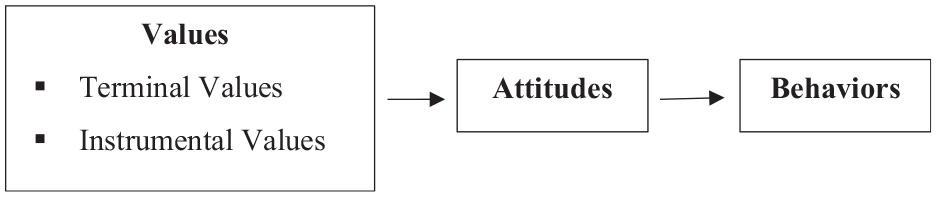
Theory of Values–Attitudes–Behaviors (VAB).
According to theory, values are central to attitudes that lead to behavior. Values are classified into two groups, including terminal values and instrumental values. Terminal values are the goals that a person wants to achieve throughout his or her life. While the perspective on how to achieve those desires has instrumental values. Personality traits and personal characteristics make up most of the instrumental values (Olpin & Hesson, 2015). An attitude is a consistently favorable or unfavorable response to a given object (Fishbein, 1963). If Fishbein (1963) constructs attitude theory with two components: importance and trust, then some studies only consider one aspect (Ramaprasad & Thurwanger, 2000). Behavior is the important result of an actual behavior, which describes self-control (Vaske & Donnelly, 1999) or a person’s attempt to change from one state to another or to keep things the same (Bergner, 2011).
Through the integration of several theoretical lenses into a coherent framework, this study seeks to comprehend the process underlying online advertisement avoidance behavior. By emphasizing internal values, time orientations, and cognitive-affective reactions to advertising—all of which have an impact on advertising attitudes and avoidance behavior—VAB Theory, the primary theoretical underpinning, is conceptually aligned with time perspective, attitude toward online advertising, behavioral advertising avoidance in online environment, and advertising characteristics. The following is how the suggested framework links various perspectives:
Value in Time Perspective
Time perspective (TP) is the dominant or preferred direction of a person’s thoughts and actions (Bergadaa, 1990). Time perspective was clarified into two categories: state-TP and trait-TP (Stolarski et al., 2018). State-TP is an instantaneous focus and attitude toward a time horizon (the past, the present, or the future) in a given circumstance, while trait-TP are stable predispositional and dispositional tendencies to remain chronically oriented and demonstrate stable attitudes toward one of the three time orientations: the past, the present, and the future. This study inherits from trait-TP, as a component of personality as a whole, that a person pays more attention to one of the three time orientations: the past, the present, or the future, than others, but does not deny the existence of such orientations (Stolarski et al., 2018). Furthermore, Olpin and Hesson (2015) assert that individual characteristics and personality variables influence instrumental values. Accordingly, time perspective is regarded as an instrumental value in the context of the larger Values–Attitudes–Behavior (VAB) paradigm. In digital media environments, it offers the fundamental “Value” element that shapes attitudes toward advertising and, eventually, avoidance actions.
Past orientation (PAS) considers the past to be important, as the source of the problem is extreme (Usunier & Valette-Florence, 1994). Individuals with this orientation prominently exhibit warmth, affection, and nostalgia (Karande et al., 2012), seeking solace in the past (Zimbardo & Boyd, 1999).
Present orientation (PRE) reflects hedonic tendencies, preferring to live in the present, exhibiting immediate gratification (Hodgins & Engel, 2002), and accepting reality whether we like it or not (Usunier & Valette-Florence, 1994), taking risks (Murrell & Mingrone, 1994), and being less able to predict future consequences (Simons et al., 2004).
Future orientation (FUT) are willing to delay immediate gratification in order to gain future benefits (González & Zimbardo, 1985), do not hesitate to make short-term sacrifices for long-term gain (Murrell & Mingrone, 1994), and are more likely to make and execute their own plans (Bergadaa, 1990).
Attitude Toward Online Advertising
Attitude toward advertising, defined as the audience’s overall views and feelings about advertising (Campbell & Campbell, 2009), is a central construct in understanding consumer responses to marketing communications. Researchers have conceptualized this attitude in various ways. Early conceptualizations by Rojas-Méndez and Davies (2005) proposed a multi-faceted view, encompassing the incentive to consume, perceived importance, and overall attitude toward advertising. This was further refined by Rojas-Méndez et al. (2012) into a broader categorization of attitudes as either favorable or unfavorable. Complementary to these multidimensional approaches, Ramaprasad and Thurwanger (2000) advocated for the measurement of advertising attitude as a holistic, overall construct.
Contemporary research has extended this understanding by examining the factors shaping advertising attitudes within the dynamic landscape of online environments. Studies have investigated the influence of specific online advertising formats, such as video advertisements on social media (Khan et al., 2021), and the impact of perceived intrusiveness and relevance of online ads (Bartsch et al., 2021). Furthermore, the increasing prevalence of personalized advertising and influencer marketing has prompted research into their effects on consumer attitudes, considering aspects like privacy concerns and perceived benefits (S. Wang et al., 2016), as well as source credibility and parasocial relationships (Lou & Yuan, 2019). These investigations highlight the evolving nature of advertising attitudes in response to the unique characteristics of the online advertising ecosystem.
In this study, we adopted the overall scale for measuring attitudes toward advertising developed by Ramaprasad and Thurwanger (2000). This choice was predicated on the scale’s demonstrated high reliability, as confirmed by A. Mehta and Purvis (1995), making it a robust instrument for assessing the consistency of user responses to advertisements over time. This singular, reliable measure allows for a focused examination of how time orientation and advertising characteristics influence this fundamental aspect of consumer response.
Behavioral Advertising Avoidance in Online Environment
Advertising avoidance (AD) is defined as behavior in which media users ignore or reduce exposure to advertising content (Speck & Elliott, 1997). In terms of the online environment, the two most chosen approaches are the approaches to avoid online advertising with three angles: cognitive, emotional, and behavioral (Cho & Cheon, 2004; Song & Jiang, 2017); and avoiding general advertising (Bang et al., 2018; de Gregorio et al., 2017). This study inherits the approach of Bang et al. (2018) because of the popularity of the scale, including emotional, cognitive, and behavioral avoidance (Cho & Cheon, 2004), or view of partial and total avoidance (Rojas-Méndez & Davies, 2005), or use of blocking software (Rojas-Méndez & Davies, 2017) in studies in other mediums.
Theory of Advertising Characteristics
The theory of advertising characteristics holds that, as a whole, advertising works because of its informative and emotional nature (N. Mehta et al., 2008). According to Jourdan (2008), based on customer perception, the characteristics of advertising are classified into two basic types: informational advertising (INF) and emotional advertising (EMO). Researchers and businesses also use this classification a lot in research and practice (Guitart & Stremersch, 2021; Heath & Stipp, 2011). Informational advertising with content that emphasizes factual information or benefits related to a product or brand (Guitart & Stremersch, 2021). Messages are based on how important the information is, how reliable the source is, and how reliable that information is (Jourdan, 2008). Meanwhile, emotional advertising describes the attitude toward advertising associated with the psychological state experienced when the advertisement appears (Jourdan, 2008). It is triggered by advertising that evokes emotions or conveys the hedonistic benefits that consumers will experience when owning or using a product (Guitart & Stremersch, 2021). Thus, advertising characteristics function as a value-congruent filter, influencing how consumers convert internal dispositions into evaluative responses to advertising. This moderating influence is essential for elucidating the diversity in advertisement effectiveness among various customer segments.
The selection of informational and emotional advertising content as key moderators was predicated on their fundamental and well-established roles in advertising persuasion (e.g., Batra & Stayman, 1990; Petty & Cacioppo, 1986). These two broad categories represent distinct persuasive strategies that align differently with individuals’ cognitive and affective processing, which we theorized would interact with their inherent time orientations. Informational appeals provide rational arguments and factual details, potentially resonating more strongly with individuals focused on future planning and goal-oriented behavior. Conversely, emotional appeals aim to evoke feelings and create connections, potentially influencing those with a present focus on immediate experiences and those with a future focus on anticipated emotional outcomes.
Theoretical Framework
The research model is based on the Value-Attitude-Behavior (VAB) theory of Homer and Kahle (1988) as its foundation. In which the value that the authors choose to study deeply is the instrumental value, which is the time orientation here. Time perspective consists of three orientations: the past, present, and future orientations are considered the basic foundation of human personality (Stolarski et al., 2018), and personality traits and individual characteristics make up most of the instrumental values (Olpin & Hesson, 2015).
The theoretical framework shown in Figure 2 uses the attitude toward advertising as a mediating factor to show how time perspective and online advertising avoidance behavior are related. Furthermore, two aspects of advertising—informational and emotional—that are suggested to operate as moderators of the association between attitude and temporal orientation are also examined in the study. The development of research hypotheses and models will proceed as follows.

Theoretical framework.
Research Hypotheses and Proposal Model Development
Research Hypotheses Development
The Impact of Time Perspective on Attitudes Toward Online Advertising
Past-oriented individuals tend to be rigid and conservative (Settle et al., 1979). As a result, they tend to reject thinking patterns that are negatively related to morality and consumption. In a study by Rojas-Méndez and Davies (2005) on TV advertising avoidance, they found that past-focused people believe that advertising is important but it motivates them to consume. As a result, they have a negative attitude toward advertising and try to avoid seeing it. Kaynak et al. (2013) also confirmed that individuals who look back to the past have many doubts about advertising, do not believe in advertising, and consequently have a negative attitude toward advertising.
Present-oriented people are understood to be present-focused and less concerned with future consequences (Harber et al., 2003; Settle et al., 1979). They not only think less about the past, but also act and experience the past (Harber et al., 2003). People with a present orientation are less likely to change channels because they have a positive view of advertising and believe it is essential to their lives and a rich source of information (Rojas-Méndez & Davies, 2005). Kuswati (2011) found in a different study using a nested model with structured relationships that people with a present orientation don’t fully trust advertising, but they have a positive attitude of it.
People who are focused on the future are highly motivated to take action to achieve their goals and actively look for ways to improve themselves, which is good for the future (Graham, 1981). For them, the future will certainly be better and more developed, so they are willing to delay immediate gratification for the sake of the future and are also willing to make short-term sacrifices for the immediate benefit (González & Zimbardo, 1985) to achieve long-term profitability (Murrell & Mingrone, 1994). Rojas-Méndez and Davies (2005) found that future-oriented individuals have a positive view of advertising because advertising is essential for them to learn more about products, useful products, innovation in products, and capture the trends in consumption and shopping. According to the research results of Kaynak et al. (2011), this time-oriented group has a favorable view of advertising as it shows a lifestyle tool.
Although previous research has only looked at advertising as a whole, some authors have classified advertising into two basic categories: informational and emotional advertising (Jourdan, 2008). Emotional advertising shows emotional appeal in the conveyed message, while informational advertising conveys to customers through providing complete information. Many authors have examined the impact of informational and emotional advertising in research and practice (Zhang, 2016). The following hypothesis is made based on the division of advertising characteristics and the theory of the relationship between time orientation and advertising attitude:
The Moderating Role of Advertising Characteristics on the Relationship Between Time Perspective and Attitudes Toward Online Advertising
Despite the fact that advertising stimulates both thoughts and emotions, leading to different consumer choices, processing levels and behaviors (McKay-Nesbitt et al., 2011). Past-oriented people rely solely on advertising as a tool or source of information to update products/services (Kaynak et al., 2013). In addition, Rojas-Méndez and Davies (2005) found that these people believe that advertising is important but it motivates them to consume. In addition, past-biased individuals do not pay much attention to the potential additional information that advertising can generate (Bergadaa, 1990; Davies & Madran, 1997) and consider it a waste of time (Kaynak, Kara, Chow, & Apil, 2013). Therefore, it can be assumed that the more information an advertisement provides, the more past-oriented individuals will feel that they have wasted their time, which in turn will perceive the advertisement negatively. In addition, past-oriented individuals foster relationships based on traditional values such as loyalty, law and order, and justice (Bergadaa, 1990; Davies & Madran, 1997). A past-oriented society may be receptive to advertisements that evoke sentimental value, preferring to recreate and recall the past through the consumption of familiar goods and services (Braun-LaTour et al., 2007). Kamila et al. (2022) have demonstrated that sadness and fear are emotional states that are positively correlated with past orientation. From that argument, advertising with a negative emotional value can make people with a past bias even more negative about advertising. On that basis, the following hypothesis is proposed:
Present-oriented people exhibit hedonic tendencies (Hodgins & Engel, 2002), and are less likely to anticipate future consequences (Simons et al., 2004). According to studies, present-oriented individuals recognize that advertising is a rich source of information, providing vital information for life (Rojas-Méndez & Davies, 2005). They have high requirements on identifying information and experiences about products that meet their needs (Raju, 1980) and are more interested in factors that stimulate consumption (Karande et al., 2012). Cotte et al. (2004) find that present-oriented people prefer novelty and variety; they search a lot of information about products and services in general to compare, evaluate and make the best choice. A recent study by Kamila et al. (2022) shows that this group of people is positively correlated with low-intensity pleasure and negatively correlated with low-intensity anger and fear. medium intensity. Therefore, the assumption is made that if too many emotions are incorporated into the advertisements, it can reduce their preference for the advertisements. Based on the above arguments, the following hypothesis is proposed:
Future-oriented people often spend time collecting data, evaluating alternatives to make informed decisions for the future (Harber et al., 2003). According to Graham (1981), this group of people is easily receptive to information tailored to their specific needs. Karande et al. (2012) assert that futurists have different attitudes toward different types of advertising and they are more interested in commercial advertising than in other types of advertising. According to Rojas-Méndez and Davies (2005), these people value advertising because it saves them time in product research and purchasing planning. In addition, Kamila et al. (2022) found that future orientation is positively correlated with high levels of joy, low anger and fear according to Machleit and Wilson (2013) suggested that emotions have an influence on users’ attitudes toward advertising. From the above arguments, the following hypothesis is proposed:
The Impact of Attitudes Toward Online Advertising on Online Advertising Avoidance
An attitude toward advertising is the mental and emotional state of the consumer in relation to advertising (Campbell & Campbell, 2009). According to Ramadhani et al. (2020), the intention and behavior of viewing an online promotional video are influenced by a person’s attitude toward advertising. Users are more likely to view an advertisement if they have positive attitudes and beliefs about it (Kaynak et al., 2011; Ramaprasad & Thurwanger, 2000), whereas negative opinions are related to the advertising avoidance behavior (Rojas-Méndez & Davies, 2005). In studying television advertising, Kaynak et al. (2011) confirmed that the behavior of avoiding commercial advertising stems from the negative attitude of customers toward these advertisements. Moreover, according to Kelly et al. (2010), audiences will avoid advertising when it has incompatible message content and are skeptical about the message that the advertisement conveys. On the basis of the above arguments, the following hypothesis is proposed:
Proposal Model Development
To clarify the structure of the theoretical framework and to present the development of research hypotheses systematically, the proposed model is operationalized through two sequential empirical studies: Study A and Study B. Each study serves a distinct yet complementary purpose in validating different advertising characteristics of the integrated framework.

Model development of study A with the informational advertising.
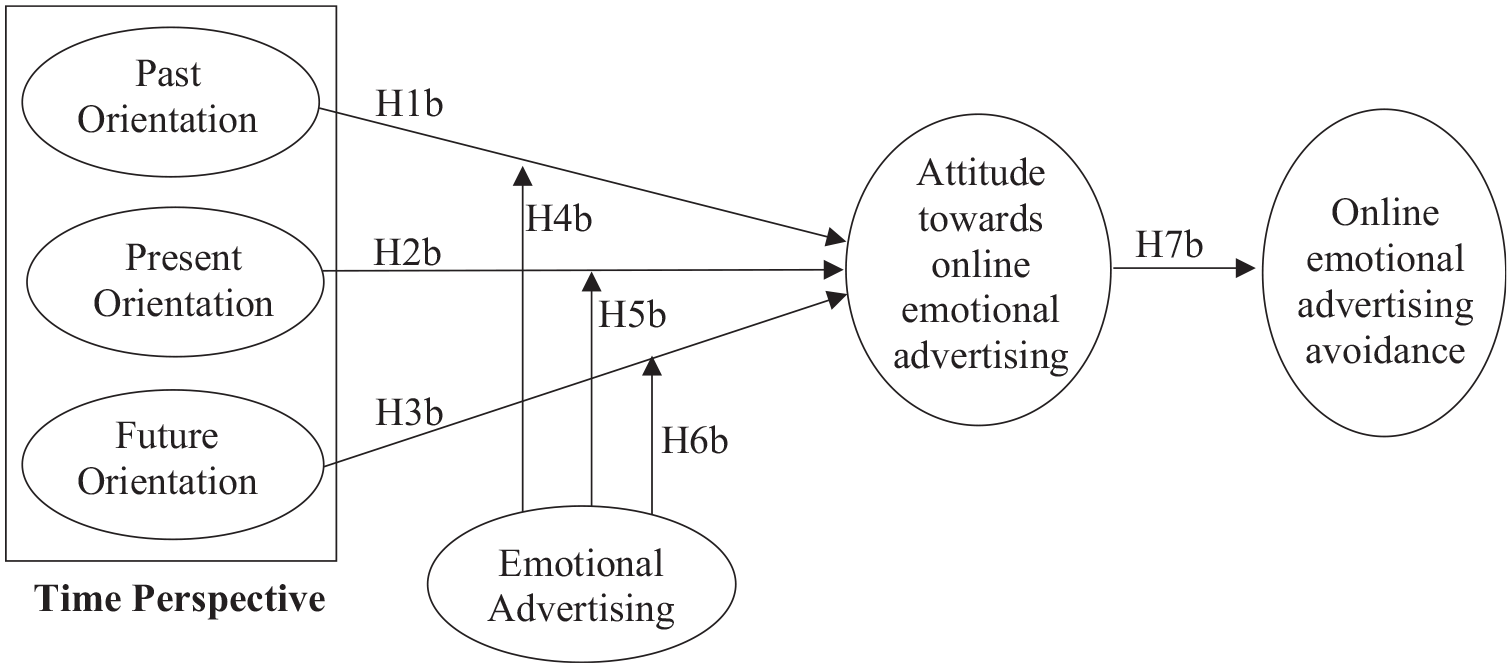
Model development of study B with the emotional advertising.
Methodology
Research Procedure
To ensure both theoretical rigor and empirical clarity, the research was conducted in two main phases: (1) Advertising Stimuli Validation and (2) Hypothesis Testing and Model Evaluation. This procedure was designed to systematically link the theoretical framework to observed consumer responses within the online advertising context.
Phase 1—Advertising Stimuli Validation
To conduct research, the first step is to select advertisements that are informative and emotional. The selected product is toothpaste because it is an essential product used by all people, regardless of age (from 18 years old or older), gender, and living area; and this product was also selected for experimental studies on advertising such as J. Wang and Lee (2006), Chatterjee et al. (2010).
Phase 2: Hypothesis Testing and Model Evaluation
After selecting two suitable advertisements, the researchers developed an online survey via Google Form, distributed randomly to internet users aged 18 and above in Vietnam. Participants first completed a time orientation assessment (past, present, or future), then sequentially viewed the informational and emotional ad samples, responding to questionnaires assessing ad characteristics, attitudes, and avoidance behavior (Study A & B). The study adopted a within-subjects design, with all participants exposed to the same six advertisements presented in randomized order to control for sequence effects. Advertisements were shown in a controlled environment (quiet lab or standardized online platform) with headphones, and short breaks were inserted between ads to minimize fatigue. Finally, participant feedback was collected to compare perceptions and responses to informational versus emotional advertising.
Sampling and Data Collection
In the initial phase, 40 adult participants (27 females, 13 males) aged 18 and older were enlisted to categorize advertising stimuli. Age eligibility was verified via a preliminary screening question in the survey (“Are you 18 years or older?”). To guarantee complete advertisement exposure, each video was configured with a non-skippable feature, preventing participants from advancing until the video concluded. A memory question was incorporated to assess attentiveness. Participants subsequently assessed each advertisement according to established criteria to ascertain its informational or emotional nature, so establishing the basis for the experimental manipulation in Phase 2.
In Phase 2, the utilization of the Morgan table (Morgan, 1970) to ascertain the sample size for the study concerning the population of Vietnam aged 18 and older is justified. With an estimated population of 80 million, a confidence level of 95%, and a margin of error of 5%, the Morgan table indicates that the least requisite sample size for this huge population is roughly 384. A sample size of 518 was used for this investigation, ensuring enhanced representativeness and improving the accuracy and dependability of the research findings. Selecting a sample bigger than the minimal requisite mitigates potential errors and yields more reliable and credible outcomes. The predominant age group among participants was 18 to 35, comprising 77.8% of the sample, with the 18 to 25 cohort representing the largest segment at 39.8%. Female participants constituted 60.2% of the sample. Participants from the Southern region constituted the highest proportion (42.7%), followed by the Central region (33.6%) and the Northern region (23.7%). The varied demographic distribution enhances the applicability of the study’s findings across age, gender, and geographic contexts.
Ethical considerations were paramount in this research, with all participants providing informed consent prior to data collection. Measures were also in place to ensure the confidentiality of their responses.
Measurement
This study employed a selection of validated assessment scales from existing literature to operationalize the constructs. Time perspectives were specifically assessed using the 16-item scale devised by Orosz et al. (2017), which evaluates individual inclinations toward past, present, or future time orientation. The advertising characteristics—specifically informational and emotional dimensions—were evaluated using 9 items derived from Jourdan (2008), which represent the functional and affective qualities of advertising communications. Attitudes toward online advertising were assessed using the validated five-item scale developed by Ramaprasad and Thurwanger (2000), which gauges respondents’ overall evaluative disposition toward advertisements. Online advertising avoidance behavior, which includes cognitive, affective, and behavioral aspects, was assessed using the multidimensional five-item scale created by Bang et al. (2018).
The initial scales were translated by a bilingual specialist proficient in both the language and subject topic, thereafter verified by more experts to guarantee precision. A back-translation method was employed, wherein a second multilingual expert translated the Vietnamese version back into English. The original and back-translated versions were analyzed for consistency and accuracy, and any differences were rectified. This procedure guaranteed that the scales were precise, culturally relevant, and devoid of possible linguistic biases.
Research Result
Advertising Stimuli Validation Results
According to a statement from website 24h.com, the top 3 most popular toothpastes in Vietnam are P/S, Closeup, and Colgate. From these three identified brands, the authors select six advertisements with selection conditions including: time this advertisement was introduced to the market in the last 3 years; advertising duration of 15 s or more; and advertisements that provide information as well as convey certain emotional values according to the approach of Heath and Stipp (2011) (Table 1).
The Details of Selected Advertising.

All measurement scales in Table 2 demonstrated acceptable internal consistency, with Cronbach’s Alpha values ranging from .821 to .947 (>.7) met the threshold values recommended by Hair (2014), confirming the scales’ reliability and convergent validity.
The Results of Cronbach’s Alpha and EFA for Selected Advertising.

After the customer evaluates, the authors calculate the average value according to the two groups of informational and emotional advertising to determine which type of characteristics in each ad is exceptional (Table 3).
The Results of the Mean Value for Selected Advertising.

The results show that there are three advertisements (the bold entries) that are biased toward emotional characteristics (AD01, AD03, and AD05) and three advertisements (the bold entries) that are biased toward information (AD02, AD04, and AD06). In particular, AD01 will be selected as an example of emotional advertising, and the advertising sample AD02 will be selected for informational characteristics experimental study because they have the highest mean value in each group.
Hypothesis Testing and Model Evaluation Results
The Results of Cronbach’s Alpha, Composite Reliability, and Average Variance Extracted
The results of the Cronbach’s Alpha reliability analysis show that the Cronbach’s Alpha coefficient of each scale ranges from .839 to .929 (>.7). So, all observed variables on each scale are reliable for exploratory factor analysis. Besides, the analysis results show that the CR of the scales ranges from 0.840 to 0.930 (>0.7) and the AVE from 0.513 to 0.738 (>0.5). From this, scales have unidimensional and convergent validity (Table 4).
The Results of Cronbach’s Alpha, Composite Reliability and AVE.

The Results of Exploratory Factor Analysis and Confirmatory Factor Analysis
Exploratory factor analysis with Principal Axis Factoring method, 1-way Pro-max rotation, the results in both experimental models of informational advertising and emotional advertising show that the KMO > 0.5; sig of Bartlett’s Test results < 0.5. The conclusion is that the factor analysis is consistent with the actual data (Table 5).
KMO results and Bartlett Test of Two Advertising Models.
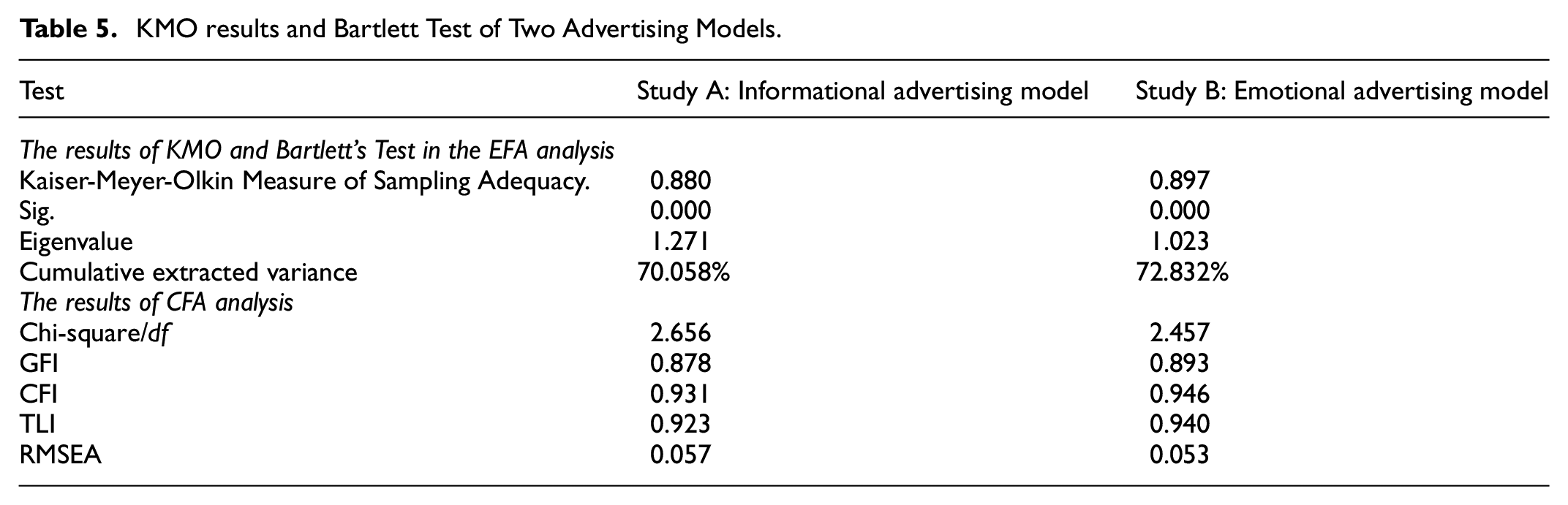
According to the results of CFA analysis of two models of informational advertising and emotional advertising, all values are satisfactory, with Chi-square/df = 2,457 and 2,656 (<3); GFI = 0.893 and 0.878 (>0.8), respectively; CFI and TLI, ranging from 0.923 to 0.946 (>0.9).
The Results of the Analysis of the Role of the Advertising Characteristics Moderator Variable
The analysis results show that there is an impact relationship between past, present and future orientation on attitudes toward on informational and emotional advertising (H1a, H1b, H2a, H2b, H3a, H3b, p < .05). Specifically, past orientation has more negative attitudes toward informational advertising than emotional advertising (H1a, H1b; βIFO = −0.402 > βEMO = −0.324). However, present-oriented people have a less positive attitude toward informational advertising than emotional advertising (H2a, H2b; βIFO = 0.197 > βEMO = 0.327). The result also shows that there are the positive impact of future-orientation on attitude toward informational advertising more than emotional advertising (H3a, H3b; βIFO = 0.454 < βEMO = 0.291). Besides, there is a negative relationship between attitude and advertising avoidance behavior for emotional advertising (H7b; p < .05; βEMO = −0,443 <0), which is not significant for informational advertising (H7a; p = .761 > .05; Table 6).
The Results of Structural Equation Models.
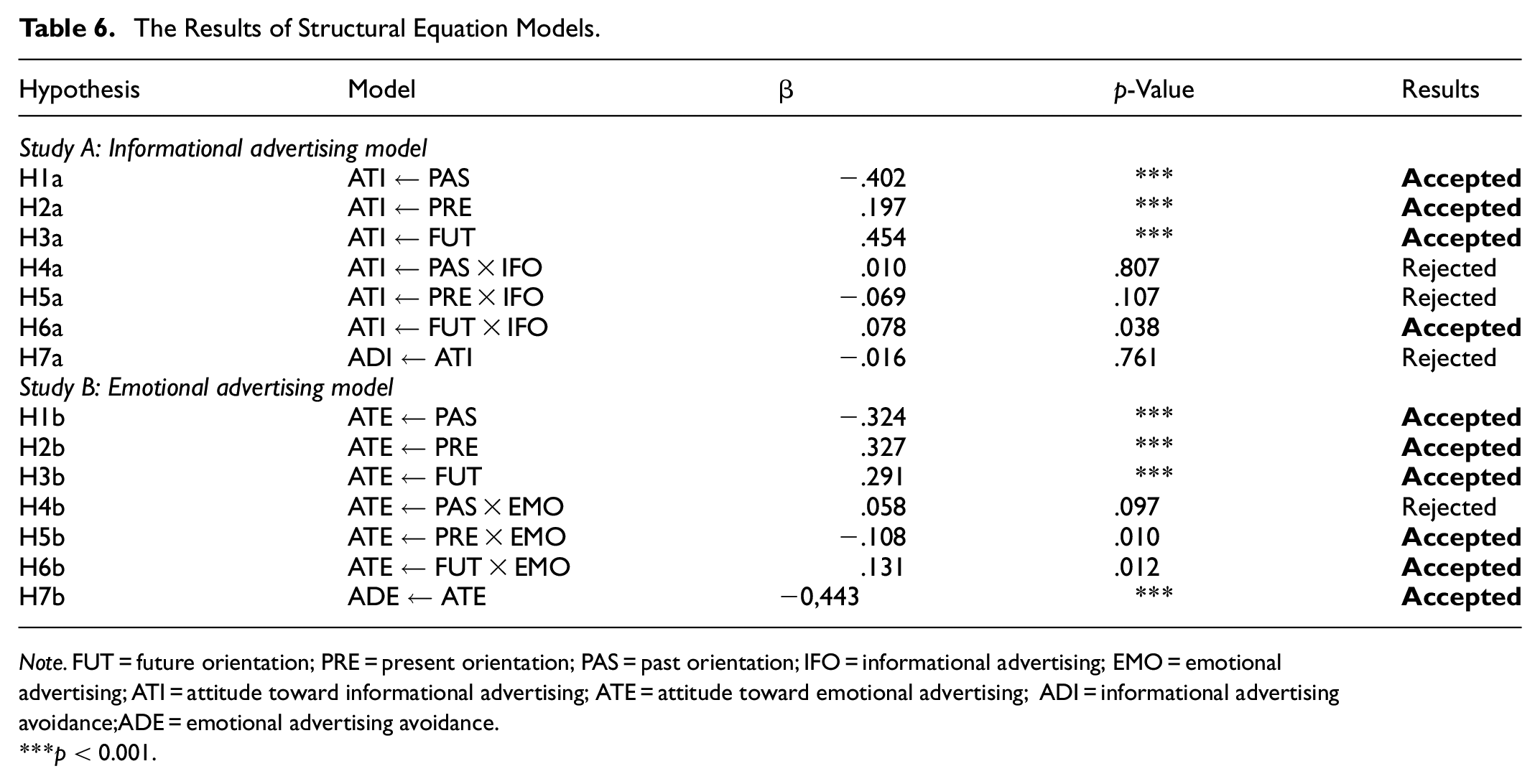
Note. FUT = future orientation; PRE = present orientation; PAS = past orientation; IFO = informational advertising; EMO = emotional advertising; ATI = attitude toward informational advertising; ATE = attitude toward emotional advertising; ADI = informational advertising avoidance; ADE = emotional advertising avoidance.***p < 0.001.
In addition, when considering the moderator role of advertising characteristics, the results show that emotional advertising and informational advertising do not have a moderating role in the impact of past orientation on advertising attitudes (H4a, H4b; p > .05). Emotional advertising has a moderated role in reducing the impact of present orientation on attitudes toward advertising (H5b, p < .05; βEMO = −0.108 < 0), but it increases the impact of future orientation on this attitude (H6b, p < .05, βEMO = 0.131 > 0). Besides, informational advertising only plays a moderating role increasing the future-oriented impact on attitudes toward advertising (H6a, p < .05; βIFO = 0.078 > 0) and it is not significant for present orientation (H5a, p > .05). Notably, the role of emotional advertising as a moderator is stronger than that of informational advertising (βEMO = .131 > βIFO = 0.078) in the relationship between future orientation and attitude toward advertising.
The non-significant interaction effects suggest that the level of informational or emotional content does not substantially alter the fundamental relationships between past or present orientation and advertising attitudes. Additionally, the lack of a direct predictive relationship between attitude toward informational ads and avoidance implies that other factors likely mediate this link. These findings suggest that theoretical models should consider factors beyond simple content variations to explain the influence of temporal focus on advertising responses and that avoidance of informational ads is likely driven by more complex mechanisms than just general attitude. Consequently, effective advertising strategies might prioritize aligning the core message with the values associated with different time orientations and addressing underlying drivers of avoidance.
The Results of the Mean-Centered Prior Analysis
Drawing upon the visual analysis of Figure 5a to c, this research offers initial insights into the interplay between consumers’ time orientation and their attitudes toward online advertising, moderated by advertising characteristics.
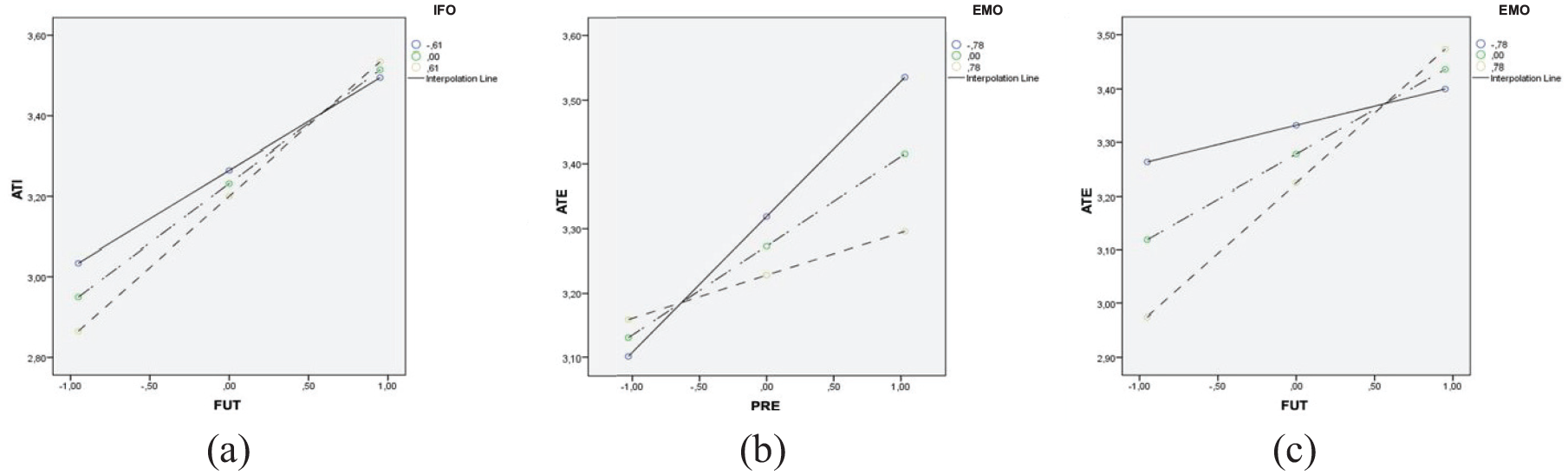
Moderating effects of advertising characteristics on the relationship between time orientation and attitudes toward advertising. (a) Interaction between FUT and IFO on ATI. (b) Interaction between PRE and EMO on ATI. (c) Interaction between FUT and EMO on ATE.
Regarding Figure 5a (IFO moderating the effect of FUT on ATI): Conversely, the stronger positive effect of informational advertising on future-oriented individuals, illustrated in Figure 5a, could be attributed to their focus on planning and preparation. These individuals (high FUT) are likely to seek out and value information that can help them make informed decisions for the future. The steeper positive slope for higher levels of IFO indicates that as future orientation increases, more informational ads lead to a more positive attitude toward informational advertising itself (ATI on the y-axis). Informational ads provide the necessary cognitive input that aligns with their proactive mindset, leading to a more positive evaluation of the advertisement’s utility and credibility. This aligns with the notion of information diagnosticity, where relevant information is weighted more heavily by consumers when making future-oriented choices.
Regarding Figure 5b (EMO moderating the effect of PRE on ATE): The complex moderating effect of emotional advertising on attitudes of present-oriented users (high PRE on the x-axis), as shown in Figure 5b, suggests that for these individuals, the impact of emotional content is more nuanced. The positive slope for high EMO and the negative or flat slopes for low and medium EMO indicate that when individuals are focused on the present, highly emotional ads resonate more positively, potentially by appealing to immediate feelings and sensory experiences. In contrast, less emotional ads might be perceived as less relevant or engaging for those primarily concerned with the here and now. This could be linked to the idea of temporal discounting, where present experiences and emotions hold more weight. Highly emotional ads might create a stronger immediate impact, leading to a more positive attitude in the present-focused consumer.
Regarding Figure 5c (EMO moderating the effect of FUT on ATE): Individuals with a strong future orientation (high FUT on the x-axis) may be more inclined toward central route processing for future-relevant information. However, emotional appeals (represented by the different lines for varying EMO levels) can serve as peripheral cues, particularly when these emotions are positively associated with anticipated future outcomes. The steeper positive slope for higher levels of EMO suggests that as future orientation increases, more emotional ads lead to a significantly more positive attitude (ATE on the y-axis). Furthermore, emotional advertising can make these abstract future benefits feel more concrete and desirable, thus enhancing ad attitude, especially for those focused on the future.
Discussion of the Study’s Results
This study offers a foundational understanding of how consumers’ time orientation interacts with online advertising attitudes and, by extension, avoidance behaviors, with advertising characteristics acting as crucial moderators. The research embarked on an investigation to address two primary gaps in the existing literature concerning consumer responses to online advertising: the ambiguous relationship between consumers’ time orientation and their avoidance of online ads, and the under-examined moderating influence of advertising characteristics on this relationship (Kaynak et al., 2013). Our findings offer preliminary yet valuable insights into both these areas.
Regarding the first gap, while our direct analysis centered on attitudes, the broader implications of our results, which align with Kuswati (2011) and extend the findings of Rojas-Méndez and Davies (2005) and Kaynak et al. (2013) to the online sphere, suggest a direct pathway from attitudes toward advertising to avoidance behaviors. Specifically, negative attitudes, often linked to a past time orientation, appear to increase the likelihood of avoidance, whereas the positive attitudes observed in present and future-oriented individuals suggest the opposite. This highlights the significant role of consumers’ temporal focus in shaping their overall disposition toward online advertising and, consequently, their active avoidance strategies.
Addressing the second gap, our visual analysis provides initial evidence for the significant moderating role of advertising characteristics. The study found that informational content tends to positively influence attitudes among future-oriented consumers, likely due to their focus on future planning and the perceived utility of such information. Conversely, emotional advertising exhibits a more nuanced effect, resonating positively with present-oriented individuals, potentially through its immediate emotional impact, and also enhancing attitudes among future-oriented individuals toward emotional ads, possibly by making future benefits more salient.
The insights from this study offer actionable guidance for online advertising strategies. Firstly, audience segmentation based on consumers’ time orientation presents a valuable opportunity. Campaigns targeting future-oriented individuals should prioritize informational content highlighting long-term utility, while those aimed at the present-oriented may find greater success with emotionally resonant creatives. Secondly, the moderating role of advertising characteristics necessitates tailored ad development. Rather than a uniform approach, advertisers should create distinct ad variations aligning informational or emotional appeals with the dominant temporal focus of their target segments. Finally, the identified direct link between advertising attitudes and avoidance underscores the importance of fostering positive perceptions. By understanding how time orientation and ad characteristics shape these attitudes, advertisers can strive to create more relevant and engaging online experiences, ultimately mitigating avoidance behaviors and enhancing campaign effectiveness across diverse consumer groups.
It is crucial to recognize that, albeit offering fundamental insights, this study was carried out in a particular Vietnamese cultural setting. People’s time orientation (e.g., Hofstede, 2001; Hampden-Turner & Trompenaars, 1997) and reactions to advertising appeals, such as the perceived appropriateness and efficacy of informational versus emotional content (e.g., Alden et al., 1993), can be greatly influenced by cultural norms and values. The effectiveness of emotional appeals may differ significantly depending on cultural values regarding emotional expression and individualism versus collectivism, while cultures with a stronger long-term orientation may show an even greater affinity for informational advertising when taking future benefits into account.
Conclusion
The insights from this study offer actionable guidance for online advertising strategies. Firstly, audience segmentation based on consumers’ time orientation presents a valuable opportunity. Campaigns targeting future-oriented individuals should prioritize informational content highlighting long-term utility, while those aimed at the present-oriented may find greater success with emotionally resonant creatives. Secondly, the moderating role of advertising characteristics necessitates tailored ad development. Rather than a uniform approach, advertisers should create distinct ad variations aligning informational or emotional appeals with the dominant temporal focus of their target segments. Finally, the identified direct link between advertising attitudes and avoidance underscores the importance of fostering positive perceptions. By understanding how time orientation and ad characteristics shape these attitudes, advertisers can strive to create more relevant and engaging online experiences, ultimately mitigating avoidance behaviors and enhancing campaign effectiveness across diverse consumer groups.
Limitations and Proposed Research Directions
This study provided a general overview of participant demographics (age, gender, area) but did not explore potential differences in observed relationships among these groups. We could further analyze these demographic factors to ascertain moderating effects. Examining the variations in time orientation and advertising appeals across age cohorts, gender, or regional cultural contexts may result in more customized and impactful advertising efforts. Future research should prioritize investigating the generalizability of these findings across diverse cultural settings while also building upon the acknowledgment of the specific cultural context of Vietnam in which this study was conducted.
Footnotes

Ethical Considerations
This study involved non-interventional research (e.g., a survey) and did not require formal ethical approval, as per national guidelines. All research procedures complied with ethical standards and data protection requirements.
Consent to Participate
All participants provided informed consent prior to participation. The purpose of the study, data usage, and participants’ rights were clearly explained.
Funding
This research is funded (supported) by UEH Honours College, University of Economics Ho Chi Minh City, Vietnam.
Declaration of Conflicting Interests
The author(s) declared no potential conflicts of interest with respect to the research, authorship, and/or publication of this article.
Data Availability Statement
Data sharing not applicable to this article as no datasets were generated or analyzed during the current study.