




Abstract
Anxiety is identified as a main issue that may highly lead to the feelings of nervousness, worry, tension, and apprehension. The purpose of the study is to measure the impact of the three components of writing anxiety (somatic, avoidance behavior, and cognitive) on Iraqi EFL learners’ attitudes and also attempts to determine the component causing the highest anxiety rates. Besides, the study also aims to detect the key elements that provoke anxiety. Two questionnaire tools, listed under the quantitative approach, were adopted in this study: The Second Language Writing Anxiety Inventory developed by Cheng and Causes of Writing Anxiety Inventory developed by Rezaei and Jafari. Hundred Iraqi undergraduate students, 50 males and 50 females, were assigned to take part in this study at “Al-Nisour University College.” The finding demonstrated that the participants are affected by all the three aforesaid components. However, the component “avoidance behavior anxiety” had a higher effect rate on the participants’ attitudes compared to the two components, dubbed “cognitive and somatic” that showed otherwise. Added to this, the findings also revealed a significant difference between genders wherein female learners showed a higher rate of anxiety than their male counterparts. This points out that female students may highly have an inclination to evade the situations demanding writing. Linguistic difficulties, fear of teacher’s negative comments, insufficient writing practice and self-confidence were respectively detected as the highest influential elements behind arousing anxiety. The current study highlighted the causes of writing anxiety and the effect of its components on Iraqi EFL learners and might contribute to paving the way to new teaching methods or techniques to mitigate the effect of these writing anxiety components and boost self-confidence in Iraqi EFL.
Plain language summary
Language anxiety is recognised a major factor blocking individuals’ language competence. More accurately, individuals with a high level of language anxiety incline to study extensively but their accomplishment does not concur with the effort they exert. Based on this, anxiety could impact individuals’ behaviors, attitudes, and written work while demanding writing. Such individuals tend to have more intricacy in producing organized ideas, describing a few words, and shorter paragraphs. They also write composition with numerous errors, for instance, inappropriate grammatical, and rhetorical conventions and lexical variety. Furthermore, there are several conflicting evidence about the influence of anxiety on individuals writing ability. On one hand, writing anxiety is labelled as a main issue in writing ability as it triggers individuals’ concentration and accuracy. Such anxiety is called a facilitative anxiety which could vastly motivate students to take part in writing tasks. It has been reported, on the other hand, that anxiety negatively impacts the development of individuals’ writing skills. Abundant evidence has shown that anxiety in general steers to disappointing performance in writing.
Introduction
Individuals, whose mother tongue is not English, are oriented, for different reasons, to learn the language in the EFL context. In Asian countries in general, and Arab countries in particular, English is not broadly used for communication or interaction, but it is mainly the language of higher education. In general, Iraqi students have some difficulties in learning English language skills, namely speaking, writing, listening, and reading, whereby they face impediments in applying these skills due to the very little use of English in their countries (Sabti et al., 2016). Such students may feel anxious because of losing self-confidence and motivation. Some academics endorsed this view that anxiety has been recognized as the main factor that may hinder students’ academic performance (Sabti et al., 2019).
It has been observed in Iraq as an EFL context that most Iraqi EFL learners have an inadequate competence in EFL writing, or rather, they show unsatisfactory performance in writing (Abbas, 2016). The difficulty of Iraqi EFL students in EFL writing may be ascribed to various factors, dubbed EFL writing instruction, negative feedback, the interference of L1, and some psychological variables, that is, anxiety, loss of motivation and self-confidence. Anxiety, which is the focus of this study, is considered one of the key predictors of academic performance (Senko, 2016). Anxiety, as a variable, has been examined in relation to the four English language skills: Speaking (Hertz et al., 2016), reading (Sabti et al., 2016), listening (Lili, 2016), and writing (Sabti, Rashid & Hummadi, 2019; Sabti et al., 2019). In this light, this study focuses on writing anxiety.
Writing anxiety refers to “worry, tension, nervousness, distress, pressure, or other negative feelings while accomplishing a given writing task in English” (Shehzadi et al., 2021, p. 296). In other words, writing anxiety is as an emotional factor which frequently drives to an intricate state of feeling causing physical and psychological alterations that highly impact thought and behavior of an individual during a given writing task. Research studies in L1 context demonstrate that anxiety has an adverse impact on individuals’ writing outcome (Leki, 1990). One of the most prominent studies, that examined “second/foreign language anxiety” undertaken by Horwitz et al. (1986) alleges that learners with high language anxiety study more than their counterparts who have low language anxiety, but the level of their accomplishment does not mirror that effort.
In the literature, three categories of writing anxiety have been established, dubbed somatic anxiety (physiological one), cognitive anxiety, and avoidance behavior anxiety (Cheng, 2004). Cognitive anxiety denotes a “mental aspect of anxiety experience, including negative expectations, preoccupation with performance, and concern about other’s perceptions; whereas somatic anxiety refers to one’s perception of the physiological effects of the anxiety experience, as reflected in increased autonomic arousal and unpleasant feeling states such as nervousness and tension” (Cheng, 2004, p. 316). As for avoidance behavior anxiety, it is an attempt of a student to escape from a task that demands writing.
Although most empirical studies have shown the negative impact of anxiety on the learning process in general and the performance of individuals in particular, several elements have been identified as the cause of arousing anxiety, namely “linguistic difficulties, insufficient writing practice, low self-confidence in writing, and fear of writing tests” (Rabadi & Rabadi, 2020, p. 890). Such elements are labelled one of the causative variables that highly demotivate individuals and thus, affect their performance in writing.
In this respect, linguistic difficulty is one of the essential elements that highly increases the adverse impact of anxiety on individual’s behavior. This notion is endorsed by academics who reported that “writing anxiety can be caused by various factors, including a lack of knowledge of the subject matter and spelling rules and a fear of not being appreciated” (Rasool et al., 2023, p. 02). Competent learners who have more in-depth knowledge about writing focus more on text vocabulary, content, and organization than incompetent learners, who have a high level of anxiety and focus on trivial levels in writing such as mechanics (Sabti et al., 2019). In fact, such a debilitating anxiety often worsens the learners’ performance. It can be argued that linguistic difficulty is a crucial element triggering anxiety.
Another fundamental element that may arouse anxiety is loss of self-confidence. A low level in such a critical element may highly drive to “negative thoughts and fears about their capabilities, for instance, feeling nervous thinking about speaking in front of a large group” (Schunk & Pajares, 2009, p. 37). Such touching reactions can raise anxiety and cause surplus stress and agitation that steer to inadequate and unsatisfactory performance in writing. One way to mitigate anxiety is to boost physical and emotional well-being and lessen adverse emotional states. In fact, learners are able to change their thoughts and feelings by enhancing self-confidence for the purpose of lowering the rate of anxiety in order to show exemplary behavior.
Insufficient writing practice is recognized as the element that provokes anxiety. Several learners who belong to the EFL context often show the relative lack of experience to practice writing skill such as essay or composition tasks (Rabadi & Rabadi, 2020). In fact, the absence of practical teaching of writing skill in the classrooms, or rather, theoretical teaching is only adopted in the classrooms for writing skill. More accurately, they, for example, only depend on tasks extracted from learners’ workbook and short-answer questions. This could arouse the adverse side of anxiety that leads individuals to show disappointing writing performance.
Anxiety has been examined in several empirical studies with gender factor (Jebreil et al., 2015; Machida, 2001; Mejias et al., 1991). However, such studies about gender-related anxiety have yielded conflicting results. In 1991, a study conducted by Mejias et al. revealed that Hispanic male participants showed higher anxiety than female participants. Similarly, but during past decade, Jebreil et al. (2015) reported that Iranian EFL male students experienced relatively greater amount of anxiety than female students. However, a study conducted by Machida (2001) who investigated anxiety among Japanese EFL leaners in terms of gender showed otherwise, revealing that female students were more anxious than male students. By the same token, in 1994, Aida also reported that female participants were observed to score more highly on the anxiety scale than male ones (Aida, 1994).
Objectives of the Study
Many studies have been conducted on writing anxiety, but it may be said that no single study has examined if the three aforementioned components of writing anxiety have a noticeable effect on the writing production of Iraqi EFL students. In response to this research gap and to address this major aim, this study seeks to investigate the effect of these writing anxiety components and to identify which component among somatic, avoidance behavior, and cognitive anxiety components causes more writing anxiety to Iraqi undergraduate students in Al-Nisour University College. Being a gender-based research, this study is projected to explore the attitudes of the female and male participants of Iraqi EFL students towards the three aforementioned components of writing anxiety. In addition, the study goes further to examine the influential causes that arouse anxiety in writing among the above-mentioned samples.
Research Questions
(1) Which component among somatic, avoidance behavior, and cognitive has the most negative impact on students’ attitudes towards writing?
(2) What are the influential elements arousing anxiety in writing among Iraqi undergraduate students?
(3) To what extent is there any significant difference between male and female students’ attitudes towards the three aforementioned components?
Literature Review
Writing Anxiety
Writing is a skill that necessitates more rehearsal between other language skills (Erol, 2021). Writing, which is highly affected by various emotional states/elements either in a positive or negative way, is a cognitive and production process. One of these emotional elements is anxiety (Erol, 2021), which is described as “the feeling of sadness, worry, distress and tension of unknown origin generally because of the idea as if something bad is going to happen” (p. 24). As a matter of fact, anxiety may embody apprehension and may also drive to avoidance behavior. Consequently, it is assumed that individuals only experience anxiety when they feel inefficacious (Busse et al., 2023). Such a crucial element often impacts the individual’s perception of writing and drives to an adverse attitude towards writing.
Writing anxiety, also known as writer’s anxiety or writing apprehension, refers to the feelings of tension, fear, or unease that individuals experience during the process of writing. It is a common phenomenon that many writers, including students, professionals, and even experienced writers, may face at some point in their writing journey. This view is endorsed by Busse et al. (2023) that writing anxiety, which stands for the tension and fear occurring during the process of writing, is individuals’ tendency to avoid writing activities. High anxious individuals often feel reluctant and incompetent during writing tasks. Such characteristics typically drive individuals to avoid writing and consider it as arduous and challenging task to overcome (Zorbaz, 2011). Anxiety in writing, which affects individuals’ written expression skills and may steer them to be distant from writing, is a reaction developed against writing.
It is argued that individuals with lower cognitive-linguistic proficiency may highly trigger anxiety, and thus contribute to poor achievement (Daud et al., 2016). Horwitz (2000) has dissimilar perspective that anxiety can interfere with learning, and that the deficit hypothesis could be factual in some, but not all cases of language anxiety.
A study conducted in Turkey by Sivaci (2020) seeks to find out whether the use of peer feedback activity in writing classes could reduce the writing anxiety levels. Sivaci’s study adopted mixed methods and recruited 26 students as participants. The Second Language Writing Anxiety Inventory (SLWAI) by Cheng (2004) was adopted to gather quantitative data while semi-structured interviews were conducted to collect qualitative data. The findings disclosed that peer feedback is a crucial element for decreasing the participants’ writing anxiety levels. Another study carried out by Shehzadi et al. (2021) in Pakistan revealed that the cognitive and somatic anxiety were the common components affecting EFL students’ behaviors towards writing.
Several empirical studies reported that individuals with high writing anxiety may exhibit the following behaviors or tendencies (Busse et al., 2023; Chen, 2020; Rasool et al., 2023; Sabti et al., 2019).
- Avoidance of Writing Activities: Individuals with writing anxiety may try to avoid writing tasks altogether due to the fear of not being able to produce satisfactory work. This avoidance can lead to procrastination and difficulty in starting or completing writing assignments.
- Perfectionism: Some individuals may be overly critical of their writing and constantly strive for perfection. They may fear making mistakes or being judged negatively, which can hinder their ability to express their thoughts and ideas freely.
- Self-Doubt: Writers with high writing anxiety may doubt their abilities and question whether they have anything valuable or worthwhile to say. This self-doubt can create a barrier to their creativity and self-expression.
- Fear of Evaluation: The prospect of receiving feedback or criticism from others can be intimidating for individuals with writing anxiety. This fear of evaluation may lead to avoidance of sharing their writing with others.
- Difficulty in Organizing Thoughts: Writing anxiety can make it challenging to organize and structure thoughts coherently, resulting in a disjointed or messy writing style.
Affective Filter Hypothesis Theory
In the 1980s, a series of second language acquisition represented as the five hypotheses were proposed by Krashen. These are “acquisition-learning hypothesis, natural order hypothesis, input hypothesis, affective filter hypothesis and monitoring hypothesis.” In effect, such an essential series of theories poses an immense impact on the growth of second language acquisition. Affective filter theory as one of them illustrates that if individuals produce adverse emotional states in the process of writing, these adverse emotional states will filter out part of the comprehensible input. In contrast, if individuals obtain a high degree of positive attitude in the process of writing, then the function of the filter will be decreased accordingly (Chen, 2020; Rahman et al., 2019). Three essential elements of affective filter theory impacting individuals’ learning are motivation, self-confidence, and anxiety. If individuals have a high rate of motivation, a high rate of confidence and low anxiety, comprehensible language input will enter the brain smoothly, and in turn individuals will be capable of performing better in writing (Chen, 2020; Rahman et al., 2019).
Based on Figure 1 of affective filter theory, if individuals have not received enough comprehensible input, their writing performance will be negatively influenced. In other words, if the filter is up because of anxiety, the input will be blocked and cannot pass through; and then, acquisition process will be slowed down or disrupted. Conversely, if the filter is down, the comprehensible input will go smoothly and then it will reach the acquisition device.
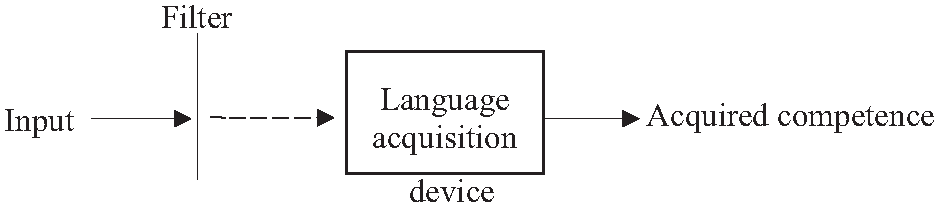
Operation of the affective filter.
Materials and Methods
Research Design
A quantitative approach was employed in this study to measure the effect of the three components of writing anxiety (e.g., somatic, avoidance behavior, and cognitive) on Iraqi EFL learners’ attitudes applying the “Second Language Writing Anxiety Inventory Questionnaire developed by Cheng (2004).” Likewise, the present study adopted “Causes of Writing Anxiety Inventory (CWAI) Questionnaire developed by Rezaei and Jafari (2014),” which aims at discovering the influential elements that arouse anxiety.
Participants
The sample of this research involved 100 Iraqi undergraduate students, 50 male students and 50 female students studying at Al-Nisour University College, Iraq. The participants were selected based on their English language proficiency level as they all are native speakers of Arabic language who study English as a foreign language. Consequently, they all or most of them have same English proficiency level. The rationale for selecting the above-mentioned size of sample was based on the limited number of Iraqi undergraduate students studying at Al-Nisour University College. In this regard, Krejcie and Morgan (1970) recommended that 100 students should participate in any study that has 200–300 students as the whole population. Simple random sampling method was used to select participants who have an equal and independent chance of being included in this study.
Instrumentation and Data Collection Procedures
Two instruments were used to gather data, namely two dissimilar questionnaires: SLWAI (Cheng, 2004) and CWAI (Rezaei & Jafari, 2014), which are illustrated below.
Instrument
Two instruments were used to gather data, namely the “Second Language Writing Anxiety Inventory (SLWAI) which was designed by Cheng (2004)” and “Causes of Writing Anxiety Inventory (CWAI) developed by Rezaei and Jafari (2014).” The former involves three independent components: “cognitive anxiety, somatic anxiety (physiological), and avoidance behavior anxiety.” This questionnaire consists of 22 items to measure the English as a second language/EFL writing anxiety which was employed to identify the most influential component among somatic, avoidance behavior, and cognitive anxiety that causes more writing anxiety to the participants.
On the other hand, the latter is a questionnaire consisting of 10 items, which was applied to detect the main elements that cause writing anxiety. In fact, it was designed to pinpoint the influential elements causing writing anxiety, dubbed “fear of teacher’s negative comment, fear of writing tests, insufficient writing practice, insufficient writing technique, problems with topic choice, linguistic difficulties, pressure for perfect work, high frequency of writing assignments, time pressure, and low self-confidence in writing” (Rezaei & Jafari, 2014, p. 1547). Both of the above-mentioned questionnaires were scored on a “5-point Likert scale ranging from 1 (strongly disagree) to 5 (strongly agree)” (Sabti et al., 2019, p. 4).
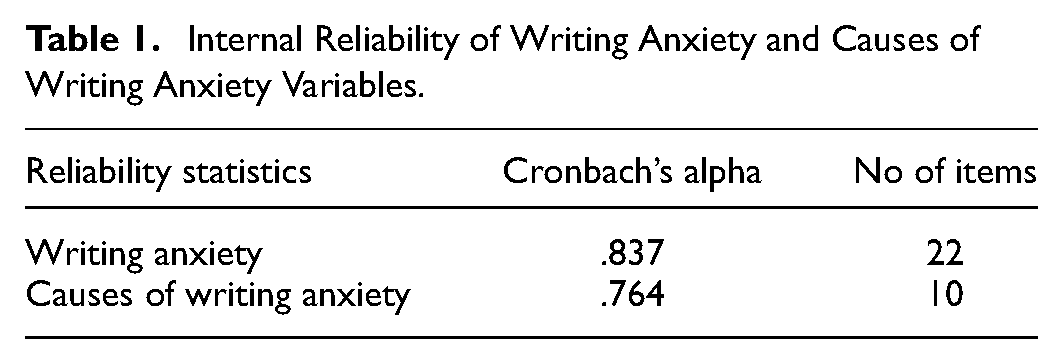
As seen in Table 1, the internal reliability results for the Writing Anxiety Variable showed a high value (α = .837), whereas causes of writing anxiety variable bore acceptable values (α = .764). Such values indicate that these two variables are reliable.
Internal Reliability of Writing Anxiety and Causes of Writing Anxiety Variables.
Data Analysis
The Statistical Package for the Social Sciences software (SPSS) was used to analyze the quantitative data using descriptive and inferential statistics. The former is applied to determine the levels of “somatic anxiety, avoidance behavior anxiety, and cognitive anxiety,” and the causes of writing anxiety among Iraqi EFL undergraduate students, whereas the latter is used to identify the differences between the three aforementioned components of writing anxiety across the genders, in which independent samples t-test was run to do so.
Findings
Levels of Writing Anxiety
At first, this study seeks to examine the levels of the three components of writing anxiety (somatic, avoidance behavior, and cognitive) among Iraqi EFL students. Table 2 shows the results of the mean scores and standard deviation.
Descriptive Statistics of Writing Anxiety Levels Across the Three Components.

As shown in Table 2, Iraqi EFL students recorded higher scores on avoidance behavior anxiety component (M = 4.15, SD = 0.493) compared to the other two components. The students showed similar mean scores for the components of cognitive anxiety and somatic anxiety (cognitive anxiety: M = 3.50, SD = 0.497; somatic anxiety: M = 3.58, SD = 0.444). It can be said that the Iraqi EFL students are influenced by all the three components, but the somatic and cognitive anxiety components have less impact on Iraqi students compared to the avoidance behavior anxiety component which had higher impact. This denotes that Iraqi EFL students have a strong tendency to evade conditions that necessitate writing. In other words, this can be interpreted that Iraqi EFL students feel apprehensive and unconfident in their writing abilities.
Causes of Writing Anxiety
Figure 2 presents the results of descriptive statistics of the CWAI that shows the causes of arousing anxiety in writing.

Descriptive statistics of the CWAI.
As seen in Figure 2, the first high rate of triggering anxiety in writing is ascribed to linguistic difficulties (88%). It is noteworthy that linguistic difficulty constitutes an essential obstacle for the learners in their writing performance and highly leads to trigger anxiety too. Such a remarkable characteristic, for instance “limited linguistic knowledge” results in low self-confidence and thus, deters learners from writing or taking part in writing tasks. Fear of teacher’s negative comments comes second (82%), which reflects the worry of learners about the comments of their teachers on their writing performance that may lead them to have unsatisfactory performance in writing. The third cause of anxiety is represented by insufficient writing practice (79%). In fact, this hindrance may highly lead individuals to lack some skills: from poor grammar and syntax to unclear organization while writing. Low self-confidence in writing (74%) is identified the fourth major cause of arousing anxiety. As a matter of fact, individuals who feel more confident may highly involve in self-regulation so that they can set their goals, monitor their comprehension, appraise their goal growth and employ dynamic learning strategies. In effect, such individuals strive to minimize distractions, or try to find effective study partners. In consequence, self-confidence can be a good motivator of an individual’s behaviors that may driver to a positive achievement.
After self-confidence, fear of writing tests, which stands for (72%), is labelled as the fifth serious factor triggering anxiety in writing and this type of fear could make individuals have experience of negative thoughts about their capabilities. Such hostile reactions can lessen individuals’ self-confidence and trigger further stress that aid to assure their inadequate performance in writing. The last five causes are presented respectively as per their influence on the learners, which are pressure for perfect work (68%), problems with topic choice (59%), time pressure (56%), insufficient writing techniques (44%) and high frequency of writing assignments (31%). High frequency of writing assignments is the least chosen item by the learners and it appears logical since the writing course is taken once a week and learners need to write one composition only each week. In fact, these causes have a lower impact compared to other above-mentioned causes that bore a high impact rate for eliciting anxiety. Such reactions may lead to a performance avoidance goal orientation, lower academic achievement and more depressed impact.
Differences Between the Three Components of Writing Anxiety Across the Genders
Independent samples t-test is used to identify the differences between the three components of writing anxiety across the genders. Tables 3 and 4 display the results of somatic anxiety component across the genders.
Descriptive Statistics of Somatic Anxiety Component.

Independent Samples T-test of Somatic Anxiety Component.

As shown in Table 3, overall female students (M = 3.95, SD = 0.273) scored higher than male students (M = 3.22, SD = 0.234). Based on Table 4, the results of independent samples t-test show that p = .000 is smaller than alpha at .05 level of significance. Since the significant value is smaller than alpha at .05 level of significance, there is a statistically significant difference between male and female students. In other words, the homogeneity of variance is significant (0.000 < 0.05). It can be said that there is a significant difference between female and male students’ mean scores of the somatic anxiety component. The next tables (Tables 5 and 6) illustrate the results related to the cognitive anxiety component across the genders.
Descriptive Statistics of Cognitive Anxiety Component.

Independent Samples T-test of Cognitive Anxiety Component.

Overall female students (M = 3.83, SD = 0.353) also scored higher than male students (M = 3.17, SD = 0.390). Based on the results of independent samples t-test shown in Table 6, p = .000 is also smaller than .05. As the significant value is smaller than alpha at .05 level of significance, there is also a statistically significant difference between male and female students. It can be said that there is a significant difference between female and male students’ mean scores of the cognitive anxiety component. Following are Tables 7 and 8 which show the results of the avoidance behavior anxiety component across the genders.
Descriptive Statistics of Avoidance Behavior Anxiety Component.

Independent Samples T-test of Avoidance Behavior Anxiety Component.

The results of Table 7 indicate that female students (M = 4.18, SD = 0.400) scored slightly higher than male students (M = 3.72, SD = 0.474). The results of Table 8 demonstrate that p = .000 is also smaller than .05, and thus, there is also a statistically significant difference between male and female students. It can be inferred that there is a significant difference between female and male students’ mean scores of the avoidance behavior anxiety component.
Based on the t-test results, female students recorded higher scores on the three components than male students. This means that the Iraqi female students feel more anxious towards writing compared to male students. Besides that, both genders recorded higher scores on avoidance behavior anxiety than the other two components.
Discussion
The findings of this study showed ten influential elements that cause anxiety. The first is linguistic difficulties or linguistic competence which is categorized as the highest chosen item by the participants. Linguistic difficulties are often experienced by EFL/ESL leaners as writing in FL/SL context is even more demanding task. This is because that native speakers usually learn their first language innately while EFL/ESL speakers learn deliberately and explicitly. In this case, they need to exert a great effort to master the target language. In other words, EFL/ESL learners could display more mistakes in grammar, spelling, vocabulary and other linguistic patterns that may lead individuals to experience a high level of anxiety while the works of native speakers, in contrast, may not have such attributes. More precisely, linguistic knowledge of the FL/SL may be limited, and the acquisition process of this knowledge may be hindered. The findings of this study corroborates those conducted by Rabadi and Rabadi (2020) revealing that their participants had a high value of anxiety (78%). This suggests that the participants are reluctant and try to adopt avoidance behavior. Furthermore, the findings of this study also detected that the participants are afraid of teacher’s negative comments and this led to increase the level of anxiety which are consistent with a study undertaken by Rezaei and Jafari (2014) whose findings disclosed that fear of teacher’s negative comments was the major element of arousing anxiety among Iranian English major students (83%).
In this study, the findings also demonstrated insufficient writing practice and self-confidence as two major elements provoking anxiety, which back Rabadi and Rabadi’s study (2020). Their findings revealed that insufficient writing practice was the second highest element (83%) while it was ranked as the third highest element in this study. Apart from insufficient writing practice element, self-confidence (75%) was identified as the third highest element in their study, compared to the present study which was the fourth highest element in this study. In effect, individuals with a high level of self-confidence are often keen to learn, work harder, perform effectively, and accomplish at advanced levels (Bandura, 1997). On the contrary, those with a low level of self-confidence frequently show maladaptive behaviors while writing. It can be said that self-confidence stands for a vigorous impact on persons’ motivation, and achievement.
Fear of writing tests (72%), pressure for perfect work (68%), problems with topic choice (59%), and time pressure (56%) were also pinpointed as the next four critical elements that arouse anxiety in this study. Such noteworthy findings are in accordance with some empirical studies (Rabadi & Rabadi 2020; Rezaei & Jafari, 2014; Wahyuni & Umam, 2019), whose findings indicated that the last four elements abovementioned were recognized as the key elements for arousing of anxiety.
As reported in the findings of this study, insufficient writing techniques (44%) and high frequency of writing assignments (31%) had the least effect in eliciting anxiety, which concur with two dissimilar past studies (Rabadi & Rabadi 2020; Rezaei & Jafari, 2014) that high frequency of writing assignments was the least item selected by the participants. In other words, high frequency of writing assignments seems to be the lowest touching element that provokes anxiety.
Apart from the elements provoking anxiety, the findings of this study revealed a significant difference between male and female students regarding writing anxiety. Specifically, female students experienced greater amount of anxiety than male students. In this respect, the findings of this study provide parallel evidence with the findings of Sadighi et al. (2009), which indicated that the female students had higher anxiety than male counterparts. Yet, the findings of this study are in sharp contrast to what was reported by Jebreil et al. (2015) and Na (2007) who pointed out that the male students were more anxious than female students while this study showed otherwise. This indicates that the effect of anxiety on the attitudes of Iraqi female students occurred more greatly than male students.
The findings of this study also demonstrated that avoidance behavior anxiety component was the most type of writing anxiety influenced Iraqi EFL undergraduate students. Specifically, the Iraqi EFL students had a moderate level at the two components, namely somatic and cognitive anxiety components, but the avoidance behavior anxiety component was at the higher level. These findings corroborate the findings of a study undertaken by Jebreil et al. (2015) which reported that all Iranian EFL students had moderate to high level at the three components. Yet, the cognitive anxiety component was at the higher level in their study, whereas the avoidance behavior anxiety component was at the higher level in this study. This points out that Iraqi students strive to refrain from situations that demands writing, and dislike to utilize English unless they have no choice. Findings of this study also back the findings of two studies revealing that most their subjects attempt to evade writing in English during writing course (Kırmızı & Kırmızı, 2015; Zorbaz, 2011).
The finding of this study corroborates the ideas of Shehzadi et al. (2021), who reported that the cognitive and somatic anxiety were the most influential components impacting EFL individuals’ behaviors towards writing. On the other hand, the findings of the current study, however, do not support the previous research undertaken by Elif and Yayli (2019) which showed that students experienced more somatic anxiety than other components, while avoidance behaviour anxiety was at the highest rate in this study. Their findings revealed that the subjects underwent more unpleasant physical symptoms, for instance, feeling tense, perspiring and rapid heart rate. Besides that, the findings of the present study are in line with the aforementioned study in which both participants experienced the least cases of cognitive anxiety.
Iraqi EFL students could be reluctant to participate in activities involving writing, in which this led to the high level of avoidance behavior anxiety. This is supported by Hamouda (2013) who reported that reluctance is a crucial factor that may cause avoidance behavior. Specifically, reluctance to participate in writing activities often creates anxiety and leads to lack of self-confidence that may steer to unfavorable behavior in writing. Hence, it is necessary for Iraqi EFL students to be aware of the massive impact of anxiety on their performance in writing and avoidance behavior anxiety in particular.
In short, anxiety is actions that individuals show during the writing process, for instance, worrying about their writing, being commented on by others or even sometimes evading writing. Some scholars assert this perspective that anxiety in writing is “a unique combination of self-awareness, beliefs, emotions, and behaviors” that individuals show during writing process (Yan, 2019, p. 11). Such emotions frequently drive to the failure of behavior, and this failure usually causes fear and tension that could affect the learning process (Yan, 2019). Foreign language writing anxiety is divided into three major components “Somatic Anxiety (physiological actions), Cognitive Anxiety, and Avoidance Behavior” (Cheng 2004). Such components highly impede the progress of the writing process that could drive to intricacy in writing performance. In other words, this may trigger individuals to have adverse emotional experiences during activities, writing tests and lower expectations of success in writing.
In this light, teachers need to take anxiety variable into account to make their students aware of this negative variable. In this case, most Iraqi EFL students can overcome their difficulties in EFL writing, which may drive them to develop their competency that could lead to an exemplary behavior in writing. Based on this, the current study offers some valuable implications. First, teachers should provide more comfortable and supportive learning environment for their students. Second, teachers should attempt to help their students overcome anxiety but not completely because several studies point out that anxiety sometimes operates a positive variable and can stimulate learners to put in great efforts on learning.
Several limitations have been recognized in this study. First, the findings of this research cannot be generalized to all Iraqi EFL learners due to the limited number of students participated in this study. Second, only two instruments were used in this study, namely SLWAI and CWAI, and it would be more comprehensive if other instruments are employed such as interviews, classroom observations, or diaries to give more accurate results. Third, no English placement test was administered to the participants as they were native speakers of Arabic language who study English as a foreign language. On the whole, the present study is a preliminary attempt to examine the anxiety variable among Iraqi EFL learners. Future investigations need to corroborate the findings of this study to explore anxiety-arousing factors and provide techniques that can reduce anxiety to facilitate the process of language learning and teaching.
Conclusion
This study was undertaken to illustrate the effect of anxiety on learners’ attitudes and to detect the major elements that give rise to anxiety. Language anxiety is recognised a major factor blocking individuals’ language competence. More accurately, individuals with a high level of language anxiety are inclined to study extensively but their accomplishment does not concur with the effort they exert. Based on this, anxiety could impact individuals’ behaviors, attitudes, and written work while demanding writing. Such individuals tend to have more intricacy in producing organized ideas, describing a few words, and shorter paragraphs. They also write composition with numerous errors, for instance, inappropriate grammatical, and rhetorical conventions and lexical variety.
Furthermore, several conflicting results reported on the effect of anxiety on individuals’ writing ability. On one hand, writing anxiety is labelled as a main issue in writing ability as it triggers individuals’ concentration and accuracy. Such anxiety is called a facilitative anxiety which could vastly motivate students to take part in writing tasks. It has been reported, on the other hand, that anxiety negatively impacts the development of individuals’ writing skills. Abundant evidence has shown that anxiety in general steers to disappointing performance in writing.
In terms of the present study, the findings showed that Iraqi students in general attained a higher level of anxiety. In other words, they attained a higher level at the avoidance behavior anxiety component compared to the other two components: somatic and cognitive. This indicates that the Iraqi students have low linguistic knowledge in English which led to a higher level of anxiety in EFL writing. ESL/EFL language learners may recompense their lack of comprehension in the target language by avoiding communication with others. Thus, it is imperative for Iraqi EFL students to adopt the technique of social activities which could facilitate the second/foreign language acquisition. This may help Iraqi students adopt approach behavior instead of avoidance behavior. Iraqi students need more exposure to EFL writing, which can enhance their self-confidence, and reducing their anxiety that may improve their writing skills which may highly steer to a satisfactory performance in writing.
As a matter of fact, most teachers still adopt traditional teaching in Iraq which has been labelled as an outdated method because it classifies teachers as senders while students are only recipients. In other words, such an out of date method of teaching does not give more weight on practice and that, as a result, considered an obstacle that significantly steers to create anxiety. To overcome such obstacles, teachers need to be aware of the updated and modern teaching method so that they can create a positive atmosphere to shorten the distance between teachers and their students, or rather to foster the relationship between the two parties, dubbed teachers and students.
Moreover, to lower anxiety is to enhance emotional and physical well-being and raise positive emotional states. Learners are able to change their thoughts and feelings, thus boosted self-confidence can touch their physiological states that could steer them to show exemplary behavior. In addition, individuals with high anxiety can seek guidance from a writing tutor, counselor, or therapist, which may be beneficial. These professionals can provide helpful strategies and support to manage and alleviate writing anxiety.
Pedagogical Implications
The present study shows the crucial role of anxiety in writing. To help students with this touching element, teachers should guide their learners to the right path by showing them how this affective element, namely anxiety impacts EFL learners behaviors. It is essential for teachers to stimulate their students to enhance their competencies by reducing their anxiety and instilling and enhancing their confidence.
Footnotes
Declaration of Conflicting Interests
The author(s) declared no potential conflicts of interest with respect to the research, authorship, and/or publication of this article.
Funding
The author(s) received no financial support for the research, authorship, and/or publication of this article.
