




Abstract
Any damage to the planet has an irreversible impact on all humans and all life forms. This study explores the irreversible effects of environmental pollution on living organisms through an eco-art project involving undergraduate students. Using an art-based research approach, students created eco-artworks to highlight environmental issues and share their insights. Key findings reveal the effects of pollution on human health, biodiversity loss, and the habitats of land and marine species.
Introduction
The rapid increase in the population rate all over the world in a way that forces the sources in the environment, the pressure on natural resources and the ecological system, settlement plans, nutrition patterns, inadequacies in education, decreasing in the number of living species, increasing pollution, devastating climate changes result in important environmental problems. Developed and developing countries, rapidly advancing industrialization, decreasing natural resources and facing the danger of extinction, and above all, the exponentially increasing population increase the number of environmental concerns about the future in the 21st century. Pollutants that enter the structure of the water, air, and soil that make up the physical environment of living things and disrupt their structure have exceeded the limits of nature’s self-perpetuating capacity and have caused great damage to the usability of these environments. People have been consuming these natural resources as if they will never end.
As Andrew Brown (2014) states, the formation of ecological intellectual and environmental movements and the formation of ecological consciousness dates back to the 1960s. One of the biggest reasons behind this ecological awareness was the publication of the book Silent Spring by biologist Rachel Carson in 1962. Emphasizing the effects of indiscriminate use of pesticides on the environment in his book, Carson presented ecological problems to the American public in an unprecedented way, which, in turn, mobilized the younger generation in the United States and other countries, provoked activism on an unprecedented scale, created multiple pressure groups, and eventually led to the establishment of the US Environment Protection Agency in 1970 (Brown, 2014). The reason for the establishment of this agency was the increase in worldwide environmental problems such as the Hiroshima and Chornobyl nuclear disasters, global warming, the depletion of the ozone layer, the plundering of tropical forests, acid rain, the overuse of toxic wastes, the pollution of the seas due to oil and mercury. All these troubles led to mass reactions and laid the groundwork for ecological consciousness (Guattari, 1990). The increase in ecological degradation, which has reached global dimensions, has ensured that environmental awareness has become widespread, and this awareness has led people who distanced themselves from nature, thinking that nature and natural resources have no limits, back to nature again (Malaman, 2018).
The way to deal with environmental problems is to educate all individuals in society in a conscious and organized manner (Bozkurt & Cansungu, 2002; Koçoğlu, 2015). Therefore, a human, who is a social being within the framework of the integration of ecology and nature, should carry on his life as a part of nature, with the social consciousness that maintains and protects it (Danto, 2010). Artistic movements defined under titles such as Land Art, Earth Art, Environmental Art, and Ecological Art, which emerged after the second half of the 20th century and turned to search for alternative spaces, revealed a new view which is sensitive to nature. Activists involved in these movements presented nature not only with its image or material but also as a whole of relations aimed at increasing sensitivity towards the environment, placing existing natural processes and activities in ecological environmental contexts. It can be said that the contemporary art-nature relationship, which started with these movements in the 1960s, has developed in line with the ecological understanding today (Saygı, 2016).
In recent years, the importance of ecology has begun to be understood so that future generations do not experience hunger and poverty and lead a safe, happy, and peaceful life in a clean and healthy world. Creating awareness of ecological consciousness in future generations and making it sustainable has become one of the fields of interest in art. Art has the power to create an impact not only at the conscious level but also in the subconscious (Egüz, 2022). Tolstoy (2011) thinks that art is powerful to the extent that it aims to develop people and states that one of the purposes of art is to prepare people for unfamiliar conditions. In this context, considering the environmental problems experienced today, it is considered very important to draw attention to these problems through art or to be a solution partner and to benefit from the aesthetic and pleasurable language of art. Art is also a part of this ecosystem and cannot isolate itself from the global problems. As a matter of fact, today, by using the strong language of art, it has become popular to create awareness of loving and protecting nature, and ecological art has come to the fore. According to Kirazci (2019), eco-art is a strategic art form rather than an emotional form of a product. The artist acts consciously and aware of the ecological extinction that threatens all living things on earth. Eco-artworks aim at ecological awareness and interaction in the lives of artists and viewers themselves, through the innovations and determinations it initiates. Eco-artists are inspired by ecological problems such as climate change, water pollution, soil erosion, habitat loss, post-industrial land recovery and mine remnants. The aim is to create awareness of the problems and to establish the necessary relationships to bring solutions and implement them (Zumrut, 2012). In addition, eco-art emphasizes the limited nature of nature and the environment, supports the unity of nature and humans, shows that different problems begin to arise when our connection with nature decreases, teaches people the beauty of nature and the necessity of protecting it, and emphasizes all these by producing works by making use of many different disciplines (Inwood, 2013; Mamur, 2017). At this point, Inwood (2013) states that all branches of art convey a message, but ecological art’s message is like a slap in the face when the questions “What are we doing to these lands? What are we doing to this world?” are considered Thus, eco-art has the potential to be a powerful tool in shaping values and visions according to today’s needs.
This study aims to enable higher education students to express environmental problems by using the power of art and literature within the framework of “Environmental Education” and “Art Education” courses and to create ecological awareness in secondary school students by using the findings.
The research questions of the study are as follows:
What are the environmental problems brought up by the participants through works of art and stories, and what are their impacts on living things?
Have appropriate links been established between artworks and stories?
Which dimensions of eco-art studies and ecological stories have strengthened secondary school students’ ecological consciousness?
Literature Review
In the literature, various studies have been conducted on the use of eco-art in the learning and teaching process (Table 1).
Findings of the Reviewed Sources.

Similarly, the studies about the integration and usability of eco-art in the classroom environment (Cherdymova, et al., 2019; Cucuzzella, 2021; Held, 2003; Inwood, 2005; Inwood, 2008; Inwood & Taylor, 2012; Sams & Sams, 2017; Silva, 2020; Song, 2009; Tsevreni, 2022) are also available in the literature. However, in Turkey, there are no scientific studies within the scope of eco-art in the fields of education other than the arts. Within the scope of social studies education, there is no interdisciplinary study conducted on eco-art in the world and in Turkey.
The idea that the ecological system should be protected is based on eco-art studies. Brown (2014) mentions in his book Art and Ecology that ecological art basically requires an interdisciplinary way of working. Therefore, eco-art, which includes interdisciplinary studies to understand all the depths of ecological balance, offers brand new perspectives on humans and the ecosystem by adopting a critical attitude within the framework of nature, humans, and art. As a matter of fact, the eco-art movement has an interdisciplinary approach and theory focused on healing, restoring, and recycling nature. In this study, it can be seen as important in terms of meeting the need for an experiential and interdisciplinary creative pedagogy in the process of strengthening ecological awareness in social studies, especially in the field of environmental education. Additionally, eco-artworks will be useful in involving a wider audience as an active audience and encouraging them to work, think, and act actively. Because beauties always create an effect that stimulates human memory. This study is considered important as it draws attention to the destruction of nature which has reached gigantic dimensions, making nature livable again and enabling people to rediscover nature through art. It is thought that the results obtained from this study may be useful, especially in the future, in areas such as art in eco-digital space, eco-media, ecological sustainability, system reform, nature, and ideology.
Method
Research Design
In the study, qualitative research methodology (Creswell, 2013) was adopted as it aims to determine the eco-art practices and the impacts of the products on secondary school students within the scope of environmental education and art education courses offered in a higher education institution in Turkey. Qualitative research in education aims to understand how learning occurs through examining small groups of students by focusing on the experience of each participant (Sullivan & Sargeant, 2011). Unlike quantitative research, qualitative research does not focus on finding or reaching a single truth, but on multiple aspects of a certain reality (Sullivan & Sargeant, 2011).
This study adopts an art-based research approach that uses art as a method, a form of analysis, and an object. The approach is one of the qualitative research methods, emphasizing a social perspective that expands from the personal to the universal, includes new ideas, and participatory and active inquiry approaches (Barone & Eisner, 2012; Paul, 2005). The most important aspect of art-based research practice is that each of the practices in literary, visual, and performance arts offers different possibilities for expanding the expression forms, creativity, and knowledge capacity of the researcher (Cahnmann-Taylor, 2008). In this study, the researchers took advantage of the stimulating power of art to expand knowledge, encourage creative inquiry, expand audience reach, and increase social awareness (Potash, 2019). Indeed, arts-based research provides a more thoughtful response to the complexity of the challenges researchers face in trying to adapt to the conditions of a rapidly changing society and offers researchers a way to understand current and emerging social phenomena from different perspectives. Art-based research is a tool not only for those whose field is fine arts education, but also for all contemporary social and behavioral scientists (Wang et al., 2017). Art-based research is conducted as an informative art practice (Irwin & Springgay, 2008). This study was conducted based on the Savin-Baden and Major (2013) classification developed for the field of education. In line with this classification, the arts-informed inquiry and arts-informing inquiry model set the course for this study. In the arts-informed inquiry model, art is used to represent the findings of a study or to represent a response to a situation under study, while in the arts-informing inquiry model, art is used to evoke an audience’s response to a situation. In line with the arts-informed inquiry research, participants’ eco-art products and related stories were first generated. In the arts-informing inquiry research phase, the effects of the works and stories produced by higher education students on secondary school students were determined. Both environmental artworks and literary products bring together dynamic, reflective, and participatory opportunities for students to relate to the material, allowing students to have positive experiences with interdisciplinary materials (Inwood & Taylor, 2012).
Participants
Purposive sampling is the most commonly used method in the selection of participants in qualitative research. Although there are many strategies that can be used in this method, the main goal is to select the most appropriate individuals or texts for the research question (Yin, 2011). As a matter of fact, purposive sampling requires researchers to use their judgments to select individuals for qualitative research (Dudovskiy, 2016). In this study, hybrid sampling, which is one of the purposeful sampling methods, was used. When qualitative research is carried out for multiple purposes, it may be necessary to determine more than one sampling method. Different sampling methods can be used together in different phases of long-term qualitative research (Neuman & Robson, 2014). The main purpose of hybrid sampling is to select information-rich sources (Charmaz, 2011). Volunteer undergraduate students participating in “Environmental Education” and “Art Education” courses were the first stage participants of the research. Density sampling (one of the purposive sampling methods) was used to determine the students. Density sampling used in qualitative research covers the best or most information-rich examples of the investigated phenomenon rather than extreme or unusual situations (Morgan & Morgan, 2008). In this research, the participants were asked to attend the “Environmental Education” and “Art Education” courses for one semester (three months) to get the best and richest information. In Turkey, these two courses are offered as elective courses in the Social Studies teaching program. This phase was completed with the participation of 33 students. In this way, the chance of being selected for the group with the highest level of knowledge, skills, and experience regarding eco-art was maximized. Students, who are the creators of the visuals and producers of the stories, were coded using the pseudonyms S1…S33.
In the second stage of the study, a confirming or disconfirming case (one of the purposive sampling methods) was used to determine the students. In this way, as the subject under investigation got deeper, different, and new cases were discovered, and additional cases of confirming or disconfirming the findings were needed to determine the significance of these newly discovered findings. Confirming cases are additional situations that add variety, credibility, richness, and depth to existing results or increase the validity of patterns that have already emerged (Morgan & Morgan, 2008). Disconfirming cases, on the other hand, constitute the source of comments against the research, and enable the determination of the boundaries of the confirmed findings (Popper, 2005). At this stage, while determining the sample size, the purpose and research questions were considered, and it was concluded that the sample should be large in number since it was aimed to reveal the dimensions of the ecological consciousness of the students through text writing and matching. The research was carried out in the fifth grade of a secondary school in Malatya with 27 students. In determining this number, preference was given to students who voluntarily participate in free activity classes with art content and are willing to learn and practice art. Free activity classes are conducted with volunteer students in the country. Since it is not compulsory, the participation rate is low. In this context, the school with the highest participation was taken as a criterion. The school where the participants study is in the city center and shows a moderate socio-economic structure. Twenty-seven students were included in the analysis by coding between P1…P27. Each participant (university and secondary school students) was informed in advance about the purpose of the study and the voluntary participation procedure. To protect the participants’ identities from being deciphered, each participant was given a pseudonym consisting of letters and numbers. In addition, before the study, consent forms were prepared that included information about the purpose of the study, its operation, and possible risks. These forms are structured as “participant consent form” for university students and a “parent consent form” for secondary school students. Participants who agreed to participate in the study signed voluntary participation forms. The implementation and feedback of the forms were completed within 3 days.
Data Collection
In educational research with art-based approaches, researchers experience a very valuable and useful data collection process (Hickman, 2007; Irwin & O'Donoghue, 2012). Research data were collected in three stages. In the research, “art production,” “story writing” and “descriptive texts” were used as data collection tools. In the spring semester of 2022, undergraduate students who participated in the elective “Environmental Education” and “Art Education” courses at Inonu University, Faculty of Education, Department of Social Studies Education, located in a big city of Turkey (Malatya), were given 3 months of training. In this training period, the content included “interdisciplinary approaches in environmental education, environmental problems, environmental pollution, effects of environmental pollution, children and environmental pollution, limitation of resources, recycling, the visual language of art, teaching, and creativity through art, waste material design studies, works of art evaluation, eco-art artists, eco-artworks and interpretations, ecological stories, and ecological footprint”. At the end of this training, “environmental pollution” was determined as the main theme and in parallel with the effects of pollution on humans and other living things, the students who participated voluntarily were asked to produce an eco-artwork in 1 month aiming to increase ecological awareness.
The oldest and most natural form of interpretation is “story”. Stories are expressions of how we perceive our experiences and how we communicate with others. Stories have also become popular as a data source in qualitative research (Merriam, 2013). Stories are considered individual constructs that reflect collective ways of experiencing the world. Indeed, if the stories are about our lives, our world, and its events, then all these form part of society (Mura & Sharif, 2017). In this study, participants were asked to prepare stories related to the works of art. Eco-art on its own is a powerful visual storytelling tool and is known to have a huge impact on the overall narrative. Therefore, the reflection of this power of eco-art in literary storytelling has added a different dimension to the study.
The last stage of the research was carried out in November 2022. At this stage, eco-artworks are produced by higher education students to “gain awareness about the limitation of the natural environment and resources, try to protect natural resources with environmental awareness and have a sustainable environmental understanding” (MoNE, 2018). It was exhibited to the 5th-grade students while teaching the “environmental problems” in the learning area of “Places and Environments”. The students were asked to choose a work that they saw and liked and write an article about it. At this stage, considering the characteristics of the participant group and the research topic, it was aimed that the students express their perceptions in their own words. A paper in a suitable format was given to the students and they were asked the following questions:
What message does this work give you?
If you had created this work, how would you introduce/describe it to your best friend?
Then, instructions were given about the task. The students were told that they had 50 minutes and during this time they had to think about what to write first, to think about the environmental problems they encountered in their daily lives, and whether they would use what they learned in the course in their social lives. Following the instructions, students finished writing in approximately 45 minutes. Afterwards, ecological stories belonging to 5 determined works were read and the students were asked to match them. In general, data collection methods were used as planned throughout the research and a rich visual and textual data set emerged. The development of ecological sensitivity has been critical in shared experiences, especially since the artworks created are based on contextual issues in their environment. In addition, art’s potential benefit is an undeniable fact, as it enables young people to grasp human prototypes and clarify their value judgments by expanding their limited life experiences.
Study Limitations
Although students were encouraged to independently create and respond to assigned questions, drawings, and story content, it is possible that their responses, drawings, and stories were influenced by their peers’ responses. In addition, the homogeneous characteristics of the students made it difficult to include different coding strategies (e.g., eco-proximity measures, biodiversity recognition based on environmental components, concept mapping, etc.).
Data Analysis
In qualitative research, stories can be used in different ways. In the first stage of this study, this technique was used to ask the participants to write ecological stories about the eco-artworks they prepared and evaluate these stories by combining qualitative analysis and story analysis techniques (Czarniawska, 2004). Stories reveal the depth and complexity of human experience, power, and other social dynamics, enabling researchers to expand their analysis to consider multiple aspects of the situation under study (Plummer, 2001). Story (narrative) analysis is a simultaneous research method that takes the text as it is and is blind to both textual variation and historical reality (Shepherd, 2009). Stories usually contain strategic, functional, and purposeful elements (Ahmed, 2013). Rather than worrying about being objective, it is important that the stories are told in a way that is closest to the subjective lives of the people, and how the stories are conveyed by individuals rather than questioning their absolute accuracy are important (Boutte & Jackson, 2014; Richmond, 2002). In the story analysis in line with this way, the stories were primarily handled holistically, and at the same time, the connection of each story with the works made was done in two parallel levels with the inductive method. It is important to systematically analyze in detail to understand the stories in depth and to see the patterns in the artworks. Thus, using the categorization and linking techniques defined by Maxwell and Miller (2008) in data analysis, codes were created by first reading each story in detail, and then five main categories were formed by combining similar codes. While the codes within the stories and between the story and the work were examined during the creation of the categories, a holistic attitude was displayed in parallel with the context, continuity, and relationality in order not to break away from the specific context of the stories, as stated by Clandinin and Connelly (2000). Therefore, the use of stories to analyze how the characters are constructed and represented within a theme made it easier for us to take a macro-level picture of social phenomena.
The data from the secondary school students were analyzed through relational content analysis, regarding the students’ views, evaluations, and matches about the works with which they interacted with eco-artworks. Relational analysis is a qualitative analysis technique that aims to bring themes, codes, or categories together in a consistent combination (Robinson, 2011). In this way, affect extraction, proximity analysis, and cognitive mapping stages were followed. In the effect extraction stage, the messages received by the participants during their encounters with the eco-artworks were evaluated. At the stage of proximity analysis, narrative, and story-work relationships were analyzed. In the cognitive mapping process, a graph representing the relationships was created.
Although validity and reliability are widely discussed in qualitative research and claimed to deal with quantitative research, it is possible to increase the level of data reliability through certain practices that should be considered in qualitative research (Merriam & Tisdell, 2016). In this study, data collection and analysis processes are explained in detail to help readers understand the processes by which the findings were obtained.
Findings
Students focused on the themes of “forest destruction, effects of environmental pollution on human psychology, respiratory disorders, physiological effects, and limitation of the habitats of land and marine species”. Also, secondary school students’ evaluations of eco-artworks and their relational interpretations can be found under the last heading.
The Impacts of Forest Destruction on Human Beings and Other Living Things and Eco-Art
Increasing forest fires in the world in recent years have caused serious damage to trees, vegetation, and many living things in the forest. People destroy the foundations of life and cause very important ecological problems. Seven participants, who were not indifferent to this problem, produced works and stories themed about forest destruction. The work of four participants is shown in Images 1 and 2.
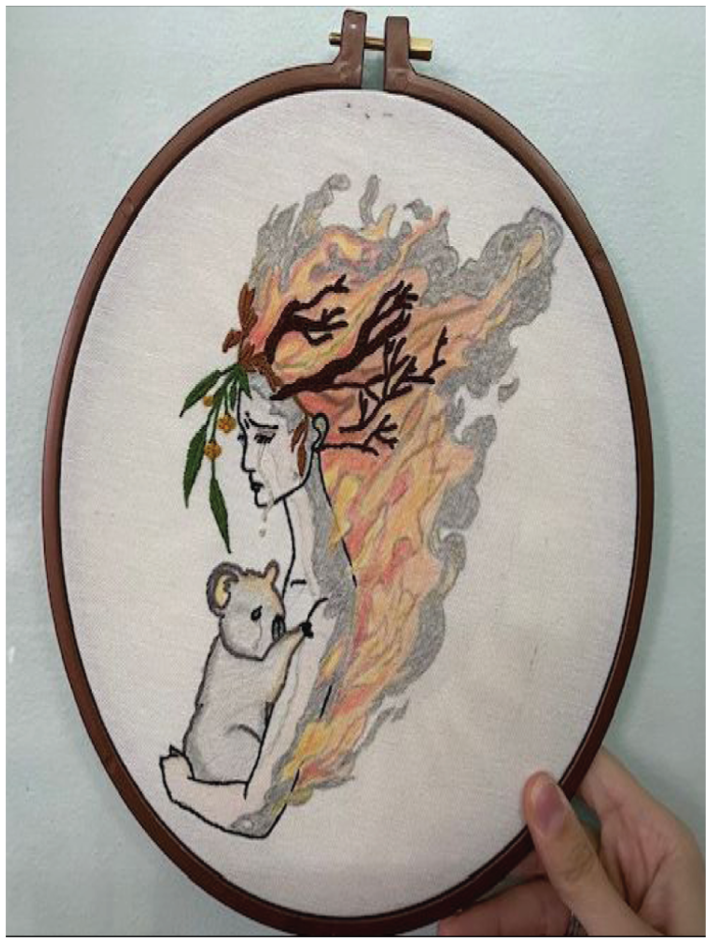
A koala which lost its way “Kemgadi” (S4).
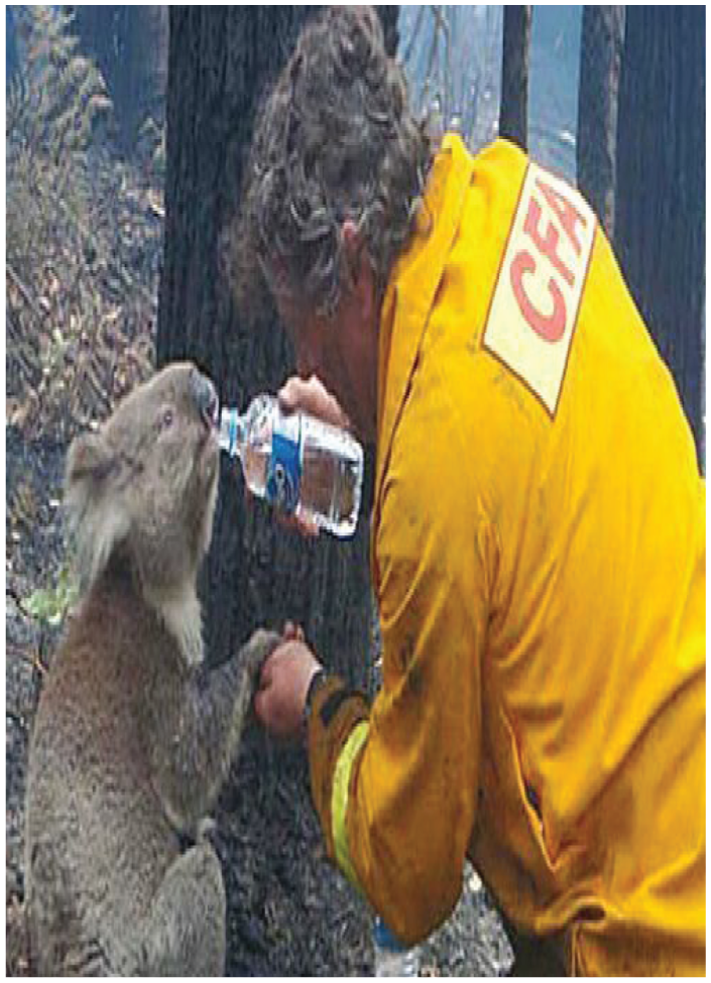
An photo from the news (URL-1).
Story 1 – The Koala Who Lost Its Way “Kemgadi” (S4)
Fables are short, imaginary stories whose heroes are usually animals and whose purpose is to teach a concrete moral lesson (Oguzkan, 2013). In this fable-type story, the plot takes place in a forest in New South Wales, Australia, where all kinds of creatures live. The koala Kemgadi, who trusts a long-nosed, black-dressed, ugly stranger named “Disaster”, who comes to the forest and has a cane in his hand, sets out with this stranger. First, he took a poisonous chemical from his “Disaster” bag in Bird Park, where they went together. Kemgadi was very upset by this situation. After leaving there, they went to Kakadu National Park and Tasmania respectively. In the places where they went, Kemgadi, who witnessed the evils of Disaster and felt great sadness, asked the stranger to take him to the forest where he lived. Disaster did not reject this request and they came to the forest. Disaster freed Kemgadi here. But Disaster did his last evil and burned the whole forest. Kemgadi, who came to his friends crying, said, “The environment plays an important role in the life of all living things. Living in a clean environment is our common desire. Because it is the people who benefit the most from the environment, but it is also the people who pollute and harm the most”. Kemgadi hugged a branch of a tree and prayed for the fire to end.
Story 1 points out the importance of forests as the most valuable ecosystems on earth with their biodiversity and a special value among all habitats, for all living things. The creator of the work (Image 1) stated that he was inspired by the news that “Almost 350 koalas died in forest fires in Australia in 2019” (Image 2) and said that he produced such work from waste thread and fabric and wrote his story in parallel with this news. In the artwork, burning tree branches are represented by a human figure. The koala in his lap symbolizes the helplessness of living things. Fire, which is one of the most important threats in forest destruction, causes the death of plants and other living things, resulting in incredible ecological destruction. In this sense, we can state that the content of inspired news, produced works and stories are consistent with each other. The work, in which the color gray, which is the color most easily distinguishable by the eye, is used predominantly, represents seriousness in accordance with the meaning of the color.
Following images are the visuals of three examples of works titled “The Earth with Stolen Heart”, “The Wishing Tree” and “The Seasonless Leaf” prepared on the theme of the destruction of forests:
The creator of The Earth with Stolen Heart (Image 3-S1) and the creator of the story emphasized that the world will be an uninhabitable planet in the next century by drawing attention to the decreasing amount of oxygen due to the number of trees cut down in the Amazon forests, known as the lungs of the world, In his work The Wishing Tree (Image 4-S12), the creator of the story criticized those who left plastics and other waste materials haphazardly in the forests, describing them as “selfish beings who don’t care about anyone but themselves”. His story was accompanied by the mysterious events experienced by the boy who wrote his wish on a plastic tree coming out of the ground. The last work on this theme, The Seasonless Leaf (Image 5-S22), symbolizes the revenge of a leaf from human beings as a result of the negative effects of the destroyed forests on the climate.

The Earth with Stolen Heart (S1).

The Wishing Tree (S12).

The Seasonless Leaf (S22).
Psychological Impacts of Environmental Pollution and Eco-Art
When we are exposed to environmental pollution, we notice our own reactions. Our individual emotions in pollution-related events are considered psychological effects. Psychological effects such as depression, stress, and cognitive dysfunctions can be exacerbated when we are exposed to pollution. Feeling these effects deeply, 6 participants produced artworks and stories about the psychological effects of environmental pollution. Details of the works of the 4 participants are indicated in Images 6, 7, 8 and 9.
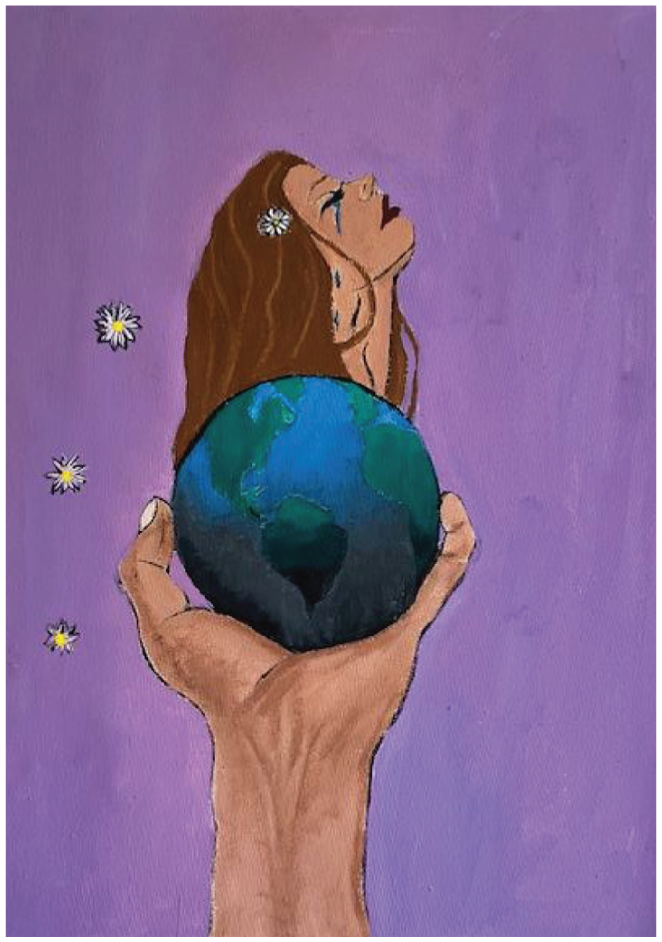
Purple Dream (S32).
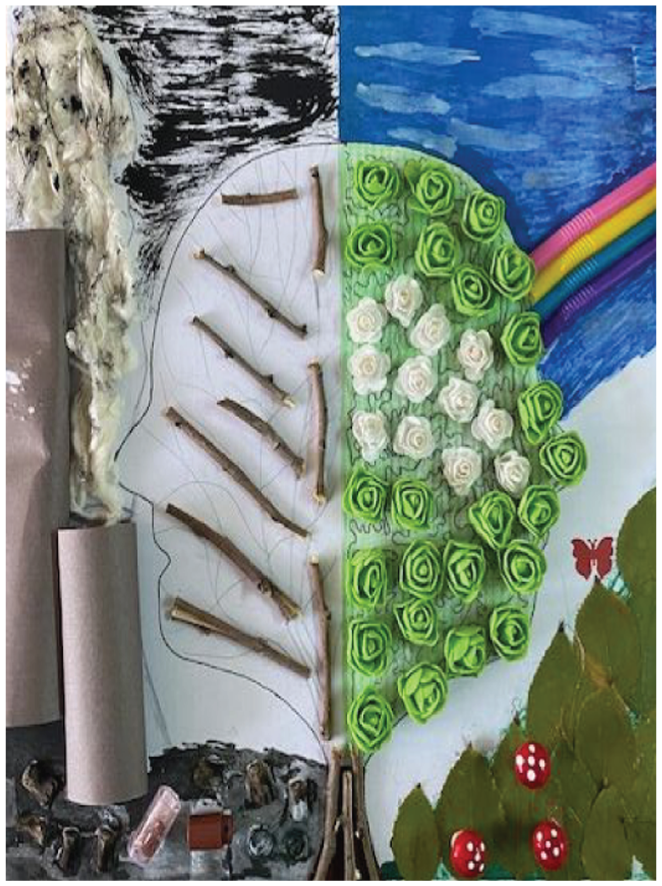
The Destruction of Humanity (S17).

The Girl Awakening to Colorlessness (S23).

The Man with a Cement Spirit (S27).
Story 2 – Purple Dream (S32)
Mythological stories are narratives about Gods, noble people, heroes, and supernatural beings. Inspired by Greek mythology, the story takes place in an oasis village known as San Pedro, located in Atacama, the driest desert in the world, in northern Chile. The story is based on the essence that the young girl named Astrea plans to use in the special days and celebrations that her father Zeus had made for the Gods and his family. While producing these essences, Zeus killed millions of plant species and polluted the environment, which led the young girl to depression. Being trapped in a room surrounded by beautiful smells, Astrea was bothered due to the destruction and pollution of nature, and she felt the need to do something about it. Days later, the bird named Anzu said to Astrea “you will not be able to live soon, the world is disappearing from the south of the desert” and that the daisies in the desert maintain order, but the rest of the pollution is rotting in Astrea. Astrea decided that she could not bear such an evil world any longer and asked her father Zeus to distance her from the world. Zeus did not reject his daughter’s request and sent her to the depths of the sky to be happy. Watching people from the sky, Astrea continued to cry for every evil done to nature there. One by one, Astrea’s tears spilled onto the earth, and each tear turned into daisies where it fell. These daisies gave hope to everyone again.
Pollution is an important source of stress and anxiety that causes the formation of non-contagious diseases that concern the general health of living things. In Story 2, it is emphasized that human beings use nature without reckoning, forcing their inner dynamics, consuming, and polluting more and more, and as a result, both the environmental damage from these developments and their psychological effects on humans are underlined. The creator of the work (Image 6) stated that the world, where the main focus of the world’s vital activities is human, is depicted in the palm of a human. In addition, the creator stated that purple, which is the main color in the work, has a positive effect on human psychology, calms emotions spiritually, and represents the future. Astrea, the protagonist of the story, is reflected in the artwork exactly as in the story’s content. In the work, where the color purple, representing sensuality and elegance, is dominant, “mysticism, self-confidence and dreaminess” are emphasized.
Below are the images of the works titled The Destruction of Humanity, The Girl Awakening to Colorlessness and The Man with a Cement Spirit prepared on the theme of the psychological effects of environmental pollution:
The creator of the work titled The Destruction of Humanity (Image 7-S17) and the story dealt with the longing for the green world, his reproach to humanity, and his retreat from all living things, of Koray Bey, who is stuck among the factories. In the painting named Girl Waking to Colorlessness (Image 8-S23) and in the story, the creator of the work has based the main subject on the character named Işıl who sees everything in black and white due to environmental pollution, the attention disorders she experiences make his life difficult and drag her into depression. Işıl’s only dreams are colorful. The creator of the eco-artwork named The Man with a Cement Spirit (Image 9-S27) and the related story stated that he produced his work by being influenced by the people who became petrified by being under the ashes of the Vesuvius volcano that erupted 2000 years ago in Pompeii. The story is about the petrification of Marko, who realizes that he cannot fight against environmental pollution alone.
Respiratory Disorders and Eco-Art
Air pollution has increased rapidly in the last century as a result of city life and industrialization. The substances polluting the air show their effects on the whole body by passing through the lungs to the systemic circulation. Polluted air can cause the development of lung diseases and loss of respiratory functions. Addressing this important problem in their works and stories, five participants examined the damage to the environment within the framework of respiratory disorders.
Story 3 – Levantine Shearwater (S19)
Legends are anonymous folk literature products that have been passed down from generation to generation since ancient times (Ay, 2019). Inspired by tales written about the legendary Simurgh bird, this story takes place in Hallerbos in Belgium. Supporting his family by lumbering, Bram worked all day and only smoked tobacco during lunch breaks. Although he knew the harm, he thought that it would not harm his children since he was far from home. He would leave the butts of the tobacco he smoked wherever he smoked, not paying attention to this situation. He also randomly threw the ashes of his cigarettes around. Endangered Levantine shearwaters and other animals ate these butts, but Bram didn’t care. One day, Bram’s daughter Arne fell ill. The cure for the disease was in the wings of the Levantine Shearwater. Bram did not despair because he knew about this bird species. He immediately grabbed a bird and took it to the doctor. The doctor, who looked inside the bird with an X-ray, was surprised. “This bird is about to die”, he said and showed the image to Bram. Bram brought other birds of the same species, but the result was the same. He realized the evil he had done to the birds, to himself, and Arne. But it was too late for everything.
While 5 trillion butts are produced in the world every year, 2 million tons of carbon dioxide and 5 million tons of methane gas are gone into the atmosphere due to the methods used during the production of cigarettes and other tobacco products. In addition, cigarette consumers, who disrupt the balance of the ecosystem, pose a threat to both their health and the lives of other living things. The author of the story of the Levantine Shearwater and the creator of the artwork (Image 10) completed the lung image with cigarette butts, drawing attention to the seriousness of the situation. In the work where blue, green, and red colors stand out, it is seen that blue represents strength and health; green, as it reminds us of nature, represents peace and revitalization; and red represents warning and activation.

Levantine Shearwater (S19).
The works titled The Coughing Earth, The Lungs of the Captive Bee, and The Gilled Ayse, prepared on the theme of respiratory disorders and eco-art are shown in Images 11, 12, and 13.

The Coughing Earth (S5).

The Lungs of the Captive Bee (S14).

The Gilled Ayse (S26).
The creator of the work named The Coughing Earth (Image 11-S5) focused on the struggle of the world exposed to cigarette smoke with COPD in his story and work. The bee in the hive is depicted with the dry branches and spring flowers in the lung figure by the creator of the work titled The Lungs of the Captive Bee (Image 12-S14), which is about the death of Kaya’s friend Oya as a result of her lungs filling with dry branches as a result of Kaya’s smoking polluting the air and destroying all the flowers. The creator of the work The Gilled Ayşe (Image 13-S26) attributed the only salvation of Ayşe, who was breathing hard, to her ability to sell recyclable items.
Physiological Effects and Eco-Art
Environmental pollution, which negatively affects the life of living things and people’s health and causes physical harm, causes serious problems such as hearing loss, allergies, especially cancer. The works of four of the five participants who dealt with this important problem in their studies are shown in Images 14, 15, 16, and 17.

The Self-Consuming Hero (S9).

Robot Robert (S3).

On the Edge of Death (S16).
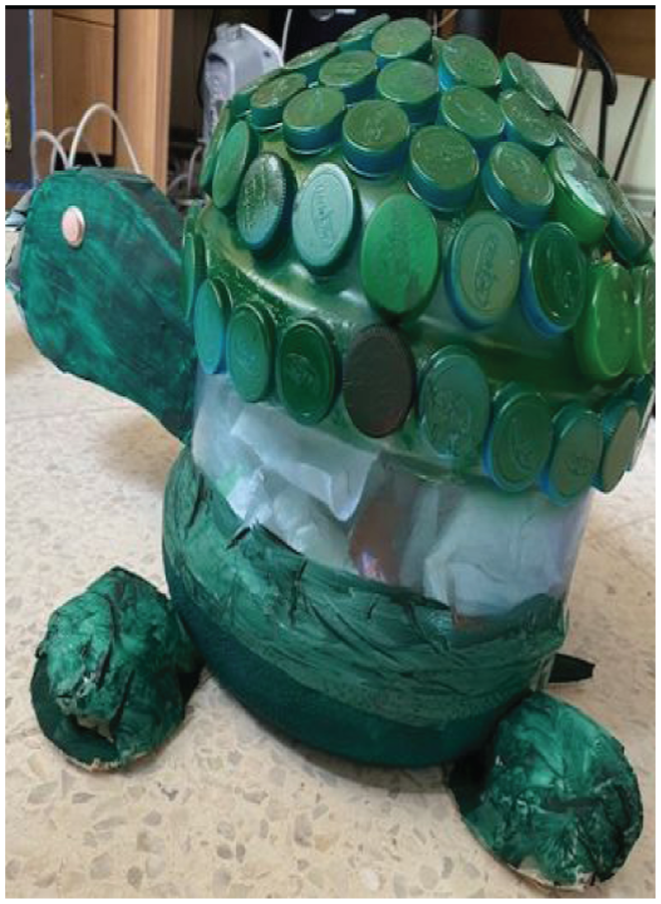
The End of Turtle Kadir (S20).
Story 4 – The Self-Consuming Hero (S9)
In the event stories, which are the genre of this text, the message is usually clear. In these types of stories, the author generally tries not to leave gaps in the narrative and not to leave what he is going to tell to the reader’s imagination. The chain of events in the Norwegian village of Reine started with Aimar’s promise to Mother Nature that he would “defeat those who harm the environment”. Aimar knew that if he couldn’t keep his promise, the whole village would be cursed. Aimar kept an eye on the environment every day from morning to night, warned those who polluted the environment, and punished them not to act in this way. The girl named Magnus and her friends, despite all the warnings of Aimar, were throwing garbage on the ground, harming the creatures in the lake, polluting the water, and disturbing other people and living things by making noise. Aimar could not overcome this situation alone and the whole village people were cursed. Everyone lost a limb in their body. The human being, who was the cause of all this pollution, had thus brought his demise. Aimar was very upset about what happened. He sacrificed his own body at the cost of complete annihilation. It petrified and fed the soil, but nature could not return to its former state. It was once again understood that protecting the environment alone did not make sense and taking action as a community was more important.
Environmental pollution results in important physiological health problems by affecting living things both in the short and in the long term. The creator of the work The Self-consuming Hero (Image 14) physiologically attributed the loss of a limb to the existence of people who do not care about the environment and consume nature irresponsibly. It is seen that the visual in the work is presented as a whole, in line with the visual presentation of the character and its importance in the story, in accordance with the context in which the character is located. In the work where yellow is dominant, there is a use that is appropriate for the story as the color expresses transience and the end of life.
The following works titled Robot Robert, On the Edge of Death, and The End of Turtle Kadir were prepared on the theme of physiological effects and eco-art.
The creator of the work Robot Robert (Image 15-S3), which deals with the story of Robert’s transformation into a robot, who spent his life collecting recyclable materials from nature, attributed the character’s loss of bodily features to living things that are insensitive to recycling. The work called On the Edge of Death (Image 16-S16), is about Grey, who has cancer, trying to hold on to nature for the last time. The creator of the work The End of Turtle Kadir (Image 17-S20) deals with the story of the turtle, which forgot its natural eating habits over time, getting sick by eating plastics and losing its shell. When the works and the contents of the stories are examined in detail, we can say that the harmony between the work and the story is also achieved within this theme.
Limitation of the Living Spaces of Land and Marine Species and Eco-art
Hunting, pollution, and other factors that cause the limitation of the natural habitats of living things put the lineage continuity of living things at risk and therefore the species diversity on which the ecological system is built is in danger. 10 participants who were aware of this problem reflected this situation in their works and stories. Details of the four works are below.
Story 5 – Blue-Scaled Whale Melo (S7)
This work, written in the fable genre, takes place in Lake Como, Italy. In the story about Melo the whale being assigned as the lake’s waste police and the events that develop afterward, everything starts with Melo postponing what needs to be done in the lake. Melo was a whale who initially appeared to be responsible but gradually became lazier. What Melo needed to do was to warn and punish the creatures that pollute the lake, to increase the green areas in the lake, and to establish a recycling station for waste. However, the fact that Melo did not do it by saying “I do all the work anyway; there is more time” brought the end of the lake. Over time, plastic wastes and batteries covered the lake, and fish and other living things began to die. Melo understood the severity of the situation when he swallowed a big plastic bag. But it was too late. Even the lake doctor octopus Nero was dead. Finally, Melo realized that his destruction was his irresponsibility.
Micro-plastic wastes floating in water are swallowed by many different organisms. The toxic substances in them become a link in the food chain through sea creatures that swallow these particles and can reach humans. Melo’s story shows that irresponsibility poses great dangers to both people, natural life, and the ecosystem. In Image 18, this atmosphere was described as Melo is depicted in a plastic bag. Sigmund Freud likened the color blue to the ocean in meaning and described it as a calming color. Since the story takes place in a lake, we can say that it is an appropriate color use.

Blue-Scaled Whale Melo (S7).
In this theme, which includes the limitation of the habitats of land and marine species, the works titled The Swan Imprisoned in Its Body, The Homeless Planet, and The World Sucked into the Vortex are shown in Images 19, 20, and 21.

The Swan Imprisoned in Its Body (S11).

The Homeless Planet (S29).

The World Sucked into the Vortex (S33).
The creator of the work The Swan Imprisoned in Its Body (Image 19-S11) discussed in his story the swan that eats waste materials as a result of not being able to find food in its natural environment and becomes increasingly unable to move. In the work titled The Homeless Planet (Image 20-S29), the dramatic life of the planet, which migrated due to atmospheric pollution but was not accepted to the places it went to, was depicted. In the last work, The World Sucked into the Vortex (Image 21-S33), the death of fish that cannot find a place to live due to pollution, the fact that the entire ocean is covered with poison and dragging the world into a vortex is discussed.
Eco-Artworks and Visual Narration From the Perspective of Secondary School Students
In this section, students expressed their thoughts using a single word or phrase about eco-arts. It was observed that most of the participants expressed the messages they received in parallel with eco-artworks based on visuals. At this point, the sample messages created are given below, and the frequencies, and percentages are given in Table 2.
Expressions About Eco-Artworks, Participants, and Frequencies.

I thought about how ugly plastic trees can be… (Image 4, The Wishing Tree)
The girl who sheds tears in the shape of a daisy is sad for the state of the world. Unhappy… (Image 6, Purple Dream)
I saw the world getting sick… (Image 11, The Coughing Earth)
We will turn into ugly robot humans… (Image 15, Robot Robert)
When the answers of the participants were analyzed, the most frequently repeated messages were “unhappiness, garbage, waste, and sea pollution”. In general, it can be said that these messages highlighted by the students are exactly in line with the main themes in the stories of the creators of the works. As it is known, the message given by the visual covers the processes of perception, processing, storage, and recall in cognitive science. Concepts that define the picture-text relationship, especially in educational designs, are important for the development of these processes.
Under this heading, each participant determined a work and wrote short stories about the artwork they chose to tell their closest friends. Details of the works and stories chosen by the students are given in Table 3.
Selected Works and Visual Narration.

When the selected works were examined, Image 1 (A koala which lost its way “Kemgadi”) was the most preferred and narrated by the participants while Images 15–17 (Robot Robert and The End of Turtle Kadir) were the least preferred and narrated. As it is known, using visual methods such as pictures helps to deliver the desired message to the recipient faster and to ensure their understanding. When the short stories prepared for the pictures were examined, it was seen that the guiding effect of the visuals was dominant. Compared to the stories created by the creators of the work, the rate of connecting the stories of middle school students with a happy ending is higher.
In the last stage, a story from each theme was read and the participants were asked to match the stories with the correct visual. Details of these matchings are shown in Figure 1.
When Figure 1 is examined, all 27 participants matched the story The Man with a Cement Spirit with the correct work (Picture 9). The two works in which they were most mistaken about correct matching were Images 21 and 3.

Picture-Story Pairings.
Discussion
Art diversifies and liberates our way of thinking, and perspectives. It can also affect the critical reflection of one’s assumptions and the way the student constructs meaning. Everything that contains the idea and result of disrupting the ecological balance can be the subject of ecological art. Our living species, ecosystems, and natural beauties face the danger of extinction, sometimes due to natural reasons and sometimes due to human influence. It should be considered that the continuation of life will only be possible if biological diversity exists. The importance of education is an undeniable fact in raising individuals who can scrutinize, question, and find solutions to the changing negative situations in their environment. The students, whose hearts are touched by the teachers of the future, who are aware of the value of their environment and the biodiversity they have, and who act to protect all these, will also grow up as sensitive citizens in this way. In this sense, we can say that the participants, who focused on the loss of biodiversity with ecological stories and works of art, took an important step towards the sustainability and transferability of their sensitivity. It is very important to show other individuals how they play a role – as consumers – in the loss of biodiversity. Other important factors mentioned by the participants about the effects of environmental problems on living things are “psychological effects”, “respiratory disorders” and “physiological effects” in terms of health. As it is known, the continuation of human life healthily and successfully depends on the effect and interaction of human genetic structure and environmental conditions. The better and more harmonious the environment, the healthier and better the mental and social structure, especially the physical structure. Finally, the participants, who highlighted the content of “limitation of the habitats of marine species”, included the factors that deeply affect the fate of living species in their works and stories. In particular, actions such as “human-induced pollution, overfishing and coast filling” cause the extinction of land and sea creatures or the limitation or narrowing of their habitat areas. To meet this global challenge, it is necessary to expand and disseminate awareness and motivational practices. Individuals need to become aware of their behaviors in raising environmental awareness. Minimizing environmental problems, solving environmental problems, and displaying protective behaviors against the environment are only possible by people who are environmentally conscious, aware of environmental problems, and highly motivated for necessary practices (Sinha et al., 1985). We can say that eco-art activities have a facilitating role in raising motivation so that individuals can correctly interpret the effects of environmental pollution on human beings and other living things, perceive environmental problems and the causes of environmental problems correctly, realize the measures that can be taken against the formation of environmental problems, and take responsibility for the solution of problems. The eco-art products obtained from the research gave clues about the intellectual properties of the participants, including their decisions and comments about the environment, the behavioral characteristics that they transferred these thoughts to life, and their emotional rhythms including all their concerns. Particularly, the participants contributed to the increase of awareness of secondary school students by reflecting on their emotional reactions to the need for change at the point of revealing environmental problems and taking precautions. The reconciliation of modern man with the environment depends on preserving nature and activating the instincts of respect for the other.
The story is a simple yet powerful way to help students make sense of the complex and chaotic world of experience. This method is also one of the best ways to communicate. When the works and stories produced by higher education students were examined, it was determined that the perspectives of the participants were negatively reflected on the works and the ecological stories created could not have a happy ending. This situation has the following advantage: when we encounter negative past experiences, we develop “coping strategies” to protect ourselves in the future (Joss & Kadir, 2015). The endings are sad, of course, but they also often have an illuminating structure that emphasizes the good (Newman, 2017). Compared to the stories created by the creators of the works, the middle school students were more likely to attribute their stories to happy endings. To understand the phenomenon of happy endings in the modern world, it is necessary to examine both the historical roots and variations of this type of narrative closure in children’s and adult literature. Endings mean different things for adults and children. Of course, happy endings don’t mean that they can completely detract from reality, but they increase the possibility of hope. In addition, only adults are aware that they live in a world where they do not know the beginning and the end. Walter Pape (1992) also claimed that “ends mean different things to adults and children”.
In the created works, criticisms about the irresponsible behavior of people towards nature, against humanity and innocent creatures, were emphasized by using recycling materials, accompanied by stories. Waste threads, plastic bottles and caps, metal caps, and batteries, wastepaper, expired paints, pipettes, glass bottles, surgical masks, injectors, paper cups, medicine cans, aluminum foil, sharpener wastes, tins, boxes, broken glass frames, gloves, waste cosmetic products, shampoo boxes and stationery that have lost their function were used as recycling materials in the works. Dry leaves, stones, soil, dry tree branches, and dried flowers were also used. In one word, cigarette butts were used. As it is known, cigarette butts are used in the production of a raw material used in paper production by recycling within the scope of the project developed with the University of Brasilia in the city of Votorantim in Brazil. In this sense, we can consider this waste among recyclable products. Most of the wastes suitable for recycling in Turkey are recoverable. In Turkey, since the 1990s, there have been important developments in the recycling of solid wastes. Local governments and non-governmental organizations have been seen as a tool to increase the awareness of individuals on this issue. In general, it is important to inform and raise awareness in society about recycling in terms of the sustainability of both ecological balance and economic resources. In this study, based on the materials used by higher education students, it has been determined that recycling awareness is in various fields, and they use recycling at the maximum level in their applications. In line with this result, Rainey’s (1997) study, which was conducted at the University of Oregon, revealed that more than 50% of students contribute to recycling on a daily and weekly basis. Similarly, studies with high awareness of recycling in higher education are also included in the literature (Flagg & Bates, 2016; Zhang et al., 2017). However, in an empirical study conducted in Oxford, it was revealed that students’ contribution to recycling is not high (Robertson & Walkington, 2009).
Matching/pairing activities help children develop skills and lay the foundations of the concepts they will learn. In addition, it is important to define visual memory, patterns, and relationships, and to display a holistic approach. Integration with nature is content that both reveals the desired natural appearances and contributes to the solution of experienced nature and ecology problems. When it comes to ecological consciousness, the relationship between man and nature comes to the fore. Students reflected on their criticism of the ecological crisis, the human-nature-art relationship, and their feelings of empathy in their works. This finding is fully in line with the dimensions discussed by Tsevreni (2022) in his research.
In conclusion, environmental education offered in educational institutions aims to enable individuals to have information about environmental problems, to mobilize individuals for the solution of problems, to raise environmental awareness, and to take part in sustainable development. The increase in environmental concerns, especially in recent years, has led to the necessity of putting more emphasis on environmental awareness studies and practices in the education process for children studying in pre-school and primary schools. As Hutton and Baumeister (1992) stated, a high level of awareness strengthens the attitude-behavior relationship. Reusing some waste products through natural materials or recycling helps us become not only consumers but also producers. Undoubtedly, one of the most effective ways of acquiring some critical behaviors is art. Recycling useless and waste materials into aesthetic products contributes to the change of thoughts about these materials, to increase awareness, and to the development of creative thinking.
Conclusion
Environmental problems brought up by higher education students through works of art and stories are “deforestation, climate change, environmental degradation, unconscious consumption of resources, industrialization, air pollution, sea, and ocean pollution”. The main reason for these problems to come to the fore is that environmental problems have become a threat to human life everywhere. Although the participants did not directly include problems such as population growth, urbanization, desertification, visual and noise pollution in their works and stories, they indirectly reflected the effects of these problems in their works. In terms of the impacts of these problems on our lives, “loss of biodiversity, psychological effects, respiratory disorders, physiological effects, and the limitation of the habitats of land and marine species” came to the fore.
It was observed that the messages that secondary school students received the most from the works were “unhappiness, garbage, waste, and sea pollution:. In addition, “change of the world, disease, extinction, evil, soil and air pollution” were other examples of received messages. When evaluated in general, it can be said that these messages highlighted by the students are exactly in the same direction as the main themes in the stories of the creators of the works. Despite receiving such messages, secondary school students were more likely to connect their stories with a happy ending compared to the creators of the stories. When the short stories prepared for the images were analyzed, it was seen that the guiding effect of the visuals was dominant. In this context, it was determined that the visuals of the work exactly matched the stories and appropriate connections were established.
In the activity held at the last stage of the research, all 27 participants matched the story “The Man with a Cement Spirit” with the correct work (Image 9). The two works in which the participants were most mistaken about the correct matching were Images 21 and 3. Ecological consciousness refers to certain psychological factors related to individuals’ tendencies to engage in pro-environmental behaviors (Zelezny & Schultz, 2000). Sánchez and Regina (2010) stated that ecological consciousness includes four dimensions: emotional, cognitive, disposition, and activity. In this context, it seems promising for the future that secondary school students present the contents in line with these four dimensions. In this context, they reflected their criticism of the ecological crisis, the human-nature-art relationship, and their empathic feelings in their works.
Footnotes

Funding
The authors received no financial support for the research, authorship, and/or publication of this article.
Declaration of Conflicting Interests
The authors declared no potential conflicts of interest with respect to the research, authorship, and/or publication of this article.
Data Availability Statement
The data supporting the findings of this study are available from the corresponding author upon request.