




Abstract
Although some studies have posited that sectoral growth could influence environmental pollution through energy consumption, the issue has not been explicitly and empirically investigated in the carbon-neutrality literature. Hence, this analysis fills the gap in the extant literature by employing the interaction models to ascertain the moderating role of energy consumption on the environmental impacts of the industrial, agricultural, financial, and service sectors in Malaysia. It also analyzes the marginal effects of sectoral growth on environmental pollution (i.e., ecological footprint and carbon emissions) at various levels of energy consumption. The Autoregressive Distributed lag technique utilized in this study found that the variables are cointegrated. The empirical estimations reveal that energy consumption plays a harmful moderating role on the impacts of the industrial and financial sectors on environmental pollution but does not aggravate the environmental impacts of the agricultural and service sectors. Besides, the marginal effects of the industrial and financial sectors on environmental pollution increase as the level of energy consumption rises in Malaysia. Based on the findings, this study highlights the policy implications and options.
Introduction
The worldwide impact of the growing environmental pollution on the ecosystem, climate change, and global warming has dominated global discussion in the current century. Energy consumption is considered as one of the main drivers of environmental degradation especially if the energy is obtained from fossil fuels that increase carbon emissions and ecological footprint (Ehigiamusoe, Lean, Babalola, & Poon, 2022). However, energy consumption could help nations to achieve carbon-neutrality (the target of bringing down carbon dioxide emissions or carbon footprint to zero by balancing the quantity emitted into the atmosphere with the quantity removed through carbon offsetting) if they embrace energy-saving and energy-efficient production techniques relative to energy-intensive production methods (Murshed et al., 2021). While energy sourced from fossil fuels or non-renewable resources have detrimental impacts on environmental pollution, clean or renewable energy can mitigate environmental pollution. Essentially, the mitigation of environmental pollution requires a critical analysis of the factors that contribute to environmental degradation. Apart from energy consumption, sectoral growth constitutes another driver of environmental pollution since the activities of the economic sectors (e.g., industrial, agricultural, financial, service sectors) could intensify or alleviate environmental pollution (Ehigiamusoe, Lean & Somasundram, 2022). Though sectoral growth could have a direct impact on carbon-neutrality, the overall impact may depend on the proportion of non-renewable and renewable energy consumed in sectoral activities.
Specifically, the relationship between the agricultural sector and environmental pollution has been investigated by some scholars though the empirical outcomes are mixed. A strand of the literature noted that agricultural output has a detrimental impact on environmental pollution (Adedoyin et al., 2021; Eyuboglu & Uzar, 2020; Ganda, 2021; Uddin, 2020). They noted that agricultural practices such as bush burning, deforestation, fertilizer application, and food packaging could have dire consequences on environmental pollution. Besides, the utilization of energy for agricultural activities (e.g., mechanization for soil tillage, processing, and storage of agricultural products) can aggravate environmental pollution especially if the energy is sourced from fossil fuels. However, another strand of the literature contended that agricultural output has a mitigating impact on environmental pollution (Anwar et al., 2020; Mahmood et al., 2019; Prastiyo et al., 2020). They noted that agricultural activities that utilize clean and renewable energy will not raise environmental pollution. Fundamentally, one unresolved issue about the nexus between agricultural output and environmental pollution is whether agricultural output influences environmental pollution through energy consumption. This study fills this research gap.
Equally, the direct impact of the industrial sector on environmental pollution has been analyzed in the empirical literature. Though other views exist, most of the studies concluded that industrial output has a harmful impact on environmental pollution (Anwar et al., 2020; Samargandi, 2017; Sohag et al., 2017). These studies argued that industrialization requires intensive utilization of energy resources which could intensify carbon emissions and other greenhouse gases, particularly if the energy is obtained from non-renewable resources. Conversely, some studies have posited that industrial output will not aggravate environmental pollution if the sector utilizes energy from clean and renewable technologies (Ehigiamusoe, 2020a; Wen et al., 2014). Essentially, Wen et al. (2014) argued that industrial output will not intensify environmental pollution in the long-run if there are advances in energy-saving technologies. Similarly, Ehigiamusoe (2020a) noted that a change from fossil fuels’ energy-intensive production process to cleaner energy production techniques will not aggravate environmental pollution. However, the possibility that industrial output affects environmental pollution through energy consumption has not been empirically analyzed.
Moreover, some studies have revealed that the financial sector increases the level of environmental pollution because the sector provides credit facilities or loans that enable households and firms to purchase electrical gadgets (e.g., electrical devices, automobiles) that require intensive energy utilization (Baloch et al., 2019; Ehigiamusoe, Lean & Somasundram, 2022; Petrovic & Lobanov, 2021; Xu et al., 2018). On the contrary, expansion in financial development could strengthen the ability of firms to embrace advanced or cleaner technologies that are environmental-friendly, encourage technological innovations, as well as enhance the financing of environmental projects (Al-Mulali et al., 2015; Ehigiamusoe & Lean, 2019; Imamoglu, 2019). A developed financial sector could provide avenue for carbon trading to give inducements for decreasing greenhouse gases. Another strand of the literature noted that financial development and energy consumption have dynamic relationship, since the development of the financial sector requires greater energy consumption which could intensify environmental pollution (Chang, 2015; Ozturk & Acaravci, 2013). Though Katircioglu and Taşpinar (2017) noted that the interaction term between financial development and energy consumption has no influence on environmental pollution in Turkey, Acheampong (2019) argued that the interaction term between financial development and energy consumption aggravates environmental pollution in Africa. Since the literature on this issue is still scanty, this study undertakes this investigation to provide more insights.
The service sector is also considered as one of the sectors that influence environmental pollution. For example, one strand of the literature contended that service output has adverse impact on environmental pollution (Jebli & Kahia, 2020; Poumanyvong & Kaneko, 2010; Sohag et al., 2017). They attributed the deleterious impact of service output on environmental pollution to the inability of countries or firms to invest in clean and innovative technologies that utilizes renewable energy to enhance service activities (e.g., hotels, transport, restaurants). Nevertheless, another strand of the literature noted that service output reduces environmental pollution (Zaman & Moemen, 2017). However, based on our best knowledge, the moderating role of energy consumption on the impact of service output on environmental pollution has yet to be analyzed in the empirical literature. We fill this gap in the literature.
Thus, the specific objective of this research is to ascertain the moderating role of energy consumption on the impact of sectoral growth (i.e., industrial, agricultural, financial, and service sectors) on environmental pollution in Malaysia. It also seeks to unveil the marginal effects of sectoral growth on environmental pollution at various levels of energy consumption in Malaysia. The motivation for this research stems from the dearth of empirical analysis on the moderating role of energy consumption on the environmental impact of sectoral growth despite the soaring level of environmental pollution in Malaysia. Essentially, the high degree of environmental pollution in the country in recent decades poses severe threats to human lives, ecosystem, global warming, and climate change. The deteriorating environmental quality in the country is obvious from the increasing trend in ecological footprint and carbon dioxide emissions. Particularly, available statistics indicate that ecological footprint rose from 2.176 to 4.259 global hectare per person (representing 95.7% increase) between 1980 and 2020 (Global Footprint Network, 2022). Similarly, carbon emissions soared from 2.029 to 7.600 metric ton per capita during the period, representing 274.5% increase (World Development Indicators, 2022). Moreover, the available data in the World Development Indicators (2022) showed that energy consumption rose from 861.98 to 3,003.45 kg of oil equivalent per capita (representing 248.4% increase) with roughly 90% of the energy derived from fossil fuels while less than 10% of the energy is obtained from renewable resources. Similarly, real GDP per capita also soared from USD3026.37 to USD10631.50 in constant 2015 US$ (representing 251.3% increase). Moreover, the economic sectors experienced some remarkable changes during the period, as the value added to GDP by the agricultural and industrial sectors degenerated from 23.027% and 41.791% to 8.194% and 35.925%, respectively. However, the value added to GDP by the service sector increased from 42.677% to 54.767%, while the financial sector grew from 49.909% to 133.995% (World Development Indicators, 2022).
Given the trend in these variables during the period, it is important to employ econometric analysis to unveil how the interaction between energy consumption and sectoral growth affects environmental pollution. Fundamentally, some previous empirical works contended that sectoral growth could affect environmental pollution through energy consumption (Baloch et al., 2019; Jebli & Kahia, 2020; Rudolph & Figge, 2017), but the issue has not been empirically analyzed. In this regard, this study makes some contributions to the extant literature by filling these research gaps. First, unlike most past research works that concentrated on the direct impacts of the industrial, agricultural, financial, and service sectors on environmental pollution (Adedoyin et al., 2021; Anwar et al., 2020; Sohag et al., 2017; Petrovic & Lobanov, 2021), this study unravels how the interaction between sectoral growth and energy consumption affect environmental pollution. Given the dynamic relationship between sectoral growth and energy consumption (Chang, 2015; Ozturk & Acaravci, 2013), it is essential to determine whether energy consumption has a detrimental or favorable moderating role on the environmental impact of sectoral growth.
Second, to the best of our knowledge, this study represents a novel idea that unravels the marginal effects of the industrial, agricultural, financial, and service sector on environmental pollution at various levels of energy consumption. This is essential because it enables policymakers to gain insights into how a simultaneous rise or decline in sectoral growth and energy consumption affect environmental pollution. Third, unlike previous studies, this study uses ecological footprint and carbon dioxide emissions as proxies of environmental pollution to capture diverse aspects of environmental pollution. Insights into the channels through which sectoral growth affects diverse dimensions of environmental pollution is fundamental for policy decision making. Hence, the findings of this study will be relevant to stakeholders in the economic sectors, government, and policy makers in formulating energy, sectoral, and environmental policies to attain economic and environmental sustainability. Finally, unlike previous studies, this study accounts for structural breaks in the analysis in order to obtain robust empirical outcomes that can enhance policy formulations. This is important because the relationship between some economic variables could be distorted if the issue of structural breaks is disregarded (Ehigiamusoe, Lean & Somasundram, 2022).
Apart from this introduction section, the structure of the paper is given as follows: The second section reviews the previous empirical studies; the third section x-rays the methodology utilized in the study; the fourth section analyzes the empirical results; and the fifth section highlights the policy implications and options.
Literature Review
Energy Consumption and Environmental Pollution
The impact of energy consumption on environmental pollution has been investigated by several scholars, and evidence abound that energy consumption aggravates environmental pollution (Acheampong, 2019; Ehigiamusoe, Lean & Somasundram, 2022; Uddin, 2020). For example, Ehigiamusoe and Lean (2019) reported that energy consumption has a detrimental impact on environmental pollution in heterogeneous panels of 122 low-, middle-, and high-income countries. Acheampong (2019) noted that energy consumption aggravates environmental pollution in 46 nations. Ehigiamusoe et al. (2019) revealed that energy consumption aggravates environmental pollution in 58 nations. Balsalobre-Lorente et al. (2019) found that energy consumption worsens environmental pollution in BRICS. Ehigiamusoe et al. (2020) indicated that energy consumption raises the level of environmental pollution in 64 middle-income economies, while Ehigiamusoe (2020c) showed that energy consumption increases environmental pollution in 31 African nations. Eyuboglu and Uzar (2020) reported that energy consumption increases environmental pollution in seven nations. Uddin (2020) found that energy consumption has a harmful impact on environmental pollution in 115 countries. Ehigiamusoe, Majeed and Dogan (2022) noted that energy consumption increases environmental pollution in 70 countries.
Using a disaggregated approach, Ehigiamusoe (2020a) opined that renewable energy consumption eases environmental pollution whereas non-renewable energy consumption intensifies environmental pollution in ASEAN+China. Ehigiamusoe (2020b) also stated that renewable energy consumption reduces environmental pollution whereas non-renewable energy consumption intensifies environmental pollution in 25 African economies. Usman and Hammar (2021) noted that renewable energy consumption mitigates ecological footprint in 16 countries. Destek and Sinha (2020) posited that renewable energy consumption decreases ecological footprint in OECD countries while non-renewable energy consumption increases it. Adedoyin et al. (2021) reported that renewable energy consumption has a mitigating impact on environmental pollution in seven nations, while Ganda (2021) revealed that renewable energy consumption decreases environmental pollution in 44 countries. Murshed et al. (2021) noted that renewable energy consumption reduces environmental pollution while non-renewable energy consumption intensifies pollution in Bangladesh. Ehigiamusoe and Dogan (2022) also noted that renewable energy consumption alleviates environmental pollution in 26 low-income nations.
Sectoral Output and Environmental Pollution
Agricultural Sector and Environmental Pollution
Some studies have investigated the impact of the agricultural output on environmental pollution though the empirical outcomes are mixed. A strand of the literature opined that agricultural output aggravates environmental pollution (Gokmenoglu & Taspinar, 2018; Balsalobre-Lorente et al., 2019). Particularly, Gokmenoglu and Taspinar (2018) analyzed the nexus between agricultural output and environmental pollution and found that agricultural output has a deleterious impact on environmental pollution in Pakistan. Balsalobre-Lorente et al. (2019) conducted a similar analysis and reported that agricultural output raises the level of environmental pollution in BRICS. Eyuboglu and Uzar (2020) noted that agricultural output has adverse impact on environmental pollution in seven nations. Uddin (2020) argued that the nexus between agricultural output and environmental pollution could be sensitive to the level of economic development. In a panel data study of 115 countries, they revealed that agricultural output increases environmental pollution in low-income nations albeit the effect is not significant in high- and middle-income nations. In a related study, Ganda (2021) found that agricultural output intensifies environmental pollution in 44 countries while Adedoyin et al. (2021) noted that agricultural output drives environmental pollution in seven nations. Usman and Makhdum (2021) also revealed that agricultural output aggravates ecological footprint in Brazil, Russia, India, China, South Africa, and Turkey (BRICS-T).
However, another strand of literature posited that agricultural output can mitigate environmental pollution (Dogan, 2016; Rafiq et al., 2016; Liu et al., 2017). Using data from Turkey, Dogan (2016) noted that agricultural output has a mitigating influence on environmental pollution. In the analysis of 53 countries, Rafiq et al. (2016) showed that agricultural output reduces environmental pollution. Liu et al. (2017) conducted a related study in ASEAN and reported that agricultural output diminishes environmental pollution. Rudolph and Figge (2017) analyzed a panel data of 146 economies and reported that agricultural output decreases ecological footprint. Zaman and Moemen (2017) revealed that agricultural output lessens environmental pollution in 90 nations. However, when they split the panel according to income level, the study noted that agricultural output has insignificant impact on environmental pollution in high- and middle- income nations. Mahmood et al. (2019) found that agricultural output reduces environmental pollution in Saudi Arabia whereas Prastiyo et al. (2020) noted that agricultural output diminishes environmental pollution in Indonesia. Anwar et al. (2020) also reported that agricultural output mitigates environmental pollution in 33 nations.
Industrial Sector and Environmental Pollution
The connection between industrial output and environmental pollution has attracted the attention of some scholars, with majority of the studies concluding that industrial output intensifies environmental pollution (Li & Lin, 2015; Poumanyvong & Kaneko, 2010; Sohag et al., 2017). For example, Tamazian et al. (2009) noted that industrial output has a detrimental effect on environmental pollution in six countries. Poumanyvong and Kaneko (2010) analyzed the impact of industrial output on environmental pollution and reported that industrial output aggravates environmental pollution in 99 countries. Zhang and Lin (2012) noted that industrial output worsens environmental pollution in China. The disaggregated analysis found a detrimental, insignificant, and mitigating effect in Eastern, Central, and Western region, respectively. Li and Lin (2015) also reported that industrial output increases environmental pollution in 73 economies. Besides, Rafiq et al. (2016) noted that industrial output intensifies environmental pollution in 53 countries albeit the impact is not significant in low- and middle-income nations. Samargandi (2017) found that industrial output worsens environmental pollution in Saudi Arabia. In a panel data analysis of 83 countries, Sohag et al. (2017) showed that industrial output has adverse effect on environmental pollution. Anwar et al. (2020) noted that industrial output aggravates environmental pollution in 33 nations while Ehigiamusoe (2020a) showed that industrial output reduces environmental pollution in ASEAN+China.
Financial Sector and Environmental Pollution
Some empirical works have examined the link between financial development and environmental pollution albeit the outcomes are mixed. For example, Xu et al. (2018) stated that financial development has adverse influence on environmental pollution in Saudi Arabia. Baloch et al. (2019) revealed that financial development increases environmental pollution in 59 countries. The relationship between financial development and environmental pollution could be sensitive to the levels of financial and economic development. In this regard, Ehigiamusoe and Lean (2019) disclosed that financial development reduces environmental pollution in high-income nations albeit it aggravates environmental pollution in low-income nations. Petrovic and Lobanov (2021) disclosed that financial development has a harmful impact on environmental pollution in 24 countries. Usman and Balsalobre-Lorente (2022) posited that financial development contributes to environmental pollution in newly industrialized nations. Ramzan et al. (2022) noted that financial development and fossil fuels have predictive power for ecological footprint in Pakistan. The study also added that the interaction between financial development and ICT can predict the level of pollution. Usman, Balsalobre-Lorente, et al. (2022) noted that though financial development raises the level of ecological footprint, the interaction between financial development and globalization diminishes ecological footprint.
However, Ozturk and Acaravci (2013) noted that financial development is insignificantly related to environmental pollution in Turkey. Using data from 12 developing nations, Seetanah et al. (2019) also showed an insignificant impact of financial development on environmental pollution. Aluko and Obalade (2020) noted that financial development has insignificant impact on environmental pollution in 35 countries. Huang et al. (2022) disclosed that financial development is not a significant driver of ecological footprint in E-7 countries. At the extreme, Al-Mulali et al. (2015) argued that financial development can have mitigating effect on environmental pollution if it encourages energy efficiency as well as investment in renewable energy infrastructure. Imamoglu (2019) added that financial development diminishes environmental pollution in 33 advanced nations. Jahanger et al. (2022) also revealed that financial development mitigates ecological footprints in 73 countries. But when the panel was split into different regions, financial development diminishes ecological footprint in Asian nations but does not mitigate ecological footprint in African nations as well as Latin American and Caribbean economies.
Service Sector and Environmental Pollution
The empirical analysis of the impact of service output on environmental pollution is mixed. For example, Poumanyvong and Kaneko (2010) found that service output raises the level of environmental pollution in 99 countries. Sohag et al. (2017) also found that service output increases environmental pollution in 83 countries. In their analysis of 65 countries, Jebli and Kahia (2020) noted that service output aggravates environmental pollution. They attributed the deleterious environmental impact of the service output to the inability of the countries to invest in clean and innovative technologies that utilizes renewable energy to enhance service activities (e.g., hotels, transport, restaurants). However, Zaman and Moemen (2017) found that service output lessens environmental pollution in 23 high-income countries.
The Environmental Impact of Interaction Term
Some scholars have studied the environmental impact of the interaction term between energy consumption and some economic variables. For example, Ehigiamusoe et al. (2020) revealed that the interaction term between energy consumption and GDP has insignificant impact on environmental pollution in 64 middle-income economies, albeit the individual-country estimations found that the interaction term worsens environmental pollution in seven countries. Mesagan et al. (2020) noted that the interaction term between energy consumption and capital investment mitigates environmental pollution in five nations. Acheampong (2019) found that the interaction term between energy consumption and financial development aggravates environmental pollution in 46 African economies. Ehigiamusoe (2020a) investigated the environmental impacts of the interaction terms between energy consumption and financial development as well as between urbanization and energy consumption in ASEAN+China. Evidence from the study indicated that both interaction terms have detrimental impacts on environmental pollution. Ehigiamusoe, Lean, Babalola, and Poon (2022) disclosed that the interaction term between energy consumption and financial development heightens carbon emissions albeit it cannot raise ecological footprint in 31 African countries. As for the components of energy consumption, York and McGee (2017) noted that the interaction term between GDP and renewable energy production has adverse impact on environmental pollution in 128 nations. Kwakwa and Alhassan (2018) reported that the interaction term between non-renewable energy consumption and urbanization does not aggravate environmental pollution while the interaction term between renewable energy consumption and urbanization has no mitigating effect on environmental pollution in Ghana. Similarly, Ehigiamusoe and Dogan (2022) indicated that the interaction term between GDP and renewable energy consumption intensifies environmental pollution in 26 low-income economies.
The above review shows that the environmental impact of the interaction term between energy consumption and some economic variables have been investigated. However, the environmental impact of the interaction term between energy consumption and sectoral output has yet to be empirically examined. Therefore, this study focuses on this gap by unraveling the environmental impacts of the industrial, agricultural, service, and financial sectors at various levels of energy consumption. This analysis also computes the marginal effects by providing insights into the way a simultaneous increase or decrease in sectoral growth and energy consumption affect environmental pollution. The empirical outcomes of the investigation will assist policy formulations on sectoral growth, energy efficiency, and environmental sustainability in Malaysia.
Methodology
Model Specification
To determine the role of the interaction term between sectoral growth and energy consumption on environmental pollution, this study utilizes the augmented Environmental Kuznets Curve (EKC) model in line with some previous studies (Acheampong, 2019; Ehigiamusoe et al., 2020; Pata & Caglar, 2021). The rationale for using this framework is to ascertain the impact of economic growth on environmental pollution in Malaysia. The EKC hypothesis states that environmental pollution rises as a country experiences economic growth. But after a certain threshold level of economic growth, a further rise in economic growth will mitigate environmental pollution (Agozie et al. 2022; Gurbuz et al., 2021). It is fundamental to ascertain whether Malaysia can grow-out of environmental pollution as postulated by the EKC hypothesis. Therefore, this study specifies the following models:


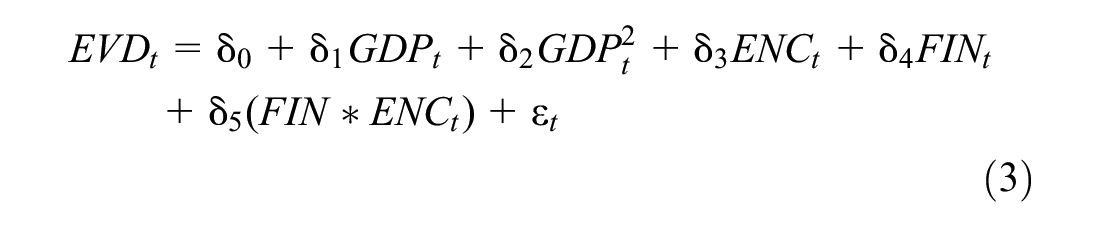

where
To evaluate the marginal effect of sectoral growth on environmental pollution at diverse levels of energy consumption, we take the partial derivatives of Equations (1–4) with respect to each sector as follows:


Essentially, a simultaneous rise in sectoral growth and energy consumption will intensify environmental pollution if the marginal effect is positive. Conversely, a negative marginal effect indicates that a simultaneous rise in sectoral growth and energy consumption will reduce environmental pollution. In addition, we compute the standard errors and t-statistic by utilizing the estimated coefficients and the covariance matrix at different levels of energy consumption to ascertain the statistical significance of the marginal effects. The marginal effect is significant if the t-statistic is large, while a small t-statistic suggests otherwise.
Estimation Technique
To estimate the coefficients, this research uses the Autoregressive Distributed lag (ARDL) bound test method that was recommended by Pesaran et al. (2001). The justification for choosing this approach is because it can reveal the short-run and long-run as well as convergence coefficients, which provide viable policy options. Secondly, it produces unbiased parameters and valid t-statistic, since it controls potential endogeneity, multicollinearity, and serial correlation (Adebayo et al., 2021; Ehigiamusoe, Lean & Somasundram, 2022). Thirdly, it can produce efficient estimations even in small sample size. Fourthly, the ARDL approach allows us to select different lag lengths for each variable. Finally, it can be used irrespective of the stationarity property of the variables since it can accommodate a model in which some variables are stationary at level [I(0)] and some variables are stationary at first differenced [I(1)]. The ARDL approach is the preferred method because our model has a combination of variables that are I(0) and I(1) processes. Therefore, we convert Equations 1 to 4 to ARDL form to enable us to test the null hypothesis (i.e., regressors have no long-run and short-run relationship with environmental pollution) against the alternative hypothesis.
To validate the ARDL models, this study conducts diverse diagnostic tests to ascertain the presence of serial correlation, heteroskedasticity, normality, omitted variable bias, and stability. At 5% level, an insignificant probability value of Breusch-Godfrey serial correlation LM test, Breusch-Pagan-Godfrey heteroskedasticity test, and Ramsey RESET test indicate that the models have no serial correlation, heteroskedasticity, and omitted variable bias, respectively. Similarly, the models are stable and appropriately specified if the CUSUM and CUSUM of squares fall within the critical limits at 5% significant level. Finally, the data are normally distributed if the probability value of the Jarque-Bera statistic is insignificant at 5% level.
Sources of Data
This study uses annual data of Malaysia covering the 1980 to 2020 period. The original intention was to use annual data of a longer period, but data availability dictated the estimation period. The data of most of the variables are not available for the period prior to 1980 and the period after 2020. Hence, the scope of the estimation period is limited by the availability of data. The data of ecological footprint were collected from the Global Footprint Network (2022) while the data of the remaining variables were gathered from the World Development Indicators (2022).
Results
Preliminary Investigation
According to the statistics shown in Table 1, wide discrepancies exist between the variables in the model. For example, the average ecological footprint, carbon emissions, GDP, and energy consumption are 3.358 global hectares per person, 5.073 metric ton per capita, USD6536, and 2005kg of oil equivalent per capita, respectively. The average agricultural output, industrial output, financial development, and service output are 12.8%, 41.56%, 107.8%, and 47.47%, respectively. The standard deviations of all the variables suggest that they are relatively spread around their averages. Moreover, the correlation matrix indicates that all the variables are positively related to ecological footprint and carbon emissions, except agricultural output which is negatively correlated with ecological footprint and carbon emissions. The trends of the variables are shown in Figures 1 to 5.
Descriptive Statistics and Correlations.
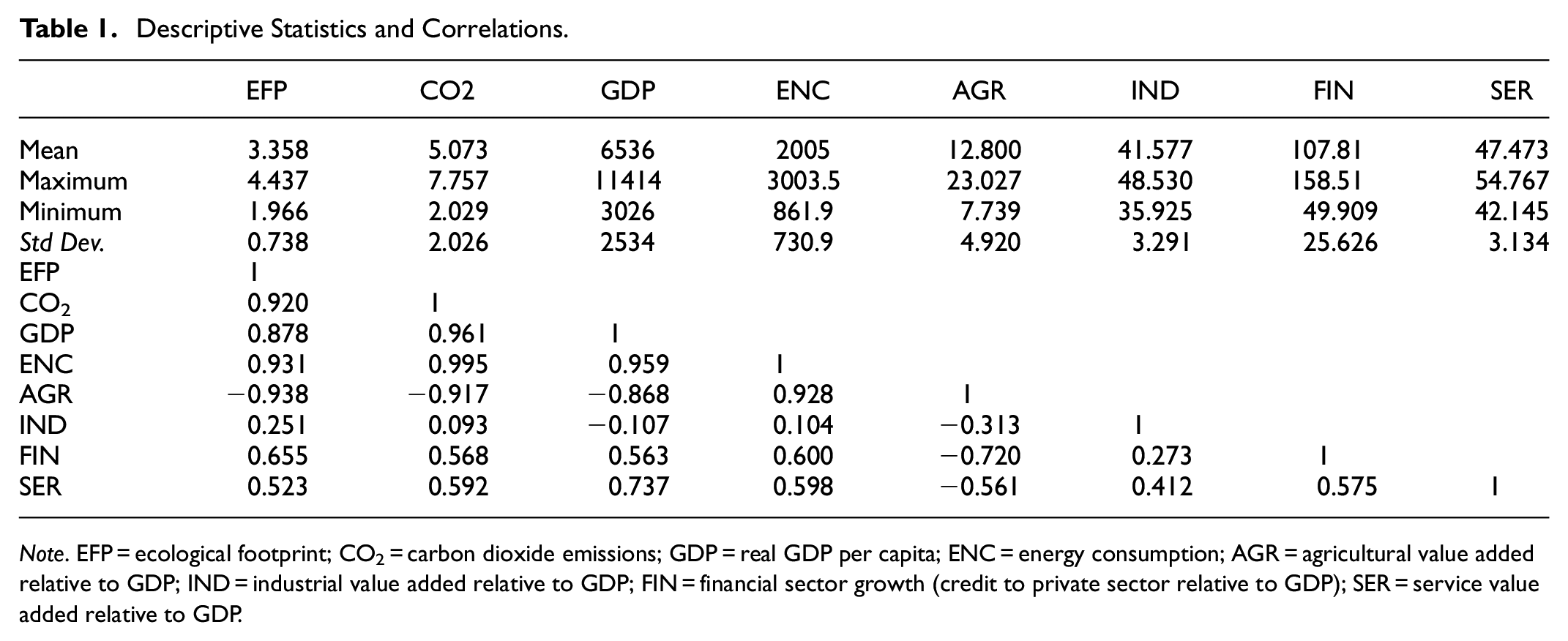
Note. EFP = ecological footprint; CO2 = carbon dioxide emissions; GDP = real GDP per capita; ENC = energy consumption; AGR = agricultural value added relative to GDP; IND = industrial value added relative to GDP; FIN = financial sector growth (credit to private sector relative to GDP); SER = service value added relative to GDP.
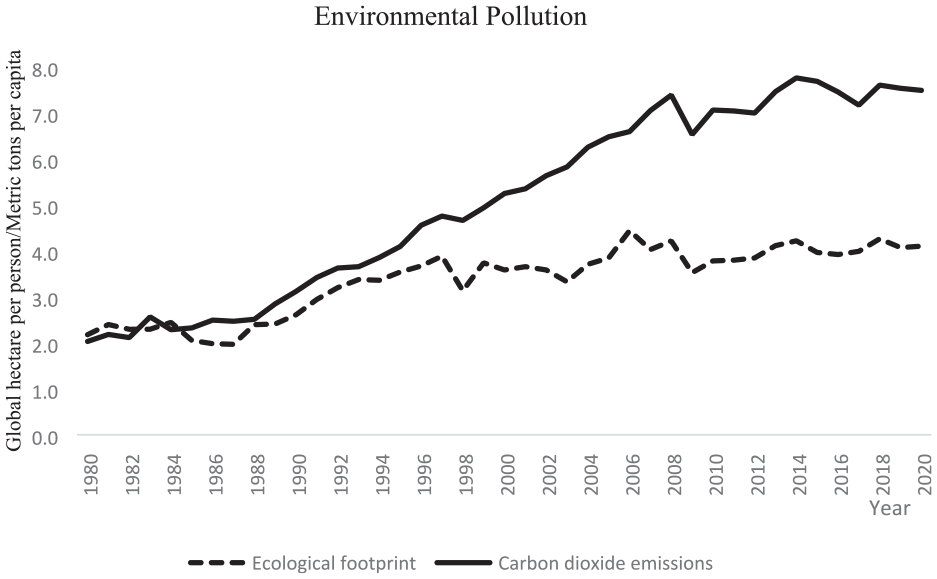
Trend of ecological footprint and carbon emissions in Malaysia.
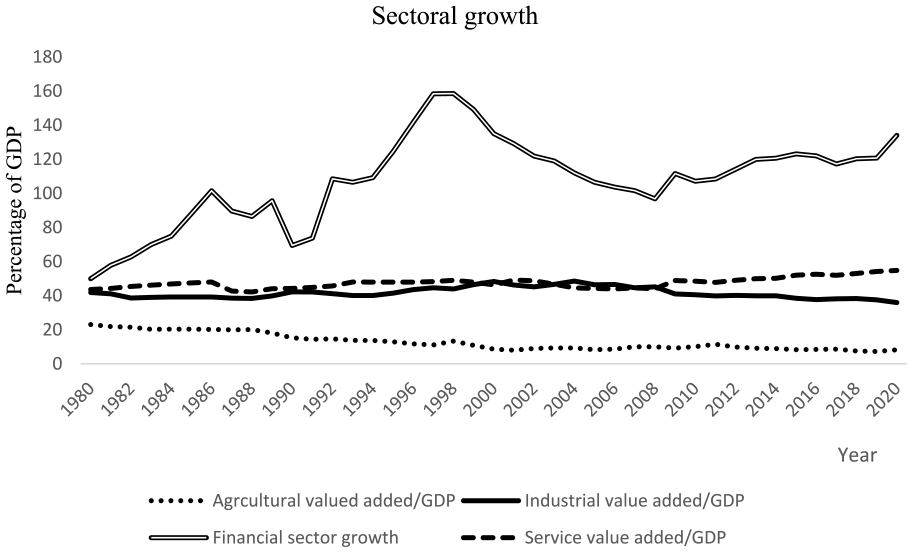
Trend of sectoral growth in Malaysia.
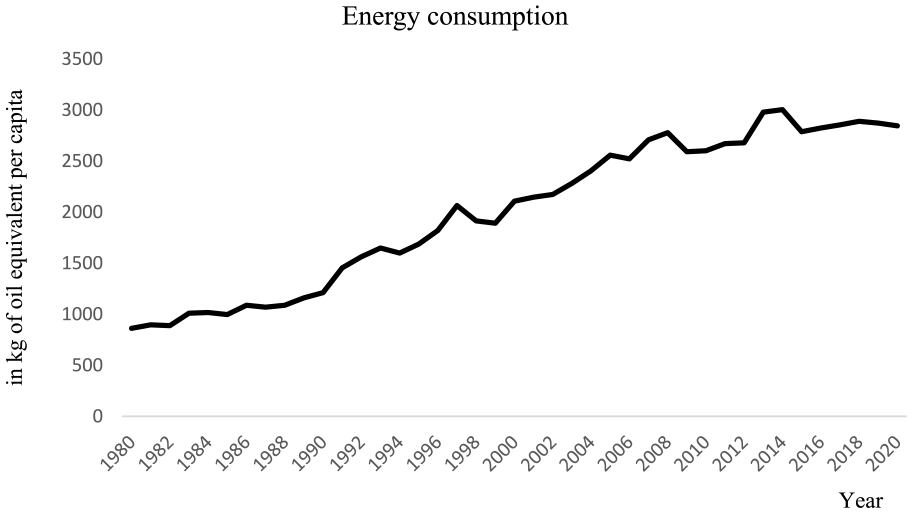
Trend of energy consumption in Malaysia.

Trend of renewable and non-renewable energy consumption in Malaysia.

Trend of Real GDP per capita in Malaysia.
Prior to estimation, the study conducts unit root test, and the results displayed in Table 2 indicate that financial development is integrated at order zero [1(0)] whereas the remaining variables are integrated at order one [1(1)] at 5% level. Given the presence of both 1(0) and 1(1) variables in the model, ARDL approach is suitable for the analysis.
Unit Root Tests.

and ***Indicate statistical significance at 1% and 5% levels, respectively, and a rejection of the null hypothesis of no unit root.
ARDL Estimations
The ARDL bound tests shown in the upper panel of Table 3 indicate that the variables have cointegration relationship in all the models since the respective computed F-statistics (i.e., 5.288, 6.209, 5.108, 7.159) are greater than the upper critical value (i.e., 4.150) at 1% level. The existence of cointegration between the variables makes it essential to ascertain the impacts of the independent variables on the dependent variable. The optimum lag lengths for all the models were chosen based on Akaike Information Criteria (AIC) subject to a maximum of 3 lags. The lag lengths selected by ARDL for each variable are displayed in Table 3. For instance, the lag lengths selected for Model 1 produce the ARDL (3,2,1,3,1,1) equation.
ARDL Estimations.

, **, and ***Indicate statistical significance at 1%, 5%, and 1% levels, respectively. The values in parenthesis are standard errors of coefficients while values in squared bracket are probability values of diagnostic tests. Dependent variable is ecological footprint.
In Model 1, the ARDL estimations show that agricultural output has a significantly positive coefficient whereas the coefficient of the interaction term is significantly negative. If the level of energy consumption is zero, 1% increase in agricultural output will raise ecological footprint by 5.681 percentage points in Malaysia. But the consumption of energy has no adverse moderating role on the impact of agricultural output on environmental pollution. To capture the overall impact of both agricultural output and energy consumption on environmental pollution, we compute the marginal effects of agricultural output on ecological footprint at different levels of energy consumption. The results shown in the lower panel of Table 3 reveal that the marginal effects computed at the maximum, mean, and minimum levels of energy consumption are −0.252, 0.104, and 0.673, respectively. Since the marginal effect declines as energy consumption rises, it implies that agricultural output does not aggravate environmental pollution through energy consumption in Malaysia.
However, the positive coefficient of agricultural output suggests that the agricultural sector has adverse direct impact on environmental pollution. This outcome agreed with some studies (Adedoyin et al., 2021; Aziz et al., 2020). The adverse environmental impact of agricultural output are probably the results of agricultural activities such as bush burning, emission of nitrous oxide when using fertilizer, emission of methane when producing rice and livestock, emission of carbon dioxide from forest clearing during land preparation, release of emissions during agricultural food packaging, processing, and transporting (Ehigiamusoe, Lean & Somasundram, 2022; Rafiq et al. 2016). Moreover, Aziz et al. (2020) contended that ecological footprints could be stretched by agricultural activities that generate emissions during soil practices, livestock management, irrigation as well as utilization of nitrogen-intensive fertilizer. Since Shah et al. (2023) argued that renewable energy consumption and technological innovation can boost agricultural productivity, it is necessary for the agricultural sector to embrace renewable energy consumption and technological innovations rather than fossil fuels with a view to abating environmental pollution.
In Model 2, the results indicate that industrial output has a significantly negative coefficient while the coefficient of the interaction term is significantly positive. This implies that energy consumption has adverse moderating role on the impact of industrial output on environmental pollution in Malaysia. In other words, energy consumption aggravates the environmental impact of industrial output. The negative coefficient of industrial output suggests that industrial output does not increase environmental pollution directly in Malaysia, but the adverse effect comes through energy consumption. To capture the overall impact of industrial output and energy consumption on the ecological footprint, it is necessary to compute the marginal effects of industrial output on ecological footprint at various levels of energy consumption. The marginal effects computed at the maximum, mean, and minimum levels of energy consumption are 1.392, −1.303, and −5.600, respectively. The increasing level of the marginal effect implies that industrial output has more adverse effect on ecological footprint at a higher level of energy consumption compared to a lower level of energy consumption.
For instance, when energy consumption was 1,820 in 1997, the marginal effect of industrial output on ecological footprint was −0.303 compared to 1.392 when energy consumption was 3,003 kg of oil equivalent per capita in 2014. The impact was greater when energy consumption was greater, vice versa. A simultaneous rise in industrial output and energy consumption will raise the level of ecological footprint in Malaysia. Some previous studies have argued that industrial output exacerbates environmental pollution via energy consumption (Anwar et al., 2020; Sohag et al., 2017; Zaman & Moemen, 2017) but the issue has not been empirically investigated. Besides, Jahanger et al. (2022) contended that technological innovations mitigate ecological footprint while Usman, Jahanger, et al. (2022) reported that renewable energy consumption and environmental-related technologies (ERT) can mitigate environmental pollution. Similarly, Usman and Radulescu (2022) noted that nuclear and renewable energy consumption can enhance environmental quality while non-renewable energy diminishes it. This study has extended the extant literature by providing empirical evidence to show that industrial output worsens environmental pollution through energy consumption in Malaysia.
In Model 3, the coefficient of financial development is significantly negative whereas the coefficient of the interaction term is significantly positive, suggesting that energy consumption worsens the environmental impact of financial development in Malaysia. The negative coefficient of financial development implies that the sector does not increase environmental pollution directly while the sign of interaction term’ coefficient suggests that the adverse effect comes through energy consumption. We conduct further analysis to unveil the overall impact of financial development and energy consumption on ecological footprint by computing the marginal effects of financial development on ecological footprint at diverse levels of energy consumption. We show that the marginal effects computed at the maximum, mean, and minimum levels of energy consumption levels are 0.299, −0.042, and −0.368, respectively. The increasing trend in the marginal effect implies that a simultaneous increase in financial development and energy consumption intensifies environmental pollution.
For instance, when energy consumption was 1,820 in 1997, the marginal effect of financial development on ecological footprint was −0.042 compared to 0.299 when energy consumption rose to 3,003 kg of oil equivalent per capita in 2014. The greater the quantity of energy consumed, the higher the adverse impact of financial development on ecological footprint, vice versa. The outcomes of this study are consistent with Acheampong (2019) in 46 African economies, Ehigiamusoe (2020a) ASEAN+China, and Ehigiamusoe, Lean, Babalola, and Poon (2022) in 31 African countries. Moreover, some studies have showed that financial development aggravates environmental pollution (Baloch et al., 2019; Petrovic & Lobanov, 2021; Xu et al., 2018) while other studies noted that financial development increases energy consumption (Chang, 2015; Ozturk & Acaravci, 2013). This study advances the empirical literature by showing that financial development worsens environmental pollution through energy consumption in Malaysia.
The estimations of Model 4 reveal that service output has a significantly positive coefficient while the interaction term’s coefficient is significantly negative. This implies that energy consumption has no harmful moderating role on the environmental impact of service output in Malaysia. However, the positive coefficient of service output indicates that service output activities (i.e., hotels, transport, restaurants) directly increase environmental pollution in Malaysia. To measure the overall effect of both service output and energy consumption on environmental pollution, we computed the marginal effects. The computed marginal effects of service output on environmental pollution at the maximum, mean, and minimum levels of energy consumption are −1.596, −0.815, and 0.432, respectively. The decreasing trend of the marginal effect shows that a simultaneous rise in both service output and energy consumption will not aggravate environmental pollution in Malaysia. Although Zaman and Moemen (2017) reported that service output mitigates environmental pollution in 23 high-income countries, some studies (e.g., Jebli & Kahia, 2020; Poumanyvong & Kaneko, 2010; Sohag et al., 2017) have argued that service output probably raises the level of environmental pollution due to the inability of the countries or firms to invest in clean and innovative technologies that utilizes renewable energy to enhance service activities such as hotels, transport, restaurants, etc. This study has provided empirical evidence to show that service output does not increase environmental pollution through energy consumption in Malaysia.
In all the models, the estimation results indicate that the EKC hypothesis is supported since the coefficient of GDP is significantly positive while the coefficient of GDP squared is significantly negative at 5% level. Hence, Malaysia can move toward carbon-neutral economy through economic expansion. This finding is consistent with Ehigiamusoe (2020a) for ASEAN+China and Ehigiamusoe (2020b) in 25 African nations. In all the models, the convergence coefficient is significantly negative, suggesting the speed at which the system adjusts from short-term deviation to long-term equilibrium. For example, in Model 1, the estimated speed of convergence to equilibrium is around 76.7% per year. Hence, it will take about 1.3 years for the economy to converge from short-run deviation to long-run equilibrium. Similarly, in Model 2, Model 3, and Model 4, it will take around 1.5 years, 1.4 years, and 1.3 years, respectively for the economy to converge from short-run deviation to long-run equilibrium.
Robustness Checks
Issue of Diagnostic Tests
This study conducts various diagnostic tests to ascertain the robustness of the estimations, and the results are displayed in the lower panel of Table 3. Firstly, the Breusch-Godfrey serial correlation LM test suggest that all models have no serial correlation. Secondly, the Breusch-Pagan-Godfrey heteroskedasticity test suggests that all the models have no heteroskedasticity. Third, the Jarque-Bera statistic shows that all the variables are distributed normally. Fourth, the Ramsey RESET test reveals that the functional forms of the models are appropriate and there is no omitted variable bias. Lastly, Figure 6 shows that the line graphs of the CUSUM and CUSUM of squares fall within the critical limits at 5% significant level, indicating that the models are stable and appropriately specified.
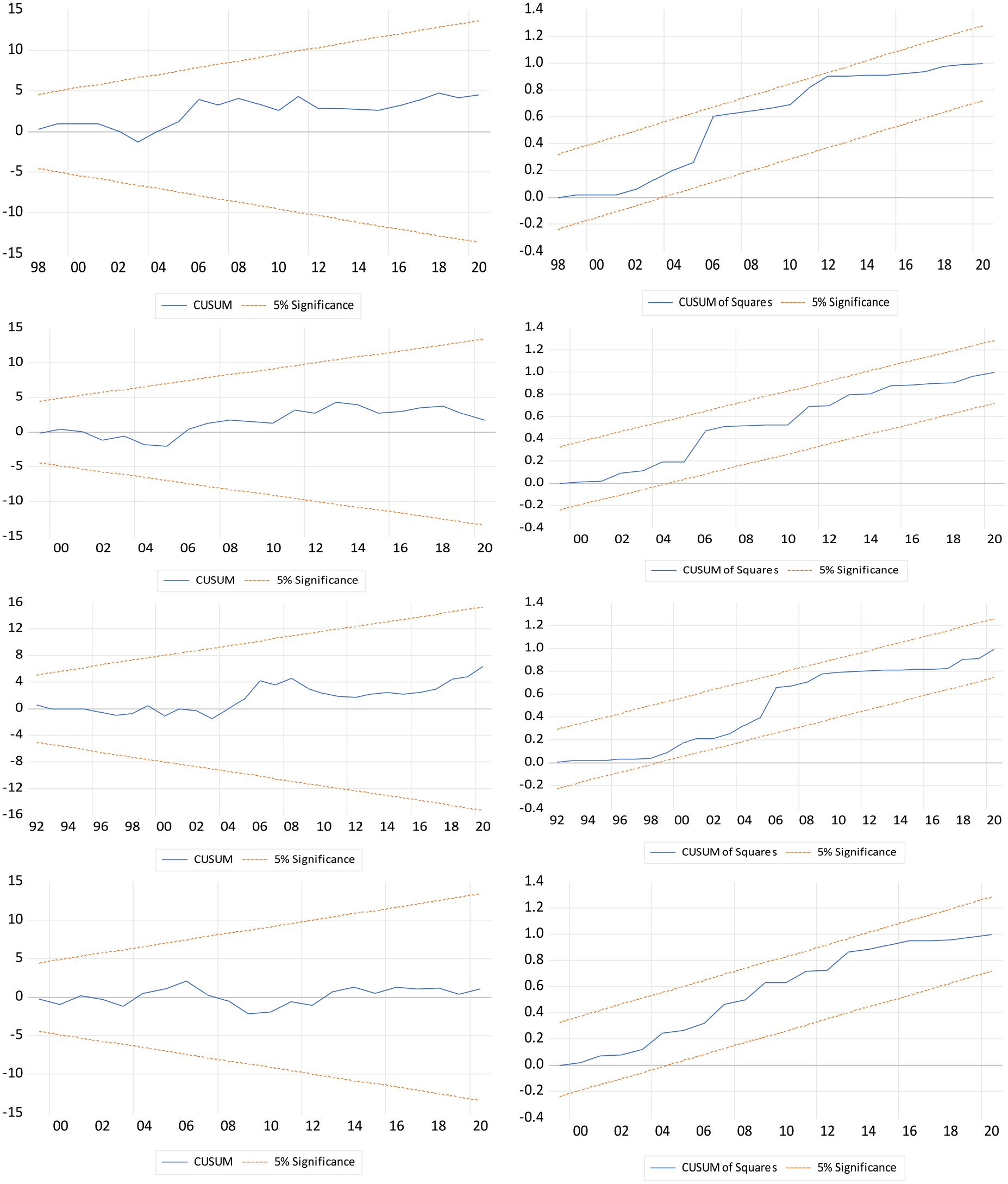
Stability tests.
Issue of Structural Breaks
This study uses the Bai and Perron (2003) test to ascertain the presence of structural breaks in models. The test detected a significant structural break in 1998, 1991, 1999, and 1993 for Models 1, 2, 3, and 4 correspondingly. Following Ehigiamusoe, Lean & Somasundram (2022) and Hashmi et al. (2020), this study controls for the break in the analysis by adding to the model a dummy variable (which has a value of 1 effective the break year and 0 otherwise) and redo the analysis. The empirical results displayed in Table 3 are like the findings presented in Table 4 in terms of the coefficients’ signs and significance (albeit the sizes differ slightly). Summarily, the coefficients of the interaction terms (between agricultural output and energy consumption as well as between service output and energy consumption) are negative. Conversely, the coefficients of the interaction terms (between industrial output and energy consumption as well as between financial development and energy consumption) are positive. Nevertheless, the coefficient of the structural break is statistically insignificant, suggesting that structural break has no influence on environmental pollution in Malaysia.
Robustness Checks of ARDL Estimations Accounting for Structural Breaks.

, ** and ***Indicate statistical significance at 1%, 5% and 1% levels, respectively. The values in parenthesis are standard errors of coefficients while values in squared bracket are probability values of diagnostic tests. DUM = Dummy to account for structural break. Dependent variable is ecological footprint.
Alternative Proxy of Environmental Pollution
For further robustness checks of the estimations, this study employs alternative proxy of environmental pollution namely carbon dioxide emissions. The results shown in Table 5 are like the outcomes displayed in Table 3 regarding the signs and significance of the coefficients (albeit the sizes slightly vary).
ARDL Estimations Using Alternative Proxy of Environmental Pollution (Carbon Emissions).
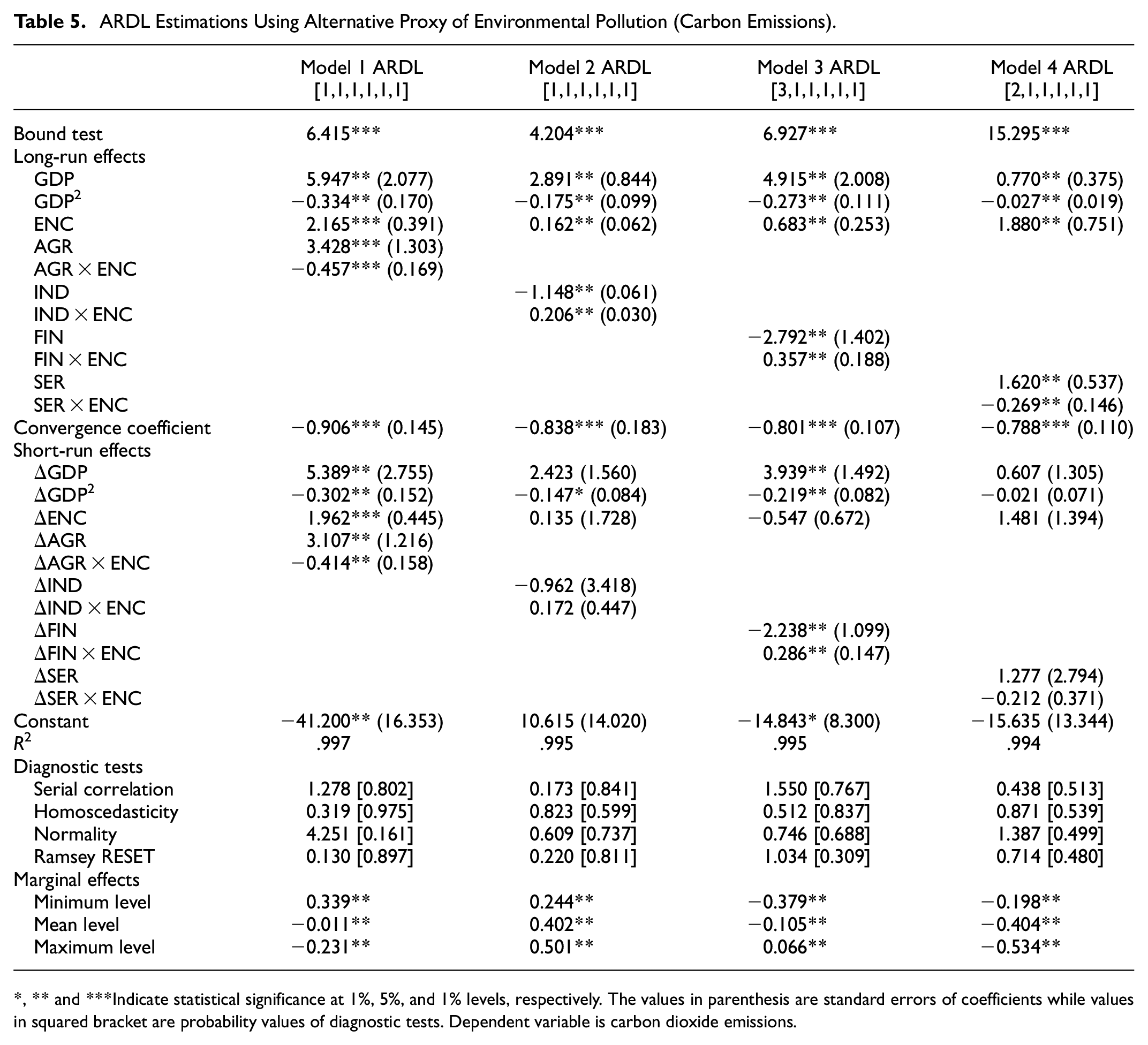
, ** and ***Indicate statistical significance at 1%, 5%, and 1% levels, respectively. The values in parenthesis are standard errors of coefficients while values in squared bracket are probability values of diagnostic tests. Dependent variable is carbon dioxide emissions.
Conclusion and Policy Implications
This study confirms the EKC hypothesis in Malaysia, suggesting that the country can grow-out of environmental pollution. It also reveals that energy consumption has a detrimental role on the environmental impacts of the industrial and financial sectors. Though energy consumption does not aggravate the environmental impacts of the agricultural and service sectors, there are evidence that the agricultural and service sectors have adverse direct impacts on environmental pollution. Further analysis indicates that the marginal effects of the industrial and financial sectors on environmental pollution increase as energy consumption rises. This implies that a simultaneous rise in both industrial output and energy consumption or financial development and energy consumption exacerbates environmental pollution in Malaysia.
This study has some policy implications. First, since Malaysia can grow-out of environmental pollution as hypothesized by the EKC, the country should employ the appropriate fiscal and monetary policies to promote economic growth in her quest to ensure economic and environmental sustainability. The country should also prioritize investment into the essential drivers of economic growth (i.e., physical and human capital, infrastructural development, technological advancement, etc.) in her development agenda.
Second, since energy consumption aggravates the environmental impacts of the industrial and financial sectors in Malaysia, the country should vigorously pursue policies and programs that can mitigate the adverse environmental impacts of sectoral growth (industrial and financial sectors) and energy consumption in her development agenda. Since Malaysia is an emerging country that cannot sacrifice sectoral growth for carbon-neutral economy, it is necessary to critically evaluate the role of the interplay between sectoral growth and energy consumption with a view to attaining a carbon-neutral economy. It is fundamental for stakeholders in the industrial and financial sectors to embrace clean or renewable energy technologies that are environmental-friendly rather than fossil fuels consumption that aggravates environmental pollution. To achieve carbon-neutral economy, the sectors should substantially increase the proportion of renewable energy in the total energy mix. The sectors should adopt energy-saving or energy-efficient techniques of production rather than pollution-intensive methods to attain carbon-neutral economy. The country should strengthen the capacity of the financial sector to support the firms to embrace advanced or cleaner technologies that are environmental-friendly. A developed financial sector can strengthen the ability of firms to embrace advanced or cleaner technologies that are environmental-friendly, encourage technological innovations as well as enhance the financing of environmental projects. It can also provide avenue for carbon trading to give inducements for decreasing greenhouse gases. Besides, the country should make significant investment in research and development into the production of renewable energy. The country should also provide incentives to the sectors that utilize renewable energy (e.g., tax holiday), but impose carbon taxes on sectors that generate carbon footprint and emissions in her quest to attain carbon-neutral economy.
Third, to minimize the direct adverse impacts of the agricultural and service sectors on environmental pollution in Malaysia, it may be necessary for stakeholders to reduce the carbon footprint and emissions generated during sectoral activities or practices (e.g., bush burning, fertilizer application, rice production, irrigation, livestock management, clearing forests for agricultural land, food processing, food packaging, transportation, hotels management, and restaurants). It may be essential to provide environmental education and awareness to the various stakeholders in the sectors on the danger of environmental pollution to human lives, ecosystem, global warming, and climate change. The country can attain carbon-neutrality through strict implementation of the energy and environmental policies that protect the environment.
This study has unveiled the moderating role of energy consumption on the environmental impacts of the industrial, agricultural, financial, and service sectors in Malaysia using the ARDL techniques. However, this study is unable to cover other economic and social sectors or sub-sectors such as tourism, education, health, transportation, etc. Besides, the asymmetric effects of energy consumption and sectoral growth on environmental pollution were not analyzed in this study. Therefore, it is recommended for future studies to investigate the issue in other economic and social sectors or sub-sectors (e.g., tourism, education, health, transportation) for more insights. Future studies should also employ estimation techniques (e.g., Nonlinear Autoregressive Distributed Lag technique) that can show the asymmetric effects of energy consumption and sectoral growth on environmental pollution for greater insights.
Footnotes
Declaration of Conflicting Interests
The author(s) declared no potential conflicts of interest with respect to the research, authorship, and/or publication of this article.
Funding
The author(s) disclosed receipt of the following financial support for the research, authorship, and/or publication of this article: This study has been conducted under project FRGS/1/2020/SS0/TAYLOR/03/1 financed by the Ministry of Higher Education of Malaysia.
