




Abstract
Poor sleep negatively influences college students’ health and school performance. Sleep and the behaviors that take place during the day are interrelated; as such, the aim of this work was to investigate the psycho-social-environmental factors in college life that may affect students’ sleep, using a mixed-method approach, with a view to informing the design of research-informed sleep-promotion initiatives. Six focus group interviews were conducted with 25 college students (18–36 years old) from different areas of study and degree levels. Participants kept sleep diaries for a week prior to their interview and filled in a sleep health questionnaire. Students exhibited a fair level of sleep health, scoring their lowest mean values in sleep irregularity. Sleep diaries revealed a positive relationship between coffee drinking and sleep quality and a negative association between physical activity and sleep quality. Three main themes emerged through a thematic analysis: the importance of sleep, how students sleep, and how students can sleep better. Students have reported postponing their sleep in favor of other activities, which results in irregular bedtimes. Commuting, more autonomous study, long class hours, and the allure of socializing were obstacles to sleep. Living with peers, without parental supervision, may even be more detrimental to a good sleep. Students evidenced having considerable knowledge about sleep and mentioned several strategies to deal with thoughts and emotions before bedtime. Nevertheless, students feel that the promotion of sleep should be a social endeavor, calling for a paradigm shift in the value that the college setting attributes to sleep.
Introduction
Sleep deprivation is prevalent among college students. According to a North American inquiry, only 8.2% of students usually get enough sleep every day to feel rested and, as a result, 33% of students report feeling tired, or sleepy during the day (American College Health Association, 2022). Only half the students questioned affirmed they sleep 7 hr or more during weeknights, with this number only going up on weekends (77.2%). Sleep-deprived students are also a reality in Portugal. A recent survey found out that only 42% of students can keep a regular sleep schedule, with most students (68%) usually going to bed after 11 pm, and classes in most campuses starting at 8 am (Bento et al., 2021). This results in less sleep during the weekdays, as these students have been shown to sleep on average 1.14 hr more on weekends.
College lifestyles are very busy. In comparison to that of high-school, the college lifestyle is more vibrant, more autonomous, and less structured, and this often leads to the delay of sleep (Foulkes et al., 2019). The lives of college students who are for the first time living by themselves or sharing a room in a dormitory are filled with environmental challenges (noise, light, social pressures) that impact sleep negatively (Franzoi et al., 2023). Frequently postponing sleep in favor of other activities can lead to the overconsumption of energy drinks, coffee, tea, alcohol, smoking, and usage of illegal drugs. Students are subjected to tight schedules and extra individual study time, and the fact that some assignments are due in the early morning is a potential encouragement to pull all-nighters (Hershner & O’Brien, 2018). Additional risk factors such as living alone, having to balance work and study, or having to take care of a family contribute to the lack of sleep among this population (Alcântara da Silva et al., 2015). As such, it is the aim of the present study to understand college lifestyle dynamics and their relationship with sleep, from the students’ own point of view.
The interaction of internal and external influencing factors complicates the study of sleep, with the upshot that sleep must be observed individually, but in its distinctive occurring contexts. As such, social cognition models, already widely used in explaining health behavior in various domains, have started to gain visibility in sleep research. While the Theory of Planned Behavior is the most popular theory used to explain and predict sleep hygiene behaviors (Mead & Irish, 2020), it unrealistically posits that intention equals behavior, which is rarely the case (Sheeran & Webb, 2016). The Health Action Process Approach proposes to bridge this intention-behavior gap (Schwarzer, 2008), by offering a more detailed explanation of how sleep hygiene behaviors might occur. Another model that provides a useful guide to design interventions and understand health behaviors is the COM-B System (Michie et al., 2011), which suggests that a health behavior is influenced by the individual’s capability to enact it (e.g., having knowledge and skills), the opportunities available to them (barriers or social support), and their motivation (habits, intentions, emotions).
Research has shown that psychoeducational sleep programs are considered successful approaches, as teaching students about sleep-friendly behaviors helps them adjust their sleep habits to their environmental demands (Buboltz et al., 2001). However, the college population is very diverse, and tailoring interventions to students’ specific needs may be determinant in improving their efficacy (Dietrich et al., 2016). Involving students in the construction of health curricula is important to ensure that they will be engaged in learning and developing healthy behaviors; this can be done through formative qualitative research prior to the intervention (Brewer et al., 2021).
Qualitative studies so far have examined people’s conceptions of sleep (Goelema et al., 2018), their conceptions of sleep quality (Harvey et al., 2008), adolescents’ perceptions of healthy sleep (Orzech, 2013), first year university students’ sleep experiences while living on campus residences (Foulkes et al., 2019), and students’ perceptions of the relationship between alcohol and sleep (Fucito et al., 2015). Recently, an Australian qualitative study examined young adults’ perceptions of facilitators and barriers to sleep (Paterson et al., 2019), finding that time demands, technology use, difficulty switching off, and unpredictable habits were among the biggest obstacles to sleep in this population. However, this study analyzed young adults in general, not specifically college students, and did not use any measure of sleep to understand if this was a sample of good or bad sleepers.
This study aimed to achieve deeper understanding of how students conceptualize sleep and its relationship with college lifestyles in the specific context of Portuguese higher education, using quantitative and qualitative methods, with a view to informing the design of an intervention following the logic of the precede-proceed models on health intervention (Green & Kreuter, 1999). We consider this model suitable for the educational setting because it is population-centered and it enables democratic and participatory approaches to health promotion (Porter, 2016). We posed the following research questions: (1) What knowledge do students have about sleep? (2) Which factors impact sleep negatively and positively? (3) Which aspects may contribute to an effective change toward sleep friendly behaviors? (4) What do students think about a prospective sleep promotion initiative in the Portuguese university setting?
Method
Participants
This study included 25 college students from Portuguese universities, age range 18 to 36 (Mage = 23.88; SD = 4.53), 72% women. Roughly half of the participants were bachelor’s students (52%) from a variety of areas of study. Most (60%) were students from social, behavioral, or life sciences programs. Only three students were working-students, and 11 were displaced students who lived with relatives or shared an apartment with other students (Table 1).
Participants’ Sociodemographic and Sleep Characteristics (%; N = 25).

Procedures
Six mixed-gender focus groups were conducted, containing between three and six participants per group. Three interviews took place at the researchers’ faculty facilities; the other three were conducted via Zoom, due to the difficulty for some participants to attend in-person interviews for geographic reasons. Before data collection, a pre-test of the interview script was conducted with a group of five volunteers. Some questions were clarified following the feedback from the pre-test participants. The length of the focus group interviews ranged from 60 to approximately 90 min, and they were all conducted between April and October 2022, with a break in data collection during the summer. This methodology was chosen because the intent was to collect knowledge on the matter, without any pressure to reach consensus, through group discussion of the different aspects that relate to the phenomenon of sleep in the context of the university (Krueger & Casey, 2015).
Participants were recruited via website and direct recruitment in classrooms. A website was built to help disseminate the study, also to be used to share the results with the participants at the end. The information on the website referred to generic details about the study, stating that participants were needed for an investigation regarding perceptions on the sleep health of college students. If interested, they were instructed to send an email to the first author and complete an online screening form with demographic data. All forms were presented on an online platform (Qualtrics). Students were able to participate in the focus groups if they fulfilled all the inclusion criteria: being a college student in a Portuguese university, being at least 18 years old, having no self-reported diagnosis of a sleep disorder and/or use of sleep medication, and having no self-reported chronic psychological or physical illness that might interfere with sleep.
All participants were provided with and signed a written informed consent before engaging in the study. At the end of the focus group interview participants received a gift card of 5€. Some participants were recruited in a course, and those were also given course credits for participating in this investigation. This study was previously approved by the Ethics Committee of the researchers’ faculty.
The week before their focus group interview, each participant completed a sleep health questionnaire, and they also received an automatic email every day with a link to fill in a sleep diary. Participants were reminded they should fill in the diary during the first hour of waking up, to minimize memory lapses. Focus groups were moderated by the first author, who used the questions from the script as a guide, but also used additional probes, and allowed participants to freely elaborate their ideas to keep the discourse fluid and interesting. The moderator explained that there were no right or wrong answers, as the goal was to ascertain students’ ideas on sleep. Participants were asked to only give their socially held opinions, and not accounts of their own experiences. Their opinions could be substantiated by their own personal experiences if they felt comfortable doing so. Otherwise, they could just share what they perceived to be the experience of most college students. The moderator encouraged participation but never pressured for it, and she respected silent times, allowing participants to have time to think, and further elaborate, if they wanted to. The moderator never gave her own opinions on the subject on discussion. At the end, participants were invited to make further comments or ask questions they felt necessary.
Materials
All materials were presented in Portuguese and have been translated for this publication.
Sleep Health (RU-SATED)
Eligible participants were given the RU-SATED sleep health scale (Buysse, 2014; Portuguese version Brandolim Becker et al., 2018) which evaluates six dimensions of good sleep health that have been consistently associated with various health outcomes: (i) regularity, (ii) subjective satisfaction, (iii) alertness during waking hours, (iv) appropriate timing, (v) high efficiency, and (vi) adequate duration. Each item/subscale ranges from 0 (never) to 5 (always). The total score ranges from 0 (poor sleep health) to 30 (good sleep health). A higher score (total and subscales) is indicative of healthier sleep. The Portuguese version of this questionnaire has exhibited a good degree of reliability (Cronbach’s α = .85; Brandolim Becker et al., 2018).
Sleep Quality and Waking Behaviors (Diaries)
Participants filled in a daily sleep and waking behaviors diary for a week, which included self-reported measures of sleep characteristics (e.g., time of going to bed, number of awakenings during the night), as well as behaviors that took place during the day (e.g., caffeine consumption, practice of physical exercise, type of tasks performed during the day—study, work, hanging out with friends, etc.; Supplemental Table S2). These diaries provided information about various sleep perceptions and served the intent of giving participants insight into their own experiences, raising their awareness of their sleep patterns, habits, and influences, in order to facilitate the arising of relevant material during the interview.
Interview Script
The interview script was based on two theoretical models: the COM-B system (Michie et al., 2011) and the Health Action Process Approach (Schwarzer, 2008). Our goal was to account for the diverse aspects that help characterize sleep.
There were different blocks of questions concerning the various aspects to be addressed by the interview (Supplemental Table S1). The first block was an introduction to the theme and intended first to grasp the students’ knowledge, before moving on to socially constructed beliefs and socially conveyed messages on sleep. Then sleep in the university context was explored, as was the impact of the allure of socialization, as well as the interference of thoughts, and emotions on sleep. In the second block of the interview, we sought to understand how students perceive some of the behavioral changes that may account for better sleep, including detailed plans on how to make changes that promote sleep. Finally, a last block was included to get some ideas on what students think is the best way to promote sleep at the university.
Data Analysis
Quantitative
One author (MSR) computed descriptive statistics for the quantitative variables under study, followed by exploratory data analysis of perceived sleep quality using graphical representations such as boxplots to understand data distribution across repeated measures and sleep correlates. The analysis was performed using R (v. 4.3.0; 2023; R Core, 2023) and the packages ggplot2 (Wickham, 2016) and jtools (Long, 2022) designed for that environment.
Qualitative
Interviews were conducted in Portuguese, audio recorded and transcribed verbatim. Thematic analysis was based on a constructivist paradigm, examining how students’ experiences with sleep in college are the result of a set of discourses which operate within society (as discussed in Braun & Clarke, 2006). Coding followed an inductive process, with codes being constructed after reading and re-reading interviews several times and extracting meaning from what had been said by the participants. A theme was considered as such if it seemed to capture something important about the data which contributed to answer the research questions and narrated a coherent story along with the other themes and subthemes. The process was not straightforward, as we went back and forth until arriving at a satisfactory thematic map (i.e., a map that made sense to all authors according to the data). Although the themes generated were not theoretically pre-determined, this process was also informed by the authors’ theoretical and empirical perspective on what sleep in the university’s context often means. Three authors were engaged in the process of coding, at different times, and so themes were developed from multiple discussions between them. First, one researcher (AP) familiarized herself with the data from two interviews, identified and selected relevant excerpts, and attributed them initial codes that captured participants’ reflections on the different subjects addressed by the script. Then, a second author (MJA) read all these excerpts and judged if they were illustrative of the given codes. If not, this author provided new suggestions for coding. This author also re-read the interviews in whole and suggested some other excerpts to be highlighted and coded as well. Then both authors met and discussed the disagreements; since there remained some doubts, the entire process was done again by a third author (CP). After another round of code attribution in two different interviews, both authors (AP and CP) met to clarify any doubts, and a good level of agreement was achieved (Cohen’s κ = .78). Coding involved reading, making notes, and drawing schemes until reaching a first version of the thematic map, which we felt told the story of our data in a consistent manner. All authors reviewed the thematic map multiple times before reaching a final version.
The COREQ checklist (Tong et al., 2007) was used to report the main features of this study (Supplemental Table S3).
Results
Exploratory Analysis of Perceived Sleep Quality, Sleep Hygiene, and Demographic Variables
On average, the sample exhibited a fairly good level of sleep health (Mtotalscore = 19.04, SD = 4.70), ranging from 9 to 27. Approximately a fifth (16%) of participants showed a total score below 15. Most students reported a sleep health score between 16 and 25.
By observing the sleep health subscales (Table 2), sleep regularity had the lowest mean value (M = 2.60, SD = 1.11), and sleep timing (M = 4.12, SD = 0.78) and daytime alertness (M = 3.88, SD = 1.09) showed the highest mean values.
Sleep Health Measures.

Through the analysis of the sleep diaries, it was possible to observe that there was a relative stability in the perception of sleep quality across time (Figure 1). Coffee drinking appeared to be related to better perceived sleep quality (Figure 2(A1)), but alcohol consumption seemed to be inversely related to perceived sleep quality (Figure 2(B1)). Physical activity did not seem to be associated to better sleep quality (Figure 3).

Relationship between time and sleep quality.

Relationship between coffee and alcohol intake and sleep quality (A1, A2, B1, B2).
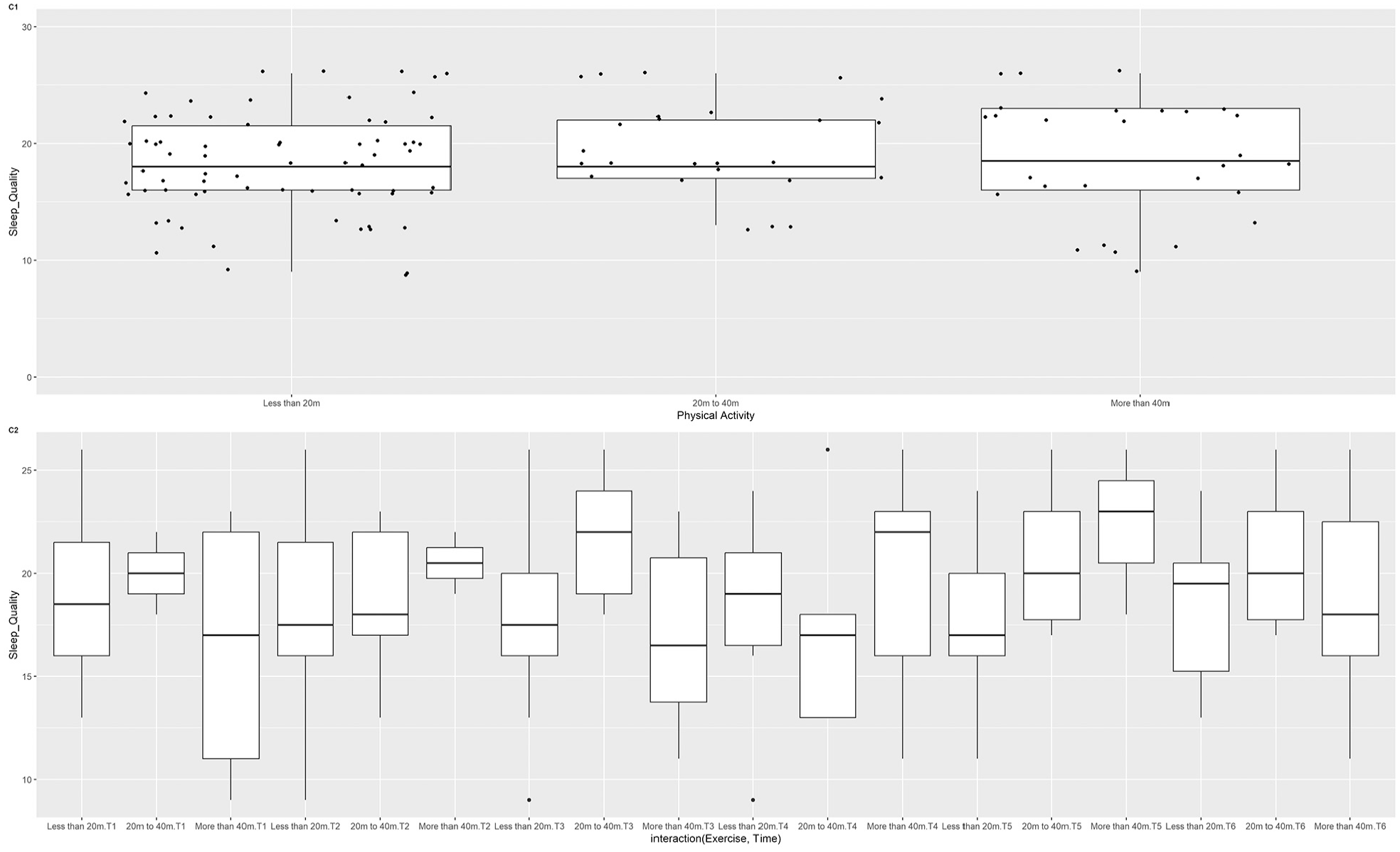
Relationship between physical activity and sleep quality (C1, C2).
In this sample, men seem to achieve better sleep quality than women (Figure 4(E1)). Women also showed greater variability (outliers) than men (Figure 4(E2)). There appeared to be an inverse relationship between sleep quality and age in this group of students (Figure 4(D1)).

Relationship between age, gender, and sleep quality (D1, D2, E1, E2).
Qualitative Results
The thematic analysis resulted in three themes, with two of these subdivided into several subthemes (Figure 5): The Importance of Sleep, How Students Sleep (The University Context, Independence and Socialization, Balancing Work and Study, Psychological Factors that Influence Sleep, and Sleep-Friendly Behaviors) and How Students can Sleep Better (Sleep Knowledge, Internal Factors that Promote Sleep, The University’s Role in Promoting Sleep).

Themes and subthemes.
The Importance of Sleep relates to the value that students attribute to sleep and how they behave according to that value. How Students Sleep concerns all the information related to their actual sleep, divided into the subthemes that address: the specificities of the academic environment and how they influence sleep (The University Context), the independence and responsibility that comes with adulthood and how it relates to their sleep (Independence and Socialization), the multiple roles performed by students and the impact these have on sleep (Balancing Work and Study), how individual differences such as chronotypes and different sleep needs, thoughts, and emotions impact sleep (Psychological Factors that Influence Sleep), and the variety of behaviors performed by students that actually promote sleep (Sleep Friendly Behaviors). Finally, How Students can Sleep Better gathers all the information important for the promotion of sleep at the university, organized through the following subthemes that concern: what students already know about sleep (Sleep Knowledge), which individual aspects may be targeted (and how) for effective sleep promotion (Internal Factors that Promote Sleep), and what can be done at the university level to promote sleep (The University’s Role in Promoting Sleep).
The excerpts used to illustrate the ideas that arose in the focus groups belong to different participants, identified by the number of the focus group they attended (e.g., FG1) followed by their participant number (e.g., P1).
The Importance of Sleep
Sleep is something to which “(…) students don’t attribute a great value. Between school assignments and late-night parties, there’s little time to sleep” (FG2_P1). There is a widespread idea that “When we get to college, we can’t sleep much because we must study. And the academic lifestyle is to pull all-nighters studying, especially in the exams phase, and in quieter times, to go out at night with friends. When I came to the university, it meant more freedom, and that means also to go to bed when I choose to” (FG3_P4). The bottom line seems to be that academic activities and social gatherings take up all the time students have.
“(…) younger people reduce their sleep hours to do anything, even to watch a TV show!” (FG4_P2) “Youth do not care about sleep. (…) Why sleep when we can do other things?” (FG3_P6)
Nonetheless, there also seems to be another side to this issue. One student affirmed that sleep may be seen as a priority for some, as “Sometimes we are working together on zoom and then it’s almost 8 p.m. and they are like, ‘let’s continue tomorrow because it’s dinner time and then we’ll have to sleep’. And I’m like, ‘but it’s too early…’ But that’s me, I work best at night when everything’s quiet” (FG1_P2). Another student shared the same opinion about valuing sleep: “This year, I value my sleep a lot and I try to get as much sleep as I can every day” (FG2_P3).
As such, it appears that the role sleep plays in the lives of these students is not always a central one; but there may be some exceptions concerning students’ individual differences (i.e., chronotypes or preferences in study methods).
How Students Sleep
Students have often reported that their sleep is strongly influenced by their experiences at the university. Living in a new environment brings novelty to their lives, such as the demands of new routines, the need to face new challenges as they turn to adulthood, and the development of new competences as they go along their academic path. Transitioning from high school to college was related as an impactful experience, as going to college often means students must take public transportation for the first time every day, and it means students are required to study more autonomously while getting involved in new social dynamics. But, according to participants, it can be even more demanding if students need to move to another city, live alone for the first time and take care of themselves in every way, or even balance work and study.
Time management skills were reported as being important to try to optimize this balance between academic/social demands and personal needs, but self-knowledge has been said to be the key to improve sleep, as different people have different needs, and those needs may vary daily in accordance with their routines. Dealing with thoughts and emotions before sleep was often referred as an issue that impacts their sleep negatively, and so students shared their ways to cope with them.
It seems that gaining awareness of all this can help students make healthier choices during daytime (and before bed), as they have recognized that what happens when people are awake has an impact on sleep, and students commented on how they developed different behavioral strategies to help setting up a sleep-friendly mood and environment.
The University Context
The specific environment of the university is not very sleep friendly. Going to university is the beginning of a new life, a new reality, and as such “At first, we come to university and we want to experience everything at the same time, we want to have good grades and make friends and live! But at some point, we must learn to manage everything better” (FG2_P1). This duality was evident in participants’ remarks. On one hand, some of them focused more on the idea of the university’s own microclimate and that the extremely rich and busy lives of college students are not compatible with early bedtimes and early rises in the morning. Sleep often goes to the bottom of their to-do list.
“In the academic world, we never turn off. When we go home, we have assignments to do… we don’t just go to classes and that’s it. We must study often, or we’ll fall behind… Good grades don’t just happen because I attend classes.” (FG1_P2) “There were times when I didn’t sleep for two days. I went to classes, I got home and studied, and then went to classes again.” (FG3_P3) “People have very packed schedules, and the hours they can steal’ to do something they steal’ from sleep. They won’t take hours from their social lives, of course.” (FG4_P2)
On the other hand, participants spoke about a different approach according to which they try to set some boundaries to the impact of the university’s context to protect their sleep: “I personally never pulled an all-nighter to finish an assignment. I must sleep first.” (FG4_P2) “Nowadays when I have an assignment that is due the next day, I go to bed at 11 p.m. tops, and then set my alarm to 5 a.m. or 6 a.m. and finish working then.” (FG3_P4)
Commuting to university is also seen as something that impacts sleep. The university is frequently located in the city but, as one student explained, the reality of high rents results in a situation in which “(…) most of my colleagues live in suburban areas and spend a lot of time commuting (…) that affects everything: get up earlier, come to the university, get home later and tired” (FG1_P2). Another student agreed and said that “I too live far from here and if I have classes at 8 a.m., I must get up at 5.30 a.m., and I don’t think they [the university’s management] think about this when they set the timetables” (FG2_P2). For most students, when they begin studying at the university, it is the first time they must commute to the city, which results in more time spent on public transport, contributing to shorter sleep duration: “When I was in high school, I lived close to my school. Now I must go to the train station, take the train, then take the subway… It’s a lot!” (FG2_P3).
Independence and Socialization
The independence that is gained by coming to college is something students said they appreciate, especially those that come from different parts of the country and are now living by themselves for the first time. However, this independence comes at a cost, namely in terms of personal organization and domestic chores, as explained by several participants.
“(…) once I came here, I started to be fully independent and so I only went to bed when I wanted to… Sometimes I only go to bed at 4 a.m. and it is not because I’m busy studying. It’s just because I can.” (FG3_P4) “I live with my parents but people who live alone accumulate the burden of cooking, doing laundry, and keeping a house tidy and clean on top of the academic work.” (FG4_P4) “Yesterday I went to bed at 1 a.m. because I had so much to do at home!” (FG4_P5)
Many students share a house or a room with other students, and this environment also has some peculiarities that conflict with sleep, namely the different existing dynamics and schedules co-occurring in the same space, as well as the proximity and easy access to social activities that can be far more appealing than sleep.
“Living in students’ residences equals confusion. There’s always someone entering or leaving, making noises, turning on and off the lights…” (FG3_P3) “If people have different schedules in the same house, that upsets people’s bedtimes…” (FG1_P2) “One thing that affects my sleep hours the most is, imagine I’m already ready to sleep, but my friends send me a text saying they are going to the Café that is at the corner of my street, so of course I get dressed and go meet them.” (FG6_P3)
Concerning roommates’ sleep habits, it seems that there may be a contagion effect such that students who live together for a while end up with similar sleep habits, which can either be detrimental or favorable to their sleep. In the opposite sense to what was stated previously, a student noticed when living abroad “(…) I went to bed earlier because my roommates were from central/northern Europe and they usually went to bed earlier than me, so I got good habits while I was there” (FG3_P1).
Balancing Work and Study
Working and studying at the same time brings an extra challenge to students’ sleep, as one student remarked: “My working schedule is Friday, Saturday, and Sunday until midnight, and then starting classes on Monday early in the morning (…) then I spend the rest of the week trying to tackle sleep deprivation and by the weekend I’m working again, so it is a never-ending circle that never gets positive, I’m always in sleep debt…” (FG1_P2). But, in their view, it is possible to overcome this challenge by the use of careful organization and discipline, with time management skills being central for the accomplishment of these tasks, unfolding as students progress on their academic path.
“I feel that people who work and study can be more organized than us – they set their priorities, and maybe they don’t get so many sleep problems, because they know they must rest. I have colleagues who work and study, and I don’t see them much more tired than me.” (FG4_P1) “In my experience I must organize my whole week and if something derails, there’s a domino effect and I can only catch up by the weekend. Everything must be in its place, including the bedtime!” (FG1_P1) “My [time management] skills have progressed with time. I became more organized and started studying more often and setting my calendar with to-do lists, so I don’t get to the end of the semester with everything still to be done…” (FG2_P3)
Even though students seem to agree on this, some still said that “sometimes it is preferable to spend a whole night doing an assignment than stressing for a whole week doing it…” (FG6_P1), so there was not always consensus among students in the focus groups regarding the benefits of planning, organizing, and being disciplined.
Psychological Factors That Impact Sleep
There are several internal factors that can be related to sleep. “There’s a lack of internal knowledge on how students react to situations and stuff…” (FG4_P1) and so one can get better sleep by understanding one’s own rhythms. Participants displayed some awareness of individual chronotypes and the importance of recognizing one’s own, “Night owls cannot be fully awake and have exams at 8 a.m. – especially if they live far from the university, they must wake up at 5 a.m. or 6 a.m., so it’s impossible…” (FG3_P1). Students also stated that there are other individual differences that need to be accounted for, such as sleep duration needs “Sleeping 8 hours for me is the goal, but maybe someone only needs to sleep 4 hours and they’re fine” (FG3_P6), and those individual differences can vary daily, “Sometimes I sleep 8 hours and it works, but other times I feel like I slept what I should, and it wasn’t enough…” (FG4_P3).
Having to deal with thoughts and emotions, especially before bedtime, is seen by these students as a factor that hinders sleep quality and may even be a cause for insomnia, which is no stranger to these students.
“I would say that when we are stressed or have something that weighs on our minds, we tend to sleep worse…” (FG1_P4) “I was already like this, very anxious, in high school, when we had exams, I didn’t sleep well… But with college this got even worse.” (FG2_P3)
Students reported multiple ways to cope with the internal factors that pose difficulties for sleep time, and some have effective ways to improve their sleep, including therapy.
“I remember a time I lived on a very busy street, and I had trouble falling asleep because of the noise. I began thinking ‘what if all this noise was the sound of the waves in the beach?’ and it worked, I could fall asleep easier.” (FG3_P5) “On stressful days I always try to fall asleep on the couch, watching TV first, because it is easier to take my mind off the problems.” (FG4_P2) “Therapy is very important, especially to help deal with emotions, and our emotions are related to sleep, definitely….” (FG1_P1)
Sleep Friendly Behaviors
For these students, the choices one makes during the day might have a great influence on their sleep. For example, coffee (or stimulant) intake was seen by some as a factor impacting sleep, “(…) I got used to not having coffee at night because otherwise I know I will be up until very late” (FG2_P3). But this might not be the case for everyone, as one student noticed, “I can drink coffee at night, it doesn’t affect me, but my partner can’t. If I see him have coffee at 3 p.m., I say ‘no, no, no!’, because he won’t sleep at night” (FG3_P5).
Physical activity during the day was mentioned as impacting sleep positively, because “(…) sometimes we are tired mentally but our body is full of energy and so it doesn’t want to rest. If we burn some energy, we will sleep better” (FG3_P1). However, students can be very sedentary because, in their view “(…) to have time to practice some exercise, we need to spend less time attending classes” (FG2_P2).
Nonetheless, the choices one makes at evening/night might even have a greater impact on sleep, according to these students. The use of screens was widely mentioned, not because of the effect of screen light on melatonin production, as students usually “(…) set up the yellow light definition on the screens” (FG1_P2), but because of the arousal caused by constantly checking the phone’s notifications, which keeps them in a permanent state of alert, as one student noticed that “(…) sometimes I want to check on TikTok, but I left the phone at the desk and I’m already lying down in bed, so I get lazy, and I don’t get up to check it” (FG3_P2). This strategy addresses the need to set up a sleep friendly environment, which students feel is important for good sleep.
What was most recognized by students as impacting sleep was the adoption of relaxing strategies at night. This encompasses a wide range of practices such as: “Reading a book, sketching, anything that eases the mind” (FG6_P1), “Establishing a to-do list and an hour to stop working” (FG4_P5), “Do not study at night (except when it is really needed)” (FG1_P4), “(…) meditation” (FG3_P5), “Using apps to listen to the sound of the rain” (FG3_P3). Each person may develop their own relaxing strategies, as what works for one may not work for another.
How Students Can Sleep Better
Participants mentioned that to help students sleep better, it is important to be aware of what they already know about sleep in general and about their own sleep in particular. Several sleep health indicators and some consequences of not getting enough sleep were discussed by students. Students were prompted to think about the factors that may be targeted to help them get better sleep, and the development and maintenance of healthier habits were widely discussed. Even though students know some consequences of poor sleep, these do not seem to be a key factor in promoting a change in their behavior. Weighing pros and cons and analyzing their behaviors, setting realistic goals, and planning how to achieve them were seen by participants as better strategies to make effective change. However, habits were said to be hard to set and to keep in the long run. Students also discussed the role that the university plays in putting their sleep at risk and how this could be changed.
Sleep Knowledge
These students displayed a fair amount of knowledge about sleep health indicators. Sleep duration and sleep quality were the concepts that were most mentioned.
“A person who has good sleep health is someone who sleeps for an adequate number of hours” (FG5_P1) “(…) sleep quality, independently of the number of hours we sleep – it’s how we feel during the day” (FG3_P4) “(…) someone is well rested when he/she wakes up and has energy…” (FG3_P5)
But students also made some remarks concerning sleep timing.
“Someone mentioned it is important to go to bed always at the same time, but I read something about waking up at the same time being even more important…” (FG3_P1) “For sleep to be regulated, we must sleep during the night, not during the day…” (FG1_P3)
And one student talked about sleep efficiency.
“Lying down in bed is not equal to sleep, so more time in bed doesn’t necessarily mean good sleep health.” (FG4_P1)
They also spoke widely about the consequences of not getting enough sleep: “(…) in the short term, [it impacts] the grades we get…” (FG3_P6) “Sleep is fundamental for people’s well-being, on the psychological or emotional level…” (FG5_P1) “In the long run, [sleep deprived] people may develop anxiety or depression because they can’t rest…” (FG1_P1) “(…) I’ve read a study showing that there are more cardiovascular incidents and car accidents with the daylight-savings time, when the clock advances one hour, which proves how important only a one-hour change in our sleep is!” (FG3_P1) “(…) and the way hospitals are managed, doctors can’t have good sleep (…) so imagine how many medical errors happen because doctors are not well rested!” (FG3_P5)
These students appear to already have accurate information concerning sleep, a good starting point for the promotion of better sleep.
Internal Factors That Promote Sleep
Students’ habits seem to be the factor that impacts sleep the most, especially those concerning phone use before bedtime.
“(…) if I decided not to check my phone after 9.30 pm… it may not work, right? People may want to talk to me, or I may want to look up something on my phone, or just check my calendar and planner… The cell phone is that devilish tool, our third arm. We can’t get rid of it!” (FG1_P2)
Despite knowing that their habits may not be the healthiest, students claim that replacing old habits with new (healthier) habits is not always easy. Keeping these new habits for a long time is also seen as a struggle.
“Sometimes it is so easy to develop a new habit, but other times, it isn’t (…) maybe we enjoy our [bad] old habits so much, so we end up getting sloppy and fall off the wagon.” (FG4_P1)
One way to set new habits concerns the weight of pros and cons of prioritizing sleep over other more appealing activities.
“(…) you don’t know the benefits [of prioritizing sleep] if you put it on a scale… In those periods of more exams and assignments, if you knew about costs and benefits, you could weigh them and see what pays off the most, if you should go to sleep for X number of hours or if you should be up working all night. If you don’t know, you can’t make an informed decision.” (FG3_P4)
Students have recognized that prioritizing sleep leads to “(…) [getting] longer sleep duration and quality” (FG6_P3), but they always pay attention to what they miss by doing so, especially when it comes to social life.
“[by sleeping more] We would socialize less.” (FG6_P3) “If I get home and review my class notes every day, I waste my personal time [as opposed to pulling all-nighters occasionally].” (FG2_P2) “If we start restricting our meals to certain hours [to go to sleep earlier], we end up restricting ourselves socially. We are group beings. Our social life at the table is important.” (FG1_P2)
Besides weighing pros and cons, students said that another way to get new habits concerns getting to know our sleep, what happens during the day that may influence it, and then setting up realistic plans and monitoring them.
“I would begin by analyzing what’s been happening before sleep. What I do before sleep. How I feel…” (FG1_P1) “One effective way to get new habits is not to try to change everything at once. Baby steps, change one thing first, like decide to get up at the same time every day, no matter what.” (FG1_P2) “For instance, my smartwatch registers my sleep hours and whether my sleep quality was bad, and so I get that urge to try to improve it.” (FG3_P1)
Risk perception regarding the development of future health issues related to sleep does not seem to be an impetus toward improving students’ sleep habits.
“I think we ignore the long term [consequences] because they’re still so far down the road…” (FG3_P1) “(…) I don’t think I can understand the real medium- and long-term consequences of my current sleep habits.” (FG3_P5)
In students’ opinions, “It is an effort [pull all-nighters] that pays off, because we don’t know the consequences” (FG3_P3), so their beliefs about the consequences do not contribute to promoting better sleep habits.
The University’s Role in Promoting Sleep
Students affirmed that the university could play an important role in promoting sleep by raising awareness. They mentioned that sleep is usually not addressed at the university and that when people talk about it, it is not in a mindset of promotion.
Campaigns may make us feel like ‘hey, I heard this is not good, maybe if I have half an hour, I should take a nap’ – even if it’s just an awareness campaign, it’s better than nothing.” (FG4_P4) “We [at the university] don’t talk about it.” (FG1_P1) “(…) Professors say you can’t expect to sleep 8 hours a night in this phase of the semester if you want to get good grades!” (FG3_P3)
Students also mentioned that the way the timetables and the deadlines are organized should be more equally distributed throughout the semester, to give them less workload at once.
“I believe the workload could be more distributed and not concentrated at the end of the semester, because if we compare our sleep quality at the beginning and at the end…” (FG1_P1) “I believe that institutions should make an effort to ease the lives of both students and Professors, by making sleep-friendlier class timetables [for example, do not start classes at 8 a.m.]” (FG2_P2)
Students also mentioned that the university is still a very conservative place concerning the teaching methods “(…) with all the technological developments we have seen with the pandemic, maybe we could get some classes recorded [instead of being there in person]” (FG3_P5). In their view, if people were more open to different methods that do not require students to be present in classes every day for such long hours, their sleep would have room to improve.
But for effective change to happen, students said that everyone in the academic community must be involved. They argued that the university must send a clear message that a successful academic life should not cost students’ sleep.
“In my university there’s something very stupid that is study rooms open 24/7, which sends the message to students that they must study all night to be successful. It should close at midnight, for instance, and open at 6 a.m. or something, but not be open all night.” (FG6_P1) “[the campaign] should educate students but also professors, directors, and all the staff (…) about sleep, about the consequences of not getting enough sleep, and how the university may be contributing to that.” (FG4_P4)
Discussion
College students are known to be poor sleepers, a consequence of various factors that may impact their sleep negatively. In the present study, we have sought to understand how Portuguese college students view sleep in the context of their busy college lifestyles, as well as to know what they think about an effective change of behaviors through the development and delivery of a sleep health program at the university.
Studies have reported that students do not value sleep much when compared to the value they attribute to the activities they have to or want to take part in during the day. Competing time demands such as spending time with friends or schoolwork make students believe that the only way they can sleep more is if there were more hours in a day (Paterson et al., 2019). This is in line with what the participants in this study have said about the importance of sleep in their lives. Nonetheless, the results from the Sleep Health Questionnaire show that these students had a reasonable level of sleep health, even though their discourse around sleep is somewhat ambiguous, for example, “we like to sleep, but there are so many other things to do.” Still, it must be noted that this is a very small sample that does not allow generalization concerning the sleep health of Portuguese college students, as national and international studies usually indicate that a fair amount of students present poor sleep quality, low duration, and irregularity in sleep schedules (Gomes et al., 2009; Lund et al., 2010). When comparing students from different parts of the globe, it is possible to observe that sleep problems affect more students from Asia than students from Europe, with African, and South American students reporting the highest rates of sleep problems (Bjørnnes et al., 2021). This is not surprising as most developing countries struggle with conflicts and/or social and economic disadvantages and having one’s basic needs met—feeling safe and secure—is essential for good sleep.
Concerning the sleep health indicators, what stands out more negatively is sleep irregularity, which had the lowest mean value. Students stated that their bedtimes usually vary, especially from weekdays to weekend. This is not a new finding, as studies from other countries have shown that students sleep less than they need during the week, accumulating a sleep debt that they try to compensate for on the weekends (Bjørnnes et al., 2021). This irregularity has implications for students’ academic performance and grades (e.g., Gomes et al., 2011).
College students’ lifestyles across the globe share some commonalities stemming from increased independence from parents, marking the transition from adolescence into adulthood for many young people. There may be some particularities in the Portuguese context, however, which are especially visible in the case of students from big cities such as Lisbon and Oporto, as they have the chance to study in well-renowned universities without having to move away from their parents’ homes. There is some autonomy and independence as they must commute every day to university (which they did not do before), but they still have the luxuries of not having to take care of the house or their own meals every day, for instance. Some even continue to experience parental supervision. Nonetheless, a lot of students must move from their hometowns to go to the university—in 2022, 108,000 students had to move to another Portuguese city to study (Antena1, 2023)—and for these the newfound independence might be welcomed as it means much less parental supervision but also results in less total sleep time (Gomes et al., 2009). This is not unique to the Portuguese context; in Canada a study showed that university students living away from parents reported more sleep disturbances, later bedtimes, and later rise times than students living with parents, with students living on campus residences reporting even later bedtimes and rise times (Galambos et al., 2013). Students say that the tasks they must do at home when they live by themselves (i.e., without parents, but often with peers) are sleep time-stealers. Peers are also said to be a source of poor sleep quality, especially for students living in shared apartments and dormitories, as they create disruptive noise and are also a source of distraction that makes students postpone sleep in favor of socializing (Foulkes et al., 2019). Living at home provides some external regulation, which does not happen when students are on their own. This transition from living with parents to living alone needs to be supported by university mental health services in order to give students new tools to self-regulate their tasks, their schedules and, ultimately, their sleep.
Students seemed to be aware of good sleep hygiene habits and discussed topics such as coffee drinking and exercise, as well as the pervasive use of smartphones before bed and the benefits of adopting relaxing strategies at night. Concerning the sleep hygiene habits inquired into by the sleep diaries, one effect that stood out was the positive relationship between coffee drinking and sleep quality. However, we do not know how many cups of coffee students drank on the days they kept the sleep diaries, nor at what specific time, so we may only speculate about what this result means. It perhaps has to do with the timing of consumption, because caffeine takes a while to be processed by the nervous system. Consuming stimulant beverages late at night has been shown to contribute to the poor sleep quality of college students in Pakistan, while its intake in the morning seems to be related to early bedtimes (Khan et al., 2016). Or perhaps students feel better when they drink an espresso after a meal, as this is a habit that is embedded in the Portuguese culture; if they feel good, maybe they get more relaxed and end up sleeping better. This feel-good effect versus caffeine effect might be explained by the known relationship between subjective well-being and health markers, as positive affect is related to numerous health outcomes (Howell et al., 2007). Another curious result was the fact that physical activity did not seem to be associated with better sleep quality. Again, we did not inquire much more about their daily exercise: Were they going to the gym late in the evening, as is common practice in Portugal? What type of physical activity did they do? For how long? Did they enjoy it? Physical activity has been identified as a factor that could either be beneficial or detrimental to students’ sleep quality; it might ultimately depend on the intensity, type, and length of the activity (Wang & Bíró, 2021). High-intensity physical activities tend to lead to poor sleep quality, especially when performed for more than 90 minutes and close to bedtime (Alnawwar et al., 2023). However, students mentioned in the interviews that the long hours of classes they must attend are their main reason for being sedentary, so maybe they are not practicing enough exercise to get the full benefits. According to the literature, sedentarism, caffeine, alcohol, and irregular sleep-wake patterns are the most troublesome habits that students have, because they impact their sleep quality negatively (Wang & Bíró, 2021). In the interviews, students also discussed how smartphone use is detrimental to their sleep by making them more mentally and emotionally activated at night. In fact, having to deal with intrusive thoughts and complex emotions before bedtime was a major factor that students said hindered their sleep. They also proposed relaxing activities before bedtime as a key strategy to get a good night of sleep. Research seems to agree with them, as stress-reducing techniques such as relaxation and mindfulness-based stress reduction have shown promising results in promoting sleep (Irish et al., 2015). The reasonableness of the sleep health results observed in this sample might be related to the fact that these students know and use some effective strategies to manage their stress, which helps protect their sleep. Sleep promotion in college settings elsewhere has been mainly focused on sleep education and sleep hygiene, cognitive behavioral therapy for insomnia, mindfulness, and relaxation techniques, and the promotion of active lifestyles (Friedrich & Schlarb, 2018; Pegado et al., 2023). In Portugal, there have not been many initiatives of this type, or at least they have not been adequately reported, evaluated, and published—we were only able to find one sleep education program (Vieira, 2012).
The students questioned in the present study demonstrated a great deal of knowledge about sleep, so we may argue that knowledge is not the problem. For instance, students talked about the consequences of not getting enough sleep, yet they seem to be willing to sacrifice sleep when something more valuable comes up. Health behavior change is not only a matter of giving people knowledge—as has been widely discussed in other health topics (see for instance, Arlinghaus & Johnston, 2018 discussing how to improve health education)—but it is a matter of how we motivate people to make effective lifestyle changes. The HAPA model helps us understand this process by articulating the constructs that influence the motivation to develop an intention and discussing how to bridge the intention-behavior gap (Schwarzer, 2008). In this model, factors such as outcome expectancies, self-efficacy, and risk perception (to a lesser extent) influence the motivation to create an intention to change. Students have talked about weighing pros and cons of making changes in their lives that prioritize sleep, and even though they recognized that putting sleep in the first place would lead to better sleep quality and duration, they still point to what they would be missing by sleeping more. Risk perception did not seem to be important; what students related as more important for changing bad habits was the acquisition of confidence in observing, investigating oneself, making small adjustments at a time, and monitoring them. In fact, a study has shown that self-monitoring (use of a daily sleep diary) reduced the frequency of stress-provoking activities that students perform before bed (Todd & Mullan, 2014). We may argue that sleep behavior-change research can find its roots in a broad theoretical sense in the Greek aphorism “know thyself”, as self-knowledge comes before everything else. But new habits are hard to keep. That is why we assert that it is not a pure matter of knowledge (about sleep and about themselves); it is a matter of motivation to act upon that knowledge and self-regulation. University sleep promotion initiatives will benefit from attuning to the reality of students in the Internet era. It would therefore be advisable to design a program that focuses less on giving knowledge about sleep and more on unfolding a process of self-knowledge. Teaching students what they already know seems fruitless, so we must open a discussion on myths about sleep and health behaviors in order to help promote effective change.
The university was also seen as contributing to students’ poor sleep, and so they made the point that we need a change that involves everyone in the college community. In fact, when comparing students from classes with two different start times (8 a.m. and 10 a.m.), students from the earlier classes were found to have lower grades and more daytime sleepiness (Wenze & Charles, 2024). College students still suffer from the same biological changes that delay young adults’ circadian rhythms, and studies often recommend that universities should minimize the 8 am classes (Hershner & O’Brien, 2018). In an experiment at the United States Air-Force Academy, the first class of the morning was moved back only 50 min, and this affected student’s grades positively (Carrell et al., 2011).
For many students, in college there is not enough time to do it all: sleep, eat healthy, exercise, study, and socialize (Brewer et al., 2021). In Portugal, long hours of theoretical classes contribute to students’ sleep debt, as they also have a large load of autonomous work to do after classes. Students have mentioned that pre-recorded lectures might be an option that gives them more freedom to make their own schedule and learn at their own pace. More flexibility and active learning methodologies might be beneficial to students sleep by giving them more autonomy in their daily organization. Not only that; a large meta-analysis on methodologies of learning and student achievement in STEM courses has found that grades were improved by 6% in active learning and students in traditional lecturing were 1.5 times more likely to fail than students in active learning (Freeman et al., 2014). If it is possible to boost sleep and grades, maybe Portuguese universities should give it a try.
However, evidence from other countries cautions us about giving students too much free time without any preparation. For instance in the UK, college students have few lectures and irregular class schedules, which lead them to have irregular sleep schedules as well (Foulkes et al., 2019). If Portuguese universities decide to cut down on lecture time, ore effort should be put into helping students develop strategies to organize their everyday life to make room for sleep. As one study found, some people who put off going to bed cannot resist trying to do one more thing on their daily to-do list, delaying their bedtimes (Nauts et al., 2019). Time management and priority setting skills, as well as also other techniques such as setting up environmental cues to help remind one to go to bed earlier (e.g., a go-to-bed alarm clock) could therefore be useful in helping students get more sleep.
Asking people to live healthier in contexts that do not promote health amounts to placing too much responsibility on them without corresponding opportunities. A poll from the World Cancer Research Fund in the UK found that lacking motivation (38%) and feeling too tired (35%) are the main reasons people do not adopt healthier lifestyles (World Cancer Research Fund, 2023). But what does this mean? Maybe people’s lives are too busy to think about making healthy choices throughout the day. So, context matters; it is possible to nudge people in the right direction instead of expecting each person to do the right thing on their own. Sleep is a cultural experience that is not understood in the same way by all social groups (Airhihenbuwa et al., 2016). Western society is not sleep-friendly, as it is based upon capitalist principles of productivity—and what could be less productive than sleep? Without a new paradigm around the importance of sleep in our modern, busy, productive lives, sleep promotion efforts will come up short.
Limitations
Most of the focus group interviews were conducted at the beginning of the Academic Year (September/October), which is when students are usually more at ease and not as stressed out as they would have been by the end of the academic year. This might have contributed to their good sleep health results, as well as to their perception of the impact that their academic duties have on their sleep. Although we were able to recruit a diverse sample from different locations and different fields of study, the gender bias was difficult to eliminate. Most participants were women, which probably affected the results positively, as women tend to engage in more health behaviors than men (Rehman et al., 2018). In some groups, participants knew one another, which may have led them to agree through peer identification (Kelman, 1958). Students were required to keep sleep diaries prior to the interviews; self-monitoring is a form of intervention, leading students to become more aware of their sleep, which in turn might have affected their contributions during the interviews. Students came from a variety of fields of study so that we could get a good grasp of different experiences in different universities. But the small sample size renders a narrow picture of the Portuguese reality, and so some aspects of these experiences might differ geographically, according to each place’s cultural and social aspects.
The use of mixed methods is a strength of this study, as we collected and combined qualitative and quantitative data in seeking answers to our research questions. The quantitative data may provide clues for identifying patterns to better understand this study’s sample and contribute to the design of future studies. To enrich these findings, future studies should employ complementary qualitative methods, such as field observations.
Conclusion
Sleep becomes an elusive entity when one enters the world of the university. It is challenging for students to respond to so many demands and stimuli. Students who wish to keep up the pace academically and fully experience everything that young adulthood has to offer end up not sleeping as much as they need, as it seems that 24 hr are not enough to live life to the fullest.
The college experience does not present itself as sleep-friendly: striving for good grades, engaging in multiple activities, going to events, hanging out with friends…Sleep is not usually seen as a priority, and the discourse around sleep revolves around its scarcity. Students acknowledge their own personal responsibility in not prioritizing sleep, but they also point the finger at the institutions that do not recognize the central role of sleep in people’s health and so do not engage in any efforts to promote it. It is everyone’s job to advocate for sleep as a fundamental pillar of human health.
Supplemental Material
sj-docx-1-sgo-10.1177_21582440251355368 – Supplemental material for Portuguese College Students’ Perceptions of Barriers to Healthy Sleep and Strategies to Overcome Them: A Mix Method Study
Supplemental material, sj-docx-1-sgo-10.1177_21582440251355368 for Portuguese College Students’ Perceptions of Barriers to Healthy Sleep and Strategies to Overcome Them: A Mix Method Study by Ana Pegado, Magda Sofia Roberto, Rita Luz, Catarina Pereira and Maria-João Alvarez in SAGE Open
Footnotes
Acknowledgements
We thank Beatriz Sousa for her valuable contribution to this research.

Ethical Considerations
The current investigation was approved by the Ethics Committee of Faculty of Psychology, University of Lisbon (reference number: RAPI20220303afmp, approved in 22-03-2022).
Consent to participate
Informed consent was obtained from participants before engaging in the investigation.
Authors’ Contributions
All authors contributed to the study design; A.P. conducted the collection of data and transcribed the interviews; M.S.R performed quantitative data analysis; A.P, C.P. and M.J.A. performed qualitative data analysis; R.L. reviewed the thematic map and gave new input; A.P. wrote the first draft and all authors gave considerable contributions; all authors worked on the interpretation of the results, and read and agreed to the published version of the manuscript.
Funding
The author(s) disclosed receipt of the following financial support for the research, authorship, and/or publication of this article: The corresponding author (Ana Pegado) is currently receiving a PhD grant (FPUL/BI/2020/12) conceded by CICPSI—Research Center for Psychological Science of the Faculty of Psychology, University of Lisbon. This work also received national funding from Fundação para a Ciência e a Tecnologia (FCT), through CICPSI - Research Center for Psychological Science of the Faculty of Psychology, University of Lisbon (UIDB/04527/2020; UIDP/04527/2020).
Declaration of Conflicting Interests
The author(s) declared no potential conflicts of interest with respect to the research, authorship, and/or publication of this article.
Data Availability Statement
Data files will be shared upon reasonable request.
Supplemental Material
Supplemental material for this article is available online.
References
Supplementary Material
Please find the following supplemental material available below.
For Open Access articles published under a Creative Commons License, all supplemental material carries the same license as the article it is associated with.
For non-Open Access articles published, all supplemental material carries a non-exclusive license, and permission requests for re-use of supplemental material or any part of supplemental material shall be sent directly to the copyright owner as specified in the copyright notice associated with the article.
