




Abstract
While demands on academic leadership in higher education have been increasing, there has been a lack of empirical studies exploring the effectiveness and impacts of leadership development interventions. In addition, recent studies suggest a model of leadership development based on an international approach. Unfortunately, the evaluation of those programs is limited in the available literature. This study thus presents the results of the impacts of a higher education (HE) academic leadership development program at the international level which consist of 12 universities in China and Europe. The project was implemented over a 4-year period, delivered through workshops, training programs, and exchanges. Following 2 years of project implementation, the mid-term impact was assessed through surveys and semi-structured interviews. Among the participants who had joined the program for more than 12 months, 51 Chinese participants and 41 European participants voluntarily took part in the online survey; of those, 21 participants were involved in the semi-structured interviews. Ultimately, the findings indicated that the program has had positive impacts on a variety of aspects, including cross-institutional networking, collaboration, partnership, and HE-related policy development and practices. Furthermore, this study has provided empirical evidence on how an academic leadership development program contributes to assisting academic institutions in broadening their connections, networking, and partnerships in order to achieve their institutional goals of development and innovation. As such, the research findings are useful for policymakers, university administrators, and related stakeholders. Lastly, the approaches taken by the academic leadership development program utilized in the current study can be applied widely in different contexts.
Keywords
Introduction
Over the last decades, higher education institutions (HEIs) worldwide have been confronted with radical challenges that have compelled them to find alternative solutions to maintaining their reputation and promoting innovation. According to Antoine and Van Langenhove (2019), the ongoing dilemmas facing such HEIs include scarcity of resources, competition over research profiles, shifting demographics, and increasing regulation and scrutiny. In addition, the pressure posed by needing to adapt to market-oriented policies while maintaining the unique characteristics of academia is another challenge faced by such HEIs. In light of this challenging context, the success of universities mainly depends on institutional governance and the vital roles played by academic leaders at all levels in working cooperatively and coherently, and ensuring transparency in their practices and communications (Zhu & Zayim-Kurtay, 2018).
This study involves higher education (HE) stakeholders from different contexts, mainly from European and Chinese universities involved in an Erasmus+ capacity building project. Under the umbrella of EU-supported programs, there are a number of cooperative projects involving European and Chinese HEIs. For example, a project in the area of doctoral education cooperation from 2013 to 2016, a project focusing on cooperation in university governance and academic leadership from 2015 to 2018, and a project focusing on academic leadership development from 2019 to 2023. The current project launched in the beginning of 2019 aims to enhance the Chinese and European academic leadership’s capacity building. Following the valuable outcomes of the previous collaborative programs, the Erasmus+ program on capacity building for academic leadership involves 12 European and Chinese universities, offering broad opportunities for capacity building, collaboration, partnership, and policy dialogue among the relevant stakeholders. Specifically, the main aim of this project was not only to enhance the capacities of academic leaders and staff individually, but also to promote collaboration, partnerships regarding university governance, and academic leadership at the institutional level. Regardless of the advantages and benefits of current institutional collaboration between the two sides, there is insufficient studies that explore the development of and collaboration between Chinese and European institutions regarding university governance and academic leadership (Amaro de Matos et al., 2022; Zhu et al., 2017; Zhu & Zayim-Kurtay, 2018). Moreover, to the best of the authors’ knowledge, in the available literature there have thus far not been any studies undertaken examining the impacts of such cooperative projects between European and Chinese institutions at the organizational level. Nevertheless, several studies have suggested further avenues for research examining the collaboration between European and Chinese universities with the goal of uncovering relevant issues concerning the strengthening of mutual understanding and further collaboration between the two sides (Cai, 2019; Zhu et al., 2017; Zhu & Zayim-Kurtay, 2018).
Furthermore, several studies have called for comparative analysis regarding academic leadership development (Bolden et al., 2012; Liu, 2019; Zhu & Zayim-Kurtay, 2018) and the impacts of leadership training at the institutional level (Subramony et al., 2018; Wallace et al., 2021). Against this background, this current study has aimed to examine the impacts of a specific project under the Erasmus+ program concerning university governance and leadership development involving European and Chinese HEIs. The two main questions underpinning this research are as follows:
RQ1: What are the perceived impacts of the HE academic leadership development program on the involved European and Chinese HEIs regarding collaboration and partnerships?
RQ2: What are the perceived impacts of the HE academic leadership development program on the involved European and Chinese HEIs regarding HE-related policies and practices?
Literature Review
Conceptualization of Leadership, Leadership Development, and Academic Leadership
The notion of leadership has been widely conceptualized in the last few decades based on a wide range of perspectives (Day, 2001; Day et al., 2021; Liu, 2019; McCauley & Palus, 2021). In the current study, we define leadership as the result of the collaborative activities within a group of people toward achieving organizational goals and visions (Day, 2001; Liu, 2019).
In the last few decades, the dominant approach to leadership development has emphasized the cultivation and development of individual skills, competencies, and behaviors addressed toward leaders. Not surprisingly, the related training design and evaluation criteria are dominantly skill- and competency-based (Black & Earnest, 2009; D. Kirkpatrick, 1994; Russon & Reinelt, 2004). Nevertheless, recent studies have highlighted that leadership development in the 21st century should not only focus on the skill and competency enhancement of leaders, but also underline the development of collective leadership within and across teams or organizations (Day et al., 2021; Liu, 2019). In other words, such leadership development programs should equally promote the development of leaders, with the result being that leadership development is particularly underscored (Day et al., 2021; Liu, 2019; McCauley & Palus, 2021). This approach to leadership development was therefore adopted in the current study.
According to Grunefeld et al. (2015), the notion of “academic leaders” traditionally refers to people who hold an academic leadership position, such as deans, department chairs, and directors. However, recent studies have also used this term in referring to informal leaders who are academics and hold informal leadership positions and take the lead in project groups or small research teams (Dinh et al., 2021; Grunefeld et al., 2015; Marquis et al., 2017). As a result, in this current study we will use “academic leaders” to refer to those academic leaders who hold formal academic leadership positions in a university, and to refer to academic staff performing both formal and informal leadership functions holding responsibility for research and teaching.
Leadership Development in the Higher Education Context
Previous studies have highlighted the importance of HE leadership development concerning quality enhancement and innovation within academic institutions (Dinh et al., 2021; Ladyshewsky & Flavell, 2011; Marquis et al., 2017). In addition to this, leadership in academic settings is more complex than in other disciplines due to the necessary academic autonomy in knowledge construction and dissemination (Liu, 2019). Furthermore, the rapid and vigorous changes taking place within universities and tertiary education over the last few decades have led to substantial changes in the roles and responsibilities of academic leaders (Sewerin & Holmberg, 2017; Zhu et al., 2018). In this new context, university leaders are required to be more distinctive, cooperative, and flexible in order to deal with the inherent complexities associated with administration, finance, academia, etc. in managing the institution (Pani, 2017). Unfortunately, previous studies have reported on a lack of competencies and skills that academic leaders require (Garwe, 2014; Parrish, 2015). Consequently, academic leadership development which strongly supports leaders and staff in enhancing their leadership capacities has been highlighted in several articles of research (Jooste et al., 2018; Ladyshewsky & Flavell, 2011; Pani, 2017; Tran & Tran, 2020). In addition, recent studies have found that distributed leadership and transformational leadership are among the most suitable and common leadership styles currently present in academic institutions (Dinh et al., 2021; Liu, 2019). Thus, academic leadership development focusing on human and social capital enhancement is recommended (Day et al., 2021; Dinh et al., 2021; Zulfqar et al., 2021).
Evaluating the (Mid-Term) Impacts of the Leadership Development Training
Theoretical Framework
Concerning the evaluation framework used for evaluating leadership training programs, the most influential model is Kirkpatrick’s evaluation taxonomy with four-level assessment criteria: (i) reactions (the extent to which a learner is satisfied with the course), (ii) learning (the extent to which a learner masters the knowledge and skills taught to them), (iii) behavior (the extent to which a learner transfers the knowledge and skills they obtained to the workplace), and (iv) results (the extent to which a learner’s organization has been changed by the learner’s application of the training they had received to their workplace; D. Kirkpatrick, 1994; L. Kirkpatrick & Kirkpatrick, 2006; Ries, 2019). In order to obtain deeper insights into how precisely leadership training influences an individual’s knowledge, skills, and competencies, certain other evaluation models were introduced, such as the Logic Model, EvaluLEAD, and the Theory of Change (Black & Earnest, 2009; Russon & Reinelt, 2004). For example, the EvaluLEAD conceptual model (Black & Earnest, 2009) consists of nine learning outcomes regarding the individual, organizational, and/or social domains. Moreover, in the research exploring the impacts of 55 community leadership training programs, Russon and Reinelt (2004) determined the five most common outcomes at the individual level: impacts on knowledge, skills, and perceptions; impacts on values and beliefs; impacts on behavior; leadership path; and networks.
Regardless of the advantages provided by the existing evaluation models, the common drawback of all of these frameworks is that none of them fully capture the multidimensional, multi-faceted nature of learning, and instead mainly focus on individual outcomes (leader development) while failing to consider the impact of collective outcomes (leadership development; Wallace et al., 2021). In order to fill this gap, Wallace et al. (2021) suggested a comprehensive evaluation model (Figure 1) that provides guidelines for evaluating a leadership development program, one in which both human capital goals and social capital goals are emphasized.

Evaluation model for leader and leadership development learning outcomes
As seen in Figure 1, the evaluation framework consists of the direct and indirect performance outcomes resulting from leadership actions, either at the individual level or at the collective level. The first-order (individual-level) outcomes refers to changes in knowledge, skills, and abilities in individuals, or emergent stages and process in collectives that enable leadership. The second-order (collective-level) learning outcomes highlights the maturation processes that lead to the changes in leadership identities and epistemologies. Finally, the zero-order learning outcomes provide the foundation for leader and leadership development that support learning across the model. In the present study, we mainly focused on collective-level outcomes, as the individual-level outcomes will be emphasized and examined separately in another study.
Research Gaps Regarding the Impact Evaluation of Leadership Development Programs
The evaluation conducted as part of a leadership development program plays an essential role given such evaluations provide a key indication of the quality of the training provided. Although there have been a significant number of studies investigating the effectiveness and impact of leadership programs (Dopson et al., 2019; Ladyshewsky & Flavell, 2011; Liu, 2019), there are several limitations present in the available literature.
First, there is a shortage of studies examining the mid-term impacts of leadership development (LD) programs. The majority of previous studies on leadership development evaluation has mostly been limited to measuring learners’ satisfaction and knowledge acquisition because these measurements can be easily implemented at the end of a training program or immediately following the training courses (Grunefeld et al., 2015; Joseph-Richard et al., 2020; Ladyshewsky & Flavell, 2011; Ries, 2019). Furthermore, little effort has been made toward measuring the effectiveness and impacts of the LD programs over the mid- and long-term due to the high costs and the effort involved (e.g., post-course interactions with learners; Joseph-Richard et al., 2020; Ries, 2019). Nevertheless, several studies on leadership development have indicated that effective leadership programs are more likely to have positive results in the long-term (Grunefeld et al., 2015; Joseph-Richard et al., 2020; Ladyshewsky & Flavell, 2011; Ries, 2019). Therefore, Joseph-Richard et al. (2020) have called for further investigation into the impacts of leadership development programs having adopted a time-sensitive approach. In the current study, we define impact as a measure of the changes in the mid- or long-term periods that resulted from participating in a leadership program, or as an evaluation of program effectiveness toward ultimate goals achievements (Ladyshewsky & Flavell, 2011; Ries, 2019).
Second, it is clear from the available literature that limited attention has been paid to evaluating the outcomes of leadership training at the institutional level; while several studies have provided insights into the impacts of leadership development programs at the individual level (Dopson et al., 2016; Evans, 2014; Ladyshewsky & Flavell, 2011), there is a scarcity of studies on evaluating the effectiveness of these programs at the organizational level (Subramony et al., 2018). Nevertheless, several studies have indicated that the impacts of leadership development programs could be reflected in the individual, professional, or organizational contexts (Ries, 2019; Russon & Reinelt, 2004). Therefore, the current study primarily emphasizes the impacts of the concerned HE academic leadership development program at the institutional level.
Third, there is a dearth of complex leadership training evaluation research. In recent decades, the majority of leadership development programs have emphasized sharpening the individual skills and behaviors of leaders. Consequently, the training design and evaluation criteria of such programs are commonly skill-based and competency-based (Black & Earnest, 2009; D. Kirkpatrick, 1994; Russon & Reinelt, 2004). However, recent studies have highlighted the importance of complex leadership development programs which consist of two major components: (i) the intrapersonal dimension which focuses on promoting human capital, including the cognitive and behavioral skills that a leader requires and may acquire; and (ii) the interpersonal dimension which concerns the enhancement of a group’s social capital and engagement in order to achieve their mutual goals and to espouse institutional values (Day et al., 2021; Liu, 2019; Subramony et al., 2018). Unfortunately, studies examining the impacts of such complex leadership programs remain under-researched in the available literature (Subramony et al., 2018).
Method
Context of the Current Study
As any other HEIs around the world, universities in China and Europe have been struggling with the same challenges and needing to enhance their capabilities. In general higher education institutions encourage internationalization in higher education. The European Union (EU)-2020 plan prioritizes international collaboration in order to address the issues that European institutions have encountered on a global scale (Zhu & Zayim-Kurtay, 2019). Within this context, an EU-China cooperation project in HE has been conducted under the Erasmus+ programme (Zhu & Zayim-Kurtay, 2019). Launched in January 2019, the project (in this study) aims to enhance the knowledge and capacities of academic leaders and potential academic leaders on university governance and academic leadership, strengthen the capacity of higher education institutions in governance and academic leadership, and foster academic networks, collaboration and partnerships. The project is implemented by 12 partners, including 6 European and 6 Chinese higher education institutions. The program’s design is depicted in Figure 2.
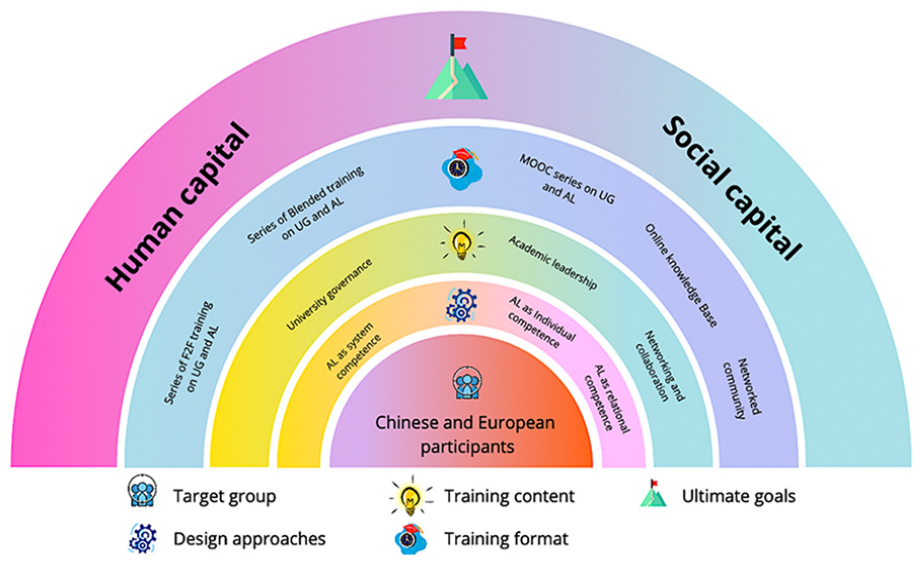
ALD training design.
As can be seen in the Figure 2, the main target groups of the program include European and Chinese academics and academic leaders from 12 partner universities. Three theoretical training approaches were adapted (leadership as a system competence, leadership as an individual competence, and leadership as a relational competence), with the program content having been emphasized according to three main themes: university governance, academic leadership, and networking and collaboration. Concerning the training format, the program offers an annual series of face-to-face and online training and workshops. Furthermore, the online knowledge base was designed to provide training materials and resources on university governance and academic leadership. Subsequently, a networked community was established wherein participants could share their practical experiences and broaden their professional network. Altogether, this program was aimed to achieve the ultimate goals of enhancing the competencies of academic leaders individually (human capital) and promoting collaborative leadership development within, across and beyond their institutions (social capital).
Given the lack of research on exploring mid-term impacts of leadership development program at institutional level, the current study presents findings from a mixed study of the Erasmus+ program on leadership capacity building in diverse contexts. The results of this study provide practical evidence of impacts of leadership development program at institutional levels. Moreover, the study serves as steppingstone for designing an effective leadership development program in diverse contexts.
Research Design and Sample
A mixed-methods design was utilized in the current study because: (1) this design supports the facilitation of data triangulation and complementarity across multiple data sources in order to obtain comprehensive and coherent insights into the chosen topics (Creswell, 2009); and (2) this design is helpful to examine the impacts of an leadership development program as endorsed by previous studies (Liu, 2019; Ries, 2019; Wallace et al., 2021).
As part of the capacity building project, a survey-based investigation and semi-structured interviews were conducted with an emphasis on evaluating the mid-term impacts of the HE academic leadership development programs (as described in section 3.1) on participating institutions regarding collaboration and partnerships, as well as HE-related policies and practices.
In total, 92 respondents who were direct participants of the project voluntarily participated in the survey. Of these, 41.3% were male and 58.7% were female. The age distribution of the survey respondents ranged from between 23 to 70 years-old (M = 40.67; SD = 12.39). Among them, 45.1% of the survey participants had less than 5 years of academic leadership experience, and 44.1% of the respondents had more than 5 years of leadership experience. The respondents’ demographic information can be found in Appendix A1. Regarding the regional distribution, the Chinese respondents from six HEIs were located in southern China, eastern China, western China, central China, and northern China. The European participants from six HEIs came from southern Europe, western Europe, northern Europe, central Europe, and eastern Europe.
The qualitative dataset comprised 21 Chinese and European participants with mixed cultural backgrounds. Among the interviewees, 57.1% were male and 42.9% were female. The age distribution for the interviewees ranged from 32 to 70 years-old (M = 47.38; SD = 10.37). More details on the interviewees’ profiles can be found in Appendix A2.
Instruments
The quantitative data was collected using a self-administered questionnaire in order to examine the participants’ perspectives regarding the impacts of academic leadership development programs on (i) institutional collaboration and partnership, and (ii) HE-related policies and practices. The former covered the dimensions regarding impact of the project on building cross-institutional networks among European and Chinese HEIs, raising awareness of the diversification of university governance and academic leadership, cross-institutional collaboration among European and Chinese HEIs. The latter emphasized impact of the project on HE-related policies within European and Chinese HEIs, and policy-related cooperation and policy dialogue between European and Chinese HEIs. The survey questionnaire was designed by a research team focusing on the above dimensions. To collect evidence on the validity and reliability of the designed instrument, a pilot study with 15 participants was conducted. The final survey ultimately consisted of 25 questions with two sections: demographics and impacts. As for the qualitative data collection, four main interview questions were designed to gain insights into the interviewees’ perception of impacts of the project at institutional levels. More details could be found in Appendices A3 and A4.
As part of the target group included participants from Chinese universities, the survey questionnaire and interview questions were translated into Chinese. To ensure equivalent meanings of the instrument, the translated survey was back-translated by a native English speaker.
Data Collection Procedure
The questionnaire data collection was implemented via the Qualtrics™ research tool and was open between December 2020 and February 2021. An invitation email was disseminated to all those participants who joined the program for more than 12 months. Two reminder emails were followed spaced three weeks apart to increase the response rate.
As for the qualitative data, semi-structured interviews were conducted from December 2020 to February 2021. The interviews with the Chinese participants were conducted by researchers who are native speakers. Each interview lasted on average 35 minutes (minimum 24 minutes and maximum 50 minutes).
Data Analysis
The data analysis procedure consisted of three main steps: (i) quantitative data analysis (online survey); (ii) qualitative data analysis (interviews); and (iii) mixed-method analysis to examine how the qualitative findings supported, contradicted, broadened, or deepened the quantitative findings (Creswell, 2009).
Concerning the quantitative analysis part, the data analysis for this was performed using SPSS (Version 28); descriptive statistics and independent sample t-tests were conducted for all variables in order to calculate means and measure the statistical differences between the two groups regarding impact of the academic leadership development program at the institutional level. As for the qualitative analysis, the interview data was first transcribed verbatim; subsequently, content analysis was performed as it is a suitable method for analyzing data presented in either written and/or oral formats (Erlingsson & Brysiewicz, 2017). Content analysis was conducted to discover the narrative themes, summarize the main ideas, and to make valid inferences (Krippendorff, 2004). Ultimately, an inductive approach was exploited regarding how the code and the following categories and themes emerged from the data (Merriam, 2009). With regard to the mixed-methods analysis, given the participants’ perceptions of the impact of the project following their participation in the training programs were emphasized in both the online survey and the interviews, thus the qualitative results concerning both aspects were linked to the quantitative findings in order to provide deeper insights into the impacts of such training programs (Creswell & Clark, 2010).
Findings
The findings of the current study emphasize the impacts of the international leadership program at institutional levels on two main aspects: cross-institutional networking, collaboration, partnership, and HE-related policies and practices. Both quantitative and qualitative findings yielded positive impacts of the leadership development program at institutional levels perceived by the participants.
RQ1. Perceived impacts of the HE academic leadership development program on the involved European and Chinese HEIs regarding cross-institutional networking, collaboration, and partnership
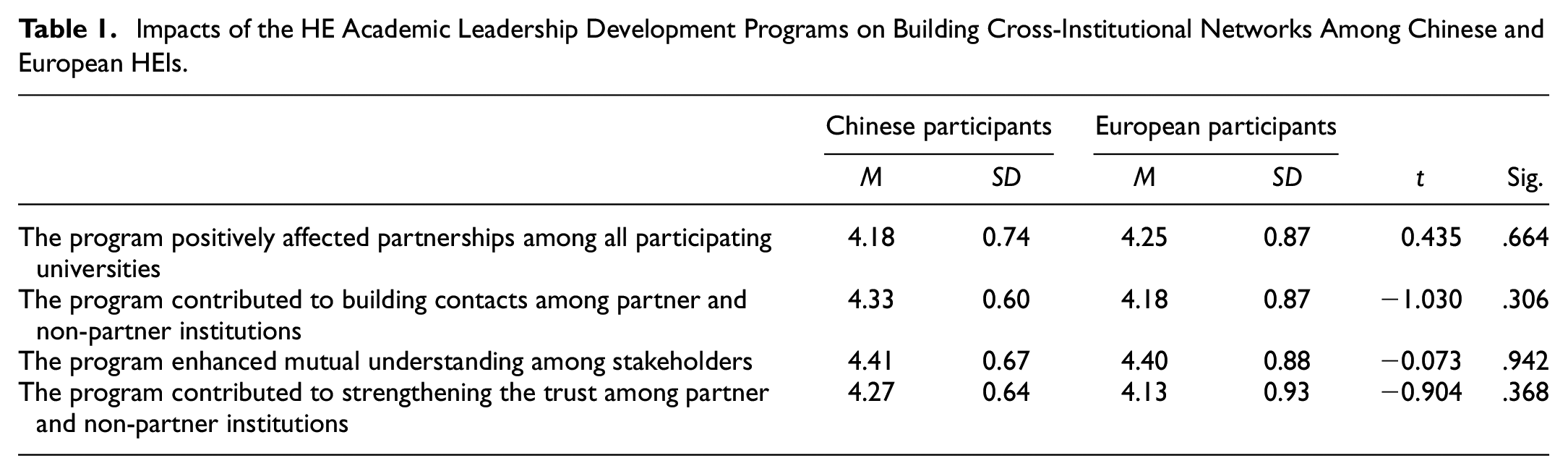
The quantitative findings reveal the high extent of the impacts the HE academic leadership program has on cross-institutional networking and collaboration, as reported by the involved European and Chinese respondents (Table 1). These results indicated the high level of agreement perceived by both groups regarding the positive effects the program has had on partnerships among the participating universities (M = 4.18; SD = .74 and M = 4.25; SD = 0.87, respectively). This demonstrated similar high impact on the building of contacts (M = 4.33; SD = 0.60 and M = 4.18; SD = 0.87), enhancing mutual understanding (M = 4.41; SD = 0.67 and M = 4.40; SD = 0.88), and strengthening the trust among partner universities (M = 4.27; SD = .64 and M = 4.13; SD = .93). Although we can observe some minor differences regarding the reported impact as in the means reflected in Table 1, the t-test results indicate no significant differences in the reported impact in terms of cross-international networking among Chinese and European HEIs (p > .05).
Impacts of the HE Academic Leadership Development Programs on Building Cross-Institutional Networks Among Chinese and European HEIs.
As for the impact on raising awareness of the diversification of university governance and academic leadership among stakeholders, both groups highly reported that the programs helped the stakeholders be better informed about the similarities and differences regarding university governance and academic leadership, raised awareness of the importance of university governance and academic leadership, and enhanced the understanding of them among partner universities (Table 2). Among the two groups, the Chinese respondents reported a higher level of awareness of the commonalities and differences regarding university governance and academic leadership (M = 4.47; SD = 0.54 vs. M = 4.35; SD = 0.80), with a higher extent toward the impacts of the programs on enhancing the understanding of the diversification of the academic leadership practices in academic settings (M = 4.41; SD = 0.61 vs. M = 4.35; SD = 0.89). In contrast, the European participants demonstrated a slightly higher level of awareness regarding the importance of university governance among partner universities (M = 4.47; SD = 0.84 vs. M = 4.35; SD = 0.71) alongside these stakeholders’ understanding of the diversification of university structures (M = 4.50; SD = 0.78 vs. M = 4.43; SD = 0.73).
Impacts of the HE Academic Leadership Development Programs on Raising Awareness of the Diversification of University Governance and Academic Leadership Among European and Chinese HEIs.

Although minor differences regarding the reported impact as in the means reflected in Table 2 were found, the results indicated that the differences between the two groups are non-significant (p > .05).
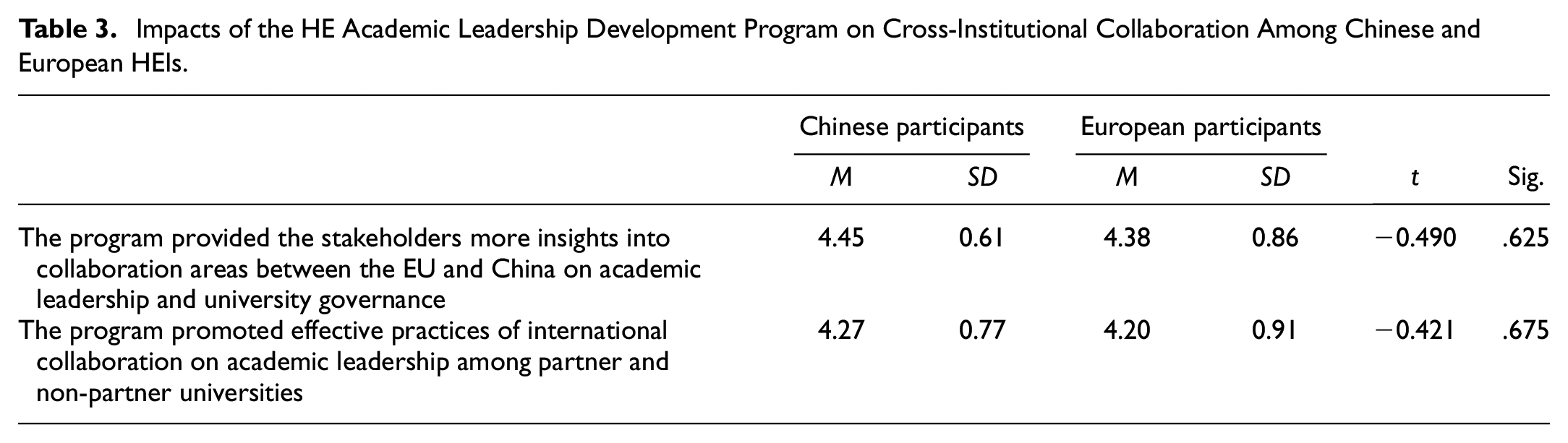
With regard to the impacts of the HE academic leadership development program on cross-institutional collaboration among European and Chinese institutions, the findings revealed a high level of agreement for both groups. While the Chinese participants had indicated a relatively higher level of perception regarding the effects of the program on providing insights into collaborative areas between the European and Chinese institutions concerning university governance and academic leadership (M = 4.45; SD = 0.61 vs. M = 4.38; SD = 0.86), as well as concerning promoting the effective practices of international collaboration among partner and non-partner universities (M = 4.27; SD = 0.77 vs. M = 4.20; SD = 0.91), the t-test results indicate no significant differences in the reported impact in terms of cross-institutional collaboration among Chinese and European HEIs (p > .05; Table 3).
Impacts of the HE Academic Leadership Development Program on Cross-Institutional Collaboration Among Chinese and European HEIs.
Consistent with the quantitative findings, the qualitative results illustrate the significant impact the HE academic leadership development programs have on cross-institutional collaboration and partnership (Table 4).
Impacts of the HE Academic Leadership Program on Collaboration and Partnership (Qualitative Results).

As for the responses of the Chinese sample, three main themes were founded including building organizational networks, cross-institutional collaboration and partnership, and awareness of the importance and diversification of university governance and academic leadership in universities. Based on the frequency analysis, the theme most frequently cited by the Chinese participants is the building of organizational networks under which five subthemes could be categorized. To be specific, the Chinese interviewees perceived that the HE leadership development program had significant impacts on enhancing mutual understanding and fostering trust among partner universities as well as on establishing international contacts and networking. One participant highlighted “the project has done a lot in terms of expanding the network of our organization and contributed to the promotion of our institutional profile. As a result, we have now signed university-level cooperation agreements with two partner universities in Europe” (P6, female, Manager). In addition to this, the contribution of the program to achieving the shared goals and visions was cited as essential under the main theme. Specifically, two unique subthemes including domestic networking and the enhancing of reputation were further found under auspices of the most cited theme. In other words, Chinese participants highlighted the positive effects the leadership program had on developing close connections among local universities.
The impacts of the HE academic leadership development program on potential opportunities for cross-institutional collaboration and partnerships represented the second most cited theme. Within this theme, the opportunities for cross-institutional collaboration was cited the most, while specific collaborative activities including cooperation in research, educational exchanges, and professional development were rated as being vital. Noted by a participant, there was a boost to the collaboration between partner institutions themselves. They collaborated in organizing conferences, students and staff exchanges across institutions and regions (P10, male, Dean).
Concerning the third theme on awareness of the importance and diversification of university governance (UG) and academic leadership (AL), two main categories were framed that are diversification and importance of UG and AL. While the diversification of UG and AL was cited the most, awareness regarding the importance of UG and AL was also highlighted by several Chinese interviewees.
Regarding the responses of the European participants, three main themes were framed in common with the Chinese respondents. The most cited theme was the building of organizational networks, which encompassed three sub-themes: enhanced mutual understanding and the fostering of trust represented the core dimension encompassed under this theme, while establishing contacts and achieving shared goals also appeared to be vital impacts as perceived by the European participants. Remarked by a participant, this project has contribution in bridging Chinese and European universities toward establishing new partnerships and enlarging institutional networks (P14, male, Director).
Four sub-themes were identified in terms of their impacts on opportunities for cross-institutional collaboration and partnership. Of these, a chance for collaboration (in general) came to the fore as the most cited dimension, followed by collaboration in research, educational exchanges, and professional development. One participant indicated that “we used to go with a discuss talk, exchange. However, we now want to institutionalize collaboration. For example, we established an agreement between our institution and one of our Chinese partner universities to promote collaboration on research and professional development. We are producing different outcomes as a result of the network established within this project and this will grow…” (P15, male, Professor).
Two categories were highlighted concerning the theme of awareness regarding the importance and diversification of UG and AL. Awareness of diversification of UG and AL was the most cited category under this theme.
RQ2. Perceived impacts of the HE academic leadership development program on the involved European and Chinese HEIs regarding HE-related policies and practices
The quantitative results indicate a high level of agreement among the European and Chinese participants regarding the impacts of the HE leadership development program on HE-related policies and practices, including drawing attention to certain challenges in forming a new international cooperation model concerning UG and AL.
With regard to the extent to which the HE academic leadership development program had an impact on HE-related policies within European and Chinese HEIs, both the European and Chinese respondents reported a high level of agreement. While the Chinese participants indicated a relatively lower level of agreement regarding the contribution of the program in providing an adequate reference for policy reform related to UG and AL (M = 4.33; SD = 0.79 vs. M = 4.45; SD = 0.78), they reported a higher level of agreement concerning the contribution of the program to HE-related policy development (M = 4.33; SD = 0.65 vs. M = 4.15; SD = 0.77). However, the t-test results showed that the differences between the two groups are insignificant (p > .05; Table 5).
Impacts of the HE Academic Leadership Development Programs on HE-Related Policies Between Chinese and European HEIs.

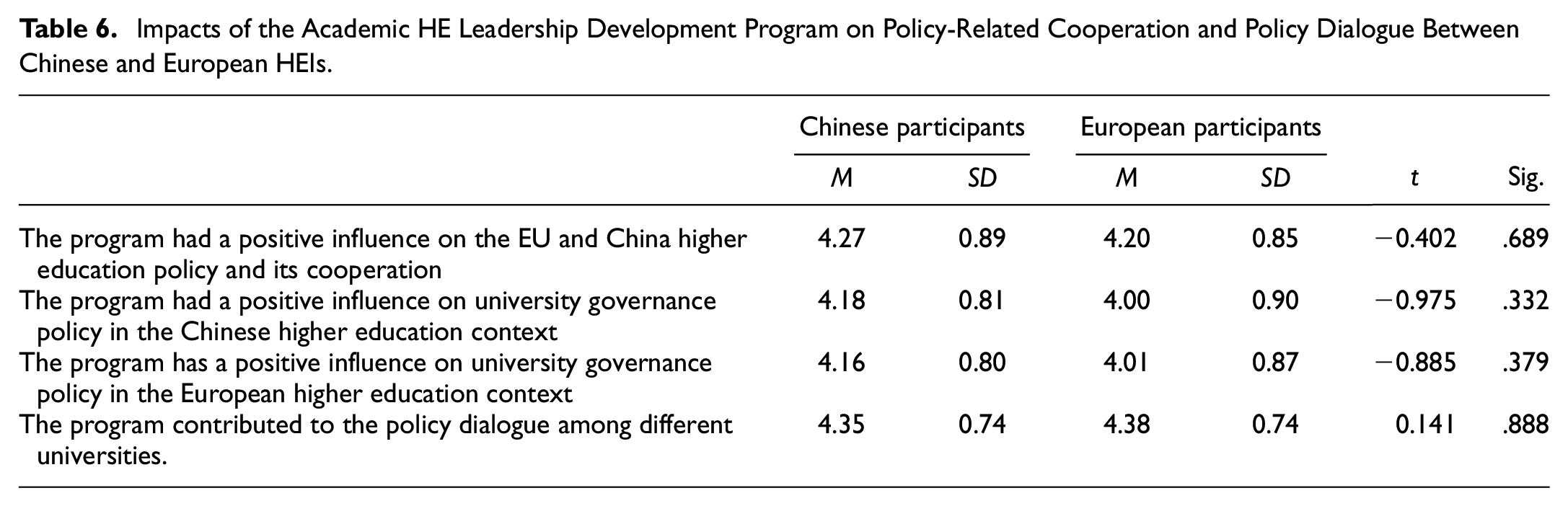
As for the effects of the program on HE policy-related dialogue and collaboration among institutions, the quantitative findings reveal a high level of perceived agreement for all of the four aspects. In addition, the Chinese and European participants did not differ in all aspects, as the Chinese respondents reported a slightly higher level of agreement concerning the influences of the HE leadership development program on education policy (M = 4.47; SD = 0.84 vs. M = 4.35; SD = 0.71), university governance policy in the Chinese HE context (M = 4.18; SD = 0.81 vs. M = 4.00; SD = 0.90), and university governance policy in the European context (M = 4.16; SD = 0.80 vs. M = 4.01; SD = 0.87). On the contrary, the European participants indicated a higher level of agreement regarding the contributions of the program to policy dialogue (M = 4.38; SD = 0.74 vs. M = 4.35; SD = 0.74). Although some minor differences regarding the reported impact were observed as in the means reflected in Table 6, the results indicate no significant differences between the two groups regarding the impacts of the academic HE leadership development program on policy-related cooperation and policy dialogue (p > .05).
Impacts of the Academic HE Leadership Development Program on Policy-Related Cooperation and Policy Dialogue Between Chinese and European HEIs.
Consistent with the quantitative findings, the qualitative results illustrate the profound impacts of the HE leadership development program on HE-related policies and practices among the partner universities. In addition, the qualitative data has provided insights into how the program has positively affected those institutions both internally and externally, the results of which are presented in Table 7.
Impacts on HE-Related Policies and Practices Among European and Chinese HEIs (Qualitative Results).

Concerning the impacts on HE-related policies and practices among the partner universities, the codes that emerged were primarily linked to two common themes for both the Chinese and European samples. However, the sub-themes attributed to these themes displayed slight variance for each group. For the Chinese interviewees, an understanding of HE-related policies and practices was categorized under the theme of internal impacts; policy adjustment and development was also highlighted as an essential dimension. For example, one participant shared that the project enabled partner universities to see the commonalities and differences in terms of HE-related policies in cross-cultural contexts (P7, female, Researcher). Along the same line, one participant explained “I think the reality in Chinese universities is different from the reality in European universities. Understanding these differences is very important for us when we are trying to collaborate (P17, female, Director). As for external impacts, three categories were framed, including policy dialogue, the potential for forming an international collaborative model related to UG and AL, and any associated challenges.
Similar to the Chinese counterparts, the European participants underlined the internal and external impacts as the areas primarily affected by the HE leadership development program when it comes to HE-related policies and practices. Regarding the most cited theme concerning the internal impacts, an understanding of HE-related policies and practices alongside cultural understanding in academic management were reported to be highly central. The third important dimension classified under this theme was policy adjustment and development. One participant highlighted that “our institution is in the phase of preparing strategic plans toward enhancing leadership capacities for academic staff and leaders within university. We will soon set up the training programs. This happened by the help of the project” (P13, female, Advisor to the President). As for the external impacts, the European participants also cited the opportunities for policy dialogue, followed by the potential for establishing an international collaborative model and challenges. As stated by one participant, the project caught attention to the need of the development of a truly international governance model beyond the traditional European or Chinese governance models (P16, male, Vice Rector).
Discussion
Given the lack of any empirical study conducted on the mid-term impacts of an academic leadership development program in the higher education context, and in response to the calls for further studies by Liu (2019) and Wallace et al. (2021), the primary purpose of this research was to gain insights into participants’ perceptions regarding the mid-term impacts of an academic leadership development program at institutional levels. Using the mixed methods approach, the findings generally demonstrate that the academic leadership development program had a considerable influence and impact at the organizational level based on two main aspects: impacts on collaboration and partnership and impacts on HE-related policies and practices.
Regarding the impacts on collaboration and partnership, both the quantitative and qualitative findings consistently demonstrated the positive contributions of the HE academic leadership development program to collaboration and partnership among the partner universities. These results are in accordance with the literature, which indicates that the effects of such a leadership training program are reflected not only in individual or professional contexts, but also in organizational aspects (D. Kirkpatrick, 1994; Ries, 2019; Wallace et al., 2021).
The quantitative findings indicate a high level of perception regarding the positive impacts of the HE academic leadership development program on building cross-institutional networks, raising awareness of the diversification of university governance and academic leadership, and cross-institutional collaboration among European and Chinese HEIs. These results correspond with the previous findings highlighting the potential benefits of collaboration between European and Chinese stakeholders (Cai, 2019; Zhu et al., 2017; Zhu & Zayim-Kurtay, 2018). Although there are relative differences between the EU and Chinese samples in particular aspects, the differences are insignificant. In other words, there were common views of both groups on many aspects regarding the contribution of the program to enhancing mutual understanding and collaboration among European and Chinese universities. This indicates that both European and Chinese institutions found importance and felt they benefited significantly from the HE academic leadership development program.
In line with the quantitative results, the qualitative findings revealed that the Chinese and European participants both emphasized the contribution of the program to enhancing mutual understanding, fostering trust, and cultivating opportunities for cross-institutional collaboration among the partner institutions. These results demonstrated that a program on HE academic leadership development significantly contributes to overcoming the challenges posed by a lack of trust and mutual understanding between European and Chinese HE institutions, as raised by Cai’s (2019) study. In addition, the findings also indicated that the program successfully met the expectations of both sides regarding the internationalization of HE (Cai, 2019). As well, the Chinese participants placed further emphasis on the impacts of the HE academic leadership development program on the building of domestic connections and enhancing the institution’s profile. This is relevant because the strengthening of cooperation among the domestic universities is certainly one of the added values of the capacity building project. These findings endorse the views of Cai (2019) who illustrated the importance and strategies of Chinese HEIs for strengthening their academic competitiveness and reputation through further collaboration.
Concerning the impacts of the HE academic leadership development program on HE-related policies and practices, the findings reveal the positive influence of the Erasmus+ program regarding university governance (UG) and academic leadership (AL) on informing both sides on HE-related policies and practices, as well as providing unique opportunities for HE policy enhancement within the institutions, and HE-policy-related cooperation among the European and Chinese universities. Moreover, the quantitative results indicated that the program positively contributed to policy development within the institutions in both the European and Chinese contexts and impacted policy dialogue among the partner universities. As pointed out by Cai (2019) and Liu (2019), raising awareness of HE-related policies on both sides is considered a foundation for mutual understanding, further collaboration, and innovation among HE institutions.
The qualitative findings not only supported the quantitative findings, but also provided more profound insights into how this program positively affected the partner institutions both internally and externally. Moreover, both samples exhibited common views regarding the impacts of raising awareness and the adaptation of HE-related policies and practices on UG and AL. Furthermore, both the Chinese and European participants mutually highlighted that this program enabled institutions to better understand HE-related policies, thus creating opportunities for policy dialogue between both sides, as well as motivating institutions to adjust and develop strategic plans related to academic leadership development. These results supported the findings of Zhu and Zayim-Kurtay (2018), drawing attention to the fact both European and Chinese universities alike share a need for further capacity building for academic leaders. As well, the European participants further emphasized that the HE academic leadership program enabled them to better understand the cultural differences in management they had learnt from Chinese universities. Given the prominent development of Chinese institutions in the last decades in becoming important competitors in the international academic institution community, it is not surprising that participants from European universities wanted to learn how the Chinese leaders govern their institutions, adapt to change, and drive innovation (Cai & Yan, 2015). Additionally, the Chinese and European participants highlighted that the HE academic leadership program successfully provided a profound foundation upon which to cultivate a new international collaborative model for university governance and academic leadership, one which is in line with the statements of Cai (2019) stressing the importance of and potential for collaboration in higher education between China and the EU on a variety aspects. Apart from that, some challenges were taken into account regarding the impacts on this aspect. For example, the participants pointed out that it takes time to make an impact by establishing a collaborative model for UG and AL that is visible and tangible. In addition, both Chinese and European universities need to resolve the obstacles of language barriers and foster better shared understanding in order to develop a sustainable collaboration model for UG and AL. These results are consistent with Cai’s (2019) study pointing out the formidable obstacles in regard to collaboration between Chinese and European institutions.
Implications
As for theoretical implications, our findings directly support the latest theoretical model (Wallace et al., 2021) concerning the evaluation of a complex leadership development program in which leader development and leadership development have been equally emphasized. Building on the mid-term impacts of the academic leadership development program on institutional collaboration and partnership, and HE-related policies and practices, our study sheds light on how leadership development intervention plays a role at an operational level.
Concerning practical implications, our study reduced the gap in the literature concerning evidence-based leadership practices in academic settings. The study demonstrated the importance and success of developing an international academic leadership development program for both capacity building and professional network purposes. This model is much needed due to the rapidly changing environment of academic institutions worldwide (Liu, 2019). As the findings revealed the direct impacts of the program at institutional level on a variety of different aspects including impacts on collaboration and partnership and impacts on HE-related policies and practices, we suggest program designers should develop a leadership development program which aims at fostering the individual capacities of academics and leaders while equally promoting collaboration along with partnerships among participating institutions. Our findings also highlighted the importance of developing and strengthening a sustainable network to promote mutual understanding among partners and beyond in order to achieve shared goals and visions.
With regard to policy implications, our study suggests that leadership development, along with sufficient resources, should be part of the policy priorities of academic institutions. Specifically, it was evidenced that such an international leadership program potentially benefits institutions in enhancing capacities for leaders and broadening networks and collaborative opportunities.
Limitations and Recommendations
There are several limitations of this study worth noting. For example, the sample of this study only involved the participants of one Erasmus+ capacity building project. Therefore, the examined impact is relevant for this specific project and the specific members and HEIs involved in the specific project. However, as the six European HEIs are located in six countries from different regions, and the six Chinese HEIs are located in five different regions in China, the findings of this study could be relevant (and therefore provide certain insights) for similar HEIs or collaborative projects. Another possible limitation of this current study concerns the respondents’ leadership positions: there were fewer interviewees at the top leadership level and a larger proportion of participants were at the departmental or faculty level. Thus, the sample utilized may not be fully representative of the overall participants from the Chinese and European stakeholders involved in the program. As such, we recommend that future studies involve more top-level stakeholders (e.g., (vice) rectors, (vice) presidents, and policymakers at the universities) in order to gain insights of their views. Furthermore, the findings were based on respondents’ self-perceptions, with the answers given by the participants having the potential to be based on their own experiences and knowledge of the relevant issues. In addition, the study was conducted about two years following the implementation of the project. Consequently, the impacts of the program on HE policies and practices regarding UG and AL were not fully captured or not yet fully reflected as presented in the results in this study. We therefore recommend that future research replicate this study in order to further examine the impacts of the program over the mid- and long-term periods.
Conclusion
Given the scarcity of empirical study on the impacts of a leadership development program in higher education context, the current study attempted to evaluate the outcomes of such program in the mid-term period. The results successfully provide empirical evidence on how an academic leadership development programme helps higher education institutions broaden their networks, collaborations, and linkages in order to meet their institutional objectives for growth and innovation. As a result, academic leaders, university administrators at different levels, and other relevant stakeholders can benefit from the research findings. In addition to this, the strategies used by the academic leadership development programme used in the current study are also broadly applicable in other situations.
Footnotes
Appendices
Demographic Characteristics of the Interviewees (n = 21).

| Variables | Category | Statistics | Percentage (%) |
|---|---|---|---|
| Gender | Female | 9 | 42.9 |
| Male | 12 | 57.1 | |
| Age (M = 47.38; SD = 10.37) | 30–39 | 6 | 28.6 |
| 40–49 | 8 | 38.1 | |
| 50–more | 7 | 33.3 | |
| Academic leadership experience (M = 8.71; SD = 5.65) | Junior level (0–5 years) | 9 | 42.9 |
| Middle level (6–10 years) | 4 | 19.0 | |
| Senior level (>10 years) | 8 | 38.1 | |
| Position | University/top level | 3 | 14.3 |
| Faculty/middle level | 12 | 57.1 | |
| Department/lower level | 6 | 28.6 | |
| Contexts | |||
| From Chinese universities | Chinese participants | 11 | 52.4 |
| From European universities | European participants | 10 | 47.6 |
| Total | 21 | 100 | |
Appendix A3
Survey Questionnaire.
Appendix A4
Interview Questions.
Declaration of Conflicting Interests
The author(s) declared no potential conflicts of interest with respect to the research, authorship, and/or publication of this article.
Funding
The author(s) disclosed receipt of the following financial support for the research, authorship, and/or publication of this article: This research was conducted in the framework of an EU project supported under the Erasmus+ program
Ethical Considerations
This study was conducted under the framework of an international project on capacity building for academic leaders. All participants were informed about confidentiality, the purpose, the design of the study, and the voluntary nature of the participation. Informed consent was sought from the participants for data publication, and the participants were informed that they could withdraw from the study at any time.
