



Abstract
This study investigated the experiences of learners in an online mixed-gender classroom to understand how distance education has changed society in Saudi Arabia. The study integrated culturally responsive teaching (CRT) as a theory of instruction with gender-responsive digital pedagogy through an online course. This study highlights how distance learning encourages gender equality in teaching and learning through a digital arts online course. It employed a quasi-experimental method, which included per-survey, questionnaires, and observation. The sample comprised 87 male and female participants who attended an online course at an institution in Saudi Arabia in 2024. The results showed that learners’ perspectives of the Digital Arts online course demonstrated strong agreement, primarily focused on the positive aspects of online learning. Learners overwhelmingly supported the online course and its cost-effectiveness, collaborative nature, skill development, accessibility, and contribution to equality, job opportunities, and cultural exchange. Furthermore, the thematic analysis identified four themes: (1) development of the curriculum and instruction using CRT in distance education; (2) enhancing learning outcomes by building various technology-based activities to break gender segregation; (3) building caring, respectful, and cooperative relationships in a mixed-gender learning environment; and (4) Saudi society and cultural transformation to empower learners in a mixed-gender learning environment. The study provided positive results for collaborative learning among students of different genders. It also highlights important information on how technology can change Saudi culture and society and segregate gender.
Introduction
The implementation of culturally responsive teaching (CRT) in a diverse classroom requires teachers to be prepared through pre-service education programs, which gives them ample knowledge and skills to impart such teaching. Culture tremendously influences how people learn, adapt, and comprehend; hence, educators can use culture to enhance students’ image and self-achievement. This can be accomplished only if teachers appreciate a particular culture and incorporate teaching strategies appropriate to students’ styles. Teachers can integrate technology, music, sports, and arts into traditional curricula to hook students. This necessitates transitioning from knowledge-based education to a culturally responsive curriculum. Teachers can use computer-based technologies and the Internet to connect students and expose them to their cultural heritage (Frederick & Shockley, 2008). Hence, CRT using technology has been developed to address the needs of students from diverse backgrounds, cultures, and upbringings. This teaching method demands that teachers impart culturally responsive instruction to their students, which, in turn, requires teachers to possess cultural competence (Stevens, 2014). The curriculum must be designed in a manner that is according to their standards, accessible to students, and taught in a way they can understand. It is responsive teaching, where teachers use students’ backgrounds, prior knowledge, social experiences, values, and biases, and incorporate these into their teaching. This teaching method aims to provide all students with just and fair learning opportunities (New York University, n.d.).
Saudi Arabia’s culture is, in its very nature, religious, and Islam plays a central role in defining the culture and acts as a major force in determining social norms, patterns, traditions, obligations, privileges, and practices of society. This is especially true because Islam is not only a religious ideology, but also a comprehensive system that embraces detailed prescriptions for the entire way of life (AlMunajjed, 1997). Thus, “[gender] segregation is part of Saudi Arabia’s social and religious beliefs” (Alyahya et al., 2022, p. 2). Saudi culture is an interesting dichotomy, because it influences the overall educational process and shapes the teaching and learning components of higher education. Before the shift to Saudi Vision 2023, mixed-gender classrooms were forbidden in Saudi educational institutes, and gender-segregated university campuses were the norm (Al-Bakr et al., 2017). To ensure an effective change, gender-responsive digital pedagogy (GRDP) must be implemented in teaching and learning. Currently, Saudi Vision 2030 aims to increase economic, social, and cultural diversification (Saudi Vision 2030, n.d.). Distance education influences the country’s culture and has gained traction in Saudi Arabian society; this learning style must be adopted and aligned with Saudi culture.
Teachers must play a crucial role in developing and implementing new online teaching methods using educational theories in teaching and learning in mixed-gender learning environments in Saudi Arabia. They must integrate CRT and GRDP in their curricula when teaching students in mixed-gender learning environments in distance education in Saudi Arabia. However, studies in Saudi Arabia are yet to use CRT and GRDP when designing online courses in arts education or other subjects. To address this research gap, the current study aimed to evaluate the experiences of learners in distance learning and how distance education changes culturally responsive learners’ perspectives in Saudi Arabia. This study highlights how distance learning encourages gender equality and breaks gender segregation in Saudi Arabia in teaching and learning, focusing on an online Digital Arts course using GRDP in 2024. In this context, this study aimed to answer the following questions:
Research Questions
How should an instructor design the Digital Arts online course using GRDP through activities for mixed-gender learning?
What is the outcome of CRT from a learner’s perspective in a mixed-gender learning environment?
Literature Review
Learning and Teaching in Distance Education
Technology is used in educational settings for study, instruction, and learning. The way universities, colleges, and institutions operate is changing because of technology. Technological improvements have spurred improvements in education provision. Distance learning is a primary form of education that relies heavily on technology (Li et al., 2023). In this type of education, pupils may not always be present at the educational institution.
In other words, one may study, learn, and qualify in the selected field online without needing to visit an examination center, university campus, or college (Sadeghi, 2019). This type of education is greatly facilitated by digital learning tools available to educators and students. According to Tüchler (2021), digital learning tools are any apparatuses or technologies that support the learning process and are stored in digital versions. Distance-learning instructors have access to diverse digital learning resources.
Digital Learning and Teaching Tools
One such digital tool is the Learning Management System (LMS), which involves developing a learning context/platform that links learners to their education. A paid license accommodates many pupils, may utilize preloaded apps, and can be linked to additional external systems. In the US and Canada, Canvas and Blackboard are the two main LMSs used, and they have fixed apps that help instructors design courses (Mucundanyi & Woodley, 2021). Simultaneously, these LMSs offer advanced learning aspects to learners and instructors, such as opportunities to plan live meetings and virtual conferences (Mucundanyi & Woodley, 2021). Instructors also require additional tools for distance learning.
Another digital tool used for distance learning is FlipGrid. This video-mediated communication tool facilitates long-distance cooperation by fostering participation and conversations (Abdullateef, 2021). It is helpful for project-based educational modules. Another valuable tool for imaginative interaction with hypermediality (text, video, and audio) is Padlet. This provides several alternatives for cooperation, like adding remarks to other people’s postings and responding using a voting mechanism (Abdullateef, 2021). These alternatives provide learners instant access to their peers’ comments to post on the wall, which opens up opportunities for peer review and online discussions.
Ultimately, distance learning is no longer a potential future for which higher education needs to prepare. It is a reality that presents both possibilities and difficulties for educational institutions today. It offers students more options regarding where, how, when, and from whom they can learn. It also makes education more accessible to a growing number of people. This is possible with digital learning and teaching tools.
CRT
CRT entails nurturing trusting learning relationships, facilitating student-centered discourse, and ensuring that the needs of communal learners are met. Cultural responsiveness considers learners’ social and academic needs (Kieran & Anderson, 2019). Gay (2018) defined CRT as making learning more relevant and effective for students when instructors use ethnically diverse students’ cultural knowledge, prior experiences, frames of reference, and performance styles. CRT recognizes the importance of racial and cultural diversity in learning as behavioral expressions of knowledge, beliefs, and values (Brown-Jeffy & Cooper, 2011). Instructors can guide curriculum development, instructional strategies, student relationships, and caring learning communities using culturally different individuals, families, and communities (Gay, 2018). CRT challenges racial and cultural stereotypes, prejudices, intolerance, injustice, and oppression. Instructors who use CRT can change for ensuring social justice and academic equity (Lawrence, 2017). Gay (2002) pointed out that CRT is a framework for considering equity in pedagogy. Gay’s framework for CRT provides four clear domains for classroom observation: (1) curriculum, (2) instruction, (3) communication, and (4) caring (Figure 1).

Gay’s framework for culturally responsive teaching (CRT).
Distance education requires care and planning to create culturally responsive classrooms wherein all learners feel valued and welcomed (Leonard et al., 2018). In face-to-face classes, inclusion and introduction can occur in real time, unlike in distance education. Distance-learning students can access courses at different times (Dietrich et al., 2020). Hence, they need more time to participate and learn about their instructor and classmates. Distance learning students want to achieve inclusion after the course begins, which involves engaging with the course. Instructors must demonstrate their presence to learners and actively participate in communication with them, highlighting differences and similarities, discussing backgrounds, and utilizing inquiry to learn about the students (Koseoglu, 2020).
GRDP
The inclusion of technology is critical to the rapid expansion of education. To fully realize the revolutionary potential of digital pedagogy, gender inequities in both traditional and virtual educational contexts must be acknowledged and addressed. To address this imbalance, the burgeoning field of GRDP blends gender-sensitive techniques into digital learning settings.
GRDP recognizes that educational technologies are not neutral tools but can reinforce or challenge existing gender norms and biases (Lunevich & Wadaani, 2023). This principle is based on Intersectionality, critical feminist theories, inclusivity and representation, gender-sensitive assessments, and safe digital spaces. The digital era has ushered in a transformative wave in pedagogical approaches, and scholars have increasingly recognized the need to address gender disparities within this context.
Theories such as Donna Haraway’s concept of the “cyborg” challenges traditional notions of gender and identity. Her ideas encourage thinking beyond binary gender categories and considering how technology can reshape our understanding of identity and embodiment. Haraway’s emphasis on the interconnectedness between humans and technology aligns with the essence of digital pedagogy. Incorporating Haraway’s ideas into the discourse helps bridge the gap between gender theory and the digital learning environments (Haraway, 2006). Røe et al. (2022) proposed four pedagogical strategies to promote active learning in the digital revolution faced by higher education: student-centredness, formative feedback, constructive alignment, and flexible infrastructure. The critical theorists discussed in this paper have paved the way for understanding how technology can perpetuate or challenge gender disparities in education.
Saudi Culture in Distance Education
Humans are social, and sometimes struggle to be self-sufficient, leading to interdependence. Saudi society has evolved gradually, and cultural and traditional norms have been established. Society is an interconnected fabric that keeps humans together. Particular values and ideas have been disseminated across generations and readjusted over time. Social interactions limited to geographical regions have become widespread with the advent of education and technological growth. Cross-cultural ties have promoted diversity and cultural hybridity (Patel et al., 2012). Thus, transformations have always been inevitable in Saudi society and have effectively opened narrow-minded, limited horizons. Taylor and Sobel (2011) define culture as comprising ever-changing values, traditions, social and political relationships, and a worldview created, shared, and transformed by a group of people who are bound together by a combination of factors such as common history, geographic location, language, race/ethnicity, social class, and gender. According to Alyahya et al. (2022), “[gender] segregation is part of Saudi Arabia’s social and religious beliefs” (p. 2). However, Saudi culture still exhibits gender segregation in society and education, which is important for researchers to understand and use GRDP in a mixed-gender online classroom.
Technology has become an essential communication and information tool, offering unique advantages to educators and students. Despite the recent educational revolution in Saudi Arabian educational systems, access to higher education remains an enduring challenge. In this context, distance education is emerging as an important feature across all fields of higher education (Hamdan, 2014). Saudi Vision 2030 aims to create a vibrant society in which all citizens can thrive and pursue their passions. This government program, launched in 2016 by the Kingdom of Saudi Arabia, aims to increase economic, social, and cultural diversification, consistent with the vision of Saudi Crown Prince and Prime Minister Mohammed bin Salman. A strong social infrastructure is underpinned by a society that values cultural traditions, national pride, and modern amenities while embodying the spirit of modern Islam and providing effective social services (Saudi Vision 2030, n.d.).
Thus, distance education enables non-traditional communication between males and females for the first time in Saudi Arabia’s gender-segregated society. Both females and males can now access e-learning resources, such as journals, magazines, and intercultural communication forums, which would not have been available to them without a connection to the Internet. With the expansion of information available via the Internet, specifically through journals, newspapers, and online forums, Saudi Arabia’s younger generation has become less traditional and more relaxed in their views. Online learning provides new opportunities for Saudi students to question traditional assumptions about learning and how the learning culture is changing (Hamdan, 2014). Thus, there is a need for more delivery modes that educate learners wherever they are and not within the boundaries of the campus. Distance education could dramatically increase access to tertiary education and training in Saudi Arabia, especially for those who were once denied learning opportunities for any reason such as health or distance (Al-Harbi, 2011).
Based on the literature reviewed, this study focused on GRDP, adapted from CRT when the researcher designed activities in the online classroom. Education pedagogy and theory help the researcher understand how to teach a mixed-gender classroom for the first time. The researcher belongs to Saudi society and understands its culture; however, as per the culture, she teaches only female students in her face-to-face course. This study offers critical guidance for instructors when creating online courses on digital art topics with gender students. It also aims to help educators understand learners’ needs in a mixed-gender classroom and assist them in their educational journey.
Materials and Methods
Research Design
The study adopted a quasi-experimental research design that used control groups but no pretest. In social science research, the quasi-experimental research design attempts to establish a cause-and-effect relationship (Bärnighausen et al., 2017). Quantitative data were used to confirm or validate the qualitative findings. The researcher designed one online course, “Digital Arts,” for professional development. The sample was not randomly assigned and included males and females from different cities at one institution in Saudi Arabia. They all participated in an online course for 10 sessions of 5 hr each, leading to a total of 50 hr. Different instruments were employed for data collection: pre-survey for collecting demographic data, questionnaire survey of learners, and observations during these sessions.
Participants
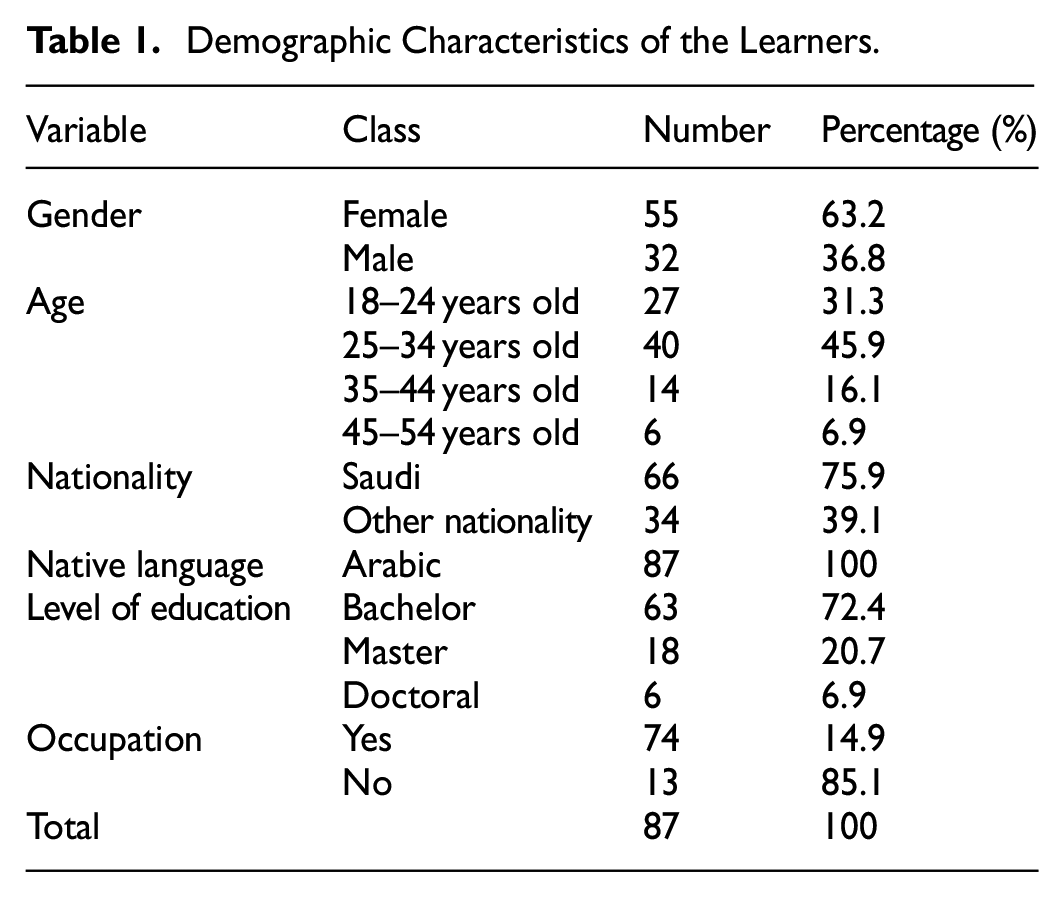
In Spring 2024, 87 participants (male and female) enrolled in the online Digital Arts course. Table 1 summarizes demographic data collected in the pre-survey, including participants’ gender, age, nationality, language, level of education, and occupation. The participants comprised 55 females (63.2%) and 32 males (36.8%). The participants spanned different ages: the age group of 18 to 24 years old accounted for 31.3% of the sample; 25 to 34 years old, 45.9%; 35 to 44 years old, 16.1%; and 45 to 54 years old, 6.9%. Regarding nationalities, 75.9% of participants were of Saudi nationality and the remaining 39.1% were of other nationalities and stated that Arabic was their native language. The participants had varying levels of education: 72.4% had completed their bachelor’s degree, 20.7% had completed their master’s, and 6.9% had a doctoral degree.
Demographic Characteristics of the Learners.
Moreover, the participants were in different majors, as shown in Table 2. The highest proportion of students (11.5% each) were in Fashion Design and Home Economy & Art Education. At 1.1%, the lowest proportion of students were majoring in biology, chemistry, mathematics, physics, electrical engineering, accounting, and geography.
Participants’ Majors.

Table 3 reports the cities and the region of Saudi Arabia to which the participants belong. The highest percentage of participants (34.5%) was in Ha’il in the central region. The lowest rate was 1.1%, (Jeddah, Mecca, Al Lith, Yanbu, and Taif) in the west; (Al Qatif and Ras Tanura) in the East; Khamis Mushayt in the South; and Al Jouf in the North. Hai’l City had the highest percentage because the course was created in this city, and the participants learned about the course via social media advertisements faster than in other cities.
Cities of the Participants in Each Region in Saudi Arabia.

Data Collection
Pre-Survey
The pre-survey was conducted to collect demographic data and allowed the researcher to understand the participants, both male and female, before the online course began. Google Forms was used to collect data in a Microsoft Excel sheet.
Questionnaire
The questionnaire included 32 items and was sent to the participants online after they completed the online course but before providing the completion certificate. The questionnaire was crucial for understanding the outcomes and learners’ perspectives. The researcher prepared a data collection tool using a Google Form to determine the directions of female and male learners who attended the Digital Arts online course in January 2023 at one institution in Saudi Arabia.
Observation
The observation component involved noting a phenomenon in the art and design field using technology. Observations included 10 sessions of classes, and each observation was, at most, 5 hr long. Two notable aspects of observations are as follows: (1) understanding the reactions of male and female students toward each other and (2) understanding the overall management of the academic curriculum for students in a mixed-gender learning environment. The instructor taught the online course, observed learners’ behavior and communication, and listened to what they said or what they were doing in projects. The researcher used the WHO Gender Assessment Tool (GAT) during the online course, which covers critical questions in the gender analysis for each session (World Health Organization, 2011).
Data Analysis
Statistical Analysis
SPSS software was used for data analysis. The questionnaire responses were first transcribed in Arabic, the students’ native language; thereafter, the transcripts were translated into English, along with the field notes. The survey questionnaires were prepared, including 12 phrases to measure trends based on four criteria: curriculum, instruction, communication, and caring. Responses to the questionnaire items were based on a 5-point Likert scale (agreement), where 5 = strongly agree, 4 = agree, 3 = somewhat agree, 2 = disagree, and 1 = strongly disagree. Table 4 presents the results.
Responses Using the 5-Point Likert Scale.

The researcher derived sentiment scores to describe what learners feel about online courses in a mixed-gender environment. For each question, the researcher calculated the total number of responses for each sentiment level (strongly disagree, disagree, somewhat agree, agree, and strongly agree). Subsequently, the numerical value for each sentiment level was multiplied by the number of respondents, and the totals were added. The totals were then divided by the total number of respondents. The researcher calculated the average of the 12 questions and obtained a sentiment score for each question.
Thematic Analysis
The researcher used MAXQDA, a software program to analyze observations data. The data and information obtained from the observations were processed using thematic analysis through coding and identification of themes in the responses to the research questions.
Results and Discussion
The results of the collected and analyzed statistical data from the questionnaire on learners’ perspectives of the Digital Arts online course are shown in Table 5.
Evaluating the Digital Arts Course from the Perspective of a Learner in a Mixed-gender Learning Environment.

The results of thematic data analysis revealed how Digital Arts as an online course encourages CRT and learning via GRDP in Saudi Arabia. Furthermore, integrating technological tools with e-learning eliminates the need for gender segregation. The guide is a self-paced resource and functions like a workbook. The vision, goals, and principles explicitly commit to promoting or achieving gender equality. The course introduces key concepts, weaves them into moments of reflection and incorporates practical exercises that enable teachers to apply GRDP strategies and techniques. Figure 2 depicts the use of Gay’s framework of CRT and its four domains (curriculum, instruction, communication, and caring) for the online Digital Arts course. The researcher designed the online course using Quality Matters Higher Education Rubric Standards, Sixth Edition (QMHERS), and each module included an activity that applied GRDP.

Integrating Gay’s framework of culturally responsive teaching (CRT) in the online digital arts course.
Themes 1, 2, and 3 address the first research question: How did the teacher design the Digital Arts online course using GRDP through activities?
Theme 4 addresses the second question: What is the outcome of CRT from a learner’s perspective in a mixed-gender learning environment? The intersection between social identities and factors limiting learners’ access to and engagement with remote digital learning were gleaned from the pre-survey, questionnaires, and observations, yielding the following four themes:
Theme 1: Development of the Curriculum and Instruction by Using CRT and QMHERS in Distance Education
Description of the Digital Arts Course
The Digital Arts course was designed for the online mode providing a mixed-gender learning environment, targeting learners interested in using technology in their careers. The online course created a context that signaled valuing diverse genders, cultures, and perspectives to learn and progress equally. The course design clearly understood gender differences. This online course focused on learning techniques for creating digital drawings, sketches, and images based on observational studies, memories, and imagination. Learners developed fundamental imagery, sound, video, and animation skills using technological tools such as art software, websites, and mobile applications. This course aimed to employ diverse techniques as students become familiar with contemporary artistic processes involving computers, tablets (iPads), and smartphones. After completing the course, learners can create portfolios of digital and conceptual art.
Designing Digital Arts as an Online Course: Course Development Plan
This online course can be used as a model for applying QMHERS. Developed as a fully online course in an institution in Saudi Arabia, this course included four modules within the LMS called Blackboard. The eight standards of QMHERS applied in the design of the online course are as follows:
General Standard 1: Course Overview and Introduction (Getting Started)
The researcher improved the teaching standards and education system in art and design in online courses by setting up a curriculum that used GRDP. Using online communities in a country where Islam acts as a primary force in determining social norms, values, and practices disrupts long-established traditions, enabling the mixing of members of both sexes and making people aware of the different ways of living (Al-Saggaf, 2004). Although the female teacher has held a group of mixed-gender classes with learners in Saudi Arabia, she applied CRT with GRDP for the first time in this online course. As a female instructor, it was difficult for her to teach male students for the first time in Saudi society without learning how to develop a curriculum that engages learners of different genders in her class. The researcher used GRDP to recognize that females and males face different challenges, including steps to ensure the full diversity of males and females and engaging them with digital content in a way that helped them learn. Kieran and Anderson (2019) explained that CRT entails nurturing trusting learning relationships, facilitating student-centered discourse, and ensuring that communal learners’ needs are met. CRT considers learners’ social and academic needs. However, the instructor used the CRT method in online learning activities depending on the learner-centered approach, which encourages students to think critically, solve problems, make decisions, and work as a team when engaging in activities in an online course (Aladsani, 2022).
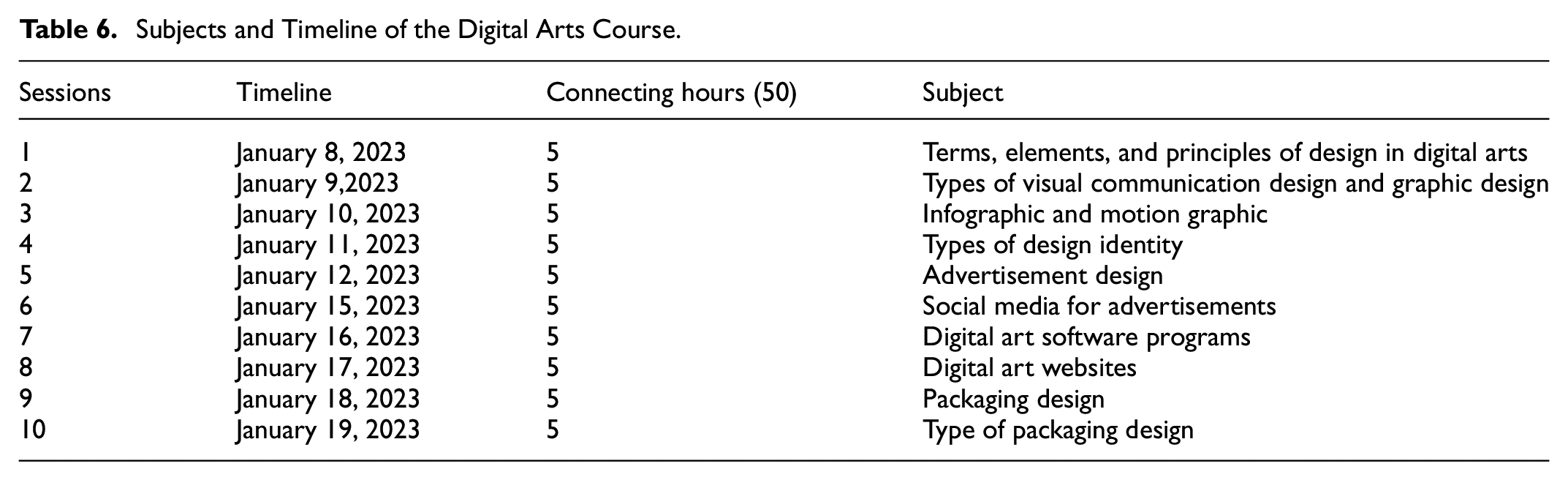
The researcher organized the course using four modules. The first module, “Getting started,” introduced the course through the following sections: Overview and introduction, welcome from the instructor, syllabus, course outline, course map, course calendar, and schedule and checklist. In addition, the researcher asked students to introduce themselves on the discussion board. Each student then posted and replied to at least one classmate and completed the pre-quiz. The instructor used a course map at the beginning of the course on Blackboard. The course map showed how the learning objectives or competencies were connected to the learning activities in Module 1. The researcher clearly stated the grading policy and the use of rubrics for each activity in the online course. Table 6 presents the different subjects of the course.
Subjects and Timeline of the Digital Arts Course.
General Standard 2: Assessment and Measurement
The researcher described the outcomes that she would accept from the students. The objectives or competencies were aligned with the assessments, instructional materials, learning activities, and course tools. These components must work together to support learners’ achievement of their objectives or competencies, as demonstrated by the successful completion of course assessments. The module objectives and module-level objectives of the course are given below (Quality Matters, n.d.).
General Standard 3: Learning Objectives (Competencies)
The main objective of the course was that upon completing the course, students will be able to identify, describe, and practice Digital Arts. The module-level objectives state that the student will be able to achieve the following:
Define different terms, elements, and principles of digital arts
Compare types of visual communication design and graphic design
Create infographics or motion graphics
Identify different types of design identity
Create a logotype for the design identity
Describe types of social media
Create one type of advertisement design and sharing in social media
Describe different types of packaging design
Draw packaging design by using technology tools
General Standard 4: Instructional Materials
YouTube videos, book chapters, and activities were posted in each module to help students in their self-learning. The researcher provided optional instructional materials, labeling them as optional, and explained in detail how they were relevant to the learning activities (Quality Matters, n.d.).
General Standard 5: Learning Activities and Learner Interaction
Learning activities must be aligned with the assessments, instructional materials, and course tools (Quality Matters, n.d.). The researcher engaged the students with activities and tasks such as drawing. Active learning involves guiding students to increase their level of responsibility for learning. When creating the online learning activities plan, the following types of interactions were considered: learner-learner (discussion boards) and learner-content (essays and websites). Alignment was ensured between objectives or competencies and assessments, instructional materials, learning activities, and course tools.
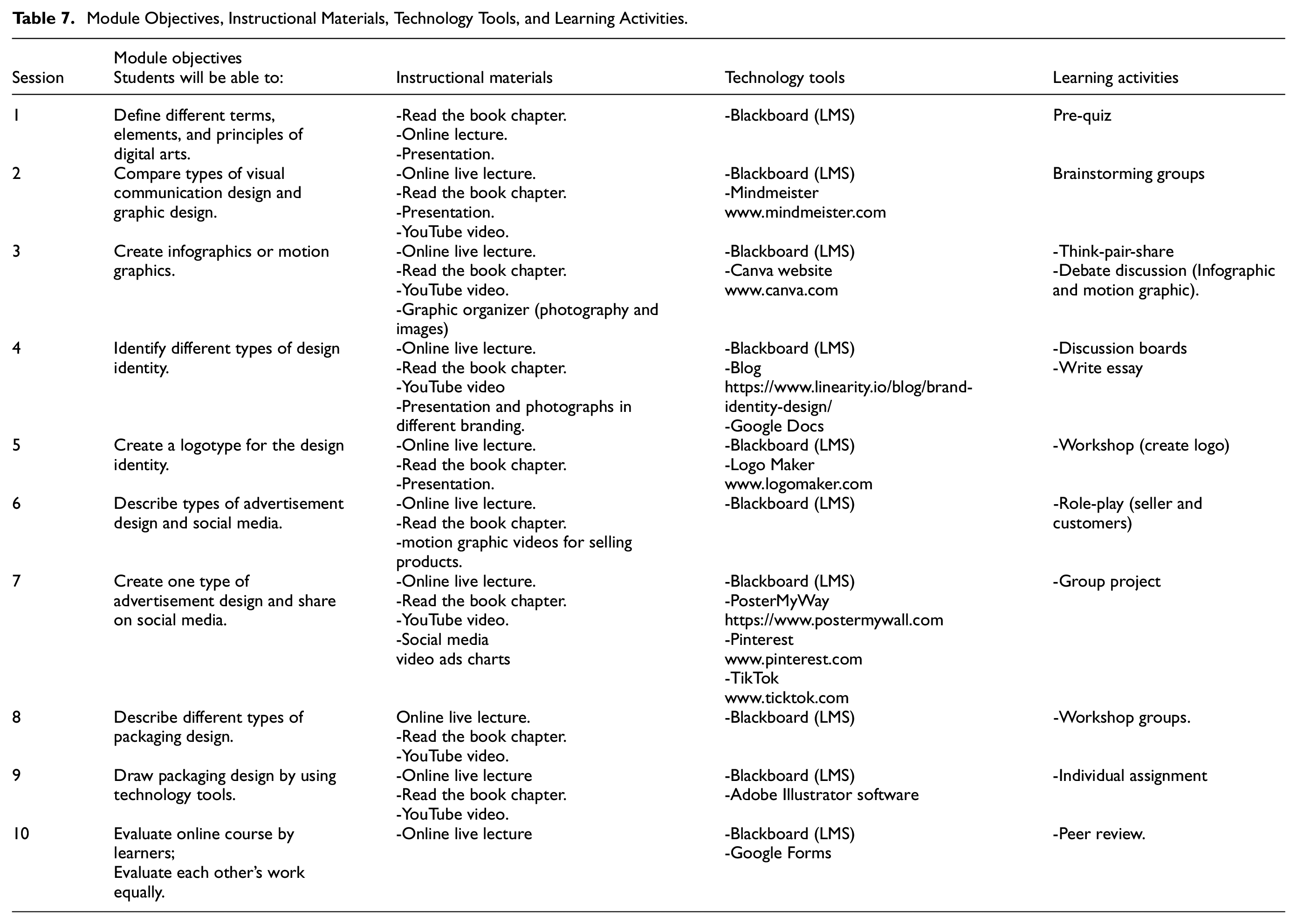
These components must work together to support learners’ achievement of their objectives or competencies, as demonstrated by the successful completion of course assessments (Quality Matters, n.d.). Table 7 shows the module-level objective lists and how the learning objectives or competencies were connected to the learning activities using technological tools. Educators can develop positive attitudes by encouraging students to select assessment methods based on their strengths, experiences, values, and learning needs. The instructor encouraged the students to acknowledge and respect each other’s cultural and gender differences positively.
Module Objectives, Instructional Materials, Technology Tools, and Learning Activities.
General Standard 6: Course Technology
The tools used in the course should support learning objectives and promote learner engagement through activities (Quality Matters, n.d.). The course technology includes a Blackboard as LMS, announcements, emails, synchronous tools, and technology tools used in activities. In addition, other technological tools are listed in each module’s activities. The instructor communicated with the learners using WhatsApp.
General Standard 7: Learner Support
Students found technical support as and when required in the syllabus of the online course. The researcher provided them with as many avenues for accessing this support as possible (Quality Matters, n.d.), including:
The link to the institution’s technical support website.
An e-mail address to contact the institution’s technical support center.
A phone number to contact the institution’s technical support center.
To support students to be successful in the course, the instructor posted the institution’s accessibility policy and how to obtain disability support services as well as links in the syllabus for all academic support services and resources available, including those providing access to library services, testing services, tutoring, non-native language services, the writing and math center, the online writing lab, and supplemental instruction programs.
General Standard 8: Accessibility and Usability
The instructor provided a better online course design to allow students to find items easily by organizing the course through modules. Navigation was consistent, logical, and efficient in the content area of the Blackboard. The university used Blackboard as the LMS for all levels of education, which made it more consistent for both instructors and students. Students found a table of contents that directed them to weekly modules. The instructor focused on ensuring the consistency of the layout because she wanted her students to become familiar with the course. She posted the links and attachments and ensured that they were worked. Additionally, the text and images used in the course were accessible to all students. The learning guidelines should be available online (Quality Matters, n.d.).
Theme 2: Enhance Learning Outcomes in a Mixed-Gender Environment Through Building Technology-Based Activities to Break Gender Segregation
The researcher was familiar with the language and culture of the learners in the online classroom. Hence, she adapted her teaching methods according to the gender of the learners and encouraged them to stretch beyond their comfort zones. Both females and males participated in the implementation, monitoring, and evaluation. The instructor developed strategies using different media, modes, active teaching methods, interactions, and digital technology to teach learners in a way they can understand, interact, and learn. Schmidt (2021) stated that since culture strongly influences the values, attitudes, and behaviors of students and teachers, teacher preparation programs must prepare teachers who can use the latest technology and bring a positive environment to the classroom. The latest technologies and techniques can be incorporated into the classroom and must be included in routine teacher preparation programs. Mixed-gender classrooms are beneficial because they allow students to learn about different communities and cultures.
Abdous and Yoshimura (2010) reported that students in online courses exhibit a better understanding of the course structure, better communication with the course staff, watching the videos lessens more, and higher engagement and satisfaction. The teacher set a plan to engage the students in collaborative activities in which they had the opportunity to share their unique experiences. Digital arts content was presented to enhance meaningful learning experiences for learners. The researcher selected different technological tools for distance education, such as LMS, social media tools, websites, mobile applications, and art software programs. The researcher also provided a variety of learning activities in an online environment, such as quizzes, brainstorming, role-play, think-pair-share, debates, discussion groups, workshops, and group projects.
In the current study, male and female learners participated in an online course, creating logs and graphic and infographic design projects. Some learners also enjoyed the peer review activity when they evaluated each other’s work and learned how to analyze a project according to the elements and principles of design using a rubric. Ong and Quek (2023) discussed how students engaging in online learning activities become more motivated to learn and improve their performance. This study elucidates the role of gender in the learning process. Both male and female learners demonstrated critical thinking and problem-solving skills. Importantly, they demonstrated cooperative behavior and completed the project on time, indicating that learning in a mixed-gender environment can be made enjoyable through various activities, which in turn would generate positive results through collaborative learning outcomes. Furthermore, the learners experienced a surge in confidence and interest as they sketched their ideas before utilizing the technology tools. Subsequently, they learned to use images and tools in software or web design. The learners gained knowledge of art and design and became more motivated. Learners of all genders reaped the benefits of using GRDP in the curricula and instruction in the Digital Arts online course, which allowed them to grasp the art and design content. Both males and females responded positively to being treated respectfully while communicating with the instructor or through teamwork. As previously mentioned, the students experienced a positive effect on their satisfaction, motivation, and ability to persist and learn from each other, which is a clear testament to the empowerment and motivation they felt.
Using technology in various learning activities enhanced gender-based learning outcomes, which supported the development of students’ skills in technology and the English language. Thus, technology has improved the accessibility and connectivity for learners of all genders in online classrooms. Gender equality facilitates equal rewards, resources, and socially valued goods for males and females. Alshehri et al. (2020) explain that females are not separate in terms of education. The results overlap with those of several e-learning studies in which male and female students are equally motivated to use technology tools such as LMS. Empowering females is critical to gender equality. Empowerment should focus on identifying and rectifying power imbalances and allowing females autonomy to manage their lives. Distance education programs that ignore students’ behavioral norms and gender inequality can prompt resistance, whereas CRT can improve student involvement.
Theme 3: Build Caring, Respectful, and Cooperative Relationships in Learning in a Mixed-Gender Environment
In the current study, females were allowed to discuss their views with their peers in an online mixed-gender classroom. The teacher encouraged them to communicate with the males and respect each other’s opinions. This is possible when a teacher respects learners’ views and does not discourage them from adopting different perspectives. Wiseman et al. (2018) discussed how significant professional development is for teachers to understand the important role of the cultural context around gender and information and communications technology in education. According to Al-Saggaf (2004), “…online communities change society,” and “people become self-confident, open-minded in their thinking, more aware of the personal characteristics of individuals within their society and less inhibited about the opposite gender” (p. 1).
In the current study, the learners responded that online education was changing their learning culture, in turn influencing online education. They indicated that online education helped them challenge cultural norms, enhance their learning culture, and improve their communication. The communication channel created by the online community between the two genders helped them better understand each other. Al-Saggaf (2004) explained that males’ multiple views and opinions make them open-minded in their thoughts and expressions. Thus, females became more confident because the online community provided a platform for their voices to be heard for the first time. This, in turn, increased their self-worth and gave them a sense of importance.
The teacher promoted community building and academic success by providing opportunities for social and emotional growth. The main objective of gender equality and cultural responsiveness is to systematically build respectful and caring relationships among learners, instructors, and peers in distance education. According to Gay (2018), caring is a significant pillar of a culturally responsive pedagogy for ethnically diverse students, binding individuals to society and communities. It manifests in teachers’ attitudes, expectations, and behaviors regarding students’ human values, intellectual capabilities, and performance responsibilities. According to Brown (2007), teachers must create a caring learning environment in which students interact with their peers in the classroom. Teachers must support the emotional environment and create a safe place for students to learn and trust their teachers and peers. Ultimately, the researcher treated all students respectfully, fairly, and understandingly, based on their context and culture in distance education through gender equality and cultural responsiveness. In Saudi Arabia, e-learning has improved the success of Saudi females in higher education and boosted gender equality in teaching and learning (Adham et al., 2016).
Theme 4: Saudi Society and Cultural Transformation to Empower Learners in a Mixed-Gender Environment
The Saudi government probed the impact of the change, and the Ministry of Education and the Ministry of Culture played a major role in this planned and methodological change, with shifts in thinking and practice. Khalife (2023) discussed the context of the cultural transformation that the Kingdom of Saudi Arabia has witnessed after the launch of Vision 2030; numerous social phenomena have surfaced, some of which have contributed to extensive change in both thinking and behavior. To a greater extent, distance education classrooms are gender-neutral and should provide an equal online environment for all learners. A female’s education and life are affected by conservative constraints and social norms, where gender stereotypes and culture impact shared views on specific domains (Alghneimin et al., 2024). However, in this study, female learners communicated with both male and female learners in the online classroom and felt safe and supportive. Online learning within MOOCs has developed a social interaction environment for learners to alleviate issues of gender segregation among female lecturers in higher education in Saudi Arabia. Teaching online courses is a positive experience, and teachers have the opportunity to teach both male and female students (Adham et al., 2016).
In the current study, the learners would freely chat and switch on the microphone to speak and share their ideas and were respectful toward each other. The researcher observed that some females preferred to be in the female group, and some males preferred to be in the male group. Although learners collaborate and communicate with each other in groups, some learners may not be adaptive to a changing culture. Some males still require power and control in society and education, as females are sensitive to communicating with males. The instructor developed a teaching strategy that respected the students’ culture and allowed them to choose their groups to feel more comfortable.
The researcher ensured ethics, social skills, potential links to students’ reality, local culture, and the use of GRDP in the curriculum. This teaching strategy allowed learners to grow in their specific fields and as successful individuals. A single teaching strategy can only consistently engage learners. Therefore, individual students must be guided to relate lesson contents to their cultural backgrounds (Parkhouse et al., 2019). Effective multicultural class settings must connect classroom content to learners’ backgrounds. Cultural responsiveness crosses cultures and disciplines to engage students and respect their cultural identities. Therefore, a culturally responsive pedagogy accommodates different religions, genders, classes, ethnicities, races, and families, thereby contributing to learners’ cultural identities (Miller et al., 2019).
In the current study, the learners built their knowledge, through social connectedness and cultural development, using real-world situations. Empowering females through e-learning is another step toward sustainable employment generation and social empowerment. Singh et al. (2022) discussed the role of education and e-learning in sustainable employment generation and social empowerment in Saudi Arabia. Integrating technology and implementing e-learning in higher education has expanded developmental opportunities for learners and has produced a positive social impact. It leads to social empowerment and sustainable employment by creating talented human resources. This follows the Vision 2030 framework initiatives of the Saudi Arabian government.
Conclusion
This study evaluated the experiences of learners in an online mixed-gender classroom and how distance education changes culturally responsive learners’ perspectives. This study highlights how distance learning encourages gender equality and breaks gender segregation in Saudi Arabia in teaching and learning through an online Digital Arts course using GRDP. The study addressed the first research question on the design of the online Digital Arts course using GRDP through activities. The researcher designed an online course which was “Digital Arts” using GRDP. Using technological tools eliminates the need to segregate gender in Saudi Arabia. Both males and females participated in the teamwork. The instructor used different types of activities in the online course, which led them to become more self-confident, open-minded, and to communicate more with each other. Significantly, they cooperated well and completed the project on time, indicating that learning involved various activities. This study provided positive results for collaborative learning among students of different genders. This study highlights important information on how technology changes Saudi culture and society and segregates gender. The results for CRP and technology use in education were positive in Saudi Arabia. Online courses are important technological tools in Saudi culture and society. This study answers the second question: “What is the outcome of CRT from a learner’s perspective in a mixed-gender learning environment?” The findings highlight the outcome of CRT from the learners’ perspective. Learners’ evaluations of the Digital Arts course revealed noteworthy insights. The highest percentages, which demonstrated strong agreement among learners, primarily focused on the positive aspects of online learning. Questions 1 to 14 demonstrated consistently high scores (92%–96%), demonstrating that learners overwhelmingly supported the online course and its cultural exchange, cost-effectiveness, collaborative nature, skill development, accessibility, contribution to equality, and job opportunities. The study revealed four main themes: (1) development of the curriculum and instruction using CRT in distance education; (2) enhancing learning outcomes by building a variety of technology-based activities to break gender segregation; (3) building caring, respectful, and cooperative relationships in a mixed-gender learning environment; and (4) Saudi society and cultural transformation to empower learners in a mixed-gender environment.
Female instructors can now teach both male and female online courses, eliminating the need for gender segregation. Based on the research findings, the following recommendations have been made for higher education institutions that provide not only art and design curricula but also other subjects:
Provide strength training in CRT use to faculty institutions and professional development organizations in education systems, locally and internationally.
Offers practical and technical education expertise for using CRT and support for learning processes by the Saudi government and local education authorities responsible for teachers’ and university leaders’ professional development.
Utilize CRT with various technologies to engage the art community beyond the online classroom.
Limitations of the Study and Recommendations for Future Research
This study had some limitations: time, geographical regions, and the number of participants in the online program. First, the study period was limited from the beginning of the research project, from January 1 to January 20, 2024. To make the program more successful, more time is needed to observe the mixed-gender community, for example, one semester at a university or community college. Second, the geographical regions needed to be expanded to cover other areas of Saudi Arabia. Many cities need to be covered to explore more perspectives regarding culturally responsive teaching in a mixed-gender online learning community, which requires more studies in this subject area. Finally, the number of males and females who attended the online course was 87; more participants are required to provide more diverse learners’ experiences and perspectives in an online mixed-gender classroom in Saudi Arabia.
Footnotes
Acknowledgements
I would like to thank Sage Auther Services via Editage for English language editing.

Ethical Considerations
This study has been reviewed and approved by the Research Ethics Committee (REC) of the University on May 27, 2024 (no. H-2024-354).
Author Contributions
The author confirms the sole responsibility for the conception of the study, presented results, and manuscript preparation.
Funding
The author received no financial support for the research, authorship, and/or publication of this article.
Declaration of Conflicting Interests
The author declared no potential conflicts of interest with respect to the research, authorship, and/or publication of this article.
Data Availability Statement
The data that support the findings of this study are available from the corresponding author upon reasonable request.