




Abstract
Breast cancer is now a worldwide problem, yet it is still detected in its advanced stages. Breast self-examination is an easy and cost effective method which is helpful in early detection of breast cancer that everyone can practice. This study was aims to assess the knowledge of breast cancer, practice of breast self-examination and associated factors among reproductive age women. A community based cross-sectional study with a convergent qualitative study design was conducted among 624 women of reproductive age of Dire Wareda, Borana zone, Ethiopia. Multistage sampling technique for quantitative and purposive sampling for qualitative part was used to select the study participants. Interviewer administered questionnaires for quantitative study and semi-structured questionnaires for qualitative study were used to collect data. For analysis, quantitative data was exported to SPSS version 25. In bivariate logistic regressions analysis, variables having p-value < .25 were candidate for multivariable logistic regression analysis. Significantly associated variables were reported on adjusted odds ratio (AOR) with 95% confidence interval and p-value < .05. Narrative analysis was done for qualitative result manually. Overall, 198 (32.4%) of women had good knowledge about breast cancer, and only 30 (4.9%) were ever practiced breast self-examination. Women who had high income and learned high school and above were 3 times more likely to knew about breast cancer than those who had low income and had no formal education, AOR = 3.37 (95% CI [1.91, 5.95]) and AOR = 3.54 (95% CI [1.96, 6.37]) respectively. Women aged from 25 to 34 were 6 times more likely to knew about breast cancer as compared to women aged from 15 to 24, AOR = 6.12 (95% CI [2.85, 13.14]). Employed women were 2 times more likely to know about breast cancer than housewives, AOR = 2.12 (95% CI [1.11, 4.06]). Women who educated high school and above were 2 times more likely to practice breast self-examination than women who had no formal education AOR = 2.91 (95% CI [1.09, 7.79]). Employed women 3 times more likely to practice breast self-examination than housewives, AOR = 3.2 (95% CI [1.27, 8.99]). This study identified that the knowledge of breast cancer and practice of breast self-examination were poor among women of reproductive age in the study area as compared to other studies. Stakeholders and concerned bodies should arrange and participate in teaching the community on breast cancer and practice of breast self-examination.
Plain language summary
The study found that, in comparison to other studies carried out in Ethiopia, there was a general lack of knowledge about breast cancer and a low practice of breast self-examination. Women were unable to undertake breast self-examination primarily due to ignorance. The knowledge of breast cancer was correlated with characteristics such as age, occupation (employed), high income, and educational attainment; the practice of breast self-examination was correlated with factors such as higher educational attainment and occupation (employed women). The current qualitative study found and explained that there was little breast self-examination practice. The main obstacles to breast self-examination practice were inadequate information, ignorance of the practice, and a lack of commitment on the part of the relevant body to raise awareness of breasts.
Introduction
Breast cancer is a type of cancer that develops in the breast and spreads to other parts of the body (American Cancer Society, 2017). Breast cancer is the leading cause of cancer death in African women, accounting for 28% of all cancers and 20% of all cancer fatalities (Clegg-Lamptey, 2016). Incidence rates in Africa are still relatively low, with most nations reporting rates of less than 35 per 100,000 women (compared to about 90–120 per 100,000 in Europe or North America; Clegg-Lamptey, 2016). Late-stage presentation is largely to blame for low survival rates in Sub-Saharan Africa, according to a survey based on 83 studies from 17 countries in Sub-Saharan Africa, 77% of all staged cases were stage III/IV at the time of diagnosis because coordinated population-based mammography screening programs in low-resource areas may not be cost-effective or practicable (Jedy-Agba et al., 2016).
Despite the development of many technologies and advanced care in recent years, female breast cancer has surpassed the number of new incidence of lung cancer for the first time, with 2.3 million cases diagnosed in 2020 and accounting for 11.7% of all new cases of cancer worldwide (International Agency for Research on Cancer - World Health Organization, 2021; Lera et al., 2020; Sung et al., 2021). In 2019, women diagnosed with 268,600 new incidence of invasive breast cancer and it is estimated to claim the lives of 41,760 women (Shumway et al., 2020).
Breast cancer is the leading cause of cancer death in African women, accounting for 28% of all cancers and 20% of all cancer fatalities (Clegg-Lamptey, 2016). Incidence rates in Africa are still relatively low, with most nations reporting rates of less than 35 per 100,000 women (compared to about 90–120 per 100,000 in Europe or North America; Clegg-Lamptey, 2016). Late-stage presentation is largely to blame for low survival rates in Sub-Saharan Africa, according to a survey based on 83 studies from 17 countries in Sub-Saharan Africa, 77% of all staged cases were stage III/IV at the time of diagnosis because coordinated population-based mammography screening programs in low-resource areas may not be cost-effective or practicable (Jedy-Agba et al., 2016).
In 2020, breast cancer is the most common diagnosed new cases of all female cancers in Ethiopia accounting about 16,133 (31.9%; Joko-Fru et al., 2020). In rural Ethiopia, among, 7,573 only half of the women were aware of breast self-examinations, and only one in eight had done so in the past. After becoming aware of aberrant breast changes, just one-third of the women sought formal medical help and, this study recommends that breast cancer awareness initiatives may help to educate the public (Ayele et al., 2021).
Breast cancer (30.2%) is the most frequent cancers among Ethiopian women accounting for around two-thirds of all cancer deaths each year. Low awareness of cancer signs and symptoms, insufficient screening, early detection, and treatment services, and insufficient diagnostic and treatment facilities are the main causes of high cancer mortality (Ethiopian Ministry of Health, 2021). In these conditions, BSE is the greatest option for early detection of breast cancer due to the fact that it is free, safe and everybody can perform at their home. Many studies regarding knowledge of breast cancer and breast self-examination has been performed on female health workers, students and at urban residents, but a small number of researches were conducted on rural pastoralist community on the topic. Many researches showed that women from rural area presented with advanced stage of cancer diseases, among which breast cancer is the commonest one. From principal investigator level of literature review, there was no such study conducted at Dire wareda Borena zone pastoralist area. Thus, the study might fill the gap (Terfa et al., 2021).
Breast self-examination is an easy method which is helpful in early detection of breast cancer and decrease late-staged cancer presentation, improves utilization of health system resources. The findings of this studies supports the strategies of Ethiopian health system transformation plan II in providing information for local health officers and policy makers; Community will be aware of breast cancer and BSE practice and it motivates scholars and researchers in the field. Research questions: what is knowledge of breast cancer, what is magnitude of breast self-examination practice, what are the factor associated with BSE practice?
The conceptual framework was taken by reviewing related literatures (Hussen et al., 2019; Mathew, 2021; Mohammed, 2020; Safiya, 2017; Shallo & Boru, 2019; Terfa et al., 2020, 2021; Figure 1).
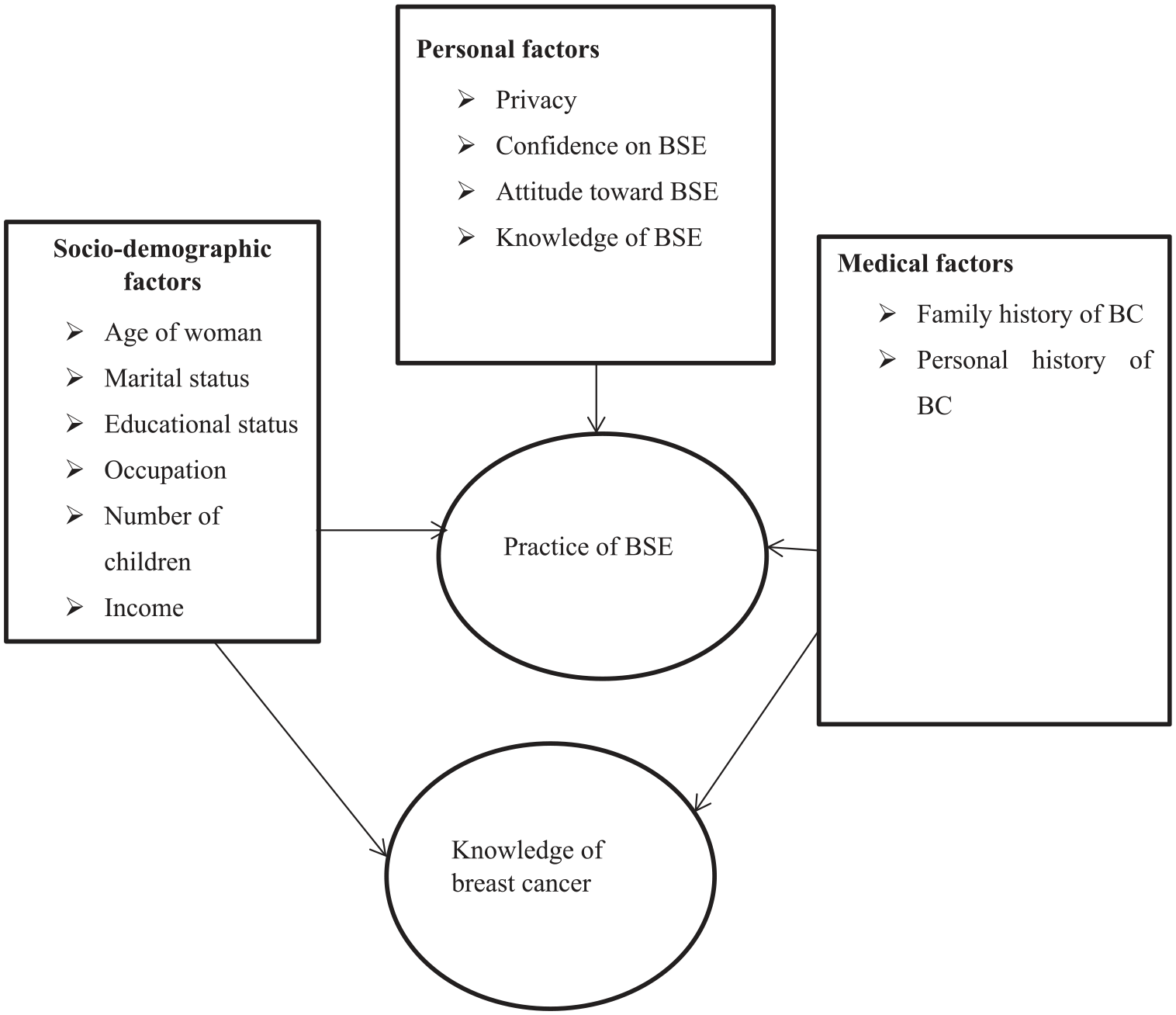
Conceptual framework adapted by reviewing different literatures for the study conducted among reproductive age women of Dire wareda, Borena zone, Ethiopia, 2022.
Methods and Materials
Study Design and Setting
Community based cross-sectional study design convergent by qualitative study was conducted in rural kebeles of Dire woreda from May 18 to June 18, 2022. Dire woreda is one of the administrative woredas of Borena zone. According to 2019 central statistical agency population projection, Dire woreda has a total population of 99,992 people, with 50,184 males and 49,808 females (Central Statistics Agency, 2019). Currently, according to the woreda’s health office 2014 E.C plan, the woreda has 12,086 reproductive age women and 11,378 households (Central Statistics Agency, 2019).
Dire woreda’s administrative center is Mega town. It’s in the country’s south, 100 km from, Yabelo, the center of borena zone and 668 km from the capital, Addis Ababa, on the road to Moyale. Dire is bordered on the south by Miyo woreda, on the west by Dillo, on the north by Dubuluk, on the northeast by Arero, and on the east by Moyale. The woreda has total of 11 kebeles (10 rural and 1 urban kebele).
Population
Source Population
Study Population
Eligible reproductive age women (15–49 years), living in the Dire woreda rural kebeles during study period.
Sample Size Determination for Quantitative Study
For first objective the required sample size was estimated using a single population proportion formula with a 95 percent confidence interval (CI), a 5% margin of error, and using 56.2% proportion of women who were knowledgeable about breast cancer from Bale zone, Ethiopia (Hussen et al., 2019; Table 1).
Sample Size Calculation by Single Population Proportion for the Research Conducted on Knowledge of Breast Cancer, Practice of Breast Self-Examination and Associated Factors Among Reproductive Age Women of Dire Wareda, Borena zone, Ethiopia, 2022.

The sample objectives 2, 3, and 4 were calculated by using statcalc function of Epi Info version 7.2.5.0 software, and the maximum calculated sample size has been taken for this study with a 95% confidence interval (CI), a 5% margin of error (Table 2).
Sample Size Calculation by Different Factors for the Research Conducted on Knowledge of Breast Cancer, Practice of Breast Self-Examination and Associated Factors Among Reproductive Age Women of Dire Wareda, Borena zone, Ethiopia, 2022.
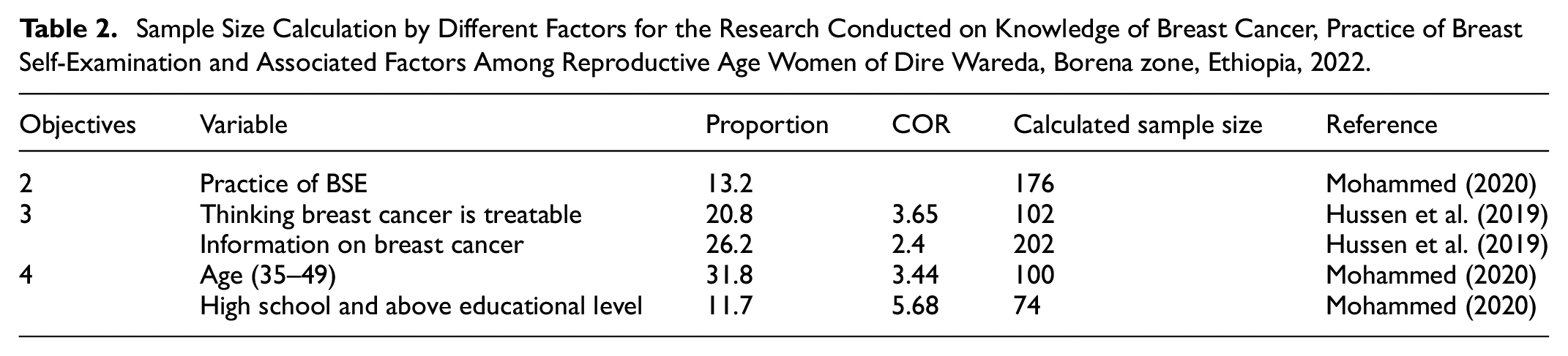
By adding design effect (×1.5) and 10% of non- respondent rate, the
Sample Size Determination for Qualitative Study
A total of 16 women were interviewed, 4 from Dida mega kebele, 3 from soda, 2 from romso, 3 from haralo, and 4 from madhecho kebele.
Sampling Technique for Quantitative Study
Multistage sampling technique was used to select study participants. There are 10 rural kebele’s (kebele is the smallest administrative unit in Ethiopia) in the woreda. First, 5 kebeles were selected by simple random sampling method. Lists of all eligible women with their household were identified by using family folder from each kebele’s health post in collaboration with health extension workers. Sampling frame (list of households) was prepared for each kebele based on eligible women in the household. Finally, simple random sampling method was used to select study participants. In case of more than one reproductive age women in the household, the study participant was selected by lottery method. The sample size for each selected kebele was proportionally allocated to the number of eligible women in the household to give equal chance of participation. Finally 624 sample size was included in the quantitative data. The following schematic diagram shows the sampling procedure (Figure 2).

Sample size proportionally allocated to selected kebele’s for the study conducted among reproductive age women of Dire wareda, Borena zone, Ethiopia, 2022.
Sampling Technique for Qualitative Study
For the qualitative data, a purposive sampling technique was used to select the 16 study participants. From each selected kebele, eligible women were interviewed until the saturation point was reached by ensuring that the participants were not included in the quantitative study. The study participants for the face-to-face in-depth interview were reproductive age women who are over 18 years old and living in the area for at least of 6 months and who had information, education, awareness, or training on breast cancer and breast self-examination in collaboration with health extension workers.
Data Collection Tool for Quantitative Study
For the quantitative study, pretested and interviewer-administered electronic data collection tool, kobo toolbox mobile, device was used. The questionnaires were developed by reviewing similar articles (Maggie, 2015), American Cancer Society and WHO checklists prepared to assess knowledge of breast cancer and practice of BSE (Barry et al., 2018; National & Pillars, 2018; Quality of Life Group, 2018). After an extensive literature search, the various survey questions were formulated and the questionnaire was divided into seven sections: socio-demographic characteristics, questions related to wealth index of household, knowledge about breast cancer, knowledge of BSE, the practice of breast self- examination, attitude toward BSE, personal and family history of breast cancer. The questionnaires were prepared in English and had translated into Afaan Oromo, then back to English to ensure the consistency by language experts.
Data Collection Tool for Qualitative Study
For qualitative studies, face-to-face in-depth interviews data was collected by Afaan Oromo by using semi-structured guide for in-depth interview. The guide were prepared in English by investigator and translated to Afaan Oromo by language expert and check by advisors for more clarity. The in-depth interview guide has a list of points such as identification, barriers toward the knowledge of breast cancer and practice of breast self-examination and with follow up probes by taking short notes.
Data Collection Procedure for Quantitative Study
After having list of all eligible women in the household, data were collected using semi-structured face-to-face interview method. Five health extension workers and one BSc midwife and one public health officer as supervisor were recruited for data collection. For women who were not present during data collection time, re-visit for at least of 3 times were arranged. If a woman was still unavailable or refused to participate after the third visit, the household was skipped and the immediately following household in the sample frame was visited.
Data Collection Procedure for Qualitative Study
Two females with principal investigator were employed to conduct data collection. Every interview was conducted at quite space in the selected area and time was convenient for the participants. During interview each person has his/her own role, one female interviewer, one facilitator and principal investigator as note taker. During interview the note was taken and data was recorded via digital recorder (audio recorder) and each interview took 30 to 45 min.
Inclusion Criteria
Eligible reproductive age women who reside in the selected district for at least of 6 months during data collection period were included for quantitative study.
Reproductive age women from 18 to 49 years that are believed to have information on breast cancer and practice of breast self-examination were included for face-to-face in-depth interview purposively for qualitative study.
Exclusion Criteria
Respondents unable to respond the questions, due to illness were excluded from the study.
Dependent Variables
➢ Knowledge of breast cancer
➢ Practice of breast self-examination
Independent Variables
Socio-demographic factors (Age of women, marital status, educational level, occupation of the women, number of children, family income), knowledge of breast self-examination, attitude toward breast self-examination, family, and personal history of breast cancer.
Operational Definitions
Data Process and Analysis for Quantitative Study
Data exported and downloaded from kobo toolbox through excel and then converted to SPSS version 25 software package to edit, clean for missing values, and finally for analyses.
Descriptive statistics, like frequencies, proportions, mean, and media were used to present data. Binary logistic regression analysis was carried out to determine the association between independent variables and dependent variables among the study participants with a 95% confidence interval. The variables at p-value < .25 were candidate for multivariable logistic regression to control possible confounding effect. Hosmer and Lemeshow were used to test model goodness of fit and it was well fitted. No multicollinearity between independent variables seen (VIF found to be <2 for all independent variables). Statistical significance was declared at p-value of <.05 and the indicators of outcome variables were identified accordingly. Significantly associated variables were reported on adjusted odds ratio (AOR), p-value and confidence interval. The income and attitude of respondents were analyzed by principal component analysis. The income was classified into three components (low, middle, high income) and the attitude of participants was classified into two (negative and positive attitude) after computed. Knowledge of breast cancer was assessed by six sets of questions which include information about breast cancer, sources of information, causes of breast cancer, risk factors, sign and symptoms of breast cancer, and early detection methods and practice of breast self-examination was assessed by eight categorical variables. Each response has categorized as 1 for correct answer and 0 for incorrect answer and computed for final analysis.
Data Process and Analysis for Qualitative Study
Qualitative data was obtained from participants’ conversations in afaan orormo and tapes recordings were transcribed into text by own words of participants and then translated into English by language experts. Narrative analysis was conducted in congruent with the respondents’ own words under selected themes and summarized manually.
Data Quality Control for Quantitative Study
Data collection tool was adapted after an intensive review of relevant literature from similar studies. Then the questionnaire was pre-tested on 55 reproductive age women at Dida Jarsa kebele before conducting actual data collection. Internal consistency among questionnaires items was 0.8 Cronbach’s alpha and considered within acceptable range. Two days training was given to data collectors and supervisors on the objective of the research, eligible study participants, data collection tools and procedures, interview method, and what to do if the study participant is not present during data collection time. On every day of data collection time, the investigator has been communicated with data collectors and supervisors and some collected data was checked by investigator and any forwarded problem was managed accordingly.
After data has been collected, it was checked for completeness, accuracy, clarity and consistency by principal investigator and necessary correction was done. After data has been converted to SPSS, the outliers, missing values and fulfillment of assumption was done through running descriptive statistics and data cleaning measure was taken before data analysis.
Data Quality Control for Qualitative Study
To ensure the quality of data, the following trustworthiness has been considered.
Credibility (Related to Internal Validity)
To ensure the reliability of the research findings, the in-depth interview guideline was assessed prior to data collection. Participants were briefed on the purpose of the interview and their responsibilities to minimize disruptions and uphold their rights throughout the process (Hussein et al., 2023).
Transferability (Related to Generalizability)
To enhance the transferability of the findings, relevant probing techniques were employed to gather comprehensive details from participants’ responses. Additionally, thorough field notes and audio recordings were collected for all in-depth interviews (Hussein et al., 2023).
Dependability (Related to Reliability)
Dependability involves ensuring that research questions are clearly defined and align with the study design while maintaining transparency in the researcher’s role and data collection methods. To uphold the dependability of the research findings, participants reviewed preliminary results to identify errors and address potential misinterpretations. Additionally, the researcher’s interpretations were critically examined through group discussions with data collectors and supervisors during the preliminary analysis phase (Hussein et al., 2023).
Conformability (Related to Objectives)
To ensure the confirmability of the findings, the in-depth interview guidelines were strictly adhered to, and the interviews were conducted by two female interviewers to encourage participants to respond openly to the discussed topics (Hussein et al., 2023).
Results
Quantitative Part Results
Socio-Demographic Characteristics of Respondents
Out of 624 planned, 611 participants gave complete response, which provides response of rate of 98%. Regarding respondents’ characteristics, high proportion 271 (44.4%) were age from 25 to 34 with mean age of 31.61, majority of the respondents (76.8%) were married. Regarding educational level and occupation, more than half (59.7%) of the participants had no formal education and 68.1% of them were housewives. Around half (46.6%) of the participants had three and above children while 16% never gave birth (Tables 3 and 4).
Distribution of Socio-Demographic Characteristics of Respondents on Knowledge of Breast Cancer, Practice of Breast Self-Examination and Associated Factors Among Reproductive Age Women of Dire Woreda, Borena Zone, South Ethiopia, 2022 (N = 611).

Wealth Index Classification for the Study Conducted on Knowledge of Breast Cancer, Practice of Breast Self-Examination and Associated Factors Among Reproductive Age Women of Dire Wareda, Borena Zone, Ethiopia, 2022.

Respondents Knowledge of Breast Cancer (N = 611)
Knowledge of breast cancer was assessed by six main questions which cover information about breast cancer, sources of information, causes of breast cancer, risk factors, sign and symptoms of breast cancer, and early detection methods of breast cancer.
Overall 32.4%, 95% CI [28.8, 35.8], (SD = 1.8) of respondents had good knowledge about breast cancer (Figure 3), while 67.4%, 95% CI [64.2, 71.2] had poor knowledge about breast cancer. Among respondents, 199 (32.6%) knew (heard or read) about breast cancer and their major sources of information were healthcare providers 79 (39.7%), peer/family 61 (30.6%), the media (radio or TV) 37 (18.6%) and books and magazines 22 (11.1%). Among 199 respondents 180 (90.5%) of them knew at least one sign and symptom of breast cancer and, breast lump and ulceration were reported by 143 of the respondents as the sign and symptom of breast cancer. Among respondents who ever heard about breast cancer, 106 (53.3%) responded mammography as the means of early detection method of breast cancer and 18 (9%) of them knew BSE as early detection method of breast cancer (Tables 5 and 6).
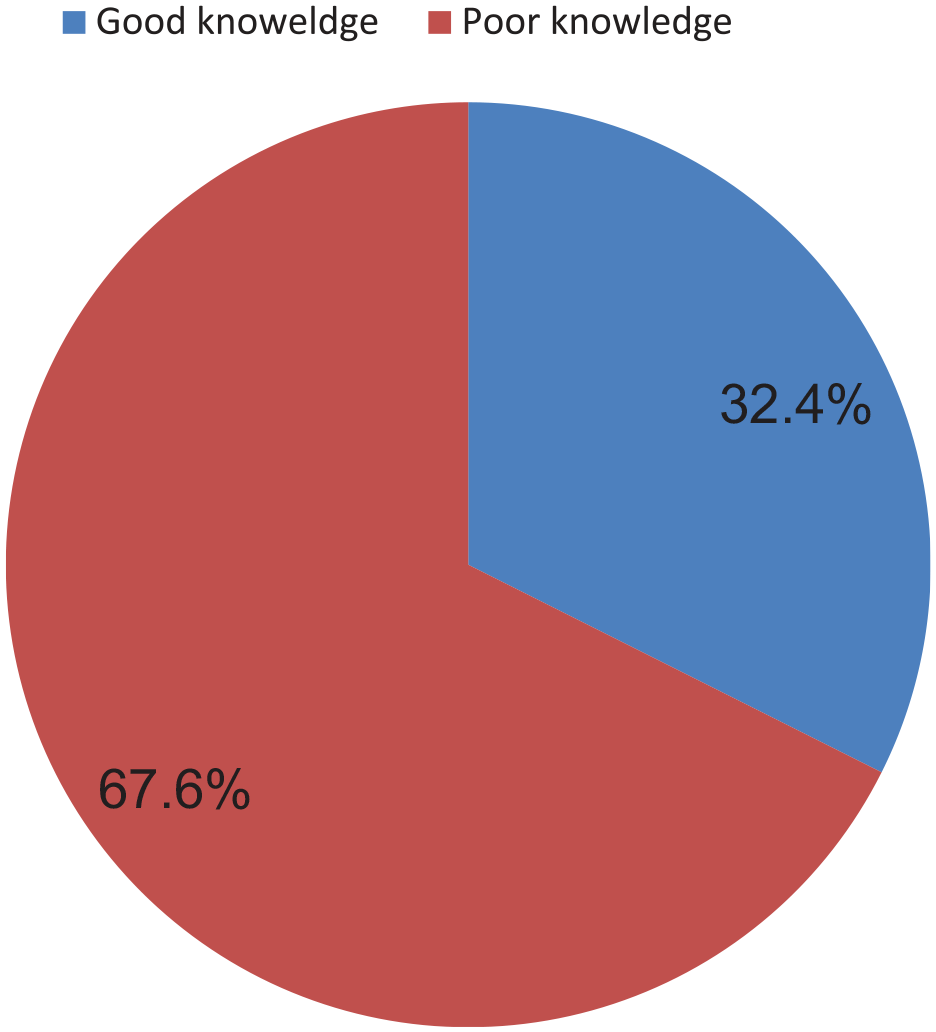
Respondents Breast cancer knowledge level among reproductive age women of Dire woreda, Borena zone, South Ethiopia, 2022 (N = 611).
Knowledge of Breast Cancer Among Reproductive Age Women of Dire Woreda, Borena Zone, Ethiopia, 2022.

Indicates the presence of multiple responses.
Knowledge of Breast Cancer Among Reproductive Age Women of Dire Woreda, Borena Zone, Ethiopia, 2022.

Indicates the presence of multiple responses.
Respondent’s Knowledge of Breast Self-Examination
From total respondents only 122 (20%) had ever heard about breast self- examination and health personals were the main source of information 83 (68%), and regarding the methods of breast self-examination, 117 (96%) were knew at least one method of breast-self-examination. Regarding the techniques of breast self-examination, 118 (97%) knew at least one technique of breast self-examination, in which circular technique is reported by 99 respondents. Overall, only 115 (18.8%), 95% CI [15.5, 21.9], SD 1.6 of the respondents had adequate knowledge about breast self-examination, while 496 (81.2%), 95% CI [78, 84.3] had inadequate knowledge (Tables 7 and 8).
Knowledge of Breast Self-Examination Among Reproductive Age Women of Dire Woreda, Borena Zone, South Ethiopia, 2022.

Indicate the presence of multiple response.
Knowledge of Breast Self-Examination Among Reproductive Age Women of Dire Woreda, Borena Zone, South Ethiopia, 2022.

Indicate the presence of multiple response.
Findings on Attitude Toward Breast Self-Examination
The results from respondents’ attitudes toward breast self-examination were measured by using a likert scale of 1 to 5. This was presented as 1 = strongly disagree (SD), 2 = disagree (D), 3 = neutral (NS) 4 = agree (A) and 5 = strongly agree (SA). Overall, among the respondents 320 (52.4%), 95% CI [48.3, 56.3], (SD = 2) had negative attitude toward breast self-examination, while 291 (47.6%), 95% CI [43.7, 51.7], (SD = 2) had positive attitude (Table 9).
Attitude Toward Breast Self-Examination Among Reproductive Age Women of Dire Woreda, Borena Zone, Ethiopia, 2022 (N = 611).

Note. SD = strongly disagree; D = disagree; NS = neutral, no idea; A = agree; SA = strongly agree.
Respondents’ Personal and Family History of Breast Cancer
Of the participants, 17 (2.8%) had a family history of breast cancer while 2 (0.3%) had a personal history of breast cancer, and 123 (20.1%) believe that any women can develop breast cancer.
Participants’ Practice of Breast Self-Examination
Among total respondents only, 30 (4.9%), 95% CI [3.1, 6.7] had practiced breast self-examination in the Dire woreda Borena zone, among which 22 (73.3%) practiced occasionally, 8 (26.7%) on regular basis (each month or often), 23 (76.7%) had performed a week after period, 26 (86.7%) inspected their breast in the mirror. From respondents who had practiced breast self-examination 15 (50%) looked for shape and site of breast feeling for lump (mass; Table 10).
Practice of Breast Self-Examination Among Reproductive Age Women of Dire Woreda, Borena Zone, Ethiopia, 2022.

Logistic Regression Analysis of Factors Associated Toward Knowledge of Breast Cancer
The associations of factors such as family income, marital status of women, educational level of women, occupation of women, age of women, and family and personal history of breast cancer of the respondents with knowledge of breast cancer were investigated by using binary logistic regression analysis. Those variables having a p-value of .25 were candidates for multivariable logistic regression analysis. These include the age of respondents, family income, marital status of women, occupation of women, women’s educational level, and family history of breast cancer. Finally, variables, including high family income, educational level of women, occupation of women, and age of women, were significantly associated with the knowledge of breast cancer.
Women who had high family income were 3 times more likely to know about breast cancer than those who had a low income, AOR = 3.37, 95% CI [1.91, 5.95]. Women who learned in high school and above were 3 times more likely to know about breast cancer than those who had no formal education, AOR = 3.54, 95% CI [1.96, 6.37]. Women aged 25 to 34 were six times more likely than women aged 15 to 24 to know about breast cancer; AOR = 6.12, 95% CI [2.85, 13.14]. Similarly, employed women were 2 times more likely to know about breast cancer than housewives, AOR = 2.12, 95% CI [1.11, 4.06] (Tables 11 and 12).
Bivariable Logistic Regression Analysis of the Knowledge of Breast Cancer Among Reproductive Age Women of Dire Wareda, Borena Zone, Ethiopia, 2022.
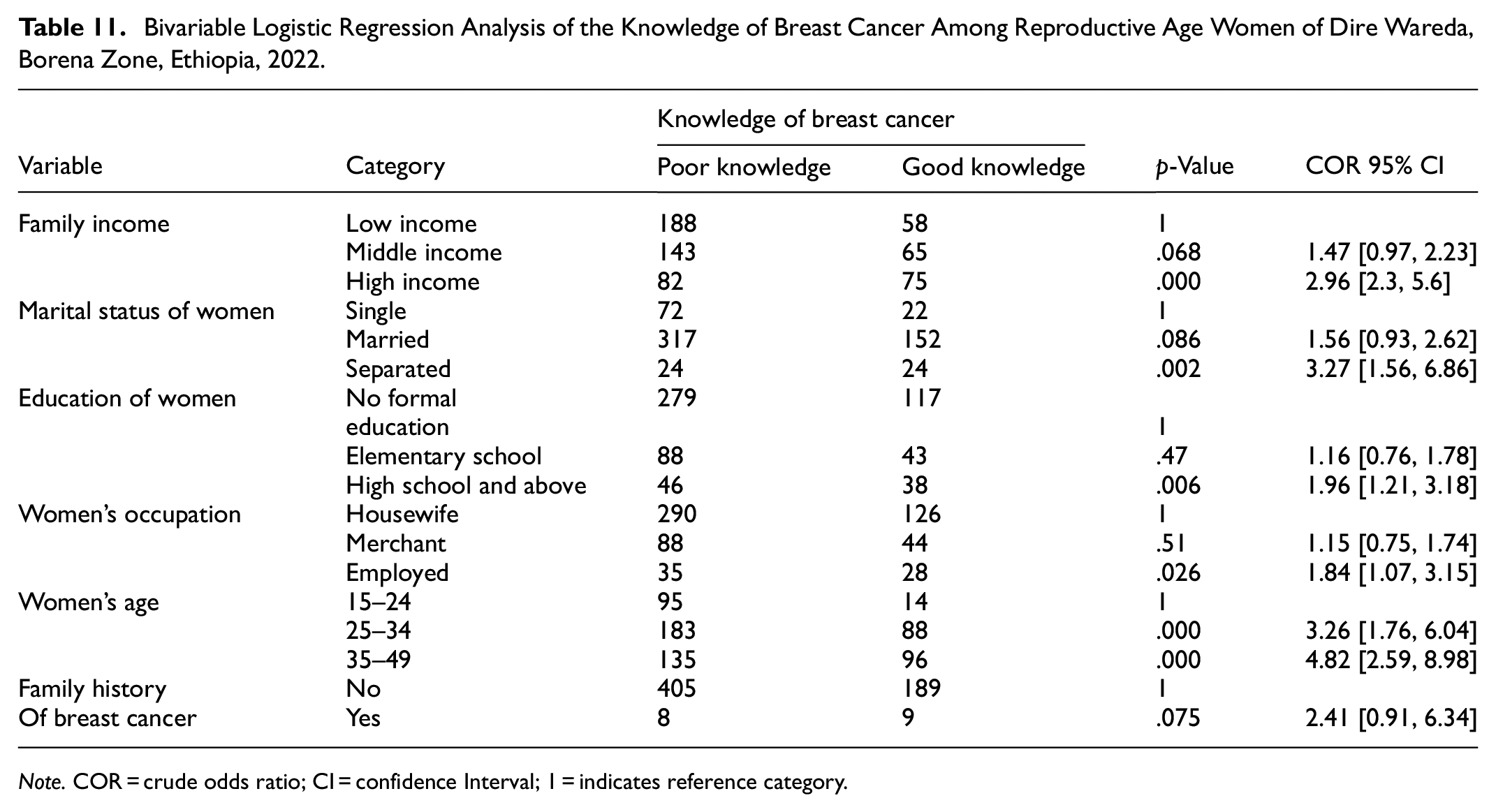
Note. COR = crude odds ratio; CI = confidence Interval; 1 = indicates reference category.
Multivariable Logistic Regression Analysis of the Factors Associated Toward Knowledge of Breast Cancer Among Reproductive Age Women of Dire Wareda, Borena, Ethiopia 2022.

Note. AOR = adjusted odds ratio; CI = confidence interval; 1 = indicates reference category.
Logistic Regression Analysis of Factors Associated Toward Practice of Breast Self-Examination
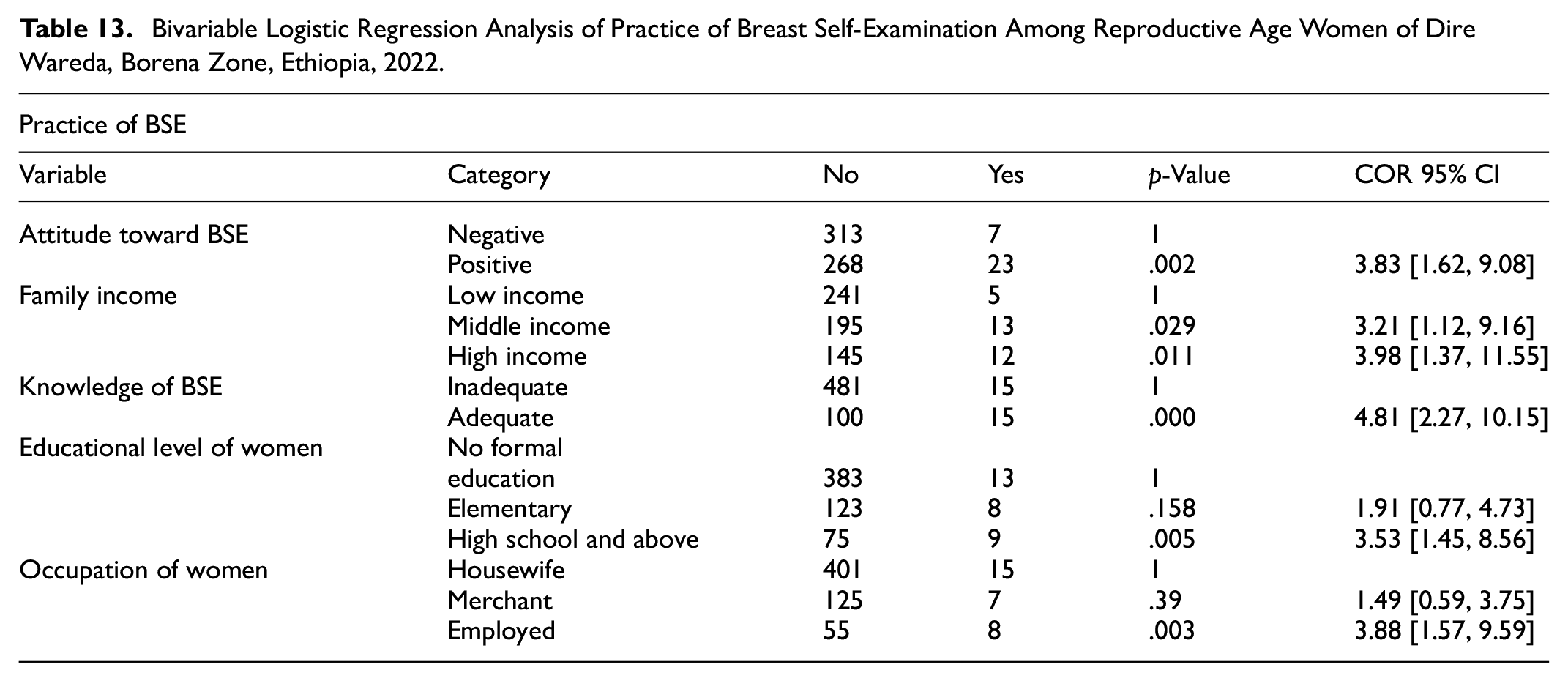
The association of different background factors of the respondents’ with practice of breast self-examination was investigated by using binary logistic regression analysis. Variables such as attitude of respondents toward BSE, age of participants, income, marital status of women, occupation, educational level, personal history of breast cancer, family history of breast cancer, number of children of respondents and knowledge of breast self-examination were analyzed under binary logistic regression. Variables with p-value < .25 were candidate for multivariable logistic regression to control confounding effect among variables. These include attitude toward BSE, educational level, occupation, knowledge of BSE, and income of the respondents. Finally, only two variables namely educational level and occupation were statistically significant with practice of breast self-examination. However, there was no observed association between practice of breast self-examination and attitude toward BSE, marital status, knowledge of breast self-examination, age, and a number of children the women had personal and family history of breast cancer.
Women who learnt high school and above were 2 times more likely to practice breast self-examination than women who had no formal education AOR = 2.91 (95% CI [1.09, 7.79]). Employed women were 3 times more likely to practice breast self-examination than housewives, AOR = 3.2 (95% CI [1.27, 8.99]; Tables 13 and 14).
Bivariable Logistic Regression Analysis of Practice of Breast Self-Examination Among Reproductive Age Women of Dire Wareda, Borena Zone, Ethiopia, 2022.
Multivariable Logistic Regression Analysis of the Practice of Breast Self-Examination Among Reproductive Age Women of Dire Wareda, Borena Zone, Ethiopia, 2022.

Qualitative Research Findings Section
The study identified two main themes with nine subthemes. The first theme was awareness of BSE practice and the second theme was challenges and barriers in the practice of BSE (Table 15).
Themes and Sub-Themes Emanating From In-depth Interview About Practice of BSE Among Women of Reproductive Age in Dire Woreda, Borena Zone, Ethiopia, 2022.

Description of Participants
All participants who involved in the in-depth interview were women who had information on breast cancer and breast self-examination, including community leaders who had previously trained on breast self-examination, health extension workers, member of kebele’s women association, and women health professionals. A total of 16 women were interviewed for this qualitative section study. The ages of participants were ranged from 23 to 37 years and their educational level is different, eight women have no formal education, five women have diploma and three of them have university degree. The saturation of the idea was reached on 12th respondent.
Theme 1: Practice of Breast Self-Examination
The overall practice of breast self-examination by the respondents is low. Even if the women have been heard about practice of breast self-examination, they don’t practices it, because they don’t know how to perform BSE, timing of BSE, frequency of BSE, and the right age to start BSE.
A 25-year-old housewife stated…“I trained breast self-examination at a zonal level many years ago, and I have used to practicing it by looking in the mirror while I have a shower, sometimes when I feed my child, I palpate a hard mass with my hand, my breast should be soft and relaxed, it is expected of healthcare workers to teach women how to practice breast self-examination over time, training women at an appropriate time of breast self-examination, if I examine my breast and I can detect something abnormal, I would seek treatment before it reaches the dangerous stage.”
A 28-year-old health extension worker showed…“I used to do breast self-examination every month, and I also teach women how to do breast self-examination and breast self-examination when they come to our health post; it is a useful tool for detecting breast abnormality at an early stage, as much as possible, all women should perform breast self-examination every month.”
Another 28-year-old civil servant stated…“I have been performing breast self-examination monthly or when I feel discomfort in my breast by palpating with my hand, sometimes looking in the mirror, I think it is a good method to check breast health at home and it has no cost.”
In addition, a 29-year-old housewife, a member of Kebeles Women’s Association, stated…“I have heard breast self-examination from health extension workers, it should be performed monthly by looking in the mirror, women should also examine their breasts during pregnancy and when they visit healthcare facilities for family planning, I didn’t practice breast self-examination regularly, but sometimes I look for a mass, it should be removed.”
Another 25-year-old merchant stated: “I have heard about breast self-examination from my neighbor, I didn’t practice it, because I am busy, when I go to market I will come home at night time, I think it should be performed during pregnancy, it is important to perform breast self-examination for early detection of cancer and seek treatment at a health center or hospital.”
Also, a 27-year-old merchant stated…“Ididn’t practice breast self-examination, I don’t have time, I don’t know if it should be performed every month, but I think it is performed to check breast health, breast cancer can appear; I will go to a health care facility if any problem arises in my breast, I cannot differentiate abnormality in my breast.”
Theme 2: Challenges and Barriers Encountered in the Practice of BSE
As confirmed from the interview of the participants, Lack of information about breast cancer and breast self-examination, lack of health education by health workers, unable to know the timing of breast self-examination are the main reason why many women didn’t practice breast self-examination. Some women also stated the reason not to practice breast self- examination is age. They think breast cancer doesn’t appeared at young age.
“Breast cancer appears in women over 40 years old, so I don’t think it appears at a young age,” said a 26-year-old health extension worker. “Health workers should counsel the women on the presence of treatment options and how to practice breast self-examination when they seek healthcare facilities for different services.”
A 37-year-old housewife stated: “I don’t think the importance of breast self-examination as early detection of breast cancer, women developed breast cancer as a result of their sin, ‘abaarsa rabbitiin,’ it is from supernatural; no one can prevent breast cancer, if I feel a problem in my breast, I will go to ‘Cidheessa Booranaa’ which means Borana traditional healer.”
In addition, a 25-year-old housewife stated: “I do not have enough information about breast cancer, I go to a health facility only if there is a problem with my health, don’t know about breast self-examination and the right time of breast self-examination. I think it is important to perform breast self-examination; I will perform it if I know the techniques of breast self-examination to know the health of my breast, government and other concerned bodies should teach and work on creating awareness for women on breast self-examination.”
Another housewife stated: “Breast cancer is a dangerous disease if not treated at an early stage, it has no medicine, and it is deadly disease, it appears on females, there is something hard like a gland in the breast if cancer developed in the breast, I don’t know the presence of medical treatment and screening methods of breast cancer, once cancer appear on the human body there is no chance to survive, my grandmother has died of breast cancer a years ago after she had treated by a traditional healer, a years ago I have trained breast self-examination techniques but now I have forgot the method of breast self-examination.”
Discussions
The knowledge of breast cancer among rural reproductive women was poor and the practice of breast self-examination was also low as compared to other studies. This study identified that 32.4% of the women had good knowledge about breast cancer, which is higher than the studies conducted at Pakistan (15.1%) and Nigeria (9.5%) (Akpo, 2021; Anjum et al., 2017). The variations were may be due to the difference in study population. The studies in above researches were performed on the young high school student, at teenage age many women are not familiar with their developing breast and had no concern about their breast health. But this finding was found lower as compared to the studies conducted at India (2 studies, 81.7% and 59.33%), Saud Arabia (48.7%), Labenese (55 plus or minus 17.1%), Ghana (65%), Sudan (56.2%) and Ethiopia (56%; Abo Al-Shiekh et al., 2021; Allohaibi et al., 2020; El Asmar et al., 2018; Hussen et al., 2019; Khan et al., 2021; Mohamed et al., 2020; Omotoso et al., 2021). The difference in these studies may be because of many studies performed on healthcare workers, educated women those who have enough information facilities than this study area since the study is performed at pastoralist area (rural) where the source of information about the cancer is limited, no enough health facilities to teach women about cancer and seek treatment and also due to the difference in study period and many studies were performed at urban setting.
In this study, the main source of information about breast cancer for respondents was healthcare providers accounting about 39.7%. This was consistent with the conducted at Nigeria (81.6%; Akpo, 2021). But the finding was inconsistent with the study conducted in Bangladesh and Malaysia in which the main source of information about breast cancer was electronic media 74.54% and 86.1% respectively (Paruchuri et al., 2021; Sultana Tithi et al., 2018). The similarities and differences in the above studies could be attributed to the fact that in developing countries like Ethiopia, there is a lack of access to electronic media that disseminates information to rural communities, whereas respondents in other countries were educated and had access to a variety of media (Balamurugan, 2018). The use of electronic media for awareness creation among governments may also be different (Balamurugan, 2018).
The study discovered that factors such as the age of women between the ages of 25 and 34, a high educational level, and a high income were statistically associated with knowledge of breast cancer. Women aged 25 to 34 knew more about breast cancer than women aged 15 to 24. This finding was consistent with the study conducted in Bidura district, Zimbabwe, and in Jimma town (Terfa et al., 2021; Vahabi, 2011). This indicates that, the women gave concern to their breast during these ages, due to the fact that at these ages, women are paying attention to their breast health as a result of increased contact with health professionals to care for their reproductive health. Also, many women start reproductive activity and become mature enough to think about their reproductive health at this age category. In contrast, a study conducted in Ghana and among young women in the United Arab Emirates found no significant relationship between women’s age and knowledge of breast cancer (Dadzi & Adam, 2019; Younis et al., 2016). The discrepancy might be due to the difference in study population since the two studies were conducted among only younger women, at which age the women showed less concern for their reproductive health, and this study was conducted among reproductive-age women, who may visit health facilities for different health issues and get information and health education from health care professionals.
Women who learned high school and above were more likely to knew breast cancer than those who had no formal education. This finding was similar with the studies conducted at Lebanese, Egypt, and Ethiopia (at Jimma town) which reported that higher education was associated to higher knowledge of breast cancer (El Asmar et al., 2018; Elsayed Atwa et al., 2019; Terfa et al., 2021). The similarities might be due to the fact that women may get knowledge about breast cancer through education, or educated mothers have a greater awareness of their health and access to information. They may get information from reading materials. Women who had a high income were more likely to know breast cancer than those who had a low income. This finding was consistent with the study conducted at Bale Zone, which stated that mothers with higher income had knowledge of breast cancer than their counterparts (Hussen et al., 2019). This implies that women who have a high income have access to information than women with a low income. In fact, many women get information about breast cancer from healthcare providers, it indicates women with higher income were more likely to seek healthcare services than women with lower incomes (Bustreo, 2015).
Employed women were more likely to know about breast cancer than housewives. This finding agrees with the studies conducted at Jimma town; employed women were more knowledgeable about breast cancer than housewife women (Terfa et al., 2021). The similarities might be due to the fact that many employed women were educated and had access to information (Nowakowska-Głab & Maniecka-Bryła, 2011).
This study also identified that only 4.9% of women were ever practiced breast self-examination. This result was in line with the study conducted at Sudan (5.5%) (Mohamed et al., 2020). The similarities might be due the similarity in study population where both studies were conducted among reproductive age women. This finding was higher than the study conducted at Pakistan in which the magnitude of practice of BSE was 1.9% (Anjum et al., 2017). The difference might be due to the fact that training has been given at study area and extension health worker also teaches women while they visit health facility. This is supported by qualitative part of the study, many interviewees responded as they had trained breast self-examination at zonal level years ago even if it was not enough. But the result of this study was lower than the studies conducted at Bangladesh (13.13%), Pakistan (33.1%), Saudi Arabia (74.7%), India (30.3%), Ethiopia (Jimma, 15%, Bale, 13.2% Modjo 20.5% and Arba Minch, 21.3%; Heena et al., 2019; Mohamed et al., 2020; Mohammed, 2020; Omotoso et al., 2021; Sultana Tithi et al., 2018; Terfa et al., 2020; Workineh, 2021). The discrepancies were might be due to the difference in population as many of these studies conducted among female healthcare workers, female health science students, at urban communities, the difference in study area and approach and this study included participants only from pastoralist rural area where many infrastructure and access to health facility is low.
According to this study, women with higher educational levels and employed women were the statistically significant variables with the practice of breast self-examination. As the educational level of women increases, so does the practice of breast self-examination. Women who have high school and above educational level were more likely to practice breast self-examination than those who have no formal education. This was supported by the qualitative study, women who had a higher educational level had more practiced BSE than those who had no formal education and had access to information about breast self-examination; they could read and write and could practice breast self-examination techniques and methods repeatedly (Lawrence, 2019). This finding was in agreement with the study conducted in Lebanon, India, Iraq, Uganda, Nigeria, and Ethiopia (Bale) (El Asmar et al., 2018; Ganavadiya et al., 2018; Heena et al., 2019; Mohammed, 2020; Saadoon et al., 2021; Safiya, 2017; Workineh, 2021). The similarities could be due to the fact that educated women had information than uneducated women, they can got information through reading, could learn about breast self-examination through education, health seeking behavior is high among educated women and educated women empowered about their health than uneducated women (Channawar, 2016). But it is contrasted with study conducted at Nepal which showed that there was no association between the women’s educational level and practice of breast self-examination (Gyawali & Gautam, 2021). The difference might be due to study area setting and population since this study was conducted among rural women where most information was through education.
Another factor associated with the practice of breast self-examination was the occupation of women, in which employed women practiced breast self-examination than housewives. The finding was supported by the qualitative part of this study; employed women had access to information about breast self-examination and give concerns about their breast health. This finding was consistent with a study conducted in the urban settings of southern nationalities and peoples, Southeast Ethiopia (Bale), and Modjo town, which found that employed women were more practiced in BSE than housewives (Assefa et al., 2021; Mohammed, 2020; Workineh, 2021). In contrast to this, no statistical significance of BSE practice with occupation of women, according to studies by Naglaa Mohammed Abd-Elaziz and colleagues, and at Rapti Sonari rural and at Rwanda among reproductive age women (Abd-Elaziz et al., 2021; Gyawali & Gautam, 2021; Igiraneza et al., 2021). But the study conducted among rural women of south India showed that housewives practiced BSE than employed women (Ganavadiya et al., 2018). The above differences could be due to the fact that in this study area employed women had access to information on breast self-examination practice than housewives, and in India employed women might be busy or housewives might had access to information than Ethiopian women (study area women).
The strength of this study was using large sample size of the study to establish generalizability to a large population. Limitations of the study were as a cross-sectional study design used, a cause-and-effect relationship cannot be established to identify an actual predictor. The study was focused on only reproductive-age women and didn’t include older ones for whom concerns about breast cancer may be greater. The study was also at wareda level. There may be social desirability bias.
Conclusion
The study identified that; overall knowledge of breast cancer was poor and practice of breast self-examination was low as compared with other studies conducted in Ethiopia. Lack of knowledge was the main reason why women unable to perform breast self-examination. High income, high educational level, age of women and occupation (employed) women were the factors associated with the knowledge of breast cancer; higher educational level and occupation (employed women) were factors associated with the practice of breast self-examination. The present qualitative study identified and described, the practice of breast self-examination was low, and the major barriers to practice of breast self-examination were lack of information, lack knowledge about breast self-examination, lack of commitment from concerned body to create awareness on breast cancer and lack of knowledge. Health officers and policy makers have to arrange and provide support on awareness creation about breast cancer and practice of breast self-examination. Health care providers have to encourage and educate the communities to increase their awareness about breast cancer and breast self-examination practice. All women 20 and above years old should Carry out breast self-examination regularly every month even they feel healthy. Those who have been practicing your breast self-examination continue since it is the tool for early detection of breast cancer.
Footnotes
Acknowledgements
The authors thank Salale University for the opportunity and data collectors, woreda administration, and study participants for their cooperation’s.

Ethical Considerations
Ethical clearance for this research was granted by the Salale University Ethical Review Board (ERB) under reference number SU/IRB/878/2014 E.C/2022. The study adhered to the principles outlined in the 1964 Declaration of Helsinki.
Consent to Participate
Based on the approval, written consent was obtained from individual participants. The explanation was given for respondents that the information obtained from them would be kept confidential and would be used for researches only. They were notified that they have the right to refuse or terminate at any point of the interview.
Author Contributions
All authors made a significant contribution to the work reported, whether that is in the conception, study design, execution, acquisition of data, analysis, and interpretation, or in all these areas; took part in drafting, revising, or critically reviewing the article; gave final approval of the version to be published; have agreed on the journal to which the article has been submitted, and agree to be accountable for all aspects of the work. All authors read and approved the final manuscript.
Funding
The author(s) received no financial support for the research, authorship, and/or publication of this article.
Declaration of Conflicting Interests
The author(s) declared no potential conflicts of interest with respect to the research, authorship, and/or publication of this article.
Data Availability Statement
The original data for this study is available from the corresponding author.