




Abstract
This study examines the impact of responsible digital innovation on innovation performance, with a focus on the mediating roles of digital organizational culture and digital strategy and the moderating role of digital literacy in Ghana's technology sector. Data were collected from 613 employees, managers, and digital leaders across high-tech firms using a time-lagged survey design. Structural equation modeling was employed to assess the relationships among the variables. The findings revealed that responsible digital innovation boosts innovation performance by promoting a collaborative and adaptable digital organizational culture and strengthening digital strategy through ethical alignment. The results indicated that digital organizational culture mediates the relationship between responsible digital innovation and innovation performance, highlighting its role in converting ethical principles into tangible innovation outcomes. Similarly, digital strategy mediates the relationship between responsible digital innovation and innovation performance, highlighting its importance in aligning digital activities with organizational goals. However, digital literacy did not moderate the relationship between digital strategy and innovation performance, indicating that strategy implementation outweighs literacy levels in driving innovation outcomes. These results provide theoretical insights into the mechanisms linking responsible digital innovation to innovation performance, emphasizing the importance of integrating ethical innovation practices into organizational culture and strategy. Practically, the study suggests that firms should prioritize fostering a collaborative digital culture and aligning their strategic objectives with responsible digital innovation principles to drive innovation. This study contributes to the understanding of how responsible innovation can drive sustainable technological advancements in resource-constrained contexts.
Plain language summary
This study explores how Responsible Digital Innovation (RDI) influences innovation performance, focusing on the roles of digital organizational culture, digital strategy, and digital literacy in Ghana’s high-tech sector. Using a quantitative survey of 613 participants, the research examines relationships between these factors. The findings highlight that RDI positively affects digital organizational culture, which fosters collaboration, transparency, and adaptability, essential for successful digital transformation. RDI also enhances digital strategy, aligning innovation activities with organizational goals to improve performance. Additionally, RDI directly boosts innovation outcomes by encouraging ethical and sustainable practices. Digital organizational culture and strategy are shown to mediate the link between RDI and innovation performance. A supportive culture promotes ethical behavior, collaboration, and continuous learning, while a robust digital strategy ensures alignment of resources and goals, enabling effective innovation. However, digital literacy did not significantly moderate the relationship between strategy and performance, suggesting that a strong strategy can overshadow varying literacy levels. The study underscores the importance of fostering a strong digital culture and crafting a well-defined strategy to harness RDI for better innovation results. While highlighting the transformative potential of RDI, it calls for future research on its applicability across different contexts and the role of digital literacy in shaping innovation outcomes. Practical recommendations include promoting ethical innovation values, aligning strategy with digital transformation goals, and investing in organizational culture development. This work contributes to understanding the interplay of culture, strategy, and innovation in driving sustainable technological progress.
Introduction
The expression “anticipate the risks associated with advanced technology” emphasizes the significance of responsible digital innovation (RDI) in a technologically sophisticated society (Burget et al. 2017; Memon & Ooi 2023). Although most companies may find it simple to generate new ideas, ethical innovation necessitates meticulous deliberation of each minute component (Memon & Ooi, 2023). The objective of RDI is to facilitate transformative advancements that have positive impacts on society and the environment (Silva et al., 2018). RDI, as outlined by Burget et al. (2017), emphasizes collaboration among innovators and stakeholders to ensure ethical acceptability and societal desirability in digital initiatives. This is achieved by evaluating the societal impacts of new products, services, or business models (Silva et al., 2018). RDI, as defined by Memon and Ooi (2023), is a proactive approach in which innovators and social stakeholders work together to assess the ethical acceptability, sustainability, and societal desirability of the innovation process. This facilitates the seamless incorporation of scientific and technical progress into our society. In this digital age, organizations must prioritize maintaining performance while engaging in ethical innovation (Bednar & Spiekermann, 2024). Given the growing importance of ethical considerations, it is imperative to explore how companies can effectively integrate strategy, culture, and digital literacy into their practices. This study seeks to examine whether promoting ethical behavior and embedding these values into digital initiatives can enhance innovation effectiveness and accountability.
Research has shown that factors such as digital organizational literacy, strategy, and culture can significantly influence innovation success (Orero-Blat et al., 2024; Qiao et al., 2024). However, little is known about their connection to ethical digital practices. Research on digital innovation in developed nation’s context has been extensive (Nielsen, 2017), but it has not focused much on how ethical digital practices influence innovation performance. Prior research (e.g., Kane et al., 2015; Westerman et al., 2014) establishes that a strong digital culture fosters innovation, but these studies primarily focus on developed economies with robust digital infrastructures. By focusing on Ghana’s technology sector, this study addresses these gaps, exploring the mediating role of digital organizational culture and strategy in the relationship between RDI and innovation performance. The problem of ethical digital innovation has become more significant in developing economies due to several contextual limitations. These countries commonly have obstacles such as insufficient financing for technological progress, limited levels of digital literacy, and restricted digital infrastructure (Samara & Terzian, 2021). Embracing and implementing ethical digital innovation strategies may be more challenging due to these obstacles. In addition, legislative and governance difficulties in developing nations may weaken the ethical and responsible use of digital technology (Phillips et al., 2020). Insufficient institutional frameworks and rules designed to prevent improper utilization of digital technology might worsen problems such as cyber risks, unauthorized access to personal data, and socioeconomic inequalities (Khan et al., 2024). While various issues are at play, this study focuses on organizational-level factors that may influence RDI, specifically examining digital strategy and culture. The rise of advanced digital technologies has amplified the importance of digital strategy within organizations (Nambisan et al., 2019). Li et al. (2022) have highlighted the significance of strategic orientation in improving the creative performance of organizations. Studies have shown that implementing digital strategies may assist organizations in adjusting to changing market conditions, optimizing resource use, and sustaining a competitive edge by promoting innovation (Li et al., 2022; Vărzaru & Bocean, 2024). The importance of digital strategy in sustaining a competitive advantage and boosting innovation performance in the digital economy is undeniable. Meanwhile, digital culture has grown in significance, as companies that prioritize strong RDI values often cultivate cultures focused on sustainability, stakeholder engagement, and ethical behavior (Rendtorff, 2023). However, the impact of digital culture and strategy on the relationship between RDI and innovation performance remains largely unexplored. To the best of our knowledge, no study has explored the influencing role of digital organizational culture and strategy on the relationship between RDI and innovation performance. Again, research by Nikou et al. (2022) highlights the substantial influence of digital literacy on various dimensions of organizational performance and creativity. Similarly, Ben Ghrbeia and Alzubi (2024) underscore the critical role of digital literacy in enabling employees to navigate technological changes and fostering organizational innovation. However, the extent to which digital literacy affects the relationship between digital strategy and innovation performance remains unclear.
In Ghana, the progress of digital transformation is being impeded by various challenges, including limited digital literacy, resource constraints, and strategic misalignment (Loglo, 2024). Addressing these issues through collaborative digital culture and strategic initiatives is essential for sustainable growth and innovation. RDI can further Ghana’s economic goals by enhancing organizational capabilities and innovation performance. This study aims to investigate the relationship between RDI and innovation performance by examining the mediating role of digital organizational culture and strategy, as well as the moderating role of digital literacy. To achieve this, the study addresses the following research questions: What is the impact of responsible digital innovation on innovation performance? Furthermore, what organizational factors influence this relationship?
This study contributes to the literature on RDI, aligning with the work of Trittin-Ulbrich and Böckel (2022) by exploring how internal organizational factors shape RDI’s impact on innovation performance. Using the resource-based view as a theoretical lens, this research emphasizes the importance of developing internal digital resources and capabilities, as highlighted by Kero and Bogale (2023), to achieve sustainable innovation and maintain a competitive edge in the digital era.
Literature Review
Theoretical Background
The conceptual framework of this study, depicted in Figure 1, illustrates the relationship between RDI and innovation performance, highlighting the mediating roles of digital organizational culture and digital strategy, as well as the moderating role of digital literacy within the Resource-Based View (RBV) framework. This framework was developed based on the RBV (Barney, 1991) and prior research on responsible digital innovation and innovation performance (Martínez-Caro et al., 2020; Memon & Ooi, 2023). It integrates the RBV perspectives to explain how responsible digital innovation influences firm innovation performance. The RBV theory emphasizes that an organization’s ability to gain and sustain a competitive advantage lies in its effective utilization of valuable, rare, inimitable, and non-substitutable (VRIN) resources (Barney, 1991). Incorporating RDI within the RBV framework underscores how firms leverage their unique resources to align ethical and sustainable practices with innovation processes. By fostering collaboration, adaptability, and trust, organizations develop intangible assets, such as reputational capital and employee commitment, which are critical for achieving superior innovation outcomes (Jirotka et al., 2017; Rendtorff, 2023). This alignment is particularly significant in developing economies, where firms face constraints such as inadequate infrastructure and skills shortages (Samara & Terzian, 2021). The RBV perspective highlights the necessity for firms to capitalize on their internal capabilities to address these challenges and meet both local and global market demands (Miller, 2019). Digital resources, especially digital literacy, are critical within the RBV framework as they empower firms to develop effective strategies and respond to technological and market shifts (Teece, 2018). A strong digital culture and a well-defined digital strategy, viewed through the RBV lens, serve as critical enablers for firms to utilize their resources effectively and drive responsible innovation. Research demonstrates that organizations with robust digital cultures and strategic orientations toward digitization achieve superior innovation performance, as these capabilities enhance resource alignment and deployment (Kastelli et al., 2022; Martínez-Caro et al., 2020). Moreover, the RBV perspective posits that organizations with supportive digital cultures and strategic digitization approaches are better positioned to harness their resources for competitive advantage (Elia et al., 2021). Such firms can convert internal capabilities into tangible outcomes that drive innovation and performance (Wang et al., 2022). This study adopts the RBV framework to examine how Ghanaian firms leverage their internal resources to overcome technological readiness gaps, enabling them to foster innovation and contribute to sustainable growth.

The conceptual framework.
Hypothesis Development
The Relationship between RDI and Innovation Performance
The adoption of RDI profoundly affects how firms integrate and utilize state-of-the-art technology in their operations while maintaining ethical and sustainable standards (Kastelli et al., 2022). Furthermore, RDI promotes the development of refined innovation, including changes to corporate structures, industry collaborations, and procedures (Müller et al., 2018). For example, financial market digitalization utilizes advanced technology to develop novel cyber-physical and intelligent systems that improve industrial processes and provide value (Frank et al., 2019; Müller et al., 2018). According to Reischauer (2018), policy and communication initiatives should be the primary factors influencing the discussion on RDI. These activities should aim to engage stakeholders, including the business ecosystem, to enhance the performance of innovation. To effectively harness the transformative potential of digital technology while adhering to appropriate digital norms, firms must intentionally reorganize their operational structures. Bamel et al. (2023) found that efficiently utilizing digital technology leads to increased productivity, growth, and profitability. Advanced digital healthcare technologies, such as electronic health records and telemedicine, offer cost savings and enhance patient care efficiency, leading to improved patient outcomes (Bamel et al., 2023). Again, platform-based enterprises like Amazon, Uber, and Airbnb disrupt conventional sectors and achieve substantial market dominance and value by effectively linking producers and customers through digital technology (Geissinger et al., 2020). These examples demonstrate the potential of RDI to enhance innovation performance and boost corporate competitiveness. The RBV perspective influences the link between RDI and innovation performance by highlighting the importance of utilizing unique and valuable resources. Businesses that effectively identify, cultivate, and leverage these resources can distinguish themselves through sustainable and ethical practices, thereby improving their innovation performance (Memon & Ooi, 2023). Based on the ongoing argument, the following hypothesis is proposed:
H1 Responsible digital innovation is expected to have a significant positive effect on innovation performance.
Responsible Digital Innovation (RDI) and Digital Organizational Culture (DOC)
The RBV argues that organizations may leverage their distinctive resources and capabilities to effectively tackle the obstacles associated with innovation (Elia et al., 2021). By using distinctive abilities, firms may guarantee that their digital advancements are morally sound, competitive, and in line with their corporate culture (Gibson et al., 2021). Organizations must strive to innovate ethically in a constantly changing digital landscape, while establishing digital culture that foster growth and sustainability. The RDI prioritizes ethical, sustainable, and inclusive development, as well as the utilization of digital technology (Jirotka et al., 2017). Academics stress the need to consider the social, environmental, and economic impacts at each step of the innovation process (Fritzen-Gomes & Marques, 2020). This involves incorporating ideas like transparency, accountability, equity, privacy, and user-cantered design. Pfaf et al. (2023) asserted that the DOC encompasses the standards, beliefs, and actions related to the utilization of digital technology in organizations. Companies that prioritize strong RDI values typically foster organizational cultures that highly value sustainability, active engagement with stakeholders, and ethical behavior (Rendtorff, 2023). Aligning RDI principles with organizational culture offers several benefits, including strengthening stakeholder trust and improving innovation outcomes. Participation in RDI typically promotes a culture of ongoing experimentation and learning (Caro-Gonzalez, 2024), encouraging individuals to explore and gain knowledge about emerging technologies. Moreover, the implementation of RDI compels enterprises to collaborate with many stakeholders in order to develop morally upright digital solutions (Afuah & Tucci, 2012). Furthermore, the progress in digital technology often presents challenging ethical dilemmas (Floridi & Cowls, 2022). In order to effectively deal with these problems, it is necessary to cultivate a culture that promotes moral behavior and ethical awareness. Building on the above discussion, the following hypothesis is proposed:
H2 Responsible digital innovation is expected to have a significant positive effect on digital organizational culture.
RDI and Digital Strategy
To attain sustainable business outcomes, it is crucial to maintain a delicate equilibrium between ethical digital innovation and digital strategy. Rogers (2024) argued that organizations incorporating responsible innovation into their digital strategy are better prepared to address ethical and social issues while retaining their competitive advantage. Similarly, Chen and Chen (2023) emphasized that this alignment ensures digital initiatives are both technologically advanced and ethically responsible. Furthermore, Zhao et al. (2023) suggested that by focusing on ethical and sustainable practices, organizations could strengthen their reputation with stakeholders and distinguish themselves in the market. By adopting this approach, organizations can develop innovative products and services that effectively address the changing needs of customers and regulators. Therefore, integrating RDI into their digital strategy is essential (Rogers, 2024). Businesses that include RDI in their digital strategy often have stronger relationships with many stakeholders, including consumers, workers, investors, and the community (Jarmai et al., 2020). Research by Espina-Romero et al. (2024) highlights a growing interest among stakeholders in organizations that emphasize ethical practices and make a positive contribution to society. By meeting these expectations, firms may establish more lasting and supportive partnerships, which in turn can lead to long-term success. Asem et al. (2024) highlight that the strategic objectives of an organization must be aligned with effective digital innovation. Integrating innovation initiatives into the broader organizational strategy, rather than treating them as separate entities, facilitates this alignment and enhances overall efficiency (Rogers, 2024). According to RBV perspective, organizations must leverage valuable and unique resources to adapt and adjust operations and strategies for sustained competitive advantage. Firms must reallocate current resources and capacities as part of the digital strategy to foster RDI (Sarwar et al., 2023). Businesses that include ethical digital practices in their strategy are more likely to earn the confidence and loyalty of stakeholders. According to Yokii et al. (2023), this integration has the potential to increase value generation and provide firms with a competitive edge. Based on the above argument, the following hypothesis is proposed.
H3 Responsible digital innovation is expected to have a significant positive relationship with organizational digital strategy.
Digital organizational culture and innovation performance
Organizational cultures are evolving to include digital workplace behaviors due to the growing adoption of online business activities and the emergence of new technologies (Duerr et al., 2018). Zhen et al. (2021) define “digital organizational culture” as a shared understanding, a collection of principles, and mind-sets that govern the arrangement of business activities within a digital setting. Organizational culture is deeply embedded in a company's operational processes within the digital context (Taherdoost, 2018). The RBV highlights the importance of cultivating a digital culture that enables effective resource allocation for continuous innovation and adaptability to emerging challenges (Ghosh & Srivastava, 2022). In the era of advanced technology, digital organizational culture has gained attention as a crucial element within organizations and has been the focus of recent debates (Müller et al., 2019). To succeed in the dynamic and evolving business landscape, firms must establish and maintain a culture that fosters and advances innovation (Tohidi & Jabbari, 2012). Moreover, the culture required to facilitate an organization's digital transformation must also evolve (Kane, 2019). Kane (2019) asserted that digital culture is essential for organizations seeking to enhance innovation performance. According to a recent study, firms can improve their innovation performance and overall business outcomes by identifying the organizational culture that most effectively supports their digital strategy (Martínez-Caro et al., 2020). Conversely, Organizations that fail to cultivate a culture of digital proficiency may struggle to effectively harness the capabilities of digital technology, hindering their ability to innovate and adapt to market changes (Kane, 2019). Thus, it is crucial for academics and practitioners to examine the essential elements of a digital organizational culture and its connection to innovation performance. A digital culture emphasizing experimentation, collaboration, and a willingness to take risks is more likely to stimulate creative thinking and adaptability are key factors for the development of new products, services, and processes (Dombrowski et al., 2007). Based on the above argument, the following hypothesis is proposed:
H4 Digital organizational culture is expected to have a significant positive effect on innovation performance.
Digital Strategy and Innovation Performance
Teece (2018) posited that the RBV paradigm primarily determines a company's capacity to innovate based on its internal resources and capabilities. Research has shown that organizations may enhance their innovation performance by cultivating robust innovation abilities and implementing a well-thought-out digital strategy (Sarwar et al., 2023). In their study, Hanelt et al. (2021) found that organizations employing comprehensive digital strategies tend to demonstrate superior innovation performance. Developing and executing efficient digital strategies is crucial for achieving high levels of innovation performance (Matt et al., 2015). Innovation is crucial for the success of organizations, as it allows them to generate value, adapt to changing market conditions, and sustain a competitive edge. The rise of the internet, coupled with ongoing advancements in digital technology, has significantly influenced the evolution of digital strategy (Garrido-Moreno et al., 2024). Businesses are increasingly leveraging digital tools and platforms to connect with clients, streamline operations, and drive corporate growth (Pascucci et al., 2023). Through investments in digital infrastructure, processes, and skill development, businesses can cultivate an environment that encourages experimentation, collaboration, and knowledge sharing (Benitez et al., 2022). As a result, digital strategies should prioritize enabling the swift development and testing of new ideas through well-suited digital platforms (Bhatti et al., 2022). Furthermore, a digital strategy that integrates digital technologies, such as artificial intelligence and machine learning, can help firms forecast market trends, identify new business opportunities, and develop innovative products that meet client expectations (Omol, 2023), thereby enhancing innovation performance. Organizations must continuously develop and adjust their digital strategies to maintain a competitive edge and meet changing client demands (Omol, 2023). Schiavi and Behr (2018) argued that companies with creative and adaptable digital strategies are more equipped to tackle these challenges and capitalize on emerging possibilities in the digital realm. Based on the above discussion, the following hypothesis is proposed:
H5 Digital strategy is expected to have a significant positive relationship with innovation performance.
The Mediation Role of Digital Organizational Culture
RDI, which emphasizes ethical considerations, sustainability, and societal impacts, acts as a catalyst for cultivating a digital organizational culture. By embedding responsible practices into the organizational ethos, firms enhance transparency, inclusivity, and sustainability (Lange et al., 2023; Yokoi et al., 2023). This ethical foundation encourages employees to evaluate the broader implications of their work, resulting in more conscientious decision-making processes. A strong digital organizational culture enabled by RDI facilitates the seamless integration of digital tools and supports the development of essential digital competencies (Martínez-Caro et al., 2020; Velyako & Musa, 2023). Promoting open communication and collaboration within such a culture allows organizations to incorporate diverse perspectives, thereby fostering innovative and ethical solutions (Kastelli et al., 2022). RDI also requires continuous learning and adaptation, which are crucial elements of a strong digital organizational culture. As technology advances, organizations committed to responsible innovation invest in workforce upskilling and foster an environment that prioritizes knowledge sharing and adaptability (Gagan, 2023; Wang et al., 2022). These efforts ensure employees are well-prepared to navigate the complexities of the digital landscape effectively. Moreover, integrating RDI aligns digital transformation initiatives with the organization’s core values and identity. This alignment fosters a sense of purpose and direction among employees, ensuring that digital initiatives are in harmony with the organizational culture and contribute to both innovation and sustainability (Reisberger et al., 2024).
A robust digital organizational culture significantly strengthens the connection between RDI and innovation performance. Such a culture fosters an environment that encourages experimentation, creativity, and collaboration, which are essential for successful innovation (Kiefer et al., 2021). Organizations with strong digital cultures provide the tools and resources necessary to enable individuals to take calculated risks, leverage advanced technologies, and stimulate creativity (Pradana et al., 2022). Empirical evidence indicates that organizations with collaborative and transparent cultures are better positioned to utilize their digital capabilities for innovation (Wang & Zhang, 2025). These cultures facilitate knowledge sharing, cross-functional collaboration, and continuous learning, which are critical for driving innovation (Yang et al., 2018). Conversely, an excessive focus on control-oriented cultures can hinder innovation processes, emphasizing the importance of flexibility and support in fostering creativity (Müller et al., 2019). Additionally, cultivating a culture of experimentation and learning from failures enables organizations to improve their innovation processes and outcomes (Wang et al., 2022). Businesses that align their innovations with ethical objectives and prioritize a digital-friendly environment are better positioned to achieve sustainable growth and enhanced innovation performance (Kastelli et al., 2022; Yokoi et al., 2023). Based on the above argument, it is postulated that;
H6 Digital organizational culture is expected to significantly mediate the positive relationship between responsible digital innovation and innovation performance.
The Mediating Role of Digital Strategy
In the era of digital transformation, RDI plays a pivotal role in shaping organizational digital strategies. RDI prioritizes ethical considerations, sustainability, and societal impacts, aligning seamlessly with the goals of a well-designed digital strategy (Pappas et al., 2023). By incorporating responsible innovation practices, organizations ensure their digital strategies integrate technological advancements that are both ethically sound and socially responsible (Kurtz et al., 2021). This alignment fosters a strategic approach to digital innovation, ensuring that digital initiatives contribute meaningfully to broader organizational objectives (Zhou et al., 2023). Furthermore, as Chen and Kim (2023) argued, organizations that integrate RDI into their digital strategies establish a deliberate framework for implementing digital technologies, ensuring these innovations align with ethical imperatives and operational priorities.
A robust digital strategy serves as a critical driver of innovation performance. By aligning technological advancements with organizational objectives, a digital strategy ensures that innovation efforts are not only technologically sophisticated but also ethically and socially relevant (Sheldon et al., 2024). Zhou et al. (2023) noted that such alignment enhances the effectiveness of innovation initiatives, resulting in improved performance outcomes. Moreover, digital strategies offer a structured framework for integrating digital tools, enabling deliberate and responsible innovation processes (Chen & Kim, 2023). Organizations can achieve superior innovation performance by strategically allocating resources to support innovation projects through alignment with organizational goals (Kurtz et al., 2021). RDI contributes to the development of digital strategies by harmonizing innovation efforts with organizational objectives and ethical principles. In turn, a well-defined digital strategy enhances innovation performance by providing a structured and cohesive approach to digital transformation. Drawing from the aforementioned argument, the following hypothesis is proposed:
H7 Digital strategy is expected to significantly mediate the positive relationship between responsible digital innovation and innovation performance.
Moderating Role of Digital Literacy
Digital literacy refers to the ability to effectively and critically access, evaluate, and create information using a range of digital technologies (Bilal et al., 2024). Hussain et al. (2024) asserted that employees must possess digital literacy to effectively utilize digital tools and technologies, thereby enhancing creativity and productivity. A company’s level of digital literacy significantly influences its capacity to implement digital strategies and optimize the use of digital resources. Employees with high levels of digital literacy are more likely to understand, adopt, and effectively use digital tools and technologies (Nikou et al., 2022).
The extent of digital literacy within an organization determines the impact of digital strategy on innovation performance. Higher levels of digital literacy enable employees to comprehend and apply digital technologies, thereby amplifying their positive contributions to innovation performance (Hassan et al., 2024). Conversely, low levels of digital literacy may hinder the effective implementation of digital strategies, reducing their influence on innovation outcomes (Aliyev, 2024). For instance, research indicated that employees are more inclined to adopt digital technologies when they perceive them as beneficial and user-friendly (Aliyev, 2024). Nikou et al. (2022) further demonstrated in their study that greater digital literacy leads to improved innovation outcomes. Based on this discussion, the following hypothesis is proposed:
H8 Organizational digital literacy is expected to significantly moderate the positive relationship between digital strategy and innovation performance.
Research Methodology
This study employed a survey methodology to collect data from 720 participants, including employees, managers, and digital innovation leaders within technology-based firms in Ghana. These firms were chosen for their adaptability and reliance on open innovation strategies to drive digitalization and economic growth. The participant groups provided distinct perspectives on digital innovation: employees contributed operational-level insights into the use of digital tools, challenges in adoption, and organizational innovation culture. Managers, as highlighted by López and Oliver (2023), offered perspectives on aligning innovation efforts with strategic objectives, resource allocation, and team dynamics. Digital innovation leaders shared top-level viewpoints on innovation strategies, technological trends, and the overarching vision for digital transformation (Fang, 2023).
A quantitative approach was adopted for its ability to collect and analyze numerical data to describe, explain, and predict key variables and relationships. This method also supports robust measurement, understanding, and generalization, as emphasized by Creswell and Creswell (2017). A time-lagged survey design was used to minimize common method bias, with data collected in two phases separated by a three-week interval. This approach ensured the temporal sequencing of variables and reduced the likelihood of common method bias (Podsakoff et al., 2003). Data on RDI and innovation performance were collected during Time 1, while data on other variables were gathered in Time 2. A random sampling technique ensured that every employee in the selected firms had an equal chance of selection. A pilot test was conducted with start-up IT firms to enhance the validity and reliability of the survey instrument, with their feedback informing minor adjustments to the questionnaire.
The survey was distributed through WhatsApp and email according to respondents' preferences, with follow-up reminders sent to non-respondents to ensure balanced representation across demographic and organizational strata and to minimize biases. Cochran’s formula was used to calculate the required sample size, accounting for the unknown population size of Ghana's technology sector. A sample size of 384 was determined sufficient for a 5% margin of error at a 95% confidence level, following studies such as Obeng et al. (2024) and Obeng and Atan (2024). However, the final sample size of 720 exceeded this requirement, enhancing the study's reliability. Of the 625 responses received, 12 were excluded due to incomplete information, resulting in 613 valid responses. This represents a response rate of approximately 85.14%, underscoring the robustness and reliability of the data collected.
Measurement of Scale
The data collection process employed a five-point Likert scale, chosen for its ability to provide sufficient detail to capture variations in opinions without overwhelming participants with excessive options (Revilla et al., 2014). All measurement items were adapted to reflect industry-specific dynamics, particularly in the context of responsible innovation within developing nations like Ghana. Detailed measurement constructs are provided in Appendix A.
Responsible Digital Innovation was assessed using a three-item scale adapted from Hadj (2020) and two items from Khin and Ho (2019), with a reported Cronbach's alpha of .86. One original item states: “Taking into account the current dynamics in the process of innovation for the design of the future.” An adapted version reads: “Our digital innovations are designed with a strong emphasis on ethical, social, and environmental impacts.”
Digital Strategy was evaluated using a five-item scale of which four were adapted from AlNuaimi et al. (2022), with a reported Cronbach’s alpha = .791 and one developed by the authors. One item reads: “In my organization, we integrate digital technology and business strategy to achieve strategic alignment with the government and other partners.” The adapted version states: “In my organization, we integrate digital technology and responsible innovation principles to achieve strategic alignment with the government and other stakeholders.”
Digital Organizational Culture was measured using a three-item scale adapted from Martínez-Caro et al. (2020). One original item states: “The teams collaborate functionally in the initiatives for innovation and digital transformation.” This was adapted to: “Teams collaborate effectively across functions to ensure that innovation and digital transformation initiatives are aligned with ethical and responsible practices.”
Digital Literacy was assessed using a four-item scale adapted from Nikou et al. (2022), with a Cronbach’s alpha = .93. One original item reads: “I know how to solve my own technical (ICT-related) problems.” The adapted version states: “I am skilled at solving technical problems related to digital tools and technologies used in responsible innovation.”
Innovation Performance was measured using a 5-item scale adapted from Mardani et al. (2018), focusing on the generation and implementation of novel ideas. One original item states: “Our organization does better in coming up with novel ideas compared to key competitors.” The adapted version reads: “Our organization consistently outperforms key competitors in generating novel ideas that align with the principles of responsible innovation.”
Results
Demographic Information
Out of the 613 data points used in the analysis, in terms of gender distribution among the respondents, 415 males’ represented 67.7%, and 198 females represented 32.3%. In terms of age distribution, 162 respondents were between the ages of 20 and 30 (26.4%), 276 were between 31 and 40 years (45.0%), 110 were between 41 and 50 years (17.9%), and 65 were between 51 and 60 years (10.6%). Again, in terms of tenure with the organization, 304 respondents had been with their organization for between 1 and 5 years, representing 49.6%; 281 had been with their organization for between 6 and 10 years, representing 45.8%; 24 had been with their organization for between 11 and 15 years, representing 3.9%; and 4 had been with their organization for between 16 and 20 years, representing 0.7%. Finally, in terms of their level of education, 194 had a diploma, representing 31.6%; 410 had a bachelor’s degree, representing 66.9%; and 9 had various postgraduate degrees, representing 1.5%. In conclusion, the demographics reflect Ghana’s youthful population, with males dominating digital-oriented organizations.
Descriptive Statistics
Table 1 presents a summary of the key descriptive statistics and correlations for the study variables. The mean score for RDI is 2.94 (SD = 0.79), reflecting moderate levels across organizations. DOC has a mean of 2.84 (SD = 0.81), indicating a moderately low perception of the digital organizational culture. IP achieves a higher mean score of 4.01 (SD = 0.64), signifying strong performance. DS averages 3.79 (SD = 0.65), indicating a moderate presence, while DL averages 3.56 (SD = 0.78), indicating moderate recognition. Key correlations include RDI with DOC (r = 0.361, p < .01), IP (r = .316, p < .01), and DS (r = .255, p < .01), suggesting that stronger RDI practices are associated with improved DOC, IP, and DS. DOC shows a modest positive correlation with IP (r = .249, p < .05). The strongest correlation is between DS and IP (r = .547, p < .01), indicating that clear digital strategies enhance innovation performance. Furthermore, DL positively correlates with RDI (r = .491, p < .01), DOC (r = .271, p < .01), and IP (r = .455, p < .01), linking strong digital literacy with improved DOC and IP.
Descriptive Statistics and Correlation Matrix.

Note. RDI = responsible digital innovation; DOC = digital organizational culture; IP = innovation performance; DS = digital strategy; DL = digital literacy. **significant at 0.01 level, *significant at 0.05 level.
Assessing the Measurement Model
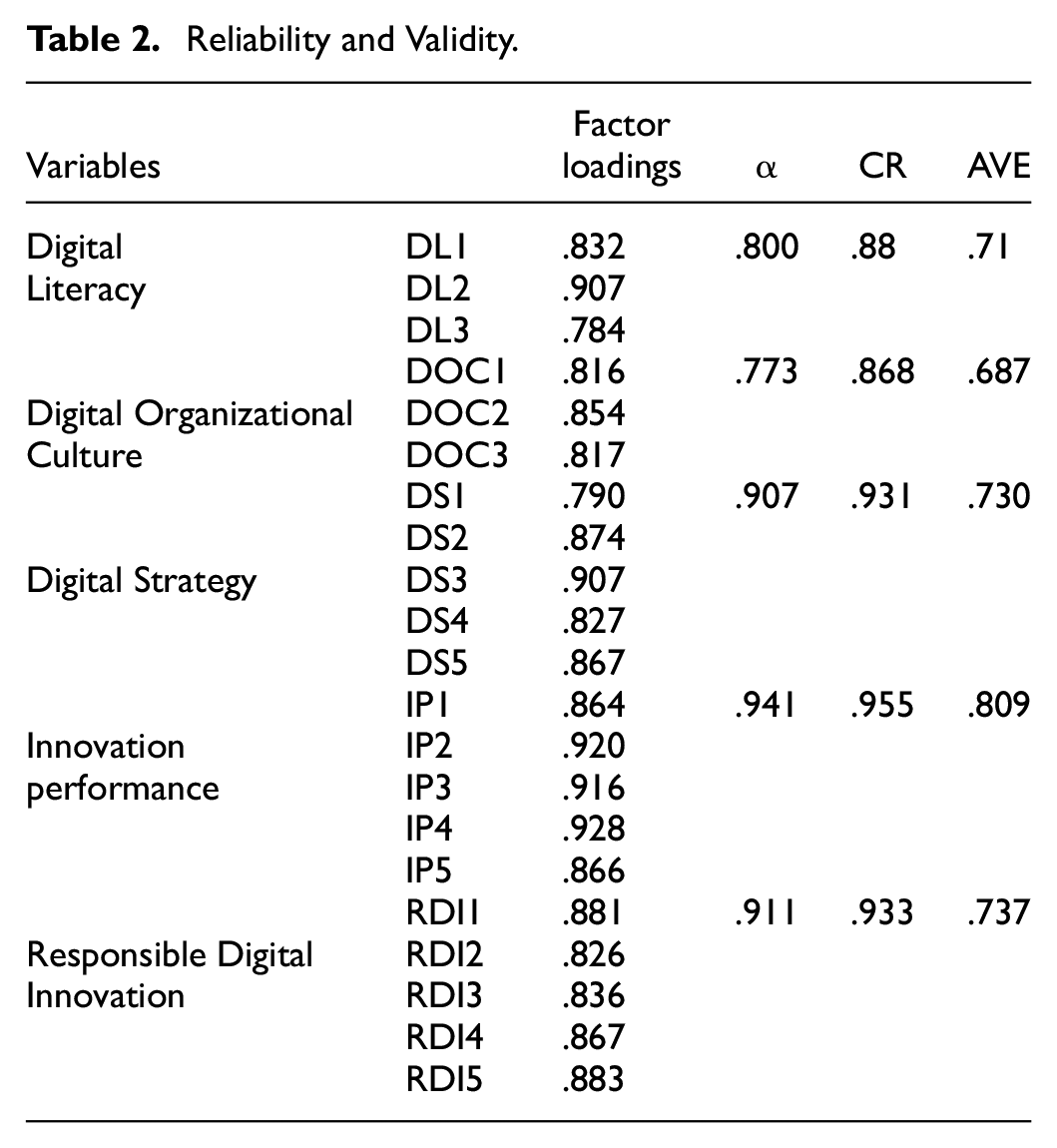
The theoretical model presented in Figure 1 consists of five reflective constructs. Validation of these constructs was conducted through four primary assessments: individual item reliability, internal consistency, convergent validity, and discriminant validity. Table 2 displays the results for reliability and convergent validity evaluation. The reliability of this study was assessed using Composite Reliability (CR) and Cronbach’s alpha. According to Hair et al. (2014), CR and Cronbach’s alpha values greater than .7 indicate high reliability. In this study, the obtained values for the constructs exceed this threshold, demonstrating high reliability. Convergent validity was evaluated using the Average Variance Extracted (AVE) and standardized loadings, as shown in Table 2. According to Hair et al. (2017), to ensure convergent validity, the standardized loadings of the constructs must be greater than 0.70, and the AVE must exceed 0.50. During the assessment, DL5, an item for digital literacy, did not meet the 0.70 threshold and was therefore removed. The remaining results indicated that the standardized factor loadings for all other items measuring the constructs exceeded the 0.70 threshold (also see Figure B1 in Appendix B), and the AVE values exceeded 0.50, confirming the presence of convergent validity for the instruments used. Discriminant validity was assessed using the heterotrait-monotrait (HTMT) method. The HTMT ratio is calculated as the ratio of the average correlations between constructs to the average correlations within the same construct. According to Henseler et al. (2015), an HTMT value below 0.90 is generally considered acceptable, indicating adequate discriminant validity. As shown in Table 3, the HTMT values are below 0.90, indicating adequate discriminant validity.
Reliability and Validity.
Discriminant Validity.
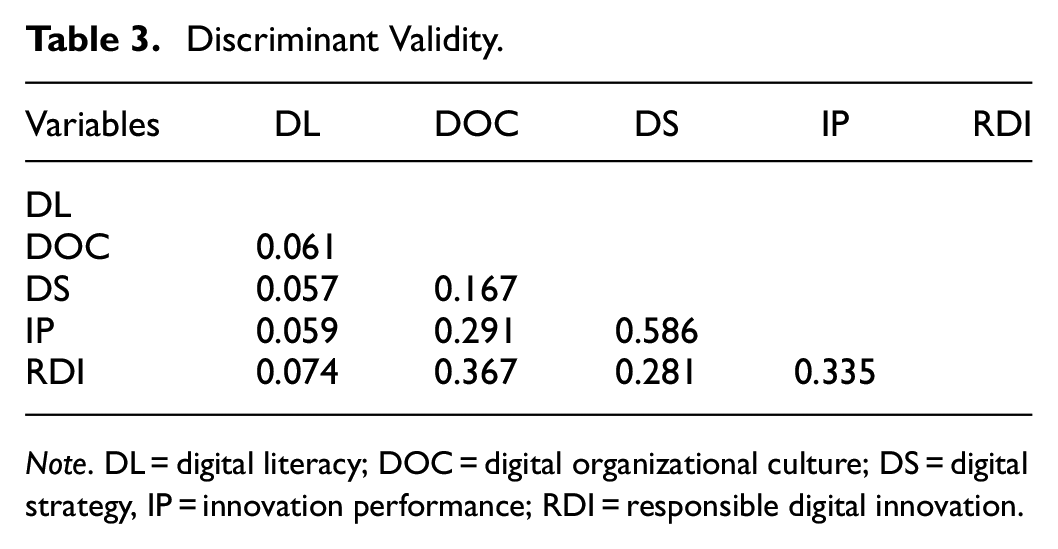
Note. DL = digital literacy; DOC = digital organizational culture; DS = digital strategy, IP = innovation performance; RDI = responsible digital innovation.
Assessing the Predictive Relevance and Power
Structural models use the coefficient of determination (R2 and Q2) method to evaluate predictive relevance and power (Hair et al., 2017). The R2 value of .097 indicates that approximately 9.7% of the variance in digital organizational culture is explained by the model’s predictors, suggesting modest explanatory power. The Q2 value of .089 confirms the predictive relevance of this construct. With an R2 value of .066, the model accounts for only 6% of the variance in digital strategy, indicating limited explanatory power. However, the Q2 value of .054 suggests that the model’s predictions are relevant for digital strategy. The R2 value of .347 demonstrates that 34.7% of the variance in innovation performance is explained by the model, indicating strong explanatory power. A Q2 value of 0.088 indicates a moderate level of predictive relevance for innovation performance. All the models presented modest predictive power. Table 4 contains the information mentioned above.
Predictive Relevance and Power.

Note. DOC = digital organizational culture; DS = digital strategy; IP = innovation performance.
Assessing the Structural Model
In this study, the direct relationships between the various variables were tested. Table 5 and Figure 2 show that RDI positively and significantly affects innovation performance (β = .146, t = 3.184, p < .05), resulting in the acceptance of hypothesis 1. Again, RDI is positively and significantly related to DOC (β = .312, t = 6.666, p < .05), resulting in the acceptance of hypothesis 2. Additionally, the results showed that RDI is positively and significantly related to digital strategy (β = .256, t = 4.061, p < .05), leading to the acceptance of Hypothesis 3. Moreover, the results indicated a positive and significant relationship between DOC and innovation performance (β = .139, t = 3.237, p < .05), supporting hypothesis 4. Furthermore, the relationship between digital strategy and innovation performance was found to be positive and significant (β = .487, t = 11.477, p < .05), meaning hypothesis 5 was accepted. Additional hypotheses were developed to understand the indirect effect of DOC and digital strategy. The mediation results revealed that digital organizational culture mediates the relationship between RDI and innovation performance (β = .043, t = 2.886, p < .05), supporting hypothesis 6. Furthermore, the results showed that digital strategy mediates the relationship between RDI and innovation performance (β = .125, t = 3.979, p < .05), supporting hypothesis 7. Finally, the moderation effect of digital literacy on the relationship between digital strategy and innovation performance was tested. Table 5 and Figure 3 reveal that digital literacy did not moderate the relationship between digital strategy and innovation performance (β = .005, t = .083, p > .934). This finding suggests the rejection of hypothesis 8. The slope in Figure 3 indicates that the strength of the relationship between digital strategy and innovation performance does not change with different levels of digital literacy, suggesting that alterations in digital literacy do not significantly modify the influence of digital strategy on innovation performance.
Path Analysis.
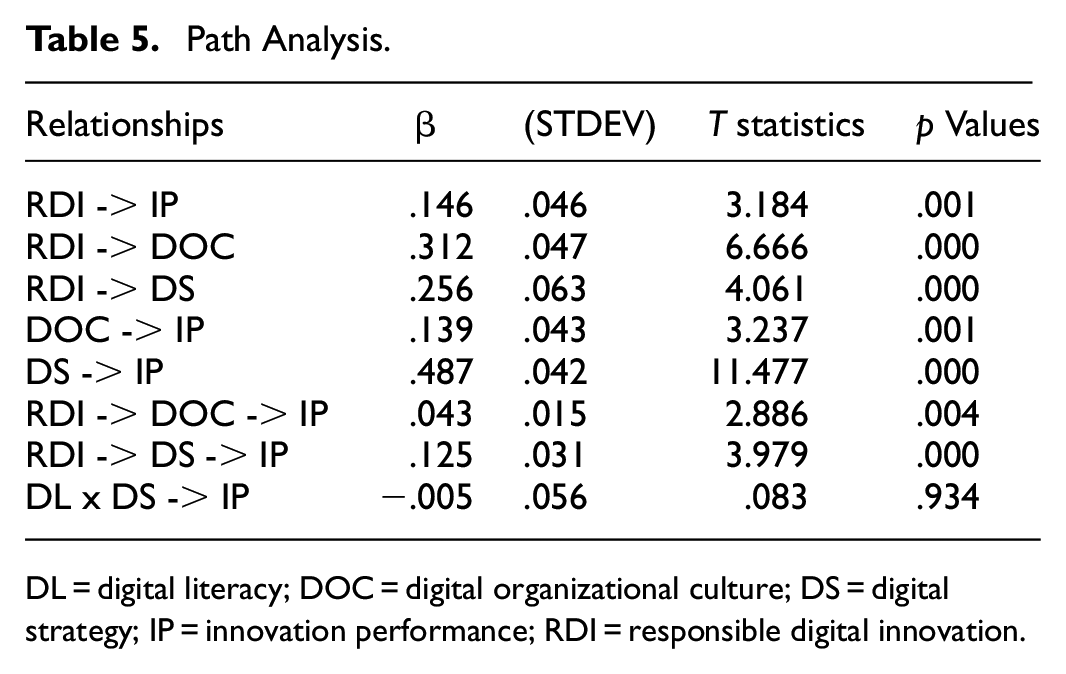
DL = digital literacy; DOC = digital organizational culture; DS = digital strategy; IP = innovation performance; RDI = responsible digital innovation.

The structural model.

Simple slope.
Discussion
The research findings provide valuable insights into the interrelationships between RDI, digital organizational culture, digital strategy, innovation performance, and the moderating influence of digital literacy. The study identified a significant and positive association between RDI and digital organizational culture. These findings align with previous studies, such as those conducted by Kahn (2018) and Velyako and Musa (2023), which underscore the role of innovation in shaping and enhancing organizational culture. The shared emphasis on ethical practices in these studies fosters trust and collaboration within organizations, which may explain this alignment. Moreover, the increased focus on integrating digital innovation into core operations further supports this congruence. Innovation facilitates cultural transformation by introducing new ideas and operational procedures. Shi (2024) suggests that such initiatives create a more adaptable and responsive work environment. The results also revealed that RDI has a substantial and positive impact on innovation performance. A similar study by Wang and Yan (2023) demonstrated that adopting responsible innovation significantly enhances performance outcomes. Similarly, Chen et al. (2022) highlighted how RDI contributes to the development of essential competencies required for successful innovation. The alignment between these studies and the results of this study may be attributed to the increasing adoption of ethical and sustainable practices in innovation processes across various industries.
Additionally, the findings indicated that RDI significantly enhances digital strategy, as evidenced by the strong and favorable relationship. Chen et al. (2022) observed comparable results, highlighting that organizations emphasizing RDI exhibit greater proficiency in crafting comprehensive digital strategies that align with ethical standards and environmentally sustainable practices. This alignment can be attributed to the growing integration of digital and ethical considerations in corporate strategies. The study also identified a significant relationship between digital organizational culture and innovation performance. Velyako and Musa (2023) similarly highlighted the critical role of organizational culture in enhancing innovation performance. For instance, firms with a robust digital culture are better equipped to strategically implement digital technologies (Westerman et al., 2014). Moreover, the findings underscored a strong relationship between the implementation of a digital strategy and innovation performance. This result is consistent with Bharadwaj et al. (2013), who argued that well-structured digital strategies enhance innovation performance by aligning digital initiatives with corporate objectives. Organizations adopting proactive digital strategies that prioritize agility and digital transformation experience improved innovation outcomes (Li et al., 2022). These strategies enable firms to leverage digital technologies to explore new opportunities, develop innovative products, and strengthen customer relationships. The congruence between this study and those of Bharadwaj et al. (2013) and Li et al. (2022) may stem from the increasing emphasis on digital transformation as a critical driver of competitive advantage.
The mediation analysis revealed that digital organizational culture mediates the relationship between RDI and innovation performance. An inclusive digital culture has the potential to translate ethically guided digital actions into tangible innovative outcomes (Velyako and Musa, 2023). A culture emphasizing responsibility ensures the efficient and ethical use of resources, thereby enhancing the effectiveness of innovation processes. RDI fosters a supportive digital culture that improves innovation performance by building trust among employees, encouraging idea-sharing, and promoting collaboration (Chen et al., 2022; Zhong and Ren, 2024). Similarly, the mediation analysis further indicated that digital strategy mediates the relationship between RDI and innovation performance. This finding suggests that RDI enhances innovation performance by influencing and strengthening the organization’s digital strategy. A well-defined digital strategy enables firms to achieve more effective innovation when creative efforts are aligned with organizational objectives and resources (Zheng, 2024). Study has shown that digital transformation initiatives guided by clear strategies produce superior innovation outcomes (Nadkarni & Prügl, 2021). Finally, the study found no evidence that digital literacy moderates the relationship between digital strategy and innovation performance. This finding contrasts with the conclusions of Santoso et al. (2019). One possible explanation for this discrepancy is the regional context of the study, where baseline digital literacy levels may be relatively low. This limited variability in digital literacy might have attenuated its moderating effect, underscoring the need for further research across diverse regions.
Theoretical Implications
The findings align with the RBV theory proposed by Barney (1991), emphasizing the significance of internal resources, such as a strong digital culture and responsible innovation practices, as key drivers of organizational performance. This alignment underscores the enduring relevance of RBV in modern, digitally driven organizational environments. The study identifies RDI as a key element in fostering a strong digital organizational culture, validating the assertion that responsible innovation cultivates cultural attributes such as collaboration, transparency, and adaptability, which are essential for successful digital transformation (Hoffman et al., 2024). This conclusion advocates for further research into the impact of RDI on corporate culture, particularly within rapidly evolving digital environments. Moreover, the study emphasizes the mediating role of digital strategy in the relationship between RDI and innovation performance. While prior research has highlighted the importance of digital strategies for driving innovation (Grieva et al., 2024), this study offers new insights into how RDI enhances digital strategies by embedding ethical and sustainable practices. The findings suggest that organizations integrating responsible innovation into their digital strategies are better positioned to achieve superior innovation outcomes, paving the way for further exploration of ethical considerations in digital innovation processes.
The mediation analysis further underscores the critical role of cultivating a supportive digital culture and establishing a well-defined digital strategy to translate RDI into tangible innovation outcomes. This contributes to broader discussions on the interplay between culture, strategy, and innovation in the digital era. Interestingly, the findings challenge the conventional notion of digital literacy as a moderator between innovation performance and digital strategy. The study reveals that digital literacy does not significantly influence this relationship, suggesting that a well-designed digital strategy may exert a more substantial impact than varying levels of digital literacy. This invites a re-evaluation of the role of digital literacy in digital transformation, considering potential interactions with factors such as organizational learning and technological infrastructure. Overall, the study demonstrates that RDI serves as a valuable mechanism for promoting cultural traits like collaboration, openness, and flexibility, which align with RBV principles and support digital transformation and sustainable value creation. Additionally, RDI enriches digital strategy by embedding ethical and sustainable practices, rendering strategies rare, effective, and difficult to imitate, thereby positioning firms for superior innovation outcomes.
Managerial Implications
This study offers practical insights for organizations aiming to improve their innovation performance by leveraging RDI, cultivating a digital organizational culture, and implementing effective digital strategies. A key takeaway is the central role of a well-developed digital organizational culture in fostering innovation. Organizations are encouraged to cultivate a culture characterized by collaboration, transparency, and adaptability. Embedding these principles into operational practices enables firms to drive responsible innovation and elevate overall innovation performance. Managers should focus on creating an environment that nurtures these cultural values, as they are fundamental for achieving sustainable and impactful innovation outcomes.
Furthermore, the study underscores the importance of adopting sustainable and ethical approaches to innovation. RDI not only directly influences innovation performance but also exerts its impact through mediators such as digital strategy. This underscores the need for managers to embed responsible innovation practices into their strategic objectives and operational processes. Aligning innovation efforts with ethical and sustainable values enables managers to amplify their impact and achieve superior performance outcomes. The study also emphasizes the critical role of robust digital strategies in driving innovation success. Managers are encouraged to allocate resources toward developing and implementing well-defined digital strategies aligned with their innovation goals. Strategic alignment ensures the effective translation of responsible innovation efforts into actionable and impactful outcomes. By prioritizing this alignment, organizations can better leverage digital technologies to enhance performance.
Additionally, both digital organizational culture and digital strategy play crucial roles in linking RDI to innovation performance. Organizations should invest in initiatives that seamlessly integrate cultural values with strategic objectives, fostering a cohesive approach to innovation. This integration not only improves implementation efficiency but also strengthens the connection between innovation efforts and broader organizational goals. Finally, the findings suggest that managers reconsider the role of digital literacy in driving innovation performance. While digital literacy is important for individual competency, it appears to have limited influence on the strategic relationship between digital strategy and innovation performance. This indicates that organizations may achieve greater success by focusing more on cultural and structural factors, such as fostering a supportive organizational culture and ensuring strategic alignment, rather than exclusively emphasizing digital literacy.
Conclusion
This study enhances our understanding of the relationship between RDI, digital culture, strategy, and innovation performance. It identifies RDI as a catalyst for fostering collaborative, flexible, and ethically grounded cultures that drive digital transformation and sustainable innovation. The findings emphasize the pivotal role of digital strategy in aligning innovation efforts with business objectives, while also demonstrating that, although essential, digital literacy plays a secondary role when a strong strategy is in place. For practitioners, integrating RDI into strategic and cultural frameworks can provide a competitive advantage, while policymakers should promote ethical digital practices to balance innovation with social responsibility. Future research could explore how firms at various stages of digital maturity experience these linkages, offering tailored strategies for innovation-driven transformation.
Research Limitations and Suggestions for Further Studies
The study was conducted in Ghana, which may limit the generalizability of the findings to other regions or countries with distinct cultural, economic, and technological contexts. To address this limitation, future research should be conducted in multiple countries or regions to assess whether the relationships between RDI, digital organizational culture, digital strategy, and innovation performance remain consistent across diverse contexts. Another limitation is that the study did not account for varying levels of technological maturity across the firms included. Differences in technology infrastructure and digital capabilities may significantly influence the relationships between the variables being studied, potentially introducing bias into the results. Future research should explore the moderating effect of technological maturity on the relationships between RDI and innovation performance. Researchers could examine how firms at different stages of digital transformation perceive the linkages between innovation, culture, and strategy, leading to more targeted recommendations for businesses with varying levels of digital transformation. Given the conclusion that digital literacy did not significantly affect the relationship between digital strategy and innovation performance. Future research should explore the importance of ongoing digital training programs and their influence on innovation outcomes. This line of inquiry could provide valuable insights into enhancing the impact of digital literacy on corporate performance.
Footnotes
Appendix A

| Digital strategy | AlNuaimi et al. (2022) |
|---|---|
| In my organization, we integrate digital technology and responsible innovation principles to achieve strategic alignment with the government and other stakeholders. | |
| In my organization, we create a shared vision of the role of responsible digital innovation in advancing business objectives. | |
| We collaboratively plan how responsible digital innovation will enable the organization's strategic goals while considering ethical, societal, and environmental impacts. | |
| In my organization, we engage in consultation and collaboration before making strategic decisions related to digital innovation. | |
| The principles and objectives of responsible digital innovation are clearly communicated within my organization. | Author’s |
| Responsible digital innovation | Hadj (2020) |
| Our digital innovations are designed with a strong emphasis on ethical, social, and environmental impacts. | |
| Our organization actively involves various stakeholders in the innovation process, ensuring ethical considerations and social responsibility are addressed | |
| Our organization has the ability to identify potential risks and respond effectively, with a focus on ethical and responsible innovation practices. | |
| Our digital innovations are transparent about data usage, algorithms, and decision-making processes. | Khin and Ho (2019) |
| Our digital innovations contribute positively to society by addressing social issues and promoting inclusivity. | |
| Digital organizational culture | Martínez-Caro et al. (2020). |
| Teams collaborate effectively across functions to ensure innovation and digital transformation initiatives are aligned with ethical and responsible practices. | |
| The organization's culture clearly supports and adapts to changes in digital technology, emphasizing responsible and ethical innovation. | |
| Digital innovation and change are seamlessly integrated into the organization's processes, with a focus on responsibility and ethical considerations | |
| Digital literacy | Nikou et al. 2022 |
| I am skilled at solving technical problems related to digital tools and technologies used in responsible innovation | |
| I can quickly learn new digital technologies that support responsible innovation initiatives | |
| I possess strong digital skills necessary for implementing and promoting responsible innovation | |
| I am confident in my ability to search for and evaluate reliable digital information relevant to responsible innovation | |
| Innovation performance | Mardani et al. 2018 |
| Our organization consistently outperforms key competitors in generating novel ideas that align with principles of responsible innovation | |
| Our organization excels in generating novel ideas that contribute to responsible and sustainable innovation. | |
| Our organization performs exceptionally well in launching innovative products that adhere to responsible innovation practices | |
| Our organization demonstrates superior performance in developing new products that incorporate responsible innovation principles. | |
| Our organization quickly generates novel ideas in comparison to competitors, ensuring they are consistent with responsible innovation values |
Appendix B

Author Contributions
Funding
The author(s) received no financial support for the research, authorship, and/or publication of this article.
Declaration of Conflicting Interests
The author(s) declared the following potential conflicts of interest with respect to the research, authorship, and/or publication of this article: By signing this declaration, Amankona David, Kaigang Yi, Evelyn Agba Tackie, Lois Tweneboa Kodua, and Leslie Afotey Odai affirm that the submission of our paper named “Responsible Digital Innovation and Innovation Performance: Exploring the Impact of Digital Organizational Culture, Strategy, and Digital Literacy” for consideration in the Sage Open is free of any conflicts of interest. We confirm that there are no financial, personal, or professional interests that might potentially affect how the research described in this publication is interpreted. I have read and comprehended the journal's policies on conflicts of interest.
Data Availability Statement
The datasets generated during and/or analyzed during the current study are not publicly available due to the nature of their collection through a survey. The datasets are not deposited in a public repository because there is no direct link or standardized format for sharing them but are available from the corresponding author on reasonable request