




Abstract
Innovative attention is a key factor for enterprises to achieve sustainable development. How to leverage the role of executives’ overseas experience—an internal organizational characteristic—in the allocation of innovative attention has become an important issue. This study, based on empirical evidence from Chinas A-share listed companies, finds that executives’ overseas experience can significantly enhance their focus on corporate innovation. The analysis of moderating effects reveals that the innovation environment strengthens the positive impact of executives’ overseas experience on innovation attention, while financial constraints inhibit this enhancement. The heterogeneity test shows that in high-tech enterprises, competitive industries, and rapidly marketizing environments, the impact of executives’ overseas experience on corporate innovation attention is significant. In general enterprises, less competitive industries, and slower marketizing environments, this effect is not significant. The analysis of economic consequences indicates that the impact of executives’ overseas experience on their attention to corporate innovation can improve enterprises sustainable development capacity and innovation persistence. This study enriches the research on the impact of internal organizational characteristics on the allocation of attention in enterprises and provides empirical support for promoting the “talent power” strategy and achieving sustainable innovation development for enterprises.
Keywords
Introduction
Under the new economic situation, talent and innovation strategies, as core driving forces of economic development, have become important supports for promoting high-quality economic growth in various countries. According to upper echelons theory, executives are the core human resources in an organization, and differences in personal cognition and preferences directly affect corporate strategic decisions and performance. Extending this perspective to the organizational level, organizational decision-making can be viewed as a conscious choice by enterprises, where the key to decision-making is how the decision-makers allocate their limited attention (Krajbich, 2019). As an essential precursor in the innovation process, the allocation of attention to innovation within enterprises reflects the degree of importance that enterprises place on innovation, as well as their level of investment in, and execution of innovation strategies. Research on innovative attention has primarily focused on mandatory policies, market guidance, and internal governance, often neglecting the influence of executives’ individual characteristics on innovative attention. Executives with overseas experience bring more advanced professional knowledge and corporate governance methods, which can influence corporate innovation activities. Thus, does the overseas experience of senior executives affect the allocation of innovation attention within enterprises? What moderating factors are involved? What economic consequences arise? Answering these questions has significant theoretical and practical implications for countries aiming to implement “talent-driven” and “innovation-led” strategies to foster new points of economic growth.
At the policy level, the Chinese government has successively introduced initiatives such as the “Thousand Talents Plan” and the “Ten Thousand Talents Plan” to establish a long-term mechanism for attracting high-end overseas talent and to support the return of overseas high-level professionals to work in China. Statistics show that from 1978 to 2019, the cumulative number of Chinese students studying abroad reached 6.5606 million, of whom 4.2317 million returned to China after completing their studies, accounting for 86.28% of the total number of students who completed their studies (L. Liu & Tian, 2021). In 2022, the proportion of Chinese nationals serving as middle-level managers in enterprises reached 31.5%, while the proportion in senior management positions reached 5.7%. According to upper echelons theory, the heterogeneous characteristics of executives’ values and cognitive structures, shaped by their overseas experiences, influence corporate strategic decisions. Consequently, the allocation of corporate attention is likely to be affected by executives’ overseas experiences.
Currently, no literature directly verifies the relationship between “senior executives' overseas experience and the allocation of corporate innovation attention.” The impact between the two can only be inferred from related literature. On the one hand, van Ede and Nobre (2023) confirmed through experiments that individuals’ specific cognitive behaviors and knowledge structures can influence attention allocation. Similarly, Du et al. (2018) demonstrated that cognitive imprints shaped by executives’ overseas education or employment experience have lasting effects on their behavioral characteristics. From this perspective, the cognitive imprint created by executives overseas experiences may affect corporate attention allocation. On the other hand, Z. Zhang et al. (2022) found that executives’ unique cognitive imprints significantly influence corporate decision-making behavior. F. Xu et al. (2023) showed that executives with overseas experience often leverage knowledge and technology spillover effects, thereby enhancing enterprises’ enthusiasm and willingness to innovate. Based on these findings, it can be inferred that senior executives’ overseas experiences have a notable impact on the allocation of attention to corporate innovation.
This study found through testing that senior executives’ overseas experience can significantly enhance the level of innovation attention allocation in enterprises. The test of moderating effects shows that the innovation environment strengthens the impact of executives’ overseas experience on the allocation of innovation attention, whereas financing constraints inhibit this impact. The heterogeneity test indicates that in high-tech enterprises, highly competitive industries, and rapidly marketizing environments, the effect of executives’ overseas experience on corporate innovation attention is significant; in contrast, in general enterprises, less competitive industries, and slower marketizing environments, this effect is not significant. The economic consequences test reveals that executives’ overseas experience, by influencing the allocation of attention to corporate innovation, can further improve enterprises’ sustainable development capacity, and innovation persistence.
The potential marginal contributions of this study are as follows: First, this study specifically examines the impact of executives’ overseas experience on corporate innovation attention allocation, enriching research on the influencing factors of corporate innovation attention allocation and offering theoretical insights for enhancing the mechanism of overseas talent introduction. Second, this study investigates the moderating effect of executives’ overseas experience on innovation attention allocation within enterprises, with a focus on the external innovation environment and financing constraints, thereby advancing research on moderating effects in related fields. Third, this study explores the economic consequences of the impact of executives’ overseas experience on the allocation of corporate innovation attention, providing empirical evidence for companies to improve their sustainable development capabilities and innovation continuity.
Theoretical Analysis and Study Hypotheses
Senior Executives' Overseas Experience and Innovation Attention
The attention-based view suggests that corporate decision-making behavior results from decision makers’ attention allocation, with corporate strategic choices, resource allocation, and other behaviors influenced by management’s awareness and cognitive choices. Attention thus becomes a precursor to corporate behavior. As a crucial, scarce resource for enterprises, attention allocation significantly impacts sustainable development. Innovative attention allocation represents the extent to which management directs limited resources toward all innovation-related issues. Consequently, understanding how to scientifically and effectively allocate innovative attention has become a critical issue for scholars worldwide. Existing research on the factors influencing attention allocation mainly focuses on two aspects: the external macro environment and the internal characteristics of enterprises. External macro-environmental factors include environmental uncertainty, technological change, government policies, and market competition. Regarding internal characteristics, existing research has explored factors such as R&D investment surges (Wu & Xiao, 2015), resource allocation (Rodriguez et al., 2019), organizational learning, and social relationships. The limited nature of corporate resources inherently restricts the supply of innovation attention. Compared to other aspects of corporate attention, innovation attention allocation requires a longer duration, greater resource commitment, and involves higher risk-taking. Thus, innovation attention allocation is not only regulated and guided by the external macro environment but is also influenced by an enterprise’s internal characteristics. Notably, according to the top management team theory, senior managers—who serve as the decision-making body of corporate activities—are key determinants of corporate strategic decisions and innovation activities, based on their cognitive structures and behavioral traits. Objectively, the personal characteristics of senior executives should indeed be reflected in the allocation of innovation attention.
Imprinting theory, derived from biology, posits that individuals or organizations shape value orientations, cognitive patterns, and behavioral tendencies that align with the external environment during specific “sensitive periods” in their life cycles to reduce uncertainty (Pieper et al., 2015). Even when the external environment changes, these imprinting characteristics continue to influence decision-making behaviors. Due to the substantial cultural and institutional differences between countries, executives form distinctive cognitive and capability imprints that align with overseas environments during the “sensitive period” of their overseas education or employment, which then have lasting impacts on corporate management decisions upon their return. Previous studies have shown that executives’ overseas experiences significantly affect strategic decisions such as digital transformation, foreign direct investment, stock price crash risk, social responsibility, and performance (Ding et al., 2022; Le & Kroll, 2017; Wang et al., 2024; Z. Xu & Hou, 2021). Some scholars have also drawn definitive conclusions on whether senior executives’ overseas experiences impact attention allocation within enterprises. Bouquet et al. (2019) studied 135 multinational companies and found that executives’ international living or employment experiences significantly increase companies’ focus on internationalization. Y. Chen et al. (2023) found that the overseas experience of executive teams enhances companies’ digital attention. Jianzu and Bin (2015) examined corporate internationalization and found that the more overseas experience a senior management team has, the greater the attention allocated to the external environment. The allocation of innovative attention is fundamental to strategic decision-making and behavior at the corporate innovation level, largely depending on the personal characteristics and cognitive abilities of decision-makers. Existing literature has confirmed that senior executives’ overseas experiences can effectively reduce managerial short-termism and enhance risk-taking abilities. From this perspective, the changes brought about by executives’ overseas experiences align with the long-term goals and risk tolerance required for innovative attention allocation.
The expertise and capabilities shaped by executives’ overseas experiences assist firms in making more scientifically informed strategic decisions, alleviating managerial short-sightedness, enhancing firms’ risk tolerance, and increasing their failure tolerance, thereby directing more attention toward innovation. First, influenced by scientific decision-making models and governance principles from abroad, executives with overseas experience are more inclined to help firms implement scientific governance systems and performance evaluation standards, which can reduce uncertainties in long-term investments and ease pressures associated with short-term performance (Gao et al., 2018; Zhao et al., 2024). This decreases tendencies for short-term investments and self-interest among managers, thereby mitigating managerial short-sightedness and allowing the firm to allocate more attention to innovation. Second, the professional skills and risk management expertise fostered by executives’ international experience help firms improve resource integration and reallocation efficiency, ensuring stability in risk management and continuity of resource supply within innovative activities (Giaccone & Magnusson, 2022; Zhiyong et al., 2024). This enhances firms’ risk tolerance, fostering a stronger inclination to allocate attention toward innovation (Y. Zhang et al., 2023). Finally, executives influenced by Western culture during their overseas education or work experiences often exhibit traits such as optimism and confidence (He et al., 2021), which make them more receptive to new changes and uncertainty. This increases executives’ ability to perceive innovation opportunities and displays a higher tolerance for failure in innovation (J. Chen & Nadkarni, 2017), further enabling the allocation of attention toward innovation.
Based on the above analysis, the present study proposed the following core research hypothesis:
H1: Other factors remaining unchanged, senior executives’ overseas experience can improve the enterprises’ innovation attention.
The Moderating Effect of Financing Constraints
The resource constraint theory posits that executive investment behavior requires sufficient financial, technological, and market demand resources, and exhibits strong resource dependence. Therefore, executive behavior depends not only on individual characteristics but also on the ability of the enterprise to acquire resources. As a manifestation of financial resource constraints for enterprises, varying degrees of financing constraints are also reflected in actual business activities. K. Zhang et al. (2021) argue that financing constraints can inhibit the innovative investment behavior and risk-taking tendencies of executives with overseas experience. On one hand, when enterprises face financing constraints, external investors may pay more attention to the capital decisions of the enterprise. In this context, the overseas experience of executives during venture capital investment processes, such as enterprise innovation, continues to exert a cognitive “branding” effect, strengthening investors’ tendency to supervise the enterprise and limiting the direction of attention allocation choices. To cater to investors and reduce external supervisory pressure, enterprises often increase their focus on short-term performance while reducing their emphasis on long-term performance, thereby constraining the allocation of attention for enterprise innovation. On the other hand, the long-term and uncertain nature of innovation activities also results in characteristics of high investment, high risk, and a lengthy chain of innovation attention allocation (Lou et al., 2022). In the context of financing constraints, executives with overseas experience may, due to considerations of short-term performance pressure, and professional reputation, re-examine inefficient behaviors such as over-investment and resource waste in the allocation of innovation attention. Constrained by limited resources, executives are forced to reduce investment in high-cost innovation activities, leading to a greater allocation of enterprise attention to low-risk, short-cycle, and fast-return projects, while simultaneously decreasing attention to long-term innovation activities.
In conclusion, the present study proposed the following research hypothesis:
H2: Other factors remaining unchanged, financing constraints inhibit the promotion effect of senior executives’ overseas experience on innovation attention.
The Moderating Effect of Innovation Environment
The innovation environment is an important and uncontrollable external factor for enterprises. Changes in government innovation policies profoundly affect corporate innovation decisions. Different innovation environments shape executives’ perceptions of the environment, which, in turn, lead to differentiation in innovation behavior (T. Liu et al., 2022) On one hand, according to behavioral finance theory, in an uncertain innovation environment, executives may make irrational decisions influenced by factors such as individual characteristics and the social environment, resulting in deviations between investment decisions and the optimal solutions proposed by financial theory. Therefore, when facing an uncertain innovation environment, executives with overseas experience are more sensitive to external environmental pressures, often prioritizing corporate survival as their primary development goal, shifting more attention to survival strategies and reducing the allocation of attention to innovation (Gormley & Matsa, 2016). On the other hand, policy support serves as an important guarantee for enterprises to maintain competitiveness and sustainability in their innovation strategies. In a favorable innovation environment, enterprises can obtain government funding subsidies, tax incentives, and other forms of support, which help reduce the dependence of innovation activities on limited internal resources, decrease uncertainty in the allocation of innovation attention, and lessen risk-averse tendencies. Government policies lower the costs of innovation activities from the outside and increase the cash flow of business operations, thereby alleviating the short-term performance pressure on executives with overseas experience and easing the resource constraints faced by enterprises. These policies act as a “buffer” against uncertainty in the allocation of innovation attention, while innovation policies strengthen the protection of intellectual property rights, stimulating the willingness, and self-confidence of executives with overseas experience (Minford & Meenagh, 2019), thereby improving the level of innovation attention allocation within enterprises.
In conclusion, the present study proposed the following research hypothesis:
H3: Other factors remaining unchanged, the innovation environment strengthens the effect of senior executives’ overseas experience on innovation attention.
Study Design
Sample Selection
Considering the reliability and availability of sample data, this study selects Chinese A-share listed companies from 2012 to 2022 as the research sample. The main reasons for choosing Chinese A-share listed companies are as follows: (1) China is one of the primary source countries for overseas students, and the senior management teams of listed companies include a significant number of executives with overseas experience, which provides ample data for this study. (2) As the largest developing country, China is still in the exploratory stage of organizational psychological research, including studies on corporate innovation attention. Research conclusions based on Chinese companies are more likely to be applicable to other countries. To ensure continuity and a sufficient sample size during the study period, we have defined the study period as 10 years, from 2012 to 2021. (3) We deleted samples with missing data for explanatory variables, dependent variables, and control variables to avoid bias in empirical testing caused by incomplete data; (4) we removed samples from the financial and insurance industries to avoid anomalies in empirical testing that could arise from the unique financial conditions of these sectors. (5) All continuous variables were subjected to 99% and 1% tail-cutting to reduce the impact of extreme values on the empirical test results. After screening according to the above criteria, a non-balanced panel was obtained, containing 31,515 observations from 2012 to 2022. This study collects the original data of the sample enterprises through the Wind and CSMAR databases and uses Stata 17.0 software for data analysis and empirical testing.
Variable Setting and Description
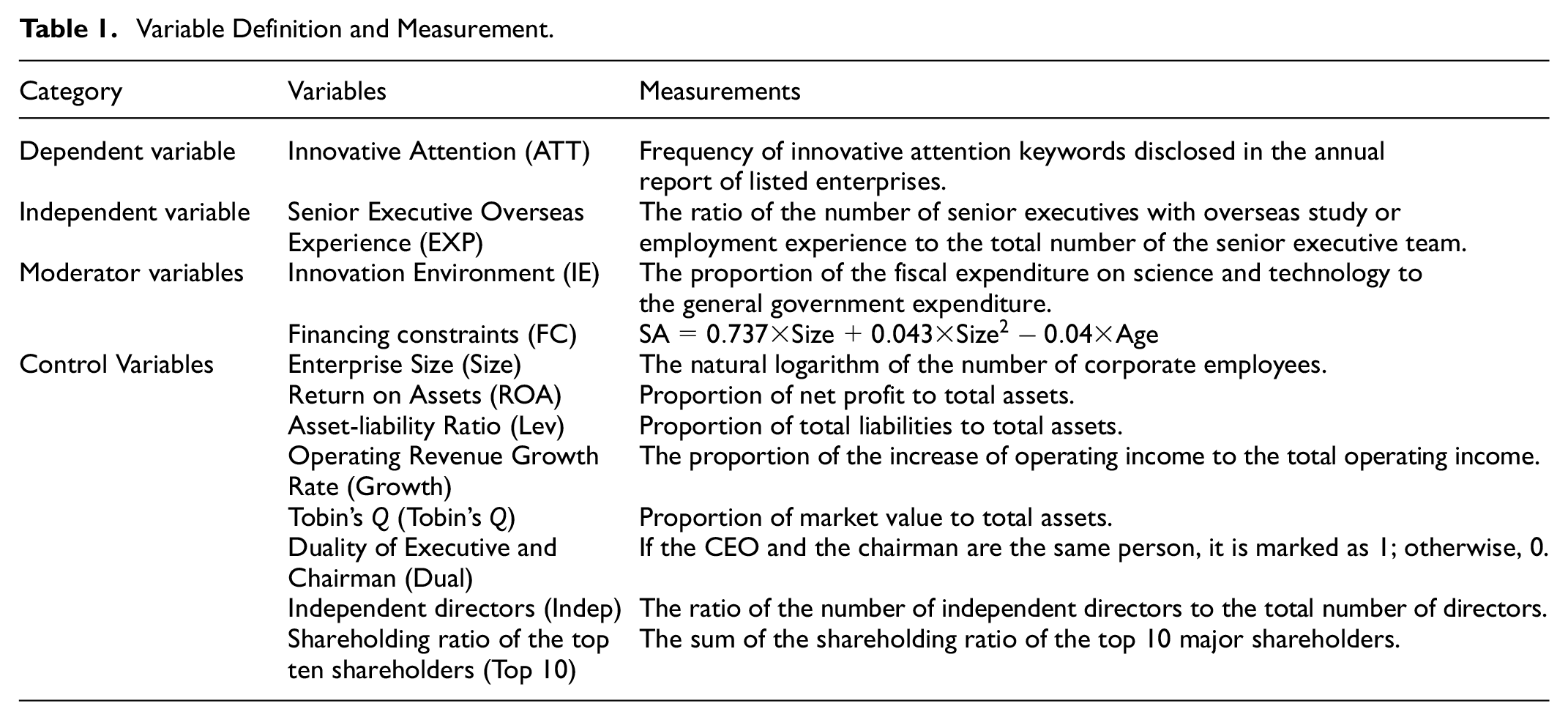
Table 1 shows the variable definitions and measurement criteria used in this study.
Variable Definition and Measurement.
Explained Variables
Innovative Attention (ATT): Presently, most studies on innovation attention are theoretical qualitative studies and few quantitative studies have been conducted. To test the original motivation of innovative attention allocation, it is necessary to formulate the behavioral variable of “innovative attention.” Boyd and Markowitz (2024) argue that language determines behavior, with the specific meanings and frequencies of words reflecting the focus of individual attention. The vocabulary and frequency in the annual report can reflect the strategic characteristics and future tendencies of the enterprise’s attention allocation. Therefore, the present study adopted the text analysis method to measure the frequency of “innovative attention” in the annual report of listed companies, which is scientific and feasible.
The ATT data processing flow in this study is as follows:
(1) Constructing an Innovative Attention Feature Word Dictionary. By reviewing existing literature, policy documents, and research reports, such as the Global Digital Economy White Paper 2023 and the “14th Five-Year Plan for Industrial Green Development,” we have preliminarily summarized the relevant terms related to “innovation attention.” A scoring table was created for each selected term, with scores ranging from 1 to 5. This table was then submitted to five experts and scholars for “back-to-back” scoring. Words that received a score of 4 or higher from at least three experts were classified as innovative attention feature words. Ultimately, 156 keywords related to “innovation attention” were identified, including both general innovation keywords and specific keywords, such as those related to digital transformation and green technology innovation.
(2) Since the “Management Discussion and Analysis” section of a listed company’s annual report conveys the intensity of the company’s focus on digital and green innovation, this study identifies this section as the source of text data for analyzing innovation attention allocation. Python software is used to write programs that automatically download the annual reports of listed companies from the Cninfo website and extract the text content of the “Management Discussion and Analysis” section.
(3) In this study, we first used Java PDFBox to extract and read sentences containing the feature words, ensuring that they have a substantive relationship with innovative attention allocation. We then utilized the Jieba word segmentation module in Python to segment the text content and remove stop words, including names, symbols, and modal particles that have no significant meaning. Next, we matched the innovative attention allocation feature words with the segmented text and calculated the frequency of the marked feature words.
(4) We summed the frequency of each feature word to create the total frequency of innovative attention, which was then used to construct the innovation attention index.
Core Explanatory Variables
Executive Overseas Experience (EXP)
Senior executives’ overseas experience includes overseas education, employment experience, and visits. According to the branding theory, individual branding is a long-term and gradual shaping process. Therefore, this study only focused on overseas education experience and overseas employment experience that can produce brand benefits to senior executives and defined senior executives as directors, supervisors, and other senior managers. As discussed in existing literature (Quan et al., 2021), based on whether the executive team includes senior executives with overseas experience, this measurement method has limited representativeness and it is difficult to measure the degree of senior executives’ overseas experience. The present study referred to Zheng et al. (2023) and Chen (2011) and used the proportion of the number of senior executives with overseas experience to the total number of senior management teams to measure the level of overseas experience.
Control Variables
To minimize bias in empirical testing caused by omitted variables, this study includes control variables that may affect the allocation of innovation attention, specifically enterprise size, ROA, asset-liability ratio, operating income growth rate, Tobin’s Q, CEO-chairman duality, the proportion of independent directors, and the shareholding ratio of the top 10 shareholders.
Moderator Variable
Innovation Environment (IE)
The new institutional economic theory believes that the government is among the main factors that affect the economic environment. Innovation activities have long periodicity and high risk. Government investment and policy support are intended to control and reduce the uncertainty of innovation activities through capital and policy support, thereby supporting and guiding enterprise innovation. Therefore, as per Changfei et al. (2021), the present study used the ratio of government financial expenditure on science and technology to general government expenditure to measure the innovation environment.
Financing Constraints (FC)
The measurement indicators of financing constraints in existing studies include the Whited Wu (WW) index, Kaplan-Zingales (KZ) index, and SA index. Of these, the WW index and KZ index consider financial factors in the measurement process, which may affect this study. To ensure the robustness of this study, the SA index was used to measure the financing constraints. It was calculated based on the findings of Hadlock and Pierce (2010):
Testing the Model
The following benchmark regression model (Model 1) was established to test the effect of senior executives’ overseas experience on innovative attention. This study used a two-way fixed-effect model to test the overseas experience and innovation attention based on the data of Chinese A-share listed companies from 2012 to 2022.

According to the Hausman test, the P-value is 0, indicating that the fixed effect model outperformed the random effect model. Therefore, this study used a two-way fixed-effect model to conduct regression tests on the relationship between the independent variable (EXP) and the dependent variable (ATT). In the benchmark model,
This study constructed a moderating effect model to examine whether the innovation environment and financing constraints can play a moderating role in the effect of senior executives’ overseas experience on enterprise innovation attention. The econometric model (Model 2) is as follows:

The moderating variables are divided into innovation environment (IE) and financing constraints (FC). In Model (2), the interaction term (
Empirical Results
Descriptive Statistics
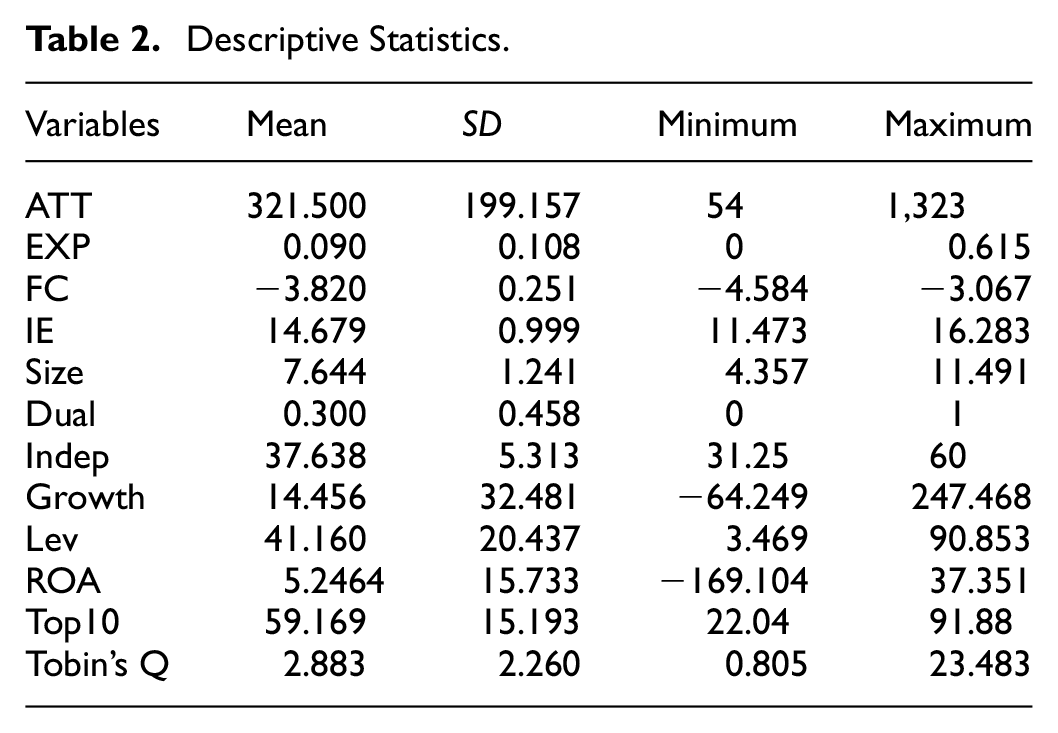
Table 2 shows the descriptive statistics of the panel data for the study period from 2012 to 2022. The average value of enterprise innovation attention was 321.500, with the maximum value being 1,323 and the minimum value being 54, indicating that Chinese A-share listed companies as a whole pay a high degree of attention to innovation but that significant differences exist in the attention paid by individual enterprises to innovation. The average value of senior executives’ overseas experience is 0.090, indicating that senior executives with overseas experience account for a relatively small proportion of the senior management team in Chinese A-share listed companies. The maximum value is 0.6154 and the minimum value is 0, indicating significant differences in the situation of enterprises with senior executives with overseas experience. Enterprises’ innovative attention and senior executives’ overseas experience differ among the samples, thereby complying with the randomness of the empirical test and creating better conditions for the study. The descriptive statistical results of other variables are consistent with the conclusions of the existing studies, with no abnormal situation.
Descriptive Statistics.
Benchmark Regression Analysis
Table 3 reports the benchmark regression results of the relationship between senior executives’ overseas experience and innovation attention. In the benchmark regression, the present study used a progressive regression method and considered the impact of firm and year-wise two-way fixed effects. Column (1) reports the benchmark regression results without adding the control variable. The estimated coefficient of the senior executives’ overseas experiences was significantly positive at the 1% confidence level. Column (2) reports the benchmark regression results with the addition of some control variables, and the results show that the estimated coefficient of executives’ overseas experience is significantly confirmed at the 1% confidence level. Column (3) reports the inclusion of all control variables, and the results show that the estimated coefficient of senior executives’ overseas experience is significantly positive at the 1% confidence level. For each additional unit of senior executives’ overseas experience, enterprises’ innovation attention will increase by 31.06 units. The above results indicate that senior executives’ overseas experience has a significant enhancing effect on the innovative attention of enterprises, supporting H1. The reason is that the overseas experience of senior executives helps enterprises implement more scientific internal governance systems, which can inhibit short-term investment and self-interested behavior among management. This experience also aids enterprises in improving resource integration and reallocation efficiency, ensuring the stability of risk management and the continuity of resource supply in innovation activities, enhancing the risk-taking ability of enterprises, and improving their perception and enthusiasm for innovation opportunities. Consequently, this leads to an increase in their innovation attention.
Benchmark Regression Results of EXP and ATT.

Note. t-Statistics in parentheses. ***p < 0.01, **p <0.05, *p <0.1.
Category Regression
Senior executives’ overseas experience and segmentation characteristics: Differences in senior executives’ overseas experience type shape different brand characteristics, thereby making their effects on innovative attention somewhat heterogeneous. In the present study, senior executives’ overseas experience was divided into the following three categories: senior executive overseas education experience (edu_EXP), senior executive overseas work experience (work_EXP), and senior executive overseas education and work experience (edwo_EXP). The benchmark regression test was reconducted based on these criteria. Table 4 reports the test results of different executive experience characteristics, which show that the three overseas experiences of senior executives are significantly positive at the 1% or 5% confidence levels, indicating that the three overseas experiences of executive education, employment, and education and employment significantly affect innovation attention. Among them, the overseas experience of senior executives has a higher promotion effect on the improvement of innovation attention because, during their overseas tenure, senior executives focus on their work and receive a longer period of practical innovation environment nurturing than during the other two types of overseas experience (Barrett et al., 2021), which can generate higher innovation enthusiasm and willingness and have a more significant promotion effect on the improvement of innovation attention allocation. Therefore, executives should engage more actively in their work during their time abroad to accumulate experience and learn professional skills and governance systems that contribute to the innovative development of enterprises through practical experience.
Classification and Regression Results for edu_EXP, work_EXP, edwo_EXP, and ATT.

Note. t-Statistics in parentheses. ***p < 0.01, **p <0.05, *p <0.1.
Robustness Test
The robustness of the benchmark regression test process needed further testing owing to possible deficiencies in the measurement of executives’ overseas experiences and innovative attention during the study. A robustness test was conducted by supplementing other empirical tests—namely, replacement of explanatory variables and explained variable measures—to ensure the robustness of the benchmark regression test results.
Replacement of the Explanatory Variables
Referring to Choi et al. (2021), two new explanatory variable measurement methods were introduced and tested again through the benchmark regression model: (i) virtual variable type data (du_EXP) measures whether the enterprise has senior executives with overseas experience; executives with overseas experience were assigned a value of 1, whereas others were assigned a value of 0 and (ii) continuous variable data (co_EXP) measures the extent of senior executives with overseas experience; the number of executives with overseas experience plus 1 natural logarithm was used to measure senior executives’ overseas experience. Control variables were consistent with the benchmark regression test. Columns (1) and (2) of Table 5 report the regression results after replacement of the explanatory variables. The estimated coefficients of both explanatory variables were significantly positive at the 1% confidence level. The results show that both new types of senior executives’ overseas experience variables have a significant boosting effect on enterprise innovation attention. Enterprises with senior executive overseas experience have higher levels of innovation attention allocation than those without it. The higher the senior executives’ overseas experience of a company, the higher the level of enterprise innovation attention. This validates the robustness of the benchmark regression.
Replaces the Explanatory Variables and the Explained Variables.

Note. t-Statistics in parentheses. ***p < 0.01, **p <0.05, *p <0.1.
Replacement of the Explained Variable
The degree of attention allocation to innovation activities may not accurately reflect in the course of the study. Accordingly, two new measures of explained variables were introduced in this study. First, the level of attention of the enterprise on innovation is reflected by the level of resource input, and the natural logarithm of the enterprise R&D investment was used to measure innovation attention (ri_ATT). Second, the ratio of innovation attention to the total attention of the enterprise reflects the tendency level of enterprises to innovation attention allocation, and the proportion of innovative attention word frequency to all word frequency was used to measure the degree of innovation attention allocation (pr_ATT). Control variables were consistent with the benchmark regression test. Columns (3) and (4) of Table 5 report the results of the regression test after replacement of the explained variables. Both new explained variable estimated coefficients were significantly positive at the 1% confidence level. This indicates that, after replacing the dependent variable, the senior executives’ overseas experience still has a significant enhancing effect on the innovation attention of enterprise, which verifies the robustness of the benchmark regression.
Endogeneity Test
This study may experience endogeneity issues, such as reverse causality, sample selection bias, and omitted variable bias in model building and data measurement. Accordingly, endogeneity testing methods—such as instrumental variables, propensity score matching (PSM), and the Heckman two-stage model—will be employed to address these problems.
Instrumental Variable Test
The possible reverse causality between the explanatory variables and the explained variables are important reasons for the endogenous interference in this study. Specifically, senior executives’ overseas experience can improve innovation risk-taking and confidence level to stimulate innovation willingness and enthusiasm, thus improving the allocation of innovation attention. Similarly, enterprises are increasingly paying more attention to innovation, and it is urgent for senior executives’ overseas experience to bring new innovation models and innovative technologies to enterprises. Therefore, the instrumental variables were selected and examined again. Owing to the spillover effect of overseas experience of other enterprise executives in the same region and industry on the focal enterprise, the present study drew on Cao et al. (2022) to use the average value of overseas experience of executives in other enterprises in the same region and industry as an instrumental variable (IV_EXP), which can meet the requirements of instrumental variable correlation and the assumption of independence from error terms. Columns (1) and (2) of Table 6 report the results of the two-stage least squares (2 SLS) instrumental variable tests. Column (1) reports the results of the first-stage test of instrumental variables on the explanatory variables. The estimated coefficient of IV_EXP is significantly positive at the 1% confidence level, validating the correlation between instrumental variables and endogenous variables. Column (2) reports the results of the two-stage regression test, and the EXP estimation coefficient is significantly positive at the confidence level of 5%, indicating that senior executives’ overseas experience can effectively improve enterprises’ innovation attention. This test reported a Kleibergen-Paap rk LM statistic of 1530.658 and was significant at the 1% confidence level, indicating no unidentifiable problem with the instrumental variable IV_ EXP. Cragg-Donald Wald F-statistic and Kleibergen-Paaprk Wald F statistic were 5307.574 and 1530.658, respectively, both far greater than the 10% cutoff value of 16.38 of Stock–Yogo weak ID test critical values, demonstrating no weak instrumental variable problem in this study. Therefore, the results of the instrumental variable test are consistent with the benchmark regression test.
Results of the Instrumental Variable Test.

Note. t-Statistics in parentheses.***p < 0.01, **p <0.05, *p <0.1.
Propensity Score Matching Test
In sample construction, a potential sample self-selection problem can cause sample selection bias interference in test results. This study uses the advantage of PSM in the self-selection of processing samples to alleviate the sample selection bias. In this study, enterprises with senior executive overseas experience were the experimental group and enterprises with no senior executive overseas experience were the control group. Referring to Powell (2020), all control variables were used as covariates and the propensity score was calculated using Logit regression. In this study, the 1:4 nearest neighbor matching, radius matching, and kernel matching methods were selected, and a balance test was conducted to ensure robustness. The test results showed that the average treatment effect (ATT) of senior executives in 1:4 nearest neighbor matching, radius matching and nuclear matching were 21.33, 23.55, and 23.51, respectively, which were greater than the critical value of 2.5758 and all significant at the 1% confidence level, indicating that the difference between the experimental and control groups was still significant after dealing with the sample selection deviation, and the test results were consistent with the benchmark regression.
To further test the effect of PSM, this study conducted regression tests on the matched samples again. Columns (1), (2), and (3) of Table 7 report the results of the regression tests after matching. The estimated coefficients of the overseas experience of executives after 1:4 nearest neighbor matching, radius matching, and kernel matching were all significantly positive at the 1% confidence level, indicating that, after controlling for sample selection bias, the overseas experience of executives still has a significant enhancing effect on innovation attention.
Results of the PSM and Heckman Tests.

Note. t-Statistics in parentheses.***p < 0.01, **p <0.05, *p <0.1.
Heckman Two-Stage Model Test
This study also dealt with possible sample selection bias by constructing the Heckman two-stage model. In the first stage, the explanatory variable was whether the enterprise has overseas experience (du_EXP). The overseas experience of other enterprises in the same industry and the same region (IV_EXP) was introduced and the inverse Mills ratio (IMR) was calculated. In the second stage, IMR was added to the benchmark regression model to correct the sample selection bias and the effect of senior executives’ overseas experience with sample bias interference on innovation attention was considered. Columns (4) and (5) of Table 7 report the results of the Heckman two-stage model test. Column (4) reports the results of the first stage test. The estimated coefficient of the exogenous variable IV_EXP is significantly positive at the 1% confidence level, indicating that senior executives’ overseas experience in other enterprises in the same industry and region is likely to promote the focus enterprises’ level of executive overseas experience. The selection of exogenous variables is reasonable and consistent with theoretical expectations. Column (5) reports the results of the Phase 2 test, the EXP estimation coefficient is significantly positive at the 1% confidence level, and the IMR estimation coefficient is not significant, indicating no sample selection bias in this study. The test results are consistent with the benchmark regression.
Further Tests
Moderation Effect Test
To examine the relationship between executives’ overseas experience and enterprise innovation attention under different contexts, this study proposed H2 and H3. According to the theoretical analysis in Section 2, the relationship between executives’ overseas experience and innovation attention may be affected by the innovation environment and financing constraints. Based on the benchmark regression Model (1), this study conducted regression analysis using Model (2). Table 8 shows the test results, which verify innovation environment and financing constraints as the moderation effects of senior executives’ overseas experience on enterprises’ innovation attention.
Results of the Tests on the Moderating Effects of Financing Constraints and the Innovation Environment.

Note. t-Statistics in parentheses.***p < 0.01, **p <0.05, *p <0.1.
Regarding financing constraints, the estimated coefficient of the interaction term in Column (1) of Table 8 is significantly negative at the 1% confidence level, indicating that financing constraints can inhibit the positive effect of executives’ overseas experience on corporate innovation attention, thereby verifying H2. This may be because, in a high-financing-constraint environment, enterprises may anticipate a future shortage of funds, leading senior executives with overseas experience to be less willing to accept the high risks and long timeframes associated with innovative attention allocation. Instead, they may focus on projects that can ensure the survival and continuity of the enterprise. Simultaneously, if enterprises face a potential shortage of resources, they are likely to allocate more resources to low-risk, fast-return projects, resulting in a decrease in the overall resource investment in innovation. Therefore, financing constraints inhibit the positive effect of senior executives’ overseas experience on innovative attention. Enterprises should explore various financing channels and make rational use of financing tools to improve capital decision-making and operational efficiency, optimize their financing structure, and reduce financing costs. Additionally, they should enhance their information disclosure standards and operational capabilities, improve the financing environment, and strengthen their financing capacity. This, in turn, would alleviate the inhibitory effect of financing constraints on the enhancement of corporate innovation attention through executives’ overseas experience.
For the innovation environment: Column (2) of Table 8 reflects that the estimated coefficient of the interaction term
Heterogeneity Test
As an internal characteristic of an enterprise, the impact of senior executives’ overseas experience on innovation attention may vary according to the differences in the enterprises’ internal and external characteristics. To further discuss the differences in the impact of senior executives’ overseas experience on innovation attention under different conditions, the present study conducted heterogeneity tests based on differences in industry competition, marketization, and enterprise technology characteristics.
Differences in Industry Competition Characteristics
Enterprises in a strong industry competitive environment often optimize production and business processes and obtain economic growth points through innovation to improve performance. Therefore, in strong industry competition environments, enterprises may be more willing to allocate attention to innovation, and there may be differences in the effect of senior executives’ overseas experience on innovation attention allocation (Zhao et al., 2024). To verify heterogeneity in different industry competition environments, this study followed Zhang et al. (2024) and selected the Herfindahl–Hirschman Index (HHI) to measure industry competition intensity. The smaller the HHI index, the higher the intensity of industry competition. The annual mean value of industry competition intensity was used as the grouping criterion. If the HHI index of the industry in which the focal enterprise is located was less than the mean value, it was determined that the focal enterprise is in a strong industry competition environment; otherwise, it was determined to be in a weak industry competition environment. Columns (1) and (2) of Table 9 report the results of the difference regression test of industry competition characteristics. Strong industry competition environment of executives’ overseas experience estimated coefficient on the top of the 5% confidence level is significantly positive and weak industry competition environment of executives overseas experience estimation coefficient is not significant, which shows that, the stronger the industry competition environment, the more significant the executives’ overseas experience on the promotion of innovation attention. A highly competitive market environment poses a threat to the sustainable operation of enterprises. Executives with overseas experience are more motivated to allocate their attention to higher-value innovation activities, produce more high-quality outcomes, and help enterprises achieve a core position in the market.
Heterogeneity Test Results of Industry Competition, Marketization, and Differences in Technical Characteristics.

Note. t-Statistics in parentheses.***p < 0.01, **p <0.05, *p <0.1.
Differences in Marketization Characteristics
Similarly, the external market environment significantly impacts the behavior and innovation decisions of enterprises’ senior executives. In regions with high economic development, enterprises often adopt proactive innovation policies to respond to rapidly changing market environments and possess a stronger willingness to invest in innovation (Randhawa et al., 2021). Therefore, different levels of marketization may affect the enhancing effect of senior executives’ overseas experience on innovation attention. To verify under different market degrees of heterogeneity, this study referred to Fan (2021) and measured the region marketization degree index. In regional marketization degree annual average for grouping standard, the marketization degree of focus enterprise is higher than the average in high-speed marketization environments; otherwise, it is identified in low-speed market environments. Columns (3) and (4) of Table 9 report the market characteristics difference regression test results, high-speed market environment of senior executives’ overseas experience estimated coefficient in 1% confidence level is significant and low-speed market environment of senior executives’ overseas experience estimation coefficient is not significant, which shows that, in enterprises in a high-speed market environments, senior executives’ overseas experience of innovation attention can play a more obvious role in promotion. A higher degree of marketization can assist enterprises in reducing institutional transaction costs associated with innovation activities, minimizing political risks and government intervention. A robust market system provides an effective coordination mechanism, facilitating cooperation and innovation between enterprises and other social entities. It enhances the convenience and efficiency of accessing external innovation resources, stimulates the motivation of executives with overseas experience to engage in innovation activities, and elevates the level of innovation attention allocation. Conversely, in regions with a lower degree of marketization, greater government intervention can diminish the autonomy and flexibility of enterprise innovation, causing executives with overseas experience to be reluctant to participate in innovation activities and resulting in a reduced level of innovation attention allocation within enterprises.
Differences in Enterprise Technical Characteristics
Compared with general enterprises, high-tech enterprises show a higher enthusiasm for innovation and innovation vitality (Shi & Lai, 2023). Accordingly, they have a better basis for innovation attention allocation in high-tech enterprises. Simultaneously, high-tech enterprises pay more attention to technological innovation talents, and the human resource structure is more inclined to overseas talents (Shahzad et al., 2020). To examine the differences in the impact of overseas experience of executives on innovation attention among enterprises with different technological attributes, the present study divided enterprises into high-tech and general enterprises based on the CSMAR China Listed Companies Qualification Recognition Research Database. Columns (5) and (6) of Table 9 report the regression test results of differences in technological characteristics of enterprises. The estimated coefficient of senior executives’ overseas experience in high-tech enterprises is significantly positive at the 5% confidence level, whereas the estimated coefficient of overseas experience of senior executives in general enterprises is not significant, indicating that the enhancing effect of senior executives’ overseas experience on innovation attention is more pronounced in high-tech enterprises. High-tech enterprises can benefit from more tax reductions, R&D subsidies, and other supportive innovative policies; however, this also brings increased institutional pressure from the government regarding corporate innovation. As a result, executives with overseas experience are more attuned to the need for innovation attention. Additionally, the technological characteristics of high-tech enterprises attract greater public scrutiny, and their demands for technological innovation have also intensified, compelling these enterprises to engage in innovative activities. This environment encourages executives with overseas experience to allocate more attention to innovation.
Economic Consequences
Existing research has shown that the effective allocation of corporate innovation attention often brings positive economic consequences to enterprises, promoting the efficiency of resource allocation and ultimately driving sustainable enterprise development (J. Zhang & Wang, 2022). The results of this study suggest that, the higher the proportion of overseas executives in an enterprise, the higher the degree of allocation of enterprise innovation attention. It is speculated that the higher the degree of senior executives’ overseas experience, the higher the allocation of innovation attention, resulting in higher enterprise sustainability, and innovation continuity of the focal enterprise. Based on this, to explore the impact of senior executives’ overseas experience on innovation attention and subsequently on enterprise sustainability, drawing on Li et al. (2023), this study constructed a cross-product to test the economic consequences. An interaction term of senior executives’ overseas experience and innovation attention (

Among them,
Column (1) of Table 10 reports the regression results of the interaction term between senior executives’ overseas experience and innovation attention and the sustainability of enterprises. The estimated coefficient of the interaction term (
The Results of the Economic Consequences Testing on the Sustainable Development Ability and Innovation Sustainability of Enterprises.

Note. t-Statistics in parentheses.***p < 0.01, **p <0.05, *p <0.1.
Column (2) of Table 10 reports the regression test results of the interaction term between senior executives’ overseas experience and innovation attention and innovation continuity. The results show that the estimated coefficient of the interaction term (
Conclusions
Innovative attention is an important foundation for corporate innovation strategy decisions and resource allocation. As the main decision-makers in the enterprise, executives’ overseas experience significantly impacts the allocation of innovative attention, which, in turn, affects the sustainable development of the enterprise. Existing research has conducted preliminary explorations into the economic consequences of innovative attention, but few studies have focused on the factors influencing the allocation of innovative attention and the impact of such decision-making agents on innovative attention. The present study considered Chinese A-share listed companies from 2012 to 2022 as the research sample and found the following:
First, senior executives’ overseas experience has a significant enhancing effect on innovation attention as executives’ overseas experience brand strengthens the willingness of enterprises to innovate, whereas changing factors such as management short-termism, innovation risk-taking ability, and innovation confidence of the executive team stimulate the allocation tendency of enterprise innovation attention. Senior executives’ overseas work experience has a more significant impact on innovation attention than their overseas education or education and work experiences.
Second, the moderation effect test found the following: (1) The innovation environment plays a positive moderating role in the impact of senior executives’ overseas experience on innovation attention. This is because the resources provided by the innovation environment enhance the innovation awareness and risk appetite of senior executives with overseas experience and reduce the uncertainty of innovation, thereby strengthening the promotion effect on innovation attention and (2) Financing constraints play a negative moderating role in the impact of overseas experience on innovation attention. This is because enterprise financing constraints may lead to future resource scarcity, and senior executives with overseas experience will pay more attention to corporate survival investment activities. Moreover, future capital shortages will make it difficult to ensure sustained investment in innovation, thus inhibiting the promotion effect on innovation attention.
Third, the heterogeneity test found the following: (1) The impact of senior executives’ overseas experience on innovation attention is significant in high-tech enterprises but not in general enterprises. The qualification certification of high-tech enterprises has a certain driving effect on the innovation tendency of senior executives with overseas experience. To meet the qualification certification conditions, senior executives with overseas experience pay more attention to innovation output. Accordingly, the innovation attention of high-tech enterprises is more easily affected by the overseas experience of senior executives; (2) Senior executives’ overseas experience significantly impacts innovation attention in enterprises in strong industry competition environments but not in those in the weak industry competition environment. As an external risk for enterprises, industry competition pressure requires continuous innovation behavior to ensure the core competitiveness of enterprises. Enterprises have a higher demand for innovation, so the senior executives’ overseas experience has a significant impact on innovation attention in the strong industry competition environment; (3) Senior executives’ overseas experience has a significant enhancing effect on innovation attention in enterprises in the high-speed marketization environment but not in enterprises in the low-speed marketization environment. The marketization environment affects the tendency of enterprise strategic decision-making. In the high-speed marketization environment, it is easier to guide enterprises to implement positive innovation strategies and promote enterprise innovation behavior. Accordingly, the influence of senior executives’ overseas experience on innovation attention is more significant.
Fourth, research on economic consequences has found that the impact of senior executives’ overseas experience on innovation attention can enhance the sustainability and innovation continuity of enterprises. This is because innovation is the source of enterprises’ sustained competitive advantage. Enhancing the allocation of innovation attention through senior executives’ overseas experience helps enterprises build diversified and sustainable innovation strategies, promote enterprises to continuously generate new economic growth points and value creation models, and thus improve the sustainable development capacity of enterprises. The enhancing effect of executives’ overseas experience on innovation attention accelerates the iterative speed of innovation, integrates innovation resources to improve resource allocation efficiency, improves innovation quality through overseas technology introduction, and mergers and acquisitions, thereby enhancing the innovation continuity of enterprises. The above research results remain valid after robustness and endogeneity testing.
Based on the above conclusions of this study, the following suggestions for business management and government policies are introduced.
First, at the enterprise level. (1) As the main decision-makers of enterprise innovation, enterprises should pay attention to the core qualities and abilities of senior executives when building their executive teams, and attract management talents with overseas backgrounds. They should make full use of the knowledge spillover effect and social resource advantages of senior executives’ overseas experience. Enterprises should encourage senior executives with overseas experience to participate in innovation decision-making, give them appropriate decision-making power and autonomy, improve the innovation fault-tolerant and error correction mechanism, and improve the efficiency and quality of enterprise innovation resource allocation.(2) In order to enhance the effectiveness of innovative attention allocation, enterprises should fully appreciate the impact of external innovation environment and financing constraints on executives with overseas experience, leverage external advantageous resources to facilitate enterprise innovation, expand multiple financing channels to provide sustained and stable financial support for enterprise innovation activities, and alleviate the inhibitory effect of financing constraints. (3) High-tech enterprises, enterprises in highly competitive industries, and enterprises in a high-speed marketization environment should fully leverage the advantages of senior executives’ overseas experience and take advantage of internal and external environmental advantages to optimize their innovation attention allocation. (4) Enterprises should pay full attention to the spillover effects of executives’ overseas experience and innovation attention, establish long-term mechanisms for overseas talent effects, continuously create new economic growth points and value creation models, and continuously improve the sustainable development capacity and innovation continuity of enterprises.
Second, at the government level. (1) Government departments should improve the mechanism for introducing overseas talents in the top-level design and policy formulation stage, accelerate the efficiency of introducing overseas technical and professional talents, complement the innovation shortcomings, promote exchanges between local, and overseas talents, create a good talent ecological environment, build a long-term mechanism for introducing overseas talents and an internationally competitive innovation talent system to stimulate innovation vitality. (2) Continuously optimize the innovation environment, guide enterprise innovation from policy support, financial subsidies, and other aspects, and create a good innovation atmosphere and market innovation orientation. Improve the social credit system, provide appropriate credit support, tax policies, and financial subsidies to enterprises, reduce asymmetric information and financing costs for enterprises, broaden the innovation financing channels for general enterprises and small and medium-sized enterprises, improve the efficiency of enterprise financing, and stimulate the vitality of enterprise innovation. (3) Accelerate market-oriented reforms, break down traditional barriers to innovation and talent management, promote enterprises to improve their talent structure and innovation mechanisms, build a standardized market system to guide enterprises to compete orderly, follow the laws of industry competition and innovation activities, provide enterprises with abundant innovation resources, further strengthen the enhancing effect of senior executives’ overseas experience on innovation attention, and promote the sustained and healthy development of the economy.
This study also has the following limitations:
(1) Limitations in Data Collection and Processing: This study relies solely on the annual reports of listed companies as the source of text data for analyzing corporate innovation attention, which limits the scope and approach of data collection. Future research could incorporate additional sources of textual information, such as corporate social responsibility reports and news articles about listed companies, to expand the data sample selection.
(2) Narrow Research Perspective: The impact of executives’ overseas experience on their companies is influenced not only by specific educational or work experiences but also by factors such as the level of the company where the executives work and individual differences. This research perspective is relatively narrow. Future studies should consider additional factors, such as gender, innovative behavior, and job responsibilities, in the context of executives’ overseas experience, thereby broadening the understanding of how these experiences enhance executives’ attention to innovation.
Footnotes

Ethical Considerations
This study does not involve ethical issues.
Author Contributions
Conceptualization: Hui Liu, Jia Zhu, and Huijie Cheng. Data curation: Jia Zhu, Huijie Cheng. Formal analysis: Hui Liu, Jia Zhu. Funding acquisition: Hui Liu. Methodology: Hui Liu, Jia Zhu, and Huijie Cheng. Project administration: Hui Liu. Resources: Hui Liu, Huijie Cheng. Software: Jia Zhu. Supervision: Hui Liu, Huijie Cheng. Validation: Hui Liu, Jia Zhu, and Huijie Cheng. Visualization: Hui Liu, Jia Zhu. Writing – original draft: Hui Liu, Jia Zhu. Writing – review & editing: Hui Liu, Jia Zhu.
Funding
The author(s) disclosed receipt of the following financial support for the research, authorship, and/or publication of this article: Henan Province Philosophy, and Social Sciences Planning Annual Project (2023BJJ089); Key Research Project Plan for Higher Education Institutions of Henan Province (23A630007).
Declaration of Conflicting Interests
The author(s) declared no potential conflicts of interest with respect to the research, authorship, and/or publication of this article.
Data Availability Statement
All data are fully available without restriction; All relevant data are within the paper and its Supporting Information files.