




Abstract
Prospective social studies teachers experience future anxiety and career stress in Turkey just as in different countries around the world. The aim of the study was to examine this issue. The mediating role of career stress and the moderating role of psychological resilience in the relationship between the future anxiety and psychological well-being of prospective social studies teachers were examined. A cross-sectional research model was used throughout the study. Maximum diversity sampling formed the participant group, which included 988 prospective social studies teachers from various universities in Turkey. The Future Anxiety Scale in University Students, the Psychological Well-Being Scale, the Korean Career Stress Inventory, and the Adult Resilience Measure provided the data used in the study. The data were analyzed using the SPSS 25 package program and the Process Macro 4.2 plug-in. It was concluded that future anxiety has a significant negative effect on psychological well-being. In addition, it was concluded that career stress has a mediating role and that psychological resilience has a moderating role in the relationship between future anxiety and psychological well-being. Suggestions led to an examination the hypotheses of this study with different experimental and longitudinal studies and with the participation of prospective social studies teachers who had graduated from university and could not be appointed.
Plain language summary
In this study mediation of career stress and moderation of psychological resilience in the relationship between future anxiety and psychological well-being were examined. The participant group of the study included 988 prospective social studies teachers fromTurkey.The data were collected by way of the Future Anxiety Scale in University Students, the Psychological Well-Being Scale, the Korean Career Stress Inventory, and the Adult Resilience Measure, and analyzed using the SPSS 25 package program and the Process Macro 4.2 plug-in. At the end of the study, it was concluded that future anxiety has a significant negative effect on psychological well-being. In addition, it was concluded that career stress has a mediating role and that psychological resilience has a moderating role in the relationship between future anxiety and psychological well-being. Based on the results of the study, various suggestions have been developed.
Keywords
Introduction
In many countries around the world, prospective teachers continuing their education at university experience future anxiety and career stress. The reasons why prospective teachers experience future anxiety and career stress are generally associated with the education policies of the particular countries. For example, prospective teachers in the United States (US) experience anxiety with regard to their futures and stress regarding the shaping of their careers the way they want due to reasons such as not being employed in the regions they want (Ingersoll & Tran, 2023), not being able to pay the debts for the money they borrowed to receive a university education (Elliott & Lewis, 2015), low teacher salaries (Sutcher et al., 2019), and disruptions in education policies (Youngs et al., 2015). In a number of European countries, the possibility of being unemployed (Heinz, 2013), having to work for low salaries to gain experience (Van Den Borre et al., 2021), and frequent changes in the education system (Busemeyer et al., 2020) cause prospective teachers to be anxious in regard to having a high quality future and also to experience career stress. Prospective teachers studying at universities in Canada experience future anxiety because they think that the economic conditions offered by the teaching profession in Canada are insufficient to help them reach the life they desire (Daniels et al., 2006). Prospective teachers in China are anxious in regard to the future due to the fear of not being able to find a job because they think that their education is insufficient to become competent in their branches (Fan & Xie, 2024). In light of the literature, it can be said that prospective teachers in different countries experience future anxiety for a wide variety of reasons and that these reasons are generally the results of the policies implemented by the countries concerned. The main reason why prospective teachers in Turkey experience future anxiety and career stress is the possibility of not being appointed (Yetişensoy & Şahin, 2020). In Turkey, just as prospective teachers from all branches (Bilgici & Deniz, 2016; Sürücü, 2012; Yorulmaz, 2019), prospective social studies teachers also experience future anxiety and career stress (F. B. Demir et al., 2023).
The social studies course aims to provide students at the primary education level with knowledge, skills, values and behavior related to social life by teaching the knowledge compiled from a wide range of social science disciplines (Evans, 2004; Saxe, 2004) and thereby to raise them as productive, successful and happy individuals (Aitken, 2004). It can be said that the realization of the aforementioned aim of the social studies course can be achieved through effective social studies teaching. It can further be said that well-trained social studies teachers should conduct effective social studies teaching. However, because of the fear of not being appointed, prospective social studies teachers cannot learn the courses in teacher training courses well (F. Demir & Kösterelioğlu, 2015) and may lose their motivation toward the teaching profession (Gömleksiz & Serhatlıoğlu, 2014; Yetişensoy & Şahin, 2020). Indeed especially in recent years, the quota allocated by the Ministry of National Education (MoNE) for the employment of prospective social studies teachers is quite low (Aykırı, 2022) because MoNE reduced the total duration of the social studies course at the pre-university education in 2012 (Karadeniz & Ulusoy, 2015). Due to the reduction of duration, the need for social studies teachers in schools began to decrease over time (Aykırı, 2022). Therefore, the employment quota allocated for graduates of social studies teaching programs has gradually decreased (M. Demir, 2014). Although there have been changes (small increases or decreases) in the employment rates of social studies teachers over the years (Akhan, 2015), the employment rates are quite low compared to the number of graduates.
The Council of Ministers Decree of 2002 made it a necessity for all university graduates who wish to work in government organizations in Turkey to take and pass the Public Personnel Selection Exam (PPSE; Sadioğlu & Onur Sezer, 2016). Passing the PPSE is a source of anxiety and stress for prospective social studies teachers. (Coşkun et al., 2021). Figure 1 shows the number of prospective social studies teachers who took the PPSE in the last 5 years in Turkey and the quota allocated by the MoNE for social studies teaching.

PPSE entrants and quota allocated by the MoNE.
Figure 1 shows that there is a sizeable difference between the number of prospective social studies teachers who have taken the PPSE in the last 5 years and the quota allocated by MoNE in favor of prospective teachers. This situation causes prospective social studies teachers to experience future anxiety (F. B. Demir et al., 2023) and career stress (Başer, 2021).
Future anxiety is often combined with career stress (Lucas & Moore, 2020). In fact, individuals who experience future anxiety due to occupational issues can experience career stress directly or indirectly (Kantaş-Yılmaz & Karakuş, 2022). Future anxiety (Paredes et al., 2021) and career stress (Cooper, 2013) negatively affect individuals’ psychological well-being. Individuals who experience future anxiety and career stress may experience negative feelings in regard to their futures. This is because future anxiety causes individuals to worry about their future job (Wan et al., 2024), success (Al Qaisy & Thawabieh, 2017), or financial status (Yorulmaz, 2019) and therefore negatively affects their psychological well-being (Gaines, 2021). Considering that career stress weakens psychological well-being (Ravikumar, 2023) by uncertainty (Elfina & Andriany, 2023) and worries about the future (Kleine et al., 2023), it can be said that career stress plays a mediating role in the relationship between future anxiety and psychological well-being.
The negative impact of future anxiety on psychological well-being may not be at the same level for all individuals (Carver et al., 2021). Psychological problems, including future anxiety, have less effect on individuals with high levels of psychological resilience, than on individuals with low levels of psychological resilience (Southwick et al., 2018). For example, Mutia and Hargiana (2021) examined the relationship between psychological resilience and future anxiety in a study involving university students. Mutia and Hargiana (2021) found that there was a negative correlation between these variables; in other words, students with high levels of psychological resilience had less future anxiety than those with low levels. Similarly, Paredes et al. (2021), in their study conducted during the Covid-19 pandemic period, reveal that there was a negative relationship between psychological resilience and future anxiety and that individuals with high levels of psychological resilience were less mentally affected by the Covid-19 process compared to individuals with low levels of psychological resilience. Similarly, Yıldırım et al. (2023) conclude that individuals with high levels of psychological resilience had low levels of future anxiety in the scale study they developed for fear of Covid-19. In addition, there are numerous studies in the literature (Agha, 2021; Iani et al., 2019; Q. Liu et al., 2009; Morales-Rodríguez et al., 2020; Schlechter et al., 2022) that conclude that anxiety negatively affects psychological well-being. Similarly, there are a number of studies in the literature (Chen et al., 2021; Y. Liu et al., 2021; Petzold et al., 2020; Poole et al., 2017; Ran et al., 2020; Song et al., 2021) that reveal that psychological resilience is a variable that moderates anxiety in general. Therefore, it can be thought that psychological resilience has a moderating role in the relationship between future anxiety and psychological well-being.
Review of the Literature and Hypothesis Development
Future Anxiety, Career Stress, and Psychological Well-Being
Future anxiety is expressed as hopelessness concerning uncertainties and possible difficulties related to future life (Gaines, 2021). Future anxiety can be caused by a wide variety of reasons, such as inability to control the parameters of life (Zaleski, 1996), fear of failure (Klemanski & Curtiss, 2016), or having traumatic experiences (Torrado et al., 2024). In terms of prospective teachers, it is known that the fear of not being appointed causes future anxiety (Akhan & Mert, 2021). In this context, it can be said that prospective teachers with future anxiety also experience career stress.
Career stress is a psychological reaction to the challenges and pressures faced by individuals in their occupational lives (Hess, 2014). Factors such as unemployment (Chakrapani, 1995), inability to organize a career in the preferred way (Bigger, 2021), competition, performance expectations, workload, time management difficulties (Ivancevich & Ganster, 2014), and pressures in the workplace (Clarke & Cooper, 2004) are among the main causes of career stress. The possibility that prospective teachers may not be able to organize their careers in a way that they want may cause them to experience career stress (Gürpınar et al., 2021) and also future anxiety (Akhan & Mert, 2021). It can be said that one of the consequences of future anxiety and career stress is a decreased level of psychological well-being.
Psychological well-being means that an individual is emotionally, mentally and spiritually healthy (Nastasi & Borja, 2016). Psychological well-being enables individuals to have a positive view of themselves and others, and to deal with the challenges of daily life (Strycharczyk & Clough, 2015). Low levels of psychological well-being may be caused by different conditions, such as diseases (Fallon et al., 2021), depression (Min et al., 2013), emotional traumas (Torrado et al., 2024), impaired social relationships (Hellfeldt et al., 2020), or future anxiety (Paredes et al., 2021). It can be said that the psychological well-being of prospective teachers who experience future anxiety is negatively affected (Zümbül, 2019). Individuals who experience future anxiety with regard to occupational issues may also experience career stress. This is because an individual who is worried regarding the possibility of not being able to perform in his/her profession in the future may also experience stress by considering not being able to have a career (Demirtaş & Kara, 2022).
Considering that prospective teachers in numerous countries experience future anxiety for a variety of reasons (Busemeyer et al., 2020; Elliott & Lewis, 2015; Heinz, 2013; Ingersoll & Tran, 2023; Sutcher et al., 2019; Van Den Borre et al., 2021; Yetişensoy & Şahin, 2020; Youngs et al., 2015), it is important to examine how prospective teachers’ future anxiety affects their psychological well-being. On the other hand, considering that career stress directly or indirectly associated with future anxiety caused by occupational problems such as having a profession and gaining financial freedom (Kantaş-Yılmaz & Karakuş, 2022), it is also important to examine whether career stress has a mediating role between prospective teachers’ future anxiety and their psychological well-being.
Based on the literature in regard to the negative effect of future anxiety on psychological well-being and the assumption that career stress emerges with future anxiety, the following hypotheses were established and tested.
H1: The future anxiety of prospective social studies teachers predicts their psychological well-being negatively.
H2: The future anxiety of prospective social studies teachers predicts their career stress positively.
H3: The career stress of prospective social studies teachers predicts their psychological well-being negatively.
H4: The career stress of prospective social studies teachers mediates the relationship between their future anxiety and psychological well-being.
Future Anxiety, Psychological Resilience, and Psychological Well-Being
Future anxiety is caused by the thought that the desired life will not be achieved due to uncontrollable factors (Dennis-Tiwary, 2022). Individuals with future anxiety may feel stress and restlessness due to considering negatively considering the future (Johnson, 2021). It may be said that prospective social studies teachers considering the possibility of not being appointed (Karatekin et al., 2015) causes them to experience future anxiety. An individual’s peace of mind and emotional balance may be negatively affected due to future anxiety (Bujnowska et al., 2019). Therefore, the psychological well-being level of prospective teachers who experience future anxiety may be negatively affected (Zümbül, 2019). It may also be said that the level of future anxiety on psychological well-being may be related to an individual’s psychological resilience level (Sagone & Elvira De Caroli, 2014).
Psychological resilience refers to the mental and emotional strength that an individual can use to solve these problems when he/she is faced with challenges (Southwick et al., 2018). Psychological resilience also enables individuals to make functional decisions and to remain emotionally balanced despite facing problems (Cole, 2016). In this context, it can be said that individuals with high levels of psychological resilience deal with future anxiety better than individuals with low levels of psychological resilience. Therefore, it can also be said that psychological resilience reduces future anxiety and positively affects psychological well-being (Fava & Tomba, 2009).
Psychological well-being is a multivariate concept that enables individuals to have positive emotions, live stress-free lives and develop healthy social relationships (Nastasi & Borja, 2016). Psychological well-being also enables the individual to enjoy life (Bowers, 2016). Therefore, it can be said that the level of psychological well-being should be high in order to enjoy life. However, stress and anxieties experienced by an individual may reduce the level of psychological well-being (Joseph, 2021). In this context, it can be said that the psychological well-being of prospective social studies teachers who experience future anxiety is negatively affected (F. B. Demir et al., 2023). The level of the effect of future anxiety on psychological well-being is proportional to the level of psychological resilience (Sagone & Elvira De Caroli, 2014).
The psychological well-being of individuals experiencing future anxiety is negatively affected (Paredes et al., 2021). Low psychological well-being reduces the quality of life of individuals and prevents them from taking part as effective individuals in social life (Li & Hasson, 2020). The realization of the aim of a social studies education to prepare primary school students for social life as socially and psychologically healthy individuals (Evans, 2004) can be achieved through prospective teachers who are the potential social studies teachers of the future. It can be said that prospective social studies teachers should not experience future anxiety intensely during their university education in order to graduate with the competence to ensure the realization of a social studies education. In fact, anxiety can negatively affect the educational process (Awadalla et al., 2020). Therefore, it is considered important to examine whether pre-service social studies teachers’ psychological resilience moderates the relationship between their future anxiety and psychological well-being.
Based on the knowledge in the literature and the assumption that psychological resilience mitigates the relationship between future anxiety and psychological well-being the following hypothesis was established and tested.
H5: The psychological resilience of prospective social studies teachers moderates the relationship between their future anxiety and psychological well-being.
The aim of the study is to examine the future anxiety, psychological well-being, career stress, and psychological resilience of prospective social studies teachers and this makes the study original and significant.
The theoretical foundations of this study are that prospective teachers experience future anxiety due to the fear of not being appointed (Akhan & Mert, 2021; Bilgici & Deniz, 2016; F. B. Demir et al., 2023; Sürücü, 2012), future anxiety negatively affects psychological well-being (Paredes et al., 2021), career stress is associated with future anxiety (Gürpınar et al., 2021), and psychological resilience is a factor affecting the relationship between future anxiety and psychological well-being (Fava & Tomba, 2009). The fact that prospective social studies teachers in Turkey experience future anxiety (F. B. Demir et al., 2023) is the main reference for the realization of the research.
Method
The study was conducted using a cross-sectional research model.
The Participants
In the process of determining the participants, social studies academicians working at different universities in seven regions were contacted. The content of the study was explained to them. The data collection tools of the research were sent to academicians who wanted to help the researchers. The tools were sent by way of Google Forms and they were asked to share them with prospective social studies teachers at their universities. It was written on the data collection tools that participation in the study was voluntary. Since it was extremely difficult to reach prospective teachers who had graduated, but who had not been appointed, only prospective teachers who were continuing their education at the universities were included in the study.
The participant group of the study was formed by the maximum diversity sampling method. The reason for the use of maximum diversity sampling is that prospective teachers of all genders and at all grades from universities in seven geographical regions of Turkey were included in the study. The group consisted of 988 prospective social studies teachers. Participants from various universities in seven geographical regions of Turkey took part in the study; 182 from Marmara, 136 from the Aegean region, 129 from Central Anatolia, 137 from the Mediterranean region, 171 from South East Anatolia, 117, from the Black Sea region, and 116 from East Anatolia. Participants from all grades took part in the study; 211 from the first grade, 258 from the second grade, 247 from the third grade, and 272 from the fourth grade. Of the participants, 440 were female and 548 were male.
Measures
Future Anxiety Scale in University Students (FASUS)
Geylani and Çiriş-Yıldız (2022) developed the FASUS scale. The FASUS is a Likert scale, and rated as a 1 to 5 point scale consisting of 19 items. The score range of the scale varies between 19 and 95. Geylani and Çiriş-Yıldız (2022) conducted an exploratory factor analysis (EFA) and calculated the total variance explained by the scale as 63.50% and the internal consistency coefficient as .91. The developers of the scale also conducted confirmatory factor analysis (CFA) and reached the following results: GFI = 0.86, CFI = 0.90, NFL = 0.88, TLI = 0.89, and RMSEA = 0.093. The scale consists of two factors; Future Fear, and Despair of the Future. Six items (2nd, 4th, 6th, 8th, 10th, and 12th items) of the scale are reverse scored. The coefficient alpha of the scale calculated for this study was .90.
Psychological Well-Being Scale (PWBS)
Diener et al. (2009) developed the PWBS scale and Telef (2013) adapted it to Turkish. The scale was adapted to Turkish by Telef (2013). The PWBS is a Likert scale, and rated as a 1 to 7 point scale consisting of eight items. The score range of the scale that consists of one factor varies between 8 and 56. Telef (2013) conducted an EFA and calculated the total variance explained by the scale as 41.94% and the internal consistency coefficient as .80. The developer calculated the CFA results of the scale are as follows: RMSEA = 0.08, SRMR = 0.04, GFI = 0.96, NFI = 0.94, RFI = 0.92, CFI = 0.95, and IFI = 0.95.The coefficient alpha of the scale calculated for this study was .92.
Korean Career Stress Inventory (KCSI)
Choi et al. (2011) developed the KCSI and Özden and Sertel-Berk (2017) adapted it to Turkish. The KCSI is a Likert scale, and rated as a 1 to 5 point scale consisting of 20 items. The score range of the scale that consists of three factors varies between 20 and 100. Özden and Sertel-Berk (2017), conducted an EFA and calculated the total variance explained by the scale as 64.70% and the internal consistency coefficient as .90. The CFA results of the scale’s original form are as follows: X2(1) = 98.93, p < .01, X2/df = 3.26, RMSEA = 0.07, CFI = 0.93, NNFI = 0.91, and IFI = 0.93. The coefficient alpha of the scale calculated for this study was .90.
Adult Resilience Measure (ARM)
Arslan (2015) developed the ARM. The ARM is Likert scale, and rated as a 1 to 5 pointscale consisting of 21 items. The score range of the scale that consists of four factors varies between 21 and 105. Arslan (2015), conducted an EFA and calculated the total variance explained by the scale as 65% and the internal consistency coefficient as .94. The developer calculated the CFA results of the scale are as follows: GFI = 0.90, NFI = 0.96, CFI = 0.98, IFI = 0.98, and RFI = 0.96. The coefficient alpha of the scale calculated for this study was .85.
Procedure
The Declaration of Helsinki (World Medical Association, 2013) was followed for each stage of this study with the data being collected by way of Google Forms. A voluntary principle was stated during the application of the measurement tools, and it was requested that personal information should not be written into the scale batteries in order to prevent trust problems that may have occured while answering the questions on the scales. Permission was obtained from the scientific research ethics committee of … University in … for the conduct of the research, with the decision dated …, number …. All the participants provided written informed consent for the use of their data for scientific research purposes.
Analysis
The data set was analyzed using the SPSS 25 package program and the Process Macro 4.2 plug-in. The Process plug-in enables multidimensional regression analysis while examining mediator and moderator effects (Hayes, 2017). Before the analysis, the assumptions for the mediating and moderating analyses were examined. For this reason, the data should provide univariate and multiple normalities. In addition, the dataset should not have multicollinearity problems. It was considered that a correlation coefficient of .30 and below is a low-level correlation, a value between .30 and .70 is a moderate correlation, and a value of .70 and above is a high-level correlation (Tabachnick & Fidell, 2019).
To assess the presence of multicollinearity, pertinent diagnostic measures such as tolerance, variance inflation factor (VIF), and condition index (CI) were computed. Conforming to the established criteria (Osborne & Waters, 2002), where tolerance values should fall below 0.10, VIF values should not exceed 0.10, and CI values should range between 0.10 and 0.30, the analysis (between X and W) yielded indications of multicollinearity. Cook’s, Mahalanobis, and Leverage’s distance metrics were examined for outlier detection and numerous outliers were found. First, the outliers were removed and the data set was analyzed. However, it was seen that the result was far from explaining the relationship between future anxiety, psychological well-being, career stress and psychological resilience. In addition, it was noted that the removal of the outliers from the data set disrupted the originality of the data set. After this, the raw data were converted into Z scores, and it was seen that the Z scores explained the relationship between the variables of the study. Therefore the Z scores were used in the analysis. Before converting the scores a Pearson correlation analysis was used to examine the relationship between future anxiety, psychological well-being, career stress and psychological resilience. The mediating effect of career stress and the moderating effect of psychological resilience were analyzed through the Hayes Process Macro. During the analysis, the 5,000 resampling bootstrapping method with 95% CI was used.
Various pre-conditions were investigated for the tests used in the study. In order to use parametric tests in the analysis, the scales used in the data collection must be at an equal interval level and the data must be normally distributed (Tabachnick & Fidell, 2019). All the scales used in this study were Likert-style equal interval scales. The normality (skewness and kurtosis) values of the data collected in the study are shown in Table 1.
The Normality Distributions of the Data.
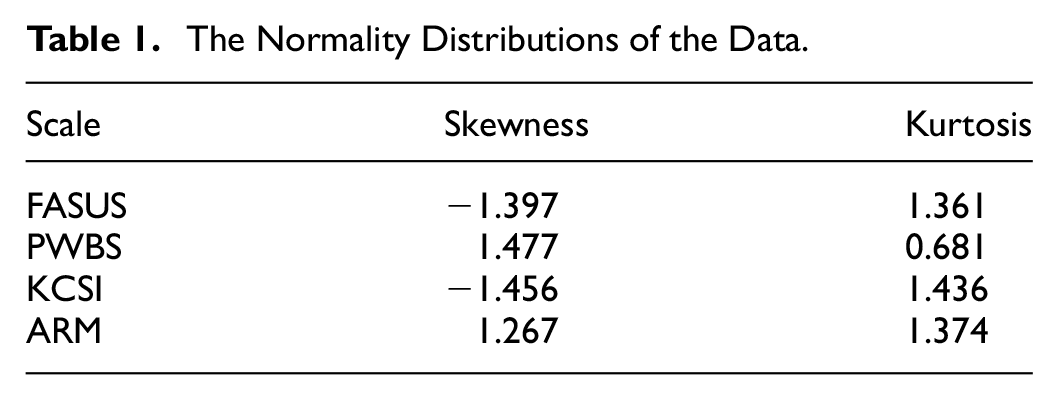
Table 1 shows that the skewness and kurtosis values of all the data are between 1.5 and −1.5 (Tabachnick & Fidell, 2019). Within the scope of the results obtained, it was determined that the data distributed normally.
In order to investigate the mediator effect of career stress (M) on the relationship between future anxiety (X) and psychological well-being (Y), the relationship between all the variables must be linear. In addition, X must have a significant effect on both Y and M, and M must have a significant effect on Y. On the other hand, when the effect of X and M on Y is considered together, the effect of M on Y must be significant (Bowen & Guo, 2011). The results of the study show that these conditions were met.
In order to investigate the moderating effect of psychological resilience (W) on the relationship between X and Y, W must not have a causal relationship with X and Y. On the other hand, there must not be multicollinearity between X and W (Hayes, 2017). Multicollinearity was detected between the variables and the data were standardized (raw scores converted into Z scores) and made suitable for analysis.
Results
The Descriptive Analysis and Correlations Between the Overall Variables
The means, standard deviations and Pearson correlation results of all the variables in the study were examined. The examination was conducted with raw scores. The results are shown in Table 2.
The Descriptive Statistics and Pearson Correlations Among the Variables Among the Total Sample (n = 988).

Moderative negative correlation.
Moderative positive correlation.
p < .001.
Table 2 shows that future anxiety is positively associated with career stress (r = .567, p < .001) and negatively associated with both psychological well-being (r = −.513, p < .001), and psychological resilience (r = −.508, p < .001). Psychological well-being is negatively associated with career stress (r = −.525, p < .001), and positively associated with psychological resilience (r = .543, p < .001). Career stress is negatively associated with psychological resilience (r = −.522, p < .001).
The Results Related to the Mediation Role of Career Stress
The study presents the mediation role of career stress of the prospective social studies teachers in the relationship between their future anxiety and psychological well-being in Table 3 and Figure 2. Table 3 and Figure 2 show the results of the regression-based mediation effect analysis using the Hayes Process Macro.
The Mediation Analysis.


Partial mediation role of career stress.
Table 3 shows that the first stage of the analysis comprised results concerning the regression between future anxiety and career stress. In the first model, future anxiety predicted career stress significantly and positively (F = 468.216, R2 = .322, p < .01). Future anxiety explained 32% of the variance in career stress. In the second model, which was established to understand the effect of future anxiety as a predictor of psychological well-being, future anxiety predicted psychological well-being negatively (F = 258.558, R2 = .344, p < .01). In addition, it was found that this explained 34% of the variation in the total variance of psychological well-being. In Model 3, the mediating effect of career stress in the relationship between future anxiety and psychological well-being was examined. The proposed model had statistical significant (F = 352.348, R2 = .253, p < .01). According to Baron and Kenny (1986), a significant decrease in the predictive level of the independent variable to the dependent variable, with the inclusion of the mediating variable in the model, is partly indicated as the mediating effect. The R-value of psychological well-being decreased from −.317 to −.513. When career stress is included in the model, career stress had a partial mediating effect on the relationship between future anxiety and psychological well-being.
Figure 2 shows that future anxiety predicts psychological well-being in a negative and significant way [(c′) direct effect coefficient = −.317, 95% CI: [−0.378, −0.256], p < .001]. Additionally, it can be seen that future anxiety predicts career stress significantly and positively [(a) direct effect coefficient = .567, 95% CI: [0.516, 0.619], p < .001]. Career stress is seen to predict psychological well-being negatively [(b) −0.346, 95% CI: [−0.407, −0.284], p < .001)]. In the model that emerged with the inclusion of career stress, it was found that future anxiety significantly predicted psychological well-being. Nevertheless, it can be seen that there is a decrease in the coefficient level; [(c) coefficient = −.513, 95% CI: [−0.567, −0.459], p < .001]. Although there is a decrease in the coefficient level, the result is still statistically significant, indicating that career stress has a partial mediating role in the relationship between future anxiety and psychological well-being. Therefore, hypotheses 1–4 have been confirmed.
The Results Related to the Moderating Role of Psychological Resilience
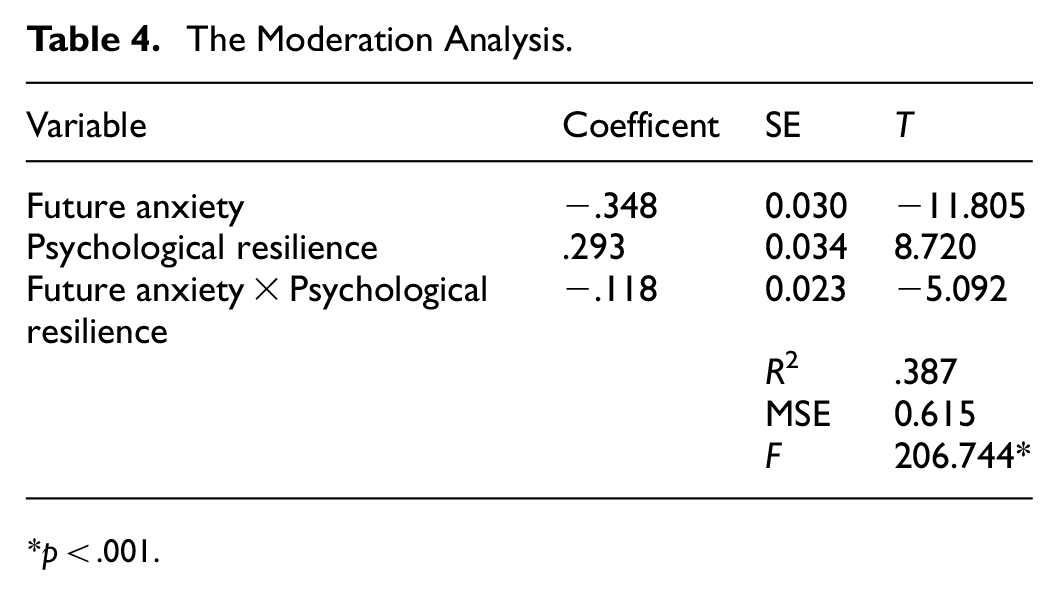
The study presents the moderating role of the psychological resilience of the prospective social studies teachers in the relationship between their future anxiety and psychological well-being; shown in Table 4 and Figure 3. Table 4 shows the results of the regression-based moderating effect analysis using the Hayes Process Macro.
The Moderation Analysis.
p < .001.
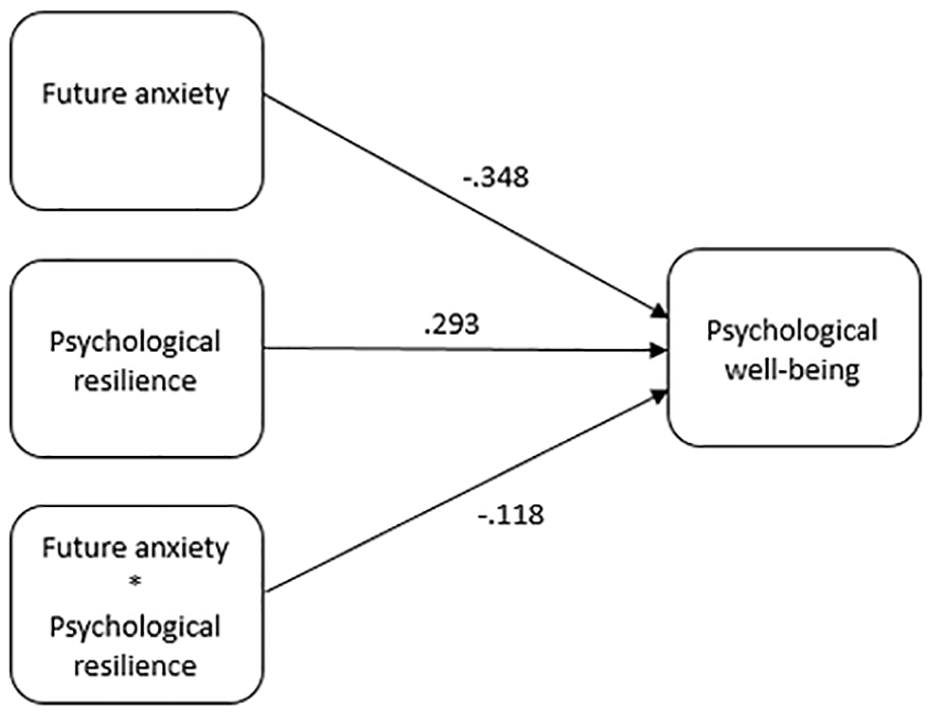
The proposed moderating effect.
Table 4 shows the results of the moderating effect analysis conducted to reveal the moderating effect of psychological resilience. According to the moderating effect analysis results shown in Table 4, future anxiety significantly predicted the psychological well-being negatively (coefficient = −.348, 95% CI: [−0.406, −0.290], p < .001). In addition, the psychological resilience significantly predicted the psychological well-being positively (coefficient = .293, 95% CI: [0.227, 0.359], p < .001). Finally, the interaction of future anxiety and psychological resilience also significantly predicts psychological well-being (coefficient = −.118, 95% CI:[−0.164, −0.073], p < .001). As a result, it can be seen that the interactively generated variable is significant, and that the psychological resilience has a moderating effect. In other words, psychological resilience reduced the effect of future anxiety. The effect is shown in Figure 3.
The moderating role of psychological resilience of the prospective social studies teachers in the relationship between their future anxiety and psychological well-being is shown graphically in Figure 4.

Moderating effect graph.
As can be seen from the graph, psychological resilience decreased the level of negative correlation between future anxiety and psychological well-being. Therefore, hypothesis 5 has been confirmed. Within the scope of the results obtained, it can be said that psychological resilience reduces future anxiety and improves psychological well-being.
Discussion and Conclusion
In the study the mediating role of career stress and the moderating role of psychological resilience in the relationship between the future anxiety and psychological well-being of prospective social studies teachers were examined. In this context five hypotheses were established and tested.
It was concluded that the future anxiety of prospective social studies teachers predicted their psychological well-being in a significantly negative way. Future anxiety is quite common among prospective social studies teachers due to the fear of not being appointed (Yetişensoy & Şahin, 2020). Despite the long training process they spend to gain the title of teacher and start a teaching career, prospective teachers may feel future anxiety when they are faced with the danger of not being appointed. Therefore, prospective teachers with future anxiety may experience emotional disorders such as depression (Szota et al., 2024), hopelessness (Han & Midorikawa, 2024), and insecurity (An et al., 2023) in their individual and social lives (Aykırı, 2022). This reduces their motivation and passion for the teaching profession (Başer, 2021). In the literature there is no research examining the relationship of future anxiety with psychological well-being. However, there are various studies (Carver et al., 2021; Eden et al., 2020; Q. Liu et al., 2009; Paredes et al., 2021; Silva et al., 2021) that have found that general anxiety negatively affects psychological well-being. The fact that the aforementioned studies have concluded that anxiety has a negative effect on psychological well-being in general can be shown as supportive grounds for the results of this study. In this context, it can be said that the results of the study are compatible with the literature.
It was concluded that prospective social studies teachers’ career stress has a partial mediating effect on the relationship between their future anxiety and psychological well-being. Indeed when career stress was included as a mediating variable in the relationship between future anxiety and psychological well-being, although the negative effect of future anxiety on psychological well-being decreased, the significance continued. Prospective social studies teachers experience uncertainty with regard to being appointed as teachers after graduating from university (Özcan, 2019). Prospective teachers often feel hopelessness concerning their careers due to uncertainty concerning being appointed (Demirtaş & Kara, 2022). This hopelessness causes prospective teachers to experience career stress and therefore decreases their psychological well-being levels (Zümbül, 2019). Parasuraman et al. (1996) concludes that a successful career positively affects psychological well-being. Parasuraman et al. (1996) who conducted the study determined that individuals who are successful in their entrepreneurial careers had high levels of psychological well-being. In addition, preservice teachers’ high levels of career stress may be related to reasons such as a lack of social support from institutions and organizations (Chan, 2002) and a lack of trust in official institutions to employ them (Fitchett et al., 2018). In the literature, there is no study examining the mediating role of career stress in the relationship between future anxiety and psychological well-being. In this context, it can be said that this study, which examines the mediating role of career stress in the relationship between the future anxiety and psychological well-being of prospective social studies teachers, could constitute an original source for the literature.
In the study, it was found that psychological resilience has a moderating role in the relationship between the future anxiety and psychological well-being of prospective social studies teachers. Psychological resilience is defined as an individual’s ability to deal with anxiety and stress (Cole, 2016). The psychological resilience of individuals with future anxiety plays a critical role in dealing with future anxiety (Li & Hasson, 2020). Indeed, if the level of psychological resilience is high, effective ways can be developed to regulate the emotional disorders caused by anxiety (Poole et al., 2017). Individuals with high levels of psychological resilience attempt to solve problems with a positive perspective instead of giving up in the face of emotional and mental problems caused by anxiety (Song et al., 2021). Therefore, it can be said that psychological resilience is an effective factor in dealing with future anxiety and maintaining psychological well-being (Fava & Tomba, 2009). In the literature, there is no study examining the moderating role of psychological resilience in the relationship between future anxiety and psychological well-being. However, there studies examining the relationship between future anxiety and psychological resilience (Mutia & Hargiana, 2021; Paredes et al., 2021) and examining the moderating role of resilience in the relationship between the psychological effects of the Covid-19 pandemic and general anxiety (Traunmüller et al., 2023). These studies conclude that individuals with high psychological resilience develop effective ways to deal with anxiety. On the other hand, studies found in the literature (Hou et al., 2021; Min et al., 2013; Song et al., 2021) conclude that individuals with high levels of psychological resilience are generally less anxious. Poole et al. (2017) examined the role of psychological resilience in regulating the mood of individuals with generalized anxiety and determined that psychological resilience regulates anxiety. Considering the results of the studies in the literature, it can be said that the results of this study are in line with the literature.
Limitations and Suggestions for Future Research
The present study has a number of limitations that need to be acknowleged in future studies. First, the current study was conducted using a cross-sectional research model, which precludes the conclusion that a causal relationship exists. As the researchers did not have the opportunity to collect data from prospective teachers more than once, a causality inference cannot be established between the variables. Therefore, using different experimental and longitudinal research designs is required in order to establish causality. In addition, this study was conducted with prospective social studies teachers who were still students. The hypotheses of this study could be researched with the participation of social studies teachers who had graduated from university and who could not be appointed. Research could be conducted to examine the different factors that cause future anxiety and career stress of prospective social studies teachers. Similarly, research could be conducted to examine the different factors affecting the psychological well-being of prospective social studies teachers. Experimental research could be conducted to examine the different factors affecting the future anxiety and career stress of prospective social studies teachers. In addition, the future anxiety and career stress of prospective social studies teachers from different countries could be examined comparatively. Qualitative research could be conducted with case study and phenomenology designs to examine prospective social studies teachers’ future anxiety, career stress, psychological well-being and psychological resilience in depth. Higher education institutions could also implement practices that increase the psychological resilience of prospective teachers in teacher training programs.
Footnotes
Acknowledgements
We thank all participants who voluntarily contributed to this study.

Ethical Considerations
The Declaration of Helsinki (World Medical Association, 2013) was followed for each stage of this study with the data being collected by way of Google Forms. A voluntary principle was stated during the application of the measurement tools, and it was requested that personal information should not be written into the scale batteries in order to prevent trust problems that may have occured while answering the questions on the scales. Permission was obtained from the scientific research ethics committee of Erzincan Binali Yıldırım University in Turkey for the conduct of the research, with the decision dated 29 December 2023, number 14/17. All the participants provided written informed consent for the use of their data for scientific research purposes.
Consent to Participate
Consent was obtained from all participants included in the study.
Author Contributions
Both authors participated equally in all stages of the study.
Funding
The author(s) received no financial support for the research, authorship, and/or publication of this article.
Declaration of Conflicting Interests
The author(s) declared no potential conflicts of interest with respect to the research, authorship, and/or publication of this article.
Data Availability Statement
The datasets generated during and/or analyzed during the current study are available from the corresponding author on reasonable request.