




Abstract
This research seeks to investigate the variables that might affect university-level students’ internet habits, their e-learning self-efficacy and academic achievement in a technology-enhanced teaching and learning environment. To attain the aforementioned objective the Information System Success (ISS) and Technology Acceptance Model (TAM) were employed. A total number of 371 students responded to an online questionnaire. To test the hypothesized model and examine whether the data aligns with the research framework, Structural Equation Modeling (SEM) and confirmatory factor analysis (CFA) were performed. The Person correlation analysis revealed the strongest positive and significant correlation between the intention to use e-learning and user satisfaction, as well as between self-efficacy in e-learning and Internet habits, while moderate negative and significant correlations were found between computer anxiety and user satisfaction and technological complexity and user satisfaction. Further, the results of the study unveiled that internet habits and e-learning self-efficacy significantly predict students’ academic achievement. However, even though the study found that intention to use LMS, computer anxiety, technological complexity, subjective norms, and LMS user satisfaction are not significant predictors of students’ academic achievement, intention to use LMS, technological complexity, and subjective norms, were found to be significant predictors of students’ internet habits. Furthermore, intention to use LMS, computer anxiety, and technological complexity significantly predicted students’ self-efficacy of e-learning. Besides, bridging the gaps in the existing research, the study’s outcomes provide recommendations for educational policymakers, instructors, and students, on how to improve and enhance students’ learning outcomes in the technology-enhanced teaching and learning environment.
Keywords
Introduction
Many academics (Bećirović et al., 2022; Bećirović & Dervić, 2022; Bedel et al., 2024; Delgado et al., 2015; Gadelha, 2018; Ilyas et al., 2023; Kapo et al., 2024; Liaw, 2008; Mailizar et al., 2021; Masa’deh et al., 2022; Nurovic & Poturak, 2023; Qattous et al., 2022) around the world have been focused on the effectiveness of integrating and implementing modern technologies in education. Nowadays, educators and learners in almost all educational institutions are, in one way or another, required to adapt to the rapid wave of technological development and digital transformation (Al-Okaily et al., 2024; Bećirović & Dervić, 2022; Bedel et al., 2024; Deng et al., 2023; Gadelha, 2018; Ilyas et al., 2023; Kapo et al., 2024). The integration of LMS (Learning Management System) and the implementation of technology-enhanced learning environments into educational processes has emerged as a core standpoint for many universities and colleges across the globe (Bećirović, 2023a; Bećirović et al., 2022; Bećirović, 2023b; Dautbašić & Bećirović, 2022; Riandi et al., 2021; Riestra-González et al., 2021). By leveraging its full potential to improve and enhance students’ outcomes, both teachers and students heavily rely on modern technology in the e-learning educational context for its ease of use, access to convenient instructional materials, effective communication tools, and manageable resources (Molins & García, 2023; Nazhifah & Fathurohman, 2023). This is particularly the case in economically developed countries where almost all study curriculums and programs have been moved or upgraded to technology-enhanced learning environments, either fully online or in hybrid mode (Al-Okaily et al., 2024; Bećirović & Dervić, 2022; Dautbašić & Bećirović, 2022; Ghazal et al., 2018; Kapo et al., 2024; Soria-Barreto et al., 2021; Tinjić & Nordén, 2024). Thus, teachers and students are prompted to use modern technologies in their daily education. In particular, teachers use e-learning platforms mainly for uploading instructional materials, creating assignments, and keeping up-to-date with students in their extracurricular activities. By the same token, students can easily access essential and supplementary information and resources such as syllabi, books, handouts, PowerPoint presentations, quizzes, assignments, announcements, and specific links. Although prior studies (Al-Okaily et al., 2024; Becirovic, 2023a; Bećirović & Dervić, 2022; Erandika et al., 2024; Ghazal et al., 2018; Kapo et al., 2024; Tinjić & Nordén, 2024) have been conducted concerning various factors that impact the use of digital technologies’ full potential, and consequently, students’ academic achievement, these influential aspects are still insufficiently explored in the e-learning educational context of Bosnia and Herzegovina and neighboring countries, specifically in Balkan peninsula (Bećirović, 2023a; Bećirović et al., 2022; Bećirović, 2023b; Bećirović & Dervić, 2022). Given the need to address this gap in the field, additional studies are indispensable for comprehensively understanding the major contributors to students’ academic performance when using digital tools in technology-enhanced educational environments.
Since many aspects are essential in determining students’ academic performance and successful use of LMS, the previous research considerably lacks studies that examine the impact of various critical aspects on students’ academic achievement in higher education e-learning contexts. Even though previous studies (Bećirović, 2023a; Butt et al., 2023; Erandika et al., 2024; Ghazal et al., 2018; Kapo et al., 2024; Nurovic & Poturak, 2023; Sulaiman et al., 2023) have examined students’ experience, satisfaction, LMS adoption, usage and success, it seems that only a few researchers (Bećirović et al., 2022; Bećirović & Dervić, 2022) have sought to investigate the influence of diverse LMS aspects on students’ academic attainment in technology-enhanced learning environments in Bosnia and Herzegovina. Therefore, considering the widespread of LMS usage in technology-enhanced educational environments, it is highly important to determine additional potential aspects that have not been thoroughly and systematically investigated in the previous studies and yet could influence students’ internet habits, e-learning self-efficacy and eventually their academic achievement. The main reason why it is crucial to understanding the complex relationship between academic achievement and other factors selected in this study namely internet habits, self-efficacy in e-learning, intention to LMS use, computer anxiety, technological complexity, subjective norms, and user satisfaction, is that their impending effects need to be systematically examined, and then adequately addressed in order to preserve and improve students’ academic performance and success in technology-enhanced learning settings. In other words, additional input is imperative to indicate how certain factors relating to personal and technical aspects of LMS and e-learning use can contribute to the student’s academic achievement. Bearing in mind the need for a profound, thorough, and holistic understanding of academic achievement and the demand to fill gaps in previous literature, especially in the technology-enhanced educational context, the relationship between aforementioned factors within this research model (Figure 1) and their influence on students’ success is yet to be studied.

The research model.
The purpose of this study is to identify the factors that could potentially influence the academic achievement of university-level students in a technology-enhanced learning environment. In addition, the intention is to examine the relationship between students’ internet habits, e-learning self-efficacy, and academic achievement and their potential influencing factors among university students. More specifically, the study aims to examine the predicting nature of intention to use LMS, computer anxiety, technological complexity, subjective norms, and user satisfaction factors on the previously mentioned variables individually and collectively. Therefore, the following two research questions guided this study: how do intention to use LMS, computer anxiety, technological complexity, subjective norms, and user satisfaction influence students’ internet habits, e-learning self-efficacy, and academic achievement, and what are the effects of internet habits and e-learning self-efficacy, on students’ academic achievement.
By adequately addressing the abovementioned predictive and underinvestigated factors, the study may contribute to a deeper knowledge and understanding of e-learning and LMS use and its success worldwide, especially in the context of Bosnian and Herzegovinian learning environments. Furthermore, the study’s potential can be seen in assisting educational policymakers, instructors, and learners to promptly adopt and implement educational policies and practices that are explicitly designed and tailored to address the impact of digital technology use on students’ academic achievement. Besides, the outcomes of this research contribute meaningful and valuable insights for administrators, mentors, students, institutional policymakers, and pre and in-service training professionals into the critical importance of dealing with the aforementioned factors by fostering a supportive technology-enhanced teaching and learning environment and ensuring effective use of modern technologies in education, which would eventually be beneficial not only to students but to overall academic success.
The Research Model and Literature Review
It is a commonly acknowledged belief that academic achievement plays a vital role in students’ lives and, as such, is regarded as one of the most important outcomes of their educational experiences. Recently, researchers (Al-Okaily et al., 2024; Chernyshenko et al., 2018; Ghazal et al., 2018; Kapo et al., 2024; Moore, 2019) have increasingly investigated the impact and relationship between social and emotional factors (e.g., stress resistance, optimism, motivation, persistence, self-control, metacognition, and self-efficacy) as measures of students’ well-being and psychological progress, which are also crucial in determining their academic success. However, to ensure and enhance the success of both aspects while using modern technologies, several important factors need to be considered, that is, autonomy support, self-determined motivation, competence, readiness, internet habits, academic engagement, and e-learning self-efficacy as the key aspects that positively and significantly predict students’ academic achievement (Chapagai, 2024; Closson & Bond, 2019; Eakman et al., 2019; Erandika et al., 2024; Kapo et al., 2024; Mašić et al., 2020). This implies that by systematically identifying and exploring these factors, there is a better chance of improving students’ learning outcomes in the long run.
So, in order to explore the previously mentioned predicting success factors of tech-augmented educational settings on students’ academic achievement, the research model (Figure 1) used in this study stems from Delone and McLean’s (2003) ISS model and Venkatesh and Davis’s (2000) TAM model, which have been validated and tested in various educational contexts across the globe (Bećirović, 2023a; Freeze et al., 2010; Qattous et al., 2022; Riestra-González et al., 2021). Thus, driven by the role of specific internal and external factors in promoting learners’ internet habits, e-learning self-efficacy, and academic achievement, the derived research model presents solid ground to reach the aforementioned objectives of this study. Further, the sections below outline the reasons for including potentially predictive variables from ISS and TAM in the current model, along with the posited correlations between them.
Internet Habits
As specified by Borotis and Poulymenakou (2004), e-learning readiness indicates the “mental or physical preparedness of an individual for some e-learning experience or action” (p. 1624). In other words, internet habits refer to technology-related knowledge, competence, confidence, and ability to independently use digital technologies in online learning settings (Hong & Kim, 2018; Tinjić & Nordén, 2024). Accordingly, recent studies (Althubaiti et al., 2022; Chapagai, 2024; Ezabadi et al., 2021; Kim et al., 2019; Torun, 2020) have shown that students’ internet habits can greatly influence their academic achievement and positively impact all aspects of the E-Learning Readiness Scale and its subscales (Hung et al., 2010). While the aforementioned aspects may be considered crucial for developing successful technology-enhanced learning environments, Bećirović and Dervić's (2022) findings revealed that they may not necessarily be important determinants of students’ academic success as well. Thus, the following hypothesis was developed:
- Internet habits significantly predict academic achievement.
E-Learning Self-Efficacy
Self-efficacy in e-learning, according to Kuan and Lee (2022), refers to students’ technological or computer expertise, which includes their capacity to navigate, communicate, and cope with possibly frequent technical challenges as necessary. Apart from computer literacy, previous studies (Aristovnik et al., 2020; Kapo et al., 2024; Kuan & Lee, 2022; Meng & Zhang, 2023; Stajkovic et al., 2018; Talsma et al., 2019) found that students’ e-learning self-efficacy with LMS, as well as the internet and information-seeking-self-efficacy in e-learning significantly predict students’ academic achievement. More specifically, they revealed that students with higher levels of e-learning self-efficacy in technology-enhanced learning environments demonstrated better performance compared to those with lower levels. Even though different researchers (De Mel et al., 2022) found the relationship between the two factors statistically insignificant, the necessity for greater competency with e-learning systems, functions and content plays an important role in increasing and ensuring a high level of students’ academic achievement and their engagement with e-learning platforms inside and outside the classroom (Code et al., 2021; Talsma et al., 2019). Given the previously noted observations, the succeeding hypothesis was formulated:
- Self-efficacy in e-learning significantly predicts academic achievement.
For many academic bodies including teachers and students, LMS has become an important platform in education and its utilization is almost unavoidable in an e-learning environment. On the adoption of e-learning platforms, it was presumed that its unconventional factors, that is, intention to use, computer anxiety, technological complexity, subjective norms, and user satisfaction may significantly impact students’ academic achievement as well as their internet habits and self-efficacy in e-learning. Although earlier studies (Al-Okaily et al., 2024; Becirovic, 2023; Bećirović & Dervić, 2022; Erandika et al., 2024; Ghazal et al., 2018; Kapo et al., 2024; Tinjić & Nordén, 2024) have shed light on the use of LMS, there is still a gap concerning the impact of certain factors on students’ academic achievement in the e-learning context. While most preceding researchers (Bećirović, 2023a; Butt et al., 2023; Erandika et al., 2024; Ghazal et al., 2018; Kapo et al., 2024; Nurovic & Poturak, 2023; Sulaiman et al., 2023) have focused on investigating the satisfaction and/or acceptance of LMS use, the present study examines the correlation between the previously discussed personal and technological factors and academic achievement in a technology-enhanced learning environment. Thus, the rationale for integrating the aforementioned aspects of techno-augmented learning environments into the present research model is further discussed in the succeeding sections.
Intention to Use e-learning
Drawing on the previous literature (Althubaiti et al., 2022; Ayasrah, 2020; Deng et al., 2023), students’ intention to use e-learning, availability of LMS platforms, and willingness/motivation to use and engage with digital systems in the future are key factors for the successful implementation of tech-augmented teaching and learning environments. In terms of the importance of addressing the intention to use e-learning and its relationship with students’ internet habits, e-learning self-efficacy, and academic achievement, the aforementioned studies found that the intention to use e-learning and subsequent internet habits have a predictive and positive correlation and that students who expressed higher levels of intention to use e-learning showed more productive internet habits (e.g., seeking information online and actively engaging in online discussions) and enhanced e-learning readiness (e.g., technological competence and motivation). Although prior studies (Humida et al., 2022; Mailizar et al., 2021) found a significant correlation between students’ e-learning self-efficacy and the intention to use e-learning, only a few researchers attempted to establish a vice versa correlation (Dash et al., 2022; Prifti, 2022). Accordingly, the intention to use LMS may depend on students’ perception of the usefulness and effectiveness of its flexibility and practicality, which, in other words, means that students’ perception of LMS use is expected to be higher once its functions are perceived to be useful and easy to execute. Thus, the improvement of students’ satisfaction with LMS practically leads to an increase in their intention to use and self-efficacy in e-learning, which in return may potentially result in better learning outcomes and achievements (Al-Fraihat et al., 2020; Soria-Barreto et al., 2021). Based on the noted observations, the following hypotheses were proposed:
- Intention to use e-learning significantly predicts internet habits.
- Intention to use e-learning significantly predicts self-efficacy in e-learning.
- Intention to use e-learning significantly predicts academic achievement.
Technological Complexity
Chin and Lin (2016) defined technological complexity as a perception of individual learners toward their required efforts to understand LMS platforms in an e-learning context. This means that having skills in using technology along with its supplementary platforms (e.g., LMS), is an important factor for implementing successful e-learning environments because it assists and helps teachers and students to access various technological tools that are needed for completing e-learning courses successfully (Nicklin et al., 2022). Additionally, the results from earlier investigations (Cicha et al., 2021; Fernandez et al., 2022; Firat & Bozkurt, 2020; Gumasing & Castro, 2023; Jaoua et al., 2022) revealed that technological complexity is significantly related to students’ internet habits, self-efficacy in e-learning as well as their academic achievement. Therefore, it is proposed that ongoing digital literacy CPD is necessary for both educators and students with a primary focus on digital skills training and better engagement with LMS platforms. Accordingly, competency with the LMS platforms (e.g., effectiveness, interactivity, reinforcement, appealing design, social media support, and accessibility) could improve students’ academic achievements, maintain their concentration and motivation, decrease dropout rates, and provide them with additional learning opportunities in the long run. However, other studies (Bećirović & Dervić, 2022; Ilgaz & Gülbahar, 2015; Mendoza-Lizcano et al., 2020) have not found a significant relationship between the aforementioned aspects and have suggested that while LMS literacy and attitudes may be crucial for developing dynamic e-learning environments, they may not significantly impact students’ academic achievement. According to the previously discussed, the following hypotheses were formed:
- Technological complexity significantly predicts internet habits.
- Technological complexity significantly predicts self-efficacy in e-learning.
- Technological complexity significantly predicts academic achievement.
Computer Anxiety
Preceding studies (Abdullah & Ward, 2016; Ghazal et al., 2018; Hu et al., 2022) found that computer anxiety among students stems from their insecurity, fear of making mistakes and apprehension toward using LMS in e-learning which, as a consequence, yielded a significant negative impact on student’s intention as well as ease of use e-learning platforms. Generally, their research findings indicated that due to students’ anxiety and fear of using computers, they are more likely to avoid regular use of e-learning. Therefore, the existing studies (Althubaiti et al., 2022; Chapagai, 2024; Ezabadi et al., 2021; Hung et al., 2010; Ilgaz & Gülbahar, 2015; Kumari et al., 2021) in the broader literature reported that advanced computer literacy abilities including internet habits, readiness for e-learning and attitudes toward LMS have a major impact on student’s computer-related technology dependence, performance and in the end achievements. Besides, other researchers (Khasawneh, 2022; Stajkovic et al., 2018) found that computer anxiety or technophobia toward computer-related technology has a strong, positive and significant relationship with self-efficacy in e-learning and noted that having it in place lessens the strength and relevance of anxiety’s influence on LMS and, ultimately, on their academic attainment. The findings also underscored a strong relationship between student anxiety and their perception of the LMS; as anxiety increases, so does their perception of the LMS, and vice versa. Accordingly, the aforementioned studies suggest that computer anxiety could be reduced or even completely removed if students are provided with the appropriate level of empathy and assistance when using the LMS and e-learning platforms. Derived from the aforementioned observations, the following hypotheses were formed:
- Computer anxiety significantly predicts internet habits.
- Computer anxiety significantly predicts self-efficacy in e-learning.
- Computer anxiety significantly predicts academic achievement.
User Satisfaction
As pertinent users of e-learning system applications, students’ satisfaction with their services is crucial for enhancing e-learning readiness. According to Wagiran et al. (2022), student satisfaction allows students to express their “feelings about the compatibility between expectations and reality” received from online educational settings (p. 2). In other words, it pertains to learners’ satisfaction with their e-learning experience, encompassing expectations regarding the usability of platforms, quality of instructional materials, communication with instructors and peers, and the overall learning environment (Al-Fraihat et al., 2020; Ghazal et al., 2018). Therefore, it is essential for all educational institutions, whether engaged in online or hybrid learning systems, to consistently monitor and evaluate student satisfaction to ensure their e-learning readiness remains optimal and continuously enhanced (Ghazal et al., 2018). While former studies investigated the effect of readiness and self-efficacy in e-learning, and academic achievement on learners’ satisfaction, only a few (Aldhahi et al., 2021; Bailey et al., 2021; Wagiran et al., 2022) have focused on examining the inverse correlation. Their studies’ findings suggest that the relationship between these factors, especially during sudden changes in the educational systems, plays a crucial role in establishing successful e-learning environments. In addition, other studies (Abuhassna et al., 2020; Keržič et al., 2021) revealed that students who reported optimal user satisfaction performed better in terms of their self-efficacy in e-learning as well as their learning outcomes. A predictive nature of the above-mentioned factors was also found in empirical research conducted by Younas et al. (2022) and in a cross-cultural study piloted by Keržič et al. (2021) Both studies established that students who reported enhanced user satisfaction with e-learning experienced sustained improvements in academic achievement over time as well as across different cultural contexts. Therefore, the following hypotheses were constructed:
- User satisfaction significantly predicts internet habits.
- User satisfaction significantly predicts self-efficacy in e-learning.
- User satisfaction significantly predicts academic achievement.
Subjective Norms
According to Khuram et al. (2021), subjective norms can be defined as a specific behavior and attitudes of a person toward individuals who are most important to them in terms of their views and roles in educational settings. As a result, these people provide certain individuals with instructions on what they should or should not do with their learning. However, in the context of e-learning, subjective norm refers to the extent to which learners consider the influence of peers on their actions and performance in using LMS (Cicha et al., 2021). Accordingly, if positively influenced by their peers, subjective norms can be regarded as an intrinsic motivator that influences students to develop positive attitudes toward the use of LMS applications in e-learning (Hanif et al., 2018).
When it comes to the impact of subjective norms on internet habits, previous studies (Chapagai, 2024; Cicha et al., 2021; Huang et al., 2020), revealed that the subjective norms (teachers, peers and institutional influence and support) significantly influenced students’ attitudes and their perception of the usefulness of Internet-based technology, as well as their readiness and intentions to adopt and use LMS platforms including mobile learning and Google Applications. Since the majority of students aspire to be acknowledged by individuals who are important to them, other researchers (Villyastuti et al., 2020; Yang et al., 2021) found that perceived closeness between teachers and students, as well as perceived control over the class, may significantly influence students’ e-learning self-efficacy. Accordingly, these factors, when applied in tech-augmented learning environments, could positively contribute to students’ engagement, enthusiasm, and subjective well-being. Besides, in terms of students’ knowledge-seeking intention and peers’ support, subjective norms were also found to have an undeviating impact on the student’s academic performance, self-perceptions, intention behavior, and academic achievement (Chapagai, 2024; Khuram et al., 2021; Masa’deh et al., 2022). Thus, based on the previous interpretations, the following hypotheses were formed:
- Subjective norms significantly predict internet habits.
- Subjective norms significantly predict self-efficacy in e-learning.
- Subjective norms significantly predict academic achievement.
Methods
Research Design
This study examines the effects of intention to use e-learning, computer anxiety, technological complexity, subjective norms, and user satisfaction on students’ internet habits, self-efficacy in e-learning, and academic achievement, as well as the effect of internet habits and self-efficacy in e-learning on academic achievement. Thus, based on the presented objectives, the research model, and the hypothesis, this study employed a quantitative nonexperimental research design. According to McMillan (2012)“in nonexperimental research, the investigator has no direct influence on what has been selected to be studied, either because it has already occurred or it can not be influenced” (p. 13). Hence, the participants of this study use the Internet and the LMS platform on a frequent basis in their studies, and researchers do not and can not influence how and when they do that. In addition, this study is predictive in nature because, in prediction research, correlation coefficients demonstrate how one variable predicts another (VanderStoep & Johnston, 2009). Likewise, “in many situations, predictions are most accurate if more than one predictor variable is used” (McMillan, 2012, p. 188). As presented in Figure 1, this study examines the impact of seven predictor variables on students’ academic achievement, as well as the effects of five predictor variables on students’ internet behavior and self-efficacy in e-learning.
Participants
This study included 371 participants studying at privately founded (N = 301; 81.1%) and state universities (N = 70; 18.9%) in Bosnia and Herzegovina at bachelor and master levels. This selection was made because the participants, who are students at both private and state universities, have greater experience, and exposure to e-learning and the use of LMSs. Furthermore, due to limited access to the entire target population andreluctance of many students to participate, convenience sampling—the most commonly used nonprobabilistic sampling method—was employed. (Edgar & Manz, 2017).
This research includes 223 females (60.1%) and 148 males (39.9%), with the age demographics ranging from 18 to 45 years old (M = 22.4; SD = 4.94). As for the grade level, 150 (40.4%) were first year, 58 (15.6%) second year, 60 (16.2%) third year, 36 (9.7%) fourth year, and 67 (18.1%) fifth-year students.
The sample size can be determined by taking into account the number of observed variables (Rokhman et al., 2022). The minimum number of participants should be at least five times (Memon et al., 2020) or preferably 10 times (Yew et al., 2022), or according to the recommendation of J. F. Hair et al. (2014), 15 times or 20 times the number of variables. There are eight variables included in this study, as Figure 1 illustrates. The sample size of this study, consisting of 371 respondents, is 46.4 times the variables. Therefore, this sample size is larger than what experts recommend. In addition, calculating the sample size using the formula
Instruments and Procedures
In this research, an online survey of two parts was utilized. The first part of the questionnaire was about students’ demographics (e.g., university type, gender, academic achievement, age, and study year) and the second part contained seven variables drawn from validated studies; one variable (IH) with eight items and the rest six variables (IU, CA, TC, SN, US, and SE) with three items in each (Appendix 1). The variables, along with the respective sources, are displayed in Table 1. Furthermore, each participant’s response was assessed on a 7-point Likert scale. The lowest possible score of 1, represented a state of strong disagreement and the highest possible score of 7, represented a state of strong agreement. To determine the internal consistency of the items, Coefficients of Cronbach’s alpha were used, which ranged from .75 (CA) to .93 (SE). Regarding students’ academic Achievement, instructors’ official average course grades ranging from 5 to 10 were utilized. A grade of 5 (E) was a failing grade (<55%), while a mark of 10 (A) was the maximum possible grade. More details about the grading scale in higher education in Bosnia and Herzegovina are provided below:
10 (A) – (Excellent, outstanding success with minor mistakes), carries 95 to 100 points;
9 (B) – (very good, above average, with a few errors), carries 85 to 94 points;
8 (C) – (average with noticeable faults) carries 75 to 84 points;
7 (D) – (satisfactory, generally good, but with significant shortcomings) carries 65 to 74 points;
6 (E) – (meets the minimum criteria) carries 55 to 64 points;
5 (F, FX) – (insufficient, much more work needed) less than 55 points (CIP, n.d.).
Instruments for Data Collection.

Before data collection, informed consent from the university administration and students was confirmed. The objectives of the study and the instructions on how to fill out the questionnaire were provided and explained to the participants. Besides, it was made clear to the participants that their anonymity would be ensured and that their involvement in the research was optional. These explanations and instructions were provided to the participants during regular researchers’ classes. In addition, instructions were given to all students in the opening section of the questionnaire so that those who had not attended the researchers’ lessons could understand how to fill out the questionnaire. Data were gathered using the Google Survey, and it took roughly 20 min for students to complete the questionnaire. Questionnaires were distributed by AIS (Academic Information System) and email during the spring semester of 2022/23. In this way, 371 out of 650 students completed the questionnaire, resulting in a response rate of 57.8%.
Data Analysis
In order to perform the data analysis of this research, SPSS 25.0 and AMOS—version 23.0 were utilized, and after determining reliability and distribution normality, descriptive analyses were conducted. In addition, Confirmatory factor analyses (CFA) were employed (Anderson & Gerbing, 1988) to adequately assess the fit between underlying constructs and observed variables. After establishing an adequate model fit along with discriminant and convergent validity, structural equation modeling (SEM) was utilized to evaluate the research model’s hypothesized associations between the variables (Figure 1). PLS-SEM is used because it focuses on estimation and prediction (Al-Adwan et al., 2022), can accurately estimate highly complex models (J. Hair et al., 2017), and can test conceptualized models derived from previous theoretical deductions (Barrett et al., 2021). Additionally, as a robust statistical method, PLS-SEM can identify relationships in social science research that would probably go undetected with other methods (J. Hair et al., 2017) and it is particularly effective when dealing with models that incorporate second-level constructs or model development (Kosiba et al., 2022) as it is the case with the conceptual model of this study.
Results
Preliminary Results
Table 2 below presents the mean values (ranging from 2.3 to 5.55) and standard deviations (ranging from 0.95 to 1.30) for all the variables studied. The respondents’ lowest score was observed on technological complexity with a mean of 2.31 (SD = 1.16), demonstrating their experience, digital literacy, and proficiency with using technology for educational purposes. Students also displayed a low level of computer anxiety, with a mean of 3.18 (SD = 1.30), indicating a negligible level of anxiety with the computer programs they use for learning. The participants achieved the highest rating on Internet Habits with a mean of 5.55 (SD = 0.95), indicating a high level of Internet habits and readiness for using technology for their learning purposes. In addition, students scored pretty high on self-efficacy in e-learning with a mean of 5.53 (SD = 1.29) and the user satisfaction score with a mean of 5.44 (SD = 1.12). Skewness and kurtosis values for each variable ranged between −1.09 and −1.21 and between −0.11 and 1.44, within the allowable range of 3 and +3 and −10 and +10, respectively (Brown, 2006). The Person correlation analysis (Table 2) revealed correlations ranging from r = −.47 to r = .60. The strongest positive and significant correlation was found between the intention to use e-learning and user satisfaction (r = .60, p < .001), as well as between self-efficacy in e-learning and Internet habits (r = .60, p < .001) indicating students’ decent preferences for online learning. Conversely, the analysis identified the strongest negative and significant correlations, which are in fact moderate, between computer anxiety and user satisfaction (r = −.47, p < .001) and between technological complexity and user satisfaction (r = −.44, p < .001), indicating that as students’ computer anxiety and technological complexity increase their satisfaction with online learning decrease.
Descriptive Analysis, Normality, and Reliability.

Correlation is significant at the .01 level (two-tailed).
Evaluating the Measurement Model
To evaluate the proposed model and examine all research variables, confirmatory factor analysis (CFA) was applied using Amos 23. The observed variables were evaluated to determine multivariate normality by using the normalized multivariate kurtosis value proposed by Mardia (1970). Based on the p formula (p + 2; p = number of observed items (22 [24] = 528), the multivariate kurtosis ratio (Byrne, 2013) was less than 528 (Mardia’s coefficient = 226.626). Consequently, multivariate normality was assumed for the statistical data in this investigation (Raykov & Marcoulides, 2008). According to the standardized estimate (SE), the CFA results indicated significant loadings for all of the items in Table 3, which significantly contributed to clarifying their fundamental concepts (J. F. Hair et al., 2014; Hara et al., 2010).
Fit Indices.

According to J. F. Hair et al. (2014), the degrees of freedom and the value of χ2, along with the Tucker-Lewis index (TLI), the Root Mean Square Error of Approximation (RMSEA) and the Comparative Fit Index (CFI) are sufficient indicators to assess a model. Furthermore, Carmines and McIver (1981) postulate that for a model to be considered satisfactory, both the lowest fit function as well as the χ2 ratio with its level of freedom (2/df) should be below 3.0. Also, as reported by J. F. Hair et al. (2014), a model can be regarded as acceptable with a 95% confidence level if the range of RMSEA is from 0.03 to 0.08. Since TLI and CFI in our model exceeded 0.90, it indicated a strong fit (Hair et al., 2010). In addition, to attain an acceptable fit of a model, the value of Standardized Root Mean Residual (SRMR) should be below 0.09 as well (J. F. Hair et al., 2014). Thus, according to the indicated measures (χ2 = 387,634, χ2/df = 2.073, TLI = 0.947, CFI = 0.957, SRMR = 0.046, RMSEA = 0.054, AGFI = 0.879), the measurement model employed in the current investigation demonstrated a good fit.
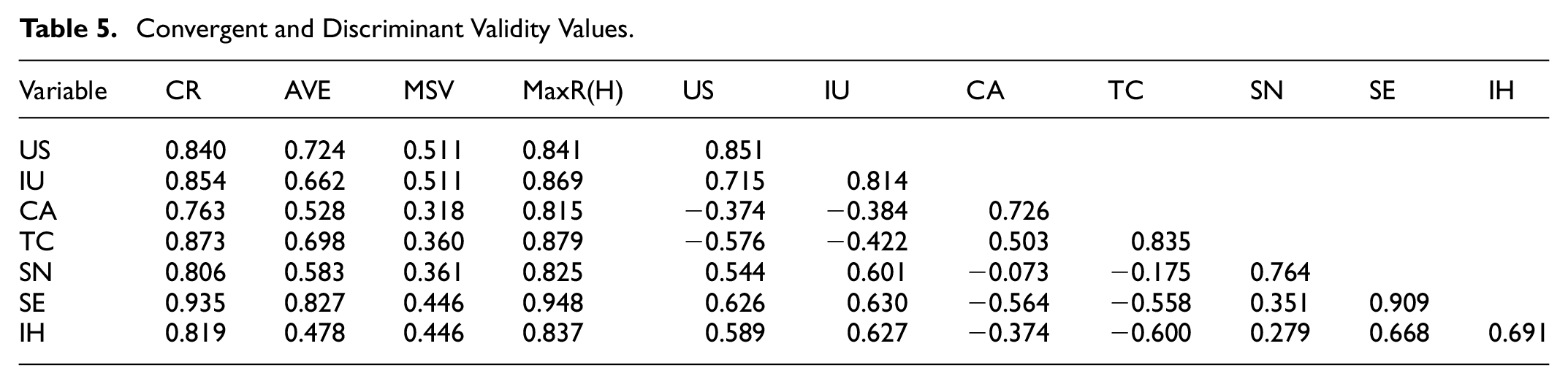
Furthermore, each variable’s convergent validity was assessed by Composite Reliability (CR) and Average Variance Extraction (AVE). The CR threshold value is 0.70 and the AVE is 0.50 (Fornell & Larcker, 1981). Thus, CR values in this study were found to be acceptable as shown in Table 4 above. As for AVE values, all are acceptable except for IH, which is 0.478. Since the AVE scores should exceed the squared correlation value, the squared correlations between constructs and AVE scores were utilized to assess discriminant validity (Eraslan Yalcin & Kutlu, 2019; Escobar-Rodriguez & Monge-Lozano, 2012). Accordingly, enhanced AVE scores of all factors are shown in Table 5 below indicating solid evidence of discriminant validity.
Summary of the Measurement Model.

p > .001.
Convergent and Discriminant Validity Values.
Testing the Structural Model
The test revealed a satisfactory fit of the structural model (χ2 = 421,925, χ2df = 2,078, TLI = 0.942, CFI = 0.953, SRMR = 0.474, AGFI = 0.879, RMSEA = 0.054. Out of 17 hypotheses, nine were supported (H1, H2, H4, H5, H6, H7, H10, H11, and H17), and seven were rejected (H3, H8, H9, H12, H13, H14, H15, and H16). More specifically, the test indicated that i) Intention to use e-learning significantly predicted Internet Habits (H1) and Self-Efficacy in e-learning (H2) but insignificantly predicted academic Achievement (H11); ii) Computer Anxiety significantly predicted self-efficacy in e-learning (H4) but insignificantly predicted Internet Habits (H3) and academic Achievement (H13); iii) Technological Complexity (CA) significantly predicted Internet Habits (H6) and self-efficacy in e-learning (H7) but insignificantly predicted academic Achievement (H15); iv) Subjective Norms (SN) significantly predicted Internet Habits (H8) but insignificantly predicted self-efficacy in e-learning (H9) and academic Achievement (H16); and v) User Satisfaction significantly predicted self-efficacy in e-learning (H11) but insignificantly predicted Internet Habits (H10) and academic Achievement (H17). Table 6 below displays the results of the structural model.
Results of the Structural Model.

p < .001.
In the research model, three endogenous variables were specified: Internet Habits, Self-Efficacy in e-learning (SE), and Academic Achievement. The first variable, Internet Habits with 56% of the variance, was explained by intention to use e-learning, Computer Anxiety, Technological Complexity, Subjective Norms, and User Satisfaction, while the second one that is, Self-efficacy in e-learning with 59% of the variance was explained by intention to use e-learning, Computer Anxiety, Technological Complexity, Subjective Norms, and User Satisfaction. Lastly, the Academic Achievement variable, with a 6% variance, was explained by Internet Habits, Intention to use e-learning, Computer Anxiety, Technological Complexity, Subjective Norms, User Satisfaction, and e-learning Self-Efficacy (Figure 2).

Results of the hypothesized model.
Discussion
The contemporary study aimed to investigate the impact of certain key factors on university-level students’ academic performance in a technology-enhanced learning environment. More specifically, the study evaluated the correlation between students’ internet habits, e-learning self-efficacy, and academic achievement. It also examined the impact of other potential influencing factors (e.g., the intention to use LMS, computer anxiety, technological complexity, subjective norms, and user satisfaction with e-learning) on the aforementioned constructs in the e-learning context.
The results showed a significant correlation between intention to use e-learning and internet habits (H1), which implied that students’ inclination and tendency to employ and engage in e-learning play an important role in developing their internet habits. Additionally, the intention to use e-learning significantly influenced learners’ e-learning self-efficacy (H2), indicating that their propensity to study online has a major impact on their willingness to be more dedicated and informed as well as prepared with the needed skills to encounter potential hurdles of tech-augmented learning environments. This would, in turn, increase their e-learning self-efficacy in using and operating online tools, functions, and content more confidently. These results are in agreement with prior research (Althubaiti et al., 2022; Ayasrah, 2020; Kapo et al., 2024), which demonstrated a positive association between intention to use e-learning, internet habits, and e-learning self-efficacy. However, in contrast to the Ashrafi et al. (2020) findings, the results of this study found an insignificant correlation between the intention to use e-learning and academic achievement (H12), implying that students’ control and inclination over their e-learning activities do not influence academic achievement in the long run.
Furthermore, the study’s results revealed a significantly negative correlation between computer anxiety and e-learning self-efficacy (H4), indicating that learners’ insecurity, apprehension and fear of LMS use have an impact on their confidence in navigating LMS functions and contents. These findings support the existing research (Khasawneh, 2022; Stajkovic et al., 2018), which also found a significant relationship between the two factors and determined that computer anxiety may influence students to start avoiding using digital tools in their technology-enhanced learning environments. Therefore, they suggested that establishing learners’ confidence and providing students with the appropriate level of empathy and assistance in utilizing LMS is paramount in decreasing their levels of computer anxiety or even completely removing their apprehension toward its use (Khasawneh, 2022; Stajkovic et al., 2018). However, the study found an insignificant relationship between computer anxiety and internet habits (H3) as well as academic achievement (H13). In other words, these findings revealed that students’ apprehensiveness toward LMS does not necessarily influence their internet habits in terms of their willingness to use LMS features, technology-related competence and digital e-learning independence. In addition, the studies (Ezabadi et al., 2021; Kumari et al., 2021) with comparable findings suggested that students would always feel a slight degree of computer anxiety regardless of their level of preparedness and readiness, which was also confirmed by the preliminary results of this study. Furthermore, when it comes to academic achievement, other studies (Bećirović & Dervić, 2022; Oribhabor, 2020) have also shown that computer anxiety has a statistically insignificant relationship with overall student performance. This means that while computer anxiety can be regarded as a critical component in building dynamic tech-augmented learning settings, it cannot be considered a determiner of students’ academic achievement. The reason for this is that students can significantly benefit from frequent computer usage and practice over a short period, and as a result, are more likely to exhibit better academic performance.
The study’s findings also discovered that technological complexity has a significant negative relationship with internet habits (H5), which indicates that the latest LMS technological-related awareness and knowledge may significantly impact students’ e-learning readiness, willingness, and computer literacy to utilize corresponding e-learning systems in their education. Even though students scored low on the technology complexity scale, the results demonstrated that the presence of prior learners’ experience, digital literacy, and proficiency with using technology for educational purposes may still influence their internet habits especially when online tools’ features are not introduced and addressed properly. As a result, it is reasonable to assume that technology in terms of its quality, access and necessary computer skills is a crucial component of the aforementioned variable and as such it has become a critical factor in determining the level of students’ preparedness and readiness for e-learning. Thus, previous studies (Firat & Bozkurt, 2020; Jaoua et al., 2022; Nurovic & Poturak, 2023) with similar findings suggest that institutions should consider implementing adaptive and personalized LMS programs in future online courses with a focus on improving and increasing students’ internet habits in the long run. Interestingly, the study revealed another significantly negative relationship between technological complexity and self-efficacy in e-learning (H6), implying that the increase in technological experience, competence and literacy among students enhances their confidence in e-learning. The reason for such results, according to Mendoza-Lizcano et al. (2020), could be attributed to the notion that university students, in general, have a propensity for demonstrating enhanced technological mastery and confidence, especially when using LMS systems. Similar results were also detected in other studies (Bećirović et al., 2019; Cicha et al., 2021; Mendoza-Lizcano et al., 2020; Nicklin et al., 2022) conducted worldwide. Moreover, akin to other studies (Bećirović & Dervić, 2022; Hung et al., 2010; Ilgaz & Gülbahar, 2015; Mendoza-Lizcano et al., 2020), this research also revealed an insignificant relationship between technological complexity and academic achievement (H14). These findings, however, contrast with other studies (Fernandez et al., 2022; Gumasing & Castro, 2023) that found a positive relationship between the above-mentioned factors and determined that competency with the LMS platforms improved students’ academic achievements, maintained their concentration and motivation, decreased dropout rates, and provided them with additional learning opportunities in future. Therefore, our findings, along with previously mentioned studies, suggest that while mastery of LMS programs may not be a crucial factor in determining students’ academic achievement, it remains one of the most important aspects in developing successful and interactive e-learning environments. However, these assumptions could be attributed to the fact that mastery of technology can be developed over time, and by putting into practice the appropriate and systematic implementation of LMS training courses, its proficiency can be achieved even sooner.
Moreover, the study’s analysis showed a significant negative correlation between subjective norms and internet habits (H7). These findings indicate that peers’ roles and observations play a significant role in influencing students’ inclination toward internet habits, whether positively or negatively. Hence, the negative findings of this study may be attributed to the teachers, peers and institutions for not being supportive and affirmative enough when it comes to LMS use in techno-augmented learning settings. This may be supported by previous studies (Chapagai, 2024; Hanif et al., 2018; Huang et al., 2020), which discovered that subjective norms (teachers, peers, and institutional support) are one of the crucial factors in determining students’ behavioral intention and readiness to utilize LMS platforms in their education. Therefore, Hanif et al. (2018) suggest that subjective norms can serve as a strong intrinsic motivator in developing learners’ positive attitudes toward the use of LMS. Overall, it seems that peers’ and teachers’ close relationship, positive encouragement, autonomous control and mutual support in students’ e-learning processes may significantly impact their readiness, self-perception and self-efficacy in e-learning as well as their engagement, enthusiasm and subjective well-being in the techno-augmented learning settings (Chapagai, 2024; Yang et al., 2021). The current study, on the other hand, found an insignificant relationship between subjective norms and two other variables, namely self-efficacy in e-learning (H8) and academic achievement (H15). Being inconsistent with other studies (Villyastuti et al., 2020; Yang et al., 2021) in the field of interpersonal relationships, the first insignificant relationship (subjective norms and self-efficacy in e-learning) implies that peers in terms of their support and help do not significantly influence students’ confidence and ability to use LMS systems. The lack of a significant relationship between the aforementioned variables may be attributed to the educational level of the participants, as they have become more independent and confident in their education, and as a result, subjective norms may have less influence. By the same token, previously mentioned opposing studies suggest that peers are mainly important in influencing students’ behavior toward LMS in terms of their “know-how” to utilize its functions and contents. Thus, it seems that the role of peers, when it comes to their overall relationship with students, should also take into account learners’ self-perceived confidence in using LMS systems. Accordingly, enhancement of the aforementioned predictive factors of e-learning self-efficacy in techno-augmented learning environments would result in improving how students experience and evaluate their learning experiences and activities with LMS systems in future (Yang et al., 2021). As for the second insignificant relationship between subjective norms and academic achievement, the findings imply that support from peers does not influence students’ academic achievements. While the results of Khuram et al. (2021) indicated a firm relationship between subjective norms and academic achievement, they still put forward that the peer support aspect in their analyses moderated the influence of subjective norms on learners’ academic achievement. This can be attributed to the idea highlighted by Masa’deh et al. (2022) that peers’ enthusiasm, support, and recognition of the significance of LMS platforms for students’ future online education should be strengthened. Furthermore, enhancing their current perspectives on e-learning through exposure to various LMS programs can lead to improved academic outcomes for students in the long term.
The results further presented that user satisfaction significantly predicts self-efficacy in e-learning (H10), which implies that students’s overall satisfaction with the LMS system positively influences their e-learning self-efficacy in terms of their confidence to use and navigate its functions and contents independently. The findings also show that students’ positive perspectives and attitudes toward the way the e-learning system operates significantly impact their self-efficacy in e-learning. These outcomes may stem from the fact that university students are generally better equipped and experienced with the latest technological advances and, consequently, showed greater satisfaction as well as confidence in using the LMS. This was also identified in a few other studies (Aldhahi et al., 2021; Kapo et al., 2024; Mendoza-Lizcano et al., 2020; Polz & Bećirović, 2022), which indicated that university students’ e-learning contentment is critical in determining their e-learning self-efficacy along with their self-confidence. Besides, the results of the current study demonstrated that user satisfaction does not directly affect internet habits (H9) as well as academic achievement (H16). The preliminary results imply that users’ overall satisfaction with LMS does not have an impact on their mental or physical preparedness, willingness, computer literacy, technological competence, confidence, help-seeking, learning strategies, resource management, and ability to use digital technologies independently. This aligns with Wagiran et al.’s (2022) research, which found that motivation (to use LMS platforms) generally acts as a mediating factor between the aforementioned variables, thus only then potentially having a direct influence on students’ internet habits. Accordingly, it seems that students’ satisfaction in the context of the present study lacks a motivational factor that would help in gaining a more profound insight into this phenomenon. Despite the results, it is clear that users’ overall satisfaction does not affect their willingness to participate in e-learning environments and it does not impact their ability to handle potential distractions such as school responsibilities, technical equipment and issues, problem-solving skills, and collaborative relationships with peers and other students. Furthermore, inconsistent with prior research (Abuhassna et al., 2020; Keržič et al., 2021; Younas et al., 2022) in the field, user satisfaction’s insignificant relationship with academic achievement in this study asserts that students’ positive attitude and contentment with LMS do not have an impact on their learning outcomes. This means that students will still live up to their learning responsibilities regardless of whether they are satisfied with LMS platforms or not. This is also observed in previous studies (Bećirović & Dervić, 2022; Hung et al., 2010; Torun, 2020) which indicated e-learning self-efficacy, motivation, and self-directed learning factors as the strongest predictors of long-term academic achievement followed by all other potential factors. However, other studies (Keržič et al., 2021; Younas et al., 2022) revealed that enhanced satisfaction with LMS among students positively influenced their grades and that students experienced constant improvements in academic achievement over time as well as across different cultural contexts.
The findings also showed a significant relationship between internet habits and academic achievement (H11). This means that students’ internet habits in terms of their mental or physical preparedness, willingness, computer literacy, technological competence, confidence, help-seeking, learning strategies, resource management, and ability to use digital technologies may significantly influence their academic success and attainment in the long run. Given that participants in the study indicated a high level of internet habits, a significant and positive relationship between the aforementioned variables seems to be reasonable. This is consistent with prior studies (Althubaiti et al., 2022; Kim et al., 2019; McVay, 2000; Torun, 2020), which found that frequent use of the internet and digital readiness significantly and positively predict students’ academic achievement. In other words, they imply that more internet use leads to higher technological competence, thus potentially influencing academic engagement as well as achievement in techno-augmented learning environments. So, to improve students’ digital readiness, Althubaiti et al. (2022) suggest that they should be provided access to complementary digital technology sessions and materials, which would also induce and regulate their learning outcomes in future. However, other studies (Bećirović & Dervić, 2022; Ilgaz & Gülbahar, 2015) found that internet habits are important factors in the development of successful LMS settings but not in determining students’ academic achievement.
The last significantly negative correlation in the current study was found between e-learning self-efficacy and academic achievement (H17). This was also identified in a few other studies (Aristovnik et al., 2020; Kuan & Lee, 2022; Meng & Zhang, 2023; Talsma et al., 2019), which confirmed that students’ e-learning self-efficacy continues to be a significant negative predictor of their academic performance. Despite the high score on the e-learning self-efficacy scale, the findings indicate that students are not entirely confident in using LMS. They still require encouragement and prompting to independently utilize e-learning system functions and content for optimal learning outcomes. Since many students are unfamiliar with the latest LMS programs, these results may be due to the sudden invention of new or advanced LMS platforms (Blackboard, Claroline, CanvasLMS, BigBlueButton, Moodle, GoToMeeting), which students tend to find complex to utilize in e-learning contexts. This coincides with Aristovnik et al. (2020) research, which found that the correlation between e-learning self-efficacy and academic achievement is primarily influenced by students’ technological literacy, including their contentment and competency to use LMS platforms. The study further indicated that students are most confident and proficient in utilizing basic e-learning communication features but are least confident in navigating and adjusting the settings of more complex applications and programs such as Moodle, Blackboard Learn, BigBlueButton, Google Classroom, and GoToMeeting. Due to the low self-efficacy report, they concluded that if students are to achieve better learning outcomes, then they need to be well-prepared and well-equipped with the necessary digital literacy in future. This concept is also supported by other studies (Kapo et al., 2024; Meng & Zhang, 2023), which found that e-learning self-efficacy has indirect effects on academic achievement through its positive and predictive influence on academic engagement. Therefore, this suggests that students’ academic performance can be maintained and improved by increasing their levels of academic engagement with LMS and by enhancing their self-efficacy in e-learning.
Conclusion
In conclusion, the data from this study suggested that learners’ academic achievement is positively and significantly influenced by their internet habits and negatively by their e-learning self-efficacy, which implies that students are still in need of encouragement and motivation to use online platforms (contents, functions, additional sessions and materials) independently. Consequently, once students are provided with such complementary incentives, they will eventually start delivering better learning outcomes. However, the research also identified that students’ academic achievement is not significantly affected by intention to use e-learning, computer anxiety, technological complexity, subjective norms, and user satisfaction, indicating that students’ e-learning apprehension and preference, mastery of technology, relationship and support from peers or institutions, and satisfaction and contentment with LMS may be regarded as important aspects for maintaining successful e-learning environments, but not as significantly predictive for their overall academic attainment.
Moreover, the results showed that while having a negative correlation with technological complexity and subjective norms, students’ internet habits positively and significantly correlated with their intention to use e-learning. Thus, the findings indicate that students’ strong inclination to use e-learning systems, necessary technological understanding, and sufficient peer support are crucial in identifying their preparedness and the frequency of internet use in technology-enhanced learning environments. Nonetheless, the insignificant relationship between computer anxiety and user satisfaction showed that students tend to feel apprehensive about LMS usage and that their overall satisfaction does not influence their willingness and readiness to get involved in online classes as well as to be prepared to deal with possible e-learning distractions along the way.
The study also found that students’ e-learning self-efficacy is positively and significantly affected by their intention to use e-learning and satisfaction, signifying that enhanced inclination toward LMS use increases students’ confidence as well as their satisfaction with its contents and functions. As for its positive-negative relationship influenced by computer anxiety and technological complexity, the results may imply that students’ lack of computer literacy, and competencies and the presence of uncertainty toward the use of LMS may cause students to start avoiding such e-learning programs, and suggest that proper support and training with LMS platforms would eventually decrease both computer anxiety along with its complexity and in return increase their determination and self-reliance in online learning. However, its lack of significant relationship with subjective norms suggests that peers or institutions are not pertinent in boosting students’ confidence in using LMS. Instead, they primarily influence students’ behavioral aspects of LMS use, focusing on their proficiency in utilizing its functions and content.
Study Limitations and Suggestions for Further Research
While the research offers comprehensive implications regarding influencing factors on students’ academic achievement in technology-enhanced learning environments, it also drew attention to certain limitations which could generally affect the wider applicability of its results along with some recommendations that may serve as a solid ground for further research. Firstly, since the study was conducted by administrating an online survey for practical reasons, there is a possibility that paper-and-pen questionnaires would have provided a greater response rate than surveys through the Internet (VanderStoep & Johnston, 2009). In addition, the constructed online questionnaire may have allowed students to provide socially acceptable responses whilst avoiding expressing and revealing their genuine feelings about the matter in question.
Additionally, the study’s research model can be applied in similar or different educational settings worldwide, which would enable the further growth of systematic literature concerning the critical factors that may influence students’ academic achievement in techno-augmented learning settings. Since this study discussed the matter at the university level, further research could also be conducted to investigate the aforementioned factors in high schools. Consequently, this would offer profound insights into students’ experience with e-learning and deliver more information about their levels of academic performance in technology-enhanced learning environments. Besides, in time to come, the research sample size could be increased, the instruments and method for data collection could be different, a longitudinal study could be useful, variables could be diversified, and mixed methods design could be employed to reveal additional insights about student experience within technology-enhanced learning environments by using the same students’ characteristics as well as the research focus of this study. To increase the validity of results in the future, an experimental study might be conducted. Thus, the nature of such research would ensure more insights into a group of concealed factors that hold significant importance in determining students’ academic achievement in technology-enhanced learning environments.
Study Contributions and Practical Implications
Considering the insufficient research on the factors affecting students’ internet habits, e-learning self-efficacy, and academic achievement in technology-enhanced learning environments, specifically in some regions such as Balkan, the findings of this study make an important theoretical and practical addition to understanding the subject, especially in the context of Bosnian and Herzegovinian educational system. Hence, the study fills the gap in the theory of techno-augmented learning environments concerning the potential factors that may positively or negatively influence students’ academic achievement. Further, its findings offer practical implications and recommendations for students, educators, researchers, and policymakers on how to improve technology-enhanced teaching and learning environments for better learning outcomes.
This study unveiled certain factors that are pivotal in increasing students’ academic achievement, especially in higher education. For instance, the study underlines the importance of providing students with adequate support, equipment, and incentives in technology-enhanced learning environments to help them improve and achieve better learning results. In addition, the findings also put forward that students’ academic achievement can be influenced by working on students’ improvement and development of their interrelated constructs, such as satisfaction and intention to use e-learning, computer literacy, and quality of relationships with their peers. Therefore, students should be instructed through frequent workshops and training about the usage of e-learning services independently, meaningfully and effectively. Also, their relationship with peers and instructors must be intensified by providing them with the necessary technological support and developing their skills and competencies to use e-learning platforms effectively and confidently. In other words, the main focus should be on reducing students’ technological anxiety by enhancing their self-confidence and increasing their computer literacy through various training and experiences. For example, students can be (i) prompted to manage their learning through interactive digital tools (Kahoot!, Padlet, and Mentimeter), simulations (Second Life and VSim), apps (Classcraft and Nearpod), and multimedia resources (Youtube and Edpuzzle); (ii) introduced to tailored workshops that are specifically focused on improving their e-learning self-regulation in terms of managing and regulating their time, goals and internet habits; and (iii) offered digital literacy courses that support learning about the basics of using technology safely (cybersecurity) and responsibly (evaluation of internet sources). This approach would enhance their engagement, retention, reinforce the studied material through active participation and most importantly it would promote and encourage insightful learning, creativity and internet habits. Furthermore, for a successful technology-driven learning environment, policymakers need to ensure that all students, especially in rural areas, have access to the essentials such as high-speed internet and modern technological tools (e.g., computers, tablets, and laptops) and that all teachers receive the necessary training on how to use these technologies effectively and ethically. Policies also should be implemented concerning technological innovation in education through supporting and funding programs and training for educators and students (courses and workshops), coordinating with technology companies (inductions and up-to-date hardware and software) and fostering collaboration between educational institutions (exchange of experiences and seminars). Thus, the study suggests that officials need to adopt policies that will ensure the effective use of digital technology by students as well as instructors to achieve better computer literacy and, in the end, better student learning outcomes. As a result, technology-enhanced learning environments could be improved, significantly boosting students’ academic achievement.
Footnotes
Appendix 1
Acknowledgements
The author expresses gratitude to the two student assistants who helped during the article retrieval and screening stage.

Funding
The author(s) received no financial support for the research, authorship, and/or publication of this article.
Declaration of Conflicting Interests
The author(s) declared no potential conflicts of interest with respect to the research, authorship, and/or publication of this article.
Data Availability Statement
The datasets generated during and/or analyzed during the current study are available from the corresponding author upon reasonable request.