




Abstract
There is growing concern that climate change will worsen poverty and food insecurity, particularly in developing countries, hindering the achievement of Sustainable Development Goals (SDG) 1 (No Poverty) and 2 (Zero Hunger). Rural populations are expected to be severely impacted, as 75% of the poorest people in these areas, especially in Africa, depend primarily on agriculture. Although adopting precision agriculture and smart farming has been recommended to counter the adverse effects of climate change on food production, farmers continue to face increasing challenges from climate change despite support from Agricultural Advisors (AAs). The study intended to assess the support provided by AAs in the study areas, focusing mainly on the dissemination of climate information to farmers. This study employed a qualitative research design, collecting data from six focus group discussions in Ezinqoleni and uMzumbe local municipalities in the Ugu district of KwaZulu-Natal. The data were analyzed using reflexive thematic analysis with NVivo14 software. Results indicate that while smallholder farmers in the study area are aware of climate change, they lack access to relevant information to help them cope and adapt. The study also reveals that AAs in these areas are not providing useful information or advice to assist farmers in adapting to climate change, leaving them vulnerable to its adverse effects. The study strongly recommends that as South Africa is currently developing climate change policy the capacity building of AAs should be the priority. By providing high-quality climate information inclusive of sustainable adaptation strategies, farmers will better understand the importance of prioritizing climate change adaptation.
Introduction
There is increasing concern about the potential failure to achieve Sustainable Development Goals (SDGs), particularly SDG 1 (No Poverty) and SDG 2 (Zero Hunger) (Giller, 2020; Giller et al., 2021; Woodhill et al., 2022). These concerns stem from the growing global population, which is expected to surpass 9.7 billion by 2050 (United Nations [UN]; 2019). If current trends persist, an additional 2.4 billion people will be living in developing countries by 2050, especially in South Asia and Sub-Saharan Africa (United Nations [UN], 2019). In these regions, agriculture is of critical national economic importance, with 75% of Africa’s poorest people residing in rural areas where agriculture is their main livelihood (Hlophe-Ginindza & Mpandeli, 2020). On average, over 20% of the rural population faces food security issues (Fróna et al., 2019). This is partly attributed to the fact that a significant portion of rural households are net food consumers, relying more on purchasing food than on consuming what they produce on their own farms (Giller, 2020). Many small-scale and smallholder farms have become too small to provide a full-time living for a household, forcing farming families to diversify into wage employment, migration, and other non-farm activities (Fan & Rue, 2020). Despite these challenges, small-scale farming remains the economic backbone of many developing countries (John et al., 2023; Ricciardi et al., 2018) and is closely linked to poverty alleviation, rural development, and sustainable food security.
According to the FAO, IFAD, UNICEF, WFP and who (2023), climate change is currently the major driver of food insecurity and malnutrition worldwide, and these issues are expected to intensify. Therefore, the role of small-scale and smallholder farmers in ensuring food and nutrition security as well as promoting sustainable rural development in Africa is becoming increasingly vital as the world faces the growing challenges of climate change (Hlophe-Ginindza & Mpandeli, 2020). Africa needs ecologically sound and climate-resilient farming systems to provide nutritionally balanced food and secure food supplies for the most vulnerable populations. John et al. (2023) advocate for the adoption of precision agriculture and smart farming as solutions to address the adverse effects of climate change on food production. By using advanced technologies, precision agriculture and smart farming promise the optimal utilization of resources, improved profitability, and the fostering of sustainable and efficient farming systems (Cesco et al., 2023; John et al., 2023). Smart farming allows for the targeted application of resources based on the specific needs of individual plots, making it one of the most efficient and environmentally friendly farming practices.
Despite the clear benefits of adopting smart farming to enhance the resilience of small-scale and smallholder farmers to climate change and improve farm productivity, these farmers face significant challenges that hinder their ability to adopt such practices (Clarkson et al., 2022; John et al., 2023). These challenges include limited access to modern technological tools (Achukwu et al., 2023), insufficient infrastructure (Mdoda et al., 2022), and a lack of formalized training (Masere & Worth, 2021). Hlophe-Ginindza and Mpandeli (2020) emphasize the critical importance of small-scale farmers adopting new technologies to enhance production and thereby improve food security. They further highlight that increasing the productivity of these farmers is essential for providing practical and sustainable solutions not only at the household level but also globally, as it addresses the escalating food security challenges.
However, the successful adoption of these farming practices hinges on farmers having a sufficient understanding of their importance and how these practices can help them address climate change. This understanding is often hindered by a lack of access to relevant information (Masere & Worth, 2021). Masere and Worth (2021) further suggest that farmers in their study preferred to be actively involved in defining the problems and developing solutions, technologies, and innovations, rather than simply being recipients of new technologies developed by others. These findings underscore the importance of farmers first comprehending the problems that need to be addressed. Ncube et al. (2016), Onyeneke et al. (2018), and Abegunde et al. (2022) found that households with some knowledge of climate change are less likely to be highly vulnerable to its impacts compared to those with limited knowledge. This highlights the necessity of educational programs to enhance climate change awareness in rural communities. Such programs not only improve understanding of climate risks but also positively influence climate change adaptation by enhancing farmers’ ability to acquire, process, and utilize relevant information, technology, and innovations, thereby encouraging the adoption of climate-smart farming practices.
Onyeneke et al. (2018) advocate for the importance of agricultural extension services as a crucial source of information on climate change, adaptation strategies, and climate-smart agricultural practices. The resilience of smallholder and small-scale farmers to climate change largely depends on the support provided by AAs. AAs should focus on equipping farmers with the necessary tools and critical knowledge to adopt and implement new, more sustainable farming practices (Hlophe-Ginindza & Mpandeli, 2020). They also emphasize the need to prioritize support for smallholder and small-scale farming through improved and more inclusive agricultural services, as well as the use of technology in disseminating agricultural advice and climate information. In the context of climate change, AAs are expected to provide guidance and knowledge, offering the latest information and innovations to help small-scale and smallholder farmers improve their practices and increase productivity. Additionally, they are assigned to influence farmers’ behavior by encouraging adaptation to continuously changing climate and weather conditions.
There have been a number of studies on smallholder farmer adaptation to climate change in South Africa (Afful & Ayisi, 2020; Amoah & Simatele, 2021; Gidi et al., 2024; Kom et al., 2022; Makamane et al., 2023; Mdoda et al., 2024; Myeni & Moeletsi, 2020; Nkosi et al., 2023; Nyahunda & Tirivangasi, 2022; Tesfuhuney & Mbeletshie, 2020); however, most have focused on the adaptation strategies used with little attention to their effectiveness in ensuring sustainability of production in rural areas (Popoola et al., 2019). Additionally, it is unclear whether the adopted strategies were informed by climate information or were solely based on farmers’ climate change perceptions, which are often shaped by their previous experiences. Ngumbela et al. (2020) and Mbatha (2024) indicate that the lack of necessary support in innovation, knowledge, and skills for smallholder and subsistence farmers has led to a substantial decline in productivity, forcing them to rely on food purchases for survival. This reliance on food purchases has exacerbated poverty, particularly in rural areas, as food prices continue to rise. The impacts of adverse climate change are also evident in the productivity of smallholder and small-scale farmers in South Africa, despite the support provided by AAs (Bontsa et al., 2023; Kephe et al., 2020; Popoola et al., 2020).
This indicates that the adopted adaptation strategies, as well as the support provided by the AAs, are not effective in helping small-scale farmers cope with the effects of climate change. The inadequate support from AAs, which often fails to align with the specific needs of smallholder farmers, is believed to contribute to the negative impacts these farmers experience (Bontsa et al., 2023). Popoola et al. (2020) also emphasize that AAs play a minimal role in enhancing smallholder farmers’ knowledge of climate change in Eastern Cape while Ncoyini-Manciya and Manciya (2024) suggest that even though smallholder farmers in KwaZulu-Natal midlands are able to perceive climate change trends accurately in their areas, they still struggle to adapt to these changes. Ncoyini et al. (2022) highlighted that AAs are not the primary disseminators of climate information for small-scale sugarcane farmers in the KZN Midlands. This suggests that the support provided by AAs concerning climate change is insufficient to motivate farmers to adopt adaptive strategies. Limited support, particularly in terms of access to climate-related information, negatively impacts farmers’ willingness to adopt these adaptation strategies (Mulwa et al., 2017). Thus, it is very important to understand the support provided by AAs in promoting climate change adaptation among smallholder farmers to enhance their resilience to climate change impacts. This underscores the need to address the capacity gaps in AAs in relation to the delivery of timely and accurate climate information and adaptation guidance, which is very fundamental to sustainable agricultural practices. Identification of such gaps will enable the research to inform policies and interventions to improve advisory services, promote equitable access to resources, and strengthen the ability of rural communities to adapt to a changing climate. The study intends to identify the gaps in AAs’ capacity to deliver timely and accurate climate information and adaptation guidance to smallholder and small-scale farmers by responding to the following questions:
Do farmers perceive any climate change trends in their respective production areas?
Do AAs communicate climate information that would help farmers to cope with observed climate change trends?
Do farmers make use of climate information in their coping and adaptation decisions?
What information do farmers need to cope with and adapt to climate change?
Are the AAs sufficiently capacitated, from the farmers’ perspective, to provide meaningful advice on adapting to and responding to climate change?
The study aimed to assess the climate changes observed by smallholder farmers, the climate information provided by AAs to address the observed changes, the climate information utilized by farmers, the information required by smallholder farmers to cope with and adapt to climate change, and the capacity-building needs of AAs from the perspective of smallholder farmers in the Umzumbe and Ezinqoleni local municipalities in Ugu District, KwaZulu-Natal. Access to and use of climate information to inform production decisions in smallholder farming is not well researched in the South African context (Ncoyini et al., 2022), which is concerning given the uncertainty of climatic trends under climate change conditions. The continuous losses experienced by smallholder farmers due to extreme climate events indicate that the employed adaptation strategies are not effective, and access to relevant and reliable climate information is the first step toward effective climate change adaptation. This article, therefore, aims to highlight the need for climate information to ensure sustainable climate change adaptation in smallholder and small-scale farming.
Operationalization of the Key Study Concepts
Conceptual and Theoretical Framework
This study is based on Knowledge Transfer Theory, Constructivism theory, and the Adaptive Capacity Framework to explore the dissemination of climate information and adaptation strategies to small-scale and smallholder farmers by the AAs, and the ability of the farmers to actively interpret and integrate climate information into their existing farming knowledge in order to make informed decisions and eventually adopt sustainable farming practices.
The Knowledge Transfer Theory is mainly about knowledge sharing between individuals or groups (Peng et al., 2021). It highlights the fact that in order for knowledge to be transformed into useful insights, it needs to build on the shared prior knowledge among the people, which acts as a basic condition for this theory. The theory emphasizes the interaction between tacit and explicit knowledge (Nonaka et al., 2001; Nonaka & Takeuchi, 1995; Peng et al., 2021). In this study, it focuses on the transfer of climate information from AAs to farmers. This will lay an emphasis on effectiveness of communication, relevance of knowledge being shared, and capacity/ability of farmers to utilize the shared knowledge in their decision-making. Constructivism supports the idea that information sharing should not be a passive process; instead, farmers must actively engage with and interpret the information they receive.
The Adaptive Capacity Framework focuses on whether farmers are able to respond to the climate information given to them, reduce the dangers of climate change and seize the opportunities that arise from it (Serdeczny et al., 2024). This framework highlights the importance of climate information in the development of climate change adaptation strategies since the ability of farmers to adapt to climate change depends greatly on their ability to access, interpret and use the information provided to them (Alam et al., 2017; Ncoyini et al., 2022; Troncarelli et al., 2023). With regard to this framework, constructivism emphasizes that adaptation is an active process that requires farmers to combine existing knowledge, experiences, local knowledge and the newly provided climate information.
The theory of Constructivism helps to a great extent in understanding how farmers are able to interpret and apply climate information in their farming practices. To this theory, experience and interaction with others shape a person’s perceptions and knowledge of the world (Mwita, 2022; Tenny et al., 2022). Based on this theory the study assumes that the process of adaptation to climate change does not simply rely on the dissemination of information by AAs to farmers but is, on the other hand, an active and dynamic process that requires the farmers to interpret, question, and integrate the knowledge into their practices. This study has, therefore, established the importance of having adequately capacitated AAs to ensure the timely dissemination of reliable and relevant climate information.
Methodology
Study Site
KwaZulu-Natal, located in eastern South Africa, shares borders with the Eastern Cape, Free State, and Mpumalanga provinces, as well as the kingdoms of Lesotho, Eswatini, and the country of Mozambique. The province has a population of approximately 10.3 million and covers an area of about 93,350 km2 (Stats SA, 2016). Its topography varies significantly from the interior to the coast, with altitudes ranging from 3,448 m above mean sea level (amsl) along the Drakensberg escarpment in the west to low mountains in the midlands, undulating hills, and dropping to sea level at the coast. The mean annual rainfall in KwaZulu-Natal ranges from 650 mm in the eastern Grasslands to 1,400 mm in the eastern Coastal Bushveld, with the Central Bushveld receiving around 900 mm. The province receives most of its rainfall during the austral summer, from October to March, and with climate change, the contribution of summer rains to the total annual rainfall is increasing compared to autumn-winter showers (Ncoyini et al., 2022; Ndlovu et al., 2021).
The province comprises 10 district municipalities, including the Ugu District Municipality on the South Coast. Covering 5,866 km2 and featuring a 112 km seashore, Ugu forms the border between the Eastern Cape Province and KwaZulu-Natal. The Ugu District includes six local municipalities: Vulamehlo, Umuziwabantu, Umzumbe, Umdoni, Ray Nkonyeni (previously known as Hibiscus Coast), and Ezinqoleni. The district faces significant challenges in improving the quality of life due to high levels of poverty, unemployment, and low economic growth. The population of Ugu is predominantly rural, with 86% of residents living in rural areas (Duma, 2015). The Ugu District Municipality has a population of 754,954 people, compared to the total population of approximately 10.3 million in KwaZulu-Natal Province (StatsSA, 2016). Among the local municipalities, Umzumbe has the highest poverty levels, with 19% of its residents living below the poverty line (COGTA, 2020). These sites were chosen because they are in KwaZulu-Natal, a province characterized by significant participation in agricultural activities in South Africa. Despite this involvement in agricultural production, a large portion of the population—over 4 million—relies on social grants (KwaZulu-Natal Provincial Government, 2023). Additionally, the province faces high unemployment rates, with over 30% of the general population and more than 30% of the youth unemployed (Maluleke, 2023). Figure 1 shows the map of the study sites.

Map showing Ugu district municipality.
Research Design
The study utilized a qualitative research design. Qualitative research is a type of social inquiry that emphasizes how individuals interpret and make sense of their experiences to understand social reality. It explores people’s behaviors, perspectives, feelings, and experiences, uncovering the underlying aspects of their lives. The purpose of qualitative research is to systematically describe and interpret issues or phenomena from the perspective of the individuals or populations being studied, with the goal of generating new concepts and theories (Mohajan, 2018).
This research design was specifically chosen for the study to explore farmers’ perceptions and feelings in relation to their experiences with climate change and their satisfaction with the support received from AAs in terms of climate information dissemination and adaptation guidance in their production decision-making processes. The aim was to learn directly from the farmers about their problems while adapting to climate change and what kinds of information they feel are absolutely necessary to make sustainable climate change adaptation a reality. It was also aimed at ascertaining whether the farmers perceive the AAs to be adequately capacitated to address issues related to climate change and to give them efficient advice in order to minimize the negative effects of climate change on their productivity. The qualitative research design was appropriate for this study based on the following reasons:
• Understanding the Perspectives: Qualitative research fits well in explaining individuals’ experiences, perspectives, and feelings aligning well to the purpose of this study to understand the farmers’ viewpoints (Mohajan, 2018; Mwita, 2022).
• Exploring Challenges: A focus on challenges and needs of farmers means depth and context - two aspects which qualitative methods are tailored to capture (Kumar, 2011; Mwita, 2022).
• Subjective Experience: This study investigates the aspects of farmers’ satisfaction and their perception of useful information which is subjective making the quantitative methods insufficient (Mwita, 2022).
This approach ensured a comprehensive understanding of the social and contextual factors influencing farmers’ adaptation to climate change. Descriptive research was deemed most appropriate as it aims to describe the variables investigated without exploring the reasons behind them.
Data Collection Method
Data were collected through focus group discussions with farmers involved in agricultural activities in the study area. The study employed convenience sampling, which relies on the availability of participants. All active farmers in the study area were invited via telephone and informed that participation was voluntary. Consequently, the FGD proceeded with those who chose to participate. These discussions aimed to gather shared knowledge and insights on how extension officers disseminate climate-related information, specifically regarding climate change trends and adaptation strategies. The questions were developed based on the findings from separate interviews conducted with Agricultural Advisors (AAs; not included in this article). These interviews explored whether AAs discuss climate change issues with their clients and assessed their understanding of clients’ needs regarding climate change adaptation. The findings related to the claimed dissemination of climate information formed the basis for the questions. The FGD questions focused on whether farmers receive information from the AAs, their perceived effectiveness of the received information, and areas for improvement. Focus group discussions were held in two local municipalities, Umzumbe and Ezinqoleni, involving six groups of 10 to 15 farmers each. These groups were organized to represent the majority of areas within the two municipalities, ensuring comprehensive regional coverage. Additionally, the groups included both livestock and crop farmers, with participants ranging in age from 18 to over 60 years old. The discussions were conducted with Agricultural Advisors (AAs) present to ensure transparency. The presence of the AAs in the discussions was to ensure the veracity of their responses regarding the support provided by AAs and to help clarify points that the farmers seemed uncertain about. This means that the AAs were not fully part of the discussions but were present to observe, support, and clarify when necessary. The areas constitute of Zulu speaking individuals. Thus, the discussions were conducted in Zulu to ensure fluency and freedom of expression from the participants. Each discussion was recorded digitally, transcribed and translated into English for analysis.
Data Analysis
The reflexive thematic analysis approach was preferred for data analysis. This technique involves systematically coding the data through an inductive process to identify patterns and organize them into themes emerging directly from the data (Rajashekar & Jain, 2024). A reflexive thematic analysis was conducted on the qualitative data obtained from discussions with six focus groups of small-scale and smallholder farmers from the Ugu district in KZN. According to Braun and Clarke (2020), reflexive thematic analysis is an accessible and theoretically flexible interpretative approach to analyzing qualitative data, facilitating the identification and examination of patterns or specific themes within a data set.
In this study, we employed Nvivo 14, a well-established qualitative data analysis tool, to conduct the reflexive thematic analysis. The analysis process included the following six steps: familiarization with the data, generating initial codes, creating initial themes, reviewing potential themes, naming themes, and producing the report. The analysis primarily focused on whether farmers receive support from the AAs on climate change related issues with the emphasis on the dissemination of climate information. It also focused on whether famers percive agricultural advisors as adequately equipped to provide guidance on climate change-related issues and sustainable agricultural practices. This perception was evaluated based on the information and advice given by the AAs regarding climate change.
Results and Discussion
Age of the Participants
The main focus of the study was to assess the support provided by AAs in the study areas, focusing mainly on the dissemination of climate information to farmers. However, it was necessary to understand the age of the participants, as age has been found to significantly influence productivity in agriculture. Qange and Mdoda (2020) suggest a negative relationship between a farmer’s age and smallholder farming. This is attributed to the potential deterioration in health, which restricts full participation in farming (Li et al., 2024; Qange & Mdoda, 2020). Limited participation in farming would mean a lack of first-hand experience with the impacts of climate change on agricultural productivity. In addition, risk preferences tend to change as people get older. Older farmers are often more risk-sensitive and hesitant to adopt new farming systems (Li et al., 2024; Zheng et al., 2021). This implies that aging farmers are less likely to adapt to climate change, as adaptation requires the adoption of new, improved farming practices. Tran et al. (2020) also found a negative association between the adoption of climate-smart agriculture practices, particularly labor-intensive systems such as crop diversification and mulching (Mailumo et al., 2021). On the other hand, Rapholo and Diko Makia (2020) believe that older farmers tend to be more experienced and likely to perceive climate correctly relative to their younger counterparts.
From the various focus group discussions conducted (Figure 2), the majority of farmers were aged 51 to 60 years (37), followed by those aged 41 to 50 years (20), and finally, those older than 60 years (15). The youth (18–40 years) constituted only 17 of the participants. These results indicate that the majority of farmers in the study sites are middle-aged (41–60 years). This suggests that the participants are still fit for farming and likely willing to learn new practices that would improve their productivity. Given the current life expectancy, these farmers are likely to remain in the sector for 20 or more years. This underscores the importance of understanding current and future climate trends, as well as sustainable coping and adaptation strategies. Their understanding will help ensure that such changes are incorporated into their farming systems and can be easily passed down to the younger generation, who will learn by observing the implementation of these new farming practices.

The age of the respondents.
Climate Change Observed by Farmers
Perceiving climate change is a complex process that involves various psychological factors, including knowledge, beliefs, attitudes, and concerns about whether and how the climate is changing. Perception is influenced and shaped by multiple factors, such as an individual’s characteristics, experiences, the information they receive, and the cultural and geographic context in which they reside (Fierros-González & López-Feldman, 2021). Understanding farmers’ perceptions of climate change is considered a prerequisite for assessing the likelihood of climate change adaptation (Singh, 2020) since it informs their climate change awareness (Madhuri & Sharma, 2020; Troncarelli et al., 2023). Consequently, numerous studies have examined farmers’ perceptions of climate change worldwide (Asare-Nuamah & Botchway, 2019; Karki et al., 2020; Rapholo & Diko Makia, 2020; Singh, 2020). Most of these studies have established that farmers have a clear perception of the changing climate, indicating that they observe and experience these changes in their daily lives. These changes include unpredictable and decreased rainfall, late onset and early cessation of rainfall, increased temperatures, increased wind intensity (Asare-Nuamah & Botchway, 2019), as well as the increased frequency of drought (Singh, 2020) and dry spells (Rapholo & Diko Makia, 2020). The reviewed literature shows that, despite differences in study sites, some climate changes are common across the globe, including high temperatures and shifts in the onset of the rainy season.
The study findings (Table 1) also indicate that farmers in the study site have observed similar climate changes, with over 40 participants from all six different group discussions noting these changes. A significant seasonal climate change was the most observed, followed by intense rainfall events that often arrive well past the start of the rainy season and last longer, resulting in destruction. The results regarding the cessation of the rainy season differ from other studies that reported early cessation, particularly in Limpopo, South Africa (Rapholo & Diko Makia, 2020), and in Adansi, Ghana (Asare-Nuamah & Botchway, 2019). Considering that the majority of small-scale and smallholder farmers rely on rainfed agriculture, any changes in rainfall patterns tend to negatively affect them, leading to increased food insecurity and poverty. Regarding these changes, the participants remarked that:
Climate Change Observed by Farmers in the Study Sites (Nyuswa, Nyavini and Umzumbe).
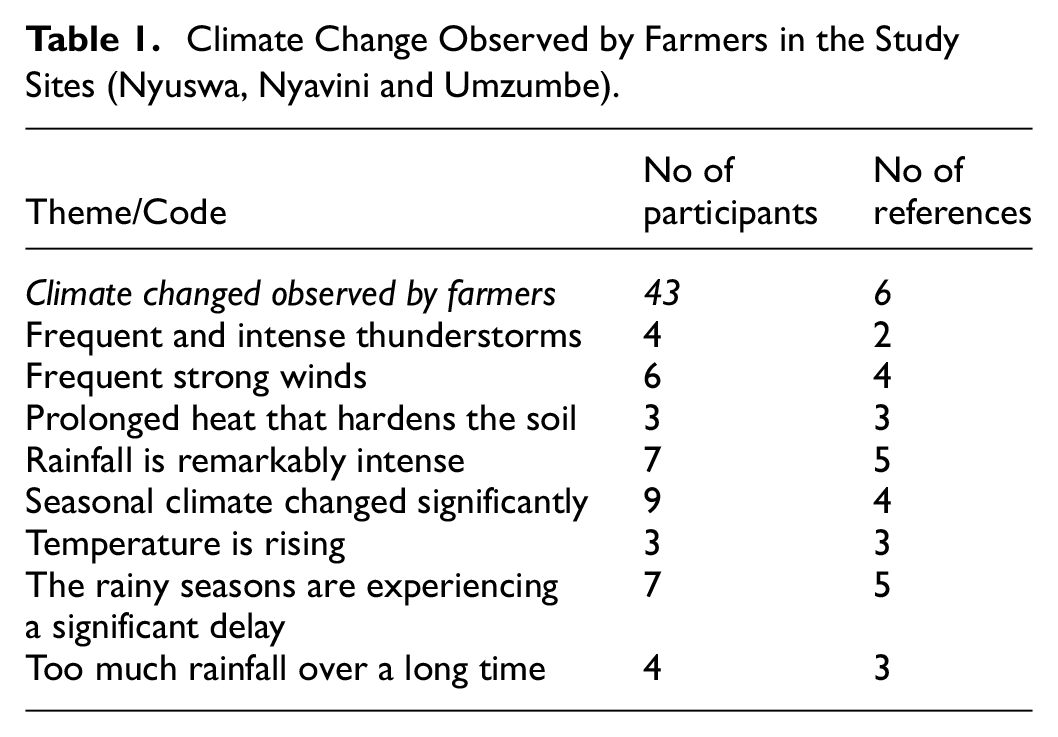
Climate has changed, rainfall is no longer timely; it’s delayed, and when it does come, it’s exceedingly heavy. Gone are the days when we could predict the onset of rains, like in our region where we used to expect the rain around September, allowing for planting. By December, we would have a harvest. However, significant changes have occurred……… (Participant in Umzumbe) Indeed, the planting season has shifted due to climate change. We receive rains around August, then it goes dry until December. When it rains in December, it’s so heavy and prolonged that it either destroys what we’ve already planted or prevents us from continuing to work the land. In the past, we used to get the first rains around October to November, but now they either come early while we’re still preparing or too late. (participant from Nyuswa) Sometimes, when the rain arrives on time, it is heavy and prolonged, leaving us with little opportunity for planting. Normally, we expect rain in August, but in recent years, it has come early in July or even in November. It rarely arrives punctually. (Participant in Nyuswa)
These results highlight that, although farmers perceive climate change, they are still not well-informed about how to deal with and adapt to the changes they perceive. This reveals a knowledge gap in building climate change resilience to ensure continuous production. It emphasizes the need for increased awareness and the adoption of climate-resilient strategies to mitigate climate risks in smallholder farming.
Other observed changes include frequent strong winds, frequent and intense thunderstorms, increase in temperature as well as prolonged heat. According to scientific research it has been predicted that climate change in Africa will manifest as increase in temperature, increase in the frequency of extreme events (Nhemachena et al., 2020), increase in dry spells and intense rainfall events (Engelbrecht et al., 2024) as well as change in seasons (Karki et al., 2020). Despite the projected drying trend for the most parts of the Southern Africa, a slight increase in rainfall over South Africa’s KwaZulu-Natal Province is expected (Engelbrecht et al., 2024). The study findings are aligned with these projections indicating that farmers are already experiencing these changes and negatively impacting their livelihood. Some participants mentioned that: Our primary challenge here revolves around frequent strong winds. Even when we receive rainfall, these winds come and strip away the minimal moisture produced, leaving the soil dry. This, in turn, makes planting difficult. It’s our prevailing problem hindering us from cultivating successfully. (Participant in Umzumbe) In the past three years (2022,2023,2024), we have encountered intense rainfall in April, which is unusual for us. These events devastate everything, including livestock. (Participants in Nyuswa) ……..Our crops are not doing well because the rains no longer come at the right time. They either arrive too early or too late, and as a result, most of us have not harvested anything. This year, the rains came on time but were so intense that they destroyed everything. (Participants in Nyuswa) These rains persisted throughout December 2023 until January 2024, destroying our produce (Participant in Nyavini)
The study findings suggest a high vulnerability of farmers in the study site to climate change. Vulnerability is defined as the reduced ability to cope with, resist, and recover from the adverse effects of extreme events. This raises questions and concerns about why the farmers are not adapting to climate change. While there may be numerous reasons behind the lack of adaptation in the study site, the most prominent reason to investigate first is their access to useful climate information. Previous studies (Ncoyini et al., 2022; Singh, 2020) have established that access to useful climate information is of paramount importance for effective and sustainable adaptation to climate change. Climate information is crucial as it informs farmers about possible future changes and their impacts on production. Without understanding these potential changes, farmers may continue with their traditional farming practices, hoping that the climate will eventually improve. To illustrate this, one of the participants remarked that: We always tell ourselves that the changes will get better with time, but they have only gotten worse. (Participant from Nyuswa).
Other participants also commented that: …. we keep reassuring ourselves that the climate will improve. (Participant from Nyuswa) Even after extreme events that destroy our plants, we continue with the hope that climate will get better….. (participant from Nyuswa)
These remarks clearly indicate that climate change awareness alone is insufficient to encourage farmers to adapt. Therefore, it is necessary to ensure that smallholder farmers are educated about possible future climate trends, their implications for production, and the potential ways to minimize risks associated with these projected trends.
Climate Information Provided by AAs
Although individual experiences of climate change may initiate awareness, adaptation is largely informed by access to climate information. This stems from the nuance relationship between farmers’ perceptions of climate change, the information they receive, and the factors that influence their access to climate information and their climate change perception (Madhuri & Sharma, 2020). Perception alone is often not sufficient for planning for the future, as climate and weather are naturally variable. Climate information helps farmers understand potential changes and their impacts on productivity, which in turn provides the impetus to consider adaptation when necessary (Alam et al., 2017; Troncarelli et al., 2023). Additionally, climate information enables farmers to take preventive measures, respond to ongoing negative effects, and capitalize on potential advantages (Ncoyini et al., 2022; Troncarelli et al., 2023). The study results (Table 2) clearly indicated that AAs do not regularly provide climate information. This can be partly attributed to the fact that the majority of AAs are newly appointed staff, as the Department of Agriculture and Land Reform (DALR) has been laying off skilled and experienced personnel (Masere & Worth, 2021). The newly appointed staff tend to have less knowledge than the farmers they serve, which often hinders their ability to provide effective advice. Among the six groups, participants from five groups reported that they did not receive any information, while only two participants mentioned receiving climate information from the department, though only during information days held annually or biannually. The participants commented on the issue of climate information, stating:
Climate Information Offered by Agricultural Advisors.

No, I have never received any information related to climate or climate change. I face these challenges by myself without any knowledge on how to cope or deal with climate change. (Participant from Nyavini) No, we would be deceiving you. We lack any information about climate; all we understand is that it’s a natural phenomenon. We never received any details about the patterns of rainfall seasons; we simply recognize it as nature. Rain falls and stops according to nature’s rhythms. Given that this has deviated from our understanding, we believe that nature has undergone changes. We would appreciate receiving any information pertaining to the alterations we are witnessing these days. (Participant from Umzumbe) No, this is the first time we’ve encountered the term “climate information.” No one has ever approached us to explain anything related to the changing climate. You are the first person to come and engage in discussions about these matters with us. (Partcipant from Umzumbe)
These results are consistent with previous studies on the subject of access to climate information. Ncoyini et al. (2022) confirmed that AAs were not the main source of information for sugarcane farmers in the midlands of KwaZulu-Natal. Agholor et al. (2023) also indicated that smallholder farmers in the Inkomazi Local Municipality in Mpumalanga rely on mainstream media for access to climate information. Bontsa et al. (2023) found that the climate information provided by AAs in the Eastern Cape Province is poor and requires significant improvement. These findings highlight a gap in the provision of useful climate information to farmers, which partly explains the lack of or limited adaptation by farmers in rural households. Adaptation based on assumptions or misinformation often results in maladaptation, which can be costly.
While the majority, as the commented members were supported by the group, have indicated that they do not receive any information from the department or AAs, those who receive information mentioned that: The department typically disseminates such information during information days. For instance, livestock farmers raise concerns about lumpy skin in their livestock, attributing it to climate change. There’s a consensus that various diseases might increase due to these changes, emphasizing the importance of vaccination. However, if you cannot attend these information sessions, you miss out on accessing this critical information. (Participants from Umzumbe) We also receive information, especially early warnings, through the department, particularly from scientists. For example, they have recently communicated that we will be experiencing El Niño in the upcoming season. Understanding this is crucial for livestock farmers, as dry seasons can impact our veld and livestock. (Participant from Umzumbe)
Based on the remarks, climate information is provided during specific events, rather than when it is needed. Unless farmers have continuous access to climate information, adaptation is unlikely to improve. Li et al. (2024) confirms that access to information influences people’s decisions, while the quantity and quality of information shape the reasoning behind those decisions. Thus, farmers’ decisions to adapt to climate change are fundamentally determined by their access to climate information.
Use of Climate Information by Farmers
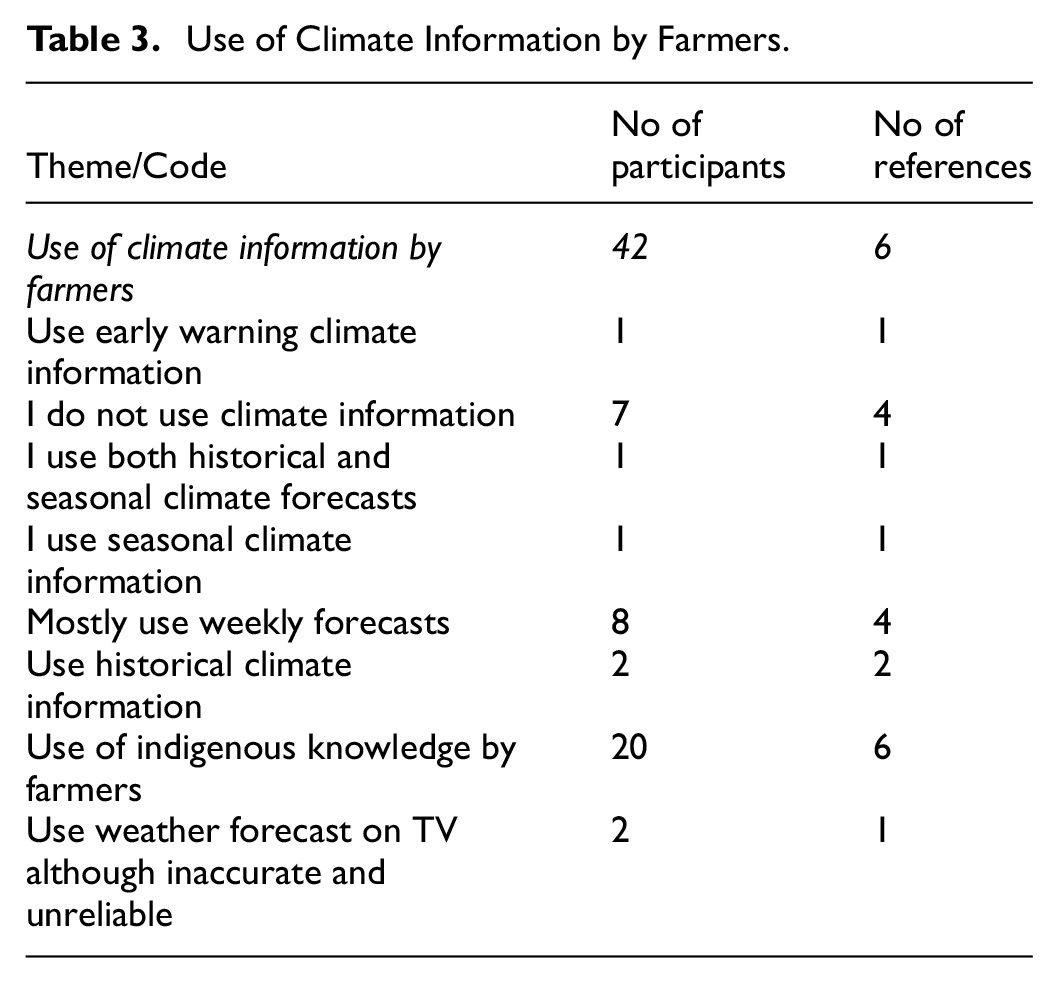
Although the majority of farmers clearly indicated that AAs do not provide climate information, it was interesting to find out if farmers use climate information from other sources. This was informed by the previous studies (Agholor et al., 2023; Myeni & Moeletsi, 2020; Ncoyini et al., 2022) which indicated that the majority of farmers access climate information through mainstream media such as television, radio as well as smartphones. The interesting aspect of this is that the climate information often disseminated through the mainstream media is weekly and daily weather forecasts and often do not help much with planning and preparations for the upcoming season (Myeni & Moeletsi, 2020). The results in Table 3 illustrate different forms of climate information used by farmers in the study areas. From the study findings, majority of farmers still rely on indigenous knowledge as they do not have access to scientific climate information. Previous studies suggest that farmers often lack interest in accessing and using scientific information due to their reliance on indigenous knowledge and the perceived unreliability of forecasts, which are seen as covering larger areas rather than being site-specific (Kom et al., 2022). UNESCO (2017) defines indigenous knowledge as the “understandings, skills, and philosophies developed by societies with long histories of interaction with their natural surroundings.” For indigenous people, this knowledge guides decision-making on essential aspects of life, from daily routines to long-term strategies. The participants mentioned that:
Use of Climate Information by Farmers.
I create my own forecasts based on observations. I’ve noticed that after particularly hot days (heatwaves), rain often follows within two days, and this observation has proven accurate. (participant from Nyuswa) The fact is, we simply follow the practices taught by our parents….. (Participant from Nyuswa) We do not incorporate climate information into our daily operations or production planning, such as deciding what to plant and when to plant. Instead, we follow a traditional planting schedule based on the season. (Participant from Nyuwa)
Although recent studies indicate that indigenous knowledge is insufficient to fully address or cope with climate change and extreme weather events (Nyadzi et al., 2018; Zimu-Biyela, 2016), it remains the primary resource for farmers in the absence of reliable and useful scientific climate information. It is important to note, however, that rural farmers have long relied on indigenous methods for predicting and interpreting weather. To cope with the negative impacts of climate change, local communities still use natural indicators rooted in traditional knowledge to understand and forecast weather patterns (Ubisi et al., 2020). The study findings align with the results of Ubisi et al. (2020), which indicated that farmers in Nkomazi Local Municipality, Mpumalanga, continue to rely on indigenous knowledge to plan their seasonal farming activities. As this study suggests, difficulty in accessing scientific weather forecasts is one of the reasons for the continued use of indigenous knowledge, despite the adverse impacts of climate change on their productivity.
The findings also show that other farmers rely on weekly and daily forecasts from television. The participants commented that: I have access to a weekly (7-day) forecast through TV, apps, and online platforms. I use this information to plan my daily operations. (Participants from Umzumbe) We exclusively use weekly forecasts because we are unaware of other sources of climate information and where to find them. ( Participant from Umzumbe) While weekly forecasts are helpful, they are not sufficient for livestock farmers to effectively cope and adapt to climate change. (Participant from Umzumbe) Although it is not helping, we use the information from the TV. (Participant from Nyavini) We only rely on the information that we watch from the TV. (Participant from Nyavini) Although we hear information on TV, we don’t use it…. (Participant from Nyuswa)
These results align with the findings of Myeni and Moeletsi (2020) and Ncoyini et al. (2022), who noted that weekly forecasts are not sufficient for proper planning to minimize climate and weather-related risks. Some farmers indicated that they mainly use this information because it is the only source they are aware of.
I would say we lack knowledge about where to find helpful information. (Participant from Nyuswa)
There were a few farmers who had knowledge of other forms of climate information and their sources. These farmers shared that they found it beneficial to use more than just weekly forecasts, as it assists with planning. However, they also noted that the climate information they access has its shortcomings. These participants remarked that: As both a livestock and crop farmer, I find it beneficial to have access to historical (previous 2 years’ rainy season information) and seasonal climate information. Historical climate data helps identify trends over the past years, including delays and rainfall distribution. While this aids in planning, it doesn’t assist in tracking hailstorms. ….. (Participant from Umzumbe) For seasonal climate information, I access it online, but I’ve found that it can be inaccurate. There are occasions where it predicts good rainfall, but we end up with a dry season. As a livestock farmer, this forces me to spend money supplementing feed. While I don’t use it consistently, when I do, I often find it to be misleading, especially in the Umtwalume area.(Participant from Umzube)
The study results highlight a critical need for improved access to climate information, as most farmers reported relying on indigenous knowledge and weekly forecasts, which have proven insufficient for effectively coping with and adapting to climate changes. Moreover, some farmers indicated that they do not use climate information at all. These findings help explain the losses farmers are currently facing due to climate extremes. Without efforts to enhance their resilience, smallholder farmers will likely continue to suffer losses, further worsening food insecurity.
Information Needed by Farmers to Improve Their Resilience
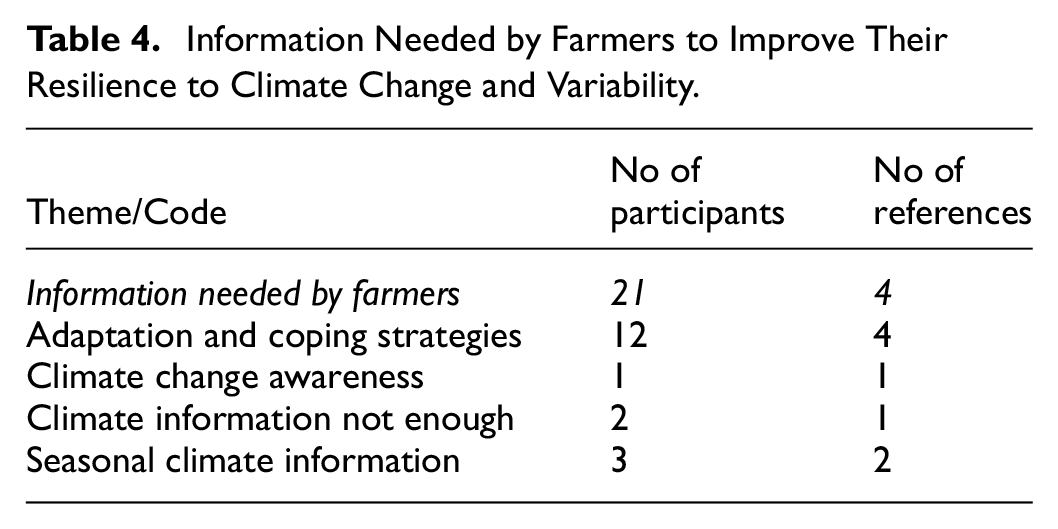
Limited access to information on seasonal, long-term climate changes and potential impacts on agricultural production increases climate-related risks on small-scale and smallholder farming. Ngigi and Muange (2022) and Ncoyini et al. (2022) agree that access to climate information is crucial for enabling small-scale and smallholder farmers to adapt to climate change and manage climate-related risks. Therefore, a lack of access to climate information significantly restricts the adoption of climate-smart agriculture technologies by smallholder farmers. For example, the adoption of weather-smart technologies or practices, such as climate-smart housing for livestock, weather-based agro-advisories, and crop insurance, is largely informed by an understanding of projected climate change trends for a specific area. It is important to note that various climate-smart technologies, practices, and services contribute directly or indirectly to improving productivity, enhancing resilience, and reducing greenhouse gas emissions. Khatri-Chhetri et al. (2017) provides detailed information on these climate-smart technologies and practices, as well as their potential for mitigating and adapting to climate change. Thinda et al. (2020) found a statistically significant positive association between access to information and climate change adaptation suggesting that farmers with access to sufficient and relevant information are more likely to adapt to climate change relative to those that are less informed. Timely provision of and access to climate information helps mitigate the adverse impacts of climate change by promoting sufficient preparedness and informed decision-making, thereby building resilience to climate change and variability (Ngigi & Muange, 2022). Table 4, however, shows that limited access to climate information may not be the only reason behind limited climate change adaptation in the study area. The majority of participants indicated that they mainly need information on adaptation and coping strategies. This stems from their clear observation of these changes and the adverse effects they experience, yet they have no clear understanding of how to cope under these conditions. The study results highlight the dire need of information on adaptation and coping strategies to minimize losses. Regarding the information needed by farmers in the study areas the participants commented that:
Information Needed by Farmers to Improve Their Resilience to Climate Change and Variability.
We need access to all the information that can assist us in coping and adapting to climate change, but unfortunately, we are unsure where to find it. However, the information should be presented clearly, outlining practical implementation steps. For instance, some farmers were given rain gauges to manually measure rainfall, but they ceased measurements due to uncertainty about the utility of those readings. (Participant from Umzumbe) We plant various crops here like maize, potatoes, beans, and madumbe. We need guidance on how to plant them correctly to ensure a good harvest, especially regarding the best planting times since the usual planting times are no longer suitable. (Participant from Nyuswa) I think we need climate information accompanied by advice on what to consider for farming under the expected weather conditions. We are farming fields without irrigation systems, so we really need information on what to produce when the climate conditions are not conducive. (Participant from Nyavini) We need someone who will teach us about the forecast and how to respond to it because the information from TV is only helpful for planning activities like whether I’ll be able to work in the garden in the following day. (Participant from Nyavini) Seasonal climate information would be very helpful because these days we are just taking chances, as the weather and climate has become so unpredictable. (Participant from Nyavini) The timing of the first rains is critical as it dictates when we should plant. (Participant from Nyuswa)
Despite the previous studies citing a wide array of adaptation strategies adopted by smallholder farmers in South Africa (Afful & Ayisi, 2020; Makamane et al., 2023; Myeni & Moeletsi, 2020; Nkosi et al., 2023), the study findings present a different perspective that many may not be aware of. It suggests that extensive training is required to ensure that small-scale and smallholder farmers in South Africa are knowledgeable about climate change, projected trends, and potential impacts on agricultural productivity. This understanding is necessary, as it will drive the need to explore better ways to continue farming under current and projected changes, leading to successful and sustainable adaptation. These findings further highlight the ineffectiveness of extension services in assisting farmers to adapt to climate change. These findings are aligned with Afful and Ayisi (2020) who suggested a minimal difference in productivity of farmers with access to extension services and those with no access and those of Nkosi et al. (2023) that revealed a significant reduction in yield and income despite adopting some adaptation strategies suggesting a need to significantly improve farmer’s use of adaptation strategies. This, therefore, underscores the need for adequately capacitated AAs to provide a continuous climate-related training to farmers.
Capacitation Needs for AAs
Agricultural advisors cannot properly train farmers on climate change and adaptation strategies if they are not adequately capacitated. Previous studies (Afful & Ayisi, 2020; Agholor et al., 2023; Bontsa et al., 2023; Maponya & Mpandeli, 2012; Ncoyini et al., 2022; Nkosi et al., 2023; Popoola et al., 2020) have highlighted the need to for engaging extension staff in long-term training and professional development programs to improve their understanding of climate change and climate information use. The inconsistent provision of climate information in the study area suggests that AAs are lacking the capacity to advise farmers on climate change and adaptation strategies. When farmers were asked if they discuss climate change issues with their AAs, they indicated that they do not, citing the inability of AAs to provide assistance on such matters. Some participants remarked that: The advisor only inquiries about the aftermath of such events. He provides assistance where he can, but not in the form of information. He offers fertilizers or seeds to compensate for what has been lost. However, there is no information provided on how to adapt or cope, except for the introduction of drought-tolerant maize varieties. (participant from Umzumbe) We would like the AA to gather more information that will help us not to incur further losses under these conditions. (participant from Nyuswa) I’m glad to hear that AAs agree that they do not have enough information about climate change because we have also observed that, and we find it difficult to approach them. (Participant from Nyavini) We don’t ask for information because we expect that if she has information, she’ll tell us, as she usually helps with other issues like ordering seeds. (Participant from Nyuswa) We’ve experienced significant losses. Are you mentioning the AAs? Personally, I perceive them as inexperienced because they have limited information. Whenever I seek assistance, they consistently claim not to know, making me feel like discussing issues with them is a futile effort. (Participant from Umzumbe)
The responses from the focus group participants clearly indicate that AAs are not adequately equipped with knowledge on climate change. Since rural communities depend on public extension services for essential information dissemination, this gap leaves them highly vulnerable to the adverse impacts of climate change and extreme weather events. Montmasson-Clair and Zwane (2016) similarly observed that insufficient attention has been given to how farmers acquire climate change information. This issue arises partly because the role of extension officers in providing high-quality climate change information to farmers is often overlooked. These findings also highlight that while action plans are frequently developed at the national government level for implementation at provincial and local levels, they often fail to reach the local communities that need them the most (Shikwambana et al., 2022).
Conclusion
The study evaluated the climate change observed by farmers in the study area, the climate information provided by AAs, the utilization of climate information from different sources, the information required to enhance farmers’ resilience to climate change, and the capacity-building needs of AAs from the perspective of smallholder farmers in Ugu District. The study concludes that while smallholder farmers in the area accurately perceive climate change and experience its adverse effects, they still struggle to effectively adapt. The findings suggest that this difficulty in adaptation is partly due to the lack of access to relevant climate information and the inability of AAs to provide timely and useful guidance. As a result, farmers are often forced to rely on ineffective and inadequate sources of information, such as indigenous knowledge and weekly weather forecasts, to cope with climate change and extreme weather events—both of which have proven insufficient. This study fills a critical gap in understanding the effectiveness of AAs in disseminating climate information and adaptation strategies, specifically in the context of Ugu District, KwaZulu-Natal. While there is existing research on climate change adaptation in agriculture, this study provides a unique focus on the role of AAs as intermediaries between climate change and local farmers, exploring their capacity to deliver relevant climate information and adaptation strategies.
The study highlights that farmers primarily need information on adaptation strategies. It also reveals that climate information, without accompanying guidance on how to respond to predicted or forecasted climate and weather events, is considered inadequate by the farmers. Therefore, farmers emphasize the need for AAs to be well-trained, equipped with the necessary skills, knowledge, and information to better support them in understanding and coping with climate change. The findings underscore the importance of ensuring that high-quality climate information is effectively disseminated to farmers by AAs, which is unlikely to happen unless AAs are adequately capacitated. This study, therefore, strongly recommends that the climate change policy currently being developed in South Africa prioritizes the capacity building of AAs. Frequent training of AAs should be a priority to ensure the regular updating and improvement of their knowledge and skills. This will enhance the relevance of agricultural extension services in the continually evolving agricultural landscape. By disseminating high-quality climate information, farmers will better understand the importance of prioritizing climate change adaptation. Thus, the Department of Agriculture, being the central institution that regulates public AAs, needs to lay an emphasis on smallholder farmers’ adaptation to climate change through budget allocation for regular training of AAs. The training must focus on enhancing AAs’ capacity to (i) access climate change information, including long-term historical trends and projections; (ii) accurately interpret the information or data; (iii) and utilize it effectively to give practical advice for adaptation to farmers. In-depth understanding of the projections would allow AAs to proactively develop required adaptation measures that could help to maintain or improve farmers productivity in future. This training is very imperative to equip the AAs with knowledge on how to handle the changes pertaining to soils, crops, varieties, cropping systems, and other major factors that concern agricultural productivity.
From the findings of this study, future research can now focus on the capacity building for AAs through the investigation of specific training programs that will better equip them with knowledge on climate change and extreme weather events, effective communication strategies, and the use of digital tools in disseminating localized climate information. More research is also needed on farmer-centric approaches, in order to develop participatory models where farmers proactively take part in co-creating climate adaptation strategies—ensuring that they are practical, context-specific, and widely adopted. Finally, research related to the role of technology and information systems is important in exploring the potential of digital platforms, mobile apps, and other ICT tools in bridging the gap between AAs and farmers, through the timely provision of reliable and accurate climate information.
Footnotes
Acknowledgements
The authors are grateful to the funders for funding this study. We are also very grateful to the AAs who played a significant role in introducing us to their respective clients and to the small-scale/smallholder farmers who voluntarily participated in this study. Without their contribution, this study would not have been possible.

Ethical Considerations
The study received ethical approval from the Humanities and Social Sciences Research Ethics Committee (HSSREC), after meeting the necessary standards. Despite the presence of the AA in the FGD, the discussions were primarily among the farmers. They were informed before the discussion began that the AA was present solely to ensure the accuracy of the information provided and that they were free to discuss any relevant issues, even if it might compromise the AA’s reputation. The presence of the AA helped clarify points that the farmers seemed uncertain about, which in turn enabled them to engage freely in the discussion. This demonstrated that the purpose of the discussion was not personal but rather for research purposes.
Author Contributions
The project was initiated, designed and developed by one contributor, who also provided final approval. Another contributor participated in data collection, manuscript development, and both the review and final approval processes.
Funding
The author(s) disclosed receipt of the following financial support for the research, authorship, and/or publication of this article: The project is funded by the National Research Foundation (NRF) Thuthuka Grant (TTK2204123222). We acknowledge the funding for the project titled ‘Capacitation and training needs of agricultural advisors (AAs) on the Concept of Climate Change and Extreme Weather.
Declaration of Conflicting Interests
The author(s) declared no potential conflicts of interest with respect to the research, authorship, and/or publication of this article.
Data Availability Statement
The data used to support the findings of this study are available from the corresponding author upon request.