




Abstract
The COVID-19 pandemic has hit the tourism and hospitality industries hard, posing health risks to consumers and vastly affecting their psychology and behavior. Drawing on protection motivation theory and self-determination theory, this study investigates hotel consumers’ brand preferences between strong brands and others during the crisis and the underlying mechanisms. In Study 1, questionnaires were collected online (based on the Credamo platform) and offline (at a university in Southwest China) for analysis. In study 2, 437 valid questionnaires from China were modeled through the Credamo platform using a structural equation model. The results reveal that: (1) during the crisis, consumers show a preference for strong hotel brands; (2) individuals’ perceived severity and perceived vulnerability to the crisis positively influence their attitudes toward strong brands; and (3) the need for control and the need to belong mediate this effect. This study expands and enriches both self-determination theory and protection motivation theory, offering valuable management implications for hotel managers in formulating effective service and marketing strategies.
Introduction
A public health crisis refers to a societal event caused by the sudden outbreak of major infectious diseases, posing severe threats and harm to the public physical and mental health (J. Zhang & Zhang, 2020). This prompts consumers to pay more attention to their surrounding environmental safety and personal health conditions. As a rare public health emergency, COVID-19 poses a serious threat to personal health and travel safety. Consequently, people’s interactions and travel were restricted, directly impacting travel decisions and behaviors, and delivering a heavy blow to the tourism industry (Jeong et al., 2022; Williams et al., 2022). For pre-travel decisions, previous research proposes a dual-processing model showing that while the perceived risk and anxiety from a health crisis suppress people’s travel intentions, it also reduces life satisfaction, prompting people to escape negative emotions through travel (Kim & Petrick, 2021). During the crisis, nature-based destinations, self-driving, and regional and virtual travel become more popular (Itani & Hollebeek, 2021; Miao et al., 2021). Additionally, the crisis influences behaviors during travel, such as an increased tendency to use smartphones for payments (García-Milon et al., 2021) and a greater desire for variety in travel experiences (J. Kim, Park, et al., 2021).
The search volume for hotels on Google decreased by 23.3% after the outbreak of the crisis (J. Kim et al., 2022; Yu, Lee, & Hyun, 2021). Hotel consumers’ response efficacy, trust in government and society, and hotels’ response efficacy mitigated this negative impact (Hsieh et al., 2021). Psychological resilience can reduce perceived health and emotional risks and increase consumers’ intention to book hotels (Peco-Torres et al., 2021). Additionally, the presence of hotel social distancing measures helps build consumer trust and restores reservation intention (Y. R. Kim & Liu, 2022). During travel amid the crisis, safety and hygiene become the most concerning attributes of a hotel (Atadil & Lu, 2021; Gursoy & Chi, 2020; Hu et al., 2021; L. Liang & Wu, 2022), and hotels with robotic services are more favored (S. S. Kim et al., 2021). While some consumers choose high-quality/price hotels for safety, others opt for less crowded options due to the extremeness effect (J. Kim, Lee, et al., 2021; Park et al., 2021).
Faced with health threats, individuals instinctively raise their motivations to avoid disease, which manifests as corresponding emotions (e.g., aversion and fear), cognitions (e.g., worry about infection), and behaviors (e.g., people-avoidance; Huang et al., 2020). Huang & Sengupta (2020) found that consumers tend to choose atypical products due to their people-avoidance tendencies. However, Galoni et al. (2020) suggests that consumers’ disgust and fear of viruses lead them to prefer familiar products. Specifically, while Huang (2020) proposed that avoiding typical products can decrease the risk of infection from the perspective of the behavioral immune system, Galoni (2020) asserted that familiar products can help restore a sense of control.
Hence, there is a significant gap in understanding how a public health crisis affects consumers’ preferences between different types of hotels. To address this gap, we integrate Protection Motivation Theory (PMT) and Self-Determination Theory (SDT) to explore how the perceived threat of a pandemic influences the need for control and belonging, which in turn affects brand preferences and attitudes. PMT provides a framework for understanding how individuals assess threats and engage in protective behaviors, emphasizing the role of perceived severity and vulnerability in driving protective actions. SDT complements PMT by highlighting the fundamental psychological needs—competence, relatedness, and autonomy—that influence behavior, potentially disrupted during crises, leading to changes in consumer preferences, and behaviors as individuals seek to restore a sense of control and belonging. Through two studies, we intend to examine the following research questions:
To achieve the study objectives, we conducted two researches. First, in Study 1, we examined whether hotel consumers have brand preferences during a crisis. Study 1 indicated that most consumers prefer strong hotel brands during a crisis. Given this finding, we derived the psychological mechanisms behind consumers’ preferences for strong brands based on protection motivation theory and self-determination theory, and tested these mechanisms in Study 2.
This study innovatively combined public health emergencies with hotel consumption behaviors to explore the impact of perceived threats on hotel customers’ consumption preferences and internal psychological mechanisms. The unique contribution of this study lies in (1) expanding the study scenario, systematically analyzing the impact of external environmental factors such as public health events on the basic psychological needs of hotel customers; (2) verifying the mediating role of control need and attribution need in the formation of hotel consumers’ brand preference, complementing the research on hotel consumers’ compensation behavior, and providing new empirical evidence for the protection motivation theory and attribution need theory; (3) exploring the psychological mechanism of brand preference of hotel consumers caused by public health events from the perspective of psychological needs, providing a new theoretical perspective for understanding consumer behavior.
Theories
Protection Motivation Theory
Self-protection is an immediate need for people traveling during a public health crisis. Protection Motivation Theory (PMT) provides a comprehensive framework for understanding how people assess specific threats and take action to safeguard themselves. According to PMT, individuals gather information from both environmental and intrapersonal sources and then engage in cognitive mediating processes to evaluate threats and coping strategies. Threat appraisal involves assessing the perceived severity of a threat and the likelihood of being exposed to it, while coping appraisal considers the effectiveness of protective behaviors, one’s ability to perform these behaviors, and the associated costs. PMT distinguishes between adaptive responses, which are proactive measures taken to mitigate threats, and maladaptive responses, where individuals fail to adopt appropriate protective behaviors (Menard et al., 2017). PMT explains how people evaluate specific threats and implement protective behaviors, with perceived severity and vulnerability highlighting the cognitive assessment of potential risks (Floyd et al., 2000).
Protection motivation in public health refers to people adopting recommended behaviors to avoid health threats (Lwin et al., 2010). PMT has been widely used in studies on individual health behaviors, such as healthy lifestyles and disease prevention (Eppright et al., 1994; Ezati Rad et al., 2021; Grano et al., 2022; Mckenna, 1996; Milne et al., 2000). The theory has also been applied in tourism to explore tourists’ perceptions and protective behaviors toward high-risk destinations and activities (Lu & Wei, 2019; J. Wang et al., 2019; Zheng et al., 2021, 2022). Studies have found that the severity of COVID-19 has a significant negative correlation with people’s willingness to stay in hotels, and the response effectiveness of customers (such as wearing masks, maintaining social distancing, paying attention to hygiene) can alleviate the negative impact and increase the willingness to stay in hotels (Hsieh et al., 2021). While PMT has been widely applied to understand the cognitive processes of threat appraisal and the subsequent behavioral intentions, it also acknowledges the emotional responses that accompany these cognitive evaluations (E. E. K. Kim et al., 2021; Lv et al., 2024). Therefore, this paper combines the emotional responses of consumers and from the perspective of protective motivation theory, explores in depth the impact of perceived threats on the behavior and attitude of hotel consumers under public health emergencies.
Self-Determination Theory
Self-Determination Theory (SDT) suggests people have three basic needs: competence (the ability to manage one’s environment effectively and perform well at a job), relatedness (connecting with others and gaining a sense of belonging), and autonomy (having a strong sense of control and being able to make decisions or take actions based on self-will; Deci & Ryan, 2000; Ryan et al., 1997). The fulfillment of these needs has many positive effects, such as increased vitality (Bartholomew et al., 2011), higher self-esteem, and greater life satisfaction (B. Chen et al., 2014; Deci et al., 2001; Y. Liang et al., 2024). Conversely, environments that are out-of-control or exclusionary can hinder the satisfaction of these needs, leading to negative effects such as stress, burnout and overwork (Lv et al., 2022; Neufeld et al., 2020; Schultz et al., 2014).
Health crises affect our daily lives, increasing negative emotions such as fear and loneliness (Cheung et al., 2021). Social activities are restricted, making it challenging to meet relatedness needs, while the high level of uncertainty threatens people’s sense of control, and reduces their autonomy (Brailovskaia & Margraf, 2021). According to SDT, people seek companionship and belonging when they feel lonely and autonomy when they feel deprived of control (Deci & Ryan, 2000). On the one hand, the uncertainty and fear brought by the crisis cause individuals to lack perceived control, so people will find alternative means of control to regain the sense of control, and meet people’s psychological needs (C. Y. Chen et al., 2017). At the same time, the power of individuals is limited, and when faced with external threats resulting in a lack of belonging, individuals are more inclined to seek social support to cultivate a sense of integration with others and social groups (Fuochi et al., 2021). Therefore, based on SDT, this study starts from the two dimensions of individual psychology and group psychology and considers the dual-intermediary influence mechanism of the need to belong and the need to control, to study the psychological mechanism of hotel consumers in developing brand preference under the background of public health crisis.
Hypotheses Development
Perceived Threat and Need for Control
Public health crises significantly threaten individual health and trigger protective responses from consumers. According to PMT, threat assessment involves two key dimensions: perceived severity, which reflects how serious an individual believes a threat (such as COVID-19) to be, and perceived vulnerability, which indicates the likelihood of being exposed to this threat (Menard et al., 2017; Rogers, 1975). Studies have shown that the perceived severity of a crisis can induce fear of travel (Zheng et al., 2021), leading to travel avoidance (Zheng et al., 2022) and adversely affecting hotel consumption behaviors, such as reducing the willingness of consumers to stay in hotels (Hsieh et al., 2021).
Moreover, crises can negatively impact individuals’ perceptions, particularly their sense of control (Campbell et al., 2020). Control is a fundamental psychological need, and individuals often develop a heightened desire for control when they feel deprived of it (Galoni et al., 2020; Jerry & Harris, 1980). The risk and burden associated with infection can undermine consumers’ sense of control, thereby increasing their need for control (Brailovskaia & Margraf, 2021; Branley-Bell & Talbot, 2021). Based on these insights, we propose the following hypotheses:
H1a: Perceived severity is positively related to the need for control.
H1b: Perceived vulnerability is positively related to the need for control.
Perceived Threat and Need to Belong
The need to belong is an innate motivation that enables individuals to build and maintain a certain number of interpersonal relationships (Baumeister et al., 1995; Papyrina, 2012). The sociometer hypothesis suggests that every individual needs to maintain a certain level of belongingness (Loveland et al., 2010). Two conditions must be met for belongingness to be acquired: people need to have frequent and enjoyable interactions with others, and both parties in the interaction must have a long-term, stable, and caring interpersonal relationship (Baumeister et al., 1995). Interactions that are annoying and conflict-ridden do not satisfy an individual’s need to belong. Many positive outcomes result from the satisfaction of the need to belong, such as positive emotions and goal-directed activity patterns, which can also contribute to individuals maintaining interpersonal relationships (Song et al., 2020). When the need to belong is unmet, it can lead to various negative effects, such as illness and depression (Baumeister et al., 1995; Dutcher et al., 2022; Kealy et al., 2021; Leary et al., 2013).
Perceived severity refers to an individual’s assessment of the seriousness of a threat. When a public health crisis is perceived as severe, it induces a high level of anxiety and fear. These negative emotions are powerful motivators that drive individuals to seek social support and comfort. According to the sociometer hypothesis, in situations where the perceived severity of a threat is high, individuals naturally gravitate toward social connections to mitigate their fear and anxiety (Loveland et al., 2010). For example, during the COVID-19 pandemic, people sought to strengthen their social ties despite physical distancing measures, relying on virtual communication to maintain a sense of community and belonging (Esposito et al., 2022).
Perceived vulnerability is an individual’s perception of their likelihood of being exposed to a threat. From the perspective of evolutionary psychology, when faced with an external threat, individuals have limited power, and to cope with the threat, people seek support from each other, thus creating a strong need to belong. When faced with a threat, consumers tend to seek to belongingness to decrease fear and anxiety (Jones et al., 2011). For example, reinforcing interpersonal belongingness can mitigate the negative effects of mortality exposure (W. Liu et al., 2014; Y. Liu et al., 2021). However, the crisis limits people’s social activities, further increasing the need to belong (Cheung et al., 2021). Additionally, the health threat posed by the crisis enhances consumers’ need to belong (Song et al., 2020). Therefore, we posit the hypotheses:
H2a: Perceived severity is positively related to the need to belong.
H2b: Perceived vulnerability is positively related to the need to belong.
Need for Control and Hotel Brand Attitude
A public health crisis has severely impacted people’s mental health, leading to a significant increase in symptoms such as anxiety and depression (Muñoz-Navarro et al., 2021; C. Wang et al., 2020; Yu, Park, & Hyun, 2021). As a basic psychological need, the sense of control is closely related to human life and is closely related to anxiety, pain, and happiness. When individuals feel threatened by the sense of control, they will be unable to explain and predict the events in life, resulting in strong anxiety, while for people with a high sense of control, there will be few negative emotions (Heidemeier & Göritz, 2013). Therefore, individuals often take various measures to regain control to maintain a high sense of control (Kay & Eibach, 2013). When consumers feel control-deprived, they seek help from specific brands, products, and services, particularly those with boundaries (C. Y. Chen et al., 2017; Cutright, 2012), Consumers also prefer leading brands under such circumstances (Beck et al., 2020).
However, the high degree of uncertainty in the living environment during a pandemic reduces people’s sense of control (Li et al., 2020). Individuals who perceive a loss of control will show a strong order-seeking tendency (Whitson & Galinsky, 2008). They are more inclined to buy goods that can reflect a sense of structure and order, and they will show a preference for environments, products, and logos with clear boundaries (Faraji-Rad et al., 2017). As the crisis was effectively controlled and travel restrictions eased, the hotel industry gradually recovered. Strong hotel brands can provide structure and order to consumers through regulated management and chain systems. Additionally, as leading brands in the sector, strong brands can enhance consumers’ sense of personal agency and meet their need for control (Beck et al., 2020).
In the context of COVID-19, consumers can gain psychological satisfaction, such as a need for social status and a sense of control, by cultivating a relationship with a brand (Beck et al., 2020; Dunn & Hoegg, 2014; Fournier, 1998; Han et al., 2010). Developing attachment through consumer-brand relationships can serve as a buffer in turbulent environments and compensate for consumers’ weak psychological security in the face of existential threats (Cai et al., 2023). That is, a business that adopts a strong hotel brand can better mitigate runaway anxiety by addressing consumers’ needs for control and security in the context of a pandemic. In this context, strong brands are seen as safe choices that offer the predictability and security that individuals crave. By choosing strong brands, individuals feel they are taking effective steps to protect themselves, thereby satisfying their need for control. As a result, their attitudes toward these brands become more positive. Based on these discussions, we propose the hypotheses:
H3: Need for control is positively related to brand attitude toward strong brands
H4a: Need for control mediates the relationship between perceived severity and brand attitude.
H4b: Need for control mediates the relationship between perceived vulnerability and brand attitude. The theoretical model is shown in Figure 1.
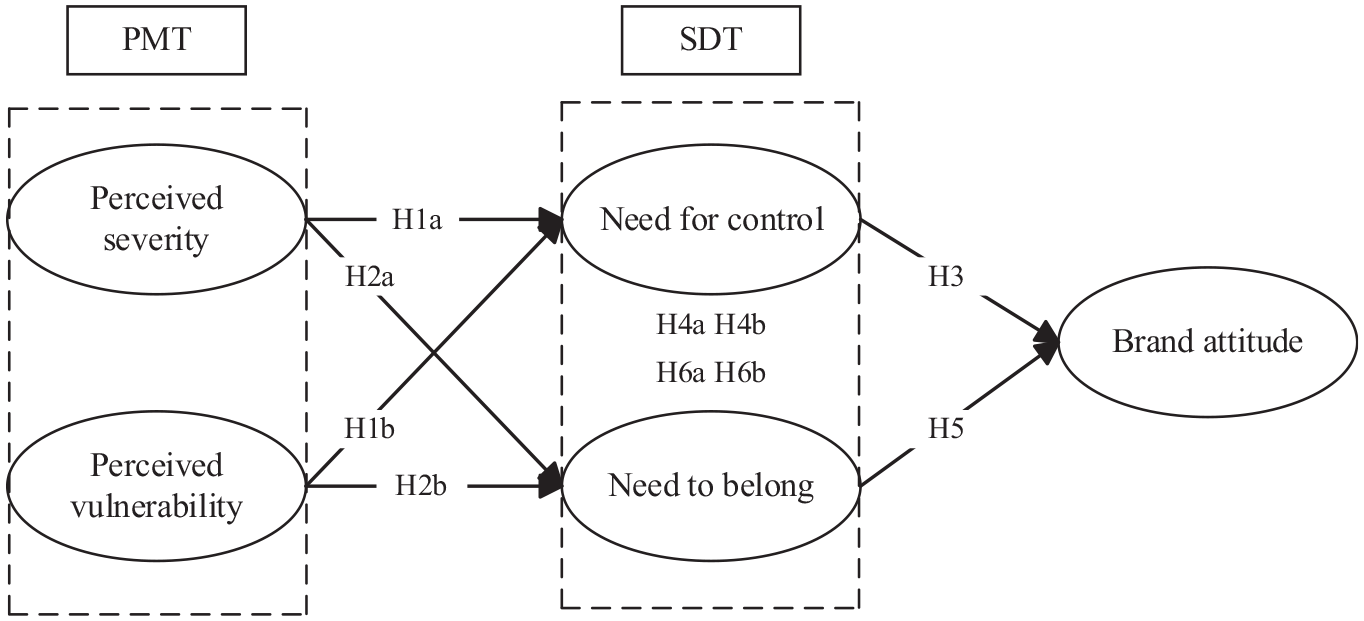
Research model.
Need to Belong and Brand Attitude
The absence of belongingness can drive various compensatory consumer behaviors, such as nostalgic consumption (Lee & Shrum, 2012), a preference for anthropomorphic products (Mourey et al., 2017), and active participation in word-of-mouth recommendations (Sicilia et al., 2016). The need to belong also fosters conformity behavior (McGhee & Teevan, 1967; Rose et al., 1994) and mediates the link between crisis-induced mortality threats and conformity consumption, as consumers seek to strengthen social ties to fulfill their need for belonging (Song et al., 2020). In the hotel industry, strong brands typically represent the preferred choice. Strong brands also represent a community or a group with which consumers can identify, offering a sense of inclusion and belonging (Black & Veloutsou, 2017). During times of crisis, this sense of belonging becomes even more critical as individuals seek stability and support. As a result, the stronger the need to belong, the more favorable the brand attitude toward strong brands becomes.
The occurrence of public crisis events has inhibited and eroded trust (Katz et al., 2022), and the occurrence of epidemic situations has also reduced consumers’ trust in hotel brands to a certain extent. Many hotel brands have been questioned about the hidden dangers in the implementation of cleaning and epidemic prevention measures, resulting in a crisis of consumer trust. Currently, people’s inner desire for security and stability is transformed into the pursuit of belonging (Correia, 2024). Strong hotel brands often have a better emergency management system and higher health standards, so that consumers can gain a sense of security and belonging in a volatile environment, to be recognized, and trusted by consumers.
Also, when the perceived severity of a threat is high, individuals experience heightened anxiety and a greater sense of threat to their well-being (Jones et al., 2011; Lv et al., 2020). Likewhile, higher perceived vulnerability triggers a sense of insecurity, which in turn increases the individual’s need for social support and belonging. According to the sociometer hypothesis, belongingness serves as a buffer against such negative emotions by providing emotional support and stability (Loveland et al., 2010). Thus, this study posits that both perceived severity and perceived vulnerability heighten the need to belong. This increased need to belong drives consumers to favor strong brands, which are perceived as providing the community and support they seek during times of crisis. In summary, the following hypotheses are proposed:
H5: Need to belong positively relates to brand attitude toward strong brands.
H6a: Need to belong mediates the relationship between perceived severity and brand attitude.
H6b: Need to belong mediates the relationship between perceived vulnerability and brand attitude.
Study 1
Sample and Data Collection
The hotel industry has been greatly impacted in the context of frequent public health crises. This study provides a valuable reference for the hotel industry by exploring the strategies of hotel brands to cope with consumer perceived threats. The subjects of the two studies are adults. When we invite them as the voluntary and anonymous subjects, we will tell them the details of our research procedures and sign off an information consent form, they will be informed that they have right to refuse, or withdraw from the studies at anytime if they want. The studies were approved by a review board to keep participants’ information confidential, minimize risk, and provide reporting to participants.
The experimental samples in this paper are all from China, mainly because China has a huge hotel market and occupies an important position in the global market. The behavior and preferences of Chinese consumers during the pandemic offer insights into broader market dynamics, potentially influencing global strategies. Besides, the public health measures implemented in China, such as strict lockdowns, widespread testing, and health code systems, provide a unique context to study the impact of stringent policies on consumer behavior. Therefore, it is important to study the consumer behavior of China’s hotel market in the context of the pandemic to understand the dynamic development of the global hotel industry.
This research collected data through both online and offline channels. The official survey was conducted in August 2021. Three hundred participants were recruited from an online panel (Credamo). Credamo has over 2.8 million samples, with registered users across all provinces, cities, and regions of China, and has served students and teachers in over 2,000 universities worldwide. After writing a recruitment copy containing the research purpose, the experiment’s general process, and the research’s significance, we used WeChat, QQ, and other social media platforms to publish the link to the questionnaire to attract followers’ participation. At the end of the experiment, participants were paid accordingly. We collected 292 questionnaires from the online research. Attention test questions were included in the questionnaire to identify invalid responses. After eliminating pattern answers (e.g., 3,333) and those with a short response time (less than 200 seconds), we obtained 262 valid questionnaires, yielding an efficiency rate of 89.7%. Among the respondents, 53.4% were women, 74.8% were aged 26 to 40, and 87.4% had an undergraduate degree or higher. In terms of annual income, the proportion of 100,000 to 300,000 yuan (including) was 48.1%, followed by the proportion of 50,000 to 100,000 yuan (including) was 27.9%.
In the offline research, we distributed experimental questionnaires in places with large flows of people, such as canteens and teaching buildings, and gave rewards to participants after they answered the questionnaires. We collected 120 questionnaires and obtained 100 valid responses after applying the same criteria for eliminating invalid samples, resulting in an effective rate of 83.3%. The majority of respondents were female (54%), and 93% were aged 20 to 25, all of whom were undergraduate students. In addition, it is worth mentioning that at the lower end of the annual income scale, participants with an annual income of 30,000 yuan or less accounted for 98%.
Measurement
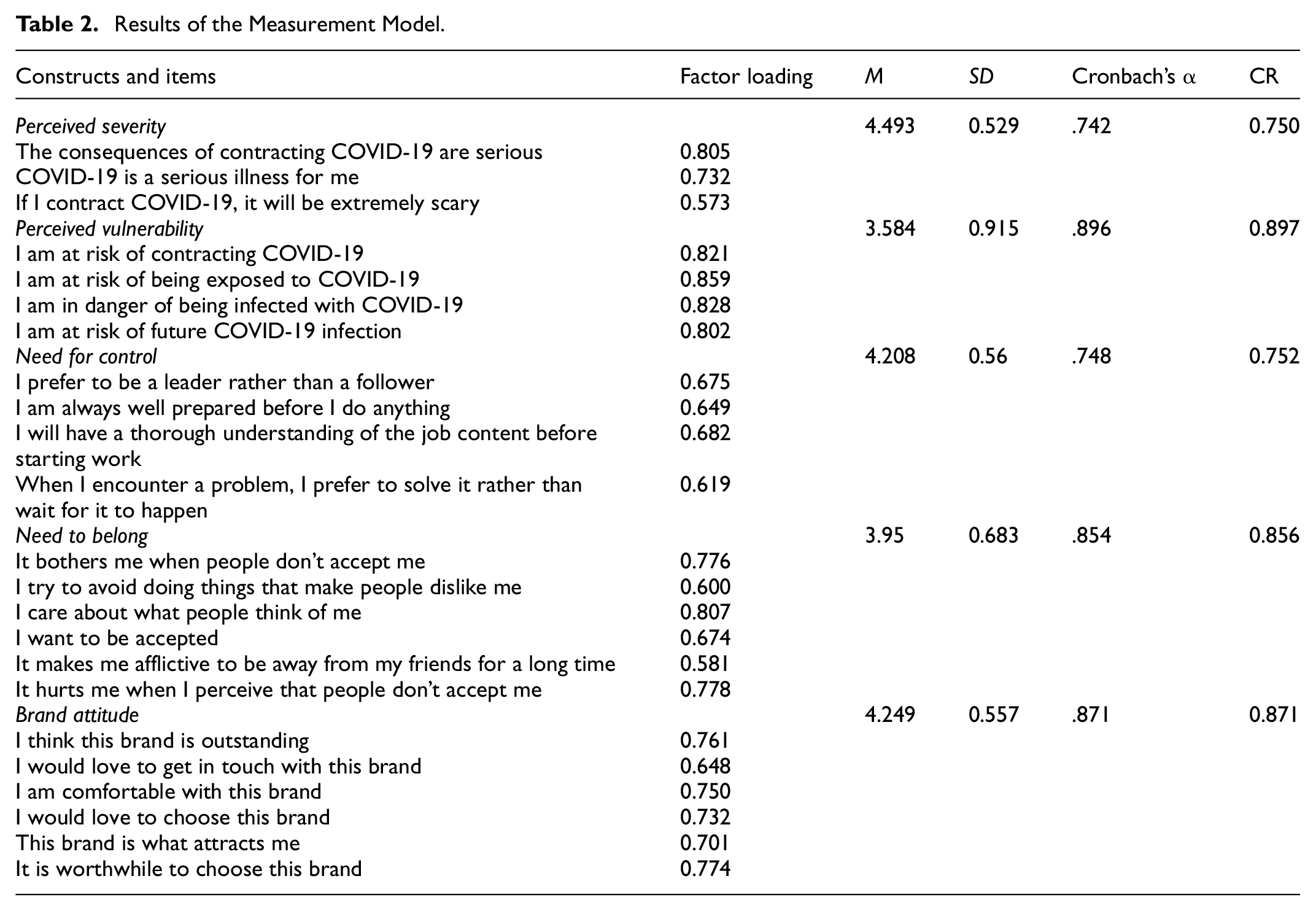
To assess perceived severity, three items were adapted from Sharma et al. (2021), the measurement items included “The consequences of contracting COVID-19 are serious”“COVID-19 is a serious disease for me” and “If I contracted COVID-19, it would be extremely scary.” Perceived vulnerability was measured using the scale developed by Q. Chen et al. (2020), items include “I am at risk of contracting COVID-19”“I am at risk of being exposed to COVID-19” and “I am at risk of contracting COVID-19.” To improve the accuracy and professionalism of the scales, one marketing professor and five master’s students in tourism management were invited to adapt and revise them. All scales were scored on a 5-point scale, see Table 2 for details.
Research Design
Study 1 aimed to investigate hotel consumers’ brand preferences during the crisis (Appendix Figure A1). As an internationally renowned luxury hotel chain brand, Hilton has a history of more than 100 years, with a deep brand accumulation, and wide visibility. Hilton is committed to providing high-quality services, luxury facilities, high-end accommodation environment, favored by the majority of business, and leisure guests. As a domestic economy chain brand in China, Home Inns has a large customer base and a clear market positioning in China, mainly targeting business travelers, and ordinary travelers, providing affordable accommodation choices. In addition, Home Inn has also won a good market reputation for its quality service and comfortable environment and has become an excellent leader in the mass accommodation industry. Therefore, in the budget hotel category, Home Inn Hotel was used as the strong brand, and the virtual brand “Anto Hotel” as the weak brand. For luxury hotels, Hilton represented the strong brand, while the virtual hotel “Hemon” was used as the weak brand. To control for the impact of location and price, both Home Inn and Anto (Hilton and Hemon) are situated within 500 m of the Beijing Railway Station. The room types and prices were standardized at RMB 199/day for a king-size room in budget hotels and RMB 799/day for a king-size room in luxury hotels. The scenario task given to participants was: “Now you need to travel to City A for a week due to work, and there are two hotels for you to choose from, Home Inn (Hilton) and Anto (Hemon).”
As each participant had different levels of attention to pandemic information, they were first asked to read recent pandemic information in China and fill in the perceived severity and vulnerability scales. Online participants were then shown the logos and profiles of Hilton and Hemon: “Hilton Hotel is a globally recognized brand, known for its stylish, contemporary, and visionary hospitality, with more than 570 hotels and resorts in 79 countries across six continents.” and “Hemon Hotel is a premium independent hotel brand that has been winning guests over with its unique design since its inception.” Finally, participants were asked to choose a hotel.
Additionally, for the offline participants, the experimental procedure was conducted similarly to the online method, but with the less expensive Home Inn and Anto hotels replacing Hilton and Hemon to account for the students’ spending levels. Participants were first shown the logos and profiles of Home Inn and Anto hotels: “Home Inn is a well-known budget hotel chain brand in China, with more than 2,300 hotels in 361 cities nationwide, meeting the diversified accommodation needs of the public since its establishment.” and “Anto is a budget independent hotel brand that has been winning guests over with its unique design since its creation.” Participants then chose a hotel and rated brand awareness on a five-point scale.
Results
About online measurement results, regarding brand awareness, Hilton hotels had higher awareness than Hemon hotels (M Hilton = 3.27, M Hemon = 1.51), validating the differentiation between strong, and weak brands in this study. The results showed a preference for the strong brand (Hilton), with 62% of participants choosing Hilton Hotel. In addition, about offline measurement results, in terms of brand familiarity, the score of Home Inn Hotel is higher than that of Antu Hotel (M Home = 3.57, M Antu = 1.31), indicating that the setting of strong brands and weak brands in this study is reasonable. The results indicated a significant preference for the strong brand (Home Inn), with 183 participants (69.8%) choosing Home Inn and 79 (30.2%) choosing Anto hotels.
Based on these experimental results, we find that most hotel consumers prefer strong brands under the influence of a public health crisis. By confirming the presence of brand preference in Study 1, the research can logically proceed to theorize why this preference exists. Next, this research will investigate the psychological mechanisms behind this preference through theoretical derivation and Study 2 to ensure that the theoretical exploration is grounded in observed behavior, making it more robust and applicable.
Study 2
While study 1 identified consumers’ preferences for strong brands, the underlying psychological mechanisms remain unclear. Therefore, Study 2 aims to examine these mechanisms through a survey administered to individuals who have stayed in hotels within the past 6 months, to empirically test the relevant hypotheses.
Data Collection and Participants
This research maintains COVID-19 as the crisis backdrop, with the recruitment method and ethics statement identical to those in Study 1. The questionnaire was distributed through the online panel (Credamo) to ensure nationwide coverage, leveraging its database of over 2.8 million samples, encompassing registered users from all provinces, cities, and regions in China, including students and teachers from over 2,000 universities worldwide. A pilot survey was conducted on October 15, 2021, with 30 respondents to refine the questionnaire based on their feedback. The official survey was conducted online from October 28 to November 10, 2021, coinciding with severe pandemic outbreaks in China (e.g., Fujian Province, Heilongjiang Province, etc.). The questionnaire began with an explanation of the study’s purpose and the assurance of respondent anonymity on its first page. Following this, respondents were asked the screening question: “Have you stayed in a hotel in the past 6 months.” Those who answered “yes” were instructed to specify the hotel they stayed in, while those who answered “no” had their questionnaire closed. Additionally, the questionnaires underwent manual screening to exclude respondents who had stayed at lesser-known brands (e.g., independent hotels). An attention check question, “How many days in a month, please select 31,” was included to filter out inattentive respondents. After filtering out these initial questions, 496 questionnaires were collected, with 437 valid responses remaining after removing pattern answers (e.g., 3,333), and responses with short completion times (less than 200 s). The sample represented a broad geographic distribution, encompassing provinces and cities such as Sichuan, Beijing, Shandong, and Heilongjiang, with detailed demographics outlined in Table 1.
Demographic Characteristics.

Measurement
All constructs were assessed using established or adapted scales, see Table 2 for details. The scales for perceived severity and vulnerability remained consistent with those used in Study 1. The need for control was evaluated using four items such as “I’d rather be a leader than a follower” that adapted from the Desirability of Control scale (Jerry & Harris, 1980). The need to belong was measured based on the scale developed by Leary et al. (2013), there were six items, including “It bothers me when people don’t accept me.” Brand attitude was assessed using a scale adapted from Yuan et al. (2010), there are six questions including “I think the brand is good.” To ensure clarity and consistency in questionnaire items, experts from tourism management and marketing fields reviewed and revised questions that were initially rigid or unclear. All items were scored on a 5-point scale.
Results of the Measurement Model.
Measurement Model Test
First of all the Kolmogorov-Smirnov method was used to test the normality, and the results showed that the data with p > .05 were consistent with the normal distribution. Then, the homogeneity test of variance was conducted by Levene, and the results showed that the data with p > .05 met the homovariance test. The measurement model was assessed using Confirmatory Factor Analysis in M-plus 7.31. The main purpose of using confirmatory factor analysis in this study is to verify the validity, ensure that the measurement tools used can accurately measure the variables concerned in the study, and test whether the structure and parameters of the measurement model conform to the theoretical assumptions in this paper, to evaluate the reliability and validity of the measurement model. The results that the data fit the model adequately (χ2/df = 1.978, RMSEA = 0.047, CFI = 0.949, TLI = 0.941, SRMR = 0.043). As presented in Table 2, all factor loadings for the questionnaire items exceeded 0.5, demonstrating the scale’s ability to effectively measure the latent constructs (Hair, 2010). Cronbach’s alpha coefficients for all constructs surpassed .7, indicating good internal consistency within the scale. Additionally, the composite reliability (CR) values for all constructs exceeded 0.7, affirming the scale’s reliability (Bagozzi et al., 1991).
Additionally, Table 3 presents the correlation coefficients and the average variance extracted (AVE) for each construct. The AVE values for all constructs, except for the need for control, exceeded 0.5, while the AVE for the need for control was 0.36, which is within an acceptable range (Z. Zhang & Zheng, 2021), indicating a well-fitting measurement model. Moreover, the square roots of the AVE values were greater than the correlations between constructs, affirming satisfactory discriminant validity.
Correlation of Various Constructions.
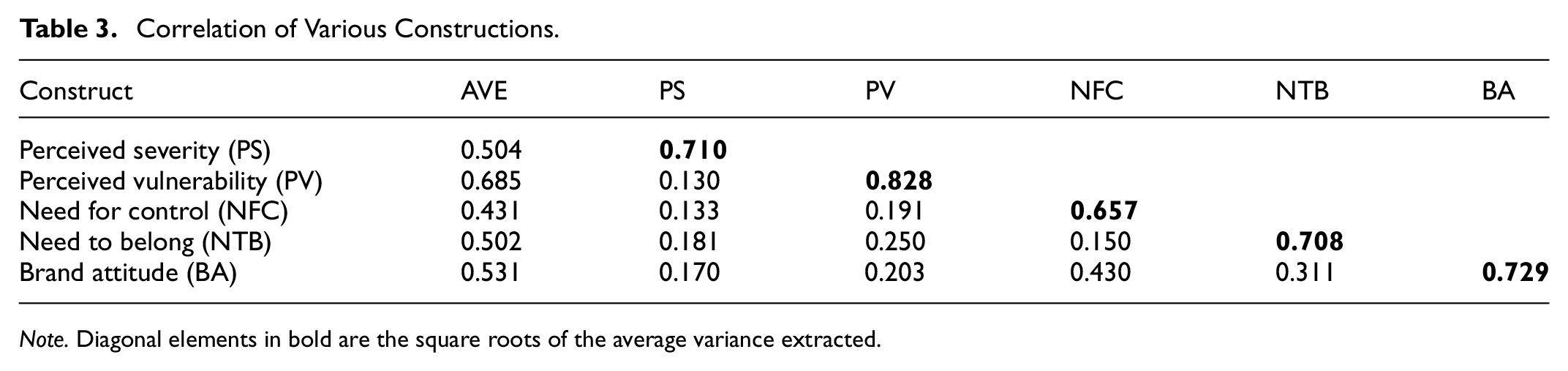
Note. Diagonal elements in bold are the square roots of the average variance extracted.
Structural Model Test
The structural model was analyzed using M-plus 7.31, showing a good fit to the data (χ2/df = 1.978, RMSEA = 0.047, CFI = 0.948, TLI = 0.941, SRMR = 0.047). Figure 2 displays the path coefficients indicating causal relationships. Specifically, perceived severity (β = .164, p < .01) and perceived vulnerability (β = .221, p < .001) significantly influenced the need for control, supporting H1a and H1b. Furthermore, perceived severity (β = .183, p < .01) and perceived vulnerability (β = .257, p < .001) had a significant positive impact on the need to belong, supporting H2a and H2b. Additionally, the need for control (β = .501, p < .001) and the need to belong (β = .289, p < .001) significantly influenced brand attitude. Therefore, H3 and H5 were supported.

SEM results.
The Mediation Analysis
The mediation analysis was conducted using Hayes’ PROCESS Model 4, assessing the four mediation hypotheses by generating asymmetric confidence intervals (CIs; Hayes, 2018). The mediating effects are considered significant when the 95% bootstrap CI of the effect (5,000 bootstrap samples) does not cross zero. As shown in Table 4, the need for control significantly mediated the relationship between perceived severity and brand attitude (95% Confidence Indirect effect βPS→NFC→BA = 0.0537; CI [0.0077, 0.1049]), thus supporting H4a. Similarly, the need for control mediated between perceived vulnerability and brand attitude (95% Confidence Indirect effect βPV→NFC→BA = 0.0444; CI [0.0187, 0.0757]), thus supporting H4b. Furthermore, the need to belong mediated between perceived severity and brand attitude (95% Confidence Indirect effect βPS→NTB→BA = 0.0457; CI [0.0166, 0.0821]), supporting H6a. Lastly, the need to belong mediated the relationship between perceived vulnerability and brand attitude (95% Confidence Indirect effect βPV→NTB→BA = 0.0359; CI [0.0188, 0.0583]), thus supporting H6b.
Results of Indirect Effect Analysis.

Discussion
Conclusion
Based on protection motivation theory, compensatory control theory and self-determination theory, this study investigates hotel consumers’ attitudes toward strong brands during a public health crisis, and explores the underlying mechanisms. Firstly, this article provides evidence that consumers prefer strong hotel brands when threatened by a crisis, aligning with current hotel marketing data. According to a study by McKinsey & Company (2020), during the COVID-19 pandemic, well-known hotel chains with strict hygiene protocols experienced higher occupancy rates compared to independent hotels or smaller chains. This finding confirms the advantage and better resilience of strong hotel brands in coping with public health crises.
Secondly, the study finds that individuals’ need for control and belonging, driven by the perceived severity and vulnerability of the crisis, leads to a preference for strong hotel brands. The high level of uncertainty triggered by the crisis threatens consumers’ sense of control, which in turn heightens their need for control and prompts them to seek ways to regain it. Uniform service standards and protection measures provided by strong hotel brands offer structure and order, helping compensate for consumers’ diminished sense of control (Landau et al., 2015; Verlegh et al., 2021).
Additionally, the crisis limits social interaction, intensifying consumers’ need to belong and encouraging conformity behavior (Song et al., 2020). Therefore, social activities are crucial for gaining a sense of belonging, and strong hotel brands, due to their high visibility and reputation, are often popular choices. Staying at hotels with strong brands can strengthen consumers’ connection with others, satisfying their need for belonging.
In summary, the perceived severity and vulnerability caused by the crisis stimulate the need for control and belonging. Consumers’ brand attitudes toward strong brands are enhanced through these dual pathways. With new evidence, the study also extends previous findings by showing that a public health crisis evokes not only negative emotions like anxiety but also fundamental needs for control and belonging.
Theoretical Implications
Firstly, this study extends the literature on hotel consumption by investigating the brand preferences of hotel consumers under the influence of a crisis. Previous research based on Protection Motivation Theory (PMT) in hospitality management has primarily focused on consumers’ threat assessment and response processes (Hsieh et al., 2021; Ying et al., 2021), often overlooking the psychological needs that drive these responses. By integrating PMT with Self-Determination Theory (SDT), this study introduces the concepts of the need for control and the need to belong as mediators between perceived severity and perceived vulnerability and consumers’ attitudes toward hotel brands, thereby enriching the current literature.
Secondly, this study expands compensatory control theory by revealing that choosing strong hotel brands can provide consumers with a sense of control as a compensatory strategy. Previous studies have indicated that consumers who feel control-deprived often seek structure (Rutjens et al., 2013) and prefer leading brands (Beck et al., 2020). Similarly, the current research finds that the high level of environmental uncertainty caused by the crisis makes consumers feel a loss of control, which in turn enhances their attitudes toward strong hotel brands. Strong hotel brands, with their greater potential efficiency and ability to cope with crises, make consumers feel safer, more stable, and more structured. Additionally, the sense of individual agency provided by strong brands can also compensate for consumers’ loss of control (Beck et al., 2020).
Thirdly, this study advances the application of the need to belong theory by addressing an often-overlooked emotional need in the context of public health crises. While existing research has concentrated on emotions such as anxiety, depression, and fear, it has frequently neglected consumers’ need for belonging. This study finds that a public health threat can heighten the need for belonging, and that choosing strong brands can fulfill this need. By extending the application of the need to belong theory to crisis contexts, this research provides a richer understanding of how crises impact consumers’ emotional needs and preferences.
Managerial Implications
First of all, consumers prefer strong brand hotels with orderly management and high order level, so that they can get more sense of control. As a result, hotels can increase their sense of control through transparent service processes and media campaigns, similar to initiatives such as “Hilton Clean Stay,”“IHG Clean Promise” and “Hyatt’s Global Care & Cleanliness Commitment.” And social hotels such as Shimao star’s “ETHOS,” and BTG Homeinns’“UrCove by HYATT” have become popular because they can provide a need to belong. The crisis has restricted People’s Daily activities and increased the desire to socialize, so hotels should focus on meeting the social needs of consumers to win their loyalty.
In the face of public health emergencies, the hospitality industry needs greater synergy and resilience. Through the establishment of a cooperation mechanism, budget hotels, and luxury hotels can achieve complementary resources, promote brand resilience. During a crisis, budget and luxury hotels can reduce operating costs and improve efficiency by sharing cleaning and disinfection resources and jointly purchasing epidemic prevention materials. In addition, luxury hotels can use their brand influence and customer resources to launch preferential packages for budget hotel customers to attract more customers. At the same time, budget hotels can use the marketing channels of luxury hotels to enhance their visibility and customer base.
Furthermore, the pandemic’s outbreak has expedited the digitalization progress in the hotel industry. For weak hotel brands, digital transformation serves as a crucial strategy to secure a competitive edge in the highly uncertain VUCA environment. Weak hotel brands can establish their digital platforms, such as hotel websites, mobile applications, or WeChat mini-programs, customers can inspect room types, prices, and promotions on their mobile phones at any time and any place, conveniently and promptly complete the booking, offering them a more flexible accommodation management approach. This not only mitigates reliance on third-party booking platforms and cuts costs but also enables direct communication with customers, granting customers more control and strengthening the interaction and loyalty between customers and the brand.
In addition, as an integral part of the tourism industry, the hospitality industry is also vulnerable, not only to the negative impact of public health crises such as epidemics but also to disasters such as natural disasters and economic crises. These crises often adversely affect people’s physical and mental health and emotional state, weakening an individual’s sense of control and belonging. To enhance consumers’ sense of control, the hotel should timely communicate with customers about the hotel’s operating conditions and the safety measures taken, so that customers and the public can know the objective situation of the crisis in a timely and comprehensive manner, to reduce customers’ anxiety, and unease and strengthen customers’ sense of control. When necessary, provide customers with price and other advantages, and thank customers for their support of the hotel. Hotels can record customer preferences through customer relationship management systems (CRM) to provide more personalized services, such as by analyzing customer history, adjusting the temperature and humidity of the room before the guest check-in, or providing customized menus to make customers feel valued and understood, and promote a sense of belonging.
Finally, in order to make the hotel more resilient, hotel managers should enhance their awareness of the crisis, build a rapid response mechanism. For example, in the off-season, in addition to strengthening the daily hotel business training for employees, special training for natural disasters and other emergencies should be regularly organized to improve the service and management level of the hotel to cope with emergencies. Hotel enterprises should re-examine their development strategy, consider diversified investment and management and the reform of the enterprise’s share system, use of diversified investment, to enhance the ability to resist the economic crisis, also consider adjusting the product structure, and price strategy, to adapt to the market changes in the economic crisis.
Limitations and Directions for Future Research
This study has limitations that suggest several directions for future research. Firstly, this study verifies the mediating roles of the need for control and the need to belong, moderators may also influence consumers’ brand attitudes toward strong brands. For example, the significant economic impact of the COVID-19 pandemic has likely altered consumers’ financial situations and spending power, which could affect their preferences for hotel brands—a factor not fully accounted for in this study. With the gradual recovery of the global economy in the post-pandemic era, consumer confidence and spending power are expected to rebound. Future research should examine how these economic shifts influence consumer attitudes toward hotel brand types to enhance the robustness of the findings.
Secondly, this study studies the behavior and preferences of hotel consumers in the specific context of the novel coronavirus epidemic. Since the novel coronavirus epidemic is a dynamic event, consumers’ attitudes and behaviors may evolve over time. Therefore, future studies should also consider whether the findings of consumers’ preference for strong hotel brands are still valid in the post-pandemic era to enhance the generalizability of the findings. In addition, this research focuses exclusively on the hotel industry; future studies could broaden the scope by examining consumer brand preferences in other industries, such as the catering sector, to offer a more holistic understanding.
Finally, this study focuses on Chinese consumers’ preference for hotel brands in the context of COVID-19, the results of which may be influenced by factors specific to China, such as socio-cultural and economic conditions and epidemic prevention and control measures. These factors are different from the cultural background of other countries or regions, which limits the cross-cultural universality of the research results. As COVID-19 is a global event, different countries and regions have different epidemic situations and prevention and control measures, leading to other consumers’ perceptions of environmental threats. Therefore, future research can delve into the specific differences in consumer preferences for hotel brands in various cultural contexts.
Footnotes
Appendix
Acknowledgements
Thanks to Professor Jiajing Hu, Associate Professor Yan Liu and XinYue Cao from Sichuan Agricultural University for their guidance on this paper.

Ethical Considerations
The research plans to conduct two questionnaire surveys. The subjects of the two studies are adults. When we invite them as the voluntary and anonymous subjects, we will tell them the details of our research procedures, and they will be informed that they have right to refuse or withdraw from the studies at any time if they want. Our studies can be conducted only after we get all the subjects’ informed consent. We will provide participants with an information consent form, which is concise and clear, allowing the experimental participants to fully understand the research content, and voluntarily participate in the study. Participants’ data was anonymized and stored on encrypted servers, with access strictly restricted to members of the research team. The study design phase conducted a comprehensive assessment of potential risks and implemented the necessary risk mitigation measures. The study was conducted in strict compliance with Sage’s Guidelines for studies involving humans to ensure that the research process was legal, transparent, and the rights and interests of participants were protected. Data were anonymized to ensure confidentiality, and all identifiable information was removed from the datasets. Data were stored securely in encrypted files, and access was restricted to authorized personnel only. The study design was reviewed to minimize any potential risks to participants, and the research procedures were non-invasive and posed minimal risk. After the completion of the study, participants were debriefed about the nature of the research and provided with contact information for the research team in case they had any further questions or concerns. The studies were approved by a review board to keep participants’ information confidential, minimize risk, and provide reporting to participants.
Funding
The author(s) disclosed receipt of the following financial support for the research, authorship, and/or publication of this article: This research was supported by the National Natural Science Foundation of China (72472129), the Humanities and Social Science Fund of Ministry of Education of China (23YJC790088) and the Soft Science Research Program of Zhejiang Province, People’s Republic of China (2024C35067).
Declaration of Conflicting Interests
The author(s) declared no potential conflicts of interest with respect to the research, authorship, and/or publication of this article.
Data Availability Statement
The data are available from the corresponding author on reasonable request.